
Tag: overturn

  • CDC Advisory Committee Votes to Overturn Decades-Old Hep B Vax Recommendations – The 74

    CDC Advisory Committee Votes to Overturn Decades-Old Hep B Vax Recommendations – The 74


    Get stories like this delivered straight to your inbox. Sign up for The 74 Newsletter

    The committee that advises on national vaccine policy today overturned a decades-long recommendation that newborns be immunized for hepatitis B, a policy credited with nearly eliminating the highly contagious and dangerous virus in infants. 

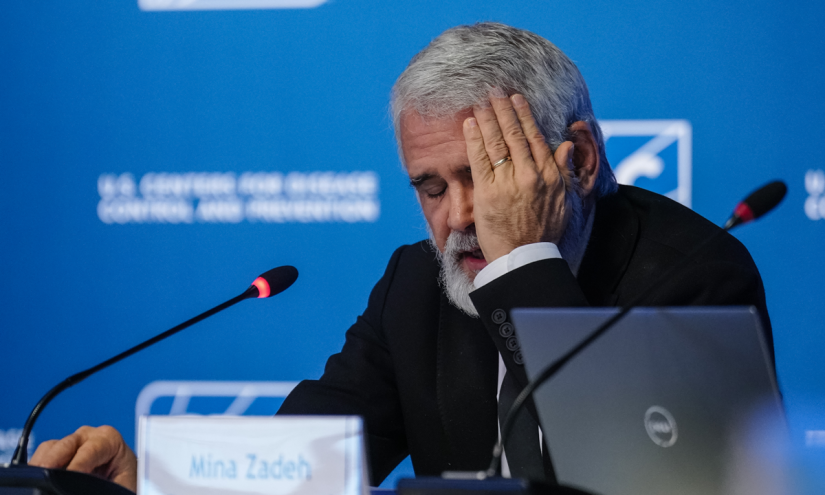
    The decision came in an 8-3 vote from the committee that has been handpicked by Health and Human Service Secretary Robert F. Kennedy Jr., a long-time vaccine skeptic. It followed three previous failed attempts to vote on the measure and two days of contentious, confused hearings that further undermined the group’s credibility.

    Amy Middleman, a longtime committee liaison and a University of Oklahoma pediatrics professor, said it was the first time the committee “is voting on a policy that, based on all of the available and credible evidence … actually puts children in this country at higher risk — rather than lower risk — of disease and death.”

    Susan J. Kressly, the president of the American Academy of Pediatrics, which is continuing to recommend the hepatitis B vaccine at birth, called the committee’s guidance “irresponsible and purposely misleading” and said that it will bring about more infections in infants and children.

    “This is the result of a deliberate strategy to sow fear and distrust among families” she said.

    The members of the Advisory Committee on Immunization Practices, known as ACIP, who voted in favor of the new guidance said the universal birth dose, first introduced in 1991, had likely played a small role in the reduction of acute cases and noted that the country’s policy was an outlier when compared to those of peer nations, which have more targeted approaches. They also raised concerns about the safety of the vaccine, arguing there were insufficient trials done, a claim that has been widely debunked.

    The committee’s new recommendations still include a dose of the vaccine within the first 24 hours of life for infants born to hepatitis B-positive mothers. But for those born to mothers testing negative, they recommend “individual-based decision-making, in consultation with a health care provider” to decide “when or if” to give the vaccine. 

    Removing the universal birth dose “has a great potential to cause harm,” dissenting committee member Joseph Hibbeln said, “and I simply hope that the committee will accept its responsibility when this harm is caused.”

    The committee also voted to upend the rest of the schedule for the hepatitis B vaccine, which is required for school attendance in the vast majority of states and historically included three doses in an infant’s first year. Now, after the first dose, parents will be encouraged to ask their doctors to check infants for a sufficient immune response before proceeding with any future doses, a practice that currently lacks any scientific evidence, according to vaccine experts.

    The recommendation now heads to Jim O’Neill, the acting head of the Centers for Disease Control and Prevention, newly installed after September’s ousting of the previously confirmed director, who said she resisted Kennedy Jr.’s demands to pre-approve vaccine recommendations and fire career scientists. 

    O’Neill’s decision could impact not only the vaccine’s availability, but also its accessibility, since both public and private health insurers look to these policies to determine coverage. 

    “The American people have benefited from the committee’s well-informed, rigorous discussion about the appropriateness of a vaccination in the first few hours of life,” O’Neill said in a statement Friday.

    Rochelle Walensky is the former CDC director and is now a Harvard University medical professor. (Harvard T.H. Chan School of Public Health)

    Former CDC director Rochelle Walensky, now a Harvard University medical professor who recently co-authored a paper on the importance of the hepatitis B birth dose, projected that eliminating it for infants whose mothers test negative will raise the number of newborn hepatitis B cases by 8% each year.

    “We rely on an infrastructure of vaccines not only to protect ourselves and our children, but to protect our communities and one another,” Walensky said. “Today’s meeting was just another one of those chisels in the infrastructure.”

    Paul Offit, the director of the Vaccine Education Center and an attending physician in the Division of Infectious Diseases at Children’s Hospital of Philadelphia, referred to the committee as “a clown show” in an interview on CNN Friday morning.

    “Honestly, it’s a parody of what this committee used to be,” he said. “It’s hard to watch, and for those of us who care about children, it’s especially hard to watch.”

    Offit said he doubted that the committee understood how hepatitis B was transmitted in young children — half the time through the mother during childbirth but just as often through casual contact with someone who was chronically infected and didn’t know it. About 50% of the millions of Americans infected with hepatitis B are unaware of it.

    “By loosening the [immunization] reins, you are just putting children in harm’s way,” Offit said.

    The hepatitis B vaccine was first recommended by ACIP in 1982. Before that point, an estimated 200,000 to 300,000 people, including about 20,000 children, were infected with the highly contagious virus each year. 

    This was particularly dangerous for infants who have a 90% chance of developing liver cancer or chronic liver disease, if they contract the virus. For 4- and 5-year-olds, that chance remains high at 30-40%.

    Committee members argued the guidance change reflected a return to pre-1990s policies that focused on a targeted approach, rather than a universal one. A number of them said that these earlier practices were successful and sufficient in cutting hepatitis B rates, a claim other experts — including those at the CDC — refuted. 

    In a departure from typical practices, presentations on disease rates and safety concerns at the hearing were not given by CDC subject-matter experts, but instead were led by a climate researcher and a known anti-vaccine activist, who authored a since-retracted paper on the impact of rising autism rates. 
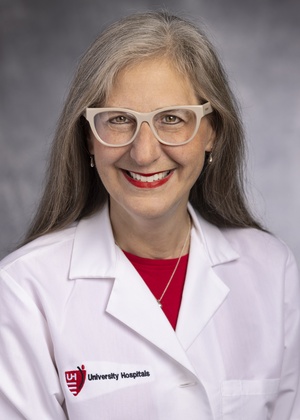
    Amy Middleman, a pediatrics professor at the University of Oklahoma. (University of Oklahoma)

    When one CDC hepatitis B expert was invited to weigh in during a question-and-answer period, he expressed concern about the presented research and emphasized the lack of evidence to support the committee’s changes. Middleman jumped in at one point to correct the committee when it misinterpreted “the conclusions of my own study.”

    Throughout the meeting, Kennedy Jr.’s appointees spoke about the importance of protecting parents’ rights, seemingly pitting this against public health policy. 

    “My personal bias is to err on the side of enabling individual decision making and individual rights over the right [of] the collective,” said Robert Malone, the committee’s vice chair who led the meeting since newly appointed chair Kirk Milhoan, a cardiologist and critic of the COVID vaccine for children, was unavailable to attend in person.

    Earlier this year, the committee also voted to change policies surrounding the measles, mumps, rubella and varicella (chickenpox) combination vaccine and this year’s COVID 19 booster.

    Historically, committee members were highly qualified medical professionals, vetted for months to years before serving. But, in an unprecedented upheaval in June, Kennedy Jr. fired all 17 existing advisory members via a Wall Street Journal op-ed — after promising he would leave the committee’s recommendations intact — and hastily replaced them. 

    Many of the new members have espoused anti-vaccine rhetoric and other scientific misinformation and a number of them do not have medical degrees or significant experience in the field. 

    Cody Meissner, a professor at Dartmouth’s Geisel School of Medicine and the only committee member to have previously served, also opposed the guidance change.
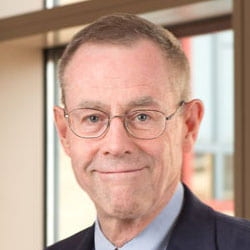
    Cody Meissner is a professor at Dartmouth’s Geisel School of Medicine. (Dartmouth College)

     “We’ve heard ‘do no harm’ is a moral imperative,” he said. “We are doing harm by changing this wording, and I vote no.”

    The committee vote was the latest in a wave of policy changes, firings and general chaos at the CDC and HHS that have alarmed experts since Kennedy Jr. took charge almost a year ago. 

    Last week, the Food and Drug Administration’s chief medical and scientific officer released an unsupported memo claiming COVID-19 vaccinations had contributed to the deaths of at least 10 children. Last month, Kennedy Jr. ordered CDC staff to change information on their website to promote a link between vaccines and autism, a widely discredited theory that he has promoted for years.

    According to Offit, the negative impacts are already being seen: This year tallied the greatest number of measles cases (1,828) since it was declared eliminated in 2000, the majority of which were in unvaccinated children, two of whom died. It marked the first pediatric measles deaths since 2003.

    There have also been nearly 300 childhood flu deaths — among predominantly unvaccinated kids — the most seen since the country’s last flu pandemic and whooping cough cases are surging in some states. The highly contagious respiratory infection, prevented through the DTaP vaccine, has killed three unvaccinated infants in Kentucky.


    Did you use this article in your work?

    We’d love to hear how The 74’s reporting is helping educators, researchers, and policymakers. Tell us how

    Source link

  • LAWSUIT: LGBTQ student group sues to overturn Texas A&M’s unconstitutional drag ban

    LAWSUIT: LGBTQ student group sues to overturn Texas A&M’s unconstitutional drag ban

    HOUSTON, Texas, March 5, 2025 — The Foundation for Individual Rights and Expression filed a federal lawsuit on behalf of an LGBTQ+ student organization to block a new policy from the Texas A&M University System that bans drag performances on its 11 public campuses — a clear violation of the First Amendment.

    FIRE is asking a court in the Southern District of Texas to halt Texas A&M officials from enforcing the drag ban, abruptly adopted on Friday afternoon. The lawsuit is on behalf of the Queer Empowerment Council, a coalition of student organizations at Texas A&M University-College Station and the organizers of the fifth annual “Draggieland” event that was scheduled to be held on campus on March 27. 

    “We refuse to let Texas A&M dictate which voices belong on campus,” said the Queer Empowerment Council. “Drag is self-expression, drag is discovery, drag is empowerment, and no amount of censorship will silence us.”

    Texas A&M students first held “Draggieland” (a portmanteau of “Drag” and “Aggieland,” a nickname for Texas A&M) at the campus theatre complex in 2020, and the event has been held on campus annually ever since. But last Friday, the Board of Regents suddenly voted to ban drag events entirely across all 11 Texas A&M campuses. 

    “The board finds that it is inconsistent with the system’s mission and core values of its universities, including the value of respect for others, to allow special event venues of the universities to be used for drag shows,” the board’s resolution reads. The regents also claimed that drag performances are “offensive” and “likely to create or contribute to a hostile environment for women.”

    “Public universities can’t shut down student expression simply because the administration doesn’t like the ‘ideology’ or finds the expression ‘demeaning,’” said FIRE attorney Adam Steinbaugh. “That’s true not only of drag performances, but also religion, COVID, race, politics, and countless other topics where campus officials are too often eager to silence dissent.”

    The regents’ attempts to justify the drag ban as anything other than illegal viewpoint discrimination are feeble. The board admits they want to ban drag on campus because they find it “demeans women,” “promotes gender ideology,” or runs contrary to their “values”—- but the First Amendment squarely protects speech that offends and even angers others. And in all cases, it prevents campus officials from silencing speech because they disagree with the “ideology.” As a taxpayer-funded university system, Texas A&M campuses cannot treat some student events differently simply because they dislike the view being expressed. 

    “Even putting on an on-campus production of Shakespeare or Mrs. Doubtfire, or taking part in powderpuff, could be banned at A&M if some hostile administrator thinks they ‘promote gender ideology,’” said FIRE senior attorney JT Morris. “But if the First Amendment means anything, it’s that the government can’t silence ideologies they don’t like — real or perceived.”

    Title IX’s prohibition on creating a “hostile environment” also does not give public universities the ability to run around the First Amendment. FIRE has long seen efforts to suppress speech on the basis that it might contribute to a “hostile environment” because someone finds it offensive, but if speech can be suppressed because someone believes it is offensive, no speech is safe. The First Amendment does not permit public universities to suppress speech because someone thinks it is inappropriate.

    In order to fit the definition of harassment the Supreme Court has established, speech must be “objectively offensive” AND “severe” AND “pervasive.” A once-a-year drag show in an enclosed theatre that requires a ticket to enter doesn’t even come close to satisfying those strict conditions.

    “If other students dislike or disagree with Draggieland, the solution is simple: don’t go,” said FIRE attorney Jeff Zeman. “Or they could organize a protest, as students opposing drag have in the past. The First Amendment protects drag and the ability to criticize drag — and it forbids the government silencing the side it disagrees with.”

    Finally, the regents’ motion notes that “there are alternative locations for such events off-campus.” But that violates the First Amendment, too. The government cannot censor speech in places the First Amendment protects it, just because a speaker might express themselves elsewhere. “Draggieland” highlights why that principle is so vital: if a student group can’t reach their campus community with their message, then their message can’t fulfill its purpose.

    In the face of unconstitutional censorship, Draggieland organizers have remained unbowed. They have announced to supporters that they will hold an on-campus “Day of Drag” protest on Thursday and that they are committed to holding the event even if forced off-campus.

    “We are committed to ensuring that our voices are heard, and that Draggieland will go on, no matter the obstacles we face,” the Queer Empowerment Council announced.


    The Foundation for Individual Rights and Expression (FIRE) is a nonpartisan, nonprofit organization dedicated to defending and sustaining the individual rights of all Americans to free speech and free thought—the most essential qualities of liberty. FIRE recognizes that colleges and universities play a vital role in preserving free thought within a free society. To this end, we place a special emphasis on defending the individual rights of students and faculty members on our nation’s campuses, including freedom of speech, freedom of association, due process, legal equality, religious liberty, and sanctity of conscience.

    CONTACT:

    Alex Griswold, Communications Campaign Manager, FIRE: 215-717-3473; [email protected]

    Source link

  • LAWSUIT: Videographers sue to overturn National Parks Service arbitrary permit scheme

    LAWSUIT: Videographers sue to overturn National Parks Service arbitrary permit scheme

    JACKSON HOLE, Wy. Dec. 18, 2024 — Picture three people standing next to each other in Yellowstone National Park. One’s an ordinary tourist, one’s a news reporter, and the third’s a documentary filmmaker. They’re all filming Old Faithful, using the exact same iPhone, and without disturbing anyone around them.

    Under federal law, the tourist and the reporter are doing nothing wrong. But the documentarian could face heavy fines — even jail time.

    That’s why the Foundation for Individual Rights and Expression today filed a lawsuit on behalf of nature and sports photographers and filmmakers Alexander Rienzie and Connor Burkesmith. FIRE’s suit aims to overturn the National Park Service’s onerous, arbitrary, and unconstitutional permit-and-fee scheme that charges Americans for the right to film in public spaces.

    “The national parks belong to the American public,” said FIRE Chief Counsel Bob Corn-Revere. “If you have a right to be there, you have a right to film there. The federal government can’t tax Americans to exercise their constitutional rights.”

    Joining FIRE’s lawsuit as co-counsel and co-plaintiffs is the National Press Photographers Association, which represents thousands of visual journalists, including Alex and Connor. Although the NPS exempts filming for “news-gathering” from its permit scheme, the NPPA has for years argued that the law imposes an unfair burden on photographers and filmographers, who can’t always know ahead of time who they plan to sell their work to, or even if they plan to sell it at all.

    “For decades, the National Press Photographers Association has been working to support the rights of visual journalists and other photographers to document the beauty of our natural resources and the people who visit and care for them in our national parks,” said NPPA President Carey Wagner. “It is unfortunate that the actions and policies of the National Park Service have never fully respected the First Amendment rights of photographers, and it’s even more disappointing that it has become necessary to take the Park Service to court in order to resolve our members’ concerns. NPPA is enormously grateful to FIRE for taking on this case on behalf of all photographers.”

    Alex and Connor wanted to film in Grand Teton National Park in September to document an attempt by an athlete to break the record for the fastest climb up the Grand Teton. They planned to have only two or three people, using small handheld cameras and tripods, on the 16-mile route for the shoot. In fact, to keep up with the fast pace of the speedrun, they would carry less gear than the typical climber going up the mountain.


    But under current law, whether a filmmaker needs a permit to film in a national park doesn’t depend on the amount of gear they bring or how disruptive filming might be. The only thing that matters is whether their purpose is “commercial.” The rule could apply to filming a big blockbuster movie near the Grand Canyon (where the scale of the project might justify a permit requirement), but also to a small-time YouTuber who posts a video of their jog through the National Mall.

    “Congress wanted to keep big Hollywood productions from taking over the parks and keeping others from enjoying their natural beauty,” said FIRE attorney Daniel Ortner. “But the current law wasn’t written for a world where anyone with a smartphone has a film studio in their pocket.”

    Alex and Connor knew they might use the footage to produce a documentary film, so they filed for a permit and explained how small their impact would be. But NPS employees have wide and unquestioned discretion under the law to deny permits. NPS denied the permit on the grounds that it could turn the speedrun into a “competitive event”— and pocketed the non-refundable $325 application fee.

    “Independent filmmakers don’t have the resources of the big production companies,” said Connor. “It’s a gut punch every time we throw down hundreds of dollars, only to be denied permits for reasons that are vague, arbitrary, and unfair. As someone who needs to film outdoor sports where they happen, it’s a threat to my livelihood.”

    COURTESY PHOTOS OF ALEX AND CONNOR FOR MEDIA USE

    Alex and Connor were forced to choose between risking prosecution, or letting a potentially historic event go undocumented. For dedicated documentarians like themselves, it was an easy choice: They filmed without the permit in September.

    “In the entire time we were up there, we didn’t get in the way of anyone else’s enjoyment of Grand Teton,” said Alex. “To us, the Grand is a very special mountain that we’ve spent countless hours exploring.”

    An NPS spokesperson later announced they had determined that Alex and Connor’s actions didn’t meet all the criteria for charges—but if their work had been featured “in a commercial or a catalog or something like that,” it would be “less of a gray area.” Far from settling the issue, the NPS statement effectively signaled that Alex and Connor could still face charges if they ever sell or use their footage.

    FIRE and the NPPA are seeking an injunction in the United States District Court for the District of Wyoming to prevent that outcome, and to put a permanent end to a system where individual park employees can deny Americans their First Amendment rights on a whim.

    “I chose this line of work because I love the national parks,” said Connor. “Photographers and videographers are the best advocates the parks have; the more people see and understand their unique value, the stronger their desire to protect them. It’s time for the Park Service to stop throwing up roadblocks and work with us, not against us.”


    The Foundation for Individual Rights and Expression (FIRE) is a nonpartisan, nonprofit organization dedicated to defending and sustaining the individual rights of all Americans to free speech and free thought — the most essential qualities of liberty. FIRE educates Americans about the importance of these inalienable rights, promotes a culture of respect for these rights, and provides the means to preserve them.

    CONTACT:

    Alex Griswold, Communications Campaign Manager, FIRE: 215-717-3473; [email protected]

    Source link