Tag: Parents

  • At Moms for Liberty summit, parents urged to turn their grievances into lawsuits

    At Moms for Liberty summit, parents urged to turn their grievances into lawsuits

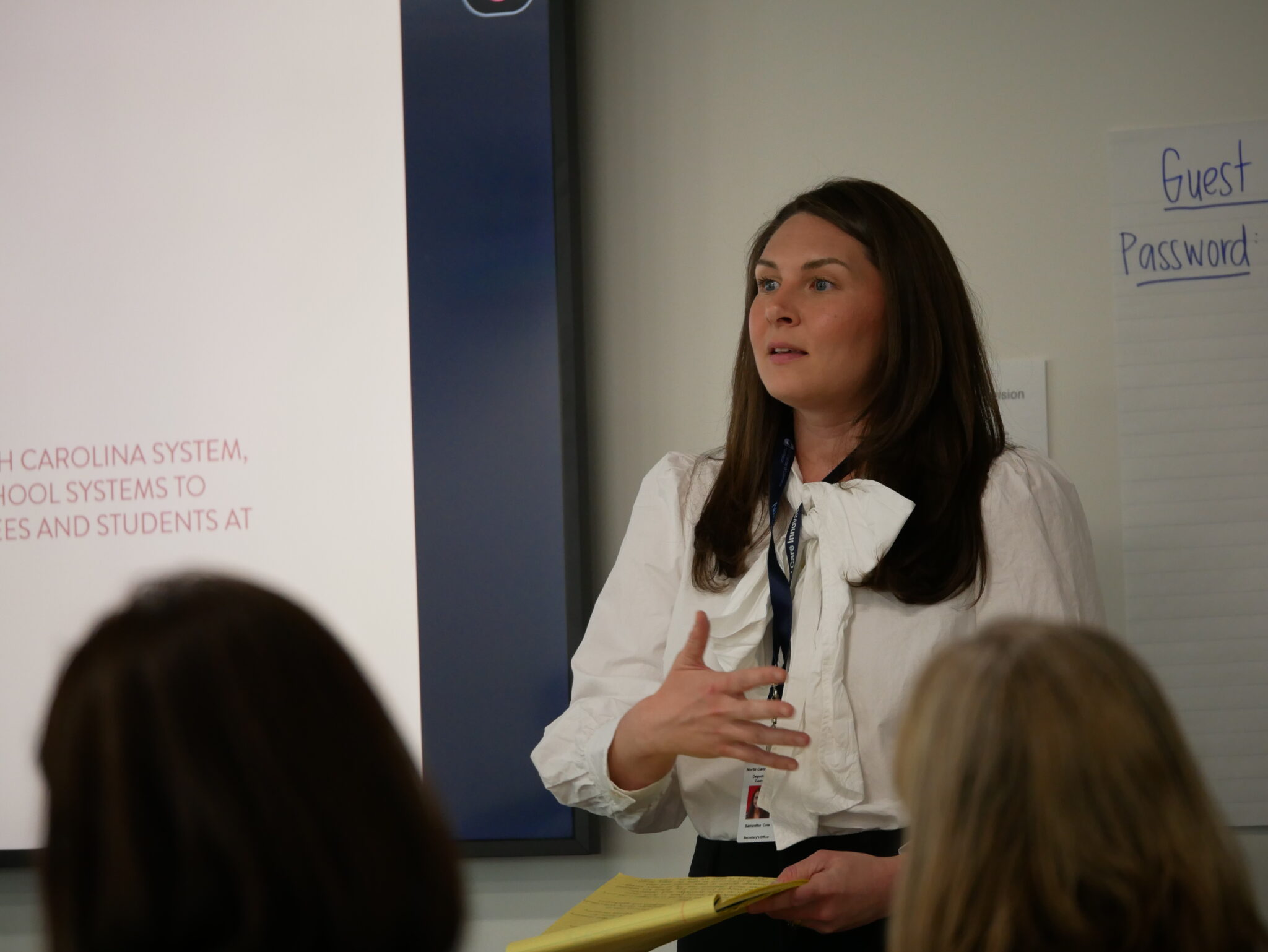
    KISSIMMEE, Fla. — It’s not a rebrand. But the Moms for Liberty group that introduced itself three years ago as a band of female “joyful warriors” shedding domestic modesty to make raucous public challenges to masks, books and curriculum, is trying to glow up.

    The group’s national summit this past weekend at a convention center outside Orlando leaned into family (read: parental rights), faith — and youth. The latter appeared to be a bid to join the cool kids who are the new face of conservatism in America (hint: young, Christian, very male), as well as a recognition of the group’s “diversity,” which includes grandparents, men and kids. 

    But even as the youth — including 20- and 30-something podcasters and social media influencers, as well as student members of the late Charlie Kirk’s Turning Point USA — brought a high-energy vibe, stalwart members got a new assignment. Where past Moms for Liberty attendees were urged to run for school board, this year they were encouraged to turn their grievances into legal challenges. 

    Moms for Liberty CEO and co-founder Tina Descovich acknowledged that while many of them had experienced backlashes as a result of running for school board or publicly challenging books, curricula and policies, they needed to continue the fight. (The more pugnacious co-founder, Tiffany Justice, is now at Heritage Action, an arm of right-wing think tank The Heritage Foundation.) 

    “You have lost family, you have lost friends, you have lost neighbors, you’ve lost jobs, you’ve lost whole careers,” she said. Yet she insisted that it was vital that they “shake off the shackles of fear and stand for truth or we are going to lose Western civilization as a whole.”

    Related: Become a lifelong learner. Subscribe to our free weekly newsletter featuring the most important stories in education. 

    The gathering held up “the free state of Florida” as an example of Republican policies to be emulated, including around school choice and parental rights. The state’s attorney general, James Uthmeier, boasted of having created a state Office of Parental Rights last spring, describing it as “a law firm for parents.” 

    He trumpeted the state’s lawsuit against Target over the “market risks” of LGBTQ+ pride-themed merchandise and encouraged parents to reach out with potential legal actions. “If you’re identifying one of these wrongs that’s violating your rights and then subjecting our kids to danger and evil, then we want to know about it,” he said. “And we’re going to bring the heat in court to shut it down.”

    Tina Descovich, CEO and co-founder of Moms for Liberty, was interviewed on Real America’s Voice, a conservative news and entertainment network that set up a remote studio outside of the Sun Ballroom at the Moms for Liberty national summit. Credit: Laura Pappano for The Hechinger Report

    The shifting legal landscape, not just in Florida but nationally, had speakers gushing about the opportunity to file new challenges, particularly in the wake of the Supreme Court decision in Mahmoud v. Taylor in June. It gives parents broad power to object to school materials, including with LGBTQ+ themes, and the right to remove their children from public school on days when such materials are discussed. 

    “This is where we need to take that big Supreme Court victory and start fleshing it out,” said Matt Sharp, senior counsel at Alliance Defending Freedom, a Christian law firm. He added that they were “needing warriors, joyful warriors, to file cases to start putting meat on the bones of what that does.” 

    The directive to file suit was not just around opt-out policies, which were the basis for the Mahmoud case. (Moms for Liberty has opt-out forms and instructions on its website.) Rather, attendees were also urged to file lawsuits in support of school prayer; against school policies that let students use different names and pronouns without parental consent (what Moms for Liberty terms “secret transitions”); and to give parents access to surveys students take at school, including around mental health.

    “We need people willing to stand up legally and be, you know, named plaintiffs,” Kimberly S. Hermann, president of the Southeastern Legal Foundation, a conservative policy group, said on a panel featuring two moms who sued their school districts. Winning a lawsuit or even just bringing one in one state, said Hermann, can get other school districts and states to adopt policies, presumably to avoid lawsuits themselves. 

    “One offensive litigation can have this amazing ripple effect,” she said. She and others made clear that there is staff to provide support. The legal groups will “stand with you,” said Sharp, “whether you’re passing the law or passing the local policy all the way to litigating these cases.”

    Even as speakers criticized public schools particularly around LGBTQ+ issues, not as a form of inclusion but as foisting views into classrooms, they relished the chance to infuse their values into schools. 

    Filing these lawsuits is more than “just fighting for your role as parents,” Sharp told parents in a breakout session. “You’re ultimately fighting for your kids’ ability to be in their schools and make a difference, to be the salt and light in those classrooms with their friends and to take our message of freedom, of faith, of justice and to really spread it all across the schools.”

    Related: America’s schools and colleges are operating under two totally different sets of rules for sex discrimination 

    Overall, this year’s Moms for Liberty event lacked the obvious drama of recent years. The flood of protesters in 2023 in Philadelphia required a large police presence and barricades around the hotel, along with warnings not to wear Moms for Liberty lanyards on the streets. 

    This year, there were no protests. That was partly because the event was held in a secluded resort convention center that could accommodate 800 (larger than the 500-ish of past hotels). But the group failed to fill the venue or attract much media attention. There was on-location broadcast by Real America’s Voice, a conservative news and entertainment network, from a set outside the Sun Ballroom. (Steve Bannon interviewed Descovich on his show, “The War Room.”)

    It also didn’t draw opposition because protesters had a bigger target. Saturday saw “No Kings” rallies across the country, with thousands decrying what they see as President Donald Trump’s authoritarianism. “I forgot it was happening since they’re mostly ignored these days,” state Sen. Carlos Guillermo Smith, (D-Orlando) and a senior advisor to LGBTQ+ rights group Equality Florida, said in a text message about the Moms for Liberty event. Liz Mikitarian, founder of the national group, Stop Moms for Liberty, which is based in Florida, said the moms “are still a threat” but not worth organizing a protest against. 

    It was also a quieter affair than last year’s in Washington, D.C. There, Trump’s appearance fed a party atmosphere with Southern rock, sequined MAGA outfits and a cash bar. (This year, Trump appeared, but only in a prerecorded video message.)

    Sequined merchandise for sale at the Moms for Liberty gathering by the company Make America Sparkle Again included tops and jackets that paid tribute to Charlie Kirk, the slain founder of Turning Point USA. Credit: Laura Pappano for The Hechinger Report

    The three-day event, of course, aired familiar grievances in familiarly florid language — conservative school choice activist Corey DeAngelis railed against teacher unions over the “far-left radical agenda that they’re trying to push down children’s throats in the classroom.” Other sessions covered the expected — the alleged dangers of LGBTQ+ policies, in sports, restrooms, school curricula and books — but there was also discussion of concerns (shared on left and right) over youth screen use, online predators and artificial intelligence.

    The event made room for MAHA, the Make America Healthy Again movement led by Robert F. Kennedy Jr., the secretary of Health and Human Services. Descovich interviewed Dr. Joseph Ladapo, the Florida surgeon general who is working to eliminate all vaccine mandates for the state’s schoolchildren.

    But the move by Moms for Liberty to attract young conservatives elevated the energy in the room. It was apparent not only in a tribute to Kirk, the slain founder of Turning Point USA, which trains young conservatives on high school and college campuses. About 40 Florida TPUSA members took the ballroom stage to accept the “Liberty Sword,” the group’s highest honor, posthumously awarded to Kirk. 

    Related: Red school boards in a blue state asked Trump for help — and got it

    It also showed up in a breakout session of mostly conservative social media influencers and podcasters who offered tips on using humor and handling online trolls: Lydia Shaffer (aka the Conservative Barbie 2.0), Alex Stein, Gates Garcia, Kaitlin Bennett, Angela Belcamino (known as “The Bold Lib,” who said she was surprised to have been invited), and Jayme Franklin, who in addition to her podcast is the Gen Z founder of The Conservateur, a conservative lifestyle brand that The New Yorker called “Vogue, But for Trumpers.”

    They have built huge followings based on their compulsion to provoke. “We need to go back to biblical values of what it means to be a real man and what it means to be a real woman,” urged Franklin. “People want that guidance, and that needs to begin at church. We need to push people back into the pews.”

    Their inclusion, like that of conservative commentator Benny Johnson, who moderated a panel, “Fathers: The Defenders of the Family,” appeared to recognize a need to expand the base — and be edgier. Johnson charged out on stage and trumpeted that “God’s first commandment to us was, ‘Go, be fruitful, multiply.’ Go make babies!!!!” He quipped that “right-wing moms, they’re happier, right?” and asked the crowd, “Any trad wife moms out there?”

    The phrase is shorthand for a woman who embraces a traditional domestic role, often with an emphasis on fashion and style. Johnson — who credited Kirk for prodding him to find Jesus, get married and become a father (he has four children) — argued that Republicans, especially those in Gen Z, should embrace the traditional nuclear family identity as a winning political move.

    “We are the party of parents. We are the party of children,” he said, adding that traditional values were already dominating culture and politics. “We live in a center-right country. And I’m tired of pretending that we don’t,” he said, and showed a map of red and blue votes in the 2024 presidential election. “This is the shift. You live in a red kingdom.”

    Contact editor Caroline Preston at 212-870-8965, via Signal at CarolineP.83 or on email at [email protected].  

    This story about Moms for Liberty was produced by The Hechinger Report, a nonprofit, independent news organization focused on inequality and innovation in education. Sign up for the Hechinger newsletter.

    The Hechinger Report provides in-depth, fact-based, unbiased reporting on education that is free to all readers. But that doesn’t mean it’s free to produce. Our work keeps educators and the public informed about pressing issues at schools and on campuses throughout the country. We tell the whole story, even when the details are inconvenient. Help us keep doing that.

    Join us today.

    Source link

  • Parents, advocates alarmed as Trump leverages shutdown to gut special education department

    Parents, advocates alarmed as Trump leverages shutdown to gut special education department

    Two months after Education Secretary Linda McMahon was confirmed, she and a small team from the department met with leadership from the National Center for Learning Disabilities, an advocacy group that works on behalf of millions of students with dyslexia and other disorders. 

    Jacqueline Rodriguez, NCLD’s chief executive officer, recalled pressing McMahon on a question raised during her confirmation hearing: Was the Trump administration planning to move control and oversight of special education law from the Education Department to Health and Human Services?

    Rodriguez was alarmed at the prospect of uprooting the 50-year-old Individuals with Disabilities in Education Act (IDEA), which spells out the responsibility of schools to provide a “free, appropriate public education” to students with disabilities. Eliminating the Education Department entirely is a primary objective of Project 2025, the conservative blueprint that has guided much of the administration’s education policy. After the department is gone, Project 2025 said oversight of special education should move to HHS, which manages some programs that help adults with disabilities. 

    But the sprawling department that oversees public health has no expertise in the complex education law, Rodriguez told McMahon.

    “Someone might be able to push the button to disseminate funding, but they wouldn’t be able to answer a question from a parent or a school district,” she said in an interview later. 

    For her part, McMahon had wavered during her confirmation hearing on the subject. “I’m not sure that it’s not better served in HHS, but I don’t know,” she told Sen. Tim Kaine, D-Va., who shared concerns from parents worried about who would enforce the law’s provisions.

    But nine days into a government shutdown that has furloughed most federal government workers, the Trump administration announced that it was planning a drastic “reduction in force” that would lay off more than 450 people, including almost everyone who works in the Office of Special Education Programs. Rodriguez believes the layoffs are a way that the administration plans to force the special education law to be managed by some other federal office.

    Related: Become a lifelong learner. Subscribe to our free weekly newsletter featuring the most important stories in education. 

    The Education Department press office did not respond to a question about the administration’s plans for special education oversight. Instead, the press office pointed to a social media post from McMahon on Oct. 15. The fact that schools are “operating as normal” during the government shutdown, McMahon wrote on X, “confirms what the President has said: the federal Department of Education is unnecessary.”’

    Yet in that May meeting, Rodriguez said she was told that HHS might not be the right place for IDEA, she recalled. While the new department leadership made no promises, they assured her that any move of the law’s oversight would have to be done with congressional approval, Rodriguez said she was told. 

    The move to gut the office overseeing special education law was shocking to families and those who work with students with disabilities. About 7.5 million children ages 3 to 21 are served under IDEA, and the office had already lost staffers after the Trump administration dismissed nearly half the Education Department’s staff in March, bringing the agency’s total workforce to around 2,200 people. 

    For Rodriguez, whose organization supports students with learning disabilities such as dyslexia, McMahon’s private assurances was the administration “just outright lying to the public about their intentions.”

    “The audacity of this administration to communicate in her confirmation, in her recent testimony to Congress and to a disability rights leader to her face, ‘Don’t worry, we will support kids with disabilities,’” Rodriguez said. “And then to not just turn a 180-degree on that, but to decimate the ability to enforce the law that supports our kids.”

    She added: “It could not just be contradictory. It feels like a bait and switch.”

    Five days after the firings were announced, a U.S. district judge temporarily blocked the administration’s actions, setting up a legal showdown that is likely to end up before the Supreme Court. The high court has sided with the president on most of his efforts to drastically reshape the federal workforce. And President Donald Trump said at a Tuesday press briefing that more cuts to “Democrat programs” are coming.

    “They’re never going to come back in many cases,” he added.

    Related: Hundreds of thousands of students are entitled to training and help finding jobs. They don’t get it

    In her post on X, McMahon also said that “no education funding is impacted by the RIF, including funding for special education,” referring to the layoffs. 

    But special education is more than just money, said Danielle Kovach, a special education teacher in Hopatcong, N.J. Kovach is also a former president of the Council for Exceptional Children, a national organization for special educators.

    “I equate it to, what would happen if we dismantled a control tower at a busy airport?” Kovach said. “It doesn’t fly the plane. It doesn’t tell people where to go. But it ensures that everyone flies smoothly.”

    Katy Neas, a deputy assistant secretary in the Office of Special Education and Rehabilitative Services during the Biden administration, said that most people involved in the education system want to do right by children.

    “You can’t do right if you don’t know what the answer is,” said Neas, who is now the chief executive officer of The Arc of the United States, which advocates for people with intellectual and developmental disabilities. “You can’t get there if you don’t know how to get your questions answered.”

    Families also rely on IDEA’s mandate that each child with a disability receives a free, appropriate public education — and the protections that they can receive if a school or district does not live up to that requirement.

    Maribel Gardea, a parent in San Antonio, said she fought with her son’s school district for years over accommodations for his disability. Her son Voozeki, 14, has cerebral palsy and is nonverbal. He uses an eye-gaze device that allows him to communicate when he looks at different symbols on a portable screen. The district resisted getting the device for him to use at school until, Gardea said, she reminded them of IDEA’s requirements.

    “That really stood them up,” she said.

    Related: Trump wants to shake up education. What that could mean for a charter school started by a GOP senator’s wife

    Gardea, the co-founder of MindShiftED, an organization that helps parents become better advocates for their children with disabilities, said the upheaval at the Education Department has her wondering what kind of advice she can give families now.

    For example, an upcoming group session will teach parents how to file official grievances to the federal government if they have disputes with their child’s school or district about services. Now, she has to add in an explanation of what the deep federal cuts will mean for parents.

    Voozeki Gardea, who attends school in the San Antonio area, uses an eye-gaze communication device with the assistance of school paraprofessional Vanessa Martinez. The device verbalizes words and phrases when Voozeki looks at different symbols. Credit: Courtesy Maribel Gardea

    “I have to tell you how to do a grievance,” she said she plans to tell parents. “But I have to tell you no one will answer.”

    Maybe grassroots organizations may find themselves trying to track parent complaints on their own, she said, but the prospect is exhausting. “It’s a really gross feeling to know that no one has my back.”

    In addition to the office that oversees special education law, the Rehabilitation Services Administration, which is also housed at the Department of Education and supports employment and training of people with disabilities, was told most of its staff would be fired.

    “Regardless of which office you’re worried about, this is all very intentional,” said Julie Christensen, the executive director of the Association of People Supporting Employment First, which advocates for the full inclusion of people with disabilities in the workforce. “There’s no one who can officially answer questions. It feels like that was kind of the intent, to just create a lot of confusion and chaos.”

    Those staffers “are the voice within the federal government to make sure policies and funding are aligned to help people with disabilities get into work,” Christensen said. Firing them, she added, is counterintuitive to everything the administration says it cares about. 

    For now, advocates say they are bracing for a battle similar to those fought decades ago that led to the enactment of civil rights law protecting children and adults with disabilities. Before the law was passed, there was no federal guarantee that a student with a disability would be allowed to attend public school.  

    “We need to put together our collective voices. It was our collective voices that got us here,” Kovach said.

    And, Rodriguez said, parents of children in special education need to be prepared to be their own watchdogs. “You have to become the compliance monitor.” 

    It’s unfair, she said, but necessary. 

    Contact staff writer Christina Samuels at 212-678-3635 or [email protected].

    This story about special education was produced by The Hechinger Report, a nonprofit, independent news organization focused on inequality and innovation in education. Sign up for the Hechinger newsletter.

    The Hechinger Report provides in-depth, fact-based, unbiased reporting on education that is free to all readers. But that doesn’t mean it’s free to produce. Our work keeps educators and the public informed about pressing issues at schools and on campuses throughout the country. We tell the whole story, even when the details are inconvenient. Help us keep doing that.

    Join us today.

    Source link

  • Preemies often miss out on the help they need

    Preemies often miss out on the help they need

    Every year, tens of thousands of infants are born prematurely, at a low birthweight, or with other conditions that would make them automatically eligible for therapeutic services that could help them thrive. 

    When everything goes smoothly, early intervention provides those services, required by federal law for children ages birth to 3. Funding sources for the program can vary, but it’s often paid for by a mix of federal, state, local, and private insurance dollars.

    But far too few of the youngest children actually receive that help. (It’s an issue I wrote about earlier this year.) One particular gap is in services provided to infants from birth to 1. Only about 1.3 percent of babies that age receive early intervention services, compared to 7.5 percent of 2- to 3-year-olds, according to a new report from the think tank New America.

    Kayla Khan, a long-time speech therapist, has experienced that gap herself. 

    When her infant daughter was released after a month and a half in neonatal intensive care, she asked the discharge team about early intervention services. Because of her background, she knew about the therapies. 

    At the time, the family lived in the Washington D.C. area, and no one at the hospital was helpful. “They said, ‘You don’t want that,’ or, ‘It’s not going to help you,’” Khan recalled.

    After moving to Seattle a few months later, Khan finally connected with early intervention services that provided physical and feeding therapy to her daughter. She now helps lead a decade-old effort in Seattle to provide care and support specifically to families of “tiny babies” who are transitioning from the hospital to home.

    The program relies on building trust and communication with hospital staff to ensure eligible babies get referred to early intervention and speeding up the evaluation timeline so babies get seen within three days of a referral — “really, really, really fast” for a system where the requirement for referral is 45 days, Khan said. Her program also connects families with therapists who are skilled and trained in the specific needs of newborns. 

    “We’re making this process that was designed for all children, birth to 3, work for the tiniest babies,” Khan said.

    This kind of targeted attention for the youngest is desperately needed, according to the New America report and another that focused on Illinois, from early nonprofit advocacy group Start Early. (I recently completed a reporting fellowship with New America which supported some of my writing on early intervention, among other topics.)  

    Among the two reports’ recommendations:

    Make the list of conditions that automatically qualify a baby for early intervention easy to understand and find. States have identified scores of different qualifying conditions that make a child more likely to develop a delay, including extreme prematurity, low birthweight, a parent with a substance use disorder, and child welfare involvement. But, as the New America report points out, finding a user-friendly list of the conditions can be a challenge. “The eligibility criteria and the way things work varies so much from one state to the next,” said report co-author Carrie Gillispie, the Early Development & Disability project director at New America.   

    The Start Early report noted that in a related study, two families were judged ineligible for early intervention despite their children having medical conditions that should have made them automatically eligible.

    Consider co-locating early intervention staff in the NICU to make the transition as smooth as possible. Coordinators would be physically present in NICUs to build relationships, participate in medical rounds, and lead the process to enroll children in early intervention programs, the Start Early authors wrote. Both reports stress the importance of providing the family with a personal connection to early intervention before a baby gets discharged from the hospital.

    Improve coordination and communication with the early intervention system, hospitals and pediatricians. Pediatricians are not always notified when doctors in the hospital refer a child to early intervention services. And well-child visits are often so short that physicians miss the full developmental picture. Too often, referrals come after a child is already starting to struggle, said Sarah Gilliland, a senior policy analyst in the New Practice Lab at New America, who co-wrote the report.

    Bridge cultural and language barriers with families by hiring more multilingual hospital and early intervention staff. Cultural divides are pervasive throughout the early intervention system, where the overwhelming majority of the therapists and other providers in many communities are white, English-speaking women. But even simple forms often go untranslated: One survey found that nearly three-quarters of state early intervention referral forms are only available in English, the New America report noted. The  report also stressed that families should be reassured that early intervention services are meant to be support, not surveillance. “Hesitant families might benefit from a connection with families within their own communities who can explain what to expect from early intervention,” the authors wrote.

    Strengthen electronic referral systems and centralize enrollment in early intervention programs. When I reported on the too-often broken path from the NICU to early intervention in Chicago, I heard stories of a system that relied heavily on faxing paper forms. NICU physicians often had no idea what happened with referrals they made. Indeed, surveys have found that only a fraction of early intervention coordinators have access to technology that links children’s electronic health records to the referral system.

    Some states and communities are introducing technological advances which could be implemented more widely, the New America report noted. For instance, one state is trying to address the problem using “e-referrals,” which share an infant’s medical records directly with the early intervention system. 

    We want to hear from you

    We want to help you make sense of the first year of the Trump administration and the effects on education. What have you experienced? What do you want to know more about? Tell us, and you will help inspire reporting by our journalists. Email [email protected].

    This story about preemies was produced by The Hechinger Report, a nonprofit, independent news organization focused on inequality and innovation in education. Sign up for the Hechinger newsletter.

    The Hechinger Report provides in-depth, fact-based, unbiased reporting on education that is free to all readers. But that doesn’t mean it’s free to produce. Our work keeps educators and the public informed about pressing issues at schools and on campuses throughout the country. We tell the whole story, even when the details are inconvenient. Help us keep doing that.

    Join us today.

    Source link

  • Texas Teachers, Parents Fear STAAR Overhaul Doesn’t Do Enough – The 74

    Texas Teachers, Parents Fear STAAR Overhaul Doesn’t Do Enough – The 74


    Get stories like this delivered straight to your inbox. Sign up for The 74 Newsletter

    Texas public school administrators, parents and education experts worry that a new law to replace the state’s standardized test could potentially increase student stress and the amount of time they spend taking tests, instead of reducing it.

    The new law comes amid criticism that the State of Texas Assessment of Academic Readiness, or STAAR, creates too much stress for students and devotes too much instructional time to the test. The updated system aims to ease the pressure of a single exam by replacing STAAR with three shorter tests, which will be administered at the beginning, middle and end of the year. It will also ban practice tests, which Texas Education Agency Commissioner Mike Morath has said can take up weeks of instruction time and aren’t proven to help students do better on the standardized test. But some parents and teachers worry the changes won’t go far enough and that three tests will triple the pressure.

    The law also calls for the TEA to study how to reduce the weight testing carries on the state’s annual school accountability ratings — which STAAR critics say is one reason why the test is so stressful and absorbs so much learning time — and create a way for the results of the three new tests to be factored into the ratings.

    That report is not due until the 2029-30 school year, and the TEA is not required to implement those findings. Some worry the new law will mean schools’ ratings will continue to heavily depend on the results from the end-of-year test, while requiring students to start taking three exams. In other words: same pressure, more testing.

    Cementing ‘what school districts are already doing’

    The Texas Legislature passed House Bill 8 during the second overtime lawmaking session this year to scrap the STAAR test.

    Many of the reforms are meant to better monitor students’ academic growth throughout the school year.

    For the early and mid-year exams, schools will be able to choose from a menu of nationally recognized assessments approved by the TEA. The agency will create the third test. Under the law, the three new tests will use percentile ranks comparing students to their peers in Texas; the third will also assess a student’s grasp of the curriculum.

    In addition, scores will be required to be released about two days after students take the exam, so teachers can better tailor their lessons to student needs.

    State Sen. Paul Bettencourt, R-Houston, one of the architects behind the push to revamp the state’s standardized test, said he would like the first two tests to “become part of learning” so they can help students prepare for the end-of-year exam.

    But despite the changes, the new testing system will likely resemble the current one when it launches in the 2027-28 school year, education policy experts say.

    “It’s gonna take a couple of years before parents realize, to be honest, that you know, did they actually eliminate STAAR?” said Bob Popinski with Raise Your Hand Texas, an education advocacy nonprofit.

    Since many schools already conduct multiple exams throughout the year, the law will “basically codify what school districts are already doing,” Popinski said.

    Lawmakers instructed TEA to develop a way to measure student progress based on the results from the three tests. But that metric won’t be ready when the new testing system launches in the 2027-28 school year. That means results from the standardized tests, and their weight in the state’s school accountability ratings system, will remain similar to what they are now.

    Every Texas school district and campus currently receives an A-F rating based on graduation benchmarks and how students perform on state tests, their improvement in those areas, and how well they educate disadvantaged students. The best score out of the first two categories accounts for most of their overall rating. The rest is based on their score in the last category.

    The accountability ratings are high stakes for school districts, which can face state sanctions for failing grades — from being forced to close school campuses to the ousting of their democratically elected school boards.

    Supporters of the state’s accountability system say it is vital to assess whether schools are doing a good job at educating Texas children.

    “The last test is part of the accountability rating, and that’s not going to change,” Bettencourt said.

    Critics say the current ratings system fails to take into account a lot of the work schools are doing to help children succeed outside of preparing them for standardized tests.

    “Our school districts are doing a lot of interesting, great things out there for our kids,” Popinski said. “Academics and extracurricular activities and co-curricular activities, and those just aren’t being incorporated into the accountability report at all.”

    In response to calls to evaluate student success beyond testing, HB 8 also instructs the TEA to track student participation in pre-K, extracurriculars and workforce training in middle schools. But none of those metrics will be factored into schools’ ratings.

    “There is some other interest in looking at other factors for accountability ratings, but it’s not mandated. It’s just going to be reviewed and surveyed,” Bettencourt said.

    Student stress worries

    Even though many schools already conduct testing throughout the year, Popinski said the new system created by HB 8 could potentially boost test-related stress among students.

    State Rep. Brad Buckley, R-Salado, who sponsored the testing overhaul in the Texas House, wrote in a statement that “TEA will determine testing protocols through their normal process.” This means it will be up to TEA to decide whether to keep or change the rules that it currently uses for the STAAR test. Those include that schools dedicate three to four hours to the exam and that administrators create seating charts, spread out desks and manage restroom breaks.

    School administrators said the worst-case scenario would be if all three of the new tests had to follow lockdown protocols like the ones that currently come with STAAR. Holly Ferguson, superintendent of Prosper ISD, said the high-pressure environment associated with the state’s standardized test makes some of her students ill.

    “It shouldn’t be that we have kids sick and anxiety is going through the roof because they know the next test is coming,” Ferguson said.

    The TEA did not respond to a request for comment.

    HB 8 also seeks to limit the time teachers spend preparing students for state assessments, partly by banning benchmark tests for 3-8 grades. Bettencourt told the Tribune the new system is expected to save 22.5 instructional hours per student.

    Buckley said the new law “will reduce the overall number of tests a student takes as well as the time they spend on state assessments throughout the school year, dramatically relieving the pressure and stress caused by over-testing.”

    But some critics worry that any time saved by banning practice tests will be lost by testing three times a year. In 2022, Florida changed its testing system from a single exam to three tests at the beginning, middle and end of the year. Florida Gov. Ron DeSantis said the new system would reduce test time by 75%, but the number of minutes students spent taking exams almost doubled the year the new system went into effect.

    Popinski added that much of the stress the test induces comes from the heavy weight the end-of-year assessment holds on a school’s accountability rating. The pressure to perform that the current system places on school district administrators transfers to teachers and students, critics have said.

    “The pressures are going to be almost exactly the same,” Popinski said.

    What parents, educators want for the new test

    Retired Fort Worth teacher Jim Ekrut said he worries about the ban on practice tests, because in his experience, test preparations helped reduce his students’ anxiety.

    Ekrut said teachers’ experience assessing students is one reason why educators should be involved in creating the new end-of-year exam.

    “The better decisions are going to be made with input from people right on that firing line,” Ekrut said.

    HB 8 requires that a committee of educators appointed by the commissioner reviews the new test that TEA will create. Some, like Ferguson and David Vinson, former superintendent of Wylie ISD who started at Conroe this week, said they hope the menu of possible assessments districts can pick for the first two tests includes a national program they already use called Measures of Academic Progress, or MAP.

    The Prosper and Wylie districts are some that administer MAP exams at the beginning, middle and end of the year. More than 4,500 school districts nationwide use these online tests, which change the difficulty of the questions as students log their answers to better assess their skill level and growth. A 2024 study conducted by the organization that runs MAP found that the test is a strong indicator of how students perform on the end-of-year standardized test.

    Criteria-based tests like STAAR measure a student’s grasp on grade-level skills, whereas norm-based exams like MAP measure a student’s growth over the course of instruction. Vinson described this program as a “checkup,” while STAAR is an “autopsy.”

    Rachel Spires, whose children take MAP tests at Sunnyvale ISD, said MAP testing doesn’t put as much pressure on students as STAAR does.

    Spires said her children’s schedules are rearranged for the month of April, when Sunnyvale administers the STAAR test, and parents are barred from coming to campus for lunch. MAP tests, on the other hand, typically take less time to complete, and the school has fewer rules for how they are administered.

    “When the MAP tests come around, they don’t do the modified schedules, and they don’t do the review packets and prep testing or anything like that,” Spires said. “It’s just like, ‘Okay, tomorrow you’re gonna do a MAP test,’ and it’s over in like an hour.”

    For Ferguson, the Prosper ISD superintendent, a relaxed environment around testing is key to achieving the new law’s goal of reducing student stress.

    “If it’s just another day at school, I’m all in,” Ferguson said. “But if we lock it down, and we create a very compliance-driven system that’s very archaic and anxiety- and worry-inducing to the point that it starts having potential harmful effects on our kids … our teachers and our parents, I’m not okay with that.”

    This article originally appeared in The Texas Tribune at https://www.texastribune.org/2025/09/24/texas-staar-replacement-map-testing/. The Texas Tribune is a member-supported, nonpartisan newsroom informing and engaging Texans on state politics and policy. Learn more at texastribune.org.


    Get stories like these delivered straight to your inbox. Sign up for The 74 Newsletter

    Source link

  • Rural Americans support more government spending on child care

    Rural Americans support more government spending on child care

    Hello! This is Christina Samuels, the early education editor here at Hechinger.

    By now, I hope you’ve had a chance to read my colleague Jackie Mader’s story about the important role that Head Start plays in rural communities. While Jackie set her story in western Ohio, she also interviewed Head Start parents and leaders in other parts of the country and collected their views for a follow-up article.

    In a fortunate bit of timing, the advocacy group First Five Years Fund published the results of a survey it commissioned on rural Americans and their feelings on child care access and affordability. Like the people Jackie interviewed, the survey respondents, more than half of whom identified as supporters of President Donald Trump, said they had very positive views of Head Start. The federally funded free child care program received positive marks from 71 percent of rural Republicans, 73 percent of rural independents and 92 percent of rural Democrats.

    The survey also found that 4 out of 5 respondents felt that finding quality child care is a major or critical problem in their part of the country. Two-thirds of those surveyed felt that spending on child care and early education programs is a good use of taxpayer dollars, and a little more than half said they’d like to see more federal dollars going to such programs.

    First Five Years Fund was particularly interested in getting respondents to share their thoughts on Head Start, said Sarah Rubinfield, the managing director of government affairs for First Five Years Fund. The program has been buffeted by regional office closures and cuts driven by the administration’s Department of Government Efficiency. 

    “We recognize that these are communities that often have few options for early learning and care,” Rubinfield said.

    In the survey, rural residents said they strongly supported not just the child care offered by Head Start, but the wraparound services such as healthy meals and snacks and the program’s support for children with developmental disabilities. Though Head Start programs are federally funded, community organizations are the ones in charge of spending priorities.

    “Rural voters want action. They support funding for Head Start and for child care. They want Congress to do more,” Rubinfield said. Though the “big beautiful bill” signed into law in July expands the child care tax credit for low-income families, survey respondents “recognized that things were not solved,” she added.

    The First Five Years Fund survey was released just a few days before a congressional standoff led to a government shutdown. The shutdown is not expected to touch Head Start immediately, said Tommy Sheridan, the deputy director of the National Head Start Association, in an interview with The New York Times. The 1,600 Head Start programs across the country receive money at different points throughout the calendar year; eight programs serving about 7,500 children were slated to receive their federal funding on Oct. 1, Sheridan told the Times. All should be able to continue operating, as long as the shutdown doesn’t last more than a few weeks, he said. 

    “We’re watching with careful concern but trying not to panic,” Rubinfield said. “We know the impacts may not be immediate, but the longer this goes on, the harder the impacts may be for families and programs.”

    This story about rural Americans was produced by The Hechinger Report, a nonprofit, independent news organization focused on inequality and innovation in education. Sign up for the Hechinger newsletter.

    The Hechinger Report provides in-depth, fact-based, unbiased reporting on education that is free to all readers. But that doesn’t mean it’s free to produce. Our work keeps educators and the public informed about pressing issues at schools and on campuses throughout the country. We tell the whole story, even when the details are inconvenient. Help us keep doing that.

    Join us today.

    Source link

  • Southern University Student’s Parents File Wrongful Death Lawsuit Following Alleged Fraternity Hazing

    Southern University Student’s Parents File Wrongful Death Lawsuit Following Alleged Fraternity Hazing

    T Caleb Jayden Wilson he parents of Caleb Jayden Wilson have filed a comprehensive civil lawsuit seeking accountability from multiple parties they allege are responsible for their son’s death following a fraternity hazing incident at Southern University.

    Urania Brown Wilson and Corey Wilson, Sr., filed the wrongful death and survival damages petition Friday in the 19th Judicial District Court in East Baton Rouge Parish, seven months after losing their 20-year-old son. The junior mechanical engineering student and member of Southern’s renowned “Human Jukebox” marching band died in February following what authorities describe as a brutal hazing ritual.

    The lawsuit casts a wide net of accountability, naming as defendants Omega Psi Phi Fraternity Inc., its local Beta Sigma and Lambda Alpha chapters, the State of Louisiana through the Board of Supervisors of Southern University and A&M College, and 12 individual fraternity members.

    Among the individual defendants are Caleb M. McCray, Kyle M. Thurman, and Isaiah E. Smith—all previously arrested by Baton Rouge police in connection with Wilson’s death. McCray faces the most serious charges, including manslaughter and felony criminal hazing.

    The petition alleges multiple levels of negligence, from gross misconduct by individuals to institutional failures by the university and fraternity organizations. According to the filing, Wilson died as a direct result of being repeatedly punched in the chest during an unsanctioned, off-campus ritual at a local warehouse on February 27.

    The lawsuit particularly criticizes the response following Wilson’s collapse, alleging that fraternity members delayed calling emergency services and instead transported him to a local hospital where they provided false information about his injuries before abandoning him.

    Following an internal investigation that found the Beta Sigma chapter violated the student code of conduct, Southern University expelled the chapter and implemented a temporary moratorium on new member intake activities for all Greek organizations.

    The civil action seeks to leverage Louisiana’s strengthened anti-hazing laws, including the Max Gruver Act, which criminalized certain forms of hazing following another high-profile fraternity death. The legislation was named after Louisiana State University student Maxwell Gruver, who died in a 2017 fraternity hazing incident.

    The case highlights ongoing concerns about hazing culture in higher education and the challenges institutions face in monitoring and preventing dangerous initiation practices, particularly those occurring off-campus and outside official oversight.


    Source link

  • From ‘Bring It On’ to ‘This Policy Is Crazy,’ NYC Parents React to Cellphone Ban – The 74

    From ‘Bring It On’ to ‘This Policy Is Crazy,’ NYC Parents React to Cellphone Ban – The 74

    One year after I reported on New York City parents’ reactions to a proposed ban on cellphones in the classroom, students and teachers have returned to schools with that ban in place. 

    When I asked families on my 4,000-plus-member NYC School Secrets mailing list how they felt about the new restriction, I received answers ranging from enthusiasm to concern. 

    “Phones and smartwatches in classrooms and school hallways are more than just a distraction — they’re a barrier to learning, focus and social development,” according to Manhattan’s Arwynn H.J. 

    “Bring on the ban,” cheered Bronx parent and teacher Jackie Marashlian. “My high school students were ready to air-scroll me toward the ceiling with their fingers, so bored with whatever it was I was trying to impart to them. One day we had a WiFi glitch and I saw my students’ beautiful eyes for the very first time. Bring kids back to face-to-face interaction and socializing during lunch breaks.” 

    “As a middle school teacher in the Bronx and parent of an eighth grader, I think the cellphone ban is fantastic,” agreed Debra. “While my son is ‘devastated’ he can’t have his phone, it scares me that he’s said he doesn’t know what to do at lunch/recess without a phone. Kids have become so reliant on technology, even when they are with their peers, that often they are not really WITH their peers; they are all just staring at their phones. I hope the cellphone ban leads more students to be both physically and mentally present.”

    For mom Elaine Daly, the phone ban affects her more than her special-needs daughter. “My child is 11 and knows she is not to use the phone in school. My parental controls blocks, locks and limits access. But I need her phone to be on so I can also track her, since the NYCSchools bus app always says: Driver offline.”

    Jen C., who reported the ban has been going well with her child in elementary school, sees a bigger issue for her high school-age son. “He has homework online and likes to get started during his free periods. However, he’s not allowed to use his laptop, and there are not enough school issued laptops. I feel that teachers should give off-line work, or the school needs to give access to laptops.”

    Parents of older students were the ones most likely to be against the blanket edict.

    “You can’t have the same policy for kids 6 years old and for 17 years old,” mom Pilar Ruiz Cobo raged. “This policy is crazy for seniors. Yesterday, my daughter had her first college adviser class, and only five kids could work because the rest didn’t remember their passwords to Naviance and the Common App. The verification code was sent only to their phones. Children who don’t study, don’t study with and without phones, now the children who actually work have to work double at home.”

    A Queens mom pinpointed another problem. “Many high school students leave the premises for lunch, and my son’s school is one of those. He said they’re not allowed to take their phones. Children need to use phones outside of school for various reasons; to use phone pay, to contact their parents for lunch money or any updates, etc…”

    The policy varies from school to school. At some, students are allowed to request their phones back when temporarily leaving the premises. However, the larger the school, the less likely it is to have enough staff to handle such exchanges.

    “An interesting aspect of this policy is that although it was presented as a smartphone ban, it’s actually much more expansive, including tablets and laptops,” pointed out dad Adam C. “This presents a challenge for high school students who rely on laptops for receiving, completing and submitting assignments through Google Classroom.”

    “They say parents have to provide their own laptop pouch (there are none similar to Yonder), and they can’t store laptops in backpacks,” confirmed Queens mom Y.N. “My son has afterschool sports activities and likes to do his homework on his laptop in between. I think he’ll have to take it with him and hope they don’t confiscate.”

    “While I’m not opposed to keeping students off platforms like Snapchat during school hours,” Adam continued, “They should be able to connect a laptop to a school-managed Wi-Fi network for school-related purposes, and the current policy doesn’t provide the schools with much leeway around this.”

    But Y.N. doesn’t believe that’s accurate. “I already voiced my concern to the Student Leadership Team (SLT). At the Panel for Education Policy, they said these rules are fluid. Because the regulations came after the SLTs were done for the year, the chancellor said they should be able to change them. She said a plan had to be made before Day One, but it doesn’t mean that adjustments can’t be made at the school level. ‘Tinkering’ was the word they kept using.”

    If that’s the case, perhaps NYC can pull back from its traditional one-size-fits-all approach and allow individual schools to “tinker” and set limitations based on the needs and feedback of their community, adjusting policy based on grade level, academic requirements and a multitude of other factors.


    Get stories like these delivered straight to your inbox. Sign up for The 74 Newsletter

    Source link

  • Report Details Community College Student Parents’ Struggles

    Report Details Community College Student Parents’ Struggles

    A new report from the Center for Community College Student Engagement found that even though parenting students are especially dedicated to their studies, they face significant obstacles in college.

    The report, based on a 2024 survey of students from 164 community colleges, found that parenting students were more engaged than nonparenting students across multiple benchmarks, including coming to class prepared and never skipping classes, despite their additional responsibilities. These students were also more likely than nonparents to have earned an associate degree or certificate or to mention changing careers as a goal.

    But even with such strong drive, 71 percent of student parents reported caring for dependents could cause them to withdraw from college; 73 percent said financial circumstances might make them stop out. Student parents were also more likely than nonparents to face food and housing insecurity, but only small fractions of students reported receiving food or housing support from their college in the last month. In a similar vein, a third of students with children say that their colleges don’t adequately support them as parents. Meanwhile, these students say underutilized supports that could help them, including campus childcare services, financial advising and career counseling, the report found.

    The report also offers examples of higher ed institutions that have put in place effective supports for student parents. For example, Lee College in Texas offers weekly financial assistance for childcare and family-friendly study areas. Monroe Community College in New York created a designated student success coach role to serve single mothers.

    “Parenting students are among the most engaged learners on our campuses, but they face barriers that too often derail their progress,” Linda García, CCCSE’s executive director, said in a news release. “But when colleges take intentional steps to support them, the impact is not only on students, but on their children and communities.”

    Source link

  • Parents Sued LAUSD Over Remote Learning. How the Settlement Will Benefit Students – The 74

    Parents Sued LAUSD Over Remote Learning. How the Settlement Will Benefit Students – The 74


    Get stories like this delivered straight to your inbox. Sign up for The 74 Newsletter

    This story was originally published by CalMatters. Sign up for their newsletters.

    More than 250,000 students in Los Angeles Unified will be eligible for extra tutoring, summer school and other academic help after the district settled a class-action lawsuit alleging that its remote learning practices during the pandemic were discriminatory.

    The settlement, filed in Los Angeles County Superior Court, was announced Wednesday by the law firm representing families who said their children fell disastrously behind during the Covid-related school shutdown in 2020-21.

    “After five years of tireless advocacy on behalf of LAUSD students and families, we are proud to have secured a historic settlement that ensures students receive the resources they need to thrive,” said Edward Hillenbrand, a partner at the law firm Kirkland & Ellis. “This critical support will help pave the way for lasting educational equity.”

    Los Angeles Unified had no comment on the case because the settlement has yet to be approved by the court. A hearing is set for December, although the settlement goes into effect immediately.

    During the COVID-19 pandemic, Los Angeles and nearly every other school district in California closed for in-person learning from March 2020 through fall 2021. Students attended classes virtually, and most fell behind academically. Test scores statewide plummeted after schools reopened. Chronic absenteeism soared.

    In fall 2020, a group of families whose children were languishing during remote learning sued Los Angeles Unified, saying the district wasn’t doing enough to ensure students were receiving an adequate education.

    One parent, Akela Wroten Jr., said that his second-grade daughter was behind before the pandemic and became even more lost during remote learning. She struggled with reading and never got the extra attention she needed because teachers weren’t assessing her progress.

    Another parent, Vicenta Martinez, said her daughter didn’t get any instruction in spring 2020, in part because she never received logon information for remote instruction and the school never followed up. When she finally did access remote classes, the lessons were short and teachers offered little feedback.

    “LAUSD’s remote learning plan fails to provide students with even a basic education and is not preparing them to succeed,” the lawsuit alleged.

    The suit singled out an agreement between the district and its teachers union that said teachers would only be required to work four hours a day, wouldn’t have to give tests and weren’t required to deliver live lessons — their lessons could be asynchronous, or recorded beforehand. In addition, the agreement said the district wouldn’t evaluate or monitor teachers during that time.

    United Teachers Los Angeles supports the settlement, saying it provides more assistance for students while leaving teachers’ “hard-won contractual rights” intact and avoiding “unwarranted judicial interference” in the district.

    The union also noted that student test scores have recovered significantly since the pandemic..

    The plaintiffs argued that the district’s policies discriminated against low-income, Black, Latino, disabled and English learner students, because those were the students least likely to have adequate support to succeed in remote learning. Those student groups also comprise the vast majority of students in the district, the nation’s second-largest.

    The settlement requires the district to offer a host of academic support, including summer school and after-school tutoring, to the 250,000 students who were enrolled in L.A. Unified during the pandemic and are still with the district. Among those students, 100,000 who are performing below grade level will be eligible for 45 hours of one-on-one tutoring every year through 2028.

    This article was originally published on CalMatters and was republished under the Creative Commons Attribution-NonCommercial-NoDerivatives license.


    Get stories like these delivered straight to your inbox. Sign up for The 74 Newsletter

    Source link

  • The New COVID Vaccine Rules Leave Parents with More Questions than Answers – The 74

    The New COVID Vaccine Rules Leave Parents with More Questions than Answers – The 74


    Get stories like this delivered straight to your inbox. Sign up for The 74 Newsletter

    The federal government’s latest guidelines for COVID-19 vaccines make it difficult to know who, exactly, will be able to access shots this fall. While Health and Human Services Secretary Robert F. Kennedy Jr. and some of his staff claim anyone will be able to access a shot in consultation with their doctor, medical groups are warning that the new guidance will impact a broad swath of people, including postpartum people and healthy children.

    “For children and young adults that I see, there are constraints, and they are significant,” said Dr. Molly O’Shea, a pediatrician in Michigan and a spokesperson for the American Academy of Pediatrics (AAP).

    It might also take several more weeks to know who will be able to receive no-cost COVID-19 vaccines covered by health insurance. That decision partly depends on formal recommendations from a vaccine panel that isn’t scheduled to meet until mid-September. 

    Actions by the Food and Drug Administration last week mean that none of the COVID-19 vaccines that are slated to be on the U.S. market this fall will have an emergency use authorization that had allowed their quick (yet still rigorously tested) approval at the height of the pandemic. The removal of this designation means the drug company Pfizer will no longer offer COVID-19 vaccines to very young children, limiting parents’ brand options and potentially impacting supply.

    Moderna, Pfizer and Novavax, the three main COVID-19 vaccine manufacturers, have all shared news releases about what they’ve been approved to offer:

    • Moderna, Pfizer or Novavax will offer shots to anyone who is 65 and older, irrespective of medical history.
    • Pfizer will offer shots to anyone between the ages of five and 64 if they have at least one underlying condition that puts them at high risk for severe outcomes from COVID-19.
    • Moderna will offer shots to anyone between six months and 64 if they have at least one underlying condition that puts them at high risk for severe outcomes from COVID-19.
    • Novavax, the only company providing a non-mRNA COVID-19 vaccine, will offer shots to anyone between 12 and 64 if they have at least one underlying condition that puts them at high risk for severe outcomes from COVID-19.

    The vaccine panel known as the Advisory Committee for Immunization Practices (ACIP) is expected to make formal recommendations on these FDA-approved vaccines, and those recommendations have historically determined whether insurance providers will cover a vaccine at no cost under insurance.

    An HHS spokesperson did not immediately respond to a request for information and comment from The 19th, but in a post on X, Kennedy said: “These vaccines are available for all patients who choose them after consulting with their doctors.” Separately, USA Today reported on a document from HHS stating the FDA’s actions do “not affect access to these vaccines for healthy individuals. These vaccines remain available to those who choose them in consultation with their healthcare provider.”

    Dr. Marty Makary, FDA commissioner, added in a separate X post: “100% of adults in this country can still get the vaccine if they choose. We are not limiting availability to anyone.”

    But what that means practically for everyday people who want to access a COVID-19 shot — everything from whether their doctor will prescribe it, or if a pharmacy will be able to administer it, and whether there will be an out-of-pocket cost — is unclear for now. 

    How will it impact postpartum people?

    Pregnant people are expected to still have access to the vaccine because the CDC continues to list pregnancy as an underlying condition that puts an individual at high risk for severe outcomes from COVID-19. (The list of at least two dozen conditions also includes chronic health conditions and immunocompromised conditions.)

    But Kennedy, who has repeatedly questioned the safety of COVID-19 vaccines despite research that shows their effectiveness, announced in May that the CDC would no longer formally recommend such vaccines to pregnant people and healthy children, a move that seemed to contradict his own department

    Lactating and postpartum individuals must have an underlying medical condition to be eligible for one of the FDA’s approved vaccines, according to the American College of Obstetricians and Gynecologists (ACOG)’s understanding of the announcement. ACOG continues to recommend COVID-19 vaccination to people who are contemplating pregnancy, are pregnant, were recently pregnant or are now lactating.

    “We recognize that now, disappointingly, only lactating and postpartum individuals with an underlying condition will be eligible for vaccination. Still, it remains critical that pregnant patients receive the vaccines so that they are able to provide passive immunity from COVID-19 to their infants in those first few months of life before they can be vaccinated,” said ACOG President Steven J. Fleischman in an email.

    How will it impact healthy children?

    Healthy children will likely still be able to access the COVID vaccine, but the cost for a parent or guardian, as well as availability, will be impacted by these decisions.

    Charlotte A. Moser, co-director of the Vaccine Education Center at Children’s Hospital of Philadelphia, said parents who want to get their kids the COVID-19 vaccine should still be able to do so through what is called shared clinical decision-making in consultation with their child’s health care provider, according to the CDC’s current vaccine schedule. But it’s unclear whether this will change when ACIP meets again.

    But physicians who prescribe a COVID-19 vaccine outside of the parameters of how the FDA approved them would be OKing use of the shot “off-label” — a designation that means a medical product is being used outside of how the FDA approved it. That raises questions about access and cost. Physicians might not be willing to prescribe off-label because of concerns about liability.

    “I think that there will be a substantially smaller number of pediatricians, pharmacies, etc., who will be comfortable taking that risk,” O’Shea said.

    Dr. Dial Hewlett, medical director of tuberculosis services at Westchester County Department of Health in New York and a spokesperson for the Infectious Diseases Society of America, said an off-label prescription might also not be covered by insurance.

    “A mother or father can go in with their child and say, ‘I’d like for them to have the vaccine,’ but they may be told, ‘Well we’ll give it, but you’re going to have to pay $200,’” he said.

    The science on COVID vaccines has consistently indicated they are safe for children to receive.
    (Joseph Prezioso / AFP / Getty Images)

    Depending on the circumstances, pharmacists may also not be able to provide off-label vaccines. Some states tie pharmacist immunization authority to FDA approval,which has the potential to create a hodgepodge of access. The New York Times reported that CVS and Walgreens, the country’s largest pharmacy chains, have begun restricting COVID-19 shots in some states to people with a prescription. 

    “There may be some variability from state to state, but it’s a big barrier if FDA approval is not there, and the FDA approvals have been pulled back from where they were previously,” Hewlett said.

    The FDA announcement is “concerning,” added Moser, who noted that limiting Pfizer’s vaccine will make it more difficult for all children to get a COVID-19 vaccine this year because of anticipated supply limitations.

    O’Shea, the pediatrician in Michigan, said her office is currently deciding how many COVID-19 shots to stock, and it’s proving tricky as they weigh the cost vs. demand — the percentage of children under 18 getting the shot is under 15 percent.

    “Figuring out how much we want to have at any one time, and how we are going to give it to people — this really makes it a lot more complicated,” she said.

    What happens next?

    Moser said the announcement adds confusion for providers and families, and noted that the unilateral approach by Kennedy so far when it comes to vaccine policy “removes hundreds of voices of clinicians and scientists that were part of the process.” Moser recently served on ACIP and is among the members that Kennedy removed. He has replaced the panel with people who do not have relevant experience.

    “That army of voices ensured a process informed by clinical experience and scientific expertise to which the small group making these decisions now cannot possibly compare,” she said in an email.

    The revamped ACIP panel is scheduled to meet over two days beginning on September 18. Republican Sen. Bill Cassidy, a doctor who is chair of the Senate Health, Education, Labor, and Pensions (HELP) Committee, is now questioning whether that panel has enough legitimacy to meet, especially amid a leadership shakeup at the Centers for Disease Control and Prevention

    “Serious allegations have been made about the meeting agenda, membership, and lack of scientific process being followed for the now announced September ACIP meeting,” he said in a statement. “These decisions directly impact children’s health and the meeting should not occur until significant oversight has been conducted. If the meeting proceeds, any recommendations made should be rejected as lacking legitimacy given the seriousness of the allegations and the current turmoil in CDC leadership.”

    AAP called Kennedy’s latest COVID guidelines “deeply troubling” and urged COVID vaccine decision-making to remain between medical experts and families. 

    Dr. Susan J. Kressly, president of AAP, said in a statement that any barrier to COVID-19 vaccination as the nation enters the respiratory virus season creates “a dangerous vulnerability for children and their families.”

    “Any parent who wants their child vaccinated should have access to this vaccine,” she said, adding that HHS’ action “not only prevents this option for many families, but adds further confusion and stress for parents trying to make the best choices for their children.”

    This story was originally reported by Barbara Rodriguez of The 19th. Meet Barbara and read more of their reporting on gender, politics and policy.


    Get stories like these delivered straight to your inbox. Sign up for The 74 Newsletter

    Source link