
Tag: partially

  • Trump Partially Funds SNAP, Colleges Scramble

    Trump Partially Funds SNAP, Colleges Scramble

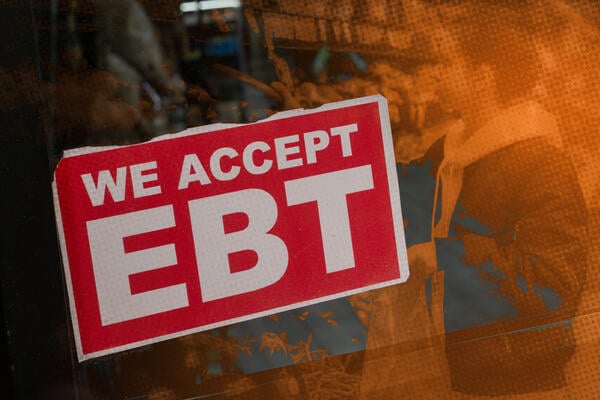
    In the last week, campuses scrambled to shore up resources as 42 million Americans, including over a million college students, prepared to lose federal assistance to buy food. Payments for the Supplemental Nutrition Assistance Program, or SNAP, didn’t go out on the first of the month as they normally would amid the ongoing government shutdown.

    Now the Trump administration plans to dole out some of the benefits this month—but not all—in response to two federal court orders.

    In court filings Monday, the Trump administration agreed to expend emergency reserves to issue partial benefits this month, but also said the funds will only cover half of eligible households’ current benefits. And for at least some states, payments could take months to come through because of bureaucratic hurdles.

    Erika Roberson, senior policy associate at the Institute for College Access and Success, said she worries students who rely on SNAP will still get less food than they need.

    “Some food is not nearly enough food—especially when students are left to decide between finding their next meal and studying for an exam,” Roberson said in a statement to Inside Higher Ed. “Food should not be a luxury, but today, sadly, many college students are finding themselves in a position where that’s their reality.”

    And while partial benefits are better than none at all, some questions remain unanswered. It’s unclear whether all SNAP recipients will get half of their benefits or whether some will get less than others this month, said Mark Huelsman, director of policy and advocacy at the Hope Center for Student Basic Needs at Temple University. He also expects payments to be delayed.

    “I think that it still holds that campuses and food pantries and community organizations are going to be stretched pretty thin in the coming weeks,” Huelsman said, “even if the courts did the right thing here and stepped in and made sure that people’s benefits weren’t completely withheld.”

    Campuses ‘Plan for the Worst’

    Colleges and universities across the country have been furiously stocking up their campus pantries and expanding on-campus food programs in preparation for a pause in SNAP.

    Southeast Community College in Nebraska typically runs a food drive in November for the food pantries on its three campuses. But this year, the college started its drive a month early, predicting a surge of students in need. Already, the Lincoln campus’s pantry went from serving 49 students two years ago to 505 students this September, said Jennifer Snyder, communications specialist at Southeast Community College. That number is only expected to grow. The college also plans to run a fundraising campaign for its emergency scholarship fund in case more students need aid than usual.

    Ramping up these supports comes with challenges, Snyder said. Campus pantries used to be able to stock up by buying items at a low price from local food banks, but food banks are holding on to more of their goods as they also prepare for increases in demand. As campus pantries become harder to fill, Snyder worries staff members will have to make difficult decisions about how much food students can take.

    “The need is there, and the demand is there, but the supply just keeps dwindling,” Snyder said. “So, how do you make it even? How do you make it fair for everybody so that everybody has access?”

    Snyder said the Trump administration’s promise to partially fund SNAP this month hasn’t changed the college’s plans.

    “If it’s partial funding, that’s a benefit,” she said. But “you just don’t know when it’s going to be taken away, so we should plan for the worst.”

    Keith Curry, president of Compton College in Los Angeles, also sprang into action when he realized his students’ SNAP benefits were at risk.

    The college already offers students one free meal per day through a partnership with the nonprofit Everytable. Starting Wednesday, the college is upping the number to two free meals daily for students participating in CalFresh, the state’s SNAP program, and CalWORKs, a state benefit program for low-income families. CalWORKs students will also get $50 in grocery vouchers per week, and students in either program get an extra $20 in farmers market vouchers per week.

    Compton College also has a data-sharing agreement with the Los Angeles County Department of Public Social Services that helps the college identify students who are eligible for CalFresh and CalWORKs to offer them extra supports, if students sign a waiver allowing it. The college plans to lean on that partnership to verify more students participating in these programs who are now eligible for Compton College’s new supports. The college and Everytable are splitting the costs of the additional free meals, and the college plans to reassess the political situation every Friday to determine whether the extra measures are still needed.

    “We’re moving forward, because we don’t know what the impact will be to our students,” Curry said. “We don’t know how much they will actually receive. And our students need us more now than ever before. People are waiting for their benefits, and they’ve got to figure it out. Students are in a precarious position where they already have other needs.”

    The Foundation for California Community Colleges expects more than 275,000 students in the system will be affected by SNAP payment delays, according to an emergency fundraising campaign launched Monday.

    Grant Tingley, 41, is one of those students. He’s a student at Cypress College and an ambassador for the foundation whose job is to spread information about student food and housing resources. He’s also a SNAP recipient himself. In preparation for SNAP’s lapse, he’s been working with community organizations and other students to create a database of local food pantries and is pushing his campus food pantry to expand its hours.

    Tingley emphasized that hunger makes it harder for the most vulnerable students to focus on their schoolwork. He’s also a student worker at Rising Scholars, a support program for formerly incarcerated students, students with incarcerated family members or students recovering from substance use, like himself. He fears these students in particular are at risk of losing academic momentum.

    “They’re a group of people that have been beaten down repeatedly, time after time, and sometimes a small roadblock can really be a huge impediment for them going forward and continuing on their path,” he said. “Every little roadblock that we put in front of these students is almost make or break.”

    Huelsman, of the Hope Center, encouraged colleges and universities to keep pushing forward plans to bolster student food supports and emergency aid as students divert funds they use for housing and other necessities to groceries. The Hope Center also put out a guide to help colleges navigate how to support students through disrupted SNAP benefits.

    Even with partial benefits flowing, “every contingency plan and every preparation that institutions were making to help students weather this is still live,” he said. “Students are going to still feel a pretty severe disruption. And there’s just general confusion about what’s next.”

    Source link

  • Supreme Court case upholding age-verification for online adult content newly references ‘partially protected speech,’ gives it lesser First Amendment scrutiny

    Supreme Court case upholding age-verification for online adult content newly references ‘partially protected speech,’ gives it lesser First Amendment scrutiny

    In Free Speech Coalition v. Paxton, the U.S. Supreme Court broke new ground in applying relaxed First Amendment scrutiny to state-imposed burdens on lawful adult access to obscene-for-minors content. The decision appeared outcome-driven to uphold laws that require websites with specified amounts of sexually explicit material to verify users’ ages. However, the Court indicated the holding applies only “to the extent the State seeks only to verify age,” such that, if handled in a principled manner, FSC v. Paxton should have relevance only for speech to which minors’ access may be constitutionally restricted.

    FSC v. Paxton involved Texas HB 1181’s mandate that online services use “reasonable age verification methods” to ensure those granted access are adults if more than a third of the site’s content is “sexual material harmful to minors,” which the Court treated as content First Amendment law defines as “obscene for minors.” If an adult site knowingly fails to age-verify, Texas’ attorney general may recover civil penalties of up to $10,000 per day, and $250,000 if a minor actually accesses pornographic content. HB 1811 is one of over 20 state adult-content age-verification laws recently passed or enacted.

    Obscenity is among the few categories of speech the First Amendment doesn’t protect. In 1973’s Miller v. California, the Court defined obscenity as speech that (1) taken as a whole appeals primarily to a “prurient interest” in sex (i.e., morbid, unhealthy fixation with it); (2) depicts or describes sexual or excretory conduct in ways patently offensive under contemporary community standards; and (3) taken as a whole, lacks serious literary, artistic, political, or scientific value. The Court has limited the test’s scope to what it calls “hardcore pornography.” Material that is “obscene for minors” is that which satisfies the Miller test as adjusted to minors. Sexually explicit material can thus be obscene for minors but fully protected for adults.

    Under these tests, the government may ban obscene speech and restrict access by those under 18 to speech that is “obscene for minors,” but it cannot cut off adults’ access to non-obscene sexual material.

    It’s long been accepted that, to access adult, potentially obscene-for-minors material in the physical world, showing identification to prove age may be required. So, a law requiring ID to access such content online might seem analogous on its face.

    But online age-verification imposes risks physical ID checks do not. An adult bookstore clerk doesn’t save a photocopy of your license or track the content you access. Nor will hackers, therefore, try to access the ID. These are just some of the reasons surveys consistently show a majority of Americans do not want to provide ID to access online speech — whether adult material or other content, like social media.

    Texas’ HB 1181 is similar to two federal statutes the Supreme Court invalidated around the turn of the millennium. In 1997, the Court in Reno v. ACLU unanimously struck down portions of the Communications Decency Act that criminalized transmitting “obscene or indecent” content. And in 2002’s Ashcroft v. ACLU, it considered whether the Child Online Protection Act violated the First Amendment in seeking to prevent children’s access to “material harmful to minors” in a way that incorporated age verification.

    For decades, the Court has held statutes that regulate speech based on its content must withstand judicial review under strict scrutiny, which requires the government to demonstrate that the law is necessary to serve a compelling government interest and is narrowly tailored to achieve it using the “least restrictive means.” For laws restricting access to online speech, the Court held the laws in Reno and Ashcroft unconstitutional because they failed strict scrutiny. These cases followed in the footsteps of Sable Communications vs. FCC (1989) and United States v. Playboy (2000), in which the Court applied strict scrutiny to invalidate laws governing adult material transmitted by phone and on cable television stations, respectively.

    But in FSC v. Paxton, the Court subjected Texas’ age-verification law for online adult content to only intermediate scrutiny. Under this standard of review, a speech regulation survives if it addresses an important government interest unrelated to suppression of speech, directly advances that interest in a direct and material way, and does not burden substantially more speech than necessary. The Court justified applying a lower level of scrutiny on the ground that minors have no First Amendment right to access speech that is obscene to them. Accordingly, it reasoned, even if adults have the right to access “obscene for minors” material, it is “not fully protected speech.” From there, the Court concluded that “no person — adult or child — has a First Amendment right to access speech that is obscene to minors without first submitting proof of age.” And it upheld the Texas law under intermediate scrutiny, concluding the regulations only incidentally restrict speech that can be accessed by adults.

    The upshot is, going forward, it will be easier to justify laws restricting minors’ access to off-limits expression even if the law burdens adults’ access to material that is otherwise lawful for them.

    At the same time, the majority opinion sought to limit the type of content that can be restricted only to material that meets the legal definition of “obscene-for-minors” material, and not anything that might be considered generally inappropriate.

    As the Court held in Brown v. Entertainment Merchants Assn. (2011), “minors are entitled to a significant measure of First Amendment protection, and only in relatively narrow and well-defined circumstances may government bar public dissemination of protected materials to them.” And in Reno, which involved similar attempts to limit provision of online content to minors, the Court held the government could not ban “patently offensive” and “indecent” (but not obscene) material for everyone in the name of protecting children.

    Free Speech Coalition should not be read as approving age verification laws for online speech generally that do not specifically target “obscene for minors” material. Its narrow focus will not support the recent spate of social media age-verification laws that have met significant judicial disapproval. Such laws have been enjoined in Arkansas, Mississippi, California, Utah, Texas, Ohio, Indiana, Florida, and most recently last week, when a federal court held Georgia’s version “highly likely [to] be unconstitutional” because it interferes with minors’ rights “to engage in protected speech activities.”

    Thus, properly understood, FSC v. Paxton should have limited implications — including that it shouldn’t extend to general age-verification laws in the social media context.

    The risk, of course, is that governments will seek to leverage FSC v. Paxton decision beyond its limited holding, and/or that lower courts will misuse it, to justify prohibiting or regulating protected speech other than that obscene as to minors. In defending laws that implicate the First Amendment, the government often argues it is regulating only conduct, or unprotected speech, or speech “incidental” to criminal conduct.

    Courts for the most part have seen through these attempts at evasion, and where a speech regulation applies based on topic discussed or idea or message expressed, or cannot be justified without reference to its function or content, courts apply strict scrutiny. Under FSC, however, would-be regulators have another label they can use — “partially protected speech” — and the hope that invoking it will lead to intermediate scrutiny.

    Only time will tell if the Court will keep the starch in its First Amendment standards notwithstanding what should be the purple cow of FSC v. Paxton.

    Source link