Tag: participate

  • Colleges Pay Students to Participate in Events on Campus

    Colleges Pay Students to Participate in Events on Campus

    Since 2020, faculty, staff and administrators have noticed a trend among incoming college students: They don’t know how to make friends. Data affirms this—fewer students said they studied with classmates, volunteered or participated in clubs or organizations in 2023 than in 2019, according to a 2025 report from the Student Experience in the Research University Consortium.

    At the same time, student engagement and belonging correlate with academic success. Past surveys show that students who engage in extracurricular activities are more likely to feel that they belong on campus and that it’s easier to make friends. Extracurriculars can advance students’ career skills such as leadership and communication, as well as develop their professional interests.

    The challenge for institutions, therefore, is how to reverse the trend toward disengagement and emphasize on-campus connections.

    Some colleges are moving beyond offering free T-shirts and raffle prizes to encourage event attendance and moving straight to giving out cash, recognizing that finances are often the biggest barrier to student participation.

    State of play: An August 2025 Student Voice survey by Inside Higher Ed and Generation Lab found that 36 percent of students have not participated in an extracurricular or co-curricular activity on campus. About one-third of students said they were involved in a few activities, and 17 percent said they were very involved in one activity.

    Adult learners (65 percent) and two-year students were least likely to say they’ve participated in campus activities (64 percent), as were students who had dropped out for a semester (63 percent), students working at least 30 hours per week (55 percent), first-generation students (49 percent) and Hispanic students (48 percent).

    The biggest hang-up for students: finances. As the costs of attending college continue to rise, a greater share of students work while enrolled. Seventy percent of Student Voice respondents said they hold a job in a typical semester, and 30 percent of those students work full-time.

    When asked their top source of stress while in college, students pointed to balancing academics with other financial and personal obligations (50 percent) or paying for college (38 percent). An additional 22 percent indicated that paying for personal expenses was a top stressor.

    Rather than ask students to choose between work or campus activities, administrators are creating avenues to pay students for certain university-led activities, such as attending workshops, engaging with support resources or investing in their health.

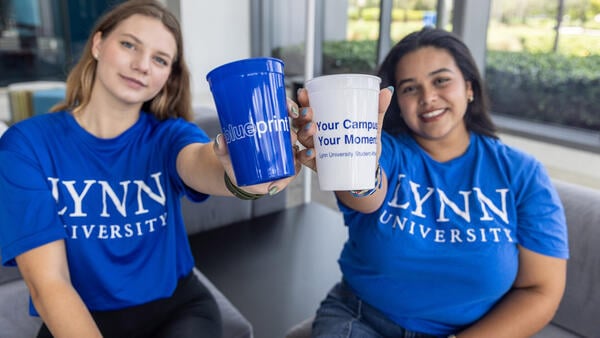
    Points for participation: Lynn University in Boca Raton, Fla., is launching a points-based incentive program next spring, called Blueprint Rewards, that translates on-campus participation into scholarship dollars and discounts at the campus store. The initiative builds on previous investments in co-curriculars including a student-facing app, Blueprint, and digital badging, which were implemented in 2018 and 2021, respectively.

    Under Blueprint Rewards, some campus events are designated as points-bearing in Blueprint, denoted by the abbreviation SET, for Student Engagement Transcript.

    Each SET event is worth between one and 10 points. After reaching 20 points connected to a given theme, students unlock a badge. The six badges are loosely modeled on the National Association for Colleges and Employers’ career competencies: leadership, accountability, problem-solving, growth mindset, collaboration and adaptability.

    For example, activities that count toward the growth mindset badge include participating in a mindfulness event (worth one point), attending a fitness center training (five points) or becoming a wellness educator on campus (10 points).

    After completing one badge, students also earn $500 in scholarship dollars, which is applied to the following year’s tuition, making the program a retention strategy as well.

    Students unlock scholarships and other rewards as they complete various badges in the Blueprint Rewards program.

    Students can redeem up to $1,000 in badge dollars toward tuition each academic year. Administrators elected to cap badge scholarships at two per academic year to ensure students are juggling their academic and other responsibilities with campus participation, according to a FAQ page.

    If they finish all six badges, students can opt to enroll in a no-tuition graduate-level course after their senior year, a value of $2,250.

    If they complete three badges by the end of their junior year, students can gain an additional $1,500 toward participation in a faculty-led experience in the U.S. or abroad. The goal is to encourage study-away experiences, and the badges (adaptability, problem-solving and accountability) help make sure the student is adequately prepared for travel.

    The program was announced Oct. 29, and full-time undergraduate students can start earning rewards in January. Since launching the digital badges in 2021, the university has seen the number of student engagements in co-curricular activities grow 65 percent, President Kevin Ross said.

    “Blueprint Rewards builds on that momentum—helping students lower tuition costs while earning résumé-boosting credentials and scholarships that recognize their engagement and career readiness,” Ross said.

    Another model: Administrators at Lynn aren’t the only campus officials using financial incentives to get students out of their dorm rooms and gaining life skills.

    The University of Kentucky’s UK Invests both rewards students for engaging in health and wellness activities and provides financial literacy and investment education. The university dedicated $1 million for the first year and has received philanthropic support to continue awarding students money.

    UK students who open a Fidelity savings account and deposit $25 are given $50 by the investment firm; each event they attend could be worth as much as an additional $50 in their accounts.

    Student behaviors are tracked on three platforms—Handshake, SUMO and BBNvolved—and participation data is used to establish how much money the student earned, which is then deposited into the student’s Fidelity account. The university processes payments to student accounts every other Friday.

    There is no cap on how much money a student can earn in a given year under UK Invests, but there is a limit to which events have financial incentives attached. For example, a student who uses the gym is paid $5 for visiting the gym three times in one week, but the student isn’t eligible to earn money after six weeks.

    The goal for the university, in addition to encouraging students to take advantage of the various offerings on campus, is to ensure graduates leave with a return on investment for their degree and some cash in savings.

    We bet your colleague would like this article, too. Send them this link to subscribe to our newsletter on Student Success.


    Source link

  • Why Students Participate in Dual Enrollment

    Why Students Participate in Dual Enrollment

    Over the past three years, the number of high school students taking college courses has increased more than 20 percent, making them a growing share of all undergraduates, according to data from the National Student Clearinghouse Research Center.

    Dual enrollment can help high school students get a head start on their college degree. In addition to expediting the amount of time it takes to complete a two- or four-year degree, concurrent-enrollment courses may be cheaper or subsidized for high school students, reducing the costs associated with a college degree.

    A recent study by Tyton Partners investigates why students participate in dual enrollment and how the experience shapes their perceptions of college.

    Students say: A majority of surveyed students participating in dual enrollment were high school seniors (76 percent); 24 percent were juniors.

    Most high schoolers took only one or two college courses (58 percent); just 19 percent were enrolled in four or more. While one-third of students took courses online, two-thirds attended in person at a local college.

    The primary motivation for students to engage in dual enrollment was to get ahead on college credits and reduce tuition costs (51 percent). One in five students said they were looking for more advanced coursework.

    The data also pointed to dual enrollment’s role as a pipeline to higher education. Three in five students said they strongly agree with the statement “My dual-enrollment experience is preparing me for college,” and a similar share indicated they feel like they belong at their college.

    Dual-enrollment students worry about affordability in higher education; one in five said they do not feel they have the resources to pay for college. Research shows that dually enrolled students are more likely to receive grants and scholarships when they attend college, compared to their peers who are not concurrently enrolled.

    Over half of dual-enrollment students said the experience made them more motivated to attend college (57 percent), while one-third said their interest in higher education remained unchanged; 6 percent said the experience was a turnoff that made them less interested in college.

    One notable trend was that dual-enrollment participants who later enrolled in college full-time were more likely to pursue natural and physical sciences compared to the general undergraduate population. Thirty-seven percent of current college students who had taken college courses while in high school said they were studying natural and physical sciences, compared to 29 percent of their peers without concurrent-enrollment credits. Conversely, non-dual-enrollment students elected humanities and social science majors at higher rates (37 percent) than their dual-enrollment peers (31 percent).

    “While this may reflect the interests of students who opt into dual enrollment, it also highlights the potential of dual enrollment pathways to attract and support learners aiming for more technical or science-focused careers,” according to the report.

    Looking ahead: More colleges have implemented or expanded dual-enrollment offerings since 2020, in part to reverse flagging enrollment numbers, but also to expand access to higher education. However, equity gaps still persist in terms of who is aware of or participating in concurrent enrollment.

    In a survey of academic advisers and administrators, 45 percent of respondents said they expect their institution to increase resources for dual enrollment support over the next three years.

    College staff and leaders identified college transition programs (28 percent) and academic planning tailored to future degree pathways (28 percent) as the most impactful supports for dual-enrollment students.

    We bet your colleague would like this article, too. Send them this link to subscribe to our newsletter on Student Success.
    Source link

  • Humanities Students Participate in Faculty-Led Research

    Humanities Students Participate in Faculty-Led Research

    On-campus engagement is one metric that can predict student success, but external factors including needing to work, caretaking responsibilities or living off campus can hinder students’ participation in activities.

    At Stony Brook University, part of the State University of New York system, institutional data showed retention rates lagged for students in the humanities and social science disciplines. In response, leaders created several programs to incentivize students in those majors to build relationships with others in their field and engage in hands-on work.

    Three Stony Brook leaders—Tiana De Jesus, lead academic success advisor and retention specialist; Richard Tomczak, director of faculty engagement; and Jennifer Rodriguez, associate director of the student success and retention center—shared details of the program and initial results at NASPA’s Student Success in Higher Education conference in Denver last month.

    The background: The Undergraduate Retention Initiatives and Success Engagement (U-RISE) office houses a variety of innovative retention supports, including a research lab, called SSTAR, and re-engagement advising.

    One of the more recent projects the staff at SSTAR—short for Student Success Through Applied Research—have taken on is addressing gaps in retention for non-STEM students.

    University data pointed to six majors in the humanities and social sciences with the lowest retention rates as well as relatively high admission rates of students with lower grade point averages from high school.

    Research shows that students who are engaged on campus are more likely to feel a deep sense of belonging and establish meaningful relationships with peers and faculty, as well as develop career skills. Students who have a strong sense of belonging in their major program are also more likely to have higher retention rates and levels of faculty connection.

    SSTAR team members sought to foster relationships between students and their instructors, improve students’ academic readiness and provide financial support to ensure equitable retention for students across socioeconomic groups.

    A National Picture

    Research from the Student Experience in the Research University Consortium at the University of California, Berkeley, found fewer students participating in faculty-led research post-pandemic compared to their peers enrolled in 2019, showing a gap in experiential learning opportunities.

    One of the more common reasons why students are unable to take on research roles is a lack of pay or needing to work for pay. A significant number of colleges have established financial aid for students to receive a stipend for participating in unpaid or underpaid experiential learning opportunities, ensuring the inability to pay does not prevent participation.

    To accomplish these goals, campus leaders created three interventions: research assistantship positions in faculty-led research, a first-year seminar for academic preparation and paid on-campus jobs for humanities students.

    In focus: This past spring, Stony Brook hired 12 first-year students out of an application pool of over 100 to serve as research assistants. Each student was matched with a faculty member from one of a variety of departments, including English, art, history, linguistics and Asian and Asian American studies. Research assistants committed to eight to 10 hours of work per week and were paid a stipend. Funding came from the provost’s office.

    The projects varied; one English and sociology student analyzed TikTok videos of social activists to challenge stereotypes, while an English and psychology student trained artificial intelligence on European literature from the 1700s, according to a university press release.

    The impact: Across interventions, students who participated in the programs were more likely to say they feel connected to their peers, see the value of their degree and intend to persist, according to pre- and post-survey data.

    Many students said the experiences helped open their eyes to the career and research opportunities available to them in their field and made them feel faculty were more accessible to them. Of the students who participated in the three interventions, 92.8 percent enrolled as a sophomore the following year, compared to 91.8 percent of their peers who didn’t participate, surpassing the university’s 92 percent retention goal. Students also had higher cumulative GPAs, showing a correlation between engagement and academic achievement.

    An unexpected finding was that before participating in the program, many students said they felt stigmatized for their major choice (Stony Brook is a majority of STEM learners), but afterward they felt more connected to those in similar fields, even if not in their exact major.

    In the future, researchers hope to recruit a larger number of students and expand their work to other humanities and social sciences majors.

    Source link

  • How to Participate in April 17 Day of Action for Higher Education

    How to Participate in April 17 Day of Action for Higher Education

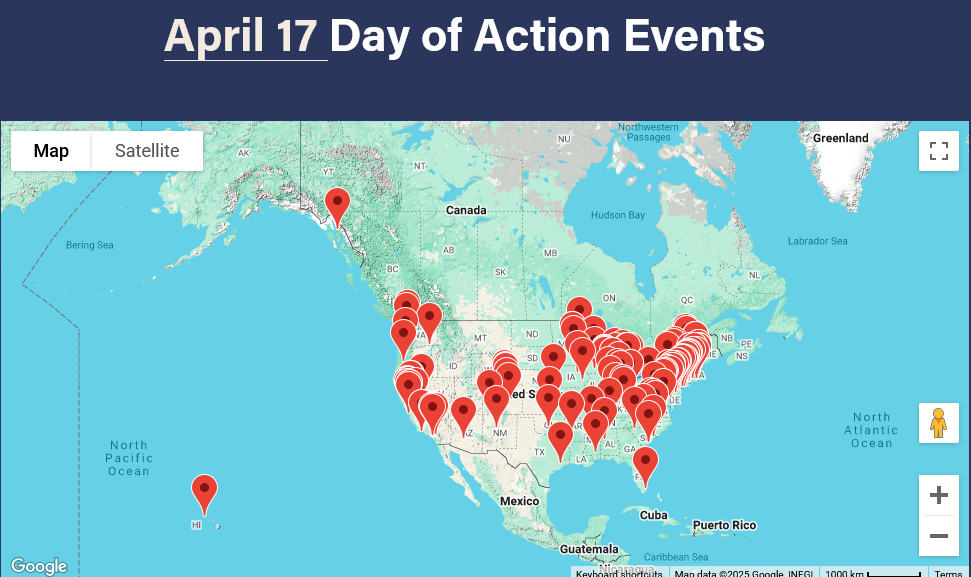
    Higher Education Inquirer readers are encouraged to participate in Day of Action for Higher Education on Thursday, April 17.  For more information, visit the Day of Action page at the the Coalition for Action in Higher Education website. The website also includes resources. The coalition includes the Debt Collective, AAUP, and Higher Education Labor United.


    Source link

  • 12% of college students won’t participate in an internship

    12% of college students won’t participate in an internship

    The value of internships for students’ career navigation and future employment opportunities is clear for colleges and many employers. But what do students think of internship experiences, and how do they benefit them in their future planning?

    A new report from Handshake, published Feb. 20, highlights trends across students who have and have not participated in internships, the impact on their goals beyond college, and the barriers that hinder engagement.

    Among the trends present: More interns are participating in paid internships and earning above minimum wage while doing so, and company culture can influence students’ willingness to return for a full-time position.

    Methodology

    Handshake’s Internship Index was assembled with data from a November 2024 survey of more than 5,605 students and 834 recent graduates, as well as job posting and application data from the platform. Recent graduates are those who completed their degree in 2022, 2023 or 2024.

    Why intern? A majority of students said they pursue internships to build valuable skills (87 percent), to identify possible career opportunities (72 percent), to make professional connections (70 percent) or to get a leg up in their future job hunt (70 percent). About 59 percent say participating in an internship is an essential step toward clarifying their career goals.

    Only one-third of students identified fulfilling a degree requirement as a primary factor for pursuing an internship, and just over half indicated financial motivation for interning.

    Among students who have completed an internship, more than 80 percent say the experience shaped their preferences for industries and job roles. Around 54 percent of students said their internship made them more confident in their career goals, and 56 percent said it was essential for making progress toward career goals. One-quarter said it inspired them to set new career goals, which can be similarly valuable.

    A winter 2023 Student Voice survey by Inside Higher Ed and College Pulse found 10 percent of students identified an internship as a top influence on their career decisions for after college.

    What hinders internships: Around 12 percent of students in the Handshake study have not participated in an internship and do not expect to do so prior to finishing their degree. The greatest share of these students say they’re limited by time (33 percent)—overwhelmed by coursework and other commitments—or they’ve applied for roles and haven’t been selected (33 percent).

    “Students may feel shut out of internships for a variety of reasons, ranging from packed schedules to financial and geographic constraints,” the report says. “Even for students who have ample time and resources, landing an opportunity has become more difficult as hiring contracts and competition increases, and the application process may feel overwhelming given the variation in hiring timelines across employers and industries.”

    Internal data shows demand for opportunities among students that is outpacing the supply. The number of internship postings on Handshake declined 15 percent from January 2023 to January 2025, but applications surged, with 41 percent of the Class of 2025 having applied to at least one internship through Handshake, compared to 34 percent of the Class of 2023.

    Only half of recent college graduates participated in an internship while enrolled in an undergraduate program. Even among students who do land an internship, time continues to be limited, with 56 percent of interns simultaneously taking classes and 36 percent working a part-time job. Around one in eight students said that their internship required them to work 40 hours a week or more.

    First-generation students were more likely to say they completed an internship while taking classes or working (80 percent) compared to their continuing-generation peers (70 percent).

    Pay day: As colleges and employers consider the importance of experiential learning for student career outcomes, more attention has been placed on the value of fair compensation to reduce equity gaps in who is able to participate in internships. Some colleges will provide stipends or scholarships for learners who take on an unpaid or underpaid internship, allowing them to still receive financial support for their work.

    Almost all internships (95 percent) posted on Handshake in the past year were paid, which students say is important to them in selecting an internship role.

    A majority of students who participated in an internship had an hourly wage (57 percent) or a fixed salary or stipend (24 percent). The highest average rate was for student interns working in professional services ($35 an hour) or financial services ($31 per hour). Students working in hospitality or education received the lowest average rate of $17.50 an hour.

    A talent pipeline: Internships can be a great way for a student to get a foot in the door of a company and for the employer to offer training and a career pathway for early talent. Handshake’s data shows that the interpersonal experiences students have while in their internships can influence their desire to hold a full-time role in that company.

    Three in five interns said the mentorship they received or didn’t receive had a major impact on their level of interest in working full-time for their internship employer. About 89 percent of students said team culture at least somewhat impacted on their interest in working full-time for their internship employer, and 90 percent said the same of their interactions with colleagues.

    Similarly, pay was a factor that impacted students’ consideration of a full-time role at their employer. Eighty-two percent of interns who had a fairly compensated role would likely accept a full-time offer from their internship employer, compared to 63 percent of those who didn’t feel their pay was fair.

    After finishing their internship, 59 percent of students said their experience impacted their interest in working for their employer at least moderately, but only 30 percent said they would definitely accept a full-time offer from their employer.

    Get more content like this directly to your inbox every weekday morning. Subscribe here.

    Source link

  • Yeshiva U president to participate in Trump’s inauguration

    Yeshiva U president to participate in Trump’s inauguration

    Rabbi Ari Berman, president of Yeshiva University in New York, will deliver the benediction at the inauguration of Donald Trump next week, officials announced Tuesday.

    Berman “will call for the nation to rise to this historic moment and unite around America’s foundational values as a source for realizing our shared dreams of a prosperous, compassionate country led by faith and trust in God,” according to a university news release.

    Berman has led Yeshiva University, a modern Orthodox Jewish institution, since 2017. As president, he has overseen both successes and controversies. The institution recently reported its highest number of undergraduate applications in its history and has increased the number of transfer students, which it attributed in part to contentious pro-Palestinian protests elsewhere.

    But Yeshiva administrators also clashed with an LGBTQ student group, which it refused to recognize, prompting a lawsuit. In fall 2022, the university suspended all student groups in an effort to avoid recognizing the LGBTQ club after Yeshiva was dealt a legal setback.

    In the university news release, Berman said he was deeply honored to deliver the benediction.

    “As I prepare my remarks, I am inspired by the words of the prophet Jeremiah, who thousands of years ago walked through the roads of Jerusalem, the eternal capital of Israel, and proclaimed ‘Blessed is the one who trusts in God.’ I pray that we are all united around the core values of life and liberty, of service and sacrifice, and especially of faith and morality, which George Washington called the ‘indispensable supports’ of American prosperity,” Berman said.

    Source link