Tag: participation

  • Fun with Participation Rate Data

    Fun with Participation Rate Data

    Just a quick one today, mostly charts.

    Back in the fall, StatsCan released a mess of data from the Labour Force Survey looking at education participation rates—that is, the percentage of any given age cohort that is attending education—over the past 25 years. So, let’s go see what it says.

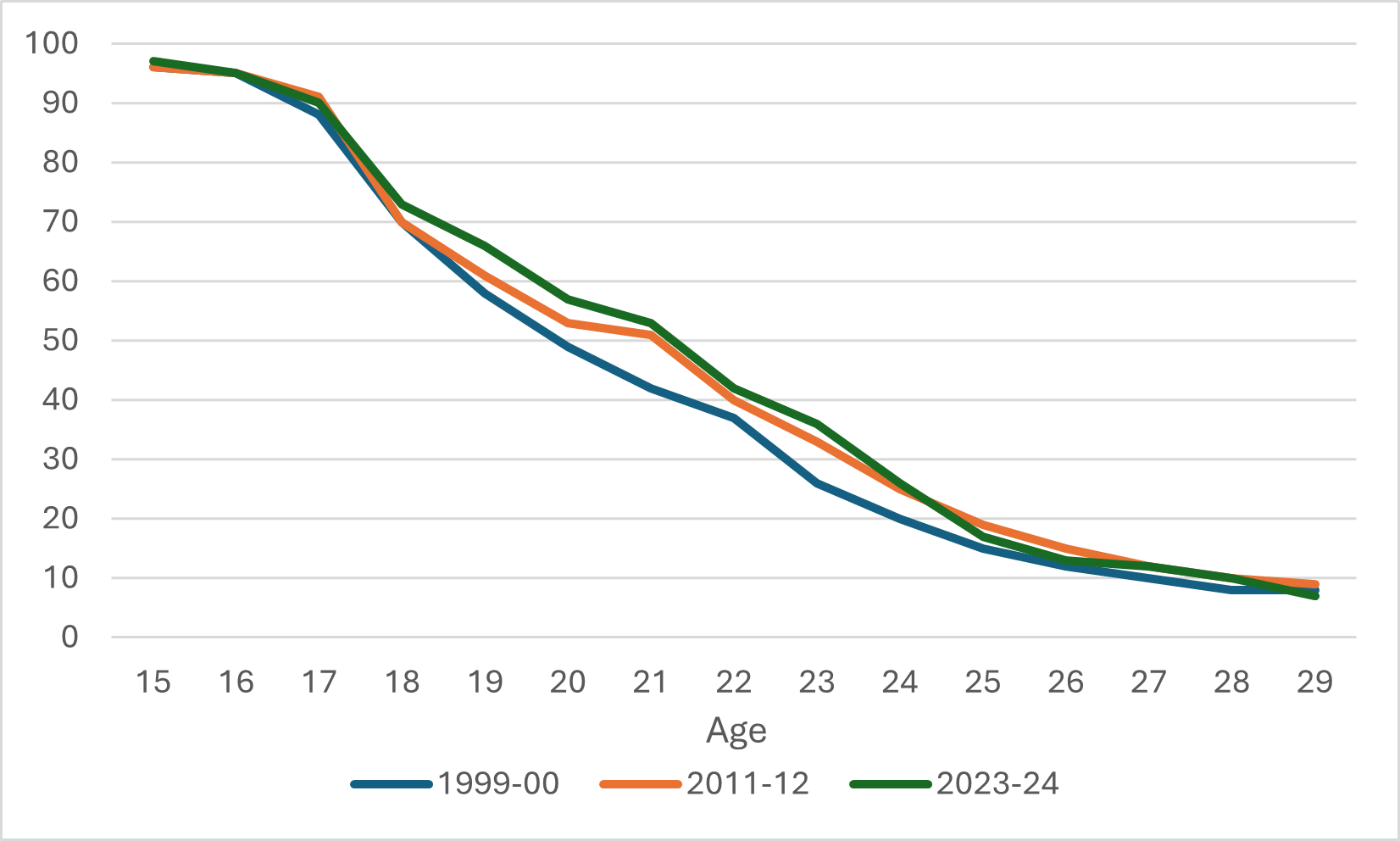
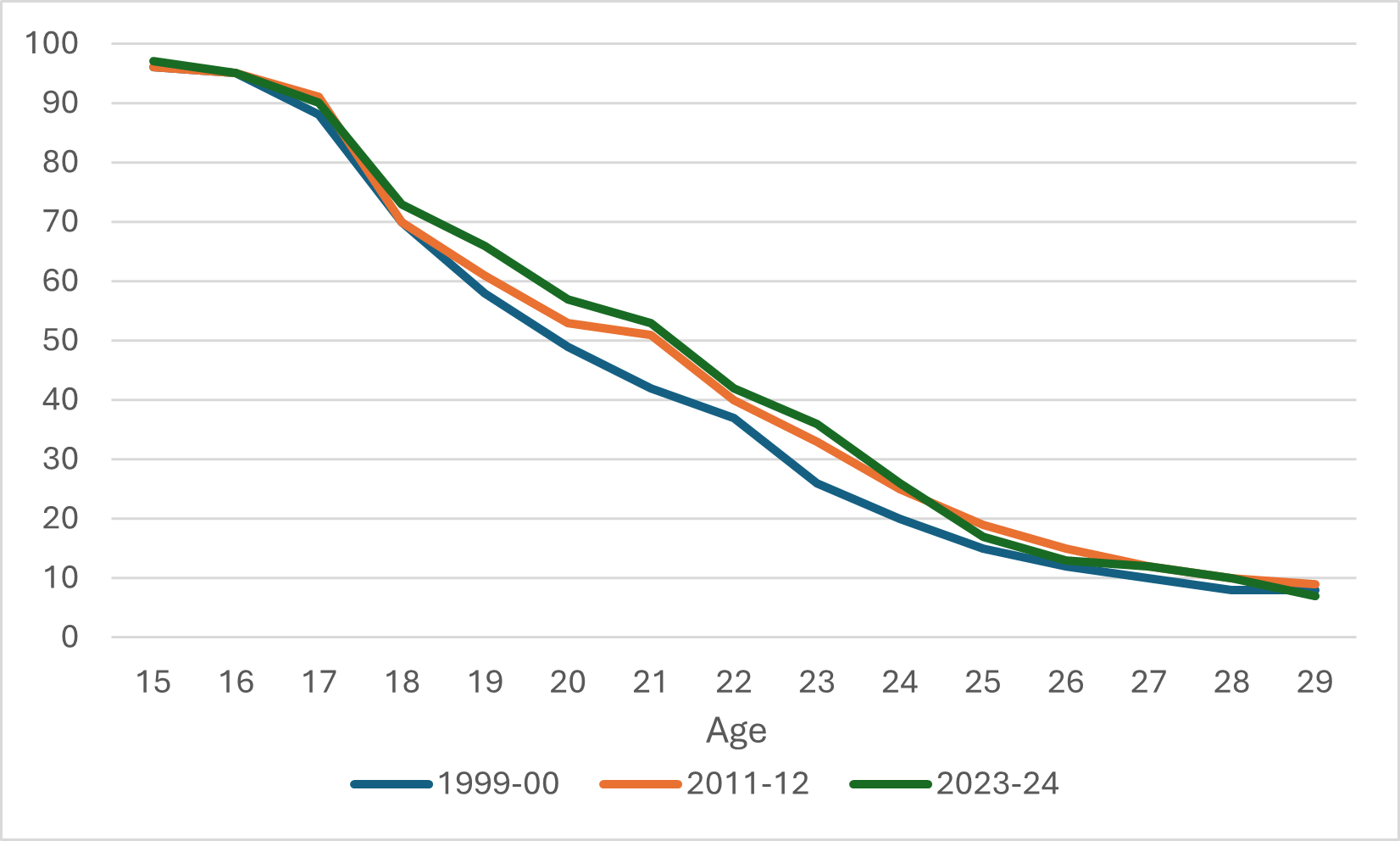
    Figure 1 shows total education participation rates, across all levels of education, from age 15 to 29, for selected years over the past quarter century. At the two ends of the graph, the numbers look pretty similar. At age 15, we’ve always had 95%+ of our population enrolled in school (almost exclusively secondary education, and from age 26 and above, we’ve always been in the low-tweens or high single digits. The falling-off in participation is fairly steady: for every age-year above 17, about 10% of the population exits education up until the age of 26. The big increase in education enrolments that we’ve seen over the past couple of decades has really occurred in the 18-24 range, where participation rates (almost exclusively in universities, as we shall see) have increased enormously.

    Figure 1: Participation rates in Education (all institutions) by Age, Canada, select years 1999-00 to 2023-24

    Figure 2 shows current participation rates by age and type of postsecondary institution. People sometimes have the impression that colleges cater to an “older” clientele, but in fact, at any given age under 30, Canadians are much more likely to be enrolled in universities than in colleges. Colleges have a very high base in the teens because of the way the CEGEP system works in Quebec (I’ll come back to regional diversity in a minute), and it is certainly true that there is a very wide gap in favour of universities among Canadians in their mid-20s. But while the part rate gap narrows substantially at about age 25, it is never the case that the college participation rate surpasses the university one.

    Figure 2: Participation Rates by Age and Institution Type, Canada, 2023-24
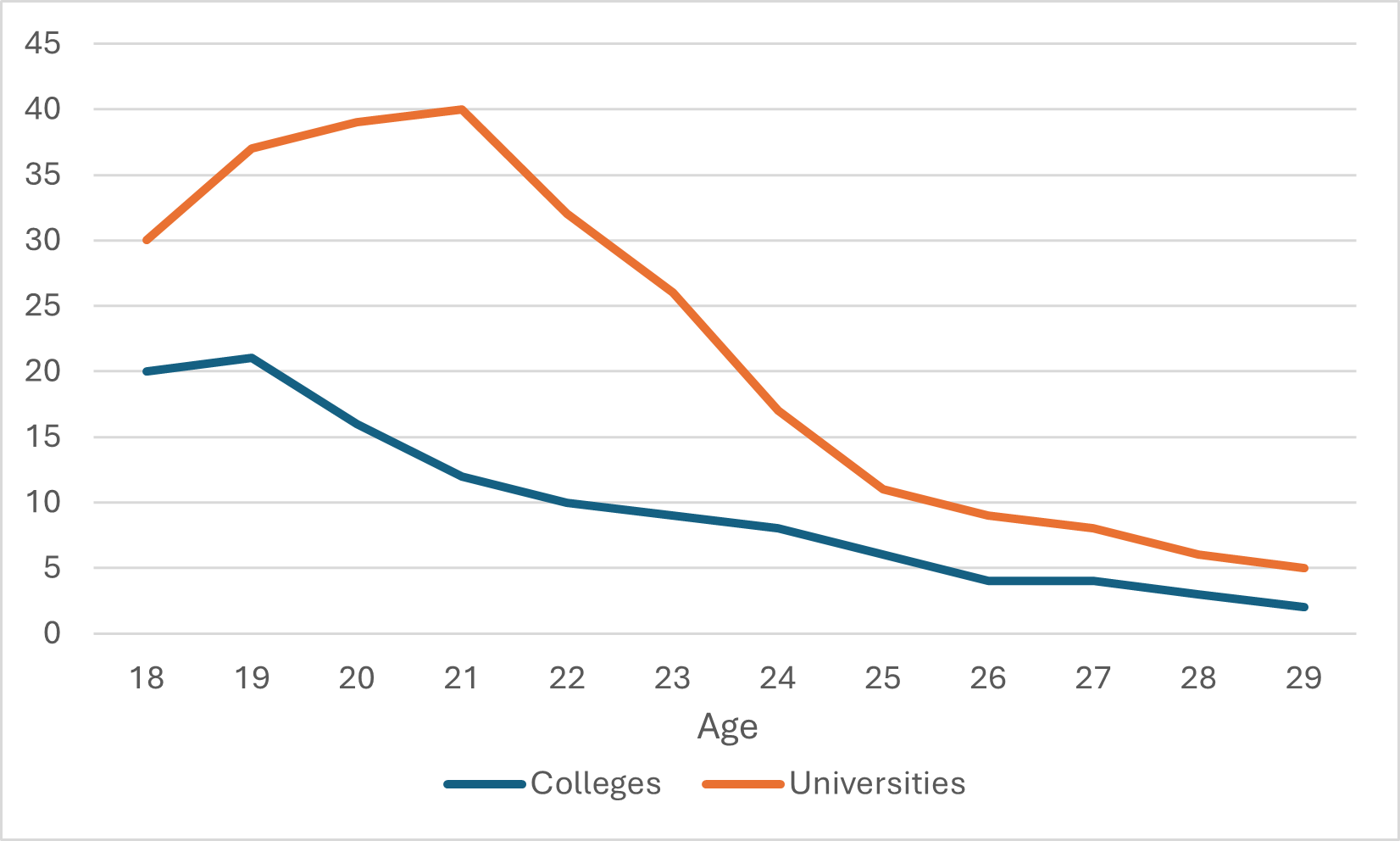
    Figure 3 shows college participation rates by age over time. What you should take from this is that there has been a slight decline in college participation rates over time in the 19-23 age range, but beyond that not much has changed.

    Figure 3: College Participation Rates by Age, Selected Years, 1999-2000 to 2023-24
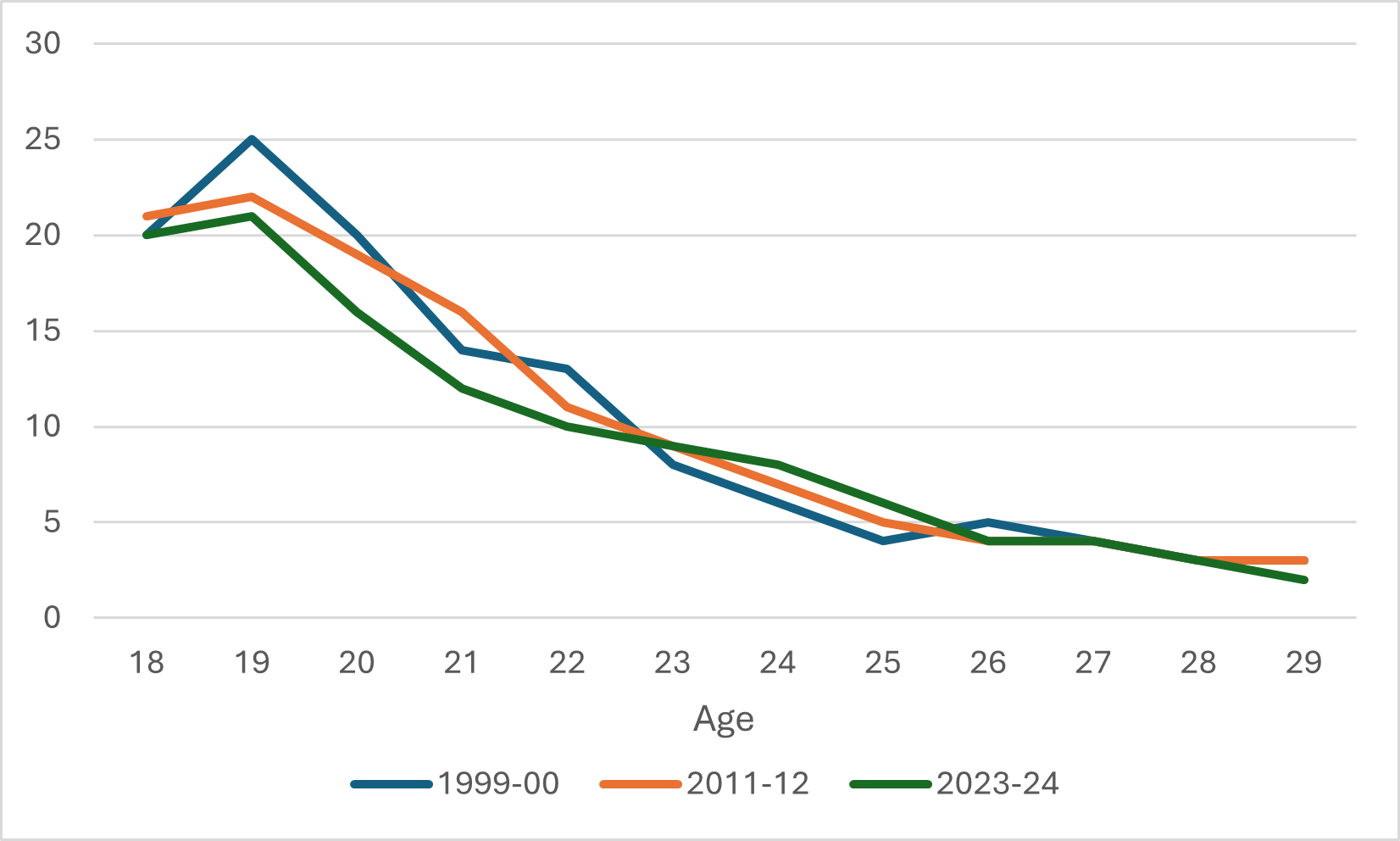
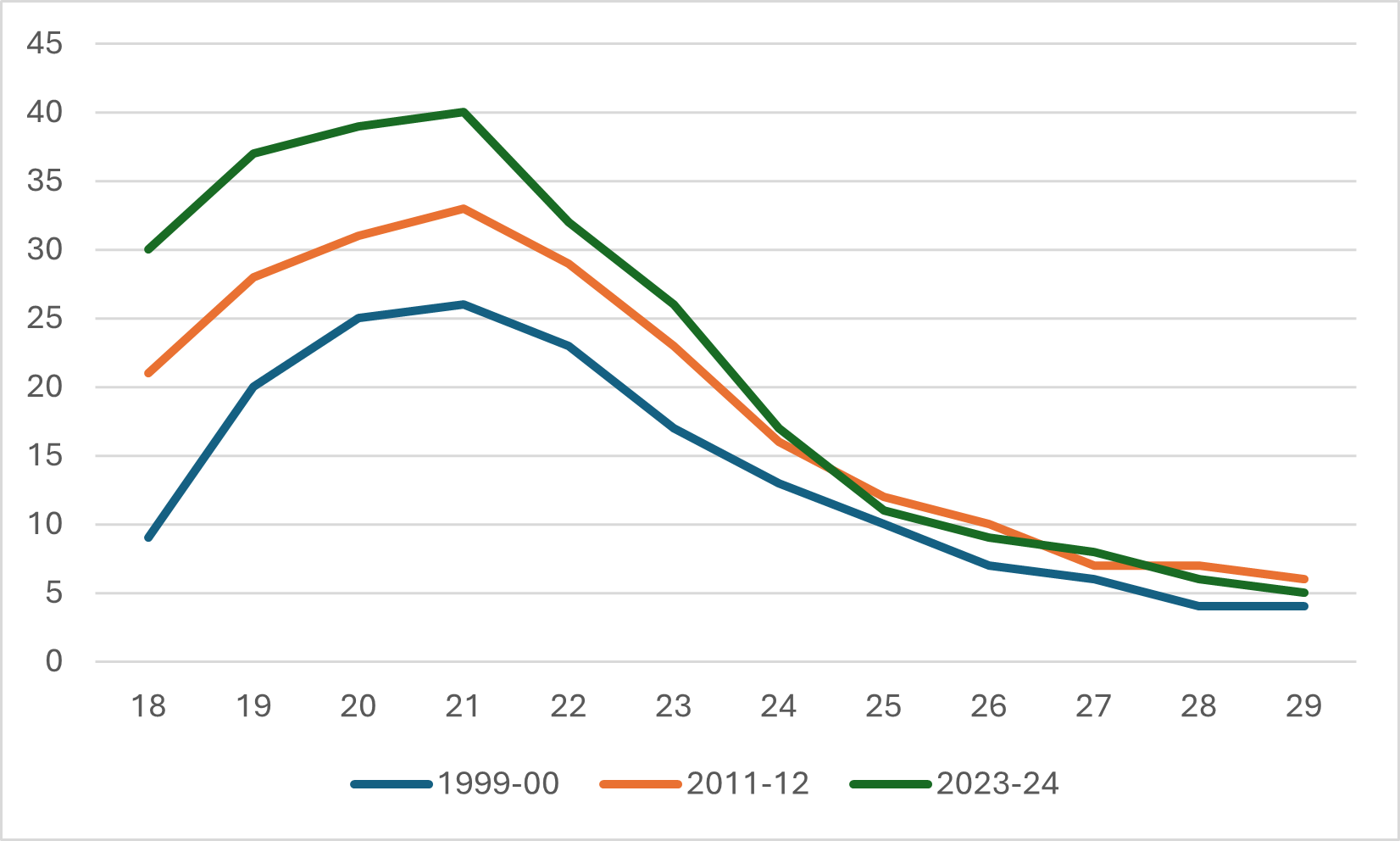
    Figure 4 uses the same lens as figure 3 only for universities. And it’s about as different as it can be. In 1999, fewer than one in ten Canadians aged 18 was in university: now it is three in ten. In 1999, only one in four 21 year-olds was in university, now it is four-in-ten. These aren’t purely the effects of increased demand; the elimination of grade 13 in Ontario had a lot to do with the changes for 18-year-olds; Alberta and British Columbia converting a number of their institutions from colleges to universities in the late 00s probably juices these numbers a bit, too. But on the whole, what we’ve seen is a significant increase in the rate at which young people are choosing to attend universities between the ages of 18 and 24. However, beyond those ages the growth is less pronounced. There was certainly growth in older student participation rates between 1999-00 and 20011-12, but since then none at all.

    Figure 4: University Participation Rates by Age, Selected Years, 1999-2000 to 2023-24
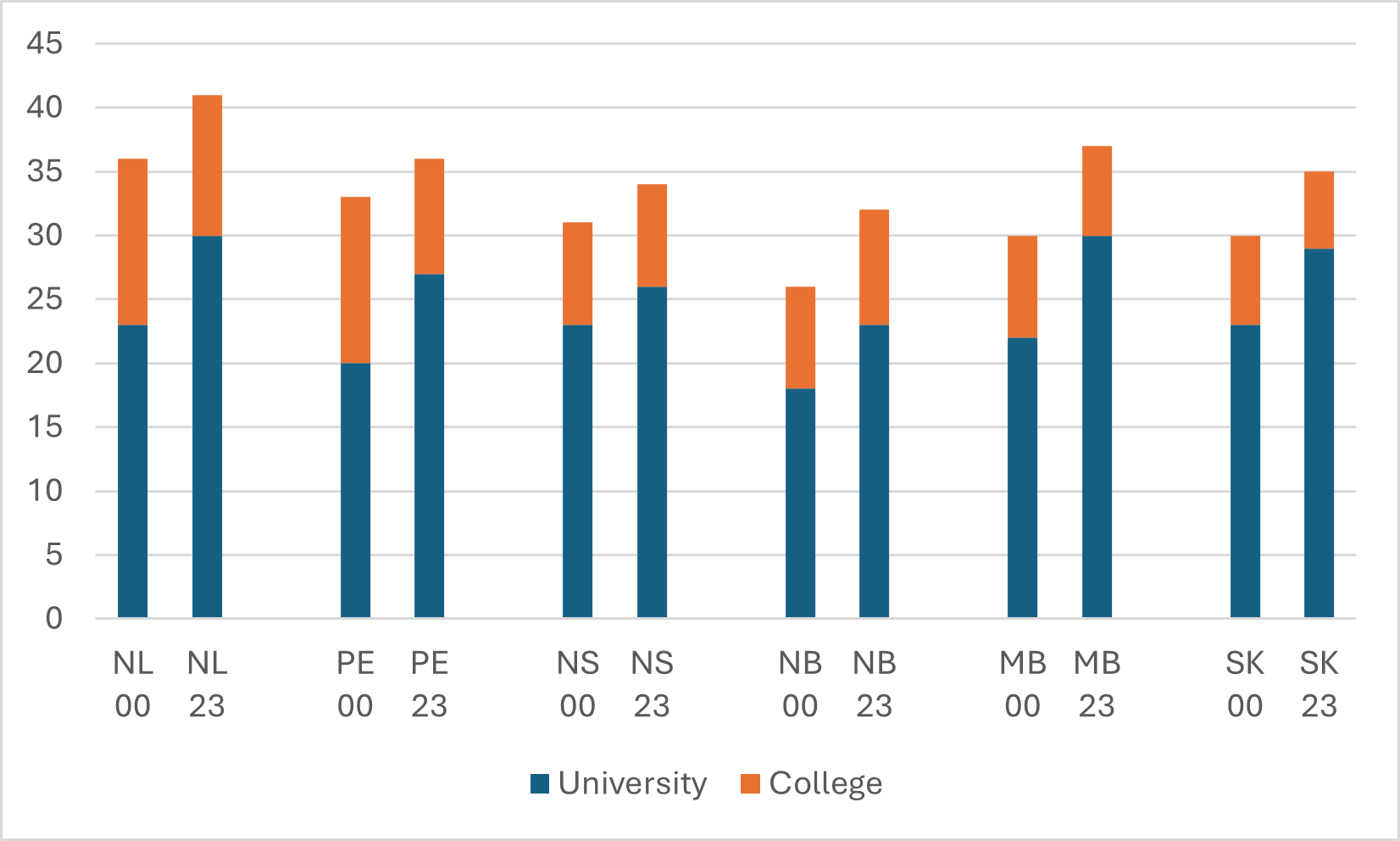
    So much for the national numbers: what’s going on at the provincial level? Well, because this is the Labour Force Survey, which unlike administrative data has sample size issues, we can’t quite get the same level of granularity of information. We can’t look at individual ages, but we can see age-ranges, in this case ages 20-24. In figures 5 and 6 (I broke them up so they are a bit easier to read), I show how each province’s university and college participation rates in 2000 vs. 2023.

    Figure 5: University Participation Rates for 20-24 Year-olds, Four Largest Provinces, 2000-01 vs. 2023-24
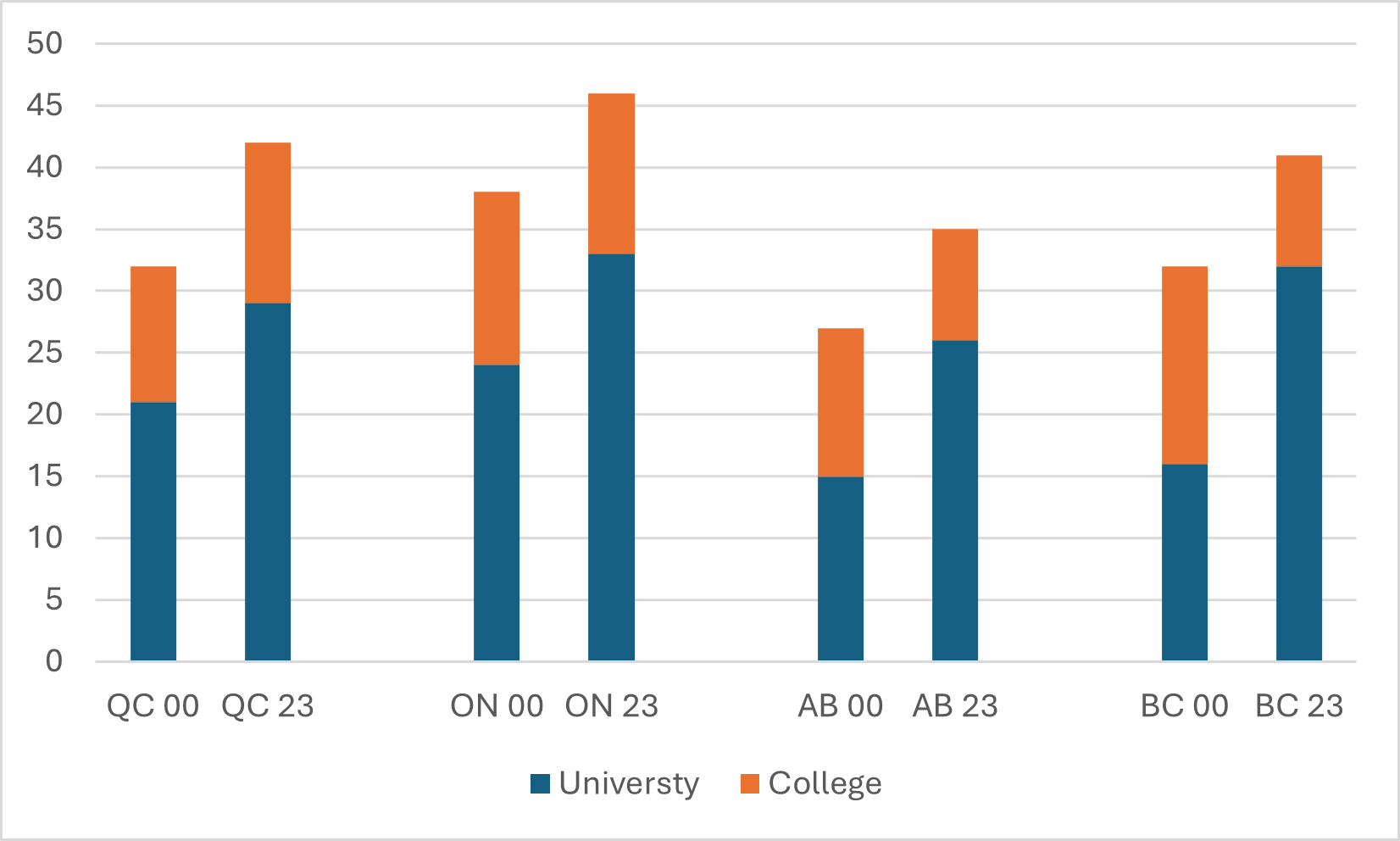
    Figure 6: University Participation Rates for 20-24 Year-olds, Six Remaining Provinces, 2000-01 vs. 2023-24
    Some key facts emerge from these two graphs:

    • The highest participation rates in the country are in Ontario, Quebec, and British Columbia.
    • In all provinces, the participation rate in universities is higher than it is for colleges, ranging from 2.5x in Quebec for over 4x in Saskatchewan.
    • Over the past quarter century, overall postsecondary participation rates and university participation rates have gone up in all provinces; Alberta and British Columbia alone have seen a decline in college participation rates, due to the aforementioned decision to convert certain colleges to university status in the 00s.
    • Growth in participation rates since 2000 has been universal but has been more significant in the country’s four largest provinces, where the average gain has been nine percentage points, and the country’s six smaller provinces, where the gain has been just under five percent.
    • Over twenty-five years, British Columbia has gone from ninth to second in the country in terms of university participation rates, while Nova Scotia has gone second to ninth.
    • New Brunswick has consistently been in last place for overall participation rates for the entire century.

    Just think: three minutes ago, you probably knew very little about participation rates in Canada by age and geography, now you know almost everything there is to know about participation rates in Canada by age and geography. Is this a great way to start your day or what?

    Source link

  • Trump Signs Executive Order to Ban Transgender Student-Athletes from Participation in Women’s Sports

    Trump Signs Executive Order to Ban Transgender Student-Athletes from Participation in Women’s Sports

    by CUPA-HR | February 11, 2025

    On February 5, President Trump signed an executive order titled “Keeping Men Out of Women’s Sports.” The order aims to bar transgender women and girls from participating in women’s sports by directing agencies to withdraw federal funding from schools that refuse to comply with the order.

    The EO claims that, in recent years, educational institutions and athletic associations have allowed men to compete in women’s sports, which the Trump administration believes denies women and girls equal opportunity to participate in competitive sports, thus violating Title IX. As a result, the EO sets policy to “rescind all funds from educational programs that deprive women and girls of fair athletic opportunities” and to “oppose male competitive participation in women’s sports more broadly.”

    With respect to the specific actions ordered, the EO directs the secretary of education to ensure compliance with the court order to vacate the Biden administration’s Title IX rule and to take other actions to ensure that the 2024 regulations do not have effect. It also directs the secretary to take action to “protect all-female athletic opportunities” by setting forth regulations and policy guidance that clearly specifies and clarifies “that women’s sports are reserved for women.”

    Notably, the EO further directs all federal agencies to review grants to educational programs and to rescind funding to programs that fail to comply with policy set forth in the EO. Institutions with grant programs deemed to be noncompliant with this order could, therefore, risk losing federal funding for that program.

    The EO also seeks quick enforcement by federal agencies. The EO orders the Department of Education to prioritize Title IX enforcement actions against educational institutions and athletic associations that “deny female students an equal opportunity to participate in sports and athletic events.” The Department of Justice is also tasked with providing resources to relevant agencies to ensure “expeditious enforcement” of the policy set forth in the EO.

    Finally, the EO directs the assistant to the president for domestic policy to convene both major athletic organizations and state attorneys general to promote policies consistent with Title IX and identify best practices in enforcing equal opportunities for women to participate in sports.

    On February 6, the NCAA updated its policy regarding transgender student-athlete participation in response to the EO. According to the NCAA, the new policy limits competition in women’s sports to student-athletes assigned female at birth, but it allows student-athletes assigned male at birth to practice with women’s teams and receive benefits while practicing with them. For men’s sports, student-athletes may participate in practice and competition regardless of their sex assigned at birth or their gender identity, assuming all other eligibility requirements are met.

    Institutions should review their policies and practices in light of the EO and the NCAA’s policy change. CUPA-HR will continue to monitor for Title IX updates and keep members apprised of new enforcement under the Trump administration.


    Source link

  • Is going to university still worth it? A widening participation student’s view

    Is going to university still worth it? A widening participation student’s view

    By David Lam, Activities Officer at the Students’ Union Bath.

    As a child, I always envisioned a very traditional educational journey. I would work my way through high school, do my A levels and then end up at a good university, graduating into a well-paid job. I think this is the journey most undertake or are pointed towards as we were told that university students almost always earn more than those without one. It’s a no-brainer, right?

    However, there have been recent conversations about the value of going to university and getting a degree. Being a student is tough right now, because:

    Despite these challenges, record numbers of students from TUNDRA 1 (lowest participation) backgrounds have made it to university. A remarkable stat! But why has this happened? I believe university opens so many more opportunities for you besides a good education and, for this reason, people would prefer to earn and learn rather than not doing it at all.

    Going to university allows you to access a whole load of new experiences through societies and sports clubs at a relatively low cost and without much commitment. At Bath, there are over 200 groups that you can join, ranging from common interests like football and board games to more niche ones like sailing and gliding. I am sure there are equally wide offers at other universities. Having gone to a state school, I never had the opportunity to try all these things while others from more privileged backgrounds did. 

    Studying at Bath meant I had access to a wide range of placements for my year in industry. Without the wonderful placement team showing me all the world had to offer, I would not have known where to start, nor would I have ever considered doing a placement.  I had always seen movies that involved people going for the best year of their life abroad in a sunny place, making friends for life and being temporarily free from studying. I decided I wanted that experience too, but then the Covid-19 Pandemic hit, meaning my opportunities suddenly shrank. Despite the setback of a global pandemic, I eventually found an opportunity and I ended up working in Madrid as a Physical Education (PE) teacher in an international school. It was the best year of my life, living the dream I’d seen on TV, thanks to my university’s placement team’s support.

    Attending university exposes you to people from diverse backgrounds. Coming from a small town in the Midlands, predominantly made up of white British residents, I was one of only three kids of colour in my entire primary school. So arriving in Bath and encountering people who looked like me was a strikingly different experience. Some of my closest friends come from all over the world and, yes, eventually when we all leave Bath, I will be visiting them at some point! The chances of me making such friendships would have been minimal had I stayed in my little town and I would have nowhere near as enlightened an understanding of other cultures as I have now.

    University is often the first real taste of freedom for many, marking the transition from life at home to living independently. You are no longer surrounded by an endless supply of clean clothes or home-cooked meals; instead, you are managing your own routine and life, all within the relatively safe university environment. This shift into the big wide world fosters resilience and builds people skills. You will inevitably encounter challenges, like that one housemate who never does their dishes. But part of the university experience is learning to handle these issues yourself, having the tough conversations and solving problems independently rather than relying on someone else to step in. Along the way, you will meet both amazing people and those who are not so great. While no degree teaches you how to interact with others, living with a diverse group of people forces you to learn those essential skills.

    For these reasons, I still believe there is value in going to university. While not everyone’s experience is the same, the underlying benefits remain. The university experience represents a beacon of opportunity and opens so many doors. It leads to things you would have never imagined doing, like living in another country for a whole year or writing a blog for a higher education think tank. Seeing the Office for Students turn its attention to the wider student experience, rather than exclusively to education, is welcome. I believe more places should be taking this holistic view and I look forward to seeing what their new strategy comes out with it.

    Source link

  • Widening participation students have much to teach us

    Widening participation students have much to teach us

    When co-creating with under-represented groups, the most important element for success is a relational approach.

    We need to embody core values – such as respect, inclusivity, fairness and consideration – in order to ensure that collaborators have a safe space which allows them to thrive.

    Care experienced students have support needs which are often not well understood by the teams who are in place to help. By co-creating resources with local college students who have experience of the care system, we were able to help to provide our tutors with guidance to help them in their support role.

    As the number of young people in care in the UK increases and universities face regulatory pressure to enable access and participation in higher education, we will see more students with care experience entering higher education.

    So it is vital that universities empower them to overcome the obstacles they have already faced and help them achieve their best outcomes.

    Myths and realities

    Although it is a myth that care-experienced young people are more likely to end up in prison than in university, the reality is still that the outcomes for care experienced young people are not good.

    The Care Leavers Association produced a report in 2015 advising that while children in care and care leavers account for less than 1 per cent of the population, over 25 per cent of the adult prison population has previously been in care.

    This, when contrasted with data from the Office for Students, which tells us that in 2018-19 only 13 per cent of pupils who were looked after for 12 months or more, entered higher education compared to 43 per cent of all other pupils, is a glaring call to action.

    Our local authority, Devon, has pledged to add care experience as a protected characteristic under the Equality Act, as recommended by an independent review into children’s social care. This should go some way to ensuring that young people with care experience are protected from discrimination.

    Care experience as expertise

    Our recent initiative focused on ways of working with care-experienced young people, not just as participants but as expert colleagues, whose insights and lived experiences would be integral to the project’s success.

    The relational approach that informed our planning exceeded our hopes, allowing us to create a truly collaborative environment where both the young people and our academic community benefited profoundly and meaningfully.

    The local authority approached the university about work experience opportunities, and our team of two set about designing a week-long suite of mutually beneficial skills-shares and development opportunities. The care experienced individuals who joined us were invited as experts.

    They were studying at local colleges, but have considered university in the future. At the time of the work experience week they were aged 18 – 19. We had not set any parameters for the local authority, our intention being to work with individuals who wanted to take up our offer. These young adults brought invaluable perspectives that informed the creation of resources to improve the support offered to care-experienced students.

    Their contributions were not just helpful—they were essential, producing outcomes that would have been impossible without their input. This was not a one-sided effort but a partnership in which their voices were central to the development process.

    The week in motion

    The week was carefully designed to be balanced, trauma-informed, and safe. It wasn’t about providing generic work experience but about creating a bespoke environment where each young person could belong, see and feel that they mattered, and then identify and pursue their own developmental goals with confidence.

    The rooms, resources, colleagues, and plans were all designed to facilitate a relaxed and respectful collegiate atmosphere.

    We began with talk (and coffee): co-creating and sharing a space to talk and to share experiences, expertise and aspirations.

    The subsequent self-assessment exercises, such as SWOT analyses and personal development plans, allowed the care experienced people to reflect from a place of safety and to articulate their strengths, areas for growth, and personal objectives for the week and beyond.

    Mutual benefits

    This self-directed approach ensured that they were not only contributing to the university’s resources but also advancing their own skills and confidence. The care experienced people became educators, delivering presentations and engaging in microteaching sessions for staff. These opportunities allowed for the young people to refine their communication skills, build their confidence, and further establish themselves as knowledgeable contributors.

    Throughout the week, we prioritised creating a safe and supportive environment. Trust was foundational to the initiative, enabling the young people to fully engage and showcase their expertise and talents.

    We deliberately involved colleagues from various departments and used different spaces across the campus, which helped to familiarise the young people with the university setting and adding to their cultural capital. We approached colleagues who shared our approach towards fully inclusive and respectful collaboration to run workshops and facilitate ideas sharing. This relational pedagogy – centred on trust, respect, and mutual learning – allowed for a rich exchange of knowledge and skills.

    The resources produced during this week were nothing short of exceptional. Covering topics such as finance for care-experienced students, trauma-informed tutoring, and the traits of a supportive tutor, these materials are now invaluable assets for our Academic Personal Tutors.

    Such resources are polished, professional, and most importantly, deeply rooted in the lived experiences of care-experienced individuals. The impact of these resources will be felt across the university, enhancing the support we provide to care-experienced students in a way that truly reflects their needs.

    The week culminated in a resource-showcase, which was attended by academics and professional services colleagues from across the university, as well as external stakeholders.

    This was a special moment, for all involved: either observing or being our colleagues-for-the-week, mingling at the showcase tables to talk about their design rationale and why supporting the care leaver agenda is so important. It was an event that helped to highlight to the young people the quality and significance of the resources that they had developed.

    Success

    The feedback that we received from the young people matched our aspirations for the week: they felt supported, empowered, efficacious.

    The success of this initiative has inspired us to expand the model. We plan to repeat the experience with other care-experienced young people and extend it to work alongside other underrepresented groups.

    Our goal is not only to support those already within our institution, but also to demonstrate that higher education is a welcoming and inclusive space for everyone. By continuing to adopt a relational approach that values the contributions of all students as expert colleagues, we can create a more equitable and supportive academic environment.

    This initiative was a sobering reminder that the messages that society tells young people about their potential become their inner voice.

    It was also testament to the power of collaboration, mutual respect, and the genuine belief that every student, regardless of their background, has the potential to belong in, and contribute to, the academic community. We must remember that while we work to support widening participation students, they also have much to teach us.

    Source link