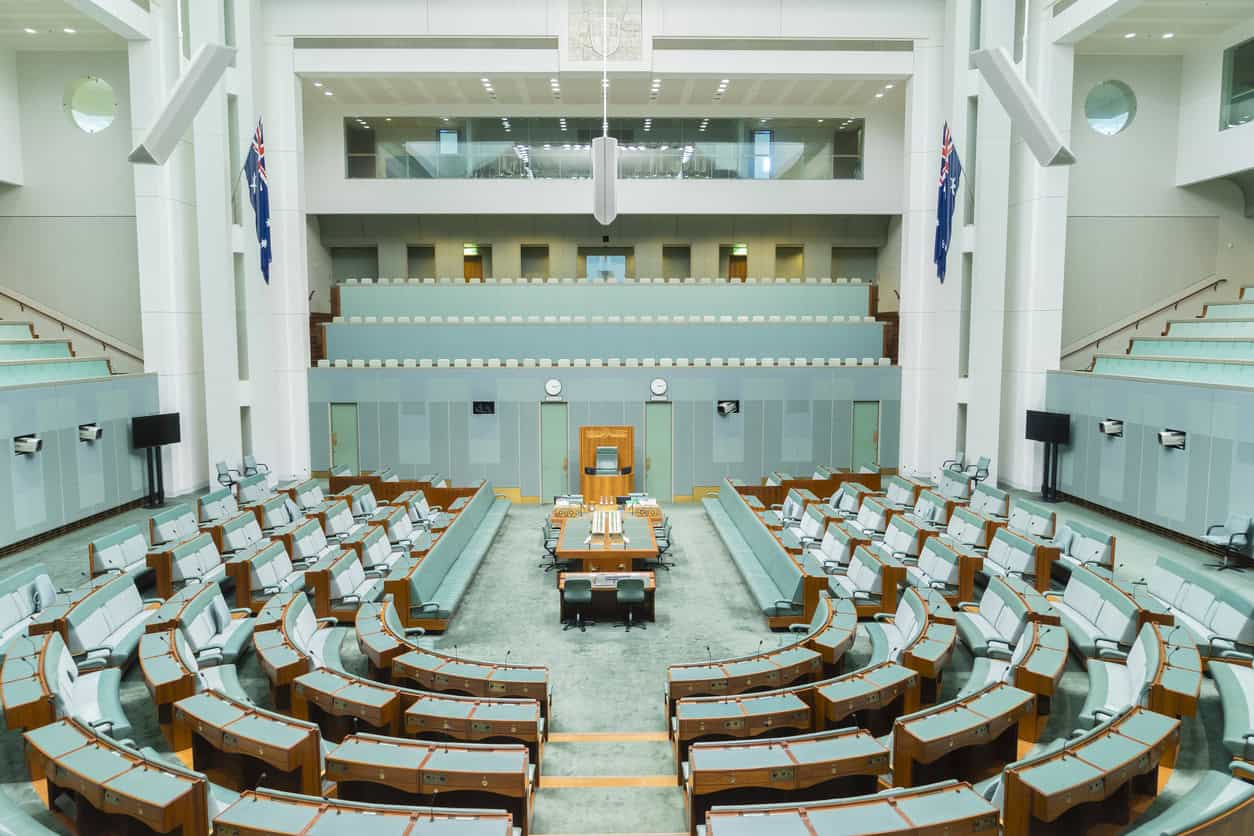
The Albanese government has passed legislation that it says will strengthen the integrity of the international education sector, despite sector concerns about some elements of the reforms set to impact higher and international education.
The Education Legislation Amendment (Integrity and Other Measures) Bill 2025 proposes amendments across several key acts within education, including the Education Services for Overseas Students Act (ESOS).
“With the passing of this legislation, we now have more tools to stop unscrupulous individuals in the international education system trying to make a quick buck,” said education minister Jason Clare.
In a statement on the Bill’s passing, the federal government chose to highlight some of the changes it is set to bring about, including:
Requiring most prospective VET providers excluding TAFEs to first deliver courses to domestic students for two years before they can apply to teach overseas students as evidence of their commitment to quality education
Cancelling the registration of providers that fail to deliver a course to overseas students for 12 consecutive months to help deal with ‘phoenixing’
Giving ministers the power to limit or cancel a providers’ ability to deliver courses where it is in the public interest or there are systemic quality issues
Education providers will also now require authorisation from TEQSA to deliver Australian degrees offshore. The government described these changes as “light-touch, set transitional arrangements and utilise information that providers already hold”.
“Australia’s future success requires a focus on quality, integrity and a great student experience. That’s why we’re cracking down on exploitation, increasing transparency, and safeguarding the reputation of our sector,” said Julian Hill, assistant minister for international education.
We’re cracking down on exploitation, increasing transparency, and safeguarding the reputation of our sector Julian Hill, assistant minister for international education
According to Hill, the changes will “protect genuine students and support high-quality providers”.
Ministers say the reforms are about “safeguarding” Australia’s reputation as a world leader in education but certain parts of the Bill garnered fierce criticism from the sector. A public call for submissions gathered concerns about changes to the definition of an education agent and whether ministerial intervention powers were appropriately balanced, among other changes.
The Bill is set to tighten oversight of education agents by broadening the legal definition of who qualifies as an agent and introducing new transparency requirements around commissions and payments.
Elsewhere, one of the most significant points of concern related to new ministerial powers over provider and course registrations. The Bill would allow the minister to make legislative instruments suspending the processing of applications for provider registration – or registration of new courses – for periods of up to 12 months.
The new Bill closely mirrors last year’s version but drops the proposed hard cap on international student enrolments that contributed to the earlier Bill’s failure in parliament. Instead, the government is managing new enrolments through its National Planning Level and visa processing directive MD115, rather than legislated limits.
Many institutions, including the SUNY system, have invested in Title VI coordinators in recent months.
Photo illustration by Justin Morrison/Inside Higher Ed | howtogoto/iStock/Getty Images
New York is mandating that all colleges in the state designate a coordinator to oversee investigations into discrimination on the basis of race, color, national origin and shared ancestry, which is prohibited under Title VI of the Civil Rights Act of 1964, Gov. Kathy Hochul’s office announced Wednesday.
According to Hochul, the state is the first in the country to pass such a law.
“By placing Title VI coordinators on all college campuses, New York is combating antisemitism and all forms of discrimination head-on,” she said in the press release. “No one should fear for their safety while trying to get an education. It’s my top priority to ensure every New York student feels safe at school, and I will continue to take action against campus discrimination and use every tool at my disposal to eliminate hate and bias from our school communities.”
Many colleges have begun hiring for Title VI coordinator roles in the past several months in response to the surge in reports of antisemitism and Islamophobia following Hamas’s fatal Oct. 7, 2023 attack on Israeli civilians. In some cases, the Department of Education’s Office for Civil Rights required institutions to add these roles after finding that they failed to adequately address complaints of discrimination on their campuses.
The State University of New York system had already mandated each of its campuses to bring on a Title VI coordinator by the fall 2025 semester.
Illinois hospital staff will soon be required by law to refer parents of severely premature infants to services that can help prevent years of intensive and expensive therapy later, when the children are older. The new law follows reporting from The Hechinger Report that exposed how hospitals often fail to connect many eligible parents to these opportunities for their children after they leave neonatal intensive care units.
Earlier this year, Hechinger contributor Sarah Carr wrote about how, across the country, far too few parents are made aware of the kinds of therapies their babies are entitled to under federal law. Such early intervention services can ultimately reduce the need for these children to require costly special education support as schoolchildren.
Carr noted: “Federal law says children with developmental delays, including newborns with significant likelihood of a delay, can get early intervention from birth to age 3. States design their own programs and set their own funding levels, however. They also set some of the criteria for which newborns are automatically eligible, typically relying on qualifying conditions like Down syndrome or cerebral palsy, extreme prematurity or low birthweight. Nationally, far fewer infants and toddlers receive the therapies than should. The stats are particularly bleak for babies under the age of 1: Just 1 percent of these infants get help. Yet an estimated 13 percent of infants and toddlers likely qualify.”
After the Hechinger Report story was published, Illinois state Rep. Janet Yang Rohr authored legislation to require that hospitals distribute materials informing parents of premature and low birth weight babies about their eligibility for early intervention therapies. The bill also required that hospitals make a nurse or physical therapist available to explain these rights to families.
Related: Young children have unique needs and providing the right care can be a challenge. Our free early childhood education newsletter tracks the issues.
“The problem is that these families often don’t know about these services,” Yang Rohr said last spring, after her chamber passed the bill. “So this bill improves that early intervention process by requiring NICU staff to share information about these services and requires hospital staff to write a referral to these programs for families that are eligible.”
Illinois Representative Janet Yang Rohr Credit: ILGA
Carr also wrote: “The stakes are high for these fragile, rapidly growing babies and their brains. Even a few months of additional therapy can reduce a child’s risk of complications and make it less likely that they will struggle with talking, moving and learning down the road. In Chicago and elsewhere, families, advocates and physicians say a lot of the failures boil down to overstretched hospital and early intervention delivery systems that are not always talking with families very effectively, or with each other hardly at all. ‘They really put the onus of helping your child get better outcomes on you,’ said Jaclyn Vasquez, an early childhood consultant who has had three babies of her own spend time in the NICU.”
“Early intervention is life-changing for many families, as these programs provide critical services and therapies as children develop,” Illinois state Sen. Ram Villivalam said when the bill was sent to Pritzker. “But, these services can only benefit those they are able to reach, which means uplifting the program and expanding its outreach to those who need it is imperative.”
Contact editor Nirvi Shah at 212-678-3445, securely on Signal at NirviShah.14 or via email at [email protected].
The Hechinger Report provides in-depth, fact-based, unbiased reporting on education that is free to all readers. But that doesn’t mean it’s free to produce. Our work keeps educators and the public informed about pressing issues at schools and on campuses throughout the country. We tell the whole story, even when the details are inconvenient. Help us keep doing that.
On May 22, the U.S. House of Representatives passed H.R. 1, titled the “One Big Beautiful Bill Act.” Notably, the reconciliation “megabill” includes a provision to implement President Trump’s campaign pledge on “no tax on overtime,” among various legislative priorities for Republicans.
The “No Tax on Overtime” Proposal
The overtime proposal creates a temporary above-the-line deduction from gross income for overtime pay required under the Fair labor Standards Act (FLSA). The bill does not set a cap on the amount of overtime pay that can be deducted, but it limits the application of the provision to employees who earn less than $160,000 per year, and it does not extend the deduction to independent contractors. If signed into law, the deduction will be available for tax years 2025 through 2028, and employers would be required to report overtime compensation on workers’ W-2 forms during this time.
The proposed deduction only applies to workers’ federal income taxes and overtime pay as required by the FLSA, raising some compliance concerns for employers in states with different overtime pay requirements than those required under the FLSA and for employers whose overtime pay requirements are set by a collective bargaining agreement (CBA) with overtime pay that differs from the FLSA requirements. These employers will likely need to track both the FLSA-mandated overtime hours and pay to ensure workers’ W-2s are accurate and in compliance with the law while also ensuring they are tracking the overtime hours and pay in a manner that also complies with the more stringent state or CBA obligations.
While CBA requirements vary case-by-case, there are five states with overtime pay requirements under their state wage and hour laws that differ from the requirements under the FLSA:
Alaska requires 1.5 times workers’ regular rate of pay for hours worked beyond 8 in a day or 40 in a workweek;
California requires 1.5 times an employee’s regular rate of pay for hours worked more than 8 in a day, 40 in a workweek, or the first 8 hours on a seventh consecutive day of work in a workweek. The state also requires double an employee’s regular rate of pay for any hours worked over 12 in a day or for all hours worked over 8 on a seventh consecutive day of work in a workweek;
Colorado requires overtime pay after 12 hours worked in a day or 40 hours in a workweek;
Nevada requires overtime pay for any hours worked beyond 8 in a day if the employee earns less than 1.5 times the state minimum wage; and
Oregon has industry-specific daily overtime rules that apply to hospitals, canneries and manufacturers.
Looking Ahead
The reconciliation bill is still early in the legislative process. For now, the “no tax on overtime” provision is only included in the House version of the bill. The Senate is currently drafting its version of the reconciliation bill, and they may choose to alter the no tax on overtime proposal — possibly including language of the Overtime Wages Tax Relief Act that was introduced earlier this year by Senator Roger Marshall (R-KS). CUPA-HR will continue to monitor for further developments on this issue.
Since the release of ChatGPT in 2022, instructors have worried about how students might circumvent learning by utilizing the chat bot to complete homework and other assignments. Over the years, the large language model has enabled AI to expand its database and its ability to answer more complex questions, but can it replace a student’s efforts entirely?
Graduate students at the University of Illinois at Urbana-Champaign’s college of engineering integrated a large language model into an undergraduate aerospace engineering course to evaluate its performance compared to the average student’s work.
The researchers, Gokul Puthumanaillam and Melkior Ornik, found that ChatGPT earned a passing grade in the course without much prompt engineering, but the chat bot didn’t demonstrate understanding or comprehension of high-level concepts. Their work illustrating its capabilities and limitations was published on the open-access platform arXiv, operated by Cornell Tech.
The background: LLMs can tackle a variety of tasks, including creative writing and technical analysis, prompting concerns over students’ academic integrity in higher education.
Researchers sought to understand how a student investing minimal effort would perform in a course by offloading work to ChatGPT.
The evaluated class, Aerospace Control Systems, which was offered in fall 2024, is a required junior-level course for aerospace engineering students. During the term, students submit approximately 115 deliverables, including homework problems, two midterm exams and three programming projects.
“The course structure emphasizes progressive complexity in both theoretical understanding and practical application,” the research authors wrote in their paper.
They copied and pasted questions or uploaded screenshots of questions into a free version of the chat bot without additional guidance, mimicking a student who is investing minimal time in their coursework.
The results: At the end of the term, ChatGPT achieved a B grade (82.2 percent), slightly below the class average of 85 percent. But it didn’t excel at all assignment types.
On practice problems, the LLM earned a 90.4 percent average (compared to the class average of 91.4 percent), performing the best on multiple-choice questions. ChatGPT received a higher exam average (89.7 percent) compared to the class (84.8 percent), but it faltered much more on the written sections than on the autograded components.
ChatGPT demonstrated its worst performance in programming projects. While it had sound mathematical reasoning to theoretical questions, the model’s explanation was rigid and template-like, not adapting to the specific nuances of the problem, researchers wrote. It also created inefficient or overly complex solutions to programming, lacking “the optimization and robustness of considerations that characterize high-quality student submissions,” according to the article.
The findings demonstrate that AI is capable of passing a rigorous undergraduate course, but that LLM systems can only accomplish pattern recognition rather than deep understanding. The results also indicated to researchers that well-designed coursework can evaluate students’ capabilities in engineering.
So what? Based on their findings, researchers recommend faculty members integrate project work and open-ended design challenges to evaluate students’ understanding and technical capabilities, particularly in synthesizing information and making practical judgements.
In the same vein, they suggested that faculty should design questions that evaluate human expertise by requiring students to explain their rationale or justify their response, rather than just arrive at the correct answer.
ChatGPT was also unable to grasp system integration, robustness and optimization over basic implementation, so focusing on these requirements would provide better evaluation metrics.
Researchers also noted that because ChatGPT is capable of answering practice problems, instruction should focus less on routine technical work and more on higher-level engineering concepts and problem-solving skills. “The challenge ahead lies not in preventing AI use, but in developing educational approaches that leverage these tools while continuing to cultivate genuine engineering expertise,” researchers wrote.
Arkansas governor Sarah Huckabee Sanders signed a wide-ranging bill last Tuesday, upending the state’s higher education budget and clamping down on DEI and student protests, according to The Arkansas Democrat-Gazette.
The Arkansas ACCESS Law includes a number of measures prioritizing funding for trade schools and short-term credential programs, including using the lottery system to fund school scholarships and eliminating support for Advanced Placement accelerated learning tracks in an effort to encourage career readiness over traditional college prep.
The law also doubles funding for the state’s Academic Challenge Scholarship and expands eligibility to trade school applicants; prohibits colleges from spending on diversity, equity and inclusion initiatives or participating in any external DEI programs; and amends the state’s excused absence policies to prevent students from participating in protests.
This audio is auto-generated. Please let us know if you have feedback.
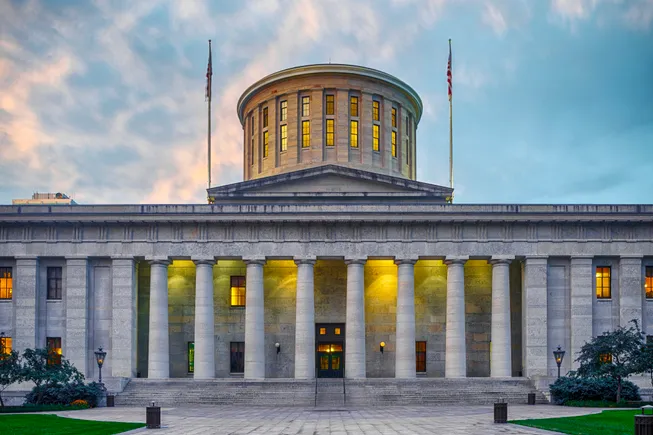
The Ohio Senate on Wednesday passed a far-reaching higher education bill that would ban the state’s public institutions from having diversity, equity and inclusion offices or taking positions on “controversial” topics.
The bill, known as SB 1, would also establish post-tenure reviews, ban strikes by full-time faculty, and require colleges to publish a syllabus with the instructor’s professional qualifications and contact information for every class.
Colleges that fail to comply could lose or see reduced state funding.
The state Senate advanced the legislation in a 21-11 vote largely along party lines — all nine Democrats opposed it, as did two Republicans. The vote came just a day after hundreds of critics spoke out against the proposal during an hourslong hearing Tuesday.
The second life of SB 83
Ohio is one of several conservative-controlled states looking to more tightly control their public colleges. But SB 1 is notable for how much it would overhaul the state’s public higher education, including aspects that have traditionally been left to college leaders’ discretion.
For example, colleges would be unable to make institutional statements on any topic the bill deems politically controversial, such as “climate policies, electoral politics, foreign policy, diversity, equity, and inclusion programs, immigration policy, marriage, or abortion.”
The bill would create a mandatoryU.S. history college course with prescribed readings, like theU.S. Constitution and at least five essays from the Federalist Papers.
The state Senate advanced a similar 2023 bill, SB 83, from the same lawmaker, Republican state Sen. Jerry Cirino. Even though Republicans controlled both chambers of the Legislature and the governor’s mansion in Ohio, the legislation never made it to a vote in the House.
But times have changed. Matt Huffman, the previous Senate presidentand a strong supporter of the bill,is now the speaker of the House. Gov. Mike DeWine told local news outlets he was likely to sign the bill, pending a final review, should it make it to his desk.
SB 1 also goes further than its predecessor. The new bill would ban DEI offices and scholarships altogether, while the previous version only sought to prohibit mandatory DEI trainings and offered exemptions. And SB 1 includes a ban on full-time faculty strikes — a provision that was removed from SB 83 in an effort to assuage labor unions and win House approval.
Faculty reactions
Faculty groups and free speech advocates have opposed SB 1 just as they did SB 83. They argue it would chill free speech, hurt recruitment and retention of both students and faculty, and interfere with academic freedom.
The bill calls for colleges to “ensure the fullest degree of intellectual diversity” on campusand cultivate divergent and varied perspectives on public policy issues, including during classroom discussion.
“Nothing in this section prohibits faculty or students from classroom instruction, discussion, or debate, so long as faculty members allow students to express intellectual diversity,” the bill says.
The American Civil Liberties Union of Ohio lambasted the “intellectual diversity” requirements in a statement Tuesday.
“At best, this language is the micromanaging of individual courses and instructors by the General Assembly,” said Gary Daniels, the group’s chief lobbyist. At worst, he said, it will require all sides of every issue to be evenly presented by instructors, “ignoring their First Amendment right to academic freedom.”
Cirino sought to cut off some of those criticisms when he reintroduced the bill as the first measure of Ohio’s new legislative session, which started Jan. 6.
“Senate Bill 1 not only does NOT limit speech or academic freedom, it actually enhances both, but with a requirement that diversity of thought be promoted,” said a Jan. 22 press release from the state Senate.
A representative for the Ohio Conference of the American Association of University Professors spoke out against the proposal in written testimony ahead of the Senate higher education committee’s public hearing Tuesday on the bill. In total, more than 800 people objected to the measure via written testimony.
To grow our economy and keep our system of higher education strong, Ohio must do all it can to attract and retain qualified and committed faculty in all academic disciplines. Senate Bill 1 would instead send an unmistakable message to talented individuals looking to advance their careers in Ohio: go somewhere else.
Jeff Wensing
Vice president of the Ohio Education Association
David Jackson, a professor of Bowling Green State Universityand president of its AAUP faculty chapter,said Ohio-AAUP had submitted a list of suggested amendments — including removing the strike ban — to the committee in early February. He urged lawmakers to work with educators rather than pass the bill wholesale.
“While we disagree with many of the premises that underlie SB 1, we can still be partners to ensure that the foundational principles of our association are not undermined and that Ohio’s public system of higher education can thrive in the years ahead,” Jackson wrote in his testimony.
Other opponents included the Ohio Education Association, Undergraduate Student Governments of Ohio and the American Historical Association, as well as students and faculty in the state.
“To grow our economy and keep our system of higher education strong, Ohio must do all it can to attract and retain qualified and committed faculty in all academic disciplines,” Jeff Wensing, vice president of the Ohio Education Association, said in written testimony.“Senate Bill 1 would instead send an unmistakable message to talented individuals looking to advance their careers in Ohio: go somewhere else.”
Fourteen witnesses from groups like the National Association of Scholars, a conservative education advocacy group, submitted testimony supporting the bill in late January. They praised provisions such as eliminating DEI and requiring the history course.
DEI at Ohio State
Wednesday’s Senate vote on the bill came quickly — the same day it was advanced by the chamber’s higher education committee.
Ohio State University is also undergoing an evaluation of its roles and DEI work, according to a joint statement from university leadership issued the day of the Senate vote.
The review is intended to allow the institution to “make changes if state or federal law requires it or if we decide a different approach is in the university’s best interests.”
“We believe it’s appropriate to be proactive given the policy discussions happening around us,” the statement said. “Changes are almost certainly on the horizon, and the best way to manage change is to be prepared. The proactive steps we are taking now will best position us to continue our work uninterrupted in ensuring that students, faculty and staff of all backgrounds can be successful at Ohio State.”
This audio is auto-generated. Please let us know if you have feedback.
Dive Brief:
The House Committee on Education and Workforce voted Wednesday to advance a bill that would require colleges to report gifts and contracts valued at $50,000 or more from most foreign countries.
That would lower the requirement from the current threshold of $250,000. Republicans argued that the bill, called the Deterrent Act, is needed to prevent foreign influence in higher education.
The bill would also lower the reporting threshold to $0 for the “countries of concern” as determined by the U.S. Code or the secretary of education, which include China, Russia, Iran and North Korea. The proposal would bar colleges from entering into contracts with those countries unless the secretary of education issues them a waiver and renews it each year.
Dive Insight:
The Deterrent Act would amend Section 117 of the Higher Education Act, which oversees foreign gift and contract reporting requirements for colleges. Republicans on the education committee argued the measure is needed to provide more transparency.
A fact sheet on the bill included concerns about foreign adversaries stealing secrets from American universities and influencing student behavior.
The fact sheet also referenced a 2024 congressional report that accused two high-profile research institutions — University of California, Berkeley and Georgia Institute of Technology — of failing to meet the current reporting requirements through their partnerships with Chinese universities.
“Higher education is one of the jewels of American society,” said Rep. Michael Baumgartner, a Washington Republican who co-sponsored the bill, on Wednesday. “Unfortunately, it’s also an area that is often under attack and used by malign influences to subvert American interests.”
Under the bill, colleges would face fines and the loss of their Title IV federal student aid funding if they didn’t comply with the reporting requirements.
Democrats largely voiced opposition to the measure.
However, they focused many of their complaints Wednesday on the Trump administration’s recent moves that have sparked outcry in the higher education sector,including cuts to the National Institutes of Health’sfunding for indirect research costs. A judge temporarily blocked the cuts earlier this week.
“I understand and I do appreciate the intent behind the Deterrent Act, but if House Republicans and the president truly want to lead in America, and they want America to lead, they must permanently reverse the cuts to the National Institutes of Health,” said Rep. Lucy McBath, a Democrat from Georgia. “It’s not enough for us just to wait outside for the lawsuits to protect folks back home from damaging and possibly illegal orders like these.”
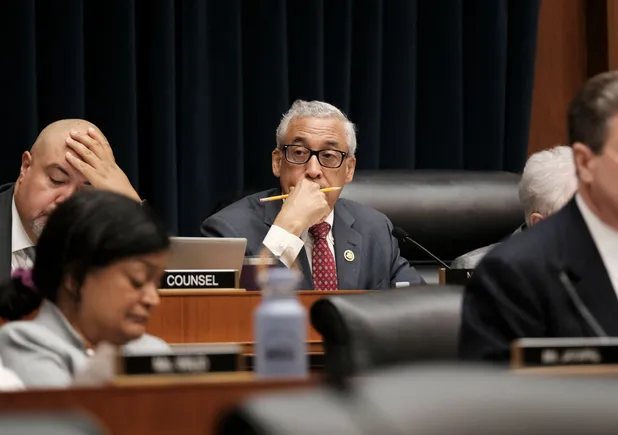
Virginia Rep. Bobby Scott, the top-ranking Democrat on the committee, struck a similar tone, referencing the Trump administration’s goal of eliminating the U.S. Department of Education.
He noted that the authors of Project 2025 — a wide-ranging conservative policy blueprint for the Republican administration — aim to dismantle the Education Department with the stated goal of having the federal government be less involved in schools.
“The argument rests on the perception that the federal government is too involved in our schools, and here we are marking up bills that would give the Department of Education more responsibility to impose unfunded mandates and interfere with local schools,” Scott said.
The House committee advanced several other bills Wednesday, including those that would allow schools to serve whole milk and aim to end Chinese influence in K-12 education.
House lawmakers previously passed the Deterrent Act in 2023, though it was never put to a vote in the Senate.At the time, the American Council on Education and other higher ed groups opposed the bill, objecting in part to the large fines colleges could face for noncompliance.
The Republican-backed bill may face better odds in this congressional session, now that the GOP also controls the Senate and the White House.
The House is preparing to take up the Laken Riley Act later this week after the Senate passed the bill Monday, Politico reported.
Twelve Democrats joined all of the higher chamber’s Republicans to vote for the immigration bill, named for a 22-year-old woman killed by an undocumented immigrant in Georgia last year. Immigration policy experts say the bill could have consequences for international students applying to study in the U.S.
The bill would primarily force harsher detention policies for undocumented immigrants charged with crimes, but it also expands the power of state attorneys general, allowing them to sue the federal government and seek sweeping bans on visas from countries that won’t take back deportees.
The legislation now goes back to the House, which passed a similar but not identical bill earlier this month. If it passes the House a second time, it would then land on President Donald Trump’s desk, providing an early win on one of his highest-priority issues, immigration.