Tag: Pathways

  • The Next Phase of the Guided Pathways Movement

    The Next Phase of the Guided Pathways Movement

    In recent years, hundreds of community colleges have embraced the guided pathways model, a sweeping set of large-scale reforms to better steer students through academic programs and boost completion rates at community colleges.

    Researchers at the Community College Research Center at Columbia University’s Teachers College first introduced plans for the reform movement in 2015 in a book called Redesigning America’s Community Colleges: A Clearer Path to Student Success. They called on colleges to adopt a wide range of practices to help students devise and follow academic plans through graduation, including mandatory academic and career planning for all students; programs organized by “meta-majors,” or fields of interest; and extra supports for students in college-level math and English courses.

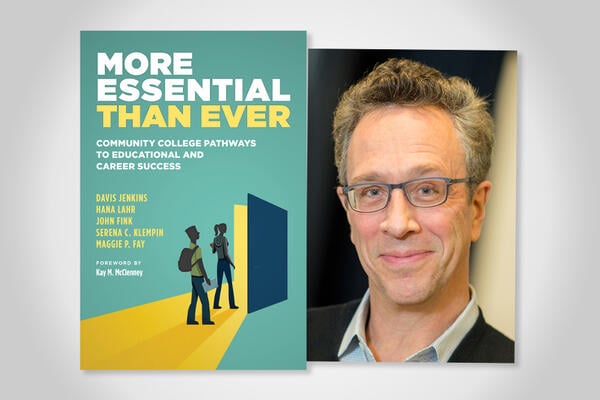
    A decade later, CCRC researchers have come out with a follow-up, More Essential Than Ever: Community College Pathways to Educational and Career Success (Harvard Education Press, 2025), which recounts their 10 years of research on the progress and outcomes of guided pathways. The book also explores areas where they believe the model could grow, including looking beyond graduation rates to focus on students’ job outcomes, adopting more engaging recruitment and onboarding practices, and ensuring students leave college with specialized knowledge in their fields but also versatile skills that apply to different industries.

    Davis Jenkins, senior research scholar at CCRC and a co-author of More Essential Than Ever, spoke with Inside Higher Ed about the book’s prescription to community colleges for taking guided pathways to the next level.

    The conversation has been edited for length and clarity.

    Q: This book is the culmination of 10 years of research on guided pathways. What have been the most important lessons learned in that decade?

    A: The 10 years were really a learning experience, because the model for whole-college reform that Tom Bailey, Shanna Jaggars and I presented in Redesigning America’s Community Colleges in 2015 was very much theoretical. A lot of the ideas came out of four-year institutions, and maybe with the exception of Guttman Community College and others, no community college really had implemented these ideas. So, we’ve been learning along with the field. And you know, we’re impressed and humbled by the efforts by colleges in a very tough time, fiscally and otherwise, to really work on these efforts.

    And what we saw in the initial phase was it takes a long time to not just implement discrete interventions but to redesign whole parts of the student experience, from the start all the way through. But we saw that colleges that did focus on redesigning, not just one piece of the student experience but across the student experience, were able to achieve improvements in student early momentum and then, over the longer term, in completion rates.

    On one hand, it was important that colleges not just focus on one aspect, that they sort of changed the student experience throughout. But when we looked at particular practices, especially important was organizing advising, at least for continuing students, by career or academic field and then case managing those students’ progress based on students’ plans. It’s very important to have a plan for students, and students really want that plan.

    During this time, the environment changed, and community college enrollments, especially post–high school enrollments, continued to decline. There was a rise in focus on the value of a college degree, and while this was focused very much on four-year institutions—especially elite institutions—people were [also] questioning community colleges. Enrollment by older students is at historic lows. And even though community colleges have seen a huge increase in high school dual-enrollment students, they have been losing market share to public four-years for students right out of high school. So, there was this big focus on value. And we were able to observe and work with colleges as they adapted these completion-focused reforms to focus more on value.

    And the main part of the book is five chapters devoted to what we see as the frontiers for further improving community college student outcomes, which are focused on values.

    Q: Tell me more about that. In the book, you looked at how far this movement has come. How do you hope the guided pathways model continues to evolve?

    A: There are five areas where we see colleges now working to improve. First of all, they’ve got to make sure that their programs lead to jobs that pay at least a living wage—otherwise, it’s not going to be worth students enrolling in them—or [allow] transfer with no excess credits in the student’s major field of interest. Related to that, though, it’s not enough just to work with universities and employers to ensure your programs have value for employment and further education after completion. You’ve got to make sure that students are learning the kinds of skills that they’ll need in the workplace and for their education. And frankly, that was probably the area of least progress in the earlier work in guided pathways.

    Particularly important is making sure that students have a rich learning experience in their program foundation courses, the hard 101 courses. In the book, we profile both very large and small colleges that have really built in experiential learning for all students. So that’s No. 2.

    No. 3 is focusing on onboarding. Community colleges lose many students early on because they don’t engage them. And so, in the later part of our work on guided pathways, the more recent part, we focus very much on this onboarding process to ensure students are engaged about what they want to do and help them connect to people and have this inspiring learning experience, and then very, very importantly, help them develop a plan that will at least give them direction.

    No. 4 is building on that plan. There have been efforts around compressed courses and scheduling, but in the book, we say that colleges need to look at this very systematically. The canonical completion [rate] for community college is two years. They’re called two-year colleges. But in fact, hardly any students complete in two years, and it’s not reasonable to expect all students, even the majority of students, to [take] 15 credits. In the book, we’re seeing colleges take three years as a template. And we know that if you include summer courses, if you include J terms, if you compress your terms, students even attending part-time can complete their programs. And community college students have very little margin for error. It’s very important that they be able to take the courses they need when they need them.

    Then, finally, as you know, dual enrollment has become huge. And colleges have taken, in the past, a very laissez-faire approach to it, such as the students who participate are students who are already likely going to college. And that’s a good thing because that makes dual enrollment very popular among middle-class families, and that gives it political power. But it’s also been sort of random courses, gen eds, without much advising. For students already going to college who have good advising from their families or from their better-resourced schools, that’s fine. But we have created this idea of applying the guided pathways practices to dual-enrollment students, to build an on-ramp, to motivate students to want to continue their postsecondary education.

    Q: It seems like, in the book, there’s a tension between, on one hand, striving to set students on a clear career path, a career ladder, while also trying not to box them into a track or a skill set that’s too narrow. How do you think colleges can balance both?

    A: This has always been the tension with guided pathways. Early on, there was a lot of emphasis on structured pathways, making things much more like a technical program, like an occupational certificate program. Not knocking it; those kinds of programs are important. But you’ll notice throughout, we’re focused on broad learning, skills, communication [and] problem-solving, and that can only be done through active, contextualized learning.

    The goal of guided pathways is not to set a student on a career. Careers are changing. The goal is to get a student engaged, to feel like the institution cares about their future, connect them with faculty and other students, employers, people they never would have met before that. It’s not just about learning skills or knowledge. It’s about connecting with people, building confidence in taking a really hard course that makes you really work and think. Students don’t like it. They’re not used to it in K–12 education. On the other hand, there’s just so much research showing that that’s really important.

    And then the plan is not a plan for life, but a plan is a direction to get you a credential and then to build into that enough experience. We make this case throughout, including at the end, there’s still a need, and it’s well documented, for a broader education—including technical skills, obviously, and content knowledge, but really in engaging students in problem-solving, communication—because those are the human skills that employers are going to pay a premium for and that are needed for further education at the bachelor’s level and in life.

    Q: As you’ve been thinking through where you want the guided pathways model to go, what do you think are going to be the biggest obstacles or challenges to colleges getting there?

    A: Well, one thing is the rise of online students. On one hand, we’re not against online. But the question is, especially for students in foundation courses and for students in high school, how to do it in a way that is engaging students. We’re very skeptical of asynchronous online instruction. Maybe for older students, career students, that’s OK, but not for students taking a foundation course that really is hard and needs interaction.

    The other [challenge] is funding. Community colleges are already always relatively low funded. It varies greatly by state, but nationally, about 40 percent [of their funding] comes from states. The second highest [funding source] is tuition. Asking community colleges to turn out high-value programs and to do all this advising is expensive. Thus far, community colleges have done this by redeploying their existing resources, which is actually a good thing, because they, like every institution, have tended to become too siloed. But there’s a limit to which community colleges can do more with less, and particularly in these high-cost, high-value workforce areas, those are very expensive, and our STEM programs and the like.

    So, the cuts in federal funding are concerning because community colleges throughout the country have used them to develop new programs and to focus advising and other supports on students from groups that haven’t done well in higher ed. Over the longer term, we’re concerned, since higher education is the biggest discretionary pot in about every state budget, the cuts to Medicaid and other fiscal pressures on states are likely to put big pressure on funding for higher education, of which community colleges, even compared to public regional four-years, are heavily dependent.

    One more thing is that guided pathways is basically asking colleges to take this very successful model that was the marvel of the world, that really helped broad-access education, and to change it—and to do so, by the way, with no money, or not enough money. We do a lot of work with colleges all over the country. We’ve done a lot of work with rural colleges. And in many ways, they have been facing the pressures that all higher ed is facing now for a long time: declining population, the challenge of helping students get living-wage jobs. [But] there’s something about community colleges. They just dig right in. Despite the challenges, I’m optimistic.

    It’s been humbling to go all around the country, working in so many different places. I don’t see them giving up on this. Despite all the challenges, I think, especially given their product, the fact that they’re local, the fact that they’re connected to local employers, and especially now, have this opportunity to build a better pipeline from schools, and are doing that. I think community colleges are going to rise to the challenge here.

    Source link

  • Career Pathways and Gender Roles

    Career Pathways and Gender Roles

    Last week I and several colleagues visited a local technical high school to see what kind of dual-enrollment courses we could offer there. The school was leaps and bounds beyond what technical high schools were known for when I was a student: It had an impressive range of programs, new facilities, dedicated staff and some very poised students. I’d be proud to have them here.

    That said, I couldn’t help but notice a pattern that hasn’t changed over the decades: gender segregation by field remains robust.

    The electronics lab and the computer gaming lab were full of young men. The allied health area was almost entirely young women. When I asked the admins there whether that was typical of what they’ve seen, they responded that it was.

    This week I dropped by a continuing-education conference that the college hosts for dental hygienists. I noticed that the attendees were nearly all women. A woman who runs a complementary program and was in attendance told me that over 98 percent of the dental hygienists in our state are women. Strikingly, she noted that the few men in the field have a terrible time getting hired; dentists are afraid that patients will mistake male hygienists for dentists.

    This, in 2025.

    In each case, the organizers were fully aware of the gender split. They certainly didn’t encourage it and, in some cases, tried actively to counter it. That has been true for years. Yet the patterns persist; if anything, they seem to be strengthening in certain occupational areas.

    It’s not news that women have been graduating college at higher rates than men for several decades now. But if you looked only at HVAC and cybersecurity programs, you wouldn’t know it. Conversely, if you looked only at allied health programs, you’d wonder how the percentage of men even hits double digits. The disjuncture between greater integration in certain professional fields and markedly persistent segregation in others is striking.

    Honestly, if you had asked me 30 years ago, I would have expected to see much more integration by now. Maybe not parity, but something far closer to it than what we have now. And the fact that the patterns exist among current high school students suggests that it isn’t just a matter of one generation slowly replacing another.

    My own bias is that, generally speaking, more integration is better. That means more women in welding and more men in nursing. That’s because defaulting to individual choice as an explanation doesn’t take account of the conditions in which those choices are made. Whether your preferred metaphor is critical mass or a tipping point, there’s often a threshold of representation beneath which folks who might otherwise have wanted to be there will feel unwelcome. That threshold is usually well below absolute parity, but above being the “only.”

    Having enough people like you—however defined—in the field can make the option seem more welcoming.

    So, no, I don’t believe in trying to engineer absolute parity in all things. People have free will, and an occupational draft isn’t likely to lead anywhere good. But surely we can make headway toward making more choices more welcoming for more types of people. We know that having too much sameness in a group leads to groupthink and that groups with multiple perspectives tend to make better decisions. The same can be said of professions. I didn’t think we’d still be making those points in 2025, but here we are.

    Source link

  • Rethinking Pathways for Students in Rural Communities

    Rethinking Pathways for Students in Rural Communities

    In rural parts of the U.S., 36 percent of jobs that pay enough for an individual to be self-sufficient require at least a bachelor’s degree, yet only 25 percent of rural workers hold such degrees. Many rural communities do not have a university or four-year college nearby. As a result, students in these communities are likely to start their educational journey to a bachelor’s at a community college. Of the nearly 1,000 community colleges nationwide, more than a quarter are in rural areas and many others are designated as rural-serving.

    The paths to a bachelor’s degree for rural students are not as straightforward as they are for students in urban or suburban areas with higher concentrations of four-year institutions. For rural community college students, there are four primary routes to earning a bachelor’s degree. As described below, the first three, more conventional, paths do not always work well. But there is also a fourth path—the community college bachelor’s degree program. While still relatively rare, this path is growing in popularity because, when well designed, it is effective in enabling place-bound students to earn bachelor’s degrees and secure good jobs in their communities.

    Path 1: Transfer to a Four-Year University

    The first path is to transfer to a four-year college and either become a residential student there or commute a long distance to get back and forth to campus from home. Laramie County Community College, where one of us is president, has worked with the University of Wyoming, the state’s only university, located in Laramie, to develop guaranteed transfer pathways to UW bachelor’s programs in major fields of economic importance to the region and state.

    But only a minority of LCCC students—mostly younger students who have financial support from their families—can realistically afford to become full-time residential students at UW. Most community college students have jobs and families they can’t leave for several months a year, even if they could afford room and board in addition to tuition (which few can). Commuting to UW is difficult even for LCCC students who live in relatively nearby Cheyenne, almost an hour’s drive from Laramie on a road that crosses the highest point on the Continental Divide and is often closed in the winter. For LCCC students who live in outlying areas and for students at other Wyoming community colleges, commuting to UW is not realistic.

    Path 2: Pursue a Bachelor’s Degree Online

    Theoretically, this should be an effective option for rural, place-bound community college students. In reality, this avenue is not feasible for the many rural students who live in “digital deserts” or face “last-mile” barriers to broadband access.

    Even when internet access is not a problem, many students struggle to complete online programs. Only a quarter of community college students who transfer to online universities complete a bachelor’s degree within four years of transferring. This compares to 57 percent of community college starters who transfer to a public four-year institution. In general, undergraduates who take all their courses online are less likely to succeed than those who take just some courses online. And online success rates are especially low for low-income students, those from other underserved groups or those who face other challenges typical in rural areas, such as limited access to transportation and childcare.

    Path 3: Complete a Bachelor’s Degree Through a Community College–Based University Center

    The third path is for students to take upper-division coursework through a university center arrangement, where the four-year university has a physical presence on the community college campus. These arrangements vary in design but typically involve university faculty teaching courses on the community college campus. While reasonable in concept, university centers are often challenging to operate. Beyond common issues of ownership, oversight and authority associated with programs run by two separate institutions, in rural colleges, such programs also often do not enroll enough students to make it worth the investment by the university and thus are difficult to sustain, financially and politically.

    A Fourth Path: The Community College Bachelor’s Degree

    That leaves community college bachelor’s degree programs, which are often the best option for rural students. Research indicates that these programs not only provide effective access to bachelor’s programs for older working students with families and others who are place-bound but also enable these students to secure good jobs.

    Some question whether community colleges should offer bachelor’s degrees, arguing that they duplicate university offerings and represent a form of mission creep. But community college bachelor’s degrees tend to be unlike conventional bachelor’s degrees from universities. First, they are explicitly designed as applied credentials to meet specific regional workforce needs. In the best cases, community college bachelor’s degrees are reverse-engineered collaboratively with employers to meet these needs.

    Second, they are also often designed to help the many applied associate degree graduates of community colleges find a more effective path to completing a bachelor’s degree, in which their applied coursework is built upon, not disregarded. Finally, they are delivered at home so that graduates of community colleges who are tied to their local area can advance into family-supporting jobs. They are offered through institutions that most students are already familiar with and by people with whom students already have relationships.

    For example, LCCC offers a bachelor’s of applied science in health-care administration, with accelerated eight-week courses, offered at convenient times and through a combination of online and in-person modalities. The program is designed to provide the many working health-care clinicians with applied associate degrees (e.g., nurses, sonographers, radiology techs, etc.) a path to management jobs. This program was developed collaboratively with numerous health-care employers to address the strong demand for talent in health-care administration and provide their employees with a viable path to a bachelor’s degree, without requiring them to start over or relocate to another community.

    The number of bachelor’s degrees awarded by community colleges nationally is still small: fewer than 17,000 annually, compared to more than 1.3 million awarded by public universities. Still, policymakers in a growing number of states are recognizing that rural community colleges are well positioned to meet the needs of students and employers for workforce bachelor’s programs not available from other providers. Currently, community colleges in 24 states are authorized to offer bachelor’s degrees in particular fields, yet the majority (nearly 80 percent) of these colleges are located in just seven states. Thus, there is plenty of room to grow. Bachelor’s programs offered by rural community colleges provide a model for what we hope is becoming a national movement to rethink bachelor’s education for the large number of place-bound students who must work and care for their families but need a bachelor’s degree to advance in their careers.

    Joe Schaffer is president of Laramie County Community College. Davis Jenkins is a senior research scholar and Hana Lahr is assistant director of research and director of applied learning at the Community College Research Center at Columbia University’s Teachers College.

    Ascendium Education Group provided funding for this work.

    Source link

  • Undocumented Kids Face Narrowed Pathways, Stifled Futures – The 74

    Undocumented Kids Face Narrowed Pathways, Stifled Futures – The 74

    School (in)Security is our biweekly briefing on the latest school safety news, vetted by Mark KeierleberSubscribe here.

    In a battle over undocumented students’ access to public schooling — and, frankly, their futures — the Trump administration agreed this week to pause new federal rules designed to bar immigrants from Head Start and other education programs. 

    My colleague Jo Napolitano reports the reprieve, through Sept. 3, applies in 20 states and Washington, D.C., after state attorneys general sued to stop new rules designed to give undocumented preschoolers and other immigrant students the boot.

    Health and Human Services Secretary Robert. F. Kennedy Jr. visits a Head Start program on May 21 to promote healthy eating. On July 10, he issued a directive barring undocumented students from the federally funded early education program. (Facebook/HeadStart.gov)

    Those regulations could end up restricting educational opportunities for the youngest learners. But as Jo explains in her newest analysis, it’s just one part of a multifaceted approach to bar undocumented students from learning from cradle to career. 

    Read Jo’s full analysis — and learn how the changes could undercut the chance immigrant youth get for a better life. 


    In the news

    More on Trump’s immigration crackdown: In Arizona, unaccompanied minors are facing immigration judges alone — without help from lawyers — after the administration cut off access to funding for their defense. A court order has restored the money temporarily through September. | Arizona Republic

    • The Trump administration instructed federal agents to give detained migrant teenagers the option of voluntarily returning to their home countries instead of being confined in government-overseen shelters. | CBS News
    • Attorneys for immigrant children say youth and families are being detained in “prison-like” facilities even as the administration seeks to terminate rules that mandate basic safety and sanitary conditions for children. | CBS News
    • The Denver school district says fear of federal immigration enforcement led to a surge in student absences. A review of attendance data by The Denver Gazette suggests a more nuanced picture. | The Denver Gazette
    • Undocumented students who attended K-12 schools in the U.S. last year before getting deported share their stories. | USA Today
    Sign-up for the School (in)Security newsletter.

    Get the most critical news and information about students’ rights, safety and well-being delivered straight to your inbox.

    Penny Schwinn, who was in line to be the Education Department’s second in command, has dropped out of consideration following critiques of her conservative bona fides, including for past support of campus equity initiatives. | The 74

    ‘Trampling upon women’s rights’: The Oregon Department of Education is the latest agency to come under federal investigation over allegations the state allows transgender students to compete in women’s sports. | Oregon Public Broadcasting

    New Education Department guidance encourages the use of federal money to expand artificial intelligence in classrooms, which the agency said has “the potential to revolutionize” schools. | Education Week 

    • The Trump administration’s “AI Action Plan” comes after the Senate failed to pass rules in the “big, beautiful” tax-and-spending bill designed to prevent states from regulating AI. Instead, Trump’s guidance directs the Federal Communications Commission to evaluate state regulations and block any “AI-related federal funding” to any states with rules deemed “burdensome.” | The White House

    How a 45-second TikTok video portraying a campus shooting — created by middle school cheerleaders — led to criminal charges. | ProPublica

    A phishing campaign has taken advantage of mass layoffs at the Education Department by mimicking a portal maintained by the agency to manage grants and federal education funding. | DarkReading

    Drones are being pitched as the next big thing to thwart school shootings — but district leaders are balking at the million-dollar price tag. | WCTV

    ‘Critical gaps’: An inspector general report in Washington, D.C., uncovered flaws in the city school system’s gun violence prevention efforts, including a backlog on repairs to security equipment. | The Washington Post

    Wisconsin schools are installing controversial license plate readers that have been used by law enforcement to track down undocumented immigrants. | Milwaukee Journal Sentinel


    ICYMI @The74

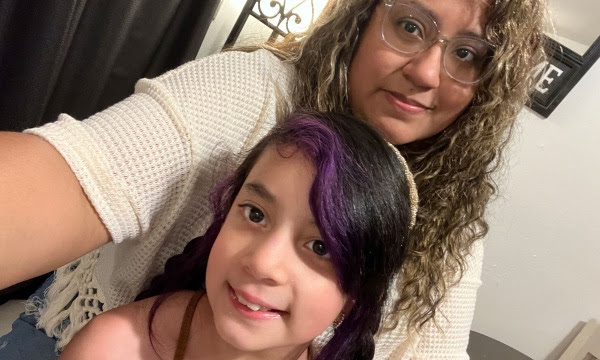
    Sierra Rios and her daughter Nevaeh (Sierra Rios)

    For Decades, the Feds Were the Last, Best Hope for Special Ed Kids. What Happens Now?

    A Student’s View: Cell Phone Bans Won’t Fix Education

    Report: ‘A Mixed Picture’ in Pandemic Recovery for American Children


    Emotional Support

    Chompers gonna chomp. Photo credit: Bev Weintraub


    Get stories like these delivered straight to your inbox. Sign up for The 74 Newsletter

    Source link

  • Is CTE the future of arts career pathways?

    Is CTE the future of arts career pathways?

    This audio is auto-generated. Please let us know if you have feedback.

    Dive Brief:

    • While career and technical education has long connected students to real-world job skills and opportunities in different fields, it may also offer an avenue to strengthen arts programming and diversify career pathways for students interested in the arts. 
    • CTE experts emphasize the importance of thinking outside the traditional arts education framework by combining foundational techniques with an awareness of how those skills can be applied in the real world and meet local job market needs.
    • “There’s a dismissiveness about careers in the arts because it’s assumed that you have to be a starving artist, but that’s truly not the case,” said Ashley Adams, executive director of Arts Media Entertainment Institute, a nonprofit that connects educators to creative professionals. “There are incredible jobs for students that use their creative skills, and it empowers them if you can teach them about those careers early on.”

    Dive Insight:

    Adams began as a classroom teacher at a school with a robust Parent Teacher Association that regularly fundraised to support high-quality arts programming. However, not every school has access to this type of resource, Adams said, which is why she views CTE in the arts as an avenue for equity and access for students.

    For example, a theater teacher in Colorado launched a new course that teaches technical theater skills such as set design and sound design in order to qualify for CTE state and federal level funding. 

    Technical training is valuable for students because graduating with a certification in an industry-recognized software platform boosts and strengthens their resume when applying for jobs, Adams said. She added that because CTE programs are project-based, it’s a great preparation for the workforce, as many jobs are seeking professionals who can work collaboratively.

    For an arts-oriented CTE course to succeed, one of the main factors to take into consideration — as with any CTE course — is labor market value. Dan Hinderliter, associate director of state policy for Advance CTE, a national association for CTE directors and professionals, explained that there needs to be at least some level of local labor market analysis to determine which careers and opportunities are available, and to make these explicitly clear to stakeholders.

    “There’s a lot of programs in, say, California — where there’s more opportunity because they have the labor market — than you would find in rural Oklahoma, where they don’t inherently have a lot of need for students with a lot of technical arts skill and background,” Hinderliter said.

    If a school district decides they have a local labor market that’s looking for a much more technical approach to arts education, Hinderliter encourages them to make sure they partner with the employers in that area and, more comprehensively, with the state. 

    At the local level, the AME Institute connects teachers with creative industries and ensures they have training resources and the knowledge necessary to prepare students for these jobs. The organization provides virtual learning opportunities, in-person institutes that include visits to industry studios, and curated programming to strengthen pathway curriculum. 

    “It’s workforce development, and our workforce needs creators, it needs innovators, if we are going to continue to be a leader,” Adams said. “Entertainment is a huge industry sector within our economy, but if we’re going to continue to lead in that industry sector and many others, we have to have creative thinkers. We have to have people who are taking these tools and using them in innovative ways.”

    Source link

  • Many States Picked Diploma Pathways Over HS Exit Exams. Did Students Benefit? – The 74

    Many States Picked Diploma Pathways Over HS Exit Exams. Did Students Benefit? – The 74


    Get stories like this delivered straight to your inbox. Sign up for The 74 Newsletter

    This story was originally published by Chalkbeat. Sign up for their newsletters at ckbe.at/newsletters

    When 18-year-old Edgar Brito thinks about what he’ll do in the future, mechanical engineering is high on the list.

    The senior at Washington state’s Toppenish High School first considered the career after he joined a STEM group in middle school. In a ninth grade class, he researched the earning potential for a STEM degree (“so much more money”) and the demand for mechanical engineers (“exploding”).

    So Brito took some engineering classes at his high school, became president of his state’s Technology Student Association, and is starting at the University of Washington this fall on a pre-science track.

    Brito’s experience is what state education leaders hoped for when they replaced the high school exit exam with multiple pathways to graduation. When he graduates in June, Brito will have completed several diploma pathways, including ones aimed at preparing for college and building career skills.

    But his experience isn’t necessarily typical. He has friends who have no idea what pathway they’re on — or if they’re on one at all. The requirements could be clearer and advisers could spend more time talking about them with students, he said.

    “Making sure that we know exactly what our pathway is and what it means to be on a pathway would have definitely helped out a lot more students,” Brito said.

    Five years after Washington rolled out its pathways, they appear to have helped more students who aren’t college-bound to graduate, which was part of the goal. But the system has also created new issues and replicated some old ones.

    For the Class of 2023 — the most recent year with available data — around 1 in 5 seniors didn’t have a pathway. That meant they weren’t on track to graduate within four years and at risk of dropping out. Some students relied on pandemic-era waivers that don’t exist anymore. That’s similar to the share of students who didn’t graduate on time in 2019, the final year of the exit exam.

    Asian and white students are much more likely to complete one of the math and English pathways, considered the college-prep route, while Native students, English learners, and students with disabilities are more likely to have no graduation pathway.

    “The implementation of graduation pathways has reinforced that the student groups who are the furthest from educational justice are completing the requirement at lower rates,” state education officials wrote in a 2023 report.

    Across the state, students don’t have equal access to the pathways. Many schools, especially smaller and rural ones, struggle to offer more than a handful of career and technical education classes. Some career pathways train students for low-paying jobs with little opportunity for advancement. Some students get funneled to the military pathway, despite having no aspirations to serve, because the aptitude test is easier to pass. Many teens, like Brito’s friends, find the pathways confusing.

    Washington is not alone. Nearly half of states offer multiple diploma options or graduation pathways. And some, like Indiana, have already taken a second pass at their pathways. Many have struggled to address the same big questions, including what exactly high school is for, and what students should need to do to earn a diploma.

    Now the state board of education is poised to overhaul its graduation requirements again.

    Piling on more ways for students to graduate is not the answer, said Brian Jeffries, the policy director at the Partnership for Learning, an education foundation affiliated with the Washington Roundtable, which is made up of executives from across the state.

    “Let’s better prepare our students to meet the pathways, [rather] than keep creating a smorgasbord or a cafeteria of options, which too often turn into trapdoors,” said Jeffries, who sits on the state task force that’s looking at graduation requirements. Until disadvantaged kids have access to better instruction and more support, he said, “we’re going to keep spinning this wheel.”

    The path to 100 high school graduation pathways

    Back in the early 2000s, many states raised the bar to graduate from high school with the hope it would get more kids to college. As a result, by 2012, half of all states required an exit exam, including Washington state.

    But as student debt soared and some questioned the value of higher education, schools abandoned that college-for-all mentality. Critics of exit exams argued that they blocked too many disadvantaged students from graduating.

    In Washington state’s final year of the exit exam, around 1 in 10 high school seniors didn’t pass the English language arts portion, and 1 in 5 didn’t pass the math test, the Seattle Times reported. The law that nixed the exit exam had broad support from the Washington teachers union, state education officials, and parents. Lawmakers passed it unanimously.

    Just six states require an exit exam now, with New York and Massachusetts dropping their tests this school year.

    But absent an exit exam, states haven’t really reached a consensus on what students should have to do to prove they’re ready to graduate.

    Nationwide, there are now more than 100 ways to graduate from high school, according to a recent report from the Education Strategy Group, a K-12 consulting firm. The myriad options provide flexibility, but “also contribute to the lack of clarity about what it means to earn a diploma,” the report found.

    When the nation’s main K-12 education law, the Every Student Succeeds Act, passed 10 years ago, it tasked schools with getting students ready for college and career. But many states and schools are still trying to figure out how to do the career part well.

    “Part of the challenge, frankly, is that schools are going through a bit of a post-high-stakes-test-based accountability identity crisis,” said Shaun Dougherty, a professor of education and policy at Boston College.

    Michael Petrilli, the president of the Thomas B. Fordham Institute, a conservative think tank, says that’s partly because for all the talk about changing high schools, graduation policies are still fairly restrictive. One reason Washington is revisiting its policies now is because some educators worry the state’s 24-credit requirement fills up students’ schedules, leaving little time for apprenticeships and other hands-on learning.

    Many kids are still “sleepwalking through six or seven class periods a day, mostly through college-prep courses,” Petrilli said, with “maybe a few career-tech electives on the side.”

    “We haven’t really unleashed high schools to do things very differently,” Petrilli said. “If we actually think that career tech is valuable, if we think that college-for-all was a mistake, then we need to be willing to act on it.”

    Diploma pathways can bolster teens’ interest in school

    What’s happening in the Toppenish School District illustrates the potential of the pathways model.

    The district, which serves around 3,700 students in south-central Washington, is able to offer a wide range of career and technical courses, including in growing industries, like health care and agriculture. The career-oriented pathway has helped increase some students’ interest in school.

    “It is very hands-on, and so it’s definitely more engaging,” said Monica Saldivar, Toppenish’s director of career and technical education. The old one-size-fits-all approach had “a negative impact for our students with diverse learning needs, academic challenges, and also language barriers.”

    Just before the state overhauled its graduation requirements, over 81% of Toppenish students graduated within four years. Now over 89% do.

    The improvements have been especially pronounced for English learners and Native students, many of whom live on the Yakama Nation. Since the state introduced pathways, Native student graduation rates have risen from 67% to 88%.

    Since pathways launched, the district has added several career-technical education courses, including advanced welding and classes that prepare students to work as medical transcriptionists or home health care aides. That can require some careful career counseling with students, as those jobs are in high demand but don’t pay well unless students get additional training or schooling and move up the career ladder.

    Still, the expanded offerings have helped some students tailor their post-high school plans.

    Frances Tilley, a Toppenish senior who’s headed to Gonzaga University in the fall, will graduate in June after completing both college-prep and career-oriented pathways.

    The 18-year-old took two of the new sports medicine classes and liked learning about what to do if you have a concussion. (Don’t try to stay awake. “We learned that’s not true,” Tilley said.)

    She followed that up with another health care class that touched on different disciplines. She gravitated toward psychology and now plans to get a master’s in counseling and become a mental health worker.

    Pathways can also help schools expose students to career options earlier.

    Three years ago, Toppenish started offering middle schoolers two-week labs to test drive careers such as marketing, nursing, or culinary arts. By the end of eighth grade, they’ve learned about 10 different careers. Now school counselors use students’ interests to help plot their high school schedules.

    Kaylee Celestino, 16, had long considered becoming a teacher. The Toppenish sophomore often gets “education” as an answer when she takes career quizzes. But the career-exploration labs also piqued her interest in science, and now she could also envision becoming a pediatric nurse. So her course schedule reflects that with advanced biology and college-level chemistry.

    “I just want to help people out,” she said, “like my teachers have helped out me.”

    Staffing, standards, data gaps make pathways challenging

    Staffing career and technical classes is one of the biggest hurdles to doing pathways well.

    Washington makes it easier than other states for professionals to put their work experience toward a teaching license. But many schools still struggle to attract and retain teachers for attractive fields like health services and welding when the private sector beckons.

    “These are lucrative fields,” said Dougherty, who has researched career education programs in several states, including Washington. “It’s hard to convince people to give up that salary to become full-time educators.”

    That creates extra work for schools. Saldivar, for example, meets regularly with regional employers to learn about their workforce needs. That helps inform whether Toppenish should drop or add certain classes, and which teachers to recruit. Saldivar is constantly networking and following up on “so and so may know someone” tips.

    Figuring out how to hold all students to a high standard when they are meeting different criteria to graduate is a challenge, too. Some worry Washington’s pathways are too flexible.

    The state rolled out a new pathway this year that allows students to graduate by completing a project, work-related experience, or community service. Lawmakers wanted to give students a way to show what they know besides taking a class or a test. But students don’t have to work with a teacher at their school, and if they choose to work with an outside mentor, there’s no clear rules for how they should be vetted.

    “Where are they finding these people?” said Jeffries of the Partnership for Learning. “Is their opinion an expert opinion that we could trust, or is this based on vibes?”

    Experts say it’s also important for students to understand what their likely earnings and other outcomes will be depending on which career pathway they follow.

    “We should not be talking about CTE in a very generic way,” said Dan Goldhaber, a professor at the University of Washington who has researched career and technical education teacher preparation in the state. “What the concentration is matters.”

    But Washington state doesn’t yet know how students’ outcomes may vary depending on which career and technical education concentration they chose, Katie Hannig, a spokesperson for Washington’s state education agency, wrote in an email. This is a common problem nationwide.

    The state also doesn’t yet know whether the pathway, or pathways, students completed were connected to their post-high school plan, which they must create to graduate. That hasn’t assuaged concerns that students are completing pathways disconnected from their college and career goals.

    The state expects to get that data in the future, Hannig wrote. Analyzing how diploma pathways affect graduation trends and postsecondary outcomes could help schools target resources and support.

    “Any new policy is a work in progress, but the fundamental core value of this policy is preparing students for their next step after high school graduation,” Hannig wrote. “Washington is proud to be one of those states that have established and continue to refine those pathways.”

    For now, districts like Toppenish are scrambling to coordinate weekly college presentations, field trips to work sites, and military recruiter visits — “a little of everything,” Saldivar said — to hedge their bets.

    Kalyn Belsha is a senior national education reporter based in Chicago. Contact her at [email protected].

    Chalkbeat is a nonprofit news site covering educational change in public schools.


    Get stories like these delivered straight to your inbox. Sign up for The 74 Newsletter

    Source link

  • How Major Restrictions Silently Reshape Student Pathways

    How Major Restrictions Silently Reshape Student Pathways

    Title: The Invisible Barrier: How Restrictions on Majors Influence Career Paths

    Source: Strada Education Foundation

    Author: Nichole Torpey-Saboe and Akua Amankwah-Ayeh

    When university departments face increasing demand, many implement additional entry requirements. But this seemingly reasonable practice has far-reaching consequences for equity and workforce development, according to new research from Strada Education Foundation surveying recent college graduates.

    The study found that while 67 percent of recent public four-year institution graduates considered a restricted major, only 50 percent were admitted to one. This gap translates to more than 200,000 students annually deterred from pursuing their preferred field of study—with the impact falling disproportionately on historically marginalized populations. Black graduates (27 percent) and first-generation students (22 percent) did not pursue restricted majors of interest at higher rates than the average graduate (17 percent).

    A notable finding is that major restrictions operate largely outside institutional awareness. For every student formally rejected from a restricted major, four others never apply, deterred by requirements they see as difficult to meet. This “invisible barrier” effect means institutional data captures only a fraction of the impact, making it difficult for institutions to fully assess the effects of these policies.

    These findings align with economic research by Zachary Bleemer and Aashish Mehta that highlights two conclusions. First, major restrictions have tripled the economic value gap between degrees earned by underrepresented minority students and their peers since the mid-1990s. Second, there is no evidence that restrictions improved educational outcomes for excluded students or enhanced the value of restricted majors for those who remained.

    The most common restrictions respondents report are academic performance thresholds: out-of-department GPA requirements (42 percent), in-department GPA thresholds (33 percent), and test score requirements (29 percent). Other barriers include higher costs (15 percent), required work hours (12 percent), wait lists (9 percent), portfolio reviews (8 percent), and auditions (7 percent).

    The research identifies four approaches institutions might consider:

    • Implement bridge programs for underrepresented students in gateway courses for high-demand majors, paired with specialized academic and career advising.
    • Develop alternative credential pathways through certificates, minors, and interdisciplinary programs that provide students access to skills in high-demand fields without major-specific entry barriers.
    • Secure funding, such as through state appropriations, to expand educational resources and capacity in high-demand departments, recognizing these programs’ higher delivery costs as well as their value.
    • Work with industry leaders to secure access to equipment, facilities, guest instructors, and financial support to expand capacity in resource-intensive programs.

    While institutional resource constraints are real, the unintended consequences of major restrictions are reshaping student pathways in ways that affect both equity and workforce development. By implementing thoughtful alternatives, institutions can better respond to student aspirations while addressing workforce needs.

    For more information, read the complete Strada Education Foundation report and Bleemer & Mehta’s economic analysis on how these policies affect long-term wage disparities.

    —Alex Zhao


    If you have any questions or comments about this blog post, please contact us.

    Source link