This audio is auto-generated. Please let us know if you have feedback.
Dive Brief:
Preliminary case numbers for pertussis, or whooping cough, in the U.S. remain elevated in 2025, compared to immediately before the pandemic, when more than 10,000 cases were typically reported each year, according to recent figures from the U.S. Centers for Disease Control and Prevention.
Meanwhile, KFF reported this year that exemptions from school vaccination requirements — and particularly non-medical exemptions — have increased. In addition, the New York Academy of Sciences reported in May that disinformation across social media, politicization of vaccines and public figures promoting skepticism, “have all contributed to declining coverage, fueling the resurgence of pertussis.”
Dive Insight:
The Texas Department of State Health Services reported on Nov. 3 that it was tracking a significant increase in pertussis cases in 2025. According to provisional data, the agency said, “Texas has had more than 3,500 reported pertussis cases through October this year, roughly four times the number reported for the same period last year.”
The number of cases is also reportedly the highest for the state in 11 years.
Texas schools, among other entities like hospitals, are required to report individuals who are suspected of having pertussis within one work day, according to the state health agency.
This is the second consecutive year that Texas has experienced high year-over-year increases in reported pertussis cases, and it’s also the second consecutive year the state’s Department of State Health Services has issued a health alert, according to a news release.
The CDC said reported cases of pertussis are currently trending down in 2025 since a peak in November 2024, when more than six times as many cases were reported, compared to 2023. The agency added that case counts will likely change as it finalizes the data.
In September, Colorado-based healthcare system UCHealth reported that cases of whooping cough “are on track to be even worse this year than in 2024,” adding that health officials in parts of the state have warned of “a noticeable jump” in pertussis cases as kids have returned to school.
In many states across the U.S. — including Florida, Oregon and Washington — cases of pertussis as of Sept. 20 were already outpacing total year-to-date cases reported by the CDC in 2025. UCHealth’s September report noted that the worst U.S. pertussis outbreaks so far in 2025 were on the West Coast, with high numbers also reported in Ohio, Michigan, Illinois, Minnesota, North Carolina and Arizona.
Other childhood diseases are also on the rise as a result of shifting attitudes toward vaccines and vaccine mandates. According to the CDC, the best defense against pertussis is a vaccination.
In March, measles infections spread across several U.S. states, a quarter-century after the potentially fatal disease had been declared eradicated in the U.S. in 2000.
In addition to the impact on student health, an uptick in acute and chronic illnesses can also increase chronic absenteeism issues for schools and school districts. A CDC study published last year found that in 2022, 5.8% of children experienced chronic school absenteeism for health-related reasons.
The Bill, which contains a suite of integrity-focused reforms that will impact Australia’s international and higher education sectors, is progressing through parliament.
With that, stakeholders have been weighing in. Here are some of the key points raised in submissions, focusing on education agents, TEQSA powers, and consultation concerns.
Changes for education agents
The Bill is set to tighten oversight of education agents by broadening the legal definition of who qualifies as an agent and introducing new transparency requirements around commissions and payments.
Universities Australia urged the government to adopt a definition of education agent that “captures only those receiving commission for the direct recruitment of students on behalf of Australian institutions”, arguing this would provide greater certainty to universities and ensure compliance requirements remain proportionate.
The International Education Association of Australia (IEAA) also raised concerns that the proposed definition remains overly broad. In its submission, the association warned that, without clearer definitions and published guidelines, existing arrangements – such as subcontracted marketing services or partnerships with education businesses – could inadvertently fall within the scope of education agent, increasing compliance burdens and legal risks.
For these reasons, IEAA reiterated its earlier recommendation that the definition be adapted from the National Code 2018, or that an exemption schedule be developed covering government agencies, TNE partners, and contracted marketing firms.
TEQSA-related changes and powers
Elsewhere, the legislation also sets out that education providers will require authorisation from the Tertiary Education Quality and Standards Agency (TEQSA) – Australia’s national higher education regulator – to deliver Australian degrees offshore.
The Bill will also give TEQSA clearer authority to monitor, and, if necessary, restrict or revoke offshore higher-education delivery, backed by new reporting obligations requiring providers to notify TEQSA of key changes to offshore operations and submit annual reports on all offshore courses, with specific details yet to be defined.
Julian Hill, the federal government’s assistant minister for international education, recently defended this part of the Bill saying: “All that this part of the Bill is doing is making sure that TEQSA, as the regulator, has a line of sight to what providers are doing offshore – that’s all.
“Right now, TEQSA, as the regulator, simply doesn’t have the data-flow to know reliably which providers are delivering in which markets… There’s no more power; there’s no more red tape; it’s simply saying: ‘You need to get authorisation.’
“It’s straightforward. Everyone who is currently delivering automatically gets authorised. But then they just have to tell the regulator, so that they can run their normal risk-based regulation.”
In its submission, IEAA said it supports the changes, providing they “do not penalise existing Australian education providers’ partnership arrangements/contracts with their offshore partners”.
However, IEAA suggests a “phased implementation timeline that allows for some providers who are mid-way through contract signing with offshore partners to not be unnecessarily caught up, delayed or burdened by this new measure suddenly being enforced”.
IEAA also argued that the Bill’s nine-month decision period for TEQSA – which could be stretched to 18 months if extended – is too long, warning that such delays would hinder providers’ ability to respond to opportunities and innovate. A three- to six-month timeframe would be more appropriate, it said, noting that long approval windows could deter offshore partners already navigating lengthy timelines for establishing new TNE agreements.
Requiring notifications for every change in course offerings would impose a significant – and unnecessary – administrative burden without delivering meaningful regulatory benefit Go8
The Group of Eight also raised TEQSA’s new requirements in their submission, writing: “There is no material difference between courses offered by Monash University onshore in Australia and those at Monash Malaysia. Requiring notifications for every change in course offerings would impose a significant – and unnecessary – administrative burden without delivering meaningful regulatory benefit.”
Go8 said that without further clarity on reporting requirements, it is “difficult to determine whether this aligns with the intended light-touch approach” that the government has signalled.
“For self-accrediting universities, reporting obligations should be kept to an absolute minimum and clearly linked to risk mitigation, ensuring compliance does not create unnecessary administrative burden. Importantly, reports should not request information that TEQSA can access through existing systems,” said Go8 in its submission.
Sector consultation
A lack of consultation was a major point of contention during last year’s debate on the previous iteration of the Bill, and several submissions argue that this continues to be a concern.
English Australia acknowledged the “extensive engagement” undertaken by Hill, as well as ongoing consultation by the Department of Education – and noted that several improvements had been made since the 2024 version, including the removal of proposed enrolment caps.
However, the ELICOS peak body added that “the vast majority of feedback” provided during the inquiry has been ignored and that the limited consultation that characterised the earlier Bill has “equally marked the drafting of the current version”.
English Australia urged the government to pause the Bill to allow time for a collaborative and robust consultation with the sector peak bodies, and also to allow time for economic modelling on the cumulative impact of its provisions on the international education sector and the wider economy.
“ITECA has been unequivocal in lending support to measures that will genuinely enhance integrity objectives,” wrote ITECA CEO Felix Pirie in its submission.
“As you will appreciate, ITECA cannot lend such support in the absence of collaborative and open dialogue, especially when the sector is ambushed by the tabling of legislation in the parliament. Improved integrity must be delivered through improved integrity and transparency in government processes, decision-making and collaborative engagement with the sector.
Pirie and his team are recommending that should the reforms pass, they be subject to review by an external reviewer within two years of commencement of those provisions.
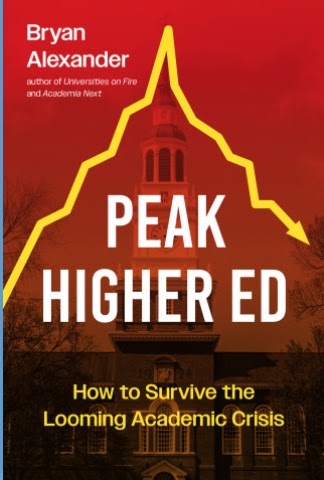
Over the past decade, American colleges and universities have seen enrollment decline, campuses close, programs cut, faculty and staff laid off, and public confidence erode. In Peak Higher Ed, futurist Bryan Alexander forecasts what the next decade might hold if we continue down this path. He argues that the United States has passed its high-water mark for postsecondary education and now faces a critical turning point. How will higher ed institutions respond to this wave of change and crisis?
Combining data-driven research with scenario modeling, Alexander outlines a powerful framework for understanding what led to this moment: declining birthrates, surging student debt, rising tuition, shifting political winds, and growing skepticism about the value of a college degree. He maps out how these forces, if left unchecked, could continue to reshape academia by shrinking its footprint, narrowing its mission, and jeopardizing its role in addressing the planet’s most pressing challenges, from climate change to artificial intelligence. Alexander explores how institutions might adapt or recover, presenting two possible futures: a path of managed descent and a more hopeful course of reinvention.
Peak Higher Ed examines the fraying of the “college for all” consensus, the long shadow of pandemic-era disruptions, and the political polarization that has placed universities in the crosshairs. Written for educators, policymakers, students, and anyone invested in the future of higher learning, this book offers a deeply informed, unflinching look at the road ahead and the choices that will determine whether colleges and universities retreat from their peak or rise to a new one.
Since hitting a record high in 2022, national chronic absenteeism rates have dropped modestly — by about five percentage points — according to the most recent available data, but still remain persistently higher than pre-pandemic levels.
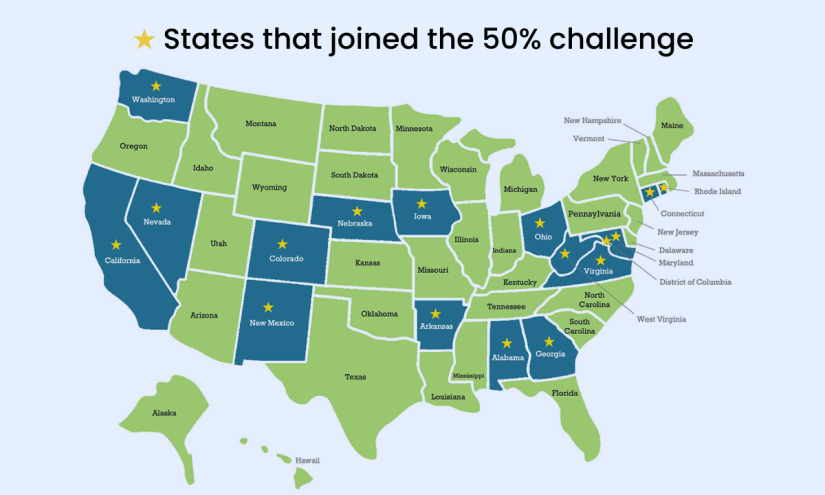
States that joined a national pledge led by three high-profile education advocacy and research groups to cut chronic absenteeism in half over five years fared better. The 16 states and Washington, D.C. posted results “substantially above the average rate” of decline, though exact numbers are not yet available, said Nat Malkus, deputy director of education policy studies at the American Enterprise Institute, one of the trio.
The national chronic absenteeism average dropped from 28.5% in 2022 to 25.4% in 2023, and fell an additional two points to 23.5% in 2024. Virginia, which is among the 16 participating states, cut its chronic absenteeism by 4.4 percentage points, year over year, to 15.7%, as of spring 2024.
Speaking of the states collectively, Malkus told The 74, “That’s good but it’s not as good as we need it to be. I think it points to the need for sustained pressure and a sustained campaign to bring absence rates down and to bring more students back to consistent attendance.”
Last July, AEI and EdTrust, right-and left-leaning think tanks, respectively, and the national nonprofit Attendance Works joined forces to launch The 50% Challenge. This week, the organizations hosted an event in Washington, D.C., to report on their progress, re-up the call to action and hear insights from state, district and community partners on how they are improving student attendance and engagement.
With California and Georgia recently joining, the 16 states and D.C. who signed on to the pledge account for more than a third of all students nationally. While Malkus doesn’t necessarily attribute their better results to the pledge itself, he noted that their participation shows a willingness to commit to the cause and be publicly accountable for their results.
“I will hold their feet to the fire on this goal,” he added during his opening remarks in D.C.
While felt most acutely by students of color and those in poorer districts, the spike in chronic absenteeism — students missing more than 10% of school days a year — cut across districts regardless of size, racial breakdown or income. Chronic absenteeism surged from 13.4% in 2017 to 28.5% in 2022 before beginning to drop in 2023.
Only about one-third of students nationally are in districts that are on pace to cut 2022 absenteeism in half by 2027, according to an AEI report, and rates improved more slowly in 2024 than they did in 2023, “raising the very real possibility that absenteeism rates might never return to pre-pandemic levels.
AEI
Research has shown that students with high rates of absenteeism are more likely to fall behind academically and are at a greater risk of dropping out of school. About 8% of all learning loss from the pandemic is attributed just to chronic absenteeism, according to soon-to-be-released AEI research.
The continued disproportionate impacts of chronic absenteeism were confirmed by recent RAND research, which found that in roughly half of urban school districts, more than 30% of students were chronically absent — a far higher share of students than in rural or suburban school districts.
RAND also found that the most commonly reported reason for missing school was sickness and one-quarter of kids did not think that being chronically absent was a problem.
SchoolStatus, a private company that works with districts to reduce chronic absenteeism, also released new numbers this week for some 1.3 million K-12 students across 172 districts in nine states. Districts using proactive interventions, the company reports, drove down chronic absenteeism rates from 21.9% in 2023–24 to 20.9% in 2024–25.
At this week’s event, numerous experts across two panels emphasized the importance of a tiered approach to confronting the issue, which has resisted various remedies. Schools must build enough trust and buy-in with kids and their families that they are willing to share why they are absent in the first place. Once those root causes are identified, it is up to school, district and state leaders to work to remove the barriers.
And while data monitoring must play a significant role, it should be done in a way that is inclusive of families.
“We need to analyze data with families, not at them,” said Augustus Mays, EdTrust’s vice president of partnerships and engagement.
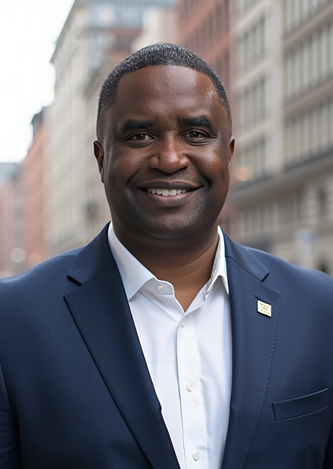
Augustus Mays is the vice president of partnerships and engagement at EdTrust. (EdTrust)
It’s imperative to understand the individual child beyond the number they represent and to design attendance plans and strategies with families so they feel supported rather than chastised.
“It’s around choosing belonging over punitive punishment,” Mays added.
One major and common mistake schools make is “accountability without relationships,” said Sonja Brookins Santelises, the superintendent of Baltimore City Public Schools.
“You can’t ‘pull people up’ if you don’t have enough knowledge of what they’re really going through,” she said.
Panelists were transparent that all this would require immense funding, staff and community partnerships.
Virginia achieved its noteworthy drop in chronic absenteeism after launching a $418 million education initiative in the fall of 2023, in part after seeing their attendance data sink, with about 1 in 5 students chronically missing school. At least 10% of those funds are earmarked to prioritize attendance solutions in particular, according to panelist Emily Anne Gullickson, the superintendent of public instruction for the Virginia Department of Education.
These strategies are far-reaching, she noted: Because parents had been told throughout the pandemic to keep their kids home at the slightest sign of illness, schools partnered with pediatricians and school nurses to help counter the no-longer-necessary “stay home” narrative.
Hedy Chang is the founder and executive director of Attendance Works. (Attendance Works)
Gullickson said she also broke down bureaucratic silos, connecting transportation directors and attendance directors, after realizing the role that transit played in chronic absenteeism. The state now has second chance buses as well as walking and biking “buses,” led by parents or teachers along a fixed route, who pick up students along the way.
And they are “on a mission to move away from seat time and really deliver more flexibility on where, when and how kids are learning,” she said.
“This isn’t one strategy. It’s a set of strategies,” said Attendance Works founder and executive director Hedy Chang, who moderated the panel.
In Connecticut, state leaders have launched the Learning Engagement and Attendance Program, a research-based model that sends trained support staff to families’ homes to build relationships and better understand why their kids are missing school.
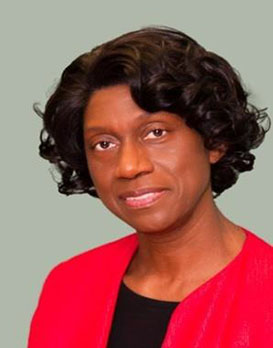
Charlene Russell-Tucker is the commissioner of the Connecticut State Department of Education. (Connecticut State Department of Education)
A recent study confirmed that six months after the program’s first home visits, attendance rates improved by approximately 10 percentage points for K-8 students, and nearly 16 percentage points for high schoolers, said Charlene Russell-Tucker, the commissioner of the Connecticut State Department of Education.
Schools must also work to motivate kids to want to show up in the first place, panelists said, making it a meaningful place that students believe will support and help them in the long run. The only way to do this is to start with student and family feedback, said Brookins, the Baltimore schools chief.
During the pandemic many parents saw up-close for the first time what their kids’ classrooms and teacher interactions looked like, “and I don’t think a lot of folks liked what they saw for a variety of different reasons,” Brookins said.
“I think it opened up boxes of questions that we — as the education establishment — were unprepared to answer,” she added. But chronic absenteeism cannot be successfully fought without engaging in those uncomfortable conversations.
Disclosure: The Bill & Melinda Gates Foundation provides financial support to EdTrust and The 74.
Vicki Thomson appears at an earlier Parliamentary inqury. Picture: Kym Smith
Peak higher education bodies have warned a Senate inquiry against counterproductive over-regulation and towards proper university funding ahead of the government’s productivity roundtable.
Please login below to view content or subscribe now.
Policy changes in 2024 reshaped the UK’s international education landscape, leading to significant shifts in student mobility. The Sunak government’s restrictions on student dependents immediately impacted applicants from key source markets where family migration is a priority. At the same time, rising fees and uncertainty around the Graduate Route (now resolved) added further pressure that dampened demand.
Main Applicant Demand Declined by 12% in 2024
The UK has long been a leading destination for international students, with visa applications peaking in 2022 at nearly half a million main applicant submissions. This high point was partly driven by post-pandemic disruptions to global student mobility. Applications dipped slightly in 2023 as demand stabilised and the Sunak administration’s rhetoric signalled a less welcoming environment for non-EU students. By 2024, application volumes saw a sharp decline:
More than 423,000 sponsored study visas for main applicant international students were processed in 2024. This represents a 12% decline from the previous year and a 15% drop from the 2022 high-point. While this drop was more mild than student visa decreases seen in other destinations in 2024, it still accounts for nearly 60,000 fewer processed applications in a single year.
Withdrawn applications further reflect softened student demand, likely influenced by policy changes. Nearly 6,600 prospective students withdrew their application in 2024, a 127% increase from the previous year. This followed a sharp rise in Q4 2023, when withdrawals spiked to 2,000—366% higher than Q4 2022. In short, after a wave of unwelcoming messaging from the Sunak administration in mid-to-late 2023, fewer international students applied, and withdrawals hit record highs.
However, there are signs of possibly renewed student confidence. Nearly 63,000 UK study visa main applications were processed in Q4 2024. This represents a growth of 9% over Q4 2023.
Demand Fell Most Sharply in Markets Where Students Commonly Travel With Family
The most significant drops in UK study visa demand in 2024 came from countries where international students often apply with dependants:
Main applicant numbers fell in 2024 across seven of the ten countries with the highest ratios of dependants to main students, underscoring the impact of the new restrictions. Yet not all high-dependant markets followed this trend. Applications from Nepal rose sharply, increasing by 61%, while volumes from Pakistan and Bangladesh held steady.
Does this mean concerns about the new policy were overstated since not all high-ratio student populations saw declines? Not quite. The seven countries that experienced declining interest—Nigeria, Sri Lanka, Ghana, Iran, Afghanistan, Saudi Arabia, and India—accounted for seven of the eight largest main applicant declines last year, with Russia (-21%) slightly surpassing Saudi Arabia.
Where Did Student Demand for a UK Study Visa Remain Resilient in 2024?
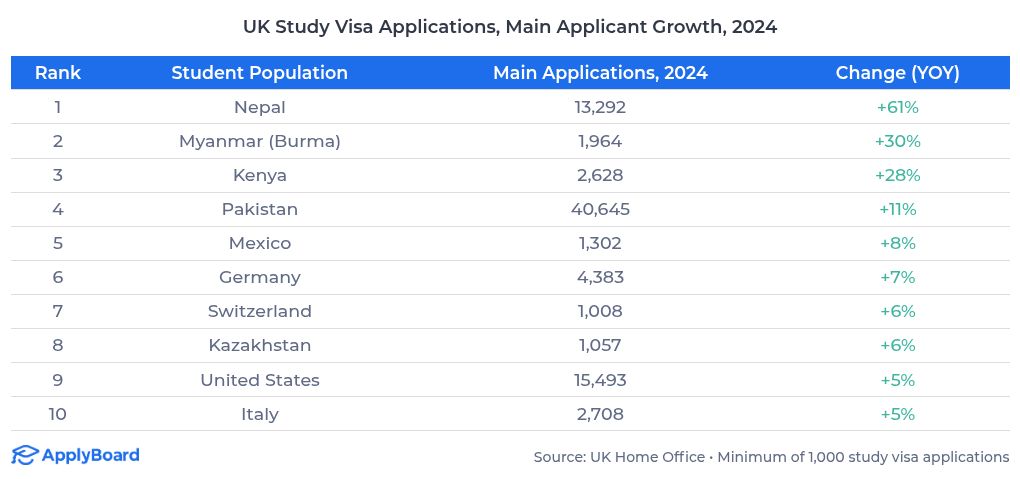
Beyond these declines, which student populations showed increased demand in 2024? The table below highlights the top 10 student populations that saw growth in 2024:
Nepal and Pakistan emerged as notable exceptions to the broader decline among countries with high dependant-to-student ratios—not just for bucking the trend, but for the scale of their growth. Nepal saw the sharpest year-over-year increase of any market in 2024, with main applicant volumes surging by 61%. Pakistan followed closely behind, ranking fourth overall with an 11% rise. Their resilience suggests that factors beyond dependant policies—such as economic conditions, domestic education capacity, and long-term aspirations for post-study work—continue to shape student decision-making.
Beyond Nepal and Pakistan, growth was more geographically dispersed in 2024. Kenya and Myanmar (Burma) recorded some of the largest increases, signaling rising demand from parts of both Africa and Southeast Asia. Several European countries, including Germany, Switzerland, and Italy, also posted moderate gains. Meanwhile, the presence of Mexico and Kazakhstan among the top 10 growth markets highlights the increasingly global nature of student mobility to the UK.
Just beyond the top 10, Kuwait and Turkey also recorded notable increases in main applicant volumes. As institutions navigate a shifting recruitment landscape, both countries may present important opportunities for future engagement and growth.
Looking Ahead
The UK’s international education sector faced considerable challenges in 2024, with policy changes reshaping student mobility patterns. At this stage—and despite calls from some in the sector—we don’t anticipate imminent steps to reverse the dependent policy, nor do we think it’s likely that the Government will opt to take international students out of the net migration figures. That said, we’ve already seen a much more positive message coming from the Government towards international students and we expect this to be sustained and reflected in the launch of the new International Education Strategy.
It’s also important to note that the UK was not the only destination to experience softened student interest in 2024, as international education sectors in Canada, the US, and Australia all faced declines. Encouragingly for the UK, many institutions reported higher enrolments in this year’s January intake than in the same time last year, indicating positive momentum. Now is the time to build on that progress.
To sustain this momentum, UK institutions will need to actively re-engage prospective students and rebuild confidence in key markets. Clear communication around post-study work opportunities, financial aid, and student support will be essential to reassuring applicants. At the same time, growing interest from countries such as Kenya, Myanmar, Kuwait, and Mexico presents an opportunity to strengthen recruitment efforts and establish a more diverse student base.
More than half of science teachers believe the most important value of science education is how it contributes to students’ curiosity, critical thinking, and creativity, according to a new report from LEGO Education. But are today’s students truly engaging with science education?
LEGO Education’s State of Classroom Engagement Report: Science Edition surveyed more than 6,000 global teachers, parents, students, and U.S. administrators to gather data that can offer insight to support educators as they strive to engage their students in science learning.
Science learning builds life skills students will use even if they do not pursue the science in college or as a career. It also increases student engagement and well-being, but here’s the catch: Students have to feel connected to the material in order to build these skills.
Just over half of global science teachers say their students are engaged in science, which points to a critical need to boost engagement in the subject, according to the report. Interestingly, students say they are more engaged in science than they are in school overall. Only one-third of teachers worldwide indicate that their students are engaged in the classroom. Schools could leverage students’ interest in science to build schoolwide engagement–a key factor tied to student well-being.
When students aren’t engaged in science, what’s behind that lack of engagement? Often, they’re intimidated before they even learn the material, and they assume the topics are too challenging. Students lose confidence before they even try. Of students who say science is their least-favorite topic, 45 percent say science is too hard and 37 percent say they are bad at science. What’s more, 77 percent of global teachers say they believe students struggle because of complex concepts and curricula, and they’re searching for for impactful resources that support every student’s success.
“If students think they’re not good at the subject or avoid it, we risk losing an entire generation of innovators and problem solvers,” said Victor Saeijs, president of LEGO Education, in the report.
How can educators reach students who struggle to engage with science? Hands-on science learning is the key to piquing student curiosity, prompting them to engage with learning material and build confidence as they explore science concepts. Sixty-two percent of science teachers say hands-on activities drive student engagement in science. Seventy-five percent of science teachers who do incorporate hands-on activities believe this approach leads to higher test scores and grades.
More students need access to hands-on science learning. Only 55 percent of students say they regularly get hands-on experiences–these experiences usually require extra time and resources to plan and execute. Eighty-two percent of science teachers say they need more ways to teach science with play and hands-on methods.
Having access to hands-on science learning experiences increases students’ confidence, giving them the boost they often need to tackle increasingly tough-to-learn concepts:
73 percent of students with access to hands-on learning opportunities report feeling confident in science
Just 52 percent of students who do not have access to hands-on learning report feeling confident in science
Hands-on experiences in science drive:
Learning outcomes: 71 percent of science teachers who incorporate hands-on, playful learning believe the methodology supports higher test scores and grades
Engagement for all learners: 84 percent of U.S. teachers and 87 percent of administrators think that hands-on experiences help all types of learners engage with science concepts
Love of science: 63 percent of students who love science credit their passion to regular hands-on experiences
Confidence: 79 percent of students who have hands-on science experiences are confident in the subject
Administrators and science teachers are short on time and need hands-on tools and resources to quickly engage students in learning:
59 percent of U.S. administrators and 54 percent of science teachers say they need more tools to engage students in science
Nearly one-third of U.S. students do not get hands-on science experiences.
Laura Ascione is the Editorial Director at eSchool Media. She is a graduate of the University of Maryland’s prestigious Philip Merrill College of Journalism.