Tag: Pennsylvania

  • Philadelphia Kids Face Delays Accessing Early Intervention Services – The 74

    Philadelphia Kids Face Delays Accessing Early Intervention Services – The 74


    Join our zero2eight Substack community for more discussion about the latest news in early care and education. Sign up now.

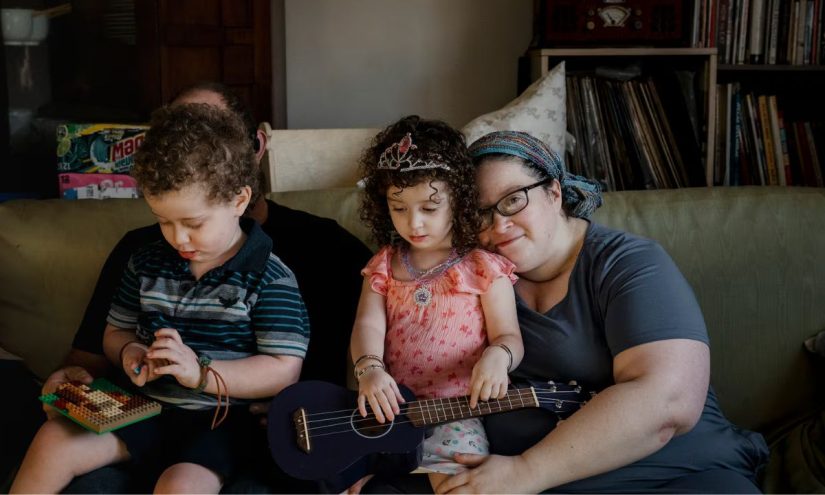
    When Kimberly Halevy’s son Joshua was 3, she started hearing from his preschool that he was acting out. He rarely participated in circle time and had trouble playing with other kids.

    Halevy’s friend had recently opened the preschool, and she liked that someone she knew took care of her son. But eventually, the preschool said it would only allow him back if he had a 1-to-1 aide to address his “disruptive” behavior, Halevy said.

    At first, Halevy thought getting him that aide would be straightforward. But she now describes the effort to get her kid support through Philadelphia’s federally mandated, publicly funded early intervention system as exhausting.

    Though state evaluators found Joshua should receive multiple forms of therapy each week, it took months for any services to begin, Halevy said. Then, once providers contacted her, she said it became a “guessing game” whether her son would receive the home-based occupational therapy and specialized instruction he qualified for every week.

    “I kept being mad at myself for not pushing,” Halevy said. “But now I realize that it’s just the program.”

    Across Philadelphia, young kids like Joshua are waiting months and sometimes years for early intervention services that they are legally entitled to, according to families, therapy providers, and advocates Chalkbeat spoke with.

    Federal law states a child must receive services as soon as possible after an evaluation team completes their Individualized Education Program, or IEP. Pennsylvania has interpreted that to mean 14 days. But one provider said the list she can access of children waiting for speech therapy — one of several early intervention services — is sometimes more than 2,000 families long.

    Early intervention providers are under strain nationwide, with not enough funding or staffing to meet the need. But in Philadelphia — home to 16% of the state’s early intervention population — one player is largely responsible for the system: a 170-year-old nonprofit called Elwyn that the state pays to manage the publicly funded program.

    As Philly’s early intervention system struggles to meet the needs of all kids, some providers and advocates say neither Elwyn nor the state officials who oversee the program are doing enough to ensure kids get services on time.

    In response to Chalkbeat’s questions, Elwyn President and CEO Charles McLister said Elwyn does not comment on specific cases, but the organization works quickly to assess children and provide them with services. “For the vast majority of cases, services are provided within the defined window,” said McLister.

    But McLister acknowledged that there can be delays due to family communication, transportation, scheduling, provider availability, and severe staffing shortages across the sector.

    Erin James, press secretary at the Pennsylvania Department of Education, said in a statement that the department stays in close contact with Elwyn throughout the year “to remind them of their legal obligations.”

    James did not respond to questions about service delays for Philadelphia families. But she said that early intervention programs often lack resources. “Current funding levels for EI [early intervention] services are not sufficient because the population of students who qualify for EI services has been increasing for years,” James said.

    In Philadelphia, the program’s delays are a key reason many of the city’s most vulnerable kids fall behind before they even start kindergarten, advocates say. Data from early intervention program reports the state publishes shows Philly children in early intervention programs lag behind their peers elsewhere in key growth areas, like developing social emotional skills.

    “The whole idea of having to wait more than the required time is really putting kids at a disadvantage,” said Inella Ray, director of parent advocacy and engagement at the advocacy organization Children First. “Because when kids don’t have the support that they need, in today’s current education or environment, they get pushed out.”

    Parents face delays accessing early intervention services

    Early intervention is part of the landmark Individuals with Disabilities Education Act, which dictates that all children with disabilities must have access to a free and appropriate public education. Though each state creates and manages its own program, all kids through age 5 who are identified as having a developmental delay or disability are eligible.

    In Pennsylvania, the Department of Education oversees local early intervention programs for preschool-age kids. In almost every county, families get connected with services through an intermediary unit, a kind of regional education service agency.

    But in Philadelphia, things work differently. The state pays Elwyn a combination of state and federal dollars to administer the city’s preschool early intervention program, along with a much smaller program in Chester. Last fiscal year, its contract was worth around $90 million. Elwyn is in charge of assessing children, developing their IEPs, and subcontracting with a network of providers for services they qualify for.

    When Halevy’s kids’ preschool said her son needed an aide, the preschool owner gave Halevy advice: phone Elwyn. So she did, and she was relieved when the organization told her they could fit Joshua in to begin his evaluation later that week.

    That was July 2024. She hoped Joshua would have services in time to be back at preschool by the following September. But soon, Halevy said she began hitting roadblocks.

    In August, she said she didn’t hear much from Elwyn. Like other early intervention programs statewide, Elwyn often takes a two-week service break at the end of summer — one of many scheduled break periods during the year.

    But then when she did hear back that September, she learned Elwyn wouldn’t consider providing a 1-to-1 aide without observing Joshua in his educational environment. But the preschool said he couldn’t return to class unless he had someone there to specifically support him.

    At the end of September, when evaluators wrote Joshua’s initial IEP, they documented that they discussed adding an aide to assist Joshua at preschool. But they wrote that because they could not observe Joshua in his educational environment, they did not have enough information to support that recommendation. “[T]he family is in a difficult position,” the team wrote on the IEP, which Chalkbeat has reviewed.

    Joshua’s IEP states that he should receive occupational therapy and specialized instruction each week. The law requires services to begin within 14 days. But more than a month after, Joshua still wasn’t receiving services, Halevy said.

    At the time, Halevy was stretched thin. She was also working to get services for her 2-year-old daughter, who struggled with speech, through the separate early intervention program that serves children up to age 3 run by the city.

    For Halevy, sorting out her daughter’s services in the birth to 3 program was simple. Service providers quickly began contacting her and therapists started showing up for sessions. But for her son, nothing.

    “One day, I’m like, ‘Oh my gosh, what’s going on with Josh?’ and I start calling every number I had at Elwyn,” said Halevy.

    It wasn’t until two more months later, in November, when he finally began to receive occupational therapy, she said recently after reviewing text messages. In December, she said his special instruction began.

    Early intervention IEPs not always followed

    Elwyn’s Philadelphia program is the largest in the state, serving around 11,000 preschool-age children, according to the most recent data from the 2023-24 school year. The organization first won its contract for early intervention services in Philadelphia in 1998.

    But its outcomes for kids are behind the rest of Pennsylvania.

    The state requires early intervention programs to report data on how kids progress in certain areas, like social emotional learning and acquiring new skills. State program reports show that for the last five years of data, children in Elwyn’s Philadelphia program have been less likely to progress in all three growth categories compared with the state average.

    Margie Wakelin, a senior attorney at the Pennsylvania-based Education Law Center, said her team has assisted more than 80 Philadelphia families in the last year whose kids’ education was disrupted at least in part because they couldn’t access appropriate services from Elwyn. The vast majority of those children, she said, were Black and Brown kids affected by poverty.

    Some families hire attorneys to help them access the services they’re entitled to, or get pro bono representation from organizations like the Education Law Center. Many who win their cases get compensatory education, often in the form of money the family can use to pay for services after the case is over.

    But that doesn’t make up for lost time as children quickly age out of early intervention. Research shows that children’s brains develop more rapidly between birth to 5 than any other time of their life. Many families, Wakelin said, have also had their children suspended from preschool or made to only attend partial days because of their disabilities.

    “It’s such a critical period for kids to have access to high quality education,” said Wakelin. A system that identifies children as needing services but doesn’t follow through, she added, is “really failing our kids.”’

    McLister, Elwyn’s CEO, said the organization has learned that, in some cases, children are suspended from their preschool programs because of learning or behavioral needs. “Elwyn is not part of this decision making and often learns about it after the fact,” he said. He added that the organization is developing tools “that will help us understand the frequency in which this happens” and is creating additional resource materials for families.

    State reports show that Elwyn’s program is successful in some areas, like evaluating 97% of kids within 60 days, the state-required timeline. But that’s just the first step in what advocates say often becomes a month-long process to get services.

    Though the law is clear that kids should receive services within 14 days of their IEP being written, the state does not publish information on how long kids wait for services after an evaluation, or how many service interruptions they’ll experience when providers are no longer available.

    When it comes to Elwyn’s performance, CEO McLister said that students’ growth data does not account for the unique challenges of providing services in Philadelphia. The children Elwyn serves have higher needs than the state average, he said, with higher incidences of developmental delays and a greater prevalence of multiple other challenges, such as limited English proficiency, economic disadvantages, and other social risk factors.

    “For younger children, these factors produce more modest gains,” said McLister.

    McLister emphasized that Elwyn has been successful in evaluating the vast majority of children on-time, and said the most common reason an evaluation falls outside the 60-day window is a parent cancelling an initial evaluation appointment and needing it to be rescheduled.

    He said delays in getting kids services are often the result of scheduling challenges and staffing shortages — 95% of service issues related to speech and language services, he said, are due to a lack of staff. He said other delays occur when families move or change their child’s preschool enrollment, and when providers return kids to the “needs list,” meaning they stop service for that child, which happens “for a variety of reasons.”

    For Joshua, getting a consistent special instructor, a position meant to support Joshua’s learning, has been impossible, Halevy said. Her text history, which she reviewed recently, documents the challenges: The first special instructor who contacted her never visited and stopped responding to texts, she said. The next person was more helpful and saw Joshua a few times, but then abruptly quit. Now, after more than a month of no special instruction, a new provider comes mostly regularly, Halevy said.

    Access to occupational therapy has been slightly better, Halevy said. For the first several months of service, Joshua’s occupational therapist showed up inconsistently and seemed rushed, Halevy said. Now, after working out a schedule, she consistently comes around once a week.

    Early childhood intervention needs more funding, some say

    These and other challenges aren’t unique to Philadelphia families. But preschool operators and early intervention providers say there are particular and longstanding problems in Philly.

    Two years ago, Sharon Neilson, former director of the Woodland Academy Child Development Center in West Philadelphia, was part of a group pushing to bring attention to problems in the city’s early intervention program. Council members held a hearing about parents’ challenges accessing services, and Neilson and other providers met with Elwyn.

    At the time, Neilson said, she was hopeful that things would improve. But since then, she said, “we’ve actually seen it get worse.”

    Neilson, who now works as support staff at Woodland Academy, said of the 22 children enrolled at the preschool, about four currently receive services from Elwyn, and three more are going through the process of getting evaluated.

    The preschool helps families navigate the process, in part because submitting required paperwork and scheduling evaluations can create additional barriers, she said. But even with additional help, in her experience it still usually takes months for kids to be evaluated and services to begin, she said.

    “I think that’s the saddest thing for me,” Neilson said. “The families are very frustrated because they don’t know what to do — they just know that they need help for their child, but it’s just very hard to navigate.”

    Officials say a lack of resources is largely to blame. Over the past decade, the number of preschool-age children in Pennsylvania receiving early intervention services has grown by a third, and funding hasn’t kept up.

    Pennsylvania Department of Education spokesperson Erin James said that is why Gov. Josh Shapiro proposed increasing funding for preschool early intervention by $14.5 million in the state budget. However, months past the budget deadline, lawmakers remain at an impasse over the budget and early education providers are further strained.

    One provider who contracts with Elwyn said concerning inequities exist in Elwyn’s program. (Chalkbeat is not naming the provider due to her fears of retaliation from Elwyn.) It’s an accepted norm, the provider said, that kids in nicer neighborhoods get picked up for service much faster than those in poorer neighborhoods.

    “There’s an access and equity issue across the board,” said the provider. “And that’s exacerbated by the shortage of providers.”

    Asked about those access and equity concerns, McLister said that to address some related challenges, this year Elwyn is implementing more targeted training for staff and plans to develop a family resource center. He said the organization has also employed internal speech language pathologists to assign to high-priority cases.

    When families reach out to Elwyn, McLister said staff provide them with documentation and verbal explanations of how the process works to ensure families understand their rights, next steps, and how to give consent for evaluations.

    The organization also periodically notifies providers of historically underserved ZIP codes to encourage providers to serve kids equitably across the city, and includes provisions in its contracts meant to “promote fairness and accountability.” McLister said Elwyn places subcontractors on corrective action plans if the organization “detects patterns of non-acceptance that disproportionately impacts underserved areas.”

    As for Halevy, she says her family has gotten relatively lucky. They were able to get Joshua started on an evaluation quickly. And she’s been able to get new therapists when others stop showing up.

    But her family’s biggest piece of luck, she said, is that her husband recently got a new job with better health insurance. She plans to use that to get some of the services her kids need. That means she no longer will completely rely on Elwyn.

    She just wishes she could erase the months of waiting and worrying about why Joshua’s services took so long to start.

    “Basically, what happened is we fell through the cracks,” she said.

    Chalkbeat is a nonprofit news site covering educational change in public schools. This story was originally published by Chalkbeat. Sign up for their newsletters at ckbe.at/newsletters.


    Did you use this article in your work?

    We’d love to hear how The 74’s reporting is helping educators, researchers, and policymakers. Tell us how

    Source link

  • University of Pennsylvania rejects Trump’s higher education compact

    University of Pennsylvania rejects Trump’s higher education compact

    This audio is auto-generated. Please let us know if you have feedback.

    The University of Pennsylvania on Thursday became the third institution to publicly reject the Trump administration’s sweeping higher education compact that promises priority for federal research funding in exchange for policy changes. 

    In an online message, Penn President J. Larry Jameson said he informed the U.S. Department of Education that the university “respectfully declines” to sign the compact. 

    “At Penn, we are committed to merit-based achievement and accountability. The long-standing partnership between American higher education and the federal government has greatly benefited society and our nation. Shared goals and investment in talent and ideas will turn possibility into progress,” he said. 

    Jameson also provided the agency feedback, as requested by the Trump administration, “highlighting areas of existing alignment as well as substantive concerns.” But he did not expand on why the university rejected the compact in his message. Penn did not provide more information about the concerns he mentioned in responding to a request for comment Thursday.

    The Ivy League institution follows the Massachusetts Institute of Technology and Brown University in rejecting the administration’s offer. Those institutions raised concerns that the proposed compact would infringe on their independence and freedom. 

    The compact’s wide-ranging terms include freezing tuition for five years, placing caps on international enrollment, changing or eliminating campus units that “purposefully punish” and “belittle” conservative viewpoints, and requiring undergraduate applicants to take standardized tests. 

    Although federal officials initially invited nine high-profile institutions to sign the compact, President Donald Trump appeared to extend that invitation to all colleges in a recent social media post. Neither the White House nor the U.S. Education Department immediately responded to a request for comment Thursday. 

    Pennsylvania Gov. Josh Shapiro praised Penn’s move in a statement Thursday, saying the university “made the right decision to maintain its full academic independence and integrity.”

    “The Trump Administration’s dangerous demands would limit freedom of speech, the freedom to learn, and the freedom to engage in constructive debate and dialogue on campuses across the country,” Shapiro said.

    As governor, Shapiro is a nonvoting member of Penn’s board, but he has wielded that influence at the private university as few of his predecessors have, according to The Chronicle of Higher Education. 

    He said Thursday that he had “engaged closely with university leaders” on the Trump administration’s compact.

    Shapiro isn’t the only Democratic lawmaker in Pennsylvania who has raised concerns about the compact. Two state representatives have also moved to bar colleges that receive state funding from signing the proposed agreement.

    Penn’s rejection of the compact comes after the university cut a deal with the Trump administration earlier this year to restore some $175 million in suspended research funding. Federal officials had cut off the funding over Penn’s prior policies allowing transgender women to compete in women’s sports. 

    Under that deal, struck in July, Penn agreed to adopt the Trump administration’s interpretation of Title IX, the civil rights law barring federally funded institutions from discriminating on the basis of sex. 

    The university also agreed to award athletic titles to cisgender women on Penn’s swimming team who had lost to transgender women, according to the Education Department. And the university said it would send personal apology letters to affected cisgender women.

    Source link

  • Why Philadelphia Teachers are Ready to Strike – The 74

    Why Philadelphia Teachers are Ready to Strike – The 74


    Get stories like this delivered straight to your inbox. Sign up for The 74 Newsletter

    This story was originally reported by Nadra Nittle of The 19th

    As a “pink-collar profession” — a nickname given to women-dominated occupations — teaching has historically paid less than comparable fields requiring a higher education degree, and in Philadelphia, the push to close the wage gap could lead to a strike by the end of the month.

    Salaries for Philly teachers — roughly 70 percent of whom are women — begin at $54,146. That’s far below the median earnings of Pennsylvania college graduates. Now, concern over pay has become a sticking point between the Philadelphia Federation of Teachers (PFT) and the School District of Philadelphia as they negotiate a new contract, with the current collective bargaining agreement expiring August 31.

    The PFT in June voted to authorize its executive board to initiate a strike if the union and the district don’t agree on a new contract by then. With the deadline imminent and no deal in sight, schools may open on August 25 only for teachers to appear on picket lines within days. A strike could leave working parents in a lurch, scrambling for childcare — a task moms usually have to complete. Many Philly teachers, however, are also parents and demanding higher salaries to better provide for their families.

    PFT President Arthur Steinberg pointed out that even suburban teachers with less education often out-earn Philadelphia’s top-performing educators by up to $22,000.

    “We would like to close that gap as much as we can with this next contract,” he recently told the Philadelphia Tribune.

    Amid ongoing negotiations, Steinberg appeared with School District of Philadelphia Superintendent Tony Watlington at a welcome event for new teachers on Wednesday.

    “We are optimistic about a successful conclusion by the end-of-the-month deadline, and it’s important to us that all of our employees feel seen, valued and heard,” said Watlington, who called Steinberg a “tough negotiator.”

    To reach an agreement, Steinberg said, “There’s significant work that has to be done, but it’s doable.”

    Still, union members are prepping for a strike, making protest slogans at the new teacher orientation. A strike would be the first in Philadelphia since 1981, when teachers walked out for 50 days.

    “Our schools are not safe, they’re not healthy for anybody to work in or go to school in,” chemistry teacher Kate Sundeen told local news station ABC 6. “We have a hard time with teacher retention and a hard time attracting new talent.”

    Philadelphia teachers complained to The 19th in 2023 about working in century-old buildings that swelter in early fall heat. Before then, the PFT expressed concerns to The 19th that the district was not taking robust action to prevent exposing teachers to COVID-19.

    The PFT represents nearly 14,000 teachers, counselors, school nurses, librarians and other educators. Just under 200,000 students attend the School District of Philadelphia, which has garnered nationwide attention since the hit workplace comedy “Abbott Elementary” — set in Philly — debuted in 2021.

    In recent years, a number of large urban school districts have gone on strike. They include classified workers in Los Angeles Unified School District in March 2023, teachers in Seattle Public Schools in September 2022 and classified workers and teachers in Minneapolis Public Schools in March 2022.

    On Friday, the national bus tour of the American Federation of Labor and Congress of Industrial Organizations (AFL-CIO) will arrive in West Philadelphia to support the PFT ahead of a possible strike. The event will be the last of six strike preparation events that have taken place before the teachers head back to work on Monday, a week before the first day of school.

    This story was originally published on The 19th.


    Get stories like these delivered straight to your inbox. Sign up for The 74 Newsletter

    Source link

  • Pennsylvania officers face First Amendment lawsuit for trying to criminalize profanity and using patrol car to chase man who recorded police

    Pennsylvania officers face First Amendment lawsuit for trying to criminalize profanity and using patrol car to chase man who recorded police

    ALLENTOWN, Pa., July 23, 2025 — In a bizarre scene, a police officer in Allentown, Pennsylvania, drove his patrol cruiser down a sidewalk at a man who was protesting police misconduct by filming outside a police station. 

    Today the Foundation for Individual Rights and Expression filed a lawsuit defending Phil Rishel’s rights to film and criticize police activity in public spaces — behavior that is protected by the First Amendment — without being assaulted or retaliated against for doing so. 

    “The retaliation over my speech confirms that there is a huge issue with the culture of the Allentown Police Department,” said Phil. “These officers have a disdain for the rights of the people they’re sworn to protect — and I hope my lawsuit changes things for the better.”

    Since 2015, the City of Allentown, Pennsylvania, has paid at least $2 million related to claims of police misconduct. In 2023, Phil began protesting in Allentown by non-disruptively recording police activity while standing on public sidewalks outside local police precincts.

    COURTESY PHOTOS OF PHIL RISHEL

    On March 26, 2024, Phil went to the Hamilton Street police station, where he stood on a public sidewalk and recorded what he could see in plain view. Approximately 15 minutes after he arrived, an officer approached him and briefly paused while looking at a “No Trespassing” sign. Phil responded, “Yeah, that’s a nice sign. Too bad it doesn’t apply to the public sidewalk.” The officer then silently walked away from Phil into the depths of the garage and up a vehicle ramp. Phil called out after him about his disregard of a sign next to the ramp that read: “PEDESTRIANS MUST USE STAIRS ONLY.”

    About 10 minutes later, the officer drove his patrol car out of the garage and sharply turned onto the sidewalk towards Phil while blaring the siren. The officer pursued him down the sidewalk, even driving around a lamppost in his way and back onto the sidewalk to chase Phil. The officer then exited the car, went into the office, and emerged with a police sergeant. They accused Phil of loitering and banned him from the public sidewalk under threat of arrest. 

    WATCH THE VIDEO FOOTAGE

    The next day, Phil returned to the same public sidewalk outside the Hamilton Street station’s parking garage and picked up where he left off, recording police activity in plain view. The same sergeant threatened to arrest him for returning and told him that filming the police “is not a First Amendment right,” while also claiming that Phil’s profanity the previous day constituted disorderly conduct. Ultimately, he charged Phil with disorderly conduct and loitering via a criminal citation sent in the mail.

    At the hearing on the criminal charge, the sergeant testified that Phil was in an area closed for construction and blocked pedestrian traffic and the parking garage entrance, but none of this was true, as shown by the video Phil took that day. Based on the sergeant’s testimony, the court found Phil guilty on the loitering charge, although the conviction was reversed on appeal. The disorderly conduct charge was dismissed by the lower court based on longstanding Pennsylvania case law.

    The First Amendment protects citizens’ right to film police officers and their activities. It also protects individuals who verbally criticize police and their actions, even by cursing or using profane language. 

    FIRE’s lawsuit seeks to enforce these established constitutional rights for Phil and other Allentown citizens. The complaint seeks a declaration that the Allentown police violated First Amendment rights, an injunction against the City of Allentown for failing to provide adequate training to its police officers about protecting and respecting First Amendment rights, and an award of damages to Phil for the treatment he received.

    “Citizens trying to hold police officers accountable should not be punished,” said FIRE attorney Zach Silver. “Public officials, including police officers, must uphold the law and respect citizens’ right to record police and to use harsh language, not bully them into silence.”

    The Foundation for Individual Rights and Expression (FIRE) is a nonpartisan, nonprofit organization dedicated to defending and sustaining the individual rights of all Americans to free speech and free thought—the most essential qualities of liberty. FIRE educates Americans about the importance of these inalienable rights, promotes a culture of respect for these rights, and provides the means to preserve them.

    CONTACT
    Katie Stalcup, Communications Campaign Manager, FIRE: 215-717-3473; [email protected] 

    Source link

  • Rosemont College in Pennsylvania to combine with Villanova University

    Rosemont College in Pennsylvania to combine with Villanova University

    Dive Brief:

    • Villanova University plans to absorb Rosemont College, which will take on the former’s name after a multiyear transition period set to begin in 2027, the two Catholic institutions in Pennsylvania said Monday.
    • After the merger is complete, Rosemont — less than a mile away from Villanova — will become “Villanova University, Rosemont Campus,” according to a press release. The deal requires approval from their accreditor — they have the same one — and from state and federal regulators.
    • Following the transition period, Villanova will take on Rosemont’s assets and liabilities and bring on three members of Rosemont’s governing board, according to Rosemont. Tenured and tenure-track faculty will be offered contracts at Villanova and can apply for tenured status via the university’s guidelines.

    Dive Insight:

    Villanova University President Peter Donohue described the merger with Rosemont as a “unique and powerful opportunity for our two institutions given our shared commitment to advancing Catholic higher education, our close physical proximity and deep alumni connections.”

    In a community message, Donohue also noted that Villanova and Rosemont students for years have taken classes and participated in programs at each others’ campuses.

    With 777 students in fall 2023, Rosemont is dwarfed by Villanova, which enrolled 10,111 students for that period. 

    Student bodies have shrunk at both colleges, though Rosemont’s has done so at a faster clip. Between 2018 to 2023, fall enrollment plunged 17.8% at Rosemont compared to a 8.3% drop at Villanova.  

    Rosemont, founded in 1921 by the Society of the Holy Child Jesus, is also the weaker of the two financially. It racked up a total operating deficit of $914,220 in fiscal 2023, more than triple the previous year’s budget gap, according to its latest financials. Villanova, meanwhile, has posted surpluses in recent years.

    Rosemont’s fiscal 2023 audit also contained a going-concern warning, indicating there was “substantial doubt” about its ability to keep operating. The audit cited the college’s failure to meet the U.S. Department of Education’s benchmarks to be considered financially responsible.

    However, in response to the financial issues flagged by auditors, Rosemont made several moves, including cutting executive-level positions, nixing a handful of vacant positions to reduce overall staffing and consolidating its student housing, moving to sell one of its residence halls. 

    The college also borrowed $7 million from its endowment to support operations and pay down a credit line. 

    College leaders said they believed those efforts, as well as marketing initiatives and enrollment partnerships — such as one with the Fraternal Order of Police — alleviated the going-concern doubt, auditors noted. 

    But merging with Villonova is meant to add to both institutions’ strengths. 

    “We are committed to securing the best possible options for our students, faculty and staff and believe this merger with Villanova offers the best opportunity to ensure that the Rosemont College history and legacy endures,” Rosemont President Jim Cawley said Monday in a statement.

    Rosemont will continue operating as a separate entity through the transition period and maintain its academic programming during that time. According to the institutions, Rosemont students who haven’t completed their degrees by 2028 will have multiple options to do so, including transferring to Villanova’s professional studies college.

    Student athletes on Rosemont’s NCAA Division III teams can move to club sports after the spring 2026 semester — given that Villanova is a Division I university. The college is looking for other D-III institutions that could provide quick and easy transfer pathways for student athletes from Rosemont, according to the institution. 

    The merger agreement also calls for the preservation of Rosemont’s chapel as “a place of gathering and inspiration.” To maintain Rosemont’s legacy, the institutions said an endowed scholarship will be created after the transition “supporting the mission” of the Society of the Holy Child Jesus.

    This isn’t Villanova’s only recent expansion. In 2024, the university bought the 112-acre Pennsylvania campus of Cabrini University following the Catholic institution’s decision to close. Per the agreement, they renamed the site Villanova University Cabrini Campus. 

    Several Catholic liberal arts colleges have struggled in recent years along with their secular peers. Facing enrollment and financial challenges, some have sought mergers. 

    This year, Gannon University and Ursuline College, for example, announced a formal merger agreement. And Iowa’s St. Ambrose University is working to acquire Mount Mercy University as part of a plan announced last year.

    Source link

  • Feds suspend $175M to University of Pennsylvania over trans athletics policy

    Feds suspend $175M to University of Pennsylvania over trans athletics policy

    This audio is auto-generated. Please let us know if you have feedback.

    The Trump administration has suspended $175 million in federal funding for the University of Pennsylvania, citing its athletics participation policies for transgender students, according to a Wednesday post from a White House social media account. 

    The cuts are to discretionary spending from the U.S. Department of Defense and the U.S. Department of Health and Human Services, according to Fox Business, the first to report the news. 

    “We are aware of media reports suggesting a suspension of $175 million in federal funding to Penn, but have not yet received any official notification or any details,” a Penn spokesperson said via email Wednesday. 

    The spokesperson added, “We have been in the past, and remain today, in full compliance with the regulations that apply to not only Penn, but all of our NCAA and Ivy League peer institutions.”

    In an executive order last month, President Donald Trump barred colleges and K-12 schools from allowing transgender women to play on sports teams that align with their gender identity and threatened to pull all federal funding from institutions that don’t comply. 

    The day after Trump signed the directive, the U.S. Department of Education opened a Title IX investigation into Penn, San José State University and a K-12 athletics association over policies the agency said were out of step with the executive order. 

    Former Penn swimmer Lia Thomas, a transgender woman, has been at the center of polarizing debates over gender identity and college athletics participation. In 2022, Thomas became the first openly transgender athlete to win a NCAA Division I championship for her victory in the women’s 500-yard freestyle. 

    Last week, more than a dozen college athletes sued the NCAA, alleging that allowing Thomas to compete in the championship violated Title IX, the sweeping statute barring sex-based discrimination in federally funded institutions. 

    The complaint comes only a month after a similar lawsuit was filed against Penn and the NCAA over Thomas’ participation in the Ivy League’s 2022 swimming championship. 

    The NCAA updated its policies after Trump’s executive order to only allow students assigned female at birth to compete in women’s athletics.

    Source link

  • Trump Admin Pauses $175M to University of Pennsylvania

    Trump Admin Pauses $175M to University of Pennsylvania

    The Trump administration is pausing $175 million in federal funding to the University of Pennsylvania, apparently because the college allowed a transgender woman to compete in women’s sports three years ago.

    The funding pause, announced Wednesday via a White House social media post, is not related to any investigation. Instead, the Departments of Defense and Health and Human Services stopped the $175 million as part of an “immediate proactive action to review discretionary funding streams,” a senior White House official said in a statement. The legality of the move isn’t clear, and officials didn’t specify what the paused funding was intended to be used for.

    The official did note that the university “infamously permitted a male to compete on its women’s swimming team.”

    The University of Pennsylvania became a target for Republicans and conservatives after swimmer Lia Thomas, who initially competed on the men’s swimming team, transitioned and then swam for the women’s team during the 2021–22 season—in compliance with the NCAA policies at the time. Thomas went on to win the NCAA championship in the 500-yard freestyle, although her time was not an NCAA record.

    President Donald Trump campaigned in part on getting “men out of women’s sports,” and signed an executive order in early February specifically banning transgender women from competing in women’s sports. The order is part of a broader rollback of trans rights, and Trump has gone so far as to deny the existence of trans and gender-nonconforming people, declaring that there are only two sexes, male and female.

    Shortly after the order was signed, the Education Department’s Office for Civil Rights opened a Title IX investigation into transgender athletes participating in college sports at the University of Pennsylvania. The Education Department also urged the NCAA to rescind all “records, titles, awards, and recognitions” given to trans women and girls. Since Trump’s order, the NCAA and Penn have acceded and revised policies to prevent trans women from competing in women’s sports.

    A senior Trump administration official told Fox Business that the pause was a “proactive punishment” and that the university is at risk of losing all federal funding as part of the ongoing Title IX investigation.

    “This is just a taste of what could be coming down the pipe for Penn,” the official told Fox Business, which first reported on the pause.

    A University of Pennsylvania spokesperson said Wednesday afternoon that the institution had yet to receive any official notification or any details about the pause. The spokesperson noted that Penn follows NCAA and Ivy League policies regarding student participation on athletic teams.

    “We have been in the past, and remain today, in full compliance with the regulations that apply to not only Penn, but all of our NCAA and Ivy League peer institutions,” the spokesperson said.

    Columbia, Penn and other universities are facing great uncertainty when it comes to federal funding as Trump looks to cut spending and crack down on programs that don’t align with his priorities. Penn recently paused hiring and took other steps to curb spending.

    Pausing Penn’s funding without any formal investigation and outside the typical processes for such a punishment is just the latest salvo in Trump’s attacks on wealthy universities. Earlier this month, the administration cut $400 million in grants and contracts from Columbia University, accusing the institution of “continued inaction in the face of persistent harassment of Jewish students”—an unprecedented move that alarmed experts and higher education advocates. Trump officials then ratcheted up the pressure by demanding sweeping changes at Columbia as a precondition to formal negotiations. Columbia has until Thursday, March 20, to respond.

    Jon Fansmith, senior vice president of government relations at the American Council on Education, said the administration is punishing conduct they disagree with, adding that he found the Penn pause “more troubling” because of the lack of explanation or rationale.

    “It’s one thing to say we think there’s a big problem,” he said. “It’s a much bigger deal to say we’re arbitrarily suspending funding without a reason … You should at least have a reason for taking serious action.”

    He noted that the current regulations governing Title IX don’t specifically bar transgender students from participating in women’s sports, and that Penn is in compliance with the policies. So he’s not sure what Penn could offer the Trump administration to restore the funding.

    Blake Emerson, a professor of law and political science at the University of California, Los Angeles, said the funding pause is illegal since the administration didn’t follow the processes under Title IX to pull funding. That process includes a formal hearing and a report to Congress.

    “There is no freestanding executive power to cut off money without legal authority,” he said. “It’s another instance in this pattern of the Trump administration not just aggressively using the law to target political opponents and universities, but flouting the law and not even showing casual regard for the legal process.”

    Emerson noted that executive orders aren’t laws, and that if the Trump administration wants to change the existing interpretations of Title IX, it has to go through the rule-making process.

    He urged Penn and Columbia to fight the cuts, as he doesn’t think “acquiescence is likely to appease” the Trump administration.

    “Universities have a strong case to make that the funds being cut off are really necessary to provide essential public services the universities provide,” he said. “We’re losing scientific research because of these illegal steps, and universities are failing to make the case for their own programs when the actions being taken against them are clearly illegal. To my mind, acquiescence is a major blunder.”

    Meanwhile, conservative activists who have railed against trans athletes praised the move.

    Riley Gaines, who competed against Thomas, called the timing of the announcement “serendipitous” in a social media post. Three years ago Wednesday, she tied with Thomas for fifth place in the 200-yard freestyle at the 2022 NCAA championships.

    Beth Parlato, senior legal adviser for the Independent Women’s Law Center, said in a statement that the message from the funding pause was clear: comply or suffer the consequences.

    “President Trump means business and he’s not going to tolerate any school willfully violating the law,” Parlato said. “It is so encouraging to see an administration actually follow through with promises made to the American people, and I’m looking forward to watching each and every school that fails to protect women and girls be held accountable.”

    Source link