Tag: people

  • HE transformation will only succeed when its people feel safe, supported and connected

    HE transformation will only succeed when its people feel safe, supported and connected

    In UK higher education, compassion is often treated as an optional extra, something to be considered once the metrics are met, the audits are done, and the strategies are signed off. This framing misses the point.

    Compassion is not a soft skill or a luxury. It is not something we add in once the “real work” is done. It is a strategic ethic and a way of designing systems, relationships, and institutions that enable people to thrive. It is about recognising suffering and taking meaningful action to alleviate it. It is about creating conditions in which students, colleagues, and leaders can do their best work, sustainably.

    In higher education, compassion is often misunderstood, mistaken for sentimentality or seen as incompatible with the rigour and excellence that universities are expected to uphold. This is a false dichotomy. Compassion is not the opposite of academic excellence; it is what makes it possible.

    When compassion is embedded into the culture and infrastructure of a university, it doesn’t lower standards, it sustains them. It doesn’t avoid challenges; it enables people to meet challenges without burning out. And it doesn’t replace accountability, it reframes it, through a lens of relational responsibility and shared purpose.

    The recent Universities UK report, Transformation and efficiency: towards a new era of collaboration, arrives at a moment of reckoning. The pressures facing the sector, whether financial, regulatory, or reputational, are not new, yet they have intensified. The report offers a clear and necessary diagnosis and outlines seven opportunities for transformation, including developing collaborative structures, sharing services and infrastructure, shared procurement, digital transformation, benchmarking efficiency and strengthening leadership and governance.

    These are important and they are also technical – but technical change, while necessary, is not sufficient. What’s missing is the cultural infrastructure that helps these changes take hold and endure. Without it, transformation risks becoming transactional and something done to people, rather than with them. This is where compassion becomes essential and as the connective tissue that binds strategy to sustainability as opposed to being an add-on. Compassion enables us to ask different questions: “What can we change?” AND “How will this change be experienced?” or “How do we become more efficient?” AND “How do we remain human while doing so?”

    Addressing burnout

    At this time of year, the signs are everywhere: exhaustion, disillusionment, a creeping sense that the work is never done, and the values that brought us into the sector are being eroded by the systems we now work within.

    Burnout is not a personal failing; it is a systemic signal. As Maslach and Leiter remind us in The truth about burnout, burnout arises when people face too much work, too little control, and a misalignment of values. These are organisational design problems as opposed to individual resilience problems. If we want transformation, we must prioritise the conditions in which people are expected to transform. Compassion, understood as a framework for action, offers a way to do this. It invites us to design systems that are effective, humane and investing in people’s capacity to give, as opposed to just demanding more.

    Humility is also something required of us at this moment, acknowledging that we are all stepping into the unknown; planned change in a complex system is, at best, hopeful fiction. We cannot predict exactly what will emerge and we can choose how we show up in the process.

    Compassion gives us permission to not have all the answers and it allows us to hold space for uncertainty, and to move forward anyway, together. Transformation is a collective endeavour and one that will only succeed if we create conditions in which people feel safe enough, supported enough, and connected enough to participate.

    Transformation needs cultural infrastructure

    Transformation is a human and technical exercise. It emerges or recedes in the spaces between people: how they experience change, how they relate to one another, and how they make sense of their work. Without attention to culture, even the most well-designed reforms risk faltering.

    Compassion offers a way to build the cultural infrastructure that transformation requires, inviting different, deeper questions, such as how change will affect relationships, how institutions can recognise and respond to emotional experience, what inclusive design looks like in different contexts, and where the spaces are that enable people to reflect, connect, and recover. These questions are central to whether transformation efforts succeed or stall; culture is the medium through which change happens.

    The Covid-19 pandemic gave us a glimpse of what compassionate institutions can look like. Faced with crisis, many universities responded with agility and care; extending deadlines, adapting policies, and prioritising inclusion. These were acts of strategy, not charity. They enabled continuity, protected equity, and demonstrated the sector’s capacity for humane innovation.

    They also revealed that compassion, when practised in systems not designed to support it, can come at a cost that is less often acknowledged. The compassion extended to others was not always matched by compassion for self. Many colleagues gave more than they had to give, and when the crisis faded, the systems around them reverted to old norms including rigid timelines, performance metrics and competitive cultures. The emotional weight of compassion is not inevitable; it becomes heavy when systems are misaligned, when care is expected and not enabled. In the right conditions, compassion is a way of working that restores us as opposed to a burden.

    This reveals a deeper truth: our systems were never designed to sustain compassion. If we want to embed it beyond moments of crisis, we must treat it as a core institutional value and to recognise that compassion includes ourselves.

    Compassion in practice

    Here are five shifts that can embed compassion into the fabric of transformation.

    1. Reframe wellbeing as strategic infrastructure

    Wellbeing is not a side project. It is foundational to performance, retention, and innovation. Institutions could move from monitoring wellbeing to designing it through embedding it in curricula, policies, workload models, and leadership practices.Boundaries can be enacted, encouraged, and celebrated.

    2. Recognise and resource emotional experience

    The work of care, whether in teaching, research, service, or leadership, is often invisible and undervalued. It can become labour and lead to empathic distress, when systems make it unsustainable. When time, space, and support are present, compassion is a source of meaning and connection. We can name it, measure it, and reward it, factoring it into workload models, promotion criteria, and professional development.

    3. Design for relational accountability

    Compassionate systems are relational systems. Transformation must ask: how will this affect relationships? What power dynamics are at play? Whether it’s a new assessment policy or a shared service model, the relational impact matters.

    4. Create space for reflection and connection

    Efficiency is not about doing more with less, it’s about doing the right things well. Institutions must create time and space for colleagues and students to reflect, connect, and recover. This is infrastructure, not an indulgence.

    5. Build on what already works

    Compassion is not new. Across the sector, there are already informal networks, communities of practice, and relational leadership approaches enacted that embody compassionate principles. The task is to amplify, connect, and learn from them.

    The Universities UK report rightly identifies collaboration as a route to transformation. Collaboration is a relational practice as well as a structural arrangement that requires trust, shared purpose, and the ability to navigate differences. These capabilities grow through connection and trust and cannot be mandated; they are human ones, developed through compassion and sustained by culture.

    Compassion can also help us rethink our perception of resistance. Too often, “resistance to change” is dismissed as inertia or protectionism when it is often a signal of fear, of loss, of values under threat. Compassionate leadership invites active listening to this signal and responsiveness with transparency, inclusion, and care.

    Compassion is a whole-university approach as opposed to be the responsibility of student services or human resources and notably visible in:

    • Teaching: through learning environments that prioritise dialogue, inclusion, and mutual respect.
    • Support services: by moving from transactional help to meaningful connection.
    • Leadership: by sharing power, modelling visibility, and practising relational accountability.
    • Policy: by asking, always, how decisions will affect relationships and wellbeing.

    The UUK report offers a timely and necessary roadmap for sector-wide transformation. To realise these ambitions, we will need to prioritise our focus on culture and connection alongside systems and structures; compassion is a strategic imperative.

    This is an invitation to those leading transformation, to see compassion as a driver of efficiency; to policymakers, to recognise that sustainable change requires care as well as compliance; and to all of us in the sector, to choose compassion for ourselves and others as a way of being and not just as a crisis response.

    The future of higher education depends on what we do and critically how we do it and, on the cultures, we choose to develop. If we create the conditions for compassion to thrive in higher education, it will no longer feel like a burden, it will become a source of meaning, connection, and renewal. This is how transformation becomes possible and sustainable.

    All views expressed in this blog are entirely those of the authors and do not represent the views or positions of any affiliated organisations or institutions.


    Source link

  • Higher Education Inquirer : The Dirty World of Billionaire Leon Black and Jeffrey Epstein: Profits Over People

    Higher Education Inquirer : The Dirty World of Billionaire Leon Black and Jeffrey Epstein: Profits Over People

    Leon Black, the billionaire co-founder and former chief executive officer of Apollo Global Management, maintained a financial relationship with convicted sex offender Jeffrey Epstein that lasted for years and ultimately contributed to Black’s resignation from the firm. Why should HEI be covering this old story?  Because the theme, of profits over people, is a major theme in the dirty world of business that permeates US higher education. 

    Profits Over People

    Apollo Global Management, the firm Black co-founded, is one of the world’s largest alternative asset managers, with hundreds of billions of dollars in assets under management across private equity, credit, and real estate. In 2016, Apollo, along with the Vistria Group and Najafi Companies, acquired Apollo Education Group, the parent company of the University of Phoenix, for over $1.1 billion. The University of Phoenix remains under the control of these owners and continues to operate as a for-profit institution.

    Critics of private equity and venture capital in education argue that such firms are driven by short-term profitability rather than long-term institutional quality. This can lead to aggressive marketing, high tuition, cuts to faculty and staff, and diminished student outcomes. In the case of Apollo Global Management’s ownership of the University of Phoenix, concerns have persisted about the potential for cost-cutting and profit-maximizing strategies to undermine the educational mission. For-profit colleges owned by large investment firms have been accused in the past of prioritizing shareholder returns over student success, adding another layer to the public scrutiny of both Apollo and the institutions it controls.

    Ties Between Leon Black and Jeffrey Epstein

    Between 2012 and 2017, Black paid Jeffrey Epstein approximately $158 million for what he described as financial advice, including tax and estate planning services. A March 2025 report from the Senate Finance Committee revealed that the total amount transferred to Epstein was closer to $170 million, about $12 million more than previously disclosed. In 2023, Black agreed to pay $62.5 million to the U.S. Virgin Islands to settle claims that some of his payments to Epstein were used to support Epstein’s illicit operations. Black has said publicly that his association with Epstein was a “horrible mistake” and has emphasized that had he known more about Epstein’s criminal activities, he would have cut ties sooner.

    Although Black has described his relationship with Epstein as limited, records show that Epstein became one of the original trustees of the Leon Black Family Foundation in 1997. Black also contributed a handwritten poem to a 2003 “50th birthday book” for Epstein, an item that included greetings from other prominent figures. In January 2021, following an independent review by the law firm Dechert LLP that detailed the payments to Epstein, Black announced that he would step down as CEO of Apollo Global Management.

    Black has faced several legal challenges connected to allegations of sexual misconduct, many of which reference Epstein. In 2023, “Jane Doe” filed a lawsuit claiming she was assaulted by Black at Epstein’s Manhattan townhouse; in April 2025, her lawyers sought to withdraw from the case. In another case, accuser Cheri Pierson alleged rape but withdrew her lawsuit in early 2024. A separate suit filed by Guzel Ganieva, which accused Black of abuse and coercion involving Epstein, was dismissed in 2023. Black has consistently denied any wrongdoing.

    Sources

    Business Insider

    The Daily Beast

    ABC News

    Wikipedia – Leon Black

    Wikipedia – Apollo Global Management

    EdSurge

    Republic Report

    Source link

  • Hack at Columbia University Hits 870K People

    Hack at Columbia University Hits 870K People

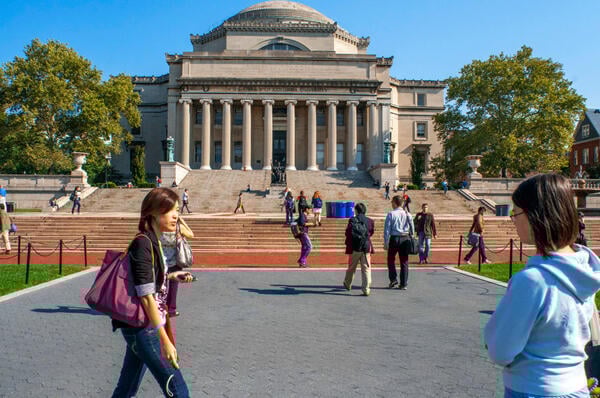
    A recent hack of Columbia University’s computer system compromised the personal information of hundreds of thousands of people, including students and applicants, new documents show. Over all, about 870,000 individuals were affected by the breach.

    The university provided draft notices to officials in Maine and California that it intends to send to affected parties in their states, according to the state attorneys general’s websites. Both states require that their residents be swiftly informed of any breach that includes their data, according to Bloomberg, which reported on the notices.

    The notices said a technical outage disrupted some of the university’s IT systems in June, which led university leaders to suspect a possible cybersecurity attack. An investigation revealed that a hacker had taken files from Columbia’s system in May.

    The stolen data includes any personal information prospective students provided in their applications or current students gave Columbia over the course of their studies, including their contact details, Social Security numbers, birthdays, demographic information, academic history, financial aid information, insurance details and health information. No patient data from the Columbia University Irving Medical Center seems to have been compromised, according to the notices. The university encouraged those affected to monitor account statements and credit reports to keep an eye out for any fraudulent activity. It also offered them two years of free credit monitoring and identity restoration services from a financial and risk advisory firm.

    “We have implemented a number of safeguards across our systems to enhance our security,” the letters read. “Moving forward, we will be examining what additional steps we can take and additional safeguards we can implement to prevent something like this from happening again.”

    A public statement from the university’s Office of Public Affairs last week said that since June 24, Columbia has seen no evidence of any further unauthorized access to the university’s system. Starting Aug. 7, the university promised to begin notifying affected students, employees and applicants on a rolling basis via mail.

    “We recognize the concern this matter may have raised and appreciate your ongoing patience during this challenging time,” the statement read. “Please know we are committed to supporting the University community.”

    A Columbia official previously told Bloomberg that the hacker seemed to be trying to further a “political agenda.” The investigation into the matter also found that the hacker was “highly sophisticated” and “very targeted.”

    The alleged hacker, who got in contact with Bloomberg, gave the news outlet 1.6 gigabytes of data, claiming it contained decades’ worth of applications to Columbia. That application data included New York City mayoral candidate Zohran Mamdani, who applied to Columbia but didn’t get in.

    Bloomberg confirmed with eight Columbia students and alumni, who applied between 2019 and 2024, that the information about them contained in the data was accurate. They verified that details such as their university-issued ID codes, citizenship statuses and admissions decisions were all correct. The data provided to Bloomberg didn’t contain names, Social Security numbers or birth dates.

    The person claiming to be the hacker, who didn’t provide their name, texted Bloomberg that the purpose of the stolen data was to prove the university continued affirmative action in admissions after the 2023 Supreme Court ruling against such practices. They claimed to have hacked about 460 gigabytes of data total from the university—including 1.8 million Social Security numbers of employees, students and their family members—after spending more than two months ensuring their access to Columbia’s computer systems.

    Source link

  • Exploring the diversity of people the world over

    Exploring the diversity of people the world over

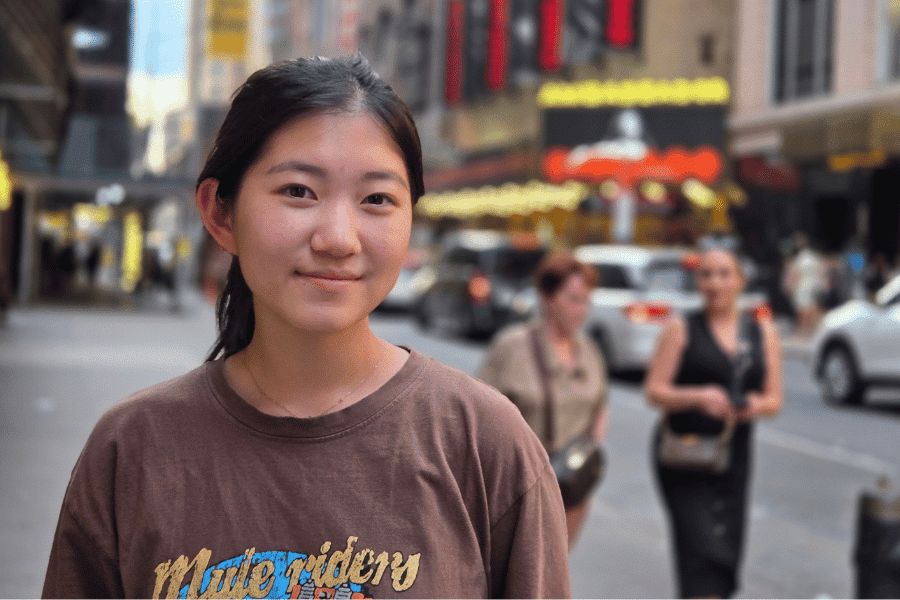
    At the age of 9, Hannah Choo found herself shuttled across the Pacific Ocean from California to Seongnam, South Korea. She found herself living in a city, about an hour from Seoul, where everything from language to climate was different.

    She’d grown up in sunny, suburban, slow-paced Pasadena in Southern California and wasn’t happy at first about the move.

    “When I first arrived, the honking of cars at night was so loud that I couldn’t fall asleep,” Choo said. 

    But now, seven years later, she realizes that the experience of living in two starkly different cities has given her a better understanding of people. And this is important because Choo wants to be a journalist. 

    She has joined News Decoder as a summer intern, bringing with her an interest in communities and how they collectivize and support themselves. 

    “Korea has made me look deeper into how people differ experientially, not just in terms of surface factors like race or ethnicity or where they’re from,” she said. “I think there’s a lot of diversity in Korea with what people go through in their lives.”

    Appreciating cultural differences

    The homogenous culture of South Korea gives Choo a strong sense of community and has helped her realise that people’s differences are not defined by where they come from.

    For News Decoder, Choo brings the perspective of a young person, which is valuable to an organization devoted to helping youth process global events and the confusing digital world that consumes them.

    Consider her work with Amina McCauley, who leads News Decoder’s EYES program — Empowering Youth Through Environmental Storytelling —  a two-year project to create a climate change curriculum that can be implemented in schools across the globe. 

    “Hannah has been helping me critique News Decoder’s climate journalism educational materials,” McCauley said. “As the EYES project enters its phase of dissemination, Hannah’s curiosity and understanding of depth is helping the curriculum to become stronger and more relevant for the young people of today.”

    McCauley said that Choo is thoughtful and critical, but that it is her way of interacting with others that is her best asset.

    “She brings me trust in future generations,” McCauley said. 

    Working with News Decoder

    Choo said she wanted to work with News Decoder because of the way it spotlights the human side of news, and how lives are impacted by everyday events. 

    “I feel like News Decoder aims to really empower students to not just write a story in general, but also how to incorporate their own voice into that while sticking with the rules of journalism,” Choo said.

    Choo will also help News Decoder bolster its social media. In the coming weeks, she will be working with News Decoder’s Program and Communication Manager Cathal O’Luanaigh on her own series of posts on News Decoder’s social media pages and working with its Educational News Director Marcy Burstiner on articles related to climate change, people and culture.

    Burstiner said that when Choo first came to News Decoder it was as if she knew exactly what was wanted of her. “She has a great instinct for news, for seeing the story that hasn’t been told and that needs to be told,” Burstiner said. “For News Decoder, South Korea is a country that has been underreported. I’m really looking forward to her stories.”

    Ultimately, Choo hopes to tell stories about people in many different places. 

    “I see myself travelling the world and visiting different communities and really hearing their stories, and being able to present it in a way that’s authentic to them,” she said. “And showing that to the rest of the world and allowing other people to also see all of these unique parts of a global culture that you never really get a spotlight on.” 

    Telling global stories

    What she has learned so far in her travels from California to South Korea is that there is great satisfaction in adapting to a new culture. 

    While there was no language barrier for Choo when she moved to Seongnam, having spoken Korean with her parents since she was a child, the noise and way of living there needed some getting used to. But what she at first found so different, she now finds comfort in. 

    Everything she needs outside of her apartment complex, which is wrapped by four different roads, is just a short subway, drive or walk away. And with community comes safety. 

    “I always tell people that you could leave your laptop on top of a coffee shop table and expect to find it there again an hour later,” Choo said. 

    There are still challenges. 

    Korean schools are hyper competitive and getting into a prestigious university is important. This means that in high school, students are so focused on getting good grades that their mental health often suffers.

    Young people prioritise studying for tests over sleep and a social life. They compare themselves to each other and base their self worth on academic performance. 

    “That creates pretty toxic dynamics between people,” she said. “Beating out the competition, I think, is a huge narrative here.”

    This also means that school and learning is centred on grades, so that critical thinking and interest is of much lower importance.

    “Studying in any school in Korea, even if international, means you’re still affected by the culture,” Choo said.

    Source link

  • A decade connecting young people to the world they live in

    A decade connecting young people to the world they live in

    To understand the chaos that is the world today it helps to look back a decade.

    This past year, world representatives met at COP29 to fight climate change in a place led by an authoritarian regime dependent on fossil fuels. The Israeli government under Prime Minister Benjamin Netanyahu has been massacring Palestinians in Gaza. The United States bombed Iran in an attempt to eliminate its nuclear capability. And U.S. President Donald Trump and an increasing number of European leaders have closed their doors to immigrants and refugees.

    In great contrast, when News Decoder launched 10 years ago, 196 nations signed onto the landmark agreement known as the Paris Accords, ushering in the hope that together we could cool down the planet. The administration of then-U.S. President Barack Obama signed a historic agreement with Iran, in which Iran would get rid of 97% of its supply of enriched uranium. A million refugees flooded into Europe from conflicts in Syria and elsewhere.

    In the years in between, the world locked down during the Covid-19 pandemic, Great Britain exited the European Union, the #MeToo movement erupted across the world, nations across the globe began legalizing same sex marriage, Russia invaded Ukraine, Trump got elected, tossed out and re-elected and we began ceding everything to artificial intelligence.

    Can you imagine coming of age in that world?

    Decoding world events

    When Nelson Graves founded News Decoder to help young people “decode” the world through news, it seemed that we lived in an age of optimism. Now young people feel helpless and disconnected. In April 2024, the World Economic Forum reported that young people worldwide are increasingly unhappy and this trend would have real consequences for the future.

    “We live in a world where teenagers grapple with a sense of crisis before adulthood; a time when young people, historically beacons of optimism, report lower happiness than their elders,” the report said.

    But even back in 2015, Nelson knew things would change. He’d spent years as a foreign correspondent covering world events. 

    “Anyone with a sense of history and someone with experience in following current events — especially a foreign correspondent — would have known that the world is most likely to change when you’re least expecting it,” he said. “Nothing is immutable — except the truism that the political pendulum is always swinging.”

    The roots of Brexit, the Make America Great Again movement in the United States and antipathy towards immigrants were already deep in 2015, even if they were largely underground and out of sight, he said. 

    A decade later, News Decoder’s mission of connecting young people to the world around them seems more relevant than ever.

    For 10 years, the high school students News Decoder has worked with have explored — through articles, podcasts, videos and photo essays and in live, cross-border dialogues — how problems in their communities connect to things happening elsewhere in the world. In 2016, for instance, a student studying abroad in China worked with News Decoder to explore how growing consumerism was leading to mountains of trash and created an army of people who mined that trash building up around them.

    That same year in an online roundtable, News Decoder brought together students from the Greens Farms Academy in the United States with students from Kings Academy in Jordan, Aristotle University in Greece and School Year Abroad in France to discuss the ongoing war in Syria and the worldwide crisis of Syrian refugees.

    Kindling curiosity

    One of the Greens Farms Academy students who participated, Samyukt Kumar, further explored the topic in an article News Decoder published that year. Looking back, he now tells, the practical experience it gave him was valuable.

    “Less for the substance but more for the practical experience,” he said. “My views on these topics evolved significantly as I received greater education and real-world exposure. But I still reap the benefits from gaining more confidence in my writing, learning to embrace the editing process and engaging my curiosity about the world.”

    In 2017, a News Decoder student at Haverford College in the United States explored the problem of migrants flooding into her home country of Italy. She came to this conclusion:

    “The roots of the problem lie outside of Italy, which nonetheless bears a heavy burden as the first EU destination for thousands of Africans crossing the Mediterranean,” she wrote. “A solution to the migration crisis depends not only on Italy’s good will — now being stretched to the limits — but also on the willingness of the rest of Europe and the international community to tackle the armed conflicts, poverty and human rights abuses that stir so many Africans to attempt the perilous Mediterranean crossing.”

    Fast forward to 2025. News Decoder worked with high school students in the British Section at the Lycée International Saint-Germain-en-Laye outside of Paris to take what they learned about the United Nations Sustainable Development Goals and find and tell narrative stories through podcasts. They explored such things as the problem of poverty in resource-rich areas of Africa and the connection between actions of multinational corporations and climate change.

    Crossing borders

    In Switzerland, News Decoder worked with students at Realgymnasium Rämibühl Zürich on a series of articles that explored gender inequity in sports, the connection between social media and the decline of democracy, how a local community is affected when it hosts a world conference and the connection between the quality of life in a country and the people’s willingness to pay for that through high prices and high taxes.

    And in monthly “Decoder Dialogues” News Decoder put together students from countries such as the United States, Colombia, France, India, Belgium and Rwanda in online roundtables to discuss such topics as the future of journalism, climate action, censorship, leadership and artificial intelligence.

    Through the exploration of a problem in the world, by seeking out experts who can put it into context and by seeking out different perspectives from other places, students make sense out of chaos. They begin to see that there are people out there thinking about these problems in different ways and seeking solutions to them.

    Ultimately, the message News Decoder wants students to take away is that you don’t need to run from complicated problems. You don’t need to disengage from the news and the events happening around you. By delving more into a topic or issue or controversy, you can begin to understand it and see the path forward.

    At News Decoder, we believe people should be able to listen to each other and exchange viewpoints to work through problems across differences and borders. Back in 2015, Graves posed this challenge: How to tap into the intellectual energy of the generation that will soon assume leadership in business, government, academia and social enterprise? 

    For the past 10 years we have worked to empower young people by giving them the information they need, connecting them to the world around them and providing them a forum for expression. For a decade we have helped them find coherence out of the chaos around them — and we intend to continue doing that for the next 10 years. 

    One thing we know: 10 years from now the world will be a lot different from what it is now. 

    “While no one has a perfect crystal ball, you can be sure that nothing remains unchanged for long,” Graves said. “Yesterday’s mortal enemy can become a fast friend — think of U.S. relations with Vietnam since the 1950s. Lesson: Always expect change, even if you can’t anticipate the precise contours, and don’t project linearly into the future. As ever, keep an open mind and beware confirmation bias.”

    That’s the message News Decoder tries to instill in the young people we work with. After all, a decade from now, they will be the ones making that change happen. 

    Source link

  • People want AI regulation — but they don’t trust the regulators

    People want AI regulation — but they don’t trust the regulators

    Generative AI is changing the way we learn, think, discover, and create. Researchers at UC San Diego are using generative AI technology to accelerate climate modeling. Scientists at Harvard Medical School have developed a chatbot that can help diagnose cancers. In BelarusVenezuela, and Russia, political dissidents and embattled journalists have created AI tools to bypass censorship.

    Despite these benefits, a recent global survey from The Future of Free Speech, a think tank where I am the executive director, finds that people around the world support strict guardrails — whether imposed by companies or governments — on the types of content that AI can create.

    These findings were part of a broader survey that ranked 33 countries on overall support for free speech, including on controversial but legal topics. In every country, even high-scoring ones, fewer than half supported AI generating content that, for instance, might offend religious beliefs or insult the national flag — speech that would be protected in most democracies. While some people might find these topics beyond reproach, the ability to question these orthodoxies is a fundamental freedom that underpins free and open societies.

    This tension reflects two competing approaches for how societies should harness AI’s power. The first, “User Empowerment,” sees generative AI as a powerful but neutral tool. Harm lies not in the tool itself, but in how it’s used and by whom. This approach affirms that free expression includes not just the right to speak, but the right to access information across borders and media — a collective good essential to informed choice and democratic life. Laws should prohibit using AI to commit fraud or harassment, not ban AI from discussing controversial political topics.

    The second, “Preemptive Safetyism,” treats some speech as inherently harmful and seeks to block it before it’s even created. While this instinct may seem appealing given the potential for using AI to supercharge harm production, it risks turning AI into a tool of censorship and control, especially in the hands of powerful corporate or political actors.

    As AI becomes an integrated operating system in our everyday life, it is critical that we not cut off access to ideas and information that may challenge us. Otherwise, we risk limiting human creativity and stifling scientific discovery.

    Concerns over AI moderation

    In 2024, The Future of Free Speech analyzed the policies of six major chatbots and tested 268 prompts to see how they handled controversial but legal topics, such as the participation of transgender athletes in women’s sports and the “lab-leak” theory. We found that chatbots refused to generate content for more than 40% of prompts. This year, we repeated our tests and found that refusal rates dropped significantly to about 25% of the time.

    Despite these positive developments, our survey’s findings indicate that people are comfortable with companies and governments erecting strict guardrails on what their AI chatbots can generate, which may result in large-scale government-mandated corporate control of users’ access to information and ideas.

    Overwhelming opposition to political deepfakes

    Unsurprisingly, the category of AI content that received the lowest support across the board in our survey was deepfakes of politicians. No more than 38% of respondents in any country expressed approval of political deepfakes. This finding aligns with a surge of legislative activity in both the U.S. and abroad as policymakers rush to regulate the use of AI deepfakes in elections.

    At least 40 U.S. states introduced deepfake-related bills in the 2024 legislative session alone, with more than 50 bills already enacted. China, the EU, and others are all scrambling to pass laws requiring the detection, disclosure, and/or removal of deepfakes. Europe’s AI Act requires platforms to mitigate nebulous and ill-defined “systemic risks to society,” which could lead companies to preemptively remove lawful but controversial speech like deepfakes critical of politicians.

    Although deepfakes can have real-world consequences, First Amendment advocates who have challenged deepfake regulations in the U.S. rightly argue that laws targeting political deepfakes open the door for governments to censor lawful dissent, criticism, or satire of candidates, a vital function of the democratic process. This is not a merely speculative risk.

    An open society cannot thrive if its digital architecture is built to exclude dissent by design.

    The editor of a far-right German media outlet was sentenced to a seven-month suspended prison sentence for sharing a fake meme of the Interior Minister holding a sign that ironically read, “I hate freedom of speech.” For much of 2024, Google restricted Gemini’s ability to generate factual responses about Indian Prime Minister Narendra Modi, after the Indian government accused the company of breaking the law when its chatbot responded that Modi had been “accused of implementing policies some experts characterized as fascist.”

    And despite panic over AI-driven disinformation undermining global elections in 2024, studies from Princetonthe EU, and the Alan Turing Institute found no evidence that a wave of deepfakes affected election results in places like the U.S., Europe, or India.

    People want regulation but don’t trust regulators

    A recent Pew Research Center survey found that nearly six in 10 U.S. adults believed the government would not adequately regulate AI. Our survey confirms these findings on a global scale. In all countries surveyed except Taiwan, at least a plurality supported dual regulation by both governments and tech companies.

    Indeed, a 2023 Pew survey found that 55% of Americans supported government restrictions on false information online, even if it limited free expression. But a 2024 Axios poll found that more Americans fear misinformation from politicians than from AI, foreign governments, or social media. In other words, the public appears willing to empower those they distrust most with policing online and AI misinformation.

    A new FIRE poll, conducted in May 2025, underscores this tension. Although about 47% of respondents said they prioritize protecting free speech in politics, even if that means tolerating some deceptive content, 41% said it’s more important to protect people from misinformation than to protect free speech. Even so, 69% said they were “moderately” to “extremely” concerned that the government might use AI rules to silence criticism of elected officials.

    In a democracy, public opinion matters — and The Future of Free Speech survey suggests that people around the world, including in liberal democracies, favor regulating AI to suppress offensive or controversial content. But democracies are not mere megaphones for majorities. They must still safeguard the very freedoms — like the right to access information, question orthodoxy, and challenge those in power — that make self-government possible.

    We should avoid Preemptive Safetyism

    The dangers of Preemptive Safetyism are most vividly on display in China, where AI tools like DeepSeek must enforce “core socialist values,” avoiding topics like Taiwan, Xinjiang, or Tiananmen, even when released in the West. What looks like a safety net can easily become a dragnet for dissent.

    Speech being generated by a machine does not negate the human right to receive it, especially as those algorithms become central to the very search engines, email clients, and word processors that we use as an interface for the exchange of ideas and information in the digital age.

    The greatest danger to speech often arises not from what is said, but from the fear of what might be said. An open society cannot thrive if its digital architecture is built to exclude dissent by design.

    Source link

  • How to support people leaving foster care to succeed at uni – Campus Review

    How to support people leaving foster care to succeed at uni – Campus Review

    Going to university was always my dream. I knew from a young age it was the only way to make a better life for myself. Despite growing up in foster care, I was determined to work hard to achieve that dream.

    Please login below to view content or subscribe now.

    Membership Login

    Source link

  • UKRI has too many people telling it what to do without the resources to do what it’s told

    UKRI has too many people telling it what to do without the resources to do what it’s told

    UKRI has a massive job.

    As the National Audit Office’s (NAO) new report sets out in 2023–24 UKRI assessed close to 29,000 grant funding applications and spent £6bn on innovation grants. It featured in 105 policy papers across 13 ministerial departments in the last three years alone, and it has been seven years since the Department for Science, Innovation and Technology (DSIT) formally set out UKRI’s role and objectives.

    Scale

    The scale of UKRI’s work is so massive that according to its own estimates

    […] were it to receive a 2% budget increase each year for the following three financial years, its existing legal, statutory and political commitments would take up around 98% of its budget in 2025-26, 84% in 2026–27, and 74% in 2027–28. When also including investments that it considers critical, such as continuing to fund similar numbers of new doctoral students and similar levels of new curiosity-driven research, this would then take up around 103%, 101%, and 99% of its future budget, respectively, in those years

    The obvious question here is if UKRI has so much to do, if it is then compelled to do even more, how can it possibly change as government introduces new priorities. Whether it is moonshots, levelling up, supporting the industrial strategy, fuelling government missions, working with devolved authorities, or whatever comes next, UKRI’s funding is so committed it has little bandwidth to put its massive resources behind emerging government strategies.

    However, this assumes that UKRI has a clear idea of what it’s supposed to do in the first place.

    Roughly, UKRI has a corporate strategy which then informs its funding calls which institutions then bid for and through post award work UKRI then assures that the thing it set out to do is being done in some way. The NAO found that how government communicates its priorities to UKRI is a bewildering mix of things:

    ad hoc and routine meetings; board meetings; formal letters; key UK government strategies and mission statements; and spending review budgets. These are not consolidated or ranked, meaning that the government does not currently have an overall picture of what it is asking UKRI to do.

    It is therefore not surprising that in UKRI’s own strategy none of its formal objectives are “specific, measurable or time-bound, making it difficult to understand what outcome UKRI is seeking to achieve.”

    Priorities

    To the outside observer it would seem odd that UKRI doesn’t have a single ministerial letter with a single set of priorities which it can then pursue at the expense of everything else. Instead, in reading the NAO report it seems that UKRI has become the everything box where the entire hopes of a government are pinned, whether UKRI has the resources to achieve them or not.

    It’s easy to see how the research funding ecosystem becomes so complex. UKRI is an important part but it sits alongside the likes of ARIA, charitable organisations, national institutes, venture capital, businesses, and others. The bluntest assessment is that if the government is unable to specify a single set of aims for UKRI, UKRI then cannot measure outcomes as clearly as it would like – and even if it could there is little spare budget to pivot its work. The report makes clear that there is ongoing “prioritisation” to address this confusion – but this work will not conclude until after the spending review, by which point key decisions will already have been made.

    It’s not that UKRI is failing – by any reasonable assessment it is powering a world-leading research ecosystem, even with some deep cultural challenges – it’s that as NAO point out it is given a lot to do without all the tools to do it, and even when it can measure its work government priorities are liable to change anyway. The one thing that good research and innovation policy needs is time. The one thing every government has is little time to get anything done.

    It is even harder to assess whether its measurable things are good value on their own terms. NAO is interested in ensuring the public gets value for money in the things it funds. One of the challenges in assessing whether what UKRI does is good value for money is that outcomes from research and innovation funding are diffuse, happen on a long-time scale, and may even fail but in doing so moves the research ecosystem toward something that works in some hard to measure and adjacent way.

    Value

    Although not directly captured within the NAO report, assessing value for money within research and innovation also depends on which level it is assessed. For example, there may be investments in breakthrough science which return little direct economic benefits but expand the knowledge of a field in a way they one day might. There may be investments that achieve immediate economic benefits but have few long term economic benefits as new technologies become available.

    It is clear that UKRI would benefit from fewer directions and fewer priorities which would allow it to use its resources more efficiently and in turn measure its impact more easily. The problem is that government policy overtakes bureaucratic needs which in turn encourages policy churn.

    In lieu of being able to change the nature of politics part of the solution must lie in changing how UKRI works. The organisation is aware of this, and realises it needs a capacity which goes beyond adjusting the direction of its existing activities – rather, one that “incentivises applicants to put forward ideas that align with government objectives which can be quicker and more efficient than setting up new programmes.”

    The fundamental problem for policy makers is that they have collectively turned to UKRI with an enormous list of asks without the resources to achieve them. UKRI either needs clearer direction or more resources, or both, what it does not need is more asks without clear priorities.

    Source link

  • Lean, Global, and Tuition-Free: The University of the People Model

    Lean, Global, and Tuition-Free: The University of the People Model

    One of the most consistent problems in higher education, one that bedevils systems around the globe, is that of cost containment. Costs in higher education grow inexorably, both due to the Baumol effect, that is, services in labor intensive industries like education tend to have costs that grow faster than inflation. And the Bowen Effect, which states that because quality and education is unmeasurable and expenditures are often mistaken for quality, there’s a permanent ratchet effect on university costs limited only by the amount of resources a university can amass. Education’s expensive and getting ever more so.

    But what if I told you there was a university out there that had the cost problem licked? It’s a university based in the United States and accredited by the very respected Western Association of Schools and Colleges. It delivers education the world over with 150,000 students in more than 200 countries and territories. And it educates all these students tuition free, for a grand total of about $150 US per year per student. Sound miraculous? Well, it is in a way, and it’s not easily replicable, but it is real and it’s worth learning from. It’s called the University of the People, an online institution founded in 2009 and based in California. 

    Today, my guest is the University of the People’s Founder and President Shai Reshef. He’s received global recognition for his work at University of the People. He’s an Ashoka fellow. He’s one of Fast Company’s Most Creative in Business, named the Top Global Thinker by Foreign Policy Magazine, and most impressively, he was winner of the 2023 Yidan Prize for Educational Development, which is probably the highest form of global recognition in the field of education.

    In our chat today, Shai and I cover the basic economics of running a mega online university. We answer the questions: how do you serve students across 20 plus time zones? How does a university without government support stay tuition free? And most importantly, how — even if most of your staff are volunteer — are you able to manage things like academic governance and quality assurance on a shoestring?

    And as I said, not everything Shai is going to tell us today is going to be transferrable to other institutions, but his message should have at least some resonance and the University of the People’s experiences can lead to change elsewhere.

    But enough for me. Let’s listen to Shai.


    The World of Higher Education Podcast
    Episode 3.29 | Lean, Global, and Tuition-Free: The University of the People Model

    Transcript

    Alex Usher (AU): Shai, let’s start with the basics. For listeners who might not be familiar—what is the University of the People? Who does it serve? And how does that make it different from a traditional university?

    Shai Reshef (SR): The University of the People is the first nonprofit, tuition-free, accredited American online university. Our mission is to open the gates of higher education to anyone in the world who is qualified but has no other way to access it—either because it’s too expensive, like in the U.S., or because they live in countries where there aren’t enough universities. Africa would be a great example.

    We also serve people who are deprived of access for political or cultural reasons—refugees, women in Afghanistan, or anyone else who, for personal reasons, can’t attend a traditional university. We use the internet to bring higher education to them.

    AU: How big is the institution? How many students do you have? Where are they from? And what’s the breadth of programming that you offer?

    SR: We started in 2009. As of now, we have 153,000 students from 209 countries—so, pretty much from almost every country in the world.

    Our students are typically people who did go to high school but didn’t attend university afterward. Many of them started working and later realized they needed a degree to advance their careers. Our student body tends to be older; they’re not your typical 18-year-olds. They come to us because they want a better future.

    That’s why we only offer degrees that are likely to help them find jobs. At the undergraduate level, we offer degrees in business administration, computer science, and health science. At the graduate level, we offer programs in education, information technology, and business—specifically, the MBA.

    AU: That’s huge. This must cost an awful lot of money. You’re not a public university in the sense of being government funded, and you’re not charging tuition. So how does it work? What does it cost, and how do you make ends meet?

    SR: Well, first of all, we are nonprofit. So, we’re not making money—maybe a small surplus, but not profit. And we are tuition-free. That means students can study for free, but when they get to the exams, we ask them to pay $140 USD per exam.

    Now, for some students—especially those from developing countries—even that amount is too much. So we provide scholarships where we can. About half of our students pay the exam fees, and the other half receive scholarships.

    We’re able to stay sustainable and tuition-free because we run a very lean operation. We rely heavily on technology. We offer only a few degree programs, all of which are directly relevant to the job market. We also operate in many parts of the world where we can deliver quality education at lower costs.

    We don’t have buildings—since we’re fully online—and importantly, we lean heavily on volunteers. I’m a volunteer. The deans are volunteers. Our professors and faculty are volunteers too. In fact, we have over 40,000 volunteers supporting the university.

    AU: But surely $140 per exam on its own isn’t enough to run the institution, right? You must have other sources of income, I imagine?

    SR: Our budget—running a university with 153,000 students—is about $20 million USD. Two-thirds of that comes from student fees. The remaining one-third comes from donations. These include contributions from wealthy individuals and foundations such as the Gates Foundation, the Ford Foundation, and the Ulet Foundation. We also receive some government support—for example, from the German government.

    So, about $7 million comes from donations, and $13–14 million comes from student fees. But again, we operate on just a fraction of the budget that any other university of our size would require.

    AU: I’m just looking at the numbers—$20 million to teach 150,000 students. That’s about $120 or $130 per student. That’s very, very low. And one of the ways you manage that, I understand, is through your use of volunteers. How do you get people to teach for free?

    SR: It’s a good question. In my previous life, before I started the University of the People, I launched and ran the first online university in Europe. So I had a good understanding of how an online university should operate.

    When I decided to start the University of the People and make it tuition-free, the main difference—among several—was to rely on volunteers rather than paid faculty and staff. At the time, I wasn’t sure how well that would work.

    I announced the university in January 2009 at a conference in Munich. The next day, The New York Times ran a full-page article about it. And the day after that, I already had hundreds of professors writing to me saying, “We love this idea. We want to help.”

    So people come to us. I’m not out there recruiting them—they come because I’m not the only one who believes higher education should be a basic right, and that money shouldn’t be a barrier. I came with the idea of tuition-free higher education, and a lot of people believe in that mission. They want to be part of it and help.

    AU: What kind of support services are you able to offer students? I mean, student services, academic support—how can you do that within a tuition-free model? Are there still some things you’re able to provide?

    SR: Oh, we’re able to do a lot. First of all, all of our courses are written in advance by subject matter experts. They go through a peer review process, just like any other academic program. Once finalized, they’re taught in our online classes.

    When students sign up, they’re placed in a class of 20 to 30 students—each time with peers from 20 to 30 different countries. Every course runs for eight weeks. On the first day of the week, students receive their lecture notes, reading assignments, homework, and discussion question.

    The core of our pedagogy is peer discussion—students engage in week-long discussions around the topic of the week. Every class has a professor who reads and moderates the discussion daily.

    Each student also has a program advisor who follows them from the moment they enroll until they graduate. So there is a lot of support. If a student stops showing up to class, they’ll typically get an email asking where they are.

    Even though our professors are volunteers, they commit 10 to 15 hours per week, per course, to support students with everything they need. So it’s a full-service university.

    The difference between us and a traditional university is that we don’t offer the “nice-to-haves.” We don’t have a football team, a gym, or psychological services—which are important, but we simply can’t afford them. But everything core to the academic experience is there—and delivered with high quality.

    AU: Shai, I want to ask—one of the things you must have to navigate when you’ve got students from all over the world and you’re operating in so many jurisdictions is accreditation. That seems like something that’s very bureaucratic and time-consuming. So how do you handle that? Do you do any jurisdiction shopping? Where are your degrees accredited, and is that part of the reason people pursue them?

    SR: Originally, in 2014, we were accredited by DEAC, which is a national accreditation agency in the U.S. And just a couple of weeks ago, we were accredited by WASC—the Western Association of Schools and Colleges—which is one of the six regional accrediting bodies in the U.S.

    That puts us in the same group as Stanford, Berkeley, UCLA. Some might argue they need to work a little harder to meet our standards—but in any case, we’re now in the same accreditation category.

    Now, even though our students come from around the world, many of them admire American education. That’s a big part of why they choose us. In a few countries, we’re not locally recognized because we’re fully online. But still, thousands of students study with us because they value the American degree, and because local employers recognize and appreciate the quality of our education.

    Was it easy to get accredited? No, it was hard. It took a lot of work. We had to prove that what we offer is equivalent, in terms of outcomes, to what traditional universities offer. That includes how we admit students, how we support them, and how we assess their learning outcomes.

    In the end, we did everything required to meet those expectations—and we succeeded. That’s why we were granted accreditation.

    AU: It just occurred to me, as I was thinking about this, that maybe this is your secret sauce. These are the kinds of things that cost millions of dollars at many universities. And if you’re able to do it without complex quality assurance structures, academic senates, registrar’s offices, and all those kinds of things—if you’re able to do it with the leanest version of those—isn’t that something other institutions could learn from?

    SR: Yes, they can learn. But do they want to learn? That’s a different question.

    One of the challenges we pose to other universities is this: when you’re charging $30,000 to $50,000 a year, and then here comes a university charging just $1,400 a year—if students pay in full and study full time—that’s a huge contrast. And when traditional institutions see that, they often just turn around and say, “No way,” because they don’t believe it’s real.

    The truth is, our advantage comes from the fact that we built a new institution from scratch. That allowed us to decide what to do—and what not to do.

    Let me give you an example. At a university our size, the admissions office alone might have thousands of people reading student résumés, essays, checking social media, verifying every detail—thoroughly evaluating each application.

    We do it differently. We say: if you have a high school diploma, come and take two courses. If you pass, you’ve shown us you meet our standards. You get credit for those courses and become a degree-seeking student. If you can’t pass, you can’t continue.

    Now, not only is that a better system in my view—because it tests students based on how they actually perform, not how well someone coached them on an application—but it also saves a ton of money. We don’t need a large admissions operation. Just come in and prove yourself.

    It’s a different way of operating—and a much more efficient one. And I think that’s our real secret. It’s not really a secret—but it works.

    AU: You’ve scaled up incredibly quickly—15 years to reach 150,000 students, and to be embedded in, I guess, just about every country in the world. What were the biggest hurdles in that scaling process? Were there moments where you stumbled and thought, “Wow, I’m not sure we can grow this quickly?” Or was it pretty smooth?

    SR: Well, if you ask me, I’d actually answer a different question: Why aren’t we even bigger than we are?

    Because the truth is, we’re online—there are no physical seat limits. Nobody has to stand at the back of the lecture hall. So, in theory, we could double our student body. Why haven’t we?

    The main challenge is that most people in the world haven’t heard of us. Even when I travel and someone asks what I do, and I say, “University of the People,” I’m surprised if they’ve heard of it. Most people haven’t—and especially not the ones who need us most, like refugees or people in remote or underserved regions.

    The second challenge is that even when people do find us, we don’t have enough resources to support everyone. For example, we have 4,300 Afghan women currently hiding and studying with us inside Afghanistan—but we received 20,000 applications from there. So yes, it’s incredible that we can serve over 4,000 women, but we simply can’t accommodate all who apply.

    To go back to your original question about the difficulties we’ve encountered—yes, there are some. For instance, there are countries that still don’t recognize online education. In those places, we’re just waiting for governments to become more open to 21st-century technologies and new models of learning.

    So that’s been one of our biggest challenges: growing awareness and overcoming regulatory barriers.

    AU: In lots of traditional universities, success is measured through things like research output, income, or rankings. How do you measure success at the University of the People?

    SR: Well, the first thing we look at is how many people we’ve given the opportunity to pursue higher education—people who had no other alternatives. That’s a key measure for us.

    I was once interviewed by a student journalist from an Ivy League school, and he said, “You’re setting up competition for my institution.” And I told him, “Anyone who wants to go to your institution should absolutely do so. But we’re here for those who don’t have that option.”

    So one measure of our success is how many doors we open. Another is how many of our students actually graduate—and what they go on to do. We have graduates working at Amazon, Google, Apple, IBM, the World Bank—that’s another sign of success.

    Ultimately, we measure ourselves by whether we’ve helped people build a better life. Are they better off while studying with us? That’s what matters to us.

    We don’t participate in rankings competitions. We don’t try to be the most expensive institution—though in some parts of the sector, it seems the more expensive you are, the better you’re perceived to be. That’s a strange way to measure quality, but it’s common in higher ed.

    We’re proud to be different. We’re changing the model of higher education to make it accessible, affordable, and high-quality.

    AU: A few days ago in The New York Times, there was an article by the Russian writer Masha Gessen. They were talking about the attacks on higher education in the United States and mentioned that the ideal model right now might be the University of the People in Poland—a communist-era, tuition-free university. As I was preparing for this interview, I thought, “Wait a minute, that sounds a lot like your University of the People.” I’m curious what you think about that argument. Given all the challenges in U.S. higher education—even before Trump—are approaches like yours part of the solution?

    SR: I actually read that very article. Believe it or not, we just sent them an email today saying the same thing—basically, “It sounds like you’re talking about the University of the People.” I assume they don’t know about us—otherwise, they probably would have mentioned us directly.

    I truly believe we are the future. Every person should have the right to higher education. Universities should open their gates far wider than they do now. The more people who are educated, the stronger the country: people have better futures, the economy improves, and society benefits from individuals who are well-rounded and capable of critical thinking. That’s what the world needs.

    The American system has created some of the best universities in the world—there’s no question about that. I’m not against those institutions. What I’m against is the lack of opportunity for everyone else. And I think what we’ve demonstrated is that higher education can be accessible and affordable for all.

    That’s part of why we’ve grown so quickly—we want to show that this model works, that it’s sustainable, and that others can follow it, in the U.S. and around the world. The challenges facing higher education aren’t unique to one country; they’re global. And anyone can look at what we’ve done and replicate it—or ask us to help them replicate it. We’d be happy to help.

    AU: So, you’ve been around for just over 15 years. If I ask you to look ahead—what does the University of the People look like in 2040? Will you be twice as big? Even bigger than that? Will you offer different kinds of degrees? How do you see the next decade and a half playing out?

    SR: You know, in 2010, following the earthquake in Haiti, we announced that we would take in 250 Haitian students and teach them for free. What I didn’t realize at the time was that, after the earthquake, many of them were living in tents, without electricity or internet.

    Still, two months later, the first group of 15 or 16 students began studying. I went to Haiti to welcome them, and I met many students while I was there. One of them asked me what the future of University of the People looked like. I gave them the same answer I’d give today:

    We’ll keep growing to serve more and more students—until one day we wake up and realize that all the students in the world who need access to higher education are being served. And then, maybe, we’ll go back to sleep and wake up with another dream.

    Until then, we have a long way to go. So yes, we’ll continue to grow, we’ll continue to serve more people, and hopefully, others will replicate what we’re doing. We don’t need to educate the entire world—just help show that it’s possible.

    AU: Shai, thank you so much for being with us today.

    SR: Thank you very much for this interview. It was fascinating—thank you.

    AU: And it just remains for me to thank our excellent producers—Tiffany MacLennan, Sam Pufek—and you, our viewers, listeners, and readers, for joining us. If you have any questions about this podcast or suggestions for future episodes, please don’t hesitate to get in touch at [email protected]. Quick request from us: head over to our YouTube page and subscribe to the Higher Education Strategy Associates channel so you never miss an episode of The World of Higher Education.

    Join us next week—my guest will be John Stackhouse. He’s the Senior Vice President at RBC and former Editor-in-Chief of The Globe and Mail. He’ll be joining me to talk about a new post-secondary education initiative that RBC is undertaking, in partnership with the Business + Higher Education Roundtable and us here at Higher Education Strategy Associates. I’ll be asking in particular about the future of Canadian higher education and how better links can be forged between universities and the private sector. See you then.

    *This podcast transcript was generated using an AI transcription service with limited editing. Please forgive any errors made through this service. Please note, the views and opinions expressed in each episode are those of the individual contributors, and do not necessarily reflect those of the podcast host and team, or our sponsors.

    This episode is sponsored by KnowMeQ. ArchieCPL is the first AI-enabled tool that massively streamlines credit for prior learning evaluation. Toronto based KnowMeQ makes ethical AI tools that boost and bottom line, achieving new efficiencies in higher ed and workforce upskilling. 

    Source link

  • Can young people help save local newsrooms?

    Can young people help save local newsrooms?

    Can youth doing journalism help save local news media? 

    Unfortunately, this isn’t a rhetorical question. The crisis around the world for local news outlets is so dire, people who understand the importance of unbiased news at the local level are looking for any and all solutions to save the industry. 

    This is a worldwide phenomenon. Data collected by researcher Amy Watson in August 2023, for example, found that more news outlets in the UK closed than were launched. Between 2008 and 1 April 2025, a total of 566 local news outlets closed in 372 communities across Canada, according to the Local News Map crowd-sourcing data initiative. And a report from the Brookings Institution found that in the United States in 2023, some 2.5 local news outlets folded every week.  

    That’s why Global Youth & News Media, a French nonprofit affiliated with News Decoder, is offering an award for youth collaborations that support struggling local news outlets by providing content produced in their schools and helping to expand the outlet’s audience. Entry deadline is 16 June and details are here.

    “We and the partners in this award around the world want to find and spread the word about the lessons from the best cases of success as well as cautions about inevitable problems and challenges,” said Aralynn McMane, executive director of Global Youth & News Media.

    “At the very minimum, ‘success‘ means a discernible audience for the work that youth reporters — up through university age — produce in news media that serve a wider local community than their classmates,” McMane said “It’s even better if their efforts can be linked to financial sustainability.” 

    Supporting local news efforts

    The main goal of the award is to highlight successful collaborations between youth and local outlets so that other organizations around the world can adopt those strategies. McMane said that she has seen this happen many times — smart news media innovators will come up with a solution to a problem, and those solutions can help news producers even very far away adapt that idea to solve a similar issue. 

    Award partners that support local news efforts internationally as well as from Africa, North America, Europe and Asia have stepped up to help make sure the search for such cases is as wide as possible and to distribute the intelligence gained from this search to as many news organizations in as many places as possible. 

    First to sign up to help was the University of Southern California’s Communication Center on Leadership and Policy (CCLP), located within the USC Annenberg School for Journalism and Communication.

    In 2024, CCLP launched the Local News and Student Journalism Initiative to study the role of student journalists across America and issued this first report on their work.

    “We are delighted to partner with Global Youth & News Media to celebrate impactful local news stories produced by young journalists around the world, as well as to share and amplify their efforts with the goal of inspiring more young people to cover the news of their communities who are already providing first-rate local news coverage,” said Geoffry Cowan, center director. 

    Inspiring young people to tell important stories

    Another national academic partner, the Medill School at Northwestern University, released a report earlier this month about collaborations between local news outlets and student journalists in the United States as part of its Local News Initiative.

    The report found a trend for such collaborations in the United States. “Instead of news organizations giving boosts to students, students are supporting often-short-staffed outlets by providing coverage as part of their curricula,” the report said. 

    Senior Associate Dean Tim Franklin, the project’s director, said Medill started the initiative seven years ago to see how they could leverage the school’s resources to help local news outlets, journalism organizations, scholars and scholastic media at a time of crisis in the industry.

    “Our research provides insights about trends and issues in local news in this fast-changing landscape,” Franklin said. “And through our programs, we’re helping news organizations with things like business strategy and product development at a time when many can’t do R&D themselves. We’re also creating opportunities to inspire young people to pursue careers in journalism.”

    The quest to help local news is global. The Austria-based International Press Institute, for example, has run two editions of an “accelerator” program to support digital innovation in local journalism’s editorial and business models around the world. It also runs a related network.

    Other partners include the International Center for Journalists and the Media Diversity Institute, both of which have extensive local news programs, Youth Community Journalism Institute founded by the Strong Mind Strong Body Foundation, a U.S. nonprofit, Europe Youth Press, a consortium of outlets in 34 countries, Africa Media Perspectives, The Media Lab in Jordan, Asia division of the Asian-American Journalists Association, the Panhellenic Federation of Journalists’ Unions of Greece and Toronto Metropolitan University’s Local News Research Project

    Empowering youth through journalism

    Stefano Zamparo, an executive board member for Europe Youth Press said that the award aligns with the group’s work empowering youth voices through journalism, ensuring their stories resonate within their local communities and beyond. 

    “Celebrating successful collaborations between young journalists and local media helps foster greater press freedom and media literacy across Europe,” Zamparo said. 

    Ivor Price, founder of Africa Media Perspectives, sees young people as the driving force behind a rebirth of local news. “For local news to survive and thrive, it must become a true reflection of the communities it serves, which means opening our newsrooms and our storytelling platforms to new voices,” Price said. 

    Since 2018, the Global Youth & News Media Prize has honored the important work that sees news media meaningfully engage the young with notable results that benefit both parties. 

    Its first award recognized a cooperation between the United States digital edition of the The Guardian news organization and reporters from the Eagle Eye, a student news operation at Marjory Stoneman Douglas High School in Parkland, Florida, which was the site of a 2018 school shooting in which 17 people were killed. Through the journalism collaboration, the Parkland students contributed live digital coverage of an anti-gun violence demonstration in Washington, D.C. 

    News Decoder has been a partner in these competitions from the start.

    “This particular award theme resonates particularly strongly with us,” said News Decoder managing director Maria Krasinski. “All around the globe, student journalists are telling important stories, but often those stories aren’t heard outside their schools. This competition will rightfully recognize the important work youth are doing to help inform local communities.”

    Source link