To most undergraduate and postgraduate students, deciding to undertake a doctoral degree is not common.
What is involved can be rather opaque – if not completely mysterious – with many potential applicants unaware of how to navigate the PhD journey.
Unfortunately, there is evidence of underrepresentation for some groups at doctoral level. For example, 59 per cent of the undergraduate population identify as White, rising to 68 per cent of taught postgraduates and 74 per cent for research degrees as of 2022-23.
This broken pipeline is demonstrated by just 1.2 per cent of the 19,868 studentships awarded by all UKRI research councils from 2016-17 – 2018-19 went to Black or Black Mixed students, with just 30 of those being from a Black Caribbean background.
In addition, those from underrepresented groups have fewer role models in PhD study and in academia. For academic staff, HESA data for 2023-24 shows that just 3.4 per cent of all academic staff are Black, with data from 2022-23 showing that 1 per cent of all professors are Black (and just 31 per cent of professors are female).
The value of personal contact
One of the most effective ways to help potential applicants understand what is involved in a doctorate is a face-to-face event, where current doctoral researchers and supervisors can deliver presentations, answer questions and talk one-to-one with attendees. However, such in-person events can be challenging for many students including those with physical disabilities and may not be suitable for those who are neurodivergent. In addition, they can be costly in terms of travel, time not available for paid employment and/or requiring the expense of childcare. Last, but not least, the idea of attending such an event can simply be intimidating, especially to those who do not come from a middle-class background.
Working with the Bloomsbury Learning Exchange, we surveyed over 200 PhD students about their application journey. Most gained understanding through personal contacts rather than formal events, with significant numbers regretting their lack of preparation for the intensity of doctoral study.
Guided by these survey results and input from academics, support staff and students, we developed “Is a PhD Right for Me?”, a Massive Open Online Course (MOOC) on FutureLearn as a readily available resource for potential PhD applicants coming from a wide range of backgrounds and circumstances. The MOOC format allows the students to engage with it at times that suit them best. We focused on information regarding preparation, funding, and commitment, but also factors which may cause a potential PhD student to pre-emptively talk themselves out of applying, such as personal circumstances like ethnicity, disability, gender, age, psychological wellbeing, and insecurities about intellectual fitness to engage in high level academic study. Through frank interviews and diverse representation, we show authentic experiences of doctoral study. The feedback we have received suggests that our approach is proving effective.
Participants who have completed the whole course have told us that it has empowered them to make a better-informed decision about whether or not to proceed with a PhD application:
I haven’t been in paid employment for many years due to ill health. I am very tenacious and adaptable, I am disabled so have to be. Yes, I feel ready for a PhD. This course has been really helpful thank you. I feel more confident on the application process and the time management aspects in particular.
It has also changed how some potential applicants see more personal aspects of PhD study:
This course overturned the stereotype I had. I learned that there could be PhD students who are easy-going and enjoy life and work and who are not serious all the time.
Supervision
The gatekeepers to PhD study are usually the staff who work in a supervisory capacity. In many institutions, the initial contact is made with a potential supervisor before a formal application is made. At such a stage there is no monitoring of the characteristics of the inquirer (not yet formally an applicant) so biases – conscious or otherwise – will not be apparent.
Some barriers can be inadvertent: such as requiring a master’s for PhD study or requiring a publication. The former is expensive, especially for students carrying substantial financial burdens from undergraduate study and the latter can be harder for those with caring responsibilities or for those who are not already familiar with the focus on publication in academia.
It is important that universities do not focus only on the application process but also ensure appropriate support during doctoral study for those from traditionally under-represented groups. In particular, universities can facilitate peer-support groups similar to existing examples such as the Blackett Lab Family, developed at Imperial from Mark Richards’ decision to take on two Black students as their academic and social mentor and now a national collective who share a passion for physics and positive representations of the Black community.
While supervisor training exists, uptake is often low. Universities might instead integrate inclusion discussions into regular departmental activities, making these conversations harder to avoid.
New deal
If we are to truly level the playing field for PhD study, the sector needs coordinated action across multiple fronts. While UKRI’s New Deal for Postgraduate Research represents important progress, its reach extends to only 20% of UK doctoral researchers, leaving the majority of provision unmonitored and unregulated. The current system’s reliance on individual supervisors as informal gatekeepers perpetuates existing inequalities, often unconsciously.
What is needed is a more systematic approach: a national framework that standardises PhD admission processes, monitors equity outcomes across all institutions, and mandates inclusive practices rather than leaving them to institutional discretion. This could include establishing minimum standards for supervisor training on unconscious bias, requiring transparent reporting of demographic data at inquiry and application stages, and creating pathways that do not penalise those without traditional academic capital.
Universities must also recognise that widening participation cannot end at enrolment; it requires sustained support structures that acknowledge the different challenges faced by doctoral students from underrepresented backgrounds. The prize is significant: a more diverse doctoral cohort will not only address issues of fairness and representation but will ultimately strengthen the quality and relevance of research itself. The question is whether the sector has the collective will to move beyond well-intentioned initiatives toward the structural changes that genuine equity demands.
Contributing authors from the Bloomsbury Learning Exchange: Tom Graham, Nancy Weitz, Sarah Sherman
Dr. Toyin Alli returns to The Social Academic podcast to talk about showing up online for yourself and your business as an academic. As an entrepreneur herself, Toyin has balanced full time academic life with her business. Now, she helps academics like you create a semester-proof business that works for your full time academic life.
In this episode: finding community, video for YouTube, and running a business in 5 hours a week or less.
Bio
Dr. Toyin Alli is a math professor, business strategist, and the founder of The Academic Society, where she helps grad students with time management, productivity, self-care and grad school success strategies.
After building her own six-figure business while teaching full-time, Toyin now mentors other professors through her signature program Six Figure Professor and her community, The Secret Society of Academic Entrepreneurs.
She’s been featured on various academic podcasts and has spoken at universities across the country.
Whether she’s teaching in the classroom, facilitating a virtual workshop, or coaching behind the scenes, Dr. Toyin Alli is on a mission to help academics reclaim their time, expand their influence, and redefine success on their own terms.
We’re back with Dr. Ruth C. White to talk about her life beyond academia. Join us for this conversation about why female academics suffered through the pandemic, and why they are feeling so burned out.
What is burnout? Why are women academics especially feeling it in 2025?
Bio
Ruth C. White, PhD, MPH, MSW, RSW is on a mission to help women find success that feels like them.
Dr. White’s career has taken a meandering path with success in many roles. She has worked as a social worker in the USA, Canada and the UK, and gave up tenure in the social work program at Seattle University to teach in the ground-breaking virtual program at the University of Southern California. Yes… She gave up tenure! Then she left academia for a role as a DEI executive at a Silicon Valley tech firm, and followed up with another DEI role in academia.
Ruth C. White, PhD, MPH, MSW, RSW
Ruth is the author of four books, and has written articles on mental health for Harvard Business Review, Fast Company, and Tracy Anderson Magazine. She built a consulting practice in DEI and mental health, with clients such as PwC, Indeed, JPMorgan Chase, Premera Blue Cross, Aetna, Applied Materials, Protiviti, Gainsight, among others. Since 2020, Dr. White has appeared 30+ times as a mental health commentator on KRON4-TV Bay Area, and she has also appeared as an expert on The Today Show, BBC, podcasts, and radio. Her groundbreaking research on the LGBTQ+ community in Jamaica, led her to be an expert witness in more than a dozen cases in collaboration with Yale, Columbia and NYU Law Schools, and advocacy groups across the USA.
In addition, Ruth has a modeling career, that has included major campaigns, and representation by agencies in Toronto, San Francisco, Paris and London. Recently she merged her love for words and travel to become an in-demand travel writer, with articles in CN Traveler UK & US editions.
And she accomplished all this as a mom with an atypical brain: one labeled with ADHD and bipolar disorder. Her sense of adventure has led to PADI diving certifications, kayaking across San Juan Islands and rapids on the White Nile and Pacuare, hiking solo up Mt. Ellinor, and racing sailing boats in the San Francisco Bay for several years. She is also competent with crochet hooks, knitting needles and sewing machines.
Recently, some colleagues and I released a paper about the experiences of neurodivergent PhD students. It’s a systematic review of the literature to date, which is currently under review, but available via pre-print here.
But reading each and every paper published about neurodivergent PhD students provoked strong feelings of rage and frustration. (These feelings only increased, with a tinge of fear added in, when I read of plans for the US health department to make a ‘list’ of autistic people?! Reading what is going on there is frankly terrifying – solidarity to all.) We all know what needs to be done to make research degrees more accessible. Make expectations explicit. Create flexible policies. Value diverse thinking styles. Implement Universal Design Principles… These suggestions appear in report after report, I’ve ranted on the blog here and here, yet real change remains frustratingly elusive. So why don’t these great ideas become reality? Here’s some thoughts on barriers that keep neurodivergent-friendly changes from taking hold.
The myth of meritocracy
Academia clings to the fiction that the current system rewards pure intellectual merit. Acknowledging the need for accessibility requires admitting that the playing field isn’t level. Many senior academics succeeded in the current system and genuinely believe “if I could do it, anyone can… if they work hard enough”. They are either 1) failing to recognise their neurotypical privilege, or 2) not acknowledging the cost of masking their own neurodivergence (I’ll get to this in a moment).
I’ve talked to many academics about things we could do – like getting rid of the dissertation – but too many of us are secretly proud of our own trauma. The harshness of the PhD has been compared to a badge of honour that we wear proudly – and expect others to earn.
Resource scarcity (real and perceived)
Universities often respond to suggestions about increased accessibility measures with budget concerns. The vibe is often: “We’d love to offer more support, but who will pay for it?”. However, many accommodations (like flexible deadlines or allowing students to work remotely) cost little, or even nothing. Frequently, the real issue isn’t resources but priorities of the powerful. There’s no denying universities (in Australia, and elsewhere) are often cash strapped. The academic hunger games are real. However, in the fight for resources, power dynamics dictate who gets fed and who goes without.
I wish we would just be honest about our choices – some people in universities still have huge travel budgets. The catering at some events is still pretty good. Some people seem to avoid every hiring freeze. There are consistent patterns in how resources are distributed. It’s the gaslighting that makes me angry. If we really want to, we can do most things. We have to want to do something about this.
Administrative inertia
Changing established processes in a university is like turning a battleship with a canoe paddle. Approval pathways are long and winding. For example, altering a single line in the research award rules at ANU requires approval from parliament (yes – the politicians actually have to get together and vote. Luckily we are not as dysfunctional in Australia as other places… yet). By the time a solution is implemented, the student who needed it has likely graduated – or dropped out. This creates a vicious cycle where the support staff, who see multiple generations of students suffer the same way, can get burned out and stop pushing for change.
The individualisation of disability
Universities tend to treat neurodivergence as an individual problem requiring individual accommodations rather than recognising systemic barriers. This puts the burden on students to disclose, request support, and advocate for themselves – precisely the executive function and communication challenges many neurodivergent students struggle with.
It’s akin to building a university with only stairs, then offering individual students a piggyback ride instead of installing ramps. I’ve met plenty of people who simply get so exhausted they don’t bother applying for the accommodations they desperately need, and then end up dropping out anyway.
Fear of lowering ‘standards’
Perhaps the most insidious barrier is the mistaken belief that accommodations somehow “lower standards.” I’ve heard academics worrying that flexible deadlines will “give some students an unfair advantage” or that making expectations explicit somehow “spoon-feeds” students.
The fear of “lowering standards” becomes even more puzzling when you look at how PhD requirements have inflated over time. Anyone who’s spent time in university archives knows that doctoral standards aren’t fixed – they’re constantly evolving. Pull a dissertation from the 1950s or 60s off the shelf and you’ll likely find something remarkably slim compared to today’s tomes. Many were essentially extended literature reviews with modest empirical components. Today, we expect multiple studies, theoretical innovations, methodological sophistication, and immediate publishability – all while completing within strict time limits on ever-shrinking funding.
The standards haven’t just increased; they’ve multiplied. So when universities resist accommodations that might “compromise standards,” we should ask: which era’s standards are we protecting? Certainly not the ones under which most people supervising today had to meet. The irony is that by making the PhD more accessible to neurodivergent thinkers, we might actually be raising standards – allowing truly innovative minds to contribute rather than filtering them out through irrelevant barriers like arbitrary deadlines or neurotypical communication expectations. The real threat to academic standards isn’t accommodation – it’s the loss of brilliant, unconventional thinkers who could push knowledge boundaries in ways we haven’t yet imagined.
Unexamined neurodiversity among supervisors
Perhaps one of the most overlooked barriers is that many supervisors are themselves neurodivergent but don’t recognise it or acknowledge what’s going on with them! In fact, since starting this research, I’ve formed a private view that you almost can’t succeed in this profession without at least a little neurospicey.
Academia tends to attract deep thinkers with intense focus on specific topics – traits often associated with autism (‘special interests’ anyone?). The contemporary university is constantly in crisis, which some people with ADHD can find provides the stimulation they need to get things done! Yet many supervisors have succeeded through decades of masking and compensating, often at great personal cost.
The problem is not the neurodivergence or the supervisor – it’s how the unexamined neurodivergence becomes embedded in practice, underpinned by an expectation that their students should function exactly as they do, complete with the same struggles they’ve internalised as “normal.”
I want to hold on to this idea for a moment, because maybe you recognise some of these supervisors:
The Hyperfocuser: Expects students to match their pattern of intense, extended work sessions. This supervisor regularly works through weekends on research “when inspiration strikes,” sending emails at 2am and expecting quick responses. They struggle to understand when students need breaks or maintain strict work boundaries, viewing it as “lack of passion.” Conveniently, they have ignored those couple of episodes of burn out, never considering their own work pattern might reflect ADHD or autistic hyper-focus, rather than superior work ethic.
The Process Pedant: Requires students to submit written work in highly specific formats with rigid attachment to particular reference styles, document formatting, and organisational structures. Gets disproportionately distressed by minor variations from their preferred system, focusing on these details over content, such that their feedback primarily addresses structural issues rather than ideas. I get more complaints about this than almost any other kind of supervision style – it’s so demoralising to be constantly corrected and not have someone genuinely engage with your work.
The Talker: Excels in spontaneous verbal feedback but rarely provides written comments. Expects students to take notes during rapid-fire conversational feedback, remembering all key points. They tend to tell you to do the same thing over and over, or forget what they have said and recommend something completely different next time. Can get mad when questioned over inconsistencies – suggesting you have a problem with listening. This supervisor never considers that their preference for verbal communication might reflect their own neurodivergent processing style, which isn’t universal. Couple this with a poor memory and the frustration of students reaches critical. (I confess, being a Talker is definitely my weakness as a supervisor – I warn my students in advance and make an effort to be open to criticism about it!).
The Context-Switching Avoider: Schedules all student meetings on a single day of the week, keeping other days “sacred” for uninterrupted research. Becomes noticeably agitated when asked to accommodate a meeting outside this structure, even for urgent matters. Instead of recognising their own need for predictable routines and difficulty with transitions (common in many forms of neurodivergence), they frame this as “proper time management” that students should always emulate. Students who have caring responsibilities suffer the most with this kind of inflexible relationship.
The Novelty-Chaser: Constantly introduces new theories, methodologies, or research directions in supervision meetings. Gets visibly excited about fresh perspectives and encourages students to incorporate them into already-developed projects. May send students a stream of articles or ideas completely tangential to their core research, expecting them to pivot accordingly. Never recognises that their difficulty maintaining focus on a single pathway to completion might reflect ADHD-related novelty-seeking. Students learn either 1) to chase butterflies and make little progress or 2) to nod politely at new suggestions while quietly continuing on their original track. The first kind of reaction can lead to a dangerous lack of progress, the second reaction can lead to real friction because, from the supervisor’s point of view, the student ‘never listens’. NO one is happy in these set ups, believe me.
The Theoretical Purist: Has devoted their career to a particular theoretical framework or methodology and expects all their students to work strictly within these boundaries. Dismisses alternative approaches as “methodologically unsound” or “lacking theoretical rigour” without substantive engagement. Becomes noticeably uncomfortable when students bring in cross-disciplinary perspectives, responding with increasingly rigid defences of their preferred approach. Fails to recognise their intense attachment to specific knowledge systems and resistance to integrating new perspectives may reflect autistic patterns of specialised interests, or even difficulty with cognitive flexibility. Students learn to frame all their ideas within the supervisor’s preferred language, even when doing so limits their research potential.
Now that I know what I am looking for, I see these supervisory dynamics ALL THE TIME. Add in whatever dash of neuro-spiciness is going on with you and all kinds of misunderstandings and hurt feelings result … Again – the problem is not the neurodivergence of any one person – it’s the lack of self reflection, coupled with the power dynamics that can make things toxic.
These barriers aren’t insurmountable, but honestly, after decades in this profession, I’m not holding my breath for institutional enlightenment. Universities move at the pace of bureaucracy after all.
So what do we do? If you’re neurodivergent, find your people – that informal network who “get it” will save your sanity more than any official university policy. If you’re a supervisor, maybe take a good hard look at your own quirky work habits before deciding your student is “difficult.” And if you’re in university management, please, for the love of research, let’s work on not making neurodivergent students jump through flaming bureaucratic hoops to get basic support.
The PhD doesn’t need to be a traumatic hazing ritual we inflict because “that’s how it was in my day.” It’s 2025. Time to admit that diverse brains make for better research. And for goodness sake, don’t put anyone on a damn list, ok?
AI disclaimer: This post was developed with Claude from Anthropic because I’m so busy with the burning trash fire that is 2025 it would not have happened otherwise. I provided the concept, core ideas, detailed content, and personal viewpoint while Claude helped organise and refine the text. We iteratively revised the content together to ensure it maintained my voice and perspective. The final post represents my authentic thoughts and experiences, with Claude serving as an editorial assistant and sounding board.
This blog was first published on Inger Mewburn’s legendary website The Thesis Whisperer on 1 May 2025. It is reproduced with permission here.
Professor Inger Mewburn is the Director of Researcher Development at The Australian National University where she oversees professional development workshops and programs for all ANU researchers. Aside from creating new posts on the Thesis Whisperer blog (www.thesiswhisperer.com), she writes scholarly papers and books about research education, with a special interest in post PhD employability, research communications and neurodivergence.
Rümeysa Öztürk with her attorneyAfter six weeks in federal detention, Tufts University doctoral student Rümeysa Öztürk was released last Friday following a federal judge’s ruling that her continued detention potentially violated her constitutional rights and could have a chilling effect on free speech across college campuses.
U.S. District Judge William K. Sessions III ordered Öztürk’s immediate release, stating she had raised “substantial claims” of both due process and First Amendment violations. The 30-year-old Turkish national, who was arrested on March 25 outside her Somerville, Massachusetts home by masked federal agents, had been detained at the South Louisiana ICE Processing Center in Basile, Louisiana—more than 1,500 miles from her university.
“Continued detention potentially chills the speech of the millions and millions of individuals in this country who are not citizens. Any one of them may now avoid exercising their First Amendment rights for fear of being whisked away to a detention center,” Judge Sessions stated during Friday’s hearing.
Öztürk’s legal team argued that her detention was directly connected to her co-authoring a campus newspaper op-ed critical of Tufts University’s response to the war in Gaza. During the hearing, Judge Sessions noted that “for multiple weeks, except for the op-ed, the government failed to produce any evidence to support Öztürk’s continued detention.”
The Trump administration had accused Öztürk of participating in activities supporting Hamas but presented no evidence of these alleged activities in court. Öztürk, who has a valid F-1 student visa, has not been charged with any crime.
Öztürk’s case is part of what appears to be a growing pattern of detentions targeting international students involved in pro-Palestinian activism. Her arrest by plainclothes officers, captured on video showing her being surrounded as she screamed in fear, sparked national outrage and campus protests.
“It’s a feeling of relief, and knowing that the case is not over, but at least she can fight the case while with her community and continuing the academic work that she loves at Tufts,” said Esha Bhandari, an attorney representing Öztürk.
The same day as Öztürk’s release, the U.S. Second Circuit Court of Appeals in New York denied an administration appeal to re-arrest Columbia University student and lawful permanent resident Mohsen Mahdawi, another case involving a student detained after pro-Palestinian advocacy.
During her six weeks in detention, Öztürk, who suffers from asthma, experienced multiple attacks without adequate medical care, according to testimony. At Friday’s hearing, she briefly had to step away due to an asthma attack while a medical expert was testifying about her condition.
Judge Sessions cited these health concerns as part of his rationale for immediate release, noting Öztürk was “suffering as a result of her incarceration” and “may very well suffer additional damage to her health.”
In his ruling, Judge Sessions ordered Öztürk’s release without travel restrictions or ICE monitoring, finding she posed “no risk of flight and no danger to the community.” Despite this clear order, her attorneys reported that ICE initially attempted to delay her release by trying to force her to wear an ankle monitor.
“Despite the 11th hour attempt to delay her freedom by trying to force her to wear an ankle monitor, Rümeysa is now free and is excited to return home, free of monitoring or restriction,” said attorney Mahsa Khanbabai.
This means that UKRI will provide a take home income that is equivalent to the take home National Living Wage. This is not the same as the Real Living Wage but it is nonetheless a significant and welcome increase.
This is the single largest real terms increase of the stipend for funded students since 2003. Given that UKRI supports 20 per cent of doctoral students, and many universities choose to mirror the terms of UKRI, this will undoubtedly have a significant impact on improving the conditions of PGR students.
There is a sort of unwritten expectation that providers will generally peg their own grants to the levels of UKRI’s. Albeit, as we learn from the accompanying financial analysis that goes with the main report about around one in five students receive an amount above the minimum stipend. However, while half of respondents to a survey on the UKRI stipend indicated that at least 90 per cent of their non-UKRI funded doctoral students received a stipend equivalent to that of UKRI’s minimum level, around one in ten indicated that all of their non-UKRI funded doctoral students receive a stipend lower than UKRI’s minimum.
The potential implications of this are that some providers will further stretch their already stretched resources in maintaining UKRI’s funding levels, or that some providers will fall behind the UKRI minimum rate for students they fund directly. Prior to today’s announcement providers were generally positive about mooted increases. However, while 72 per cent of respondents say they would increase their own stipends to match the National Living Wage this is lower than the 89 per cent who said they would be very or somewhat likely to increase their own stipends by inflation (and a little higher than the 66 per cent said who said they would be very or somewhat likely to increase their stipend if it was anchored to the Real Living Wage).
Providers, for their part, stated in interviews that
Institutions would endorse in principle an increase in line with price inflation (at a minimum) or National Living Wage (which institutions feel, morally, would be preferable) and thought they would be able to match this for university funded stipends. However, for UKRI training grants, were such a raise not accompanied by additional grant funding from UKRI, ROs might need to reduce student numbers in the future to ensure they can continue paying the minimum stipend.
Providers may see some good news in the increase in the minimum fee for a UKRI student increasing by 4.6 per cent to £5,006.This should mean that providers can recoup a slightly greater amount of funding for their students and like with grants many providers will align their home PGR fees to the UKRI minimum. This is an entirely different question as to whether providers are anywhere close to recouping the actual cost of teaching PGR students.
In February 2023 UKRI commissioned Advance HE to carry out a review of its TGCs from an EDI perspective which has been considered alongside UKRI’s own new deal for postgraduate research. There is also a new companion document to the update to the TGCs by the UKRI commissioned Equality, Diversity and Inclusion Caucus (EDICa). In their report EDICa highlighted the impacts of child support on the continuation of studies, the wide variability in disabled students getting the support they need, the inflexibility in moving between full and part-time study, and the considerable time it takes in getting medical evidence for securing adjustments. As the authors state
However, for many current doctoral training students, the system of support in its current form is entrenching wider inequalities, particularly relating to caring responsibilities, disability and the benefits that may be achieved through change of mode of study.
This seems to be a message that UKRI has taken seriously.
The first thing to point out is that UKRI is not a regulator and it is at pains to point this out
UKRI is not a regulator and while we for the first time are explicit that we expect compliance with consumer law, employment law, Office for Students and Medr regulation (all where applicable), providers remain responsible for their own compliance and regulators for enforcement.
It feels self evident but the revised terms make it explicit that the role of UKRI is to steer the organisations it funds, and by extension the sector, toward better conditions for PGR students. UKRI will impose conditions on its own grants but it has a wider set of expectations for the sector on improving the conditions for PGRs.
The reason it is steering not shoving the sector are numerous. Primarily, it has limited powers within HERA but it also acknowledges that it is providers that are best placed to make decisions on their own students. The revision to the terms is the moment where some of the ambitions of the Tickell review have come to life in loosening the conditions and reducing the bureaucracy on student grant funding.
This new flexibility comes in a number of forms. UKRI has extended the time a student can draw their stipend while on sick leave from 13 to 28 weeks. UKRI is also removing the requirement for students to provide medical evidence when taking medical leave, instead this process will be more closely managed by a students’ provider. This is because obtaining a diagnosis was a barrier to students taking the leave they needed.
It is in their approach to supporting disabled students where the dynamic of UKRi improving its own conditions while encouraging universities to do likewise comes to light. They note
We will require that disabled students are offered reasonable adjustments at the earliest opportunity and that the research organisation or provider has a policy to support this. For our part, we will update UKRI’s Disabled Students’ Allowance (DSA) Framework in April 2025.
Again, the expectation is that providers will not just act reasonably but they will only ask students for evidence of a disability where it is necessary to do so. This is a reflection of EHRC guidance, recommendations of the OfS Disabled Students’ Commission and the Bristol v Abrahart judgement.
Finally, UKRI is removing restrictions on students moving between full or part-time modes of study. Their view is that providers are better placed to advise on student modes of study, and they may offer additional funding if they wish.
There are other important measures within here which deserve consideration. Grant funding will include an individual risk assessment when a student is pregnant, breastfeeding or has given birth in the last six months. There is not strong evidence that PGR students are disadvantaged when joining a trade union. And there are still a whole range of challenges in getting support for international students due to the interplay between visa regulations and PGR study.
In total this feels like the kind of policy change that the sector has been calling for. It is not the kind of public argument, back and forth debate, that has been seen on other culture measures like updating the REF. Instead, it is a considered series of changes to the actual conditions of PGR students that will put more money in their pockets while allowing greater flexibility around: leave, illness, support for disabled students, and mode of study. It is not perfect and the wider pressures PGR students will feel are still acute, but it is a big step forward.
UKRI has taken an approach which the sector may recognise as reasonable. They have updated their own conditions based on the evidence presented to them, explained where they have chosen not to, and given greater flexibility to providers to do the things they believe are important.
This one is going to take a hot minute to dissect. Minnesota Public Radio (MPR) has the story.
The plot contours are easy. A PhD student at the University of Minnesota was accused of using AI on a required pre-dissertation exam and removed from the program. He denies that allegation and has sued the school — and one of his professors — for due process violations and defamation respectively.
Starting the case.
The coverage reports that:
all four faculty graders of his exam expressed “significant concerns” that it was not written in his voice. They noted answers that seemed irrelevant or involved subjects not covered in coursework. Two instructors then generated their own responses in ChatGPT to compare against his and submitted those as evidence against Yang. At the resulting disciplinary hearing, Yang says those professors also shared results from AI detection software.
Personally, when I see that four members of the faculty unanimously agreed on the authenticity of his work, I am out. I trust teachers.
I know what a serious thing it is to accuse someone of cheating; I know teachers do not take such things lightly. When four go on the record to say so, I’m convinced. Barring some personal grievance or prejudice, which could happen, hard for me to believe that all four subject-matter experts were just wrong here. Also, if there was bias or petty politics at play, it probably would have shown up before the student’s third year, not just before starting his dissertation.
Moreover, at least as far as the coverage is concerned, the student does not allege bias or program politics. His complaint is based on due process and inaccuracy of the underlying accusation.
Let me also say quickly that asking ChatGPT for answers you plan to compare to suspicious work may be interesting, but it’s far from convincing — in my opinion. ChatGPT makes stuff up. I’m not saying that answer comparison is a waste, I just would not build a case on it. Here, the university didn’t. It may have added to the case, but it was not the case. Adding also that the similarities between the faculty-created answers and the student’s — both are included in the article — are more compelling than I expected.
Then you add detection software, which the article later shares showed high likelihood of AI text, and the case is pretty tight. Four professors, similar answers, AI detection flags — feels like a heavy case.
Denied it.
The article continues that Yang, the student:
denies using AI for this exam and says the professors have a flawed approach to determining whether AI was used. He said methods used to detect AI are known to be unreliable and biased, particularly against people whose first language isn’t English. Yang grew up speaking Southern Min, a Chinese dialect.
Although it’s not specified, it is likely that Yang is referring to the research from Stanford that has been — or at least ought to be — entirely discredited (see Issue 216 and Issue 251). For the love of research integrity, the paper has invented citations — sources that go to papers or news coverage that are not at all related to what the paper says they are.
Does anyone actually read those things?
Back to Minnesota, Yang says that as a result of the findings against him and being removed from the program, he lost his American study visa. Yang called it “a death penalty.”
With friends like these.
Also interesting is that, according to the coverage:
His academic advisor Bryan Dowd spoke in Yang’s defense at the November hearing, telling panelists that expulsion, effectively a deportation, was “an odd punishment for something that is as difficult to establish as a correspondence between ChatGPT and a student’s answer.”
That would be a fair point except that the next paragraph is:
Dowd is a professor in health policy and management with over 40 years of teaching at the U of M. He told MPR News he lets students in his courses use generative AI because, in his opinion, it’s impossible to prevent or detect AI use. Dowd himself has never used ChatGPT, but he relies on Microsoft Word’s auto-correction and search engines like Google Scholar and finds those comparable.
That’s ridiculous. I’m sorry, it is. The dude who lets students use AI because he thinks AI is “impossible to prevent or detect,” the guy who has never used ChatGPT himself, and thinks that Google Scholar and auto-complete are “comparable” to AI — that’s the person speaking up for the guy who says he did not use AI. Wow.
That guy says:
“I think he’s quite an excellent student. He’s certainly, I think, one of the best-read students I’ve ever encountered”
Time out. Is it not at least possible that professor Dowd thinks student Yang is an excellent student because Yang was using AI all along, and our professor doesn’t care to ascertain the difference? Also, mind you, as far as we can learn from this news story, Dowd does not even say Yang is innocent. He says the punishment is “odd,” that the case is hard to establish, and that Yang was a good student who did not need to use AI. Although, again, I’m not sure how good professor Dowd would know.
As further evidence of Yang’s scholastic ability, Dowd also points out that Yang has a paper under consideration at a top academic journal.
You know what I am going to say.
To me, that entire Dowd diversion is mostly funny.
More evidence.
Back on track, we get even more detail, such as that the exam in question was:
an eight-hour preliminary exam that Yang took online. Instructions he shared show the exam was open-book, meaning test takers could use notes, papers and textbooks, but AI was explicitly prohibited.
Exam graders argued the AI use was obvious enough. Yang disagrees.
Weeks after the exam, associate professor Ezra Golberstein submitted a complaint to the U of M saying the four faculty reviewers agreed that Yang’s exam was not in his voice and recommending he be dismissed from the program. Yang had been in at least one class with all of them, so they compared his responses against two other writing samples.
So, the exam expressly banned AI. And we learn that, as part of the determination of the professors, they compared his exam answers with past writing.
I say all the time, there is no substitute for knowing your students. If the initial four faculty who flagged Yang’s work had him in classes and compared suspicious work to past work, what more can we want? It does not get much better than that.
Then there’s even more evidence:
Yang also objects to professors using AI detection software to make their case at the November hearing.
He shared the U of M’s presentation showing findings from running his writing through GPTZero, which purports to determine the percentage of writing done by AI. The software was highly confident a human wrote Yang’s writing sample from two years ago. It was uncertain about his exam responses from August, assigning 89 percent probability of AI having generated his answer to one question and 19 percent probability for another.
“Imagine the AI detector can claim that their accuracy rate is 99%. What does it mean?” asked Yang, who argued that the error rate could unfairly tarnish a student who didn’t use AI to do the work.
First, GPTZero is junk. It’s reliably among the worst available detection systems. Even so, 89% is a high number. And most importantly, the case against Yang is not built on AI detection software alone, as no case should ever be. It’s confirmation, not conviction. Also, Yang, who the paper says already has one PhD, knows exactly what an accuracy rate of 99% means. Be serious.
A pattern.
Then we get this, buried in the news coverage:
Yang suggests the U of M may have had an unjust motive to kick him out. When prompted, he shared documentation of at least three other instances of accusations raised by others against him that did not result in disciplinary action but that he thinks may have factored in his expulsion.
He does not include this concern in his lawsuits. These allegations are also not explicitly listed as factors in the complaint against him, nor letters explaining the decision to expel Yang or rejecting his appeal. But one incident was mentioned at his hearing: in October 2023, Yang had been suspected of using AI on a homework assignment for a graduate-level course.
In a written statement shared with panelists, associate professor Susan Mason said Yang had turned in an assignment where he wrote “re write it, make it more casual, like a foreign student write but no ai.” She recorded the Zoom meeting where she said Yang denied using AI and told her he uses ChatGPT to check his English.
She asked if he had a problem with people believing his writing was too formal and said he responded that he meant his answer was too long and he wanted ChatGPT to shorten it. “I did not find this explanation convincing,” she wrote.
I’m sorry — what now?
Yang says he was accused of using AI in academic work in “at least three other instances.” For which he was, of course, not disciplined. In one of those cases, Yang literally turned in a paper with this:
“re write it, make it more casual, like a foreign student write but no ai.”
He said he used ChatGPT to check his English and asked ChatGPT to shorten his writing. But he did not use AI. How does that work?
For that one where he left in the prompts to ChatGPT:
the Office of Community Standards sent Yang a letter warning that the case was dropped but it may be taken into consideration on any future violations.
Yang was warned, in writing.
If you’re still here, we have four professors who agree that Yang’s exam likely used AI, in violation of exam rules. All four had Yang in classes previously and compared his exam work to past hand-written work. His exam answers had similarities with ChatGPT output. An AI detector said, in at least one place, his exam was 89% likely to be generated with AI. Yang was accused of using AI in academic work at least three other times, by a fifth professor, including one case in which it appears he may have left in his instructions to the AI bot.
On the other hand, he did say he did not do it.
Findings, review.
Further:
But the range of evidence was sufficient for the U of M. In the final ruling, the panel — comprised of several professors and graduate students from other departments — said they trusted the professors’ ability to identify AI-generated papers.
Several professors and students agreed with the accusations. Yang appealed and the school upheld the decision. Yang was gone. The appeal officer wrote:
“PhD research is, by definition, exploring new ideas and often involves development of new methods. There are many opportunities for an individual to falsify data and/or analysis of data. Consequently, the academy has no tolerance for academic dishonesty in PhD programs or among faculty. A finding of dishonesty not only casts doubt on the veracity of everything that the individual has done or will do in the future, it also causes the broader community to distrust the discipline as a whole.”
Slow clap.
And slow clap for the University of Minnesota. The process is hard. Doing the review, examining the evidence, making an accusation — they are all hard. Sticking by it is hard too.
Seriously, integrity is not a statement. It is action. Integrity is making the hard choice.
MPR, spare me.
Minnesota Public Radio is a credible news organization. Which makes it difficult to understand why they chose — as so many news outlets do — to not interview one single expert on academic integrity for a story about academic integrity. It’s downright baffling.
Worse, MPR, for no specific reason whatsoever, decides to take prolonged shots at AI detection systems such as:
Computer science researchers say detection software can have significant margins of error in finding instances of AI-generated text. OpenAI, the company behind ChatGPT, shut down its own detection tool last year citing a “low rate of accuracy.” Reports suggest AI detectors have misclassified work by non-native English writers, neurodivergent students and people who use tools like Grammarly or Microsoft Editor to improve their writing.
“As an educator, one has to also think about the anxiety that students might develop,” said Manjeet Rege, a University of St. Thomas professor who has studied machine learning for more than two decades.
We covered the OpenAI deception — and it was deception — in Issue 241, and in other issues. We covered the non-native English thing. And the neurodivergent thing. And the Grammarly thing. All of which MPR wraps up in the passive and deflecting “reports suggest.” No analysis. No skepticism.
That’s just bad journalism.
And, of course — anxiety. Rege, who please note has studied machine learning and not academic integrity, is predictable, but not credible here. He says, for example:
it’s important to find the balance between academic integrity and embracing AI innovation. But rather than relying on AI detection software, he advocates for evaluating students by designing assignments hard for AI to complete — like personal reflections, project-based learnings, oral presentations — or integrating AI into the instructions.
Absolute joke.
I am not sorry — if you use the word “balance” in conjunction with the word “integrity,” you should not be teaching. Especially if what you’re weighing against lying and fraud is the value of embracing innovation. And if you needed further evidence for his absurdity, we get the “personal reflections and project-based learnings” buffoonery (see Issue 323). But, again, the error here is MPR quoting a professor of machine learning about course design and integrity.
MPR also quotes a student who says:
she and many other students live in fear of AI detection software.
“AI and its lack of dependability for detection of itself could be the difference between a degree and going home,” she said.
Nope. Please, please tell me I don’t need to go through all the reasons that’s absurd. Find me one single of case in which an AI detector alone sent a student home. One.
Two final bits.
The MPR story shares:
In the 2023-24 school year, the University of Minnesota found 188 students responsible of scholastic dishonesty because of AI use, reflecting about half of all confirmed cases of dishonesty on the Twin Cities campus.
Just noteworthy. Also, it is interesting that 188 were “responsible.” Considering how rare it is to be caught, and for formal processes to be initiated and upheld, 188 feels like a real number. Again, good for U of M.
The MPR article wraps up that Yang:
found his life in disarray. He said he would lose access to datasets essential for his dissertation and other projects he was working on with his U of M account, and was forced to leave research responsibilities to others at short notice. He fears how this will impact his academic career
Stating the obvious, like the University of Minnesota, I could not bring myself to trust Yang’s data. And I do actually hope that being kicked out of a university for cheating would impact his academic career.
And finally:
“Probably I should think to do something, selling potatoes on the streets or something else,” he said.
Dude has a PhD in economics from Utah State University. Selling potatoes on the streets. Come on.
When you write a book, it’s lasting. It’s sharable. Your book is findable online which for professors that means you can help more people with your research, teaching, and the things you care about most. I’m delighted to share this featured interview with you.
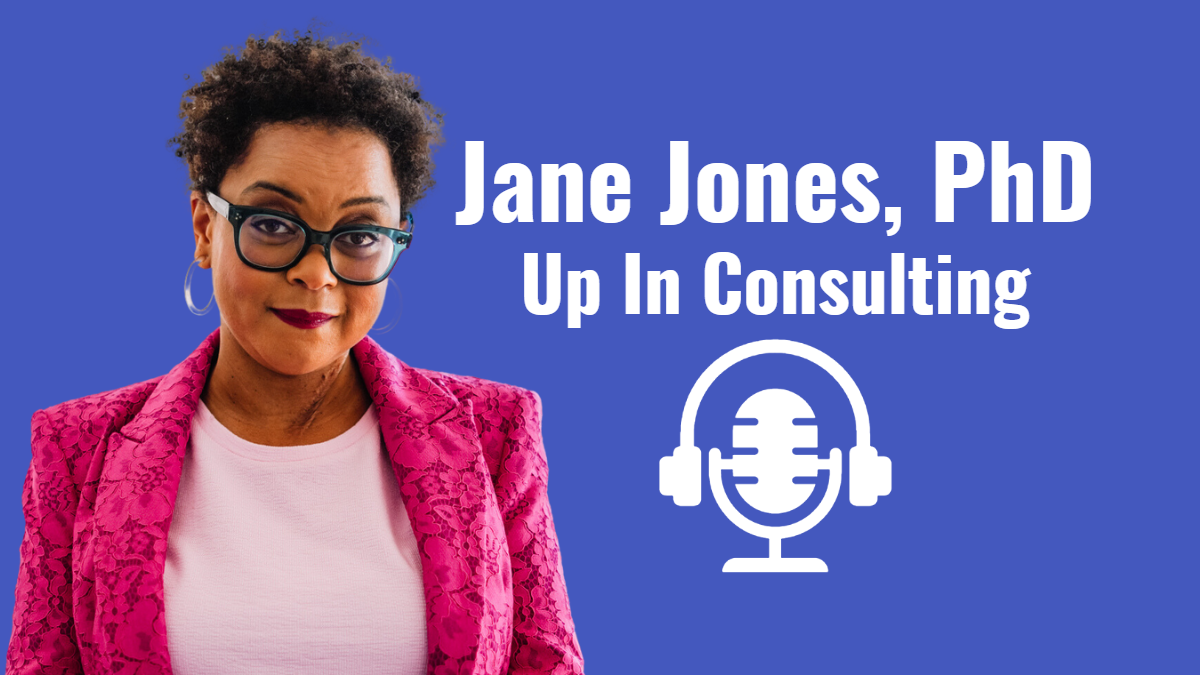
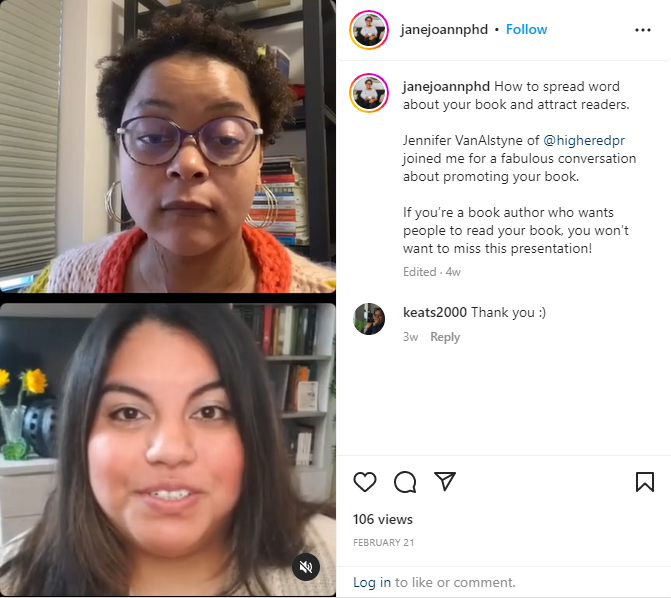
Dr. Jane Joann Jones is a book coach for minoritized women professors. She left the tenure track 8 years ago to help you confidently write your book.
Jane says, “You’ve done this research. It’s really meaningful to you. And you wanna see it out in the world.” If you want a book, I want you to have a book! I hope this interview resonates with you.
Welcome to The Social Academic blog and podcast. We’re also on YouTube! I’m Jennifer van Alstyne (@HigherEdPR). Here we talk about managing your online presence as a professor. You can build skills to have a strong digital footprint to share your research and teaching online. And I’m here to help you.
In this interview, Dr. Jane Jones and I talk about
Meet Dr. Jane Jones
Jennifer: Welcome to The Social Academic. Today I’m talking with Dr. Jane Jones of Up In Consulting.
We’re gonna be talking about books. So, authors, please listen up. This one is for you. Dr. Jane Jones, would you please introduce yourself?
Jane: Sure. My name is Jane Jones. I am a New Yorker and I am a book writing coach. I came to book writing after I left my tenure track job. I was an Assistant Professor of Sociology. That’s where I have my PhD, in sociology.
I started out as a developmental editor and then transitioned into coaching. The business I have now is a book coaching business where I work with women in academia who are writing books in humanities and social sciences. I help them get those books done through a combination of developmental editing, coaching, and project management support.
Jennifer: I love that. Now, can I ask, what do you like most about coaching? Why do you like working with people on their books?
Jane: Oh my goodness, there are a lot of reasons actually. I really do love coaching.
One thing that stands out with the coaching side is how much academics already know, but have been socialized to believe they don’t know. Especially women.
Jennifer: Ooh. Especially women. Okay.
Jane: Especially women. Especially Black women, other women of color, They’ve been taught not to trust their own knowledge.
Jennifer: Mm.
Jane: And through coaching, a lot of what I focus on, is helping people realize that you already know a lot about your topic. You already have a lot of expertise. You don’t always have to defer to other scholars, to your dissertation advisor, especially when you’re writing your book. You no longer have to answer to your dissertation advisor. And that you have a lot of the skills already.
To be sure, there are a lot of things that we aren’t taught about publishing. There is a big hidden curriculum around book writing. And exposing that hidden curriculum is very important, while also reinforcing people’s trust in their own knowledge. Being able to do both of those two things at the same time, I think is the most important part of the coaching relationship for me.
What are universities not teaching you about book writing?
Jennifer: I love that because my next question was what are universities kind of not teaching you, right? What are universities not teaching, especially minoritized faculty, about writing books?
It sounds like people do have more knowledge than they’re able to process, maybe admit, or accept of themselves. Can you tell me a little bit more about that? Where is that difference between how much we know and how much we really need support?
Jane: I always joke that there’s no Publishing 101. There’s no Book Writing 101.That course is not taught in grad school. I mean, for that matter, Article Writing 101 isn’t either. Those aren’t taught in grad school.
Where people have a lot of knowledge is in their subject matter. In the data you have collected, all of the literature, you’ve read, how you make sense of the literature. People are experts there. You’ve spent your whole graduate career…Because I work with people at all stages of their career from Assistant Professor to Full Professor. You’ve accumulated so much data, number one. And you have so much knowledge. Right? So that is there.
But in terms of questions like, “Well, how is a book different than a dissertation?”
You know, “Structurally, what do I put in my book that wasn’t in the dissertation?”
Or, you know, “How do I create the through line in my book?”
You know, these really, kind of tactical questions about how do I actually do the writing of this type of manuscript? Which is different than an article, and is different than a grant proposal. They’ve never been taught that.
Even though they have all of the information, they don’t know how to get it on paper in a way that is going to be legible for our reader. That’s where the work happens. That’s what we do, and that’s what universities don’t teach people how to do.
Sometimes it’s because people just don’t know how to teach it. It’s kind of like, you write your book for yourself. For many people who write their first book, and if you’re a first book author watching this, if someone comes and asks you what you did, you might be like, “I don’t remember. I just got that done. I was on a tenure timeline, and I put my head down, and I wrote.” And maybe I had a book manuscript workshop. Or, you know, like, I had good friends, or a supportive mentor who read it and gave me feedback. And I wrote, got feedback, wrote, got feedback, and that was it. And then the book was done, right? That doesn’t mean you can then teach that process to somebody else.
So being able to be a little bit on the outside of the process as developmental editor, and with the other developmental editors, you know, who work in the program with me, being on the outside of that process and saying, you know, there are some common things. There are some things that all books have in common. And we’re gonna teach you how to implement and how to learn that craft, the things that are common about the craft of book writing.
We work with people across disciplines. We’re ‘discipline agnostic’ as we like to say. You know, from art historians to people who are more on the side of doing quantitative, big survey research, but writing books. We run the gamut. But even within that, there are things people have in common in their books and in their trials of writing, you know? The experiences they’re having, trying to make enough time to write the book, feeling imposter syndrome, not knowing what to do with feedback, being worried about approaching an acquisitions editor. You know, going back to the hidden curriculum, not knowing how to talk to an acquisitions editor and feeling very intimidated. Those are all things that we help them with that I think aren’t really being talked to them in other places.
People might be exchanging information informally. They’re like, “Oh, my friend published here. They said the editor is really nice.” Or, “They said the editor is really hands-on or not hands-on. So I have this informal knowledge, but I don’t know how to craft an email to an acquisitions editor. Or, strike up a conversation with them at a conference. And I feel very worried to do that.” You know, “I don’t know how to describe my book in one or two sentences so that I could talk to somebody about it at a conference and not spend 10 minutes talking about my book. Which, ultimately I will be, but I don’t have that sharp, quick summary.” Those are things that we help them with, because it could feel very disempowering when you don’t know how to do that.
Again, you have all this great information, but, if you don’t know how to talk to an acquisitions editor, how are you gonna have a book? If you don’t know how to craft a chapter, how are you gonna have a book.
Minoritized women in the academy do more service and mentoring
Jennifer: These are skills that professors can learn. These are skills that are learnable and that you can develop, but because they’re not taught by universities and the people who have experience in them maybe don’t know how to teach these skills, it is amazing that you and your team are there to support them. I’m so happy about that.
And I’m also happy that you work with minoritized faculty, with women. Why is that important to you?
Jane: It’s really important! I just want to go back to one thing, the people who have written books and don’t necessarily know how to teach it. I would add additionally, and kind of looping this into working with women and minoritized faculty is, like, they don’t often have the time to teach somebody elsehow to write a book.
It’s a time consuming process. A book is a multi-year process and people add mentoring like, “I’ll read a chapter for you and give you feedback.” But for someone to give them that structured support over time, faculty are having to publish themselves. They have to do their own service committees, they have their own families. Again, that doesn’t mean that they don’t offer help, but it means that they may not have the time or capacity to give that systematic type of help we do.
I think that’s especially pronounced for women and minoritized faculty because they often have an extra service load. They do more service. We know that statistically. They do more service. They’re doing more care-taking outside of work. Right?
There isn’t always that easy transmission of knowledge from a senior faculty member to a junior faculty member because they’re just as pressed as anybody else. And so are the junior faculty! And we don’t only work with junior faculty, but the majority of our clients are.
They have the same issues like extra service, students who want their mentorship because they’re the only Black person in the department. They’re only person who studies race. They’re the only person who does X research. So they have students who want their mentoring. And all of this creates extra commitments for them.
One thing that we focus on in coaching is helping people prioritize their books when there’s a lot of other things going on. Teaching that craft of writing, but also saying, like, “Hey, this book is really important to you for a lot of reasons. Like, professionally take a tenure promotion. But also because you’ve done this research, it’s really meaningful to you, and you wanna see it out in the world. How do we help you make sure that it stays top of mind?” What do we do to support people so that the book can stay top of mind.
Jennifer: I love that. I feel like my work is really aligned with that actually, because I’m really helping professors and researchers talk about the research and the teaching that they do on online. That way more people can have conversations, so that they can have more collaboration, so that they can get more research funding.
But most of the people that I work with have a lot of anxiety talking about themselves. Do you find that your authors have anxiety talking about their books?
Jane: Yeah. (laughs) Yeah. Definitely. And I think that the work you’re doing is so important, ’cause, in my opinion, if you write a book, don’t you want people to read it?
Like, you want it out in the world. Like, you wanna be in conversation with other people. You want people to read it, but you also want to talk to people about it.
Jennifer: Right, yeah. Yeah. Even, the ability to have someone on your team, be that kind of support, not just when you start writing the book, but through the whole process. That’s such an amazing idea that we can’t necessarily get through a mentorship position at your university. Especially if no one is in your field. I love that that support system is there.
It also gives authors an opportunity to have someone that they can talk with about their book. Some of the authors that I work with, I ask, “Who do you talk about your book with?”
And their answer is, “No one. Once I stopped working with my editor, I don’t talk with my colleagues. I don’t talk with my family. I don’t talk with my friends. My book came out seven years ago and I never talk about it.”
That really strikes me as something that I think that, people who work with you, they’re talking about their book. And thinking about it in much larger ways. Because it’s really introspective, and being introspective is hard. I love that you help people with that process and actually understand their motivations for why they’re doing it, who they’re helping. It’s amazing.
Jane: Yeah. Thank you. I think that another part that’s really important is that my programs are group programs.
Jennifer: Ooh.
Jane: And that’s on purpose. Because like you said, it is very introspective. For some people, the solitude, the solitary work, they like it. They’re like, “I like writing solitary. I like being alone with my thoughts.” And that’s great.
Some people are like, “It’s isolating, and I don’t like it, and I feel very alone in the process.” Being with people who are at a similar stage as them, and when I say stage, I don’t mean career-wise, I mean stage of the book. Because people come in, and they’re all at a similar stage of writing, so they’re all kind of going through it together.
“I’m trying to figure out the overarching argument of this book,” or, “I’m writing two of my empirical chapters, the two of my body chapters.” There’s a feeling of, “We’re in it together.”
I spoke to a former client the other day, and she was in Elevate a year ago maybe, and she said, “Our Elevate group still meets on Mondays and Thursdays on Zoom, and we still write together.”
Jennifer: I love that.
Jane: I was like, “Oh, my goodness.” I didn’t even know that they did that. And she’s like, “We kept the time and whoever can make it comes on Mondays and Thursdays and we meet.” Just having that community of people who are in it with you and are like, “I’ve seen you from when you started this book and you weren’t sure what it was about. And now you’re here and we’re just seeing each other’s process and giving each other support that way.”
It’s just awesome because we don’t get a lot of that in academia. We have to be very intentional about cultivating it. It doesn’t just show up for us.
Being able to provide that space where you have peers so you can be like, “I tried that too, and this is what happened when I tried it. “You know, or, “I went through that experience and I came out and I was, like, ‘I did it, and you could do it too.’”
Jennifer: I did it and you can do it too. Just hearing those two sentences, they’re so short. But, it just makes such a difference, especially to the women and minoritized faculty that you most want to help.
Jane: Yeah. I mean just seeing that. ‘Cause you get into it and you’re like, “I don’t know if I’m ever gonna be done with this book.” (Jane laughs). People definitely have that thought,
“I don’t know if I’m gonna be able to finish this.”
“I’ve been avoiding it.”
“I haven’t been working on my book, because I’ve been scared.”
“I got some feedback that put me into a tailspin.”
“I became overwhelmed with other commitments and I feel some shame about it.
“I feel so embarrassed.”
Jennifer: Hmm.
Jane: And reminding them that it happens. It’s disappointing that it happens, but it doesn’t mean something’s wrong with you. I was normalizing it and seeing when I did one-on-one, one thing that always happened was people would tell me something, I’d be like, “Oh, that’s really common.”
And they’d be like, “It is?”
And I’d be like, “Yeah, I have other clients who have experienced that.”
And they’re like, “They have?”
Jennifer: (Laughs). Yeah
Jane: So being able to put everyone in the group and be like, “Look, you’re all having this experience.” You are not uniquely incompetent in some way. This is something that happens to a lot of people. Just because we aren’t talking about it on Twitter, doesn’t mean it didn’t happen.
Jennifer: You know, I like when it is talked about on Twitter. I like when people talk about their struggles with writing on Twitter. Because I cheer them on. I’m like, “If you struggle with your writing, you get back to it, even if it’s a year later, two years later, 10 years later, I don’t care. Because I will remember that you were vulnerable and open about something you were going through. And I wanna cheer you on and I wanna hear about things when they’re not so good too.” So I really like vulnerability.
I love that people have a safe space to do that in your program. But I also encourage people, if you’re struggling with something, being open about it on social media can help spark new ideas, tools, and resources that you can use. But also new collaborations and ideas that could help spurn your research in another way. I mean, there’s just so much possibility besides hearing from other people, “Yes. I went through that too.” So yeah, I like that idea of being open about it.
Jane: Yeah, to be open about it! You know, it’s interesting. We gravitate to what is other people’s achievements and our failures, right? So, you finish a chapter and you’re like, “Yeah, but it’s not as good as I thought it would be.” Or, “Yeah, but it took me two months longer than I thought it would.” There’s always a diminishing.
Jennifer: Mm.
Jane: And convert on the flip side, they talk about other people who are like, “Well, that person finished their chapter so much faster than I did.” Or, “That person, you know, did this.” And it’s like, well, maybe they did. Maybe you don’t know the whole story. But it’s interesting, in our brains we kind of put everyone else as, “Well, they did it better or faster than I did. And when I did it, it was a mess.” And to coach around that and be like what is the story you are telling about your progress? And, is that story serving you? Because often it’s not. Saying, “I wrote my chapter, but…” And then using some type of diminishing, diminishing it in some way, how is that helping you?
Jennifer: Hmm.
Jane: Why would we emphasize that part of the story? What does it accomplish? It doesn’t accomplish anything besides making you feel like crap. It doesn’t accomplish anything. It doesn’t make you write faster. You can’t go back in time.(Jennifer laughs) You can’t go back in time and write the chapter faster.
Jennifer: Yeah, yeah.
Jane: So why would we talk about it so much? But we do, because sometimes we’re like, “Well, I don’t wanna seem arrogant.” Or, “It’s because I don’t believe that this is worthy of celebrating because it didn’t happen the exact way I wanted it to.” So where are the opportunities to kind of neutralize some of that language, so that people aren’t…
Jennifer: But you can find positives in it, right? Like, maybe that extra time gave you opportunity to realize something new. Maybe it was good that you didn’t write it as fast as you thought you might have been able to. There’s so much self-talk that can be negative that can be harmful for ourselves.
Jane: Yeah, there’s a lot of negative self-talk. Yeah.
Jennifer: Yeah. – I’ve definitely done that. I’m a creative writer and I’ve totally done that to my own. I didn’t write that fast enough or I didn’t write as much as so-and-so, yeah. It’s never helpful. It’s never helpful.
Jane: Yeah. Yeah. It’s like our running critic. And sometimes, it’s something my coach always says, “We can’t always get the critic to completely go away. We can put them in the backseat of the car, and be like, ‘You go back there. You’re not driving this car anymore. You’re not even in the back seat, but, like, the third row.’” (Jennifer laughs) You know, “We’re putting you back there. Like, I recognize that I may not be at a point where I can get rid of you, but I’m not going to give you authority over this ride. You don’t have the wheel. You’re back there.”
Jennifer: Still in the car, right? Can’t kick it out entirely. I mean, sometimes we can’t get control over it.
Jane: Still in the car. Like, you realize, you’re not wrong for having these thoughts. Like, they’re natural. And we’ve also been socialized to believe it’s not rigorous enough. It’s not fast enough. Publish or perish. There’s a lot of socialization at hand that is part of the reason why people have these thoughts.
As a coach it would be irresponsible for me to go in and just be like, “Oh no, you shouldn’t think any of this ever again.” Because as a sociologist, I know how strong the socialization is. As a coach I know that just makes you feel bad about having the thought. Then you feel bad because you didn’t write fast enough according to your standard. Then you feel bad that you’re judging yourself. And then you just feel doubly bad. So it’s like, “Okay, let’s just, like, take it back.”
Jennifer: Get out of that spiral.
Jane: Yeah. Let’s get out of the spiral. And, it’s okay that you had that thought. It’s okay that you feel bad. We don’t want you to feel bad indefinitely.
Jennifer: Hmm. I like that. We don’t want you to feel bad indefinitely.
Jennifer: Tell me more about Elevate. Who should join?
Jane: Everyone. I’m just kidding. (Jane and Jennifer laugh).
Jennifer: You said that people in the cohort are all in a similar place writing their book. When is it right to join your program Elevate?
Jane: Okay, so Elevate is a group editing and coaching program. We have a curriculum that we walk you through the
craft of writing a book
project management behind writing a book
mindset issues behind writing a book.
So much of what slows us down is our own thoughts. Like, “I’m not ready to write this.” “I don’t know what decision to make.” “So and so said this about my chapter, so I’m going to feel bad about it and just ignore it.” “I’m gonna avoid. I don’t wanna look at the feedback, so I’m just gonna avoid it.”
Those are the three domains we work in the craft of writing, project management, and mindset. We do that through a curriculum. We have lessons the same way you would in any course. We have editorial feedback, so you submit your writing for feedback twice a month.
And we have a lot of mindset coaching that I coach people hard, (Jennifer laughs) which I think is what most Elevate alumni would say. Like, “Jane really coaches us. Like, she really pushes us.”
Jennifer: Right.
Jane: I push you in a way that not like, “Write your book faster, write your book faster,” but rather, “Let’s get to the bottom of why you’re having these feelings about your book. Let’s get to it and figure it out,” type of coaching.
Because we’re academics, we’re in our brains so much. When it gets into having emotions, we’re, like, “Oh, no, we’re rational. We can’t really think about that.”
I used to be that person too. Oh, no.(Jennifer laughs) I hate that, all that emotion stuff. That’s not gonna work for me. Well, I kind of need to confront it, because you and your book are gonna be together for a very long time.
Like you were saying, like, as you write it and then after you write it, it’s not going anywhere. You should figure out how to enjoy it. To find pleasure in the process of writing it and be excited about it.
It’s just like any other thing. You’re not gonna be excited about your book 24 hours a day, but you wanna get to a point where you’re more excited and motivated than you are demoralized and stressed.
Jennifer: Hmm, mm-hm.
Jane: In the program, we go 24 weeks. We go through those three themes one by one. People who join, all women, they’re normally at a stage in their book where they are figuring out the big overarching picture of the book and the structure of the book.
Some people come in and they haven’t written a lot yet. They have all of their data collected, most of their literature read. You might need to go back and collect a little bit more data, but, we want you to really be past that stage. Some people come in and they haven’t written a lot.
Some people come in and they’ve written a lot and they’re just like, “I’ve been writing and writing, but I still don’t have a really clear through line,” or, “I still don’t know my argument.” And that’s fine, because people’s processes are different. Some people like to get a lot of words on paper and then go back and kind of orient themselves.
We advocate you creating the foundation first and then building your house. (Jennifer laughs) So people normally come in when they want that support. What we do first is teach people how to write your book overview, how to write your book’s framework and then create an outline for the entire book. And then they start writing chapters.
Normally within the program you can come out with a couple of chapter drafts if you have the time to commit, and you will know what your book is about, how you’re going to write it. You know how it’s going to unfold over time. And then you get to work.
Jennifer: You have a plan in place. You have the mindset that you need to make that plan actually done, like, to get your book done. I love that.
Jane: Yeah, yeah.
Jennifer: Oh, if people want more support, you help them with that too. Like, beyond writing their book, is that correct?
Jane: We focus on books, but we have an alumni program for Elevate. We don’t expect anyone to write a book in six months. (Jennifer and Jane laugh). That is not what we do. We do not make pie in the sky promises.
We have an alumni program and people often come back and do the alumni program, which is another six months. There we really focus on more now you’ve done a lot of the deep work, the deep thinking in Elevate. Now we are helping you get a lot of words on paper. People are doing the writing and getting the body chapters, I call them ‘the empirical chapters.’ But I know people also have ‘theory chapters,’ so I don’t want anyone to be like, “What about the theory chapter?”
We focus on getting chapters done or revising because some people will take Elevate, go off for a little while and work independently, and then come back and be like, “I have a couple of chapters done.” And we’re like, “Great, let’s start revising them.”
Jennifer: I’m glad I asked you about that because I felt like there might be some people who are like, “Oh, I need a little bit more help than that. Is there an option?” I’m glad that there’s an alumni program that supports you with continuing that process. That’s amazing.
What else should people know or consider about Elevate? Because your new cohort is opening up again soon.
Jane: Yeah, so we accept people who are writing first, second, third books. I think initially when we ran the program, it was very much for people who were transforming dissertations into books. And we have gotten a substantial number of people who are writing second books, which are a different challenge because you don’t have that scaffolding of the dissertation. Even if your first book is dramatically different from the dissertation, which many are, the book is not a revised dissertation. It is like a caterpillar to butterfly.
But the second book just poses different challenges, and we support people who are writing their second book, their third book, because that foundational work of creating the overview, the framework, the outline, you need to do that every time. It’s not like you write the first book and you’re like, “Well I’m an expert on book writing now, so I don’t need any help.” That’s not how it works. (Jennifer laughs). And even experts get support.
So it’s not a matter that it’s a remedial type of program. That’s not what it is. It’s not, for, “Oh the people who don’t know how to write books.” No, it’s for people who wanna write books with supportive community, expert editorial feedback and coaching to help them write the book with less stress, a better support system, a clear foundation for the book. So that they can make progress with more ease.
Writing a book is a complicated thing. It should be because you’re dealing with complicated ideas and all sorts of interesting data. And it’s not easy. But there can be more clarity and momentum in the process than what there currently is for a lot of people.
Jennifer: I think that this is such a wonderful gift that you can give to yourself, especially if this is, like, your second, third, or fourth book. Like, why not make this time easier and better?
Jane: The majority of the people who work with us pay through their universities. We have a significant number of people, and some people pay out of pocket. We have people who are like, “I wanna make this investment because my book’s important to me and I don’t wanna twiddle my thumbs…”
Jennifer: (Laughs). Good. So if you are listening to this, if you’re watching us on YouTube or reading the blog, know that this is a program that’s there to support you and that you can pay for it out of pocket or you can request funds from your university. I hope that you sign up for the wait list.
Jane: You can apply for Elevate. The application is just an application. It’s not a commitment to join the program. We look at your application, because one thing about the program is that we wanna make sure that you’re a good fit for the program.
We also wanna make sure the program’s a good fit for you. If we think that you’re not at the right stage, if there’s something about your research that we feel that we can’t support you…For instance, we had someone who’s writing a memoir and we’re like, “We don’t really edit a lot of memoirs.” If we feel like the program is not a good fit for you, we will tell you because we only want people in it who can commit and who we can help.
That is the point of going in and applying and possibly talking to me about the process if you have a lot of questions, that we wanna make sure that it works for everyone. Because it’s a big commitment. And also, a book is a big deal. If you’re gonna get support, you wanna make sure you’re getting the right support at the right time.
Instagram Live about finding your book audience on social media
Jennifer: I love that. Thank you so much for joining me for this interview, and for everyone listening, I do wanna let you know that Jane and I did an Instagram Live where we talked about your book audience versus platform.
Thank you so much for watching this episode of The Social Academic! And thank you so much, Dr. Jane Jones, for joining me.
Jane Joann Jones is an academic book coach who helps minoritized scholars get the feedback & support they need to confidently write their books. Jane strives to be the coach she wished for when she was on the tenure track.
In her eight years as an editor and coach, Jane has successfully helped dozens of academic authors create and execute a writing plan and ultimately write their books, confidently. Her clients have published with presses including Oxford, Princeton, Bloomsbury, University of Chicago, Stanford, Duke, and UNC. Through her work, Jane has restored minoritized academics’ faith in their writing abilities and their place in the academic world.
When she’s not challenging the status quo in academia, you can find Jane sipping a craft bourbon, on the rocks, while experimenting with a new cooking recipe. She also enjoys visiting museums for only one hour, devouring cooking shows, and impromptu dance parties to the tunes of Lizzo and Queen Bey. If you happen to be strolling through her New York neighborhood, you might see her at Lucille’s, her local café, drinking an oat milk latté with a raspberry donut and a good book.
I’m anxious about how to start posting on LinkedIn. Or, I’ve never posted on LinkedIn before. Is this you?
Meet my featured interview guest, Dr. Gertrude Nonterah. She’s a LinkedIn expert, and host of The Bold PhD YouTube channel. This interview focuses on LinkedIn for PhDs and how opening up about Gertrude’s struggle finding a job with a PhD invited opportunity.
I’m Jennifer van Alstyne. Welcome to The Social Academic blog, podcast, and YouTube channel. I empower professors to feel confident when showing up online. Help more people know your name and your research when you build an online presence that works for you.
In this interview:
Meet Dr. Gertrude Nonterah
Jennifer: Hello, everyone. I am Jennifer van Alstyne and welcome to The Social Academic. I’m so excited to talk with you today about LinkedIn because my special featured interview guest, Dr. Gertrude Nonterah is amazing at LinkedIn. I mean literally the person that I recommend if you’re new to LinkedIn and you need to go follow someone to figure out what they’re doing and what’s working well. She’s the person.
Gertrude, Gee, I’m so excited for you to be here with me today. Would you mind introducing yourself to everyone?
Gertrude: Absolutely. Thank you. First of all, I want to say thank you, Jennifer, for inviting me for this show. I’ve known about your show for about two years now. And so just being here is such a privilege. I’m Gertrude Nonterah. You can call me Gee, because sometimes people would struggle to say Gertrude.
Let me start with The Bold PhD. Essentially, I finished my PhD in 2015. When I finished, I went straight into a postdoc. During this postdoc, I realized that income was low. I live in California. I started a side business. I started doing that and then somewhere along the line I lost my job as a postdoc.
When I lost my job as a postdoc, I thought it would take me a couple of months and then I’d find a new job. But instead it took a year and a half to find a new job because nothing I was doing was working. I was applying to jobs within academia, jobs outside academia. I was even applying for second postdocs. And nothing was opening up.
The job ended in May of 2018 because of funding cuts or funding running out. I didn’t get another role until I was offered the role in December of 2019. So I wouldn’t start another role until 2020. That 18-month period was such a growing time, a difficult time. When I landed that faculty position, and later when I moved on into medical communications, I really wanted to chat about the emotions around you know being a jobless PhD.
Right? You’ve been told to go to school. You’ve been told to get all this education. And yet you’re applying for jobs and nothing is working, right? How do you navigate that?
Once I began to talk about that, and especially on LinkedIn, people began to resonate. And people would reach out to me and say, “I’m going through the exact same thing.” Like, “I can’t believe that this is happening to me.”
Gertrude: That’s how The Bold PhD was then born. I realized that there was a need for people to kind of talk about that. It’s sort of like a shameful topic to say that you have all this education and you don’t have a job. Right? I mean what did you do wrong? And so as I began to talk about I began to build that community. And it’s just taken off from there.
Jennifer: Oh, I love that so much. What I love the most is that you said that you really wanted to talk about the emotions that you had experienced, that other people might be going through now. My fiancé went through that. Many of my friends went through that same experience of joblessness as a PhD. And really struggling to communicate what you need and also your emotions about everything. Because certainly they felt embarrassed. They felt alone. They felt isolated.
A conversation that needs to be talked about: leaving academia
Jennifer: I love that emotions was something that really inspired you to start talking about that. What was it like to be open about that and have so many people resonate with it and respond?
Gertrude: Yes. When I started talking about this and especially when I started talking about transitioning from academia into industry, and also the emotional side of it…People have been transitioning from academia to industry for a really long time. Right? That’s not the new thing.
The thing that I brought to it was actually talking about the mental state. Your mental state, and the emotions, and the financials. What people don’t usually talk about: the kind of difficulty they go through when they have financial stress.
People began to direct message [DM] me. People left comments. At first it was a little overwhelming because I didn’t know it was going to open the floodgates of like people…Literally, I would receive maybe a hundred comments on a post. Or, maybe one day I would get like 20 different DMs of people asking me questions: “Well how did you do this?” “How did you navigate that?”
In the beginning it was kind of overwhelming. But now I’ve realized that this was something that needed to be talked about. I’m glad that I started that conversation. Maybe I didn’t start the conversation, but I was bold enough, hence the name The Bold PhD, to begin actually talking about it. And putting myself out there.
The thing is, when you do that you’re also vulnerable. Right? I am quite a private person. I’m an introvert. There are lots of things I keep to myself. But I think that there are certain things that if nobody ever talks about, it never gets talked about, and people continue to suffer in silence. I didn’t want that to continue.
Gertrude: I wanted people to realize there are people that will finish a PhD and will not find a job. And yes, you will go through some days where you’re crying, and you’re weepy, and you’re upset. And yes, I went through this. It’s not fun to put yourself out there and say you were good. Because there are also people like I know from my childhood and from my days back in school who follow me, and you know they’re gonna see that. Like you don’t always want people from home to see that, but they’re people that see that.
But I realize that 1. a lot of people don’t care as much as you think they care. Right?
Jennifer and Gertrude laugh.
And 2. the people that care actually resonate with that message. And they need your help. And they will seek out your help.
So that’s how it’s been. I was afraid at first, but you know, I realized there was something that needed to be talked about.
Jennifer: That’s so powerful. And you did start that conversation for all those people who are reaching out to you for the first time. It’s probably the first time anyone invited a conversation for them. I really am so impressed with your ability not just to be open about yourself, but to respond and actually engage with people who have questions about it.
Jennifer: LinkedIn sounds like it was so important for you. LinkedIn sounds like where you really built your platform in terms of your personal brand. Why did you get on LinkedIn? And, why should others be on LinkedIn too?
Gertrude: That’s right. Great question, Jennifer. At first, I wasn’t a LinkedIn person. Like, I would have jumped on Instagram. I was on Instagram and Facebook when Facebook was like a big thing. And I was on YouTube for a little while. The Bold PhD is actually on YouTube too.
I think the reason why I jumped on LinkedIn, and the reason I still write on LinkedIn is because currently LinkedIn has unbeatable reach when you compare it to all the other platforms.
It’s kind of slowed down a little bit. I do see changes with the algorithm. But for the most part, I think that LinkedIn is quite fair with putting your content in front of the right eyes, especially if you already have people interacting with your content.
The way that LinkedIn is different from other platforms is: For instance, me and Jennifer are connected. If she posts something and I go and I like it and I comment on it, there’s a likelihood that people in my network that are not connected with Jennifer are going to see that comment. They’re going to see that.
Gertrude: Or, even, I could share that piece of content. Sharing, you can do anywhere, but specifically liking and commenting on a post. And by doing so my community, or the people that are connected to me, could find out about Jennifer and be like, “Oh, that’s somebody I really want to connect with. Let me connect with her.”
And no other social media platform is doing this currently. All the platforms are really based on, ‘we’re going to show your content to a few people and if they like it then we’ll show it to more people.’ And that’s how YouTube, and TikTok, and Instagram all work. But LinkedIn is kind of like that, but you also have the added benefit of you could discover people just from people in your network interacting with other people. That was the 1st thing.
The 2nd thing was, I had gone to a conference and somebody had mentioned that doing video on LinkedIn was like a big thing. I tried to do video on LinkedIn. I didn’t like it very much because still in my mind, LinkedIn wasn’t a video platform. I didn’t ever stick with that. But I did notice that people were writing on LinkedIn and doing well. And I’m a writer. I do this. I work in medical communications. I was like, “Okay, let me just pull my strength and do that.”
I’m still a little self-conscious of doing video on LinkedIn even though I do video on YouTube.
Jennifer: That’s so funny.
Gertrude: I don’t know why. I don’t know why there’s a disconnect.
Jennifer: Yeah, that’s so interesting. It’s like, you could even use the same video on LinkedIn. But it still feels like separate platforms. That’s okay! That’s really interesting to hear.
Gertrude: Yeah, yeah, yeah. Absolutely. I would say that those two things.
When I noticed that people were also getting attention on LinkedIn with their writing, I said, “Okay, let me try this.” And I tried. And it’s worked. And I’m really grateful.
Another thing about LinkedIn that I want to fill in there before your next question, Jennifer. There is a stat out there that only about 1-2% of people on LinkedIn actually create any content on a weekly basis. Not even on a daily basis.
When you intentionally create content 5 times a week, 3 times a week, you are actually part of a percentage of 1% that is producing regular content. That can really put your personal brand, if you’re trying to build that for your career, on steroids. Really. I mean I don’t know everything. But it really can skyrockets who you reach.
Jennifer: Yeah, people even just like a couple of years ago were often surprised when they asked me, “What’s your biggest platform?”
And I was like, “Oh, it’s LinkedIn.
They’d be like, “Wait, what? Do you post on LinkedIn?”
And I didn’t. I actually wasn’t really posting all that much. But I was connecting with a lot of people and having conversations over messages.
So there are different ways to interact with the platform, but a lot of people just aren’t even sure if LinkedIn is for academics. For people who are leaving grad school and looking for their next job, yeah, they’re like, “Okay, I need it for a job.” But it’s not the same as needing it for networking, personal growth, for personal connections, which all can also be found on LinkedIn.
One of the things that I really love about LinkedIn is that your LinkedIn post lasts for a long time. If you send a tweet, if you share an Instagram post, it’s gonna last for a day. Maybe even less, especially on Twitter. But with LinkedIn, people can log in a week, two weeks later, and if they don’t have a lot of connections, your post is still probably going to show up at the top of their feed. So you can reach people, not only more people, but reach those people for a longer period of time than your other social media posts.
I really love Gertrude’s suggestion of posting regularly. Even if it’s just once a week you’re doing more than what 99% LinkedIn users? That would be amazing and really life-changing for people.
80% of Dr. Gertrude Nonterah’s content comes from questions people ask her
Jennifer: You said you liked writing on LinkedIn. You didn’t really like playing around with the video content on there. But you have YouTube.
How do you decide what kind of content to create? And how do you make that decision? Are there things that you’re just like I really don’t like that and I’ve put it aside?
Gertrude: Yeah. I think most of my content has come from questions people ask me. I’m very, very conscious of that. Of course you can create content that’s popular and stuff. But I truly do try to focus about 80% of my content on questions people ask me.
Jennifer: 80%? That’s a lot.
Gertrude: I would say that.
Jennifer: I love how audience driven that is. When someone has a question, you’re like, “What kind of content can I create from this?” That’s amazing.
Gertrude: Yes. Anytime anybody asks me a question on YouTube, on LinkedIn, even on TikTok, I take that question and I create content out of it. Just this morning on TikTok…The Bold PhD is on TikTok, we just hit 1,000 followers.
Jennifer: Yay! Jennifer claps.
Gertrude: On TikTok, I just answered some of these questions because they were asking me about how did I get into medical communications. On TikTok, you can just click on the question and you can answer it with another TikTok. Essentially, that became a post I put on TikTok. And also on my Instagram Reels. Two things with just one piece of content. But most of the time I’m just really looking at that.
I always love the questions. When somebody sends me a DM and asks me a question, I usually will tell them, “You know what, I’ll answer your question. I’m going to answer it as a post because if you have this question at least 100 other people have the same question. So I’m going to create a piece of content out of it. And you will benefit from it and other people are also going to benefit from it.” I’ve done that both with LinkedIn and YouTube and it has served me very, very well.
Gertrude: There is something to be said for audience driven content where, yes, you can definitely do your own. You can, for those of you if you’re like me and you’re writing out like pretty old school, well not old school. But you would do SEO research for content ideas from other content creators that are working. Or, you could even do that on any platform really. If content is working for somebody, then you try to copy it in some way or mimic it. And I think that the reason why sometimes my content does well, not all the time, but it generally it does well is that I’m taking specific questions people ask. I’m posing the question. And I’m giving an answer.
Sometimes I don’t know the answer to the question, and I may invite others to say, you know, this is how I feel about it. But how do others feel about it? And that then generates a lot of conversation on a post. And then it becomes another you know somebody who will leave a comment and that triggers another idea.
It’s really like a machine of, “I’m gonna look, I’m gonna read.” I read every comment. I read every question. I mean, sometimes I don’t react. Or, I may not respond to it. But I read everything. And usually those are my inspiration for creating content.
Jennifer: Wow. That is honestly inspiring for me. I feel like I get asked a lot of questions. And, I do occasionally create content around it. But the content that I’m creating, I feel like sometimes it takes too long to actually stop the other things that I had planned and focus on that. I love that you’re just gonna get on TikTok, you’re going to get on Instagram Reels, and you’re gonna answer those questions.
And you collect questions to answer again later. I’m gonna start doing some of that because I think it’s such a wonderful idea.
Especially for academics, professors and grad students who are leaving academia. They want to still be able to have conversations about the things that they care about, the research that they care about. And also, what they’re doing next. I think that that is an amazing way for them to generate those ideas. Having people ask them questions and like actually answering them.
Gertrude: Yeah! If you want to take that even further, especially for people that maybe you offer a service and so you create contents around this one niche subject. Well, you could go find your colleagues within that same space and look at the questions people are asking them also. Because likely people in your audience have those questions. It’s not something I’ve actively done, but that’s also another idea I always give to people if you don’t have the audience yet to start commenting or asking you questions.
Like I said earlier on how I started, it was that I wanted to talk about some of the things that I had gone through because I was jobless. So I started from my personal experiences and then that led to people beginning to follow me. Then as they began to follow me, they began to ask questions. I began to answer their questions. And a lot of the time when I’m answering the questions I’m still pulling a lot from my personal experiences and from things I’ve read. And for experiences I’ve had or something somebody told me. You do end up still serving them based on whatever your niche is. But I always find that the better content creators in any industry are always very queued into what their audience, or the people listening to them, are asking them. Then they give them back content that meets that need.
Being on video adds a personal touch to your content
Jennifer: I love that. You do a lot of different forms of content. But you definitely talked about how video felt comfortable for you on YouTube, and not on LinkedIn.
Why do you like creating YouTube content? What is it about YouTube, I mean you have The Bold PhD channel, I think you also have a personal channel if I’m correct. So what is it about YouTube and video that you enjoy?
Gertrude: Yeah, I literally wrote to my channel this morning: “I do too much.” I need to like curb that, right?
Jennifer: Yeah.
Gertrude: I was applying for a job and somebody said, “Wow, you’re doing a lot of things at once. Are you sure you want a job?”
Jennifer laughs.
Gertrude: That was hilarious.
The reason I like video content is because of the personal touch it adds to responding to people’s questions. When you write, we get to read what you’ve written but we don’t get your facial expressions. We don’t get to know you.
I feel both video and podcasting are a great way for people to get to know you. They hear your voice. They see your face.
Gertrude: I met somebody once who had started watching me, watching my videos. And we met at a coffee shop here in San Diego. And they’re like, “You’re just like you are on video.”
And I’m like, “I’m not any different.”
Jennifer laughs and nods.
Gertrude: For me, authenticity is important. Connecting is important.
Another thing that’s important with YouTube, is that YouTube is a search engine. If you do very well with number one, responding to what your audience wants, and number two making sure that it’s optimized for the search engine.
That content could live for a long time. There are videos I created 5, 6 years ago that I get comments on. And I’m like, “I don’t know what I said in that video.” This is like on my personal channel. I don’t even know what I said in that video. I don’t even care about that subject anymore.
Jennifer and Gertrude laugh.
Gertrude: But somebody just left me a comment on it.
Jennifer: Because they’re finding it for the first time. Because they’ve searched for it in Google and your video shows up.
Gertrude: And the video showed up, exactly. It’s taking advantage of that.
Because of that, I’ve had people that have
They followed me for years
They bought my products
They’ve invited me to speak because they see me and they hear me and they’re like I would love to interact with this person.
For me, it’s that authenticity connection and also taking advantage of an already built and very robust search engine.
Jennifer: I love it. People don’t always realize that social media platforms are search engines. Twitter is a search engine. YouTube is a search engine. LinkedIn is my favorite search engine, to be honest. Especially for academics who are looking for other people in your field.
You can literally search the keyword for whatever your research topic is, and find other people around the world who are doing similar work. If it’s on their profile, you can find them. And that’s something so many people don’t realize.
Jennifer: When I say get on LinkedIn, I really mean it because you can find real people like you.
Jennifer: I want to hear a little bit about your LinkedIn course, because you do have a product to help people be on LinkedIn.
This is something that’s so important especially as Twitter for many people feels really uncertain right now. They’re not sure if they want to stay for political reasons. They’re not sure if they want to stay for security reasons. And they’re trying to figure out where to go next.
I know LinkedIn is an excellent answer for them, but some people need help. So please tell me about your LinkedIn course.
Gertrude: Absolutely. When I started seeing success with LinkedIn, and this year I spoke at 16 events. And those 16 events, each and every one of them have come from people saying, “Oh, I connected with you on LinkedIn.” I think about 90% was like, “I connected with you on LinkedIn.” “Oh. I watched your YouTube video.” Usually it’s like one or the other. And I was like, wow, that’s powerful.
And not just that, but I’ve had opportunities to coach other people. I don’t do a lot of that, but I’ve had opportunity. People reach out to say, “Hey, can you coach me?”
People have reached out to me with jobs. Let me tell you why that’s significant. Earlier on, I mentioned how I struggled for a year and a half. And I still get emotional about it because like that time was a really difficult time in my life. And finances were not so great. I have a child who needed health insurance, and I didn’t have health insurance. So it really is an emotional topic for me.
I remember somebody reaching out to me and saying, “I want to give you a job.” To go from struggling to find a job for a year and a half to somebody reaching out to me: not to interview me. I was confused. I’m like, “Oh, you want to interview me?”
“No, no, we want to give you a job.”
Gertrude: Then I had a friend of mine who I connected with on LinkedIn later on, I would find out that we went to the same PhD program but he had graduated a few years ahead of me. A recruiter reached out to me about a job that was not even being advertised yet, and they said, “You know, this person raved about you.” And so through my connections, I got this opportunity to interview for a great job at a great academic institution. No way would these people look at me if somebody hadn’t talked about me and raved about me. I ended up turning down that job, but I was really sorry to turn down that job because I had just been offered another one.
But those two things: like having somebody go ahead of me and recommend me for such an amazing role at a great institution. Having somebody want to offer me a job. That sold me on the platform. That sold me.
You know, the speaking, everything else was great. But building my personal brand has been a life change that took me from struggling to find health insurance for my child who severely needed it, to people offering me jobs.
Because of that, I built this course on how people can build a personal brand and leverage their personal brand to open up opportunities for them, The Branded Scholar Bootcamp.
A lot of us don’t use LinkedIn unless we’re looking for a job. I noticed that when a lot of the layoffs started happening, people would post, “I’ve been laid off.” I would go and try to support that comment and all that, but before that happens to you, you could be building a personal brand so that when something like that happens to you, you could immediately have people who are clamoring to say, “I want you.”
Because of that I built the course called The Branded Scholar Bootcamp, teaching you step-by-step how to set up and build a personal brand on LinkedIn. And how to create content in a systematic way. How to be consistent. How to build your speaker page if you want to speak and have people invite you to speak for them. I laid out step-by-step how I’ve used LinkedIn and how others can use LinkedIn to build a personal brand that attracts opportunities to them.
Jennifer: Oh, I love that so much. And for some of you listening right now, you’re like, “Jennifer, don’t you have a LinkedIn course?” Let me tell you it is nothing like this one. My LinkedIn course is really for professors who just want a LinkedIn profile. They want to know how to put their academic life on their LinkedIn profile. And they really aren’t looking to post. They’re not necessarily looking to network on LinkedIn. So that’s what my course helps with. And you can see it’s wildly different from this one.
The Branded Scholar Bootcamp is all about making connections and making real relationships that can help you, not just with your job search but with other areas of your life. I mean this sounds like it’s really world opening and that’s why I wanted you to know about it.
Gertrude: Thank you so much, Jennifer. I really appreciate that. People can check that out.
You never know where your next opportunity is going to come from
Jennifer: It has been so amazing to talk with you about LinkedIn, to talk with you about YouTube, and all of the amazing things you’re doing to help people. I mean you’re changing the world. And I love it.
Do you have anything else you’d like to add before we wrap up? This has been such a fun conversation for me.
Gertrude: Absolutely. It’s been such a great conversation. I just wanted to say that if you’re not building a personal brand, it all started on LinkedIn for me. And I know that people may have their feelings about LinkedIn. And definitely you can use LinkedIn.
But even if you don’t use LinkedIn, there are other platforms out there where you can build a personal brand.
I’m very, very pro building a personal brand for your academic career because nothing is certain in the world that we live in today. You never know where your next opportunity is going to come from.
Building a personal brand is literally currency you can cash out at some point in your career.
Gertrude: Don’t hesitate to build a personal brand even if all you do is post once a week on Instagram, or post once a week on LinkedIn about your academic career, or about you know maybe you’re transitioning out of academia and you want to talk about that, or you know you’re talking about your research, or teaching in the classroom.
Whatever it is, build a personal brand before you need it. Because trust me, at some point you may need it.
Even if you never need it, the opportunities it opens up for you are just unmatched. And I highly recommend that you do build your personal brand. Thank you, Jennifer, for giving me the opportunity to talk about that.
Jennifer: This has been so inspiring. I really think that people are gonna go make their LinkedIn profile after talking to you because this has been eye-opening. I hope that lots of people find your interview helpful. Thanks so much for coming on The Social Academic!
Dr. Gertrude Nonterah is a medical communications professional. She graduated from Lewis Katz Temple University School of Medicine with a Ph.D. in Microbiology and Immunology in 2015.
She is the host of The Bold PhD YouTube channel which helps graduate students and PhDs prepare for and navigate the career market outside academia.