Tag: PhD

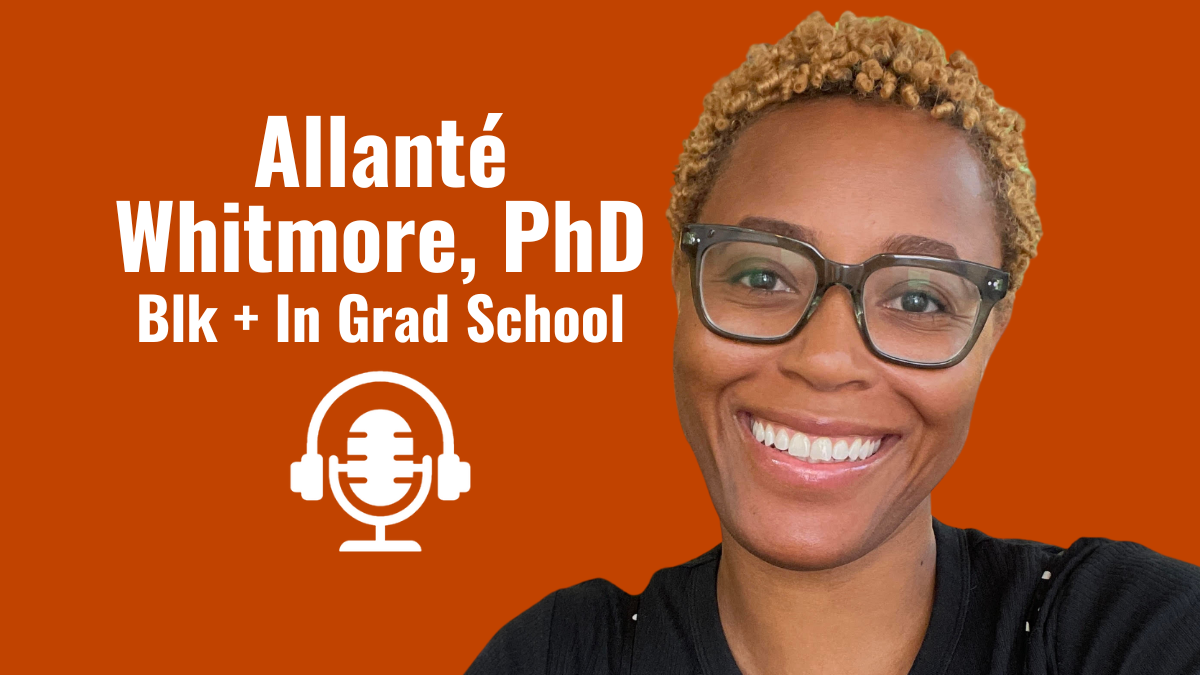
  • Podcasting with Allanté Whitmore, PhD of Blk + In Grad School

    Podcasting with Allanté Whitmore, PhD of Blk + In Grad School

    Have you thought about starting a podcast?

    @BlkInGradSchool

    Allanté Whitmore, PhD started the Blk + In Grad School podcast on her phone, a podcast created to encourage and inspire people of color in grad school. It’s since grown to over 160 episodes with a new season on the way.

    Discover Allanté’s journey as a podcast producer and host. It’s all in this featured interview on The Social Academic blog.

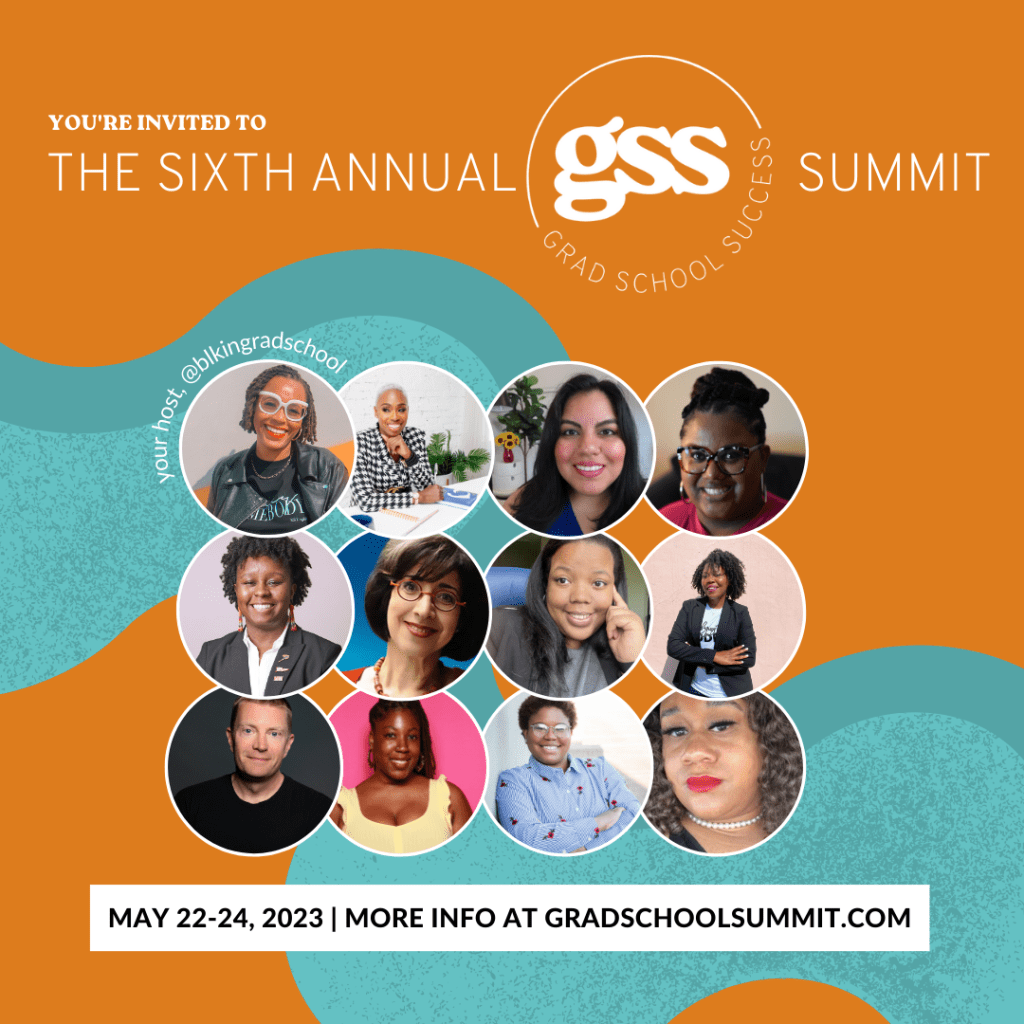
    You're invited to the 6th annual Grad School Success Summit this May 22-24, 2023.

    Meet Allanté

    Jennifer: Hi, everyone. This is Jennifer van Alstyne. Welcome to The Social Academic featured interview series.

    Today, I’m speaking with Dr. Allanté Whitmore. We’re gonna be talking about podcasting, which is something a lot of you have been interested in. I’m excited for you to be here today.

    Would you please introduce yourself? Just let everyone know who you are?

    Allanté: Absolutely. Jennifer, thank you so much for having me on the podcast. We’ve been internet buddies for years now which is kind of amazing. So excited to be here.

    So hi, everybody, my name’s Allanté Whitmore, PhD. I recently completed a joint PhD in Civil Engineering and Engineering and Public Policy at Carnegie Mellon University where I studied autonomous vehicle policy research.

    On the weekends, and in the wee hours of the night, I built a podcast and community called Blk + In Grad School. There I chronicle my experience as a black woman pursuing a PhD in Engineering. I also interview other graduate students and early career professionals about their graduate experience. With the whole hope of

    • Motivating
    • Inspiring
    • Providing tips and tricks
    • Mindset shifts

    for graduate students to get through their journey.

    Jennifer: Oh, I love that. What a good podcast topic. It’s also gonna help so many people. It’s one of those things that those resources are gonna be valuable to people again and again for years to come.

    I’m not a big podcast listener, but I love the episode that you did about decorating your apartment on a grad school budget. I was like, ‘Oh my gosh, so many good tips. And I’m a big thrift storer. I really enjoyed that.

    I love that you interview a lot of black women and really give them a platform to share their stories and their advice.

    The form above subscribes you to new posts published on The Social Academic blog.
    Want emails from Jennifer about building your online presence? Subscribe to her email list.
    Looking for the podcast? Subscribe on Spotify.
    Prefer to watch videos? Subscribe on YouTube.

    Allanté started a podcast to create the resource she needed in grad school

    A mobile phone with the Blk + in Grad School Spotify page pulled up on the screen. A pair of over ear headphones are plugged into the phone.

    Jennifer: What inspired you to start a podcast?

    Allanté: Yeah, absolutely. Honestly, my own experience through grad school.

    Prior to going to Carnegie Mellon, I finished my master’s at the University of Illinois at Urbana-Champaign. And I did undergrad at North Carolina Agricultural Technical State University which is a historically black college [HBCU].

    The transition between my undergraduate experience and grad school was very jarring.

    A lot of people maybe assumed because I moved from an HBCU to a predominantly white institution…the academic rigor was the same.

    It was the social pieces and some of that kind of hidden curriculum around how one navigates themselves as a graduate student that I really wasn’t knowledgeable about.

    I really stumbled through my 1st graduate school experience. I didn’t know I was supposed to show up to Friday coffee to connect with my professors. I wasn’t really involved or engaged in a way that was beneficial to me as someone who’s aspiring a profession and career.

    When I left, I finished my master’s, I went and worked in Detroit at the McNair Scholars Program at Wayne State University. I led that program. If you’re not familiar with McNair Scholars, it’s a program that helps 1st generation low income students go to graduate school. There, I got all this professional training around grad school readiness and retention in graduate school.

    Coupled with my own experience in my professional training, I just felt when I decided to go back to graduate school…There was so much I wished someone told me that had nothing to do with the technical or academic skills we need to be successful. I think a lot of us have that already.

    It’s just like, oh yeah

    • You’re supposed to go to Friday coffee.
    • This is how you manage a meeting with your advisor.
    • Here’s how you kind of work through those stickier situations where we may not have a safe space to ask those questions at our university.

    That is how Blk + In Grad School started. The whole idea was what I wish someone told me. The research I wish I had when I started back in 2012.

    Jennifer: Oh, I love that. It sounds like what you went through in your experiences helped inspire you to create this beneficial resource for everyone who is going through it now. And who may be advising students who are also going through this journey.

    You said earlier, ‘hidden curriculum.’ In grad school, especially if you’re not from an academic family, if your parents aren’t PhDs. Especially if you’re from a low income household…There are these kinds of hidden curriculum things that no one’s gonna tell you unless someone like you creates resources around it. I love that you’re welcoming that community and starting that conversation for so many people across the country.

    The form above subscribes you to new posts published on The Social Academic blog.
    Want emails from Jennifer about building your online presence? Subscribe to her email list.
    Looking for the podcast? Subscribe on Spotify.
    Prefer to watch videos? Subscribe on YouTube.

    Getting started with podcasting in grad school

    Jennifer: Now how did you get started podcasting? A lot of people are like, ‘Oh yeah, I wanna have a podcast.’ But what was the process for you like when you were getting started and hitting the ground running?

    Allanté: Oh yeah, absolutely. Now, I would not recommend my path [laughs].

    Jennifer: That’s good to know too.

    Allanté: This was 5 years ago. Okay? When you could start things on your phone. I swear y’all, for those listening, I literally grabbed my phone and put the mic as close to my mouth. If you go back to like the first 10 episodes they’re terrible because it’s literally me on my blow up mattress because I didn’t have a bed yet. I had just moved to Pennsylvania.

    I maybe did a little bit of light editing on my computer. But it was literally stream of consciousness. That’s how I started Blk + In Grad School.

    Then I upgraded to my computer. The next 20 episodes are me huffing into the computer.

    Then I finally invested in a mic and the quality improved.

    I started to invest in editing and started to think about crafting stories.

    I started interviewing people around the 20th episode as well. I was like, “Oh, this could be really good to bring in more perspectives, more experiences.” It was a very organic growth that happened from the start.

    I would not recommend starting with your phone anymore. We have really great inexpensive mics that you can get started.

    Jennifer: That’s so cool that it really was this project and you’re like, ‘I’m gonna do it. Even if it’s on my blow up mattress with my phone in my hand. I’m going to create this.’

    The form above subscribes you to new posts published on The Social Academic blog.
    Want emails from Jennifer about building your online presence? Subscribe to her email list.
    Looking for the podcast? Subscribe on Spotify.
    Prefer to watch videos? Subscribe on YouTube.

    What type of content creation is right for you?

    A graphic for different types of content creation. On the right, a black person is typing on an Apple laptop. Next to the laptop is a cup of black coffee. On the left, a camera and fluffy microphone are setup for a vlog. On top of both photos is a green star outline with white. Over the star is a large cutout of a microphone to represent podcasting.

    Allanté: Oh gosh. Another transparency moment for me: I actually hate writing. Right? [Jennifer laughs.]

    I’m an engineer. I’m an engineer through and through where I wrote quite literally what was exactly needed to get this PhD. And technical writing is way different than creative writing. I definitely feel more comfortable writing for research.

    In my life prior to being in graduate school, I’ve done a number of entrepreneurial pursuits. One of them was a blog. Hated it.

    Tried vlogging, hated it. I wasn’t able to keep up with it.

    And so what I love about podcasting is that I was able to be consistent. It was low pressure for me as someone who’s kind of on the go. Even now, I just left the gym. I have a hat on. Like, Jennifer looks beautiful. Eyebrows done, lipstick. I put lipgloss on and got here. And podcasting takes that pressure away from me.

    Jennifer: It does.

    Allanté: Yeah, so I can create consistently. And I’m not really worried about the visual…I love podcasts. I kind of started to realize the power of podcasting and having someone in your ears. And the intimate moment of listening to someone else’s thoughts or hearing their perspective.

    It just felt like a very natural fit because I had tried other forms. They weren’t really for me. And in this one, I was able to make stick.

    Jennifer: Yeah. So your podcast listener yourself. And you tried blogging and didn’t enjoy it.

    I really like the things you said about how it allowed you to really be consistent. That is so important when we’re creating something new. When we’re creating this kind of new project that is going to take an unknown amount of time.

    Really, when we’re starting out, that idea of consistency is something that a lot of people don’t think about.

    And when professors tend to approach me and they’re like, ‘I wanna start a blog. You know, I’m excited about this.” And I talk with them a little bit about some of the things that go into it. And how much work they might have to do in order to get things up and running. And they’re like, ‘Oh my gosh, I had no idea.’

    Finding a budget for a podcast editor

    A grid of select episodes from the Blk + In Grad School Podcast including recent and old episodes.

    Jennifer: Was there anything that was really surprising about the podcasting process that you learned once you kind of got into it?

    Allanté: In my 2nd year of my program, I moved into a cheaper apartment because I really was enjoying Blk + In Grad School. I knew I needed to be able to put a little money towards it. As a grad student I was earning nothing. But I was like, ‘Okay, I can now carve out $100-$200 a month toward an editor.’ That was the 1st thing I invested in to take that off my plate.

    It’s very time consuming and I’m grateful to my [podcast] editor who’s like one of my best friends, Stephanie. I’m also very fortunate to have a best friend who is an editor, right?

    Jennifer: That’s wonderful.

    Allanté: Yes! I’m very grateful for her. I told her, ‘Hey, I’m doing this project. Here’s what I can afford right now.’ And as Blk + In Grad School grew, I was able to do some increases in her pay. She was also a very supportive person.

    You can look in at Fiverr, you can look in at Upwork. You can do a bunch of things to delegate if you know there’s a piece of the process that you simply don’t wanna do. Or, that you don’t have the time to do.

    Editing was the piece that I think I very quickly realized this is a time suck for me. That it would actually harm or decrease my productivity or consistency if I’m the person responsible for editing.

    Jennifer: That is so smart. It’s really nice that you figured out the piece of that puzzle where if you send this off and get some help with it, that’s what’s gonna allow you to actually produce more. And put more energy, the kind of energy you want into this project.

    I love that you chose to change your lifestyle in order to actually put more energy into this and more finances too.

    A lot of people don’t realize that some money may have to go into the kind of upkeep or creation of a project like this. I really appreciate your transparency with that.

    Allanté: Absolutely.

    How starting a podcast has impacted Allanté‘s life

    Allante Whitmore is standing and smiling while looking down at her phone. She is wearing an orange blazer with gold buttons over high waisted jeans and an 'out here in these academic streets' t-shirt. Next to the cutout of Allante is an icon of headphones over the Blk + In Grad School podcast logo.

    Jennifer: Now, you must have made that decision because it was impacting you in some greater way.

    I’m curious, what kind of impact has the podcast had on your life? Or, your online community?

    Allanté: So many amazing things have come from Blk + In Grad School. I genuinely was just creating something I wish existed. Right?

    From that I have had speaking engagements at universities across the country, which is really exciting. Especially during the pandemic, I was able to do a lot since it was virtual.

    Jennifer: That’s great!

    Allanté: Yeah, it blew my mind. Right?

    I’ve done campaigns. I’ve dabbled in the influencer space as a result of Blk + In Grad School, representing the graduate lifestyle to an extent.

    Jennifer: Oooh.

    Allanté: It’s very interesting.

    I don’t fully take on the identity of an ‘influencer.’ It feels awkward. But the reality is that it’s a stream of income that has been helpful.

    Especially when I was finishing up my PhD in the last like year or so. It was really like, ‘Okay, this is actually bringing in income,’ sponsorships.

    Lastly, my community. In 2019, I started The Scholar Circle. It’s a community for folks in grad school. It’s an accountability and coworking community. We meet 3 times a week for a total of roughly 8 hours over those 3 sessions. We work together. We get things done.

    In the membership community, there are a host of resources to help you through your graduate journey. That also became a piece that I didn’t anticipate growing. I will also be honest, that was very hard to grow. That took time. And even still, it takes time to readjust and attract new people. That is a task, but it’s a labor of love.

    All of these different things have kind of cropped up.

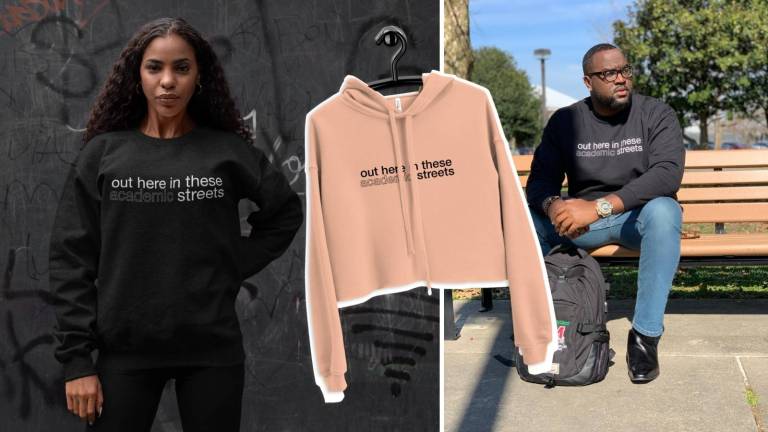
    A black woman with long hair stands in front of a graffiti wall wearing a black crewneck sweatshirt that reads "out here in these academic streets." On the graphic is another photo, of a black man sitting on a park bench wearing a similar black crew neck shirt and jeans. In front of him is a black backpack. Behind him are trees, a streetlight, and blue skies. Superimposed over both images is a cutout image of a dusty pink crop hoodie with the same phrase.

    I also have merch.

    There’s just like so many different kinds of new streams of income that helped me support the podcast so I didn’t have to be the one putting the money into it.

    Jennifer: Oh, that’s amazing. So, you’ve created streams of income that are associated with the content that you create, this podcast. And that helps you support the creation of the podcast.

    Allanté: That’s right.

    Jennifer: If The Scholar Circle, that kind of co-working and accountability sounds great to you, check that out.

    Jennifer: One thing that I love about your Instagram and your online presence is that community feel is really there as well. When you’re talking about how you are picking up some sponsored and campaigns for some influencer type things that makes total sense to me. Because the audience that is already following you, the people that are connected with you, they wanna see more content about grad school.

    They wanna see more of that lifestyle and what you were going through as well. I love that you were a great representative for them and that companies were able to work with you for that kind of thing.

    Allanté: Yeah, thank you. I mean that totally came left field. [Jennifer laughs.] And it’s still so funny nowadays because I realize it is a lucrative option. And recognizing that Blk + In Grad School is also very niche.

    There’s a really interesting balancing act that happens there. It’s been very helpful. It’s like, ‘Okay, now I actually have a substantial amount of money I can support. Now I can get more resources. I can now pay someone to help me with The Scholar Circle.

    So it all goes back into serving the community. I’m grateful for it.

    But I also don’t wanna start spamming the community, right? So there’s like a balance.

    Jennifer: Yeah, right.

    Allanté: Exactly.

    Jennifer: There is a balance. And I’ve never seen anything that looks even remotely like SPAM from your accounts.

    Allanté: Yeah. [Laughs.]

    Jennifer: You’re always so thoughtful with the content that you share. And actually you’re a great example when I’m talking to other grad students about what they might wanna post on Instagram. I often direct them to your account. I say, “There’s all sorts of things you can do. You can help people. You can talk about your own experiences. And this isn’t a great example for you to check out.”

    So I love your Instagram. And oh my gosh, spammy? Definitely not [laughs].

    Allanté: That makes me feel better.

    The form above subscribes you to new posts published on The Social Academic blog.
    Want emails from Jennifer about building your online presence? Subscribe to her email list.
    Looking for the podcast? Subscribe on Spotify.
    Prefer to watch videos? Subscribe on YouTube.

    The form above subscribes you to new posts published on The Social Academic blog.
    Want emails from Jennifer about building your online presence? Subscribe to her email list.
    Looking for the podcast? Subscribe on Spotify.
    Prefer to watch videos? Subscribe on YouTube.

    The Grad School Success Summit

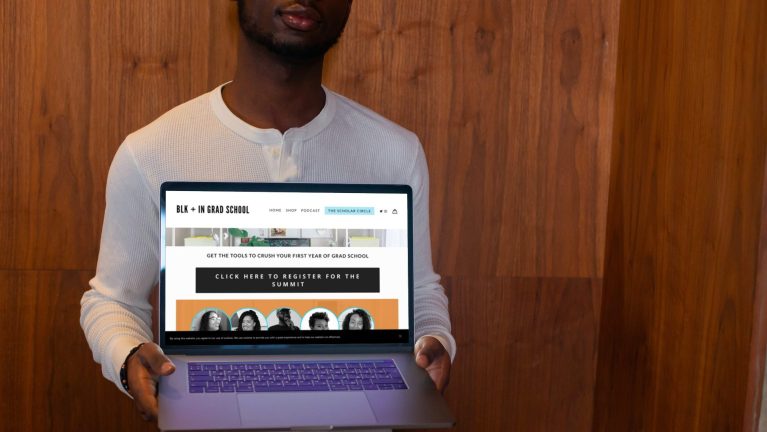
    A black man wearing a long sleeved white Henley shirt holds an open laptop  against his chest presenting the screen toward the camera. On the laptop screen is information about the Grad School Success Summit from the Blk + In Grad School website.

    Allanté: I started that the Grad School Success Summit the 1st year of the podcast. That was the event I used to help attract people to Blk + In Grad School.

    Not just current grad students, but also other folks in the academic content creation space. That’s how I think I first reached out to you, Jennifer, was to be a speaker.

    Jennifer: That’s right. That’s totally right.

    Allanté: Yeah. It was really a way for me to kind of tap into the community of content creators who we are supporting the same community.

    But then also let new people know ‘Hey, there’s this resource available. You know, it might vibe with you.’ If not, I always share a bunch of other resources that might be a better fit.

    This year was the 5th Summit which blows my mind.

    Jennifer: Wow! 5 years. I mean that’s really amazing.

    Allanté: Thank you. It blows my mind. That is definitely the staple event I have every single year. It’s always helpful in building my email list. That’s my main email list building activity for the year. I really enjoy it.

    Those 3 days are intense but really, really fun.

    Jennifer: They’re fun. It sounds like it’s something that helps build your list. That helps more people learn about Blk + In Grad School and The Scholar Circle.

    How does it help the community? What is the Grad School Success Summit? And who should go to it?

    Allanté: I think everyone has the academic skills. I’m really not super concerned with folks having the academic skills. I think if you got into grad school, you’ve got them.

    But it’s the social bit. It’s the financial wellness. It’s the emotional wellness. Physical wellness. Creating a personal brand. Right? Building community. All of those other pieces of the grad school experience that universities don’t feel fully responsible for.

    I feel like we try our best to create an environment where you can get some tips. You can get some information. Some resources and motivation around any of those topics so you’re a more well rounded graduate student. Not just a brain, you know, doing research day in and day out. And doing homework. And doing readings.

    So helping grad students think about what do they want their year to look like? Beyond their academic goals. And how they’re gonna take care of themselves to carry them out is really the impetus behind the Summit.

    Jennifer: I love that.

    Is there somewhere people can watch the replays if they missed this year’s Summit?

    Allanté: So yeah! You can totally watch the replays at GradSchoolSummit.com. That’s for the most recent year, the 2022 Grad School Success Summit.

    If you wanna watch any year before that so 2021-2018, they replays are all available on my YouTube.

    Jennifer: Excellent! Great.

    The form above subscribes you to new posts published on The Social Academic blog.
    Want emails from Jennifer about building your online presence? Subscribe to her email list.
    Looking for the podcast? Subscribe on Spotify.
    Prefer to watch videos? Subscribe on YouTube.

    Leaving academia (and talking about it online)

    Jennifer: Well I’d love to hear what you’re up to now. Congratulations on finishing your PhD.

    Allanté: Thank you.

    Jennifer: I know that you’re in a new job. So I’d love to hear a little about it.

    Allanté: Yeah, absolutely.

    So, I have left academia. That was honestly so stressful to actually admit on the internet. I don’t know why.

    I just feel like there’s this assumption, even my own inner feeling that we’re supposed to go onto a tenure track position.

    I had a really great opportunity at a national energy security organization. We look at transportation policy as it relates to reducing our dependence on oil. I am now the Director of the Autonomous Vehicle Policy Research Center there. 

    Jennifer: Exciting!

    Allanté: It’s really exciting! Yeah! It’s really exciting work. I get to do exactly what I’ve always wanted to do, which is stand between technical folks (so automakers in this particular expertise I’ve built) and policy makers to communicate what’s happening on that side. See what’s happening with policy. To help create policy. And my emphasis on equity informed policies, so how do we make sure that things are good for everybody.

    Jennifer: So that they’re accessible. 

    Allanté: Yeah, yeah. It’s exciting.

    Jennifer: I love that! Now, since you were kind of anxious about talking about it online, what kind of reaction did you get to announcing you were leaving academia?

    Allanté: All resounding ‘Good for you’s [laughs].

    Jennifer: Yay! [Claps.] So if you’re also leaving academia, or thinking about it, it is okay to talk about online. A lot of people are gonna cheer you on.

    Allanté: Yeah, that’s right. That’s right.

    There are some folks who were like, “Oh, I think you would have made a great professor.” And it doesn’t mean that part of my life is absolutely not an option, right? But yeah.

    Mostly we get it. It’s hard out here.

    Finishing grad school after the peak of the pandemic, so the academic job market was something I just wasn’t really in a place to even do at the time. I was like, ‘I just wanna figure things out if I need to. But I’m very [emphasis] happy with my position.

    Jennifer: It sounds like you’re exactly where you wanna be. Right in that place with policy and the automakers themselves.  So that’s so cool.

    The form above subscribes you to new posts published on The Social Academic blog.
    Want emails from Jennifer about building your online presence? Subscribe to her email list.
    Looking for the podcast? Subscribe on Spotify.
    Prefer to watch videos? Subscribe on YouTube.

    TikTok is Allanté’s favorite social media platform

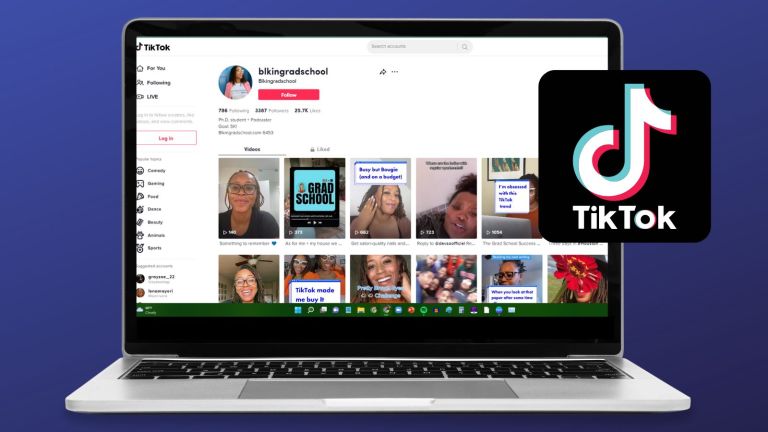
    The BlkInGradSchool TikTok page

    Jennifer: One thing that I wanted to be sure to ask you about is what is your favorite social media platform? You do have a big online presence. You’ve got multiple websites. You’ve got your Instagram, your YouTube. Which is your favorite?

    Allanté: TikTok! [Laughs.] Where I’m not at.

    [Jennifer: laughing loudly] That’s so funny! Why do you like TikTok so much?

    Allanté: I love TikTok. I have a very irreverent sense of humor and I feel like TikTok is full of all of the, like, just wild and kind of wacky stuff. I thoroughly enjoy that.

    Jennifer: It fits your personality.

    Allanté: Yeah, yeah. There’s things on there. I’d create a page…But I enjoy consuming TikTok. I haven’t gotten to where I wanna contribute too much.

    Jennifer: Well you’re a creator in a lot of different areas. You don’t need to create on every platform. Especially the ones you enjoy consuming the most. [Allanté nods her head.]

    That’s really fun to hear about when you have so many social media platforms.

    Keeping her online presence updated

    A desk with an open laptop, small reading light, piles of books and papers.

    Jennifer: How do you manage all of that? Like you have multiple websites. You got the social media. That’s a lot to keep track of.

    I have a pretty good system with the podcast. Right now, the podcast isn’t on YouTube. I only have like the Summit on YouTube. When I first started, I did a couple of webinars. So they’re there.

    My YouTube is pretty tame. That keeps it very manageable for me where I’m only adding 6 new videos a year for those 3 days that we have the Summit.

    Jennifer: Nice.

    Allanté: Now as far as the websites, everything from the podcast goes to the website. Once I create a podcast episode through my podcast provider, I then link everything: the show notes, all of that. I’m pretty much just repurposing all of that written content and putting it into a blog post on the website. That keeps it very easy to maintain and pretty low maintenance.

    Now the social media piece, that’s where probably the bulk of my content creation energy goes. Because you have to create things all the time.

    I more recently took a break because I was writing my dissertation. Honestly, so much life has happened since I finished my PhD. Even like us recording is getting me back into the groove of content creation.

    Jennifer: Right.

    Allanté: What that looked like before was, ‘Okay, I have this episode that’s gonna go out. I only need 2 more pieces of content around the post with the podcast every week. So that’s kind of how I managed it and kept it very low maintenance for me. Like, I can create 2 more pieces of content.

    Jennifer: It sounds like you have a good system.

    Allanté: Yeah, I do. Thanks.

    Jennifer: I like that your system is all based around the podcast. And figuring out what needs to be shared, where it needs to be shared, and when. Right? That’s the multiple posts part. But it sounds like you have a system in place.

    I love that you took a break during your dissertation. And even afterwards. Taking a break from social media is so important, especially for our mental health and well-being. It’s great that you shared that as well.

    Need a break from social media? I have an blog post to help.

    A tip for starting your new content project

    A race track for running, with lanes numbered 1-8 at the start line.

    Jennifer: Now, is there anything else that you’d like to add that you wanna be sure to talk about during this interview? I’m having so much fun.

    Allanté: I know! Me too.

    Only thing I’d say, for anyone who is starting out. The advice I give everyone, and this is what I did when I started the podcast…

    Before you go live, create 5-10 pieces of content.

    Jennifer: Oooh. Why?

    Allanté: 1: you’re practicing the consistency of creating the content and making it a part of your schedule. Even if that means you’re sitting and bashing it. It’s like, ‘Okay, this is how long it takes me to make 5-10 episodes. Or 5-10 videos. 5-10 blog posts, whatever.

    Then you can schedule those anchor pieces of content over those 10 weeks, 5 weeks, what have you. If it’s every other week, now you’ve got 20 weeks worth of content if it’s biweekly that you’re producing content.

    You get to kind of mess up too. Those very 1st episodes, I don’t listen to. Because they’re not great! But, I got to figure out so much with those first few episodes. Then I could reassess and create some direction. And decide if I like it.

    I think all of those bits are really important, 1: with building an audience, and 2: figuring out what works for you and your flow. And making sure you can stay committed to something you said you were going to do.

    Jennifer: You have to like it. Right? It’s a big project. It takes a lot of energy and maybe even some finances if you want to get into it. So liking it is important [laughs].

    And I’m glad you had a topic you were passionate about. And that you put all this energy into. Because you created something amazing.

    The form above subscribes you to new posts published on The Social Academic blog.
    Want emails from Jennifer about building your online presence? Subscribe to her email list.
    Looking for the podcast? Subscribe on Spotify.
    Prefer to watch videos? Subscribe on YouTube.

    A new season of Blk + In Grad School

    Confetti against a light blue background

    Jennifer: What is next for Blk + In Grad School? Will there be a new season?

    Allanté: Yeah! Literally, I recorded an episode yesterday. It’s so exciting. I definitely wanna hit 200 episodes. We’re at 165 right now. So I know the goal right now is okay, hit 200. And then we will reassess again.

    [Allanté and Jennifer laugh.]

    Allanté: But I’m definitely wanting to serve the community. I’m open to what that looks like. I think there might be time for a new voice. There might be time for a different approach. I’m really open to what’s needed from me.

    And also balancing my life post-grad school. Right? My time is different. I actually travel a lot for work. Figuring that out has been really interesting.

    Jennifer: You’ve changed your lifestyle to work with this podcast. And now you’re even maybe changing the podcast to fit with your lifestyle.  And what the community is hoping for in the future.

    Thank you so much for talking with me today. Dr. Allanté Whitmore, this has been a joy! We’ve been internet buddies for a few years now.

    Allanté: Yeah!

    Jennifer: I’ve been involved with the Grad School Success Summit. And so I’m so excited that you came on The Social Academic today.

    Allanté: Oh, so happy to be here, Jennifer! Like literally means the world to me.

    And make sure you link your session from the Summit in the show notes.

    Jennifer: Oh! Good idea. I wouldn’t have even thought of that. But I did talk about social media and how to talk about yourself online in grad school. So I’ll link that below as well. Thanks so much!

    Allanté: Thank you.

    The form above subscribes you to new posts published on The Social Academic blog.
    Want emails from Jennifer about building your online presence? Subscribe to her email list.
    Looking for the podcast? Subscribe on Spotify.
    Prefer to watch videos? Subscribe on YouTube.

    Bio for Dr. Allanté Whitmore

    A graphic with a headshot of Allanté Whitmore, PhD of Blk + In Grad School for her podcast appearance on The Social Academic

    Allanté Whitmore, PhD (@BlkInGradSchool) is a proud Detroit native. She earned her bachelors in biological engineering at North Carolina Agricultural & Technical State University, and her masters’ in biological and agricultural engineering at the University of Illinois at Urbana-Champaign. She earned a joint PhD in Civil Engineering and Engineering and Public Policy from Carnegie Mellon University in 2022.

    Allanté’s research focused on uncovering the environmental and social implications of autonomous vehicle technology. She used computer modeling to test different ways in which shared autonomous vehicles and shuttles might be used in public transit systems, with the aims of improving transit access and equity in public transit systems and reducing the transportation sector’s contribution to emissions. Allanté is now the Director of autonomous vehicle policy research at a transportation policy research organization. She continues to create knowledge to inform future policy on shared mobility that ensures physical and environmentally equitable access to transportation.

    In her free time, Allanté hosts a podcast, Blk + In Grad School where she chronicles her experience getting her PhD, providing encouragement and tools for women and people of color to successfully navigate the graduate-education journey.

    Connect with Allanté on Instagram, Twitter, and TikTok @BlkInGradSchool.

    Find more resources for graduate students on The Social Academic blog.

    Interviews Online Presence How To’s Resources for Grad Students The Social Academic



    Source link

  • What Are Informational Interviews? With Jennifer Polk, PhD

    What Are Informational Interviews? With Jennifer Polk, PhD

    Informational interviews can help your journey from PhD to Life

    Jennifer Polk, PhD has been helping PhDs get clear on their career path since 2013. You may have read her articles on University Affairs, Inside Higher Ed, and The Chronicle of Higher Education. If you’re on #AcademicTwitter, you’ve seen her tweets @FromPhDtoLife.

    Jen is an expert at helping grad students and people with doctorates confidently market themselves for the jobs they actually want.

    What are informational interviews? And, how can they help your transition from academia? It’s all in this interview with career coach, Dr. Jennifer Polk.

    The form above subscribes you to new posts published on The Social Academic blog.

    Want emails from Jennifer about building your online presence? Subscribe to her email list.
    Looking for the podcast? Subscribe on Spotify.
    Prefer to watch videos? Subscribe on YouTube.

    Meet Dr. Jen Polk

    Jennifer: It’s Jennifer van Alstyne. I’m here with Dr. Jennifer Polk. And we’re going to be talking about informational interviews today. You might recognize Jennifer from a live conversation that we had last year about networking.

    Dr. Jennifer Polk, I’m so excited that you’re here to talk with me. Would you mind introducing yourself for everyone?

    Jen: Sure, yeah. Thanks for having me!

    So feel free to call me Jen, everyone. Dr. Polk if you want to be formal, but Jen is perfectly fine.

    The short version is that I help PhDs get clear on their career path so they can confidently market themselves for jobs they actually want. Typically, that means outside of academia. But I’ve worked with everyone, on all the things.

    I have a PhD myself in history. I got that 10 years ago. These days, I’m self-employed. And it’s cool. It’s good work to be able to help people figure out what’s next, and get there. It’s very empowering.

    Jennifer: That’s great! Thanks for sharing that with me.

    Now, I know that it’s really hard to kind of imagine what life might be like outside of the academy for many professors who’ve been in for a long time. But also for graduate students who are going through and really trying to figure out what their next steps are. It’s something that’s affecting everyone, no matter where you are in your academic career.

    There may be a good opportunity for you outside of academia. Jen is someone that can help with that.

    The form above subscribes you to new posts published on The Social Academic blog.

    Want emails from Jennifer about building your online presence? Subscribe to her email list.
    Looking for the podcast? Subscribe on Spotify.
    Prefer to watch videos? Subscribe on YouTube.

    Jennifer: There’s a way that people can learn more about jobs outside of academia, and that’s through informational interviews. That’s kind of a jargon-y word. What is an informational interview?

    Jen: That was a great prompt. Yes, check marks to all of what you said. Totally.

    Informational interviews. If you haven’t heard this term before, it might sound very strange. It’s not very eloquent, right? But just know that it is a super common term. Even if you haven’t come across it before, it’s really common. It’s not just corporate. It’s common everywhere.

    All it means is having a conversation with somebody who works in a job, a field, for an employer, or who has in the past that interests you. The specifics of that conversation depends on what you want to learn.

    This is a learning experience. Sometimes people get the idea that this form of networking–yeah, an informational interview like it is a form of networking–but it’s not really about you. In fact, it is not about you pitching your services or you asking for a job. It’s a learning experience.

    I want to emphasize that it is a community building experience. Do you want to be in community with this person and people like them?That’s a short answer to what [an informational interview] is. Just conversating with somebody else.

    Jennifer: I love that. I think that so many people have a fear or anxiety about informational interviews. Maybe that’s because they don’t know what it is. It sounds like an info interview is a conversation you have with someone to learn more about their job, or their field. And learn more about them to see if they’re someone that you want to stay connected with, or maybe you want to do a job like that. Or, maybe you don’t. And that’s good information too. Thank you so much for clearing up that definition for everyone.

    The form above subscribes you to new posts published on The Social Academic blog.

    Want emails from Jennifer about building your online presence? Subscribe to her email list.
    Looking for the podcast? Subscribe on Spotify.
    Prefer to watch videos? Subscribe on YouTube.

    A small pug dog that looks anxious is wrapped in a blanket on top of a bed.

    Jennifer: What advice do you have for those people who are feeling really anxious, or scared, or nervous about approaching an informational interview?

    Jen: First off, what you described, Jennifer, is really common. If you are feeling that, welcome. You’re in really excellent company. I’ve been there, and so many of my clients, and the PhDs that interact with grad students, PhDs, all of the above have experienced that. It’s totally normal, common.

    Those feelings can be what prevent folks from taking the leap into doing informational interviews. You’re in really good company there.

    I’m not answering a question directly, but I will say that once folks start doing informational interviews, it’s like a light goes off. Everything changes. It’s really incredible. I think there’s so many different reasons for that. But I really encourage you to do it. Just take one step at a time. This is not the only way to do it. This is not like the way that is necessarily going to be right for you. But for example, it could be that you decide to do one informational interview with a person that you already know and trust.

    Jennifer: Oooh.

    Jen: Maybe they’re from your personal life, or family, or you worked with them years ago. So you don’t sort of already know everything about them in terms of their career, and their job, but you know there’s some level of comfort and trust. You say, “Okay.” Maybe you send them a text, or an email, Facebook message, whatever it is:

    “Hey, can we have a chat about your job? Because I’m thinking about what I want to do next, and I’m confused about what some options are. You work as a project manager. That’s something that intrigues me. Can we just have a convo so I can learn more about that?”

    This is relatively low stakes. That first step is important. Then you take another step after that. Right? This doesn’t have to be this big overwhelming kind of campaign that you go on. Just do it once. Send that one email, send that one message. That’s the first step.

    Jennifer: So just sending that first message, and maybe reaching out to someone who you already know, who you’re already familiar with. That can be a really good idea for people who are feeling uncomfortable, or nervous, or anxious about that process. I love that idea, and I think that that would make it so much less anxiety provoking for me. Like, “Oh, you know, I do have people that I could reach out to about that kind of thing. I can have a conversation with that friend that I haven’t talked to in a few years.” I’m sure they wouldn’t be upset to hear about it. If they don’t have time, that’s okay! But I can reach out. That’s pretty low stakes for me, so I really like that.

    The form above subscribes you to new posts published on The Social Academic blog.
    Want emails from Jennifer about building your online presence? Subscribe to her email list.
    Looking for the podcast? Subscribe on Spotify.
    Prefer to watch videos? Subscribe on YouTube.

    A close up of someone's brown leather shoes and tan slacks as they get ready to step down a stair.

    Jennifer: When people are reaching out for the first time, is there something that holds them back from actually reaching out? Is there something that’s like preventing them from doing that step?

    Jen: Yeah, to generalize, I think that folks can get in their heads. Shocking, right? Of course [sarcastically]. And they worry about things that are just way too many steps in the future.

    I always like to remind myself, and you know sometimes others is appropriate: that is a later problem. So, first off, don’t get in your head too much.

    I think what you said, that if they don’t respond, if they don’t have time, that’s not personal. That’s also a really important reminder. You can send the email. Whether they respond or not is not necessarily about you. Maybe they never checked LinkedIn. Maybe their parent just died. Maybe they don’t have any child care in a pandemic. You don’t know what’s going on, right?

    Jennifer: Yeah.

    Jen: You know, decide not to take it personally. I will say that when you send that first message, your job is not done until you’ve sent the follow-up. I think that’s really, really important advice.

    My inbox is a mess, always. You know, direct messages [DMs] on Twitter or LinkedIn, there’s no kind of way to like Mark As Read, or file it into different folders. These things are just messy by nature. Not everyone is really skilled at managing their inbox. So, your job is not done until you’ve followed up. If you need to.

    Jennifer: That is such great advice. You know, I did this kind of workshop at the beginning of the pandemic that was all about How to Stay Connected During Social Distancing. During that workshop I taught people that you have to assume that people are busy, or that they’re too swamped with things in their own life to hear you the first time.

    That follow-up is not just a courtesy for them, but for yourself, because you do want to be heard. Right? Otherwise, you probably wouldn’t have reached out in the first place. Sending that follow-up is a good thing to do for yourself as well as the people who are around you.

    And assuming that people might not have time, or that their schedules might change, is going to set you up for not being disappointed. Just expect something to come up. And then if it does, you can be flexible with it. This is kind of a low stakes thing for you. You’re reaching out, and it’s okay if they’re too busy on the other end. Most of the time, they’ll tell you if they have the capacity to do so.

    Dr. Jennifer Polk, photo by Nadalie Bardowell
    Jen Polk, photo by Nadalie Bardowell

    Jennifer: One thing that I want to be sure to ask about is can an informational interview help you get a job? Does that get me a job if I do those? What is the correlation between informational interviews and careers?

    Jen: That’s a great question. So how are these two things connected? I already said don’t think of an informational interview as a way for you to ask for a job or pitch yourself to an employer. But it does happen.

    The outcome of informational interviews are unknown at the outset. And I have heard the stories. These are true stories that sometimes happen to folks where they do an informational interview and all of a sudden the person that they’re interviewing says

    • “Hey, you wanna join the team?”
    • “There’s an open position I think you’d be great for.”
    • “Hold up, something is coming through. I’ll message you when that happens.”

    This absolutely does happen. That can happen in your first informational interview, or your 150th. Purposefully, that’s a big number, I know. So, it definitely does happen.

    I would say you can be open to that. But that is probably not gonna happen to you. Especially, I would say, if you’re switching sectors potentially.

    Jennifer: Okay.

    Jen: That doesn’t mean there’s no connection. Learning really is important. Learning is important for you so that you

    • Can make better decisions about what you want
    • Have more of the information about what this job title is all about
    • What is this job ad actually mean when it’s translated through an actual person who’s doing it

    Is this employer actually toxic? Based on the job ad, you’re not sure, you know. The learning piece is really important for you to make good decisions.

    The learning piece also helps you craft stronger application materials because you get a sense from communicating interacting with that person more about

    • What that employer cares about
    • What that field is actually really about
    • What kind of stories they find compelling

    You can write better cover letters, you can write better resumes, and application materials. These are kind of indirect connections.

    A lot of the time when folks are thinking surface level, they will think, “Well, my informational interviews did not lead to a job.”

    Yes, they didn’t lead to a job directly. But then when you asked, what was the value of informational interviews?

    • “Oh, well I learned that there was a whole field I never heard about.”
    • “This new company that you know was doing exactly what I wanted.”
    • “There was this this job title that I thought was totally something different, but actually was exactly what I was looking for.”

    Et cetera, et cetera, et cetera. So indirect, very important.

    They are very self-affirming for a lot of people. They boost the confidence of people doing informational interviews. I’m not promising that, but that really is often an outcome, an unanticipated bonus. It is confidence boosting for a lot of people. It is affirming to have somebody give you some of their time, to give you advice. That is a gift, right? It’s a nice thing that they respect you. They take you seriously. They want to help you. That’s nice.

    Am I making sense? Like it’s good. And that helps your job search.

    Jennifer: Oh, yeah. I think that that confidence thing is something.

    If you’re one of those people who’s nervous or anxious about it, and you know that not only doing this can help you

    • With your career
    • Make better decisions
    • Network
    • Meet more people
    • Boost your confidence by practicing more and reaching out to more people that you admire

    I mean that, that’s great. That is some incentive to actually try an informational interview if you’ve maybe been on the fence. So, I love that.

    Jen: Yeah, now you’ve got this new person kind of on your team.

    Jennifer: I love that idea, having someone on your team was kind of true. The more I learn about someone, the more I want to root for them. The more I want to cheer them on. If I’m gonna sit there and talk with someone for half an hour in a way that’s helping them, I’m also feeling like I have a little bit of a stake in their outcome. Like I want them to do well.

    If you’re feeling that anxiety, remember that that’s someone who’s trying to help you, who kind of wants to be on your team. You can let them by reaching out. I love that.

    The form above subscribes you to new posts published on The Social Academic blog.
    Want emails from Jennifer about building your online presence? Subscribe to her email list.
    Looking for the podcast? Subscribe on Spotify.
    Prefer to watch videos? Subscribe on YouTube.

    A woman in a light pink dress and gold necklace sits at a round white table talking with a black woman in a blue shirt.

    Jennifer: How do you find people to do informational interviews with? How can people get started? I know you said that you can reach out to a friend or a family member, but what about people you don’t know? 

    Jen: Yeah, all of the above. Really everywhere. Some examples are in-person conferences. These as someone put it to me on Twitter today, “organic conversations.” So, after the panel, in the hallway. Right, totally cool.

    So from your professional life:

    • People that you’ve worked with in the past
    • Other professors in your department
    • Other grad students that you know have already graduated and gone off to work in industry
    • Anybody that you’ve interacted with professionally over the years is fair game
    • Social media.

    LinkedIn is kind of an obvious one. It’s a great one. These people can be total strangers, but I think it’s really helpful in terms of actually making the connection, and by that I mean like actually having the conversation, and not just sending the message. It’s helpful if there is some sort of connection already there (i.e. you have a person in common, you went to the same undergraduate institution).

    Twitter. People you follow, people that follow you back, are you communicating in the same thread? All of the above really matters.

    You can also just find people randomly online. Somebody was

    • On a YouTube channel
    • Participated in a podcast
    • Wrote a blog post that you admire

    I did that for one of the folks I did an informational interview with 10 years ago: a woman who wrote a blog post about AltAc career transitions. I looked her up. She was in Toronto. I’m in Toronto. She had an English PhD. I’m a history PhD. I was like well, there’s some connections there. So, I sent her an email. And not so far into the future we met in person.

    Jennifer: I love that!

    A raised computer monitor and raised laptop, turned off, on a desk with a brown leather mousepad/pen-holder and an open notebook with a pen. Behind the raised laptop on the windowsill are small succulents in tiny wood pots.

    Jennifer: I have a question. You said something a while back zero, to your first interview, to like 150 interviews. How many info interviews have you done?

    Jen: Oh, boy. I don’t know.

    Jennifer: [Laughs.] It’s a big number.

    Jen: Well, I probably haven’t done that many. And, not all of the conversations I’ve had that are informational interview-like were seen in that light at the time, if that makes sense.

    Jennifer: Even though it was doing the actions of informational interviews, it wasn’t necessarily considered an informational interview at the time.

    Jen: Yeah. Informational interview is a form of networking, but it’s a form of networking where you as the person doing the interviewing–doesn’t always happen this way in reality–but all you need to do is prepare a list of questions and ask.

    In that way, there is less kind of back and forth versus ‘networking more proper,’ if I can make that distinction, which is really meant to be a real true back and forth where both parties are sharing.

    I am not suggesting that in an informational interview situation you’re not being helpful, and there’s no back and forth. Just, if you’re feeling nervous about it, remember all you need to do is go in as a researcher with a list of questions. I say that to hopefully take the pressure off.

    So why did I say 150?

    Jennifer: Yeah.

    Jen: There was a reason I picked that number. A client that I had last year, over the summer and fall, now it’s the summer again, so about a year ago. She did 150 informational interviews. She told me this subsequently. And that was a choice that she made. You know, there’s reasons why that suited her personality, why that suited her job search, we could talk more about that. The opportunities that she pursued came directly out of that and not out of her applying to jobs. So the jobs that she ended up getting, she took a couple of part-time contracts with startups and small organizations…

    Jennifer: Wow.

    Jen: Those came directly out of informational interviews. And never did she apply formally for a position.

    Jennifer: That’s amazing.

    Jen: Now, that is one example. There are many, many examples. But that is one true real life example.

    Jennifer: Oh, that’s great. 150 interviews helped that particular person because it matched their personality to do a lot of them. And it helped them find the career path that they were interested in. So that’s very cool.

    What if you’re like, “Oh my god, 150 is nowhere near what I’m capable of. I can do like five informational interviews?”

    Jen: Yeah, I think five is a great number.

    Let me talk about my process when I advise PhDs on the job search. And when I say PhDs I mean people that have a PhD, people that don’t have a PhD but sort of you know relate, grad students, all of the above.

    The process that I would recommend is first to kind of get right in your mind about what is going on. So I call that Prep.

    And then you go into Focus. And this Focus section is you want to focus on yourself. That’s basically self-reflection, right? What do you want? What do you need? What do you have already?

    Then, the third step is Identify. Identify some possibilities. That’s when you do research. A big part of that research is probably going to be informational interviews. But that’s not the only type of research you’re doing.

    If you have limited capacity for informational interviews, at least right now, you can really emphasize the other types of research. But you’re going to do it strategically. You’re going to get your mind right. You’re going to focus on yourself.

    And then you’re gonna say, okay, based on what I’ve learned about myself, what are the types of jobs that I want to do some research on by reading

    • Job ads
    • Company websites
    • Blogs
    • Listening to podcasts

    To learn more about whether these things would align with what I know about myself.

    Jennifer: Right.

    Jen: Then you’d be very selective, “Okay, so it seems like project management is a role that is really going to suit me. Or, instructional designer.” Let’s say, “Those are the two that I’m really thinking. I haven’t really talked to anybody yet about them.”

    Then, “Okay, let me go and talk to five people. Maybe three for one, and two for the other. And see you know, if I’m on the right track.” And maybe you are. Maybe you’re not, right? Maybe you need to pivot a bit. Maybe you decide, “Well, it’s not instructional designer. It’s more educational developer I’m going for, which is slightly different.”

    Maybe at that point you decide you want to do more informational interviews. But the first five were really helpful in narrowing and pivoting. Does that make sense?

    Jennifer: That makes so much sense. I absolutely love that. It sounds like having that process, having that kind of approach really helps people who are going through this.

    The form above subscribes you to new posts published on The Social Academic blog.
    Want emails from Jennifer about building your online presence? Subscribe to her email list.
    Looking for the podcast? Subscribe on Spotify.
    Prefer to watch videos? Subscribe on YouTube.

    Jen Polk's PhD Career Clarity Program sign up page on a laptop screen. The laptop is on a small black table next to a stemless wineglass filled with water. In the background is a potted plant and in a couch.

    Jennifer: Can you tell me a little bit more about your program? I’m sure people who are listening want to hear about it because it might be right for them.

    Jen: Yeah, thanks for asking. Let me finish the steps here. So yeah: Prep, Focus, Identify. Right? That’s where you really want to narrow down like, “Okay, this is what I’m going for.” So  this person has decided on educational developer, right?

    Then step four is Market. I use that term purposefully: Market to employers. That’s when you want to write your resume and worry about your LinkedIn profile, or not, depending on your job search.

    Jennifer: I bet some people are really surprised right now. They’re like, “I thought I needed my resume first.”

    Jen: No.

    Jennifer: People, you really need this program because this is telling you that you might be putting your energy into the wrong places at the wrong time. Oh, I love that, Jen.

    Jen: Yeah, exactly. Thank you for saying that. So, do those things last, folks.

    Jennifer: Wow, yeah.

    Jen: Don’t skip the earlier stuff. That’s what I found. That’s why I built it this way.

    So what is my program? So I have a PhD Career Clarity program. This is a paid program. It’s 12 months access. That doesn’t mean that it takes 12 months, but you’ve got 12 months because you know everyone’s life is different. And job searches can take time depending on you.

    It’s basically an online course, self-paced. You go at the pace you want. It’ll take you through all of those four steps from “I don’t know if I even I’m ready to job search or want to,” all the way to interviewing for positions.

    But let me say, if you’re thinking about it, or you’re not even yet thinking about it but you’re curious, I do have a free training for PhDs.

    Jennifer: If you’re even thinking that you know a program like that might be helpful for you, want to get that group coaching in then be sure to sign up because that free workshop is going to give you more information about it. And it’s going to tell you some of those myths that might be holding you back from really getting clarity on your career, what you want to do next.

    This is your life, right? This is important. It’s a big decision to figure out what kind of path you want to go down. This is a great program that can help you get there. I can vouch for that because my fiancé needed this program to help and figure out his next steps. He’s been in it for months now, and found it really helpful.

    So I encourage you to sign up for that free workshop.

    Paper cutouts of speech bubbles with question makrs on them

    Jennifer: What’s a really good informational interview question that I should add to that list?

    Jen: Kind of taking a step back from your question: what to ask you can Google the stuff and get lots of different lists. There’s value in that. Take a quick scan of what people say.

    But ultimately, you want to go through: what do you actually want to learn from this person? What do you want to learn from them right now? Really do that introspection to decide what is most important.

    Why do I say that? I had a client a couple of years back. He came to me and had already done a bunch of informational interviews, probably a dozen or two of them. And it just wasn’t working. 

    I was surprised, but it turned out, and this was his insight, that he’d done informational interviews because that was a task that had been suggested to him as a thing that he needed to do. So he went out and did it, but he never actually really cared about the people and the career paths that he was learning about.

    He didn’t care, right? So it was really just a road exercise for him. Aha, okay. Once he determined, “Well actually, I really am interested in this. And this person is really cool because…” That like additional energy and interest, then the informational interviews just were totally mind expanding.

    What is a good question to ask in informational interviews? It really is going to depend, classic academic answer, on what you really want to know.

    Sometimes folks, I think there’s a real skill in asking questions. You might not be as skilled at it yet as you can become to be.

    One tip is that sometimes you might think, “Well, I’ll just ask this person what their salary is.” But you’re like, that’s kind of inappropriate, but I want to know what I can expect to make. Aha, well then that’s the question you want to ask.

    Instead of asking the person how much money do you make? Or, how much money did you make when you first entered this field? Which is the first question a lot of folks think to ask, what do you actually want to know:

    • How much money could I expect to make?
    • What is a reasonable range for somebody with my background in experience pivoting into this role?

    Jennifer: That is a great question. Making it about yourself really helps take that kind of pressure off someone to talk about their own salary.

    Jen: Exactly.

    Jennifer: They may open up about it anyway. They may be totally fine talking about financial things. But putting the onus on you, making it about yourself, seems so much nicer. I like that. I’d feel much more comfortable with that.

    Jen: A similar piece of advice to that is sometimes you think, well let me ask this person about something specific to them. Or, specific to their team, or employer. When actually what you really want to know is the trends in that sector or field in general. Does that make sense?

    Jennifer: It does.

    Jen: Right. I mean maybe you do want to know about that company specifically, but typically you probably don’t.

    • So instead of: What are the parental leave provisions on your team?
    • What you really want to know is: What are the parental leave trends that you’re seeing in this industry in general?

    Jen: Oh that is some next level thinking. My fiancé has been doing informational interviews and learning from all these people. He’s definitely getting some great insights. But thinking about the trends, thinking about how it’s affecting more than just the individual, is a bigger approach. Wow.

    We’re all researchers, right? We’ve all done that in our work. But researching your field, researching what you want to do next, is not something that people are always thinking about putting energy into. But it can really pay off. I just love that informational interviews can really help people experience some of that excitement, be warned about some toxic workplaces, I mean get the information that they need to actually make decisions for themselves. So that’s my favorite thing about it.

    The form above subscribes you to new posts published on The Social Academic blog.

    Want emails from Jennifer about building your online presence? Subscribe to her email list.
    Looking for the podcast? Subscribe on Spotify.
    Prefer to watch videos? Subscribe on YouTube.

    Dr. Jennifer Polk

    Jennifer: Is there anything else you’d like to add about informational interviews before we wrap up?

    Jen: Let me repeat something I said earlier. That this is a real sticking point for a lot of folks. That they get stuck. And even folks in my program.

    In the program, it’s a self-paced online course, but I’ve got regular live small group meetings over Zoom. Sometimes folks come and I ask, have you done informational interviews yet? It’s like, “No, not yet. I’ve skipped ahead.” It’s like, “Thank you. Well let’s talk about that.” Right? Don’t skip this stage. There’s different approaches, different strategies for every specific person, of course. And we can talk about that.

    I think: Just do it. You can talk about why and how, et cetera. But ultimately, just do some.

    Join the PhD Career Clarity Program with the bonus ‘Sample Emails for PhD Jobseekers’.

    Jennifer: Yeah! And if you do it, you can build some confidence. You can do some networking. You can really get comfortable talking about yourself, and asking people questions. You can get better at asking questions. There sounds like so many benefits, it’s kind of like well you definitely should be doing this. But also you’re gonna benefit from it too.

    Thank you so much for talking with me today about all of this. Everyone who’s listening, be sure to sign up for that free workshop from Jen. You don’t want to miss that.

    Jen, how can people get in touch with you?

    Jen: Yeah, awesome.

    So, I spent way too much time on Twitter. If you’re on Twitter, I’m there. My handle is @FromPhDToLife.

    That’s also my website FromPhDToLife.com.

    You can find me on LinkedIn at Jennifer Polk, PhD. I’m happy to get messages there.

    I’ve also got a Facebook page From PhD to Life.

    And you can email me [email protected]. I’m happy to get your messages. And follow up if I ignore you.

    Jennifer: That’s right, follow up! Be sure to follow up.

    Well thank you so much for listening to this interview. Be sure to like this interview. And subscribe to The Social Academic so you don’t miss the next one. Jen, thank you so much for joining me!

    Jen: Yeah, you’re welcome. It’s always fun to chat. I’ll be back in a year or two, right? No pressure!

    Jennifer: That’s right! [Laughs.]

    The form above subscribes you to new posts published on The Social Academic blog.
    Want emails from Jennifer about building your online presence? Subscribe to her email list.
    Looking for the podcast? Subscribe on Spotify.
    Prefer to watch videos? Subscribe on YouTube.

    Bio for Jen Polk, PhD

    Jennifer Polk of From PhD to Life on The Social Academic
    Jennifer Polk, PhD, is a career coach and educator. She regularly facilitates professional development workshops and delivers presentations for students and postdocs. Her University Affairs blog was a three-time gold winner from the Canadian Online Publishing Awards. Jen’s essays have also appeared in Inside Higher Ed, the Chronicle of Higher Education, the Globe and Mail, Academic Matters, as well as in three books.

    More recently, she was an expert panelist for the 2021 Canadian Council of Academies report, Degrees of Success, on the challenges PhDs face transitioning to employment. In addition, Jen currently serves on the board of directors for CAGS, the Canadian Association for Graduate Studies. She earned her PhD in history from the University of Toronto. Find Jen online at From PhD to Life.

    Check out her free job search training for PhDs thinking about leaving academia.

    Interviews The Social Academic


    Source link

  • Racism in Education in New Jersey with Walter D. Greason, PhD

    Racism in Education in New Jersey with Walter D. Greason, PhD

    Professor Walter Greason is back with a new in-depth interview

    We’re talking about racism in education. This conversation dives into the history of racism in New Jersey. Topics that come up include the January 6th insurrection, the Supreme Court, and how things are affected today.

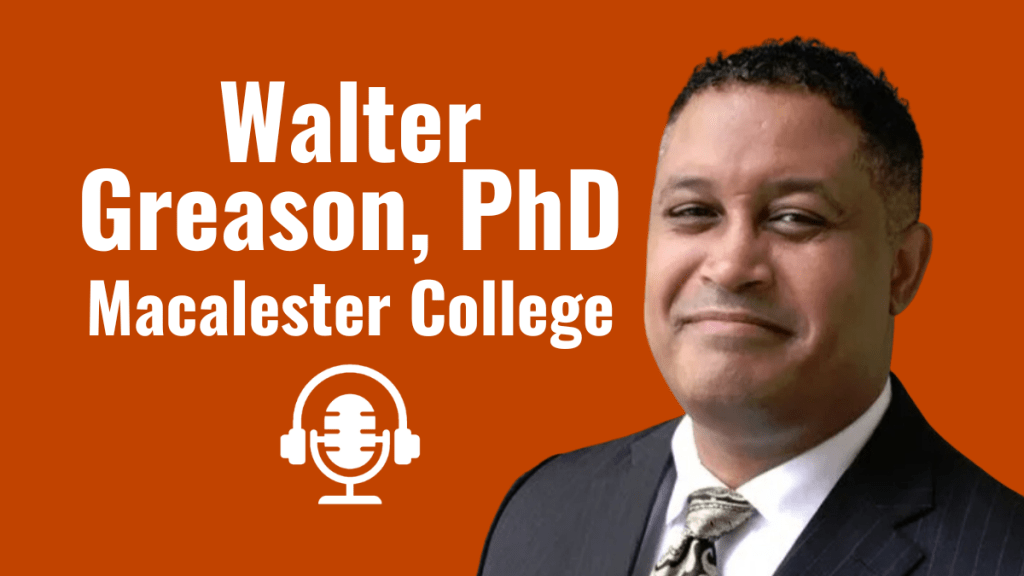
    Walter D. Greason, PhD is Professor and Chair of the History Department at Macalester College in Saint Paul, Minnesota. He is author of 6 books including Industrial Segregation (2018) and Cities Imagined: The African Diaspora in Media and History (2018). His digital humanities projects, The Wakanda Syllabus and The Racial Violence Syllabus reached millions of people, and was translated into 7 languages.

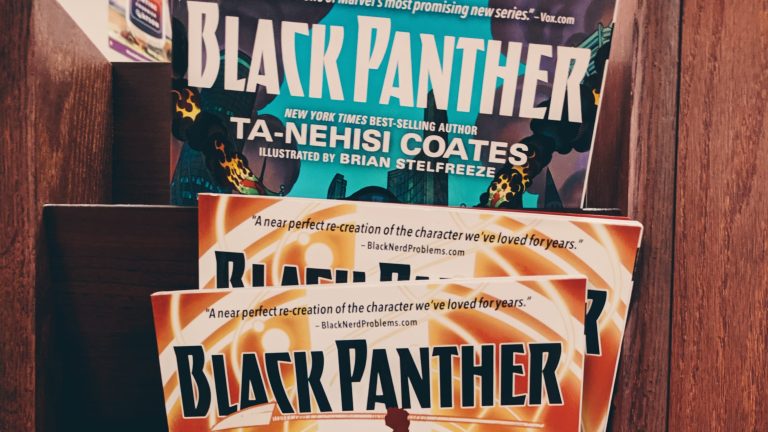
    P.S. Black Panther fans, this interview has some exciting tidbits about the upcoming Wakanda Forever movie! Don’t miss it.

    The form above subscribes you to new posts published on The Social Academic blog.
    Want emails from Jennifer about building your online presence? Subscribe to her email list.
    Looking for the podcast? Subscribe on Spotify.
    Prefer to watch videos? Subscribe on YouTube.

    Meet Walter

    Jennifer: Hi, everyone. This is Jennifer Van Alstyne on The Social Academic.

    Today, I’m talking with Dr. Walter Greason, who has joined us before. He’s back to talk about racism and education in New Jersey. Professor Greason, would you please introduce yourself?

    Walter: Thank you so much, Jennifer. It’s an honor to be here.

    Again, Walter Greason. I am a former Dean, Department Chair, 1st African American serving those roles at Monmouth University in New Jersey where we met. And so this is just a tremendous joy for me. [Jennifer graduated from Monmouth U with a BA in English in 2013.]

    I’m currently a full Professor and Chair of the History Department at Macalester College in Minnesota. Which is kind of like being in charge of the Honor School [at Monmouth], but the entire campus is the honor school. So it’s been really amazing so far.

    Jennifer: Oh, I love that.

    It’s a reflection of the change in national politics

    Jennifer: Now, today you reached out because you specifically wanted to talk about racism in education in New Jersey. And I know you’re in a new place right now, but this is a topic that you spent your career researching. That you’ve written about in Suburban Erasure: How the Suburbs Ended the Civil Rights Movement in New Jersey (2012).

    I’m curious, why is this topic so important to you?

    Walter: Right now it’s a reflection of the change in the national politics. That New Jersey is extraordinary place. A brilliant governor, outstanding state legislature, many of my friends currently doing amazing work to make New Jersey an even better place to live.

    However in parts and pockets of the state, there are people who are extraordinarily dangerous. And I’ve seen reports in multiple news outlets about the funders in New Jersey who made things like the January 6th insurrection possible. Who throughout the last five or six years have done everything they could to sabotage the society from being an inclusive and free place.

    And so now after this January 6th hearings, people are becoming more aware that there is a dangerous white nationalist threat in the United States.

    But I still find that folks are underestimating it. And they’re missing the danger, particularly within our school systems.

    Jennifer: Ooh. Okay. So people are already missing some of the danger that is out there and that’s because they’re not aware of it, it sounds like.

    So, why is this conversation going to help them? Right? Most of the people who are listening to this are going to be professors, people who are doing research. People who are in the process of deciding what their research subject is if they’re in graduate school.

    So what kind of message can we share with them that will help them understand why this is important to them?

    Walter: So for folks who are going into Higher Education or really Education at any phase of their career, to understand the way the institutions operate. To understand the ways that bias still prevails in hiring, promotion, retention decisions. This is tremendously significant.

    And that piece of the institutional, the governance of the school systems, of our institutions of Higher Ed. The barrier that I’ve seen most commonly, not just at Monmouth, but at many institutions is that there are committed leaders at the top of the institution. There are committed leaders at the grassroots, at the teacher’s levels, where they’re doing face to face work with students and families.

    But often in the intermediate tiers: assistant principals, principals, assistant and associate superintendents, people who operationalize a lot of strategic vision…There’s enormous hostility against commitments to equity. And so it’s this middle level of administrative leadership that slows down and derails so much of the work. And frankly, underwrites and expands the ways that people can come and attack school boards.

    Or, the ways that they can go out on social media and build white nationalist networks where they’re attacking parents, where they’re attacking families, where they’re attacking teachers who are attempting to make schools more equitable for everyone.

    And so that’s the danger I live with every day. That’s the danger I see hour-by-hour creeping in multiple contexts. And, again, not even just in New Jersey, I mean, places like Ohio. I was just down in Alabama. There are so many places where the organized institutional commitment to injustice is winning.

    And until we actually take stands together as faculty and really organize just as rigorously, we will lose these battles to try and make better school systems, better institutions for young people and for families everywhere.

    Jennifer: Oh, thank you for sharing that with me.

    The form above subscribes you to new posts published on The Social Academic blog.

    Want emails from Jennifer about building your online presence? Subscribe to her email list.
    Looking for the podcast? Subscribe on Spotify.
    Prefer to watch videos? Subscribe on YouTube.

    A brief history of racism in New Jersey

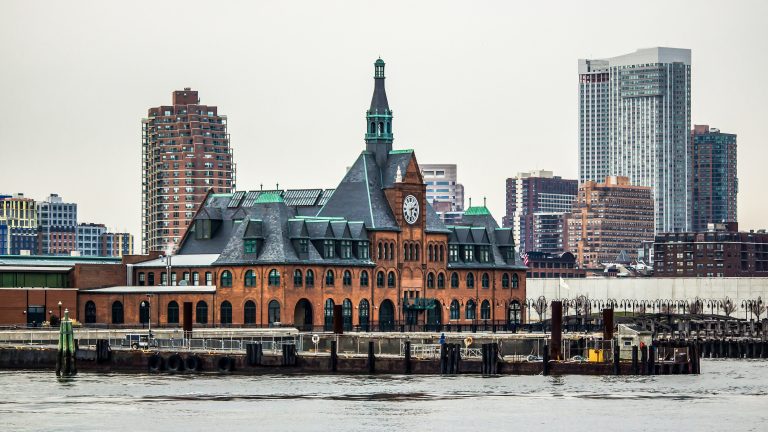
    The Central Railroad of New Jersey Terminal in Jersey City from across the water. A few highrises and apartment buildings stand behind it. The Terminal building is red brick with a high arched roof and clocktower. Photo by Gautam Krishnan.

    Jennifer: Now, actually I wanted to talk with you about this specifically because last year in a conversation with Dr. Nicole Pulliam and Nikole Hannah-Jones at Monmouth University, they talked about how “NJ towns often resist real education integration.” And that’s something that you also discuss in your book, Suburban Erasure.

    Can you tell me more about the history of racism in New Jersey?

    Walter: Absolutely. And, I mean, this is something that has a lot of data behind it [laugh]. But New Jersey history as a field really tended to focus on either the American Revolution or the Civil War, or to a lesser extent, World War II. There is very little attention to the social history of New Jersey. And so I’m very proud that the work I’ve done for the last 15, 20 years has changed that.

    There’s a lot of attention now to history of immigrants, histories of black people, histories of lesbian, gay, transgender populations. That the openness to learn about different perspectives in our past has really grown. So that’s one of the pieces of my career I’m most proud of.

    And you mentioned something that at Monmouth University there’s so many good things that I was lucky to be a part of. But the founding of the Social Justice Academy over the last two years…writing the proposal, winning the grant, getting the funding to be able to bring people like Nikole Hannah-Jones, hiring Nicole Pulliam as the Program Director for the Academy. These are things that are at the absolute top shelf of my life. I’m so proud of everything that goes on with the Academy.

    That is pointing to the kinds of barriers that continue to exist.

    And I think #1, people don’t understand how segregation persisted in the North after the Civil War.  That they tend to even see slavery as a Southern phenomenon. They see Jim Crow segregation as a Southern phenomenon. And that’s not the case at all.

    That segregation dominated the North through the 1800s while slavery was thriving. And it ultimately became the template by which the South said, ‘Oh, we can do what the North does and just keep everyone separate from each other.’ And so that in entrenched segregation, particularly with the Plessy v. Ferguson decision in 1896.

    And even when you saw Brown challenge that and say, no, “with all deliberate speed,” we must desegregate [Brown v. Board of Education].

    The movement was called [Massive Resistance], basically a white nationalist movement led by the White Citizens’ Council to resist nonviolently and politically any attempt to integrate schools or public institutions. And so this effort goes on for 60 Years. Like you go into the Obama administration and there are still people fighting to keep segregation and expand segregation.

    It reshapes the Supreme Court.

    It basically makes it possible in places like New Jersey that the worst feature that could be possible: all of the organizations that were dedicated to civil rights, and integration, and equal opportunity were dismantled after Brown [v. Board of Education].

    So places that we look at old ironsides is the Bordentown Manual Training Institute, was serving African American and immigrant communities to get people trained to succeed in a modern economy–We closed it in 1956 and said, ‘No, this is no longer going to be a part of what we do in our state.’

    We fired thousands of black and immigrant professionals and said, “No, they will have to learn to comply within white institutions that had created all the problems to begin with.’

    So when we talk about desegregation and integration, we have a really poor grasp of how we dismantle the institutions that made the chance for integration possible.

    And then we preserved all the institutions that had maintained segregation.

    And then we’re surprised 50, 60 years later that so little has changed. It’s that we didn’t embrace the kinds of organizations and institutions that would have led to more equity and more inclusion.

    And that meant firing lots of really qualified even overqualified people within the educational system, especially, that could have made a much stronger society overall.

    Jennifer: Wow. That is very new to me. All of this information is something I may have heard you talk about before, but hearing it all together…hearing it all at once makes me see how important this was. And how lacking my own education in history in America was.

    The form above subscribes you to new posts published on The Social Academic blog.
    Want emails from Jennifer about building your online presence? Subscribe to her email list.
    Looking for the podcast? Subscribe on Spotify.
    Prefer to watch videos? Subscribe on YouTube.

    Education in New Jersey today, an apartheid system

    A black elementary school boy and girl sit at a table working. The boy is wearing a red sleeveless Miami Heat shirt and holding a pencil. They are both concentrating. Photo by Santi Vedri.

    Jennifer: Now, how does this affect education in New Jersey today?

    Walter: So in 2013 and 2016, Rutgers and UCLA issued new reports that talked about how they had created in a apartheid system. That the state of New Jersey had created an apartheid education system where schools that were majority white or Asian had very few less than 5% black or Latino populations. And in a similar way, schools that were a majority black or Latino had less than 5% whiter Asian populations.

    And so we had these parallel tracks within the state where municipalities essentially partnered with the real estate industry to decide where there would be high quality education. And where there would be an education that really did not prepare students to be competitive for college and for future careers.

    And so that track, when that report comes out, it shocks everyone. But for anyone who had studied the way that these institutions evolved over the previous 40 years, the only inevitable outcome was that you were gonna have disparate educational gaps

    Jennifer: Right.

    Walter: And as a result, lifelong employment gaps, lifelong healthcare gaps, lifelong wealth gaps, and we’re not providing fair and equal opportunity to achieve and succeed in life to people of different backgrounds based on their race.

    And then, when it’s not based on their race, it’s based on their zip code. Which is even more pernicious because we allow that within the market system to say that some people should get less opportunities than others based on their income, based on their education. But it’s all deeply tied to these structures about race and ethnicity.

    Jennifer: Tell me more about that in terms of zip code, and real estate, and education. That seems much more closely tied together than people often expect. How does real estate and where people live affect education?

    Walter: So a state like New Jersey, and many Northern and Midwestern states, education is tied to human municipality.

    This is very different than places in the far West or in the South where it’s often state funded. Here in Minnesota, all counties received the same funding for education. And so, there’s remarkably high quality. And there’s still disparities, but nowhere near as extreme as what we see in a place like New Jersey, or Connecticut, or Delaware, or Virginia. These places really struggle trying to actually serve the people who have the greatest need.

    And there’s a reward structure for that. There are businesses that make more money because they target very affluent particular towns, or sections of counties.

    Yeah, just in Monmouth [County], around where we met, you can look at Rumson, and Deal, and Fairhaven and you see these extraordinary school systems. How do you even say a place like Middletown, doing really well

    But if you go down the street to Asbury Park, if you go into parts of Red Bank, if you certainly go into the Freehold Regional System and look at what happens to Freehold borough…There are just places where people turn against majority Black and Latino populations and are angry when they get quality opportunities.

    And so my students did a lot of research on this, going back into the early 2000s, where they were interviewing folks who were going out to find homes, to find apartments and talking to real estate professionals. And they’re steering folks to different communities based on their appearance. And this is a common practice.

    The National Association of Realtors had to apologize just two or three years ago for ongoing systemic discriminatory practices.

    And so opening the door for people to understand–And thankfully I am working with Governor Murphy on this problem–how do we actually commit to open up doors of opportunity for all people and then break down the systems of financial incentives for skilled professionals to kind of maintain segregation and inequality. Those are the things that I’m looking forward to the 2nd half of this year and into next year. We have the ability to open the door for everyone to have a fair chance to find success in economic stability.

    The form above subscribes you to new posts published on The Social Academic blog.
    Want emails from Jennifer about building your online presence? Subscribe to her email list.
    Looking for the podcast? Subscribe on Spotify.
    Prefer to watch videos? Subscribe on YouTube.

    Google ‘Massive resistance’ and ways to take action

    Young black man in shorts and sneakers walks in front of a large Black Lives Matter banner on a fence in Washington, DC. Photo by Clay Banks.

    Jennifer: So what can people do if this is all of a sudden an issue that they’re hearing about learning about and wanting to learn more about…And to take action…

    What’s something that they can do in their local communities? Let’s say maybe a teacher in New Jersey.

    Walter: So first and foremost, I would say Google the term Massive Resistance. This is the phrase that I was trying to put my finger on a few minutes ago. But this is where the state of Virginia decided after the Brown decision is they were gonna commit every resource to making sure that desegregation didn’t happen.

    And we tend to look at it and be like, oh, they lost in court. And eventually they decided to comply. Absolutely not. That through the early 1980s into the mid 1990s, town-by-town, county-by-county, state-by-state, people continued to push back. To deny equal opportunity to all people.

    And ultimately they win that fight. By the time we get to 2014 and you’re seeing the reversal of the Voting Rights Act. And you’re seeing the increasing waves over the last decade of abandoning the idea of equal justice for all people…That’s exactly what we’re seeing play out in the 2016, the 2020 election, now in the 22 congressional election.

    It’s what sparked the riot in on January 6th was this idea that this is a white Christian nation and that any anyone that doesn’t fit that parameter, especially those who challenge patriarchy, and want to kind of guarantee women’s equal rights, that they are equal citizens, and deserve something like abortion protections and equal healthcare access.

    That’s the battle where some people’s like, ‘No, we are going to dictate that that’s not going to happen. And then we’re gonna cut off the legal basis for it.”

    And Clarence Thomas’s recent decision concurrence, he spells out all the rights that he wants the Supreme Court to repeal. And it’s largely all of these principles that are reinforced by the January 6th insurrection. Not surprisingly, his wife is having to testify before the January 6th committee because of her organizing in funding for those events.

    But no one on the opposite side of these issues, no one pressing for civil rights, and women’s rights, and immigrant’s rights, for recognition of equal treatment of the LGBTQ community…there is not the same level of organization. Things are fractured. People undercut each other. People feel defensive about giving up space so that they can give voice to other people who share their same agenda.

    Until folks who are pressing for equal justice come together and get on the same page, these issues will never gain traction. You’ll never be able to defend the rights of all people and guarantee equity for every person to find their American dream.

    Jennifer: You talked about the importance of organizing before. And I think you just talked about it again, the importance of coming together when you have similar interests.

    Now, what can that look like? What kind of organizational structure is that? How can people connect with each other? Where can people go to find that community?

    Walter: So, there’s extraordinary model. I’m fortunate because I do the work, I know a few.

    In Princeton, [New Jersey] there is an organization called Not In Our Town that meets every week and they discuss books. They discuss movies. They listen to music together. They share great food and they actually talk about how do they stand up for justice in that community? And Princeton is an elite place. That Route 1 corridor between New Brunswick and Princeton, that is a place where there is a ton of resources. And they have a long history of cutting people out and not getting access to them.

    We need something like that along the Route 36 corridor [laughs]. You know, going out from Middletown down to Point Pleasant, like that’s another area where there’s not that same type of engagement.

    I know there are folks who are doing work in the arts community in Belmar. There is an Asbury Park book collective that actually does a lot of great work across the state.

    I mean, up in Newark, there’s just long tradition of battling against discrimination. That’s very important. We need more of that in Camden. We need more of that in Atlantic city.

    But most of all, I’ve been really pleased to see in places like Union County and Morristown, places that are really affluent, more and more people trying to raise these questions and engage these topics.

    And it’s not just about doing just a book club, or doing just a cooking society, cooking circle. You can do all of these good things, but raise the difficult issues. And look at the policies.

    Attend the school board meetings, not to shout at the people who serve, but to talk with them about the solutions that they may not be aware of.

    Work that I was just doing in Freehold was about participatory budgeting as a model that comes out of Brazil, where local people get to choose the budget priorities on an annual basis. They don’t just leave it to the town council to decide how tax money is spent.

    Jennifer: Wow.

    Walter: And so there are all number of ways. You know, I work on things like universal basic income here in Saint Paul, [Minnesota] where folks who are really struggling, who are facing disabilities, or are out of work can get additional supplemental income just so they don’t fall behind and get further into debt.

    Big ones are ideas that go into like a job guarantee at the state or the federal level so that everybody who can work can find the work they want and go out there. We desperately need this right now.

    There’s a lot of fights I have with central bankers about inflationary pressures. And should we go into recession? What will that do to the country in the next 6 to 10 months?

    So doing things differently than we’ve done them in the last 40 to 50 years is uniform in my commitment. I’m big on the side of economics and teaching folks how to read business news and actually engage in new business creation.

    For young people, especially for folks who are 15 to 25, folks following the example of what you’re doing with this show. There is so much to do, and we need people to do it differently than was done in the past.

    Those are the kinds of things, if anyone’s interested, they can hit my website where I give out ideas every day in business models and funding so that folks can get underway.

    Jennifer: That’s great: WalterDGreason.com

    The form above subscribes you to new posts published on The Social Academic blog.
    Want emails from Jennifer about building your online presence? Subscribe to her email list.
    Looking for the podcast? Subscribe on Spotify.
    Prefer to watch videos? Subscribe on YouTube.

    How Walter responds to negative reactions to his tweets on Twitter

    A black man holds an iPhone 11 at a small round table with a coffee cup and journal on top of it. On the phone screen is the Twitter profile of @WalterDGreason.

    Jennifer: Now Walter, you have almost 33,000 Twitter followers [@WalterDGreason]. That’s a lot of people who are potentially listening when you tweet about racism in education.

    What kinds of responses do you typically get to your tweets?

    Walter: Wow. So it’s varied a lot.

    Jennifer: Yeah!

    Walter: So that account has been up now for 10 years. I can’t believe that account is 10 years old now. Early on, you know, there’s just not a lot of acceptance of academic content on social media.

    And so that’s another area where I feel tremendously proud that the kinds of models of providing quality graphics to advertise academic content. To emphasize doing things like podcasts and online shows…That these things were just not part of the social media community 2012, 2013, 2014.

    Jennifer: Right.

    Walter: And then we started to gain traction. Like we started to really change things. And so for me, it was the Racial Violence Syllabus in 2017.

    I think I was already in the tens of thousands of followers. But since then, the engagement is just off the chart.

    And so by 2017, now you saw a turning point. You know, my profession as a historian embraced social media really aggressively and thousands of well known scholars joined social media and began to promote their books, began to talk about speaking tours.

    Yeah, probably the biggest one is Nikole Hannah-Jones (@NHannahJones), and the work with The 1619 Project.

    But Ibram X. Kendi’s (@DrIbram) up there too in How to Be an Antiracist (2019).

    These are all folks that kind of were little pups [laughs] and so I had them come up and believe in the vision. And come on board, and it’s been extraordinary to see the success across so many different platforms. And the revolution in publishing in media that came from it.

    So yeah, it’s nice. You know, 30,000 followers for an academic is no joke.

    Everywhere I’ve taught, whether it is Monmouth, or Drexel, any of these places, Macalester. You know, there’s just an impact where I’m guaranteed to reach 40 to 70 million people with viral impact. And again, for academic content, that’s kind of unheard of.

    Most academics in my field, you know, there’s, they’re satisfied if they get 20-25 people to know anything about what they’re talking about.

    Jennifer: Right.

    Walter: And so I also have to mention the Wakanda stuff was tremendous. And so being able to bring a spotlight to other colleagues. And then to expand the kinds of audiences who engage in these discussions.

    You know, there’s a lot of folks who like to attack the idea of being woke. But being aware and having a good vocabulary to communicate effectively about difficult topics. That’s something everybody should have. And then really should not avoid acquiring those skills.

    I don’t care if you call it woke, or informed, or discerning. There’s any number of phrases and adjectives we can use to describe it. But the skill set to communicate clearly and find new solutions together, that’s essential. That’s the core of what freedom is. And so, you know, I’m just very proud that we can turn social media into a platform that does that. And not just a platform for disinformation and manipulation for people to just fuel hate and anger.

    Jennifer: Now, when it comes to the tweets that you have about your research, there are always going to be people who hate. Or, who very much dislike what you have to say.

    When you get those negative reactions, what’s that like for you?

    Walter: So I came up in the internet before there were like pictures [laughs]. And so, you know, I was building webpages, and joining list serves, and being on discussion boards when it was so much worse.

    [Laughs.] It was so much worse.

    I don’t even know if people use this phrase anymore, but there were these things called flame wars where, you know, you would just get into it and try to burn up whoever was disagreeing with you. And shame, them cow them, dox them into submission and drive them from the platform.

    I remember being in a lot of those fights in the mid to late 90s and learning that it’s a waste of time going after and trying to destroy people who disagree with you.

    And so I typically have a rule, you know, when someone says something snarky, off color, or aggressive…I’ll indulge it, you know, for a message or two. But inevitably I turn to it as an educator and say, well, you clearly haven’t seen X, Y, and Z. Here are some places to continue to kind of learn about what you’re asking about. And then if you take a look at these things, we can kind of continue the discussion.

    But I do find, I get bombarded with bot accounts. And that was something I wasn’t prepared for when it really started to happen a lot. And so these are bot accounts that have 0 to 200 followers that are also all bot accounts. And they’re automated. And they repeat their content. And they just spam the communication channel hoping to waste your time and energy. And eventually I just came to the places once I’m able to determine that it’s a bot account. If it’s a network of bots. I just block them and keep moving [laughs].

    Cause there are too many people who are sincere and honest about trying to participate in discourse and, and have good conversations that deserve my time.

    Not, not these [bot accounts]. And it’s not just from one country or another it’s there are any number of bad actors out there that have learned how to build bots that are designed to disrupt really productive work.

    Jennifer: Okay. So that’s really interesting. You have experienced a lot of flame wars, is that what you called it?

    Walter: Mm-hmm [affirmative].

    Jennifer: So you’ve experienced a lot more direct and kind of like ongoing conversations about that in the past. So you don’t really engage in those conversations now.

    But you do respond, it sounds like, if someone does leave a comment or a question. You don’t just ignore it if it’s a negative comment or question.

    Walter: No, if it’s an actual person. Yeah. If its an actual person, and one just disagrees, I want there to be a constructive way that they can move forward.

    I do put a limit on it. That’s like it can go back and forth three or four times, but you’re not gonna take me away from doing the work that brought me to this place.

    Jennifer: Right. Oh, well, thank you for sharing that with me.

    A lot of the professors that I work with, you know, they’re really anxious about posting anything at all. They’re scared that someone will report them to their university, or that they’ll get death threats, or that they’ll get doxed and actually have cops or SWAT come into their home.

    Because of that fear, it really stops them from speaking out. But you’ve been speaking out and you’ve been talking on Twitter for a long time. And it sounds like even though you do get negative comments, you do respond to those and you do engage in those conversations because occasionally they can be helpful or learning experiences. Is that right?

    Walter: Oh, yes. Oh yes, no. It’s funny. I just saw a cartoonist, very conservative cartoonist, that I met years ago on Facebook. And he’s become radicalized. He says, and then writes, and draws a lot of really poisonous kinds of stuff.

    Jennifer: Mm-hmm [affirmative].

    Walter: But I still stay in touch. I still tell him, you know, like try to moderate this. You’re not accomplishing the thing that you might think you are.

    But ultimately, I find with these folks, particularly in that kind of, you know, Trump MAGA circle is, they’re in a lot of pain. They’re very deeply hurt and sad. And they try to then inflict that sadness and injury on other people around them.

    And when I can mostly face-to-face honest, honestly, kind of giving them a way to look at their own humanity–could be through their family members, it could be through friends of theirs–but it gets them to kind of be more introspective.

    And that slows down the vitriol. I’m not gonna say it wipes it away or completely reverses the issues that they raise. But shutting them down and casting ’em aside, that’s not always the best way.

    There are folks, yeah, you can’t. They are dangerous. And then you need to report them to the police and the FBI. And protect yourself from them.

    But it’s even with that mob on January 6th that, you know, you had several hundred out of 10,000 that were really dangerous that needed to be arrested, needed to be convicted, needed to be sent to jail for some time. But there were a lot of folks who were there that looked at what was going on, didn’t like what they saw and backed away and had to kind of reevaluate like, ‘How did this happen?’

    And those are the folks that will confront me. And they’re doing it in a way where they’re trying to kind of reconcile, ‘Okay. How do I get back into a conversation that is civil? I don’t want to be a part of something that’s about attacking police and destroying government buildings.’

    It’s also hard from the left. There are a lot of folks on the left who feel like I’m way too conservative. That I’m not really ready to burn everything down to make freedom happen for people.

    And so, you know, like trying to bring people together in a broad middle where they can see a way to make progress together. That’s a really tough position. That’s a time where lots of folks don’t want to be in the middle because you can get attacked from both sides. But again, I’ve been doing it for 30, 40 years now.

    I’m committed to Dr. King’s vision, but I am open to Malcolm X’s methods. [Laughs.]

    I pull in a lot of different tools to go after what I think will make all of us better people tomorrow.

    The form above subscribes you to new posts published on The Social Academic blog.
    Want emails from Jennifer about building your online presence? Subscribe to her email list.
    Looking for the podcast? Subscribe on Spotify.
    Prefer to watch videos? Subscribe on YouTube.

    Collaboration across sectors helps bridge connections

    Walter D. Greason, PhD

    Jennifer: Now you’ve collaborated with people in kind of every sector in government, in local government, in the media. You collaborated with people on what Wakanda, and all of these things.

    What do you get out of collaborating with so many different people? Not just people in Higher Education.

    Walter: Yeah. I’ve had a long time to think about that and coming to Macalester helped me get a little bit more perspective on that experience.

    I’m not just historian. I’ve PhD in history. I’ve studied history for decades. But I also have a lot of literary analysis skills. I have a strong background as a philosopher. I’ve worked in Africana studies, worked in diplomacy, in peace and justice work. Having that kind of multidisciplinary background working–working in a prosecutor’s office as a high school student. Even growing up on a farm and being a carpenter as like my first real job. Those things challenge me to bridge connections.

    And I say almost on a daily basis now, I hear from people who think whatever their approach is the only approach, and it’s the best answer. And I never believe that any of the tools that I bring to the table are the only way, or the best way. I always come in with what I hope is great humility to learn from people what tools they have. And then try to see and understand from their perspective how we can move forward while also providing them with resources that maybe they had never encountered before.

    And so I used to do a freshman seminar at Monmouth University on ‘why do we have so many different departments at the college?’ And you know, you have 70 majors at a regional university, you know, to serve everybody and help them choose the thing that they feel like they can be good at and succeed in. But that’s 70 different sets of solutions to any kind of social problems that we’re trying to solve out in the real world. And that’s just the big umbrella. Like you break each of those departments, they have 15 or 20 different methodologies within each department. So you’ve got 1,500 different ways of going after solutions at a school like Monmouth.

    Imagine when you go to Rutgers, and that system. And how much they’re offering on a daily basis about different ways to go about building a better world. And then you go to Penn State or Michigan and, you know, it’s ridiculous, the amount of solutions we have.

    And we need to have more respect and deference for each other so that we find good answers together.

    That you know, we’re not just assuming our way is the only way to go about it.

    Jennifer: Wow. Oh, I have just loved this conversation. And I’m so glad that you came back to talk with me again. For anyone who’s listening, be sure to check out that first featured interview with Walter. We talk more about his tweets going viral, the Wakanda Syllabus, all sorts of things that you don’t wanna miss.

    Black Panther: Wakanda Forever comes out November 11, 2022

    Black Panther comics

    Jennifer: Now, Walter, the Black Panther: Wakanda Forever trailer just came out yesterday, I believe. And I remember we talked about Black Panther and your Wakanda Syllabus during our last interview. Are you excited for the new movie?

    Walter: Oh, of course. Of course. You know, so I spent a long time working on just the idea that a movie could possibly be made. So it’s a dream. I was teaching Black Panther comics in my classes back in 2002, 2003. Working on drafts of content for the movie.

    When I saw the ancestral plane in the first film, I literally cried in the theater. Like it is still one of the great moments of my life to see that something that was so important to me made it onto a Hollywood screen.

    And now I’m seeing this sequel and knowing, you know, I knew before the movie came out, there would be a sequel. I was like, this is gonna be too intense. People are gonna wanna see more.

    Jennifer: Yes.

    Walter: But it’s not just the sequel of the Black Panther. It’s so many other shows. It’s the HBO Lovecraft Country. It’s the way that the Westworld series has evolved. There’s so much good Afrofuturistic content that is out and available now. And so much more to come that’s still in production.

    I just saw the Jordan Peel movie, [Nope] just this past weekend. These are things that just couldn’t exist when I was younger, that I was so happy to see emerge.

    But yeah, the trailer to come out at San Diego ComicCon. And to see the audience, they had an African dance performance on stage to introduce the section of the program where they brought it out.

    Yeah, the change in the sequel because of Chadwick Boseman’s passing is that it’s titled Black Panther, but the more prominent subtitle is Wakanda Forever.

    And I said this in the first movie, it’s like, you come for the Black Panther, but you’re gonna stay for the Dora Milaje. Like this entire cast of people who just transformed the way we tell stories. And we imagine what a superhero narrative is about. And there’s so much more layered into the way this sequel’s gonna be done.

    So a character named Namor, who was one of Marvel’s earliest characters has been kind of redesigned as a Chicano superhero using Incan and Mayan kinds of expressions in the way it’s costume is designed and the society that he represents.

    And I don’t wanna give away too much in the movie, but this movie is really about sadness and loss. And so it’s a way to kind of process the grief of the loyalty of Chadwick Boseman, but it’s gonna be much larger than that.

    There’s a devastation to the way that this conflict plays out that is gonna set up a 3rd movie. And the 3rd movie is then gonna lead into the final two Avengers movies over the next 3 years and it’ll make the Thanos conflict, the infinity stone saga, look very, very small in comparison.

    And so if anybody has seen the Loki series on Disney+, or the What If series. Those two things are tremendously important.

    And I know there’s a lot of folks who are very disappointed that the T’Challa character was not recast for this movie to kind of bring in more audience and honor Bozeman by just not letting the character disappear.

    I do think there’s gonna be a surprise at the end of this sequel about the nature of T’Challa character. And so knowing the way the story works, knowing the way the writers work, and then the designers…I definitely think it’s gonna be a different vibe completely from the 1st movie. But it will be something that will be unforgettable. And people will be talking about it for the next 2 years.

    Jennifer: Oh, that’s great. Wow. Black Panther: Wakanda Forever comes out November 11, 2022. I’m really excited for it.

    And I’m also gonna include the link to that trailer below.

    Walter: Yes, please.

    Jennifer: Because you should definitely check it out.

    Jennifer: Walter, thank you so much for joining me for this interview. Is there anything you’d like to add before we wrap up?

    Walter: Oh, this is tremendous. Your work is spectacular. You don’t know. I am so happy to see it every day.

    I would say to you specifically tag me every time you have something [Laughter]. So I make sure I am letting everybody know about it.

    Your work is so good.

    Jennifer: Well, thank you so much for that!

    And just on the topic of grief and loss, I do wanna let everyone listening know that my last interview with Dr. Chinasa Elue was focused on grief and loss, especially in these last couple of years during the pandemic. So I want to encourage you to check that out if it’s something that you’ve been experiencing. Your students I’m sure have been experiencing this as well.

    Alright, thank you, Walter! I really appreciate it.

    Walter: Jennifer, you’re the best. Thank you again.

    The form above subscribes you to new posts published on The Social Academic blog.
    Want emails from Jennifer about building your online presence? Subscribe to her email list.
    Looking for the podcast? Subscribe on Spotify.
    Prefer to watch videos? Subscribe on YouTube.

    Bio for Walter D. Greason, PhD

    A graphic with a headshot of Walter Greason, PhD of Macalester College who is featured on this episode of The Social Academic. There is an icon of a microphone with headphones on it to represent a podcast.

    Dr. Walter Greason is the leading academic expert on Black and Indigenous historic preservation as well as Afrofuturism and the Black Speculative Arts Movement. He is a professor of history and chairs the Department of History at Macalester College, one of the best liberal arts colleges in the world.

    Connect with Walter on Twitter @WalterDGreason

    Interviews The Social Academic


    Source link