
Tag: planned

  • NIH Director Orders Review of All Current, Planned Research

    NIH Director Orders Review of All Current, Planned Research

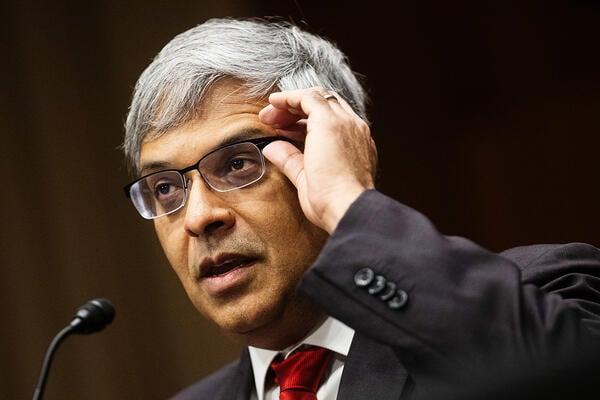
    Jim Watson/AFP/Getty Images

    The National Institutes of Health’s director ordered employees to “conduct an individualized review of all current and planned research activities,” including active grants and funding opportunity announcements, according to images of a document provided to Inside Higher Ed. The review comes amid concerns that the NIH won’t distribute all of its allocated grant money by the time the federal fiscal year ends Sept. 30, meaning those dollars will return to the U.S. Treasury.

    The document images, provided by a source who wished to remain anonymous due to fear of retaliation, show that NIH director Jay Bhattacharya sent the memo Friday and that the review is effective immediately. According to the memo, “relevant NIH personnel” must review grants, funding opportunity announcements, contracts, contract solicitations, applications for new and competing renewal awards, intramural research and research training programs, cooperative agreements, and “other transactions.”

    Science reported earlier on the review.

    The order is part of a larger memo in which Bhattacharya outlined “select agency priorities” and said projects that don’t align with these priorities may be “restricted, paused, not renewed, or terminated.” The focuses are, among other things, artificial intelligence, “furthering our understanding of autism” and “ensuring evidence-based health care for children and teenagers identifying as transgender.”

    In response to a request for an interview about the review and why it’s needed, the NIH press team sent a public statement from Friday, in which Bhattacharya listed the priorities.

    Regarding health care for transgender youth, he said, “There are clearly more promising avenues of research that can be taken to improve the health of these populations than to conduct studies that involve the use of puberty suppression, hormone therapy, or surgical intervention.” He says that “by contrast, research that aims to identify and treat the harms these therapies and procedures have potentially caused … and how to best address the needs of these individuals so that they may live long, healthy lives is more promising.”

    Bhattacharya’s letter comes after President Trump, earlier this month, ordered senior appointees at federal agencies to annually review discretionary grants “for consistency with agency priorities.”

    Joanne Padrón Carney, chief government relations officer for the American Association for the Advancement of Science, said in a statement to Inside Higher Ed that the president’s budget request for fiscal year 2026 already outlined a set priorities for the rest of the current year.

    “Switching gears at this stage reinforces confusion, diminishes trust, and increases concerns within the scientific community,” Carney added. “It joins the long list of tactics risking impoundment of congressionally appropriated funds rather than funding biomedical research that is essential for the people’s well-being.”

    Source link

  • Despite layoffs, NAEP to continue as planned in 2026

    Despite layoffs, NAEP to continue as planned in 2026

    Despite massive layoffs that left the U.S. Department of Education with a skeleton crew in charge of administering and analyzing the Nation’s Report Card, the agency said on Thursday the assessment will continue as planned next year.

    “The Department will ensure that NAEP [the National Assessment of Educational Progress] continues to provide invaluable data on learning across the U.S,” said U.S. Secretary of Education Linda McMahon in a statement on Thursday. “The 2026 NAEP assessments in reading and math are on track for administration in January 2026.” 

    In addition to assessing math and reading in 4th and 8th grades in January 2026, a letter sent to states Thursday shows U.S. history and civics will be administered for 8th graders as planned prior to the March layoffs.

    NCES is preparing for the 2025-26 cycle now and will administer the assessments between Jan. 26 and March 20, 2026, according to the letter. Math and reading results for the nation, states, and districts participating in the Trial Urban District Assessment, which tracks academic progress in urban districts, will be released in early 2027.

    National results for civics and U.S. history are expected to be released later in 2027. District and state-level data for those assessments will not be released. 

    Melissa McGrath, chief of staff for the Council of Chief State School Officers, said in a statement that NAEP “offers an important measure of student achievement and we are pleased that it will be administered in reading and math in 2026.”

    The department’s update on testing in all subject areas — including optional ones — partially addresses concerns that have been stewing for over a month among education and testing experts that cuts to the agency would sacrifice the integrity of the Nation’s Report Card.

    Former employees of the National Center for Education Statistics, which oversees the Nation’s Report Card, had worried that the mass layoffs would result in a “barebones” assessment that produced lower-quality data. 

    The Education Department has maintained that most of NAEP’s work was done through contracts, which it said remain in place.

    “Despite spending hundreds of millions in taxpayer funds annually, IES has failed to effectively fulfill its mandate to identify best practices and new approaches that improve educational outcomes and close achievement gaps for students,” Madi Biedermann, the department’s deputy assistant secretary for communications, told sister publication Higher Ed Dive in March. Biederman said the Institute of Education Sciences is going to be restructured “to improve student outcomes while maintaining rigorous scientific integrity and cost effectiveness.” 

    In her statement Thursday, McMahon said NAEP is “a critical tool for parents, educators, and experts to assess our students’ preparedness and advise on necessary interventions.”

    McMahon said that while the “final mission” — to close the department to the maximum extent possible as ordered by President Donald Trump in a March executive order — continues, she is still “committed to providing states with the tools and best practices to advance the educational achievement of our nation’s students.” 

    Modernizations of the assessment, which have been in the works for years, will also continue, the Thursday letter to states said — including pilot assessments in mathematics and reading in grades 4, 8, and 12 to help the assessment transition to updated mathematics and reading frameworks.

    It is still unclear whether plans for other innovations such as remote, device-agnostic and adaptive administrations of the exam will still roll out.

    In 2022, NCES Commissioner Peggy Carr — who was put on administrative leave as part of March’s layoffs — told K-12 Dive that assessments were set to become device agnostic in 2026, meaning students were going to be able to eventually test on any device. The Education Department had also planned to pull out most of its field administration staff, relying instead on school staff to administer assessments where possible, Carr said.

    Source link