Tag: Plight

  • The Plight of Gazan Students and Implications for UK Higher Education Policy 

    The Plight of Gazan Students and Implications for UK Higher Education Policy 

    Author:
    Ofra Goldstein-Gidoni

    Published:

    This blog was kindly authored by Ofra Goldstein-Gidoni of the Black Flag Academic Formation. 

    In recent weeks, the plight of Gazan students and scholars accepted to UK universities has gained attention in British and international media. These individuals are recipients of highly competitive scholarships such as Chevening, as well as other academic awards. They have earned their place at some of the most prestigious institutions in the United Kingdom. Their achievements are remarkable by any standard, but especially so given that they were reached under the harshest conditions imaginable: the collapse of Gaza’s educational infrastructure under bombardment, the absence of functioning universities, and the daily struggle for survival amidst man-made famine and starvation, displacement, and violent death. 

    Yet despite this extraordinary resilience, these students faced the risk of losing their places before they could even set foot in the UK. The obstacle was not academic performance or funding but rather a bureaucratic and logistical impasse deriving from the Home Office requirement to provide biometric data. Following the brutal assault by Hamas and other armed organisations on Israeli civilians and military bases on October 7th, 2023 and the horrific devastation Israel has unleashed on the Palestinians in Gaza since, the Visa Application Centre (VAC) in Gaza has been closed, thus preventing biometric processing. 

    Support for Gazan Students 

    As Israeli academics organised under the banner of the Black Flag Action Group, opposed to the ongoing war in Gaza, we mobilised in support of these students. Over 140 signatories, including Israeli students and scholars at British universities as well as Israeli graduates from British universities, urged the UK government to act decisively and inclusively. In our open letter, we stressed that no administrative hurdle should prevent prospective students from taking up the places they have already earned. When laboratories, libraries, lecture halls and archives lie in ruins, the opportunity to study abroad is not just a personal achievement; it constitutes a lifeline for the ongoing intellectual and professional life of Gazan Palestinians. To have denied these students their places would have been to contradict the UK’s own commitments under schemes like Chevening, which are premised on the idea that education can foster leadership, dialogue, and international understanding. 

    Window of Hope and Future Implications 

    On 3 September 2025, the UK government announced that it would expedite visas for Chevening scholars and others to travel to a third country for biometric processing. We were also very relieved to hear that a group of 34 Palestinian students with places at UK universities have safely arrived in the UK to begin their studies after being evacuated from Gaza last week. These are surely welcome steps, but urgent policy questions for higher education in the UK still remain, including what seem to be the remaining rules preventing students from Gaza from bringing family members with them. In fact, as recently reported by the BBC at least four mothers and one father have so far declined places because they would not leave their children behind. As the recent public discussion shows, these go beyond the immediate emergency and touch on structural issues that universities and government alike must confront: 

    1. Visa and Mobility Frameworks: Current biometric requirements are ill-suited to situations of war and humanitarian crisis. Universities and advocacy groups must press the Home Office to establish flexible, transparent, and accountable procedures for students from conflict zones. 
    2. Equity of Access: Scholarship schemes such as Chevening are designed to promote global leadership. Yet their credibility is undermined if access is contingent not only on merit but also on whether students can survive a war zone and navigate opaque visa procedures. 
    1. Moral Responsibility of universities to students and their dependents: UK institutions that have offered places to Gazan students cannot treat their admission as symbolic. They must actively lobby the government, provide legal and financial assistance, and ensure that students’ right to education is not hollow. 

    The plight of Gazan students is not an abstract problem. It is about gifted men and women who have already demonstrated courage, brilliance, and commitment. Universities, civil society, and policymakers have an ethical obligation to work together to ensure that the promise of higher education for Gazan students in the British system of higher education will not be abandoned at the very moment it is most needed.  
    Source link

  • Hoke’s Notes – The Plight of Small Colleges – Edu Alliance Journal

    Hoke’s Notes – The Plight of Small Colleges – Edu Alliance Journal

    January 27, 2025

    It has been two years since I last wrote a blog post for the Edu Alliance Journal. During that time, I took on the role of President/CEO of the American Association of University Administrators (AAUA) and dedicated myself fully to the organization. I set ambitious goals, including:

    1. Launching a marketing and branding campaign to elevate AAUA’s visibility,
    2. Increasing institutional and individual membership,
    3. Establishing a high-profile multi-day conference, and
    4. Stabilizing the organization’s finances to allow the hiring of a paid executive director.

    While I initially anticipated achieving these milestones within three years, the board and I managed to accomplish them in just 18 months.

    Reaching these goals was a significant achievement, and it signaled to me that it was time to focus on other priorities. As such, I submitted my resignation, effective January 1st, and “retired” from my leadership role at AAUA. However, I’ve always felt that retirement, in the traditional sense, isn’t for me. At 74, I still have ideas to share and contributions to make in the field of higher education.

    I aim to address several projects and issues moving forward, such as returning to my work as an international higher education consultant and re-launching two podcast series. However, one other area is especially close to my heart: the plight of small colleges.


    The Plight of Small Colleges

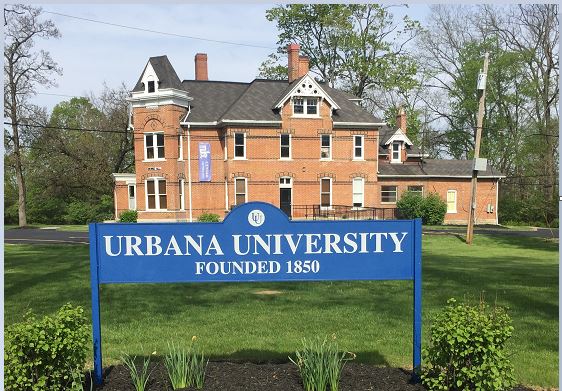
    If you’ve followed my journey, you know that I earned my undergraduate degree from Urbana University, a small private college in Urbana, Ohio—a city with a current population of 11,161. In 1975, I designed my own major in College Administration, combining courses in business, history/political science, and psychology. During my senior year, I also completed a year-long internship in admissions.

    As a nontraditional student (having started at the University of Dayton in 1968), it took me 6 ½ years and over 30 part-time jobs to complete my degree. Urbana gave me the opportunity to figure out what I wanted to do and how I could contribute to the world. It taught me adaptability and the goodness in people, which led me to the field I love—higher education.

    Unfortunately, Urbana University didn’t survive. After being acquired by Franklin College in 2014, it closed its doors in May 2020 due to challenges brought on by the coronavirus pandemic and years of low enrollment.

    Urbana had been an integral part of the community since 1850, serving as a significant economic engine. A 2017 study by the Southwestern Ohio Council for Higher Education estimated that Urbana contributed over $60 million annually to the economies of Champaign and Logan counties and employed 111 full-time staff during the 2015-2016 academic year. Its closure was devastating—not only for the university but also for the local businesses that depended on the foot traffic of students, visitors, and sports spectators.

    Rural colleges like Urbana serve as vital economic and social hubs for their communities. However, the increasing trend of college closures poses significant risks, including economic downturns, reduced social engagement, and the loss of cultural identity.


    Moving Forward

    To address this issue, I’m developing a funding proposal to analyze the multifaceted impacts of struggling colleges in rural areas. My goal is to propose actionable solutions and share findings that empower policymakers and community leaders. By combining innovative research, advocacy, and problem-solving, this initiative seeks to provide practical tools for fostering resilient rural communities.

    The research will focus on rural communities in Indiana, Ohio, and Pennsylvania. I’ve already received encouragement from regional leaders and am optimistic about finding partners to support this initiative. I’m seeking foundations, corporations, and government agencies to help fund this project, which aims to mitigate the ripple effects of college closures in rural America.

    If you have thoughts or suggestions on this topic—or know of potential funders—please feel free to contact me at [email protected].

    Stay tuned for updates on this and other projects I’m passionate about.


    Dean Hoke is Co-Founder and Managing Partner of Edu Alliance, an international higher education consultancy and podcast co-host of Higher Ed Without Borders and Small College America. He recently served as President/CEO of the American Association of University Administrators.

    Dean began his professional career in 1975 with Bellarmine University, working in a variety of roles, including Admissions and External Relations. In 1983, he entered the broadcasting field, serving as a senior executive for Public Broadcasting System stations and a cable network. In 1998, he co-founded The Connected Learning Network, a full-service online learning company. In 2009, he accepted an invitation to move to the United Arab Emirates, serving in senior positions at Higher Colleges of Technology and Khalifa University before co-founding Edu Alliance in Abu Dhabi in 2014.

    Hoke is passionate about advancing academic excellence and innovation worldwide.  He participates in numerous advisory and consulting projects on international branch campuses, marketing/branding, and business intelligence. Dean has consulted, presented, and written on leadership, higher education, and distance learning in the United States, Bahrain, Kazakhstan, Lebanon, Oman, Nigeria, Spain, and the United Arab Emirates.

    Hoke has a B.A. from Urbana University, an M.S. from the University of Louisville, and a Certificate in Executive Management from the University of Pennsylvania Wharton School. Dean currently resides in Bloomington, Indiana.

    Source link