

Tag: Plug

  • Virginia Looks to Plug Brain Drain With More Internships

    Virginia Looks to Plug Brain Drain With More Internships

    Internships can be a meaningful step in a college student’s career development. That’s why the commonwealth of Virginia is working to guarantee that undergraduates have a fair shot at paid experiential learning.

    The Virginia Economic Development Partnership announced a new collaboration today with the job board Handshake as part of the state’s effort to train and retain local talent through internship opportunities.

    Virginia has committed to giving all undergraduate students at least one form of meaningful work-based learning before graduation, said Megan Healy, senior vice president of talent and workforce strategy at VEDP. Overseen by the Virginia Talent and Opportunity Partnership, this work-based learning could include experiential learning or a paid internship.

    The partnership with Handshake is one layer of a multifaceted approach to increasing opportunities for entry-level applicants to break into local job markets, helping to reduce brain drain and encourage economic development for evolving local markets.

    State of play: Internships provide students with skills and experience for future careers, but for many of them paid internships remain out of reach. A 2024 report from the Business–Higher Education Forum found that nearly half of students who wanted an internship didn’t participate in one, and of those who did, only 70 percent said it was a “high-quality experience.”

    A 2025 Student Voice survey by Inside Higher Ed and Generation Lab found that 38 percent of respondents believe their college should emphasize helping them find and access paid internships to enhance career services, and 30 percent want help making strong connections with potential employers.

    Virginia has recently seen a dramatic drop in available internship listings; when President Trump took office in January, he slashed the federal workforce, reducing available roles in the D.C., Maryland and Northern Virginia region. Internship postings dropped 36 percent in June 2025 compared to June 2024, according to Lightcast data—a 20-percentage-point-greater decline compared to similar metropolitan job markets.

    Brookings Institute

    VEDP’s partnership with Handshake includes data sharing within the platform and additional visibility into existing or future internship opportunities for students.

    Over 70 percent of colleges and universities in Virginia, representing 470,000 students, already connect to Handshake, said Christine Cruzvergara, the company’s chief education officer. In addition, 20,000 Virginia employers have posted more than 150,000 jobs and internships on the platform.

    Building better internships: One of Virginia’s goals is to develop opportunities for students outside of metropolitan hubs.

    “The state of Virginia is very diverse, and the majority of students that graduate from a lot of the Virginia schools end up going to Richmond or Northern Virginia—those are the two main hubs that most students go to,” said Cruzvergara, a former Virginia resident and college administrator herself. “But there are so many other regions of Virginia that also need amazing talent, and I think this particular initiative is going to help distribute more of that talent.”

    The state is partnering with local business in more rural areas—including near Virginia Tech in Blacksburg and in Charlottesville, where the University of Virginia is located—to establish more high-impact and paid internships to attract students from these universities.

    “We’re also looking at ways to connect students from those specific institutions,” Healy of VEDP said. “They also have the most out-of-state students because they’re very popular and very highly ranked.”

    To increase internship offerings across the state, VEDP hosts regular training sessions to help employers build meaningful internship experiences for students and assists them in listing jobs on Handshake. The state hopes that connecting students with employers on an already-trusted platform will help expand access to opportunities as well as meet talent demands in the commonwealth.

    Small businesses (employing 150 people or less) are also eligible for a grant program if they hire interns; the state will provide $7,500 in matched funds to compensate an intern for eight weeks and 120 hours making at least minimum wage.

    “I think this particular initiative is going to help distribute more of that talent, because they’re going to tap into the local economy and the local employers to create the internships and opportunities that will be needed to attract students and also help them see this could be a great place to live In Virginia,” said Cruzvergara.

    How is your college or university increasing opportunities for students to intern? Tell us more here.
    Source link

  • Pull the Plug on H-1B Workers

    Pull the Plug on H-1B Workers

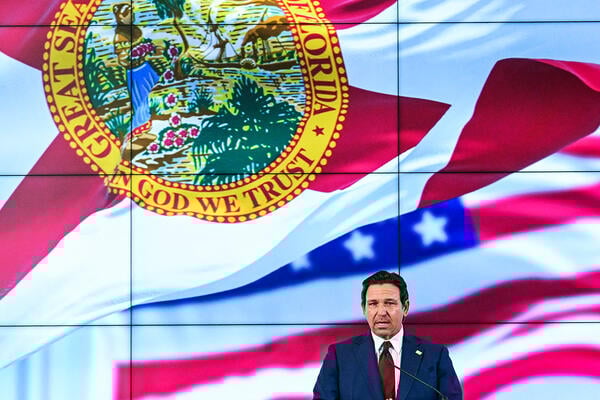
    Florida governor Ron DeSantis on Wednesday ordered the state’s public universities “to pull the plug on the use of these H-1B visas in our universities.” In doing so, the Republican appeared to call for his state to go further than President Trump in restricting entry of these foreign employees—an issue that has divided prominent conservatives.

    Since fiscal year 2022, Florida public universities have employed nearly 2,000 people via the H-1B program—nearly half at the University of Florida. The program is capped at 85,000 new visas a year, but colleges, universities and some other organizations aren’t subject to that cap. In the first three quarters of 2025, nearly 16,800 visas were approved for employees at colleges and universities; 395 of the visas were for jobs at Florida’s public universities. Universities use the program to hire faculty, doctors and researchers and argue it’s required to meet needs in health care, engineering and other areas.

    Last month, Trump announced a $100,000 application fee for H-1B visas. U.S. Citizenship and Immigration Services says the fee will apply to new H-1B petitions filed on or after Sept. 21 and must be paid before the petition is filed. It said there could be exceptions from the fee in an “extraordinarily rare circumstance” in which the Homeland Security secretary determines a foreigner’s presence in the U.S. “is in the national interest.”

    Lawsuits have been filed over the fee, and higher ed associations and institutions have spoken out in opposition. The Trump administration says employers are abusing the program to avoid hiring Americans.

    In a speech at the University of South Florida on Wednesday, DeSantis called on the state board governing public universities to “pull the plug” on H-1B visa employees. He didn’t mention any exceptions.

    If this the ban happens, it would be another example of a red state going further than the Republican-controlled federal government in restricting public higher ed institutions. In states such as Texas and Ohio, GOP politicians have exceeded Trump in regulating curricula and restricting faculty rights. Before Trump retook office, DeSantis put Florida on the leading edge of the conservative overhaul of higher ed, from cracking down on what he called “woke” education to putting allies in charge of universities—a playbook other states have followed.

    It’s unclear, however, whether the Florida Board of Governors, which oversees the state’s public universities but not it’s public colleges, will follow DeSantis’s directive. Fourteen of the board’s 17 members are appointed by the governor and confirmed by the state Senate.

    It’s also unclear what his directive specifically means; a news release the governor’s office issued Wednesday didn’t, unlike his speech, go as far as suggesting an end to all H-1B visa employees at public universities.

    But neither the State University System of Florida nor the governor’s office provided more details in response to Inside Higher Ed’s questions about DeSantis’s intent. A news release from the governor’s office said DeSantis directed the board to “crack down on H-1B Visa abuse in higher education” but didn’t repeat the governor’s apparent call to end H-1B employment completely.

    University of Florida interim president Donald Landry spoke at the press conference after DeSantis and mentioned his institution was called out. 

    “It’s a complex issue, and we can chat,” Landry said, to laughs from the audience. He did list one benefit, saying H-1Bs are mainly used at UF to hire new faculty from the international student population.

    “Occasionally, some bright light might be good enough for the faculty, and then we will try and retain the person into whom we have invested so much,” he said. 

    UF is conducting its own review of the H-1B program, he added. “We know that H-1B is not handled in a pristine fashion, even in academia,” he said.

    Robert Cassanello, president of the United Faculty of Florida union and a tenured associate history professor at the University of Central Florida, suggested that banning H-1B visa holders would be illegal.

    “You can’t discriminate against someone based on foreign birth,” Cassanello said. “My big question coming away from this is: Where’s the authority?”

    ‘Do It’ With Florida Residents

    In his speech, DeSantis started his criticism of the H-1B program from a national perspective. He said, “Tech companies will fire Americans and hire H-1B at a discount, and they’re basically indentured servants … They’re indentured to the company, so the company can basically pay them low.”

    He then turned to Florida universities, appearing to read from a list of positions occupied by H-1B holders at unnamed institutions. (His office didn’t provide the list Wednesday.)

    After mentioning a public policy professor from China, DeSantis said, “Why do we need to bring someone from China to talk about public policy?” Later—apparently looking at information on another H-1B holder—he exclaimed, “Wuhan, China!”

    Although DeSantis’s complaints focused on supposed international scholars from China, he didn’t spare those from other countries.

    “Assistant swim coach from Spain, on an H-1B visa—are you kidding me, we can’t produce an assistant swim coach in this country?” he said. He then turned to the Middle East.

    “Clinical assistant professor from the West Bank, clinical assistant professor from supposed Palestine,” he said. “Is that just social justice that they’re doing? And that’s University of Florida.”

    “We need to make sure our citizens here in Florida are first in line for job opportunities,” DeSantis said. But he also suggested he doesn’t fully know why universities are hiring H-1B workers.

    “I guess there’s probably reasons why it ends up being this way,” DeSantis said. “But I think it’s a poor reflection on some of the decisions that some of these universities have made that they’re trying to say they need an H-1B visa to do some of these jobs … We can do it with our residents in Florida, or with Americans, and if we can’t do it then—man—we need to really look deeply about what is going on.”

    Sarah Spreitzer, vice president and chief of staff for government relations at the American Council on Education, said DeSantis’s move would limit universities’ ability to hire the best researchers.

    “It’s going to have an enormous impact, obviously, on Florida institutions,” Spreitzer said.

    Cassanello, who said his union includes some H-1B holders, called DeSantis’s speech a “xenophobic and nativist diatribe.”

    “He’s a nativist, he’s anti-immigrant and so he’s coming to these decisions based on no facts,” Cassanello said. He also said DeSantis opposed diversity, equity and inclusion programs by arguing they were anti-meritocratic, but now, “all of a sudden, he’s willing to throw out meritocracy.”

    “He’s using fear of people of color and fear of immigrants to sort of impose his will on the running of our public colleges and universities,” Cassanello said. He said the speech represents “a further attack from DeSantis and our state political leaders on the autonomy of our public colleges and universities.”

    Source link