Tag: Podcasts

  • 12 Tips for Using Podcasts with Students

    12 Tips for Using Podcasts with Students

    Do you want to incorporate podcasts into your classroom but aren’t sure where to start? Podcasts are an engaging and flexible way to enhance student learning, and you don’t have to be a podcasting expert to use them effectively. Whether you’re looking for student-friendly podcasts or strategies to integrate them into your lessons, today’s blog post will help you make the most of using podcasts with students.

    Engaging Readers with Different Texts

    A few years ago, I had the chance to co-write a quick reference guide on Engaging Students in Reading of All Text Types. Pam Allyn and I share strategies for working with readers of all ages in both digital and print environments. Here is an excerpt from the guide, along with tips for using podcasts in the classroom:

    “By listening to a narrator tell a story or an expert discuss a topic, podcasts can help students strengthen their ability to gather information through multimedia and at the same time helps them learn literacy skills such as comprehension building. Listening in partners gives students another person to share a story with. Just as students may sit and read side by side, they can also listen to an audio podcast in pairs to gather information or experience a new story.“

    Pam has been a guest on my Easy EdTech Podcast, and you can check out her spring appearance here.

    Podcast Recommendations for Students

    Looking for student-friendly podcasts to share with your class? Here are two great options to get started:

    • Wow in the World – This science-themed podcast explores fascinating topics in a way that’s engaging for kids. Each episode is full of curiosity-driven storytelling, making it a great resource for science discussions and inquiry-based learning.
    • Circle Round – This podcast shares carefully adapted folktales from around the world, making it perfect for lessons on storytelling, cultural appreciation, and literacy development. And they have coloring book pages to go with each episode!

    These are just a couple of great options—there are certainly many educational podcasts available for different age groups and subject areas.
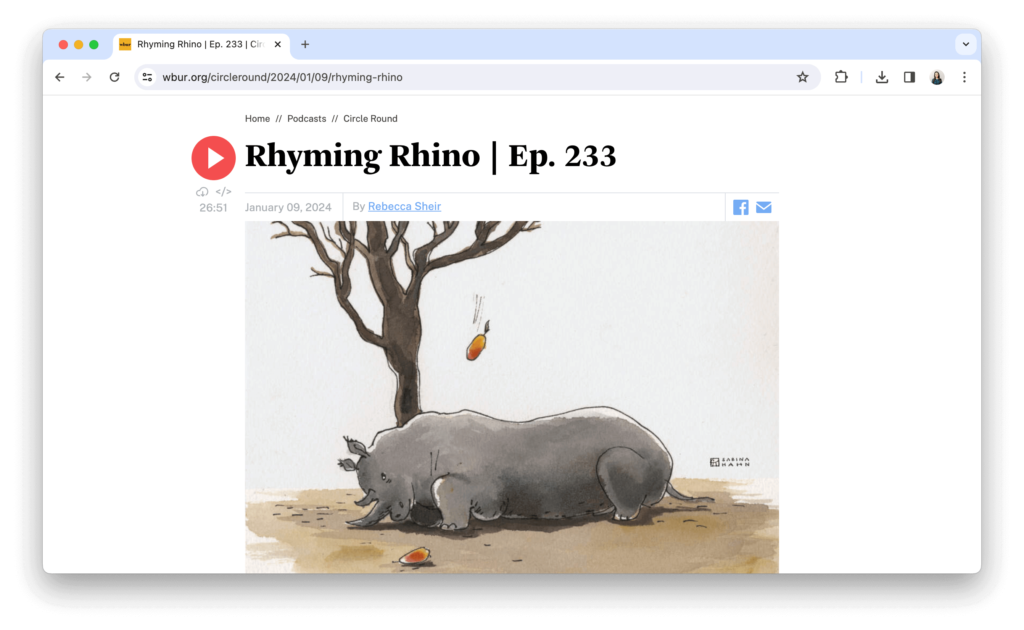
    Screenshot of Circle Round's website displaying an educational podcast for kids, featuring colorful graphics and episode listings.

    Tips for Using Podcasts with Students

    Here are twelve practical tips to help you integrate podcasts into your classroom successfully.

    Share the Link

    The best way to share a podcast episode with students is by providing the homepage link. This ensures that students and families can access the episode without needing an account or logging in. Instead of sending a link from Apple Podcasts or Spotify, head to the podcast’s homepage and send a link to the episode that way. 

    For example, instead of sharing this episode straight from Spotify, use the link in the summary or description that takes you to the shownotes page and share that one instead.
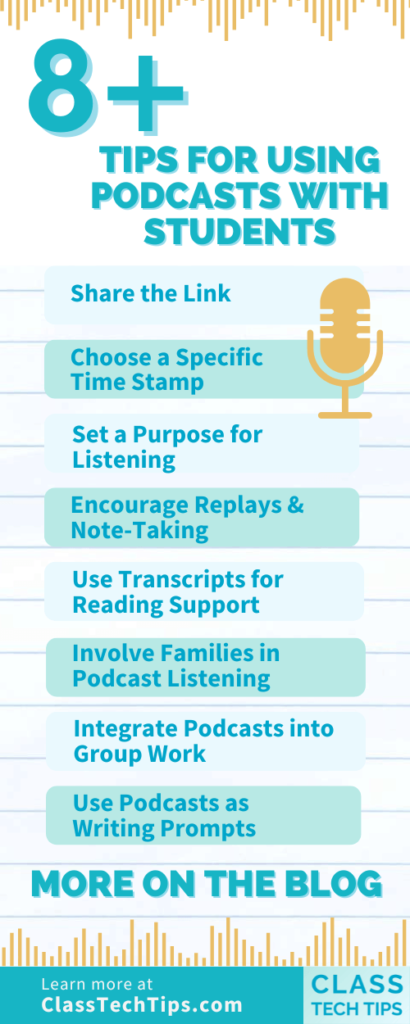
    Visual promoting 12 simple and effective ideas for using podcasts with students, featuring tech tools like earbuds and a mobile device.Visual promoting 12 simple and effective ideas for using podcasts with students, featuring tech tools like earbuds and a mobile device.

    Choose a Specific Time Stamp

    If an episode is lengthy or contains one particularly relevant section, direct students to a specific time stamp. For example, you might tell students, “Start listening at the five-minute mark,” or use an app like Overcast to share a clip with a timestamp. This is a similar strategy to one you might use with YouTube videos.

    Set a Purpose for Listening

    When assigning a podcast, give students a clear action item. Whether it’s listening for key details, answering a discussion question, or summarizing the main points, this helps focus their attention. If students are listening independently, you can give this action item or task right next to where you post the link.

    Encourage Replays and Note-Taking

    Just as students may reread a book passage for better comprehension, they should feel comfortable rewinding and replaying sections of a podcast. Encourage them to take notes on key ideas or interesting details while listening. 

    This type of listening isn’t something most students do automatically. You will want to model these strategies just like you would model strategies during a read-aloud.

    Use Transcripts for Reading Support

    Many podcasts offer transcripts that allow students to follow along with the audio. This can be a valuable tool for students who benefit from visual reinforcement of spoken content. Many podcasts include transcripts on their homepage. Some podcast apps like Spotify will play the transcript automatically when you press play on a new episode.

    Involve Families in Podcast Listening

    Encourage students to listen to podcasts with their families at home. Providing a list of recommended podcasts for car rides, commutes, or evening wind-down time can help extend learning beyond the classroom. You might include a link to a podcast recommendation or a spotlight episode in a monthly newsletter or weekly message to families.

    Integrate Podcasts into Group Work

    Have students listen to a podcast in small groups and then discuss their takeaways. Assign different groups the same episode with different focus questions or have each group listen to a different episode on a related theme.

    Use Podcasts as Writing Prompts

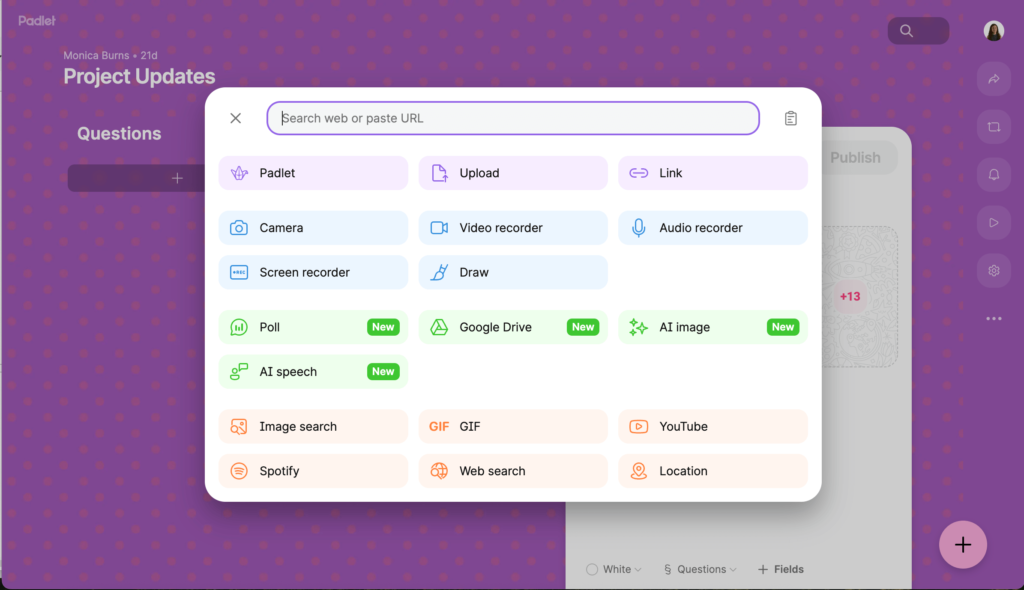
    After listening to an episode, have students respond in writing. They can summarize the main idea, write a reflection, or create a fictional story inspired by the topic. Instead of or in addition to writing, you might have them share a reflection using a video response in a tool like Padlet or Seesaw.
    Padlet’s interactive tools support First Day of Summer Ideas like sharing student-created content and summer reflections.Padlet’s interactive tools support First Day of Summer Ideas like sharing student-created content and summer reflections.

    Connect Podcasts to Inquiry-Based Learning

    Podcasts can serve as a launchpad for student-driven projects. After listening to an episode, encourage students to research a related topic. They can present their research or findings through posters, videos, or blog posts. You might leverage a tool already in your students’ toolbelt, like Adobe Express, Book Creator, or even Google Slides.

    Encourage Student-Created Podcasts

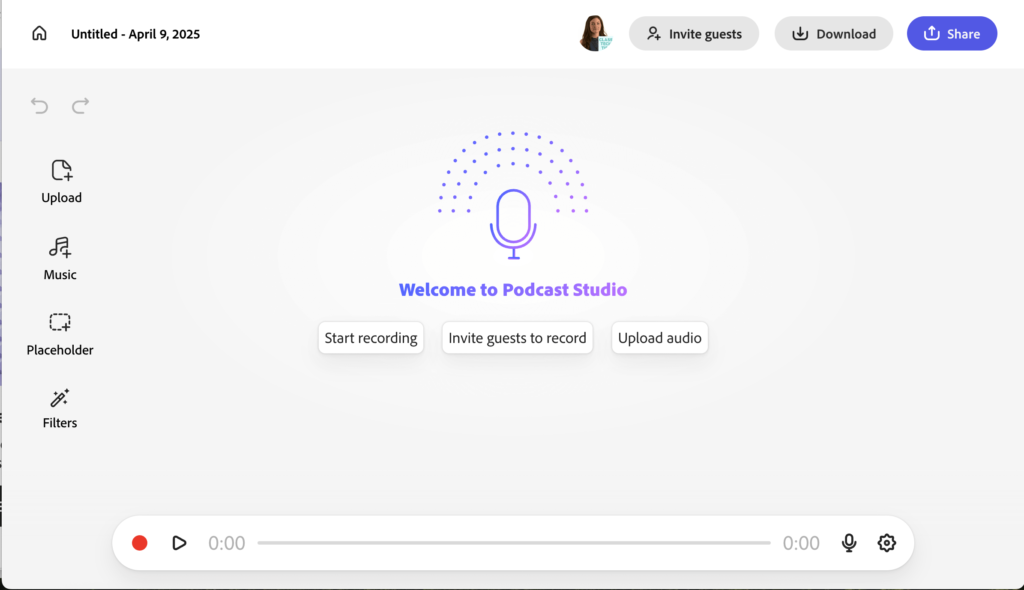
    Take podcasting to the next level by having students record their own audio content. They can create their own mini-podcast episodes on a topic they’ve researched. There are several options to consider, including GarageBand and Adobe Podcast.
    Use podcasting tools like Adobe Podcast to capture student reflections as part of First Day of Summer Ideas in your classroom.Use podcasting tools like Adobe Podcast to capture student reflections as part of First Day of Summer Ideas in your classroom.

    Use Podcasts for Background Knowledge

    Before introducing a new unit, share a relevant podcast episode to activate students’ background knowledge. This provides context and sparks curiosity before diving into new material. This strategy might be useful for every student you work with or may just come in handy for a few students.

    Make Podcast Listening a Routine

    Incorporate podcast listening into your weekly schedule. Whether it’s “Podcast Fridays” or a short listening session at the start of a lesson, make it a regular part of your classroom routine. This will help students develop strong listening skills over time and practice strategies you model for them.

    Make it Happen: Using Podcasts with Students

    Using podcasts with students can enhance literacy skills, boost engagement, and provide exposure to diverse perspectives. Whether you’re integrating them into small-group discussions, inquiry-based projects, or independent listening activities, podcasts offer a unique way to enrich learning experiences. 

    For more tips for podcasts and ways to use technology in the classroom, check out the quick reference guide I co-wrote with Pam Allyn. It’s called Engaging Students in Reading of All Text Types and is available from ASCD and Amazon

    Ready to get started using podcasts with students? Try incorporating some of these tips into your next lesson and discover the many ways podcasts can support student learning!

    Find more posts featuring podcasts for teaching & learning:

    Source link

  • Education Exchange Replay: “Congress Swung for the Fences on School Choice and Hit a Single”

    Education Exchange Replay: “Congress Swung for the Fences on School Choice and Hit a Single”

    In this replay episode of the Education Exchange, Robert Enlow, the President and CEO of EdChoice, joins Paul E. Peterson to discuss the tax credit scholarship provision that was part of budget reconciliation bill, which was passed by Congress and signed into law on July 4, 2025.

    Source link

  • Higher ed should look to limited series podcasts.

    Higher ed should look to limited series podcasts.

    Pressing record is not a plan.

    Last November, I wrote in Inside Higher Ed about the expanding opportunities for scholars and mission-driven organizations to embrace audio. According to eMarketer, U.S. adults spend about 21 percent of their media time with audio, yet brands devote only about four percent of ad budgets to it. That gap is a missed opportunity and a signal to communicators and institutions ready to build real loyalty through sound.

    And since that article was published, I have seen more teams start to recognize and implement audio as an essential channel for embedding important ideas into the culture. University centers, institutes and nonprofits are launching shows, and some are even building podcast “networks.” HigherEdPods, a community for higher ed podcasters, already counts 133 members, and its directory lists 1,205 podcasts from 210 colleges and universities. This is good, and it should definitely be happening.

    But the boom in podcasting has also created a new problem: It’s increasingly a one-percenter’s game. A small slice of shows capture most of the listening, and everyone else is left fighting over whatever attention remains. You can see this in higher ed’s own backyard. Click over to the “Podcasts by popularity” tab on HigherEdPods and you’re greeted mostly by celebrity science and psychology shows—Huberman Lab, The Happiness Lab, WorkLife with Adam Grant, No Stupid Questions—and by the usual institutional suspects, the Ivies, Stanford, MIT, and other major brands, at the top. (One delightful outlier in the top 20 is History That Doesn’t Suck, run by a fellow in Integrated Studies at Utah Valley University, a regional public school in my home state of Utah.)

    And this pattern isn’t unique to higher ed. As Axios’s 2025 Media Trends report notes, top creators across formats are capturing a disproportionate share of engagement.

    The legacy advice to build a podcast audience is to “stick it out”—to publish weekly or in seasons, and to expect it to take 50 to 100 episodes before an audience begins to form. That might be fine advice for an independent creator whose main product is the show.

    For institutions, it’s terrible advice. Most don’t have the mandate, appetite, budget or capacity to grind out 100 episodes and hope. A few marquee institutions can launch a weekly interview show and pull in listeners on brand name alone, for a while. But keeping them is another story. For other institutions and centers still building their reputations and networks, asking an audience to commit to an endless series is an even taller order. The appetite for podcasts is still strong; people simply have more, and more polished, choices than ever.

    When podcasting got easy, formats got generic.

    Part of how we got here is that podcasting became easy, in all the best and worst ways. The tools improved, the price of decent audio gear plummeted, and platforms made it almost frictionless to publish. That lowered barrier is great for access and experimentation. It also means “we should have a podcast” is now a default instinct, not a strategic decision.

    The result is a glut of weekly interview shows that all feel vaguely the same: a host, a guest, 45 minutes of conversation and a title that reads like a panel description. When these shows fall flat, they usually fail in one of two ways. They sound like a lecture (overstructured, dense, information-first) or a meeting (under-edited, meandering, inside baseball). Both signal the same problem: no designed listener experience.

    What’s been lost in the rush is not enthusiasm or expertise, but form.

    Weekly shows encourage institutions to think in terms of slots to be filled rather than journeys to be designed. The question becomes “Who do we put on the podcast next?” instead of “What story are we telling, and who actually needs to hear it?”

    There’s a better fit for how institutions work and how people listen: the limited series.

    From Endless Feed to Bingeable Arc

    A limited series treats audio not as an endless stream but as a complete experience. Instead of promising listeners “new episodes every Tuesday,” you promise them something like:

    “Five episodes that will change the way you think about X.”

    That simple shift does three important things.

    First, it aligns with how people actually listen. A recent Podcast Trends Report found that about 60 percent of listeners say mini-series or seasonal podcasts are easier to complete than ongoing shows. And SiriusXM notes that among binge listeners, roughly 60 percent say they finish an entire series within the first week of its release, and nearly 9 in 10 say they’re happy to listen to episodes that are several months old. In other words, a well-crafted limited series can pull people through quickly and keep working long after launch.

    Second, it matches how institutions actually operate. Universities and mission-driven organizations already think in projects and initiatives: a new center launch, a major report, a grant, a campaign, an anniversary. A three- to 10-episode arc maps cleanly onto that reality. It becomes a narrative companion to the work and a way to walk a specific audience through the why, the how and the stakes.

    Third, it forces craft. When you only have a few episodes, you can’t afford to wander. You have to choose a central question, decide whose voices matter most and design an arc that gives each episode a clear job to do. You’re not filling airtime; you’re building a story people can binge and remember.

    We’re already seeing this in higher education. Stanford’s Haas Center for Public Service recently produced Mosaic: 40 Years of the Haas Center, a three-episode limited series on the past, present and future of public service at Stanford, all organized around the question of why service learning is an essential part of student life and how its impact extends beyond the university.

    And this isn’t an either/or choice. Limited series can live inside an existing weekly show as clearly branded “special seasons,” giving loyal listeners something to sink their teeth into while also creating a front door for new audiences who want a finite, bingeable story before they decide whether to subscribe. They can also be packaged and repurposed long after the initial release as a project you can point to in syllabi, campaigns, grant reports and fundraising campaigns.

    The AI, Unscripted podcast from the University of Maryland shows what this kind of nested limited series can look like. This seven-part arc, designed to guide faculty from AI-curious to AI-confident, lives within the broader Moving the Needle teaching-and-learning podcast. It opens with a “host handover” episode between Moving the Needle host Scott Riley and the AI, Unscripted co-hosts—Mary Crowley-Farrell, Michael Mills and Jennifer Potter—and then rotates those co-hosts through episodes on AI in business, journalism, nursing, psychology, English and graduate education. The episodes are published in the same Moving the Needle feed and clearly tagged as a “Special Edition,” making the series easy to find while still drawing traffic to the main show.

    For institutional podcasters, that’s the big opportunity in this crowded, one-percenter landscape. You don’t need to win the “most episodes” game. You need to make a small number of episodes so compelling, so clearly scoped and so bingeable that the right people choose to press play, and then keep going.

    Danielle LeCourt is the founder and principal of De LeCourt, a strategic communications studio that helps universities, research institutes and mission-driven organizations turn complex ideas into stories that people care about. A longtime strategist and podcaster, she has worked with institutions such as Harvard, Southern Methodist University, the University of Delaware, and Genentech to elevate the visibility and impact of their work through storytelling and sound.

    Source link

  • More parents are homeschooling–and turning to podcasts for syllabus support

    More parents are homeschooling–and turning to podcasts for syllabus support

    Key points:

    A revolution quietly underway in American education: the rise of homeschooling. In the past decade, there’s been a 61 percent increase in homeschool students across the United States, making it the fastest growing form of education in the country. You might not have noticed (I didn’t, at first), because only about 6 percent of students are homeschooled nationally. But that number is nearly double what it was just two years ago.

    Then I noticed something that made me take a closer look closer to home. At Starglow Media, the podcast company I founded in 2023, nearly 20 percent of our listenership comes from homeschool families. That substantially overindexes against the national population. In other words, podcasts were particularly popular in the homeschool community.

    I was curious, for my business and in general. We make podcasts for kids (and their parents)  without any specific content for homeschool families. Why was audio resonating so well with this audience? I did some digging, and the answers surprised me.

    First, I wanted to find out why homeschooling was booming. According to the Washington Post, the explosive growth is consistent across “every measurable line of politics, geography, and demographics.” Experts have offered multiple explanations. Some families started homeschooling during COVID and never went back, others want greater say in what their children learn. Some families feel their kids are safer from violence and discrimination at home, others think it’s a better environment for children with disabilities. All these reasons collectively suggest a broader motivation: people are dissatisfied with the traditional education system and are taking it into their own hands.

    None of these factors, however, explained why podcasts were popular among homeschool families. So I decided to ask the question myself. I reached out to some Starglow listeners in the Starglow community to hear what about the format was appealing to them. Three main themes emerged.

    Many people told me that podcasts are uniquely well-suited to address educational hurdles facing homeschool families. When you’re a homeschool parent, it can be difficult to navigate all the resources that inform lesson planning while ensuring that the content is age- and subject-appropriate. Parents have found podcasts to be an intuitive way to elevate their curricula. They can search for subjects, filter by age group, and trust that the content is suitable for their kids. Ads on the network add another layer of value–because parents can trust the content, they tend to trust further educational materials promoted via the same channels. Simply put, the podcast ecosystem offers a reliable means to supplement lesson plans.

    They also offer a clear financial benefit. Homeschooling can be expensive, especially in STEM, but the majority of states don’t offer government subsidies for homeschool education. Podcasts have proven to be a cost-effective way to supplement at-home learning modules. Parents appreciate that it’s free to listen.

    Lastly–and this came up in nearly every conversation–they fit in well to homeschool life. Routine is a critical part of any educational context, and podcasts are useful anchors in the school day. Parents can easily pair podcasts with lessons at any point in their day, whether it’s a current events primer paired with a news podcast over breakfast or a specific episode of “Who Smarted” (our most popular educational podcast) about how snow forms worked into a science lesson. In this way, podcasts are becoming an integral part of family life in the homeschool community. Educational content like “Who Smarted” or an age-appropriate audiobook of “Moby Dick” may be the gateway, but families tend to co-listen throughout the day, whether it’s to KidsNuz over coffee or a Koala Moon story at night.

    What does all this mean? Homeschooling is growing, and with it is the need for flexible, affordable, and trustworthy educational content. To meet that demand, families are turning to audio, which offers age-appropriate solutions that can be worked into family life through regular co-listening.

    I expect that the homeschool movement will continue to grow, because new formats and strategies are offering families new opportunities. That’s good news, because we need innovation in education right now. Test scores are falling, literacy is in decline, and school absenteeism hasn’t fully bounced back from the pandemic. The homeschool surge is just one indicator of our increased dissatisfaction with the status quo. If we want to course correct, we all need to embrace new resources, podcasts or otherwise, to enhance education at home and in the classroom. New media has the potential to transform how people teach–we should embrace the opportunity.

    Latest posts by eSchool Media Contributors (see all)

    Source link

  • The potential of educational podcasts for commuter students

    The potential of educational podcasts for commuter students

    Engaging students in learning outside the classroom can often be a challenge, but podcasts might be a simple yet versatile tool we’re overlooking.

    As the number of commuting students rises across institutions, we recognise that students are time poor. There is, however, the potential of using travel time as an opportunity for students to work but also relax and many students use their commute time as an opportunity to prepare for teaching. Podcasting is one of the ways we can design our pedagogy to fit the busy lives of commuter students.

    Think about how you listen to podcasts, most likely while you’re doing other things like driving, cooking or walking. There’s a versatility to it.

    How many of the learning resources we offer allow students to learn on-the-go?

    Education on-the-go

    Most podcast listeners will tell you the convenience of audio-centric and on-the-go content is key to their success. BBC data suggests that about three in four podcast listeners do so while doing something else, so even podcasts that have a video option available need to be planned and created with an audio-only format in mind.

    Offering that versatility also comes at a cost. It’s important to recognise the fact that students might be on a busy bus, or looking for the timetable for their next train connection. We probably won’t have a student’s full attention, and that means that we need to carefully consider the kind of educational content that’s going to work in this format.

    Successful podcasts tend to be focused on experiential storytelling. They are usually fluid and conversational, so don’t be afraid to lean into that. Storytelling gives us emotional responses, helping students connect abstract ideas to real-world implications. A podcast will be much more successful if you give depth and meaning to something a student has already learned, rather than delivering the learning itself.

    Let’s take data analysis as an example. Instead of focusing on the technical process of analysing data, you could discuss stories of the impact of data bias or ethical dilemmas in data usage. Give your students food for thought rather than core learning, use it to turn the numbers into narrative and give a deeper meaning to your classroom content.

    It can also be a good idea to supplement your podcast with a short interactive activity, either online or at the start of your next learning session. Ask students to reflect on the podcast and their key takeaways from it. It can be a great starting point to encourage deeper learning.

    A how to guide

    Another core aspect of successful podcasts is authenticity. You don’t want your podcast to sound like a job interview. Natural conversations foster a sense of authenticity, which is key to keeping listeners engaged. A key part of this comes from the way you prepare for a podcast. Discussion points as opposed to questions allows both you and your guest to think more holistically about the topic and can make a huge difference when it comes to making the conversation flow authentically.

    We’ve found it’s best to give more flexibility and aim for shorter episodes. Splitting a conversation up into bitesize chunks gives students the option to listen to all episodes in one go, or a bit at a time. Starting with a few episodes, around 12-20 minutes each, will offer your students a lot more flexibility than a single 1-hour long podcast.

    Thankfully the technical and logistical aspects of recording podcasts have developed rapidly over the last few years and it’s very easy to get started. Advancements like text-to-speech editing and speech enhancement let you record fully online and get incredible results without any technical knowledge or high-end equipment. A lot of podcasting software now produces automatic text transcription supporting accessibility and allowing students to engage with the content in multiple formats.

    And by framing these resources as useful for students to “listen to on-the-go,” gives students permission to use and access resources in ways which work for them during their busy lives. It recognises commuter students and acknowledges busy student lives and gives them a new innovative way to engage with their studies.

    Getting started

    If you’re interested in giving it a go, here are some ideas to get you started.

    A conversation about a specific assessment: contact a student who did well on an assessment last year and ask if they would be happy to share their experiences. Students can get ideas and inspiration from how they have approached it, what worked well and what they would do differently.

    Interviews with industry experts is another way to frame a podcast. Working professionals don’t always have the time to travel to campus and prepare a lecture for your students. That might be different if they just had to join an online call for a natural conversation. Recording it as a podcast also gives you a reusable resource for future cohorts.

    Student Q&As where students can submit their own questions about a topic or assessment and discuss them in a podcast. This could be an idea to explore on your own, with another lecturer, or with professionals in the industry.

    It’s clear that using podcasts as a form of education comes with a lot of challenges, but it also offers a vast world of opportunities and flexibility for students. Where students face further challenges to engage and attend classes, it is worth considering how educational podcasts may be a mechanism so that resources work around busy and complex student lives. For commuting students, a great deal of time is spent on public transport and in maximising their time, providing resources that are engaging, useful and timely is a step in the right direction. And in designing resources specifically with commuter students in mind it recognises their experiences and allows them to engage authentically.

    And to make podcasts work for commuter students in an educational context we need to be realistic about the challenges students face and create content that works in a podcast format rather than shoehorning existing content into a new format. If we nail that, then podcasts could become a very useful tool for delivering educational content that fits around students and heightens engagement.

    Source link

  • Overcast Reports My 2024 Top Podcasts – Teaching in Higher Ed

    Overcast Reports My 2024 Top Podcasts – Teaching in Higher Ed

    Dave posted on LinkedIn about a recent podcast catcher app update which has both of us looking at our listening habits for this year so far. I didn’t realize that Marco had put out an Overcast update until Dave tagged me in his post. Like Dave, Overcast is my favorite podcast app. Here are some reasons why:

    • Playlists: I can organize my favorite podcasts and hone in on just what I’m in the mood to listen to at a given time. My categories include: Priority; Business + Economics; News; Politics + Law; Productivity; Teaching, etc.
    • Smart speed: As Dave mentioned in his post, it is a subtle shift that adds up over time.
    • Queue: There are one-off episodes that I’ll want to be sure to listen to, but I may not want to subscribe to all future episodes of a given podcast. That’s easy to accomplish by setting up a queue playlist in Overcast.

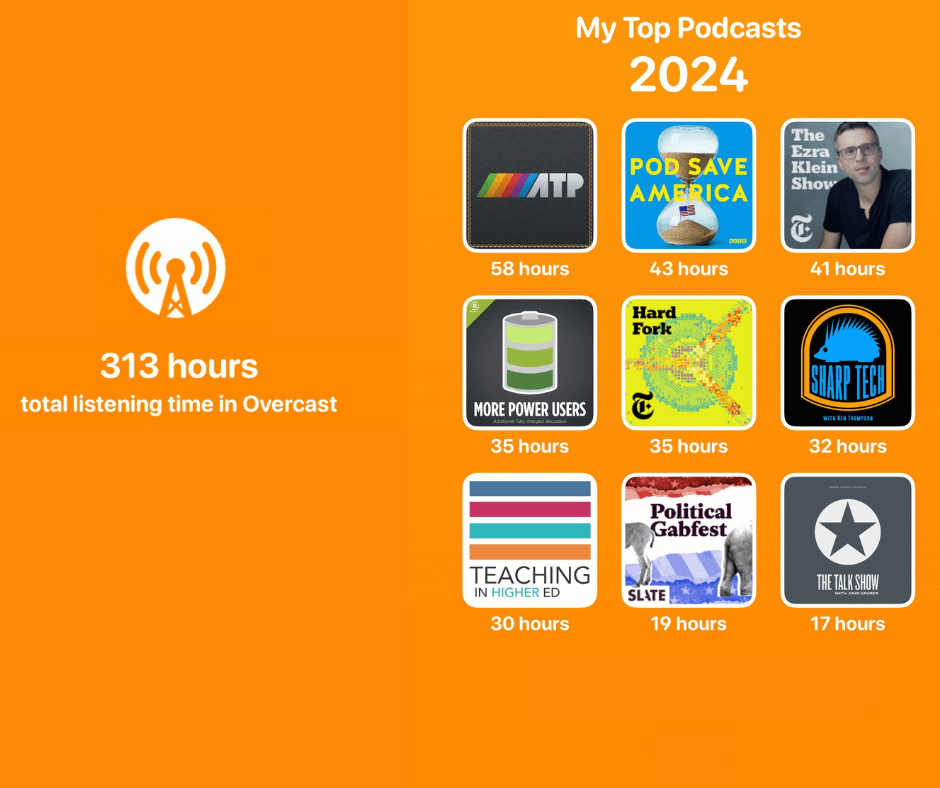
    Dave highlighted what podcasts he pays for, which means that they can be listened to ad-free. We both like that we can support the makers of the shows in that way. I pay for the following shows: Accidental Tech Podcast (ATP); Mac Power Users; Sharp Tech, The Talk Show; The Political Gabfest (via a Slate subscription); and Hard Fork and The Ezra Klein Show (via our New York Times subscription).Now that the election is over, I imagine that my top podcasts will change and that over the next year will wind up being:

    • ATP (Accidental Tech Podcast): “Three nerds discussing tech, Apple, programming, and loosely related matters.”
    • Hard Fork: Often humorous exploration of the intersection of technology, culture, and the future.
    • The Ezra Klein Show: A phenomenal interviewer and writer discusses politics, philosophy, and culture. Ezra knows how to have rich conversations with people who agree and disagree with his views.
    • Mac Power Users: They keep me challenged in a good way to get the most out of my Mac and other Apple products and bring joy to my life.
    • Teaching in Higher Ed: Listening to my own podcast makes me seek to continue to get better as an interviewer. Plus, I can deepen the learning from having interviewed someone when I can relax more and consider what actions I may want to take from the conversations.

    Some favorites don’t come out as often as other podcasts that I listen to, so won’t show up on my top listens. I also devote time to almost all of Tom Henschel‘s The Look and Sound of Leadership podcast (which only airs once a month), many of Dave’s Coaching for Leaders episodes, and John Biewen‘s Scene on Radio.

    It was wild to me to see how many more hours Dave listened to podcasts than me so far in 2024 (and something tells me I’m not going to catch him by the year’s end). Some of that is likely attributable to Dave running 3-4 times per week and always listening to podcasts during his workouts via his Apple Watch (phone free). Me? I mix things up in my exercise practices by often doing walk ’n talks with friends over the phone, or doing Apple Fitness workouts (which are such a great way to infuse music that I love into my exercise).

    What podcasts are you listening to most these days?

    Source link

  • The Top 5 Higher Education Podcasts

    The Top 5 Higher Education Podcasts

    As an educator, where do you go for advice on teaching? Perhaps it’s a book. Maybe it’s a social media channel of your choosing. But more often than not, faculty have turned to higher education podcasts as a way of gleaning fresh insights in a captivating, bite-sized format. It’s no secret that educators are stretched between teaching, grading and research commitments. So listening to a reputable guest share their best practices for improving equity, engagement and interaction in the classroom is a valuable faculty development and training exercise in of itself.

    If you’re looking for the best higher education podcasts to explore, this post is for you. We’ve rounded up our favorite shows that speak to the good, the bad and the ugly within higher ed in our present moment. We also capture podcasts hosted by leaders who bring deep, discipline-specific expertise to their field. Most importantly, we’ve summarized shows that not only cover the latest trends but offer practical advice in an educational and entertaining way. So grab your earbuds and let’s dive into the top higher education podcasts of the year.

    → NEW HIGHER EDUCATION PODCAST: Stream S1 of Higher Listenings by Top Hat

    1. Higher Listenings by Top Hat

    Ok, call us biased, but we think Higher Listenings from Top Hat is well worth a listen. Higher Listenings aims to engage and entertain educators with a look at the latest trends shaping the future of teaching and learning. In our first season, we offer practical advice to leave you feeling equipped and confident to tackle your next teaching challenge—whether boosting reading completion rates or embracing AI-powered learning. The first season offers an all star line up featuring some of the leading change makers in higher ed including Jesse Stommel (author of Ungrading: Why We Grade and How to Stop), José Antonio Bowen (author of Teaching with AI) and Terrell Strayhorn (leading expert on student belonging). Stay tuned for season two releasing in January 2025! In the meantime, catch up on our inaugural season by listening on Apple Podcasts or Spotify.

    2. Teaching in Higher Ed by Bonni Stachowiak

    As the most effective educators know, good teaching is both an art and a science. Dr. Bonni Stachowiak is a professor and Dean of Teaching and Learning at Vanguard University. As the host of the Teaching in Higher Ed podcast, Stachowiak serves up best practices across four key categories including: digital pedagogy, student life, work-life balance and teaching. Notable guests include Joshua Eyler (Director of the Center for Excellence in Teaching and Learning at the University of Mississippi) and Jenae Cohen (Executive Director at the Center for Teaching and Learning at the University of California, Berkeley). Whether you’re looking for strategies to grade more productively or need guidance on ed tech integration in higher education, Stachowiak’s impressive lineup will leave you feeling inspired. Listen to the latest episodes on Apple Podcasts or Spotify.

    3. Intentional Teaching by Derek Bruff

    Do you want to take your knowledge of foundational teaching practices to the next level? Dr. Derek Bruff will help you do just that. Bruff, Associate Director of the Center for Teaching Excellence at the University of Virginia and author of Intentional Tech, hosts the Intentional Teaching podcast geared towards college and university faculty. His goal is to leave listeners with actionable techniques to make their classrooms more inclusive, responsive to an AI-saturated world and ultimately, more engaging for every learner. Esteemed guests on his podcast include Thomas J. Tobin (Senior Teaching and Learning Developer at the University of Wisconsin-Madison) and Viji Sathy (Associate Dean for Evaluation and Assessment at the University of North Carolina, Chapel Hill). Check out Bruff’s star-studded episodes on Apple Podcasts or Spotify.

    4. Tea for Teaching by John Kane and Rebecca Mushtare

    If you’re looking for faculty development and training paired with emerging research in pedagogy, this higher education podcast will surely be your cup of tea. The Tea for Teaching show is produced by John Kane and Rebecca Mushtare, who run the Center for Excellence in Learning and Teaching at the State University of New York (SUNY) at Oswego. The producers wrestle with hot-button topics from upskilling in the age of AI to reducing bias in course evaluations. High-impact guests, who include Michelle Miller (Professor in the Department of Psychological Sciences at Northern Arizona University) and Anthony Abraham Jack (Faculty Director of the Boston University Newbury Center), are featured in weekly episodes. Grab your favorite warm beverage and a notebook and tune into this podcast on Apple Podcasts or Spotify.

    5. Teach and Learn by D2L

    Unsure about the direction that education is heading in? Then you’ll want to take note of D2L’s Teach & Learn podcast. Geared towards K-12 and higher ed faculty, the show is hosted by Dr. Christi Ford (Vice President of Academic Affairs at D2L) and Dr. Emma Zone (Senior Director of Academic Affairs at D2L). In candid discussions with educational experts, the hosts dive into issues affecting higher education institutions today. This timely higher education podcast offers practical advice such as how to put diversity, equity and inclusion at the forefront of your course and how to harness AI to improve student learning. Recent guests include Thomas Cavanagh (Vice Provost for Digital Learning at the University of Central Florida) and Karen Costa (Faculty Development Facilitator for the Online Learning Consortium). Leave with practical tips for your own course by listening on Apple Podcasts or Spotify.

    Source link