Tag: policies

  • The resumption of student loan payments means students will need new policies — and our help

    The resumption of student loan payments means students will need new policies — and our help

    After a three-year pause prompted by the pandemic, the clock on student loan repayments suddenly started ticking again in September 2023, and forbearance ended last September. For millions of borrowers like Shauntee Russell, the resumption of payments marked a harsh return to financial reality.  

    Russell, a single mother of three from Chicago, had received $127,000 in student loan forgiveness through the SAVE program, and had experienced profound relief at having that $632 monthly payment lifted from her shoulders. SAVE exemplified both the transformative power of debt relief and the urgent need to continue this fight — but now SAVE has been suspended. 

    Such setbacks cannot be the end of our story, as I document in my forthcoming book. The resumption of loan payments, while painful, must serve as a rallying cry rather than a surrender. We stand at a critical juncture. The Supreme Court’s devastating blow to former President Biden’s initial forgiveness plan and the ongoing legal challenges to programs like SAVE have left 45 million borrowers in a state of financial limbo. The fundamental inequities of our higher education system have never been more apparent.  

    Black students graduate with nearly 50 percent more debt than their white counterparts, while women hold roughly two-thirds of all outstanding student debt — a staggering $1.5 trillion that continues to grow. These aren’t just statistics; they represent systemic barriers that prevent entire communities from achieving economic mobility. 

    Related: Interested in innovations in higher education? Subscribe to our free biweekly higher education newsletter. 

    The students I interviewed while reporting on this crisis reveal the human cost of inaction. They include Maria Sanchez, a nursing student in St. Louis who skips meals to save money and can only access textbooks through library loans.  

    Then there is Robert Carroll, who gave up his dorm room in Cleveland and now alternates between friends’ couches just to stay in school.  

    These students represent the millions who are working multiple jobs, sacrificing basic needs and seeing their dreams deferred under the weight of financial pressure. 

    Yet what strikes me most is their resilience and determination. Despite these overwhelming obstacles, these students persist, driven by the same belief that motivated civil rights leaders like Congressman Adam Clayton Powell Jr. — that education is the pathway to economic empowerment and social justice. 

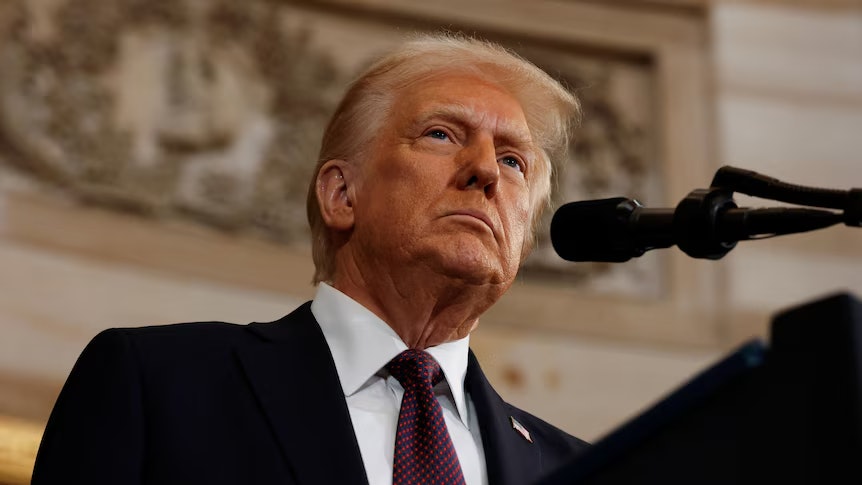
    The current political landscape, with Donald J. Trump’s return to the presidency and a Republican-controlled Congress, presents unprecedented challenges. Plans to dismantle key borrower protections and efforts to eliminate the Department of Education signal a dark period ahead for student debt relief.  

    But history teaches us that progress often comes through sustained grassroots organizing and innovative policy solutions at multiple levels of government and society. 

    State governments have an opportunity to fill the federal void through programs like Massachusetts’ Student Loan Borrower Bill of Rights and Maine’s Student Loan Repayment Tax Credit. 

    Universities must step up with institutional relief programs, as my own institution, Trinity Washington University, did when it settled $1.8 million in student balances during the pandemic. 

    The Black church, which has long understood the connection between education and liberation, continues to provide crucial support through scholarship programs. Organizations like the United Negro College Fund, the Thurgood Marshall College Fund and the National Association for Equal Opportunity in Higher Education remain vital pillars in making higher education accessible. 

    Still, individual, institutional and state efforts, while necessary, are not sufficient. We need comprehensive federal action that treats student debt as what it truly is: a civil rights issue and a moral imperative. The magnitude of the crisis — it affects Americans across every congressional district — creates unique opportunities for bipartisan coalition building. 

    Smart advocates are already reframing the narrative by replacing partisan talking points with economic arguments that resonate across ideological lines: workforce development, entrepreneurship and American competitiveness on the world stage.  

    When student debt prevents nurses from serving rural communities, teachers from working in underserved schools and young entrepreneurs from starting businesses, it becomes an economic drag that affects everyone.  

    Related: How Trump is changing higher education: The view from 4 campuses 

    The path to federal action may require creative approaches — perhaps through tax policy, regulatory changes or targeted relief for specific professions — but the political mathematics of 45 million impacted voters ultimately makes comprehensive action not just morally necessary, but politically inevitable.  

    Student debt relief is not about handouts — it’s about honoring the promise that education should be a ladder up, not an anchor weighing down entire generations; it’s about ensuring that Shauntee Russell’s relief becomes the norm, not the exception. The fight is far from over.  

    The young activists I met at the March on Washington 60th anniversary understood something profound: Their debt is not their fault, but their fight is their responsibility. They carry forward the legacy of those who came before them who believed that access to education should not depend on one’s family wealth, and that crushing debt should not be the price of pursuing knowledge. 

    The arc of history still bends toward justice — but in this era of political resistance, we must be prepared to bend it ourselves through sustained organizing, innovative policy solutions and an unwavering commitment to the principle that education is a right, not a privilege reserved for the wealthy. 

    The resumption of payments is not the end of this story. It’s the beginning of the next chapter in our fight for educational equity and economic justice. And this chapter, like those before it, will be written by the voices of the millions who refuse to let debt define their destiny. 

    Jamal Watson is a professor and associate dean of graduate studies at Trinity Washington University and an editor at Diverse Issues In Higher Education. 

    Contact the opinion editor at [email protected]. 

    This story about student loan payments was produced by The Hechinger Report, a nonprofit, independent news organization focused on inequality and innovation in education. Sign up for Hechinger’s weekly newsletter.

    The Hechinger Report provides in-depth, fact-based, unbiased reporting on education that is free to all readers. But that doesn’t mean it’s free to produce. Our work keeps educators and the public informed about pressing issues at schools and on campuses throughout the country. We tell the whole story, even when the details are inconvenient. Help us keep doing that.

    Join us today.

    Source link

  • Federal Agency Finds George Mason University Violated Civil Rights Law Through DEI Policies

    Federal Agency Finds George Mason University Violated Civil Rights Law Through DEI Policies

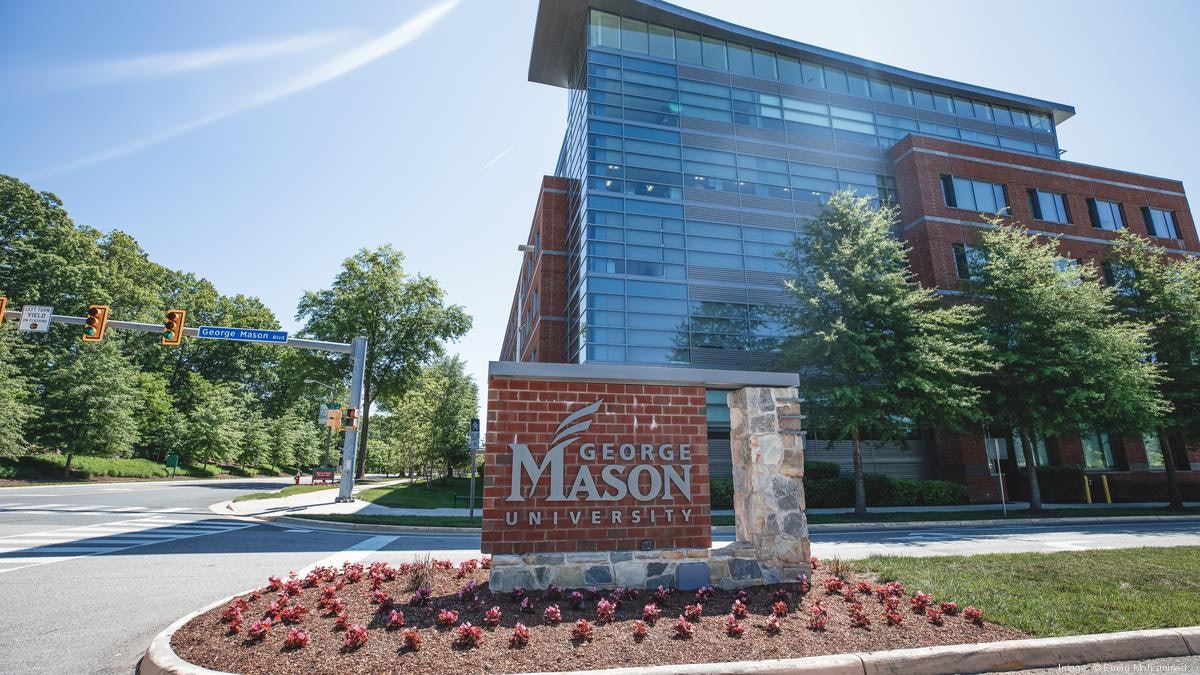
    The U.S. Department of Education’s Office for Civil Rights has determined that George Mason University violated federal civil rights law by using race as a factor in hiring and promotion decisions, the agency announced on Friday.

    The finding concluded that GMU violated Title VI of the Civil Rights Act of 1964, which prohibits discrimination based on race, color, and national origin in federally funded education programs. The university now has 10 days to accept a proposed resolution agreement or risk losing federal funding.

    Acting Assistant Secretary for Civil Rights Craig Trainor said President Gregory Washington led “a university-wide campaign to implement unlawful DEI policies that intentionally discriminate on the basis of race.”

    “You can’t make this up,” Trainor said in a statement, noting that Washington had previously called for removing “racist vestiges” from campus in 2020.

    The investigation, launched in July 2025, stemmed from complaints filed by multiple GMU professors who alleged the university adopted preferential treatment policies for faculty from “underrepresented groups” between 2020 and the present.

    Federal investigators said that they found several problematic practices. As recently as fall 2024, they argue that the university’s website stated it “may choose to waive the competitive search process when there is an opportunity to hire a candidate who strategically advances the institutional commitment to diversity and inclusion.”

    The current Faculty Handbook also requires approval from the “Office of Access, Compliance, and Community” – previously called the “Office of Diversity, Equity, and Inclusion” until GMU renamed it in March 2025 – before extending job offers.

    One high-level administrator told investigators that Washington “created an atmosphere of surveillance” regarding hiring decisions related to diversity objectives.

    Under the proposed resolution agreement, Washington must personally issue a statement and apology to the university community, acknowledging the discriminatory practices. The university must also revise hiring policies, conduct annual training, and remove any provisions encouraging racial preferences.

    GMU must post the presidential statement prominently on its website and remove any contradictory materials. The university would also be required to maintain compliance records and designate a coordinator to work with federal officials.

    George Mason University, located in Fairfax, Virginia, enrolls approximately 39,000 students and receives federal funding that could be at risk if the violations are not resolved.

    George Mason officials said that they are reviewing the specific resolution steps proposed by the Department of Education. 

    “We will continue to respond fully and cooperatively to all inquiries from the Department of Education, the Department of Justice and the U.S. House of Representatives and evaluate the evidence that comes to light,” the university said in a statement. “Our sole focus is our fiduciary duty to serve the best interests of the University and the people of the Commonwealth of Virginia.”

    Source link

  • Justice Department threatens federal funding for colleges over DEI policies

    Justice Department threatens federal funding for colleges over DEI policies

    This audio is auto-generated. Please let us know if you have feedback.

    Dive Brief: 

    • The U.S. Department of Justice released guidance Wednesday that threatens to strip grant funding from colleges and other federally funded institutions over what the agency deems unlawful diversity, equity and inclusion practices. 
    • The agency’s memo targets a sweeping set of practices, including offering race-based scholarship programs, allowing transgender women to access bathrooms that correspond with their gender identity and having identity-based lounges or study spaces on campus — even if they are open to all. 
    • But the nine-page memo goes a step further, saying even neutral criteria — such as recruitment strategies targeting certain regions — could be deemed unlawful if the Justice Department determines they are chosen because of their demographic composition.

    Dive Insight: 

    The Justice Department’s memo comes after a federal judge temporarily blocked similar guidance from the U.S. Department of Education that broadly targeted diversity, equity and inclusion programs at federally funded colleges and K-12 schools. The order came in response to a lawsuit that alleged the guidance “radically upends” federal antidiscrimination laws. 

    The guidance from the Justice Department illustrates the major shift in how the agency under President Donald Trump approaches enforcement of civil rights laws, with officials now targeting programs that were often actually launched to fight systemic discrimination. 

    Earlier this month, the National Urban League declared a “state of emergency” for antidiscrimination policies, calling the Trump administration’s overhaul of the Justice Department’s enforcement priorities “an existential threat” to civil rights laws, according to The Associated Press. 

    Like the Education Department’s blocked guidance, the Justice Department’s new memo warns that government officials could pull federal funding from institutions that don’t comply. That threat comes at the same time the agency has ramped up investigations into colleges over their diversity initiatives and their responses to antisemitism on campus. 

    The DOJ memo contains examples of practices it lists as “unlawful” and says could lead to federal funding being revoked, as well as a list of recommendations, which it says are not mandatory, to avoid “legal pitfalls.”

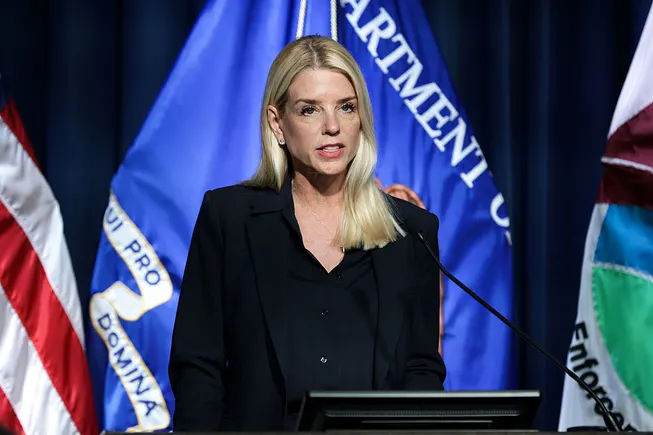
    “This Department of Justice will not stand by while recipients of federal funds engage in illegal discrimination,” U.S. Attorney General Pamela Bondi said in a Wednesday statement. “This guidance will ensure we are serving the American people and not ideological agendas.”

    As examples of unlawful practices, the agency highlighted race-based scholarships or programs, including mentorship programs or leadership initiatives reserved for members of certain racial groups. 

    The memo could upend admissions. It recommends colleges end programs “designed to achieve discriminatory outcomes” even if they have “facially neutral” criteria, such as targeting scholarships to certain regions to increase enrollment or participation among certain racial groups. 

    “Instead, use universally applicable criteria, such as academic merit or financial hardship, applied without regard to protected characteristics or demographic goals,” the memo said. 

    The memo also takes aim at what it describes as “unlawful proxies” for race and sex. As an example, the memo calls out universities that ask job applicants “to demonstrate ‘cultural competence,’ ‘lived experience,’ or ‘cross-cultural skills’ in ways that effectively evaluate candidates’ racial or ethnic backgrounds rather than objective qualifications.”

    The Justice Department also flagged diversity statements — which typically ask job or graduate student candidates to explain their experience and commitment to diversity and inclusion initiatives — as potentially unlawful if they advantage “those who discuss experiences intrinsically tied to protected characteristics.” The memo said the same of asking for statements from applicants about “obstacles they have overcome,” a common essay prompt for college applications. 

    State lawmakers have likewise targeted diversity statements, with many outlawing public colleges from requiring them in job or admission applications. 

    The memo also said failing to “maintain sex-separated athletic competitions and intimate spaces” could violate federal law. The Justice Department’s examples of those violations include allowing transgender women to use bathrooms, showers, locker rooms and dormitories designated for women, as well as allowing them to compete in women’s athletic events. 

    And it mentions college lounges or other spaces designated for specific groups, such as a “BIPOC-only study lounge.” 

    “Even if access is technically open to all, the identity-based focus creates a perception of segregation and may foster a hostile environment,” the memo stated. “This extends to any resource allocation — such as study spaces, computer labs, or event venues — that segregates access based on protected characteristics, even if intended to create ‘safe spaces.’”

    It also takes aim at diversity training, giving the example of requiring teachers at K-12 schools to complete a DEI training that includes statements such as “all white people are inherently privileged” or touching on “toxic masculinity.” 

    The memo says such trainings could violate civil rights laws “if they create a hostile environment or impose penalties for dissent in ways that result in discriminatory treatment.”

    Source link

  • The Case for Miscarriage Leave Policies (opinion)

    The Case for Miscarriage Leave Policies (opinion)

    Miscarriage leave policies are a blind spot on many college campuses, one that urgently needs to be addressed.

    For me, losing my unborn child to miscarriage exposed an uncomfortable truth about the academy. While we are encouraged to, and should be expected to, show compassion and care for our students who endure unimaginable life circumstances, there is little to no formal infrastructure in place to support the inevitable suffering of faculty.

    In the wake of my unexpected miscarriage and subsequent related surgery, I was profoundly struggling. I found out at nine weeks of gestation that I’d experienced what’s called a missed miscarriage, and what followed were weeks of mental and physical pain. Despite the traumatic nature of these events, I returned to work and continued with lesson preparation, grading and responding to emails as quickly as humanly possible, given the circumstances.

    It is not surprising I felt compelled to quickly return to work. A persistent problem in higher education is that many faculty members, staff and administrators are spread impossibly thin, leading to compassion fatigue and burnout in the face of heavy teaching loads, mentoring and service expectations, and publishing quotas. This problem is exacerbated for women, minorities, contingent faculty and marginalized groups in the academy.

    Contrast this to how we seek, rightly, to treat our students. A pedagogy of care centers on human connection and empathy to guide and support students who are struggling. It creates a culture and climate of care for students that extends beyond the classroom. For instance, students who experience miscarriage during the academic semester are protected under Title IX. This means we provide our students who have miscarriages with the proper support and grieving time so as not to derail their semesters. On my campus, if a student is going through a mental health crisis or a loss like a miscarriage, we are advised to send them to the counseling center, where they can be provided with one-on-one counseling sessions and proper resources to help with their care.

    This same structure of care that has been put in place for our students isn’t in place for faculty. As professor and scholar Maha Bali notes, an authentic pedagogy of care should recognize that faculty also need care, asking institutions to support instructors with policies and structures that allow them to do their jobs well without burning out. Though employees are protected under the Family and Medical Leave Act and the Pregnancy Discrimination Act, we don’t always have the same resources on campus for faculty and staff who are struggling with mental health issues as a result of a miscarriage. More campuses should follow the model of the University of Massachusetts Amherst, where faculty members can access counseling on campus through the Employee Counseling and Consultation Office.

    For women in academia who have endured a miscarriage, the historical silence surrounding the experience lends itself to even greater feelings of isolation and loneliness. It adds to barriers to success and tenure. Between 15 and 20 percent of pregnancies end in miscarriage, but the stigma surrounding it keeps women quiet. I work in a supportive department, where my chair and many of my colleagues never hesitated to provide me with what I needed. However, that is not the case for everyone. Even in my case, there was still a significant amount of logistical work to consider.

    When I miscarried, I knew that I’d have to cancel classes because of the physical toll it took on my body and the subsequent recovery from surgery. However, that also meant reorganizing my semester to accommodate my students’ needs. The nature of the academic year leaves little room for flexibility in canceling classes and reorganizing lessons and as such, requires considerable time and effort to do so. This detracted from my ability to grieve and heal, physically and emotionally. During times of loss, faculty shouldn’t have to think twice about mundane details; they should have a clearly outlined miscarriage policy they can turn to so there is no question they are entitled to the leave they need.

    Too often on college campuses, there is a lack of visibility and clarity on how faculty can access help. Fair and caring policies, such as a standalone miscarriage policy, provide time and space for faculty members to grieve, while also clearly defining the rights of faculty, staff, and administrators and ensuring consistent treatment when an employee experiences a loss. As Grace Ellen Brannon and Catherine L. Riley suggest in their book chapter, “Missed Realities About Miscarriage in Academia,” such policy or guidance documents typically include “(1) information on how managers can offer practical and emotional support during and after a loss, and (2) managers’ responsibilities when it comes to practical support. They also include (3) other relevant policies, including medical absence and maternity or family leave policies, alongside any relevant mental health or well-being policies.”

    In the United Kingdom, the University of Essex has a policy in which a pregnant employee who experiences a miscarriage is eligible for “pregnancy-related” sick leave, with no time limit on sick days one can take for miscarriage leave (partners or others affected are also eligible for “compassionate or special leave”). In addition, the policy outlines resources for department chairs (called line managers in the U.K.) to help them implement these policies for their faculty in the most humane way possible, as well as ideas for how to facilitate a return to work for employees who find it understandably difficult in the aftermath of pregnancy loss.

    One promising example in the United States comes from the University of Santa Clara, which has a Reproductive Loss Leave policy, which clearly outlines the time an employee can take off with pay in the event of a reproductive loss, defined as a “failed adoption, failed surrogacy, miscarriage, stillbirth, or an unsuccessful assisted reproduction.” At the University of Arizona, the paid parental leave program allocates two weeks of paid leave in the event of a miscarriage. Outside academe, a growing number of private-sector employees are adding miscarriage leave policies. But these examples still seem to be the exception, not the norm.

    Although our institutions may not be fully equipped yet, we can start showing support for our colleagues who have experienced miscarriage in small ways, whether through acts of care on an individual level or the development of formal peer support groups.

    Sometimes all we need is to be heard. The sheer act of listening can go a long way, but doesn’t replace the need for structural change. In the aftermath of my loss, one colleague reached out with a simple email, which read in part, “If you ever need to talk, I’m here.” And so, in the depths of my loss, I knocked on his door, walked into his office, and with tears in my eyes, asked, “Can I talk?” We sat, crying with one another about our respective losses and the stress of it all, and I left feeling lighter. I felt lighter because I felt love and care from my colleague.

    As bell hooks argues, love is not merely an emotion, but a practice and choice that can transform teaching and learning. I encourage us all to take a step back and listen to each other. I’m certain if you listen closely enough, you’ll hear what your colleagues need, and it’s probably love. Love in the form of small acts of care and open dialogue about miscarriage is a start. Love in the form of miscarriage-specific policies that demonstrate our institutions’ care for us is the end goal. Ultimately, we need policies that acknowledge the material reality of loss, help to reduce the invisible emotional labor of miscarriage by providing short-term teaching relief for affected faculty, and allow us to grieve and heal with dignity.

    Alyse Keller Johnson is a writer and associate professor of communication studies at Kingsborough Community College, part of the City University of New York. Her research and writing tackle themes of health, illness, motherhood and grief and can be found at alysekellerjohnson.com.

    Source link

  • Alabama Schools to Implement State Approved Anti-Vaping Policies – The 74

    Alabama Schools to Implement State Approved Anti-Vaping Policies – The 74

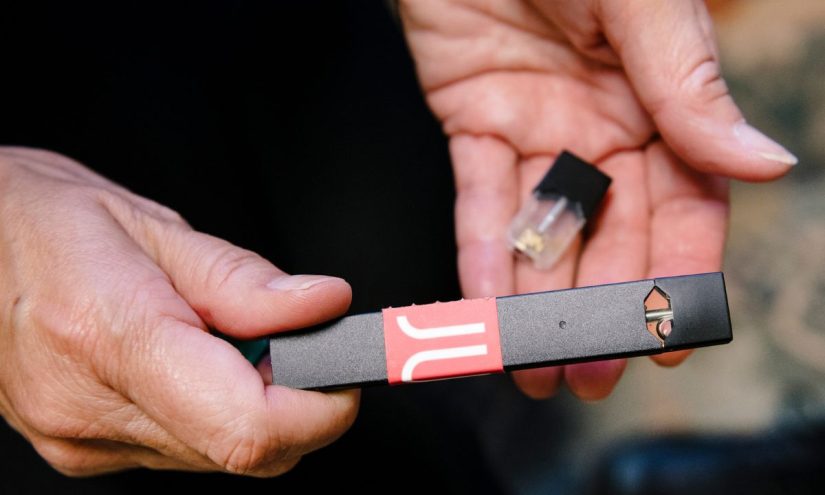
    Alabama schools are set to implement a new system to prevent vaping by public school students in the coming academic year.

    HB 8, sponsored by Rep. Barbara Drummond D-Mobile, requires the Alabama State Board of Education to create a model policy for local boards of education to adopt by November.

    “[Drummond] wanted an anti-vaping law, so we were able to work with her on something that’s not too overwhelming for the districts, but they are all going to have an anti-vaping policy,” State Board of Education Superintendent Eric Mackey told members of the board in a meeting on Tuesday.

    Under the proposed policy, students who are caught vaping once will have their parents contacted and students who are caught vaping twice will have to take a state approved vaping awareness, education and prevention class which includes a curriculum created in collaboration with the Drug Education Council.

    The topics covered in the proposed curriculum presented to board members include health consequences, peer pressure, nicotine and addiction, resources to quit vaping and common misconceptions about vaping among others.

    According to the Children’s of Alabama newsroom, the media branch for the Children’s of Alabama hospital, nearly 20% of high school students in 2023 said they had vaped.

    Some board members at Tuesday’s meeting questioned the need for the vaping law.

    “As an educator, parent and grandparent, I don’t quite understand the focus on this and bifurcating or separating from the other common concerns in every discipline policy,” said Wayne Reynolds, who represents District 8 on the board. “Why would you separate what you’re doing to a child caught vaping and contacting the parents than any other child in the discipline policy?”

    District 1 Representative Jackie Zeigler raised concerns about children moving onto other drugs like Fentanyl and Xylazine or tranq and pushed for broader language in the law to prevent having to add resolutions to add other specific items such as marajuana into the law.

    “I don’t think by labeling it does any justice,” she said. “We need to make it broader so these things fit into it so we don’t have to come back and say, ‘now we have [THC] gummies, and now we have vaping.’”

    Mackey agreed that the law is more specific than most Alabama Department of Education policies, but because it’s the law they have to follow it and said the board is “being no more restrictive than the law requires.”

    Beginning in the 1995 school year, Alabama schools were required to have a policy prohibiting the usage of tobacco on school property and the Code of Alabama Title 16 Chapter 41 states every county and city school system must have drug abuse and education courses in their curriculum.

    The Alabama State Board of Education will vote on the model policy for the law next month.

    Alabama Reflector is part of States Newsroom, a nonprofit news network supported by grants and a coalition of donors as a 501c(3) public charity. Alabama Reflector maintains editorial independence. Contact Editor Brian Lyman for questions: [email protected].


    Get stories like these delivered straight to your inbox. Sign up for The 74 Newsletter

    Source link

  • Moody’s: Trump’s tough international student policies could hit some colleges hard

    Moody’s: Trump’s tough international student policies could hit some colleges hard

    This audio is auto-generated. Please let us know if you have feedback.

    Dive Brief:

    • The Trump administration’s restrictive policies for international students present a financial risk for many U.S. colleges by potentially deterring them from enrolling, Moody’s analysts said in a recent report. 
    • Analysts pointed to visa disruptions, increased scrutiny of social media accounts, changes to deportation rules, and recent travel bans and restrictions to the U.S. from 19 countries. The Trump administration has also created confusion around visas for Chinese students, who account for nearly a quarter of international students.
    • While the impact on upcoming academic terms remains unclear, the changing policies are “diminishing the perception of the US as a prime destination for higher education,” the analysts said.

    Dive Insight:

    Colleges have been bracing for potential revenue and enrollment hits since the second Trump administration quickly struck an aggressive approach to immigration and international students. 

    When the administration moved to bar Harvard University from enrolling international students, the private institution sought and won a court order temporarily blocking the move the next day

    The ongoing legal spat underscores just how critical international enrollment is for the Ivy League university. In the 2024-25 academic year, Harvard’s roughly 6,800 foreign students made up 27.2% of the university’s total student body.  

    And just this week, George Washington University cited, among other federal moves, a slowdown in visa processing and President Donald Trump’s travel bans when explaining the need for painful budget measures, including possible layoffs. 

    International students make up over 20% of enrollment at 11% of the colleges rated by Moody’s. But that figure may understate the financial impact of lower international enrollment. 

    Foreign students typically pay full tuition and fees at colleges, noted Moody’s analysts Debra Roane, vice president and senior credit officer, and Emily Raimes, associate managing director. And they do so at a time when the ranks of traditional-age college students are projected to decline significantly in the coming years. 

    “Universities intending to fill the gap with more international students may fall short,” Roane and Raimes said in the report. 

    The analysts ran a stress test on colleges rated by Moody’s to look at the financial impact of international student enrollment declines. Given a 10% drop in international enrollment, 54 out 392 institutions would suffer a hit to a measure of their operating performance of at least half a percentage point. Seven of those colleges would see those margins decrease by two to eight percentage points. 

    With a 20% drop in international enrollment, 130 colleges would lose at least half a percentage point from their margins, and 18 among them would lose two to eight points. Those with already low margins could face “significant financial stress,” Roane and Raimes said. 

    The analysts noted, however, that highly selective colleges or those with considerable financial reserves might “better absorb the impacts by adjusting operations or increasing domestic enrollment.” Other prominent colleges might be able to mitigate international student declines through alternative revenue sources like fundraising and endowment spending.

    But others could have a much tougher time. Roane and Raimes pointed to specialty institutions, such as arts colleges — which are already facing a tough environment — whose student bodies can be over 30% international.

    Source link

  • Michigan district agrees to reform seclusion and restraint policies

    Michigan district agrees to reform seclusion and restraint policies

    This audio is auto-generated. Please let us know if you have feedback.

    Dive Brief:

    • Michigan’s Montcalm Area Intermediate School District is ending the practice of secluding students, reforming its restraint policies and making other improvements to special education services, according to an agreement between the school system and the U.S. Department of Justice.
    • DOJ, in a July 3 statement, said the district “used seclusion and restraint improperly, including using emergency crisis responses as punishment for normal classroom discipline issues,” leading to a violation of Title II of the Americans with Disabilities Act. The district, in a June 27 statement, said it had begun taking steps to improve its restraint and seclusion practices prior to the agreement.  
    • Federal investigations into schools’ restraint and seclusion practices over the past few years have led to reforms across the country as school systems work to balance student safety with their civil rights protections.

    Dive Insight:

    Montcalm Area ISD is an educational service agency that includes seven local districts, a public school academy and one virtual school. It serves about 12,000 students collectively, including about 1,800 students with disabilities.

    DOJ’s investigation found that students with disabilities in the district were restrained or secluded more than 2,400 times between the 2020-21 and 2022-23 school years.

    Under the agreement, the district will:

    • End seclusion for addressing student behaviors.
    • Halt the use of school rooms or other facilities for seclusion purposes.
    • Appoint a district-level intervention coordinator as a liaison between school principals and the superintendent, among other duties.
    • Create classroomwide behavior management plans for all classrooms in the district’s special education program to document consistent and developmentally appropriate rules, routines and techniques.
    • Ensure that restraint is only used to protect staff and students and only after all appropriate de-escalation techniques have failed.
    • Review whether students who were restrained or secluded are eligible for compensatory services and counseling.

    “Students with disabilities should never be discriminated against by experiencing the trauma of seclusion or improper restraint,” said Harmeet Dhillon, assistant attorney general of DOJ’s Civil Rights Division, in the July 3 statement.

    The week before, in a June 27 statement, Katie Flynn, superintendent of Montcalm Area ISD, said the district is “committed to providing a safe, nurturing, and welcoming learning environment.”

    According to the U.S. Department of Education’s Civil Rights Data Collection, about 105,700 public school students were physically restrained, mechanically restrained or placed in seclusion at schools across the country during the 2021-22 school year, the most recent year for which national data is available.

    Nationally, students with disabilities are disproportionally restrained and secluded in schools. Although students who qualify for special education services under the Individuals with Disabilities Education Act comprised 14% of the K-12 student enrollment in 2021-22, they represent 28% of students who were mechanically restrained, 68% of those who were secluded, and 76% who were physically restrained, according to the CRDC.

    Guidance issued in 2016 by the Education Department emphasizes that schools should never use restraint or seclusion for disciplinary purposes and that the practices should only be used if there is “imminent danger of serious physical harm to self or others.”

    The guidance also said if a student’s behavioral challenges lead to an emergency use of restraint or seclusion, it could be a sign of a disability that is interfering with the student’s progress in school, and therefore they should be evaluated to see if they qualify for special education services.

    Additional guidance issued earlier this year by the Education Department urged districts to take a more proactive approach to student behaviors by supporting students’ social, emotional, physical and mental health needs through multi-tiered systems of support that provide individualized interventions based on students’ needs for students with and without disabilities.

    Source link

  • How State Policies Can Support Dual Enrollment Students

    How State Policies Can Support Dual Enrollment Students

    Headline: How State Policies Can Support Dual Enrollment Students

    Title: Sharing the Cost: Insights From States Funding Dual Enrollment to Expand Access

    Authors: Krista Kaput, Sharmila Mann, and Carrie Hahnel

    Source: Bellwether

    Research demonstrates that participation in dual enrollment programs improves student outcomes, with the potential to increase graduation rates and college enrollment and further students’ postsecondary attainment. While these benefits reach all participating students, students face unequal access to dual enrollment programs, which serve white and high-income students at a higher rate than Black, Hispanic, Indigenous, and low-income students.

    To better understand the policies in place to support dual enrollment programs, a new report published by Bellwether examines dual enrollment programs and policies among four states, finding common themes related to both cost-sharing and access that states can replicate to further promote equity in dual enrollment participation.

    In analyzing the states and programs, the report notes seven themes related to increasing access to dual enrollment programs to serve as models for other states.

    Three of these themes involve funding policies:

    1. States allocate the full, per-pupil cost for dual enrollment students directly to participating school districts, ensuring that districts are not put at a financial disadvantage if students attend dual enrollment courses.
    2. Dual enrollment students are accounted for in community college full-time equivalent calculations, ensuring that community colleges are sufficiently funded for all students during the budget allocation process.
    3. States either fully or partially reimburse community colleges for the tuition costs associated with dual enrollment students, ensuring that costs are kept low for students while supporting the additional costs for community colleges.

    Four more themes concern policies unrelated to funding:

    1. There are specific, state-set goals for dual enrollment programs, which can involve a method for data collection, setting program performance expectations, and alignment with other state attainment initiatives, to ensure that students are receiving high-level programming.
    2. Community colleges and K-12 school districts are responsible for reporting dual enrollment program data to the state, allowing for policy adjustments supporting both strengths and opportunities for growth.
    3. States require the establishment of formal agreements between school districts and community colleges, ensuring that responsibilities for dual enrollment students are acknowledged and upheld among both parties.
    4. Dual enrollment coursework provides experience toward a credential of value or a need among the workforce, increasing the likelihood that credits earned through dual enrollment will support future postgraduation plans.

    Beyond the seven themes that support dual enrollment students found among the four states, the authors of the report go on to note further potential policy changes that states may make to better serve underrepresented populations in dual enrollment programs. To increase access and participation, states ought to establish sustainable funding that provides frequent investment in support of dual enrollment students. Students’ participation can also be supported by increasing the number of instructors among educational areas of high demand, establishing strong advising systems among school districts and community colleges, and allocating funding toward non-tuition costs that may hinder enrollment.

    To read more about specific dual enrollment programs, state policies, and how states can further increase access and participation among dual enrollment students, click here.

    —Julia Napier


    If you have any questions or comments about this blog post, please contact us.

    Source link

  • Labor, Coalition and Green education policies compared – Campus Review

    Labor, Coalition and Green education policies compared – Campus Review

    Australians go to the polls this Saturday to choose the next government. The Australian Labor Party, the Liberal-National Coalition and the Australian Greens have a variety of different policies for education in the funding, content and management spaces.

    Please login below to view content or subscribe now.

    Membership Login

    Source link

  • Survey: Trump Policies Push 75% of Scientists to Consider Leaving U.S.

    Survey: Trump Policies Push 75% of Scientists to Consider Leaving U.S.

    Survey: Trump Policies Push 75% of Scientists to Consider Leaving U.S.

    kathryn.palmer…

    Tue, 04/01/2025 – 03:00 AM

    Byline(s)

    Source link