Tag: policies

  • Michigan district agrees to reform seclusion and restraint policies

    Michigan district agrees to reform seclusion and restraint policies

    This audio is auto-generated. Please let us know if you have feedback.

    Dive Brief:

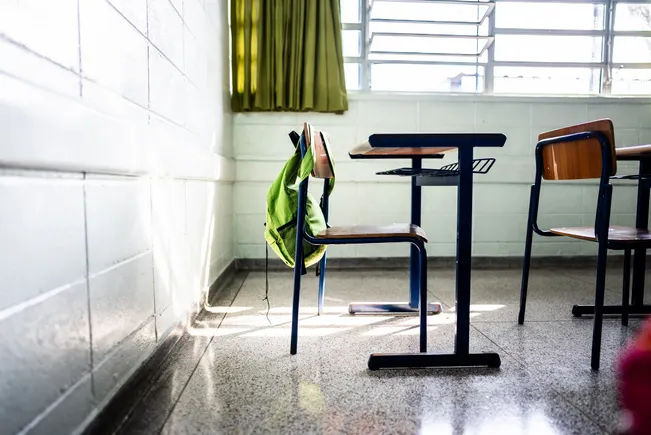
    • Michigan’s Montcalm Area Intermediate School District is ending the practice of secluding students, reforming its restraint policies and making other improvements to special education services, according to an agreement between the school system and the U.S. Department of Justice.
    • DOJ, in a July 3 statement, said the district “used seclusion and restraint improperly, including using emergency crisis responses as punishment for normal classroom discipline issues,” leading to a violation of Title II of the Americans with Disabilities Act. The district, in a June 27 statement, said it had begun taking steps to improve its restraint and seclusion practices prior to the agreement.  
    • Federal investigations into schools’ restraint and seclusion practices over the past few years have led to reforms across the country as school systems work to balance student safety with their civil rights protections.

    Dive Insight:

    Montcalm Area ISD is an educational service agency that includes seven local districts, a public school academy and one virtual school. It serves about 12,000 students collectively, including about 1,800 students with disabilities.

    DOJ’s investigation found that students with disabilities in the district were restrained or secluded more than 2,400 times between the 2020-21 and 2022-23 school years.

    Under the agreement, the district will:

    • End seclusion for addressing student behaviors.
    • Halt the use of school rooms or other facilities for seclusion purposes.
    • Appoint a district-level intervention coordinator as a liaison between school principals and the superintendent, among other duties.
    • Create classroomwide behavior management plans for all classrooms in the district’s special education program to document consistent and developmentally appropriate rules, routines and techniques.
    • Ensure that restraint is only used to protect staff and students and only after all appropriate de-escalation techniques have failed.
    • Review whether students who were restrained or secluded are eligible for compensatory services and counseling.

    “Students with disabilities should never be discriminated against by experiencing the trauma of seclusion or improper restraint,” said Harmeet Dhillon, assistant attorney general of DOJ’s Civil Rights Division, in the July 3 statement.

    The week before, in a June 27 statement, Katie Flynn, superintendent of Montcalm Area ISD, said the district is “committed to providing a safe, nurturing, and welcoming learning environment.”

    According to the U.S. Department of Education’s Civil Rights Data Collection, about 105,700 public school students were physically restrained, mechanically restrained or placed in seclusion at schools across the country during the 2021-22 school year, the most recent year for which national data is available.

    Nationally, students with disabilities are disproportionally restrained and secluded in schools. Although students who qualify for special education services under the Individuals with Disabilities Education Act comprised 14% of the K-12 student enrollment in 2021-22, they represent 28% of students who were mechanically restrained, 68% of those who were secluded, and 76% who were physically restrained, according to the CRDC.

    Guidance issued in 2016 by the Education Department emphasizes that schools should never use restraint or seclusion for disciplinary purposes and that the practices should only be used if there is “imminent danger of serious physical harm to self or others.”

    The guidance also said if a student’s behavioral challenges lead to an emergency use of restraint or seclusion, it could be a sign of a disability that is interfering with the student’s progress in school, and therefore they should be evaluated to see if they qualify for special education services.

    Additional guidance issued earlier this year by the Education Department urged districts to take a more proactive approach to student behaviors by supporting students’ social, emotional, physical and mental health needs through multi-tiered systems of support that provide individualized interventions based on students’ needs for students with and without disabilities.


    Source link

  • How State Policies Can Support Dual Enrollment Students

    How State Policies Can Support Dual Enrollment Students

    Headline: How State Policies Can Support Dual Enrollment Students

    Title: Sharing the Cost: Insights From States Funding Dual Enrollment to Expand Access

    Authors: Krista Kaput, Sharmila Mann, and Carrie Hahnel

    Source: Bellwether

    Research demonstrates that participation in dual enrollment programs improves student outcomes, with the potential to increase graduation rates and college enrollment and further students’ postsecondary attainment. While these benefits reach all participating students, students face unequal access to dual enrollment programs, which serve white and high-income students at a higher rate than Black, Hispanic, Indigenous, and low-income students.

    To better understand the policies in place to support dual enrollment programs, a new report published by Bellwether examines dual enrollment programs and policies among four states, finding common themes related to both cost-sharing and access that states can replicate to further promote equity in dual enrollment participation.

    In analyzing the states and programs, the report notes seven themes related to increasing access to dual enrollment programs to serve as models for other states.

    Three of these themes involve funding policies:

    1. States allocate the full, per-pupil cost for dual enrollment students directly to participating school districts, ensuring that districts are not put at a financial disadvantage if students attend dual enrollment courses.
    2. Dual enrollment students are accounted for in community college full-time equivalent calculations, ensuring that community colleges are sufficiently funded for all students during the budget allocation process.
    3. States either fully or partially reimburse community colleges for the tuition costs associated with dual enrollment students, ensuring that costs are kept low for students while supporting the additional costs for community colleges.

    Four more themes concern policies unrelated to funding:

    1. There are specific, state-set goals for dual enrollment programs, which can involve a method for data collection, setting program performance expectations, and alignment with other state attainment initiatives, to ensure that students are receiving high-level programming.
    2. Community colleges and K-12 school districts are responsible for reporting dual enrollment program data to the state, allowing for policy adjustments supporting both strengths and opportunities for growth.
    3. States require the establishment of formal agreements between school districts and community colleges, ensuring that responsibilities for dual enrollment students are acknowledged and upheld among both parties.
    4. Dual enrollment coursework provides experience toward a credential of value or a need among the workforce, increasing the likelihood that credits earned through dual enrollment will support future postgraduation plans.

    Beyond the seven themes that support dual enrollment students found among the four states, the authors of the report go on to note further potential policy changes that states may make to better serve underrepresented populations in dual enrollment programs. To increase access and participation, states ought to establish sustainable funding that provides frequent investment in support of dual enrollment students. Students’ participation can also be supported by increasing the number of instructors among educational areas of high demand, establishing strong advising systems among school districts and community colleges, and allocating funding toward non-tuition costs that may hinder enrollment.

    To read more about specific dual enrollment programs, state policies, and how states can further increase access and participation among dual enrollment students, click here.

    —Julia Napier


    If you have any questions or comments about this blog post, please contact us.

    Source link

  • Labor, Coalition and Green education policies compared – Campus Review

    Labor, Coalition and Green education policies compared – Campus Review

    Australians go to the polls this Saturday to choose the next government. The Australian Labor Party, the Liberal-National Coalition and the Australian Greens have a variety of different policies for education in the funding, content and management spaces.

    Please login below to view content or subscribe now.

    Membership Login

    Source link

  • Survey: Trump Policies Push 75% of Scientists to Consider Leaving U.S.

    Survey: Trump Policies Push 75% of Scientists to Consider Leaving U.S.

    Survey: Trump Policies Push 75% of Scientists to Consider Leaving U.S.

    kathryn.palmer…

    Tue, 04/01/2025 – 03:00 AM

    Byline(s)

    Source link

  • Immigration policies in focus as Mark Carney sworn in as Canadian PM

    Immigration policies in focus as Mark Carney sworn in as Canadian PM

    Succeeding Justin Trudeau as Canada’s 24th Prime Minister, Carney’s swearing-in ceremony was conducted by governor general Mary Simon at Rideau Hall in Ottawa.

    Carney’s appointment as Canada’s leader comes at a time when the country is navigating through an increasingly tumultuous relationship with its closest neighbour and ally, the United States.

    Canada’s ties with the US have worsened after President Donald Trump imposed steep tariffs on Canadian goods and floated the idea of integrating Canada into the US, sparking strong backlash.

    Considered a political newcomer, who played significant roles as the governor of the Bank of Canada and the Bank of England between 2008 to 2020, Carney is known for having a tough stance on immigration. 

    Calling Canada’s immigration policy “failures of executions”, Carney stated that Canada has taken in more people than its economy has been able to handle. 

    “I think what happened in the last few years is we didn’t live up to our values on immigration,” he said at a Cardus event – a Christian non-partisan think tank – in November last year, according to Canadian media reports.

    “We had much higher levels of foreign workers, students and new Canadians coming in than we could absorb, that we have housing for, that we have health care for, that we have social services for, that we have opportunities for. And so we’re letting down the people that we let in, quite frankly.”

    Carney’s statement suggests that he will uphold the Canadian federal government’s plan to reduce immigration targets over the next three years.

    Recently, the federal government announced a shift in its immigration strategy, cutting the number of newcomers by 21% – from approximately 500,000 in 2024 to 395,000 in 2025 and 380,000 in 2026.

    In its race to reduce temporary residency numbers and overall inflow of immigrants, international students in Canada have faced the brunt of policy changes in the country.

    Canada has imposed more caps on study permits, eliminated fast-track study permit processing, increased PGWP eligibility and English proficiency requirements, in an effort to “align its immigration planning with capacity”.  

    Over the past year, policy restrictions have already had a significant impact in Canada, with the total number of study permits processed by the IRCC expected to be 39% lower than in 2023.

    A former international student himself, Carney is expected to continue with restrictive policies on the cohort, as he previously blamed Canadian provinces for “underfunding higher education”, which pushed institutions to rely on international students. 

    “Do we value higher education in this country or not? Well, if we value higher education, maybe we should start funding our universities,” stated Carney. 

    “On the foreign student side, it’s more on provincial policy, on squeezing universities, in a sense.”

    Daljit Nirman, an immigration lawyer based in Ottawa and founder, Nirman’s Law, believes aggressive student recruitment has contributed to housing shortages, an oversaturated job market, and increased strain on health care, making effective newcomer integration in Canada more difficult.

    “Given Carney’s stance and these recent policy changes, it is likely that Canada will continue implementing stricter controls on international student admissions during his tenure,” Nirman told The PIE News.

    “This measured approach aims to preserve the benefits of international education while ensuring that Canada’s infrastructure can effectively support those who choose to study and settle in the country.”

    According to Priyanka Roy, senior recruitment advisor at York University, while Carney’s stance on immigration may appear stricter, it will ultimately result in a more “balanced approach.”

    “While it may seem like a tougher stance on immigration, we believe that Prime Minister Carney’s stance is to create a balanced approach to immigration, ensuring that international student enrolment aligns with Canada’s economic capacity and does not place undue pressure on local infrastructure,” Roy told The PIE News.

    “York is proactively adapting by offering sustainable solutions, such as a four-year housing guarantee, on-campus job opportunities, and co-op programs; provisions that help our international students integrate into Canadian life while maintaining a balanced and healthy relationship with the local community.”

    Prime Minister Carney’s leadership presents a valuable opportunity to rebuild stronger ties between India and Canada, fostering an environment of trust and collaboration
    Priyanka Roy, York University

    The former banker, who won the Liberal Party race by 86% of the votes, also acknowledged immigration’s role in contributing to Canada’s economic future. 

    Emphasising the need for productivity and a growing labour force, Carney has previously highlighted that Canada’s growing labour force is “going to largely come through new young Canadians”.

    With immigration poised to be a key issue, rebuilding ties with India – one of Canada’s largest sources of migrants – will be crucial for the prime minister-designate.

    Having already expressed a willingness to mend relations following a major diplomatic crisis, Carney’s efforts to indulge in discussions with India could spell good news for Indian students eyeing Canada as a study destination.

    “Prime Minister Carney’s leadership presents a valuable opportunity to rebuild stronger ties between India and Canada, fostering an environment of trust and collaboration,” stated Roy.

    “As diplomatic relations improve, we are confident that more Indian students will continue to view Canada as an attractive destination for higher education and realign their preference for higher education in Canada.”

    Source link

  • 20 Michigan towns with unconstitutional public comment policies that could cost them

    20 Michigan towns with unconstitutional public comment policies that could cost them

    • National free speech group FIRE flags 20 cities and towns that restrict citizens’ First Amendment rights
    • Another city — Eastpointe, MI — learned the hard way that censorship doesn’t pay, ponying up $83K after violating four citizens’ rights at a city council meeting

    DETROIT, Feb. 6, 2025 — The Foundation for Individual Rights and Expression today urged 20 Michigan cities and towns — including Grand Rapids, Saginaw, and several around Detroit — to reform public comment policies that unconstitutionally censor their citizens.

    “Public office doesn’t come with the power to muzzle the people you serve,” said FIRE Director of Public Advocacy Aaron Terr. “These cities should immediately repeal their unconstitutional public comment rules to avoid being dragged into court. Otherwise they won’t just be violating the First Amendment — they’ll be writing checks to the constituents they tried to silence.”

    The First Amendment and recent court rulings affirm citizens’ right to criticize government officials and otherwise speak their minds during the public comment periods of city council meetings. Rules that unduly restrict this right are illegal, undemocratic, and prevalent in Michigan.

    Local governments can impose reasonable, well-defined, viewpoint-neutral restrictions on public comments at their meetings. They can, for example, prohibit genuinely disruptive conduct — such as speaking out of turn or making true threats. But the rules in these 20 towns go too far, banning large swaths of protected speech. Many bar “personal attacks” on government officials, some are plain bizarre, and all are unconstitutional.

    • Clinton Township bans talk of excrement, “disrespectful” references to the supernatural, and “personal attacks.” 
    • The use of “vulgar, obscene . . . or otherwise inappropriate language or gestures” is prohibited at Southgate City Council meetings.
    • Romulus City Council bans remarks with racial, ethnic, religious, sexual or national origin “overtones.” 
    • “Abusive” and “personally directed” public comments are prohibited at Park Township government meetings.
    • Rochester Hills City Council bans “inappropriate” public comments at its meetings.

    Similar rules have not fared well in court. In 2018, a man was ejected from an Ohio school board meeting after criticizing the board for suppressing opposition to pro-gun views. He sued and the U.S. Court of Appeals for the Sixth Circuit — which has jurisdiction over the Great Lakes State — sided with him. Its decision invalidated bans on “antagonistic,” “abusive,” and “personally directed” public comments at local government meetings.

    Four years later, FIRE put those principles to work when we represented several Eastpointe, MI, residents in their suit against the city and its mayor. Then-Mayor Monique Owens used a rule barring comments directed at city council members as justification to shout down and silence four constituents who tried to criticize her during public-comment periods. Last year, Eastpointe reached a settlement with the residents that required the city to stop enforcing the unconstitutional rule, pay each plaintiff $17,910, and pay additional attorneys’ fees.

    When municipal bodies fail to respect constituents’ First Amendment rights, they can expect to hear from FIRE.

    • A Surprise, AZ, mom was forcibly ejected from a city council meeting for criticizing the city attorney’s pay raise, and FIRE is now representing her in a lawsuit.  
    • After a Uvalde, TX, dad was banned from school grounds for questioning the qualifications of a school district police officer at a school board meeting, FIRE got the school district to lift the ban. 
    • A man was ejected from an Edison, NJ, city council meeting for violating its ban on “props” — by holding a copy of the U.S. Constitution and a small American flag. Thanks to FIRE’s advocacy, the council quickly repealed the ridiculous ban.

    FIRE is happy to help local governments bring their public comment policies into compliance with the First Amendment, free of charge. In 2023, FIRE successfully worked with Bay City, MI, to eliminate its unconstitutional restrictions on public comments that were “derogatory,” “vulgar,” or “demeaning” to city officials or employees.

    “The First Amendment doesn’t protect politicians’ egos,” Terr said. “It protects the public’s right to hold them accountable.”

    The Foundation for Individual Rights and Expression (FIRE) is a nonpartisan, nonprofit organization dedicated to defending and sustaining the individual rights of all Americans to free speech and free thought — the most essential qualities of liberty. FIRE educates Americans about the importance of these inalienable rights, promotes a culture of respect for these rights, and provides the means to preserve them.

    CONTACT

    Jack Whitten, Communications Campaign Specialist, FIRE: 215-717-3473; [email protected]

    Source link

  • Trump signs executive order targeting DEI policies at colleges

    Trump signs executive order targeting DEI policies at colleges

    This audio is auto-generated. Please let us know if you have feedback.

    Dive Brief:

    • President Donald Trump signed an executive order Tuesday targeting diversity, equity and inclusion programs at colleges and other “influential institutions of American society,” escalating the Republican-led crusade against DEI. 
    • The executive order declares that DEI policies and programs adopted by colleges and others can violate federal civil rights laws and directs federal agencies to “combat illegal private sector DEI preferences, mandates, policies, and activities.”
    • Trump’s order also directs each federal agency to identify up to nine corporations or associations, large foundations, or colleges with endowments over $1 billion as potential targets for “civil compliance investigations.”

    Dive Insight: 

    Republicans have railed against diversity and inclusion programming on college campuses for years, with state lawmakers enacting 14 pieces of legislation that restrict or bar DEI since 2023, according to a tally from The Chronicle of Higher Education. 

    Federal lawmakers have likewise targeted DEI programs at colleges in hearings and proposed bills. With Trump’s flurry of recent executive orders, however, the newly sworn-in president has made clear that his administration will ramp up the fight against DEI at the federal level. 

    “Institutions of higher education have adopted and actively use dangerous, demeaning, and immoral race- and sex-based preferences under the guise of so-called ‘diversity, equity, and inclusion,’” the order states. 

    Jeremy Young, director of state and higher education policy at PEN America, a free expression organization, voiced concerns about the executive order. 

    “It launches a series of investigations into universities for merely having a DEI office or promoting DEI, diversity work on their campus,” Young said. “That, to us, is a pretty straightforward violation of the intellectual freedom of a university to promote ideas of all kinds on its campus.”

    At minimum, government investigations could amount to a nuisance, but at maximum, they could lead to lawsuits and actions against colleges, Young added. 

    Young also said the order is designed to sow division in the higher education sector by targeting colleges with endowments worth $1 billion or more. 

    “My hope is that higher education institutions will see this attack on a subset of their members as an attack on everyone,” Young said. 

    Trump’s new order also lacks a clear definition of what it deems as DEI programs or policies, Young said, raising concerns about unconstitutionally vague language. 

    State bills banning DEI similarly don’t have clear definitions, Young said. 

    “They become effectively a license to censor,” Young said. “Any government agency looking at them can claim that something is DEI because there is no actual definition in the order.”

    Trump’s order directs the nation’s attorney general, in consultation with federal agencies, to propose potential litigation against the private sector to enforce civil rights laws. It also orders agencies to identify “potential regulatory action and sub-regulatory guidance.”

    Trump also directed the U.S. education secretary to work with the nation’s attorney general to issue guidance to federally funded colleges within the next 120 days regarding how they can comply with the landmark 2023 Supreme Court decision that struck down race-conscious admissions. Trump’s nominee for education secretary, former World Wrestling Entertainment president and CEO Linda McMahon, is awaiting Senate confirmation hearings for the post.

    Tuesday’s executive order comes after he signed several other directives on the first day of his presidency meant to dismantle DEI efforts within the federal workforce. 

    Tim Walberg, the Michigan Republican who chairs the House Committee on Education and Workforce, lauded the executive actions against DEI. 

    “DEI has bloated education budgets while telling students what to think instead of how to think,” Walberg said in a Wednesday statement. “I commend the Trump administration for dismantling DEI.” 

    Tuesday’s executive order clarifies that instructors at colleges that get federal aid are not prohibited from “advocating for, endorsing, or promoting the unlawful employment or contracting practices prohibited by this order” in their academic courses. 

    But Young said he hasn’t seen any legislation or executive order claiming to restrict DEI that doesn’t also restrict faculty instruction or roles in some way. “We have come to the conclusion that it may be impossible to do that,” Young said. 

    Trump’s order also says it does not prevent colleges from engaging in speech protected by the First Amendment. 

    Young, however, said language like this amounts to a meaningless statement, as the First Amendment supersedes an executive order.  

    “The problem is that the language plainly does violate the First Amendment, and therefore it’s going to be years before the courts adjudicate it and, meanwhile, people have to live under these executive orders,” Young said.

    Source link

  • Department of Education Issues Guidance on Discrimination Policies Under Title VI – CUPA-HR

    Department of Education Issues Guidance on Discrimination Policies Under Title VI – CUPA-HR

    by CUPA-HR | May 13, 2024

    On May 7, the Department of Education’s Office for Civil Rights (OCR) issued a “Dear Colleague” letter to offer guidance on schools’ responsibilities to prevent and rectify discrimination based on race, color, or national origin, including shared ancestry or ethnic characteristics, under Title VI of the Civil Rights Act of 1964 and its implementing regulations. The guidance aims to provide examples to institutions to help them carry out their Title VI requirements.

    In its letter, OCR explains that it has received an increase in complaints alleging discrimination based on race, color, or national origin at colleges and universities, as well as public reports of such discrimination. While it does not explicitly state that the guidance is in response to reports of antisemitism on campuses and protests regarding the Israel-Hamas war, the department emphasizes in the letter that Title VI’s “protections extend to students and school community members who are or are perceived because of their shared ancestry or ethnic characteristics to be Jewish, Israeli, Muslim, Arab, Sikh, South Asian, Hindu, Palestinian or any other faith or ancestry,” and that “Title VI’s protections against discrimination based on race, color and national origin encompass antisemitism.”

    Additionally, the letter addresses First Amendment considerations, as well as two legal frameworks used by OCR and courts to assess whether schools have violated Title VI through discrimination: hostile environment and different treatment. The guidance illustrates nine examples that may prompt OCR to investigate an institution for possible Title VI violations within these two frameworks. Of particular importance for higher ed HR are the instances outlined in the letter when educators and other faculty members might engage in actions constituting harassment under Title VI, as well as schools’ obligations to address such incidents.

    As OCR notes, the guidance lacks the authority of law and does not impose obligations on the public or establish new legal standards. Instead, its purpose is to provide clarity to institutions receiving federal financial assistance regarding their requirements under Title VI. CUPA-HR will continue to share resources regarding institutions’ obligations to address discrimination under federal law.


    Source link