Tag: Policy

  • Safety must shape policy on single-sex spaces

    Safety must shape policy on single-sex spaces

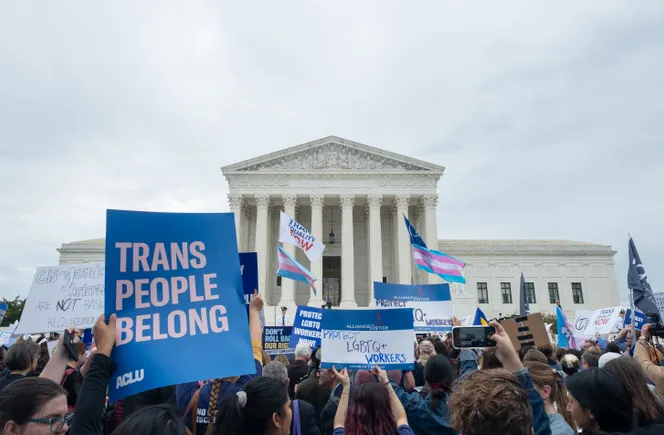
    As a campaigner focusing on gender-based violence within higher education, I am extremely concerned about the consequences for trans and non-binary people of the recent Supreme Court judgement on the meaning of “sex” in the Equality Act 2010.

    Crucial work is being done by trans activists and their allies to challenge this judgement, including a proposed judicial review. In the meantime, the Equality and Human Rights Commission (EHRC) has been consulting on its guidance, and higher education institutions are discussing the implications of the judgement.

    Given that any further legal case will take some time to come to fruition, it is crucial that decisions being made around trans and non-binary people’s access to spaces within higher education are informed by good quality evidence.

    This evidence – which comes from a wide range of international studies, as outlined below – shows clearly that trans and non-binary people face much higher risks in relation to sexual harassment and assault than cis people, both men and women. This fact is entirely missing in the consultation version of the guidance.

    My response to the consultation has outlined these issues. But this point needs to be taken into account by all HEIs currently considering how to implement the Supreme Court judgement. This piece aims to give evidence and wording to help staff to do so.

    Research context

    Trans and non-binary people are much more likely than cis people, including cis women, to be subjected to sexual harassment and violence. This is a well-established fact, evidenced by national studies of 180,000 students in the US; 8000 students in Ireland; and 43,000 students in Australia, as well as studies focusing on staff-student sexual misconduct (p.277) or on specific disciplines; and studies across campuses and that compare different sexual and gender minority groups.

    For example a survey of over 43000 students in Australia published in 2022 found that trans students were more than twice as likely as cis women to have been subjected to sexual violence in the past year, and also significantly more likely to be subjected to sexual harassment, as detailed in the figure below.

    In addition, non-binary and trans people may often experience sexual harassment that intersects with harassment on the basis of their gender identity. For example, in a large national survey of sexual harassment and violence in Ireland with responses from 7901 students, 45% of non-binary students described being subjected to sexualised comments related to their gender identity.

    Toilets have been identified as a particularly risky space for trans and non-binary children at school.

    A recent US study analysed a survey of 3673 transgender and nonbinary US adolescents in grades 7 to 12. They found that – while trans and non-binary students were already more likely to experience sexual assault than cis students – this risk was increased by a large amount where they are not allowed to use toilets that match their self-identified gender (this included policies where trans and non-binary students had to use alternative facilities such as staff bathrooms).

    Transgender boys and girls, as well as nonbinary students assigned female at birth, whose restroom and locker room use was restricted, were more likely to have experienced sexual assault in the past 12 months compared with those without restrictions and the largest increased risk (149%) was among transgender girls.

    This study – with an unusually large sample of trans and non-binary students from across the US – shows the significantly heightened risk that trans and non-binary youth are subjected to sexual assault as a result of bathroom usage policies.

    This is not a negligible amount of risk. The study’s focus on youth is particularly important – in the UK context, more than a third (35 per cent) of trans and non-binary people report having started transitioning by age 18 and two-thirds (67 per cent) by age 25. Therefore, schools and higher education institutions are a key site where trans and non-binary people’s safety needs to be considered.

    These research findings are not currently reflected in the EHRC guidance, as outlined below.

    How the EHRC guidance needs to change

    At points in the current (consultation) version of the EHRC guidance, women’s “safety” is used as a justification for providing single-sex services for cis women only. For example, in point 13.3.4:

    When considering the benefits of offering a separate or single-sex service, the service provider (including a person providing a service in the exercise of public functions) should think about whether women’s safety, privacy and / or dignity would be at risk in the service if it was shared with men.

    Considered in light of the evidence presented above, it is concerning that women’s safety is discussed but there is no mention of the safety of trans and non-binary people. Trans and non-binary people face the greatest risk to their safety and dignity (as sexual harassment is by definition a violation of dignity) if compared to the current practice where trans women use women-only facilities.

    Trans and non-binary people’s safety is significantly more compromised by the use of single sex spaces than cis women’s. But the guidance is entirely silent on the risks that trans and non-binary people face if single-sex spaces are limited to cisgendered women and men respectively.

    Similarly, section 13.5 discusses “relevant considerations when deciding whether the exclusion of trans people from a separate or single-sex service is a proportionate means of achieving a legitimate aim” but does not mention trans and non-binary people’s increased risk of sexual harassment and assault.

    Throughout the guidance, where arguments are made about considering cis women’s safety or perceived safety in relation to single-sex services, the same arguments also need to be made – and indeed are heightened – in relation to trans and non-binary people. This means that HEIs, in considering provision of single-sex spaces, must also consider the ways in which trans and non-binary people’s risk of sexual assault and harassment is heightened when they are excluded from spaces that match their gender identity.

    HEIs considering their provision of space could draw on the finding from the US study of trans and non-binary high school students, discussed above. This study found that offering alternative provision trans and non-binary students, for example whereby they would use the staff toilets (which are single toilets) instead of the student toilets, still correlated with increased risk of sexual assault for trans and non-binary students.

    Harassment on the basis of gender reassignment

    The other area that the EHRC guidance needs to consider more carefully is the risk of harassment on the basis of gender reassignment. In 13.5.6 the consultation version of the guidance discusses the circumstances that might be considered when making decisions on trans or non-binary people’s use of single sex spaces. The relevant text reads (trigger warning: transphobia):

    13.5.6 A legitimate aim for excluding a trans person from a separate or single-sex service for their own biological sex might be to prevent alarm or distress for other service users. Whether it is reasonable to think that the presence in that service of the trans person will cause alarm or distress will depend on all the circumstances, including the extent to which the trans person presents as the opposite sex. For this reason, a service provider (including a person providing a service in the exercise of public functions) should only consider doing this on a case-by-case basis. [my emphasis]

    The suggestion that service providers should consider “the extent to which the trans person presents as the opposite sex” as part of their consideration of circumstances on a case-by-case basis is highly problematic.

    This suggestion seems to invite harassment on the basis of gender reassignment, i.e. service providers are invited to pass judgement on whether a trans person “passes” or not; as this judgement is being made on a case-by-case basis, the service providers are required to assess the gender presentation of a particular individual.

    This is likely to have the effect of creating an intimating, hostile, degrading, humiliating or offensive environment – i.e. harassment on the basis of gender reassignment – for the person being considered. Furthermore, judgements about how a person of any sex should “present” also puts other groups at risk such as butch cis women and femme cis men, and I could not find any mention of intersex people throughout the consultation.

    Implications for higher education institutions

    The high prevalence of sexual violence and harassment faced by trans and non-binary students is particularly relevant in light of the Office for Students’ new regulatory requirements for higher education institutions to address harassment and sexual misconduct.

    Firstly, this regulation includes the requirement to address harassment on the basis of gender reassignment, so the example identified above would contravene the OfS requirements. Second, the regulatory requirements state that each provider will need to understand its student population and the extent to which its students may be likely to experience harassment or sexual misconduct in order to properly address these issues

    As such, higher education institutions in England have obligations under the new regulations to ensure that any steps they take following the Supreme Court judgement take into account the heightened risk of sexual harassment and violence faced by trans and non-binary students (and indeed staff).

    Next steps

    In considering any steps in response to this judgement, HEIs would do well to consider this guide from Gendered Intelligence. Drawing on a legal opinion from the Good Law Project, they make a distinction between single sex spaces or services, i.e. those designated for a group of people (women or men) using the (new) Equality Act 2010 definition of sex; and single gender spaces or services designated for a group of people (women or men) that are trans inclusive. As they note:

    …there is no automatic individual or collective right to ‘single sex’ provision or spaces’ under the Equality Act; this is only justifiable when it is a ‘proportionate means of achieving a legitimate aim’.

    HEIs also have obligations under the Public Sector Equality Duty (PSED) which aims to eliminate discrimination, advance equality of opportunity, and foster good relations. This duty of course applies to all protected characteristics and therefore the evidence presented above of trans and non-binary people’s increased risk of sexual harassment and assault should be considered within PSED implementation. The fundamental point is that “a service for all women does not have to say that it is a single sex provision.”

    It’s important to note that this opinion is likely to be significantly more progressive than those produced by HEIs’ own legal advisers, assuming the latter are primarily concerned with protecting the institution against legal risk. Nevertheless, this means there is a significant amount of space for activism; this judgement reveals how provision of single-sex or single-gender services is a political choice that depends in a large part on the relative power of different voices or groups in arguing their case.

    However, for staff who are attempting to navigate this terrain via policy, a further crucial consideration is put forward by Gendered Intelligence:

    a policy must be implementable and the very act of writing a policy and considering its implementation will establish that taking a trans exclusionary approach around single sex services and spaces will prove to be impossible in practice. Conversely, taking a trans inclusive approach is more practical and workable in reality.

    This is because “there is no evidence or documentation that anyone can provide that proves definitively that they are cisgender. It would not only be pointless to try, but potentially highly intrusive and inappropriate”. It could be that the practicalities end up guiding policy implementation as much as the legal or political arguments.

    Taken as a whole, the Supreme Court judgement, and the EHRC’s interpretation of it, risks making trans and non-binary people even more unsafe by revealing their identities when it may not be safe to do so, and by creating a climate where targeting them for abuse on the basis of their identities is more acceptable. As a result, the figures given above on the prevalence of sexual violence and harassment against trans and non-binary people are likely to grow even larger.

    Source link

  • Tax Policy Belongs in Liberal Arts Curriculum (opinion)

    Tax Policy Belongs in Liberal Arts Curriculum (opinion)

    As congressional Republicans scratched and clawed to pass President Trump’s signature policy effort, the One Big Beautiful Bill Act—a sprawling, tax-heavy package celebrated as much for its branding as for its contents—it is notable how few people could explain what exactly was in it. Tax cuts for some, probably. A Social Security bonus, maybe. A gutting of public benefits, almost certainly. What is clear, though, is that the bill’s complexity was always in service of its politics: When no one understands tax policy, it’s much easier to sell whatever story you want.

    That confusion is exactly why we should be teaching tax policy more broadly—not just in sparsely attended law school classes and accounting departments, but in general education curricula and first-year seminars. Tax isn’t just a technical rule-following subject; it’s a civic one. Tax policy shapes everything from fairness and inequality to the functional shape of the state itself. Yet, most students will graduate college without ever being asked to consider what tax is for—much less whom it helps, whom it harms and why it remains so easy to obscure.

    That is precisely the starting point for the course I designed at Drexel University, Introduction to Tax Theory and Policy, which I teach in our innovative undergraduate law major, housed at the Thomas R. Kline School of Law. It’s not a course for aspiring tax attorneys, prospective C.P.A.s or Excel mavens—few of my students intend to practice tax law. They’re interested in criminal or family law, or they’re business majors, future social workers, engineers or undecided second-years. But they’re all taxpayers—and that’s the relevant bit.

    Courses like mine aim to democratize access to legal and policy tools so that all students, irrespective of their major, can become more informed and empowered participants in civic life. In class, we don’t parse tax rates or calculate deductions. No calculators are required, and at no point is anyone expected to consider the straight-line depreciation of an apartment complex. We ask why the system is built the way it is, and we talk about the power that it reflects and protects. We talk about values: what kinds of behavior the tax code encourages or punishes. We talk about trust and legitimacy: What happens when people believe the system is rigged, and what if they’re right? In short, we treat tax not as a set of arcane rules and rates to memorize, but as a lens through which we can better understand the power structures we live under.

    The surprising part (at least to me, when I first taught it and admittedly just hoped I wouldn’t be lecturing to an empty room) is how much students connect with this approach. More than connect with it—they often enjoy it. I’ve received feedback from students that describes the class as life-changing and course reviews that have noted how it changed assumptions regarding what tax even is. High praise from 19- and 20-year-olds.

    The course itself draws on philosophy, political theory, economics and law—but what it really cultivates is a kind of civic literacy. It asks students to think about who they are in relation to the state and how much of their future may be shaped by the tax policy they’ve never been taught to see. For many, it is the first time they’ve encountered taxation not as something to dodge, but as something to question, debate and reimagine in furtherance of their own values.

    In one session, we explore how the tax code is employed as a kind of soft steering wheel in the economy—how it at turns encourages homeownership, subsidizes sports stadiums, directs corporate research and development, and shapes (or even outright creates) the market for electric vehicles. Another week, we explore estate taxes and inheritance: not just who pays, but what it means to redistribute wealth across generations and what happens when we don’t. We read Garrett Hardin’s “The Tragedy of the Commons,” engage in spirited debates about the potential for tax to solve the artificial intelligence copyright debate, and unpack why TurboTax spent two decades fighting free filing.

    Over the course of the class, the question shifts away from what is a tax and toward whose values does this system reflect? That shift—from mere definitional awareness to focused critical engagement—is when I know the class is working. Students cease to see tax as someone else’s problem and begin seeing it as a potent tool of and for democracy.

    In their final papers, students have proposed remarkably forward-looking and sophisticated tax policy reforms—reflecting both creativity and civic seriousness. One student argued that companies receiving public subsidies through tax credits, like chemical and drug manufacturers, should be barred from claiming additional credits to remediate harms their products create. Another proposed a data-collection “sin tax” aimed at discouraging exploitative surveillance practices by tech companies. These aren’t rote academic exercises. They’re thoughtful intervention proposals that treat tax as a lever for shaping society.

    If tax policy determines who gets what, who pays for it and how the government keeps a hand in the marketplace, then it belongs squarely at the heart of a liberal arts education. We don’t cabin discussions of justice in law schools, and we don’t isolate questions of the public good in policy programs—why do we treat taxation, which intersects with both and innumerable other facets of modern life, as off-limits or too technical for undergraduates?

    This isn’t a plea to teach undergraduates to file their own taxes—though there is probably a case to be made for that, too. It’s about ensuring curricula help them understand how the world works and how it’s been designed to work for some more than others. That means tackling the politics of Internal Revenue Service funding, exploring how “tax relief” often functions as an upstream transfer of wealth and how a positively sprawling bill like the one recently passed through Congress can obscure much more than it reveals.

    If no one understands how tax policy works, how can anyone meaningfully weigh in on whether they support one revenue bill or another? On issues like immigration, abortion or education funding, many people bring at least some passing knowledge or lived experience to the conversation. Tax remains, for most, a black box. The more opaque it becomes, the more tempting it is for lawmakers to retreat into it—tucking major redistributive choices into the shadows of the tax code, where they can be shielded from public scrutiny.

    On the other hand, when students come to see tax as a form of the civic superstructure—something they live within and not just under—they are empowered to not only understand tax policy but to shape it. That should be one of the goals of any serious undergraduate education.

    We don’t have to, and should not, keep treating tax as one professional niche within other professional niches. If we want students to understand how tax relates to power, fairness and democratic participation, we should give them the tools to talk about it. This needn’t focus on the rates and rules but should illustrate the values taxes reflect and trade-offs they embed.

    Courses like mine don’t require a background in economics, accounting or law. They require a willingness to take seriously the idea that how we tax equates to how we govern. If we can help students see tax not as a source of dread or line item on their paycheck, but as the site of collective economic decision-making, we don’t just produce better-informed graduates—we’ll also produce more engaged citizens.

    Andrew Leahey is a practice professor of law at Drexel University’s Thomas R. Kline School of Law.

    Source link

  • How Trump is deploying multiple agencies to set education policy

    How Trump is deploying multiple agencies to set education policy

    This audio is auto-generated. Please let us know if you have feedback.

    The Trump administration is tapping agencies other than the U.S. Department of Education to implement its agenda in colleges and K-12 schools, sometimes circumventing typical rulemaking procedures that would allow districts months to give feedback on and prepare for policy changes before they roll out. 

    The use of other agencies to set or enforce education policy marks a significant shift from typical K-12 policymaking, some education policy experts say. 

    “This is a paradigm shift on the part of how the federal government articulates and connects some of these tools to their education priorities,” said Kenneth Wong, a professor of education policy at Brown University. “So I think going forward, we might be seeing broader use of this wider range of policy tools in the area of education policy changes.” 

    This month, for example, a policy change from the U.S. Department of Energy could take effect that would undo some students’ protections related to sex discrimination under Title IX, disability discrimination under Section 504 and racial discrimination under Title VI. 

    The changes would only apply to colleges receiving Energy Department funds, as opposed to public institutions nationwide — which would have been the case had the rules come from the Education Department. The Energy Department provides over $2.5 billion in research funding to more than 300 colleges annually. The agency also distributed just over $160 million to 28 schools in fiscal year 2025, according to department spokesperson Ben Dietderich.

    As a result of the quietly proposed policy changes, colleges receiving Energy Department grants would no longer, among other things:

    • Be required to facilitate noncontact sports team tryouts for women if there is no equivalent women’s team. For example, if a college had a men’s baseball team but no women’s softball team, women would no longer be guaranteed the opportunity to try out for a spot on the men’s baseball team.
    • Be permitted to proactively “overcome the effects of conditions that resulted in limited participation therein by persons of a particular sex.” This would remove protections that allow schools to have gender-conscious after-school or college programs to provide women and girls opportunities they have historically been denied, such as in STEM fields and technical training, according to Shiwali Patel, senior director of Safe and Inclusive Schools at National Women’s Law Center and a Title IX attorney.  
    • Be required to prevent systemic racial discrimination that may result from seemingly neutral policies, as a result of the department rescinding guardrails protecting against policies that cause a “disparate impact” on underserved students. Disparate impact investigations have previously addressed issues such as Black students being disciplined at higher rates than students of other races.  

    The agency issued the policy changes through a process called direct final rulemaking, which allows it to issue a rule without going through the rulemaking process twice to incorporate changes based on public feedback and publish a final version. The expedited process is usually used for noncontroversial changes and when an agency does not expect significant pushback.

    The rules are to take effect July 15 as long as no “significant adverse comments” were received by June 16. Dietderich did not respond as to whether the agency received significant adverse comments.

    However, a review of some publicly available comments show that the direct final rules — posted May 16 — have been controversial, with multiple civil rights organizations explicitly telling the Energy Department they are submitting “significant, adverse” comments for its review.

    Other agencies launch civil rights investigations and enforcement

    The Energy Department situation isn’t the first time the Trump administration has deployed agencies other than the Education Department to set or enforce education policy. In fact, the administration has used the departments of Justice, Agriculture, and Health and Human Services over the past few months to investigate sex and race discrimination at schools and enforce compliance. 

    The administration notably used these agencies in an unprecedented investigation into the Maine Department of Education, spurred by a public disagreement between President Donald Trump and Maine Gov. Janet Mills, a Democrat, over the state’s athletic policy allowing transgender athletes on women’s and girls’ sports teams. 

    That dispute kicked off a string of Title IX investigations by several federal agencies that provide funds to Maine. 

    They included a four-day probe launched by HHS. And because HHS rather than the Education Department conducted the probe, it didn’t have to follow the standards spelled out in the Education Department’s Office for Civil Rights case processing manual. That manual ensures the Education Department conducts investigations according to certain timelines, for example, allowing up to 90 calendar days for negotiations to take place and 10 days for schools or states to sign onto a resolution agreement. 

    In addition, the U.S. Department of Agriculture froze funds to some of the state’s schools over the Maine Department of Education’s alleged Title IX violations. 

    USDA, alongside other federal agencies, will continue to pause and, where appropriate, terminate categories of education programming in Maine if these Title IX violations are not resolved to the satisfaction of the Federal Government,” said an April 2 letter from Agriculture Secretary Brooke Rollins to Mills. 

    A court order eventually overturned the USDA funding freeze as part of an agreement struck in May between Maine and the USDA. 

    Source link

  • How Trump is deploying multiple agencies to set education policy

    How Trump is deploying multiple agencies to set education policy

    This audio is auto-generated. Please let us know if you have feedback.

    The Trump administration is tapping agencies other than the U.S. Department of Education to implement its agenda in schools, sometimes circumventing typical rulemaking procedures that would allow districts months to give feedback on and prepare for policy changes before they roll out. 

    The use of other agencies to set or enforce education policy marks a significant shift from typical K-12 policymaking, some education policy experts say. 

    “This is a paradigm shift on the part of how the federal government articulates and connects some of these tools to their education priorities,” said Kenneth Wong, a professor of education policy at Brown University. “So I think going forward, we might be seeing broader use of this wider range of policy tools in the area of education policy changes.” 

    This month, for example, a policy change from the U.S. Department of Energy could take effect that would undo some students’ protections related to sex discrimination under Title IX, disability discrimination under Section 504 and racial discrimination under Title VI. 

    The changes would only apply to schools receiving Energy Department funds, as opposed to public schools nationwide — which would have been the case had the rules come from the Education Department. The Energy Department distributed just over $160 million to 28 schools in fiscal year 2025, according to department spokesperson Ben Dietderich. The agency also provides over $2.5 billion annually to more than 300 colleges and universities to fund research.

    As a result of the quietly proposed policy changes schools receiving Energy Department grants would no longer, among other things:

    • Be required to facilitate noncontact sports team tryouts for girls if there is no equivalent girls’ team. For example, if a school had a boys’ baseball team but no girls’ softball team, girls would no longer be guaranteed the opportunity to try out for a spot on the boys’ baseball team. 
    • Be permitted to proactively “overcome the effects of conditions that resulted in limited participation therein by persons of a particular sex.” This would remove protections that allow schools to have gender-conscious after-school or college programs to provide women and girls opportunities they have historically been denied, such as in STEM fields and technical training, according to Shiwali Patel, senior director of Safe and Inclusive Schools at National Women’s Law Center and a Title IX attorney.  
    • Be required to prevent systemic racial discrimination that may result from seemingly neutral policies, as a result of the department rescinding guardrails protecting against policies that cause a “disparate impact” on underserved students. Disparate impact investigations have previously addressed issues such as Black students being disciplined at higher rates than students of other races.  

    The policy changes were issued through a process called direct final rulemaking, which allows an agency to issue a rule without going through the rulemaking process twice to incorporate changes based on public feedback and publish a final version. The expedited process is usually used for noncontroversial changes and when an agency does not expect significant pushback.

    The rules are to take effect July 15 as long as no “significant adverse comments” were received by June 16. Dietderich did not respond as to whether the agency received significant adverse comments.

    However, a review of some publicly available comments show that the direct final rules — posted May 16 — have been controversial, with multiple civil rights organizations explicitly telling the Energy Department they are submitting “significant, adverse” comments for its review.

    Other agencies launch civil rights investigations and enforcement

    The Energy Department situation isn’t the first time the Trump administration has deployed agencies beyond the Education Department to set or enforce education policy. In fact, the administration has used the departments of Justice, Agriculture, and Health and Human Services over the past few months to investigate sex and race discrimination at schools and enforce compliance. 

    The administration notably used these agencies in an unprecedented investigation into the Maine Department of Education, spurred by a public disagreement between President Donald Trump and Maine Gov. Janet Mills, a Democrat, over the state’s athletic policy allowing transgender athletes on girls’ and women’s sports teams. 

    That dispute kicked off a string of Title IX investigations by several federal agencies that provide funds to Maine. 

    They included a four-day probe launched by HHS. And because HHS rather than the Education Department conducted the probe, it didn’t have to follow the standards spelled out in the Education Department’s Office for Civil Rights case processing manual. That manual ensures the Education Department conducts investigations according to certain timelines, for example, allowing up to 90 calendar days for negotiations to take place and 10 days for schools or states to sign onto a resolution agreement. 

    In addition, the U.S. Department of Agriculture froze funds to some of the state’s schools over the Maine Department of Education’s alleged Title IX violations. 

    USDA, alongside other federal agencies, will continue to pause and, where appropriate, terminate categories of education programming in Maine if these Title IX violations are not resolved to the satisfaction of the Federal Government,” said an April 2 letter from Agriculture Secretary Brooke Rollins to Mills. 

    A court order eventually overturned the USDA funding freeze as part of an agreement struck in May between Maine and the USDA. 

    Source link

  • How funding policy has affected foundation year provision

    How funding policy has affected foundation year provision

    The coming academic year (2025-26) is the first in which classroom-based foundation year (FY) fees will be capped at a level below the higher level fee cap.

    For many who have experienced or supported foundation year tuition this is a retreat from a proven method for supporting people who have been failed by compulsory schooling in continuing their education. Critics would point to a few years of sustained growth, particularly in franchised provision, that is of more questionable quality and benefit.

    Foundation years are an anomaly in that they sit neither at level three (alongside other pre-university qualifications like A levels or the Access to HE Diploma [AHED]) or level four (alongside higher national diplomas, and the first years of both undergraduate degrees and higher technical qualifications). As such, they will face the worst of both worlds: level 3 funding (for classroom-based provision) covered by level 4 repayment rules and level 4 regulatory interventions.

    Why cut?

    In a ministerial statement that, in a dazzling display of self-awareness, actually used the phrase “fix the foundations” twice, the Secretary of State set a fee limit of £5,760 (the maximum current cost of an AHED, though in practice fees are nearer £4,000) as a maximum for “classroom-based” (non-STEM) foundation years on 4 November 2024.

    There’s a paragraph on the ostensible reasoning for this that is worth bearing in mind:

    The government recognises the importance of foundation years for promoting access to higher education, but they can be delivered more efficiently in classroom-based subjects, at a lower cost to students.

    This sounds more like an access-focused intervention rather than an attempt to cut provision, although it is rather divorced from the cost of provision. This is despite a 2023 report from IFF Research which noted that, based on the available data and on a series of interviews:

    the cost of delivering FY and the first year of a UG degree in the same subject area was found to be broadly similar

    Indeed, there were suggestions that FYs may actually work out more expensive, given the need for more contact time and the tendency towards smaller classes. We should leave aside for the moment the great difficulties we have in understanding the cost of higher education provision more generally, and note that the evidence base for this particular decision is weak. And there is, to be clear, a huge absence of meaningful data about FYs more generally – something DfE itself attempted (after a fashion) to remedy with an ad hoc data release in October of 2023.

    Review of routes

    If you were wondering where the impetus for this policy intervention originally came from, you have to look back to Philip Augar’s review of post-18 fees and funding back in 2019:

    We recommend that student finance is no longer offered for foundation years, unless agreed with the OfS in exceptional cases.

    In broad-brush terms, his argument was that foundation years did a similar job to some level 3 qualifications (specifically the Access to HE Diplomas) at greater cost: he characterised this as “enticing” underqualified students onto expensive four year degrees that may not be in their best interests.

    It was one of many largely arbitrary (and mercifully forgotten) Augar recommendations on higher education funding, to the credit of the previous government it was very much more aligned to addressing the value offered to students. As Michelle Donelan said in 2022:

    We also know that there are some people who need a second chance, an opportunity to get into higher education through a less conventional route. Often this route is through foundation years, but we think it is unfair that some of those who take advantage of this transformational opportunity have to pay over the odds. So we are reducing the fee limit for foundation years to make them more accessible and more affordable for those who need a second chance.

    Quantity and quality

    Okay. So, ignoring Augar, there’s never been an agenda to cancel or limit the availability of foundation years. The cuts are based (albeit on some quite shaky data) on reducing costs for students while maintaining affordability for providers.

    There is, however, widely reckoned to be a quality issue with some FYs offered via franchise or partnership arrangement – something which DfE did not appear to have considered in collecting data or commissioning reports.

    With the 2025 recruitment cycle mostly over, we now have the ability to assess how the sector has responded to these interventions via the Unistats dataset.

    As I never tire of telling people, Unistats is not perfect but it is useful. The big headline story we’ve tracked in recent years is a reduction in the number of undergraduate courses on offer overall – down 6 per cent between 2023 and 2024, and down a further 3 per cent between 2024 and 2025.

    Foundation supply

    But underneath this we lost one in ten courses with compulsory foundation years (courses that must start with a foundation year) between 2023 and 2024, and a further five percent between 2024 and 2025. The latter year also saw nearly 6 per cent of optional foundation years (courses that can include a foundation year if required) disappear.

    [Full screen]

    What about franchise provision? Using a unistats proxy (does the registered UKPRN match the display UKPRN, or is there an additional UKPRN for a different teaching location) it appears that the number of franchised compulsory foundation years grew from 90 in 2023 to 107 in 2024. This trend reversed between 2024 and 2025 (with numbers falling back below 80), but the number of optional franchised foundation years fell off a cliff after 2023: from 53 in 2023 to just 12 in 2024, and 13 in 2025.

    At a (top level) subject area the dominance of social sciences and business foundation years has declined a little – engineering foundation years have always been popular and have broadly persisted over the three years in question (and are the most popular by far at Russell Group providers). Among franchised provision business and management still dominates, but the last three years has seen a rise in the number of creative and engineering foundation years offered (largely with specialised providers as franchisers).

    Policy outcomes and policy intentions

    So, it all depends on how you take the impetus of the government’s change in foundation year policy. If it was a measure to reduce overall the number of classroom (non-STEM) foundation years it has had some questionable success, likewise if you believe it was a policy designed to limit the spread of franchised foundation year degrees.

    It is possible that it has driven savings within universities – allowing foundation years to be run more cheaply. This might explain things like the paradoxical rise in franchised foundation years in creative arts alongside a drop in non-franchised provision – smaller and less historically encumbered (and potentially lower quality) providers may be better at running these foundation years at a lower overall cost.

    Here’s who is offering these courses – and what they are.

    [Full screen]

    This defaults to FY provision in 2025 but is – with a bit of effort, a fascinating tool for looking over the complete three years of courses advertised to undergraduates.

    As usual, we are hugely short of data – the fact that unistats (of all things) offers the best lens on what is happening suggests that there’s nobody in DfE with an eye on what is going on.

    But rumours of the demise of the classroom based foundation year, or even the franchise model in providing this, are likely to be overstated. It remains to be seen, by whatever measure, whether the cut-price offer is as good.

    Source link

  • Federal Policy Uncertainty Impacting College Budgeting

    Federal Policy Uncertainty Impacting College Budgeting

    Economic uncertainty—the kind that dominated headlines for the first half of 2025—makes long-term financial planning difficult. But nearly two in three college and university chief business officers say that uncertainty surrounding federal policy for higher education is hindering their ability to conduct even basic financial planning. That’s according to Inside Higher Ed’s forthcoming annual survey of CBOs with Hanover Research.

    “Higher education has not faced this level of financial uncertainty in generations,” said Robert Kelchen, chair of educational leadership and policy studies at the University of Tennessee at Knoxville, who reviewed preliminary survey data.

    While recent history offers one comparison—the early days of the pandemic, when uncertainty was similarly “off the charts”—the federal government at that time “quickly stepped in to provide support,” Kelchen continued. Today, by contrast, the federal government “is causing the uncertainty.”

    According to the survey, federal policy uncertainty under the second Trump administration is moderately impacting basic financial planning at 49 percent of institutions represented, meaning that challenges have arisen but CBOs and their colleagues have managed to adapt. Another 14 percent of institutions are severely impacted, meaning basic financial planning has been extremely difficult, leading to major disruptions. This is consistent across sectors.

    The survey was fielded in April and May, with CBOs from 169 institutions, public and private nonprofit, associate to doctoral degree–granting, responding. The full 2025 Survey of College and University Chief Business Officers will be released later this month. It includes additional findings on the second Trump administration’s impact on institutional finances so far, mergers and acquisitions, value and affordability, and more.

    CBOs see federal student aid policy changes as a major risk, with 68 percent citing this as a top federal policy concern from a longer list of options. A distant second: research funding levels, cited by 24 percent of all CBOs. Public institution CBOs are relatively more concerned about research funding, at 36 percent versus 9 percent of private nonprofit peers.

    Questions about the future of federal student aid come on top of last year’s Free Application for Federal Student Aid fiasco. And nearly four in 10 surveyed CBOs (38 percent) report having already experienced significant to severe disruptions related to that FAFSA rollout.

    In Kelchen’s assessment, there’s no guarantee that the federal financial aid system will work as intended this fall—especially for colleges that require additional oversight before receiving funds, given recent mass layoffs at the U.S. Education Department. Congress also last week passed what he described as the largest set of changes to federal higher education policy in decades, via the Trump-backed One Big Beautiful Bill Act, with potential “downstream effects for state budgets due to cuts to federal benefits.”

    Throw in cuts to federal research funding and big changes for international students, and colleges’ budgets “are highly uncertain,” Kelchen said.

    Case in point: Michigan State University president Kevin Guskiewicz recently announced a plan to cut spending, including faculty and staff positions. He blamed expectations that the university will receive “less money from the federal government due to research cuts and restrictions on international enrollments, although the magnitude of those impacts is uncertain.” Also at play: increasing operating costs and state budget concerns.

    In another example of uncertainty in action, Val Smith, president of Swarthmore College, announced in late May that the institution’s Board of Managers had been unable to carry out “one of its primary fiduciary responsibilities: approving the college’s operating budget,” at least as usual. Given the “confluence of uncertainties we currently face,” she said at the time, the board moved forward with an interim operating budget for the first three months of the new fiscal year. It plans to revisit and adopt a full operating budget in the fall, “when we expect to have more clarity.”

    To Kelchen, interim budgets such as Swarthmore’s can make sense if revenues are “highly volatile.” So he said he wouldn’t be surprised if other institutions were quietly making similar moves.

    In an additional expression of uncertainty, most surveyed CBOs describe the impact of the second Trump administration’s policies on their institution’s financial outlook—both current and over the next 12 months—as somewhat or very negative.

    Most CBOs report minimal federal funding cuts under Trump so far. A handful do indicate that their funding has been reduced significantly, by more than 10 percent. An additional 11 percent report that funding has been reduced by 5 to 10 percent. And about as many aren’t sure. But the rest say funding has decreased by less than 5 percent or stayed consistent.

    While the ultimate impact of federal policy changes remains to be seen—and will look different at different institutions—strategist Rebeka Mazzone advised frequent collaboration and communication between CBOs and other cabinet-level leaders, “so that you always know what’s happening on a more real-time basis.”

    Also critical: forecasting, or “having a tool that allows you to constantly update the dollars you have so that you understand the impact.” Mazzone, founder of FuturED Finance, said that this real-time process is underused and very different from typical budgeting, in a which a yearlong spending plan is developed based on a particular moment in time. But the “smaller and the more cash-strapped the institution is, the more important the forecast becomes.”

    Fancy software isn’t necessary, she said, as forecasting can happen on a spreadsheet. What matters is “capturing changes and overlaying them on the budget so that you understand where you’re going to end the year, and that helps you to more proactively manage the outcomes.”

    Another important tool? Five-year projections. “If you have lower enrollment this year, that is going to affect you also for the next three years. If you have a higher discount rate this year, that is going to affect you also for the next three years.” So when institutions “suddenly” close, Mazzone said, “it’s not so sudden. They just weren’t using these tools to really understand how bad things were—and how quickly things were heading in the wrong direction.”

    To Mazzone’s point, while federal policy uncertainty is challenging short-term planning, many institutions now making budget cuts have significant underlying issues.

    What’s Kelchen’s advice for colleges and universities struggling with present uncertainty—including those navigating longer-term financial woes? Prepare multiple budget scenarios “ranging from something close to business as usual to the possibility of losing most federal funding.”

    Institutions will get “some answers on what actual revenues look like as the start of a new academic year draws nearer, but this will take time,” he said. Those in stronger positions can “operate more at business as usual and absorb losses if needed. But if there is underlying weakness, colleges need to budget for the worst right now and hope for something better.”

    Source link

  • George Washington University hints at layoffs amid federal policy upheaval

    George Washington University hints at layoffs amid federal policy upheaval

    This audio is auto-generated. Please let us know if you have feedback.

    Dive Brief:

    • Faced with an “unsustainable compounding deficit,” George Washington University is freezing hiring and could lay off employees down the road, the private Washington, D.C.-based institution said in a community message Tuesday. 
    • The hiring freeze applies to positions funded directly by the university and is set to last at least until Oct. 1. GWU also plans to review large procurement contracts, cut back on capital spending, and tighten budgets for travel, events and entertainment, among other moves. 
    • Despite earlier budget-tightening measures, senior university leaders said the outlook for the upcoming fiscal year has deteriorated since April. Officials plan to present a full fiscal 2026 budget to the university’s governing board in early September.

    Dive Insight:

    In their announcement, university President Ellen Granberg, Interim Provost John Lach and other officials cited political, economic and demographic challenges that are exacerbating GWU’s budget pressures.

    On the policy front, they pointed to the Trump administration’s ongoing efforts to limit funding for indirect research costs, such as facilities, utilities and other overhead, to federal grant awardees. While federal courts have paused or struck down those moves at four federal agencies, they have created deep financial uncertainty for many universities. 

    The officials also pointed to “significant changes in the overall federal research landscape,” which has big implications for the university, a major nexus for federal grants. In fiscal 2024, GWU spent a total of $471.6 million in federal grants from a wide array of federal agencies and other grantors. 

    Along with research funding disruption, officials pointed to a slowdown in visa processing and President Donald Trump’s recent move to ban or restrict travel from 19 countries. They described these changes as “constraints on our ability to enroll international students.” In 2024, GWU enrolled 3,661 international students, according to institutional data.

    Moreover, the university, with its deep ties to the D.C. area, is beginning to see domestic enrollment impacts from the Trump administration’s massive slashes to federal agency workforces, as well as general financial uncertainty among American consumers.

    Even more pressure on graduate enrollment could come amid the elimination of Grad PLUS loans and caps on total student borrowing, brought on by the massive budget bill passed by Republicans and signed by Trump last week. 

    But GWU had financial challenges before Trump took office. As Granberg, Lach and other officials noted, revenue growth averaged 6.1% from fiscal 2022 through 2024 while expenses grew 6.8%. 

    “While this difference might not seem significant, its cumulative effect is an unsustainable compounding deficit,” they said. 

    That budget gap resulted from pre-Trump structural challenges in the higher education world, including rising costs and declining master’s degree enrollments.

    Between 2018 and 2023, GWU’s total fall graduate student enrollment declined 9.2% to 14,181 students, according to federal data. The officials pointed to declines in international student enrollment, which began at the university before Trump’s newest travel bans and “at this point can no longer be viewed as temporary.”

    University leaders in April announced a pause on merit-based salary increases and a 3% budget cut across units. But the challenges have only deepened since then. 

    Now officials aim for deeper budget cuts for fiscal 2026, “which we recognize will likely lead to some reductions in the number of staff and certain faculty positions, a step we have tried to avoid but cannot any longer,” they said Tuesday.

    Source link

  • After Texas, DOJ Targets Kentucky’s In-State Tuition Policy

    After Texas, DOJ Targets Kentucky’s In-State Tuition Policy

    Undocumented students and immigrant advocacy organizations are still reeling after Texas, earlier this month, swiftly sided with a U.S. Department of Justice lawsuit against its policy of permitting in-state tuition for undocumented students. The two-decade-old law, which Republican state lawmakers had recently tried and failed to quash, was dismantled within a matter of hours in a move some critics called collusive.

    Now the DOJ is employing the same strategy all over again—this time in Kentucky. The department filed a complaint in U.S. District Court for the Eastern District of Kentucky on Tuesday challenging the in-state tuition policy for undocumented students. The lawsuit, which names Democratic governor Andy Beshear, Commissioner of Education Robbie Fletcher and the Kentucky Council on Postsecondary Education, takes issue with a policy that allows graduates of Kentucky high schools who live in the state, regardless of citizenship, to access in-state tuition benefits.

    “No state can be allowed to treat Americans like second-class citizens in their own country by offering financial benefits to illegal aliens,” U.S. attorney general Pamela Bondi said in a statement. “The Department of Justice just won on this exact issue in Texas, and we look forward to fighting in Kentucky to protect the rights of American citizens.”

    Beshear is trying to distance himself from the legal battle. Crystal Staley, communications director for the governor’s office, said in a statement that the office hasn’t been served with a lawsuit, nor did it receive advance notice or hold prior conversations with the department about the regulation. She emphasized that the in-state tuition policy was established by the Kentucky Council on Postsecondary Education more than a decade ago.

    “Under Kentucky law, CPE is independent, has sole authority to determine student residency requirements for the purposes of in-state tuition, and controls its own regulations,” Staley wrote. “The Governor has no authority to alter CPE’s regulations and should not be a party to the lawsuit.”

    The Kentucky Council on Postsecondary Education also only became aware of the lawsuit Wednesday morning and reported that afternoon that it had not yet been served legal documents.

    “Our staff General Counsel is reviewing pertinent federal laws and state regulations at this time to determine next steps,” Melissa Young, the council’s communications senior fellow, wrote in an email to Inside Higher Ed.

    As of Wednesday evening, no new developments in the case had taken place, but Kentucky attorney general Russell Coleman, a Republican, indicated in a statement to Inside Higher Ed that his office planned to support the lawsuit.

    “Preserving in-state tuition for our citizens at the commonwealth’s premier public universities is important to fostering Kentuckians’ potential and encouraging a vibrant state economy,” Coleman said in the statement. “Our Office will support the Trump Administration’s efforts to uphold federal law in Kentucky.”

    As in Texas, a group of Republican lawmakers proposed legislation earlier this year to prevent noncitizens in Kentucky from qualifying as residents and accessing in-state tuition benefits. But the bill didn’t proceed further.

    The new lawsuit heightens fears among undocumented students’ advocates that the Trump administration could target in-state tuition policies across the country, which help undocumented students in 23 states and D.C. pay for college when they can’t access federal financial aid. Advocates also worry the Trump administration could continue to sue red states to secure policy wins desired by both Republican state lawmakers and the federal government. (In Kentucky, Republicans control the attorney general’s office and the State Legislature.)

    Monica Andrade, director of state policy and legal strategy at the Presidents’ Alliance on Higher Education, predicted after the Texas lawsuit, “This might only be the beginning, and there might be future actions that extend beyond Texas.”

    Now she worries she’s been proven right.

    Pushback in Texas

    The move in Kentucky comes as undocumented students and civil rights organizations are fighting back in Texas.

    The Mexican American Legal Defense and Educational Fund, a Latino civil rights organization, filed a motion on behalf of undocumented students in Texas to intervene in the DOJ lawsuit. The motion argues that the speed at which Texas and the DOJ came to an agreement and the judge closed the case provided no opportunity for a hearing or for the public to weigh in.

    “Our federal courts are public agencies,” said Thomas A. Saenz, president and general counsel at MALDEF. “They’re supposed to undertake their work in the public eye. The two parties and the court did all of this behind closed doors in one afternoon, without setting a public hearing … That is a complete abuse of the judicial system.”

    “To come up with a consent judgment like that, they had to have been planning this for weeks,” he said. “Every Texan should be offended if something their legislators passed and then never repealed was so easily killed by the attorney general acting in collusion with the Department of Justice.”

    MALDEF is representing unnamed affected students, including three DACA recipients: a third-year biomedical science student at the University of Texas Rio Grande Valley who is planning to pursue medical school, a student earning a master’s in higher education at University of Houston who was planning to apply to Ph.D. programs and a master’s student in clinical mental health counseling at the University of North Texas.

    “She cannot afford to pay out-of-state tuition and will likely be forced to drop out of her program,” the motion says of one student.

    The goal is for the student group to become a party in the lawsuit so that it can appeal the decision. Texas and the federal government have until early July to oppose MALDEF’s motion to intervene, but if the judge denies an intervention, MALDEF could appeal that decision as well.

    Andrade said that what MALDEF is doing could possibly be replicated in other states if the DOJ challenges more in-state tuition laws, though some states might face different challenges that require different approaches. For example, Republican lawmakers in Arizona included a provision in their House budget, approved June 12 by the House Appropriations Committee, that colleges can’t use public money to reduce tuition for noncitizens, The Arizona Capitol Times reported. Some cited the Texas lawsuit.

    The Presidents’ Alliance is in “close coordination with legal, with advocacy and institutional partners to explore—whether it’s immediate or longer-term—actions that we can take” to prepare for different kinds of attacks, Andrade said. “Folks in the states where we’re having conversations, their laws comport with federal law. But given everything that’s been going on, that doesn’t mean that folks should not be preparing for any type of challenge.”

    The organization is also trying to advise Texas undocumented students who are “scrambling,” in the absence of any state guidance to higher ed institutions as to when the tuition rate change goes into effect and to whom the shift applies. It’s unclear, for example, whether students with DACA or Temporary Protected Status are included.

    “We’re telling students to continue to take their classes and do not make any drastic changes based on this,” Andrade said.

    TheDream.US, a scholarship provider for undocumented students, is also gearing up to help Texas students find more affordable programs if they can’t pay their colleges’ out-of-state tuition prices. MALDEF predicted some students’ costs would increase up to 800 percent—in some cases, from $50 to $450 per credit hour.

    Gaby Pacheco, president and CEO of TheDream.US, said the organization is prioritizing helping students connect with online programs, because many live in Texas border towns, where commuting to a more distant college could require having to cross immigration control checkpoints.

    In the meantime, Texas institutions and students are embroiled in “confusion and uncertainty and chaos” as they await more information, she said.

    Daniel I. Morales, an associate professor of law and Dwight Olds Chair at University of Houston Law Center, said what happened in Texas is the latest example of a national trend: the “absolute erasure” of state and local issues in favor of the administration’s priorities.

    Morales said two decades ago, Texas’s in-state tuition policy was born out of Republican governor Rick Perry’s recognition of “the reality locally in Texas, that we have an enormous undocumented population that is enormously productive if given the opportunity to go to college,” which benefits the state economy. But now, state lawmakers fear risking their career trajectories if they don’t prioritize partisan national interests, he said.

    He doesn’t know what’s going to happen in Kentucky. But if it goes the way of Texas and the attorney general files a joint motion with the DOJ, civil rights organizations such as MALDEF would have to be the ones to fight it, with students as the plaintiffs, he said.

    “Students, if they don’t have the resources to pay out-of-state tuition, they don’t have the resources to litigate, either,” at least not on their own, he said. “There’s very little recourse.”

    Source link

  • Flexible Learning and Policy Challenges

    Flexible Learning and Policy Challenges

    What impact is flexible learning having on learners from K-12 through to professional development?

    New Zealand has remarkably high levels of digital access across the population. Why aren’t we out performing other countries in educational measurements?

    This piece serves to introduce a series of six challenges faced by policy makers around flexible learning.

    These six challenges are:

    1. Unequal Access to Technology and Connectivity
    2. Socioeconomic Disparities
    3. Digital Literacy and Skills Gaps
    4. Quality Assurance and Consistent Experience
    5. Teacher Preparedness and Support
    6. Policy and Funding Models

    In this first piece I want to establish what I mean by ‘flexible learning’.

    Like many I struggle to have a single, concise, and consistent “definition” of flexible learning. I would say that flexible learning is a model of delivery that offers learners agency and control over various aspects of their learning experience. Flexible learning is a spectrum. Formal learning courses exist on a continuum between “rigid” and “flexible” delivery. The more control and choice given to the learner, the more flexible the learning experience.

    Flexible learning aims to “empower the student to choose what learning should be studied face-to-face and that which should be studied online, and how to go about engaging with that learning” (2022). This Means empowering the learner to make choices regarding:

    • When: synchronous or asynchronous learning, pace-mandated or self-paced progression.
    • Where: Learning in different locations (home, campus, workplace, etc.).
    • How: Different modes of engagement (online, in-person, blended, hybrid, hyflex).
    • What: Some degree of choice over content or learning pathways, though this is often more associated with “open learning.” Indeed in a world where students are overwhelmed with choices, there are strong arguments that having a prescriptive programme serves students well.

    In my article “Definitions of the Terms Open, Distance, and Flexible in the Context of Formal and Non-Formal Learning,” (2023) I argued that flexible learning is a model of delivery, rather than a fundamental mode of learning. I posit that there are only two core modes of learning: in-person (or face-to-face) and distance learning. Flexible learning then emerges from various combinations and approaches to curriculum design that empower learners to choose amongst these two modes

    As education has a habit of inventing new terms for marginally different practices it might be worth just pointing out the relationship I think exists between flexible learning and forms of Blended, Hybrid, and HyFlex learning. I perceive blended, hybrid, and HyFlex learning as specific models of delivery that fall under the umbrella of flexible learning. They all aim to give agency to the learner regarding how they engage with the material, combining elements of in-person and distance learning.

    I believe that designing for flexible learning means considering the learner’s context and perspective, and creating learning experiences that are relevant, meaningful, motivating, realistic, and feasible within an agreed timeframe. This also involves careful consideration of learning outcomes and assessment in diverse delivery contexts. This means course creators need clarity about learning design principles in relation to flexible approaches, such as working with Notional Study Hours (2020a) and the importance of Learning Outcomes (2020b).

    Based on my broad definition thatFlexible Learning refers to educational approaches and models of delivery that provide learners with a significant degree of choice and control over the time, place, pace, and mode of their learning, leveraging combinations of in-person and distance learning to enhance accessibility and cater to diverse learner needs, how do we face those six policy challenges?

    Watch this space…

    Atkinson, S. P. (2020a, April 14). Working with Notional Study Hours (NSH) or “How much is enough?” Simon Paul Atkinson. https://sijen.com/2020/04/14/working-with-notional-study-hours-nsh-or-how-much-is-enough/

    Atkinson, S. P. (2020b, April 4). Designing Courses: Importance of Learning Outcomes. Simon Paul Atkinson. https://sijen.com/2020/04/04/designing-courses-importance-of-learning-outcomes/

    Atkinson, S. P. (2022a, July 15). How do you define hybrid, or hyflex, learning?. Simon Paul Atkinson. Retrieved from https://sijen.com/2022/07/15/how-do-you-define-hybrid-or-hyflex-learning/

    Atkinson, S. P. (2023). Definitions of the Terms Open, Distance, and Flexible in the Context of Formal and Non-Formal Learning. Journal of Open, Flexible, and Distance Learning, 26(2).3 Retrieved from https://jofdl.nz/index.php/JOFDL/article/view/521

    Source link

  • Co-creation of research agendas could strengthen policy research engagement

    Co-creation of research agendas could strengthen policy research engagement

    The University Policy Engagement Network (UPEN) recently announced that it had been successful in a UKRI bid to develop and expand UK policy to research infrastructure, facilitating connections and engagement between public and civil servants on one hand, and research organisations on the other.

    This call is a recent manifestation of a perennial and important interest in evidence-informed policymaking, and policy and research engagement. Policy engagement is also part of an increased focus on engagement with and impact of research, driven by the Research Excellence Framework.

    We recently published a journal article exploring what researchers and policymakers need to know and understand when engaging with each other, based on interviews with 11 experts working with higher education regulators, other major sectoral bodies, and higher education institutions who had extensive expertise across the UK higher education sector.

    University-based researchers and policymakers respond to different incentives in ways that are not always conducive to engagement. Interviewees described a wide range of influences on policy, including many types of research, much of which is produced outside the university sector. For some types of research, such as rapid research, researchers at higher education institutions were seen as being at a disadvantage. To address these considerations, our interviewees suggested that research co-creation – involving policymakers earlier in the process to develop research ideas and design projects – could promote engagement with policy.

    Engagement from the start

    In a typical research process, university-based researchers develop, conduct, and publish their research with a high degree of independence from the stakeholders of their research. Once the research is completed, researchers disseminate their findings, hoping to reach external stakeholders, including policymakers. In contrast, co-created research brings research stakeholders into the research process at the beginning and maintains stakeholder influence and co-creation throughout.

    When asked how researchers can increase engagement with policy, one participant said: :

    Co-designing projects with people involved in policy from the outset rather than, you know, what I often see, which is ‘we’ve done this stuff and now, who can we send it to?’ So, getting people involved from the outset and the running of it through advice.

    Because policy priorities shift and because research often takes a long time to complete, co-creation is not a perfect solution for policy research engagement. But co-creation may increase the likelihood that research findings are relevant to and usable for the specific needs of policymakers. Another benefit of co-creation is that, by taking part in the research process, policymakers are more likely to feel invested in the research and inclined to use its findings.

    Co-creation of research with policymakers requires access to and some form of relationship with relevant policymakers. While some researchers have easier access to policymakers than others, there are structures in place to facilitate the networking required to build relevant relationships, including through academic fellowship with the UK Parliament. Researchers can sometimes connect more easily to ministers and policymakers via intermediary organisations such as mission groups, representative bodies, think tanks, and professional organisations.

    Designing successful co-creation

    In a policy-research co-creation model, one of the questions that is worth asking is what is co-created: is research co-created, policy co-created, or both? For example, one participant in our study viewed researcher engagement with policymakers as policy-co-creation, rather than as research co-creation. Researchers can ask themselves: “What policy am I well-positioned to co-create based on my research?” as well as “How can my research benefit from co-creation with its stakeholders?”

    Our article highlights that one of the more frequent pathways for researchers based at universities to engage with policy is through conducting commissioned research. Commissioned research is often aligned with policy needs and facilitates co-creation. Yet independence, rigour, and criticality – markers of quality research – still need to be ensured even as part of co-created and commissioned research.

    Commissioned research was not the only type of research discussed by our participants that led to policy engagement. Interviewees provided examples of researchers with an established and rigorous body of work that answered policy-relevant questions which were successful in shaping policy. Sometimes, a body of research developed over time and over multiple studies is better suited for policy engagement. Sometimes this takes the form of a systematic review designed to bring a large body of research literature to bear on a current policy problem.

    This raises an important consideration for mechanisms that incentivise engagement: how does incentivising engagement affect the multiple priorities that researchers based at higher education institutions need to meet? The danger here is that, as more policy engagement is incentivised, researchers at higher education institutions might prioritise forms and qualities of research which lend themselves to engagement over those which higher education is uniquely placed to offer.

    As current efforts to expand UK-wide policy to research infrastructure develop, it is important to consider the multiple complexities associated with policy research engagement. In our view, for policy and research engagement to be meaningful, policy to research infrastructure needs to support high quality research, targeted engagement, and have a clear sense of what each of these means in practice.

    Source link