Tag: Policy

  • The move from principal to district leader was fraught–here’s what I missed the most

    The move from principal to district leader was fraught–here’s what I missed the most

    This story was originally published by Chalkbeat. Sign up for their newsletters at ckbe.at/newsletters.

    I didn’t expect to grieve.

    I knew taking a central office role meant trading the school building for a district badge. I knew the days would be filled with policy, meetings, and personnel issues. What I didn’t know was how much I would miss morning announcements, front office chatter, and the small but sacred chaos of classroom life.

    When I accepted my central office role at Knox County Schools nearly three years ago, I heard words of congratulations and encouragement, and a lot of “You’ll be great at this.” What I didn’t hear was, “You’re going to miss the cafeteria noise” or “You’ll feel phantom pain for your walkie and reach for it like it’s still there.” No one warned me I’d find myself lingering too long during school visits, trying to feel like I still belong.

    What I lost wasn’t just proximity; it was identity.

    As a principal, I was part of everything. Students shouted greetings across the parking lot. Parents stopped me in the grocery store to ask about bus routes or share weekend news. Teachers popped into my office with questions or just to drop off a piece of cake from the lounge. I wasn’t above the work. I was in it. I was woven into the messy, beautiful rhythm of a school day.

    Shifting to the central office changed not just the pace of my day, but the feel of the work. The space was quieter, the communication more deliberate. There are no morning announcements. No car rider line and morning high-fives from kids. No spontaneous TikTok dances during class change. I moved from the rhythm of a living, breathing school to a place where school leadership feels more technical, more filtered, and more removed.

    The relationships changed, too. As a principal, you’re not just part of a team; you’re a part of a family. You laugh together, carry each other’s burdens, and share both the stress and the wins. Move into a district role, and you’re now “from downtown,” even if your heart still lives on campus. You walk into buildings with a badge that means something different, and the conversations shift just enough for you to notice.

    None of this means the central office work doesn’t matter. It does. Or that I don’t love it. I do. Central office work gives me a systems-level view of how our schools function. I find purpose in improving not just individual outcomes, but the structures that guide them.

    Still, the change in relational gravity caught me off guard. And once the initial disorientation passed, it left me with a deeper concern: How will I stay connected to how the work is actually experienced and carried out in schools if I’m no longer living in it each day?

    At first, I told myself it was just a learning curve, that it would pass, that I’d find new rhythms soon enough. And I did — but not before realizing that central office leadership requires a different kind of muscle. One I hadn’t needed before.

    As a principal, I lived in fast feedback loops. I saw the effects of my decisions by lunchtime. I knew which teachers were having a hard week, which student needed extra eyes, which parent was about to call. Even hard conversations came with a certain clarity because I was close to the context and knew the culture I wanted to build.

    At the district level, the impact is broader but harder to track. The wins take longer to see. The feedback is quieter.

    I had to become more intentional about noticing what I could no longer see. That meant listening differently during school visits, paying closer attention to what leaders were navigating, and asking better questions. Not just about what was happening, but what it was costing them to make it happen.

    One of the advantages of working at a systems level is being able to recognize patterns across multiple settings. They can reveal root causes that individual concerns might never expose. That clarity opens the door to more aligned, lasting support.

    I began thinking less about whether expectations were clear and more about whether they were sustainable. My role was not to direct the work but to support the people carrying it out.

    These changes didn’t come naturally. They came because I didn’t want to become a leader who made good decisions in theory but stayed out of touch in practice. I didn’t want to lead by spreadsheet, even though color-coded tabs bring me great joy. I wanted to lead by understanding.

    Eventually, I began to see that even though I was no longer in the thick of the school day, I could still choose to stay connected — to show up, to ask real questions, to build trust not just through policy, but through presence.

    The classroom educators and school leaders I supported didn’t need someone who had knowledge of what it was like to be a teacher or principal. They needed someone who remembered what it felt like to be one. Someone who hadn’t forgotten the rush of the morning bell or the weight of a tough parent meeting or the impossible feeling of juggling school culture, teacher evaluations, instructional priorities, and a leaky roof all before noon.

    I think back often to my first year in central office. The silence. The absence of bells and kids and chaos. The invisible weight of missing something no one warned me I would lose. I remember walking through a school one afternoon and instinctively reaching for my walkie talkie. It wasn’t there. Of course it wasn’t there. But the reflex reminded me of something important: I still wanted to be tuned in.

    Leadership doesn’t have to grow lonelier as it grows broader. But staying connected takes intention. It takes habits, not just memories.

    I didn’t expect to grieve. But I’m grateful I did. Because grief has a way of reminding you what still deserves your presence.

    Chalkbeat is a nonprofit news site covering educational change in public schools.

    For more news on district management, visit eSN’s Educational Leadership hub.

    Latest posts by eSchool Media Contributors (see all)

    Source link

  • Henderson opposes party policy on HECS – Campus Review

    Henderson opposes party policy on HECS – Campus Review

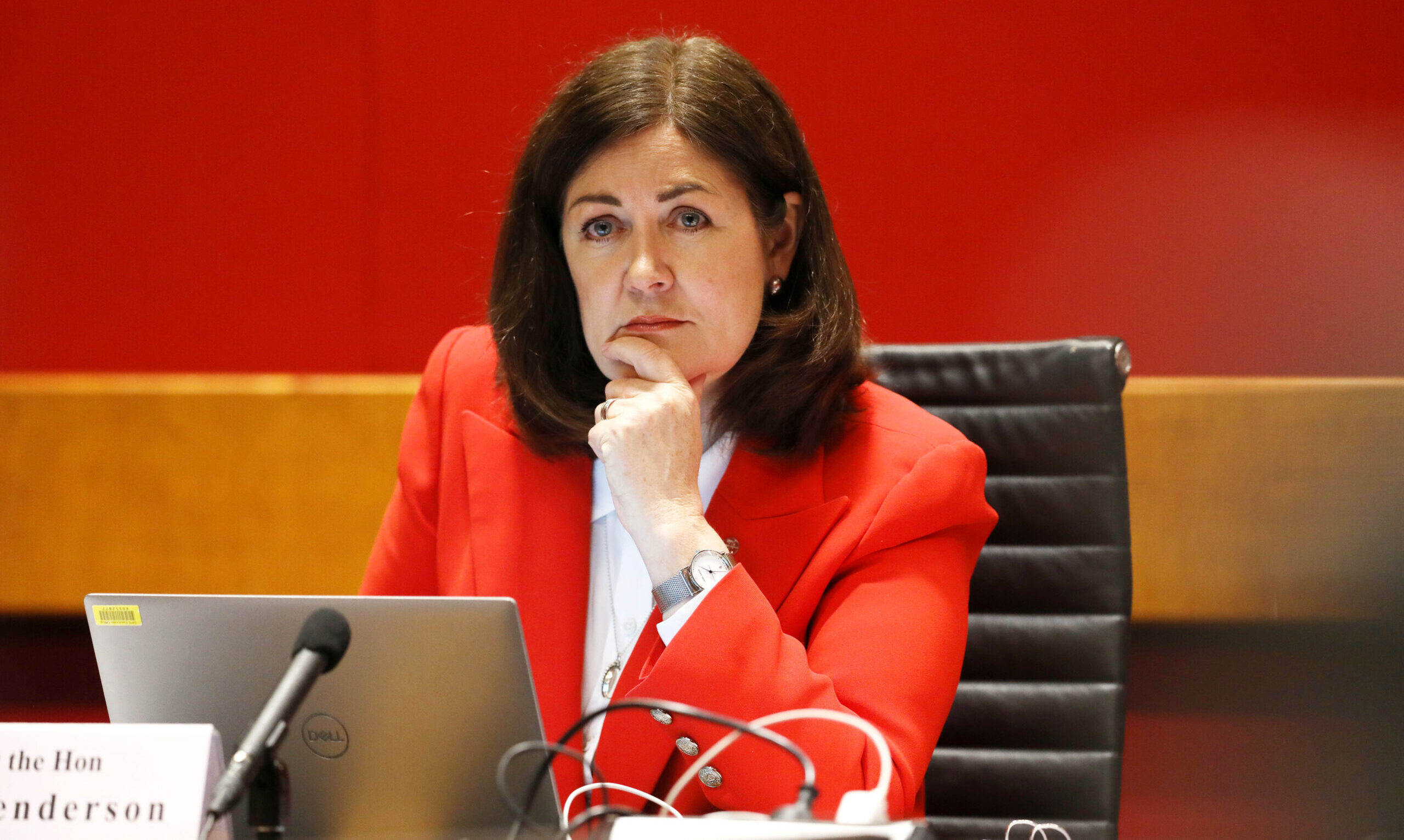
    Former education opposition spokeswoman Sarah Henderson has broken rank with her party after she pushed for a flat indexation cap on Labor’s student debt-slashing Bill.

    Please login below to view content or subscribe now.

    Membership Login

    Source link

  • Why should we care about cuts to funding for science education?

    Why should we care about cuts to funding for science education?

    Key points:

    The Trump administration is slashing the funding for new projects focused on STEM education and has terminated hundreds of grants focused on equitable STEM education. This will have enormous effects on education and science for decades to come.

    Meaningful science education is crucial for improving all of our lives, including the lives of children and youth. Who doesn’t want their child or grandchild or neighbor to experience curiosity and the joy of learning about the world around them? Who wouldn’t enjoy seeing their child making careful observations of the plants, animals, landforms, and water in their neighborhood or community? Who wouldn’t want a class of kindergartners to understand germ transmission and that washing their hands will help them keep their baby siblings and grandparents healthy? Who doesn’t want their daughters to believe that science is “for them,” just as it is for the boys in their classroom?

    Or, if those goals aren’t compelling for you, then who doesn’t want their child or grandchild or neighbor to be able to get a well-paying job in a STEM field when they grow up? Who doesn’t want science itself to advance in more creative and expansive ways?

    More equitable science teaching allows us to work toward all these goals and more.

    And yet, the Department of Government Efficiency has terminated hundreds of grants from the National Science Foundation that focused squarely on equity in STEM education. My team’s project was one of them.  

    At the same time, NSF’s funding of new projects and the budget for NSF’s Education directorate are also being slashed.

    These terminations and drastic reductions in new funding are decimating the work of science education.

    Why should you care?

    You might care because the termination of these projects wastes taxpayers’ hard-earned money. My project, for example, was 20 months into what was intended to be a 4-year project, following elementary teachers from their teacher education program into their third year of teaching in classrooms in my state of Michigan and across the country. With the termination, we barely got into the teachers’ first year–making it impossible to develop a model of what development looks like over time as teachers learn to engage in equitable science teaching.

    You might care because not funding new projects means we’ll be less able to improve education moving forward. We’re losing the evidence on which we can make sound educational decisions–what works, for whom, and under what circumstances. Earlier NSF-funded projects that I’ve been involved with have, for example, informed the design of curriculum materials and helped district leaders. Educators of future teachers like me build on findings of research to teach evidence-based approaches to facilitating science investigations and leading sense-making discussions. I help teachers learn how they can help children be change-makers who use science to work toward a more just and sustainable world.  Benefits like these will be eliminated.

    Finally, you might care because many of the terminated and unfunded projects are what’s called NSF Early Career Awards, and CAREER program funding is completely eliminated in the current proposed budget. CAREER grants provide crucial funding and mentoring for new researchers. A few of the terminated CAREER projects focus on Black girls and STEM identity, mathematics education in rural communities, and the experiences of LGBTQ+ STEM majors. Without these and other NSF CAREER grants, education within these fields–science, engineering, mathematics, data science, artificial intelligence, and more, from preschool through graduate school–will regress to what works best for white boys and men.

    To be sure, universities have some funds to support research internally. For the most part, though, those funds are minimal. And, it’s true that terminating existing projects like mine and not funding new ones will “save” the government some money. But toward what end? We’re losing crucial evidence and expertise.

    To support all children in experiencing the wonder and joy of understanding the natural world–or to help youth move into high-paying STEM jobs–we need to fight hard to reinstate federal funding for science and science education. We need to use every lever available to us–including contacting our representatives in Washington, D.C.–to make this happen. If we aren’t successful, we lose more than children’s enjoyment of and engagement with science. Ultimately we lose scientific advancement itself.

    Latest posts by eSchool Media Contributors (see all)

    Source link

  • Policy and funding in the USA

    Policy and funding in the USA

    by Rob Cuthbert

    Abolishing the Education Department may be illegal

    It seems that many Education Department functions are codified in federal law, so may need Congressional approval or new legislation before they can be abolished, as Jessica Blake reported for insidehighered.com on 31 March 2025.

    The ignorance of Linda McMahon

    Shaun Harper reported for insidehighered.com on 9 June 2025 on the way US Education Secretary Linda McMahon had been unprepared and unbriefed on so many questions in a US Senate subcommittee hearing in the previous week, probably because of the massive staff cuts she had made in her department.

    Trump promised ‘gold standard science’; Make America Healthy Again uses fake citations

    Shaun Harper (Southern California) blogged for insidehighered.com on 2 June 2025 in disgust and despair about the US Department of Health and Human Services Make America Healthy Again (MAHA) report. And then they did it again with a report on chronic diseases in child health, as Kathryn Palmer reported for insidehighered.com on 2 June 2025. This was the climate change-denying, anti-DEI Executive Order, 23 May 2025.

    Will Columbia get its $400million back?

    Columbia University folded under Trump’s objections to its alleged anti-semitism, and acceded to multiple demands in the face of cuts to $400million of public funding. Discussions started about how to restore the cuts, but in internal discussions interim President Katrina Armstrong seemed to deny that some of the demands would ever be implemented. Now Armstrong has stepped down, replaced by a new interim President, Claire Shipman, the co-chair of Columbia’s board of trustees. Johanna Alonso reported for insidehighered.com on 29 March 2025.

    Steven Mintz (Texas at Austin), a former Columbia academic, blogged for insidehighered.com on 31 March 2025 arguing that the roots of current campus disputes go right to the heart of the university’s mission and purpose:The Gaza-Israel conflict became a flashpoint not simply because of its geopolitics, but because it sits at the crossroads of the deepest fissures in campus life: between liberalism and radicalism, identity and ideology, tradition and transformation.” The story of Columbia University in New York and its alleged failure to resist then depredations of the Trump administration was told by Andrew Gumbel for The Observer on 28 April 2025 in his article “Destroying higher education with the veneer of going after antisemitism”. Max Matza reported for the BBC on 4 June 2025 that: “The Trump administration is looking to strip Columbia University of its accreditation over claims it violated the rights of its Jewish students.” A letter from Linda McMahon, US Education Secretary, told accreditor the Middle States Commission on Higher Education that “Columbia “no longer appears to meet the Commission’s accreditation standards” by its alleged violation of anti-discrimination laws.

    The appeasement strategy didn’t work, then.

    Trump goes after Harvard

    Brock Read reported for The Chronicle of Higher Education on 31 March 2025 that the Trump administration would review $255million of current federal contracts and $8.7billion of multi-year contracts as part of its moveto reprove colleges it portrays as hotbeds of antisemitism.” A Trump official said the 18 April letter making extensive demands of Harvard about hiring, admissions and curriculum had been sent by mistake, according to Michael S Schmidt and Michael C Bender in their report for the New York Times on 18 April 2025. Jessica Blake reported for insidehighered.com on 18 April 2025 that “… Trump has made it clear that he’ll use billions of dollars in federal grants and contracts, primarily for research, as a lever to force colleges and universities to bow to his agenda and increase the representation of conservative ideology on their campuses.”

    US Education Secretary Linda McMahon sent a badly-written Trump-style threatening letter to Harvard, purporting to freeze all future federal grants, as Gram Slattery and Jarrett Renshaw reported for Reuters on 6 May 2025. Nathan M Greenfield wrote for University World News on 9 May 2025: “In a robust statement in response, Harvard University accused the United States government of making “new threats to illegally withhold funding for lifesaving research and innovation in retaliation against Harvard for filing its lawsuit on April 21”.”

    The next round of bullying of Harvard in an effort to make it do what Donald Trump decrees came in the move by the Department of Homeland Security under the notorious Kristi Noem to revoke Harvard’s ability to enrol international students, as Karin Fischer reported for the Chronicle of Higher Education on 22 May 2025.

    Then Trump interfered in Fulbright scholar selection, by vetoing about 20% of Fulbright nominations for 2025-2026 on “clearly political” grounds, ruling out applicants with proposals on diversity or climate change, as Liam Knox reported for insidehighered.com on 29 May 2025. Liam Knox reported for insidehighered.com on 11 June 2025 that 11 of 12 members of the Fulbright Scholarship Board resigned on 11 June 2025 “… in protest of the Trump administration’s intervention in the selection process, which they say was politically motivated and illegal.”

    The Harvard experience: could it happen here? by GR Evans

    On 1 May 2025 The Guardian headline read: ‘Trump administration exploits landmark civil rights act to fight universities’ diversity initiatives‘. What prevents a British King or Prime Minister from attempting to impose sanctions on universities?

    US higher education is exposed both to presidential and to state interference. Government powers to intervene in US HE reside in presidential control of federal funding, which may come with conditions. Trump cannot simply shut down the Department of Education by executive order but it seems he can direct that the Department’s grant- and loan-giving functions are taken on by another government department. … read the full blog here.

    Politicians rule in Florida

    Two weeks after the Florida Board of Governors rejected Santa Ono they approved three new presidents, none having led a university before. On 18 June 2025 they confirmed Jeanette Nuñez as president of Florida International University, Marva Johnson at Florida A&M University, and Manny Diaz Jr at the University of West Florida. Nuñez had been interim President after leaving her job as state lieutenant governor; Diaz is currently Florida commissioner of education; Johnson is a lobbyist whom State Governor Ron DeSantis appointed to the Florida State Board of Education. Josh Moody reported for insidehighered.com on 23 June 2025.

    Indiana wants to take over HE

    JD Vance said in 2021 that “universities are the enemy” and Iris Sentner for Politico said that in March 2025 ” “… the White House declared war against them”. Ryan Quinn reported for insidehighered.com on 30 April 2025 that Indiana’s state budget bill would “… require faculty at public colleges and universities to post their syllabi online and undergo “productivity” reviews … prohibit faculty emeriti from voting in faculty governance organizations, place low-enrolled degree programs at risk of elimination by the Indiana Commission for Higher Education and end alumni elections for three Indiana University Board of Trustees seats by filling them with gubernatorial appointees. In addition, it has a provision that would let [State Governor] Braun remove the currently elected board members before their terms expire. “I think overreach doesn’t begin to describe the actions of the Legislature,” said Russ Skiba, a professor emeritus of education at IU Bloomington. “This is really a sweeping takeover of higher education in Indiana.”

    Why aren’t students protesting against Trump’s university attacks?

    Patrick Jack posed the question for Times Higher Education on 1 May 2025. Why indeed?

    Endowment tax will penalise rich US universities

    A bill which passed the House of Representatives in late May proposes to increase the tax on endowments from 1.4% to 21% for private colleges with an endowment of $2 million or more per student, as Patrick Jack reported for Times Higher Education on 2 June 2025. It would affect only the 35 or so richest institutions in the USA.

    Is college worth it?

    Yes, according to the Federal Reserve Bank of New York (the NY Fed), as reported by Phil Hill of OnEdTech on 3 June 2025.

    A graph showing the return to college remains significant

AI-generated content may be incorrect.

    But not for everyone: Jaison R Abel and Richard Deitz blogged for the NY Fed’s Liberty Street Economics on 16 April 2025: “In our last post, we showed that the economic benefits of a college degree still far outweigh the costs for the typical graduate, with a healthy and consistent return of 12 to 13 percent over the past few decades. But there are many circumstances under which college graduates do not earn such a high return. Some colleges are much more expensive than average, and financial aid is not guaranteed no matter which college a student attends. In addition, the potentially high cost of living on campus was not factored into our estimates. Some students also may take five or six years to finish their degrees, which can significantly increase costs. Further, our calculations were based on median wages over a working life, but half of college graduates earn less than the median. Indeed, even when paying average costs, we find that a college degree does not appear to have paid off for at least a quarter of college graduates in recent decades.”

    Santa Ono not for Florida

    After the embarrassment of Ben Sasse, the not-very-well-known Republican politician with little HE experience but with a large spending habit, the University of Florida seemed to be playing safe by naming Santa Ono as the only preferred candidate to replace Sasse. Ono was President at Michigan and previously headed the universities of British Columbia and Cincinnatti. He might have become the highest paid university leader in the US, as Chris Havergal reported for Times Higher Education on 6 May 2025. One of his current colleagues, Silke-Maria Weineck, thought after his controversial Michigan tenure he might be better suited to red-state (Republican) politics, in her opinion piece on 5 May 2025 for the Chronicle of Higher Education. Ono’s salary would have been $3million a year: he was unanimously approved by the University of Florida Board, but on 3 June 2025 in an anti-DEI move the State University System of Florida Board of Governors voted not to approve his appointment, as David Jesse reported for the Chronicle of Higher Education. There was more detail from Josh Moody of insidehighered.com on 3 June 2025: “That process included a no vote from Paul Renner, a former Republican lawmaker in the state who had previously angled for the UF presidency …”. Patrick Jack reported for Times Higher Education on 9 June 2025 that after the Santa Ono brouhaha many commentators had said the only people willing to lead Florida institutions would be right wing ideologues.

    Rob Cuthbert is editor of SRHE News and the SRHE Blog, Emeritus Professor of Higher Education Management, University of the West of England and Joint Managing Partner, Practical Academics. Email [email protected]. Twitter/X @RobCuthbert. Bluesky @robcuthbert22.bsky.social.

    Author: SRHE News Blog

    An international learned society, concerned with supporting research and researchers into Higher Education

    Source link

  • Some States Are Seeking to Deregulate Child Care. Advocates Are Fighting Back – The 74

    Some States Are Seeking to Deregulate Child Care. Advocates Are Fighting Back – The 74


    Join our zero2eight Substack community for more discussion about the latest news in early care and education. Sign up now.

    Content warning: This story includes details of an infant’s death.

    After Democrats passed the American Rescue Plan in 2021, states were flush with federal funding to help prop the child care sector up. But that money is now all gone, and as Republicans in Congress threaten to pass spending cuts that could further shrink state budgets, lawmakers are trying to find solutions to the child care crisis that don’t cost money. 

    Many have proposed changing the mandated ratios that require a certain number of early educators to care for young kids. Nearly a dozen states have considered rolling back child care regulations, including those governing staff-to-child ratios.

    But while these deregulatory bills are common, it’s not a foregone conclusion that they will pass. Advocates in three states have been able to beat back these efforts in the legislative sessions that just wrapped up by mobilizing a wide variety of people to speak up against these proposals and deploying research-backed arguments about child safety and child care supply.

    Eliminating Ratios Entirely 

    Idaho advocates faced down the most extreme bill. In its original form, HB243 would have eliminated all requirements that limit the number of young children an early educator can care for, leaving it up to individual providers. It would have been the first state in the country to take such a step. 

    Advocates had very little time to fight back. The bill got fast tracked; there was less than 24 hours’ notice before the first public hearing on it in the House. “You can’t get child care providers and parents there in that amount of time,” said Christine Tiddens, executive director of Idaho Voices for Children, a nonprofit that advocates for child-focused policies, noting that it requires moving work schedules and getting people to cover shifts. The bill sailed through the House.

    Eventually, Tiddens said, they were able to put parents and providers in front of lawmakers to warn of the negative consequences. One of those parents was Idaho resident Kelly Emry. On June 10, 2024, she got a panicked call from the home-based child care provider where she had just started sending her 11-week-old son Logan. She dashed to the provider’s home and was told he was dead. The coroner’s report later confirmed he died from asphyxiation. According to Emry, the coroner said the provider put him down for a nap between a rolled up blanket and a pillow and left him there for hours. The provider was caring for 11 kids by herself that day, putting her out of compliance with state regulations that, at the time, required at least two staff members. 

    “It was completely preventable, and that’s what’s so hard for me to come to terms with,” Emry said in a podcast interview in January.

    Emry wasn’t the only one who spoke up. Once the bill got to the Senate, advocates packed the hearing and overflow rooms with several hundred people. Among the 40 people who signed up to testify, 38 opposed the bill. Baby Logan’s uncle spoke, as did pediatricians, fire marshals, nurses, the state police, child welfare experts, child care providers and parents. Lawmakers were flooded with thousands of calls and emails from the opposition. Tiddens made sure every senator was sent the podcast interview with Emry.

    The bill passed the Senate committee by a single vote. Advocates decided to try to stop the worst elements, knowing that the bill was likely to pass in some form. They asked a senator who opposed it to “throw a Hail Mary,” Tiddens said. When the bill came to the Senate floor, he asked for unanimous support to pull it and move it into the amending process. He got it. The original elimination of staff-to-child ratios was stripped out; instead, the bill preserved ratios, albeit higher ones than before. Under previous law, Idaho ranked at No. 41 among all states for how high its ratios were; now it has dropped even further to No. 45.

    The victory is “bittersweet,” Tiddens said. She attributes it almost solely to one thing: putting parents, not just businesses and child care providers, in front of lawmakers, which led to the moving account of Logan’s family, still in the midst of raw grief. “How could you listen and not have your heart changed?” Tiddens asked.

    Doubling Family Child Care Ratios

    Advocates in Maryland have fought back against legislation to loosen staff-to-child ratios twice now. Last year, lawmakers introduced a bill to raise the ratios in family child care settings, but it died thanks to “a lot of advocacy,” said Beth Morrow, director of public policy at the Maryland Family Network, a nonprofit focused on child care. As in Idaho, the American Academy of Pediatrics and fire marshals warned about what would happen in the case of emergencies. Children under 2 years old are “not capable of self-preservation,” Morrow pointed out; they might hide when a fire alarm goes off and can’t evacuate on their own. “If there is an emergency you have to be able to get these kids out,” she said.

    The idea returned this year in House Bill 477, this time coupled with looser ratios for center-based care. Family providers are currently allowed to care for eight children but no more than two under the age of 2; the legislation would have doubled that, allowing providers to watch as many as four children under the age of 1. That was a “nonstarter,” Morrow said. It would also have been the first time that these rules were dictated by lawmakers rather than by the Maryland State Department of Education, which would have been barred from changing them in the future. 

    So advocates marshalled research, with the help of national groups including the National Association for the Education of Young Children and Center for Law and Social Policy. They highlighted that there has been no evidence that stricter child care regulations lead to reduced supply. Lawmakers seemed moved by the argument that lower ratios support better health and safety for children.

    During the markup session, the chief sponsor amended the bill by striking the language about higher ratios; instead, the version that passed requires the Department of Education to study child care regulations with an eye toward alleviating barriers for providers.

    Ratio Increases by Another Name

    In Minnesota, lawmakers took a different approach to proposing changes to the number of staff required to care for young children this session. Their legislation avoided mentioning the term “ratios” at all. Instead, the issue was presented as an exemption for in-home child care providers caring for their own children as well. The legislation originally would have exempted as many as three of the providers’ own children from the number they are licensed to watch. “That’s a direct ratio increase, no way around that,” said Clare Sanford, vice president of government and community relations at New Horizon Academy, a child care and preschool provider. “You still have the same number of adults but you’re increasing the number of children that adult is responsible for.”

    In later drafts, the number of children who could be exempted kept being reduced. In the end the legislation didn’t get a standalone vote and the language was left out of the final state budget. The argument that Sanford thinks worked the best was that increasing ratios wouldn’t actually increase child care supply. That’s because, as a brief by NAEYC argues, they will lead to more burnout among providers, which will push them to leave and, in the end, reduce available child care spots.

    The fight is far from over. Advocates in all three states expect lawmakers to try to loosen staff-to-child ratios again next session. Tiddens fears that, although Idaho didn’t eliminate ratios, the idea could spread. “Idaho has often been a frontrunner for harmful legislation,” she said. On the whole, more of these laws have been signed than stopped, said Diane Girouard, state policy senior analyst at ChildCare Aware of America. Ratio deregulation bills pop up “in some states every single year,” she said. “This isn’t just unique to red, conservative states. It has happened in blue states, it has happened in purple states.”

    Advocates who oppose raising these ratios are formulating responses to the child care crisis that preserve safety standards without requiring state funding. In Maryland, for example, Morrow’s organization helped pass a bill that removes legal barriers to opening and operating family child care programs. The hope is that with more solutions on the table to increase child care supply, states won’t look to options that erode safety standards, such as increasing ratios. 

    Tiddens has vowed to fight back. “We’re not going away, and we’re going to show up next session with our own proposal,” she said. Her coalition plans to formulate a bill for next year that “prioritizes child safety at the same time as dealing with the child care shortage,” she said.


    Get stories like these delivered straight to your inbox. Sign up for The 74 Newsletter

    Source link

  • Safety must shape policy on single-sex spaces

    Safety must shape policy on single-sex spaces

    As a campaigner focusing on gender-based violence within higher education, I am extremely concerned about the consequences for trans and non-binary people of the recent Supreme Court judgement on the meaning of “sex” in the Equality Act 2010.

    Crucial work is being done by trans activists and their allies to challenge this judgement, including a proposed judicial review. In the meantime, the Equality and Human Rights Commission (EHRC) has been consulting on its guidance, and higher education institutions are discussing the implications of the judgement.

    Given that any further legal case will take some time to come to fruition, it is crucial that decisions being made around trans and non-binary people’s access to spaces within higher education are informed by good quality evidence.

    This evidence – which comes from a wide range of international studies, as outlined below – shows clearly that trans and non-binary people face much higher risks in relation to sexual harassment and assault than cis people, both men and women. This fact is entirely missing in the consultation version of the guidance.

    My response to the consultation has outlined these issues. But this point needs to be taken into account by all HEIs currently considering how to implement the Supreme Court judgement. This piece aims to give evidence and wording to help staff to do so.

    Research context

    Trans and non-binary people are much more likely than cis people, including cis women, to be subjected to sexual harassment and violence. This is a well-established fact, evidenced by national studies of 180,000 students in the US; 8000 students in Ireland; and 43,000 students in Australia, as well as studies focusing on staff-student sexual misconduct (p.277) or on specific disciplines; and studies across campuses and that compare different sexual and gender minority groups.

    For example a survey of over 43000 students in Australia published in 2022 found that trans students were more than twice as likely as cis women to have been subjected to sexual violence in the past year, and also significantly more likely to be subjected to sexual harassment, as detailed in the figure below.

    In addition, non-binary and trans people may often experience sexual harassment that intersects with harassment on the basis of their gender identity. For example, in a large national survey of sexual harassment and violence in Ireland with responses from 7901 students, 45% of non-binary students described being subjected to sexualised comments related to their gender identity.

    Toilets have been identified as a particularly risky space for trans and non-binary children at school.

    A recent US study analysed a survey of 3673 transgender and nonbinary US adolescents in grades 7 to 12. They found that – while trans and non-binary students were already more likely to experience sexual assault than cis students – this risk was increased by a large amount where they are not allowed to use toilets that match their self-identified gender (this included policies where trans and non-binary students had to use alternative facilities such as staff bathrooms).

    Transgender boys and girls, as well as nonbinary students assigned female at birth, whose restroom and locker room use was restricted, were more likely to have experienced sexual assault in the past 12 months compared with those without restrictions and the largest increased risk (149%) was among transgender girls.

    This study – with an unusually large sample of trans and non-binary students from across the US – shows the significantly heightened risk that trans and non-binary youth are subjected to sexual assault as a result of bathroom usage policies.

    This is not a negligible amount of risk. The study’s focus on youth is particularly important – in the UK context, more than a third (35 per cent) of trans and non-binary people report having started transitioning by age 18 and two-thirds (67 per cent) by age 25. Therefore, schools and higher education institutions are a key site where trans and non-binary people’s safety needs to be considered.

    These research findings are not currently reflected in the EHRC guidance, as outlined below.

    How the EHRC guidance needs to change

    At points in the current (consultation) version of the EHRC guidance, women’s “safety” is used as a justification for providing single-sex services for cis women only. For example, in point 13.3.4:

    When considering the benefits of offering a separate or single-sex service, the service provider (including a person providing a service in the exercise of public functions) should think about whether women’s safety, privacy and / or dignity would be at risk in the service if it was shared with men.

    Considered in light of the evidence presented above, it is concerning that women’s safety is discussed but there is no mention of the safety of trans and non-binary people. Trans and non-binary people face the greatest risk to their safety and dignity (as sexual harassment is by definition a violation of dignity) if compared to the current practice where trans women use women-only facilities.

    Trans and non-binary people’s safety is significantly more compromised by the use of single sex spaces than cis women’s. But the guidance is entirely silent on the risks that trans and non-binary people face if single-sex spaces are limited to cisgendered women and men respectively.

    Similarly, section 13.5 discusses “relevant considerations when deciding whether the exclusion of trans people from a separate or single-sex service is a proportionate means of achieving a legitimate aim” but does not mention trans and non-binary people’s increased risk of sexual harassment and assault.

    Throughout the guidance, where arguments are made about considering cis women’s safety or perceived safety in relation to single-sex services, the same arguments also need to be made – and indeed are heightened – in relation to trans and non-binary people. This means that HEIs, in considering provision of single-sex spaces, must also consider the ways in which trans and non-binary people’s risk of sexual assault and harassment is heightened when they are excluded from spaces that match their gender identity.

    HEIs considering their provision of space could draw on the finding from the US study of trans and non-binary high school students, discussed above. This study found that offering alternative provision trans and non-binary students, for example whereby they would use the staff toilets (which are single toilets) instead of the student toilets, still correlated with increased risk of sexual assault for trans and non-binary students.

    Harassment on the basis of gender reassignment

    The other area that the EHRC guidance needs to consider more carefully is the risk of harassment on the basis of gender reassignment. In 13.5.6 the consultation version of the guidance discusses the circumstances that might be considered when making decisions on trans or non-binary people’s use of single sex spaces. The relevant text reads (trigger warning: transphobia):

    13.5.6 A legitimate aim for excluding a trans person from a separate or single-sex service for their own biological sex might be to prevent alarm or distress for other service users. Whether it is reasonable to think that the presence in that service of the trans person will cause alarm or distress will depend on all the circumstances, including the extent to which the trans person presents as the opposite sex. For this reason, a service provider (including a person providing a service in the exercise of public functions) should only consider doing this on a case-by-case basis. [my emphasis]

    The suggestion that service providers should consider “the extent to which the trans person presents as the opposite sex” as part of their consideration of circumstances on a case-by-case basis is highly problematic.

    This suggestion seems to invite harassment on the basis of gender reassignment, i.e. service providers are invited to pass judgement on whether a trans person “passes” or not; as this judgement is being made on a case-by-case basis, the service providers are required to assess the gender presentation of a particular individual.

    This is likely to have the effect of creating an intimating, hostile, degrading, humiliating or offensive environment – i.e. harassment on the basis of gender reassignment – for the person being considered. Furthermore, judgements about how a person of any sex should “present” also puts other groups at risk such as butch cis women and femme cis men, and I could not find any mention of intersex people throughout the consultation.

    Implications for higher education institutions

    The high prevalence of sexual violence and harassment faced by trans and non-binary students is particularly relevant in light of the Office for Students’ new regulatory requirements for higher education institutions to address harassment and sexual misconduct.

    Firstly, this regulation includes the requirement to address harassment on the basis of gender reassignment, so the example identified above would contravene the OfS requirements. Second, the regulatory requirements state that each provider will need to understand its student population and the extent to which its students may be likely to experience harassment or sexual misconduct in order to properly address these issues

    As such, higher education institutions in England have obligations under the new regulations to ensure that any steps they take following the Supreme Court judgement take into account the heightened risk of sexual harassment and violence faced by trans and non-binary students (and indeed staff).

    Next steps

    In considering any steps in response to this judgement, HEIs would do well to consider this guide from Gendered Intelligence. Drawing on a legal opinion from the Good Law Project, they make a distinction between single sex spaces or services, i.e. those designated for a group of people (women or men) using the (new) Equality Act 2010 definition of sex; and single gender spaces or services designated for a group of people (women or men) that are trans inclusive. As they note:

    …there is no automatic individual or collective right to ‘single sex’ provision or spaces’ under the Equality Act; this is only justifiable when it is a ‘proportionate means of achieving a legitimate aim’.

    HEIs also have obligations under the Public Sector Equality Duty (PSED) which aims to eliminate discrimination, advance equality of opportunity, and foster good relations. This duty of course applies to all protected characteristics and therefore the evidence presented above of trans and non-binary people’s increased risk of sexual harassment and assault should be considered within PSED implementation. The fundamental point is that “a service for all women does not have to say that it is a single sex provision.”

    It’s important to note that this opinion is likely to be significantly more progressive than those produced by HEIs’ own legal advisers, assuming the latter are primarily concerned with protecting the institution against legal risk. Nevertheless, this means there is a significant amount of space for activism; this judgement reveals how provision of single-sex or single-gender services is a political choice that depends in a large part on the relative power of different voices or groups in arguing their case.

    However, for staff who are attempting to navigate this terrain via policy, a further crucial consideration is put forward by Gendered Intelligence:

    a policy must be implementable and the very act of writing a policy and considering its implementation will establish that taking a trans exclusionary approach around single sex services and spaces will prove to be impossible in practice. Conversely, taking a trans inclusive approach is more practical and workable in reality.

    This is because “there is no evidence or documentation that anyone can provide that proves definitively that they are cisgender. It would not only be pointless to try, but potentially highly intrusive and inappropriate”. It could be that the practicalities end up guiding policy implementation as much as the legal or political arguments.

    Taken as a whole, the Supreme Court judgement, and the EHRC’s interpretation of it, risks making trans and non-binary people even more unsafe by revealing their identities when it may not be safe to do so, and by creating a climate where targeting them for abuse on the basis of their identities is more acceptable. As a result, the figures given above on the prevalence of sexual violence and harassment against trans and non-binary people are likely to grow even larger.


    Source link

  • Tax Policy Belongs in Liberal Arts Curriculum (opinion)

    Tax Policy Belongs in Liberal Arts Curriculum (opinion)

    As congressional Republicans scratched and clawed to pass President Trump’s signature policy effort, the One Big Beautiful Bill Act—a sprawling, tax-heavy package celebrated as much for its branding as for its contents—it is notable how few people could explain what exactly was in it. Tax cuts for some, probably. A Social Security bonus, maybe. A gutting of public benefits, almost certainly. What is clear, though, is that the bill’s complexity was always in service of its politics: When no one understands tax policy, it’s much easier to sell whatever story you want.

    That confusion is exactly why we should be teaching tax policy more broadly—not just in sparsely attended law school classes and accounting departments, but in general education curricula and first-year seminars. Tax isn’t just a technical rule-following subject; it’s a civic one. Tax policy shapes everything from fairness and inequality to the functional shape of the state itself. Yet, most students will graduate college without ever being asked to consider what tax is for—much less whom it helps, whom it harms and why it remains so easy to obscure.

    That is precisely the starting point for the course I designed at Drexel University, Introduction to Tax Theory and Policy, which I teach in our innovative undergraduate law major, housed at the Thomas R. Kline School of Law. It’s not a course for aspiring tax attorneys, prospective C.P.A.s or Excel mavens—few of my students intend to practice tax law. They’re interested in criminal or family law, or they’re business majors, future social workers, engineers or undecided second-years. But they’re all taxpayers—and that’s the relevant bit.

    Courses like mine aim to democratize access to legal and policy tools so that all students, irrespective of their major, can become more informed and empowered participants in civic life. In class, we don’t parse tax rates or calculate deductions. No calculators are required, and at no point is anyone expected to consider the straight-line depreciation of an apartment complex. We ask why the system is built the way it is, and we talk about the power that it reflects and protects. We talk about values: what kinds of behavior the tax code encourages or punishes. We talk about trust and legitimacy: What happens when people believe the system is rigged, and what if they’re right? In short, we treat tax not as a set of arcane rules and rates to memorize, but as a lens through which we can better understand the power structures we live under.

    The surprising part (at least to me, when I first taught it and admittedly just hoped I wouldn’t be lecturing to an empty room) is how much students connect with this approach. More than connect with it—they often enjoy it. I’ve received feedback from students that describes the class as life-changing and course reviews that have noted how it changed assumptions regarding what tax even is. High praise from 19- and 20-year-olds.

    The course itself draws on philosophy, political theory, economics and law—but what it really cultivates is a kind of civic literacy. It asks students to think about who they are in relation to the state and how much of their future may be shaped by the tax policy they’ve never been taught to see. For many, it is the first time they’ve encountered taxation not as something to dodge, but as something to question, debate and reimagine in furtherance of their own values.

    In one session, we explore how the tax code is employed as a kind of soft steering wheel in the economy—how it at turns encourages homeownership, subsidizes sports stadiums, directs corporate research and development, and shapes (or even outright creates) the market for electric vehicles. Another week, we explore estate taxes and inheritance: not just who pays, but what it means to redistribute wealth across generations and what happens when we don’t. We read Garrett Hardin’s “The Tragedy of the Commons,” engage in spirited debates about the potential for tax to solve the artificial intelligence copyright debate, and unpack why TurboTax spent two decades fighting free filing.

    Over the course of the class, the question shifts away from what is a tax and toward whose values does this system reflect? That shift—from mere definitional awareness to focused critical engagement—is when I know the class is working. Students cease to see tax as someone else’s problem and begin seeing it as a potent tool of and for democracy.

    In their final papers, students have proposed remarkably forward-looking and sophisticated tax policy reforms—reflecting both creativity and civic seriousness. One student argued that companies receiving public subsidies through tax credits, like chemical and drug manufacturers, should be barred from claiming additional credits to remediate harms their products create. Another proposed a data-collection “sin tax” aimed at discouraging exploitative surveillance practices by tech companies. These aren’t rote academic exercises. They’re thoughtful intervention proposals that treat tax as a lever for shaping society.

    If tax policy determines who gets what, who pays for it and how the government keeps a hand in the marketplace, then it belongs squarely at the heart of a liberal arts education. We don’t cabin discussions of justice in law schools, and we don’t isolate questions of the public good in policy programs—why do we treat taxation, which intersects with both and innumerable other facets of modern life, as off-limits or too technical for undergraduates?

    This isn’t a plea to teach undergraduates to file their own taxes—though there is probably a case to be made for that, too. It’s about ensuring curricula help them understand how the world works and how it’s been designed to work for some more than others. That means tackling the politics of Internal Revenue Service funding, exploring how “tax relief” often functions as an upstream transfer of wealth and how a positively sprawling bill like the one recently passed through Congress can obscure much more than it reveals.

    If no one understands how tax policy works, how can anyone meaningfully weigh in on whether they support one revenue bill or another? On issues like immigration, abortion or education funding, many people bring at least some passing knowledge or lived experience to the conversation. Tax remains, for most, a black box. The more opaque it becomes, the more tempting it is for lawmakers to retreat into it—tucking major redistributive choices into the shadows of the tax code, where they can be shielded from public scrutiny.

    On the other hand, when students come to see tax as a form of the civic superstructure—something they live within and not just under—they are empowered to not only understand tax policy but to shape it. That should be one of the goals of any serious undergraduate education.

    We don’t have to, and should not, keep treating tax as one professional niche within other professional niches. If we want students to understand how tax relates to power, fairness and democratic participation, we should give them the tools to talk about it. This needn’t focus on the rates and rules but should illustrate the values taxes reflect and trade-offs they embed.

    Courses like mine don’t require a background in economics, accounting or law. They require a willingness to take seriously the idea that how we tax equates to how we govern. If we can help students see tax not as a source of dread or line item on their paycheck, but as the site of collective economic decision-making, we don’t just produce better-informed graduates—we’ll also produce more engaged citizens.

    Andrew Leahey is a practice professor of law at Drexel University’s Thomas R. Kline School of Law.

    Source link

  • How Trump is deploying multiple agencies to set education policy

    How Trump is deploying multiple agencies to set education policy

    This audio is auto-generated. Please let us know if you have feedback.

    The Trump administration is tapping agencies other than the U.S. Department of Education to implement its agenda in colleges and K-12 schools, sometimes circumventing typical rulemaking procedures that would allow districts months to give feedback on and prepare for policy changes before they roll out. 

    The use of other agencies to set or enforce education policy marks a significant shift from typical K-12 policymaking, some education policy experts say. 

    “This is a paradigm shift on the part of how the federal government articulates and connects some of these tools to their education priorities,” said Kenneth Wong, a professor of education policy at Brown University. “So I think going forward, we might be seeing broader use of this wider range of policy tools in the area of education policy changes.” 

    This month, for example, a policy change from the U.S. Department of Energy could take effect that would undo some students’ protections related to sex discrimination under Title IX, disability discrimination under Section 504 and racial discrimination under Title VI. 

    The changes would only apply to colleges receiving Energy Department funds, as opposed to public institutions nationwide — which would have been the case had the rules come from the Education Department. The Energy Department provides over $2.5 billion in research funding to more than 300 colleges annually. The agency also distributed just over $160 million to 28 schools in fiscal year 2025, according to department spokesperson Ben Dietderich.

    As a result of the quietly proposed policy changes, colleges receiving Energy Department grants would no longer, among other things:

    • Be required to facilitate noncontact sports team tryouts for women if there is no equivalent women’s team. For example, if a college had a men’s baseball team but no women’s softball team, women would no longer be guaranteed the opportunity to try out for a spot on the men’s baseball team.
    • Be permitted to proactively “overcome the effects of conditions that resulted in limited participation therein by persons of a particular sex.” This would remove protections that allow schools to have gender-conscious after-school or college programs to provide women and girls opportunities they have historically been denied, such as in STEM fields and technical training, according to Shiwali Patel, senior director of Safe and Inclusive Schools at National Women’s Law Center and a Title IX attorney.  
    • Be required to prevent systemic racial discrimination that may result from seemingly neutral policies, as a result of the department rescinding guardrails protecting against policies that cause a “disparate impact” on underserved students. Disparate impact investigations have previously addressed issues such as Black students being disciplined at higher rates than students of other races.  

    The agency issued the policy changes through a process called direct final rulemaking, which allows it to issue a rule without going through the rulemaking process twice to incorporate changes based on public feedback and publish a final version. The expedited process is usually used for noncontroversial changes and when an agency does not expect significant pushback.

    The rules are to take effect July 15 as long as no “significant adverse comments” were received by June 16. Dietderich did not respond as to whether the agency received significant adverse comments.

    However, a review of some publicly available comments show that the direct final rules — posted May 16 — have been controversial, with multiple civil rights organizations explicitly telling the Energy Department they are submitting “significant, adverse” comments for its review.

    Other agencies launch civil rights investigations and enforcement

    The Energy Department situation isn’t the first time the Trump administration has deployed agencies other than the Education Department to set or enforce education policy. In fact, the administration has used the departments of Justice, Agriculture, and Health and Human Services over the past few months to investigate sex and race discrimination at schools and enforce compliance. 

    The administration notably used these agencies in an unprecedented investigation into the Maine Department of Education, spurred by a public disagreement between President Donald Trump and Maine Gov. Janet Mills, a Democrat, over the state’s athletic policy allowing transgender athletes on women’s and girls’ sports teams. 

    That dispute kicked off a string of Title IX investigations by several federal agencies that provide funds to Maine. 

    They included a four-day probe launched by HHS. And because HHS rather than the Education Department conducted the probe, it didn’t have to follow the standards spelled out in the Education Department’s Office for Civil Rights case processing manual. That manual ensures the Education Department conducts investigations according to certain timelines, for example, allowing up to 90 calendar days for negotiations to take place and 10 days for schools or states to sign onto a resolution agreement. 

    In addition, the U.S. Department of Agriculture froze funds to some of the state’s schools over the Maine Department of Education’s alleged Title IX violations. 

    USDA, alongside other federal agencies, will continue to pause and, where appropriate, terminate categories of education programming in Maine if these Title IX violations are not resolved to the satisfaction of the Federal Government,” said an April 2 letter from Agriculture Secretary Brooke Rollins to Mills. 

    A court order eventually overturned the USDA funding freeze as part of an agreement struck in May between Maine and the USDA. 

    Source link

  • How Trump is deploying multiple agencies to set education policy

    How Trump is deploying multiple agencies to set education policy

    This audio is auto-generated. Please let us know if you have feedback.

    The Trump administration is tapping agencies other than the U.S. Department of Education to implement its agenda in schools, sometimes circumventing typical rulemaking procedures that would allow districts months to give feedback on and prepare for policy changes before they roll out. 

    The use of other agencies to set or enforce education policy marks a significant shift from typical K-12 policymaking, some education policy experts say. 

    “This is a paradigm shift on the part of how the federal government articulates and connects some of these tools to their education priorities,” said Kenneth Wong, a professor of education policy at Brown University. “So I think going forward, we might be seeing broader use of this wider range of policy tools in the area of education policy changes.” 

    This month, for example, a policy change from the U.S. Department of Energy could take effect that would undo some students’ protections related to sex discrimination under Title IX, disability discrimination under Section 504 and racial discrimination under Title VI. 

    The changes would only apply to schools receiving Energy Department funds, as opposed to public schools nationwide — which would have been the case had the rules come from the Education Department. The Energy Department distributed just over $160 million to 28 schools in fiscal year 2025, according to department spokesperson Ben Dietderich. The agency also provides over $2.5 billion annually to more than 300 colleges and universities to fund research.

    As a result of the quietly proposed policy changes schools receiving Energy Department grants would no longer, among other things:

    • Be required to facilitate noncontact sports team tryouts for girls if there is no equivalent girls’ team. For example, if a school had a boys’ baseball team but no girls’ softball team, girls would no longer be guaranteed the opportunity to try out for a spot on the boys’ baseball team. 
    • Be permitted to proactively “overcome the effects of conditions that resulted in limited participation therein by persons of a particular sex.” This would remove protections that allow schools to have gender-conscious after-school or college programs to provide women and girls opportunities they have historically been denied, such as in STEM fields and technical training, according to Shiwali Patel, senior director of Safe and Inclusive Schools at National Women’s Law Center and a Title IX attorney.  
    • Be required to prevent systemic racial discrimination that may result from seemingly neutral policies, as a result of the department rescinding guardrails protecting against policies that cause a “disparate impact” on underserved students. Disparate impact investigations have previously addressed issues such as Black students being disciplined at higher rates than students of other races.  

    The policy changes were issued through a process called direct final rulemaking, which allows an agency to issue a rule without going through the rulemaking process twice to incorporate changes based on public feedback and publish a final version. The expedited process is usually used for noncontroversial changes and when an agency does not expect significant pushback.

    The rules are to take effect July 15 as long as no “significant adverse comments” were received by June 16. Dietderich did not respond as to whether the agency received significant adverse comments.

    However, a review of some publicly available comments show that the direct final rules — posted May 16 — have been controversial, with multiple civil rights organizations explicitly telling the Energy Department they are submitting “significant, adverse” comments for its review.

    Other agencies launch civil rights investigations and enforcement

    The Energy Department situation isn’t the first time the Trump administration has deployed agencies beyond the Education Department to set or enforce education policy. In fact, the administration has used the departments of Justice, Agriculture, and Health and Human Services over the past few months to investigate sex and race discrimination at schools and enforce compliance. 

    The administration notably used these agencies in an unprecedented investigation into the Maine Department of Education, spurred by a public disagreement between President Donald Trump and Maine Gov. Janet Mills, a Democrat, over the state’s athletic policy allowing transgender athletes on girls’ and women’s sports teams. 

    That dispute kicked off a string of Title IX investigations by several federal agencies that provide funds to Maine. 

    They included a four-day probe launched by HHS. And because HHS rather than the Education Department conducted the probe, it didn’t have to follow the standards spelled out in the Education Department’s Office for Civil Rights case processing manual. That manual ensures the Education Department conducts investigations according to certain timelines, for example, allowing up to 90 calendar days for negotiations to take place and 10 days for schools or states to sign onto a resolution agreement. 

    In addition, the U.S. Department of Agriculture froze funds to some of the state’s schools over the Maine Department of Education’s alleged Title IX violations. 

    USDA, alongside other federal agencies, will continue to pause and, where appropriate, terminate categories of education programming in Maine if these Title IX violations are not resolved to the satisfaction of the Federal Government,” said an April 2 letter from Agriculture Secretary Brooke Rollins to Mills. 

    A court order eventually overturned the USDA funding freeze as part of an agreement struck in May between Maine and the USDA. 

    Source link

  • How funding policy has affected foundation year provision

    How funding policy has affected foundation year provision

    The coming academic year (2025-26) is the first in which classroom-based foundation year (FY) fees will be capped at a level below the higher level fee cap.

    For many who have experienced or supported foundation year tuition this is a retreat from a proven method for supporting people who have been failed by compulsory schooling in continuing their education. Critics would point to a few years of sustained growth, particularly in franchised provision, that is of more questionable quality and benefit.

    Foundation years are an anomaly in that they sit neither at level three (alongside other pre-university qualifications like A levels or the Access to HE Diploma [AHED]) or level four (alongside higher national diplomas, and the first years of both undergraduate degrees and higher technical qualifications). As such, they will face the worst of both worlds: level 3 funding (for classroom-based provision) covered by level 4 repayment rules and level 4 regulatory interventions.

    Why cut?

    In a ministerial statement that, in a dazzling display of self-awareness, actually used the phrase “fix the foundations” twice, the Secretary of State set a fee limit of £5,760 (the maximum current cost of an AHED, though in practice fees are nearer £4,000) as a maximum for “classroom-based” (non-STEM) foundation years on 4 November 2024.

    There’s a paragraph on the ostensible reasoning for this that is worth bearing in mind:

    The government recognises the importance of foundation years for promoting access to higher education, but they can be delivered more efficiently in classroom-based subjects, at a lower cost to students.

    This sounds more like an access-focused intervention rather than an attempt to cut provision, although it is rather divorced from the cost of provision. This is despite a 2023 report from IFF Research which noted that, based on the available data and on a series of interviews:

    the cost of delivering FY and the first year of a UG degree in the same subject area was found to be broadly similar

    Indeed, there were suggestions that FYs may actually work out more expensive, given the need for more contact time and the tendency towards smaller classes. We should leave aside for the moment the great difficulties we have in understanding the cost of higher education provision more generally, and note that the evidence base for this particular decision is weak. And there is, to be clear, a huge absence of meaningful data about FYs more generally – something DfE itself attempted (after a fashion) to remedy with an ad hoc data release in October of 2023.

    Review of routes

    If you were wondering where the impetus for this policy intervention originally came from, you have to look back to Philip Augar’s review of post-18 fees and funding back in 2019:

    We recommend that student finance is no longer offered for foundation years, unless agreed with the OfS in exceptional cases.

    In broad-brush terms, his argument was that foundation years did a similar job to some level 3 qualifications (specifically the Access to HE Diplomas) at greater cost: he characterised this as “enticing” underqualified students onto expensive four year degrees that may not be in their best interests.

    It was one of many largely arbitrary (and mercifully forgotten) Augar recommendations on higher education funding, to the credit of the previous government it was very much more aligned to addressing the value offered to students. As Michelle Donelan said in 2022:

    We also know that there are some people who need a second chance, an opportunity to get into higher education through a less conventional route. Often this route is through foundation years, but we think it is unfair that some of those who take advantage of this transformational opportunity have to pay over the odds. So we are reducing the fee limit for foundation years to make them more accessible and more affordable for those who need a second chance.

    Quantity and quality

    Okay. So, ignoring Augar, there’s never been an agenda to cancel or limit the availability of foundation years. The cuts are based (albeit on some quite shaky data) on reducing costs for students while maintaining affordability for providers.

    There is, however, widely reckoned to be a quality issue with some FYs offered via franchise or partnership arrangement – something which DfE did not appear to have considered in collecting data or commissioning reports.

    With the 2025 recruitment cycle mostly over, we now have the ability to assess how the sector has responded to these interventions via the Unistats dataset.

    As I never tire of telling people, Unistats is not perfect but it is useful. The big headline story we’ve tracked in recent years is a reduction in the number of undergraduate courses on offer overall – down 6 per cent between 2023 and 2024, and down a further 3 per cent between 2024 and 2025.

    Foundation supply

    But underneath this we lost one in ten courses with compulsory foundation years (courses that must start with a foundation year) between 2023 and 2024, and a further five percent between 2024 and 2025. The latter year also saw nearly 6 per cent of optional foundation years (courses that can include a foundation year if required) disappear.

    [Full screen]

    What about franchise provision? Using a unistats proxy (does the registered UKPRN match the display UKPRN, or is there an additional UKPRN for a different teaching location) it appears that the number of franchised compulsory foundation years grew from 90 in 2023 to 107 in 2024. This trend reversed between 2024 and 2025 (with numbers falling back below 80), but the number of optional franchised foundation years fell off a cliff after 2023: from 53 in 2023 to just 12 in 2024, and 13 in 2025.

    At a (top level) subject area the dominance of social sciences and business foundation years has declined a little – engineering foundation years have always been popular and have broadly persisted over the three years in question (and are the most popular by far at Russell Group providers). Among franchised provision business and management still dominates, but the last three years has seen a rise in the number of creative and engineering foundation years offered (largely with specialised providers as franchisers).

    Policy outcomes and policy intentions

    So, it all depends on how you take the impetus of the government’s change in foundation year policy. If it was a measure to reduce overall the number of classroom (non-STEM) foundation years it has had some questionable success, likewise if you believe it was a policy designed to limit the spread of franchised foundation year degrees.

    It is possible that it has driven savings within universities – allowing foundation years to be run more cheaply. This might explain things like the paradoxical rise in franchised foundation years in creative arts alongside a drop in non-franchised provision – smaller and less historically encumbered (and potentially lower quality) providers may be better at running these foundation years at a lower overall cost.

    Here’s who is offering these courses – and what they are.

    [Full screen]

    This defaults to FY provision in 2025 but is – with a bit of effort, a fascinating tool for looking over the complete three years of courses advertised to undergraduates.

    As usual, we are hugely short of data – the fact that unistats (of all things) offers the best lens on what is happening suggests that there’s nobody in DfE with an eye on what is going on.

    But rumours of the demise of the classroom based foundation year, or even the franchise model in providing this, are likely to be overstated. It remains to be seen, by whatever measure, whether the cut-price offer is as good.

    Source link