Tag: Policy

  • Federal Policy Uncertainty Impacting College Budgeting

    Federal Policy Uncertainty Impacting College Budgeting

    Economic uncertainty—the kind that dominated headlines for the first half of 2025—makes long-term financial planning difficult. But nearly two in three college and university chief business officers say that uncertainty surrounding federal policy for higher education is hindering their ability to conduct even basic financial planning. That’s according to Inside Higher Ed’s forthcoming annual survey of CBOs with Hanover Research.

    “Higher education has not faced this level of financial uncertainty in generations,” said Robert Kelchen, chair of educational leadership and policy studies at the University of Tennessee at Knoxville, who reviewed preliminary survey data.

    While recent history offers one comparison—the early days of the pandemic, when uncertainty was similarly “off the charts”—the federal government at that time “quickly stepped in to provide support,” Kelchen continued. Today, by contrast, the federal government “is causing the uncertainty.”

    According to the survey, federal policy uncertainty under the second Trump administration is moderately impacting basic financial planning at 49 percent of institutions represented, meaning that challenges have arisen but CBOs and their colleagues have managed to adapt. Another 14 percent of institutions are severely impacted, meaning basic financial planning has been extremely difficult, leading to major disruptions. This is consistent across sectors.

    The survey was fielded in April and May, with CBOs from 169 institutions, public and private nonprofit, associate to doctoral degree–granting, responding. The full 2025 Survey of College and University Chief Business Officers will be released later this month. It includes additional findings on the second Trump administration’s impact on institutional finances so far, mergers and acquisitions, value and affordability, and more.

    CBOs see federal student aid policy changes as a major risk, with 68 percent citing this as a top federal policy concern from a longer list of options. A distant second: research funding levels, cited by 24 percent of all CBOs. Public institution CBOs are relatively more concerned about research funding, at 36 percent versus 9 percent of private nonprofit peers.

    Questions about the future of federal student aid come on top of last year’s Free Application for Federal Student Aid fiasco. And nearly four in 10 surveyed CBOs (38 percent) report having already experienced significant to severe disruptions related to that FAFSA rollout.

    In Kelchen’s assessment, there’s no guarantee that the federal financial aid system will work as intended this fall—especially for colleges that require additional oversight before receiving funds, given recent mass layoffs at the U.S. Education Department. Congress also last week passed what he described as the largest set of changes to federal higher education policy in decades, via the Trump-backed One Big Beautiful Bill Act, with potential “downstream effects for state budgets due to cuts to federal benefits.”

    Throw in cuts to federal research funding and big changes for international students, and colleges’ budgets “are highly uncertain,” Kelchen said.

    Case in point: Michigan State University president Kevin Guskiewicz recently announced a plan to cut spending, including faculty and staff positions. He blamed expectations that the university will receive “less money from the federal government due to research cuts and restrictions on international enrollments, although the magnitude of those impacts is uncertain.” Also at play: increasing operating costs and state budget concerns.

    In another example of uncertainty in action, Val Smith, president of Swarthmore College, announced in late May that the institution’s Board of Managers had been unable to carry out “one of its primary fiduciary responsibilities: approving the college’s operating budget,” at least as usual. Given the “confluence of uncertainties we currently face,” she said at the time, the board moved forward with an interim operating budget for the first three months of the new fiscal year. It plans to revisit and adopt a full operating budget in the fall, “when we expect to have more clarity.”

    To Kelchen, interim budgets such as Swarthmore’s can make sense if revenues are “highly volatile.” So he said he wouldn’t be surprised if other institutions were quietly making similar moves.

    In an additional expression of uncertainty, most surveyed CBOs describe the impact of the second Trump administration’s policies on their institution’s financial outlook—both current and over the next 12 months—as somewhat or very negative.

    Most CBOs report minimal federal funding cuts under Trump so far. A handful do indicate that their funding has been reduced significantly, by more than 10 percent. An additional 11 percent report that funding has been reduced by 5 to 10 percent. And about as many aren’t sure. But the rest say funding has decreased by less than 5 percent or stayed consistent.

    While the ultimate impact of federal policy changes remains to be seen—and will look different at different institutions—strategist Rebeka Mazzone advised frequent collaboration and communication between CBOs and other cabinet-level leaders, “so that you always know what’s happening on a more real-time basis.”

    Also critical: forecasting, or “having a tool that allows you to constantly update the dollars you have so that you understand the impact.” Mazzone, founder of FuturED Finance, said that this real-time process is underused and very different from typical budgeting, in a which a yearlong spending plan is developed based on a particular moment in time. But the “smaller and the more cash-strapped the institution is, the more important the forecast becomes.”

    Fancy software isn’t necessary, she said, as forecasting can happen on a spreadsheet. What matters is “capturing changes and overlaying them on the budget so that you understand where you’re going to end the year, and that helps you to more proactively manage the outcomes.”

    Another important tool? Five-year projections. “If you have lower enrollment this year, that is going to affect you also for the next three years. If you have a higher discount rate this year, that is going to affect you also for the next three years.” So when institutions “suddenly” close, Mazzone said, “it’s not so sudden. They just weren’t using these tools to really understand how bad things were—and how quickly things were heading in the wrong direction.”

    To Mazzone’s point, while federal policy uncertainty is challenging short-term planning, many institutions now making budget cuts have significant underlying issues.

    What’s Kelchen’s advice for colleges and universities struggling with present uncertainty—including those navigating longer-term financial woes? Prepare multiple budget scenarios “ranging from something close to business as usual to the possibility of losing most federal funding.”

    Institutions will get “some answers on what actual revenues look like as the start of a new academic year draws nearer, but this will take time,” he said. Those in stronger positions can “operate more at business as usual and absorb losses if needed. But if there is underlying weakness, colleges need to budget for the worst right now and hope for something better.”
    Source link

  • George Washington University hints at layoffs amid federal policy upheaval

    George Washington University hints at layoffs amid federal policy upheaval

    This audio is auto-generated. Please let us know if you have feedback.

    Dive Brief:

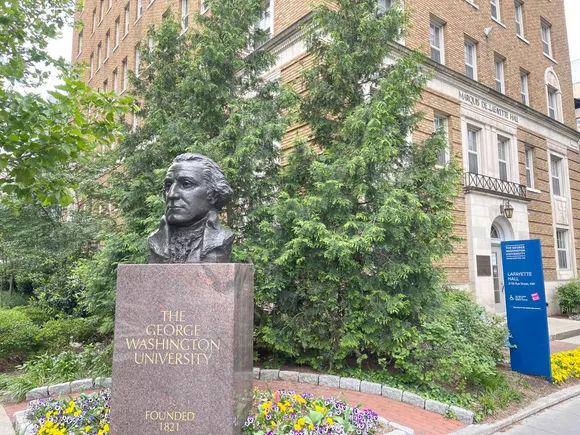
    • Faced with an “unsustainable compounding deficit,” George Washington University is freezing hiring and could lay off employees down the road, the private Washington, D.C.-based institution said in a community message Tuesday. 
    • The hiring freeze applies to positions funded directly by the university and is set to last at least until Oct. 1. GWU also plans to review large procurement contracts, cut back on capital spending, and tighten budgets for travel, events and entertainment, among other moves. 
    • Despite earlier budget-tightening measures, senior university leaders said the outlook for the upcoming fiscal year has deteriorated since April. Officials plan to present a full fiscal 2026 budget to the university’s governing board in early September.

    Dive Insight:

    In their announcement, university President Ellen Granberg, Interim Provost John Lach and other officials cited political, economic and demographic challenges that are exacerbating GWU’s budget pressures.

    On the policy front, they pointed to the Trump administration’s ongoing efforts to limit funding for indirect research costs, such as facilities, utilities and other overhead, to federal grant awardees. While federal courts have paused or struck down those moves at four federal agencies, they have created deep financial uncertainty for many universities. 

    The officials also pointed to “significant changes in the overall federal research landscape,” which has big implications for the university, a major nexus for federal grants. In fiscal 2024, GWU spent a total of $471.6 million in federal grants from a wide array of federal agencies and other grantors. 

    Along with research funding disruption, officials pointed to a slowdown in visa processing and President Donald Trump’s recent move to ban or restrict travel from 19 countries. They described these changes as “constraints on our ability to enroll international students.” In 2024, GWU enrolled 3,661 international students, according to institutional data.

    Moreover, the university, with its deep ties to the D.C. area, is beginning to see domestic enrollment impacts from the Trump administration’s massive slashes to federal agency workforces, as well as general financial uncertainty among American consumers.

    Even more pressure on graduate enrollment could come amid the elimination of Grad PLUS loans and caps on total student borrowing, brought on by the massive budget bill passed by Republicans and signed by Trump last week. 

    But GWU had financial challenges before Trump took office. As Granberg, Lach and other officials noted, revenue growth averaged 6.1% from fiscal 2022 through 2024 while expenses grew 6.8%. 

    “While this difference might not seem significant, its cumulative effect is an unsustainable compounding deficit,” they said. 

    That budget gap resulted from pre-Trump structural challenges in the higher education world, including rising costs and declining master’s degree enrollments.

    Between 2018 and 2023, GWU’s total fall graduate student enrollment declined 9.2% to 14,181 students, according to federal data. The officials pointed to declines in international student enrollment, which began at the university before Trump’s newest travel bans and “at this point can no longer be viewed as temporary.”

    University leaders in April announced a pause on merit-based salary increases and a 3% budget cut across units. But the challenges have only deepened since then. 

    Now officials aim for deeper budget cuts for fiscal 2026, “which we recognize will likely lead to some reductions in the number of staff and certain faculty positions, a step we have tried to avoid but cannot any longer,” they said Tuesday.

    Source link

  • After Texas, DOJ Targets Kentucky’s In-State Tuition Policy

    After Texas, DOJ Targets Kentucky’s In-State Tuition Policy

    Undocumented students and immigrant advocacy organizations are still reeling after Texas, earlier this month, swiftly sided with a U.S. Department of Justice lawsuit against its policy of permitting in-state tuition for undocumented students. The two-decade-old law, which Republican state lawmakers had recently tried and failed to quash, was dismantled within a matter of hours in a move some critics called collusive.

    Now the DOJ is employing the same strategy all over again—this time in Kentucky. The department filed a complaint in U.S. District Court for the Eastern District of Kentucky on Tuesday challenging the in-state tuition policy for undocumented students. The lawsuit, which names Democratic governor Andy Beshear, Commissioner of Education Robbie Fletcher and the Kentucky Council on Postsecondary Education, takes issue with a policy that allows graduates of Kentucky high schools who live in the state, regardless of citizenship, to access in-state tuition benefits.

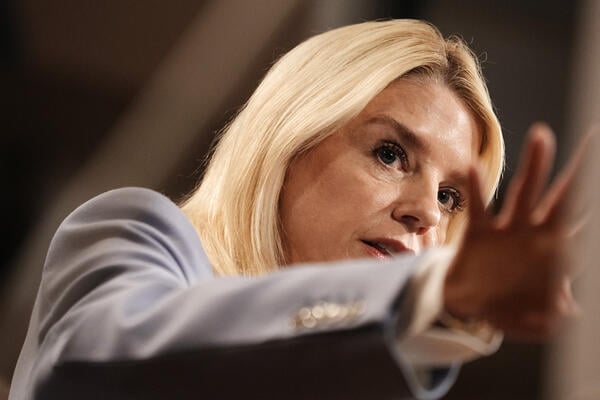
    “No state can be allowed to treat Americans like second-class citizens in their own country by offering financial benefits to illegal aliens,” U.S. attorney general Pamela Bondi said in a statement. “The Department of Justice just won on this exact issue in Texas, and we look forward to fighting in Kentucky to protect the rights of American citizens.”

    Beshear is trying to distance himself from the legal battle. Crystal Staley, communications director for the governor’s office, said in a statement that the office hasn’t been served with a lawsuit, nor did it receive advance notice or hold prior conversations with the department about the regulation. She emphasized that the in-state tuition policy was established by the Kentucky Council on Postsecondary Education more than a decade ago.

    “Under Kentucky law, CPE is independent, has sole authority to determine student residency requirements for the purposes of in-state tuition, and controls its own regulations,” Staley wrote. “The Governor has no authority to alter CPE’s regulations and should not be a party to the lawsuit.”

    The Kentucky Council on Postsecondary Education also only became aware of the lawsuit Wednesday morning and reported that afternoon that it had not yet been served legal documents.

    “Our staff General Counsel is reviewing pertinent federal laws and state regulations at this time to determine next steps,” Melissa Young, the council’s communications senior fellow, wrote in an email to Inside Higher Ed.

    As of Wednesday evening, no new developments in the case had taken place, but Kentucky attorney general Russell Coleman, a Republican, indicated in a statement to Inside Higher Ed that his office planned to support the lawsuit.

    “Preserving in-state tuition for our citizens at the commonwealth’s premier public universities is important to fostering Kentuckians’ potential and encouraging a vibrant state economy,” Coleman said in the statement. “Our Office will support the Trump Administration’s efforts to uphold federal law in Kentucky.”

    As in Texas, a group of Republican lawmakers proposed legislation earlier this year to prevent noncitizens in Kentucky from qualifying as residents and accessing in-state tuition benefits. But the bill didn’t proceed further.

    The new lawsuit heightens fears among undocumented students’ advocates that the Trump administration could target in-state tuition policies across the country, which help undocumented students in 23 states and D.C. pay for college when they can’t access federal financial aid. Advocates also worry the Trump administration could continue to sue red states to secure policy wins desired by both Republican state lawmakers and the federal government. (In Kentucky, Republicans control the attorney general’s office and the State Legislature.)

    Monica Andrade, director of state policy and legal strategy at the Presidents’ Alliance on Higher Education, predicted after the Texas lawsuit, “This might only be the beginning, and there might be future actions that extend beyond Texas.”

    Now she worries she’s been proven right.

    Pushback in Texas

    The move in Kentucky comes as undocumented students and civil rights organizations are fighting back in Texas.

    The Mexican American Legal Defense and Educational Fund, a Latino civil rights organization, filed a motion on behalf of undocumented students in Texas to intervene in the DOJ lawsuit. The motion argues that the speed at which Texas and the DOJ came to an agreement and the judge closed the case provided no opportunity for a hearing or for the public to weigh in.

    “Our federal courts are public agencies,” said Thomas A. Saenz, president and general counsel at MALDEF. “They’re supposed to undertake their work in the public eye. The two parties and the court did all of this behind closed doors in one afternoon, without setting a public hearing … That is a complete abuse of the judicial system.”

    “To come up with a consent judgment like that, they had to have been planning this for weeks,” he said. “Every Texan should be offended if something their legislators passed and then never repealed was so easily killed by the attorney general acting in collusion with the Department of Justice.”

    MALDEF is representing unnamed affected students, including three DACA recipients: a third-year biomedical science student at the University of Texas Rio Grande Valley who is planning to pursue medical school, a student earning a master’s in higher education at University of Houston who was planning to apply to Ph.D. programs and a master’s student in clinical mental health counseling at the University of North Texas.

    “She cannot afford to pay out-of-state tuition and will likely be forced to drop out of her program,” the motion says of one student.

    The goal is for the student group to become a party in the lawsuit so that it can appeal the decision. Texas and the federal government have until early July to oppose MALDEF’s motion to intervene, but if the judge denies an intervention, MALDEF could appeal that decision as well.

    Andrade said that what MALDEF is doing could possibly be replicated in other states if the DOJ challenges more in-state tuition laws, though some states might face different challenges that require different approaches. For example, Republican lawmakers in Arizona included a provision in their House budget, approved June 12 by the House Appropriations Committee, that colleges can’t use public money to reduce tuition for noncitizens, The Arizona Capitol Times reported. Some cited the Texas lawsuit.

    The Presidents’ Alliance is in “close coordination with legal, with advocacy and institutional partners to explore—whether it’s immediate or longer-term—actions that we can take” to prepare for different kinds of attacks, Andrade said. “Folks in the states where we’re having conversations, their laws comport with federal law. But given everything that’s been going on, that doesn’t mean that folks should not be preparing for any type of challenge.”

    The organization is also trying to advise Texas undocumented students who are “scrambling,” in the absence of any state guidance to higher ed institutions as to when the tuition rate change goes into effect and to whom the shift applies. It’s unclear, for example, whether students with DACA or Temporary Protected Status are included.

    “We’re telling students to continue to take their classes and do not make any drastic changes based on this,” Andrade said.

    TheDream.US, a scholarship provider for undocumented students, is also gearing up to help Texas students find more affordable programs if they can’t pay their colleges’ out-of-state tuition prices. MALDEF predicted some students’ costs would increase up to 800 percent—in some cases, from $50 to $450 per credit hour.

    Gaby Pacheco, president and CEO of TheDream.US, said the organization is prioritizing helping students connect with online programs, because many live in Texas border towns, where commuting to a more distant college could require having to cross immigration control checkpoints.

    In the meantime, Texas institutions and students are embroiled in “confusion and uncertainty and chaos” as they await more information, she said.

    Daniel I. Morales, an associate professor of law and Dwight Olds Chair at University of Houston Law Center, said what happened in Texas is the latest example of a national trend: the “absolute erasure” of state and local issues in favor of the administration’s priorities.

    Morales said two decades ago, Texas’s in-state tuition policy was born out of Republican governor Rick Perry’s recognition of “the reality locally in Texas, that we have an enormous undocumented population that is enormously productive if given the opportunity to go to college,” which benefits the state economy. But now, state lawmakers fear risking their career trajectories if they don’t prioritize partisan national interests, he said.

    He doesn’t know what’s going to happen in Kentucky. But if it goes the way of Texas and the attorney general files a joint motion with the DOJ, civil rights organizations such as MALDEF would have to be the ones to fight it, with students as the plaintiffs, he said.

    “Students, if they don’t have the resources to pay out-of-state tuition, they don’t have the resources to litigate, either,” at least not on their own, he said. “There’s very little recourse.”

    Source link

  • Flexible Learning and Policy Challenges

    Flexible Learning and Policy Challenges

    What impact is flexible learning having on learners from K-12 through to professional development?

    New Zealand has remarkably high levels of digital access across the population. Why aren’t we out performing other countries in educational measurements?

    This piece serves to introduce a series of six challenges faced by policy makers around flexible learning.

    These six challenges are:

    1. Unequal Access to Technology and Connectivity
    2. Socioeconomic Disparities
    3. Digital Literacy and Skills Gaps
    4. Quality Assurance and Consistent Experience
    5. Teacher Preparedness and Support
    6. Policy and Funding Models

    In this first piece I want to establish what I mean by ‘flexible learning’.

    Like many I struggle to have a single, concise, and consistent “definition” of flexible learning. I would say that flexible learning is a model of delivery that offers learners agency and control over various aspects of their learning experience. Flexible learning is a spectrum. Formal learning courses exist on a continuum between “rigid” and “flexible” delivery. The more control and choice given to the learner, the more flexible the learning experience.

    Flexible learning aims to “empower the student to choose what learning should be studied face-to-face and that which should be studied online, and how to go about engaging with that learning” (2022). This Means empowering the learner to make choices regarding:

    • When: synchronous or asynchronous learning, pace-mandated or self-paced progression.
    • Where: Learning in different locations (home, campus, workplace, etc.).
    • How: Different modes of engagement (online, in-person, blended, hybrid, hyflex).
    • What: Some degree of choice over content or learning pathways, though this is often more associated with “open learning.” Indeed in a world where students are overwhelmed with choices, there are strong arguments that having a prescriptive programme serves students well.

    In my article “Definitions of the Terms Open, Distance, and Flexible in the Context of Formal and Non-Formal Learning,” (2023) I argued that flexible learning is a model of delivery, rather than a fundamental mode of learning. I posit that there are only two core modes of learning: in-person (or face-to-face) and distance learning. Flexible learning then emerges from various combinations and approaches to curriculum design that empower learners to choose amongst these two modes

    As education has a habit of inventing new terms for marginally different practices it might be worth just pointing out the relationship I think exists between flexible learning and forms of Blended, Hybrid, and HyFlex learning. I perceive blended, hybrid, and HyFlex learning as specific models of delivery that fall under the umbrella of flexible learning. They all aim to give agency to the learner regarding how they engage with the material, combining elements of in-person and distance learning.

    I believe that designing for flexible learning means considering the learner’s context and perspective, and creating learning experiences that are relevant, meaningful, motivating, realistic, and feasible within an agreed timeframe. This also involves careful consideration of learning outcomes and assessment in diverse delivery contexts. This means course creators need clarity about learning design principles in relation to flexible approaches, such as working with Notional Study Hours (2020a) and the importance of Learning Outcomes (2020b).

    Based on my broad definition thatFlexible Learning refers to educational approaches and models of delivery that provide learners with a significant degree of choice and control over the time, place, pace, and mode of their learning, leveraging combinations of in-person and distance learning to enhance accessibility and cater to diverse learner needs, how do we face those six policy challenges?

    Watch this space…

    Atkinson, S. P. (2020a, April 14). Working with Notional Study Hours (NSH) or “How much is enough?” Simon Paul Atkinson. https://sijen.com/2020/04/14/working-with-notional-study-hours-nsh-or-how-much-is-enough/

    Atkinson, S. P. (2020b, April 4). Designing Courses: Importance of Learning Outcomes. Simon Paul Atkinson. https://sijen.com/2020/04/04/designing-courses-importance-of-learning-outcomes/

    Atkinson, S. P. (2022a, July 15). How do you define hybrid, or hyflex, learning?. Simon Paul Atkinson. Retrieved from https://sijen.com/2022/07/15/how-do-you-define-hybrid-or-hyflex-learning/

    Atkinson, S. P. (2023). Definitions of the Terms Open, Distance, and Flexible in the Context of Formal and Non-Formal Learning. Journal of Open, Flexible, and Distance Learning, 26(2).3 Retrieved from https://jofdl.nz/index.php/JOFDL/article/view/521

    Source link

  • Co-creation of research agendas could strengthen policy research engagement

    Co-creation of research agendas could strengthen policy research engagement

    The University Policy Engagement Network (UPEN) recently announced that it had been successful in a UKRI bid to develop and expand UK policy to research infrastructure, facilitating connections and engagement between public and civil servants on one hand, and research organisations on the other.

    This call is a recent manifestation of a perennial and important interest in evidence-informed policymaking, and policy and research engagement. Policy engagement is also part of an increased focus on engagement with and impact of research, driven by the Research Excellence Framework.

    We recently published a journal article exploring what researchers and policymakers need to know and understand when engaging with each other, based on interviews with 11 experts working with higher education regulators, other major sectoral bodies, and higher education institutions who had extensive expertise across the UK higher education sector.

    University-based researchers and policymakers respond to different incentives in ways that are not always conducive to engagement. Interviewees described a wide range of influences on policy, including many types of research, much of which is produced outside the university sector. For some types of research, such as rapid research, researchers at higher education institutions were seen as being at a disadvantage. To address these considerations, our interviewees suggested that research co-creation – involving policymakers earlier in the process to develop research ideas and design projects – could promote engagement with policy.

    Engagement from the start

    In a typical research process, university-based researchers develop, conduct, and publish their research with a high degree of independence from the stakeholders of their research. Once the research is completed, researchers disseminate their findings, hoping to reach external stakeholders, including policymakers. In contrast, co-created research brings research stakeholders into the research process at the beginning and maintains stakeholder influence and co-creation throughout.

    When asked how researchers can increase engagement with policy, one participant said: :

    Co-designing projects with people involved in policy from the outset rather than, you know, what I often see, which is ‘we’ve done this stuff and now, who can we send it to?’ So, getting people involved from the outset and the running of it through advice.

    Because policy priorities shift and because research often takes a long time to complete, co-creation is not a perfect solution for policy research engagement. But co-creation may increase the likelihood that research findings are relevant to and usable for the specific needs of policymakers. Another benefit of co-creation is that, by taking part in the research process, policymakers are more likely to feel invested in the research and inclined to use its findings.

    Co-creation of research with policymakers requires access to and some form of relationship with relevant policymakers. While some researchers have easier access to policymakers than others, there are structures in place to facilitate the networking required to build relevant relationships, including through academic fellowship with the UK Parliament. Researchers can sometimes connect more easily to ministers and policymakers via intermediary organisations such as mission groups, representative bodies, think tanks, and professional organisations.

    Designing successful co-creation

    In a policy-research co-creation model, one of the questions that is worth asking is what is co-created: is research co-created, policy co-created, or both? For example, one participant in our study viewed researcher engagement with policymakers as policy-co-creation, rather than as research co-creation. Researchers can ask themselves: “What policy am I well-positioned to co-create based on my research?” as well as “How can my research benefit from co-creation with its stakeholders?”

    Our article highlights that one of the more frequent pathways for researchers based at universities to engage with policy is through conducting commissioned research. Commissioned research is often aligned with policy needs and facilitates co-creation. Yet independence, rigour, and criticality – markers of quality research – still need to be ensured even as part of co-created and commissioned research.

    Commissioned research was not the only type of research discussed by our participants that led to policy engagement. Interviewees provided examples of researchers with an established and rigorous body of work that answered policy-relevant questions which were successful in shaping policy. Sometimes, a body of research developed over time and over multiple studies is better suited for policy engagement. Sometimes this takes the form of a systematic review designed to bring a large body of research literature to bear on a current policy problem.

    This raises an important consideration for mechanisms that incentivise engagement: how does incentivising engagement affect the multiple priorities that researchers based at higher education institutions need to meet? The danger here is that, as more policy engagement is incentivised, researchers at higher education institutions might prioritise forms and qualities of research which lend themselves to engagement over those which higher education is uniquely placed to offer.

    As current efforts to expand UK-wide policy to research infrastructure develop, it is important to consider the multiple complexities associated with policy research engagement. In our view, for policy and research engagement to be meaningful, policy to research infrastructure needs to support high quality research, targeted engagement, and have a clear sense of what each of these means in practice.

    Source link

  • Week in review: Major federal policy changes loom over colleges

    Week in review: Major federal policy changes loom over colleges

    The number of university civic centers established through a 2023 Ohio law in a bid to increase “intellectual diversity” at the state’s public colleges. Now, Republican lawmakers have released a budget proposal that would give the centers more influence by having their directors advise policymakers on “curriculum development and standards” at Ohio public colleges. 

    Source link

  • With better coordination we can break down barriers to academic policy engagement

    With better coordination we can break down barriers to academic policy engagement

    How can universities best support the UK’s research base to deliver better outcomes for people? This is becoming an ever more urgent challenge for our sector, in the context of a changing geopolitical landscape and the desire of the UK government for research and innovation to better serve the public good.

    One route to deriving greater public benefit from academic research lies in research better connecting with and informing public policy development. Recent years have seen a growing number of universities establishing policy units – at least 46, at the last count, and almost certainly more now. There has also been increased investment in policy-focused activity from research funders, for example, Research England’s Policy Support Fund, UKRI policy fellowships, and ESRC investments to increase policymaker engagement with research. New mechanisms to strengthen evidence use, such as government areas of research interest and parliamentary thematic research leads, have been introduced, alongside an increased focus on building capacity for evidence use across sub-national government.

    Through the Covid-19 pandemic, we saw the myriad ways in which research evidence informed policy to deliver benefits for people, whether understanding and treating the disease, informing the public health response, or mitigating the wider social impacts.

    You can’t always get what you want

    “Academic-policy engagement” is becoming increasingly mainstream, as part of universities’ wider knowledge exchange or civic engagement strategies. However, considerable barriers to engagement between academic researchers and policymakers remain. These include significant cultural differences, lack of incentives and investment, mismatched timescales and approaches, lack of access to academic research, and difficulties in parsing an ever-growing volume of information.

    Policymakers often express a desire for a streamlined, “one stop” interface with academics to enable them to quickly and easily reach the right expertise at the right time. Given such barriers, this is much easier said than done.

    Too often, where interaction does happen, it is short-term, ad hoc, dependent on individual contacts, and enabled through fixed-term funding rather than sustainable approaches. Many institutions lack both the capacity and the necessary capabilities to respond to policy needs.

    There is no systematic mechanism for policymakers to engage with universities in order to identify and access the expertise they need, or for universities and researchers to identify policy needs, still less provide a coordinated response. This means that policymakers do not necessarily have access to the best evidence, only that which is most readily available.

    What is now required is a serious focus on establishing a more systematic and sustainable approach. Such an approach requires organisational capacity and individual capability, alongside greater collaboration and coordination across the academic-policy ecosystem.

    The policy connection cavalry is here

    This is where the Universities Policy Engagement Network (UPEN) comes in. Established in 2018 UPEN is a voluntary network of over 120 universities, research centres, and policy organisations across the UK, currently hosted at UCL. Our university members comprise diverse institutions, from large, research-intensive to small, specialist institutions, across all parts of the UK. UPEN provides an interface between all areas of academic research and public policymaking, with strong relationships with the UK’s four national legislatures and 25 government departments and growing links with local and regional policymakers.

    UPEN has until now been powered by the contributions of our members: both financial and, crucially, time. With a new funding award from Research England and ESRC, we now have the opportunity to build a national “connective infrastructure” which can respond to growing policy demand, at multiple levels of government, for academic expertise and evidence.

    Enhancing UPEN’s ability to provide this interface will enable us as a sector to work in a more coordinated and efficient way. It will also foster greater diversity in academic-policy engagement by ensuring a greater breadth of evidence and voices are heard. And it will build on previous UKRI investments to underpin stronger collaboration and collective action to harness the full potential of the university research base.

    Our new programmes of work will focus on three key areas. First, supporting universities to strengthen their academic engagement with public policy by enhancing individual and organisational capabilities. Second, strengthening place-based approaches to academic-policy engagement. Third, developing a national knowledge brokerage function to mobilise academic expertise to respond at the point of policy need.

    The UK government is grappling with multiple complex and cross-cutting policy challenges – from bolstering a weak economy, to improving energy security and sustainability, to tackling problems with the health service, to addressing housing needs. It is time for us, as a sector, to better leverage the knowledge of universities to address these challenges in order to deliver better outcomes for citizens across the UK.

    Source link

  • Higher Ed Unions Call for Free College in Fed Policy Agenda

    Higher Ed Unions Call for Free College in Fed Policy Agenda

    A coalition of labor unions representing faculty and other higher education workers called for free college and more Thursday—the same day House Republicans passed their reconciliation bill, which would cut Pell Grants and target postsecondary education in other ways.

    The federal policy agenda is from Higher Ed Labor United (HELU), which seeks to unify all types of higher ed workers—academic and nonacademic, unionized or not—in a single national coalition that can organize together.

    The other broad prongs of HELU’s agenda are to:

    • Establish strong labor standards on every campus
    • End the crises of student and institutional debt
    • Rebuild and expand the nation’s research infrastructure
    • Enshrine and protect the right to learn, speak freely and teach without fear or retaliation
    • Ensure democracy and shared governance for those who work, learn and live alongside colleges and universities

    “Now is the time to rally our forces and offer a different vision of higher education and a positive path forward,” said Todd Wolfson, president of the American Association of University Professors and a founder of HELU, at a news conference in Washington, D.C.

    “Higher ed is under a withering assault right now,” Wolfson said. “But it’s important for us to be clear: The assault on higher ed did not begin with Trump.”

    “As a sector, we have suffered through 50 years of federal and state divestment,” Wolfson continued. He said this has led to, among other things, “skyrocketing tuition” and a lack of job security for campus workers.

    “The corporatization and neoliberal attacks on our universities are entwined with the right-wing authoritarian attacks,” Wolfson said. “They want to stop political dissent,” and, “as higher education goes, so goes democracy.”

    Two Democratic politicians—Rep. Mark Takano of California and Sen. Ed Markey of Massachusetts—spoke at Thursday’s event alongside leaders from multiple unions. Markey said House Republicans “have proposed a budget that will decimate the Pell Grants, leaving colleges out of reach for hundreds of thousands of low-income and first-generation students.”

    “Donald Trump and Republicans don’t want freedom, they don’t want democracy, they want control,” including over curricula, research and student speech, Markey added.

    Source link

  • ‘We’re here to detect the presence of learning:’ Danny Liu explains USyd’s AI policy – Campus Review

    ‘We’re here to detect the presence of learning:’ Danny Liu explains USyd’s AI policy – Campus Review

    The University of Sydney’s (USyd) new artificial intelligence (AI) learning and assessment policy is commonsense for both teachers and students, head of the uni’s AI group has said.

    Please login below to view content or subscribe now.

    Membership Login

    Source link

  • USyd responds to student concerns about ‘two-lane’ AI policy – Campus Review

    USyd responds to student concerns about ‘two-lane’ AI policy – Campus Review

    The university arguably leading the sector in its use of artificial intelligence (AI) in assessment tasks has received criticism from some students who have complained they lost marks for not using AI in a test.

    Please login below to view content or subscribe now.

    Membership Login

    Source link