Tag: Policymakers

  • Funding high-quality teacher preparation programs should be the highest priority for policymakers

    Funding high-quality teacher preparation programs should be the highest priority for policymakers

    by Sharif El-Mekki and Heather Kirkpatrick, The Hechinger Report
    November 25, 2025

    By dismantling the Department of Education, the Trump administration claims to be returning control of education to the states. 

    And while states and local school districts are doing their best to understand the new environments they are working in, they have an opportunity amidst the chaos to focus on what is most essential and prioritize how education dollars are spent.  

    That means recruiting and retaining more well-prepared teachers with their new budget autonomy. Myriad factors affect student learning, but research shows that the primary variable within a school’s control is the teacher. Other than parents, teachers are the adults who spend the most time with our children. Good teachers have been shown to singularly motivate students.  

    And that’s why, amidst the chaos of our current education politics, there is great opportunity. 

    Until recently, recruiting, preparing and retaining enough great teachers has not been a priority in policy or funding choices. That has been a mistake, because attracting additional teachers and preparing them to be truly excellent is arguably the single biggest lever policymakers can use to demonstrate their commitment to high-quality public schools. 

    Related: Interested in innovations in higher education? Subscribe to our free biweekly higher education newsletter. 

    Great teachers, especially whole schools full of great teachers, do not just happen. We develop them through quality preparation and meaningful opportunities to practice the profession. When teachers are well-prepared, students thrive. Rigorous teacher preparation translates into stronger instruction, higher K-12 student achievement and a more resilient, equitable education system

    Teachers, like firefighters and police officers, are public servants. We rightly invest public dollars to train firefighters and police officers because their service is essential to the safety and well-being of our communities. Yet teachers — who shape our future through our kids — are too often asked to shoulder the costs of their own preparation. 

    Funding high-quality teacher preparation should be as nonnegotiable as funding other vital public service professions, especially because we face a teacher shortage — particularly in STEM fields, special education and rural and urban schools.  

    This is in no small part because many potential teaching candidates cannot afford the necessary education and credentialing. 

    Our current workforce systems were not built for today’s teaching candidates. They were not designed to support students who are financially vulnerable, part-time or first-generation, or those with caregiving responsibilities.  

    Yet the majority of tomorrow’s education workforce will likely come from these groups, all of whom have faced systemic barriers in accumulating the generational wealth needed to pursue degrees in higher education. 

    Some states have responded to this need by developing strong teacher development pathways. For example, California has committed hundreds of millions to growing the teacher pipeline through targeted residency programs and preparation initiatives, and its policies have enabled it to recruit and support more future teachers, including greater numbers of educators from historically underrepresented communities. 

    Pennsylvania has created more pathways into the education field with expedited credentialing and apprenticeships for high school students, and is investing millions of dollars in stipends for student teachers. 

    It has had success bringing more Black candidates into the teaching profession, which will likely improve student outcomes: Black boys from low-income families who have a Black teacher in third through fifth grades are 18 percent more interested in pursuing college and 29 percent less likely to drop out of high school, research shows. Pennsylvania also passed a senate bill﷟HYPERLINK “https://www.senatorhughes.com/big-win-in-harrisburg-creating-the-teacher-diversity-pipeline/” that paved the way for students who complete high school courses on education and teaching to be eligible for career and technical education credits. 

    At least half a dozen other states also provide various degrees of financial support for would-be teachers, including stipends, tuition assistance and fee waivers for credentialing.  

    One example is a one-year teacher residency program model, which recruits and prepares people in historically underserved communities to earn a mster’s degree and teaching credential.  

    Related: Federal policies risk worsening an already dire rural teacher shortage 

    Opening new pathways to teaching by providing financial support has two dramatic effects. First, when teachers stay in education, these earnings compound over time as alumni become mentor teachers and administrators, earning more each year.  

    Second, these new pathways can also improve student achievement, thanks to policies that support new teachers in rigorous teacher education programs

    For example, the Teaching Academy model, which operates in several states, including Pennsylvania, New York and Michigan, attracts, cultivates and supports high school students on the path to becoming educators, giving schools and districts an opportunity to build robust education programs that serve as strong foundations for meaningful and long-term careers in education, and providing aspiring educators a head start to becoming great teachers. Participants in the program are eligible for college scholarships, professional coaching and retention bonuses.  

    California, Pennsylvania and these other states have begun this work. We hope to encourage other state lawmakers to seize the opportunities arising from recent federal changes and use their power to invest in what matters most to student achievement —teachers and teacher preparation pathways. 

    Sharif El-Mekki is founder & CEO of the Center for Black Educator Development in Pennsylvania. Heather Kirkpatrick is president and CEO Alder Graduate School in California. 

    Contact the opinion editor at [email protected]. 

    This story about teacher preparation programs was produced by The Hechinger Report, a nonprofit, independent news organization focused on inequality and innovation in education. Sign up for Hechinger’s weekly newsletter. 

    This <a target=”_blank” href=”https://hechingerreport.org/opinion-funding-high-quality-teacher-preparation-programs-should-be-the-highest-priority-for-policymakers/”>article</a> first appeared on <a target=”_blank” href=”https://hechingerreport.org”>The Hechinger Report</a> and is republished here under a <a target=”_blank” href=”https://creativecommons.org/licenses/by-nc-nd/4.0/”>Creative Commons Attribution-NonCommercial-NoDerivatives 4.0 International License</a>.<img src=”https://i0.wp.com/hechingerreport.org/wp-content/uploads/2018/06/cropped-favicon.jpg?fit=150%2C150&amp;ssl=1″ style=”width:1em;height:1em;margin-left:10px;”>

    <img id=”republication-tracker-tool-source” src=”https://hechingerreport.org/?republication-pixel=true&post=113500&amp;ga4=G-03KPHXDF3H” style=”width:1px;height:1px;”><script> PARSELY = { autotrack: false, onload: function() { PARSELY.beacon.trackPageView({ url: “https://hechingerreport.org/opinion-funding-high-quality-teacher-preparation-programs-should-be-the-highest-priority-for-policymakers/”, urlref: window.location.href }); } } </script> <script id=”parsely-cfg” src=”//cdn.parsely.com/keys/hechingerreport.org/p.js”></script>

    Source link

  • New test tubes or shiny buildings? The choice facing policymakers when it comes to funding research

    New test tubes or shiny buildings? The choice facing policymakers when it comes to funding research

    Let me start with a vignette. Back in 2017, we published a brilliant award-winning report on TRAC written by a young intern. This looked specifically at cross-subsidies in universities from Teaching (international students) to Research.

    Back then, there was no clear cross subsidy towards home students, as they (more than) paid for themselves due to £9,000 fees. But the subsidy from international students towards research was large, as it remains today.

    We held a launch event at the LSE for the paper. This remains seared on my mind for, instead of being impartial, the eminent professor in the Chair attacked our young intern for having the temerity to publicise the split in resources for teaching and research.

    His (widely shared) view was that, at an institution like the LSE, research informs teaching and teaching informs research, so policy makers should not look too closely under the bonnet but instead let universities spend their resources as they see fit.

    The interesting part of this story is that the person who asked us to write the report was the LSE’s own Director of Research. He was frustrated that his colleagues seemed not to understand the financial flows in their own institution.

    A second reason why we should shine a spotlight on how universities work is that teaching and research are now split down the middle when it comes to political oversight:

    • we have one Minister for teaching and another for research;
    • we have one Whitehall Department for teaching and another for research; and
    • we have one regulator / funder for teaching and another for research.

    We might prefer it if it were not so, but it is naïve to think substantial cross-subsidies within institutions fit as naturally with these arrangements as they did with the arrangements in place back at the turn of the millennium, when TRAC was first mooted.

    In our 2017 report, we showed that, according to TRAC, only 73% of research costs were recovered. On revisiting the issue in another report three years later, we found cost recovery had fallen to 69%. Today, as the KCL report shows, the number is just 66%.

    In other words, during a decade when politicians have exalted the power of R&D to transform Britain, the level of cost recovery has been falling at almost 1 percentage point a year.

    However, what has changed over time is that this is now fairly well understood. For example, TRAC data were heavily used to show the sector’s challenges in both the Universities UK Blueprint and the recent Post-16 Education and Skills white paper.

    Let me focus on that white paper for a second. It is a slightly odd document, where you can see the joins between the three Secretaries of State (for Education, Work and Pensions and Science, Innovation and Technology) who share responsibility for it.

    In particular, the white paper recommits to improving cost recovery for research while simultaneously looking for new ways to crack down on the international students who currently provide big cross-subsidise for research.

    The end result, as the white paper itself admits, is likely to be less research:

    We will work with the sector and other funders to address the cost recovery of research. … We recognise that this may result in funding a lower volume of research but at a more sustainable level.

    While some research-intensive institutions may celebrate this concentration, it does not feel like we have talked enough about the consequences in terms of what it could mean:

    • for research capacity in each region;
    • for the pipeline of new researchers; and
    • for the likelihood of missing out on new discoveries that may otherwise happen.

    In other words, what we have in the white paper is the perhaps inevitable result of giving the Minister for Science, Research and Innovation, Lord Vallance, the additional role of champion for the ‘Oxford-Cambridge corridor’.

    So far, I have assumed the TRAC numbers are accurate, yet we all know they are rough – or worse. A 10-year old piece on TRAC in Times Higher Education quotes one university finance director as saying: ‘if you put garbage [data] in, you will get garbage out.’

    In preparation for this session, I spoke to one academic at a research-intensive university, who even argued: ‘TRAC is a piece of fiction to conceal how much teaching subsidises research.’

    He went on to explain that your contract might say 40% of time should be on Teaching and 40% on Research (with 20% for admin): ‘If you spend 60% on Research and 20% on Teaching, you would be in violation of contract so no one will admit to it.’

    A second academic I contacted was similarly scathing:

    ‘I think it is a classic case of looking for a lost wedding ring under the lamppost, even when you lost it a mile away. Universities obviously have an incentive to say that teaching UK students and doing research is more expensive, because they hope to get more money from the government. That is why TRAC does not lead to better business models – the stuff is known to be suspect.’

    Such criticisms may explain why I have only ever been able to find one university that has followed the logic of their own TRAC numbers by refusing to take on any major new research projects (and even they only had the ban in force temporarily).

    The lesson I take from all this is that TRAC is useful, but not enough. Some sort of calculation needs to occur to inform policy makers, funders and managers. But TRAC is not the slam dunk that people sometimes like to think it is because:

    1. the process is neither liked nor trusted by those it measures;
    2. institutions do not respond to what the data say, so look guilty of crying wolf; and
    3. every sector in search of public money does its own calculations, so the fact that TRAC exists and shows a substantial shortfall in the full economic costs of research and, increasingly, teaching home students too does not automatically give higher education institutions a leg up over other areas of when lobbying the Government.

    Finally, TRAC is meant to help politicians understand the world but I think we also need to recall the motivations of political leaders. When I was in Whitehall, we struggled to persuade the Treasury to move towards full economic costing. They caricatured it as buying new test tubes when the alternative was shiny new buildings. In the end, politicians in hard hats cannot go to topping-out ceremonies for new test tubes.

    Source link

  • What today’s report on living costs means for students, universities and parents – and policymakers

    What today’s report on living costs means for students, universities and parents – and policymakers

    • HEPI Director, Nick Hillman OBE, takes a look at why today’s landmark report on student maintenance from HEPI, TechnologyOne and the Centre for Research in Social Policy at Loughborough University is so important.
    • Later today, HEPI will be hosting a free webinar with UCAS on this year’s admissions round – see here for details and to register for a free place.

    A recent Wonkhe article by Will Yates of Public First noted, ‘It really was not that long ago that maintenance grants were the norm and student life was cheap and cheerful.’ We probably all know what he means.

    When I went to the University of Manchester 35 years ago, I had no tuition fees and got to collect a grant cheque even though my parents were in secure middle-class jobs. Since then, life has become harder financially for students. Costs have gone up and grants have disappeared (in England). Meanwhile, the student body has diversified to include more people from disadvantaged backgrounds.

    As if battling with the impact of COVID on their secondary schooling was not enough, today’s students face big financial obstacles. During my nine years as a Trustee of the University of Manchester (which sadly came to an end last month), I regularly ascended those same stairs I used to climb to collect my physical grant cheque in order to attend Board meetings at which we would discuss student poverty and its impact.

    Will Yates’s conclusion needs qualifying of course. Just as it is true that there are today many poor pensioners alongside all the well-off ones who have cleaned up thanks to intergenerational inequities, so there have always been some students who struggled to survive on the maintenance support they received. I recently stumbled across the following exchange in Hansard from 1969, for example, on whether parents were making up the income of their student offspring in the way they have long been supposed to:

    Mrs. Shirley Williams: I appreciate that students who do not receive the full parental contribution often suffer hardship. My Department recently wrote to local education authorities asking them to ensure that parents were made aware of the importance of making up the student’s grant. But I do not think it would be desirable or practicable to impose a legal obligation on parents to make their contributions. (Source: Hansard, 30 January 1969)

    Plus ça change… Aside from the reference to local education authorities (which no longer have a role in student maintenance), the answer could have come from pretty much any one of the last seven decades.

    These issues are topical in part because the threshold at which parents are expected to start contributing to their adult student offspring’s living costs has not increased for over 15 years – it was set at £25,000 for England by Gordon Brown (six Prime Ministers ago…). So parents in English households on just over £25,000 a year are expected to cough up – the situation is even worse elsewhere (just over £19,000 in Northern Ireland).

    The recent HEPI / Advance HE Student Academic Experience Survey shows over two-thirds of full-time undergraduates now do paid work during term time, and often at a dangerous number of hours (‘dangerous’ in the sense of impacting their academic work). So what has changed is the proportion of students who feel wickedly under-resourced financially.

    The biggest lie told about students today is that they are pathetic ‘snowflakes’ who melt on contact with real life; in fact, when financially challenged, they tend to confront the problem head on by going out and finding paid work. Norman Tebbit would have been proud.

    While my generation of students were debating or politicking or going to gigs, today’s students are more often serving those who do have the money to go out. In the UPP Foundation / Public First research that Will Yates was writing about, the students said they thought ‘it was them (rather than the university, the government, the OfS or any other body) who took responsibility for ensuring that they could afford to study and socialise.’

    In my view, one of the very best projects we do at HEPI is the HEPI / TechnologyOne Minimum Income Standard. This is completely different to the student money surveys that ask students what their income is and how they spend it. Those are useful but only up to a point because what if the income is not enough? Knowing I have X pounds and spend X pounds is only of modest value if I actually need 2X pounds in order to afford the bus to campus, join my favourite student society and buy personal healthcare items (on this, see HEPI’s recent report by Rose Stephenson on menstruation and learning).

    So the Minimum Income Standard starts with a blank sheet of paper plus a tried-and-tested methodology developed by the Centre for Research in Social Policy at Loughborough University to consider how much students really need to live with dignity – the calculation is not for a plush lifestyle nor a monastic one, but rather for a fairly basic-but-safe one and is based on the extensive experience of the research team as well as detailed focus groups with multiple students around the UK.

    This year, the second such study dwells upon first-year students in Purpose-Built Student Accommodation (university halls and privately-owned student accommodation blocks). So it supplements last year’s study of second and third-years in shared ‘off-street’ housing. (In my view, it should really be called ‘on-street’ housing as it tends to be on normal residential streets, but I digress.)

    While TechnologyOne have generously funded this vitally important work, I must stress that neither they nor HEPI have had any editorial control over the core central numbers, which are entirely Loughborough’s work and based on what students have told them. HEPI’s input has included feeding in supplementary figures for accommodation costs , with the help of Student Crowd and Students, and thinking through the possible policy consequences of the research.

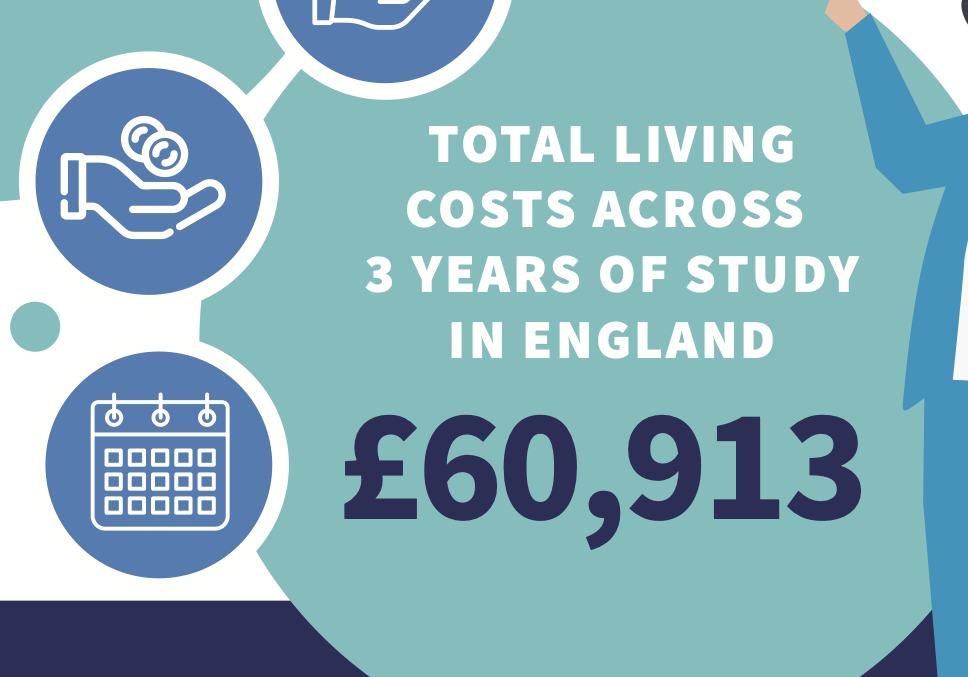
    The top-level finding is that first-year students living in halls need £418 a week – over £20,000 a year and double the maximum maintenance support package in England. Even if a student (in England, living away from home and studying outside London) is in receipt of the maximum maintenance loan, they need to work 20 hours a week throughout the year to earn enough money to hit the Minimum Income Standard. Remember, these are people on full-time courses. As a society, we are now expecting people to do full-time study and half-time paid work and then we wonder why young students struggle to feel a sense of belonging to their institution…

    People should look carefully at the methodology and conclusions to see if they agree with them. As a think tank, our job is to make people think; we can identify the main challenges and propose solutions but we are not a lobby group, so we would never claim we have all the answers. There may be elements of the Minimum Income Standard for Students that people want to pore over, challenge and improve.

    Some of the issues people may want to consider on the back of the MISS include:

    1. As the report makes clear, student life is generally a temporary phase that lasts no more than three or four years. So is it reasonable to apply the same methodology as is used for defining the basic minimum income for someone in work or in retirement? It is valid, in my view, because three years still represents a substantial proportion of a young person’s life up to that point and undergraduate study is often the first period of real independence for people – plus some other phases of life for which the minimum income methodology has been applied are also not always very long term. For example, someone on a ‘living wage’ is likely to hope to rise above it in due course as they gain experience. Besides, in one sense, no phase of life is permanent.
    2. A second important question is whether letting students define their own minimum standard of living via focus groups will always tend towards larger monetary sums. The Minimum Income Standard for Students assumes students are likely to have gym membership, a short UK holiday and other costs (like wireless headphones, a modest alcohol budget and food for takeaways) that some people may deem to be non-essentials or at least not things that should be subsidised by taxpayer-funded income-contingent student loans (though, on the other hand, we only include very small sums for study-related costs). The MISS also includes some costs than some people might deem relevant only to a minority of students (such as paying to store items between terms). But the MISS is about having enough money for every student to live reasonably, with dignity and safety; it is not designed to be a ‘bare minimum’ or to represent the lifestyle of an ascetic. This is one of a number of reasons, further explored below, why we studiously avoid ever saying we think the Government should automatically set the maximum maintenance package at exactly (or even roughly) the level of the MISS. Moreover, students are not spendthrift – one interesting change this year compared to last, for example, is that they no longer deem a TV Licence as a must-have item so it has been removed from the calculation.
    3. What we call a ‘minimum’ is also an ’average’; some cities are notably more expensive than others – London aside, we generally ignore this in the calculation and so the MISS might look too high or too low depending on where someone is studying and their own personal circumstances. For example, this means some of the freebies – such as prescriptions and bus travel – enjoyed by many Scottish students are ignored.
    4. Should we be looking to reduce costs by giving applicants and students better information? A modest amount of the first-year premium (the extra costs that first-years seem to accrue) comes from being unused to budgeting and feeding themselves. The MISS for first-year students even includes a small additional sum for the first 12 weeks while students settle down and get used to things like eating up food before it goes off. Would better information of the students are crying out for fix at least some of the need for this? Similarly, would better information on the different consequences of different accommodation preferences shape better decisions, which in turn could shape the supply of student accommodation, and lead to a reduction in the MISS?
    5. One particular policy challenge is explaining how any extra student maintenance support that could be offered now or later is likely to be spent in practice. Ministers will be less likely to give students improved maintenance packages if they think they will be entirely swallowed up by higher rent levels. One real challenge here, as so often, is that student accommodation tends to fall through the cracks in Whitehall, so it is not always clear who should be approached for these conversations.

    Above all, HEPI is a policy body so for us the key question is always: what are the possible policy ramifications? On this, and notwithstanding the important fact that the report gives a clear indication of a preferred direction of travel, we are still working them out.

    For example, the report concludes that the maximum maintenance package is only half of what students need to live. It clearly needs to be higher and available to more people. It would be absurd (literally absurd) to think parents could easily fill in the gap from their take-home pay unless they are on very good salaries indeed. It is similarly absurd, however, to think the Government can easily fill the whole gap, given the fiscal situation and the much larger number of students than in the past.

    So what level of paid employment is it reasonable to assume students might do (and in holidays or term-time or both)? Or should students opt for a more basic standard of living (no en suite perhaps or more shared rooms, as in the United States)? Or should more students live at home as commuter students but at the cost of experiencing a full traditional student experience? These are difficult questions and, again, the answers will be different in different cases. Nonetheless, we welcome all thoughts in response.

    As I sometimes say when speaking in schools, if and when it comes to my own children going to higher education, I will tell them three things:

    1. good social spaces are more important than things like en suite facilities – if you are living a full student lifestyle, you may spend less time in your room than you originally expected;
    2. taking a temporary full-time job in the holidays is generally preferable to doing a high number of hours of paid employment during term time, if you’re lucky enough to have the choice; and
    3. in general, it tends to be better not to be a commuter student, unless there are specific individual reasons for being one.

    Yet like most parents, I will also have to accept they will take what I say with a large pinch of salt and then find their own way.

    Source link

  • Artificial Intelligence Sparks the Interest of Federal Policymakers – CUPA-HR

    Artificial Intelligence Sparks the Interest of Federal Policymakers – CUPA-HR

    by CUPA-HR | November 15, 2023

    A growing interest in artificial intelligence and its potential impact on the workforce has sparked action by policymakers at the federal level. As employers increasingly turn to AI to fill workforce gaps, as well as improve hiring and overall job quality, policymakers are seeking federal policies to better understand the use and development of the technology. Recent policies include an executive order from the Biden administration and a Senate committee hearing on AI, both of which are detailed below.

    Executive Order on AI Use and Deployment

    On October 30, the Biden Administration released an executive order delineating the “Safe, Secure, and Trustworthy Development and Use of Artificial Intelligence.” The order urges responsible AI deployment that satisfies workforce development needs and ethical considerations.

    The executive order directs several agency heads to issue guidance and regulations to address the use and deployment of AI and other technologies in several policy areas. Some orders of particular interest to higher education HR include:

    • The secretary of labor is directed to submit a report analyzing ways agencies can support workers who may be displaced by AI.
    • The secretaries of labor, education and commerce are directed to expand education and training opportunities to provide pathways to careers related to AI.
    • The secretary of labor is ordered to publish principles and best practices for employers to help mitigate harmful impacts and maximize potential benefits of AI as it relates to employees’ well-being.
    • The secretary of labor is directed to issue guidance clarifying that employers using AI to monitor employees’ work are required to comply with protections that ensure workers are compensated for hours worked as defined under the Fair Labor Standards Act.
    • The secretary of labor is directed to publish guidance for federal contractors on nondiscrimination in hiring practices that involve the use of AI and other technology.
    • The director of the National Science Foundation is directed to “prioritize available resources to support AI-related education and AI-related workforce development through existing programs.”
    • The secretary of education is ordered to develop resources and guidance regarding AI, including resources addressing “safe, responsible and nondiscriminatory uses of AI in education.”
    • The secretary of state is ordered to establish a program to “identify and attract top talent in AI and other critical and emerging technologies at universities [and] research institutions” and “to increase connections with that talent to educate them on opportunities and resources for research and employment in the United States.”
    • The secretary of homeland security is directed to continue its rulemaking process to modernize the H-1B program and to consider a rulemaking that would ease the process of adjusting noncitizens’ status to lawful permanent resident status if they are experts in AI and other emerging technologies.

    The executive order directs the agency heads to produce their respective guidance and resources within the next year. As these policies and resources begin to roll out, CUPA-HR will keep members updated on any new obligations or requirements related to AI.

    Senate HELP Committee Hearing on AI and the Future of Work

    On October 31, 2023 the Senate Employment and Workplace Safety Subcommittee held a hearing titled “AI and the Future of Work: Moving Forward Together.” The hearing provided policymakers and witnesses the opportunity to discuss the use of AI as a complementary tool in the workforce to skill and reskill American workers and help them remain a valuable asset to the labor market.

    Democrats and Republicans on the committee agreed that AI has the potential to alter the workforce in positive ways but that the growth of the use of the technology needs to be supported by a framework of regulations that do not smother its potential. According to witnesses, employers using AI currently face a patchwork of state and local laws that complicate the responsible use and growth of AI technologies. They argued that a federal framework to address the safe, responsible use of AI could help employers avoid such complications and allow AI use to continue to grow.

    Democrats on the committee also asked whether education opportunities and skills-based training on AI can help provide an employment pathway for workers. Witnesses argued that AI education is needed at the elementary and secondary level to ensure future workers are equipped with the skills needed to work with AI, and that skills-based training models to reskill workers have proven successful.

    CUPA-HR will continue to track any developments in federal AI regulations and programs and will inform members of updates.


    Source link