Tag: political

  • The Meaning of July 4 to Political Science Teacher (opinion)

    The Meaning of July 4 to Political Science Teacher (opinion)

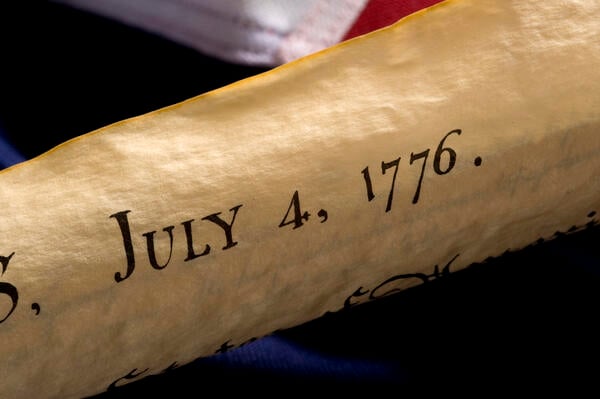
    Every year for the past 25 years, I have taught an intermediate-level undergraduate course at Indiana University Bloomington called The Declaration of Independence and the Meaning of American Citizenship. I love teaching this course, because it allows students to engage history by interpreting a rather simple text that is well recognized even if not necessarily well understood—and this tension between vague familiarity and real understanding makes the teaching fun.

    My basic approach to the topic and the course, outlined on the syllabus, has remained pretty fixed over the years:

    This class will pay special attention to the meaning of “America.” It will address serious questions about what it means to think “historically.” It will trace and analyze the many ways that the meanings of American citizenship have been contested since 1776, and it will do so through a focus on alternative interpretations of the Declaration of Independence, which has sometimes been called the “birth certificate of American democracy.”

    The Declaration is not the only important text in American political history. In particular, we will pay attention to its complex relationship to the U.S. Constitution, the other seminal “founding” document of the U.S. political system. But it is a very important touchstone for many important historical debates, and it is an even more important symbol of American political identity (which is why the late historian Pauline Maier referred to it as “American Scripture”).

    The Declaration is also a very instructive example of the fact that core political symbols, texts and principles can be interpreted in different ways and are often heavily contested. Such rhetorical contests play an important role in the evolution of democracy over time, as disenfranchised groups appeal to “foundational” texts, like the Declaration, to justify their demands for recognition and inclusion—and as those who oppose recognition and inclusion also sometimes draw upon the same texts, though in very different ways.

    In this course we will discuss how the Declaration has been a source of inspiration for activists and social movements seeking to democratize American society, and how it has also been used, differently, by opponents of democratization.

    As we will see, there is not one true “meaning” of the Declaration.

    But there are more and less nuanced, and more and less inclusive, interpretations of the Declaration. The primary goal of this course is to develop a historically and philosophically informed understanding of the Declaration—what it says, what it has meant, how it has justified many of the things most of us hold dear and some things many of us find revolting—and, by doing so, to nurture a more informed and reflexive understanding of contemporary American democracy. And because it is a course taught in a U.S. public university, to students most if not all of whom are citizens of the U.S., such an understanding has potentially significant implications for the way each of us thinks and acts as a citizen.

    The course was originally inspired by a chance encounter, many decades ago, with a fascinating anthology, published in 1976—the year of the Bicentennial—and edited by famed labor historian Philip S. Foner, entitled We, The Other People: Alternative Declarations of Independence by Labor Groups, Farmers, Woman’s Rights Advocates, Socialists, and Blacks, 1829–1975. This volume, as its title suggests, furnishes a wide range of texts to explore with students. Over the years, I have incorporated dozens of other texts, some modeled directly on the 1776 Declaration, others simply drawing heavily on it, including the speeches of a great many presidents, especially Lincoln.

    Central to the course are three famous speeches delivered by dissenters who were widely reviled in their time: Frederick Douglass’s 1852 “What to the Slave is the Fourth of July?”; Eugene V. Debs’s “Liberty,” given in 1895 upon his release from six months in prison for leading the 1894 Pullman strike; and Martin Luther King Jr.’s “I Have a Dream” speech, given at the August 1963 March on Washington for Jobs and Freedom.

    But the syllabus also includes speeches by Confederate leaders Jefferson Davis and Alexander Stephens; populist Tom Watson; and segregationist governor George C. Wallace. Elizabeth Cady Stanton’s “Declaration of Sentiments,” adopted in 1848 at the Seneca Falls Convention for women’s rights, plays an important role; so too the 1898 “White Declaration of Independence” published by white racists in Wilmington, N.C., who overthrew a multiracial city government and terrorized the Black community.

    The course is very historical, but also very contemporary, because July 4 comes every year, and because past historical struggles over the meaning of the Declaration continue to resonate in the present—and indeed are sometimes revived in the present.

    But in the coming year the course will be more relevant than ever, because President Donald Trump has made clear that he plans to turn the entire year leading up to next year’s 250th anniversary of the Declaration’s signing into a celebration of “American greatness”—and thus of himself.

    Back in May 2023, Trump released a campaign video promising what Politico described as “a blowout, 12-month-long ‘Salute to America 250’ celebration,” including “a ‘Great American State Fair,’ featuring pavilions from all 50 states, nationwide high school sporting contests, and the building of Trump’s ‘National Garden of American Heroes’ with statues of important figures in American history.”

    In his second week in office, Trump issued two executive orders centered on the Declaration. The first, “Celebrating America’s 250th Birthday,” announced that “it is the policy of the United States, and a purpose of this order, to provide a grand celebration worthy of the momentous occasion of the 250th anniversary of American Independence on July 4, 2026.” The other, “Ending Radical Indoctrination in K–12 Schooling,” mandated the termination of “radical, anti-American ideologies” and the re-establishment of a “President’s Advisory 1776 Commission” charged with promoting patriotic education.

    Trump has long laid claim to “the spirit of July 4, 1776.” In the final days of his first term, as the nation was overtaken by a wave of Black Lives Matter demonstrations protesting the police killing of George Floyd, he established his “1776 Commission,” which was intended to legitimate his increasingly repressive approach to the demonstrations and to energize his 2020 re-election campaign (the resulting report was also an explicit repudiation of The New York Times’ 2019 “The 1619 Project”).

    The commission and its hurriedly draftedThe 1776 Report” failed to help fuel Trump’s failing 2020 campaign. But its broader ideological mission—to inaugurate a MAGA-inflected cultural revolution in a second Trump term—was hardly defeated.

    The MAGA movement’s attempt to overthrow Joe Biden’s 2020 election— “Today is 1776,” tweeted MAGA congresswoman Lauren Boebert on Jan. 6, 2021, speaking for the thousands of “3 Percenters,” “Proud Boys” and assorted “patriot” groups that invaded the Capitol building—may have failed. But only temporarily. For Trump has returned to the White House with a vengeance and has commenced an ideological and economic assault on higher education, committed to “Restoring Truth and Sanity to American History” by purging society of “divisive narratives that distort our shared history.”

    Historical understanding and social criticism are out and national reverence is in.

    I cannot imagine a more exciting time to be teaching a course on the Declaration of Independence and the meaning of American citizenship.

    But I also cannot imagine a more challenging and indeed precarious time to do so.

    For the course—which does not seek to promote reverence or national pride or “American greatness”—is at odds with the prevailing spirit of the time, or at least its ascendant ideology.

    It seeks to promote historical understanding, based on serious historical scholarship, and a general appreciation for the complex ways that the Declaration has figured in debates and conflicts over the shifting meaning of American citizenship. The course refuses to ignore or whitewash the ways that patriotism and even the preamble of the Declaration itself have been mobilized to oppose the forms of inclusion, and democratization, that we now take for granted (like the abolition of chattel slavery, considered by Southern states to be such a despotic violation of slaveholder property rights that they seceded from the Union, and formed the Confederacy, by appealing to the Declaration’s “consent of the governed”).

    It also refuses to treat American history as the happy working out over time of a beneficent commitment to universal freedom that was embraced from the beginning by all Americans. For while certain universalist words were there from the beginning—coexisting with much less universalistic words, to be sure—a commitment to their universal application was most definitely not there from the beginning. That promise took decades and even centuries to be even haltingly redeemed, partially and in steps, due to the blood, sweat and tears of generations of brave activists—a process that continues to this day. And the fact that the Declaration’s words played such an important role in this contentious politics is the very reason why it is such a seminal text, one that deserves appreciation and celebration even as it is a human invention not above moral reproach or historical critique.

    In politics as in life, criticism, and not easy praise, is the sincerest form of flattery.

    As a professor, my approach to the course material is not partisan in any sense. I have no interest in changing the minds of any of my students, whatever they happen to think, except in the sense that all good teaching is about getting students to think more deeply and more regularly. In this sense, I seek to change the mind of every student, by engaging every student with historical materials, and ideas, and intellectual challenges, and by fostering a climate of respectful questioning and disagreeing in the classroom so that students can hear and listen to those with viewpoints different from their own. The pedagogy of higher education is not normal out in the world beyond the academy, though it would not be a bad thing if it were much more normalized than it currently is. That is why colleges and universities exist.

    All the same, we have arrived at a historical moment in the U.S., perhaps unlike any before, in which such education is considered partisan, and denounced as “indoctrination,” by a MAGA movement and a Trump administration obsessed with a closing of borders, and ranks, and minds, in the name of patriotic “unity” and “American greatness.”

    At a time when historical education is reduced to the celebration of national greatness, a historically serious course on the Declaration of Independence that treats it as a text to be critically engaged, not worshipped, might be considered subversive. Indeed, GOP-controlled state legislatures across the country, following the Trump administration’s lead, have instituted a wide range of measures designed to subject university teaching to heightened political scrutiny (in my own state of Indiana, vague “intellectual diversity” standards have been enacted into law, and Attorney General Todd Rokita has created a web portal, ominously named “Eyes on Education,” that encourages parents and teachers to report “objectionable” forms of teaching).

    The problem with such censoriousness is that, if taken seriously, it is hard to see how the Declaration is worth anything at all. None other than Frederick Douglass himself noted precisely this back in 1852: “There was a time when, to pronounce against England, and in favor of the cause of the colonies, tried men’s souls. They who did so were accounted in their day, plotters of mischief, agitators and rebels, dangerous men. To side with the right, against the wrong, with the weak against the strong, and with the oppressed against the oppressor! Here lies the merit, and the one which, of all others, seems unfashionable in our day. The cause of liberty may be stabbed by the men who glory in the deeds of your fathers.”

    Since July 4, 1776, the Declaration’s words have resonated at every moment when citizens have together sought to make the society, in the words of that other foundational text, the Constitution, “a more perfect union.” To dismiss the critical appropriation of the Declaration is to devalue both the text itself and the entire course of American history.

    This July 4, I will be reflecting on the historical and the contemporary meaning of the text whose publication Americans will celebrate, and gearing up to once again teach The Declaration of Independence and the Meaning of American Citizenship at a time when it could not be more relevant.

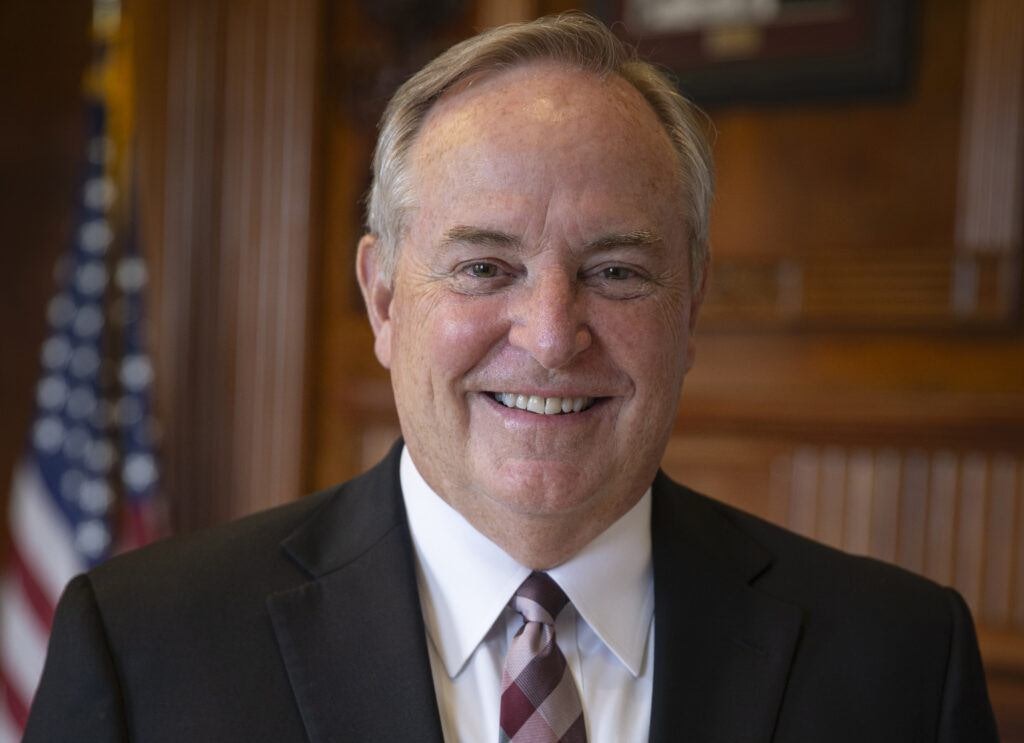
    Jeffrey C. Isaac is completing a book, entitled Defending Democracy’s Declaration, that challenges the ways that the MAGA movement is poised to weaponize the 250th anniversary of the signing of the Declaration of Independence. The James H. Rudy Professor of Political Science at Indiana University Bloomington, Isaac writes regularly on current affairs at his blog, Democracy in Dark Times, and at his new Substack dedicated to the forthcoming book, also named Defending Democracy’s Declaration.

    Source link

  • Still Turning Borrowers into Political Pawns (Student Borrower Protection Center)

    Still Turning Borrowers into Political Pawns (Student Borrower Protection Center)

    Day 2 of the U.S. Department of Education (ED)’s Neg Reg aimed at weaponizing Public Service Loan Forgiveness (PSLF) was… just as damning as Day 1. Here’s the recap:

    Session Summary:

    The session got SPICY right off the bat. ED began the day by presenting their newly revised language. Here are some key moments:

    • Abby Shafroth, legal aid negotiator, stated CLEARLY for the record that this Neg Reg is not about protecting PSLF; it’s about the Department of Education (ED) using it as a tool to coerce nonprofits and universities to further the Trump Administration’s own goals. The government’s response was not convincing. Watch her remarks here.
    • Betsy Mayotte, the negotiator representing consumers, brought more fire: “When reading the statute of PSLF, I don’t see where the Education Secretary has the authority to remove employer eligibility definition from a 501(c)(3) or government organization…but my understanding of the regulations and executive order is that they cannot be contrary to the statute. There are no ifs, ands, or buts under government or 501(c)(3).” Watch the exchange here.
    • In a heated discussion on ED’s proposal to exclude public service workers who provide gender-affirming care to transgender minors, Abby further flagged that no one in the room had any medical expertise, so no one had qualifications to weigh in on medical definitions like “chemical and surgical castration.”
    • The non-federal negotiators held a caucus to talk about large employers that fall under a single federal Employer Identification Number. They are CONCERNED that the extreme breadth of this rule could potentially cut out thousands of workers only because a subset of people work on issues disfavored by this Administration—all without any right to appeal. Negotiators plan to submit language that would allow employers to appeal a decision to revoke PSLF eligibility by ED.
    • Borrowers and other experts and advocates came in HOT with public comment today—calling out ED for using this rulemaking to unlawfully engage in viewpoint discrimination and leave borrowers drowning in debt, unable to keep food on their tables, or provide for their families.

    Missing From the Table:

    Today, our legal director, Winston Berkman-Breen, who was excluded from the committee (but still gave powerful public comment yesterday!) has some thoughts on what was missing from the conversation:

    For two days now, negotiators have raised legitimate questions and important concerns about the Secretary of Education’s authority to disqualify certain government and 501(c)(3) employers from PSLF. And for two days now, ED’s neg reg staff—inlcuding the moderator!—have engaged in bad faith negotiations.

    Jacob, ED’s attorney, asserted that the Secretary has broad authority in its administration of the PSLF program—true, but only to an extent. The Secretary cannot narrow the program beyond the basic requirements set by Congress. When pushed for specific authority, Tamy—the federal negotiator—simply declined.

    It doesn’t stop there—ED representatives sidestepped, dismissed, or outright ignored negotiators’ questions and concerns. That’s because this isn’t a negotiation—it’s an exercise in gaslighting. ED is proposing action that exceeds the Secretary’s statutory authority and likely violates the U.S. Constitution—all the while telling negotiators to fall in line.

    The kicker? By pushing this proposal, ED itself is engaged in an activity with “substantial illegal purpose.” Let that sink in.

    Public Comment Mic  Drops:

    And Satra D. Taylor, a student loan borrower, Black woman, and SBPC fellow, who was also not selected by ED to negotiate, shared more thoughts during public comment:

    “I am disheartened and frustrated by what I have witnessed over the last few days… It has become clear that this Administration is intent on… making college once again exclusive to white, male, and wealthy individuals. These political attacks, disguised as rulemaking, are inequitable and target communities from historically marginalized backgrounds. The PSLF program has provided a vital incentive for Americans interested in serving our country and local communities, regardless of their political affiliation. The Department’s efforts to engage in rulemaking and to change PSLF eligibility are directly related to the goal of Trump’s Executive Order and exceed the Administration’s authority…”

    Source link

  • Voters want AI political speech protected – and lawmakers should listen

    Voters want AI political speech protected – and lawmakers should listen

    This essay was originally published in 24sight’s The Vox Populi section on June 24, 2025.


    As artificial intelligence plays a growing role in political discourse, lawmakers across the country have rushed to propose new regulations over fears that misinformation will proliferate with the new technology. But new polling suggests these efforts may not fully reflect public sentiment and serve as a red flag for lawmakers when their state legislatures reconvene in the fall.

    A recent national survey conducted by Morning Consult for the Foundation for Individual Rights and Expression finds that American voters strongly support prioritizing free speech when crafting AI regulations, even amid growing concerns about AI’s impact.

    Sixty percent of voters say AI-generated content poses a greater threat to elections than government regulation of it. Yet when pressed to choose between stopping deceptive content and protecting free speech, voters side with free speech, 47% to 37%. That support cuts across political lines.

    These numbers also tell a complicated story: Americans are uneasy about AI, but they’re more concerned about the government using AI regulation as a tool to silence dissent, just like many Americans feel about the government regulating content on social media. Our most recent survey shows a striking 81% worry that rules governing election-related AI content could be misused to suppress criticism of elected officials. And over half fear that making it a crime to publish altered political content could chill legitimate political commentary.

    These aren’t abstract fears. Across the country, lawmakers have introduced, and even enacted, bills that would target the mere sharing of AI-generated political content, no matter the context or intent. In Texas and Vermont, for example, proposed legislation cast such a wide net that distributing satire, parody, criticism, or even memes would have been banned or otherwise ensnared in regulation. Ordinary citizens, not just political campaigns, would face penalties for posting altered images of politicians online.

    Americans have the right to speak, joke, criticize, and comment freely, regardless of whether they use AI as an expressive tool in doing so. When lawmakers write vague or sweeping rules about what people can say about candidates, they silence the very public discourse that elections foster.

    Indeed, 28% of voters say government regulation of AI-generated or AI-altered content would make them less likely to share content. That’s not just a statistic, it’s a warning sign. Lawmakers risk silencing voters when their voices matter most. And the effect is even greater among young people, who are significantly more likely to engage with and create AI-generated content. When nearly a third of voters, especially the next generation of political voices, are deterred from participating in public discourse, we’re not just regulating technology — we’re shrinking the space for political engagement.

    Not every datapoint in the polling breaks in favor of free speech. Protecting speech commands broad support, yet many voters also favor checks on misinformation. In the same FIRE survey, while 77% of voters think preserving the right to freedom of speech should be the government’s main priority when making laws that govern the use of AI, 74% of voters believe it’s more important to protect people from misinformation than it is to protect free speech.

    Even so, the poll suggests many voters want any effort to curb misinformation to have firm safeguards for open debate. Many bills on the table this year definitely missed that mark.

    Technologies evolve. The principles of the First Amendment do not. In our system of government, the answer to bad speech isn’t censorship. It’s more speech.

    Source link

  • Fulbright Board Resigns En Masse Over Political Interference

    Fulbright Board Resigns En Masse Over Political Interference

    John McDonnell/Getty Images

    All 12 members of the Fulbright Foreign Scholarship Board have resigned over what they say is political interference in the selection process for recipients of the prestigious international grant, according to sources familiar with the program and a letter announcing their resignation Wednesday morning.

    The FFSB normally has final say in the selection process, after initial application reviews by the Institute for International Education and host countries’ Fulbright commissions. This year was different. Inside Higher Ed broke the story last month that Secretary of State Marco Rubio directed State Department officials to intervene in the final stages of the selection process, adding a new step to cull proposals they felt did not comply with President Trump’s anti-DEI executive orders.

    In their letter, posted to Substack on Wednesday, the former board members wrote that the State Department’s “unprecedented” intervention in the selection process was illegal and unethical and compromised national diplomatic and research interests.

    “Under Democratic and Republican administrations alike, the Board has followed the law, operating with independence pursuant to its statutory mandate,” they wrote. “The current administration has usurped the authority of the Board and denied Fulbright awards to a substantial number of individuals who were selected.”

    Sources familiar with the program, who spoke with Inside Higher Ed on background to avoid retaliation, said that State Department officials—led by Darren Beattie, under secretary for diplomacy and public affairs—ultimately rejected more than 20 percent of the FFSB’s selected finalists in a last-minute intervention. Of the approximately 900 approved applicants for the U.S. Visiting Scholars program, for example, Beattie vetoed roughly 200.

    Many of the proposals that were cut focused on the effects of climate change or gender disparities; others seemed to have been denied based on their inclusion of words that triggered an anti-DEI keyword search that State Department officials used to conduct their final review, according to sources inside the selection process who shared details with Inside Higher Ed in May.

    A person familiar with the program said the board members were stonewalled by high-level State Department officials throughout the process. When they learned that many of their selected finalists hadn’t received their acceptance letters by late May—more than a month later than anticipated—they wrote multiple letters to department officials asking for an explanation. None came; in fact, the person familiar with the program said the members only learned about the new step in the selection process from rumored communications between foreign Fulbright commissions and outside media reports.

    Eventually, the person familiar with the FFSB said, the board members felt they had no choice but to resign.

    The source also said that 1,200 applications from foreign faculty and researchers to the Fulbright Foreign Scholars program—all of which were reviewed and accepted by the FFSB—were still “sitting on Beattie’s desk,” and that he seemed poised to feed them through the same content filters he used on Americans’ applications.

    A senior State Department official confirmed the board members’ resignations in an email to Inside Higher Ed, calling the move “nothing but a political stunt.” The spokesperson also said that the statute in the “Fulbright Hayes Act [sic]” does not give the FFSB “exclusive and final say” in the selection process, as the members argue.

    “The 12 members of the Fulbright Board were partisan political appointees of the Biden Administration,” the official wrote. “It’s ridiculous to believe that these members would continue to have final say over the application process, especially when it comes to determining academic suitability and alignment with President Trump’s Executive Orders.”

    The FFSB is a politically appointed board; the members who just resigned were indeed all appointed by President Biden. They include some big names in Democratic Party politics, such as Jen O’Malley Dillon, former White House deputy chief of staff and chair of the Harris-Walz campaign; Mala Adiga, Biden’s former deputy assistant; and Louisa Terrell, former White House director of legislative affairs. Others are business leaders and philanthropists.

    Their resignations now open up all 12 seats, which are usually term-limited, to Trump appointees. One person familiar with the Fulbright program said the board members had factored this into their decision to resign. But after being shut out from the end of the selection process, the board members felt they had to leave.

    “To continue to serve after the Administration has consistently ignored the Board’s request that they follow the law would risk legitimizing actions we believe are unlawful and damage the integrity of this storied program and America’s credibility abroad,” the members wrote in their letter.

    President Trump’s proposed fiscal year 2026 budget eliminates nearly all Fulbright funding and would gut the Bureau of Educational and Cultural Affairs, which houses the scholarship. The person familiar with the program said they believe the Trump administration is narrowing the funnel for Fulbright recipients and upending the selection process in order to undermine the program without eliminating it entirely, which only Congress can do.

    If the administration continues unwinding the program, they said, they worry that the recently selected cohort will be left stranded without funding or resources once the new budget takes effect.

    Source link

  • Voters strongly support prioritizing freedom of speech in potential AI regulation of political messaging, poll finds

    Voters strongly support prioritizing freedom of speech in potential AI regulation of political messaging, poll finds

    • 47% say protecting free speech in politics is the most important priority, even if that lets some deceptive content slip through
    • 28% say government regulation of AI-generated or AI-altered content would make them less likely to share content on social media
    • 81% showed concern about government regulation of election-related AI content being abused to suppress criticism of elected officials

    PHILADELPHIA, June 5, 2025 — Americans strongly believe that lawmakers should prioritize protecting freedom of speech online rather than stopping deceptive content when it comes to potential regulation of artificial intelligence in political messaging, a new national poll of voters finds.

    The survey, conducted by Morning Consult for the Foundation for Individual Rights and Expression, reflects a complicated, or even conflicted, public view of AI: People are wary about artificial intelligence but are uncomfortable with the prospect of allowing government regulators to chill speech, censor criticism and prohibit controversial ideas.

    “This poll reveals that free speech advocates have their work cut out for them when it comes to making our case about the important principles underpinning our First Amendment, and how they apply to AI,” said FIRE Director of Research Ryne Weiss. “Technologies may change, but strong protections for free expression are as critical as ever.” 

    Sixty percent of those surveyed believe sharing AI-generated content is more harmful to the electoral process than government regulation of it. But when asked to choose, more voters (47%) prioritize protecting free speech in politics over stopping deceptive content (37%), regardless of political ideology. Sixty-three percent agree that the right to freedom of speech should be the government’s main priority when making laws that govern the use of AI.

    And 81% are concerned about official rules around election-related AI content being abused to suppress criticism of elected officials. A little more than half are concerned that strict laws making it a crime to publish an AI-generated/AI-altered political video, image, or audio recording would chill or limit criticism about political candidates.

    Voters are evenly split over whether AI is fundamentally different from other forms of speech and thus should be regulated differently. Photoshop and video editing, for example, have been used by political campaigns for many years, and 43% believe the use of AI by political campaigns should be treated the same as the use of older video, audio, and image editing technologies.

    “Handing more authority to government officials will be ripe for abuse and immediately step on critical First Amendment protections,” FIRE Legislative Counsel John Coleman said. “If anything, free expression is the proper antidote to concerns like misinformation, because truth dependably rises above.”

    The poll also found:

    • Two-thirds of those surveyed said it would be unacceptable for someone to use AI to create a realistic political ad that shows a candidate at an event they never actually attended by digitally adding the candidate’s likeness to another person.
    • It would be unacceptable for a political campaign to use any digital software, including AI, to reduce the visibility of wrinkles or blemishes on a candidate’s face in a political ad in order to improve the appearance of the candidate, 39% say, compared to 29% who say that it would be acceptable.
    • 42% agree that AI is a tool that facilitates an individual’s ability to practice their right to freedom of speech.

    The poll was conducted May 13-15, 2025, among a sample of registered voters in the US. A total of 2,005 interviews were conducted online across the US for a margin of error of plus or minus 2 percentage points. Frequency counts may not sum to 2,005 due to weighting and rounding.

    The Foundation for Individual Rights and Expression (FIRE) is a nonpartisan, nonprofit organization dedicated to defending and sustaining the individual rights of all Americans to free speech and free thought — the most essential qualities of liberty. FIRE educates Americans about the importance of these inalienable rights, promotes a culture of respect for these rights, and provides the means to preserve them.

    CONTACT
    Karl de Vries, Director of Media Relations, FIRE: 215-717-3473; [email protected] 

    Source link

  • Don’t let Texas criminalize free political speech in the name of AI regulation

    Don’t let Texas criminalize free political speech in the name of AI regulation

    This essay was originally published by the Austin American-Statesman on May 2, 2025.


    Texans aren’t exactly shy about speaking their minds — whether it’s at city hall, in the town square, or all over social media. But a slate of bills now moving through the Texas Legislature threatens to make that proud tradition a criminal offense.

    In the name of regulating artificial intelligence, lawmakers are proposing bills that could turn political memes, commentary and satire into crimes.

    Senate Bills 893 and 228, and House Bills 366 and 556, might be attempting to protect election integrity, but these bills actually impose sweeping restrictions that could silence ordinary Texans just trying to express their opinions.

    Take SB 893 and its companion HB 2795. These would make it a crime to create and share AI-generated images, audio recordings, or videos if done with the intent to “deceive” and “influence the result of an election.” The bill offers a limited safeguard: If you want to share any images covered by the bill, you must edit them to add a government-mandated warning label.

    But the bills never define what counts as “deceptive,” handing prosecutors a blank check to decide what speech crosses the line. That’s a recipe for selective enforcement and criminalizing unpopular opinions. And SB 893 has already passed the Senate.

    Vague laws and open-ended definitions shouldn’t dictate what Texans can say, how they can say it, or which tools they’re allowed to use.

    HB 366, which just passed the House, goes even further. It would require a disclaimer on any political ad that contains “altered media,” even when the content isn’t misleading. With the provisions applying to anyone spending at least $100 on political advertising, which is easily the amount a person could spend to boost a social media post or to print some flyers, a private citizen could be subject to the law.

    Once this threshold is met, an AI-generated meme, a five-second clip on social media, or a goofy Photoshop that gives the opponent a giant cartoon head would all suddenly need a legal warning label. No exceptions for satire, parody or commentary are included. If it didn’t happen in real life, you’re legally obligated to slap a disclaimer on it.

    HB 556 and SB 228 take a similarly broad approach, treating all generative AI as suspect and criminalizing creative political expression.

    These proposals aren’t just overkill, they’re unconstitutional. Courts have long held that parody, satire and even sharp political attacks are protected speech. Requiring Texans to add disclaimers to their opinions simply because they used modern tools to express them is not transparency. It’s compelled speech.

    Besides, Texas already has laws on the books to address defamation, fraud and election interference. What these bills do is expand government control over how Texans express themselves while turning political expression into a legal minefield.

    Fighting deception at the ballot box shouldn’t mean criminalizing creativity or chilling free speech online. Texans shouldn’t need a lawyer to know whether they can post a meme they made on social media or make a joke about a candidate.

    Political life in Texas has been known to be colorful, rowdy and fiercely independent — and that’s how it should stay. Vague laws and open-ended definitions shouldn’t dictate what Texans can say, how they can say it, or which tools they’re allowed to use.

    The Texas Legislature should scrap these overbroad AI bills and defend the Lone Star state’s real legacy: fearless, unapologetic free speech.

    Source link

  • Access and participation is a political question

    Access and participation is a political question

    The question of how we drive access to and participation in higher education among non-traditional groups is intimately linked to the broader question of why we are doing it.

    Accordingly, there are different approaches across the UK. Whereas in the English system the focus is on outreach (partnerships between universities and schools), in Scotland and Wales there is a lot more interest in measuring and shaping university recruitment from underrepresented groups.

    From a purely instrumental perspective there is clearly value in doing both. It is entirely possible that universities and schools could be doing more to encourage able young people to consider universities, and that there are barriers and complexities within the admissions and recruitment process (not to mention the financial, social, and academic challenges of being a student once you get in) that could be usefully addressed.

    The politics of why different approaches have emerged in different places are fascinating. At first though, you might think that a right-of-centre approach would be tied in with the economic benefits of maximising workforce skills and a left-of-centre ideology might be considering utility beyond income generation. Or – for that matter – that the right would foster individual aspirations with the left focused on societal needs.

    But it actually seems to come down to how you think people become intelligent.

    Hardwired

    In his recent book Hayek’s Bastards, Quinn Slobodian characterises the world view of what we might loosely call the postmodern right as “hard borders, hard money, and hardwired human nature”. It’s clearly a politics of status anxiety – but more specifically it has a bearing on higher education policy.

    By “hardwired human nature”, Slobodian is pointing towards something that – at one outer extreme – underpins the confusing resurgence of beliefs in eugenics. These are beliefs in the primacy of nature (your genetic heritage) over nurture (the conditions under which you matured) in developing personal attributes, some of which may be described as “intelligence”. Actual scientists tend to agree that both nature and nurture are likely to have a bearing on your life chances, and empirical evidence tends to back this up. But this comes with a huge asterisk, in that it is very difficult to unpick the two experimentally or with any degree of accuracy.

    If your personal viewpoint tends towards nature, it makes sense to argue that too many people are going to university in that there will be some people that will “naturally” not be able to benefit from the experience. You could point to a declining graduate premium (the “extra money” a graduate will earn over the course of their life) or a lower proportion of graduates working in “graduate jobs” if you wanted evidence that we are currently educating people to degree level who are not able to benefit from it.

    That’s not to say that such evidence is compelling – a sustained and welcome rise in the value of the national minimum wage and rapid changes in the kinds of jobs graduates (and everyone else, for that matter) do offer a counternarrative that sees such “declines” as evidence of a more equitable society and the value of jobs beyond salary or personal benefit.

    Tell them that it’s human nature

    As a sector that is explicitly setting out to improve the skills and life chances of young people, most people working in education tend to lean towards nurture as the major contributing factor to observed intelligence. From this position stems any number of initiatives that aim to make university study accessible, livable, and achievable to people who would not have otherwise gotten involved. If anyone can benefit from university education, surely the right thing to do is to help them.

    From a nature perspective this all looks very odd. Sure, there may be some people who don’t usually go to university that might benefit from such schemes – but applications are merit based anyway. You get in by getting good grades, or interviewing well, or having a good portfolio. When we start flexing these requirements, don’t we devalue the entire experience? Isn’t higher education what we need to be offering the top end of an intelligence hierarchy?

    This might also have to do with the quality of our tools. How confident can we be that the tests we have are indicative either of innate talent or the potential to benefit from education? Indeed, there is cause to wonder whether intelligence itself is measurable (IQ tests being a superb measure of a person’s ability to complete IQ tests, A levels being a great indicator of how middle class your background is).

    If we think our standard entry requirements are perfect, the focus should be on supporting people (both in terms of capability and aspiration) to achieve these before they apply to university. Indeed, recent English system efforts in widening participation have focused on programmes that do things like this (schools partnerships for example) rather than contextual admissions (where students from particular backgrounds are given different entry requirements reflecting their life chances thus far).

    Other peoples children

    Politically, contextual admissions are controversial because of where they sit on the nature and nurture spectrum. They explicitly recognise the difficulties that some groups face in achieving the standard requirements, and modify these requirements (alongside offering additional support).

    The pushback on this seems to me to be because of the perception that university education – or education at certain kinds of university – is a scarce resource (perhaps it once was, but the last few UCAS cycles suggest otherwise). If people who do not hold traditional entry qualifications are allowed to enter universities, it stands to reason that others that do hold the qualifications may not be able to.

    So we are back to status anxiety, in that the perception is that some young people who would otherwise be almost guaranteed access to a prestigious university may no longer have such access, and the addition of students with other backgrounds will change the experience (in academic, or – frankly – social ways) for the traditional students that do get there.

    I say “perception” because in the main the expansion of many high tariff universities has been such that the idea of anyone with the right grades being unable to get in is not the threat that it once was. Again, to be blunt, there always will be people disappointed and confused about not getting into Cambridge, Oxford, medical school, or the more selective conservatoires.

    The recent Universities UK and Sutton Trust statement on contextual admissions is about clarifying and documenting practices and processes – both to help those who may benefit access what schemes exist, and to reassure those with concerns about the validity of such programmes. It won’t assuage all the concerns, but shedding light on the issue can only help. Of course, for some the mere existence of such schemes – or any suspicion that universities should be encouraged to run them – will be anathema.

    Enough?

    The elephant in this particular room is, of course, the capacity of the economy to absorb graduates. I’ve often heard it argued that there are simply too many graduates – both in terms of how this “crowds out” the benefits of being a graduate in the job market, and in terms of whether we really need all those graduates to do the jobs they are doing.

    For me, this reaches across to the hard borders end of modern right-wing political thought. If you think lots of people in online newspaper comment sections are upset about too many graduates, just ask them about how many immigrants we have! We import a vast number of graduates from overseas (and, indeed, overseas students) in order for them to take on graduate roles in the UK economy. NHS staff are the obvious example, but there are demands everywhere – from heavy engineering to biosciences, from the creative industries to staff working in professional sports.

    And a highly skilled workforce is a more productive, and thus more valuable, workforce. The economics are clear.

    There are wider benefits too. Graduates tend to be healthier and happier, meaning less pressure on public services. They disproportionally work in public services that benefit us all. They are more likely to develop high value innovations and scientific breakthroughs. More likely to start successful companies that employ others. They are generally paid more – so they spend more. They raise the value of property and businesses in their locality. They commit less crime.

    Employers, then, are generally pretty keen on access to graduates. Policy makers, and the rest of us, probably should be too. The choice appears to be more UK people going to university or more immigration – the meaningful policy conversation becomes around what people study when they get there.

    Source link

  • 30pm film screening about political intimidation and UM (Community Advocates at the University of Michigan)

    30pm film screening about political intimidation and UM (Community Advocates at the University of Michigan)

    Journalist Jelani Cobb recommended looking at how universities
    responded to Senator Joseph McCarthy’s attacks on professors to better understand
    current strategies. The University of Michigan’s caving to political
    intimidation isn’t new. In the 1950s, then President Harlan Hatcher
    fired two faculty members and suspended one who refused to cooperate
    with Senator McCarthy’s red-baiting Committee on “Un-American
    Activities.”

    As another federal government takes aim at universities, join us for a screening of Keeping in Mind: The McCarthy Era at the University of Michigan,
    a 1989 documentary featuring interviews with Hatcher and the three men
    he sacrificed to political expediency: Chandler Davis, Clement Markert,
    and Mark Nickerson. The screening will be followed by a panel discussion
    that includes the filmmaker, Adam Kulakow, who was a UM student in the
    1980s.

    WHEN: Wednesday, April 9, 5-7:30pm (Pizza available starting at 4:30p. Come early!)
    WHERE: Maize and Blue Auditorium, Student Activities Building, 515 E. Jefferson Street
    WHO: All students, faculty, staff, and community members


    Source link

  • What next for int’l education after South Korea’s political crisis?

    What next for int’l education after South Korea’s political crisis?

    On April 4, 2025, South Korea’s Constitutional Court upheld the impeachment of President Yoon Suk Yeol, marking a historic conclusion to 122 days of political turmoil triggered by his failed declaration of martial law on December 3, 2024.

    However, the damage sustained during the transitionary period proved irreversible. Massive public protests, legal battles, sharply divided public opinion, and a temporary presidential suspension culminated in Yoon’s permanent removal from office.

    This article examines how the political crisis has disrupted international higher education in South Korea, focusing on five key areas: reputational damage, impact on students from Asia and the Global South, rising xenophobia, heightened student anxiety, and the sidelining of education policy.

    A blow to Korea’s brand

    Before the political crisis of late 2024, Korea had successfully positioned itself as one of Asia’s most attractive destinations for international students, combining strong government support, cultural appeal through the Korea’s soft power, and a reputation for safety and modernity.

    The country’s international student population had surged to over 200,000 by mid-2024, driven by initiatives like the Study Korea 300K strategy and bolstered by perceptions of national stability.

    However, Yoon’s abrupt declaration of martial law and the ensuing constitutional crisis shattered this image. International media coverage of soldiers surrounding parliament and global expressions of concern drew unsettling comparisons to authoritarian eras, eroding the confidence that had fuelled South Korea’s internationalisation drive. While little direct harm came to students, the perception of fragility alone risks deterring future enrolments.

    Disruptions for the global south

    The political crisis affected international students from Asia and the Global South, who make up the vast majority of the country’s foreign enrolment.

    With countries like China, Vietnam, Mongolia, and Uzbekistan sending thousands annually, students were drawn by proximity, affordability, and opportunity – but instead found themselves facing uncertainty, confusion, and fear.

    The brief but shocking declaration of martial law raised urgent concerns about campus safety, academic continuity, and visa stability, prompting embassies and international offices to issue advisories and support measures.

    Although campuses largely remained operational, the prolonged instability created bureaucratic delays, disrupted programs, and heightened anxiety, especially for students from politically sensitive backgrounds. The overall experience tested students’ faith in Korea as a stable destination.

    Polarisation and the rise of xenophobia

    The political crisis intensified domestic polarisation and spilled over into rising xenophobia, particularly targeting Chinese nationals. Fueled by conspiracy theories and nationalist rhetoric, Yoon’s supporters alleged foreign interference in South Korean politics, echoing fringe narratives prevalent among far-right media.

    These claims, amplified by partisan outlets and street rallies, created an atmosphere of suspicion and scapegoating against a narrowly profiled demographic. While many South Koreans rejected these xenophobic narratives, the episode revealed how quickly foreign students can become collateral damage in domestic political conflicts.

    Heightened anxiety and mental health concerns

    Over the past four months, international students in South Korea have faced heightened anxiety as political turmoil compounded the usual challenges of studying abroad. The situation introduced fears ranging from immediate safety during protests to long-term worries about academic continuity, visa stability, and career prospects.

    International students in South Korea have faced heightened anxiety as political turmoil compounded the usual challenges of studying abroad

    Many students, especially those unfamiliar with Korea’s political system or fluent only in limited Korean language, struggled to interpret rapidly unfolding events, and some even began contingency planning in case of campus closures or evacuation.

    Mental health stressors were exacerbated by long-distance concerns from worried families, unfamiliar political polarisation, and rising xenophobia.

    Higher education policy and discourse sidelined

    Most importantly, national discourse on higher education was effectively sidelined as government attention and public debate fixated on the impeachment process.

    While some initiatives, like the IEQAS certification and the Glocal Project, quietly moved forward, they received minimal coverage or engagement. The leadership vacuum and political paralysis delayed or derailed potential reforms, only resulting in many schools’ collective move to raise tuition fees after a 16-year freeze.

    Within universities, students and faculty who might normally advocate for education policy were drawn into the political fray, and civil discourse on educational development disappeared from the national agenda.

    International education standpoint

    From an international education perspective, the crisis tarnishes South Korea’s branding as a rising study destination.

    The martial law incident and subsequent impeachment chaos created precisely the kind of uncertainty that can give students and parents pause. For example, Hong Kong experienced a notable challenge in international student interest after the protest upheavals of 2019/20, as safety and political issues became a concern.

    No expert in this field would overlook the fact that one of the most powerful drivers of human migration is the political and social compatibility between home and host countries. This helps explain why Korea and Japan have become two of the most attractive destinations for international students in Asia.

    Looking ahead: time for rebuilding

    With the Constitutional Court having issued its ruling, the path to restoring its global reputation hinges on reaffirming its commitment to inclusion, transparency, and predictability. The crisis has illuminated how deeply political instability can affect international education and serves as a cautionary example for emerging study destinations: preserving democratic norms and open societies is essential to sustaining trust and long-term progress in the global arena.

    Rebuilding Korea’s global education brand will require more than a return to stability; it will necessitate deliberate reassurances of democratic resilience, institutional integrity, and a sustained commitment to providing a safe, welcoming environment for international students.

    On the bright side, the decision, grounded in constitutional procedure, stands as a testament to the resilience and maturity of Korea’s democratic institutions

    On the bright side, the decision, grounded in constitutional procedure, stands as a testament to the resilience and maturity of Korea’s democratic institutions. Despite the turbulence, the peaceful and lawful resolution of the crisis reaffirms the country’s enduring commitment to the rule of law, institutional checks and balances, and civic accountability.

    For international observers and students alike, this outcome offers a renewed sense of confidence that Korea’s democratic foundations remain robust. As such, it opens the door for a more transparent and inclusive national recovery, one where education, international engagement, and democratic integrity can move forward together.

    All in all, on the heels of the impeachment, restoring confidence in the national system and reviving the momentum of internationalisation and higher education reform must become a central national priority.

    Source link

  • Victory in Virginia! Gov. Youngkin defends free speech by vetoing bill on ‘altered’ political media

    Victory in Virginia! Gov. Youngkin defends free speech by vetoing bill on ‘altered’ political media

    If you were planning to post an edited photo online of a Virginia political candidate during the next election, you might’ve been in trouble. 

    After FIRE’s opposition and outreach on this bill, Gov. Glenn Youngkin just prevented that from happening by vetoing HB 2479. 

    The Virginia General Assembly passed HB 2479 to suppress “altered” and AI-generated depictions of candidates — enforced with threats of fines and even jail time — unless a conspicuous disclaimer was added. Instead of trusting the public to decide what’s true, false, or credible, HB 2479 would have violated the free speech rights of Virginians to make the government into the arbiter of truth. 

    This bill would’ve made it illegal for virtually any Virginian to sponsor an “electioneering communication” that contains “altered” or AI-generated images or audio recordings of identifiable candidates running for elected office. This included messages appearing in print, TV, radio, or online platforms within 60 days of an election. 

    Not only would it have included traditional paid campaign ads, but anyone’s speech expressing support for or against a candidate that involves the exchange of something of value and appears in a paper, a broadcast, or is promoted online for a fee. This could include using an AI tool that requires a paid license or even posting on a social media platform using a paid premium account that many platforms offer to extend the content’s visibility and reach.

    What “altered” means is anyone’s guess — but the government would be the decider.  Any edit that created a “fundamentally different impression” of the photo or video could count, meaning it could have covered even simple edits like cropping a photo. If an image of a candidate was cropped to fit onto a page, an aggrieved candidate could sue and argue that the crop created a “fundamentally different impression” from the original if the portion cropped out removed some kind of context — such as part of the background or another person.

    And every speaker was covered, not just mud-slinging political opponents. Suppose a small business owner buys space in a newspaper to highlight how a mayor running for reelection failed to address public safety concerns outside her shop. If she includes a slightly edited and unflattering image of the mayor, she could have been sued — even if the content is not misleading (or even relevant).

    The disclaimer requirement wouldn’t have solved the bill’s problems, and in fact created new ones. The First Amendment protects both your right to speak your mind and to hold your tongue, but disclaimers force you to utter government-mandated speech.   Even worse, the disclaimer here could have actually misled voters into thinking that someone is spreading falsehoods — even if the ad was factually accurate — simply because edited or AI-generated material was included. 

    Lawmakers certainly need to protect the electoral process, but this bill would have done the opposite, and it restricted far more speech than necessary to prevent true voter deception. It therefore was unlikely to withstand judicial scrutiny. 

    The better, constitutional way to fight falsehoods that arise during campaigns is to let candidates fight speech with more speech. If an ad is misleading or outright wrong, candidates can and should point it out. Should any depictions of candidates rise to the level of being actually defamatory, Virginia already has laws to address it. Otherwise, the First Amendment protects our right to use expressive tools like AI to enhance political communication.

    Our system of government hinges on the freedom to freely express our opinions about candidates for public office. We commend Youngkin for his veto, which will help preserve the First Amendment rights of Virginians and ensure a vibrant, open political discourse.

    Source link