Tag: political

  • The FCC’s show trial against CBS is a political power play

    The FCC’s show trial against CBS is a political power play

    This article originally appeared in Reason on March 14, 2025


    The Federal Communications Commission is conducting an unseemly and unconstitutional spectacle, ostensibly to determine whether CBS violated its policy against “news distortion” by editing a “60 Minutes” interview with then-Vice President Kamala Harris. Its real purpose is to exercise raw partisan power.

    The FCC already knows CBS did not violate any rules and merely engaged in everyday journalism. And there is nothing to be learned from the over 8,000 comments and counting that have poured into the commission’s inbox. Many simply registered their like or dislike of the network and mainstream media in general, and many others were just unserious quips submitted to troll the regulators.

    But judging the merits of the “news distortion” allegation was never the point. The FCC staff already dismissed the complaint—filed by a partisan activist group—as fatally defective back in January. As outgoing FCC Chairwoman Jessica Rosenworcel explained, “The FCC should not be the President’s speech police. . . . The FCC should not be journalism’s censor-in-chief.” But one of Brendan Carr’s first acts as the new FCC chair in Donald Trump’s administration was to reinstate the complaint and call for public comments.

    Asking members of the public to “vote” on how they feel about a news organization’s editorial policies or whether they think the network violated FCC rules is both pointless and constitutionally infirm. In 1943, Justice Robert Jackson wrote that the right to free speech and a free press “may not be submitted to vote; they depend on the outcome of no elections.”

    The FCC’s reanimated proceeding lacks any legitimate regulatory rationale. But its realpolitik purpose is sadly transparent. This fishing expedition is designed to exert maximum political leverage on the CBS network at a time when Trump is engaged in preposterous litigation over the same “60 Minutes” broadcast, claiming CBS’ editing violates a Texas law against fraudulent commercial transactions. Adding to the pressure, Chairman Carr said he will consider the thousands of comments in this proceeding when evaluating whether to approve a merger of Skydance Media and CBS parent company Paramount Global worth billions of dollars.

    There is a name for what the FCC is doing in this proceeding: a show trial. When investigations become a performative exercise designed to further a political purpose, they forfeit any claim to legitimacy. 

    There is nothing here for the FCC to investigate. The complaint alleges that Harris gave a “word salad” response to a question about whether Israeli Prime Minister Benjamin Netanyahu was listening to the Biden administration and that CBS edited it to make her sound more articulate. One part of her responses was aired on “60 Minutes” and another part aired on “Face the Nation.”

    In short, CBS stands accused of committing journalism. Every day, from the smallest newspaper to the largest network, reporters and editors must make sense of and condense the information they collect—including quotes from politicians and other newsmakers—to tell their stories concisely and understandably. That task necessarily requires editing, including selecting what quotes to use. If the cockamamie theory underlying this FCC “investigation” had any merit, every newsroom in America would be a crime scene.

    That’s why the FCC in the past has never defined the editing process as “news distortion.” In fact, the commission made quite clear when it first articulated the news distortion policy in 1969 that “we do not mean the type of situation, frequently encountered, where a person quoted on a news program complains that he very clearly said something else.” It stressed, “We do not sit to review the broadcaster’s news judgment, the quality of his news and public affairs reporting, or his taste.”

    The commission understood that this very narrow approach is required to respect both the First Amendment and the Communications Act, which denies the FCC “the power of censorship.” As the FCC observed, “In this democracy, no Government agency can authenticate the news, or should try to do so.”

    There is a name for what the FCC is doing in this proceeding: a show trial. When investigations become a performative exercise designed to further a political purpose, they forfeit any claim to legitimacy. Show trials are intended to send a message, not just to their unfortunate victims, but to other would-be transgressors.

    FIRE calls out 60 Minutes investigation as ‘political stunt’ in comment to FCC

    News

    FIRE submitted a comment to the Federal Communications Commission about a complaint about a 60 Minutes interview with then Vice President Kamala Harris.


    Read More

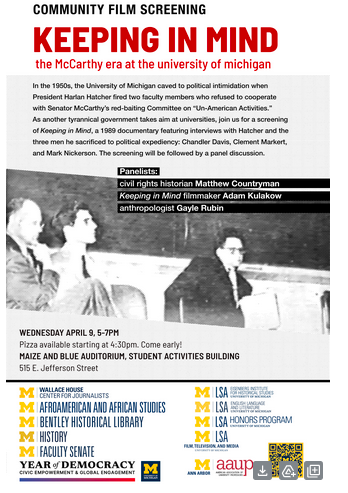
    There is a dark and deadly history of such proceedings in authoritarian regimes around the world, ranging from Josef Stalin’s purges of perceived political opponents to China’s trials of “rioters and counterrevolutionaries” after the 1989 Tiananmen Square protests. Though less extreme in nature, during the Red Scare, the House Committee on Un-American Activities similarly staged show hearings where they pressured witnesses to name names while presuming guilt. The stakes of a sham FCC proceeding may differ, but the tactics and perversion of the rule of law are the same. 

    Somewhere along the way, the FCC’s current leadership abandoned that basic truth in exchange for political expediency. And in doing so, it is ignoring a unanimous holding from the Supreme Court just last term that threatening legal sanctions and other means of coercion to suppress disfavored speech violates the First Amendment. 

    The commission can begin to recover some dignity only by dropping this show trial immediately.

    Source link

  • Intimidating abridgments and political stunts — First Amendment News 461

    Intimidating abridgments and political stunts — First Amendment News 461

    “This proceeding is a political stunt.”

    Those were the words with which FIRE Chief Counsel Robert Corn-Revere (joined by FIRE General Counsel Ronnie London and FIRE Legal Director Will Creeley) submitted comments on behalf of FIRE to the Federal Communications Commission concerning a complaint by the Center for American Rights.

    Such “political stunts” have become more the norm with the Trump administration. Consider, for example, the recent crazy letter by Trump’s interim U.S. attorney Edward R. Martin, Jr., in which he tried to intimidate the dean of Georgetown Law School by saying that if the school continued to teach DEI, his office would not hire their students. Or consider the bizarre attempt by the Social Security Administration’s acting commissioner to change Maine’s Social Security requirements because their governor criticized Trump. 

    As to the Center for American Rights’ FCC complaint, it alleged “news distortion” by CBS Broadcasting when it assertedly edited the news program 60 Minutes “to such a great extent” that the “public cannot know what answer . . . Vice President [Kamala Harris] actually gave to a question of great importance.”

    The FCC had originally dismissed the complaint because the center failed to make a viable allegation of “intentional” or “deliberate” falsification, as opposed to merely an editorial judgment protected under the First Amendment.

    Nonetheless, on Jan. 20, the FCC seated Trump-appointed Chairman Brendan Carr, and two days later the FCC reinstated the center’s complaint and then invited public comments. 

    It is against that backdrop that Corn-Revere and his colleagues, acting on behalf of FIRE, offered their comments.

    Below are a few of the statements set out in FIRE’s poignant comments on the FCC matter:

    Public comments and the legitimate scope of the Commission’s enforcement authority:

    FIRE . . . seeks to ensure the FCC does not exceed the scope of its authority in encroaching on broadcasters’ journalistic decisions. . . The general public is not a “party” to enforcement proceedings, 47 C.F.R. § 1.1202(d)(1)(iii), and generally lacks standing in such matters. 

    Then what is the point of all this? By seeking public comment, is the Commission seriously asking viewers and listeners, along with politically energized partisans, to “vote” on whether they think CBS’s editorial choices ran afoul of FCC policies? Any such submissions are meaningless in helping the agency decide whether CBS violated any policies or what remedies might lie.

    The commission’s attempt to regulate editorial judgments:

    [B]ecause this proceeding focuses entirely on a news program’s editorial judgment, it runs headlong into the elementary rule that the right to “free speech [and] a free press…may not be submitted to vote; they depend on the outcome of no elections.”

    Using the law to pressure CBS:

    Bottom line, the Commission’s request for public comment lacks any legitimate regulatory rationale, but its realpolitik purpose is sadly transparent. This proceeding is designed to exert maximum political leverage on the CBS network at a time when President Trump is engaged in frivolous litigation against it over the same 60 Minutes broadcast, with the FCC using other regulatory approvals the network needs to exert added pressure.”

    An unconstitutional use of regulatory power:

    This is not just unseemly, it is precisely the sort of unconstitutional abuse of regulatory authority the Supreme Court unanimously condemned in NRA v. Vullo, 602 U.S. 175 (2024). The Court held that regulators violate the First Amendment when they use their official powers over certain transactions in ways designed “to suppress the speech of organizations that they have no direct control over.”

    And then, with historical accuracy and legal acumen, Corn-Revere, London, and Creeley tendered a powerful point (emphasis added and notes omitted):

    There is a name for this kind of thing — it is called a show trial. When proceedings become a performative exercise conducted to further a political purpose, they forfeit any claim to legitimacy. Show trials tend to be retributive rather than corrective and are designed to send a message, not just to their unfortunate victims, but as a warning to other would-be transgressors. There is a dark and deadly history of such showcase proceedings in authoritarian regimes around the world, ranging from Stalin’s purges of perceived political opponents to China’s trials of “rioters and counterrevolutionaries” after the 1989 Tiananmen Square protests. In our own country, similar tactics were employed during the Red Scare with investigations and hearings aptly described by the Chairman of the House Committee on Un-American Activities as “the best show the committee has had yet.” Those who staged the proceedings “were not seeking justice but staging a show trial to accuse, indict, and punish.” And while the stakes of a sham FCC proceeding obviously differ, the perversion of the rule of law is the same.

    Note

    Corn-Revere was a legal adviser to FCC Commissioner James H. Quello from 1990 to 1993 and was Chief Counsel while Quello was interim chair of the FCC in 1993. Among other works, he is the editor of the 1997 book “Rationales & Rationalizations: Regulating the Electronic Media.”

    Beyond stunts

    In all of this, it is important to emphasize a critical point: It is not partisan to speak out against authoritarianism. It is vital.

    Furthermore, and as the poet Lawrence Ferlinghetti (a strong defender of free speech) put it in his book “Poetry as an Insurgent Art”:

    Governments lie. The voice of the government
    is often not the voice of the people. 
    Speak up. Act out. Silence is complicity.

    What we are witnessing in the first weeks of the Trump administration is more than intimidating political stunts; it is the start of the serial suppression of free speech. See, for example, Michelle Goldberg’s piece in The New York Times, “This Is the Greatest Threat to Free Speech Since the Red Scare,” in which she writes that “a government [so] willing to disregard the First Amendment is a danger to us all.”

    I will say more about this general point in a future post. Meanwhile, next week I will post another installment of professor Timothy Zick’s “Executive Watch.”

    Trump v. CBS update

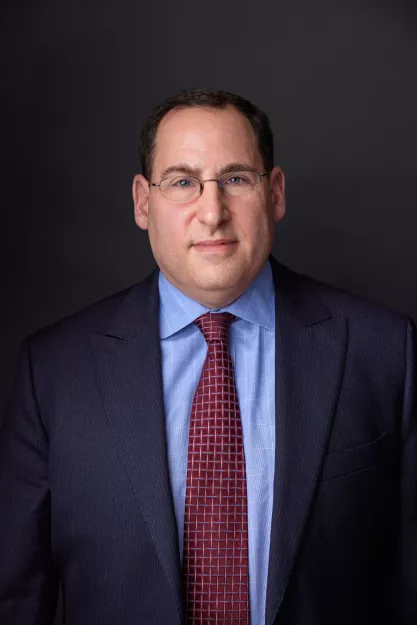
    Thomas C. Riney

    Thomas C. Riney (lead counsel for defendants)

    Argument

    1. The Lanham Act And The DTPA Do Not And Could Not, Consistent With The First Amendment Apply To Editorial Speech Like The Broadcasts At Issue
      1. Editorial Speech About Public Officials During An Election Enjoys Maximum First Amendment Protection 
      2. Consistent With The First Amendment, The Lanham Act And The DTPA Extend Only To Commercial Speech 
      3. The FTN And 60 Minutes Broadcasts Are Indisputably Editorial, Not Commercial, Speech
    2. Plaintiffs Fail To Plead Article III Standing 
    3. President Trump Fails To Plead A Lanham Act Claim
    4. Plaintiffs Fail To Plead A DTPA Claim

    Revenge Storm: ‘Chill all the lawyers’

    • G.S. Hans, “Trump’s Attacks On Law Firms Are Borrowed From Some Pretty Famous Despots,” Balls and Strikes (March 10)

    Threatening lawyers and legal organizations remains a classic from the despot’s playbook. Letting these orders stand without robust opposition — such as lawsuits from the affected firms, media statements from their leaders, and advocacy from similarly situated law firms — merely makes it easier for this administration to continue to stomp on less prominent targets.

    Ronnie London on the Trump administration’s directive to impose court costs on rights litigants

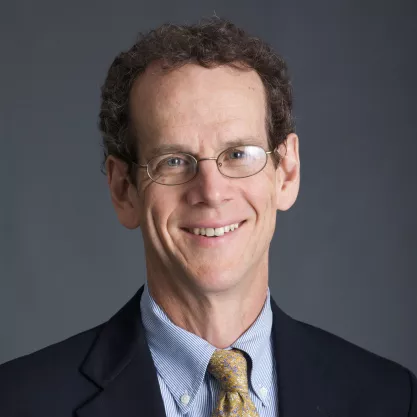
    FIRE general counsel Ronnie London

    FIRE General Counsel Ronnie London

    A new White House directive to heads of executive departments and agencies threatens to make it prohibitively expensive for Americans to defend the Constitution in court. The memo “directs” the departments and agencies to “demand” that courts make those seeking injunctions against federal actions “cover the costs . . . incurred if the Government is ultimately found to have been wrongfully enjoined.”

    The move could not be more transparent in attempting to scare off potential litigants challenging executive orders or other federal actions of questionable constitutionality.

    The White House deems this necessary because “activist organizations” are supposedly “inserting themselves into the executive policy making process” and have “obtained sweeping injunctions.” The administration claims Rule 65(c) of the Federal Rules of Civil Procedure mandates security bonds for all preliminary injunctions and temporary restraining orders to protect against the prospect of a later judicial ruling that the defendant was improperly enjoined.

    But this is misleading. That literal reading of the rule may make sense in the mine-run of private disputes, like claims in commercial contexts. But courts have long recognized exceptions for public-interest litigation, especially when it comes to those seeking to protect constitutional rights. In other words, “activist groups” like FIRE and the clients we proudly defend.

    David Cole on self-censorship

    David Cole ACLU Legal Director

    Former ACLU Legal Director David Cole

    The Trump administration’s attack on diversity, equity, and inclusion (DEI) programs in higher education has many college administrators running scared. The Chronicle of Higher Education, which is tracking DEI changes, has already identified forty-one campuses that have altered or dismantled their programs since Inauguration Day. The University of North Carolina ordered all its colleges to remove DEI-related courses from its requirements for specific majors or general education. The University of Alaska will not use the terms “diversity,” “equity,” or “inclusion” in any communications. Columbia “removed diversity, equity, and inclusion policy language from several of its websites.” Northwestern’s business school “removed a diversity, equity, and inclusion pathway from its MBA program.” Vanderbilt “took down its Equity, Diversity, and Inclusion page, which now redirects to ‘You at VU.’” And on Friday, the University of Virginia governing board voted to end all DEI at the state’s flagship school.

    Yet not a single one of these changes was necessary. This is self-censorship. It’s what Trump wants — but it’s not what either his executive order or federal law requires. Clarifying that confusion is essential as more colleges plan their response to Trump’s attack. But so is a little courage on the part of college administrators.

    Executive Watch

    New cert. grant on ‘conversion therapy’ case  

    • Chiles v. SalazarIssue: Whether a law that censors certain conversations between counselors and their clients based on the viewpoints expressed regulates conduct or violates the free speech clause of the First Amendment.

    John Bursch (Counsel of Record, Alliance Defending Freedom)

    [T]he Supreme Court granted certiorari in Chiles v. Salazar, a First Amendment challenge to a Colorado law that prohibits so-called “conversion therapy” for minors. At issue is whether this is a permissible regulation of professional conduct or a viewpoint-based restriction on speech (with potential religious liberty implications as well). This will almost certainly be one of the most watched (and potentially most controversial) cases of next term.

    Cert denied in college reporting bias case

    • Speech First, Inc. v. Whitten: Issue: Whether university bias-response teams — official entities that solicit anonymous reports of bias, track them, investigate them, ask to meet with the perpetrators, and threaten to refer students for formal discipline — objectively chill students’ speech under the First Amendment.

    Related

    The Supreme Court said March 3 it wouldn’t hear a challenge from conservative college students who say their freedom of speech is violated by a university program for reporting allegations of bias. Two of the nine justices, Samuel Alito and Clarence Thomas, publicly said they would have heard the case.”)

    Primate speech: PETA’s First Amendment complaint

    The case is People for the Ethical Treatment of Animals v. National Institute of Mental Health (Dist. Ct., MD, March 6, 2025). The lead lawyer for the Plaintiff is Laura Handman

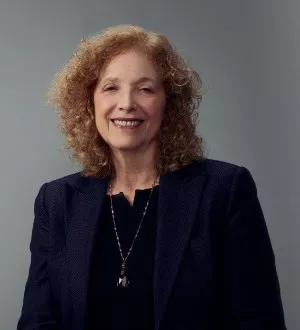
    Laura Handman

    Laura Handman (Counsel for Plaintiff)

    Below are a few excerpts from the complaint filed in the U.S. District Court for the District of Maryland:

    This lawsuit seeks to enforce the fundamental first amendment right of Plaintiff, People for the Ethical Treatment of Animals, Inc. (PETA), to receive, without censorship or interference, communications from fellow primates, imprisoned and tortured in the laboratory of Elisabeth Murray, PhD, at the National Institute of Mental Health in Bethesda, Maryland.

    The First Amendment to the United States Constitution provides PETA a right to receive communications from willing speakers. This right exists regardless of whether the speakers themselves possess First Amendment rights. The First Amendment also protects nonverbal communications as speech.

    PETA engages in extensive news gathering and reporting activities as part of its charitable animal protection mission. This includes substantial investigation and reporting on the plight of animals subject to experimentation, including specifically the deprivations and injuries inflicted on the captive rhesus macaques in Murray’s NIMH laboratory. This Circuit has applied first amendment protections to PETA’s new gathering activities.

    News gathering serves a particularly powerful function under the First Amendment when seeking access to incarcerated beings whose voices are otherwise silenced, to ascertain information about their conditions.

    The captive rhesus macaques, including but not limited to Beamish, Sam Smith, Nick Nack, and Cersi in Murray’s NIMH laboratory are willing speakers under the First Amendment, regularly communicating about their physical and psychological pain and suffering through vocalizations, facial expressions, head and limb movements, body postures, and stereotypical behavior, indicating anxiety and depression (including pacing, rocking, pulling out their hair, and biting their flesh).

    [ . . . ]

    PETA has a right to receive those communications in real time directly from the rhesus macaques and to report the information received to the American people in order to inform the public discourse on the highly controversial and much criticized issue of government funded experiments on animals. Without these communications, the public will remain inadequately informed about the circumstances of their fellow primates.

    This lawsuit follows the Defendants’ refusal of PETA’s August 5, 2024 written request for reasonable, uncensored, and unedited access to a live streamed audiovisual feed of the rhesus macaques in Murray’s laboratory in order to receive the macaques’ communications and exercise its first right to listen. Defendants also refused PETA’s offer in this letter to cooperate in devising and the alternative means for PETA to meaningfully access the macaques’ communication in real time without government interference [citations omitted]. 

    New scholarly article: Abrams, et al, on the press clause

    More in the news

    2024-2025 SCOTUS term: Free expression and related cases

    Cases decided

    • Villarreal v. Alaniz (Petition granted. Judgment vacated and case remanded for further consideration in light of Gonzalez v. Trevino, 602 U. S. ___ (2024) (per curiam))
    • Murphy v. Schmitt (“The petition for a writ of certiorari is granted. The judgment is vacated, and the case is remanded to the United States Court of Appeals for the Eighth Circuit for further consideration in light of Gonzalez v. Trevino, 602 U. S. ___ (2024) (per curiam).”)
    • TikTok Inc. and ByteDance Ltd v. Garland (The challenged provisions of the Protecting Americans from Foreign Adversary Controlled Applications Act do not violate petitioners’ First Amendment rights.)

    Review granted

    Pending petitions

    Petitions denied

    Last scheduled FAN

    FAN 460: “James Goodale on Trump: ‘He’d sue everybody . . . in the media business’ and their ‘response has been pathetic’

    This article is part of First Amendment News, an editorially independent publication edited by Ronald K. L. Collins and hosted by FIRE as part of our mission to educate the public about First Amendment issues. The opinions expressed are those of the article’s author(s) and may not reflect the opinions of FIRE or Mr. Collins.

    Source link

  • FIRE calls out 60 Minutes investigation as ‘political stunt’ in comment to FCC

    FIRE calls out 60 Minutes investigation as ‘political stunt’ in comment to FCC

    Below is the summary of argument in FIRE’s comment to the FCC on its opening a proceeding to investigate claims of news distortion by 60 Minutes in airing an interview with then-Vice President Kamala Harris, filed today.


    This proceeding is a political stunt. Neither the Center for American Rights’ (CAR) complaint nor this Commission’s decision to reopen its inquiry accords with how the agency has understood and applied its broadcast regulations ever. To the contrary, the Commission has made clear it “is not the national arbiter of the truth,” Complaints Covering CBS Program “Hunger in America,” 20 F.C.C.2d 143, 151 (1969), and it has strictly avoided the type of review sought here because “[i]t would involve the Commission deeply and improperly in the journalistic functions of broadcasters.” Complaint Concerning the CBS Program “The Selling of the Pentagon,” 30 F.C.C.2d 150, 152 (1971). The staff’s initial dismissal of CAR’s complaint was obviously correct.

    For the Commission to reopen the matter and to seek public comment turns this proceeding into an illegitimate show trial. This is an adjudicatory question, not a rulemaking, and asking members of the public to “vote” on how they feel about a news organization’s editorial policies is both pointless and constitutionally infirm. Prolonging this matter is especially unseemly when paired with FCC review of a pending merger application involving CBS’s parent corporation and the fact that President Trump is currently involved in frivolous litigation over the same 60 Minutes broadcast. In this context, this proceeding is precisely the kind of unconstitutional abuse of regulatory authority the Supreme Court unanimously condemned in NRA v. Vullo, 602 U.S. 175 (2024). However, having solicited public comments, the FCC is obligated to respond to the statutory and constitutional objections raised on this record.

    The CAR complaint rests on a fundamental misunderstanding of the Commission’s limited role in regulating broadcast journalism and fails to grasp the basic elements of the news distortion policy as the FCC historically has defined and applied it. This agency has never asserted the authority to police news editing and has rightly observed that it would result in a “quagmire” even to try. Hunger in America, 20 F.C.C.2d at 150. The news distortion policy simply does not involve itself with “a judgment as to what was presented, as against what should have been presented,” Network Coverage of the Democratic Nat’l Convention, 16 F.C.C.2d 650, 657–58 (1969), yet that is CAR’s sole complaint. And even if CBS’s editorial decisions in 60 Minutes fell within the range of activities governed by the news distortion policy, the CAR complaint is utterly deficient. It does not present any “extrinsic evidence” of news distortion as the policy requires, and the full unedited transcript of the interview in question shows the network’s editing did not alter the substance of the answers given. CAR’s complaint merely reflects its own editorial preferences, which cannot justify this inquiry.

    Even if the FCC’s news distortion policy somehow authorized the Commission to act as editor-in-chief, as CAR imagines, the Communications Act and the First Amendment prohibit such intrusion into journalistic decisions. The Act expressly denies to the FCC “the power of censor- ship” as well as the ability to promulgate any “regulation or condition” that interferes with freedom of speech. 47 U.S.C. § 326. The FCC accordingly has interpreted its powers narrowly so as not to conflict with the First Amendment. And whatever limited authority the Commission might have possessed in the era the news distortion policy was created has diminished over time with changes in technology. Any attempt in this proceeding to apply a more robust view of the Commission’s public interest authority to include an ability to review and dictate individual news judgments would stretch the FCC’s public interest mandate to the breaking point.

    Ultimately, no FCC policy can override the First Amendment’s fundamental bar against the government compelling editors and publishers “to publish that which ‘reason tells them should not be published.’” Miami Herald Publ’g Co. v. Tornillo, 418 U.S. 241, 256 (1974) (citation omitted). “For better or worse, editing is what editors are for; and editing is selection and choice of material.” CBS, Inc. v. Democratic Nat’l Comm., 412 U.S. 94, 120 (1973). The news distortion policy still exists only because of the exceedingly limited role the Commission has given it over the years, and this proceeding is not a vehicle for expanding its reach.

    Finally, this proceeding itself is an exercise in unconstitutional jawboning. The Commission must heed the Supreme Court’s recent reminder that the “‘threat of invoking legal sanctions and other means of coercion … to achieve the suppression’ of disfavored speech violates the First Amendment.” Vullo, 602 U.S. at 180. The purpose and timing of this inquiry are both obvious and unjustifiable. Launching a politically fraught investigation based on such a paper-thin complaint in these circumstances is alone a compelling example of regulatory abuse. But to resurrect the flimsy complaint after it was fully and properly interred by staff dismissal, and to do so in support of the President’s private litigation position, is all but a signed confession of unconstitutional jawboning. The Commission can begin to recover some dignity only by dropping the matter immediately.

    READ THE FULL COMMENT BELOW

    Source link

  • Political Attacks on Higher Education (AAUP)

    Political Attacks on Higher Education (AAUP)

    The Trump administration and many state governments are accelerating
    attacks on academic freedom, shared governance, and higher education as a
    public good. We are working with our chapters and with allies in higher
    ed and the labor movement to defend and advance our vision: Higher
    education that is accessible and affordable for all who want it. Freedom
    to teach, to learn, to conduct research, to speak out on issues of the
    day, and to assemble in the organizations of our choice. Colleges and
    universities that create opportunity for students, workers, and
    communities. Sufficient funding to provide true education and
    sustainable working conditions. Information and resources to help in
    this fight are being added below as they are developed.

    Immigration

    Attacks on Science and Research

    Federal Funding 

    Accreditation

    Diversity, Equity, and Inclusion

    Anticipatory Obedience

    Administrations sometimes go farther than the law requires to placate those who are attacking higher ed.

    Source link

  • Govs. DeSantis, Hochul threaten academic freedom with political interference

    Govs. DeSantis, Hochul threaten academic freedom with political interference

    It’s no secret that politicians are getting more involved in higher education. And while some level of involvement with how colleges and universities operate is appropriate given the amount of taxpayer money spent on campuses, nobody should be surprised to learn that greater political involvement can pose academic freedom risks.

    Last Monday, for example, Florida Gov. Ron DeSantis announced the creation of Florida’s own Department of Governmental Efficiency (DOGE), named after the Trump Administration’s Elon Musk-led initiative to cut federal spending. The Florida task force is to conduct “a deep dive into all facets of college and university operations and spending and make recommendations to the Board of Governors and State Board of Education to eliminate any wasteful spending.”

    There are viewpoint-based decisions that governors and legislatures have to make about colleges as part of the political and appropriations process. But the more granular those decisions, the more they threaten to substitute academic judgment with political judgment.

    During his live announcement, DeSantis expanded on what he called “the DOGE-ing of our state university system,” saying it would include “examining courses, programming, and staff” with an aim towards helping students gain “meaningful employment.” But the governor also, troublingly, made clear that he’s continuing to take aim at a particular set of viewpoints:

    [S]ome of the ideological studies stuff, we just want to prune that and get that out, and we want to make sure that these universities are really serving the classical mission of what a university should be. And that’s not to impose ideology.

    Politicians have long complained about taxpayer money spent on what they see as frivolous academic pursuits — the proverbial degree in “underwater basket weaving” — but what DeSantis posits goes further. This task force won’t simply be focused on (say) eliminating majors that offer no real job prospects. Rather, it will seek out courses involving “ideological studies stuff,” presumably by reviewing course descriptions or syllabi, that in the task force’s view is not worth teaching. 

    That’s not just an invitation to viewpoint discrimination — it’s an explicit mandate.

    It’s not hard to see how this could threaten academic freedom by pressuring faculty members to substitute state-level politics for their academic judgment. 

    For example, let’s say the University of Florida’s Chinese Studies department decides that, to understand contemporary China, students need to take a class on Marxist-Leninist political thought. It’s easy to see how this could be relevant given that China is a Communist country. It’s also easy to see how an outside agency like Florida DOGE might view this as an effort to propagandize students into Marxism.

    What’s the likely result?

    • Most obviously, the department might decide to avoid conflict with the government by eliminating the class altogether despite believing it was needed, therefore impoverishing students’ education.
    • Even if it did decide to require the class, the department is likely to pressure its instructor not to include things that look pro-Marxist, regardless of whether the professor thinks it would be the best material for the course. That poorly serves students and limits a professor’s ability to engage in the intellectual pursuit of teaching, to boot.
    • Finally, even if the department were to offer the class without compromising on content, its instructor will most certainly feel “in the crosshairs,” restricted from following his or her academic conscience lest he or she get the class eliminated through an incautious word.

    Colleges should not be immune from investigations into waste and abuse. And there are viewpoint-based decisions that governors and legislatures have to make about colleges as part of the political and appropriations process. But the more granular those decisions, the more they threaten to substitute academic judgment with political judgment. It remains to be seen whether this is how Florida DOGE will actually operate, but the governor’s remarks create plenty of cause for concern.

    Lest there be any doubt that governors of any party are capable of interfering in isolated academic decisions if given the opportunity, New York Gov. Kathy Hochul (no friend of DeSantis) last Tuesday ordered the immediate removal of a CUNY-Hunter College job posting for a professor of Palestinian Studies. Hochul also ordered “a thorough review of the position to ensure that antisemitic theories are not promoted in the classroom.”

    The job listing certainly listed plenty of controversial topics, calling for a “historically grounded scholar who takes a critical lens to issues pertaining to Palestine including but not limited to: settler colonialism, genocide, human rights, apartheid, migration, climate and infrastructure devastation, health, race, gender, and sexuality.” Yet the very next sentence stated, “We are open to diverse theoretical and methodological approaches.”

    Critics are unlikely to believe that the job was really open to scholars with diverse approaches to whether, say, Israel is an “apartheid” state. Maybe it was, maybe not. But one can’t make that determination simply based on the language of the listing, and there is no reason to believe that the governor of New York is (or should be expected to be) the best-qualified person to make that call.

    Faculty members are supposed to be hired because they are subject-matter experts who have the ability and knowledge in the field to make informed academic judgments. Readers may recall that Winston Churchill famously opined that democracy is “the worst form of government except for all those other forms that have been tried.” That’s just as true when it comes to academic faculty making academic decisions — like it or not, there are no better alternatives. Even if one believes a particular group of public college faculty is, itself, making decisions that harm higher education, as DeSantis and Hochul both seem to believe, there’s one thing we can know for sure: transferring that job to politicians will only make it worse.

    Source link

  • This town fought residents over political yard signs — now it’s paying the price

    This town fought residents over political yard signs — now it’s paying the price

    Imagine putting a political sign in your yard, only to have your town threaten to fine you $1,000 a day for not following arbitrary size and placement rules.

    That’s exactly what happened to four residents of Lodi, New Jersey. But with the help of FIRE Legal Network attorney Randall Peach and his colleagues at the law firm Woolson Anderson Peach, they fought back — suing Lodi for violating their First Amendment rights.

    Like many places, Lodi regulates yard signs on private property, but its rules blatantly violate the First Amendment by singling out “political” signs — regulating how tall, wide, and close to the property line such signs can be, as well as whether they are up during the “correct” time of year.

    Making matters worse, three violations could land you in jail. Meanwhile, your neighbor could have an even bigger sign, right next to the property line, and never take it down — so long as it’s not “political.”

    The First Amendment protects your right to speak, especially on your own property. 

    That is unconstitutional, end of story.  The Supreme Court made that crystal clear in Reed v. Town of Gilbert, ruling that when sign regulations are based on what the sign says, the government must prove it has a compelling interest and use the least restrictive means to advance it. Lodi’s rules fail that test.

    Local governments often try to justify such restrictions with vague claims about aesthetics or traffic safety — but courts have never considered those interests compelling. And even if they were, it would be nonsensical to claim those concerns are advanced by restricting only “political” signs.

    Worse yet, the residents claimed in their lawsuit that Lodi initially only cracked down on signs supporting certain candidates. It was not until the four residents documented over 50 violations that local officials started applying the (still unconstitutional) rule more consistently. But even then, officials only issued eight summonses — after the election — and they were aimed at campaigns rather than other residents.

    Because of the lawsuit, Lodi settled for $75,000 and agreed to stop enforcing the restrictions on “political” signs. Lodi is also revising the ordinance to remove its discrimination against “political” content. But as FIRE has warned various towns before, even content-neutral restrictions, such as capping the number of signs residents can display or when they can do so, can violate basic constitutional rights.

    Here’s the bottom line. The First Amendment protects your right to speak, especially on your own property. As such, the government can’t come in and silence you just because it doesn’t like what you’re saying. And it certainly can’t do so for totally arbitrary reasons.


    FIRE defends the individual rights of all Americans to free speech and free thought — no matter their views. FIRE’s proven approach to advocacy has vindicated the rights of thousands of Americans through targeted media campaigns, correspondence with officials, open records requests, litigation, and other advocacy tactics. If you think your rights have been violated, submit your case to FIRE today

    Source link

  • Students are at the centre of a political uprising in Serbia. Again

    Students are at the centre of a political uprising in Serbia. Again

    Today, after three long months of protests, demonstrators in Serbia have called a general strike – and the government has threatened to retaliate.

    Activists are challenging the authority of a populist, nationalist government following months of demonstrations that have brought, at times, over 100,000 people onto the streets.

    But for me what’s significant about the growing movement – that some think could yet topple the government – is that it has been almost entirely led by students:

    The students in the blockade call on the citizens of Serbia for a total suspension of all activities on Friday, January 24… We don’t go to work, we don’t go to lectures, we don’t do our daily duties. Let’s take freedom into our own hands!

    It is a story partly about authoritarianism and tactics, and about how power reacts to protest. But it’s also a story about student movements – both official and decentralised – and how they can both lead, and be co-opted, by others.

    Back in November, a concrete roof at the railway station in Serbia’s second largest city Novi Sad collapsed, killing 15 people.

    The city is home to the University of Novi Sad – with over 50,000 students and 5,000 staff – and in the wake of the tragedy, a student activist group began to organise protests both in Novi Sad and the capital Belgrade – leaving red handprints at the entrances of government buildings to demand the arrest of officials. Government corruption was their claim.

    The group leading much of the activism has been Students Against Authoritarian Rule (STAV) – formed last January from within the Faculty of Philosophy at the University of Novi Sad, and responsible last summer for a two-week blockade of the Rectorate building over what they saw as undemocratic practices in student representation.

    It’s a fix

    STAV’s dissatisfaction had its origins in a law passed in Serbia back in 2021, when the National Assembly passed a new Law on Student Organizing as part of a broader set of educational reforms designed to enhance student participation and accountability.

    When a small group of us visited the country last year, it all looked pretty positive – it formalises the roles of student parliaments at both faculty and university level, grants them participation in university decision making over issues like teaching, curricula, and regulations, gives them a formal role in advocating for academic and social rights, sets them up to promote extracurricular activities, and establishes them as drivers of national and international collaboration.

    It also sets out detailed rules on elections – eligibility criteria, timelines, and protocols to ensure a fair electoral process. But that’s partly where the trouble started.

    Last October the Center for Science and Innovation for Development (SCiDEV) – a Tirana-based think tank that works to contribute to democratisation in Albania, the Western Balkans and the European Union – published a comparative analysis of of student perceptions and engagement in student governments in Albania, North Macedonia and Serbia.

    It compiled growing concern about the involvement of political parties in the student electoral process in Serbia, a perception of a lack of transparency in election procedures, a belief amongst some students that the electoral process is manipulated or unfair, and a lack of independent mechanisms to monitor election processes and prevent misconduct.

    That’s partly because of perceptions that both locally and nationally within SKONUS (Serbia’s NUS), the ruling Serbian Progressive Party (SNS) appears to have played a key role. Milan Savić, who was elected as SKONUS President in 2016 and 2018, was elected to the National Assembly of Serbia as a member of SNS – and activists argue that since then, its leadership has repeatedly aligned itself with government policies rather than defending the student interest.

    Current President Margareta Smiljanić has also been linked to the Serbian Progressive Party (SNS) through her involvement with something called the Centre for Education and Youth Development in Belgrade (CEROB) – whose headquarters, critics claim, were used to distribute payments for work in the SNS call centre.

    If that sounds fairly tenuous, it’s because it is. It may be that Smiljanić and her predecessors have links to the government – but she’s also one of a long line of “official” student representatives in pretty much every country that get accused of “siding” with university managements or government when engaging in meetings discussing issues like timetabling and food subsidies (two key planks of her manifesto) rather than trying to analyse a broader system and reject a wider administration.

    Either way, if the SCiDEV report provided a backdrop of evidence, the Novi Sad tragedy provided an event to rally over for STAV – the collapsed canopy a symbol of the corruption they saw as endemic in the Serbian political system.

    Wastewater and tear gas

    A week after the tragedy, protests in the two cities had started to grow – flares, red paint and wastewater were thrown onto the City Hall building in Novi Sad, and police responded with tear gas – while a smaller group of angrier protesters wearing masks attempted to enter the building and hand over their demands that those responsible for the canopy collapse face justice.

    That night, President Aleksandar Vučić came out to address the public – saying the police were “showing restraint” while issuing a warning that “horrific, violent” protests were underway:

    People of Serbia please do not think violence is allowed… All those taking part in the incidents will be punished.

    Miran Pogačar, a former philosophy from the Faculty of Philosophy and a prominent activist involved in citizens’ movement “Bravo”, was featured across national news:

    One glass window can be mended but we cannot bring back 14 lives. People are angry. Serbia won’t stand for this.

    At this stage it looked like the government was going to be able to keep the public on its side – highlighting a violent “former/non student” core as somehow manipulating more mainstream student protesters has long been a tactic of governments facing student unrest – a key feature, for example, of the Millbank student protests over tuition fees in London in 2010.

    But days later, the mood changed. CCTV footage of the collapse started to go viral – showing the huge canopy on the outer wall of Novi Sad station building collapsing onto young people below on benches. The government, having attempted initially to draw a line under events by promising a full investigation, was on the back foot.

    And the student activists of STAV – partly conscious of the role that peaceful student activism played across Central and Eastern Europe in bringing down communism – managed to get its more violent elements under control to secure public sympathy, while the banners painted by students started to become more direct – the most common being red paint on cardboard saying “corruption kills”.

    Students leading change

    There are good reasons for students to, for want of a better phrase, feel the hand of history on their shoulders.

    In the 1960s, Belgrade’s new “Student City” had become a central hub for student solidarity and the sharing of experiences and opinions, associations and clubs between students from both across the country and the world. In June 1968, protesting an accommodation shortage, the lack of voice in university structures and President Tito’s reforms (that had led to high unemployment and forced graduates to leave the country and find work elsewhere), students gathered at Block 1 of Studentski Grad to stage the first mass protest in Yugoslavia after World War II.

    Police beat the students and banned all public gatherings, but students then went into a seven-day strike – staging debates and speeches on social justice, and handing out copies of their banned magazines. Tito’s only option was to give in to some of the students’ demands – famously saying that “students are right” during a televised speech. But in the following years, he dealt with the leaders of the protests by sacking them from university and Communist party posts.

    Students were also central to the protests against Slobodan Milošević and the broader Yugoslav Communist Party in the late 1980s – ones that began as educational and economic grievances became infused with demands for political liberalisation, academic freedom and democracy. The economic crisis in Yugoslavia had fueled discontent, and it was students at the University of Belgrade that had started to form dissident groups to oppose censorship, restrictions on academic freedoms, and worsening living conditions.

    Inspired by other anti-communist movements in Eastern Europe, Serbian students began organizing campus forums in 1988, demanding democratic reforms – and by March 1989, the revocation of Kosovo’s autonomy by Milošević’s regime became a turning point, sparking protests against authoritarianism and the use of force. By May, students shifted focus to broader democratic demands, including free elections and minority rights, with their activism peaking during events like the famous Gazimestan rally and widespread “general strikes” across cities.

    Nevertheless, it took another decade for the regime to fall.

    The Student Union of Serbia (SUS) got going in 1992 at the Belgrade Faculty of Law, aiming to promote transparency, democratic elections, and enthusiasm within student organisations. Throughout the 1990s, SUS played a key role in student protests against the autocratic regime, notably during the 1996/97 demonstrations advocating for the recognition of local election results and university autonomy.

    Back home, Living Marxism – the in-house magazine of the Revolutionary Communist Party that went on to morph into libertarian website/group Spiked! (famous now for its Free Speech rankings of universities and its War on Woke) – argued that Western media outlets and international organisations exaggerated Serbian atrocities while downplaying crimes committed by others such as Bosnian Muslims or Croats.

    In 1997, it had published an article claiming that ITN’s footage of emaciated Bosnian Muslim detainees at the Trnopolje camp was misleading – alleging that the camp was not a concentration camp but rather a refugee centre, and that the imagery was manipulated to evoke Holocaust comparisons. It provoked outrage from human rights groups and journalists – and today Spiked! remains resolutely anti-EU  and oddly pro-populism.

    Back in Serbia, student-led Otpor! continued its tactics of nonviolent resistance, creative protests, and grassroots organising to help unify opposition groups, inspire mass demonstrations, and sustain momentum for democratic reforms. By the turn of the millennium, things were coming to a head – Milošević refused to concede defeat in the September 2000 presidential elections, and protests erupted again on October 5, as hundreds of thousands of Serbians from across the country marched to Belgrade demanding his resignation.

    Then, as now, students were accused of being puppets of the West – not least because the slogan Gotov je! had been distributed via 2.5 million stickers and 5,000 spray cans channeled by the U.S. Department of State.

    Student protesters stormed government buildings, including the Federal Parliament, and symbolically burned election ballots believed to be fraudulent. Faced with overwhelming public opposition and a breakdown of loyalty within the police and military, Milošević resigned on October 7, 2000, marking the end of his regime and paving the way for democratic reforms in Serbia.

    Few believe that communism could have fallen in the way it did either in Serbia or across Europe more generally in that period without students – every country in the region has its own set of stories about how students inspired wider movements. The question now, in Georgia, maybe soon in Romania and more generally across the region, is whether students will play a key role again in bringing down populists often accused of being in bed with Russia.

    Legitimate representatives

    By December 5th 2024, unrest was building in Belgrade. A group of students at a protest symbolically turned their backs on the Minister of Construction, Goran Vesić during a public appearance in the capital. Hours later he’d resigned, but they’d secured the support of the Bar Association of Serbia, which announced a one-day strike citing “systematic and long-term interference by the executive branch in the work of the judiciary”, and problems with the separation of powers in a democratic society.

    Dejan Bagarić, a PhD student from the Faculty of Philosophy and one of the perceived ringleaders of STAV, was jailed for up to 30 days on charges of “reckless theft” and “assault on an official” after taking and returning a phone from a journalist filming a protest incident involving his girlfriend. And Branko Rodić, another student from Novi Sad, was reportedly assaulted by two people believed to be members of the National Assembly’s security, who knocked him to the ground and hit him in the face.

    Six days later, students gathered in front of the headquarters of RTS, Serbia’s public television station – protesting over coverage of President Aleksandar Vučić’s claims that the demonstrators were “funded by Western countries seeking to destabilize Serbia”.

    The crisis growing, Vučić then pulled an age-old tactic beloved by governments and university managements over the years – he ostentatiously held a meeting with the SKONUS President Margareta Smiljanić and other “representatives of the legitimately elected students” at which he announced a housing scheme offering young people to purchase €75,000 flats with a deposit of €1000.

    SKONUS had been formed in the slipstream of the fall of Milošević in 2005 – established to inject some resource into student representation and “officially” represent students at accredited universities in Serbia, with its origins tied to the country’s new Law on Higher Education. Initially, it played a key role in higher education reforms like Bologna and promoting student mobility, and in 2014 worked alongside SUS when the Serbian Progressive Party (SNS) came to power and cut the number of exam periods from six to five and cut the funding for students’ fifth year of studies.

    But since then, student activist groups have grown suspicious of SKONUS and its leadership’s role in “negotiating” with government and avoiding “non-student” issues. Hence when Margareta Smiljanić responded to Vučić’s deal in December, she both welcomed the announcement, and played up her concern for students’ education:

    The reason we organized this meeting is because we were elected not to hold political positions, but to hold student positions, to answer the students who ask us questions every day about what will happen to the further teaching process and who will ensure the quality of education for the year 2024/2025. We requested from the Government of the Republic of Serbia and the Ministry of Education that we be admitted to the meeting and I would like to thank them for accepting us in record time today.

    She went on to say that no-one had given her an answer on reimbursement of tuition fees, compensation and exam registration, and whether university buildings would re-open at all in the new year:

    These are all questions that are troubling students, and I believe parents as well. We believe that it is of crucial interest for deans, rectors, and the academic community to answer because 230,000 academics are tormented by these questions. We demand urgent answers.

    Whether you believe that Smiljanić was a government stooge that was part of a propaganda effort to brand the activists as extreme and anti-education, or a student leader doing her best to focus on student issues, is fairly moot – either way, Vucic took to the airwaves to build on the divide and rule tactic:

    So, all the [protest] demands have been fulfilled, and we expect those who made the demands to say their demands have been fulfilled and to return to classes. But [if not] it will [then] be clear to the entire public in Serbia … and to all the citizens of Serbia that there were never any demands, but that it was [pure] politics.”

    STAV was having none of that – branding Smiljanić a sell-out and claiming that some of its activists had started to be called in for one-to-one meetings with university managers about their academic “progress”, who had themselves been threatened with the sack if they failed to get students back into classrooms.

    6-7 seconds

    Things continued to escalate. On December 10 a man drove his car into a group of participants, injuring four musicians who’d joined the protests from the Belgrade Philharmonic Orchestra.

    By December 13, farmers in central Serbia had joined the protests by blocking a motorway with tractors, expressing solidarity with the students and amplifying calls for governmental accountability – and two days later visibly frustrated Prime Minister Miloš Vučević responded to question with “you can’t bring down a country because of 15 people who died, nor 155, nor 1,555”, and was forced to apologise.

    By December 22, the crowd of protesters had swelled again – with over 100,000 gathering in Slavija Square in Belgrade where students had been joined by numerous civil society groups. On Christmas Eve Vučić then also mis-stepped in an interview – claiming that if he wanted to, he could deploy special forces to disperse student protesters “in 6-7 seconds”.

    Demonstrators delivered 1,000 letters to the office of Public Prosecutor Zagorka Dolovac, urging her to fulfill her duties and address the protesters’ demands – and stories were swirling that agents from the Security Intelligence Agency (BIA) had made visits to the workplaces and homes of some of the student organisers’ family members.

    And by now, protests had spread to other Serbian student cities too. In Užice, over 2,000 gathered in front of the city hall to express their support for the movement – and authorities attempts’ to kill that off by turning off street lights were met with portable generators.

    Vučić then publicly accused eight Croatian students – led by twin brothers Lazar and Luka Stojakovic from the Faculty of Organisational Science at Belgrade University – identified by pro-government daily newspaper Vecernje Novosti as protest leaders paid by Croatia’s secret service. Croatian Prime Minister Andrej Plenković dismissed Vučić’s claims as “laughable.” But Lazar and Luka were emboldened:

    Corruption entered every single layer of our society and it is the main cause of roof collapse and killing of 15 people.

    On New Year’s Eve into New Year’s Day 2025, tens of thousands were on the streets, chanting “There is no new year – you still owe us for the old one” – and two weeks later Margareta Smiljanić popped up again on TV, arguing that the the “destruction of the higher education system” was underway, that the protest participants were “not student representatives”, and calling on universities to launch surveys to get a “clear picture” of what the majority of students want:

    We have generations of students who enrolled in studies during the coronavirus. That generation lost two years of normal classes. During the coronavirus, they had make-up and online classes, and now they have classes interrupted again. So we have generations who will graduate with a much lower quality of knowledge… I think that the radicalization of any protests is not good and that through dialogue we can achieve greater goals.

    But Biljana Đorđević – co-president of the Green-Left Front, and an assistant professor at the Faculty of Political Sciences in Belgrade, responded with another allegation often thrown at student representatives – that she’s been studying for a full decade and has been a student official for eight years:

    She was hired… as the President of a student organization that the regime of Serbian President Aleksandar Vučić hires to impersonate students when necessary.

    Since then numbers have grown again – last Friday, during another massive protest in front of the Radio Television of Serbia (RTS) building in Belgrade, tens of thousands of students and academics observed a 15-minute silence to honour the victims of the Novi Sad tragedy, and protesters chanted slogans advocating for a general strike.

    This regime stands no chance

    You can pretty much flip a coin at this point on whether the movement will grow and bring down the government, or whether concerns of students about what is starting to look like a write-off of the academic year altogether will somehow see Vučić and his government survive.

    And as was the case in 1989 throughout the former Yugoslavia, it pretty much rests on whether the wider public’s sympathy with “the students” grows or wanes. There are reports of people donating food, businesses providing supplies, taxi drivers offering free fares, and farmers pledging to protect protesters with tractors – but some sense too that parts of the public are tiring of the disruption as it spreads. Who they blame will matter.

    Ljubica Oparnica, a professor at the Faculty of Education at the University of Novi Sad, thinks that STAV and “unofficial” student movement will win out:

    I am truly fascinated by the way students are working together. Their solidarity is a fortress that cannot be breached. If we all share the same vision — and here it is clear that we all want a new system, a new and different era — this regime stands no chance.

    And while the country’s four biggest teaching unions struck a deal with the Serbian government on pay increases earlier this month, plenty of schools and teachers have refused to start the new term – with Vucevic now threatening to send in inspectors and sack teachers in schools that take part and go on strike today.

    “I am not threatening anyone,” said Vucevic to RTS this week. “I am merely urging everyone not to play with children and the education system”. Dusan Kokot of the Independent Union of Education Workers of Serbia said that education can’t thrive in a society “plagued by systemic corruption”:

    Education cannot flourish while decision-makers are plagiarists, forgers, usurpers and manipulators.

    In one final – and some say desperate move – Vucevic this week offered a non-binding “advisory referendum” on the government, while opposition leaders demanded a transitional government to ensure fair elections.

    Much now rests on the success or otherwise of today’s general strike. Some still think that a mixture of propaganda, counter-protests and public concern about the grinding to a halt of education in general will see the protests peter out – but Ljubica Oparnica is less sure:

    They won’t give up easily because they enjoy immense privileges. That’s why change seems impossible. But I believe this government will collapse suddenly, like the fallen canopy [at Novi Sad train station]. We’ll all be surprised. I think they’ve reached the end of their strength.


    Source link

  • What does it mean to be political for today’s students?

    What does it mean to be political for today’s students?

    When we think about student politics, it is inevitable that the images of student protest and rebellion come to mind. These views of what counts as student politics have been shaped by rather romantic ideals of what it meant to be a student and do politics in 1960s, or perhaps even in 2010-2011 when we witnessed the last large scale student rebellion in England, but also more globally. When we stretch our imagination, perhaps we can also see students engaging with electoral politics, and them being stereotypically more left leaning compared to the general population – or ‘woke’ as portrayed by many right-wing media outlets today. In cases where students do not meet these expectations of political activity, they are often derogatively called ‘snowflakes’: a fragile generation of apolitical students. While there may be some truth in students becoming less politically active, it is important to question why this might be the case, but also to consider the extent to which our own understandings of student politics are perhaps outdated and need changing.

    The cost of student protest

    In contexts where higher education is marketed as an investment into one’s future, the student-as-consumer positioning becomes unavoidable. Consumerism in our universities may be brutally explicit as in the UK where students are protected by the Consumer Rights Act 2015, or more subtle in systems where laws and regulations do not treat students as consumers, but the transactional idea of higher education and human capital development still imply similar understandings. As students are constantly reminded to prioritise ‘value for money’ and question their investment into successful graduate employment, deviating from such a mindset and standing out as a disruptive or disobedient student cannot be a preferred or safe option. This was evident with the recent pro-Palestinian encampments which on British campuses were rather short-lived, often adopted around the exam periods and ending with the closure of the academic year 2023/2024. The cost of non-compliance is very high for our students: how could a student who has accumulated an average of £45k student debt with already insecure graduate employment trajectory drop everything and revolt? My recent book Student Identity and Political Agency: Activism, Representation and Consumer Rights deals with these dilemmas and argues that the modes of student politics have had to change alongside the generational pressures that contemporary students face. In other words, the form that student politics takes is intertwined with what it means to be a student today.

    Alternative forms of political agency

    To counteract the view that students have become apolitical or snowflakes, we need to imagine student politics as more fluid and situational: something that gets embedded within the everyday practices of being a student.

    First, this revisioning invites us to be more open-minded about what counts as student protest. For example, it is evident that when today’s students do protest, their actions tend to be more short-lived while triggered by identity-based issues that matter to them personally. We should also look at the new and alternative spaces that activism takes place within, eg digital platforms. The latter could of course relate to generational shifts and students being more digitally adept, but also to the fact that the university campuses have become heavily regulated by timetabling pressures and health and safety rules, making it difficult for students to socialise, let alone organise on campus.

    Second, our universities have never emphasised student voice as much as they do today. In addition to students’ unions, there is a wide range of new representative roles on university committees and working groups. While there are questions about tokenism and the effectiveness of these roles – and perhaps fairly so – one cannot deny that there is an incredible infrastructure emerging for students to (peacefully) exercise their interest. This could also be politically motivated, and we should not underestimate the power that students as collectives hold through such representative roles.

    Finally and perhaps most importantly, I invite us to consider the power that the student-as-consumer holds. In the age of marketised universities, we need to ask some uncomfortable questions related to the extent to which student-as-consumer positioning itself empowers students with new types of political agency. We know that an increasing number of students are exercising their right to complain, and they often do this to call out universities for their wrongdoings. These wrongdoings may relate to consumer rights and personal grievances, but often they also reflect wider structural inequalities. It could therefore be argued that consumer rights have granted students new tools to exercise their interest. There is a tendency for the sector to view student complaints as something negative and unreasonable, and none of us would want to be the subject of one. However, it is likely that if students are increasingly treated as consumers, it is also this consumer positioning that offers new opportunities for political agency to be exercised. In today’s highly pressurised university environments, consumer complaints might be a more effective way to make oneself heard: making complaints is a legal right for our students, and the potential reputational damage to universities makes complaints high stakes.

    In summary, I argue that the market forces and consumerist discourses that brutally shape students are also what trigger, enable and disable certain new and altered forms of political agency. Such understanding invites us to shift away from the prevailing assumption that contemporary students are becoming apolitical and instead to rethink our normative understanding of what counts as political agency.

    For more details, please see my book published as part of the SRHE and Routledge book series Research into Higher Education:

    Raaper, R (2024). Student Identity and Political Agency. Activism, Representation and Consumer Rights Oxon: Routledge

    Rille Raaper is Associate Professor at Durham University. Rille’s research interests lie in the sociology of higher education with a particular focus on student identity, experience and political agency in a variety of higher education settings. Her research is primarily concerned with how universities organise their work in competitive higher education markets, and the implications market forces have on current and future students. The two particular strands of Rille’s research relate to: a) student identity and experience in consumerist higher education; b) student agency, citizenship and political activism.

    Author: SRHE News Blog

    An international learned society, concerned with supporting research and researchers into Higher Education

    Source link