Tag: Politically

  • Importance of Media Training Students in Politically Charged World

    Importance of Media Training Students in Politically Charged World

    With student-led campus protests on the rise and polarization intensifying on both sides of the political spectrum, the need to have students media ready is mounting. For example, in recent weeks students rallied across the U.S. because of the Trump administration’s assault on higher education; protests broke out at the University of California, Berkeley, during an event held by Turning Point USA; and students at the University of Florida protested the university’s deal with ICE. Since October 2023, U.S. colleges and universities have seen 3,700 protest days across 525 campuses, including more than 130 encampments. In fact, one in three college students have been involved in a protest

    As a PR professional, you can equip students on your campus with the skills and confidence to excel in interviews. Here are four reasons why you should invest the time and resources in media training your students.

    1. It makes your life easier. When a reporter contacts you and asks for a student to weigh in on the news of the day or your institution’s latest initiative, you will have a pool of students to pick from at the ready rather than reaching out to deans or faculty to find a student and vet them that day.

    While it will make your life easier in the long run, it does require you to put in the time up front. Meet students on their timelines. Most student group meetings are outside of class time, so it might mean you are attending a student government association meeting at 8 p.m. or doing a Zoom training with the College Democrats or Republicans on your lunch break.

    1. It helps students and the community navigate crisis situations. With protests becoming regular occurrences on our campuses and in our communities, media training students will help them remain calm under pressure. When a reporter is looking for a comment, students won’t just say the first thing that pops into their mind. They will know how to get their key messages across to the audiences they are trying to reach.

    It’s not just national and local media students need to respond to; student reporters are often the first to approach peers for quotes. All student newspapers are online, can be accessed by anyone and are an extension of your institution and its values. Engaging with student media isn’t just a learning opportunity—it shows how students will represent themselves, which in turn has a direct impact on the reputation of your institution.

    Many students don’t know they can choose to not talk to the media or say no to interview requests. We’ve all seen the videos of reporters knocking on students’ doors and the students saying something unfavorable rather than just not opening the door in the first place, or of students having a microphone put in their face as they are walking to class to weigh in on a subject they don’t know about instead of saying, “I don’t know.” Media training can help students realize they have the option to respectfully decline interviews and interactions, which can help alleviate the pressure they might feel to respond in the moment.

    1. Students build career-ready competencies. Whether it’s an internship or job interview, being able to succinctly articulate their points will help students for the rest of their lives. From public speaking to leadership roles to internships, media training gives students skills for their future.

    We want our students to be able to weigh in on important issues, and media outlets are always looking for a student perspective. For example, my team was recently on campus for faculty and staff media and op-ed training when a professor asked if his students could sit in. Afterward, one student drafted an op-ed that she successfully placed. I’ve also provided op-ed writing training to seminar classes in which students learn the nuts and bolts of writing an op-ed and how to get published as an undergrad.

    1. Name, image and likeness (NIL) has changed the game for student athletes. It takes students out of the arena and into the public eye where their reputation will be on the line. If you are at a larger school, some of your student athletes may have their own publicist, but if you are not at school where the NIL money is flowing, media training helps prepare student athletes for local commercials, being the face of the pizza shop down the street or even a postgame interview.

    When a scandal occurs—a coach is fired, or student athletes are gambling or being hazed—you want students to know they can come to you for advice and guidance when reporters descend on campus.

    Students are the most prominent ambassadors of your institution. Media training isn’t about making them a professional correspondent; it’s about making them feel prepared when they are in the spotlight. Whether they are engaging in a protest, talking with a peer reporter at the school newspaper or navigating a postgame interview, media training can serve them in the moment and long term. It’s worth your time to engage with your best spokespeople.

    Cristal Steuer is associate vice president at TVP Communications, a national public relations and crisis communications agency solely focused on higher education.

    Source link

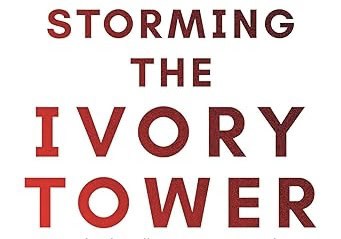
  • “Politically correct”, “druggies” and “weirdoes”: Review of ‘Storming the Ivory Tower’ by Richard Corcoran

    “Politically correct”, “druggies” and “weirdoes”: Review of ‘Storming the Ivory Tower’ by Richard Corcoran

    • This blog is a review by HEPI’s Director, Nick Hillman, of Storming the Ivory Tower: How a Florida College Became Ground Zero in the Struggle to Take Back Our Campuses

    The tone of this new book by Richard Corcoran on ‘Florida’s most left-wing public university’ is set at the very start with a tribute to the New York Times, the Washington Post and other newspapers for their ‘unshakeable commitment to ignoring any fact that does not support their predetermined narrative’. It continues into the Foreword, contributed by the US conservative Christopher Rufo, which argues for ‘institutional recapture’ and ‘reconquest’.

    The main text begins, however, with a paean to ‘liberal education’, a defining feature of western education but also a particularly good way of describing some higher education in the US. It then recounts how, in early 2023, the Republican governor of Florida, Ron DeSantis, appointed six new trustees (including Rufo) to oversee the New College of Florida, which is the smallest institution in the State University System of Florida. The institution had only a few hundred students but was also a place that the American right thought had lost its way and needed saving.

    Oversight versus autonomy

    It is easy to forget on the UK side of the Atlantic, where we tend to associate university success with university autonomy, how much power state governors have over university systems in the US. The American model is akin to letting Andy Burnham decide who should govern the various universities in Greater Manchester. Or more pertinently perhaps, given the politics of the people involved, letting Andrea Jenkyns, the Reform mayor of Lincolnshire and former Minister for Universities, choose the board members of Lincoln University and Bishop Grosseteste University (soon to be renamed Lincoln Bishop University).

    Those who choose the trustees of an institution indirectly choose who should manage that institution as it is trustees who hire and fire leaders and hold them to account.  And in the case of the New College of Florida, DeSantis’s six new trustees helped to install the author of this book, Richard Corcoran, as the institution’s President in 2023.

    Corcoran’s core argument is that the changes wrought by DeSantis were necessary to rescue a failing institution to which those students who did enrol struggled to feel a sense of belonging. Admitted students (some of whom never actually enrolled) told researchers that the New College of Florida’s social culture was ‘politically correct’ and shaped by ‘druggies’ and ‘weirdoes’. Corcoran (rightly) points out this is ‘the exact opposite’ characterisation that ‘any rational organisation would adopt if it was trying to appeal to a broad swath of students and parents.’

    At just 650 students, the New College of Florida was only around half the size the local legislature had expected and, indeed, was smaller than the average secondary school in either the UK (1,000+ pupils) or the US (c.850), rather than boasting the typical enrolment of a higher education institution. That made a quick turnaround more feasible and Corcoran claims victory near the end of the book, arguing that, ‘In a mere 10 months, New College of Florida went from one of the most progressively captured universities in the country to the freest university in the nation.’ (This claim is caveated a little though, when Corcoran takes a dig at some of New College’s longer-serving staff: ‘I still have a small handful of faculty members who believe in leftist indoctrination.’)

    DEI, gender studies and 7 October

    The story of the takeover / recovery of New College is told via chapters looking at:

    • DEI (Diversity, Equity and Inclusion), which we are told was costly and ineffectual or even counter-productive;
    • gender studies, which we are told has no place within the liberal arts; and
    • the campus battles after the 7 October attack by Hamas, which we are told exposed the power of ‘unseen, unknown, unelected people who reside in large part in and around academia.’

    The chapter on gender studies looks at the growth of the discipline and its arguably un-evidenced approach – especially towards the treatment of children with gender dysphoria. A succinct way to summarise it would be to say JK Rowling would likely approve of the chapter. But Corcoran ends with an important thought about why the way such issues are treated in academia matters: ‘The real concern is not just the suppression of free speech, but what happens in society when dialogue around important issues is summarily dismissed.’

    A later chapter focuses on the changes wrought Corcoran and his allies, such as changing curricula, adding sports and improving campus facilities. He and his team clearly have the institution’s and its students’ interests at heart. But the level of public expenditure for such a small college seems extraordinary and some of it seems to have been spent unnecessarily. For example, some neglected student dorms were renovated at large expense only to be declared still unfit for humans to live in, meaning hotel beds had to be requisitioned.

    It is striking that the reconquest of the institution was done via the actions of the state governor, the spending of considerable public money and the enforcement of strict rules. In other words, the tactics were interventionist rather than libertarian, even if the agenda was right-wing rather than left-wing. This helps explain why Corcoran is, unlike some other Republicans, opposed to abolishing the Department of Education, urging the American right to copy the left by using federal bodies to effect real change.

    The other thing that really sticks out is how big a battle was fought over a college that educates something like 0.003% of America’s college students (or 0.15% of Florida’s). In terms of size relative to the rest of the higher education sector, the New College of Florida is the US equivalent of something like the Dyson Institute here in the UK. So it is worth asking whether the campus battles are a trailblazer akin to Ronald Reagan taking on the University of California or whether they are more like the skirmishes seen here in the UK over institutions like Regent’s University London, the New College of the Humanities (now Northeastern University London) and Buckingham (where, to declare an interest, I sit on the Council). Corcoran himself seems unsure which they will turn out to be.

    I. Did. Not. Give. A. F***.

    At one point, Corcoran tells a story about his negotiations to eject a car museum which was on the New College campus and occupying much-needed space at a rent level that was far below the market value. This leads to some negative media coverage about which Corcoran writes, ‘As to the press: I. Did. Not. Give. A. F***.’ But there is an element of protesting too much here as there is page after page of settling scores and putting the record straight after numerous attacks on New College from many sides (including some parts of the media, staff and students and the Governor of another state [California]).

    While it makes sense to discuss the media attacks on the New College of Florida’s leaders in a book on the institution, the author can’t resist the temptation to broaden his text out to include earlier battles he fought with the media about COVID during his previous job as Education Commissioner of Florida, before delving even further back to recount his time as the 100th Speaker of Florida’s House of Representatives. It is all diverting and somewhat interesting as a study of state-level politics, but it is not really on what the book professes to be about.

    I don’t blame the author for responding to the attacks; educational institutions that profess to be objective can sometimes struggle to accommodate members that hold anything other than the standard left-wing views that predominate in education. But as a reader on this other side of the Atlantic, I’d have preferred more higher education strategy and less tittle-tattle. When you’re trying to work out what lessons the battles over New College might hold for higher education outside the US, the settling of old scores with various local, national and specialist media outlets is less interesting.

    Nonetheless, the book ends with a nine-point ‘roadmap’ for transformation, from ‘Leadership is everything’, through ‘Litigate, litigate, litigate’ to ‘Presidents should have CEO capabilities’. Given it is so hard to find out what a Farage Government might mean for higher education over here, then this book may provide a bigger hint than Reform’s last manifesto.

    Parting thought

    When I’ve previously posted my assessment of books that are relevant to higher education and written from a right-of-centre perspective, I’ve received pushback. My far-from-adulatory review of one of Matt Goodwin’s books, for example, won an excoriating comment from a former vice-chancellor: ‘HEPI was set up as a serious evidence based think tank. It was not set up to dabble in phoney party political “culture wars”.’

    It is hard to disagree with the general sentiment on HEPI’s purpose, but I do disagree with the notion that we should ignore books written from the right. It is important to understand the right’s approach to higher education (on both sides of the Atlantic). If you draw a thick boundary around those books that are deemed acceptable to read and review and if that line excludes books like Corcoran’s, there are two problems.

    1. First, you play into the hands of – and give succour to – those who regard higher education as both insufficiently ideologically diverse and unwilling to engage with the full range of mainstream ideas.
    2. Secondly, you fail to draw a distinction between a right-wing stance, like Corocran’s, which (whether you agree with it or not) is aimed at raising educational standards, and other right-wing educational escapades that are much less clearly about improving education.

    Having also just finished reading Trump U: The Inside Story of Trump University by Stephen Gilpin, which lays bare the horror that was ‘Trump University’ and its get-rich-quick-at-the-expense-of-the-poor schemes which have nothing to do with academia, I am reinforced in my view that we should engage with all mainstream educational ideas irrespective of whether they emerge from potentially divisive Republicans such as Corcoran or somewhere else.


    Source link

  • Assignments for Politically Disaffected Students (opinion)

    Assignments for Politically Disaffected Students (opinion)

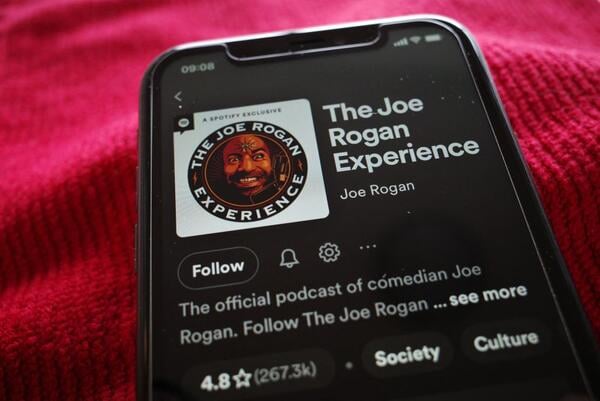
    Joe Rogan is no fan of my work, obviously. The chart-topping conservative influencer famously insists that universities are “cult camps” where professors like me indoctrinate students with leftist ideas. Typically, I do not worry about my haters, but increasingly it seems that if I want to create a meaningful learning experience, I need to.

    I teach first-year undergraduate humanities electives. Like most universities, ours offers large-format 200-student lectures for training in academic writing and critical theory. This would be the “indoctrination” in question, as I introduce students to canonical thinkers from Karl Marx to Sylvia Wynter. These electives are degree requirements, snaring students who might intentionally avoid liberal arts in an otherwise professional degree.

    In the current political climate, many of my students come to the classroom with their minds made up based on authorities who directly undermine my scholarship and profession. Rogan is just one of many conservative anti-intellectuals who regularly attack liberal, feminist, social justice–oriented biases in university education. The result is a polarized atmosphere antithetical to learning: a tangibly mistrustful, sometimes even resentful classroom.

    Although only a small handful of students typically adhere to anti-intellectual doctrine, their small group undermines my authority with risky jokes in the classroom and intense criticism in student back channels (as reported by concerned classmates). This causes undecided students to falter in their trust of my authority, while students who do not share their views nervously censor their contributions.

    Ironically, my dissenting students often do not recognize that I am interested in their views. I am convinced that the way out of this explosive historic moment is through rigorous discussion in educational forums. Like any academic, this is why I teach: I love sincere inquiry, debate and critical engagement, and I was a rabble-rouser myself as a student. But the current classroom mood is less debate and more deadlock.

    So, I spent this year brainstorming with my students to build creative assignments to spin resentment into passion, no matter how opposite my own, welcoming self-directed research and encouraging deeply engaged reading. I offer any one of these assignments, with the goal to bring disaffected, anxious students back to a love of learning and democratized engagement. This is a work in progress, and I welcome suggestions.

    Turn Tensions Into Data: This introductory exercise eases students into an atmosphere of open collegial discussion. Surveys or anonymous polls quantify disagreements, and then we analyze the results as a class.

    Example: Class Belief Inventory—anonymously poll students on hot-button questions (e.g., “Is systemic racism a major problem?”). The objective here would be to compare the class’s responses to national survey data. Potential discussion topics: Why might differences exist? What shapes our perceptions?

    Hostile Influencers as Primary Sources: This in-class activity treats figures like Rogan or Jordan Peterson not as adversaries but as authors of texts to analyze, to disarm defensiveness and position students as critical investigators.

    Example: “Compare/contrast an episode of [X podcast] with a peer-reviewed article on the same topic. How do their arguments differ in structure, evidence and rhetoric? Whom do you find more persuasive, and why?”

    Gamifying Ideological Tensions: This class activity turns assigned readings into structured, rule-bound games where students must defend positions they don’t personally hold.

    Example: Role-Play a Summit—Students are assigned roles (e.g., Jordan Peterson, bell hooks, climate scientist, TikTok influencer) and must collaborate to solve a fictional problem (e.g., redesigning a curriculum). They must cite course readings to justify their choices.

    Therapy for Arguments: This fun early activity teaches students to diagnose weak arguments—whether from Rogan, a feminist theorist or you—using principles of logic.

    Example: Argument Autopsy—Students dissect a viral social media post, podcast clip or course reading. Identify logical fallacies, cherry-picked evidence or unstated assumptions. Reward students for critiquing all sides.

    Intellectual Sleuthing: This is a scaffolded midterm writing assignment building up to a final essay. Ask students to trace the origins of their favorite influencers’ ideas. Many anti-establishment figures borrow from (or distort) academic theories—show students how to connect the dots.

    Example: Genealogy of an Idea—Pick a claim from a podcast (e.g., “universities indoctrinate students”). Research its history: When was this idea popular in mainstream news or on social media? Are there any institutes, think tanks, influencers or politicians associated with this idea? What are the stated missions and goals of those sources? Where do they get their funding? Which academics agree or disagree, and why?

    Leverage “Forbidden Topics” as Case Studies: If students resent “liberal bias,” lean into it: make bias itself the subject of analysis. This might work as a discussion prompt for tutorials or think-pair-share group work.

    Example: “Is This Reading Biased?”—Assign a short text students might call “woke” (e.g., feminist theory) and a countertext (e.g., Peterson’s critique of postmodernism). Have students evaluate both using a rubric: What counts as bias? Is objectivity possible? How do they define “truth”?

    Choose-Your-Own-Adventure Assignments: The final essay assignment gives students agency to explore topics they care about, even if they critique my field. Clear guardrails are important here to ensure rigor.

    Example: Passion Project: Students design a research question related to the course—even if it challenges the course’s assumptions. They must engage with three or more course texts and two or more outside sources, as in favorite influencers or authorities, even those who oppose course themes.

    Red Team vs. Blue Team: For essays, students submit two versions: one arguing their personal view and one arguing the counterpoint. Grading is based on how well they engage evidence, not their stance.

    Elisha Lim is an assistant professor of the technological humanities at York University in Toronto. They used generative AI tools to assist with the editing of this piece.

    Source link