Tag: Politics

  • The view from 4 campuses

    The view from 4 campuses

    A Black History Month event, canceled. A lab working to fight hunger, shuttered. Student visas revoked, then reinstated, uncertain for how long. Opportunities for students pursuing science careers, fading.

    The first six months of the Trump administration have brought a hailstorm of changes to the nation’s colleges and universities. While the president’s faceoffs with Harvard and Columbia have generated the most attention, students on campuses throughout the country are noticing the effects of the administration’s cuts to scientific and medical research, clampdown on any efforts promoting diversity equity and inclusion (DEI), newly aggressive policies for students with loan debt, revoking of visas for international students and more

    Many of the administration’s actions are being challenged in court, but they are influencing the way students interact with each other, what support they can get from their institutions — and even whether they feel safe in this nation.   

    The Hechinger Report traveled to campuses around the country to look at what these changes mean for students. Reporters visited universities in four states — California, Illinois, Louisiana and Texas — to understand this new era for higher education.

    Related: Interested in more news about colleges and universities? Subscribe to our free biweekly higher education newsletter.

    Louisiana State University 

    BATON ROUGE, La. — Last fall, Louisiana State University student A’shawna Smith had an idea for a new campus group to educate students about their legal rights and broader problems in the criminal justice system. Smith, a sociology major, had spent the prior summer interning at a law firm and noticed how many clients didn’t know their rights after an arrest. 

    Smith, now a rising senior, called it The Injustice Reform and soon recruited classmates and a campus adviser. They wrote a mission statement and trained as student group leaders. On Feb. 20, LSU’s student government, which awards money to campus groups that comes from student fees, gave them $1,200; Smith and her classmates planned to use the award to recruit members and organize events. 

    At Louisiana State University, in Baton Rouge, students say actions taken by the school’s administration in response to the federal crackdown on diversity, equity and inclusion are changing the campus culture and harming the operations of student government. Credit: Tyler Kaufman/AP Photo

    But on April 8, Injustice Reform’s treasurer received a text message from Cortney Greavis, LSU’s student government adviser. She said LSU was rescinding the money: The group’s mission statement ran afoul of new federal and state restrictions on DEI. Its mission mentions racial disparities and police brutality, but the organizers were never told which words violated the rules. Smith and fellow leaders started chipping in their own money to keep the group going: $10 here and there, whatever they could afford, said Bella Porché, a rising senior on the group’s executive board. 

    Canceling awards to student groups is one way students say administrators at LSU, the state’s flagship university, have restricted what they can do and say since the U.S. Department of Education wrote to schools and colleges nationwide on Valentine’s Day. The letter described DEI efforts — designed to rectify current and historic discrimination — as discriminatory and threatened schools with the loss of federal money unless they ended the consideration of race in admissions, financial aid, housing, training and other practices. 

    Since the letter, discussion of DEI on campus “has become an anti-gay, anti-Black sort of conversation,” said Emma Miller, a rising senior and elected student senator. “People who are minorities don’t feel safe anymore, don’t feel represented, don’t feel seen, because DEI is being wiped away and their university is not saying anything.” 

    In a March 7 report, the university detailed dozens of changes made to comply with the letter’s demands. For example, it ended any preference granted to students from historically underrepresented groups for certain privately funded scholarships; opened membership in school-funded student organizations — like a women-in-business group — to all; and canceled activities perceived to emphasize race, even a fitness class kicking off Black History Month.  

    Student government leaders say the restrictions hinder their ability to operate. Rising junior Tyhlar Holliway, a member of the student government’s Black Caucus, said school administrators essentially shut down the caucus’ proposal that the student government issue a statement after the Department of Education letter in support of DEI programs and initiatives. 

    LSU public relations staff did not respond to interview requests or to an emailed list of questions, and the school’s civil rights and Title IX division director declined to speak.

    Miller said administrators have told student leaders that all their proposed legislation must be reviewed by the school’s general counsel for compliance with the March 7 guidelines. The administration, for example, blocked a student government bill to fund a Black hair care event designed to help students prepare for career and professional opportunities, said senior Paris Holman, a student government member. “We have conferences and interviews and need to know how to take care of our hair,” said Holman, who is Black. 

    Students have also tailored the language of other bills to avoid the appearance of support for DEI. Holman said that in one case the student senate changed the language in a bill funding an end-of-year event for a minority student organization to remove any reference to the organization as serving minority students. 

    The school also overrode student government decisions about which groups, like A’shawna Smith’s, could be funded by student fees. In February, the student government voted to provide $641 to help a pre-med student, who is Black, attend a student medical education conference, in part so she could share what she’d learn with other pre-med students. A few weeks later, she received an email from Greavis, the student government adviser, saying she wouldn’t be able to attend with university funds because that money could no longer be used for “DEI-related events, initiatives, programs, or travel.” Greavis didn’t respond to requests for an interview.

    The email didn’t specify why the medical conference crossed the line. But the sponsoring organization’s mission statement notes its commitment to “supporting current and future underrepresented minority medical students,” and a conference plenary speaker was scheduled to address the “enduring case for DEI in medicine.” Fewer than 6 percent of doctors are Black and research has shown improved health outcomes for Black patients who are seen by physicians of the same race.    

    “It doesn’t feel like a democracy,” said Holman of serving in student government at this moment. 

    She and other students say the university’s actions are starting to change the broader culture at LSU, which serves nearly 40,000 undergraduate and graduate students on its campus of Italian Renaissance buildings shaded by magnolias and Southern live oaks. About 60 percent of students are white and 18 percent are Black, according to federal data

    Mila Fair, a rising sophomore journalism major and a reporter for the campus TV station, said students tell her they’re afraid to join protests, in part because of LSU’s new anti-DEI rules and the national crackdown on student demonstrations. Those who do attend are often afraid to go on camera with her, she said. 

    Professor Andrew Sluyter of Louisiana State University. The university purged hundreds of webpages referencing DEI-related content, including a press release announcing a prestigious fellowship he’d won that mentioned “higher education’s racial inequities.” Credit: Steven Yoder for The Hechinger Report

    Latin American studies professor Andrew Sluyter said administrators normally listen to the student government — even more than to the faculty government — but now worry about students getting the school into “political hot water.” He had his own run-in with the DEI ban: As part of a February effort to scrub school websites of diversity references, in which the university purged hundreds of webpages referencing DEI-related content, LSU deleted a 2022 press release announcing a prestigious fellowship he’d won that mentioned “higher education’s racial inequities.” 

    Students recognize the pressure LSU is under from the federal government, but they want administrators to stand up for them, said graduate student Alicia Cerquone, a student senator. “We want some sort of communication from the university that shows commitment to its community, that they have our backs and they’ll protect students,” she said. 

    Steven Yoder

    The University of California, Berkeley  

    BERKELEY, Calif. — Since early April, Rayne Xue, a junior at the University of California, Berkeley, has watched with trepidation as the Trump administration has taken one step after another to limit international students’ access to American higher education. 

    First came the abrupt cancellation, then reinstatement, of visas for 23 Berkeley students and recent graduates. Then the government cut off Harvard’s ability to enroll international students — a move since blocked by a federal judge — raising fears that something similar could happen at Berkeley. And late last month, as this year’s graduates were celebrating their recent commencements, Secretary of State Marco Rubio paused interviews for all new student visas and announced he would “aggressively revoke” those of Chinese students.

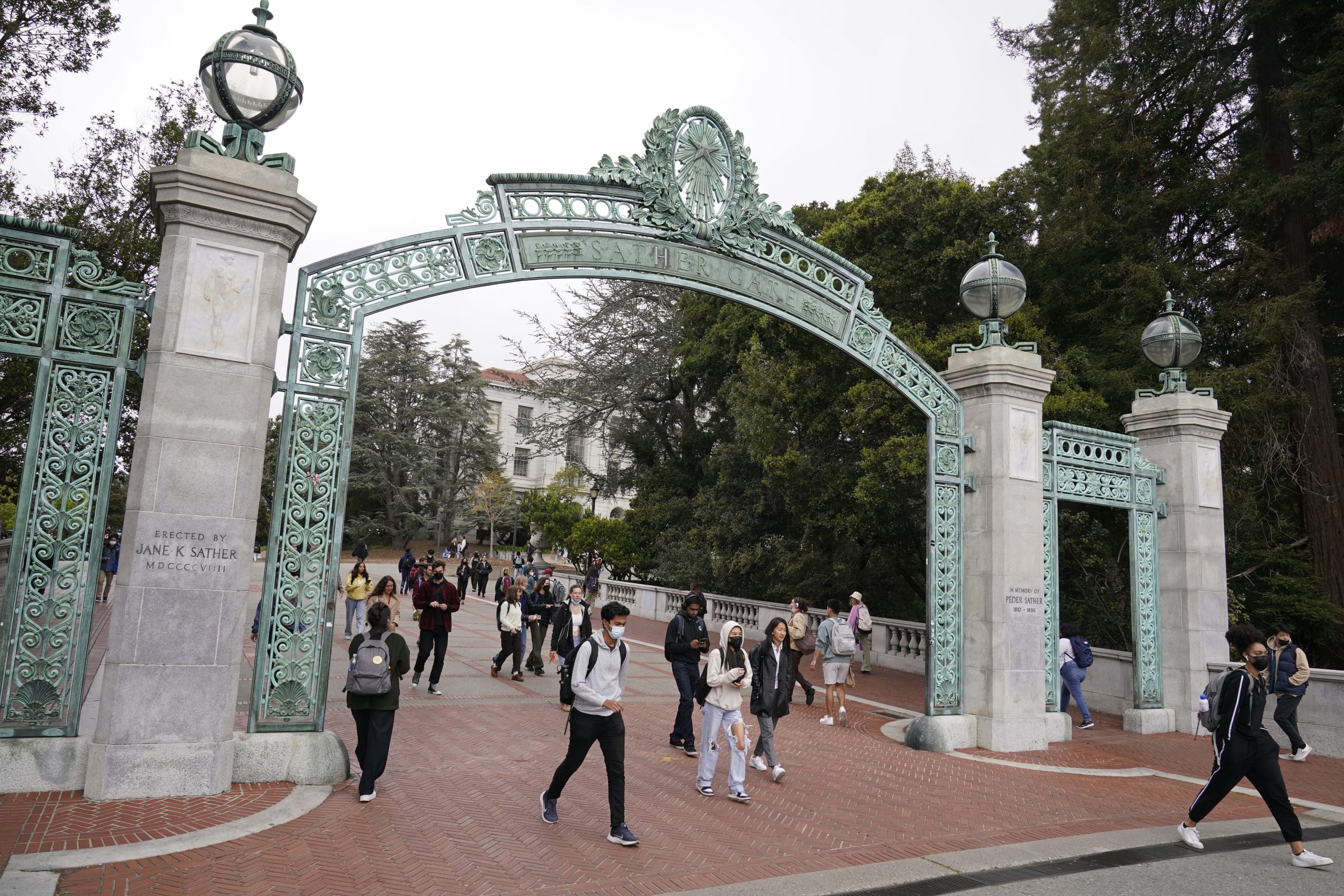
    About 16 percent of University of California, Berkeley, students come from outside the United States. Credit: Eric Risberg/AP Photo

    Xue, who is from Beijing and won a student senate seat this past spring on a platform of supporting international students, said the administration’s actions strike at a critical part of campus life at Berkeley.

    “College is the opportunity of a lifetime to unlearn prejudices and embrace new perspectives, neither of which is possible without a student body that comes from a wide range of geographic and cultural backgrounds,” she said.

    About 16 percent of UC Berkeley’s more than 45,000 students come from outside the United States to study at the crown jewel of California’s public research university system, where creeks run through campus beneath cooling redwoods and parking spaces are set aside for Nobel laureates. China, India, South Korea and Canada send the biggest numbers. International students pay higher tuition than California residents, boosting the university’s coffers and subsidizing some of their peers. Many of them conduct cutting-edge research in fields like computer science, engineering and chemistry.

    Now the Trump administration’s immigration crackdown, magnified by the yanking of billions in federal research dollars, has international students worried about their future on campus. Many are changing their behavior to avoid scrutiny: Some canceled travel plans and many said they avoid walking near any campus protests in fear of being photographed.

    “It’s difficult for international students to feel secure when they cannot anticipate what the administration might charge against them next — or whether they might be unfairly targeted,” said one global studies major who asked not to be identified for fear of attracting retaliation.

    Tomba Morreau, a rising junior from the Netherlands studying sociology, said he stopped posting about politics on social media — just in case.

    That kind of self-censorship troubles Paul Fine, co-chair of the Berkeley Faculty Association, which represents about a fifth of the university’s tenure-track faculty. 

    Federal policies are “creating this culture of fear where people start to censor themselves and try to stay under the radar and not show up in their full selves, whether for academic work or activism,” he said.

    Related: International students are rethinking coming to the U.S. That’s a problem for colleges

    International students in Fine’s classes told him they wanted to attend a recent protest against federal threats to higher education but were afraid of the consequences, he said. Others told him they were skipping academic conferences outside the United States that they otherwise would have attended.

    “Berkeley really prides ourselves on being an intellectual hub that convenes people from all over the world to work on the most important problems,” Fine said. Now that identity is at risk, he said, especially as actual and threatened cuts to grants make it harder for faculty to hire international graduate students and postdocs. 

    Most poignant, he said, was hearing from demoralized Chinese students who left a repressive government to come to the United States only to see attacks on academic freedom replicated here. 

    Xue said she hopes the crisis facing universities would draw attention to the challenges international students face, including limited financial aid and the stereotype that all of them are wealthy. With her colleagues in student government, she is lobbying for Berkeley to spend more on the international office, which provides one-on-one advising on visa issues and employment.

    For Lily Liu, a Chinese computer scientist, 2025 was shaping up to be a year of milestones. She graduated with a doctorate last month, has a job lined up at a leading artificial intelligence company and is engaged to be married in November.

    But the Trump administration’s changing policies toward international scholars have complicated celebrations for Liu, who’s in a federal program that extends her visa for up to a year beyond graduation so she can gain work experience here. She canceled summer travel plans with her family, concerned she might not be let back into the country. And she’s considering moving her wedding to the United States from China, even though many of her relatives wouldn’t be able to attend.

    “For international students, every policy affects us a lot,” she said. So Liu is careful. After the publication of her thesis was delayed, she visited Berkeley’s international office to make sure the setback wouldn’t affect her work permit. Her fiancé has a green card, which should theoretically mean his immigration status is more stable. But these days, she said, who knows? 

    — Felicia Mello 

    The University of Texas at San Antonio 

    SAN ANTONIO, Texas — Growing up here, Reina Saldivar had always loved science — all she wanted to watch on TV was “Animal Planet.” Yet until she applied on a whim to a program for aspiring researchers after her first year at the University of Texas at San Antonio, she assumed she would spend her life as a lab technician, running cultures. 

    The program, Maximizing Access to Research Careers, or MARC, was started by the National Institutes of Health decades ago at colleges around the country to prepare students, especially those from historically underrepresented backgrounds, for livelihoods in the biomedical sciences. 

    Saldivar got in. And through the program, she spent much of her time on campus in a university lab, helping develop a carrier molecule for a new Lyme disease vaccine. Now Saldivar, who graduated this spring, plans to eventually return to academia for a doctorate.  

    “What MARC taught me was that my dreams aren’t out of reach,” she said.

    Saldivar is among hundreds who’ve participated in the MARC program since its 1980 founding at the University of Texas at San Antonio. She may also be among the last. In April, the university’s MARC program director, Edwin Barea-Rodriguez, opened his email inbox to find a form letter terminating the initiative and advising against recruiting more cohorts. 

    The letter cited “changes in NIH/HHS [Health and Human Services] priorities.” In recent months, the Trump administration has canceled at least half a dozen programs meant to train scholars and diversify the sciences as part of an effort to root out what the president labels illegal DEI. 

    In a statement to The Hechinger Report, NIH said that it “is committed to restoring the agency to its tradition of upholding gold-standard, evidence-based science” and is reviewing grants to make sure the agency is “addressing the United States chronic disease epidemic.” 

    With MARC ending, Barea-Rodriguez is searching for a way to continue supporting current participants until they graduate next academic year. Without access to federal money, however, the young scientists are anxious about their futures — and that of public health in general. 

    “It took years to be where we are now,” said Barea-Rodriguez, who said he was not speaking on behalf of his university, “and in a hundred days everything was destroyed.” 

    UTSA’s sprawling campus sits on the northwest edge of San Antonio, far from tourist sites like the Alamo and the River Walk. Forty-four percent of the nearly 31,000 undergraduate students are the first in their families to attend college; more than 61 percent identify as Hispanic or Latino. The university was one of the first nationwide to earn Department of Education recognition as a Hispanic-serving institution, a designation for colleges where at least a quarter of full-time undergraduates are Hispanic.

    When Barea-Rodriguez arrived to teach at the school in 1995, many locals considered it a glorified community college, he said. But in the three decades since, the investments NIH made through MARC and other federal programs have helped it become a top-tier research university. That provided students like Saldivar with access to world-class opportunities close to home and fostered talent that propelled the economy in San Antonio and beyond. 

    The Trump administration has quickly upended much of that infrastructure, not only by terminating career pipeline programs for scholars, but also by pulling more than $8.2 million in National Science Foundation money from UTSA. 

    One of those canceled grants paid for student researchers and the development of new technologies to improve equity in math education and better serve elementary school kids from underrepresented backgrounds in a city that is about 64 percent Hispanic. Another aimed to provide science, technology, engineering and math programming to bilingual and low-income communities. 

    UTSA administrators did not respond to requests for comment about how federal funding freezes and cuts are affecting the university. Nationwide, more than 1,600 NSF grants have been axed since January.

    Related: So much for saving the planet. Climate careers, plus many others, evaporate for class of 2025 

    In San Antonio, undergraduates said MARC and other now-dead programs helped prepare them for academic and professional careers that might have otherwise been elusive. Speaking in a lab remodeled and furnished with NIH money, where leftover notes and diagrams on glass erase boards showed the research questions students had been noodling, they described how the programs taught them about drafting an abstract, honing public speaking and writing skills, networking, putting together a résumé and applying for summer research positions, travel scholarships and graduate opportunities. 

    “All of the achievements that I’ve collected have pretty much been, like, a direct result of the program,” said Seth Fremin, a senior biochemistry major who transferred to UTSA from community college and has co-authored five articles in major journals, with more in the pipeline. After graduation, he will start a fully funded doctoral program at the University of Pittsburgh to continue his research on better understanding chemical reactions. 

    Seth Fremin, a senior biochemistry major at the University of Texas at San Antonio, with Edwin Barea-Rodriguez. Credit: Alexandra Villareal for The Hechinger Report

    Similarly, Elizabeth Negron, a rising senior, is spending this summer at the Massachusetts Institute of Technology, researching skin microbiomes to see if certain bacteria predispose some people to cancers. 

    “It’s weird when you meet students who didn’t get into these programs,” Negron said, referring to MARC. “They haven’t gone to conferences. They haven’t done research. They haven’t been able to mentor students. … It’s very strange to acknowledge what life would have been without it. I don’t know if I could say I’d be as successful as I am now.” 

    With money for MARC erased, Negron said she will probably need a job once she returns to campus in the fall so she can afford day-to-day expenses. Before, research was her job. 

    “Without MARC,” she said, “it becomes a question of can I at least cover my tuition and my very basic needs.” 

    — Alexandra Villarreal 

    The University of Illinois Urbana-Champaign

    CHAMPAIGN, Ill. — When Peter Goldsmith received notice in late January that his Soybean Innovation Lab at the University of Illinois would soon lose all of its funding, he had no idea it was coming. Suddenly Goldsmith, the lab’s director, had to tell his 30 employees they would soon be out of a job and tell research partners across Africa that operations would come to a halt. The lab didn’t even have money to water its soybean fields in Africa. 

    One employee, Julia Paniago, was in Malawi when she got the news. “We came back the next day,” she said of her team, “and it was a lot of uncertainty. And a lot of people cried.”

    The University of Illinois’ Soybean Innovation Lab (SIL) was part of a network of 17 labs at universities across the country, all working on research related to food production and reducing global hunger, and all funded through the U.S. Agency for International Development — until the Trump administration shut down USAID.

    Brian Diers is former deputy director of the University of Illinois’ Soybean Innovation Lab. The lab lost its funding because of cuts to the U.S. Agency for International Development. Credit: Miles MacClure for The Hechinger Report

    Soybeans — which provide both oil and high-protein food — aren’t yet commonly grown in Malawi. SIL researchers have been working toward two related goals: helping local farmers increase soybean production and ameliorate malnutrition and generating enough interest in the crop there that a new export market will open for American farmers.

    The lab’s researchers work in soybean breeding, economics and mechanical research as well as education. They hope to show that soybean production in Africa is worth further investment so that eventually the private sector will come in after them.

    “The people who work at SIL, they like being right at the frontier of change,” Goldsmith said. “It’s high-risk work — that’s what the universities do, that’s what scientific research is about.”

    UI, the state’s flagship with a sprawling campus spread between the cities of Urbana and Champaign, is noted for its research work, especially agricultural research.

    Labs and researchers across the university lost funding in cuts made by the Trump administration; more than $25 million from agencies including NIH, NSF and the National Endowment for the Humanities was cut, Melissa Edwards, associate vice chancellor for research and innovation, said, a total of 59 grants amounting to 3.6 percent of their overall federal grant portfolio.

    Annette Donnelly, who just received her doctorate in education, is among those affected. Her research focuses on educating malnourished children in Africa and developing courses to help Africans learn how to process soybeans into oil.

    Related: The college degree gap between Black and white Americans was always bad. It’s getting worse

    In April, SIL was handed a lifeline — an anonymous $1 million gift that will keep the lab running through April 2026. The donation wasn’t enough for Goldsmith to rehire all of his employees; SIL’s annual operating budget before the USAID cuts was $3.3 million (and would have kept things running through 2027). But, he said, the money will allow SIL to continue its research in the Lower Shire Valley in Malawi, a project he hopes will attract future donors to fund the lab’s work. 

    The April donation saved Donnelly’s job, but her priorities shifted.  “We’re doing research,” she said, “but we’re also doing a lot of proposal writing. It has taken on a much greater priority.” 

    Donnelly hopes to attract more funding so she can resume research she had started in western Kenya, demonstrating that introducing soy into children’s diets increased their protein intake by up to 65 percent, she said.

    The impact that funding cuts will have on researchers at the soybean lab pales in comparison to the impact on their partners in Africa, Donnelly emphasized. There, she said, the cuts mean processors will likely slow production, limiting their ability to deliver soy products. “The consequences there are much bigger,” she said.

    The Soybean Innovation Lab was funded through the Feed the Future initiative, a program to help partner countries develop better agricultural practices that began under the Obama administration in 2010. All 17 Feed the Future innovation labs funded through USAID lost funding, except for the one at Kansas State University, which studies heat-tolerant wheat.

    The soybean lab’s office is housed on a quiet edge of the Illinois campus in a building once occupied by the university’s veterinary medicine program. Across the street, rows of greenhouses are home to the Crop Science Department’s experiments.

    There, Brian Diers is breeding soybean varieties that resist soybean rust, a disease that’s been an obstacle to ramping up soybean production across sub-Saharan Africa. A professor emeritus who is retired, Diers works part-time at SIL to assist with soybean breeding. The April donation wasn’t enough to cover his work. Now he volunteers his time.

    “ If we can help African agriculture take off and become more productive, that’s eventually going to help their economies and then provide more opportunities for American farmers to export to Africa,” he said.

    Goldsmith drew an analogy between his lab’s work and the state of American agriculture in the 1930s. As the Dust Bowl swept through the Great Plains, Monsanto or another company could have stepped in to help combat it, but didn’t. Public land-grant universities did. 

    “That’s where the innovation comes from, from the public land grants in the U.S.,” Goldsmith said. “And now the public land grants still work in U.S. agriculture but also in the developing world.” 

    Commercial soybean producers hesitate to dip their toes into unproven markets, he said, so it’s SIL’s job to demonstrate that a viable market exists. “That was our secret sauce, in that lots of commercial players liked the products, the technologies we had, and wanted to move into the soybean space, but it wasn’t a profitable market,” Goldsmith said of the African soybean market.

    Diers said federal funding cuts imperil not just the development of commerce and global food production but the next generation of scientists as well. 

    “We could potentially lose a generation of scientists who won’t go into science because there’s no funding right now,” he said. 

    — Miles MacClure

    Contact editor Lawrie Mifflin at [email protected] or 212-678-4078. Contact editor Caroline Preston at 212-870-8965, via Signal at CarolineP.83 or on email at [email protected].

    This story about international students was produced by The Hechinger Report, a nonprofit, independent news organization focused on inequality and innovation in education. Sign up for the Hechinger newsletter.

    The Hechinger Report provides in-depth, fact-based, unbiased reporting on education that is free to all readers. But that doesn’t mean it’s free to produce. Our work keeps educators and the public informed about pressing issues at schools and on campuses throughout the country. We tell the whole story, even when the details are inconvenient. Help us keep doing that.

    Join us today.

    Source link

  • Help us tell the story of how the Trump administration is changing higher education

    Help us tell the story of how the Trump administration is changing higher education

    Since January, President Donald Trump has taken countless steps to transform the nation’s colleges and universities. His administration has cut scientific and medical research, ended efforts to promote diversity equity and inclusion (DEI), introduced newly aggressive policies on loan repayment, revoked visas for international students, and more. While Trump’s battles with Harvard and Columbia have received the most attention, the administration’s actions have had consequences far beyond those two universities.  

    We want to know how the Trump administration is affecting higher education and life on your campus. What, if any, changes are you seeing at your college or university because of federal policy shifts? In what ways do you see higher education changing?

    If you prefer, you can also email us directly at [email protected]. Contact editor Lawrie Mifflin at [email protected] or 212-678-4078. Contact editor Caroline Preston at 212-870-8965, via Signal at CarolineP.83 or on email at [email protected].

    This story about higher education was produced by The Hechinger Report, a nonprofit, independent news organization focused on inequality and innovation in education. Sign up for our newsletters.

    The Hechinger Report provides in-depth, fact-based, unbiased reporting on education that is free to all readers. But that doesn't mean it's free to produce. Our work keeps educators and the public informed about pressing issues at schools and on campuses throughout the country. We tell the whole story, even when the details are inconvenient. Help us keep doing that.

    Join us today.


    Source link

  • Americans worry about AI in politics — but they’re more worried about government censorship

    Americans worry about AI in politics — but they’re more worried about government censorship

    As artificial intelligence technologies make their way into political ads and campaigning, Americans are expressing growing concern. But they’re not just worried about deepfakes and deceptive content’s impact on elections —  they also fear how the government might use the fight against misinformation to restrict free speech.

    In a recently released FIRE poll of registered American voters, conducted by Morning Consult, one concern stood out: government regulation itself. Nearly half of respondents (45%) said they are “extremely” or “very” concerned that government regulation of election-related AI content could be abused to suppress criticism of elected officials. That’s a powerful signal that while Americans see the risks posed by AI, they don’t trust government regulators to police political expression fairly.

    When asked to choose between protecting free speech in politics or stopping deceptive content, a plurality (47%) said protecting free speech in politics is more important, even if that means allowing some deceptive content. Just 37% prioritized stopping deceptive content, even at the expense of limiting speech that would otherwise be protected by the First Amendment. These sentiments are held across the political spectrum, but are stronger among Independents and Republicans, than among Democrats.

    This isn’t just a preference — it’s a principled stand in favor of the core freedoms the First Amendment exists to protect. Political speech lies at the heart of those freedoms, and Americans clearly recognize that any government attempts to police what can or can’t be said pose a far greater threat to democracy than free speech itself.

    Regulation threatens participation

    The chilling effects are already measurable. About 28% of voters said they’d be less likely to share content on social media if the government began regulating AI-generated or AI-altered content. (That’s right: All content, not just AI-generated or AI-altered content.) That may not sound dramatic at first glance, but that’s more than the average voter turnout during the last midterm primaries. As our political culture is increasingly shaped online, discouraging speech — even unintentionally — can have real consequences for public discourse.

    These findings suggest a troubling trajectory: Government regulations justified in the name of protecting the public from AI could end up silencing the public instead. 

    While some polls show that a similar percentage of voters (41%) say it’s important to protect people from misinformation, that concern cannot be used to justify censorship. About 39% said that preserving freedom of speech should be the government’s top priority when crafting AI laws. Only 12% said that view doesn’t describe them at all. In other words, most Americans believe that protecting speech isn’t just one goal among many — it’s the central concern.

    And they’re right to think so. The First Amendment doesn’t permit the government to restrict speech simply because it believes the public might be misled. The solution to bad speech is more speech, not less.

    These results should serve as a warning to policymakers: The public views efforts to regulate AI in political campaigns as a risk to free expression. FIRE has been actively engaged in legislative advocacy to safeguard First Amendment rights, including vague and overbroad bans or disclosure requirements imposed on AI content. 

    If voters already believe regulation will be abused — and are already pulling back from political expression using AI — that’s not just a theoretical harm. It’s a chilling effect in action.

    Instead of rushing to regulate, elected officials should reaffirm their commitment to protecting political speech, no matter the medium. The technology may be new, but the principle is not: In a free society, the government doesn’t get to decide which ideas are too dangerous to be heard.


    The poll was conducted May 13-15, 2025, among a sample of registered voters in the US. A total of 2,005 interviews were conducted online across the US for a margin of error of plus or minus 2 percentage points. Frequency counts may not sum to 2,005 due to weighting and rounding. Topline results are available here.

    Source link

  • The politics of representation

    The politics of representation

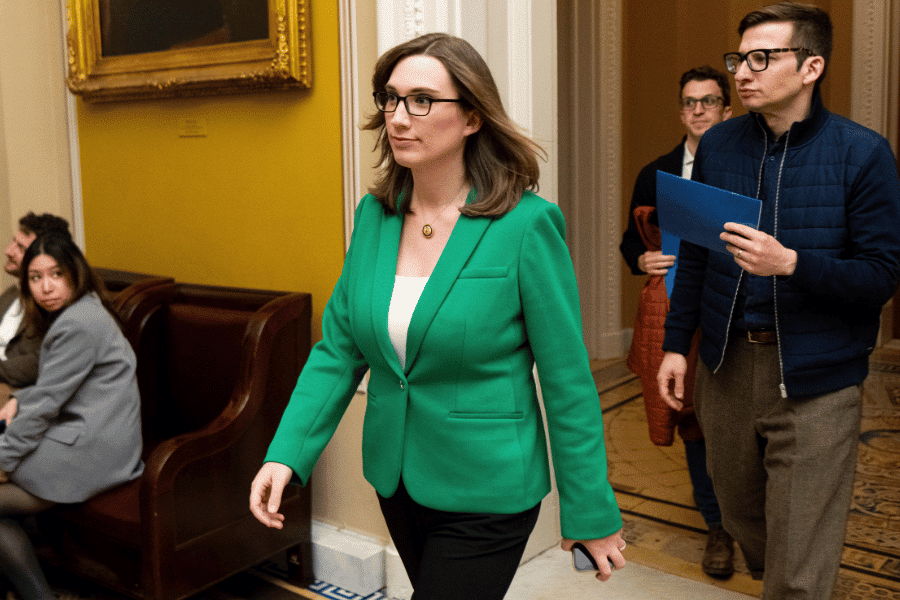
    When I searched for Sarah McBride’s name on March 12, the first thing I saw was a story about a member of the U.S. Congress calling her “Mr. McBride” in an official hearing.

    Ms. McBride is the first congressional representative in United States history to be openly transgender.

    Since 18 November 2024, when McBride was elected to Congress, I’ve seen dozens of articles in which the only thing in question is her gender identity. It’s funny that Republicans in the U.S. Congress have made such a fuss over McBride’s gender, while McBride – the only congressperson representing the state of Delaware – has done nothing of the sort.

    For someone so polarised and one-dimensional by the media, McBride seems intent on collaboration.

    Delawareans have been overwhelmingly supportive of McBride. A University of Delaware poll, which recorded the pre-election numbers, had McBride at 52% of the vote, while her opponent, John Whalen, received 30%. Sarah McBride ended up with a 58% return, which could be considered a landslide.

    This starkly contrasted primaries across the country, with many states flipping Republican, that had gone Democrat in 2020.

    So, what’s the difference between Delaware and McBride, compared to the rest of the nation?

    What voters care about

    For starters, Delaware, where I live, is minuscule compared to its sister states. These conditions make Delaware not only ideal grounds to break history on, but also the only place it could have happened for McBride.

    Delaware does not boast a large number of gay and trans people. A UCLA poll found that only 4.5% of citizens in Delaware are queer and trans and over half are under voting age. By and large, McBride was elected by a primarily straight electorate.

    This election did not contrast with the national sentiment of Democrats. A Pew Research study found that about 64% of Americans believe trans people should be protected from discrimination when it comes to employment, housing, and education. Additionally, democrats had even stronger support of the notion that gender is not assigned at birth.

    Simply put, Delaware and McBride are a good fit.

    McBride is calm, composed, and focusing on her Delaware constituents more than anything else. In fact, she is the first freshman democrat in the 119th Congress to bring a bill to the floor. A bipartisan bill protecting consumers from credit appraisal scams.

    Opposition from Republicans

    Some congressional Republicans prefer to call McBride names rather than work to make a stronger nation.

    Describing McBride’s welcome to D.C. can be summarized in two words: Political Theatre.

    On McBride’s first visit to D.C., she was greeted by a ban on the use of bathrooms in the house by transgender people brought forward by Republican Congresswoman Nancy Mace. This pointed attack by Representative Mace didn’t seem to affect McBride, who was more focused on: “Delivering on the issues that keep Delawareans up at night.”

    In recent months, McBride has been subject to even more unwarranted scrutiny and misnomers from her republican colleagues.

    I spoke with McBride to hear her plans for Delaware, her response to President Trump’s actions, and what she has accomplished thus far in her congressional term.

    Jack McConnel: What was your main reason to run for congressional office? 

    Sarah McBride: So my interest in politics was really rooted in my own journey to authenticity as a young person, as someone growing up here in Delaware, I was scared. I wondered whether the heart of this country was big enough to love someone like me.

    And I faced a crisis of hope. And in that crisis of hope, I went searching for solutions and examples of our world becoming kinder and fairer. And I found a little glimmer of hope as I read history books and saw the through line of every chapter was a story of advocates, activists and a handful of courageous and effective elected officials working together to right the wrongs of our past, to address injustice, to bring people from the shadows and the margins of society into the circle of opportunity.

    I ultimately decided to run for office, though, in 2019 for the state Senate was really the byproduct of my experience as a caregiver to my husband during his battle with terminal cancer.

    Because I know despite the fact that Andy lost his life to cancer, I know how lucky we were. I know how lucky he was to have health insurance that allowed him to get care that prolonged his life. And I know how lucky both of us were to have flexibility with our jobs that allowed him to focus on the full-time job of getting care and me to focus on the full-time job of caring for him.

    McConnel: What are you most proud of so far in your term?

    McBride: First is that I’ve introduced multiple bipartisan bills.

    One with [California Republican] Young Kim that provides consumer protections for Americans against the predatory practices of so-called credit repair organizations.

    The second more recently with [Republican] Representative Mike Lawler from New York, which protects farmers and in so doing helps to lower costs for Delawareans at the grocery store by investing in combating avian flu.

    McConnel: How do you think the Democratic party should respond to the results of the 2024 election?

    McBride: What we can do is we can help to mobilize the public against [President Donald Trump]. Public opinion still matters. We are still under democracy. These people still care about their popularity. They still care about the next election and the goal in this moment as we defend Medicaid in the short run.

    The goal in this moment also has to be to make sure that this president, that the public understands the harms that this president is inflicting on people of every political persuasion across the country. As the public mobilizes against this president, it throws sand in the gears of an authoritarian machine that slows it down, that extends the runway of our democracy so that we can get to the next election and get to the next election.

    McConnel: How do you plan on responding to these movements?

    McBride: Fighting back against that is at the top of my priority list at this moment. In the longer term, obviously, there is an answer to your question, a real effort by this president to illegally and unconstitutionally consolidate power to essentially create absolute power.

    I mean, his first step is to employ what’s called the unitary executive theory, which is absolute authority within the executive branch under the purview of Congress. But he’s also clearly trying to undermine the main power of Congress, the power of the purse. He’s questionable about whether he’s going to listen to the Supreme Court and when all is said and done, making sure that we can’t stop every action by this president. The results of the last election give us limited institutional levers.

    McConnel: Thank you, Representative McBride.

    The main concern McBride reiterated again and again was what she was doing for the Delawareans who elected her. McBride took every opportunity during our interview to highlight the issues most relevant to her constituents. She talked to me about the effort to defund programs Delawareans rely on.

    When asked about what the Democratic Party should be doing going forward, McBride said that Democrats have lost the “art of social change” and that they must be willing to meet people where they are and engage in conversations where people disagree. She pointed towards the 2026 midterms as a place to build momentum towards.

    McBride said when Democrats try to sound the alarm about everything the president is doing, it dilutes the effect of the message. “We can’t ever go to 10 if we’re always at 10,” she said.

    McBride’s goal? Slow down Trump where she can and build support going into 2026.


    Questions to consider: 

    1. In what way does Representative Sarah McBride get treated differently than her Congressional colleagues?

    2. What did Delaware voters care about when they voted to elected McBride to Congress?

    3. If you were to vote for a government representative, what issues do you most want that person to tackle?


    Source link

  • In some states, colleges face a double dose of DOGE

    In some states, colleges face a double dose of DOGE

    Oklahoma wants some of its less-expensive universities to cut travel and operational costs, consolidate departments and reduce energy use — all in the name of saving money.

    Already, earning a degree at one of these regional institutions is relatively inexpensive for students, costing in total as much as $15,000 less per year than bigger state universities in Oklahoma. And the schools, including Southeastern Oklahoma State University and the University of Central Oklahoma, graduate more teachers and nurses than those research institutions. Those graduates can fill critically needed roles for the state.

    Still, state policymakers think there are more efficiencies to be found.

    Higher education is one of the specific areas targeted by a new state-run agency with a familiar name, with the goal of “protecting our Oklahoma way of life,” Republican Gov. Kevin Stitt said in the first DOGE-OK report this spring. The Oklahoma Division of Government Efficiency, created around the same time as the federal entity with a similar title, counts among its accomplishments so far shifting to automated lawn mowers to cut grass at the state capital, changing to energy-efficient LED lighting and cutting down on state government cell phone bills. The Oklahoma governor’s office did not respond to a request for comment about this effort.

    Oklahoma is one of about a dozen states that has considered an approach similar to the federal DOGE, though some state attempts were launched before the Trump administration’s. The federal Department of Government Efficiency, established the day Trump took office on Jan. 20, has commanded deep cuts to federal spending and the federal workforce, with limited justification.

    As academia becomes a piñata for President Donald Trump and his supporters, Republican state lawmakers and governors are assembling in line: They want to get their whacks in too.

    Related: Interested in more news about colleges and universities? Subscribe to our free biweekly higher education newsletter.

    Beyond Oklahoma, Florida Gov. Ron DeSantis launched FL DOGE in February, with a promise to review state university and college operations and spending. Republicans in the Ohio statehouse formed an Ohio DOGE caucus. One of the Iowa DOGE Task Force’s three main goals is “further refining workforce and job training programs,” some of which are run through community colleges, and its members include at least two people who work at state universities.

    The current political environment represents “an unprecedented attack on higher education,” said Veena Dubal, a law professor at the University of California, Irvine, and general counsel for the American Association of University Professors.

    The state-level scrutiny comes atop those federal job cuts, which include layoffs of workers who interact with colleges, interdepartmental spending cuts that affect higher education and the shrinking of contracts that support research and special programs at colleges and universities. Other research grants have been canceled outright. The White House is pursuing these spending cuts at the same time as it is using colleges’ diversity efforts, their handling of antisemitism and their policies about transgender athletes to force a host of changes that go beyond cost-cutting — such as rules about how students protest and whether individual university departments require more supervision.

    Florida Atlantic University students Zayla Robinson, Aadyn Hoots and Meadow Swantic (from left to right) sit together at the Boca Raton campus. Swantic objects to Florida’s efforts to dictate what subjects universities can or can’t teach: “You can’t erase history.” Credit: Michael Vasquez for The Hechinger Report

    Higher education, which relies heavily on both state dollars and federal funding in the form of student loans and Pell grants, research grants and workforce training programs, faces the prospect of continued, and painful, budget cuts.

    “Institutions are doing things under the threat of extinction,” Dubal said. “They’re not making measured decisions about what’s best for the institution, or best for the public good.”

    For instance, the Trump administration extracted a number of pledges from Columbia University as part of its antisemitism charge, suspending $400 million in federal grants and contracts as leverage. This led campus faculty and labor unions to sue, citing an assault on academic freedom. (The Hechinger Report is in an independent unit of Teachers College.) Now Harvard faces a review of $9 billion in federal funding, also over antisemitism allegations, and the list of universities under similar scrutiny is only growing.

    Related: The Hechinger Report’s Tuition Tracker helps reveal the real cost of college

    Budget cuts are nothing new for higher education — when a recession hits, it is one of the first places state lawmakers look to cut, in blue states or red. One reason: Public universities can sometimes make up the difference with tuition increases.

    What DOGE brings, in Washington and statehouses, is something new. The DOGE approach is engaging in aggressive cost-cutting that specifically targets certain programs that some politicians don’t like, said Jeff Selingo, a special adviser to the president at Arizona State University.

    “It’s definitely more political than it is fiscal or policy-oriented,” said Selingo, who is also the author of several books on higher education.

    “Universities haven’t done what certain politicians wanted them to do,” he added. “This is a way to control them, in a way.”

    The current pressure on Florida colleges extends far beyond budget matters. DeSantis has criticized college campuses as “intellectually repressive environments.” In 2021, Florida state lawmakers passed a law, signed by the governor, to fight this perceived ideological bent by requiring a survey of public university professors and students to assess whether there is enough intellectual diversity on campus.

    A diversity-themed bus transports students at the University of Central Florida’s Orlando campus. Credit: Michael Vasquez for The Hechinger Report

    At New College in Sarasota, DeSantis led an aggressive cultural overhaul to transform the college’s atmosphere and identity into something more politically conservative. The governor has cited Hillsdale College, a conservative private Christian institution in Michigan, as a role model.

    Faculty and students at New College sued. Their complaints included allegations of academic censorship and a hostile environment for LGBTQ+ students, many of whom transferred elsewhere. One lawsuit was ultimately dropped. Since the takeover, the college added athletics programs and said it has attracted a record number of new and transfer students.

    Related: A case study of what’s ahead with Trump DEI crackdowns

    Across America, Republicans control both the legislature and the governor’s mansion in 23 states, compared with 15 states fully controlled by Democrats. In those GOP-run states, creating a mini-DOGE carries the potential for increased political might, with little oversight.

    In Florida, “state DOGE serves as an intimidation device,” one high-ranking public university administrator told The Hechinger Report. The administrator, who asked not to be named for fear of retribution, said “there’s also just this atmosphere of fear.”

    In late March, university presidents received a letter signed by the “DOGE Team” at the governor’s office. The letter promised a thorough review by FL DOGE officials, with site visits and the expectation that each college appoint a designated liaison to handle FL DOGE’s ongoing requests.

    The letter highlighted some of the items FL DOGE might request going forward, including course codes, descriptions and syllabi; full detail of all centers established on campus; and “the closure and dissolution of DEI programs and activities, as required by law.”

    The student union at Florida Atlantic University in Boca Raton. Florida Gov. Ron DeSantis, a Republican, launched FL DOGE in February, promising to review state university and college operations and spending. Credit: Michael Vasquez for The Hechinger Report

    The state did not respond to a question about whether FL DOGE is designed to attack higher education in the state. Molly Best, the deputy press secretary, noted that FL DOGE is now up and running, and cities and counties are also receiving letters requesting certain information and that the public will be updated in the future. 

    DOGE in Florida also follows other intervention in higher education in the state: Florida’s appointed Board of Governors, most of whom are chosen by the governor, removed dozens of courses from state universities’ core curriculum to comply with the Stop WOKE Act, a state law that took effect in 2022. The law, which DeSantis heavily promoted, discourages the teaching of concepts such as systemic racism or sexism. The courses removed from Florida’s 12 state universities were primarily sociology, anthropology and history courses.

    “You can’t erase history,” said Meadow Swantic, a criminal justice major at Florida Atlantic University, a public institution, in an interview at its Boca Raton campus. “There’s certain things that are built on white supremacy, and it’s a problem.”

    Fellow Florida Atlantic student Kayla Collins, however, said she has noticed some professors’ liberal bias during class discussions.

    “I myself have witnessed it in my history class,” said Collins, who identifies as Republican. “It was a great history class, but I would say there were a lot of political things brought up, when it wasn’t a government class or a political science class.” 

    At the University of Central Florida in Orlando, political science major Liliana Hogan said she had a different experience of her professors’ political leanings.

    “You hear ‘people go to university to get woke’ or whatever, but actually, as a poli-sci student, a lot of my professors are more right-wing than you would believe,” Hogan said. “I get more right-leaning perspectives from my teachers than I would have expected.” Hogan said.   

    Another UCF student, Johanna Abrams, objected to university budget cuts being ordered by the state government. Abrams said she understands that tax dollars are limited, but she believes college leaders should be trusted with making the budget decisions that best serve the student body.

    “The government’s job should be providing the funding for education, but not determining what is worthy of being taught,” Abrams said. 

    Related: Inside Florida’s ‘underground lab’ for far-right education policies

    Whatever their missions and attempts at mimicry, state-level DOGE entities are not necessarily identical to the federal version.

    For instance, in Kansas, the Committee on Government Efficiency, while inspired by DOGE, is in search of ideas from state residents about ways to make the state bureaucracy run better rather than imposing its own changes. A Missouri Senate portal inspired by the federal DOGE works in a similar way. Yet the federal namesake isn’t taking suggestions from the masses to inform its work.  

    And at the federal level, then-DOGE chief Elon Musk in February emailed workers, asking them to respond “to understand what they got done last week,” he posted on X. “Failure to respond will be taken as a resignation.” Employees were asked to reply with a list of five accomplishments.

    The Ohio DOGE Caucus noted explicitly it won’t be doing anything like that.

    “We’re not going to be emailing any state employees asking them to give us five things they worked on throughout the week,” Ohio state Rep. Tex Fischer, a Republican, told a local radio station. “We’re really just trying to get like-minded people into a room to talk about making sure that government is spending our money wisely and focusing on its core functions that we all agree with.”

    Contact editor Nirvi Shah at 212-678-3445, securely on Signal at NirviShah.14 or via email at [email protected].

    This story about DOGE cuts was produced by The Hechinger Report, a nonprofit, independent news organization focused on inequality and innovation in education. Sign up for the Hechinger newsletter.

    The Hechinger Report provides in-depth, fact-based, unbiased reporting on education that is free to all readers. But that doesn’t mean it’s free to produce. Our work keeps educators and the public informed about pressing issues at schools and on campuses throughout the country. We tell the whole story, even when the details are inconvenient. Help us keep doing that.

    Join us today.

    Source link

  • A smaller Nation’s Report Card

    A smaller Nation’s Report Card

    As Education Secretary Linda McMahon was busy dismantling her cabinet department, she vowed to preserve one thing: the National Assessment of Educational Progress (NAEP), also known as the Nation’s Report Card. In early April, she told a gathering of ed tech companies and investors that the national exam was “something we absolutely need to keep,” because it’s a “way that we keep everybody honest” about the truth of how much students across the country actually know.  

    That was clearly a promise with an asterisk. 

    Less than two weeks later, on Monday of this week, substantial parts of NAEP came crumbling down when the board that oversees the exam reluctantly voted to kill more than a dozen of the assessments that comprise the Nation’s Report Card over the next seven years. 

    The main reading and math tests, which are required by Congress, were preserved. But to cut costs in an attempt to appease Elon Musk’s Department of Government Efficiency or DOGE, the National Assessment Governing Board (NAGB) scrapped a 2029 administration of the Long-Term Trend NAEP, an exam that has tracked student achievement since the 1970s.* Also cut were fourth grade science in 2028, 12th grade science in 2032 and 12th grade history in 2030. Writing assessments, which had been slated for 2032, were canceled entirely. State and local results were also dropped for an assortment of exams. For example, no state-level results will be reported for 12th grade reading and math in 2028, nor will there be district-level results for eighth grade science that year. 

    Related: Our free weekly newsletter alerts you to what research says about schools and classrooms.

    “These are recommendations that we are making with much pain,” said board chair Beverly Perdue, a former North Carolina governor who was appointed to this leadership role in 2018 during President Donald Trump’s first term. “None of us want to do this.”

    The board didn’t provide an official explanation for its moves. But the vice chair, Martin West, a Harvard professor of education, said in an interview that the cuts were an effort to save the 2026 assessments. “A moment of reckoning came more quickly because of the pressures on the program to reduce expenses in real time,” he said. 

    In other words, the board was effectively cutting off the patient’s appendages to try to save the brain and the heart. Despite the sacrifice, it’s still not clear that the gambit will work.

    Related: Chaos and confusion as the statistics arm of the Education Department is reduced to a skeletal staff of 3

    DOGE has been demanding 50 percent cuts to the $190 million a year testing program. Nearly all the work is handled by outside contractors, such as Westat and ETS, and five-year contracts were awarded at the end of 2024. But instead of paying the vendors annually, DOGE has diced the payments into shorter increments, putting pressure on the contractors to accept sharp cuts, according to several former Education Department employees. At the moment, several of the contracts are scheduled to run out of money in May and June, and DOGE’s approval is needed to restart the flow of money. Indeed, DOGE allowed one NAEP contract to run out of funds entirely on March 31, forcing ETS employees to stop work on writing new questions for future exams. 

    Reading and math tests are scheduled to start being administered in schools in January 2026, and so additional disruptions could derail the main NAEP assessment altogether. NAEP is taken by a sample of 450,000 students who are selected to represent all the fourth and eighth graders in the nation, and each student only takes part of a test. This sampling approach avoids the burden of testing every child in the country, but it requires Education Department contractors to make complicated statistical calculations for the number of test takers and the number of test sections needed to produce valid and reliable results. Contractors must then package the test sections into virtual test booklets for students to take online. The Education Department also must get approval from the federal Office of Management and Budget to begin testing in schools — yet another set of paperwork that is handled by contractors. 

    A DOGE dilemma 

    People familiar with the board’s deliberations were concerned that contractors might be pressured to agree to cuts that could harm the quality and the validity of the exam itself. Significant changes to the exam or its administration could make it impossible to compare student achievement with the 2024 results, potentially undermining the whole purpose of the assessment. 

    Board members were ultimately faced with a dilemma. They could cut corners on the full range of assessments or hope to maintain NAEP’s high quality with a much smaller basket of tests. They chose the latter.

    The cuts were designed to comply with congressional mandates. While the Long-Term Trend assessment is required by Congress, the law does not state how frequently it must be administered, and so the governing board has deferred it until 2033. Many testing experts have questioned whether this exam has become redundant now that the main NAEP has a 35-year history of student performance. The board has discussed scrapping this exam since 2017. “The passage of time raises questions about its continued value,” said West.

    Related: NAEP, the Nation’s Report Card, was supposed to be safe. It’s not

    The writing assessments, originally scheduled for 2032 for grades four, eight and 12, needed an overhaul and that would have been an expensive, difficult process especially with current debates over what it means to teach writing in the age of AI.

    The loss of state- and district-level results for some exams, such as high school reading and math, were some of the more painful cuts. The ability to compare student achievement across state lines has been one of the most valuable aspects of the NAEP tests because the comparison can provide role models for other states and districts. 

    Cost cutting

    “Everyone agrees that NAEP can be more efficient,” said West, who added that the board has been trying to cut costs for many years.  But he said that it is tricky to test changes for future exams without jeopardizing the validity and the quality of the current exam. That dual path can sometimes add costs in the short term. 

    It was unclear how many millions of dollars the governing board saved with its assessment cancellations Monday, but the savings are certainly less than the 50 percent cut that DOGE is demanding. The biggest driver of the costs is the main NAEP test, which is being preserved. The contracts are awarded by task and not by assessment, and so the contractors have to come back with estimates of how much the cancellation of some exams will affect its expenses. For example, now that fourth grade science isn’t being administered in 2028, no questions need to be written for it. But field staff will still need to go to schools that year to administer tests, including reading and math, which haven’t been cut.

    Compare old and new assessment schedules

    Outside observers decried the cuts on social media, with one education commentator saying the cancellations were “starting to cut into the muscle.” Science and history, though not mandated by Congress, are important to many. ”We should care about how our schools are teaching students science,” said Allison Socol, who leads preschool to high school policy at EdTrust, a nonprofit that advocates for equity in education. “Any data point you look at shows that future careers will rely heavily on STEM skills.”

    Socol worries that DOGE will not be satisfied with the board’s cuts and demand more. “It’s just so much easier to destroy things than to build them,” she said. “And it’s very easy, once you’ve taken one thing away, to take another one and another one and another one.”

    On April 17, the Education Department announced that the 2026 NAEP would proceed as planned. But after mass layoffs in March, it remained unclear if the department has the capacity to oversee the process, since only two employees with NAEP experience are left out of almost 30 who used to work on the test. McMahon might need to rehire some employees to pull it off, but new hiring would contradict the spirit of Trump’s executive order to close the department.

    Socol fears that the Trump administration doesn’t really want to measure student achievement. “There is a very clear push from the administration, not just in the education sector, to have a lot less information about how our public institutions are serving the people in this country,” Socol said. “It is a lot easier to ignore inequality if you can’t see it, and that is the point.”

    The Education Department did not respond to my questions about their intentions for NAEP. McMahon has been quite forceful in articulating the value of the assessments, but she might not have the final say since DOGE has to approve the NAEP contracts. “What’s very clear is that the office of the secretary does not completely control the DOGE people,” said a person with knowledge of the dynamics inside the Education Department. “McMahon’s views affect DOGE priorities, but McMahon doesn’t have direct control at all.”

    The ball is now in DOGE’s court.  

    Canceled assessments

    • Long-Term Trend (LTT) assessments in math and reading for 9, 13 and 17 year olds in 2029. (The Education Department previously canceled the 2025 LTT for 17 year olds in February 2025.)
    • Science: Fourth-grade in 2028, 12th grade in 2032
    • History: 12th grade in 2030
    • Writing:  Fourth, eighth and 12th grades in 2032
    • State-level results: 12th grade math and reading in 2028 and 2032, eighth grade history in 2030
    • District-level results: Eighth-grade science in 2028 and 2032

    For more details, refer to the new schedule, adopted in April 2025, and compare with the old, now-defunct schedule from 2023. 

    *Correction: An earlier version of this sentence incorrectly said that two administrations of the Long-Term Trend NAEP had been scrapped by the governing board on April 21. Only the 2029 administration was canceled by the board. The 2025 Long-Term Trend NAEP for 17 year olds was canceled by the Education Department in February. Nine- and 13-year-old students had already taken it by April.

    Contact staff writer Jill Barshay at 212-678-3595, jillbarshay.35 on Signal, or [email protected].

    This story about NAEP cuts was written by Jill Barshay and produced by The Hechinger Report, a nonprofit, independent news organization focused on inequality and innovation in education. Sign up for Proof Points and other Hechinger newsletters.

    The Hechinger Report provides in-depth, fact-based, unbiased reporting on education that is free to all readers. But that doesn’t mean it’s free to produce. Our work keeps educators and the public informed about pressing issues at schools and on campuses throughout the country. We tell the whole story, even when the details are inconvenient. Help us keep doing that.

    Join us today.

    Source link

  • Funding for online education library ERIC is slated to end this week

    Funding for online education library ERIC is slated to end this week

    When you’re looking for research on four-day school weeks or how to teach fractions, or trying to locate an historical document, such as the landmark Coleman Report of 1966, you might begin with Google. But the reason that high-quality research results pop up from your Google search is because something called ERIC exists behind the scenes. 

    ERIC stands for Education Resources Information Center and it is a curated online public library of 2.1 million educational documents that is funded and managed by the U.S. Education Department. The collection dates back to the 1960s and used to be circulated to libraries through microfiche. Today it’s an open access website where anyone can search, read online or download material. Neither a library card nor login credentials are needed. It is used by an estimated 14 million people a year. (I am one of them.) If you’re familiar with MedLine or PubMed for health care studies, this is the equivalent for the field of education. 

    This critical online library catalog is supposed to continue operating under a five-year contract that runs through 2028. Initially, ERIC was spared from the department’s mass contract cancellations in February. But according to Erin Pollard Young, the sole Education Department employee who managed ERIC until her job was eliminated in March, the Department of Government Efficiency or DOGE has since refused to approve disbursement of money that has already been authorized by Congress for the upcoming year. 

    Related: Our free weekly newsletter alerts you to what research says about schools and classrooms.

    ERIC is scheduled to run out of money on April 23.  After that date, no new documents can be added.  “The contract, from my understanding, would die,” Pollard Young said in an interview. 

    “After 60 years of gathering hard to find education literature and sharing it broadly, the website could stop being updated,” Pollard Young posted on LinkedIn. “Yes, the data are backed up in so many places, and the website will likely remain up for a while. But without constant curation and updating, so much information will be lost.”

    Parents, teachers, researchers and education policymakers are all affected. “Defunding ERIC would limit public access to critical education research, hindering evidence-based practices and informed policy decisions vital for the advancement of American education,” emailed Gladys Cruz, a superintendent of a school district called Questar III BOCES outside of Albany, New York, and a past president of the AASA, The School Superintendents Association. 

    Proposal to halve the cost

    Pollard Young said that before she left the Education Department, she was frantically working to comply with a DOGE demand to slash ERIC’s annual budget by half, from $5.5 million to $2.25 million. The cuts were painful. She would have to cut 45 percent of the journals added to the database each year. The public help desk would be eliminated. And Pollard Young had agreed to personally take on the extra task of directly communicating with 1,500 publishers, something that had been handled by AEM Education Services, a vendor that collects, analyzes and manages data for the government. 

    These proposed cuts did not satisfy DOGE. Pollard Young said she received an email reply in all caps, “THIS IS NOT APPROVED,” with a request for more information. Pollard Young submitted the additional information but never received a response. She lost access to her work email about a week later on March 11, the day that Pollard Young and more than 1,300 other Education Department employees lost their jobs in a mass firing

    Related: Chaos and confusion as the statistics arm of the Education Department is reduced to a skeletal staff of 3

    Pollard Young was the only Education Department employee who was involved with ERIC on a daily basis. She oversaw a team of 30 contractors at AEM Education Services, which did most of the work. Adding documents to the digital library involves many steps, from determining their importance to cataloging and indexing them. It is the metadata, or descriptive tags, that AEM inserts behind the scenes that allows documents on ERIC to be discoverable and rise to the top on Google searches. But the public can also search directly on the ERIC website. 

    “Fun fact,” Paige Kowalski, executive vice president of the Data Quality Campaign, an organization that advocates for data-driven decision making in schools, posted on LinkedIn. “Over the 20 years that DQC has been around we’ve had some poorly designed websites with atrocious search functions. I often couldn’t find resources I wrote! But could always find them on ERIC. Huge resource.”

    The bulk of the collection consists of academic journal articles. Many are full text PDFs that would otherwise be inaccessible behind paywalls. ERIC also contains books, federal, state and local government reports and doctoral dissertations. 

    Gray literature

    One of its gems is the large amount of “gray literature,” which Pollard Young described as unpublished studies from private research organizations and school district reports that are not cataloged in EBSCO, a private database of academic documents. That’s another reason that Google and AI cannot simply replace this curated ERIC collection. “In education so much research is produced outside of journals,” said Pollard Young. “Big, important RCTs [randomized controlled trials] are in white papers,” or special reports. 

    In response to specific questions about the future of ERIC, the Education Department responded more broadly about the need to restructure the Institute of Education Sciences (IES), where ERIC is managed. “Despite spending hundreds of millions in taxpayer funds annually, IES has failed to effectively fulfill its mandate to identify best practices and new approaches that improve educational outcomes and close achievement gaps for students,” said Madi Biedermann, deputy assistant secretary for communications, in an emailed statement. “The Department is actively evaluating how to restructure IES with input from existing leadership and expert stakeholders so that the Institute provides states with more useful data to improve student outcomes while maintaining rigorous scientific integrity and cost effectiveness.”

    It is still possible that DOGE will approve the reduced budget proposal this week before the money runs out. But there will be no one at the Education Department to oversee it or communicate with publishers. “Best case scenario, ERIC operates at half of its budget,” Pollard Young posted on LinkedIn. 

    Related: DOGE’s death blow to education studies

    Like other Education Department employees who were fired in March, Pollard Young is on administrative leave until June. But she said she is willing to risk potential retaliation from the administration and speak on the record about the threat to ERIC, which she had managed for more than a dozen years.

    “I am aware of what some of the consequences are,” said Pollard Young. “But to me, it is important for the field to know that I am doing everything in my power to save ERIC and also for the country to understand what is happening. As I’m talking to people across the country, it is clear that they don’t fully understand what is happening in D.C. Hopefully we can put some pressure on it so we can keep the funding or bring it back.”

    Contact staff writer Jill Barshay at 212-678-3595, jillbarshay.35 on Signal, or [email protected].

    This story about ERIC was written by Jill Barshay and produced by The Hechinger Report, a nonprofit, independent news organization focused on inequality and innovation in education. Sign up for Proof Points and other Hechinger newsletters.

    The Hechinger Report provides in-depth, fact-based, unbiased reporting on education that is free to all readers. But that doesn’t mean it’s free to produce. Our work keeps educators and the public informed about pressing issues at schools and on campuses throughout the country. We tell the whole story, even when the details are inconvenient. Help us keep doing that.

    Join us today.

    Source link

  • Supreme Court takes education cases that could challenge the separation of church and state

    Supreme Court takes education cases that could challenge the separation of church and state

    The Supreme Court over the next two weeks will hear two cases that have the potential to erode the separation of church and state and create a seismic shift in public education.

    Mahmoud v. Taylor, which goes before the court on April 22, pits Muslim, Roman Catholic and Ukrainian Orthodox families, as well as those of other faiths, against the Montgomery County school system in Maryland. The parents argue that the school system violated their First Amendment right of free exercise of religion by refusing to let them opt their children out of lessons using LGBTQ+ books. The content of the books, the parents say, goes against their religious beliefs.

    Oklahoma Statewide Charter School Board v. Drummond, which will be argued on April 30, addresses whether the St. Isidore of Seville Virtual Charter School should be allowed to exist as a public charter school in Oklahoma. The Archdiocese of Oklahoma City and the Diocese of Tulsa had won approval for the charter school from the state charter board despite acknowledging that St. Isidore would participate “in the evangelizing mission of the Church.”

    The state’s attorney general, Gentner Drummond, later overruled the approval, saying the school could not be a charter because charter schools must be public and nonsectarian. The petitioners sued and ultimately appealed to the Supreme Court, claiming Drummond violated the First Amendment’s free exercise clause by prohibiting a religious entity from participating in a public program.

    Teachers unions, parents groups and organizations advocating for the separation of church and state have said that rulings in favor of the plaintiffs could open the door for all types of religious programs to become part of public schooling and give parents veto rights on what is taught. In the most extreme scenario, they say, the rulings could lead to the dismantling of public education and essentially allow public schools to be Sunday schools.

    Related: A lot goes on in classrooms from kindergarten to high school. Keep up with our free weekly newsletter on K-12 education.

    At issue in both cases is the question of whether the First Amendment rights of parents and religious institutions to the free exercise of religion can supersede the other part of the amendment, the establishment clause, which calls for the separation of church and state.

    “I think a chill wind is blowing, and public education as we know it is in extreme jeopardy of becoming religious education and ceasing to exist,” said Rachel Laser, president of Americans United for Separation of Church and State, an advocacy organization that has filed an amicus brief in the St. Isidore case. “The whole idea is to have churches take control of education for American children. It’s about money and power.”

    For some conservative lawmakers, evangelical Christian groups and law firms lobbying for more religiosity in the public square, decisions in the petitioners’ favor would mean religious parents get what they have long been owed — the option of sending their children to publicly funded religious schools and the right to opt out of instruction that clashes with their religious beliefs.

    “If we win this case, it opens up school choice across the country,” said Mathew Staver, founder of Liberty Counsel, an Orlando, Florida-based conservative Christian legal firm that has filed a brief supporting the petitioners in both cases. “I see school choice as a reaction to the failed system in the public schools, which is failing both in academia but also failing in the sense they are pushing ideology that undermines the parents and their relationship with their children.”

    By taking the cases, the Supreme Court once again inserts itself in ongoing culture wars in the nation, which have been elevated by presidential orders threatening to take away funding if schools push diversity, equity and inclusion initiatives and state laws banning teaching on various controversial subjects. Legal scholars predict that the Supreme Court will lean toward allowing St. Isidore and the opt-outs for parents because of how the justices ruled in three cases between 2017 and 2022. In each case, the justices decided that states could not discriminate against giving funds or resources to a program because it was religious.

    Related: How Oklahoma’s superintendent set off a holy war in classrooms

    Of the two cases, St. Isidore likely could have the greatest impact because it is attempting to change the very definition of a public school, say opponents of the school’s bid for charter status. Since charter schools first started in the 1990s, they have been defined as public and nonsectarian in each of the 46 state statutes allowing them, according to officials at the National Alliance for Public Charter Schools. Today, charter schools operate in 44 states, Guam, Puerto Rico and Washington, D.C., and serve roughly 7.6 percent of all public school students.

    “It would be a huge sea change if the court were to hold they were private entities and not public schools bound by the U.S. Constitution’s establishment clause,” said Rob Reed, the alliance’s vice president of legal affairs.

    A victory for St. Isidore could lead to religious-based programs seeping into several aspects of public schooling, said Steven Green, a professor of both law and history and religious studies at Willamette University in Salem, Oregon.

    “The ramification is that every single time a school district does some kind of contracting for any kind of service or curricular issues, you’re going to find religious providers who will make the claim, ‘You have to give me an opportunity, too,’” Green said.

    St. Isidore’s appeal to the Supreme Court is part of an increasing push by the religious right to use public funds for religious education, said Josh Cowen, a professor of education policy at Michigan State University and author of a 2024 book on school vouchers. Because of previous court decisions, several voucher programs across the country already allow parents to use public money to send their children to religious schools, he said.

    “What’s going to happen if the court says a public school can be run by a religious provider?” Cowen asked. “It almost turns 180 degrees the rule that voucher systems play by right now. Right now, they’re just taking a check. They’re not public entities.”

    The effect of a St. Isidore victory could be devastating, he added. “It would be one more slippery slope to really kicking down the wall between church and state,” Cowen said.

    Related: Inside the Christian legal campaign to return prayer to public schools

    Jim Campbell, chief legal counsel for Alliance Defending Freedom, which is representing St. Isidore’s bid to become a charter, discounted the idea that a St. Isidore win would fundamentally change public schools. Like Staver, he views St. Isidore as simply providing another parental option. “We’re not asking the state to run a religious school,” Campbell said. “These are private entities that run the schools. This is a private organization participating in a publicly funded program.”

    Opponents of religious charter schools question whether St. Isidore would have to play by the same rules as public schools.

    “How are they going to handle it when there’s a teacher who has a lifestyle that doesn’t align with Catholic school teaching? They’re talking out of both sides of the mouth,” said Erika Wright, an Oklahoma parent and plaintiff in a lawsuit protesting a Bible in the classroom mandate by Oklahoma’s state superintendent of instruction. She also joined an amicus brief against St. Isidore’s formation.

    “As a taxpayer, I should not be forced to fund religious instruction, whether it’s through a religious charter school or a Bible mandate,” Wright said. “I shouldn’t be forced to fund religious indoctrination that doesn’t align with my family’s personal beliefs.”

    Notably, in the Montgomery County parents’ case going before the court, parents use similar reasoning to support their right to opt out of instruction. “A school ‘burdens’ parents’ religious beliefs when it forces their children to undergo classroom instruction about gender and sexuality at odds with their religious convictions,” the parents’ brief said.

    The school district in 2022 adopted several books with LGBTQ+ themes and characters as part of the elementary language arts curriculum. Initially, families were allowed to opt out. But then the school system reversed its policy, saying too many students were absent during the lessons and keeping track of the opt-outs was too cumbersome. The reversal led to the lawsuit.

    Historically, school districts have given limited opt-outs to parents who, for example, do not want their child to read a particular book, but the Montgomery County parents’ request is broader, said Charles C. Haynes, a First Amendment expert and senior fellow for religious liberty at the Freedom Forum in Washington, D.C. The parents are asking to exclude their children from significant parts of the curriculum for religious reasons.

    “If the court sides with the parents, I think the next day, you’re going to have parents across the country saying, ‘I want my kids to opt out of all the references to fill-in-the-blank.’ … It would change the dynamic between public schools and parents overnight,” Haynes said.

    Related: Tracking Trump: His actions to abolish the Education Department, and more

    Sarah Brannen, author of “Uncle Bobby’s Wedding,” one of the LGBTQ+ books Montgomery County schools adopted, sees major logistical issues if the school system loses. “Allowing parents to interfere in the minutia of the curriculum would make their already difficult jobs impossible,” she said.

    Colten Stanberry, a lawyer with the Becket Fund for Religious Liberty representing the Montgomery County parents, disagreed. School systems manage to balance different student needs all the time, he said.

    A triumph for the Montgomery County families and St. Isidore would cause much more than logistical issues, said Becky Pringle, president of the National Education Association. It could lead to a public education system where parents can pick a school based on religious beliefs or try to change a traditional public school’s curriculum by opting out of lessons in droves.

    “For us to be a strong democracy, then we necessarily need to learn about all of us. To separate us flies in the face of why we were founded,” Pringle said.

    This story about church and state was produced by The Hechinger Report, a nonprofit, independent news organization focused on inequality and innovation in education. Sign up for the Hechinger newsletter.

    The Hechinger Report provides in-depth, fact-based, unbiased reporting on education that is free to all readers. But that doesn’t mean it’s free to produce. Our work keeps educators and the public informed about pressing issues at schools and on campuses throughout the country. We tell the whole story, even when the details are inconvenient. Help us keep doing that.

    Join us today.

    Source link

  • COLUMN: Trump is bullying, blackmailing and threatening colleges, and they are just beginning to fight back

    COLUMN: Trump is bullying, blackmailing and threatening colleges, and they are just beginning to fight back

    Patricia McGuire has always been an outspoken advocate for her students at Trinity Washington University, a small, Catholic institution that serves largely Black and Hispanic women, just a few miles from the White House. She’s also criticized what she calls “the Trump administration’s wholesale assault on freedom of speech and human rights.”

    In her 36 years as president, though, McGuire told me, she has never felt so isolated, a lonely voice challenging an agenda she believes “demands a vigorous and loud response from all of higher education. “

    It got a little bit louder this week, after Harvard University President Alan Garber refused to capitulate to Trump’s demands that it overhaul its operations, hiring and admissions. Trump is now calling on the IRS to rescind Harvard’s tax-exempt status.

    The epic and unprecedented battle with Harvard is part of Trump’s push to remake higher education and attack elite schools, beginning with his insistence that Harvard address allegations of antisemitism, stemming from campus protests related to Israel’s bombardment of Gaza following attacks by Hamas in October 2023.

    Related: Become a lifelong learner. Subscribe to our free weekly newsletter featuring the most important stories in education.

    Garber responded that “no government — regardless of which party is in power — should dictate what private universities can teach, whom they can admit and hire, and which areas of study and inquiry they can pursue” — words that Harvard faculty, students and others in higher education had been urging him to say for weeks. Students and faculty at Brown and Yale are asking their presidents to speak out as well.

    Many hope it is the beginning of a new resistance in higher education. “Harvard’s move gives others permission to come out on the ice a little,” McGuire said. “This is an answer to the tepid and vacillating presidents who said they don’t want to draw attention to themselves.”

    Harvard paved the way for other institutions to stand up to the administration’s demands, Ted Mitchell, president of the American Council on Education, noted in an interview with NPR this week.

    Stanford University President Jonathan Levin immediately backed Harvard, noting that “the way to bring about constructive change is not by destroying the nation’s capacity for scientific research, or through the government taking command of a private institution.”

    Former President Barack Obama on Monday urged others to follow suit.

    A minuscule number of college leaders had spoken out before Harvard’s Garber, including Michael Gavin, president of Delta College, a community college in Michigan; Princeton University’s president, Christopher Eisgruber; Danielle Holley of Mount Holyoke; and SUNY Chancellor John B. King Jr. Of more than 70 prominent higher education leaders who signed a petition circulated Tuesday supporting Garber, only a handful were current college presidents, including Michael Roth of Wesleyan, Susan Poser of Hofstra, Alison Byerly of Carleton, David Fithian of Clark University, Jonathan Holloway of Rutgers University and Laura Walker of Bennington College.

    Speaking out and opposing Trump is not without consequences: The president retaliated against Harvard by freezing $2.2 billion in grants and $60 million in contracts to Harvard.

    Related: For our republic to survive, education leaders must remain firm in the face of authoritarianism

    Many higher ed leaders think it’s going to take a bigger, collective effort fight for everything that U.S. higher education stands for, including those with more influence than Trinity Washington, which has no federal grants and an endowment of just $30 million. It’s also filled with students working their way through school.

    About 15 percent are undocumented and live in constant fear of being deported under Trump policies, McGuire told me. “We need the elites out there because they have the clout and the financial strength the rest of us don’t have,” she said. “Trinity is not on anyone’s radar.”

    Some schools are pushing back against Trump’s immigration policies, hoping to protect their international and undocumented students. Occidental College President Tom Stritikus is among the college presidents who signed an amicus brief this month detailing concerns about the administration’s revocation of student and faculty visas and the arrest and detention of students based on campus advocacy.

    “I think the real concern is the fear and instability that our students are experiencing. It is just heartbreaking to me,” Stritikus told me. He also spoke of the need for “collective action” among colleges and the associations that support them.

    Related: Tracking Trump: His actions to abolish the Education Department, and more

    The fear is real: More than 210 colleges and universities have identified 1,400-plus international students and recent graduates who have had their legal status changed by the State Department, according to Inside Higher Ed. Stritikus said Occidental is providing resources, training sessions and guidance for student and faculty.

    Many students, he said, would like him to do more. “When I’m around students, I’m more optimistic for our future,” Stritikus said. “Our higher education system has been the envy of the world for a very long time. Clearly these threats to institutional autonomy, freedom of expression and the civil rights of our community put all that risk.”

    Back at Trinity Washington, McGuire said she will continue to make calls, talk to other college presidents and encourage them to take a stronger stand.

    “I tell them, you will never regret doing what is right, but if you allow yourself to be co-opted, you will have regret that you caved to a dictator who doesn’t care about you or your institution.”

    Contact Liz Willen at [email protected]

    This story about the future of higher education was produced by The Hechinger Report, a nonprofit, independent news organization focused on inequality and innovation in education. Sign up for the Hechinger newsletter.

    The Hechinger Report provides in-depth, fact-based, unbiased reporting on education that is free to all readers. But that doesn’t mean it’s free to produce. Our work keeps educators and the public informed about pressing issues at schools and on campuses throughout the country. We tell the whole story, even when the details are inconvenient. Help us keep doing that.

    Join us today.

    Source link

  • An end to sticking plaster politics? Why the government needs to use its upcoming white paper to take a different approach to immigration

    An end to sticking plaster politics? Why the government needs to use its upcoming white paper to take a different approach to immigration

    The Labour Party was elected to government last year on a promise to reduce net migration. Their victory in the 2024 General Election followed a period in which net migration to the UK peaked at 906,000 and public concerns over migration began to rise again for the first time since the Brexit referendum.

    Unsurprisingly, Number 10 views progress on this issue as central to their re-election prospects. Precisely how the government will look to do this is still unclear, yet recent weeks have seen growing speculation over an immigration white paper which is expected to land pretty soon.

    White paper

    A new approach to immigration is needed. Too often, immigration policy has been dictated by the release of the latest migration figures and so the development of a white paper on immigration in and of itself is no bad thing. Moreover, it provides the government with an opportunity to take a more strategic approach to migration policy.

    Prior to the election, the Labour Party committed to a different style of governing which would end ‘sticking plaster’ politics. But how to apply this longer-term view to immigration policy? To be judged as successful, any new approach to immigration would need to see net migration reduced given their manifesto commitment. As such, tough choices need to be made about where further reforms could be made to reduce the overall number of people coming to the UK.

    This creates some obvious risks for UK universities given the importance of international students to the financial sustainability of our sector. Universities UK (UUK) has been clear that, over the long-term, international recruitment should not be the answer to the financial sustainability of higher education institutions. Instead, we need to work with government on a long-term plan, secure increased investment, and explore new approaches to efficiency and transformation in the sector.

    In the absence of a long-term plan to address the underfunding of the higher education sector, any new approach to immigration would, at the very least, need to enable universities to continue to attract international students to study in the UK to prevent current financial challenges from deteriorating further.

    Three tests

    This is no easy task, but it is possible. So, what could a different course of action on migration policy actually look like? I think there are three clear things we need:

    1. A joined up, coordinated approach.

    2. Look forward not back, (as the Labour Party once encouraged us to do).

    3. Draw a line between temporary and permanent migration.


    The left-hand ought to know what the right-hand is doing

    The starting point of any new immigration policy ought to be based on having a joined-up and co-ordinated approach. This may seem obvious but would be a welcome change.

    The key opportunity for the new government is to use their immigration white paper to finally align migration policy with wider government objectives. Based on what the Home Secretary has outlined, at least part of this would be to create much greater join-up between the UK’s visas and skills systems so that immigration is not used as an alternative to training or tackling workforce problems, thereby reducing overall net migration. This is a good start, but the white paper offers an opportunity to go further.

    Under previous administrations, there was a distinct lack of coordination and coherence in policy and strategy. This can be seen most clearly in the development of an International Education Strategy – which set an explicit aim of government policy to grow the number of international students coming to the UK, but which then came up against a Home Office who had been instructed to curb the growth in international students.

    Don’t use the rear-view mirror

    With a clear joined-up strategy, the government should then look to shift the focus of immigration policy away from retrospective net migration trends, towards focussing on future forecasts, thereby creating a more realistic timeframe to achieve their strategy.

    It is quite clear that reducing net migration is going to continue to be the focus of government policy. Yet as we have seen, annual net migration focuses too much on short-term migration trends – be it the increase of people coming from Ukraine, or Hong Kong – and doesn’t focus enough on the anticipated impact of recent policy – such as changes to dependant’s which has led a dramatic reduction in the UK’s attractiveness as a study destination in certain countries.

    By shifting towards long-term projections (measured over a rolling 5-year average), the government could then create the political space to actually achieve their wider objectives. For example, providing a longer-term timeframe to work with employers to implement skills and training initiatives to support those roles where recruitment is primarily met through immigration.

    Any future forecast would, inevitably, be subject to changes and revisions but it would represent a far better metric than basing government policy on retrospective and highly volatile net migration trends from the previous year.

    Separate the temporary from the permanent

    A final welcome change would be for the government to distinguish more between ‘temporary’ and ‘permanent’ migration. After all, while many migrants do settle in the UK, many others do not and have little intention of doing so.

    This applies to many international students. They may stay for a few years after their studies, but very few end up remaining in the UK for the long-term and get settlement. Rather than taking students out of net migration – which would only serve to highlight the contribution which international students do make to net migration while ignoring the impact which students do have on housing and local services – the government should look to place greater focus on different types of visas being granted to those coming to the UK.

    There are lots of ways this could be done, but focussing more on those visa routes which lead to settlement (or ‘indefinite leave to remain’) would help improve public understanding of migration and better reflect the fact that many migrants included in the net migration stats do not contribute significantly to the long-term population of the UK.

    Concerns about immigration are unlikely to go away anytime soon, but the opportunity for a better approach is there for the taking.

    Many parts of the world – particularly across the Anglosphere – are currently seeing higher levels of net migration, and how countries respond is an issue facing many governments.

    With aging societies, slowing rates of economic growth, not to mention an increasing number of people displaced due to climate change, conflict, and natural disasters, immigration will continue to be high on the political agenda.

    Through their immigration white paper, the new UK government has a clear opportunity to address this challenge head on and take a different approach to previous administrations and, in doing so, demonstrate that well-managed immigration can be – and indeed is – a force for good.

    In developing a more joined-up approach, while focussing on future projections – rather than retrospective trends – and which makes a clearer distinction between temporary and permanent migration, the UK government could go a long way to developing a more sensible approach to immigration policy.

    The opportunity is there, the question is whether the government will take it.

    Source link