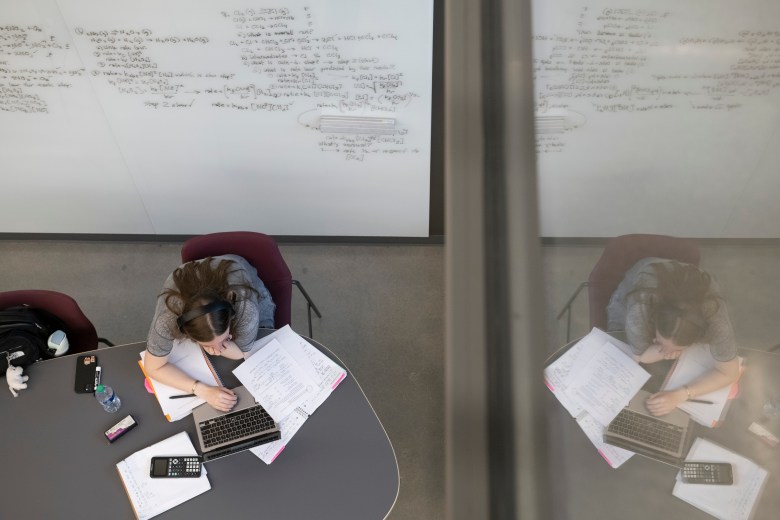
About half of 18- to 29-year-olds use Reddit, according to Pew Research.
Illustration by Justin Morrison/Inside Higher Ed
Students returning to the Catholic University of America Monday were outraged to discover that the university had blocked campus internet access to the popular social media site Reddit. But by Tuesday afternoon, administrators had reversed the ban, saying it had been automatically restricted by a third-party source that controls access to pornographic sites.
The site had been available to students at the end of last semester, according to Felipe Avila, a nursing student and a member of the student government. But when students returned from break to the Washington, D.C., campus this week, they found they could no longer access the site. No other social media sites seemed to have been affected, he said, and administrators did not notify students or faculty of the change.
When Avila discovered Reddit had been restricted, he submitted a ticket to the university’s Technology Services Support office to ask if it was a glitch or if the site had been blocked intentionally.
“When I checked with our security they said that it was blocked because of certain content on the platform and also because of phishing and malicious links that are on that site,” a staff member responded in an email to Avila.
The ban wasn’t entirely out of left field: In 2019, Catholic University banned access to the 200 most popular pornography websites after the student government passed a resolution advocating for such a ban. But Reddit isn’t a pornographic site; it’s a social media site with well over 100 million daily active users who can read and post in forums called subreddits dedicated to specific topics. According to Pew Research, 48 percent of individuals aged 18 to 29 surveyed in early 2025 said they use Reddit at least occasionally.
Reddit is one of just a few social media sites that allow users to post sexually explicit material, although it must be labeled appropriately and explicit images appear blurred until a user opts to reveal them. Other social media platforms that allow such content, such as X, which has allowed users to post sexual content since 2024, remained accessible on Catholic’s campus.
Restriction Reversal
After two days without answers from administrators, Avila said, the university reversed the ban, attributing the situation to an automated system that restricts access to a list of pornographic sites, university spokesperson Karna Lozoya said in an emailed statement. That list is compiled by a third-party organization, she said, which recently added Reddit.
“The site was flagged in accord with a policy established in 2019—at the recommendation of the Student Government Association—to block access to the top pornography sites from the University network. Student leaders at the time noted their concerns about the risks of these sites, including exploitation of individuals, addiction, and security risks,” she said.
The sites that were previously banned were “almost exclusively dedicated to serving pornography,” Lozoya noted. The university decided to reverse the ban on Reddit because its primary purpose is not to share explicit content.
“In the interest of allowing access to its legitimate uses, access to Reddit.com has been restored to the campus network,” she wrote. “However, the University is taking this opportunity to remind students of the need for prudence, and to avoid consuming exploitative and degrading content.”
Avila said the short-lived ban sparked outrage among students, some of whom use the platform as an academic resource. Students can join subreddits dedicated to different academic disciplines, like r/StudentNurse, a community of over 180,000, where nursing students can connect with their peers at institutions worldwide to vent or ask for advice.
Dominic Coletti, a program officer with the free speech advocacy organization the Foundation for Individual Rights and Expression, warned that preventing students and faculty from accessing certain sites infringes on freedom of expression and academic freedom.
“We’re concerned about this censorship for two reasons: First, Catholic promises its students free speech. That should include the ability to communicate anonymously with others at the university and in their community about what’s happening. That includes not-safe-for-work content, to be sure, but it also includes a wide swath of discussions about topics core to the work of a university,” he wrote in an email to Inside Higher Ed. “Catholic also promises its faculty academic freedom. That includes the freedom to perform research online and to teach students using online resources. Banning social-media sites like Reddit infringe on faculty members’ ability to perform that research and to use these resources in teaching.”
“The university did not have to promise its students and faculty members these expressive freedoms,” Coletti added. “Now that it has, it must protect those freedoms.”
Before the ban was lifted, Avila and another student senator filed a resolution calling on the university to make its standards for web filtering more transparent and asking to be notified in advance of any new bans. Even though Reddit is now accessible again, they’re planning to move forward with the resolution.
“Reversing the ban fixes the outcome, but not the oversight. We must codify protections for student expression to ensure that academic freedom is guaranteed by policy, not just public pressure,” he wrote in an email to Inside Higher Ed. “We look forward to working with the university to see this implemented.”
Two years after the Supreme Court banned the use of race in college admissions decisions and in the wake of the Trump administration’s attacks on diversity, equity and inclusion, colleges’ use of diversity- and identity-related supplemental essay prompts is patchy.
After a boom in prompts about applicant’s identities, several universities have scrapped the essays entirely for the 2025–2026 admission cycle. Still others, especially selective universities, have kept the prompts, saying they are the best way to get to know their applicants.
Kelsea Conlin, who oversees the college essay counseling team for College Transitions, an admissions consulting firm, identified 19 colleges with optional or required diversity essays last admission cycle that either had dropped or reworded those prompts this year.
“I’ve seen very few colleges that still require students to write about diversity; the prompt may still be on their application and students have the opportunity to write about it, but it’s an optional essay,” she said.
Diversity-related essays often ask students to describe how they’ve been shaped by their community, culture or background, sometimes prompting them to describe how those identities will bring something new to a campus. Others ask students to discuss or reflect on issues like diversity, social justice or antiracism more broadly.
In the majority opinion in Students for Fair Admissions v. Harvard, Chief Justice John Roberts said it was acceptable for students to continue discussing race in their essays: “Nothing in this opinion should be construed as prohibiting universities from considering an applicant’s discussion of how race affected his or her life, be it through discrimination, inspiration, or otherwise.”
The following application cycle, several colleges introduced diversity-related essay prompts to their applications, according to research by Sonja Starr, a law professor at the University of Chicago; Conlin also said she observed a surge in these essays in the 2023–2024 application cycle.
But this year, the Department of Justice issued guidance warning institutions against using “proxies” for race in admissions and hiring, and described requirements for applicants to “describe ‘obstacles they have overcome’ or submit a ‘diversity statement’ in a manner that advantages those who discuss experiences intrinsically tied to protected characteristics” as examples.
“The administration basically says, … ‘if you are letting the desire for a diverse campus influence your policies in any way, that is just as unconstitutional as taking the individual applicant’s race into account,’” Starr said. “I think that’s a wrong reading of the law.”
Still, she said she’s not surprised institutions may be wary of maintaining essay questions overtly related to identity, considering the harsh actions the administration has taken against colleges it disagrees with.
“There’s all kinds of ways the federal government can really make it difficult for universities,” she said, pointing out the slew of funding the administration has cut or frozen over the past ten months. “[Some institutions], I think, are just trying to at least stay out of the administration’s way.”
Simplifying the Process
Several institutions told Inside Higher Ed that they cycle out their essay prompts regularly, so the change from last year’s diversity question was par for the course. Others said they eliminated their supplemental essay requirements altogether, in an effort to make the application process less strenuous.
The University of Washington, which removed a supplemental essay asking prospective students to describe how their background and the communities they are involved in would contribute to the campus’s diversity, told Inside Higher Ed in an email that they hope the removal of the essay will make the admissions process less strenuous for applicants.
“During the annual review of our application process, we determined that an additional essay did not provide sufficient value when reviewing students for admission. We discovered that some applicants, like those interested in our honors program, were previously seeing up to four essay prompts. This change simplifies the process for all our applicants,” wrote David Rey, associate director of strategic communications.
A University of Virginia spokesperson gave a similar statement to the campus student newspaper, The Cavalier Daily, about its decision to remove a diversity essay prompt introduced in the 2025–2026 application cycle, saying that its removal aimed to “lighten the load and reduce stress and anxiety around the college application process.” UVA did not respond to Inside Higher Ed‘s request for comment.
Does that mean supplemental essays are falling out of vogue? Not necessarily, Conlin said; a significant number of selective universities still require them, and the students she works with are generally writing just as many supplemental essays as they have in previous years.
Despite some institutions opting to change or remove their diversity prompts, though, Ethan Sawyer, the founder of the admissions consulting firm College Essay Guy, said that a review of 300 institutions’ prompts for the 2025–2026 admission season showed that questions about what a student’s identity will bring to the institution are the most popular for the second year in a row.
He said in an email to Inside Higher Ed that these prompts have proven to be particularly effective at providing colleges with the key information they’re looking for out of an admissions essay. The identity prompt acts as the new “Why Us” essay, but avoids the pitfall of students focusing exclusively on the college’s attributes rather than their own.
“It lets colleges learn what they’ve always wanted to know—how will this student engage with our community? What qualities will they bring?—but through a framing that encourages students to reflect on who they are (as opposed to how awesome the college is). In other words, colleges are still trying to understand fit; they’re just using a lens that better centers the student,” he said.
Students Still Write About Race
While some colleges may be scrapping diversity prompts, many students want to write about their identities, Conlin and Sawyer said.
“They don’t see themselves through just one lens. No student wants to be reduced to a single label or experience. They understand they’re complex people shaped by many different identities, roles, and life moments,” Sawyer wrote. “Part of our job as counselors is to help them express that complexity—to choose which pieces of their story to spotlight in each essay, and to show how those pieces translate into contributions they’ll make on a college campus.”
Many of the new or reworded essay prompts that have replaced diversity-related questions are broad enough that students can still talk about their identities and experience if they choose to, Conlin noted. In her experience, students are often interested in discussing their race or first-generation student status in essays. But students are more reluctant to write about being LGBTQ+ or having mental health struggles.
Diversity essays aside, Conlin also noted two burgeoning categories of essay topics this year: prompts asking students to talk about how they handle conflict and prompts offering students the chance to explain their relationship with AI.
While I still want to drop everything going on in my life right now and dive deep into the topic from two days ago (the Cynefin Framework), that just isn’t realistic. This PKMastery workshop has been a wonderful blend of ideas that challenge me, coupled with topics that I always enjoy learning more about, but am not starting from scratch with…
RSS – Not-So-Popular
It seems RSS could really have used some help from Galinda in the musical, Wicked, in terms of getting popular. I wish aggregators and RSS were something that the vast majority of people knew about and had incorporated into their lifelong learning and sense-making. It’s strange to me that RSS has been around such a long time, yet still isn’t very common in organizations at all.
I’ve got some good news for you, some bad news, and some real ugly news.
The good: There’s a ton of information on the internet, which has the potential to be transformative for us, as sense-making human beings.
The bad: We can’t keep up and the quantity of information just keeps on growing, yet not enough of us know ways to harness the possibilities.
The ugly: Some of us give up on thinking we’ll never be able to have a way of seeking, sensing, and sharing, so we resolve to just search for things at the exact moment we realize we have a specific question about something (a gap in our knowledge that we are aware of in that moment).
What gets missed here in “the ugly” (among other things) are the questions we don’t even realize that we have… The unknown unknowns… Not to mention misinformation/disinformation, etc.
Getting to Know RSS
Here are some RSS-related articles that I’ve saved on my digital bookmarking tool of choice: Raindrop:
Next, let’s take a look at how I’ve set things up to be a tap away from a world of possibilities for sense-making…
My RSS + Aggregation Tools
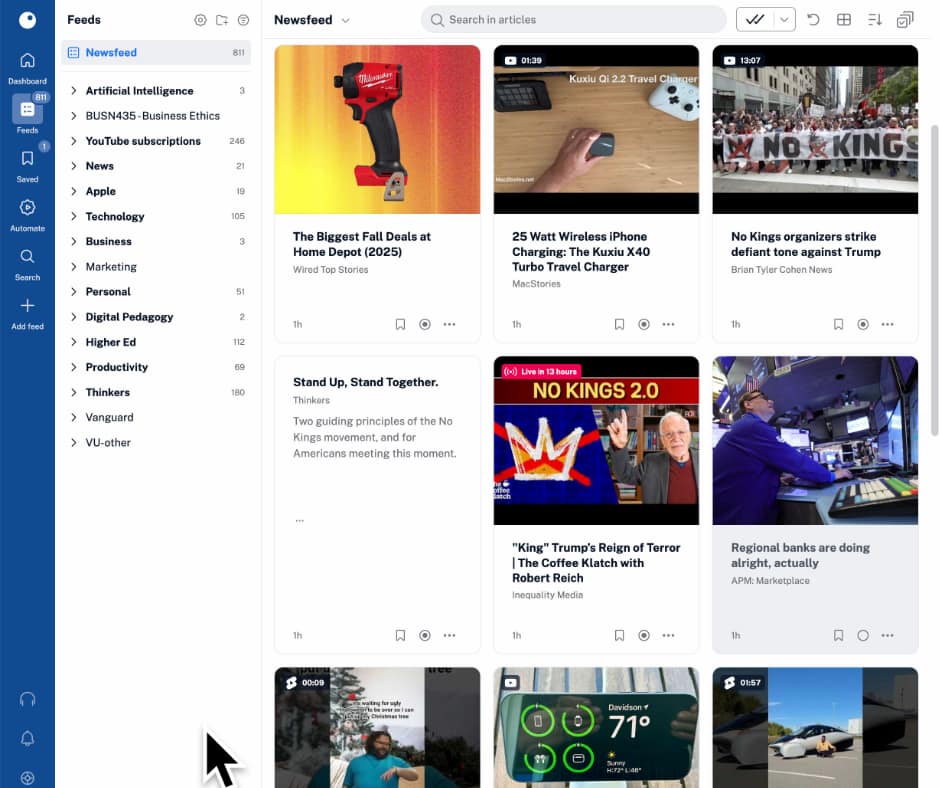
I use Inoreader as my RSS aggregator. That means that when I discover a source (news site, blog, newsletter, YouTube channel, etc.) that I discern will serve me up potentially useful information, I add it to Inoreader inside my existing folders (e.g. News, Technology, Business, Digital Pedagogy, Higher Ed, Thinkers). Each time one of those sources (called feeds in RSS nomenclature) posts something new, it automatically shows up as an unread item on Inoreader.
Thats where some people stop.
They download Inoreader’s app(s) and read their feeds on their computers or smart phones and they’re off to the races. Inoreader is both an RSS aggregator (keeping track of what feeds the user subscribes to, as well as which stories they have read/not read).
However, I’m picky about my reading experience and have gotten particular about being able to read via my iPad and navigate everything with just one thumb.
This is where you insert a joke about “who has two thumbs and can set up RSS aggregators and tools? ME.” Except that in my case, it actually only takes one thumb, using my preferred RSS reader.
Unread = The Best RSS Reader I’ve Ever Experienced
Those who read on iPads would be hard pressed to find a better RSS reader than Unread, especially if you want to be able to skim and scroll through headlines (you can set up Unread to automatically mark the items as read, as you scroll through them, making the navigation even easier).
Inoreader does the work behind the scenes of keeping track of all my subscriptions and what is read/unread. The Unread app then presents me with a “window” into all that “stuff” Inoreader is keeping track of in the background. Unread “syncs” with Inoreader. I don’t have much use of an RSS reader on my Mac, preferring to do most of my RSS consumption via my iPad, but I wanted to mention that even if you had a different app/service you preferred to use on your computer, Inoreader (and other RSS aggregators) are able to keep track across different RSS readers what you’ve read/unread.
Something Very Cool
Harold Jarche suggested that those of us who already have an aggregator / RSS workflow to share tips. I’ve kind of done that, already, above. But I will say that through his materials, I was delighted to discover that I can set up feeds for Mastodon #hashtags.
From Harold:
You can also subscribe to any Mastodon feed by adding .rss to the address, e.g. mastodon.social/@harold.rss
You can subscribe to #hashtags by appending .rss — e.g. https://mastodon.social/tags/pkmastery.rss
The PKMastery workshop is the gift that just keeps on giving. I’m looking forward to giving that a try this weekend. So cool.
The Higher Education Inquirer continues to attract readers with investigations into corruption, scandal, and the financial burdens placed on students and families. This week’s most-read articles reflect a strong interest in for-profit institutions, university leadership controversies, and the growing student loan crisis.
Emma Bittner considered getting a master’s degree in public health at a nearby university, but the in-person program cost tens of thousands of dollars more than she had hoped to spend.
So she checked out master’s degrees she could pursue remotely, on her laptop, which she was sure would be much cheaper.
The price for the same degree, online, was … just as much. Or more.
“I’m, like, what makes this worth it?” said Bittner, 25, who lives in Austin, Texas. “Why does it cost that much if I don’t get meetings face-to-face with the professor or have the experience in person?”
Among the surprising answers is that colleges and universities are charging more for online education to subsidize everything else they do, online managers say. Huge sums are also going into marketing and advertising for it, documents show.
Universities and colleges “see online higher education as an opportunity to make money and use it for whatever they want to make money for,” said Kevin Carey, vice president of education and work at the left-leaning think tank New America.
Bittner’s confusion about the price is widespread. Eighty percent of Americans think online learning after high school should cost less than in-person programs, according to a 2024 survey of 1,705 adults by New America.
After all, technology has reduced prices in many other industries. And online courses don’t require classrooms or other physical facilities and can theoretically be taught to a much larger number of students, creating economies of scale.
While consumers complained about remote learning during the pandemic, online enrollment has been rising faster than was projected before Covid hit.
Yet 83 percent of online programs in higher education cost students as much as or more than the in-person versions, an annual survey of campus chief online learning officers finds. About a quarter of universities and colleges even tack on an additional “distance learning fee,” that survey found.
In addition to using the income from their online divisions to help pay for the other things they do, universities say they have had to pay more than they anticipated on advising and support for online students, who get worse results, on average, than their in-person counterparts.
Bringing down the price of a degree “was certainly a key part of the appeal” when online higher education began, said Richard Garrett, co-director of that survey of online education managers and chief research officer at Eduventures, an arm of the higher education technology consulting company Encoura.
“Online was going to be disruptive. It was supposed to widen access. And it would reduce the price,” said Garrett. “But it hasn’t played out that way.”
Related: Interested in more news about colleges and universities? Subscribe to our free biweekly higher education newsletter.
Today, online instruction for in-state students at four-year public universities costs $341 a credit, the independent Education Data Initiative finds — more than the average $325 a credit for face-to-face tuition. That adds up to about $41,000 for a degree online, compared to about $39,000 in tuition for a degree obtained in person.
Two-thirds of private four-year universities and colleges with online programs charge more for them than for their face-to-face classes, according to the survey of online managers. The average tuition for online learning at private universities and colleges comes to $516 per credit.
And community colleges, which collectively enroll the largest number of students who learn entirely online, charge them the same as or more than their in-person counterparts in 100 percent of cases, the survey of online officers found (though Garrett said that’s likely because community college tuition overall is already comparatively low).
Social media is riddled with angry comments about this. A typical post: “Can someone please explain to me why taking a course online can cost a couple $1000 more than in person?”
Online education officers respond that online programs face steep startup costs and need expensive technology specialists and infrastructure. In a separate survey of faculty by the consulting firm Ithaka S+R, 80 percent said it took them as much time, or more, to plan and develop online courses as it did in-person ones because of the need to incorporate new kinds of technology.
Online programs also need to provide faculty who are available for office hours, online advisors and other resources exclusively to support online students, who tend to be less well prepared and get worse results than their in-person counterparts. For the same reasons, many online providers have put caps on enrollment, limiting those expected economies of scale.
“You still need advisers, you still need a writing center, a tutoring center, and now you have to provide those services for students who are at a distance,” said Dylan Barth, vice president of innovation and programs at the Online Learning Consortium, which represents online education providers.
Still, 60 percent of public and more than half of private universities are taking in more money from online education than they spend on it, the online managers’ survey found. About half said they put the money back into their institutions’ general operating budgets.
Such cross subsidies have long been a part of higher education’s financial strategy, under which students in classes or fields that cost less to teach generally subsidize their counterparts in courses or disciplines that cost more. English majors subsidize their engineering classmates, for example. Big first-year lecture classes subsidize small senior seminars. Graduate students often subsidize undergrads.
“Online education is another revenue stream from a different market,” said Duha Altindag, an associate professor of economics at Auburn University who has studied online programs.
Universities “are not trying to use technology to become more efficient. They’re just layering it on top of the existing model,” said New America’s Carey, who has been a critic of some online education models.
“Public officials are not stopping them,” he said. “They’re not coming and saying, ‘Hey, we’re seeing this new opportunity to save money. These online courses could be cheaper. Make them cheaper.’ This is just a continuation of the status quo.”
Another page that online managers have borrowed from higher education’s traditional pricing playbook is that consumers often equate high prices with high quality, especially at brand-name colleges and universities.
“Market success and reputation can support higher prices,” Garrett said. It’s not what online courses cost to provide that determines the price, in other words, but how much consumers are willing to pay.
With online programs competing for customers across the country, rather than for those within commuting distance of a campus or willing to relocate to one, universities and colleges are also putting huge amounts into marketing and advertising.
An example of this kind of spending was exposed in a review by the consulting firm EY of the University of Arizona Global Campus, or UAGC, which the university created by acquiring for-profit Ashford University in 2020. Obtained through a public-records request by New America, the report found that the university was paying out $11,521 in advertising and marketing for every online student it enrolled.
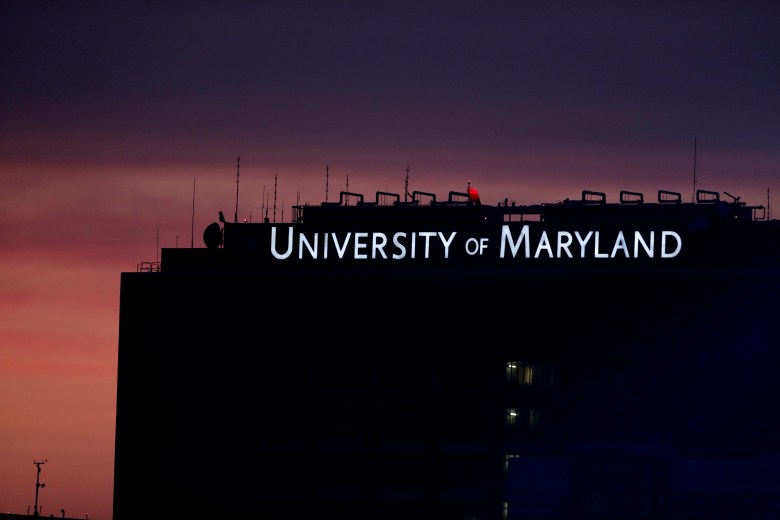
The online University of Maryland Global Campus committed to spending $500 million foradvertising to out-of-state students over six years, a state audit found.
“What if you took that money and translated it into lower tuition?” asked Carey.
The online University of Maryland Global Campus is spending $500 million to market and advertise to out-of-state students over six years.
While they’re paying the same as or more than their in-person counterparts, meanwhile, online students get generally poorer success rates.
Online instruction results in lower grades than face-to-face education, according to research by Altindag and colleagues at American University and the University of Southern Mississippi — though they also found that the gap is narrowing. Students online are more likely to have to withdraw from or repeat courses and less likely to graduate on time, these researchers found, which further increases the cost.
Another study, by University of Central Florida Institute of Higher Education Director Justin Ortagus, found that taking all of their courses online reduces the odds that community college students will ever graduate.
Lower-income students fare especially poorly online, that and other research shows; scholars say this is in part because many come from low-resourced public high schools or are balancing their classes with work or family responsibilities.
Students who learn entirely online at any level are less likely to have graduated within eight years than students in general, who have a 66 percent eight-year graduation rate, data from the National Center for Education Statistics shows.
Graduation rates are particularly low at for-profit universities, which enroll a quarter of the students who learn exclusively online. In the American InterContinental University System, for example, only 11 percent of students graduated within eight years after starting, federal data shows, and at the American Public University System, 44 percent. The figures are for the period ending in 2022, the most recent for which they have been widely submitted.
Several private, nonprofit universities and colleges also have comparatively lower eight-year graduation rates for students who are online only, the data shows, including Southern New Hampshire University (37 percent) and Western Governors University (52 percent).
If they do receive degrees, online-only students earn more than their entirely in-person counterparts for the first year after college, Eduventures finds — perhaps because they tend to be older than traditional-age students, researchers speculated. But that advantage disappears within four years, when in-person graduates overtake them.
For all the growth in online higher education, employers appear to remain reluctant to hire graduates of it, according to still other research conducted at the University of Louisville. That study found that applicants for jobs who listed an online as opposed to in-person degree were about half as likely to get a callback for the job.
How strongly consumers feel that online higher education should cost less than the in-person kind was evident in lawsuits brought against universities and colleges that continued to charge full tuition even after going remote during the Covid-19 pandemic.
Yet students keep signing on. For all the complaining about remote learning at the time, its momentum seems to have beenspeeded up by the pandemic, which was followed by a 12 percent increase in online enrollment above what had been projected before it hit, according to an analysis of federal data by education technology consultant Phil Hill.
Online students save on room and board costs they would face on residential campuses, and online higher education is typically more flexible than the in-person kind.
Sixty percent of campus online officers say that online sections of classes tend to fill first, and nearly half say online student numbers are outpacing in-person enrollment.
There have been some widely cited examples of online programs with dramatically lower tuition, such as a $7,000 online master’s degree in computer science at the Georgia Institute of Technology (compared to the estimated nearly $43,000 for the two-year in-person version), which has attracted thousands of students and a few copycat programs.
There are also early signs that prices for online higher education could fall. Competition is intensifying from national nonprofit providers such as Western Governors, which charges a comparatively low average $8,300per year, and Southern New Hampshire, whose undergraduate price per credit hour is a slightly lower-than-average (for online courses) $330.
Universities have started cutting their ties with for-profit middlemen, called online program managers, who take big cuts of up to 80 percent of revenues. Nearly 150 such deals were canceled or ended and not renewed in 2023, the most recent year for which the information is available, the market research firm Validated Insights reports.
Another thing that could lower prices: As more online programs go live, they no longer require high up-front investment — just periodic updating.
“It is possible to save money on downstream costs if you offer the same course over a number of years,” Ortagus said.
A student studies on her laptop. The number of college students who learn entirely online will this year surpass the number who take all their classes in person.
While that survey of online officers found a tiny decline in the proportion of universities charging more for online than in-person classes, however, the drop was statistically insignificant. And as their enrollments continue to plummet, institutions increasingly need the revenue from online programs.
Bittner, in Texas, ended up in an online master’s program in public health that was just being started by a private, nonprofit university, and was cheaper than the others she’d found.
Her day job is at the national nonprofit Young Invincibles, which pushes for reforms in higher education, health care and economic security for young Americans. And she still doesn’t understand the online pricing model.
“I’m so confused about it. Even in the program I’m in now, you don’t get the same access to stuff as an in-person student,” she said. “What are you putting into it that costs so much?”
The Hechinger Report provides in-depth, fact-based, unbiased reporting on education that is free to all readers. But that doesn’t mean it’s free to produce. Our work keeps educators and the public informed about pressing issues at schools and on campuses throughout the country. We tell the whole story, even when the details are inconvenient. Help us keep doing that.