Tag: postcard

  • Higher education postcard: University of Sunderland

    Higher education postcard: University of Sunderland

    Greetings from Sunderland!

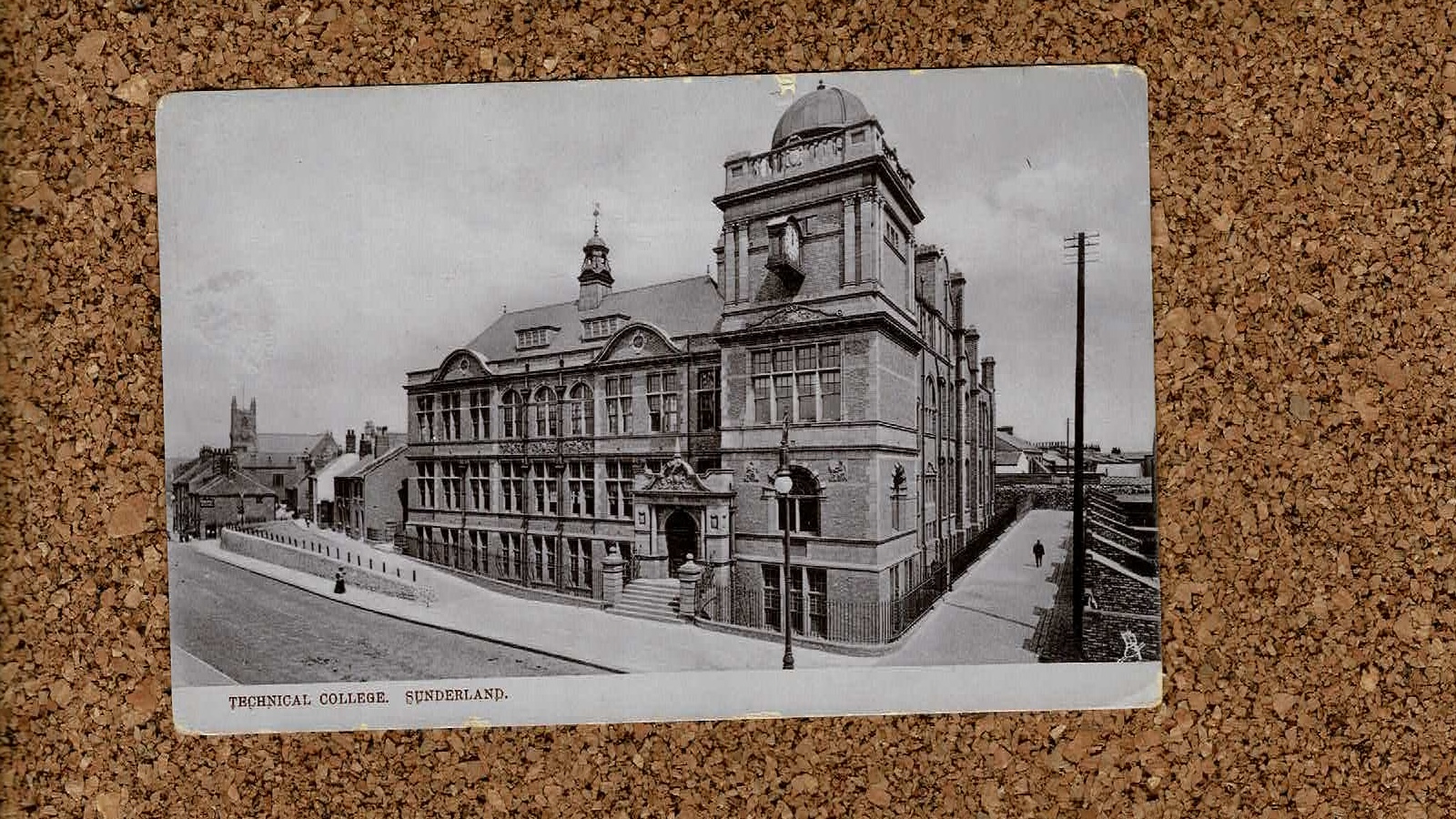
    By the 1850s Sunderland’s main industries were shipping, coal and glass. And in common with other industrial towns, the need for colleges to teach beyond basic school level had been felt and addressed. There had been a mechanics’ institute, which had failed; and then the creation of a school of science and art, funded through the government scheme. There’s a most learned discussion of the Sunderland School of Science and Art in this article by W G Hall from 1966 – it was published in The Vocational Aspect of Secondary and Further Education and drew upon Hall’s Durham MEd thesis.

    But the School of Science and Art was wound up in 1902. For the reason that the town council had in 1901 created a technical college to meet the town’s needs. The technical side of the School of Science and Art was transferred to the new college after it had been running for a year; the art side was hived off into a newly established Sunderland School of Art.

    The technical college was absolutely geared to the town’s industrial needs. Alan Smithers reports that in 1903 “heavy engineering and shipbuilding industries in Sunderland tried an arrangement whereby apprentices were released to the local technical college for six months each year over a period of several years.” While this was not the very first sandwich course – which may have been in Glasgow or in Bristol, 60 or 25 years previously, depending – it was a new model for technical colleges, and was soon copied in Wolverhampton, Cardiff, and at the Northampton Polytechnic, London.

    From 1930 students were able to study for degrees: in applied sciences, from Durham University; in pharmacy, from the University of London. And in 1934 London also recognised the college for the BEng degree.

    In 1969 the technical college, the school of art, and the Sunderland Training College (which had been established in 1908 and which operated from Langham Tower) were amalgamated to form the Sunderland Polytechnic. Educational innovation continued, with the country’s first part-time, in-service BEd degree being offered.

    In 1989 the polytechnic – along with all others, it wasn’t just a Sunderland thing – moved out of local authority control to become a self-governing corporation, following the 1988 Education Reform Act. The Sunderland Daily Echo and Shipping Gazette ran an eight page supplement on Monday 3 April to celebrate. Features included:

    • a foreword from the Polytechnic’s Rector, Dr Peter Hart. (You can see a picture of him below, sat at his desk. 1989 and no computers. Sic transit gloria mundi.)
    • a sport-council funded project to promote inclusion of people with disabilities in sports
    • the polytechnic’s autism research
    • a photo of the polytechnic’s switchboard operators, with their new computerised system which enabled direct lines to extensions within the poly
    • the polytechnic’s knowledge exchange work
    • a picture of an Olympic athlete (Christina Cahill, fourth at the Seoul Olympics women’s 1500m) joining student services
    • the faculty of technology
    • an article written by the dean of the new faculty of business, management and education
    • pharmacy and art
    • the Japanese language centre at the polytechnic
    • a charity based at the polytechnic looking at medicines for tropical diseases.

    There’s a variety of stuff here, and what strikes me is the fact itself that the local paper regards the poly as a local amenity. There was clearly a felt connection between the local paper and this very big local institution, and pride at what it did.

    Image: Shutterstock

    In 1992 the polytechnic became the University of Sunderland. It now has campuses in London and Hong Kong as well as in Sunderland, and since 2018 has had a medical school.

    Alumni include Olympic athlete Steve Cram and current Guyanese President Irfaan Ali.

    Here’s a jigsaw of the postcard – it’s unsent and undated but I would guess it is from before the first world war, as it was printed in Berlin.
    Source link

  • Higher education postcard: Teesside University

    Higher education postcard: Teesside University

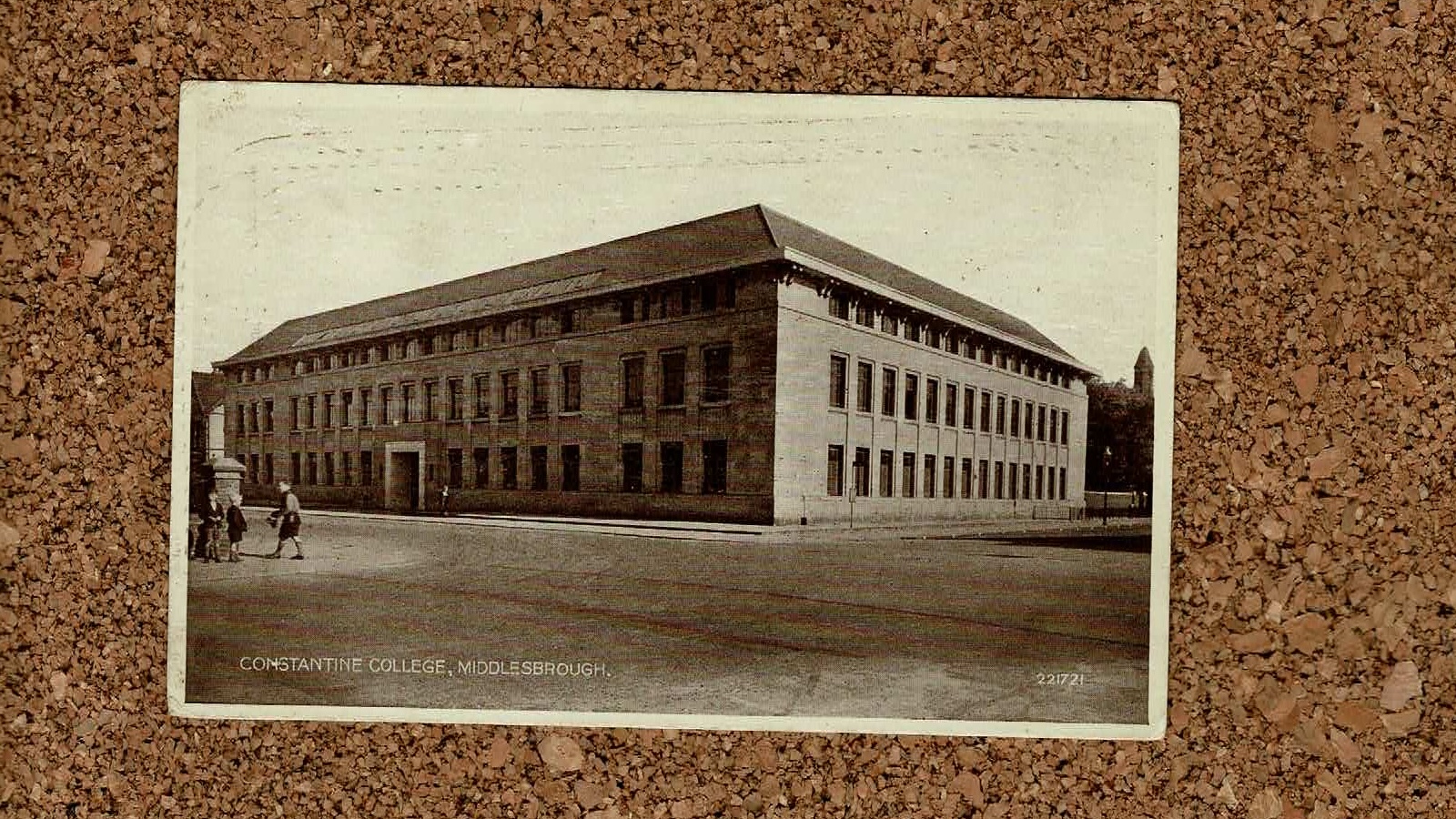
    In August 1856, Joseph Constantine was born in Schleswig-Holstein (then Denmark, later Germany, famously questionable) to British parents: his father, Robert, was an engineer working on the Schleswig-Holstein railway. Joseph went to Newcastle Grammar School and in 1881 moved to Middlesbrough. There he set up in the shopping business, and did very well for himself.

    He was obviously imbued with a passion for Middlesbrough. We learn from the Yorkshire Post and Leeds Intelligencer on 2 July 1930 that:

    Mr Constantine was an active member of the Tees Conservancy Commission, whose work was closely associated with Mr Amos, the general manager. It was to him that Mr. Constantine first broached the idea, in June 1916, of doing something substantial for Middlesbrough. The idea that should connected with higher education was his own, but it was Mr. Amos who suggested that a visit should be made to Armstrong College Newcastle.

    Mr Constantine was greatly impressed with the good work of that institution, and made up his mind to provide the youth of his own town with similar educational facilities. It was is the office of the Mayor, then Mr Joseph Calvert, that Mr Constantine disclosed his proposal and the terms of his gift. The prolongation of the war prevented Mr Constantine from seeing the fulfilment of his dream, and the changed conditions made the gift of £40,000 inadequate for the scheme. But the generosity of Mr Constantine’s widow and his family in giving the same amount, enabled the building of the college to be accomplished.

    On 6 November 1922 (we read in the next day’s Leeds Mercury) the Middlesbrough Education Committee met, and in order to progress the scheme for a college, constituted itself, with representatives of Joseph Constantine (who may by then have been frail: he died six weeks later), as the governing body of the new college. A site had by then been bought, but commencing the build had run into difficulties. The governing body hence formed a sub-committee to look at other colleges to get ideas for buildings.

    In April 1927 the Town Council awarded the building contract – £65,000 – to Messrs Easton, a Newcastle firm (one alderman objected, arguing that the tender should go to a Middlesbrough firm which had bid at only £100 more). Building work was completed in time for the first students to be enrolled in September 1929. Constantine Technical College was born (Joseph Constantine was, apparently, against the college being named for him, but was persuaded by the mayor).

    It offered what we would now think of as both further and higher education, including University of London external degrees. By 1931 it was appointing its second Principal: Dr T J Murray was appointed from the Smethwick Municipal College, on an annual salary of £900, rising to £1200. ICI was offering scholarships for degree students and the students’ guild was organising its third charity rag, starting on 2 July and lasting for almost two weeks. The events list (from the South Bank Express, 18 June 1932) looked – mostly – good:

    • Saturday: motorized treasure hunt
    • Monday: students night at the Gaumont Palace, including a male beauty chorus and a female beauty competition (the latter open to all girls in Teesside over 16 years old)
    • Wednesday: opening of the amusement park by the beauty queen
    • Thursday: rag dances, three held simultaneously in Middlesbrough, Redcar and Stockton
    • Friday: boxing
    • Saturday: rag day, street collection, parade and jazz concert
    • Monday: mock civic night (presumably some sort of debating competition?)
    • Wednesday: sports day

    The college continued to develop through the 1950s and 1960s. It expanded, as can be seen by the relocation of its art school. In the 1960s there was some agitation for the creation of a technical university for the north east, for which Constantine College must have been in the frame. But these hopes were dashed in 1967, with the Secretary of State confirming that no funds would be available.

    The college renamed itself as Constantine College of Technology before becoming the Teesside Polytechnic in 1969. The local college of education was incorporated in the 1970s, and in 1992 it became the University of Teesside (this is the point where, as I wrote about last week, it was in partnership for a while with Durham University for the creation of University College Stockton). In 2009 it was renamed again, as Teesside University.

    Teesside is one of the few universities to have a biological organism named after it. Pseudomonas teessidea is a bacterium which can help to clean contaminated soil, and was discovered by Dr Pattanathu Rahman, then a Teesside University microbiologist.

    Here’s a jigsaw of the postcard – unposted but I guess dates from the 1930s, not long after the college was opened. Unposted, but there’s still a message:

    Source link

  • Higher education postcard: University College Stockton

    Higher education postcard: University College Stockton

    A significant book in political science is Pressman and Wildavsky’s wonderfully titled Implementation: how great expectations in Washington are dashed in Oakland; or, why it’s amazing that federal programs work at all, this being a saga of the economic development administration as told by two sympathetic observers who seek to build morals on a foundation of ruined hopes.

    Let’s see how different things were in County Durham.

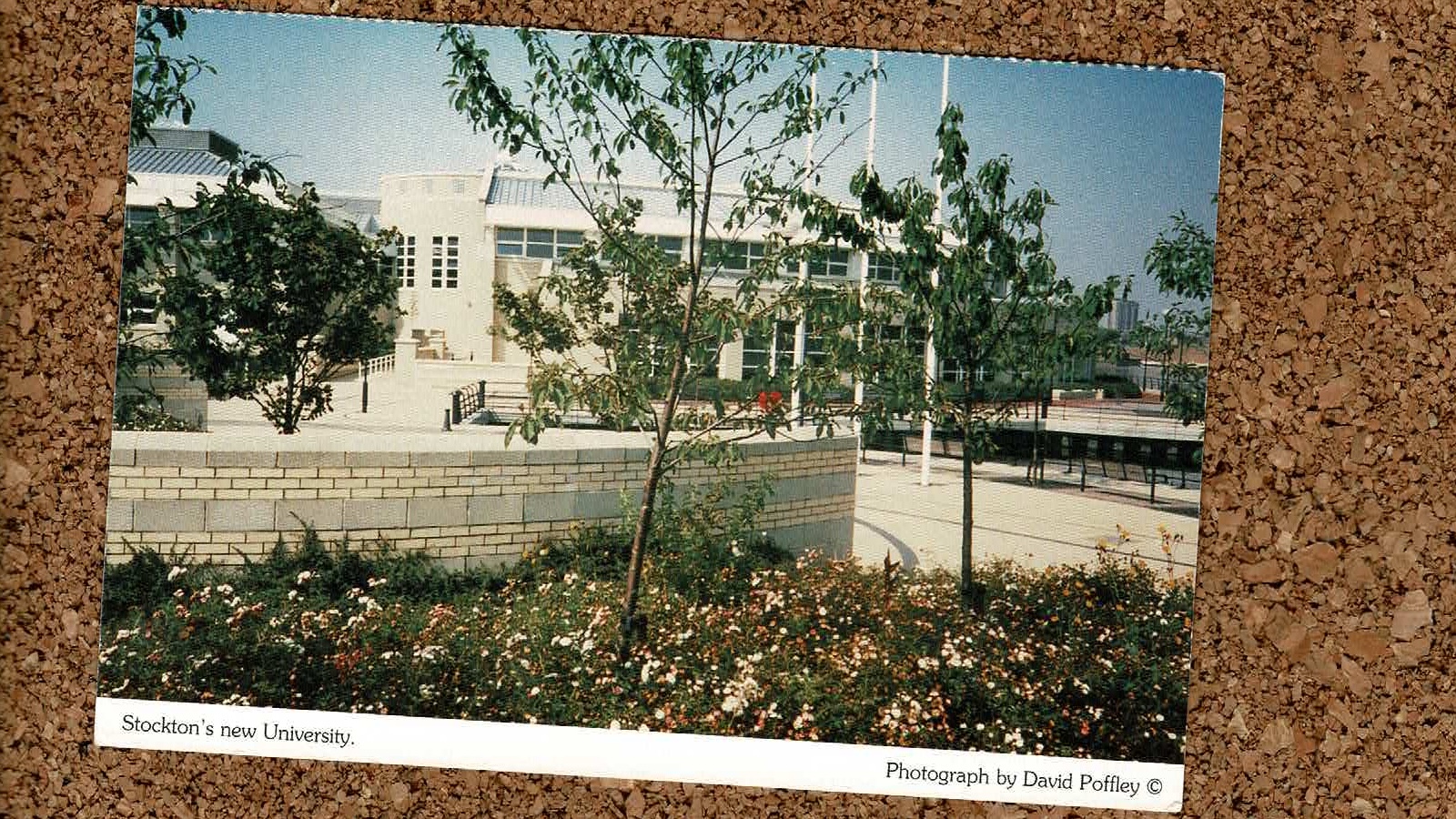
    The Middlesbrough Herald and Post, 14 October 1992, could hardly have been more excited. Hailing the opening of the University College Stockton, a joint venture between Durham and Teesside universities, it noted that it was “the most important higher education development in Britain for 25 years” (the transmogrification of polytechnics to universities was clearly just a footnote).

    The principal, Professor Bob Parfitt, who had joined from the University of Western Australia, expressed the view that the college would have a bright future in 20 years’ time:

    I would hope that we are an international institution which is a clear part of the local community. We will be meeting the needs of the local market in our degrees and short courses, but I also hope we shall play a leading role in the industrial and urban regeneration of the area.

    Fast forward to 1995 and the first students were graduating. The Stockton and District Herald and Post on 28 June 1995 reports that Catherine Barker was the first to receive a joint degree from Durham and Teesside, gaining a first in European Studies (French). Environmentalist David Bellamy and local environmental activist Angela Cooper received honorary degrees at the same ceremony.

    But it wasn’t to last. John Hayward’s account of the first ten years of the college tells a tale of insufficient capital, changing government policy which slowed expansion of student numbers, and the complexities of operating a college jointly between two universities. It had been only by the skin of its teeth that the new college had got off the ground at all; and in 1994 the two universities agreed that it would continue under the tutelage of just one of them – Durham University.

    Over the next few years the university college fought to establish a sustainable basis for operations, trying different subjects and seeking funding from many sources for buildings and equipment. By the late 1990s it was no longer operating in deficit, and in the early 2000s, in order to bring it more into line with norms elsewhere in Durham University, two colleges were created at the Stockton Campus – Stephenson College and John Snow College.

    The colleges have since moved, physically, to Durham, and the campus is now known as the Queen’s Campus, Stockton. It hosts the university’s International Study Centre, so in this respect Professor Parfitt’s hope that it would be an international institution has been borne out. But not in a way he would ever have imagined.

    John Hayward’s account is worth a read. There’s a story – hidden behind the institutional politics and the minutiae of council and senate meetings – of the practical difficulties in getting something new off the ground. And of the difficulties in multi-institutional working. Which in these days of radical new governance models is a lesson worth remembering.

    Here’s a jigsaw of the postcard – it wasn’t posted, but must date from the early 1990s. It was sold in aid of the Butterwick Hospice, and slight perforation marks at the top suggest that it was one of a concertina strip of cards.

    Source link

  • Higher education postcard: Trinity College, Oxford

    Higher education postcard: Trinity College, Oxford

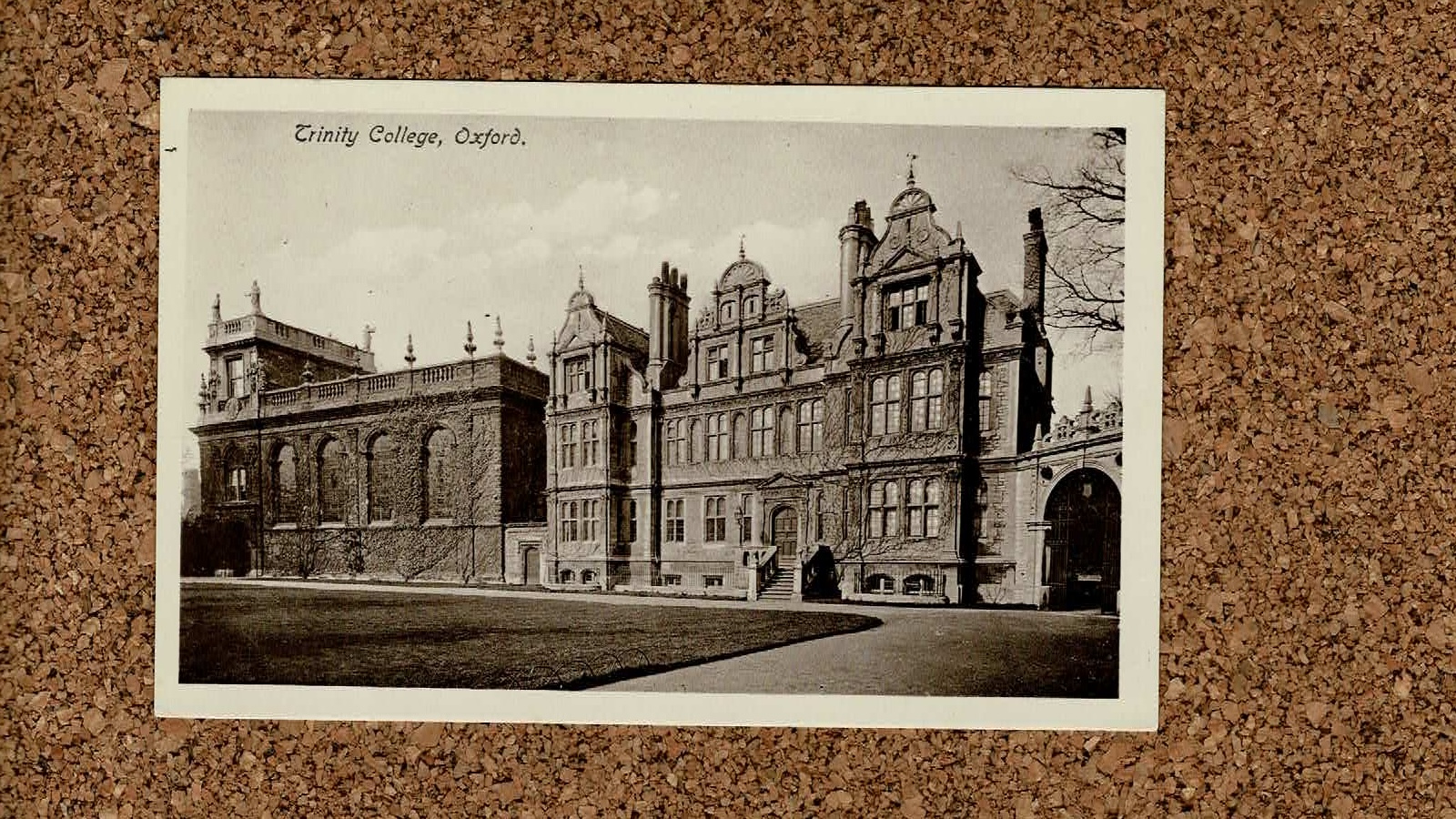
    Well, it’s nearly the end of the year, and this is the final higher education postcard of 2025. And as is traditional, this is a bit of a Christmassy edition.

    But when exactly is Christmas? We can imagine that record keeping 2,000 years ago was not as punctilious as the demands of today’s HESA return, and so the question of the precise date of Christmas is a good one. It was fixed as being 25 December by Pope Julius I, who was particularly pontifical between the years 337 and 352.

    As well as fixing the date of Christmas, Julius weighed in on the Arian controversy. Arianism, named for Arius, a Christian clergyman from what is now Libya, held that Jesus was created by God and is thus distinct from God. Which is somewhat at odds with the notion of the trinity (the oneness of God, son and holy spirit) which was part of the Nicene creed. And which in turn was the start of a more managed approach to religious doctrine by the Christian church and the Roman empire. (Don’t worry, there’s not a test).

    Julius was thus a defender of the Trinity, and so it is to a Trinity that we turn. Specifically, Trinity College, Oxford.

    This was founded by another Pope. Sir Thomas Pope, one of Queen Mary’s privy counsellors. In 1555.

    The idea was to provide for the training of Catholic clergy. It used buildings which had previously been occupied by Durham College, Oxford – which you may not have heard of, because it was founded in 1291 and closed in 1545. It was owned by Durham Priory, and abbey associated with Durham Cathedral, and served as a college for monks studying at the university. Durham Priory was dissolved in 1540 and the college followed suit five years later.

    Durham College was dedicated to the Virgin Mary, St Cuthbert, and the Holy Trinity, and it is suggested that the new college was called Trinity College to reflect the last of these.

    Anyway, the new college was established, and used some of the Durham College buildings, which still stand today. Although, sad to say, I think that they are hidden in the picture postcard, extending perpendicularly from the other side of the ivy clad building on the left. I think.

    The college thrived in a way which its predecessor didn’t. In 1882 the college admitted men of all faiths and none, removing its CofE test. In 1979 it did the same but for women.

    A few snippets will help to give a flavour of Trinity.

    In 1618 the president of the college, Ralph Kettell, was concerned about students drinking in town. His plan: to brew beer in college instead. This sounds good in principle, but the plan backfired when the cellar he was having dug for the purpose caused the college’s hall to collapse.

    Saint John Henry Newman, at the time plain John Henry Newman, was a student at the college, and made his first Anglican communion there. He was also, many years later, the first honorary fellow of the college, and this gesture – which aimed for reconciliation between the university and the future saint – was much appreciated by Newman.

    Oxford colleges’ academic performance is ranked in the Norrington table. Norrington was Sir Arthur Norrington, President of Trinity from 1954–69. And the University has a nifty little Tableau presentation, which might appeal to certain wonks frequenting these parts.

    Alumni include three former Prime Ministers – Pitt the Elder, Lord North, and Spencer Compton (who I had never heard of), and two splendid fictional characters: Jay Gatsby and Tiger Tanaka, the Japanese spymaster in You Only Live Twice.

    Here’s a jigsaw of this week’s card. And, as a bonus here’s another of Trinity, this time with the college arms.

    The card above was unposted, but the card with the college arms was sent in 1905 to a Miss Jones in Weybridge. As best as I can make out, it reads:

    Still alive, but not much thinking going on. When do you contemplate sailing and how do you think we are going to be consoled for the loss? Have not sent you many of these Pcards, they will come along slowly. I have been up again this week, feel tired of everything, today may have better time later. Kind regards etc

    May I wish you all the best for the Christmas break, whether you’re with family, working all the way through, or just trying to escape from it all. Thank you for reading my posts, and I’ll be back in the new year.

    Source link

  • Higher education postcard: Normal College, Bangor revisited

    Higher education postcard: Normal College, Bangor revisited

    Greetings from Bangor!

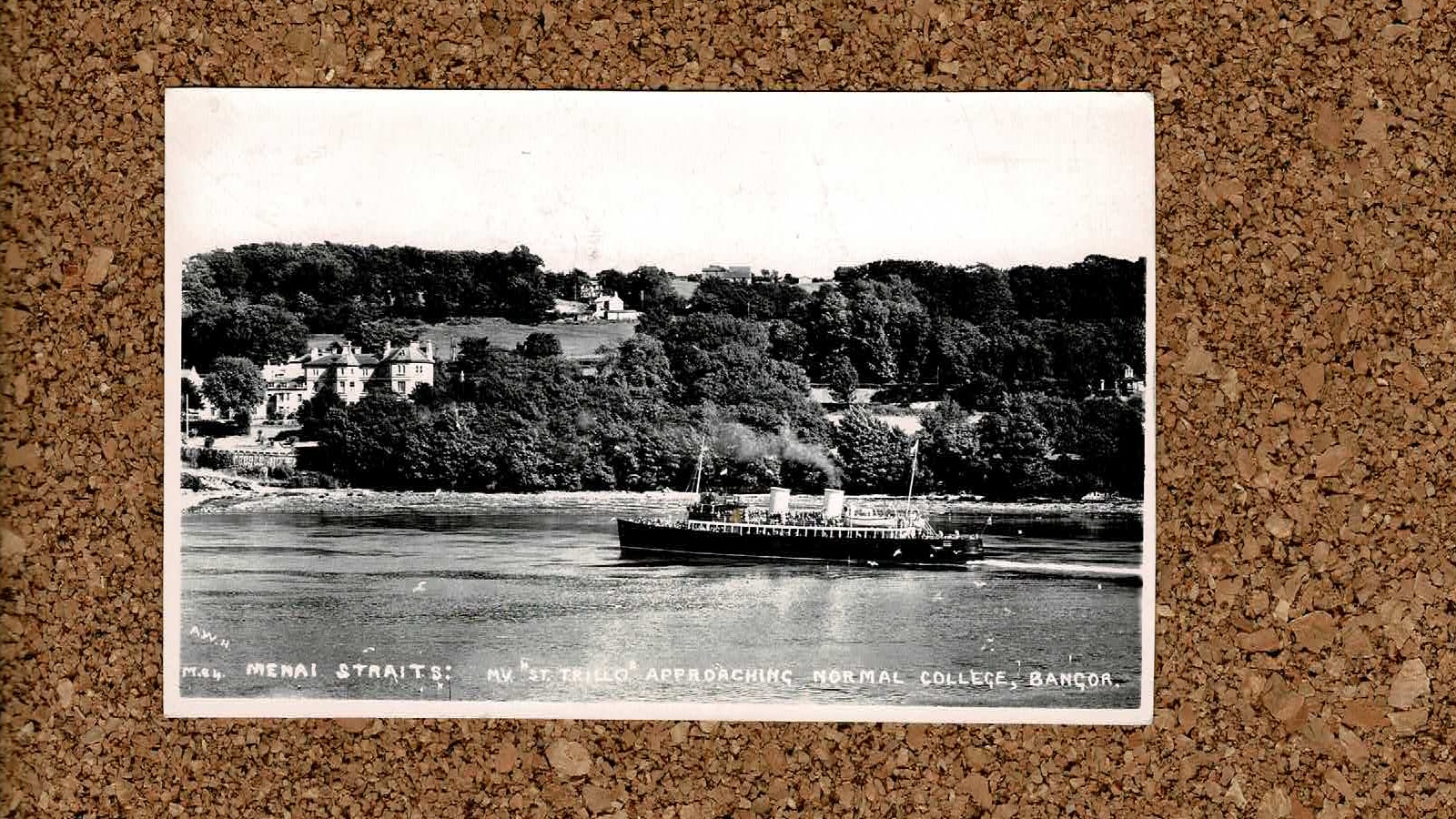
    We’ve visited Normal College before, but I frankly couldn’t resist sharing this postcard, with a very lovely scene, so we’re going back for another look. This time at an occurrence in the college’s early years, and a couple of newspaper snippets.

    As we’ve seen, the college was founded in 1868, through the efforts of Hugh Owen and the British and Foreign Schools Society.

    The Illustrated Times on 14 January 1960 published an engraving and the following text:

    The accompanying Engraving represents the Normal Training College in course of erection at Bangor, the foundation-stone of which was laid by Lord John Russell on the 11th of November last. The ground occupied the building, and overlooking the Menai Straits, was generously given for the purpose by the Hon. E. G. D. Pennant, MP. The institution is for the training and instruction of forty students to act as schoolmasters in the northern division of the principality. Our Illustration is from the design made by Mr. John Barnett, the architect.

    10 November 1890 saw student protest at the college. As the Weekly Times and Echo reported the following Sunday:

    The students at the North Wales Normal College at Bangor, about seventy in number, were on Tuesday summarily expelled for having left the college on Monday night as a protest against the food served. The institution, which is used for the training of Board schoolmasters for schools in North Wales, is now entirely closed, and will remain so till Christmas. The college authorities aver that the food complained of was excellent, and that the revolt arose through the impertinence of one student, who was ordered to leave the table, upon which his companions rose and joined him. As the students declined to appear before the Committee, either by deputation or individually, the only course left to the Committee was to authorise Principal Rowlands to dismiss them pending an enquiry.

    What happened next? Well, a flurry of back and forth in various newspapers, about who called who a liar, and then in January the search for a new principal begins. Are these events connected? We do not know for sure, but it must be a strong suspicion. The Jisc archives hub holds material which suggests that the students were readmitted after 3 days, and an official enquiry launched by the Inspector for Training Colleges. This concluded that the food was fine, but discipline was lax.

    On 5 February 1891 the South Wales Daily News published the following letter:

    Allow me to call the attention of Welsh educationalists in general, and old Bangorians in particular, to the appointment of a new principal for the above college [Normal College, Bangor]. I understand that the ‘enemy’ its doing its utmost to shelve the only man entitled to the post – the honoured vice-principal, Mr John Price. It behoves Old Bangorians to be up and doing – that is, assuming sectarianism is trying to crush Mr Price. More anon, I am &c, Iwan.

    And then in April 1891 the appointment of John Price was announced, after an eight hour committee meeting/interview panel, with hints that the defeated candidate – Mr Keri Evans, a Congregationalist from Carmarthen College – was supported by a number of Calvinistic Methodists, and would surely be heard from again.

    Another time I will try to dig further into this. I may have to learn some theology to do so.

    On 2 July 1914 the North Wales Weekly News published the following report of a cricket match between Llanwrst and Normal College. It was a low scoring match. And, the tea interval being a highlight, clearly not one which gripped the reporter.

    The year before, Normal had beaten Llanwrst, and judging by the scorecard for both games it looks like some sort of time- or over-limited game was being played.

    The boat on the card is the MV St Trillo. This was built in 1936 at the Fairfield shipyard in Glasgow, for the Liverpool & North Wales Steam Ship Co. She was one of three pleasure steamers operated by the company along the north Wales coast; this blog post has details of the kinds of trips she would make. Originally called the St Silio, in 1945 she was renamed the St Trillo. In 1963 her owners folded, and St Trillo was bought by P&A Campbell. She continued to operate in North Wales and also in the Bristol Channel, between Cardiff and Weston-super-Mare. She was scrapped in 1975 in Dublin.

    Here’s the postcard as a jigsaw. I’m sorry that its such a tricky one this week, but as I said, I couldn’t resist the card. The card was posted in September 1958 to Mr and Mrs Budden in Liverpool 11:

    Ronnie and I are here for the day and it is glorious and the boat is packed. We were too late to post these so am writing on the boat. Hope you had a nice week, I phoned twice but guessed you were out. Am going to Pat’s on Friday, so will not be up this week. Will phone, Love Maurice

    Source link

  • Higher education postcard: Falmouth University

    Higher education postcard: Falmouth University

    Falmouth is a long way from nearly everywhere else, if you’re travelling by land. This is a very salient fact. It means that if you’re in Falmouth, then Falmouth is where you first look for anything.

    And so the Falmouth School of Art, which looks to have started sometime in 1867 or 1868, must have been very welcome to the town and the county.

    The classes, which had been held in the municipal offices as part of a school of art and science, had outgrown their space and in 1901 the foundation stone was laid for a new building, in Arwenack Avenue. This would house just the art school.

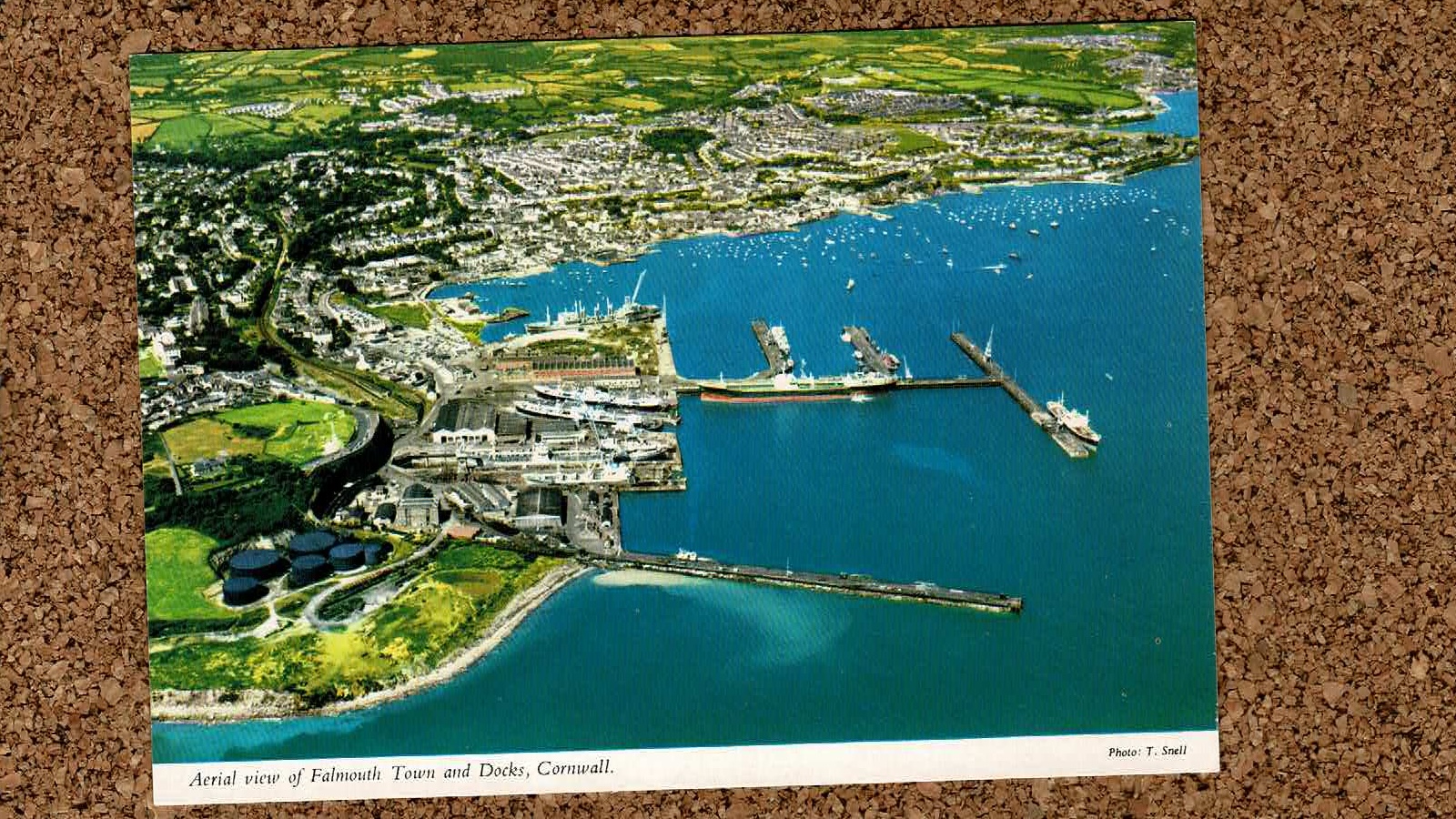
    The observant amongst you will have noticed by now that the postcard is a general view of Falmouth. This is an occupational hazard when trying to find a #HigherEducationPostcard of an institution in a picturesque place, or one with other famous buildings. It is why, for example, its hard to find a postcard of SOAS, when UCL and Senate House are nearby. But, the card does include Arwenack Avenue, on which the new school was located: it is, I think, somewhere in the red circle in the image below:

    The school was a private venture, and it was not until 1938 that the local education authority took over running the school. (Needless to say, this is a very unusual situation: pretty much all of the other similar schools I’ve looked at were brought into local authority control in the late 1890 or early 1900s.) The school was initially under the control of the principal of the Truro School of Art: not a merger, but one person running two schools.

    In the 1950s the college moved to new premises just up the hill from Arwenack Avenue. This was Kerris Vean, a large house built in 1875. It also had room to expand, and is still part of the university’s Falmouth campus today.

    In the 1960s the school had about 120 students, although many of these were part time. This did not prevent it being accepted (after a reassessment) as a suitable location for the National Advisory Council for Art Education’s diploma in art and design, which was the primary qualification available at that time. Teachers included Barbara Hepworth; the school also conducted entrance examinations for the Slade School at UCL and the Royal College of Art. Staff numbers increased to 25, and more space was provided by the local education authority.

    In the 1970s the CNAA recognised the school for a BA(Hons) in Fine Art. There was now residential accommodation for 57 students. And as anyone who has ever managed an institution with an art school will recognise, this scale was difficult – lots of space, not many students to fill it, a relatively high number of staff, and tight funding.

    The school faced down a threat of closure in 1984, and in 1987 it merged with Cornwall College’s art and design provision to become the Falmouth School of Art and Design. Its range of subjects broadened to include design and journalism, and in 1988 it became a corporation independent of the local authority.

    In 1995, recognising the breadth of its provision, the college became Falmouth College of the Arts, offering degrees validated by University of Plymouth. It became University College Falmouth in 2005; took over Dartington College of Art’s provision in 2008, and in 2012 became Falmouth University.

    Here’s as always, is a jigsaw of the card. The card has not been posted, so I can’t be sure, but I would guess that it dates from the 1960s.

    Why Falmouth University and not the University of Falmouth? I was asked last week whether there was a reason for “University of X” or “X University”. Looking at the legal names of universities in the UK (and some, for example Durham, have a trading name Durham University, and a legal name University of Durham) it seems that the pattern is as follows:

    • The norm is “University of X”
    • In Wales the default in English is “X University”, perhaps to match the preposition-less pattern in Welsh, where, for example, Cardiff University is Prifysgol Caerdydd (but nota bene University of South Wales, not South Wales University)
    • If a university is named after a person or a thing it is “X University” – for example Brunel University
    • If the place name is qualified in some way, it is “X University” – for example Buckinghamshire New University, Birmingham City University
    • If the place is small, it is “X University” – for example Cranfield University, Keele University
    • If the place is a sub-unit of a larger place, it is “X University” – for example Aston University – except when in London – for example University of Greenwich.

    Is this a firm set of rules? Probably not, unless the Privy Council office has some tucked away in a file. Is it universally true? Again, no: and one counterexample to the above is Falmouth University. And this is why I chose to do Falmouth this week.

    Also, notably, when I shared this analysis on social media, the most sensible response was that I was overthinking it. Which was probably true!

    Source link

  • Higher education postcard: Peterhouse, Cambridge

    Higher education postcard: Peterhouse, Cambridge

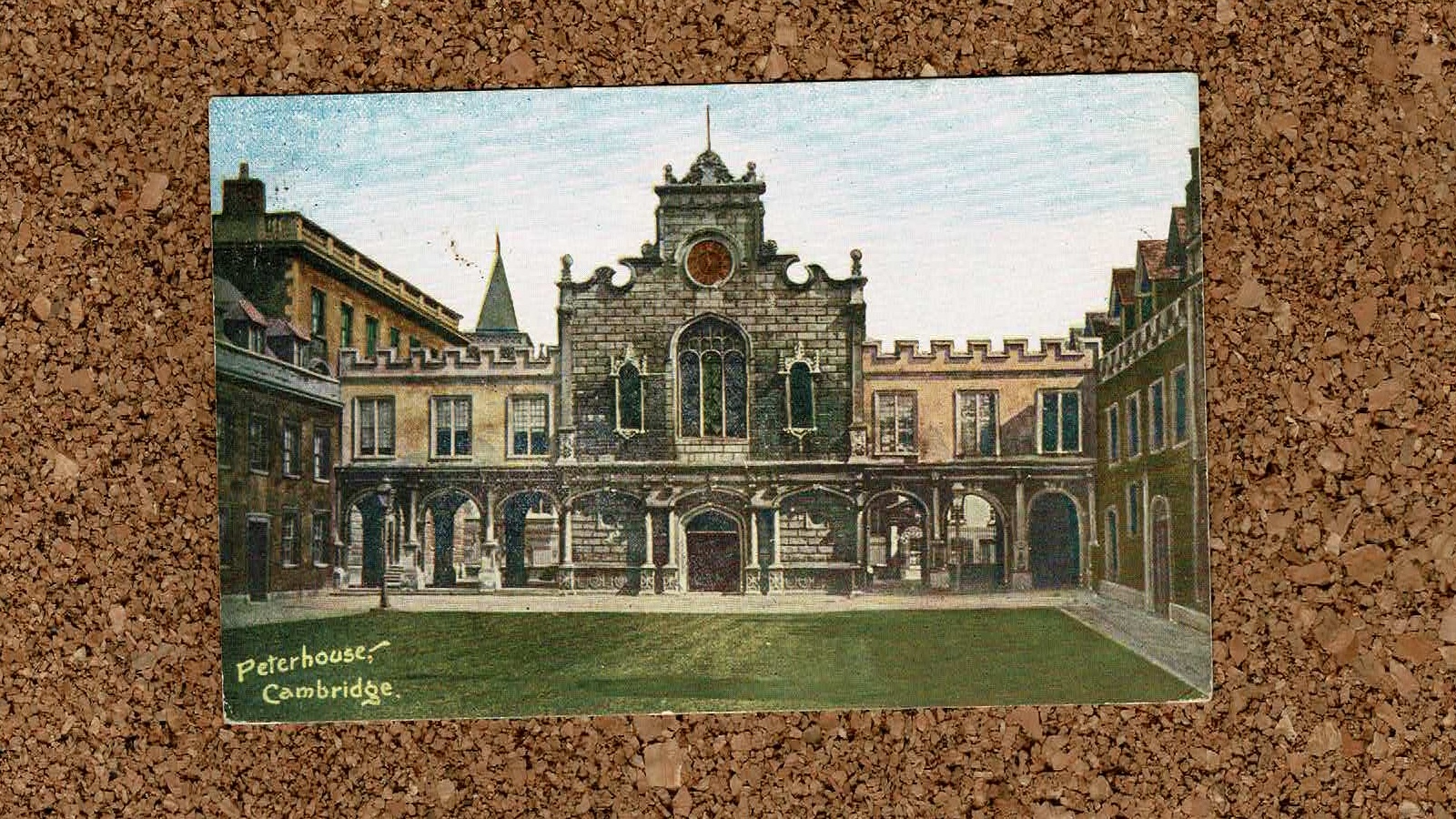
    Greetings from Cambridge! Today we’re looking at a college so old it doesn’t even need to be called “college”.

    Let’s go back to 1280. Edward I, aka Edward Longshanks, was on the throne. England was calm after a period of internal turmoil; part of the reason for this was wars waged against the Welsh and the Scots. And in Ely, Bishop Hugh de Balsham was petitioning the King.

    Successfully, as it turns out. His petition sought permission to evict secular brethren from the Hospital of St John at Cambridge and replace them with “studious scholars”, who would live in accordance with the rules of Merton College in Oxford (hospital meant something different in 1280 – not a medical facility, but guesthouse or almshouse, the hos being the same as in host).

    Clearly this was not entirely satisfactory, as in 1284 Bishop Hugh gained another charter which differentiated these scholars from the other residents of the hospital. Reading between the lines, perhaps the hospital wasn’t entirely happy at having the students in it. In any event, Bishop Hugh obviated whatever problems there were by purchasing two houses and providing for a master and fourteen fellows who must be “worthy but impoverished”. The fellows would worship at the Church of St Peter Without Trumpington Gate, and the college thus became Peterhouse. Not Peterhouse College, by the way – just Peterhouse.

    And it was thus, founded in 1284, the first formal college in Cambridge, although the university had been going for a few years, and with official status since 1231. It had to wait until 1326 for another college to be founded (Clare College, then known as University Hall), and then by 1352 there were six colleges – enough to organise a league table!

    Peterhouse then plodded along. In the maelstrom of Tudor England, its master, Andrew Perne, was skilled at working with the prevailing political and religious opinions. It was said that the letters on the weathervane at St Peters’ Church stood for “Andrew Perne, Protestant”, or “Andrew Perne, Papist”, depending on which way the wind blew. When he was vice chancellor of the university, Perne had the bones of Martin Bucer, prominent protestant theologian and organiser, and later Regius Professor of Divinity, exhumed and burnt in the market square.

    Peterhouse was the second building in England to be lit by electric lighting. William Thomson, Lord Kelvin, was a Peterhouse alumnus, and had them installed in 1884, to celebrate the college’s sexcentenary (the building that had them before was the House of Lords, in 1883).

    Peterhouse admitted women undergraduates in 1984, seven hundred years after its foundation. (Women were admitted to postgraduate study in 1983, but the poetry of the anniversary required me to focus on undergraduates here. Sorry!) It is fair to say that this places it towards the conservative end of Oxbridge colleges. And in this case it is a literal truth.

    Peterhouse became the breeding ground for a generation of right-wing conservative politicians, including the Michaels Howard and Portillo. This is connected to the appointment of Maurice Cowling and Roger Scruton as fellows of the college. The former’s student followers included one who, allegedly, wore a black armband on the anniversary of General Franco’s death.

    Peterhouse’s catalogue of alumni includes some very impressive names. Thomas Grey, poet and country-churchyard elegist is one. And then scientists: we’ve seen Lord Kelvin, physicist and mathematician; you can also have James Clark Maxwell, father of electromagnetism. And then add Frank Whittle of the jet engine, and James Mason, of more great films than you can shake a stick at. Five Nobel laureates are associated with Peterhouse, all of them in Chemistry, in 1952, 1962, 1962, 1982 and 2013. Which must be some sort of a record. And maybe scope for a song: “it’s lucky for Peterhouse when the year ends in two.”

    We should also note that Peterhouse is potentially an inspiration for the college in Porterhouse Blue, Tom Sharpe’s fairly scabrous look at Cambridge life and politics.

    And finally, a snippet from the Illustrated London News on 25 May 1968, announcing the appointment of a new master at Peterhouse.

    In this context, there’s nothing particularly noteworthy about Dr Burkill – I just think it is striking that the appointment of a head of college was then considered newsworthy.

    Here’s a jigsaw of the postcard. It was posted in Ipswich on 15 September 1905 to Miss E Parfit of Handford Road, Ipswich:

    Dear Ethel, Hope you will like this. With love from V.R.

    Source link

  • Higher education postcard: Queen Mary University of London

    Higher education postcard: Queen Mary University of London

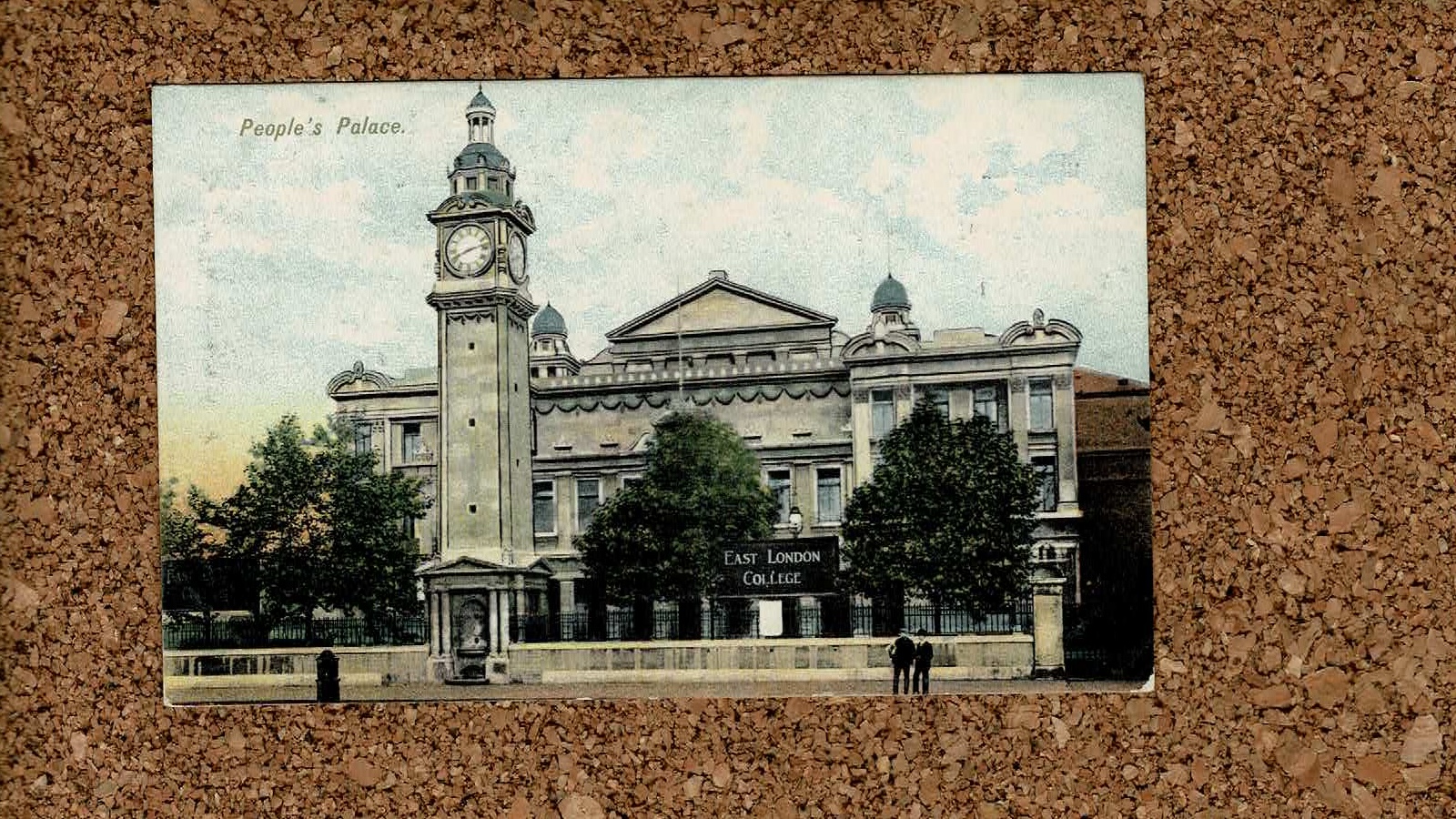
    Down on the Mile End Road in London, within the sound of Bow bells (and hence properly Cockney) you will find what used to be the People’s Palace, and is now Queen Mary University of London.

    The institution we see today has four antecedents: the medical schools at the London and at St Bartholomew’s hospitals, Westfield College, and Queen Mary College. The name which survives is that of the last-founded college: as this is also the largest campus by far, it does confirm that possession is nine-tenths of the law.

    The medical schools were the earliest to be founded: the London Hospital Medical College in 1785 and St Bartholomew’s Hospital Medical College in 1843 (although a lecture theatre had been in place in Barts since 1791). I’ve told a little of the story of medical education in London when I wrote about St George’s. At the end of the eighteenth century and into the nineteenth, hospitals were slowly putting medical education on a more formal footing, and the London Hospital was at the forefront.

    Next to come on the scene was Westfield College. Established in 1882, Westfield was a residential college for women. I’ve written about it before for Wonkhe, so for now I’ll keep the focus on the East End.

    And on 14 May 1887 Queen Victoria formally opened the People’s Palace on the Mile End Road. The picture below, from the Illustrated London News, shows the Great Hall, which was the only element which had been completed at the time. It had a capacity for 2000 people seated, and was most magnificent.

    The People’s Palace would host art exhibitions and concerts, and would have library and reading rooms, gardens and a swimming pool. Associated with it was a technical institute which would teach higher skills associated with East London’s industries and crafts. The technical institute was to be funded by the Draper’s Company; the People’s Palace was built following public subscriptions, much of it coming from the great and the good.

    (This, by the way, was the model for the technical and recreative institutes founded in south London soon thereafter, and which I wrote about in relation to London South Bank University.)

    In 1896 the People’s Palace Technical Schools became East London Technical College. I can’t be certain about this, but I imagine it had by that time been taken over by the relevant London borough, following enabling legislation in the early 1890s. It was by then supporting people studying for the civil service entrance examinations, and also for the University of London’s BSc degree examinations. The first students graduated early in the twentieth century.

    On 17 May 1907 the Morning Post reported that

    The East London College has been admitted by the Senate as a school of the University [of London] in the Faculties of Arts, Science, and Engineering for period of three years on the understanding that the governing body of the school shall do their utmost to satisfy the Senate upon certain points of educational organisation and finance.

    You’ll spot the associated name change – and this also gives us an earliest date for the picture on the postcard (look at the sign!).

    In 1910 the membership of the university was renewed for a further five years, and in 1915 granted without time limit. East London College was properly a school of the University of London. It was strong in science and engineering, particularly in aeronautical engineering. It had a wind tunnel – which was very new technology then – and was the first department of aeronautical engineering in the UK.

    The 1930s became a little exciting for the college, for good reasons and bad.

    The bad reason was a fire in the early hours of Wednesday 25 February 1931, which destroyed the Great Hall of the People’s Palace. So the illustration from 1897 is, sadly, all you’ll get of this today.

    But at a similar time, the college was considering seeking a royal charter, and it looks like the fire crystallised things. The Drapers’ Company facilitated the People’s Palace and the college becoming a single corporate body, and in 1934 a royal charter was granted. This was also the occasion for a change of name. East London College being felt by some, apparently, to be a bit déclassé. And so Queen Mary College – named for the then Queen, Mary of Teck – was born on 12 December 1934.

    And on 13 February 1937 the rebuilt People’s Palace was opened by the new King George VI and Queen Elizabeth (who most readers will know of better as the late Queen Mother.) The full-page spread from the Illustrated London News below gives some of the flavour. I wonder whether this was part of a post-abdication-crisis public relations push to ensure that the new King was perceived in a positive light? The tale of Margaret Paxton, who gave flowers to the Queen, and was descended from the child who gave flowers to Queen Victoria in 1897, is a publicist’s dream, and will no doubt have taken a bit of work to manage.

    Through the following decades Queen Mary College was forging links with the two medical schools – for example, a joint hall of residence was opened in Woodford in 1974. Further changes happened in the 1980s – firstly some changes to provision, when the University of London reshuffled. Queen Mary lost Classics and Russian, but gained lab science subjects from Westfield, Chelsea, Queen Elizabeth and Bedford colleges. This was only a precursor to the larger changes to come: in 1989 Westfield College merged with Queen Mary, which became Queen Mary and Westfield College. The merged college was based on the Mile End and associated campuses – the Westfield College buildings were sold off.

    Ten years later the two medical schools merged with the college to form the Barts and the London School of Medicine and Dentistry. This was simply one part of a general rationalisation of medical education in London which saw the small independent schools brought within the ambit of larger institutions.

    Let’s add a couple of things to bring the story up to date.

    Firstly, in 2012 Queen Mary joined the Russell Group, along with three other universities (pop quiz – without googling, can you name the other three?). It’s an unusual Russell Group in that its entry profile is much more reflective of its neighbourhood. It continues to do good things for the east London population.

    Secondly, in 2013 it formally changed its name from Queen Mary and Westfield College to Queen Mary, University of London. Which is tricky for dinosaurs like me who still think of it as QMW (and while were at it, Royal Holloway continues in my head to be RHBNC). But I will need to learn to deal with modernity as it approaches.

    The college has a good site on its history if you want to read more.

    Nine Nobel prize winners are connected with the college: six in physiology or medicine, one each in literature and physics, and one winner of the Nobel peace prize (pop quiz part two: again without googling, can you name the peace prize winner? I met them once…)

    And finally, here’s a jigsaw of the postcard. The card was written and posted, but it seems to have been stuck in an album or scrap-book at some point so the back is half covered in the remnants of brown paper. Anyway, it was posted at Paddington to an address in the Regent’s Park neighbourhood of London. All I can make of the written message is

    …before I left. I will certainly call and see you one day. I am not going ‘til next Tuesday…

    Source link

  • Higher education postcard: the University of Hertfordshire

    Higher education postcard: the University of Hertfordshire

    Greetings from Hatfield!

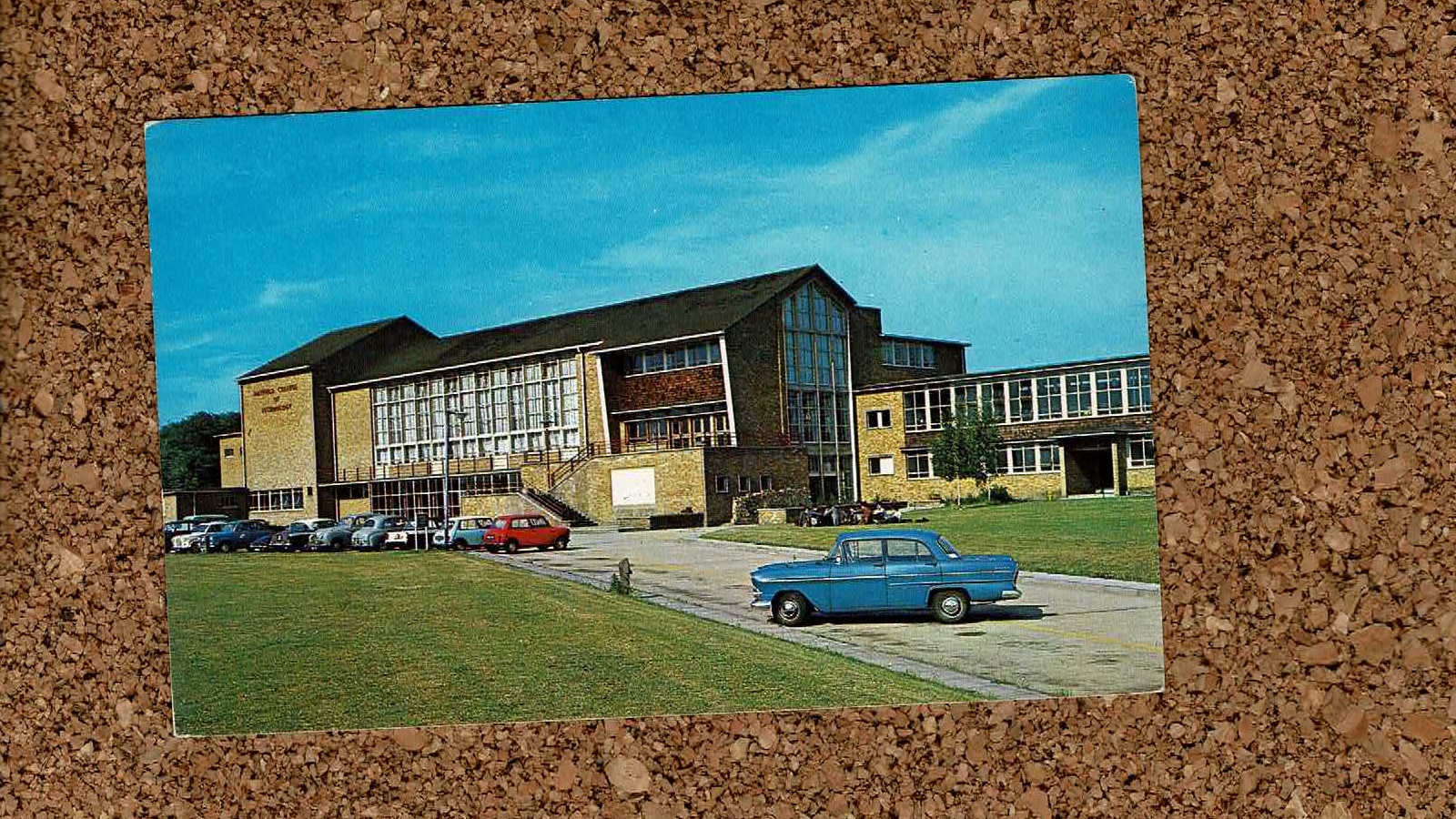
    This week’s blog come full of post-war scientific and technological optimism. We begin in 1944: Alan Butler, chairman of the de Havilland Aircraft Company, offered 90 acres to the Hertfordshire County Council for a technical college. De Havilland was based in Hatfield, and was one of the big names in aeronautical engineering and manufacture. (The world’s first commercial jet airliner – the de Havilland Comet – first flew in 1949. If you’d like to lament the apparent loss of Britain’s expertise and ambition, you may do so here.)

    The county council accepted, and in 1949 Dr Chapman, erstwhile principal of Stafford Technical College, was appointed as the first principal of the Hatfield Technical College.

    The image below and the snippet are both taken from The Sphere of 2 April 1949 and show that planning and construction were proceeding apace, and that modern, flexible, college accommodation was being built.

    In 1952 the college opened. Formally, by the Duke of Edinburgh in December; practically, I imagine it was September for new students. And in that first year over 1,700 students enrolled. The vast majority were part-time or evening students; a small number – 55 – were full-time or on sandwich courses.

    In 1956 the college offered a short course in computing – the first at the college – on “the application of computers to automation”. (The first transistorised computer had been developed at the University of Manchester only three years previously, so this was good advanced stuff.)

    By the end of the decade students could not only gain technical qualifications but also degrees, via the University of London’s external system. The first such students graduated with BSc(Eng) degrees in 1958.

    The 1960s saw much change and development. The college was renamed as the Hatfield College of Technology in 1960, following the government’s review of technical education. The colleges of technology were a counterpart to the colleges of advanced technology – like Aston, Bath and Brunel – which became universities in 1966. A digital computer was bought in 1962, costing more than £29,000 – almost £550k in today’s money.

    By 1965 the Council for National Academic Awards (CNAA) had been established, and thirteen programmes at Hatfield College of Technology were recognised as honours degree courses. The college was well-placed to become Hatfield Polytechnic in 1969.

    A campus was added in 1967, at Bayfordbury; in 1970 an observatory was built here. Also in 1070, a computer centre was opened, which was, apparently, the best equipped facility in public sector education in the country. It housed a DEC PDP-10, which is just the sort of mainframe that you see in 1970s futuristic sci-fi. And the polytechnic paid £256,500 for it, which is about £3.5 million today: this was a poly that knew how to invest.

    Two local colleges of education were incorporated, in line with then policy to merge local authority provision – these were the Balls Park and Wall Hall teacher training colleges.

    By 1988 the poly was one of those accredited by the CNAA, which gave it much more direct responsibility for the curriculum, quality and standards of its own degrees. This wasn’t universally done: only 21 polytechnics were so designated. It was also one of only eight polytechnics accredited for research degrees.

    When polytechnics became universities in 1992, Hatfield Polytechnic became the University of Hertfordshire. The Hertfordshire College of Health Care and Nursing Studies and the Barnet College of Nursing and Midwifery were incorporated into the university in 1993.

    Here are a couple of factoids about the university:

    The university runs a bus company – UnoBus – which originally served to shuttle students between campuses but grew and now operates public bus services across Hertfordshire and some surrounding countries. This is a very different to the sort of companies which normally emerge from universities!

    The university also hosted what is thought to be the longest exposure photograph ever. Artist Regina Valkenborgh was studying for a master’s degree at the university and installed a rudimentary pinhole camera – a beer can with photographic paper inside – on the observatory dome. Eight years later the can was retrieved. You can read more about the story here; and see the extraordinary image here.

    And finally, as is now customary, here’s a jigsaw of the card. This was posted on 7 August 1957 to an address in Salies-de-Béarn, near Biarritz, France. And, very exotically and excitingly, is written in French. I don’t speak much French at all, but it looks like the sender was an exchange student staying with a family in Hatfield.

    Source link

  • Higher education postcard: Keble College, Oxford

    Higher education postcard: Keble College, Oxford

    Greetings from Oxford!

    Let me start with an uncontroversial statement: the nineteenth century was very different to the current century. As L P Hartley had it, “the past is a foreign country; they do things differently there.”

    One thing going on in that century was a reform movement within Anglicanism. The Tractarians, also known as the Oxford Movement (so called because it was centred upon Oxford) was a group of Anglicans who sought to move the Church of England closer to Roman Catholicism on some matters (yes, I know this is very simplified version). Among the leading figures – alongside John Henry Newman, now St John Newman – was John Keble.

    But religious controversy wasn’t the only thing on Oxford’s mind. Substantial reform of the university was under way, with changes to governance, a reduction of influence of the church, and a recognition of the need to widen access, to use the modern term. One avenue being explored was the creation of a new, more affordable, college. The committee working on this included Professor Pusey, a fellow Tractarian. He showed the plans to Keble, who was very much in favour. And then Keble died.

    His friends discussed what to do in tribute, and decided, as you do, that founding the college which Pusey had been discussing was the right thing. And so an appeal was launched, funds were raised, and the project progressed.

    It’s worth noting that this was a new model for Oxbridge colleges: previously colleges were endowed by a rich patron – monarch, noble, church – but this was Victorian crowdfunding in action. And it was a model which possibly influenced the fundraising models for the new universities and colleges which followed soon after. For example, Bangor, the public subscription for which raised £12,000.

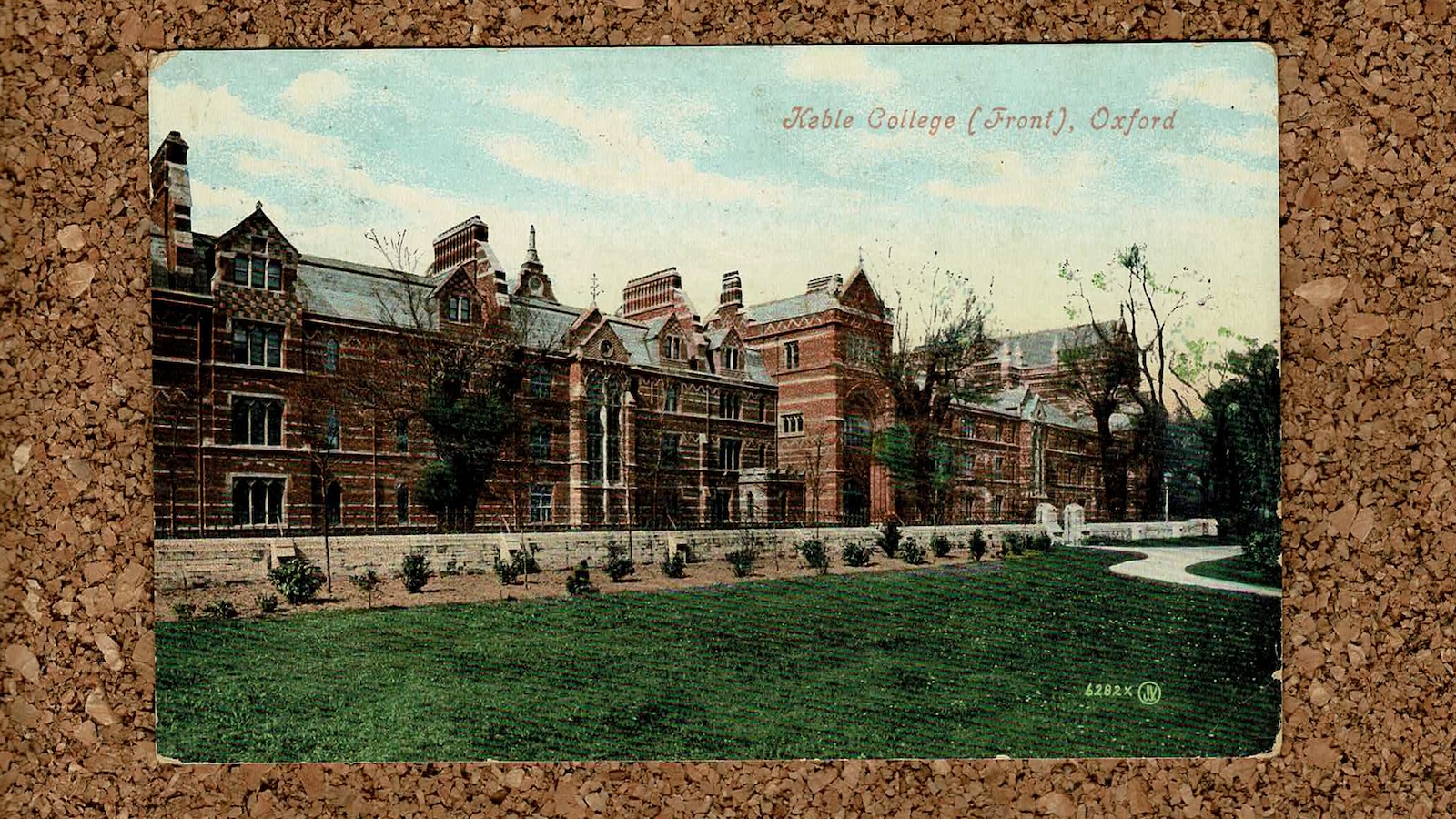
    The college opened to new students in 1870. It hasn’t been without its critics – St John’s students formed a society to dismantle Keble which has, to date, been ineffective in its aims. Its distinctive buildings have been the source of much comment. They’ve been called “a dinosaur in a fair isle sweater” (which, to be fair, is a sight most of us would pay to see.) Apocryphally, a French visitor is reputed to have said “C’est magnifique, mais ce n’est pas la gare?” (I think the station is in fact about half a league away).

    The college really did seek to make life economical for its students. Its buildings contained student rooms on corridors rather than via staircases, which was, apparently, a saving. I guess staircases contained suites rather than single rooms? I am honestly not sure what to make of this claim. I’ve also seen it claimed that the corridors made it easier for visitors to be supervised, which seems more plausible.

    Another saving came in 1871, when Keble issued its own stamps, allowing students to send mail – only within Oxford, presumably – via the college porters. This was copied at a few other Oxford and Cambridge colleges, until in 1885 the Post Office decided that this infringed on its monopoly and insisted that the service cease.

    Keble is now one of the larger of the Oxford colleges, with about 1000 students all told. Famous alumni include Ed Balls, the former Chancellor of the Exchequer and celebrity self-searcher on Twitter. Another is Imran Khan, who has been both a wonderful cricketer and a Prime Minister of Pakistan. Howzat for a career?

    Here’s a jigsaw of the card. It was posted on 29 September 1914 to a Mrs Wood in Southampton.

    As best as I can tell, the card reads:

    Dear M + F [Mother and Father?], Arrived quite safe at Oxford. I am enjoying our long [????]. We proceed to Basingstoke [?] tomorrow. Will write a letter as soon as we reach Portsmouth. Will

    And in inserts “This is the College where we are staying (what)” and “We don’t remember the old place”.

    I am tempted to think that the card was sent as Will Wood stayed overnight as part of a military detachment on their way to Portsmouth for the continent, but I haven’t got anything other than the date of the card and one reading of its content to back that up. “C” Company of the No. 4 Officer Cadet Battalion was hosted at Keble College during the First World War, but the college’s archives hold no records of this before 1916. So I suspect speculation is all we have here.

    Source link