Tag: Potential

  • Can gifted testing spot potential in young children?

    Can gifted testing spot potential in young children?

    by Sarah Carr, The Hechinger Report
    November 13, 2025

    In New Orleans, a few hundred dollars could once help a family buy a “gifted” designation for their preschooler.

    As an education reporter for the city’s Times-Picayune newspaper several years ago, I discovered that there was a two-tiered system for determining whether 3-year-olds met that mark, which, in New Orleans, entitled them to gifted-only prekindergarten programs at a few of the city’s most highly sought-after public schools.

    Families could sit on a lengthy waitlist and have their children tested at the district central office for free. Or they could pay the money for the private test. In 2008, the year that I wrote about the issue, only a few of the more than 100 children tested at the central office were deemed gifted; but dozens of privately tested kiddos — nearly all of them tested by the same psychologist for $300 — met the benchmark.

    Since working on that story, I’ve been interested in the use of intelligence testing for high-stakes decisions about educational access and opportunity — and the ways that money, insider knowledge and privilege can manipulate that process.

    But I knew less about what the research shows about a broader question: Should gifted-only programming for the youngest students exist at all and, if so, what form should it take? When New York City Mayor-elect Zohran Mamdani announced in October that he would end long-standing gifted programming for kindergartners (while preserving it for the older grades), I reached out to some leading researchers in search of answers to those questions. Read the story.


    More on gifted education

    Hechinger reporter Jill Barshay, who covers education research, has written several stories about different facets of gifted education, which she captured in a column earlier this month.

    In 2020, The Hechinger Report and NBC News produced a three-part series on the ways that gifted education has maintained segregation in American schools and efforts to diversify gifted classes. 

    More early childhood news

    Federal immigration agents pulled an infant teacher out of her classroom at a Chicago child care, pinning her arms behind her — and traumatizing the families who witnessed the incident, report Molly DeVore and Mack Liederman for Block Club Chicago.

    Growing numbers of child care workers are running for elected office, hoping to work directly on behalf of change and more support for a sector that desperately needs it, writes Rebecca Gale for The 74

    Colorado voters approved two sales tax levies to support child care providers and families with young children, reports Ann Schimke with Chalkbeat Colorado.

    Research quick take

    Contrary to perception, there’s little evidence that an increased academic focus in the early elementary years disadvantages boys, write researchers in a new working paper published by Brown University’s Annenberg Institute. The researchers, Megan Kuhfeld and Margaret Burchinal, examined growth in reading and math test scores for a sample of 12 million students at 22,000 schools between 2016 and 2025. They found that boys are surpassing girls in math by the end of elementary school, and that girls maintain an advantage in reading through fifth grade. 

    This story about gifted testing was produced by The Hechinger Report, a nonprofit, independent news organization focused on inequality and innovation in education. Sign up for the Hechinger newsletter.

    This <a target=”_blank” href=”https://hechingerreport.org/how-young-is-too-young-for-gifted-testing/”>article</a> first appeared on <a target=”_blank” href=”https://hechingerreport.org”>The Hechinger Report</a> and is republished here under a <a target=”_blank” href=”https://creativecommons.org/licenses/by-nc-nd/4.0/”>Creative Commons Attribution-NonCommercial-NoDerivatives 4.0 International License</a>.<img src=”https://i0.wp.com/hechingerreport.org/wp-content/uploads/2018/06/cropped-favicon.jpg?fit=150%2C150&amp;ssl=1″ style=”width:1em;height:1em;margin-left:10px;”>

    <img id=”republication-tracker-tool-source” src=”https://hechingerreport.org/?republication-pixel=true&post=113347&amp;ga4=G-03KPHXDF3H” style=”width:1px;height:1px;”><script> PARSELY = { autotrack: false, onload: function() { PARSELY.beacon.trackPageView({ url: “https://hechingerreport.org/how-young-is-too-young-for-gifted-testing/”, urlref: window.location.href }); } } </script> <script id=”parsely-cfg” src=”//cdn.parsely.com/keys/hechingerreport.org/p.js”></script>

    Source link

  • Minneapolis School Board Signals Potential School Closures – The 74

    Minneapolis School Board Signals Potential School Closures – The 74


    Get stories like this delivered straight to your inbox. Sign up for The 74 Newsletter

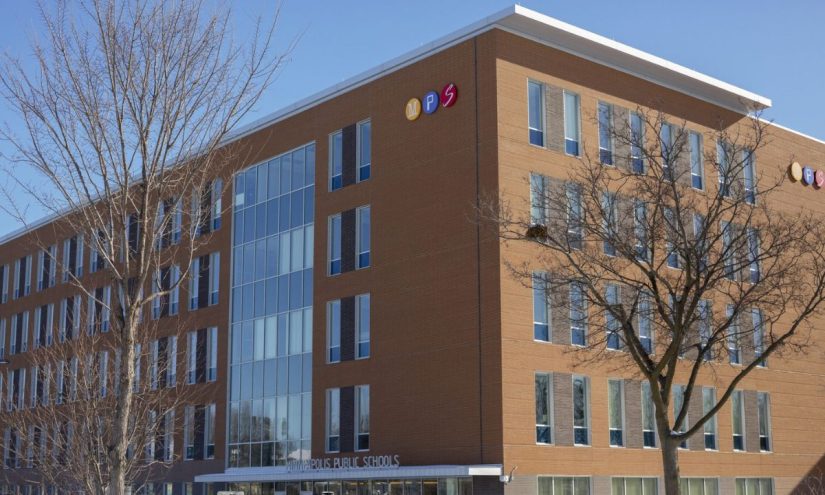
    The Minneapolis school board has formally asked Superintendent Dr. Lisa Sayles-Adams for information that could lead to school closures. They passed a resolution to the effect at a recent meeting.

    The board first drafted the directive —which asks for an initial report to the board by April 2026 — at two day-long meetings in June and August. The planning follows years of discussion about closing schools in a district with 29,000 students but the capacity for 42,000 and thus a bevy of half-empty schools.

    Even as enrollment declines at a school building, the fixed expenses for building staff — like principals, secretaries, nurses, librarians, culinary workers, custodians and social workers — stay the same or go up. With so many buildings below capacity, a big portion of each Minneapolis student’s funding has to go toward covering these fixed building-level costs, draining money away from instruction and extracurricular activities.

    The board resolution comprises topics for district administrators to investigate, including efficient use of current buildings, potential changes to magnet programs, and ways to increase enrollment in the district.

    Years-long discussion about the financial burden of operating small enrollment schools

    The process for downsizing the district’s footprint has been long and circuitous.

    In October 2022, the district prepared a comprehensive financial assessment forecasting that without significant cost cutting, the district would end up draining its reserves, while expenses would exceed revenues by the end of fiscal year 2026. The district has avoided that fate by cutting services and raising class sizes, but it is still unable to balance its budget without relying on reserves and other one-time funds.

    The 2022 memo did not prescribe closing schools, but it did present an analysis showing enrollment growth alone could not overcome the district’s structural inefficiencies resulting from operating many schools with small enrollments. At the time of the analysis, Anoka-Hennepin was operating 37 school buildings while enrolling about 37,000 students. Minneapolis was operating 61 buildings while enrolling about 29,000 students. Minneapolis had about half as many students per building as Anoka-Hennepin.

    The board first publicly discussed reducing the number of schools in March 2023, when then-board Chair Sharon El-Amin asked Rochelle Cox, the then-interim superintendent, to develop a draft plan for “school transformation.” Neither Cox nor the board took action.

    Two months before current Superintendent Dr. Lisa Sayles-Adams started at the district in early 2024, the School Board passed a “transformation resolution” that directed the district to do an accounting of physical space but stopped short of calling for a timeline on school closures.

    Sayle-Adams promised to tackle “right-sizing” the district after passing a budget in June 2024, because, she said, the community asked her to address the issue.

    Low enrollment schools require more funding per student for building-level staff

    The district is contending with rising costs and operating a significant number of small buildings, as well as buildings operating below capacity. Given the rising fixed costs of operating these buildings, that leaves less money for everything else, from class size reduction to teacher pay and programs commonly found in most school districts like world languages, art, music and athletics.

    Across the district, as building-level enrollment has declined, students have lost access to services like academic support if they’re struggling; staff to address student behavior; and community liaisons to help parents connect with schools. Small elementary schools have difficulty funding full-time positions for electives like art, music and gym, while hiring part-time staff for these positions is challenging. Some elementary students have gone without these electives, or only have music or art for part of the school year.

    Enrollment declines at middle and high schools have meant fewer elective options, like world languages, dance, theater and orchestra, as well as extracurriculars. Students also lose access to advanced coursework — like AP or IB classes — when there are too few students in the school who want to enroll. Many of the district’s high schools are now sharing athletic teams because individual schools lack enough students and funding to support a robust athletics program.

    The decline in services drives some families to schools outside the district that have the services and programs they desire, compounding the enrollment declines.

    Declines in enrollment mitigated by new-to-country students

    Minneapolis Public Schools lost about 15% of its enrollment in the wake of the COVID-19 pandemic, due to a combination of factors including implementing a controversial plan redrawing school boundaries, and keeping its schools closed longer during the pandemic than any other Minnesota district, which was followed in March 2022 by a three week educator strike.

    The district has enjoyed a small enrollment increase both last year and this year. Although the district does not track the immigration status of students, the increase has been attributed almost entirely to students newly arrived to the United States from Central America. Since the 2021-22 school year, English learner students have increased from 17% of the district’s students to 23% in the 2024-25 school year, according to Minnesota Department of Education data.

    This year, the district expects to spend at least $17 million more on English learner services than it receives in funding from state and federal sources. Although the Legislature increased state aid for English learners during the 2023 legislative session, the district’s funding is insufficient to cover the cost of providing the intensive services needed by students with the lowest levels of English proficiency.

    Many of the newcomer students are also unhoused, which has led to growing costs for the district to transport students from shelters outside district boundaries, as required under the federal McKinney-Vento law. The state has started to pay the cost of this transportation under a law passed in 2023.

    It is not clear whether changes to federal immigration policy will impact the district’s ability to continue to rely on newcomers to stabilize or grow enrollment in the future.

    Future enrollment expected to decline, limiting district’s funding

    Hazel Reinhardt, a demographer hired by the district, says enrollment is likely to continue to decline in the coming years because of lower birth rates, fewer families choosing to raise children in the city, and the state’s favorable laws around charter schools and open enrollment, allowing parents to send their children to St. Paul or suburban schools.

    Reinhardt told the board in June that once parents leave for charter and private schools or open enrollment options, “precious few” districts are able to bring them back.

    Most of the district’s funding is based on enrollment, so declining enrollment has created a ballooning fiscal crisis. Growing costs for both labor and services have outpaced increases in state and local funding.

    The district continues to cut services, increase class sizes and pull from its dwindling reserve funds to balance its annual budget. The district is expected to use $25 million from its reserves this school year after using $85 million from reserves last school year.

    The district’s enrollment woes and related financial distress are not unique to Minneapolis, with similar challenges facing large urban districts like Oakland, San Francisco, Denver, Seattle and Portland. Denver and Oakland have closed a small number of schools in recent years, but not enough to stabilize district finances. And school boards in Seattle and San Francisco have walked away from closure plans after significant public pressure, leaving both districts with growing budget deficits.

    Minnesota Reformer is part of States Newsroom, a nonprofit news network supported by grants and a coalition of donors as a 501c(3) public charity. Minnesota Reformer maintains editorial independence. Contact Editor J. Patrick Coolican for questions: [email protected].


    Did you use this article in your work?

    We’d love to hear how The 74’s reporting is helping educators, researchers, and policymakers. Tell us how

    Source link

  • Unlocking Learning Potential with Concept Maps – Faculty Focus

    Unlocking Learning Potential with Concept Maps – Faculty Focus

    Source link

  • Unlocking Learning Potential with Concept Maps – Faculty Focus

    Unlocking Learning Potential with Concept Maps – Faculty Focus

    Source link

  • Canada: 47k int’l students flagged for potential visa non-compliance

    Canada: 47k int’l students flagged for potential visa non-compliance

    Aiesha Zafar, assistant deputy minister for migration integrity at IRCC, told the House of Commons Standing Committee on Citizenship and Immigration that 8% of international students reviewed were potentially “non-compliant”, meaning they were not attending classes as required by the terms of their study visa.

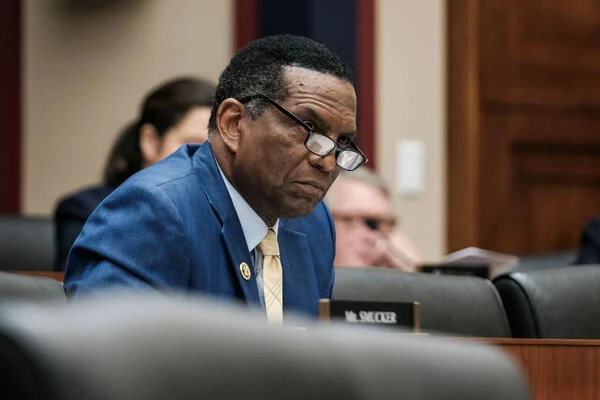
    “In terms of the total number of students we asked for compliance information from, that results in potentially 47,175. We have not yet determined whether they are fully non-compliant, these are initial results provided to us by institutions,” stated Zafar, who was questioned by Conservative MP Michelle Rempel Garner about where these students are currently, if they are not complying with their visa terms.

    Determining full non-compliance of the international students, however, is not straightforward, as institutions report data at varying intervals, and students may change schools, graduate, or take authorized leaves.

    Zafar noted that IRCC shares all the data it continually collects with the Canada Border Services Agency (CBSA), which is responsible for locating and removing non-compliant visa holders.

    “Any foreign national in Canada would be under the purview of the CBSA, so they have an inland investigation team,” Zafar told the committee when Garner questioned how the IRCC is able to track and remove students who are in violation of their visas.

    The 47,000 non-compliance cases are a backlog, evidence that fraud detection is strengthening, not weakening, Canadian standards
    Maria Mathai, M.M Advisory Services

    According to Maria Mathai, founder of M.M Advisory Services, which supports Canadian universities in the South Asian market, the figure of over 47,000 students who could be non-compliant being portrayed as a “crisis” misses the real story — that Canada’s immigration system is actively adapting.

    “Front-end Provincial Attestation Letter (PAL) screening now blocks thousands who would have entered before, and ongoing oversight is catching legacy issues. The 47,000 non-compliance cases are a backlog, evidence that fraud detection is strengthening, not weakening, Canadian standards,” Mathai told The PIE News.

    Mathai acknowledged that past PAL allocations contributed to compliance challenges, with regions like Ontario, which hosts the largest share of international students, directing most of its PALs to colleges with higher default rates.

    However, the situation is expected to change with IRCC now imposing strict provincial caps on the number of study permits each province can issue.

    “By surfacing these imbalances now, the new framework is encouraging provinces and institutions to adapt entry practices based on evidence and learning,” stated Mathai.

    Canada’s international student compliance regime, in effect since 2014, was established to identify potentially non-genuine students.

    It includes twice-yearly compliance reporting conducted in partnership with Designated Learning Institutions (DLIs), Canadian colleges, institutes, and universities authorised to host international students.

    While IRCC’s 2024 report noted no recourse against non-reporting DLIs, new rules now allow such institutions to be suspended for up to a year.

    Moreover, Canada’s struggle with international students not showing up for classes is not new, with reports earlier this year indicating nearly 50,000 instances of “no-shows”, international students who failed to enrol at their institutions, in the spring of 2024.

    While the “no-show” cohort included 4,279 Chinese students, 3,902 Nigerian students, and 2,712 Ghanaian students, Indian students accounted for the largest share at 19,582. It highlights a broader issue of immigration fraud originating from India, which Zafar identified as one of the top countries for such cases during her September 23 committee testimony.

    Over a quarter of international students seeking asylum in Canada also came from India and Nigeria.

    According to Pranav Rathi, associate director of international recruitment at Fanshawe College, which hosts one of the largest numbers of Indian students in Ontario, a “rigorous approach” has led to about 20% of Indian applications being declined to ensure only qualified candidates proceed.

    “Each application is carefully reviewed, and checked for aggregate scores, backlogs, and authenticity of mark sheets. We keep ourselves updated with the recognised institution list published by UGC,” stated Rathi.

    “It is mandatory for a student to provide English language tests approved by IRCC and we also verify English proficiency through IELTS or equivalent test reports to confirm readiness for study in Canada.”

    Rathi suggested that one reason Indian students often appear among potentially non-compliant or “no-show” cases is a systemic issue that previously allowed them to change institutions after receiving a study permit.

    He added that schools now need to take a more active role, particularly when students apply through education agents.

    “Institutions should ensure that their representatives are transparent, well-trained, and follow ethical recruitment practices that align with institutional and regulatory standards,” stated Rathi.

    “Ongoing collaboration between institutions and government bodies to monitor market trends and share insights can help build a more transparent and sustainable international education system.”

    Many Canadian institutions are now facing headwinds, with course offerings and research funding being cut as Canada’s study permit refusal rate has climbed to its highest level in over a decade.

    Canadian politicians have also intensified scrutiny of institutions across the country.

    Just days after the IRCC testimony on non-compliant students, a federal committee hearing led by MP Garner saw Conestoga College president John Tibbits questioned on issues ranging from his $600,000 salary to allegations of “juicing foreign student permits” amid growing concerns that healthcare, housing, and jobs that “don’t have capacity” in Ontario.

    “Colleges, including Conestoga, have been subject to scrutiny about the role international [students] play in housing, affordability and community pressures. I welcome the opportunity to reaffirm that Conestoga’s approach has always been about service. Our mission has always been to ensure the communities we serve have access to the skilled labour force they need to survive,” stated Tibbits, while addressing the committee on Thursday.

    “Looking ahead, we believe this is the time to stabilize the system to build an international student program that is sustainable, fair, globally competitive and focused on Canada’s economic priorities,” he added, as reported by CTV News.

    Source link

  • AI carries potential to transform both student and teacher

    AI carries potential to transform both student and teacher

    This audio is auto-generated. Please let us know if you have feedback.

    Ashley Kannan teaches 8th grade American History and African American Studies at Percy Julian Middle School in Oak Park, Ill. He is a 2025-26 Teach Plus Leading Edge Fellow.

    One of America’s largest teachers’ unions recently announced it’s starting an artificial intelligence training hub for educators with funding from Microsoft, OpenAI and Anthropic. This news signals that AI in schools is real — something Aadhira already knows.

    Aadhira is a rising 8th grader I will teach this fall. Toward the end of last year, I saw her sitting in the hallway, on her laptop. I asked her what she was doing. 

    “History homework. I’m using AI.”

    I asked if her teachers knew she used AI.

    “Mr. Kannan, teachers don’t know anything about this AI stuff.”

    This is a headshot of Ashley Kannan, an 8th grade American History and African American Studies teacher at Percy Julian Middle School in Oak Park, Ill.

    Ashley Kannan

    Permission granted by Ashley Kannan


    Aadhira is not wrong. As with most new technologies, most students know more about AI than most adults. But we’re early enough in the process that we have an opportunity: Teachers like me can design the AI experience alongside students like Aadhira and inform the development of projects like the AI training hub. Together, we can create a new and better school experience for our students. 

    In my 29-year career, I have seen education react late to technology over and over again. We were slow to the internet, smartphones, social media and remote learning. AI is already a part of Aadhira’s life, yet my school district is part of the 80% that lack AI guidance and policies.

    Amidst this uncertainty, AI is a pathway for teacher leadership. By embracing AI in my teaching and determining its specific purpose, I can control how it achieves my purpose: advancing my students’ journeys toward scholarship.

    I know my classroom and content, and I can speak to how AI tools fit in my teaching. My voice is needed, because I teach students like Aadhira who use AI every day. Since I see what is and is not working, I can successfully influence AI decision-making.

    While Aadhira is right that teachers like me “don’t know much about this AI stuff,” I can respond by not only crafting how AI will help me make her a scholar, but also use that expertise to guide how it should look for all of our district’s students. I can be an AI influencer in my classroom and beyond.

    AI literacy can be a journey of growth for my students and me. Aadhira will be my AI teacher. I plan on learning her hacks and shortcuts, peeking behind the curtain in drawing from her AI savvy, grasping what she uses AI for, and figuring out how AI can help her be a scholar.

    Aadhira can learn from me, too. 

    For instance, I can teach her how AI tools work with large datasets, how they recognize patterns, and how she can construct better AI prompts. As Aadhira learns the art of developing precise prompts to feed into AI, her language and processing skills will grow. Instead of “Do my homework on the American Revolution,” she can more specifically put in, “I need help on understanding the main causes of the American Revolution.” 

    As Aadhira shows more precision in her commands, she will learn to better control the AI tool she’s using — something she will need in an AI world. Using AI in this way helps her understand concepts, challenges her thinking, and supports her in creating authentic work. 

    I can teach Aadhira how to effectively consume AI content. For example, what if she generated artifacts from AI about the causes of the American Revolution and then graded them with a rubric she and I co-created? Aadhira would be examining AI products as opposed to digesting them as unquestioned fact, thinking critically as a scholar as she assesses AI work. 

    I can also learn through conversations with Aadhira about her AI user experience. These can guide my leadership work, adding teacher and student voice to initiatives such as the AI instructional hub. Aadhira teaches me while I teach her, reflecting our shared AI learning journeys.

    Aadhira and I can be pioneers in the birth of a collaborative school setting driven by student and teacher voice. If AI can enhance teacher leadership and develop transformative and worthwhile learning for students, it will permanently transform school into a space where teachers and learners have more voice, agency and, ultimately, power.

    Aadhira is coming my way in the fall. As I shape how I want AI to help her be a scholar, I will be ready.

    Source link

  • Responsible recruitment means fostering diverse leadership potential

    Responsible recruitment means fostering diverse leadership potential

    Unfortunately, it is no secret that the higher education sector has a long way to go when it comes to equity in progression to senior leadership.

    While the number of staff from global majority ethnic backgrounds in universities has nearly tripled over the last 20 years (now c. 24 per cent), HESA data shows that still only 3.8 per cent of black academics in the UK hold the title of Professor, and less than one per cent of all professors in the UK are black. Though there has been an incredible 93.8 per cent increase since 2012–13, still only 30.8 per cent of professors in the UK identify as women. There has been real progress, but it has been slow.

    Recruitment from the inside

    In our position as a consultancy supporting talent development across higher education and wider sectors driven by social purpose, we’re constantly reminded of the barriers faced by global majority candidates in recruitment processes. We see selection bias; we see lack of communication and clarity around promotion criteria; we see challenges in individual confidence and imposter syndrome; we see anxiety around tokenism.

    There’s additionally a risk that diversity is becoming less of a priority in these times of financial challenge, when obvious questions around sustainability come to the fore. With many institutions going through restructures and cost-saving exercises, executive boards are under enormous pressure to justify any new appointments and associated expenditure. The ability to lead change, diversify income streams, and drive growth with limited resources are now constant topics in our conversations with candidates for senior roles.

    In part due to these pressures, recruitment panels seem increasingly less willing to think widely when appointing to leadership roles. There is often an increased sense of perceived risk when considering candidates from other sectors, overseas, or who would be taking a step up into the role, rather than making a sideways move. As domestic funding challenges worsen, international student numbers continue to decline, and operational costs rise across the sector, there’s understandably often a preference for candidates who have “been there, done that.” This has obvious implications for overall diversity in the sector.

    Though there has been some improvement, staff from global majority backgrounds are still disproportionately concentrated in lower-level roles and underrepresented in senior roles across the sector. It is less likely that a candidate from a global majority background will be in a position to make such a sideways move for a senior role. In our search work, we encourage committees to place a greater emphasis on capability and competence, alongside experience, and to consider which essential requirements on the job description might be more flexible than others. We do also see a growing recognition that things have to change and a genuine commitment to strive for greater representation at all levels.

    As headhunters, we have to strike a difficult balance between supporting and challenging the organisations we work with, particularly around such questions of equity of opportunity and perceived risk. We are committed to making a difference on a very practical level, and we work closely with clients and candidates to find ways to make our search processes more equitable. We take time in briefings meetings to really get a feel for the culture of each organisation we work with; we advise on the accessibility of recruitment material; and we structure interview processes so candidates can engage with an opportunity and organisation in multiple fora, for example.

    There is an inherent limitation to the work that we do as advisors on senior appointment processes, however. Through the lists of candidates we bring together for a role, and the way we support candidates and panels through these processes, we can have a direct impact on the individual and organisation, but we often feel that the most positive impact we can have on the composition of senior teams is through our broader leadership development work.

    Insider information

    We’ve been involved in the London Higher Global Majority Mentoring Programme for the last few years. In our annual masterclass with the programme’s participants, we discuss practical topics about engaging with opportunities for development and progress including at the level of CVs and cover letters, navigating informal interviews, internal marketing, and LinkedIn. We aim to demystify the recruitment process and help equip them with some tools to help them move into their next leadership positions. These topics are framed in the context of structural barriers to progression facing individuals from marginalised groups, which often hold candidates back from bringing their authentic selves to recruitment processes.

    We often hear about candidates’ experience of covering parts of their identities in interviews, feeling imposter syndrome when interviewing with a panel of white senior leaders, and concern around being a “token” on a shortlist.

    Several years ago, we developed Aspire, which is a pro-bono programme that supports mid-career professionals from global majority ethnic backgrounds as they work to move into senior leadership positions. The programme runs over six months and explores themes such authenticity and leadership profiles alongside practical approaches to promotion and recruitment. The programme aims to create a space in which participants can share their lived experience and create a community of practice as they look for their next role.

    Launched last year, Board Prospects pairs individuals from historically under-represented groups with non-executive boards. The participants join the board without voting rights for a year, before being appointed as full members.

    Participants across the programmes we work on have reported promotions, external job offers and more – though it is of course impossible to determine exactly how much the specific programme contributed to this success. The most significant impact reported is often the networks created through the sessions, and the sense of empowerment which can develop from a space in which experiences, support, and advice are shared safely. We’ve seen research collaborations, invitations to conferences and more emerge from these communities of practice.

    Our involvement in the Global Majority Mentoring Programme, and our work on our own leadership development programmes, is valuable in helping us shape our executive search work to be as inclusive and equitable as possible. We’ve learnt (and continue to learn) a huge amount from the programmes and their participants. Through hearing about participants’ lived experiences of career progression, we learn more about where we can provide the best support for development, and how we might advise clients on the “sticking points” in recruitment processes which can be especially limiting or off-putting to individuals from underrepresented groups.

    We also recognise that recruiting diverse talent is just one step in building inclusive and equitable organisations. Creating an environment in which staff from marginalised groups can thrive and progress requires a much more holistic approach that seeks to fundamentally change working cultures. Our work with individual institutions, such as the LEAP into Leadership Programme with the University of Greenwich, in which a group of mid-career delegates from global majority ethnic backgrounds are formally paired with a senior sponsor within the institution, has also stressed to us the need to acknowledge and engage with structural barriers and allyship at all levels of an institution if we are to ever meaningfully break down barriers to senior leadership.

    While recognising the huge amount of work that still needs to be done, and the ever-growing challenges facing universities across the UK, we’re hopeful that collaborative schemes like the Global Majority Mentoring Programme, alongside a commitment to challenging and adapting recruitment processes, can ultimately have a real impact in creating more diverse leadership teams which better reflect society and are best equipped to deal with sector challenges.

    This article is one of four exploring London Higher’s Global Majority Mentoring Programme – you can find the others here.

    Source link

  • Voters strongly support prioritizing freedom of speech in potential AI regulation of political messaging, poll finds

    Voters strongly support prioritizing freedom of speech in potential AI regulation of political messaging, poll finds

    • 47% say protecting free speech in politics is the most important priority, even if that lets some deceptive content slip through
    • 28% say government regulation of AI-generated or AI-altered content would make them less likely to share content on social media
    • 81% showed concern about government regulation of election-related AI content being abused to suppress criticism of elected officials

    PHILADELPHIA, June 5, 2025 — Americans strongly believe that lawmakers should prioritize protecting freedom of speech online rather than stopping deceptive content when it comes to potential regulation of artificial intelligence in political messaging, a new national poll of voters finds.

    The survey, conducted by Morning Consult for the Foundation for Individual Rights and Expression, reflects a complicated, or even conflicted, public view of AI: People are wary about artificial intelligence but are uncomfortable with the prospect of allowing government regulators to chill speech, censor criticism and prohibit controversial ideas.

    “This poll reveals that free speech advocates have their work cut out for them when it comes to making our case about the important principles underpinning our First Amendment, and how they apply to AI,” said FIRE Director of Research Ryne Weiss. “Technologies may change, but strong protections for free expression are as critical as ever.” 

    Sixty percent of those surveyed believe sharing AI-generated content is more harmful to the electoral process than government regulation of it. But when asked to choose, more voters (47%) prioritize protecting free speech in politics over stopping deceptive content (37%), regardless of political ideology. Sixty-three percent agree that the right to freedom of speech should be the government’s main priority when making laws that govern the use of AI.

    And 81% are concerned about official rules around election-related AI content being abused to suppress criticism of elected officials. A little more than half are concerned that strict laws making it a crime to publish an AI-generated/AI-altered political video, image, or audio recording would chill or limit criticism about political candidates.

    Voters are evenly split over whether AI is fundamentally different from other forms of speech and thus should be regulated differently. Photoshop and video editing, for example, have been used by political campaigns for many years, and 43% believe the use of AI by political campaigns should be treated the same as the use of older video, audio, and image editing technologies.

    “Handing more authority to government officials will be ripe for abuse and immediately step on critical First Amendment protections,” FIRE Legislative Counsel John Coleman said. “If anything, free expression is the proper antidote to concerns like misinformation, because truth dependably rises above.”

    The poll also found:

    • Two-thirds of those surveyed said it would be unacceptable for someone to use AI to create a realistic political ad that shows a candidate at an event they never actually attended by digitally adding the candidate’s likeness to another person.
    • It would be unacceptable for a political campaign to use any digital software, including AI, to reduce the visibility of wrinkles or blemishes on a candidate’s face in a political ad in order to improve the appearance of the candidate, 39% say, compared to 29% who say that it would be acceptable.
    • 42% agree that AI is a tool that facilitates an individual’s ability to practice their right to freedom of speech.

    The poll was conducted May 13-15, 2025, among a sample of registered voters in the US. A total of 2,005 interviews were conducted online across the US for a margin of error of plus or minus 2 percentage points. Frequency counts may not sum to 2,005 due to weighting and rounding.

    The Foundation for Individual Rights and Expression (FIRE) is a nonpartisan, nonprofit organization dedicated to defending and sustaining the individual rights of all Americans to free speech and free thought — the most essential qualities of liberty. FIRE educates Americans about the importance of these inalienable rights, promotes a culture of respect for these rights, and provides the means to preserve them.

    CONTACT
    Karl de Vries, Director of Media Relations, FIRE: 215-717-3473; [email protected] 

    Source link

  • Unlock Your Enrollment Potential: Real Strategies for Real Results

    Unlock Your Enrollment Potential: Real Strategies for Real Results

    Engaging students wherever they are is critical to enrollment success.

    With eight years of experience at Ruffalo Noel Levitz working with more than 100 campuses across the country and following more than two decades leading enrollment efforts on campus, I know firsthand the challenges you face in enrollment. And in today’s environment it can feel like information overload on what you should be doing.

    I recently hosted a webinar sharing insights from our 2025 Marketing and Recruiting Best Practices for Undergraduate Students study, where 114 institutions of all types completed our survey about their use and effectiveness of recruitment strategies. We covered everything from the fundamentals of outreach to the latest in AI-powered chatbots. In survey responses, we found a lot of shared experiences and opportunities for strategy enhancement. Specifically, we identified seven strategies that should form the foundation of your annual marketing and recruitment plan, as well as a few others we recommend incorporating to drive your recruitment to the next level.

    Let’s talk real numbers (and real support)

    In our survey, we asked about written marketing and recruitment plans. Only 29% of institutions have a fully implemented, data-driven plan. So if you’re among the 71% of institutions still working on creation of a full plan, you’re in good company—we’re all trying to navigate this evolving landscape. The encouraging part is you’re committed to improvement. We found that most institutions rate their plans as “good,” but you’re aiming for “excellent.” That drive to excel is what we’re here to support.

    Discovering what truly works (together)

    Through survey responses, we found some powerful strategies that are working for colleges right now. Virtually every institution that uses them rates personalized videos and video calls with students as effective, although fewer than half of you are using those outreach tactics. And implementing new AI-based digital assistants on your website will meet an expectation that students and families have to receive real-time answers to their questions 24/7 about application status, academic programs, and aid packages—but only 22% of institutions have taken this important step.

    Search engine optimization (SEO) stood out as a leading strategy with 75% of institutions pursuing this and 100% of institutions rating it as effective. But we also know that most institutions don’t invest enough or broadly in SEO. Students are increasingly turning to search sites to find university sites and program information, and if you’re not in the top seven links, you’re effectively invisible. You need to incorporate into our annual plans ongoing SEO across your website to develop and maintain relevant content that speaks directly to student interest, both for traditional search engines and AI tools like ChatGPT and Gemini. You then need to track site traffic to measure ROI and so you know when it’s time to revisit those pages again. SEO is not a one-and-done process! Let’s make your website a powerful tool for student recruitment.

    7 practical steps to optimizing your enrollment management outreach

    1. Revisit your core: start with the fundamentals. Don’t underestimate the power of the basics! Make sure those foundational strategies are rock-solid and you have a documented plan for implementation. A strong foundation allows you to build from there and creates the space you’ll need to deal with mid-cycle unforeseen challenges.
    2. Refine your digital approach: digital marketing practices and calls to action. Take a fresh look at your digital marketing. Are your calls to action clear and compelling? Personalize your ad content to the audiences you’re targeting.
    3. Boost your visibility through SEO. SEO is key to being found. Make sure your website content is discoverable by both traditional searches and AI tools. Track your traffic so you know what’s working and what isn’t.
    4. Advertising strategies. Get smart about your advertising. Are you spending your dollars where your students are today or just where you have always spent them? In the last 4 years we’ve seen a significant shift away from “traditional media” and to digital advertising.
    5. Connect authentically on social media. Focus on the platforms where your students are spending their time. Remember, authenticity is key. They’re looking for real glimpses into campus life, not just polished perfection. Show them the genuine experience.
    6. Create tailored experiences with personalized video. Imagine how students will feel when they receive a video that’s just for them! Work to create personalized, customized content based on each student’s interests and watch who’s watching by incorporating tracking metrics.
    7. Enhance student support with AI chatbots. Digital assistants have come a long way in just a couple of years. Use today’s technology to provide 24/7 support so your prospective students can get specific answers in real time.

    We can help you navigate the digital shift and engage students 24/7

    While the ongoing shift toward digital strategies can feel overwhelming, we’re here to support you every step of the way. We’ll help you find the right balance for your institution and your audience.

    Source link

  • The potential of educational podcasts for commuter students

    The potential of educational podcasts for commuter students

    Engaging students in learning outside the classroom can often be a challenge, but podcasts might be a simple yet versatile tool we’re overlooking.

    As the number of commuting students rises across institutions, we recognise that students are time poor. There is, however, the potential of using travel time as an opportunity for students to work but also relax and many students use their commute time as an opportunity to prepare for teaching. Podcasting is one of the ways we can design our pedagogy to fit the busy lives of commuter students.

    Think about how you listen to podcasts, most likely while you’re doing other things like driving, cooking or walking. There’s a versatility to it.

    How many of the learning resources we offer allow students to learn on-the-go?

    Education on-the-go

    Most podcast listeners will tell you the convenience of audio-centric and on-the-go content is key to their success. BBC data suggests that about three in four podcast listeners do so while doing something else, so even podcasts that have a video option available need to be planned and created with an audio-only format in mind.

    Offering that versatility also comes at a cost. It’s important to recognise the fact that students might be on a busy bus, or looking for the timetable for their next train connection. We probably won’t have a student’s full attention, and that means that we need to carefully consider the kind of educational content that’s going to work in this format.

    Successful podcasts tend to be focused on experiential storytelling. They are usually fluid and conversational, so don’t be afraid to lean into that. Storytelling gives us emotional responses, helping students connect abstract ideas to real-world implications. A podcast will be much more successful if you give depth and meaning to something a student has already learned, rather than delivering the learning itself.

    Let’s take data analysis as an example. Instead of focusing on the technical process of analysing data, you could discuss stories of the impact of data bias or ethical dilemmas in data usage. Give your students food for thought rather than core learning, use it to turn the numbers into narrative and give a deeper meaning to your classroom content.

    It can also be a good idea to supplement your podcast with a short interactive activity, either online or at the start of your next learning session. Ask students to reflect on the podcast and their key takeaways from it. It can be a great starting point to encourage deeper learning.

    A how to guide

    Another core aspect of successful podcasts is authenticity. You don’t want your podcast to sound like a job interview. Natural conversations foster a sense of authenticity, which is key to keeping listeners engaged. A key part of this comes from the way you prepare for a podcast. Discussion points as opposed to questions allows both you and your guest to think more holistically about the topic and can make a huge difference when it comes to making the conversation flow authentically.

    We’ve found it’s best to give more flexibility and aim for shorter episodes. Splitting a conversation up into bitesize chunks gives students the option to listen to all episodes in one go, or a bit at a time. Starting with a few episodes, around 12-20 minutes each, will offer your students a lot more flexibility than a single 1-hour long podcast.

    Thankfully the technical and logistical aspects of recording podcasts have developed rapidly over the last few years and it’s very easy to get started. Advancements like text-to-speech editing and speech enhancement let you record fully online and get incredible results without any technical knowledge or high-end equipment. A lot of podcasting software now produces automatic text transcription supporting accessibility and allowing students to engage with the content in multiple formats.

    And by framing these resources as useful for students to “listen to on-the-go,” gives students permission to use and access resources in ways which work for them during their busy lives. It recognises commuter students and acknowledges busy student lives and gives them a new innovative way to engage with their studies.

    Getting started

    If you’re interested in giving it a go, here are some ideas to get you started.

    A conversation about a specific assessment: contact a student who did well on an assessment last year and ask if they would be happy to share their experiences. Students can get ideas and inspiration from how they have approached it, what worked well and what they would do differently.

    Interviews with industry experts is another way to frame a podcast. Working professionals don’t always have the time to travel to campus and prepare a lecture for your students. That might be different if they just had to join an online call for a natural conversation. Recording it as a podcast also gives you a reusable resource for future cohorts.

    Student Q&As where students can submit their own questions about a topic or assessment and discuss them in a podcast. This could be an idea to explore on your own, with another lecturer, or with professionals in the industry.

    It’s clear that using podcasts as a form of education comes with a lot of challenges, but it also offers a vast world of opportunities and flexibility for students. Where students face further challenges to engage and attend classes, it is worth considering how educational podcasts may be a mechanism so that resources work around busy and complex student lives. For commuting students, a great deal of time is spent on public transport and in maximising their time, providing resources that are engaging, useful and timely is a step in the right direction. And in designing resources specifically with commuter students in mind it recognises their experiences and allows them to engage authentically.

    And to make podcasts work for commuter students in an educational context we need to be realistic about the challenges students face and create content that works in a podcast format rather than shoehorning existing content into a new format. If we nail that, then podcasts could become a very useful tool for delivering educational content that fits around students and heightens engagement.

    Source link