Tag: poverty

  • The support paradox is a poverty problem

    The support paradox is a poverty problem

    The university mental health infrastructure has never been bigger, and students have never been less aware of it.

    The University Mental Health Charter now has 113 signatories, counselling teams have been expanded, wellbeing hubs have been built, digital platforms have been commissioned, and training has been rolled out to staff.

    And yet new polling data raises real questions – not just about whether all of that is reaching the right people, but about whether institutional investment is approaching the limits of what it can achieve when the external factors that most shape student mental health are all moving in the wrong direction.

    Cibyl’s Student mental health study 2025 – fieldwork October 2024 to August 2025, 6,685 respondents from 140-plus universities, weighted for gender and institution – opens with a modest improvement narrative.

    Life satisfaction is marginally up, at 5.7 from 5.6. There’s been a small decline in the proportion worrying about their mental health daily or weekly.

    Fewer respondents than ever – 13 per cent, down from 16 per cent – say they’ve never received any mental health training, information, or advice. The proportion with very low mental health by all three of the report’s composite measures has dipped fractionally, from 5 per cent in 2023 to 4 per cent.

    If you squint, you can see progress. But the structural picture tells a different story.

    Built it, didn’t come

    The headline finding is that service awareness is declining. In 2021, 53 per cent of respondents were aware of counselling services. This year, that’s down to 42 per cent.

    Mentoring and buddy pairing awareness has dropped from 33 per cent to 20 per cent over the same period. Two in five respondents weren’t aware their university offered preventative and recreational services like yoga, nature walks, or art classes.

    More than half – 54 per cent – have never used any university support service. And a quarter don’t know any services exist.

    This can’t be a teething problem with new provision. The UMHC was launched in 2019, Student Minds has been working with universities for years, and the services have been built, expanded, promoted, and evaluated. And students are less aware of them now than when the whole thing started.

    Among those who are aware, a fifth say shame stops them engaging, while three in ten saying they don’t know how to express what’s going on – as the report puts it, articulating mental distress is itself a barrier.

    A quarter feel nothing can be done to help them, and one in ten reports difficulty securing an appointment. In-person counselling is preferred over online by a margin of more than four to one – 62 per cent versus 14 per cent – but fewer than three in ten respondents have actually used the services offered through their university.

    Four in five who have used university and SU wellbeing sessions rate them effective or very effective. The services aren’t necessarily bad – the people who need them most aren’t walking through the door.

    Scroll to cope

    Something else is filling the gap. Two in five respondents agree they over-prioritise social media, and heavier use correlates with lower mental health scores – yet two-thirds use it to watch wellbeing videos, more than a third for mental health testimonials, and nearly three in ten cite it as a useful source of mental health information.

    Social media is simultaneously the villain and the substitute counsellor, and the report holds both positions without resolution.

    Harder to ignore is that as formal service awareness declines, informal digital self-help is expanding to fill the vacuum. Whether that’s a coping strategy or a warning sign depends on which page you’re reading.

    The report describes a kind of paradox of engagement:

    …those most affected by mental health concerns are often least likely to engage with or trust available support.

    The narrative framing reaches for stigma reduction and proactive outreach as solutions. But the data points somewhere else.

    When you ask respondents what actually prevents them from using strategies to stay mentally healthy, the answer isn’t shame or ignorance. It’s poverty. Fifty-seven per cent say financial constraints are the barrier – up from 43 per cent when the study launched in 2021.

    Among respondents with low mental health scores, 60 per cent worry about money daily. Among those with a mental health disability, 53 per cent worry daily. Among those in unsupportive environments, 60 per cent.

    That doesn’t just seem to be impacting access to formal services. Financial stress is preventing students from deploying the basic self-care strategies that every wellbeing campaign pushes at them. Exercise costs money, or at least time that could be spent earning.

    Eating healthily costs more than eating badly – the Food Foundation’s Broken plate 2025 report says the poorest fifth of the population would need to spend 45 per cent of their disposable income to meet the government’s recommended diet, rising to 70 per cent for households with children.

    Social events cost money. Even being in nature, one of the most commonly cited coping strategies, requires the time and transport that come from not needing a third shift at a part-time job.

    In our Belong polling last year, students told us in their own words what this looks like in practice.

    I can’t afford a lot of things. I struggle to buy food, period products, and other healthcare. I’m inclined to work when I’m sick because I need to cover tuition and rent.

    One wrote simply:

    Feel very tired due to uni, aware my health could be better, but do not have the time.

    Seven in ten respondents in this year’s study attributed their mental health difficulties either partly or fully to concerns about living costs. Daily money worry has risen steadily across the full five-year series, from one in four in 2021 to two in five today. Only 6 per cent of respondents enjoy the luxury of never worrying about money, and that falls to 2 per cent among those with low mental health scores.

    Students from low socio-economic backgrounds rank financial concerns at 8.2 out of 10, compared with 7.3 among those from high socio-economic backgrounds, and two-thirds of low-SE respondents say finances prevent them staying mentally healthy, compared with 43 per cent of high-SE respondents.

    Low-SE students are also less likely to have satisfying friendships – 38 per cent versus 61 per cent – and more likely to be dissatisfied with the friendships they do have – 40 per cent versus 21 per cent. Poverty doesn’t just deprive students of services. It deprives them of each other.

    Whose framework

    There are some uncomfortable questions that surround who the frameworks are even designed for. Black and Asian respondents are the most likely to report no experience of mental health difficulties – 25 per cent and 23 per cent, versus 10 per cent of White respondents – but they also receive less mental health training at school (22 per cent and 25 per cent versus 38 per cent of White respondents), less at university (40 per cent and 36 per cent versus 46 per cent), and are less likely to use social media for mental health information.

    A quarter to nearly a third say none of the suggested barriers to services applied to them, compared with 16 to 19 per cent of White respondents. The pattern raises a difficult question – are Black and Asian students genuinely experiencing fewer difficulties, or are the measurement tools and support frameworks culturally calibrated for White British experiences in ways that systematically miss how mental health presents in other communities? The data can’t answer that, but it should prompt the sector to ask it.

    Add it all up and you get the sense that the sector has spent years building mental health services that assume students have the time, money, and headspace to access them. The data increasingly suggests that assumption is wrong. The students who need help most are working extra shifts, skipping meals, and choosing between bus fare to a counselling appointment and eating dinner.

    As one graduate respondent in the Cibyl study put it:

    My full-time graduate role was incredibly demanding on my time, so I was unable to prioritise my mental health at all.

    Proactive outreach doesn’t fix that. The support paradox, on this reading, isn’t an engagement problem. It’s a poverty problem.

    Attitudes up, conditions down

    This matters because the report’s improvement narrative rests almost entirely on attitudinal shifts. Students value mental health provision more. Slightly fewer have never received any training. First-years who say good mental health provision was important when choosing their university rose from 39 per cent in 2021 to a peak of 60 per cent in 2023, and it’s still at 58 per cent this year.

    Among graduates, 82 per cent say it’s important that their employer prioritises employee mental health – up from 32 per cent in 2021. Only 5 per cent say it doesn’t matter. These are cultural shifts.

    But every structural indicator is moving the wrong way. Daily financial worry is up. The proportion saying finances prevent them staying healthy has risen from 43 per cent to 57 per cent over the study’s life.

    Six per cent of graduates have now quit a job because of mental health difficulties – double the 3 per cent recorded in 2021, and up from 4 per cent last year. One in four employed graduates finds themselves in a role that didn’t require a degree, doubled from one in eight last year. And awareness of the services designed to help is in decline.

    None of this is to say that the institutional effort doesn’t matter, or that the UMHC has been wasted. Charter progress has been real, if slow – but the vast majority of UMHC signatories have yet to achieve an award, and the framework itself has no enforcement mechanism.

    The harder question is what even an excellent institutional mental health strategy can achieve when the financial, housing, and social conditions surrounding students are all deteriorating simultaneously. There may be a ceiling on what universities can do from inside the system, and the data suggests we’re approaching it.

    Money worries don’t stop at graduation, either. Three in five graduates say finances prevent them using strategies to stay mentally healthy – 62 per cent – and two in five have daily financial concerns – 38 per cent – virtually identical figures to students. The financial stress is a condition graduates carry with them into the workplace.

    The graduates

    Some of the most uncomfortable – and underreported – data in this year’s study concerns what happens after graduation.

    More than a third – 37 per cent – of graduates seeking work have low mental health, compared with 23 per cent of employed graduates and 22 per cent of students. Job hunting is brutal – two-thirds say their mental health declined during the process, and graduates rate the stress of it at 7.5 out of 10.

    From a small sample, just 3 per cent said their mental health actually improved while job seeking. Only two in five secured a job offer within three months, one in four took four to six months, and one in five waited more than a year. Job-seeking graduates were more likely than those in work to worry daily or weekly about not being good enough – 68 per cent versus 60 per cent – and about their finances – 65 per cent versus 59 per cent.

    Employment doesn’t just provide income and structure – it provides the social contact and framework through which people recognise and articulate their mental health difficulties. Working graduates are, on some measures, more distressed than job-seekers, but they’re also more capable of identifying what’s wrong.

    Unemployment appears to produce worse composite outcomes and less capacity to name them. The structure of work may help people see themselves clearly. The absence of it leaves them invisible – to services, to employers, and to themselves.

    This matters for how we think about the post-university transition. Neither universities, employers, the NHS, nor the DWP treats recently graduated job-seekers as a population deserving of targeted mental health intervention. The moment a student crosses the stage, they fall out of every institutional framework designed to catch them – and the data says that’s when a large proportion are at their worst, and least able to ask for help.

    As one international student told the study:

    All international students experience mental health concerns after moving abroad to study as they have to cope with immense study load, part time jobs, financial stress, and the stress of living alone with no proper friends.

    International graduates were significantly more likely than their UK peers to experience a mental health decline when looking for work, at 66 per cent versus 51 per cent.

    Belonging again

    Belonging is in there again, as we would expect. Students who live with friends, who have satisfying friendships, who participate in extracurricular activities – all report life satisfaction scores of 6.0 or above. Students with no friends score 4.6.

    Students with dissatisfying friendships score 4.5 – below the Covid-19-year average. The difference between a connected student and an isolated one is larger than almost any other variable in this study.

    One in three respondents worried about making friends daily or weekly, and among students taking a year out, that rose to 42 per cent. Seventeen per cent reported having no friends at university at all, while 53 per cent said social anxiety prevented them from using strategies to stay mentally healthy, rising to 64 per cent among those with low mental health scores.

    Isolation worsens mental health, and poor mental health deepens isolation – the cycle is hard to break from inside it.

    Before they arrived

    One other finding deserves more attention than it typically gets. Among respondents who had experienced suicidal thoughts, 85 per cent first had those thoughts before university. Among those who had self-harmed, 80 per cent started before arriving.

    Forty-two per cent of first-year undergraduates had some kind of mental health diagnosis prior to starting, with a further 13 per cent diagnosed during their first year. One in five of all respondents was diagnosed at university, while fewer than two in five had been diagnosed prior to arrival.

    Universities are inheriting real problems from a school system, an NHS, and a childhood and adolescence that are failing to provide adequate early intervention. Universities are coping with the downstream consequences of upstream failure – and being expected to do it within the tight timeframes and squeezed budgets that characterise the English system in particular.

    This is the context in which the diminishing returns question becomes acute – even the best-resourced university mental health service is intervening late in a process that began years before the student enrolled.

    One in six respondents had used A&E for mental health – rising to two in five among those taking a year out – suggesting crises severe enough to warrant emergency intervention, or barriers to GP care so profound that the emergency room becomes the only option.

    Nearly half of year-out students had used NHS or HSE counselling – 51 per cent – and close to half had used private counselling. Meanwhile, one in six respondents doesn’t seek advice from anyone when experiencing mental health difficulties, a group who are functionally invisible in any service-based strategy.

    It does raise real questions about where investment needs to go. Every pound spent treating a crisis at university is a pound that might have been better spent preventing it at school, and every policy that treats student mental health as a university problem is a policy that lets the NHS, local authorities, and the Department for Education look the other way.

    But as long as the only investment in non-clinical student mental health is expected to come from students’ tuition fees is as long as we’ll be prevented from having proper conversations about both coordination between providers and intervening early enough.

    What would actually help

    Students’ mental health is being shaped primarily by three things – whether they have enough money, whether they have friends, and what happened to them before they arrived. University mental health services are a fourth-order intervention, important for the minority who use them, invisible to the majority who don’t.

    Thus far, the sector’s strategy has been to build better fourth-order interventions. It has succeeded, in so far as those services exist and are, by most accounts, effective when accessed. But the students who need them most can’t afford to get there. Awareness is declining. The structural drivers are worsening. And the improvement narrative is resting on attitudinal data that masks material deterioration.

    As one respondent in our health polling said:

    I literally went to university at the wrong time with how much it currently costs. It’s impossible to concentrate on my studies without the constant fear of how am I going to eat tonight.

    Is there more that universities can do? There always is. But on this evidence, it would be a very silly place to start.

    Source link

  • Alabama made a big investment in elementary math, but underresourced schools still have a long way to go

    Alabama made a big investment in elementary math, but underresourced schools still have a long way to go

    by Steven Yoder, The Hechinger Report
    February 20, 2026

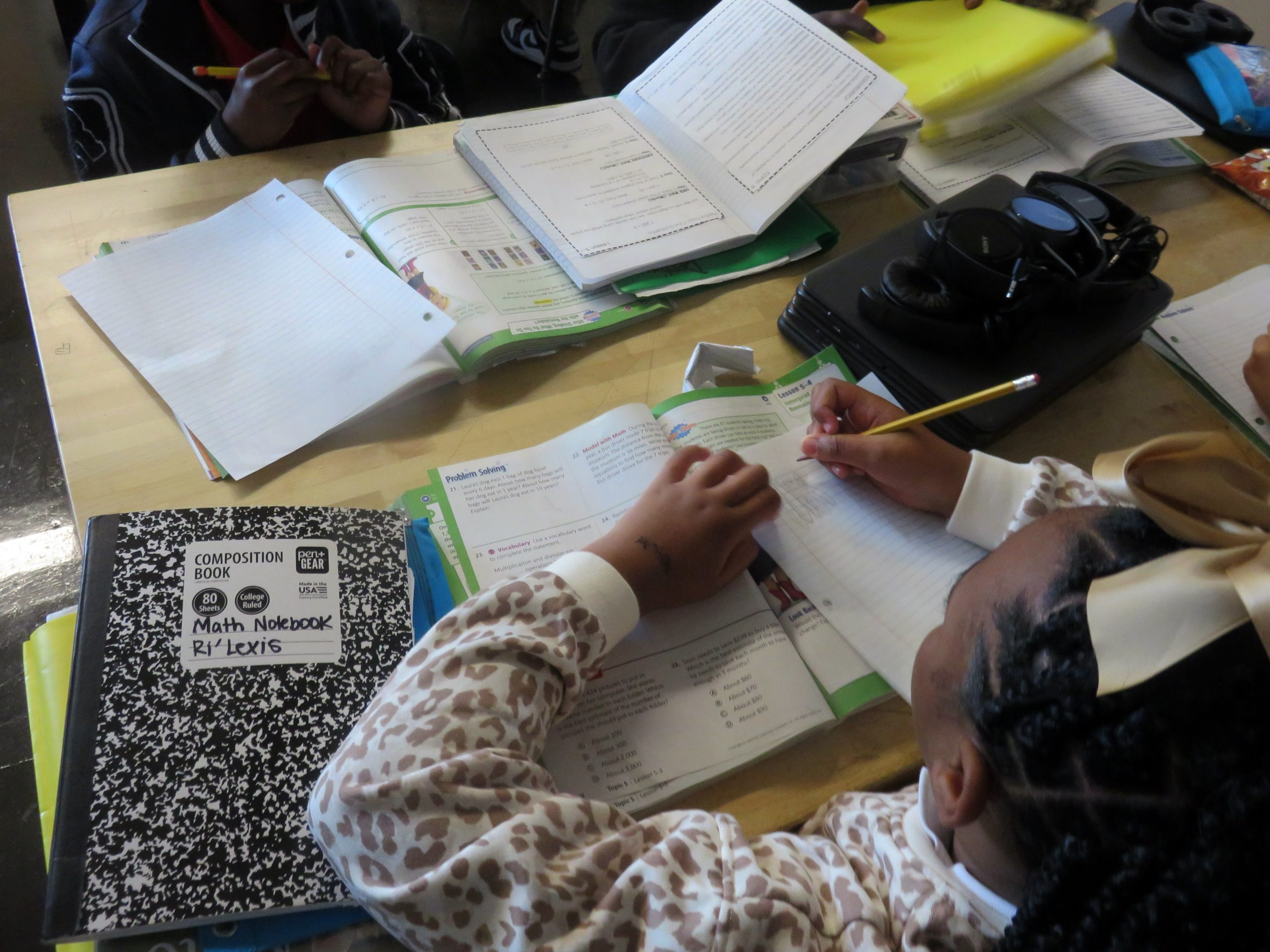
    GREENVILLE, Ala. — Toward the end of a math lesson on a sunny Friday in October, fourth-grade teacher D’Atra Howard and math instructional coach LaVeda Gray ducked out of the classroom to huddle. Howard’s students at Greenville Elementary School were calculating remainders in division problems on worksheets, and Howard wanted to confer with Gray on which of them needed extra help.  

    Howard is in her second year of teaching. She’s working at the school, 45 miles south of Montgomery, Alabama, with an emergency certificate — a temporary license that allows someone without a professional teaching credential into the classroom. Gray, who works with a half dozen of the school’s 16 teachers, was observing Howard and stepping in to help as needed. 

    Alabama is betting that funneling more money into improving instruction, including hiring coaches like Gray, can overcome teacher inexperience and family poverty to raise student scores. State and national leaders praise the state’s gains to date. 

    But on the ground in poor schools, staff say they have far to go to close gaps with better-off parts of the state.

    A Hechinger Report analysis of 15 of Alabama’s least-affluent districts — which represents about 10 percent of the state’s districts — shows that students there have gained ground since the pandemic and after the Alabama Numeracy Act passed in 2022. Only about 1 percent of students earned a proficient score on the state math test in the 2020-21 school year, but around 14 percent earned proficient scores in  2024-25. 

    However, the gap between the poorest districts and the state average is still wide. Statewide, around 24 percent of students scored proficient in 2020-21, compared to around 42 percent in 2024-25. 

    Greenville Elementary is an example of a school that has seen scores rebound. More than 80 percent of students at the school are eligible for free and reduced-price lunch, and more than 1 in 5 people live in poverty in Butler County, where it’s located. But the school’s proportion of fourth graders scoring proficient on the state math test jumped from 7 percent in 2023 to 24 percent in 2024.

    Part of that is due to the work of Gray, who said that Howard has sharpened her eye for students who stumble. “Starting out, it wasn’t always like that,” she said. “I had to point out, ‘Hey, this student, when we walked around, did you see that they didn’t have anything written down or had the wrong figures?’” 

    After a 10-minute discussion, Howard and Gray pinpointed several students who Howard would pull aside for individual work on the coming Monday. Then Howard hustled back to class.

    Related: One state tried algebra for all eighth graders. It hasn’t gone well

    Research suggests elementary school math matters a lot to academic and life outcomes. Early math achievement predicts success in reading and science through eighth grade, a 2013 study found. Math skills also better predict future earnings than other factors like reading scores, parent-child relationships or children’s health, according to a 2024 Urban Institute report. 

    Alabama’s 2022 law reshaped math instruction at the elementary level by providing money for all schools to hire math coaches and by mandating that struggling schools use state-approved math curricula, among other changes. It also required university teacher preparation programs to include more math instruction courses. To help students who are behind, the state launched a summer math program to get low-scoring fourth and fifth graders up to grade level.  

    The politics of spending money on education in Alabama have flipped. On the 2019 National Assessment of Educational Progress, known as the Nation’s Report Card, the state ranked last in the proportion of fourth graders — 28 percent — scoring at or above proficient in math. At 28 elementary schools, not a single student scored proficient. 

    Legislators grasped the threat that this represented to the state’s economic ambitions, said Peter Jones, associate professor of political science and public administration at the University of Alabama at Birmingham. In a state trying to lure investors from biotech, finance and other sectors, better schools help companies recruit qualified workers and attract out-of-state employees with children, said Jones. The early success of the 2019 Alabama Literacy Act, which similarly revamped how schools in the state teach reading, made it easier to vote for a similarly styled bill targeting math, he said. 

    The result was that in a state where Republicans dominate government, Republicans shepherded the numeracy law through the Legislature, and Republican Gov. Kay Ivey signed it. The Legislature funded it at $15 million in its first year, which state lawmakers have since increased to $95 million.  

    The reform has won praise from national education experts. On June 3, the National Council on Teacher Quality released its assessment of elementary school math instruction policies in the 50 states. It rated most as weak or unacceptable and only one as strong — Alabama’s. 

    The most recent NAEP test results suggest the changes are delivering. In fourth-grade math proficiency, Alabama went from ranked last in 2019 to 35th in 2024. It was the only state to beat its 2019 fourth-grade proficiency rate. And it was one of 18 states where fourth-grade math scores among economically disadvantaged students grew between 2022 and 2024. 

    “Not all students are to the level that we want to see, but that growth is what we’re really focused on,” said Mark Dixon, president of A+ Education Partnership, an Alabama-based education advocacy group that backed passage of the Numeracy Act. 

    Related: A new type of high school diploma trades chemistry for carpentry

    Still, there are immense challenges in narrowing the gaps between Alabama’s poorest and richest districts. Almost 9 percent of the state’s teachers are working on emergency or provisional teaching certificates, the latest state data shows. But in Alabama’s 15 poorest districts, the percentage of teachers not fully certified is 20 percent. That disparity undercuts efforts to lift the quality of math instruction, say school leaders and staff. 

    Two hours north of Greenville is Glen Oaks Intermediate School in Fairfield, a suburb of Birmingham. Ringed by a canopy of tall southern pines and live oaks, it sits in the middle of a neighborhood of newer brick split-level and ranch homes with trim bushes and neat lawns.   

    But nearly a third of Fairfield residents live below the poverty line, and 93 percent of Glen Oaks’ children qualify for free and reduced-price lunch, making it one of the state’s most economically disadvantaged schools. Of its teachers, more than a third weren’t fully certified in 2024, according to state data. 

    School math instructional coach Shenea Robinson said she devotes most of her time to working with those teachers. “It’s just going like, ‘A, do this, B, do this.’ I feel like I’m taking them through a crash course in a teacher education program,” she said. “It’s fast-paced. We’ve had a lot of tears.”

    One day in October, one of the teachers with emergency certificates, Ellanise Hines, worked with 17 fifth graders on calculating the volume of solid shapes. While one group of students worked on a computer, a second group measured Amazon Prime boxes that Hines was using as hands-on models. A third group sat with Hines around a table doing volume calculations on worksheets.

    Hines has been in the classroom for two years and is working toward getting certified. Two days before this class she’d sat with Robinson to go over the best way to teach this lesson and then taught it to Robinson as she would her students. They talked through strategies to help students having trouble.

    Fifth grader Haleigh Jackson said that because of Hines she finally can calculate volumes and decimals this year after not getting them in fourth grade. “She broke them down and explained how they worked until I got it,” said Jackson. 

    State education advocates said coaches and the use of high-quality curricula are especially important for teachers like Hines who are still working towards certification. “If you didn’t have that coaching and you had that inexperienced teacher coming into the classroom with zero support, you’d continue to see the poor results we’ve seen before,” said Dixon, with the Alabama education advocacy group. 

    But Robinson said that for all the gains she makes with inexperienced teachers, many don’t return. “Having to start the process back over with brand new people every year is hard,” she said.  

    Unlike at Greenville, proficiency among Glen Oaks’ fourth graders has been flat, with just 6 percent scoring proficient in both 2023 and 2024 on the state test, well below the state 2024 average of 38 percent. “We’re at 90 to 95 percent in academic growth, so we’re making a difference,” said Robinson. But the majority of the school’s third through fifth graders are performing at kindergarten to second-grade level, she said. 

    “A student in fifth grade who was on kindergarten level may have moved to third grade, but they still are so far away from proficient,” she said.  

    Education advocates praise Alabama for doubling down on elementary math teaching. In May, Ivey signed an education budget that included $27 million to hire an additional 220 math coaches. “Many states are not investing in improving math instruction,” said Heather Peske, president of the National Council on Teacher Quality. “So Alabama is quite a leader.” 

    States’ willingness to spend on teacher training could be especially important in coming years. The Trump administration’s proposed 2026 budget calls for eliminating more than $2 billion in dedicated federal funding for improved teacher effectiveness, part of an administration proposal to turn dedicated education funding streams into state block grants. 

    Whether gains among the state’s least well-off fourth graders will hold remains to be seen. The improvement in Alabama’s poorest districts since 2021-22 might reflect that they’re making up for losing more ground during the pandemic. Among the state’s 15 poorest districts, the decline in scores from the 2018-19 school year to 2020-21 was greater than the state average. 

    Some frontline staff would like to see improvements to keep the momentum going. Student attendance is optional at the summer math programs designed to help struggling fourth and fifth graders, and a report by the state education department found that in 2024 just 1 percent of eligible fourth and fifth graders showed up. At Glen Oaks, less than half of eligible students enrolled in summer math even though the school offered transportation and meals, said Robinson, and she’d like attendance to be mandatory.

    Lisa Adair, an assistant superintendent at the Butler County district, said she’d like to see the Legislature fund math interventionists — specialists who work with individual students.  

    “During the legislative session last year, we were trying to explain to legislators the difference between coaches and interventionists,” Adair said. “In their heads, coaches are doing the same thing.” In the end, a proposal to fund interventionists didn’t advance, she said. 

    Adair hopes the state’s math push opens up opportunities for Butler County students. Many of their parents work in local factories in difficult conditions and get home exhausted after being on their feet all day, she said. 

    Recently, a workforce development group invited district leaders and a few teachers to tour some of those plants to help school staff learn about the skills their students will need to get jobs there. Manufacturers had been telling the district that some graduates couldn’t do basic math and were struggling in their factory jobs. 

    Adair left with an additional message, one that gives more urgency to the district’s efforts to improve math instruction​​.

    “It was a wake-up call,” she said. “I’m thankful for our workforce development, don’t get me wrong. But for me, it was reaffirmation that I don’t want my kids to be part of the working poor. I want more for them.”

    Data intern Kristen Shen contributed to this report.

    This story about elementary school math was produced by The Hechinger Report, a nonprofit, independent news organization focused on inequality and innovation in education. Sign up for the Hechinger newsletter.

    This <a target=”_blank” href=”https://hechingerreport.org/alabama-investment-elementary-math-school-resources/”>article</a> first appeared on <a target=”_blank” href=”https://hechingerreport.org”>The Hechinger Report</a> and is republished here under a <a target=”_blank” href=”https://creativecommons.org/licenses/by-nc-nd/4.0/”>Creative Commons Attribution-NonCommercial-NoDerivatives 4.0 International License</a>.<img src=”https://i0.wp.com/hechingerreport.org/wp-content/uploads/2018/06/cropped-favicon.jpg?fit=150%2C150&amp;ssl=1″ style=”width:1em;height:1em;margin-left:10px;”>

    <img id=”republication-tracker-tool-source” src=”https://hechingerreport.org/?republication-pixel=true&post=114946&amp;ga4=G-03KPHXDF3H” style=”width:1px;height:1px;”><script> PARSELY = { autotrack: false, onload: function() { PARSELY.beacon.trackPageView({ url: “https://hechingerreport.org/alabama-investment-elementary-math-school-resources/”, urlref: window.location.href }); } } </script> <script id=”parsely-cfg” src=”//cdn.parsely.com/keys/hechingerreport.org/p.js”></script>

    Source link

  • Easy A’s, lower pay: Grade inflation’s hidden damage

    Easy A’s, lower pay: Grade inflation’s hidden damage

    by Jill Barshay, The Hechinger Report
    February 9, 2026

    For more than three decades, grades in American schools and colleges have been going up, up, up. A’s are more common. Failure is rarer than it once was.

    At the same time, student achievement, as measured by standardized tests like the ACT and NAEP, has stagnated or declined. Grades say students are learning more. Tests say they are not.

    Does this disconnect matter? Maybe higher grades motivate students to show up to school every day and learn. Perhaps harsh grading discourages them. Maybe we should stop obsessing over academic rigor and focus instead on other qualities we want to foster: good attendance, behavior, participation and cooperation.

    A new study delivers an uncomfortable answer. It finds that lenient grading, or grade inflation, is actually harming students, leading not only to worse academic outcomes but also reducing their employment prospects and future earnings. 

    Related: Our free weekly newsletter alerts you to what research says about schools and classrooms.

    The study, “Easy A’s, Less Pay: The Long-Term Effects of Grade Inflation,” was presented in February 2026 at the Harvard Graduate School of Education by economist Jeffrey Denning of the University of Texas at Austin. A draft paper was co-authored with researchers from RAND, the University of Maryland and the University of Georgia. It has not yet been published in a peer-reviewed journal and may still be revised.

    But its findings are striking and build the argument against raising grades.

    Related: It’s easier and easier to get an A in math

    Students who experienced more lenient grading were less likely to pass subsequent courses, posted lower test scores afterwards, were less likely to graduate from high school and enroll in college, and earned significantly less years later.

    The economic cost is not small. Denning estimates that when a teacher doles out grades that are substantially higher (0.2 or more points on a 4-point scale, the difference between a B and almost a B-plus), his or her students collectively lose about $160,000 in lifetime earnings, measured in present dollars.*

    That’s the effect of a single teacher, in a single year. If a student encounters several grade-inflating teachers, the losses add up.

    Evidence from two very different places

    The researchers examined students in two settings: Los Angeles and Maryland.

    Los Angeles Unified School District provided data on almost a million high school students from 2004 to 2013, a period when graduation rates hovered just above 50 percent. The student population was more than 70 percent Hispanic, and failing grades were common.

    Maryland’s data followed about 250,000 high school students from 2013 to 2023. Graduation rates exceeded 90 percent, and the student population was more racially mixed. Maryland’s data allowed researchers to track college enrollment, employment and earnings, while the Los Angeles data ended with high school. 

    Related: Education official sounds alarm bell about high school classes

    Despite these differences, the pattern was the same.

    Students taught by lenient graders — defined as teachers who gave higher grades than expected based on standardized test scores and prior student performance — did worse later in high school. In Maryland, where there was data through college and into the workplace, these students were also less likely to attend college or be employed, and earned less.

    Seeing the same pattern in two very different systems strengthens the case that this is not a fluke of one district or one policy regime.

    When leniency helps and when it doesn’t

    The study makes a crucial distinction. Teachers who still kept A’s challenging, but only made it easier to pass — turning failures into low passing grades — did help more students graduate from high school, particularly those at risk of dropping out. That short-term benefit is real. For some students, passing Algebra I instead of failing it can keep them on track to graduate and possibly enroll in community college.

    But the benefit stops there. Those students do not show long-term gains in college degree completion or earnings. The leniency helps them clear a hurdle, but it does not build the skills they need afterward.

    By contrast, general grade inflation (teachers who raise grades across the board, from C’s to B’s to A’s) shows no upside and hurts students’ chances of future success.  

    Why good intentions backfire

    The study cannot directly explain why higher grades lead to worse outcomes. But the mechanism is not difficult to imagine. In a class with a lenient grader, a savvy student may quickly realize she does not need to study hard or complete all the homework. If she earns a B in Algebra I without learning how to factor or solve quadratic equations, the knowledge gaps follow her into geometry and beyond. She may scrape by again. Over time, the deficits compound. Confidence erodes. Learning slows. In college or the workplace, the consequences show up as lower skills and lower pay.

    As Denning put it during the presentation, there appears to be a “causal chain” of harm, even if he cannot measure directly how much less students are studying or how behind they’ve fallen. 

    Don’t rush to blame teachers

    Raising grades isn’t always an individual instructor’s decision. A 2025 survey documents the frustrations of many grade-inflating teachers who say that they feel pressure from administrators to comply with “equitable grading” policies that forbid zeros, allow unlimited retakes and eliminate penalties for late work.

    Lenient graders are not bad teachers. The study finds they are often better at improving non-cognitive skills. Their students behave better, cooperate more, and are less likely to be suspended. Still, in this study, that’s not translating into better life outcomes, as one would hope.

    Stricter graders tend to be better at raising students’ test scores in math, reading and other academic subjects. Despite that correlation, that doesn’t mean all tough graders are good teachers. Some are not. 

    Related: Nearly 6 out of 10 middle and high school grades are wrong, study finds

    This is early research. More studies are needed to understand whether there are similar workplace costs from college grade inflation. And there are questions about whether boys react differently than girls to inflated grades. 

    Teachers struggle to get students to engage in learning, which is full of setbacks, frustration and boring repetition. Maybe low grades won’t inspire students to do this hard work. But this early evidence suggests that inflated grades aren’t doing them any favors.

    *Correction: This sentence has been updated to reflect that the $160,000 lifetime loss is not per student, but for all the students who were taught by that teacher that year. Per student, the income loss ranges between $42 and $133 per year.

    Contact staff writer Jill Barshay at 212-678-3595, jillbarshay.35 on Signal, or [email protected].

    This story about grade inflation was produced by The Hechinger Report, a nonprofit, independent news organization focused on inequality and innovation in education. Sign up for Proof Points and other Hechinger newsletters.

    This <a target=”_blank” href=”https://hechingerreport.org/proof-points-grade-inflation-lower-pay/”>article</a> first appeared on <a target=”_blank” href=”https://hechingerreport.org”>The Hechinger Report</a> and is republished here under a <a target=”_blank” href=”https://creativecommons.org/licenses/by-nc-nd/4.0/”>Creative Commons Attribution-NonCommercial-NoDerivatives 4.0 International License</a>.<img src=”https://i0.wp.com/hechingerreport.org/wp-content/uploads/2018/06/cropped-favicon.jpg?fit=150%2C150&amp;ssl=1″ style=”width:1em;height:1em;margin-left:10px;”>

    <img id=”republication-tracker-tool-source” src=”https://hechingerreport.org/?republication-pixel=true&post=114707&amp;ga4=G-03KPHXDF3H” style=”width:1px;height:1px;”><script> PARSELY = { autotrack: false, onload: function() { PARSELY.beacon.trackPageView({ url: “https://hechingerreport.org/proof-points-grade-inflation-lower-pay/”, urlref: window.location.href }); } } </script> <script id=”parsely-cfg” src=”//cdn.parsely.com/keys/hechingerreport.org/p.js”></script>

    Source link

  • Advocates worry funding cuts and shifts in aid could put college further out of reach for lower-income families

    Advocates worry funding cuts and shifts in aid could put college further out of reach for lower-income families

    by Jon Marcus, The Hechinger Report
    February 9, 2026

    It was in the quiet of the summer when Jeff Kahlden heard that a promising young student he advised in a rural high school west of Fort Worth, Texas, was in trouble.

    The boy was left with no place to live after his grandmother, who was raising him, had a stroke.

    Kahlden was then counseling low-income high school students considering going to college. The work was part of Upward Bound, part of a collection of federally funded higher education support programs for lower-income Americans called TRIO.

    He and other Upward Bound staff took the boy into their own homes and gave him the help he needed to get through his senior year of high school, then on to community college and ultimately to a satellite campus of the University of Texas, where he earned a bachelor’s degree. 

    They made sure he took the courses he needed to keep moving forward and filled out the application and registration paperwork that is daunting even for young people who have parents to pitch in. Other TRIO programs provided more support for him along the way. 

    Without TRIO, said Kahlden, who oversees the same group of programs today as director of grant management services at Dallas College, a lot of low-income students “would not leave home or take the route they might have as a college student or realize the opportunities that are out there.”

    Now TRIO has come under the scrutiny of the Trump administration, which has already moved to cancel TRIO funding for some participating colleges (though this was paused in January by a federal court and remains in litigation) and proposes to eliminate it altogether; letters from the Department of Education to those colleges show the money was cut off because the programs were considered part of diversity, equity and inclusion, or DEI, efforts. 

    Related: Interested in innovations in higher education? Subscribe to our free biweekly higher education newsletter.

    At a time of rising income inequality, it’s one of several developments advocates worry are converging to make things even harder for lower-income Americans who want to go to and get through college — a group that already faces considerable challenges, and whose proportion of enrollment has been falling for a decade and a half. 

    Cash-strapped universities and colleges are shifting financial aid to middle- and upper-income families who can afford to pay at least a part of the tuition. States forced to absorb some of the billions cut by Congress from Medicaid and SNAP are expected to have less money to spare for higher education. And the federal government is both cutting and proposing to entirely scrap support programs that help low-income students.

    “The downstream effect is less [financial] aid and fewer lower-income students,” said Julie Wollman, a professor at the University of Pennsylvania Graduate School of Education.

    “We should be worried about two things” in what’s been happening to higher education, said Wollman, a former university president. “One is that there’s just not going to be as much aid to go around, because as federal funding is cut, more endowment money and more of the operating budget will have to make up for that. The other is the cuts to all sorts of support programs.”

    The Trump administration has called for eliminating the nearly $1.6 billion a year the government spends on TRIO and on GEAR UP, for instance, which stands for Gaining Early Awareness and Readiness for Undergraduate Programs and helps schools and colleges encourage mostly low-income students to consider and prepare for college. 

    Young people who participate in TRIO are more likely to go to and graduate from college than similar students who don’t, according to the Pell Institute for the Study of Opportunity in Higher Education, the Alliance for Higher Education and Democracy at the University of Pennsylvania Graduate School of Education and the Council for Opportunity in Education. Some members of Congress from both parties have said they oppose ending it.

    But the administration’s budget proposal calls TRIO “a relic of the past.” Today, it says, “access to college is not the obstacle it was for students of limited means.” 

    Related: These federal programs help low-income students get to and through college. Trump wants to pull the funding

    In fact, the proportion of low-income students in college continues to decline. About 32 percent of undergraduates received federal Pell Grants — a measure of low-income status — in 2022-23, the most recent academic year for which the figure is available from the Department of Education. That’s down from a peak of 41 percent in 2011.

    Other federal funding that supported low-income students has also gotten caught up in the Trump administration’s pushback against DEI. The Justice Department has declared several such initiatives unconstitutional because, among other reasons, they went to institutions enrolling minimum numbers of students of a particular race, such as grants to help low-income Black students at predominantly Black institutions.

    The administration also proposes to jettison a program called Child Care Access Means Parents in School, or CCAMPIS, that helps low-income students with children pay for daycare. The administration has already canceled some grants provided through CCAMPIS, saying that the daycare centers where student-parents’ children were enrolled practiced affirmative action in hiring and taught gender identity and racial justice, The Washington Post has reported. 

    Nearly 20 percent of undergraduate students have children, according to the Urban Institute, and the Institute for Women’s Policy Research says they are significantly less likely to graduate than their classmates who don’t have children; the figure is from 2019, the last time the women’s research institute studied the question. Parents who get daycare through CCAMPIS, however, are less likely to drop out than full-time students in general, according to the most recent analysis by the Congressional Research Service.

    Related: After years of quietly falling, college tuition is on the rise again

    The administration’s proposed budget would also cut the nearly $1 billion federal work-study program that subsidizes on-campus jobs for about 600,000 students, which it calls “a handout to woke universities” that “can pay for their own employees.” 

    These potential new obstacles coincide with an increase in the proportion of K-12 students who are low-income and “excluded from a realistic chance to earn a college degree” without some help, according to the Pell Institute.

    They need more help than ever, The Century Foundation reports. The average price for college, after discounts and financial aid, comes to about 15 percent of the income of families in the top quarter of income, but nearly 90 percent of the earnings of families in the lowest quarter, it says — a gap that has doubled over the last 20 years. 

    Making things worse, tuition at many institutions is beginning to go up again after being generally flat or down from 2018 to 2023, when adjusted for inflation. Only a little more than a third of even public four-year universities, and fewer than half of community colleges, are affordable, meaning that the average family could cover their costs with the help of the financial aid available to them, a September study by the National College Attainment Network, or NCAN, found.

    Related: Trump’s attacks on DEI may hurt men in college admission

    This will likely grow more dire, NCAN warns, as other federal cuts to higher education and to Medicaid and SNAP, or the Supplemental Nutrition Assistance Program, strain state budgets. 

    Public universities and colleges have historically been among the first to see their state allocations fall as such financial pressures trickle downward, said Louisa Woodhouse, NCAN’s senior policy and advocacy associate. But “slashing education funding to plug other budgetary holes will only widen affordability gaps for students and push postsecondary education further out of reach.”

    Already, nearly twice the proportion of 18- to 24-year-olds from families in the top quarter of income as from families in the lowest quarter go to college, the Pell Institute reports, and students from the most affluent families are nearly four times more likely than students from the least affluent to get a bachelor’s degree.

    Wealth also determines where young Americans enroll. The most selective colleges and universities have the lowest proportions of low-income students and the least competitive have the highest, the Pell Institute research finds.

    There are some positive signs for lower-income students. Significantly more students than last year had completed the Free Application for Federal Student Aid, or FAFSA, the form required to receive financial aid, the Education Department announced in December. And nearly two-thirds of families considered the new, simplified version of the FAFSA easier to fill out than in the past, according to a survey conducted for the student lender Sallie Mae (though nearly 60 percent said they still needed help).

    The number of low-income students applying to college through the Common Application — a single form accepted by more than 1,000 admissions offices — was up by 9 percent in the fall, compared to 2 percent for applicants generally.

    Whether those low-income prospects will actually enroll depends largely on the financial aid they’re offered, at a time when other new research suggests that colleges in pursuit of badly needed revenue are not only raising their prices, but directing much of their financial aid to higher-income families who can afford to pay at least some of the tuition. 

    Related: A new ‘solution’ to student homelessness: A parking lot where students can sleep safely in their cars

    “There’s only so much aid to go around,” said Wollman, at the University of Pennsylvania.

    The research, by The Century Foundation, finds that 56 percent of families in the top quarter of income got more financial aid than they needed as colleges tried to lure them in with scholarships and discounts. This “leaves working families paying the bill for tuition increases,” the report’s author, Peter Granville, said.

    “Is that money reaching the students who need it the most? No, it’s not,” said Granville. “Oftentimes it’s going to students who are higher income and for whom it’s just a cherry on top.” Many lower-income students, meanwhile, “are not getting enough financial aid to affordably enroll in college.”

    One reason universities and colleges are encountering their own intensifying money problems is that their enrollment is declining

    With expenses also increasing, resulting in a negative outlook for the industry from ratings agencies including S&P Global, colleges’ need for revenue is affecting who some of them admit. 

    To lock in as many students as they can, some of the nation’s most selective colleges and universities are expanding the proportions of their classes they accept through a practice called early decision. This gives students higher odds of being admitted, but requires them to enroll if accepted without firm knowledge of how much money they will have to pay.

    Applicants from lower-income families are much less likely than applicants from wealthier families to apply for early decision — even when they have higher standardized test scores or grade-point averages — according to the Common App. 

    That’s because lower-income students who go to poorly resourced public high schools may not even be aware they have this option. And if they are, they’re reluctant to apply for it, since they can’t commit to any institution without knowing how much they’ll get in financial aid.

    The number of colleges enrolling at least four out of 10 applicants through early decision is up by 50 percent since 2015, according to new research from Class Action, which pushes elite universities and colleges to help more Americans climb the socioeconomic ladder. 

    Davidson College took 69 percent of its students this way in 2024, Class Action reports; Middlebury College and Emory University, 68 percent; Claremont McKenna College and Bucknell University, 67 percent. 

    While selective institutions such as these enroll only a small fraction of the nation’s students, their graduates typically earn more than the alumni of less-selective schools, Wollman pointed out. So for applicants shut out of classes mostly filled through early decision, she said, “it reduces their opportunity not only for college, but for everything that happens after.”

    Related: 5 years after California banned holding college students’ transcripts hostage for unpaid debt, some colleges neglect the law

    Political and financial pressures on colleges and universities are only getting worse, said James Murphy, a senior fellow at Class Action who authored the report. “It’s a moment of deep uncertainty right now, especially if you’re a university that relied on a lot of federal money for research,” much of which the Trump administration is trying to withdraw, said Murphy. 

    That might encourage even more use of strategies such as early decision, he said.

    “I would not be at all surprised to see those percentages tick up even higher, and that’s likely to harm low- and middle-income students,” Murphy said of the proportion of entering classes admitted through early decision.

    Even some flagship public universities have now adopted early decision. The University of Michigan added it in the fall; the University of Virginia, which previously dropped early decision as a “barrier to qualified low-income students,” reinstated it beginning with the class that entered in the fall of 2020.

    Another change that will disproportionately affect lower-income students: new limits on federal loans for graduate and professional school, according to a new report from the Federal Reserve Bank of Philadelphia.

    Under the restrictions, which take effect in July, graduate students will be able to borrow a maximum of $20,500 a year and a total of $100,000; students in professional schools, up to $50,000 a year and $200,000 in all.

    More than half of graduates of medical and law schools borrow more than that, according to the Philadelphia Fed, while more than a quarter of students in master’s degree programs have loans that exceed the new caps. Yet 38 percent of graduate and professional students have no credit score or a credit score below the typical cutoff to qualify for private loans that might make up the difference.

    “Some observers worry that many borrowers, especially those from more disadvantaged backgrounds, those with a poor or thin prior credit history and those with no available cosigner,” the report concluded, “may not be able to get a private loan and will therefore be unable to pursue graduate study.” 

    Jeff Kahlden at Dallas College is still in touch with many of the students he’s advised through programs funded by TRIO. One graduated from Stanford; another from George Washington University before also earning a master’s degree. 

    “Those kids are driven,” he said. “But had we not had them in our program, they wouldn’t have gone to those places.”

    As for the student whose grandmother had a stroke, he now works as a math teacher and coach at a rural high school.

    “He teaches his students about having grit,” Kahlden noted admiringly — “about having the ability to fight through some things.”

    Contact writer Jon Marcus at 212-678-7556, [email protected] or jpm.82 on Signal.

    This story about low-income college students was produced by The Hechinger Report, a nonprofit, independent news organization focused on inequality and innovation in education. Sign up for our higher education newsletter. Listen to our higher education podcast.

    This <a target=”_blank” href=”https://hechingerreport.org/funding-cuts-financial-aid-college-affordability-low-income-families/”>article</a> first appeared on <a target=”_blank” href=”https://hechingerreport.org”>The Hechinger Report</a> and is republished here under a <a target=”_blank” href=”https://creativecommons.org/licenses/by-nc-nd/4.0/”>Creative Commons Attribution-NonCommercial-NoDerivatives 4.0 International License</a>.<img src=”https://i0.wp.com/hechingerreport.org/wp-content/uploads/2018/06/cropped-favicon.jpg?fit=150%2C150&amp;ssl=1″ style=”width:1em;height:1em;margin-left:10px;”>

    <img id=”republication-tracker-tool-source” src=”https://hechingerreport.org/?republication-pixel=true&post=114368&amp;ga4=G-03KPHXDF3H” style=”width:1px;height:1px;”><script> PARSELY = { autotrack: false, onload: function() { PARSELY.beacon.trackPageView({ url: “https://hechingerreport.org/funding-cuts-financial-aid-college-affordability-low-income-families/”, urlref: window.location.href }); } } </script> <script id=”parsely-cfg” src=”//cdn.parsely.com/keys/hechingerreport.org/p.js”></script>

    Source link

  • Homeless kids get special treatment at Boston-area child care center

    Homeless kids get special treatment at Boston-area child care center

    by Jackie Mader, The Hechinger Report
    January 21, 2026

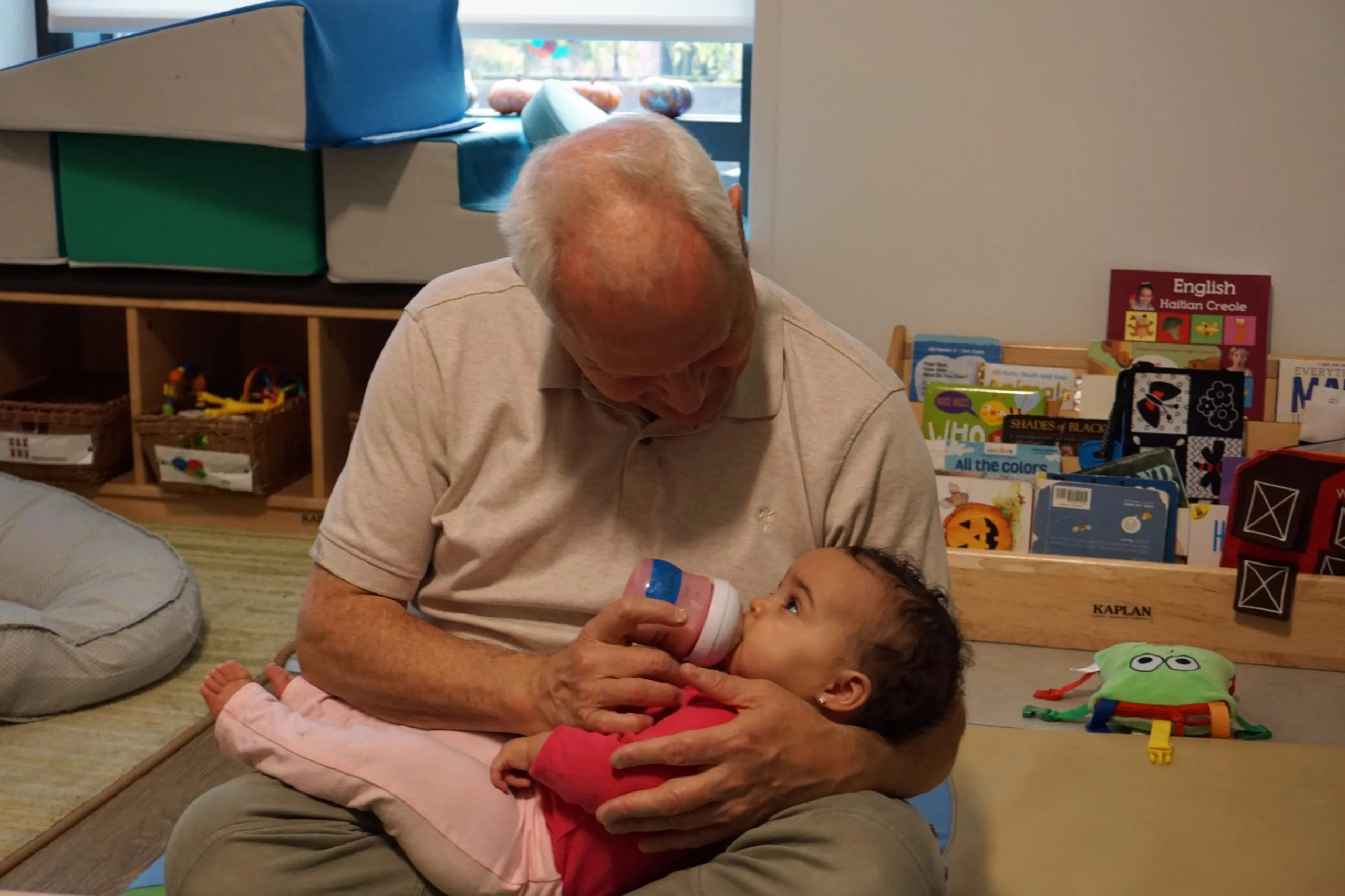
    To an untrained eye, the “gross motor room” at the Edgerley Family Horizons Center in Boston looks like any other indoor gym for preschoolers. There are mats on the floor, large foam blocks, shapes and stairs to play with and climb on, fabric swings hanging from the ceiling and sensory boards attached to the walls, covered with various materials that provide touch-based activities. 

    But this room was thoughtfully designed to be much more than a play space: It includes features meant to support emotional development and provide a calming place for children experiencing big feelings. For example, the cocoon swings provide a “hug” feeling that helps children relax. The blue lights above promote a sense of peace. And the soft foam tunnel gives children a place to hide when they need a break. The teachers are also specifically trained to foster feelings of safety and trust, and to reduce child stress. 

    At Edgerley, which is run by the nonprofit Horizons for Homeless Children and serves more than 250 children ages 2 months to 5 years old, there’s a need for this resource. All the children who are enrolled have experienced or are experiencing homelessness, which for kids, can lead to difficulty regulating emotions, ongoing health issues and developmental delays.

    Over the past few years, infant and toddler homelessness has increased in nearly every state. Nearly half a million of the country’s youngest children are living in shelters, in overcrowded homes with other families, or sleeping in temporary spaces, like cars or hotels. At the same time, fewer of these children are enrolled in early learning programs like the one at Edgerley. Such programs, with their enriching environments and stable teachers, can help buffer the effects of homelessness on young children and their growing brains. I recently traveled to Boston to learn more about the early learning program run by Horizons. My story, which also looks at what other cities and states are doing to help these families, was published last weekend with The Boston Globe. 

    This story about homeless kids was produced by The Hechinger Report, a nonprofit, independent news organization focused on inequality and innovation in education. Sign up for the Hechinger newsletter.

    This <a target=”_blank” href=”https://hechingerreport.org/homeless-kids-get-special-treatment-at-boston-area-child-care-center/”>article</a> first appeared on <a target=”_blank” href=”https://hechingerreport.org”>The Hechinger Report</a> and is republished here under a <a target=”_blank” href=”https://creativecommons.org/licenses/by-nc-nd/4.0/”>Creative Commons Attribution-NonCommercial-NoDerivatives 4.0 International License</a>.<img src=”https://i0.wp.com/hechingerreport.org/wp-content/uploads/2018/06/cropped-favicon.jpg?fit=150%2C150&amp;ssl=1″ style=”width:1em;height:1em;margin-left:10px;”>

    <img id=”republication-tracker-tool-source” src=”https://hechingerreport.org/?republication-pixel=true&post=114434&amp;ga4=G-03KPHXDF3H” style=”width:1px;height:1px;”><script> PARSELY = { autotrack: false, onload: function() { PARSELY.beacon.trackPageView({ url: “https://hechingerreport.org/homeless-kids-get-special-treatment-at-boston-area-child-care-center/”, urlref: window.location.href }); } } </script> <script id=”parsely-cfg” src=”//cdn.parsely.com/keys/hechingerreport.org/p.js”></script>

    Source link

  • Infants and toddlers are a growing group among homeless children

    Infants and toddlers are a growing group among homeless children

    by Jackie Mader, The Hechinger Report
    January 17, 2026

    BOSTON, Mass. — For months, Karian had tried to make it on her own in New York.

    After the birth of her second daughter, she was diagnosed with postpartum depression, major depressive disorder and anxiety. A single mother who had moved from Boston to New York about 13 years ago, she often spent days at a time on the couch, unable to do more than handle the basics for her daughters.

    “I wasn’t taking care of myself,” she said softly on a recent afternoon. “I was not really present.” The Hechinger Report is not publishing her last name to protect her privacy.

    Karian’s mother urged her to move back home to the Boston area and offered to house her and her daughters temporarily. She started working the night shift at a fast food restaurant to save up for her own place while her mother and sister watched her children. 

    But in a city where fast food wages aren’t enough to pay the rent, her efforts felt futile. And then, a month after moving in with her family, her mother’s landlord told her the apartment was overcrowded and she had to leave. Karian and her girls, then 7 years old and 8 months old, moved into a homeless shelter, where her depression and anxiety worsened. 

    “I tried my best, but it’s not their home,” said Karian, now 31.

    Karian’s children had joined the growing ranks of very young children experiencing homelessness. Between 2021 and 2023, the number of homeless infants and toddlers increased in 48 states and the District of Columbia. The most recent estimates found that in 2023 nearly 450,000 infants and toddlers in the United States were in families that lacked a stable place to live. That was a 23 percent increase compared to 2021, according to a report released last year by the nonprofit SchoolHouse Connection in partnership with Poverty Solutions at the University of Michigan.  

    The numbers could be even higher, experts worry, because “hidden homeless” children — those who are doubled up in homes with family or friends or living in a hotel — may not be captured in tallies until they start school.

    High prices for diapers and formula, the exorbitant cost of child care, the rising cost of living, and rising maternal mental health challenges all contribute to the growing rate of homelessness among very young children, experts say. In 2024, one-third of infants and toddlers were in families that struggled to make ends meet, according to the nonprofit infant and toddler advocacy organization Zero to Three. 

    “We’re talking about families who have generationally been disadvantaged by circumstance,” said Kate Barrand, president and CEO of Horizons for Homeless Children, a nonprofit that supports homeless families with young children in Massachusetts. “The cost of housing has escalated dramatically. The cost of any kind of program to put a child in, should you have a job, is escalating,” she added. “There are a lot of things that make it really hard for families.”

    Related: Young children have unique needs and providing the right care can be a challenge. Our free early childhood education newsletter tracks the issues.

    Housing instability is dire for anyone, but particularly for young children, whose brains are rapidly growing and developing. Studies show that young children who are homeless often lag behind their peers in language development and literacy and struggle to learn self-regulation skills, like being able to calm themselves when feeling angry or sad or transition calmly to new activities. They also may experience long-term health and learning challenges.

    Early childhood programs could provide a critical source of stability and developmental support for these children. But SchoolHouse Connection found only a fraction of homeless children are enrolled in early learning programs, and the percentage who are has decreased over the past few years.

    “It’s not just incredibly tragic and sad that infants and toddlers are experiencing homelessness,” said Rahil Briggs, national director of the nonprofit Zero to Three’s HealthySteps program, which works with pediatricians to support the health of babies and toddlers. The first few years are also a “disproportionately important” time in a child’s life, she added, because of the brain development that’s happening.

    Karian and her daughters faced new difficulties after they moved into a shelter.

    They shared an apartment with another family. If the other family was using the shared common space, Karian tried to give them privacy, which meant keeping her children in the bedroom the three of them shared.

    Her older daughter had to change schools, and left without getting to say goodbye to many of her friends. At her new school, her grades dropped. The baby developed a skin condition and there was a bedbug infestation at the shelter. Karian didn’t want to put her on the floor for tummy time. She was desperate to find a home.

    “We were in a place where we couldn’t really make noise. I couldn’t really let them be kids,” she said.

    The rise in housing insecurity among young children has created more demand for programs created specifically to meet the unique needs of children who are experiencing instability and trauma. Many of these programs offer support to parents as well, through what is called a “two-generation” approach to support and services.

    Related: A school created a homeless shelter in the gym and it paid off in the classroom

    In 2021, in response to ballooning child homelessness rates, Horizons opened the Edgerley Family Horizons Center, an early learning program that serves children from 2 months to 5 years old. While some families find Horizons on their own, many are referred by shelters around the Boston area. The need is great: Edgerley serves more than 250 children, with a waitlist of 200 more. Karian’s younger child was one of those who got a spot soon after the program opened.

    Inside Horizons’ large, light-filled building on the corner of a busy street in Boston’s Roxbury neighborhood, every detail is tailored to the needs of children who have experienced instability. Walls are painted in soothing blues and greens. Each classroom has three teachers to maintain a low child-to-staff ratio. Many of the teachers are bilingual. All educators are trained in how to build relationships with families and gently support children who have experienced trauma. 

    The starting salary for teachers is $54,200 a year, far more than the national median for childcare workers of $32,050 and the Massachusetts median of about $39,000. That has encouraged more teachers to stay on at the center and provide a sense of security to the children there, said Horizons CEO Barrand.

    In the infant room, teacher Herb Hickey, who has worked at Horizons for 13 years, frequently sees infants who are hyperaware, struggle to fall asleep, can’t be soothed easily or cling desperately to whichever adult they attach to first. The goal for the infant teachers, he said, is to be a trusted, responsive adult who can be relied on.

    Every day, the teachers in the infant room sing the same songs to the babies. “When they hear our voices constantly, they know they’re in a safe space,” Hickey said. “This is calm.” 

    Teachers also follow the same familiar routines. The rooms are decorated simply, organized and filled with natural light. Teachers constantly scan the infants for signs of distress.

    “We have to be even more responsive,” Hickey said. “When the child starts crying, we don’t have the convenience to say, ‘I know you’re hungry, I’ll get to you.’” He said teachers want even the tiniest babies to learn that “we’re not going to leave you crying.’”

    Related: A federal definition of ‘homeless’ leaves some kids out in the cold. One state is trying to help

    Other needs arise with Horizons’ youngest children: Infants and toddlers living in homeless shelters often lag in gross motor skills. Many spend time on beds rather than on playmats on the floor, or they are kept in car seats or in strollers to keep them safe or from wandering off. That means they’re missing out on all the skills that come from active movement.  

    Even the arrangement of toys at the center has a purpose. Staff want children to know they can depend on toys being in the same location every day. For many children, those are some of the only items they can play with. Families entering a shelter environment can usually only bring a few bags, with no room for toys or books. A toddler who recently entered a shelter where Horizons runs a playroom came in holding a small empty chip bag, recalled Tara Spalding, Horizons’ chief of advancement and playspace. When a shelter staff member threw it away, the boy was inconsolable. “This is the only toy my child has,” staff recalled the mother saying.

    “This just shows the sheer poverty,” said Spalding. 

    As infant and toddler homelessness has increased, other cities and states have tried to provide more support to affected families and get a better sense of their needs. In Oklahoma, experts say, low wages, a lack of housing and eviction laws that favor landlords have led to rising homelessness rates. State officials are trying to gather better data about homeless families to determine the best use of resources, said Susan Agel, chair of Oklahoma’s Homeless Children and Youth Steering Committee. Their efforts are hampered, however, by the fact that many homeless families fear that their children will be taken away by child protective services because they are homeless. 

    In 2024, to fill that gap in data, the state launched a residency questionnaire given to every K-12 student that includes new questions about homelessness, including if there are younger children in the home who are not students and may not otherwise be counted in homeless populations. Officials say it isn’t a perfect solution, but it’s a start to get a sense of the severity of family homelessness. “We can’t devise a system for dealing with a problem if we don’t know what the problem is,” said Agel.

    In Sioux Falls, South Dakota, city officials have ramped up efforts to coordinate city agencies to respond to an increase in homelessness among infants and toddlers.

    “In general, the families we see more often have younger children. The school offers so much support, and there’s limited daycare access” to get similar support for infants and toddlers, said Tommy Fuston, Community Services and Housing Navigator at Minnehaha County’s Department of Human Services. “If a family has younger children, they’re going to struggle more.” 

    Each week, officials from the city, the Sioux Falls School District, local early childhood programs and shelters hold a “care meeting” to make sure any homeless families, or families at risk of homelessness, are quickly connected to the right resources and receive follow-up. “We don’t have unlimited resources, but I think it maximizes the resources that we do have,” Fuston said. “We’ve tried to create a village of supportive services to wrap around these folks.” The city relies extensively on private and faith-based donations to help. All shelters in town are privately funded, for example. 

    Related: Shelter offers rare support for homeless families: a child care center

    Karian heard about the child care center run by Horizons from a social worker soon after she and her daughters moved into their Boston-area shelter. In the infant room, her youngest daughter quickly settled into a routine, something Karian said didn’t happen when the baby was watched at night by family members. When staff identified speech and developmental delays, they helped connect Karian to an early intervention program where her daughter could receive therapy. Now 4 years old and in pre-K at Horizons, “she’s thriving,” Karian said. “She’s getting that nourishment.” 

    Karian also received support. Each family at Horizons is assigned a coach to help parents set personal goals and connect with resources. The organization offers classes in computing, financial management and English, all within the early learning building.

    Two months after setting goals with a family coach, Karian earned her GED, with the help of  the child care assistance. A few months later, she graduated from a culinary training program. She now works a steady job as a cafeteria manager for a local school district, where she earns a salary with benefits. 

    After a year in the shelter, her family was approved for subsidized housing and moved into their own apartment. Horizons allows families to stay in its programs for at least two years after they secure housing to make sure they are stable. 

    Now, Karian has her sights set on eventually opening a restaurant. She also has big dreams for her daughters, something that once seemed out of reach. She wants them to have ambition to “work towards something big,” she said. “I want them to have a dream and be able to achieve it.” 

    Experts say there are larger policy changes that could help families like Karian’s: increasing the minimum wage, expanding child care options like Head Start, which saves a portion of seats for homeless children, and offering more affordable housing to low-income families, to start.

    Providing more federal money to the programs that help poor families pay for child care could also help. Those programs require states to prioritize homeless children and give them the first opportunity to access that money. 

    While important, experts argue, these solutions shouldn’t need to exist in the first place.

    “We should be able to come to an agreement as a society that we should prioritize keeping families with infants and toddlers in their homes,” said Melissa Boteach, chief policy officer at Zero to Three. “Babies shouldn’t be homeless.”

    Contact staff writer Jackie Mader at 212-678-3562 or [email protected].

    This story about homeless children was produced by The Hechinger Report, a nonprofit, independent news organization focused on inequality and innovation in education. Sign up for the Hechinger newsletter

    This <a target=”_blank” href=”https://hechingerreport.org/homelessness-is-rising-fast-among-a-surprising-group-infants-and-toddlers/”>article</a> first appeared on <a target=”_blank” href=”https://hechingerreport.org”>The Hechinger Report</a> and is republished here under a <a target=”_blank” href=”https://creativecommons.org/licenses/by-nc-nd/4.0/”>Creative Commons Attribution-NonCommercial-NoDerivatives 4.0 International License</a>.<img src=”https://i0.wp.com/hechingerreport.org/wp-content/uploads/2018/06/cropped-favicon.jpg?fit=150%2C150&amp;ssl=1″ style=”width:1em;height:1em;margin-left:10px;”>

    <img id=”republication-tracker-tool-source” src=”https://hechingerreport.org/?republication-pixel=true&post=114264&amp;ga4=G-03KPHXDF3H” style=”width:1px;height:1px;”><script> PARSELY = { autotrack: false, onload: function() { PARSELY.beacon.trackPageView({ url: “https://hechingerreport.org/homelessness-is-rising-fast-among-a-surprising-group-infants-and-toddlers/”, urlref: window.location.href }); } } </script> <script id=”parsely-cfg” src=”//cdn.parsely.com/keys/hechingerreport.org/p.js”></script>

    Source link

  • Conservatives see married parents as a solution to low student achievement. It’s not that simple

    Conservatives see married parents as a solution to low student achievement. It’s not that simple

    by Jill Barshay, The Hechinger Report
    January 12, 2026

    Conservatives have long argued that unwed motherhood and single parenting are major drivers of poor student achievement. They contend that traditional two-parent families — ideally with a married mother and father — provide the stability children need to succeed in school. Single-parent households, more common among low-income families, are blamed for weak academic outcomes.

    That argument has resurfaced prominently in Project 2025, a policy blueprint developed by the conservative Heritage Foundation that calls for the federal government to collect and publish more education data broken out by family structure.

    Project 2025 acknowledges that the Education Department already collects some of this data, but asserts that it doesn’t make it public. That’s not true, though you need expertise to extract it. When I contacted the Heritage Foundation, the organization responded that the family-structure data should still be “readily available” to a layman, just like student achievement by race and sex. Fair point.

    Related: Our free weekly newsletter alerts you to what research says about schools and classrooms.

    With some help, I found the figures and the results complicate the conservative claim.

    Since 2013, the National Assessment of Educational Progress (NAEP), often called the Nation’s Report Card, has asked students about who lives in their home. While the question does not capture every family arrangement, the answers provide a reasonable, albeit imperfect, proxy for family structure and it allows the public to examine how a nationally representative sample of students from different types of households perform academically. 

    I wanted to look at the relationship between family structure and student achievement by family income. Single-parent families are far more common in low-income communities and I didn’t want to conflate achievement gaps by income with achievement gaps by family structure. For example, 43 percent of low-income eighth graders live with only one parent compared with 13 percent of their high-income peers. I wanted to know whether kids who live with only one parent perform worse than kids with the same family income who live with both parents.

    To analyze the most recent data from the 2024 NAEP exam, I used the NAEP Data Explorer, a public tool developed by testing organization ETS for the National Center for Education Statistics (NCES). I told an ETS researcher what I wanted to know and he showed me how to generate the cross-tabulations, which I then replicated independently across four tests: fourth- and eighth-grade reading and math. Finally, I vetted the results with a former senior official at NCES and with a current staff member at the governing board that oversees the NAEP assessment.

    The analysis reveals a striking pattern.

    Among low-income students, achievement differs little by family structure. Fourth- and eighth-grade students from low-income households score at roughly the same level whether they live with both parents or with only one parent. Two-parent households do not confer a measurable academic advantage in this group. Fourth-grade reading is a great example. Among the socioeconomic bottom third of students, those who live with both parents scored a 199. Those who live with just mom scored 200. The results are almost identical and, if anything, a smidge higher for the kids of single moms. 

    As socioeconomic status rises, however, differences by family structure become more pronounced. Among middle- and high-income students, those living with both parents tend to score higher than their peers living with only one parent. The gap is largest among the most affluent students. In fourth grade reading, for example, higher-income kids who live with both parents scored a 238, a whopping 10 points higher than their peers who live with only their moms. Experts argue over the meaning of a NAEP point, but some equate 10 NAEP points to a school year’s worth of learning. It’s substantial.

    Family structure matters less for low-income student achievement

    Still, it’s better to be rich in a single-parent household than poor in a two-parent household. High-income students raised by a single parent substantially outperform low-income students who live with both parents by at least 20 points, underscoring that money and the advantages it brings — such as access to resources, stable housing, and educational support — matter far more than household composition alone. In other words, income far outweighs family structure when it comes to student achievement.

    Despite the NAEP data, Jonathan Butcher, acting director of the center for education policy at the Heritage Foundation, stands by the contention that family structure matters greatly for student outcomes. He points out that research since the landmark Coleman report of 1966 has consistently found a relationship between the two. Most recently, in a 2022 American Enterprise Institute-Brookings report, 15 scholars concluded that children “raised in stable, married-parent families are more likely to excel in school, and generally earn higher grade point averages” than children who are not. Two recent books, Brad Wilcox’s “Get Married” (2024) and Melissa Kearney’s “The Two-Parent Privilege” (2023), make the case, too, and they point out that children raised by married parents are about twice as likely to graduate from college as children who are not. However, it’s unclear to me if all of this analysis has disaggregated student achievement by family income as I did with the NAEP data.

    Related: Trump administration makes good on many Project 2025 education goals

    Family structure is a persistent theme for conservatives. Just last week the Heritage Foundation released a report on strengthening and rebuilding U.S. families. In a July 2025 newsletter, Robert Pondiscio, senior fellow at the American Enterprise Institute, a conservative think tank, wrote that “the most effective intervention in education is not another literacy coach or SEL program. It’s dad.” He cited a June 2025 report, “Good Fathers, Flourishing Kids,” by scholars and advocates. (Disclosure: A group led by one of the authors of this report, Richard Reeves, is among the funders of The Hechinger Report.)

    That conclusion is partially supported by the NAEP data, but only for a relatively small share of students from higher-income families (The share of high-income children living with only their mother ranges between 7 and 10 percent. The single-parent rate is higher for eighth graders than for fourth graders.)  For low-income students, who are Pondiscio’s and the scholars’ main concern, it’s not the case. 

    The data has limitations. The NAEP survey does not distinguish among divorced families, grandparent-led households or same-sex parents. Joint custody arrangements are likely grouped with two-parent households because children may say that they live with both mother and father, if not at the same time. Even so, these nuances are unlikely to alter the core finding: For low-income students, academic outcomes are largely similar regardless of whether they live with both parents all of the time, some of the time or only live with one parent. 

    The bottom line is that calls for new federal data collection by family structure, like those outlined in Project 2025, may not reveal what advocates expect. A family’s bank account matters more than a wedding ring. 

    Contact staff writer Jill Barshay at 212-678-3595, jillbarshay.35 on Signal, or [email protected].

    This story about family structure and student achievement was produced by The Hechinger Report, a nonprofit, independent news organization focused on inequality and innovation in education. Sign up for Proof Points and other Hechinger newsletters.

    This <a target=”_blank” href=”https://hechingerreport.org/proof-points-family-structure-student-achievement/”>article</a> first appeared on <a target=”_blank” href=”https://hechingerreport.org”>The Hechinger Report</a> and is republished here under a <a target=”_blank” href=”https://creativecommons.org/licenses/by-nc-nd/4.0/”>Creative Commons Attribution-NonCommercial-NoDerivatives 4.0 International License</a>.<img src=”https://i0.wp.com/hechingerreport.org/wp-content/uploads/2018/06/cropped-favicon.jpg?fit=150%2C150&amp;ssl=1″ style=”width:1em;height:1em;margin-left:10px;”>

    <img id=”republication-tracker-tool-source” src=”https://hechingerreport.org/?republication-pixel=true&post=114283&amp;ga4=G-03KPHXDF3H” style=”width:1px;height:1px;”><script> PARSELY = { autotrack: false, onload: function() { PARSELY.beacon.trackPageView({ url: “https://hechingerreport.org/proof-points-family-structure-student-achievement/”, urlref: window.location.href }); } } </script> <script id=”parsely-cfg” src=”//cdn.parsely.com/keys/hechingerreport.org/p.js”></script>

    Source link

  • Teachers who use math vocabulary help students do better in math

    Teachers who use math vocabulary help students do better in math

    by Jill Barshay, The Hechinger Report
    January 5, 2026

    Students, parents and school principals all instinctively know that some teachers are better than others. Education researchers have spent decades trying — with mixed success — to calculate exactly how much better.

    What remains far more elusive is why.

    A new study suggests that one surprisingly simple difference between stronger and weaker math teachers may be how often they use mathematical vocabulary, words such as “factors,” “denominators” and “multiples,” in class.

    Related: Our free weekly newsletter alerts you to what research says about schools and classrooms.

    Teachers who used more math vocabulary had students who scored higher on math tests, according to a team of data scientists and education researchers from Harvard University, Stanford University and the University of Maryland. The size of the test score boost was substantial. It amounted to about half of the benefit researchers typically attribute to having a highly effective teacher, which is among the most important school-based factors that help children learn. Students with highly effective teachers can end up months ahead of their peers. 

    “If you’re looking for a good math teacher, you’re probably looking for somebody who’s exposing their students to more mathematical vocabulary,” said Harvard data scientist Zachary Himmelsbach, lead author of the study, which was published online in November 2025.

    The finding aligns with a growing body of research suggesting that language plays a critical role in math learning. A 2021 meta-analysis of 40 studies found that students with stronger math vocabularies tend to perform better in math, particularly on multi-step, complex problems. Understanding what a “radius” is, for example, can make it more efficient to talk about perimeter and area and understand geometric concepts. Some math curricula explicitly teach vocabulary and include glossaries to reinforce these terms.

    Related: Three reasons why so few eighth graders in the poorest schools take algebra

    But vocabulary alone is unlikely to be a magic ingredient.

    “If a teacher just stood in front of the classroom and recited lists of mathematical vocabulary terms, nobody’s learning anything,” said Himmelsbach. 

    Instead, Himmelsbach suspects that vocabulary is part of a broader constellation of effective teaching practices. Teachers who use more math terms may also be providing clearer explanations, walking students through lots of examples step-by-step, and offering engaging puzzles. These teachers might also have a stronger conceptual understanding of math themselves.

    It’s hard to isolate what exactly is driving the students’ math learning and what role vocabulary, in and of itself, is playing, Himmelsbach said.

    Himmelsbach and his research team analyzed transcripts from more than 1,600 fourth- and fifth-grade math lessons in four school districts recorded for research purposes about 15 years ago. They counted how often teachers used more than 200 common math terms drawn from elementary math curriculum glossaries.

    The average teacher used 140 math-related words per lesson. But there was wide variation. The top quarter of the teachers used at least 28 more math terms per lesson than the quarter of the teachers who spoke the fewest math words. Over the course of a school year, that difference amounted to roughly 4,480 additional math terms, meaning that some students were exposed to far richer mathematical language than others, depending on which teacher they happened to have that year.

    The study linked these differences to student achievement. One hundred teachers were recorded over three years, and in the third year, students were randomly assigned to classrooms. That random assignment allowed the researchers to rule out the possibility that higher performing students were simply being clustered with stronger teachers.

    Related: A theory for learning numbers without counting gains popularity

    The lessons came from districts serving mostly low-income students. About two-thirds of students qualified for free or reduced-price lunch, more than 40 percent were Black, and nearly a quarter were Hispanic — the very populations that tend to struggle the most in math and stand to gain the most from effective instruction.

    Interestingly, student use of math vocabulary did not appear to matter as much as teacher use. Although the researchers also tracked how often students used math terms in class, they found no clear link between teachers who used more vocabulary and students who spoke more math words themselves. Exposure and comprehension, rather than verbal facility, may be enough to support stronger math performance.

    The researchers also looked for clues as to why some teachers used more math vocabulary than others. Years of teaching experience made no difference. Nor did the number of math or math pedagogy courses teachers had taken in college. Teachers with stronger mathematical knowledge did tend to use more math terms, but the relationship was modest.

    Himmelsbach suspects that personal beliefs play an important role. Some teachers, he said, worry that formal math language will confuse students and instead favor more familiar phrasing, such as “put together” instead of addition, or “take away” instead of subtraction. While those colloquial expressions can be helpful, students ultimately need to understand how they correspond to formal mathematical concepts, Himmelsbach said.

    This study is part of a new wave of education research that uses machine learning and natural language processing — computer techniques that analyze large volumes of text — to peer inside the classroom, which has long remained a black box. With enough recorded lessons, researchers hope not only to identify which teaching practices matter most, but also provide teachers with concrete, data-driven feedback.

    Related: A little parent math talk with kids might really add up

    The researchers did not examine whether teachers used math terms correctly, but they noted that future models could be trained to do just that, offering feedback on accuracy and context, not just frequency.

    For now, the takeaway is more modest but still meaningful: Students appear to learn more math when their teachers speak the language of math more often.  

    Contact staff writer Jill Barshay at 212-678-3595, jillbarshay.35 on Signal, or [email protected].

    This story about math vocabulary was produced by The Hechinger Report, a nonprofit, independent news organization focused on inequality and innovation in education. Sign up for Proof Points and other Hechinger newsletters.

    This <a target=”_blank” href=”https://hechingerreport.org/proof-points-math-vocabulary/”>article</a> first appeared on <a target=”_blank” href=”https://hechingerreport.org”>The Hechinger Report</a> and is republished here under a <a target=”_blank” href=”https://creativecommons.org/licenses/by-nc-nd/4.0/”>Creative Commons Attribution-NonCommercial-NoDerivatives 4.0 International License</a>.<img src=”https://i0.wp.com/hechingerreport.org/wp-content/uploads/2018/06/cropped-favicon.jpg?fit=150%2C150&amp;ssl=1″ style=”width:1em;height:1em;margin-left:10px;”>

    <img id=”republication-tracker-tool-source” src=”https://hechingerreport.org/?republication-pixel=true&post=114152&amp;ga4=G-03KPHXDF3H” style=”width:1px;height:1px;”><script> PARSELY = { autotrack: false, onload: function() { PARSELY.beacon.trackPageView({ url: “https://hechingerreport.org/proof-points-math-vocabulary/”, urlref: window.location.href }); } } </script> <script id=”parsely-cfg” src=”//cdn.parsely.com/keys/hechingerreport.org/p.js”></script>

    Source link

  • a parking lot where students can sleep safely in their cars 

    a parking lot where students can sleep safely in their cars 

    by Gail Cornwall, The Hechinger Report
    December 9, 2025

    LONG BEACH, Calif. — When Edgar Rosales Jr. uses the word “home,” the second-year college student with a linebacker’s build isn’t referring to the house he plans to buy after becoming a nurse or getting a job in public health. Rather, the Long Beach City College student is talking about the parking lot he slept in every night for more than a year. With Oprah-esque enthusiasm, Rosales calls the other students who use LBCC’s Safe Parking Program his “roommates” or “neighbors.” 

    Between 8 and 10:30 p.m., those neighbors drive onto the lot, where staff park during the day. Nearby showers open at 6 a.m. Sleeping in a car may not sound like a step up, but for Rosales — who dropped out of a Compton high school more than 20 years ago to become a truck driver — being handed a key fob to a bathroom stocked with toilet paper and hand soap was life-altering. He kept the plastic tab on his key ring, even though he was supposed to place it in a drop box each morning, because the sight of it brought comfort; the sense of it between his fingers, hard and slick, felt like peace.

    When Rosales and his son’s mother called it off again in the fall of 2024, just after he’d finished a GED program and enrolled at LBCC, he stayed with his brother for a week or so. But he didn’t want to be a burden. So one day after work at the trucking company — he’d gone part-time since enrolling, though he’d still regularly clock 40 hours a week — he circled the block in his beat-up sedan and parked on the side of the road, near some RVs and an encampment. The scariest part of sleeping in his car was the noises, Rosales said: “I heard a dog barking or I heard somebody running around or you see cop lights going down the street. You see people looking in your car.” He couldn’t sleep, let alone focus. Without the ability to bathe regularly, he began to avoid people to spare them the smell. The car became his sanctuary, but also, a prison. As he put it, “It starts messing with your mental health.”

    First, Rosales dropped a class. A few weeks later, he told his LBCC peer navigator he couldn’t do it anymore and needed her help to withdraw. Instead, she got Rosales signed up for the college’s Safe Parking Program, and everything flipped on its head. With the LBCC lot’s outlets and WiFi, the back seat of his car morphed into a study carrel. Campus security was there to watch over him, not threaten him like the police had, telling him to move along or issuing a citation that cost him a day’s pay. For the first time in a month, Rosales said, “I could just sleep with my eyes closed the whole night.”

    Related: Interested in more news about colleges and universities? Subscribe to our free biweekly higher education newsletter.

    Forty-eight percent of college students experience housing insecurity, meaning “challenges that prevent them from having a safe, affordable, and consistent place to live,” suggests the most recent Student Basic Needs Survey Report from the Hope Center at Temple University. That number rises to 60 percent for Black students, 67 percent for students who are parenting and 72 percent for former foster youth. The problem also tends to be worse for veterans and those who identify as LGBTQ+ or have been labeled undocumented, said Sara Abelson, an assistant professor and the Hope Center’s senior director of education and training. Fourteen percent of the nearly 75,000 students surveyed experienced homelessness, the most severe form of housing insecurity. Other analyses produce similar estimates.

    Of course, rates differ by institution. The Hope Center found that housing insecurity at two-year schools, like LBCC, was about 10 points higher than at their four-year counterparts. A similar gap divided institutions that serve high proportions of students classified as racial and ethnic minorities from those that don’t. Geography also matters: It’s much easier to find a rental unit in Wilmington, North Carolina, for example, than in Portland, Oregon. And yet, the problem is a national one, said Jillian Sitjar, director of higher education for the nonprofit SchoolHouse Connection, affecting both rural and urban areas and “not just a California thing.” That’s partly because of a national housing supply shortage and the fact that eligibility rules for affordable housing programs often exclude students; and it’s partly because the cost of college has risen nationwide as both government investment in higher education and the purchasing power of financial aid have fallen over the decades. The second Trump administration’s threatened and actual changes to Pell Grants, the largest federal student aid program, haven’t helped, nor have its cuts to the social safety net generally and erosion of laws meant to ensure equitable access to housing. 

    For years, colleges have primarily referred homeless students to shelters, nonprofits and other external organizations, but “there’s kind of a shift that’s happening,” Sitjar said: “Institutions are starting to look internally, being like, ‘OK, we need to do more.’” LBCC’s Safe Parking Program is one of the most visible of a new crop of programs addressing student housing insecurity by giving students unorthodox places to sleep: cars, hotels, napping pods, homes of alumni and even an assisted living facility. What sets these stopgap efforts apart from longer-term strategies — such as initiatives to reduce rents, build housing (including out of shipping containers), rapidly rehouse students, cover housing gaps (like summer and holidays) and provide students with more financial aid — is that they’re designed to be flawed. College administrators know full well that Band-Aid programs are insufficient, that they’re catching blood rather than addressing the source of the bleeding. And yet, while long-term projects are underway, what’s woefully inadequate can be quite a bit better than nothing.

    An oversize sink sure was for Mike Muñoz. Decades before earning his doctorate and becoming the president of LBCC, Muñoz was a community college student who worked in a mall as the assistant manager of a portrait studio. After coming out as gay, he couldn’t go home, and then the family lost their house to foreclosure so “there wasn’t a home to go back to,” he said. Many nights, he’d crash on friends’ couches, but in the week leading up to payday, he couldn’t afford the gas to get there from work. Feeling hopeless, Muñoz would find a parking spot near the mall and spend the night in his car, dealing with the exact same stressors Rosales would endure years later. In the morning, he’d take a sponge bath in the oversize sink that the studio used to develop film. His No. 1 concern, after survival, he says, was keeping anyone from finding out about his homelessness, especially on campus.

    President Muñoz — who is warm like Rosales yet more self-contained, often listening so intently as to become motionless — said the Safe Parking Program is about more than providing physical safety for students who sleep in their vehicles. Muñoz wants these students to feel safe bringing their full selves to college, in a way he didn’t until transferring to a four-year school and moving into student housing. “The mental load that I was carrying, I was able to set that down,” he said, “and I was able to then really focus that energy” — on classes, on who he wanted to be. That’s Muñoz’s answer to those who say emergency housing is a distraction, ancillary to the mission of a college.

    Indeed, research suggests that asking a student to thrive in college without a reliable place to sleep is no more reasonable than asking them to ace a test without access to books or lectures. Multiple studies find that housing insecurity is associated with significantly lower grades and well-being. Lacking a stable housing arrangement has also been shown to negatively affect class attendance, full-time enrollment and the odds of getting a degree. What’s more, a 2024 survey found that housing-insecure students rely more on risky credit services like payday loans and auto-title loans. This Gordian knot of need and peril, which often also includes child care obligations and food insecurity, makes it hard to prove that emergency housing alone will improve students’ lives. But Rashida Crutchfield, a professor of social work and executive director of the Center for Equitable Higher Education at California State University, Long Beach, said, “It’s one of those ‘obviously’ moments that if you house students, they do better.” 

    Related: Housing insecurity derails foster kids’ college dreams

    When a pandemic-era survey revealed at least 70 LBCC students living in their cars, Muñoz asked the college’s board to support him in implementing a safe parking program. They agreed something had to be done, but issues like legal liability concerned some LBCC staff. Additional worries included the cost and that it would mean less money for longer-term solutions, the risk of sending a message that it’s OK for students to have to sleep in their cars, and “the sky is falling kind of stuff” — visions of drugs, sex, trash, urine. But Muñoz pressed, and in 2021 the school piloted a program with 13 students and a startup budget of $200,000 from pandemic relief funds. That money covered private overnight security and paid for the nonprofit Safe Parking LA to train LBCC staff and help develop an application, liability waiver and more. The school’s facilities team installed security cameras, scheduled more cleaning and figured out how best to handle the extra opening and closing of the lot’s gates.

    Similar efforts sprang up during the pandemic but later shuttered. For example, a collaboration in Oakland between Laney College and West Side Missionary Baptist Church wound down as did the safe lot program near the University of Washington’s Seattle campus. “The funding isn’t there anymore,” explained Marguerita Lightfoot, a professor at OHSU-PSU School of Public Health. Yet still to this day, she said of sleeping in cars, “There are students who are doing that at every institution.” 

    Knowing that, LBCC was determined to keep the Safe Parking Program running even after the federal tap ran dry. The school moved the program from its original location to the lot Rosales would call home, which has a clear line of sight from the campus security office. One extra campus security position replaced the private company, cutting LBCC’s overall spend in half. In other words, Muñoz made it work.

    Other schools have swung different hammers at the same nail. Some colleges and universities with dorms maintain “in-and-out rooms,” beds set aside for short-term, emergency use, the way Roosevelt University in Chicago and Fort Lewis College in Colorado do. But Sitjar says a lot of red tape and considerable expense make in-and-out rooms uncommon. For specific student populations, some schools offer year-round housing, like West Chester University’s Promise Program for former foster youth and qualifying homeless students and a similar program at San Diego State University. But “during the summer, it’s really, really, really hard for institutions to try to keep those rooms set aside,” Sitjar said, since they otherwise generate revenue via summer camps, reunions and more, and during the academic year mean room-and-board money.

    And community colleges — which educate the majority of American college students — mostly don’t have dorms that allow for this option. A few have teamed up with four-year institutions to house students at a discounted rate. In New Jersey, Rider University hosts students from Mercer County Community College. Through a pilot program launched in 2019, Massachusetts reimburses four-year campuses for the cost of keeping dorm beds available for community college students experiencing homelessness. A review of the program, through which eight colleges and universities have hosted students, found that 72 percent of participants showed academic improvement and even more experienced improved mental health.

    Other types of partnerships also put roofs over students’ heads in short order. Cape Cod Community College works with a local health center to get students into hotel rooms on days the temperature falls below 32 degrees. And Norco College in Southern California is just one of dozens that contracts directly with a hotel. Religious organizations help too, such as Depaul USA in Philadelphia, which houses homeless college students in a converted convent. Around 400 miles south, in Wake County, North Carolina, HOST is a nonprofit that began with members of the NC State University community inviting students to move into their homes. And New York City’s LaGuardia Community College partners with Airbnb to house students short term, with the company reimbursing hosts.

    Related: From Pony Soldier Inn to student housing: How an old hotel shows one solution to community college housing problems

    A particularly unusual partnership resulted when Winona Health, a health care system in Minnesota, acquired a nursing home that had a mansion sitting on the same parcel of land. The century-old building, Watkins Manor, wasn’t ideal for assisted living, so in 2021 Winona invited students from nearby colleges to move in for a very low monthly rent plus volunteer hours. Students help senior citizens do things like troubleshoot tech, go shopping and participate in therapeutic recreation programs. “The residents love it, the students love it,” said Linda Atkinson, the administrator who oversees the program. While students don’t need to experience housing insecurity to apply, the program has provided emergency housing for those who have been kicked out of a parent’s home, experienced domestic violence and more.

    Some schools combine these solutions, inching toward more comprehensive support. At California State University, Sacramento, the CARES program maintains four beds in on-campus dorms for immediate use. It also partners with the Hampton Inn and offers rent subsidies, eviction-avoidance grants (a utility bill here, a late fee there) and move-in support grants (think security deposits), among others. Additionally, the program has helped connect students with members of local churches willing to open their homes. Understanding that some students don’t have cars, LBCC too offers much more than the Safe Parking Program. As Crutchfield put it, “Different people have lots of different needs, and we have to have a buffet of options.”

    At Howard Community College in Maryland, one smörgåsbord item is a place to nap. President Daria Willis doesn’t have anywhere to put a shelter for housing-insecure students, as Harvard, UCLA and the University of Southern California have done. “We are pretty much landlocked,” she explained, “I’ve got a hospital on my left side, and I’ve got neighborhoods on the right, back, and front side of the campus.” But she wanted to do something to help the exhausted students she walked by on the way to her office morning after morning. Students who worked night shifts, parented young kids or didn’t have a place to sleep at night were curled into chairs and draped over benches. In a pilot program, the school bought five chairs, known as sleeping pods, designed for rest. After Willis posted a picture on social media of herself relaxing in one, “it exploded,” she said: “Students were in them every single moment of the day,” often needing to be asked to leave when buildings closed at 11:30 p.m. So the school bought more sleeping pods. And more again. 

    No one, though, believes napping facilities and parking lots are really the answer.

    Rosales has leg issues and a bad back. “I’m a big guy,” he said as he folded himself into the back seat of his car in an origami-like series of steps in early September. The WiFi on the lot is spotty, one bathroom for more than a dozen people often means a line, there’s no fridge to store leftovers or microwave to reheat them, and Safe Parking Program users aren’t able to sleep in or get to bed early. Last semester, when he took a class that didn’t get out until 10 p.m., Rosales had to move as fast as his busted knees would carry him to make the cutoff at 10:30. And he was still homeless. He’d go to a restaurant, spending dollars he couldn’t spare and eating too much just “to feel like a normal person,” Rosales said. He’d say hello to everybody and strike up a conversation with his server, to try to “be normal for a minute.”

    Yet despite its limitations, the Safe Parking Program let Rosales “breathe, relax, continue on,” he said. And the lot offered a chance to build community. He began encouraging new arrivals to connect: “Trust me, we’ll help you,” Rosales would say. And they do often require help like that. Even when campus resources exist, two-thirds of students in need lack awareness about available supports, the Hope Center researchers concluded. Stigma is part of the problem. As Rosales put it, “We’re scared that we’re going to get judged or someone’s going to give us pity or give us a look … like, ‘Oh, there goes the homeless one.’” He didn’t even tell his family about his homelessness. In fact, Rosales’ peer navigator was the first to know — and he only had one of those to turn to because of LBCC’s surveys and targeted outreach.

    Recently, Rosales organized a free breakfast to connect his “roommates and neighbors” with campus resources and each other. He felt terrible that he still couldn’t do much for the son he’d barely seen since moving out, especially after being laid off by the trucking company on Christmas Eve. But gathering participants in the Safe Parking Program, helping them — now he could add value to someone. And he felt valued by LBCC, having been given comprehensive support and case management meant to find an on-ramp to stable housing, as well as money for car repairs. (Each year, between $23,000 and $115,000 from the LBCC Foundation — which swelled after a $30 million gift from MacKenzie Scott, the philanthropist formerly married to Jeff Bezos — goes to students for vehicle registration, insurance, repairs and daytime parking permits.) Rosales felt like he mattered at LBCC, even after bringing his whole self to campus, just as Muñoz had hoped.

    Related: Overdue tuition and fees — as little as $41 — derail hundreds of thousands of California community college students 

    At some point in the nation’s history, homelessness on college campuses was nonexistent, a rounding error when it did occur, because students had to have wealth behind them to access higher education. As efforts to democratize admissions and attendance (like the GI Bill) have borne fruit, “more of those who are facing these issues are getting to institutions,” said Abelson, the Hope Center’s senior director of education and training, combining with housing and funding shortages to create need that “has largely gone under the radar and unrecognized.” Efforts to equalize opportunity have been insufficient, and yet, they’ve made it possible for someone like Muñoz to graduate and then rise through the ranks. They’ve made it possible for his days of rationing gas and sink-bathing to open an institution’s eyes to the need for a net to catch students who are slipping off its ivory tower, and for Muñoz to push to create one, even if it must be stitched together from imperfect materials.

    But the reality is that the majority of schools have massive holes in their nets, or to return to Crutchfield’s metaphor, they don’t offer any of these emergency housing dishes, let alone the whole spread. For the most part, colleges and universities still just create a list of resources and refer students out, suggesting they try their luck with local shelters and Craigslist. It’s inadequate. “Our shelter systems are overtaxed,” Crutchfield said, “there’s just not enough capacity.” And even when there is, “students don’t see shelter systems as for them,” she said. In some ways, they’re right: Shelter rules, including the need to queue up and turn lights off when there’s homework still to be done, often clash with students’ needs. 

    “If I fall down and I’m bleeding, definitely get me medical attention, get me a Band-Aid,” Crutchfield said. “But if the road is broken, and that’s why people keep falling down, you have to deal with the road.” So yes to safe parking, she said, but also, “What are we going to do next?” 

    In addition to building housing, participating in rapid rehousing models and advocating for financial aid that covers the true cost of college, some schools have hired homeless liaisons, staff members dedicated to assisting students experiencing homelessness. According to SchoolHouse Connection, California, Florida, Illinois, Louisiana, Maryland and Tennessee require schools to establish these roles. Maine encourages doing so, and California, Minnesota and Washington even set aside funds that can be used to pay for them. The impact appears to be significant. In Washington, 22 out of 25 community colleges surveyed said they provide some sort of emergency housing. Sitjar said, “For institutions and states that have these individuals, that have these roles, we’re then seeing those colleges make the really unique solutions of addressing housing.”

    She pointed to bipartisan federal legislation, two bills that are expected to be reintroduced this session, that would require homeless liaisons as well as force colleges to develop plans for housing during academic breaks, do a better job of identifying students struggling with homelessness and more. One of the bills would update the Low-Income Housing Tax Credit program to allow full-time students to live in LIHTC housing if they’ve experienced homelessness within the last seven years. Abelson said the Hope Center and others support this reform as well as similar efforts aimed at “reducing the many barriers that students face to accessing [government] benefits.” 

    These days, Rosales still eats his feelings sometimes, he said, but “it’s slowly getting better because I see a therapist every two weeks through the school.” When LBCC told him in September that he’d been offered housing through a rapid rehousing program called Jovenes — a two-bedroom, two-bath to be shared with three roommates — Rosales began to cry, from relief but also from fear. “I never thought I was going to get out of here,” he said of the Safe Parking Program. “This is my home, this is where I live, this is where I’ve been — holidays, weekends, a birthday.” He finds comfort in knowing that the lot is always an option, as it is for the dozens of LBCC students living on the brink who have signed up for the program just in case. But he doesn’t sleep there anymore. “I’m not going back,” Rosales said, and for the first time, he believes in his ability to make that happen. He can feel in his truck-weary bones that he’ll graduate, that he’ll get that house he’s been dreaming about: “I’m moving ahead.”

    Contact editor Caroline Preston at 212-870-8965, via Signal at CarolineP.83 or on email at [email protected]

    This story about emergency housing was produced by The Hechinger Report, a nonprofit, independent news organization focused on inequality and innovation in education. Sign up for the Hechinger newsletter.

    This <a target=”_blank” href=”https://hechingerreport.org/a-new-solution-to-student-homelessness-a-parking-lot-where-students-can-sleep-safely-in-their-cars/”>article</a> first appeared on <a target=”_blank” href=”https://hechingerreport.org”>The Hechinger Report</a> and is republished here under a <a target=”_blank” href=”https://creativecommons.org/licenses/by-nc-nd/4.0/”>Creative Commons Attribution-NonCommercial-NoDerivatives 4.0 International License</a>.<img src=”https://i0.wp.com/hechingerreport.org/wp-content/uploads/2018/06/cropped-favicon.jpg?fit=150%2C150&amp;ssl=1″ style=”width:1em;height:1em;margin-left:10px;”>

    <img id=”republication-tracker-tool-source” src=”https://hechingerreport.org/?republication-pixel=true&post=113649&amp;ga4=G-03KPHXDF3H” style=”width:1px;height:1px;”><script> PARSELY = { autotrack: false, onload: function() { PARSELY.beacon.trackPageView({ url: “https://hechingerreport.org/a-new-solution-to-student-homelessness-a-parking-lot-where-students-can-sleep-safely-in-their-cars/”, urlref: window.location.href }); } } </script> <script id=”parsely-cfg” src=”//cdn.parsely.com/keys/hechingerreport.org/p.js”></script>


    Source link

  • Eviction sets single mom on a quest to keep her kids in their schools

    Eviction sets single mom on a quest to keep her kids in their schools

    by Bianca Vázquez Toness, The Hechinger Report
    November 18, 2025

    This story was produced by the Associated Press and reprinted with permission.

    ATLANTA — It was the worst summer in years. Sechita McNair’s family took no vacations. Her younger boys didn’t go to camp. Her van was repossessed, and her family nearly got evicted — again.

    But she accomplished the one thing she wanted most. A few weeks before school started, McNair, an out-of-work film industry veteran barely getting by driving for Uber, signed a lease in the right Atlanta neighborhood so her eldest son could stay at his high school.

    As she pulled up outside the school on the first day, Elias, 15, stepped onto the curb in his new basketball shoes and cargo pants. She inspected his face, noticed wax in his ears and grabbed a package of baby wipes from her rental car. She wasn’t about to let her eldest, with his young Denzel Washington looks, go to school looking “gross.”

    He grimaced and broke away.

    “No kiss? No hugs?” she called out.

    Elias waved and kept walking. Just ahead of him, at least for the moment, sat something his mother had fought relentlessly for: a better education.

    The link between where you live and where you learn

    Last year, McNair and her three kids were evicted from their beloved apartment in the rapidly gentrifying Old Fourth Ward neighborhood of Atlanta. Like many evicted families, they went from living in a school district that spends more money on students to one that spends less.

    Thanks to federal laws protecting homeless and evicted students, her kids were able to keep attending their Atlanta schools, even though the only housing available to them was in another county 40 minutes away. They also had the right to free transportation to those schools, but McNair says the district didn’t tell her about that until the school year ended. Their eligibility to remain in those schools expired at the end of last school year.

    Still wounded by the death of his father and multiple housing displacements, Elias failed two classes last year, his freshman year. Switching schools now, McNair fears, would jeopardize any chance he has of recovering his academic life. “I need this child to be stable,” she says.

    Related: Become a lifelong learner. Subscribe to our free weekly newsletter featuring the most important stories in education.

    With just one week before school started, McNair drove extra Uber hours, borrowed money, secured rental assistance and ignored concerns about the apartment to rent a three-bedroom in the Old Fourth Ward. At $2,200 a month, it was the only “semi-affordable” apartment in the rapidly gentrifying ward that would rent to a single mom with a fresh eviction on her record.

    On Zillow, the second-floor apartment, built in 2005, looked like a middle-class dream with its granite countertops, crown molding and polished wood floors. But up close, the apartment looked abused and held secrets McNair was only beginning to uncover.

    The first sign something was wrong came early. When she first toured the apartment, it felt rushed, like the agent didn’t want her to look too closely. Then, even as they told her she was accepted, the landlord and real estate agent wouldn’t send her a “welcome letter” laying out the agreement, the rent and deposit she would pay. It seemed like they didn’t want to put anything in writing.

    When the lease came, it was full of errors. She signed it anyway. “We’re back in the neighborhood!” she said. Elias could return to Midtown High School.

    But even in their triumph, no one in the family could relax. Too many things were uncertain. And it fell to McNair — and only McNair — to figure it out.

    The first day back

    Midtown is a high school so coveted that school administrators investigate student residency throughout the year to keep out kids from other parts of Atlanta and beyond. For McNair, the day Elias returned to the high school was a momentous one.

    “Freedom!” McNair declared after Elias disappeared into the building. Without child care over the summer, McNair had struggled to find time to work enough to make ends meet. Now that the kids were back in class, McNair could spend school hours making money and resolving some of the unsettled issues with her new apartment.

    McNair, the first person in her family to attend college, studied theater management. Her job rigging stage sets was lucrative until the writers’ and actors’ strike and other changes paralyzed the film industry in 2023. The scarcity of work on movie sets, combined with her tendency to take in family and non-family alike, wrecked her home economy.

    The family was evicted last fall when McNair fell behind on rent because of funeral expenses for her foster daughter. The teen girl died from an epileptic seizure while McNair and everyone else slept. Elias found her body.

    McNair attributes some of Elias’s lack of motivation at school to personal trauma. His father died after a heart attack in 2023, on the sidelines of Elias’s basketball practice.

    On his first day back at school this August, Elias appeared excited but tentative. He watched as the seniors swanned into school wearing gold cardboard crowns, a Midtown back-to-school tradition, and scanned the sidewalk for anyone familiar.

    If Elias had his way, his mom would homeschool him. She’s done it before. But now that he’s a teenager, it’s harder to get Elias to follow her instructions. As the only breadwinner supporting three kids and her disabled uncle, she has to work.

    Elias hid from the crowds and called up a friend: “Where you at?” The friend, another sophomore, was still en route. Over the phone, they compared outfits, traded gossip about who got a new hairdo or transferred. When Elias’s friend declared this would be the year he’d get a girlfriend, Elias laughed.

    When it was time to go in, Elias drifted toward the door with his head down as other students flooded past.

    The after-school pickup

    Hours later, he emerged. Despite everything McNair had done to help it go well — securing the apartment, even spending hundreds of dollars on new clothes for him — Elias slumped into the backseat when she picked him up after class.

    “School was so boring,” he said.

    “What happened?” McNair asked.

    “Nothing, bro. That was the problem,” Elias said. “I thought I was going to be happy when school started, since summer was so horrible.”

    Of all of the classes he was taking — geometry, gym, French, world history, environmental science — only gym interested him. He wished he could take art classes, he said. Elias has acted in some commercials and television programs, but chose a science and math concentration, hoping to study finance someday.

    After dinner at Chick-fil-A, the family visited the city library one block from their new apartment. While McNair spoke to the librarian, the boys explored the children’s section. Malachi, 6, watched a YouTube video on a library computer while Derrick, 7, flipped through a book. Elias sat in a corner, sharing video gaming tips with a stranger he met online.

    Related: Schools confront a new reality: They can’t count on federal money 

    “Those people are learning Japanese,” said McNair, pointing to a group of adults sitting around a cluster of tables. “And this library lets you check out museum passes. This is why we have to be back in the city. Resources!”

    McNair wants her children to go to well-resourced schools. Atlanta spends nearly $20,000 per student a year, $7,000 more than the district they moved to after the eviction. More money in schools means smaller classrooms and more psychologists, guidance counselors and other support.

    But McNair, who grew up in New Jersey near New York City, also sees opportunities in the wider city of Atlanta. She wants to use its libraries, e-scooters, bike paths, hospitals, rental assistance agencies, Buy Nothing groups and food pantries.

    “These are all resources that make it possible to raise a family when you don’t have support,” she said. “Wouldn’t anyone want that?”

    Support is hard to come by

    On the way home, the little boys fall asleep in the back seat. Elias asks, “So, is homeschooling off the table?”

    McNair doesn’t hesitate. “Heck yeah. I’m not homeschooling you,” she says lightly. “Do you see how much of a financial bind I’m in?”’

    McNair pulls into the driveway in Jonesboro, the suburb where the family landed after their eviction. Even though the family wants to live in Atlanta, their stuff is still here. It’s a neighborhood of brick colonials and manicured lawns. She realizes it’s the dream for some families, but not hers. “It’s a support desert.”

    As they get out of the car, Elias takes over as parent-in-charge. “Get all of your things,” he directs Malachi and Derrick, who scowl as Elias seems to relish bossing them around. “Pick up your car seats, your food, those markers. I don’t want to see anything left behind.” Elias would be responsible for making the boys burritos, showering them and putting them to sleep.

    McNair heads out to drive for Uber. That’s what is necessary to pay $450 a week to rent the car and earn enough to pay her rent and bills.

    But while McNair is out, she can’t monitor Elias. And a few days after he starts school, Elias’s all-night gaming habit has already drawn teachers’ attention.

    “I wanted to check in regarding Elias,” his geometry teacher writes during the first week of school. “He fell asleep multiple times during Geometry class this morning.”

    Elias had told the teacher he went to bed around 4 a.m. the night before. “I understand that there may be various reasons for this, and I’d love to work together to support Elias so he can stay focused and successful in class.”

    A few days later, McNair gets a similar email from his French teacher.

    That night, McNair drives around Atlanta, trying to pick up enough Uber trips to keep her account active. But she can’t stop thinking about the emails. “I should be home making sure Elias gets to bed on time,” she says, crying. “But I have to work. I’m the only one paying the bills.”

    Obstacles keep popping up

    Ever since McNair rented the Atlanta apartment, her bills had doubled. She wasn’t sure when she’d feel safe giving up the house she’d been renting in Clayton County, given the problems with the Atlanta apartment. For starters, she was not even sure it was safe to spend the night there.

    A week after school started in August, McNair dropped by the apartment to check whether the landlords had made repairs. At the very least, she wanted more smoke detectors.

    She also wanted them to replace the door, which looked like someone had forced it open with a crowbar. She wanted a working fridge and oven. She wanted them to secure the back door to the adjoining empty apartment, which appeared to be open and made her wonder if there were pests or even people squatting there.

    But on this day, her keys didn’t work.

    She called 911. Had her new landlords deliberately locked her out?

    When the police showed up outside the olive-green, Craftsman-style fourplex, McNair scrolled through her phone to find a copy of her lease. Then McNair and the officer eyed a man walking up to the property. “The building was sold in a short sale two weeks ago,” he told McNair. The police officer directed the man to give the new keys to McNair.

    Related: The new reality with universal school vouchers: Homeschoolers, marketing, pupil churn

    The next day, McNair started getting emails from an agent specializing in foreclosures, suggesting the new owners wanted McNair to leave. “The bank owns the property and now you are no longer a tenant of the previous owner,” she wrote. The new owner “might” offer relocation assistance if McNair agreed to leave.

    McNair consulted attorneys, who reassured her: It might be uncomfortable, but she could stay. She needed to try to pay rent, even if the new owner didn’t accept it.

    So McNair messaged the agent, asking where she should send the rent, and requested the company make necessary repairs. Eventually, the real estate agent stopped responding.

    Some problems go away, but others emerge

    Finally, McNair moved her kids and a few items from the Jonesboro house to the Atlanta apartment. She didn’t allow Elias to bring his video game console to Atlanta. He started going to bed around 11 p.m. most nights. But even as she solved that problem, others emerged.

    It was at Midtown’s back-to-school night in September that McNair learned Elias was behind in most of his classes. Some teachers said maybe Midtown wasn’t the right school for Elias.

    Perhaps they were right, McNair thought. She’d heard similar things before.

    Elias also didn’t want to go to school. He skipped one day, then another. McNair panicked. In Georgia, parents can be sent to jail for truancy when their kids miss five unexcused days.

    McNair started looking into a homeschooling program run by a mother she follows on Facebook. In the meantime, she emailed and called some Midtown staff for advice. She says she didn’t get a response. Finally, seven weeks after the family’s triumphant return to Midtown, McNair filed papers declaring her intention to homeschool Elias.

    It quickly proved challenging. Elias wouldn’t do any schoolwork when he was home alone. And when the homeschooling group met twice a week, she discovered, they required parents to pick up their children afterward instead of allowing them to take public transit or e-scooters. That was untenable.

    Elias wanted to stay at home and offered to take care of McNair’s uncle, who has dementia. “That was literally killing my soul the most,” said McNair. “That’s not a child’s job.”

    Hell, no, she told him — you only get one chance at high school.

    Then, one day, while she was loading the boys’ clothes into the washing machine at the Atlanta apartment, she received a call from an unknown Atlanta number. It was the woman who heads Atlanta Public Schools’ virtual program, telling her the roster was full.

    McNair asked the woman for her opinion on Elias’s situation. Maybe she should abandon the Atlanta apartment and enroll him in the Jonesboro high school.

    Let me stop you right there, the woman said. Is your son an athlete? If he transfers too many times, it can affect his ability to play basketball. And he’d probably lose credits and take longer to graduate. He needs to be in school — preferably Midtown — studying for midterms, she said. You need to put on your “big mama drawers” and take him back, she told McNair.

    The next day, Elias and his mother pulled up to Midtown. Outside the school, Elias asked if he had to go inside. Yes, she told him. This is your fault as much as it’s mine.

    Now, with Elias back in school every day, McNair can deliver food through Uber Eats without worrying about a police officer asking why her kid isn’t in school. If only she had pushed harder, sooner, for help with Elias, she thought. “I should have just gone down to the school and sat in their offices until they talked to me.”

    But it was easy for her to explain why she hadn’t. “I was running around doing so many other things just so we have a place to live, or taking care of my uncle, that I didn’t put enough of my energy there.”

    She wishes she could pay more attention to Elias. But so many things are pulling at her. And as fall marches toward winter, her struggle continues. After failing to keep up with the Jonesboro rent, she’s preparing to leave that house before the landlord sends people to haul her possessions to the curb.

    As an Uber driver, she has picked up a few traumatized mothers with their children after they got evicted. She helped them load the few things they could fit into her van. As they drove off, onlookers scavenged the leftovers.

    She has promised herself she’d never let that happen to her kids.

    Bianca Vázquez Toness is an Associated Press reporter who writes about the continuing impact of the pandemic on young people and their education.

    The Associated Press’ education coverage receives financial support from multiple private foundations. AP is solely responsible for all content. Find AP’s standards for working with philanthropies, a list of supporters and funded coverage areas at AP.org.

    This <a target=”_blank” href=”https://hechingerreport.org/she-wanted-to-keep-her-son-in-his-school-district-it-was-more-challenging-than-it-seemed/”>article</a> first appeared on <a target=”_blank” href=”https://hechingerreport.org”>The Hechinger Report</a> and is republished here under a <a target=”_blank” href=”https://creativecommons.org/licenses/by-nc-nd/4.0/”>Creative Commons Attribution-NonCommercial-NoDerivatives 4.0 International License</a>.<img src=”https://i0.wp.com/hechingerreport.org/wp-content/uploads/2018/06/cropped-favicon.jpg?fit=150%2C150&amp;ssl=1″ style=”width:1em;height:1em;margin-left:10px;”>

    <img id=”republication-tracker-tool-source” src=”https://hechingerreport.org/?republication-pixel=true&post=113392&amp;ga4=G-03KPHXDF3H” style=”width:1px;height:1px;”><script> PARSELY = { autotrack: false, onload: function() { PARSELY.beacon.trackPageView({ url: “https://hechingerreport.org/she-wanted-to-keep-her-son-in-his-school-district-it-was-more-challenging-than-it-seemed/”, urlref: window.location.href }); } } </script> <script id=”parsely-cfg” src=”//cdn.parsely.com/keys/hechingerreport.org/p.js”></script>

    Source link