The power of human stories is undeniable. Whether conveyed through music, art, writing, or oral storytelling—sharing one’s lived experience can have a profound impact. Stories connect people by tapping into their universal emotions, experiences, and values. They can also preserve and pass on traditions, customs, language, and culture or be utilized as a persuasive tool to inspire action.
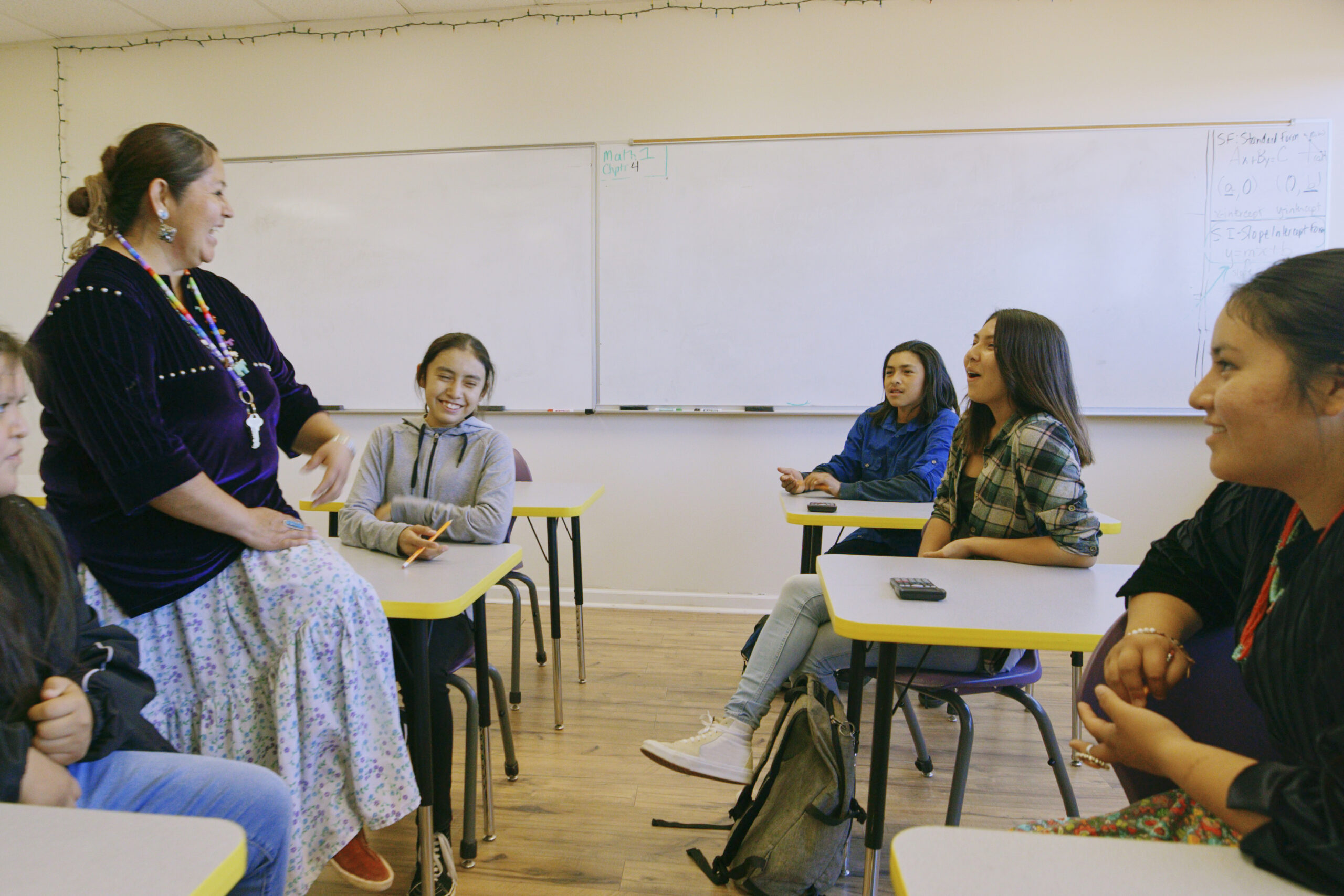
In educational settings, storytelling can be transformative. When students are given opportunities to reflect on their lives and narrate their experiences, they can better understand themselves and others. Stories also give students a voice, which is particularly important for those who are disenfranchised. By sharing their stories, the inequities they experience are humanized, which might lead to institutional change, such as policy shifts that can close equity gaps.
Ways to Integrate Storytelling in the Classroom
Storytelling Templates: Offer a simple storytelling template to guide students in their reflective thinking and writing. It might be helpful to have them consider the main characters, setting, and plot of their narratives. Stories can be organized chronologically, thematically, or by using a cause/effect or problem/solution design.
Example:
What are your goals in school? How will having an education improve your life?
What challenges, if any, have you experienced in school?
How are you working to overcome these challenges?
How can the school help you succeed? What support or resources would help?
Interactive Journals: Utilize an interactive journal, where students can share their stories. Then, a teacher can respond with positive feedback, questions, or additional reflective prompts.
Exit Tickets: Give students exit tickets at the end of class so they can write stories to share personal connections they have made with class concepts. This can help them slowly feel more comfortable sharing their stories and begin to see the relevance of the material to their personal or professional lives.
Human Library: Every student has a story to share. It might be about their role as a student, athletic accomplishments, time in the military, or experiences in a family. Each student’s story is like a book that their classmates can “check out” to learn more about them.
Student Interviews: As an icebreaker during the first week of class, students can create interview questions so they can get to know their classmates. Ideally, they will meet most, if not all, of their peers, which will help them start to build a classroom community.
Creative Outlets: Encourage students to share their stories through podcasts, blog posts, comic strips, posters, or presentations. Creative expression may help students talk about experiences that are difficult to put into words.
Although there are many benefits to having students share their stories, there may also be challenges to consider. For some students, it can be emotionally draining to revisit past experiences, especially if they are traumatic. As such, it is important for teachers to approach these activities with compassion and understanding.
Considerations for Respectful Storytelling
Safe Learning Spaces: Building a safe learning space where trust is built may prime students for sharing their stories. This takes time, so teachers may want to wait to assign storytelling until rapport has been built in the classroom.
Promote Boundaries: Not everyone will feel comfortable sharing their stories. Teachers may give students the option to opt out or to choose what parts of their stories they feel comfortable sharing.
Encourage Respectful Listening: The audience should have clear expectations for how to respectfully listen to their classmates’ stories. By using empathetic body language such as leaning in, nodding, and making eye-contact when a student is opening up, it can have a profound impact and provide validation.
Alternate Assignments: If speaking openly is too personal, teachers can let students share their stories in alternate formats. Consider creative outlets, such as art, music, or memory boxes.
Model Vulnerability: Teachers can model storytelling in class. Then, they can speak to the courage it takes to be vulnerable in front of others.
Acknowledge Effort: When students do take the risk and open up in class, teachers can genuinely praise their efforts. This is particularly important when students are sharing a tough topic.
Incorporating storytelling into the classroom can empower students to share their unique experiences and perspectives. By thoughtfully guiding these activities, teachers can create spaces where all students feel seen and valued. When students share their stories, they build bridges of compassion, which can foster inclusion in the classroom and enrich the learning community.
Amy M. Anderson, EdD, teaches communication studies courses at Spokane Community College and Whitworth University. She earned her doctorate in teaching and learning from Grand Canyon University and her master’s degree in communication and leadership studies from Gonzaga University. Amy enjoys researching, writing, and presenting on topics relating to communication, higher education, leadership, teaching, and reflective practice. She is also passionate about improving equity, diversity, and inclusion in and out of higher education institutions.
Kelly R. Maguire, EdD, teaches for the College of Doctoral Studies at Grand Canyon University. She earned a doctorate in teaching and learning from Grand Canyon University, a master’s degree in English, and a master’s degree in elementary education from Northern Arizona University. Her bachelor’s degree in elementary education was earned at the University of Arizona. Her research and presenting interests include teacher training, pre-service teachers, microteaching, content knowledge, and reflective practice.
The power of human stories is undeniable. Whether conveyed through music, art, writing, or oral storytelling—sharing one’s lived experience can have a profound impact. Stories connect people by tapping into their universal emotions, experiences, and values. They can also preserve and pass on traditions, customs, language, and culture or be utilized as a persuasive tool to inspire action.
In educational settings, storytelling can be transformative. When students are given opportunities to reflect on their lives and narrate their experiences, they can better understand themselves and others. Stories also give students a voice, which is particularly important for those who are disenfranchised. By sharing their stories, the inequities they experience are humanized, which might lead to institutional change, such as policy shifts that can close equity gaps.
Ways to Integrate Storytelling in the Classroom
Storytelling Templates: Offer a simple storytelling template to guide students in their reflective thinking and writing. It might be helpful to have them consider the main characters, setting, and plot of their narratives. Stories can be organized chronologically, thematically, or by using a cause/effect or problem/solution design.
Example:
What are your goals in school? How will having an education improve your life?
What challenges, if any, have you experienced in school?
How are you working to overcome these challenges?
How can the school help you succeed? What support or resources would help?
Interactive Journals: Utilize an interactive journal, where students can share their stories. Then, a teacher can respond with positive feedback, questions, or additional reflective prompts.
Exit Tickets: Give students exit tickets at the end of class so they can write stories to share personal connections they have made with class concepts. This can help them slowly feel more comfortable sharing their stories and begin to see the relevance of the material to their personal or professional lives.
Human Library: Every student has a story to share. It might be about their role as a student, athletic accomplishments, time in the military, or experiences in a family. Each student’s story is like a book that their classmates can “check out” to learn more about them.
Student Interviews: As an icebreaker during the first week of class, students can create interview questions so they can get to know their classmates. Ideally, they will meet most, if not all, of their peers, which will help them start to build a classroom community.
Creative Outlets: Encourage students to share their stories through podcasts, blog posts, comic strips, posters, or presentations. Creative expression may help students talk about experiences that are difficult to put into words.
Although there are many benefits to having students share their stories, there may also be challenges to consider. For some students, it can be emotionally draining to revisit past experiences, especially if they are traumatic. As such, it is important for teachers to approach these activities with compassion and understanding.
Considerations for Respectful Storytelling
Safe Learning Spaces: Building a safe learning space where trust is built may prime students for sharing their stories. This takes time, so teachers may want to wait to assign storytelling until rapport has been built in the classroom.
Promote Boundaries: Not everyone will feel comfortable sharing their stories. Teachers may give students the option to opt out or to choose what parts of their stories they feel comfortable sharing.
Encourage Respectful Listening: The audience should have clear expectations for how to respectfully listen to their classmates’ stories. By using empathetic body language such as leaning in, nodding, and making eye-contact when a student is opening up, it can have a profound impact and provide validation.
Alternate Assignments: If speaking openly is too personal, teachers can let students share their stories in alternate formats. Consider creative outlets, such as art, music, or memory boxes.
Model Vulnerability: Teachers can model storytelling in class. Then, they can speak to the courage it takes to be vulnerable in front of others.
Acknowledge Effort: When students do take the risk and open up in class, teachers can genuinely praise their efforts. This is particularly important when students are sharing a tough topic.
Incorporating storytelling into the classroom can empower students to share their unique experiences and perspectives. By thoughtfully guiding these activities, teachers can create spaces where all students feel seen and valued. When students share their stories, they build bridges of compassion, which can foster inclusion in the classroom and enrich the learning community.
Amy M. Anderson, EdD, teaches communication studies courses at Spokane Community College and Whitworth University. She earned her doctorate in teaching and learning from Grand Canyon University and her master’s degree in communication and leadership studies from Gonzaga University. Amy enjoys researching, writing, and presenting on topics relating to communication, higher education, leadership, teaching, and reflective practice. She is also passionate about improving equity, diversity, and inclusion in and out of higher education institutions.
Kelly R. Maguire, EdD, teaches for the College of Doctoral Studies at Grand Canyon University. She earned a doctorate in teaching and learning from Grand Canyon University, a master’s degree in English, and a master’s degree in elementary education from Northern Arizona University. Her bachelor’s degree in elementary education was earned at the University of Arizona. Her research and presenting interests include teacher training, pre-service teachers, microteaching, content knowledge, and reflective practice.
Think about the last time you ordered something online or streamed your favourite show. Remember how pretty seamless it was? That’s exactly what today’s students expect from their college application experience. Gen Z and Gen Alpha students have grown up in a digital world, with all its associated benefits. You have to acknowledge that they’re looking for the same smooth, user-friendly experience when they apply to schools, and this is no easy task.
For colleges and universities, meeting these expectations isn’t just about staying current–it’s about staying relevant. This is why having a well-designed student portal is more important than ever. It is the key to a seamless admissions process–the map that charts a direct, straightforward course from the students’ first click to their first day on campus.
Looking for an all-in-one student information and CRM solution tailored to the education sector?
Try the HEM Student Portal!
Why a Student Portal is Essential
Remember the days of printing out application forms, filling them in by hand, and mailing them back? Those days are long gone, replaced by a more efficient and convenient solution. Today’s students want everything at their fingertips, and they want it to work as smoothly as their favourite apps. A recent study found that 70% of students expect their university’s online experience to match platforms like Amazon, Netflix, and Facebook.
That’s a high bar to meet, but it is the type of bar that a well-designed portal can scale. So what is the purpose of a student portal? A student portal is an online resource that guides students and helps them access helpful resources throughout the journey from exploring to application, enrollment, and beyond.
As education becomes increasingly global, schools are seeing applications from all corners of the world. International students need a system that works across time zones and cultures, making the application process clear and accessible no matter where they’re from. A good student portal can meet these students at the point of their needs and help them achieve all their short and long-term goals.
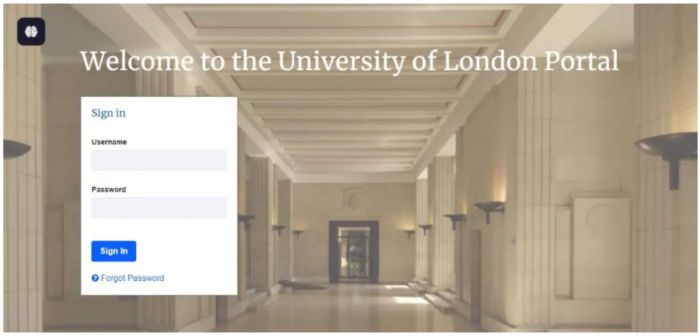
Example: The University of London’s student portal offers a comprehensive and user-friendly interface, providing students with easy access to academic resources, course materials, and administrative services.
Let’s talk about some challenges schools face without a proper portal:
Picture an admissions office drowning in paperwork, trying to match documents to applications, and manually entering data into multiple systems. Now imagine students waiting anxiously for updates, wondering if their materials were received, or trying to figure out what steps come next. The challenges are well outlined below to put things in perspective:
Complex Workflows: Traditional admissions often involve multiple steps that frustrate students and staff.
Manual Processes: Outdated methods are time-consuming and error-prone.
Global Competition: Institutions must attract students from diverse locations and meet high digital expectations.
These are the kinds of headaches a good student portal eliminates. A well-designed portal tackles these issues head-on by:
Streamlining Workflows: Students can complete applications online, upload documents, and track their progress in real-time.
Enabling Mobile Optimization: A mobile-friendly design ensures accessibility anytime, anywhere.
Offering Personalization: Tailored communications and automated updates keep students informed and engaged.
Improving Efficiency: Administrators can centralize data, track applications, and reduce manual tasks.
These solutions will help make student applications as easy as online shopping. Students can track their progress in real time and receive automatic updates and reminders. You’re giving admissions staff the tools they need to work efficiently and students, more control over how things pan out. All you need is an efficient student login system and you’ll have everything within a click.
This brings us to the question–what is the student login system? A student login system allows students to access everything from application progress to status, academic records, courses, schedules, and campus services through their institution’s online portal, using a username and password.
Example: The Higher Education Marketing (HEM) Student Portal is a comprehensive digital platform designed to streamline student engagement, lead nurturing, and admissions processes for educational institutions. It offers a user-friendly interface where prospective and enrolled students can access personalized information, track application statuses, and access financial aid.
Gone are the days of juggling multiple systems and endless email chains. Modern student portals make applying to academic institutions as straightforward as creating a social media profile. Students can choose their program, pick their campus, and select their start date all in one place. Need to upload transcripts or recommendation letters? Just drag and drop them into the system.
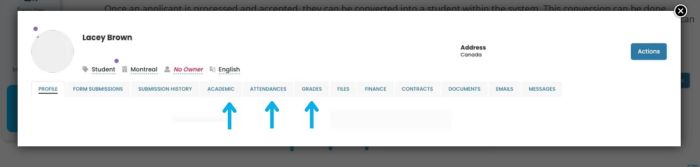
For admissions staff, this means no more shuffling between databases or wondering where a particular document ended up. Everything lives in one place, making it easy to review applications and make decisions quickly. The system even connects with other school software, thanks to the portal integrating with a CRM or SIS, so information flows smoothly and in real-time from one department to another.
2. Automation for Efficiency
Here’s where things get interesting. Imagine having a virtual assistant that never sleeps, sending out reminders, updating application statuses, and answering common questions automatically. That’s what automation brings to the table.
For example, when a student submits their application, the system can automatically:
Send a confirmation email
Check for missing documents
Schedule follow-up reminders
Update the student’s status in real-time
Notify relevant staff members
This is not just about saving time—though it certainly does. It is about ensuring a consistent and reliable experience for every applicant while allowing staff the resources to focus on more meaningful interactions with students.
3. Personalized Student Journeys
Modern portals offer innovative tools that make the application process feel more like a personal journey than a bureaucratic maze.
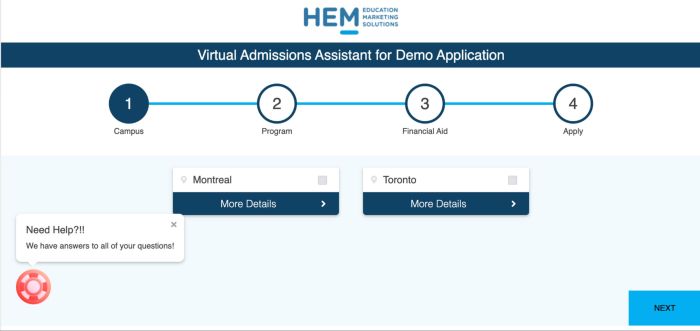
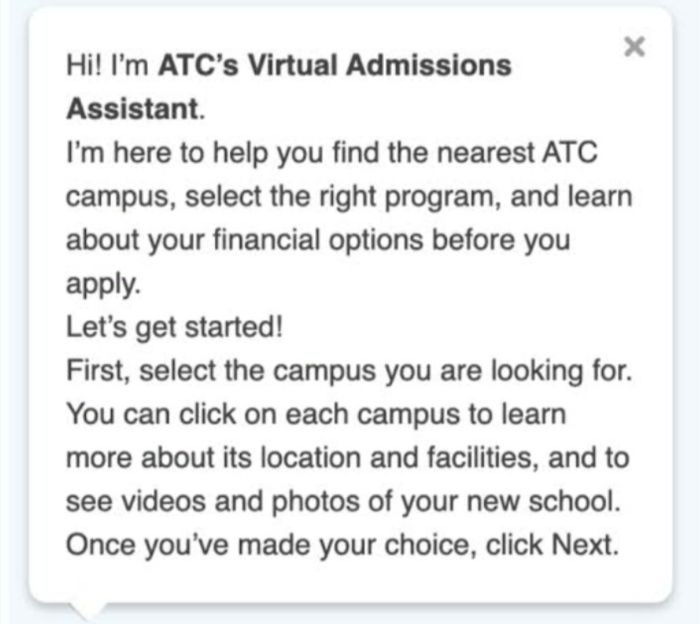
The Virtual Admissions Assistant (VAA), for example, can serve as a knowledgeable and accessible resource for prospective students. It enables them to independently explore campus options, browse programs, and receive immediate responses to their inquiries at any time. The VAA functions as a personal guide throughout the admissions process.
Then there’s the Quote Builder – a game-changer for students trying to plan their education budget. Instead of struggling with complicated fee structures, students can simply input their choices (program, campus, housing preferences) and get a clear picture of their costs. For international students especially, this transparency is invaluable. No more surprises or hidden fees – just clear, upfront information they can use to plan their future.
Example: The Automotive Training Center, Surrey, offers prospects the opportunity to request information about their admission from a virtual admission assistant, or an admission representative.
One thing that students and staff love is finding everything in one place. Remember that feeling of searching through endless email threads looking for that one important document? A good portal eliminates that headache.
For students, it means:
One login to access everything
A clear overview of their application status
Easy access to all their submitted documents
A record of all communications with the school
For staff, it’s like having a super-organized digital filing cabinet where everything is just a click away. Whatever you need to do, from sending students a reminder to checking their application status or when they lastlogged in, you only need to Click.
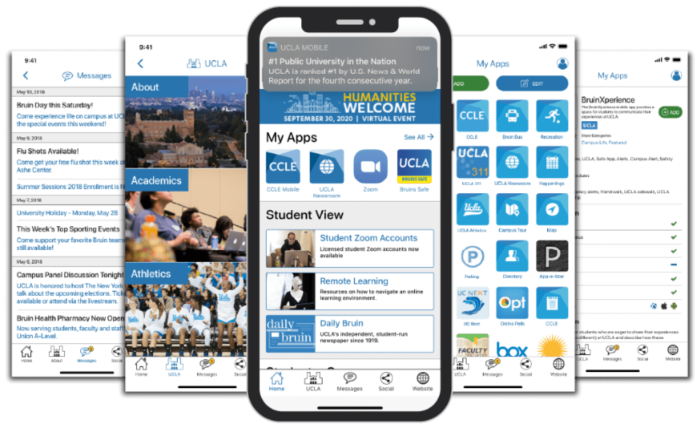
Example: The MyUCLA App by the University of California, Los Angeles, is a one-stop-shop student-run portal that offers everything from academic to administrative, student engagement, and financial support.
Online application management is an area where modern portals shine. A well-designed portal system will keep students engaged throughout the process instead of waiting for them to reach out with questions or concerns.
For example, The system can pick up that a student began an application but hasn’t completed it. Rather than letting that potential student slip away, it automatically sends a friendly reminder, offering help with any questions they might have. This kind of thoughtful follow-up can make the difference between a completed application and one that gets abandoned.
Enhancing the Student Journey: A Real-World Example
Now, let’s talk about something you’ve probably heard before. What is the student journey? The student journey begins with exploration and moves to application, admission, and enrollment. Beyond that, it involves academic learning, campus involvement, career preparation, and other experiences that shape their overall education and personal growth.
Now that we’ve gotten that out of the way, let’s follow Sarah, a prospective student, through her application journey:
Day 1: Sarah discovers your school’s portal and completes a quick inquiry form. Within minutes, she receives a personalized email with virtual tour links and program information tailored to her interests.
Week 1: Using the Virtual Admission Assistant (AAA), she explores different programs and campuses. The system notices she’s particularly interested in paralegal training and automatically sends her information.
Week 2: Sarah uses the Quote Builder to calculate her costs, including housing and tuition plans. The transparency helps her and her parents make informed decisions about financing her education.
Week 3: Ready to apply, Sarah finds much of her application pre-filled with the information she’s already provided. She uploads her documents and can track every step of the process until acceptance and admission.
Throughout: The system sends friendly reminders about deadlines and missing documents, keeping her on track without feeling pressured. By the time she arrives on campus, she will have experienced a streamlined, personalized admissions process that sets a positive tone for her educational journey.
This is what a good student portal aims to achieve. With tools like a Student Information System (SIS), a Virtual Admission Assistant (VAA), and a Quote Builder integrated into your school’s student portal, you can expect excellent results that’ll leave everyone satisfied. It will make a difference in the student’s journey, helping them make a seamless transition from inquiry to enrollment.
For the school involved, it’ll help reduce your workload and create enhanced tracking reporting results for better decision-making. This will ultimately increase student enrollment.
Example: A goodSIS incorporates elements and records all aspects of a student’s journey, from recruitment to graduation. It is usually integrated into your student portal, as this example shows.
A good portal doesn’t just make life easier for the schools that use it–it facilitates streamlined workflows for these schools, which is useful for helping them finetune and improve their admissions process. As a school looking to increase its prospects, it’ll help you know what’s working and what’s not so you can adjust as appropriate. With the right analytics tool, schools can easily track:
Which programs are getting the most interest
Where students might be getting stuck in the application process
How quickly staff are responding to applications
Which recruitment efforts are most effective
How international student applications compare to domestic ones
This data provides valuable insights that schools can process to produce better outcomes. It’s a wealth of actionable information that helps schools make better decisions about where to allocate resources and refine their processes. The ultimate goal is to serve prospective students better and help them achieve their enrollment goals first.
The Long-Term Impact of a Student Application Portal
The benefits of a well-designed student portal extend far beyond the admissions process. Some of these benefits include:
Increased student satisfaction and connection with the institution upon arrival on campus
Increased staff efficiency, allowing them to spend less time on paperwork and more time assisting students
Improved institutional reputation
Significant cost savings due to reduced paperwork and manual processing
Higher enrollment rates
Key Takeaways
A modern student portal can make a big difference in the student journey from inquiry to enrollment. It helps schools to:
Streamline Workflows: Simplify the application process for students and administrators.
Automate for Efficiency: Save time and reduce errors with automated tasks that produce consistent and more efficient results.
Personalize the Journey: Engage students with tailored tools like VAA and Quote Builder to consistently engage and help them make well-informed decisions.
Centralize Data Management: Keep all application-related information in one system to aid easy access and retrieval.
Proactively Engage Prospects: Use timely communication to meet students at their points of need and to increase application completion rates.
Optimize for Success: Leverage data insights to improve processes and track ROI for better planning now and in the future.
Conclusion
As technology continues to evolve, student portals will only become more important. A robust student portal is no longer a luxury—it’s a necessity for institutions aiming to meet the demands of today’s tech-savvy learners. The schools that succeed will be those that embrace these changes while keeping the student experience at the heart of everything they do.
By adopting a student portal, these schools can enhance the student experience, improve administrative efficiency, and ultimately boost enrollment rates. From the first click to the first day on campus, the journey becomes seamless, personalized, and rewarding for both students and staff.
Looking for an all-in-one student information and CRM solution tailored to the education sector?
Try the HEM Student Portal!
Frequently Asked Questions
Question: What is the purpose of a student portal?
Answer: A student portal is an online resource that guides students and helps them access helpful resources throughout the journey from exploring to application, enrollment and beyond.
Question: What is the student login system?
Answer: A student login system allows students to access everything from application progress to status, academic records, courses, schedules, and campus services through their institution’s online portal, using a username and password.
Question: What is the student journey?
Answer: The student journey begins with exploration and moves to application, admission, and enrollment. Beyond that, it involves academic learning, campus involvement, career preparation, and other experiences that shape their overall education and personal growth.
By Dr Monika Nangia, Academic Registrar and Director of Student & Academic Services at Durham University.
In a world increasingly aware of the value of diversity, the role of women in leadership is more critical – and undervalued – than ever. Despite encouraging strides, women, particularly women of colour, continue to face systemic barriers to advancement. This is a story of resilience, inequity, and hope.
The conversation around diversity and inclusion is urgent, and storytelling has emerged as one of the most potent tools to address these challenges. It connects us on a human level, fosters empathy, and confronts biases. At its best, storytelling is transformational.
In my career, I have witnessed the transformative power of storytelling in ushering in meaningful change. The stories we carry as women – of resilience, determination, and overcoming barriers – are far more powerful than any statistic or corporate policy. These personal narratives, shared boldly, have the potential to inspire, to challenge, and to reshape how we think about leadership.
Why We Need Women in Leadership
The benefits of gender-diverse leadership are unequivocal. According to Deloitte’s Global Human Capital Trends, organisations with inclusive cultures achieve 2.3 times higher cash flow per employee, 1.4 times more revenue, and are 120% more capable of meeting financial targets. Diverse boards, particularly those with greater gender and ethnic representation, also demonstrate better resilience and crisis management – evident during the COVID-19 pandemic.
But beyond numbers lies the human impact. Women leaders bring ‘cognitive diversity’, which accelerates learning and performance in complex and uncertain situations. Their leadership fosters a sense of belonging, improves employee engagement, and reduces turnover.
The journey to leadership for women is fraught with challenges. The ‘broken rung’ effect—where women are less likely than men to be hired or promoted into entry-level managerial roles – creates a bottleneck that compounds over time. For every 100 men promoted to manager, only 81 women make the same leap, with even fewer opportunities for women of colour.
Racial inequalities exacerbate this gap. McKinsey’s 2020 report highlights that women of colour face the steepest drop-off in career advancement at the transition from middle to senior management. Cultural expectations and resistance to authority further hinder their progress.
These systemic inequities are reflected starkly in higher education. According to the HEPI Report 2020, Mind the Gap: Gender differences in HE, while women now constitute 55% of university staff in the UK, they occupy only 29% of vice-chancellor roles. Among professors, women account for 29.7%, but Black women make up less than 1%.
The Power of Storytelling
Stories have a unique ability to amplify voices, challenge biases, and inspire inclusivity. Neuroscience tells us that engaging narratives release oxytocin in the brain, promoting empathy and altruistic behaviour. More than data or policy, storytelling humanises diverse experiences and catalyses change.
I’ve seen firsthand how storytelling transforms workplaces. Women leaders who share their personal journeys of resilience and ambition inspire others to envision new possibilities. Their stories break down preconceived notions, fostering an inclusive mindset that leads to behavioural change.
One colleague who spoke candidly about her experience being the only woman of colour in a senior leadership team. She described how, despite excelling in her role, her authority was often questioned, and she had to work twice as hard to gain the same respect as her peers.
Her story resonated deeply, not just because of the challenges she faced, but because of the hope and strength she embodied. By sharing her experience, she is creating a ripple effect – encouraging others to speak up, address inequities, and push for change.
Storytelling is also about accountability. In fact, it is far more important to confront the untold stories, the contributions of women whose voices have been silenced or overlooked. This is especially true for women of colour, whose experiences often fall at the intersection of gender and race-based inequities.
Mending the ‘Broken Rung’
A combination of stories like hers, with corresponding datasets as evidence, expose the structural barriers that continue to hold women back. The ‘broken rung’ is a vivid example of this.
Another story that sticks with me is from a woman in higher education, who spoke about being overlooked for a leadership role despite being the most qualified candidate. She later discovered that her ambition had been perceived as ‘sharp-elbowed’ and intimidating – a stark contrast to how her male counterparts were described.
Hearing her story compelled me to reflect on how ambition in women is often misinterpreted, reinforcing stereotypes that undermine their credibility. At a recent workshop, a senior leader shared her journey of overcoming immense personal and professional obstacles to lead a major organisational transformation. Her authenticity and vulnerability moved the room, sparking conversations about resilience, leadership, and the need for systemic change.
Building a Legacy of Inclusive Leadership
The path to inclusive leadership requires intentionality. It means addressing both visible and invisible barriers, from hiring practices to cultural attitudes. The stories we share today will shape the leadership landscape of tomorrow. As women, we have the opportunity – and the responsibility – to use our narratives to drive change.
Organisations with diverse leadership teams outperform their peers not just financially but also in innovation and problem-solving. The evidence is clear: diversity is not just a moral imperative – it is a strategic advantage. But the true value of diversity goes beyond metrics. It’s about creating workplaces where everyone feels they belong, where their contributions are valued, and where they can thrive.
Liaison, a leader in education technology and data-driven solutions, is excited to announce the release of its 2025 Intelligent Names Degree Intent Scores. These advanced scores represent a transformative leap in identifying adult learners nationwide with the highest potential for pursuing a degree.
The 2025 Degree Intent Scores are powered by cutting-edge data science, advanced modeling techniques, and insights from a national survey conducted in late 2024. Combined with responses from Liaison’s extensive consumer database of over 260 million Americans, this enhanced model offers unparalleled precision and reach into the adult learners market.
Recent testing using a national dataset of graduate program applicants showed a 20% improvement in predicting applicant activity within the highest intent band when comparing the new intent scores to the original. Similarly, an analysis of a national dataset of bachelor’s degree seekers found that Liaison’s Bachelor’s Degree Intent model accurately identified 91% of degree seekers under the age of 25 in the top two quintiles. These findings underscore the model’s remarkable accuracy, effectiveness, and value for higher education institutions.
“The 2025 Degree Intent Scores mark a major milestone in our mission to connect educational institutions with adult learners who are ready to take the next step in their academic journeys,” said Dr. Mark Voortman, Chief Data Scientist at Liaison. “By leveraging large-scale data and state-of-the-art modeling techniques, we’ve significantly enhanced our ability to help institutions identify adult learners most likely to pursue degree opportunities in the near future.”
The updated scoring model empowers colleges, universities, and other education providers with deeper, data-driven insights to refine recruitment strategies, enhance student engagement, and achieve enrollment goals more effectively.
On 20 January, Donald Trump will take the office of president of the United States for the second time. It remains to be seen how this second term — interrupted by the four-year term of Joe Biden — will play itself out.
The first time around, President Barack Obama had left Trump a relatively stable nation and world. Trump’s term proved so disruptive, 41 of his 44 top aides, including his own vice president, refused to back him for a return to office. The next four years are likely to be a bumpy ride.
Americans have long prided themselves on the peaceful transition of leadership.
Traditionally, on the morning of the transfer of power, the outgoing president meets with the incoming president for coffee at the White House, they share a ride to the Capitol, trade places and say goodbye. Trump scorned that tradition by flying home to his Mar-a-Lago club in the state of Florida a few hours before the inauguration.
Before Trump, outgoing presidents tried to ease the transition by leaving notes offering advice and best wishes to their successors in the top drawer of the desk in the Oval Office. George H.W. Bush’s note to Bill Clinton, with whom he’d waged a bare-knuckles election campaign a few months earlier, was especially gracious.
“I wish you well. I wish your family well. Your success now is our country’s success. I am rooting hard for you,” Bush wrote.
Peaceful transition signals a healthy democracy.
The tradition of a peaceful transfer of power, which dates back to George Washington, crumbled four years ago when Trump, refusing to accept the voters’ rejection of his bid for another four years of office in the 2020 U.S. election, inspired an angry mob to storm the halls of Congress. Their aim was to block certification of Joe Biden’s election to succeed Trump, something that is generally considered a formality. The would-be insurrection failed.
Trump is now poised to again assume the highest office in the United States. To the surprise and disappointment of nearly half the country, he narrowly prevailed over Biden’s vice president, Kamala Harris, in last November’s bitterly contested presidential race. Bowing to tradition and a sense of decency, Harris conceded the election.
“A fundamental principle of American democracy is that when we lose an election, we accept the results,” Harris said in her concession speech. “That principle, as much as any other, distinguishes democracy from monarchy or tyranny.”
The current transfer of power has proceeded peacefully and the inauguration itself is expected to follow the historic norm.
While the transfer is usually thought to include just a few procedural events and the presidential oath-taking, it consists of much more and begins almost immediately after voters cast their ballots in the fall.
Handing over the reins of power
If the election winner is new to the office of president, they and their team are briefed on issues and challenges they’ll face and undergo background checks to assure their avoidance of conflicts of interest and qualification to handle sensitive information.
Normally, the focus of a transition is on appointments to top government positions and on policy changes.
With the Trump transition, both have been controversial. Some of the people he’s chosen for some of the most critical jobs are far out of the U.S. political mainstream. And some of the policies he says he intends to pursue — a massive nationwide roundup and deportation of illegal immigrants, the annexation of Greenland and a takeover of the Panama Canal to mention a few — are raising alarms in the United States and abroad.
With the recent passing of former President Jimmy Carter, I can’t help remembering a time of sharp contrast to the one we are in now.
The 20th of January 1981 was one of the more memorable days in U.S. history. Carter had lost his bid for reelection in large part because he had been unable to secure the release of 53 U.S. diplomats and citizens who’d been held hostage in Iran for more than a year. He’d been up until 4 a.m. that day trying to sew up a deal for their release.
It was almost done but still incomplete as he and incoming president Ronald Reagan rode up Pennsylvania Avenue together for the inaugural ceremony in a big black armored presidential limousine known as “The Beast.”
Front row seat to a presidential transition
I was one of the newsmen covering Carter that day. So I got a firsthand view of how the transfer of power unfolded. When we reached the U.S. Capitol, one of the television networks aired a report that the hostages had been freed. It was premature.
In a final indignity to Carter, the Iranians waited until minutes after Reagan was sworn in to let an Algerian aircraft chartered to bring the hostages home take off.
What the new president said in his inaugural speech was all but lost in the celebrations over the end of the hostage ordeal. Once the formalities were over, Carter and his entourage — his wife Rosalynn, family members, top aides and a small group of reporters — walked to a small motorcade waiting outside the Capitol building.
In place of “The Beast” and a long trail of support vehicles was a small sedan and several vans. We slowly made our way to Andrews Air Force Base in the Maryland suburbs of Washington D.C. where a military transport plane waited to take Carter home to Georgia.
Although it was the same plane he’d flown on as president, its radio call sign was no longer “Air Force One.” Now it was identified as “Special Air Mission” followed by the aircraft’s tail number, “Twenty-Seven Thousand.” Reagan was president. Carter was history.
Before turning south, the plane flew over the White House and dipped a wing. Many aboard were in tears. But the tears turned to laughter when a young Carter aide, Philip Wise, humorously borrowed a line from Dr. Martin Luther King Jr., the martyred U.S. civil rights leader. “Free at last, free at last. Thank God almighty, we are free at last,” Wise shouted.
Witnessing the most powerful office in the world change hands was like living a real-life version of the storybook “Cinderella” and seeing the coach turn into a pumpkin.
Having witnessed so many times in so many places where a change at the top was brought about by armed conflict or a military coup, this turnover from Carter to Reagan showed the world the power of a peaceful transition.
Three questions to consider:
1. Can you think of a recent changeover from one national leader to the next that wasn’t peaceful? 2. If a new leader is appointed by the old one without an election, would you consider that a peaceful transition of power? 3. If you were in an important leadership position, do you think you would find it difficult to step down?
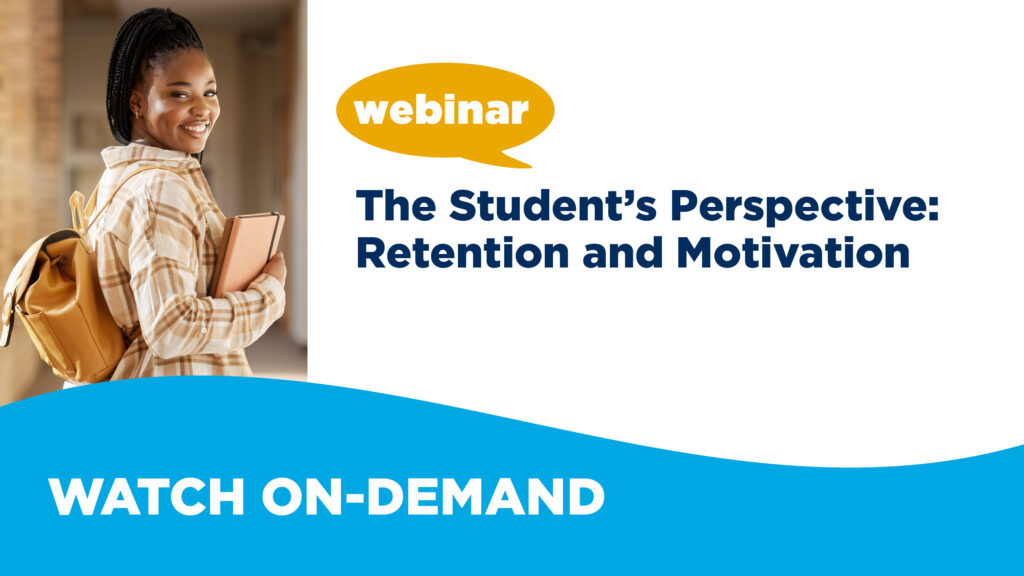
As a college graduate, RNL’s Natalie McVay has direct experience and helpful insights on the impact of advising on student success outcomes. After attending two separate institutions with differing levels of advising support, Natalie identified specific elements of “transactional” advising that nurtured her success, guiding her on her path to degree completion. For more information on Natalie’s perspective—including advising methods that impacted her ability to retain at her first institution, resulting in her decision to transfer—see RNL’s on-demand webinar The Student’s Perspective: Retention and Motivation.
A proactive approach to student success
In an era where student engagement and retention are top priorities, institutions are seeking innovative ways to support students at risk of leaving. Tailored transactional advising is a proactive approach to advising, relevant for all advising philosophies. This approach identifies students in need and provides opportunities to intervene with targeted resources to improve their experience. This strategy not only demonstrates the institution’s commitment to student success but also provides a clear return on investment (ROI) for the student.
Identifying students’ needs and intervening with resources
Using analytics and data-driven insights, institutions can identify students who are at risk of leaving due to various factors such as low academic performance, lack of engagement, or other challenges. By intervening early, advisors can offer support, connecting students with resources that match their specific needs.
However, it’s not about overwhelming students with a laundry list of available resources. Instead, advisors must show students how the institution is committed to their success, highlighting the specific benefits and value of the resources being offered within an appropriate timeframe. And they need to provide the specific resources that each student is looking for.
Identifying students’ needs and offering support to address those needs at key points in their academic journeys can be the critical influence needed to retain at-risk populations and to ultimately improve student success outcomes.
One way to gather relevant data about students is through RNL’s Retention Management System (RMS) which measures non-cognitive motivational indicators that pinpoint each student’s (and cohort’s) strengths, risk factors, and receptivity for support at three pivotal transitions in their academic journey. (Learn more about the RMS.)
The power of written proof
When students are struggling, they may feel disconnected from their institution. One way to engage them is by incorporating communications that reflect students’ specific concerns along with relevant campus resources to address those concerns. Tailored, timely and data-informed communications can be a key source of guidance in helping students successfully meet their goals. This approach acknowledges students’ individual concerns and shows that the institution is invested in their well-being.
The impact of words in transactional advising
In a transactional advising scenario, words have the power to make a significant difference. A well-crafted email or in-person message can convey empathy, understanding, and a genuine interest in your student’s success. The tone and language used can either make or break the student’s perception of the institution’s commitment to their success.
Let’s consider two email examples in response to a student who is struggling with study habits and sense of belonging, and who is also receptive to career guidance:
Option 1: A basic transactional approach
“Have you taken advantage of these student resources?
Study groups
Peer group chat
Meet with an alumni
We want to ensure you have the support you need to succeed.”
Option 2: A more personal and supportive transactional approach
“Natalie, my goal is to connect you to the right resources here on campus!
If the study group doesn’t feel like the right fit, make sure to check out the peer group chat. I know there are other students like you waiting to take the first step. I also have a contact list of alumni who would love to connect with you about various career paths they chose after completing their degree here at [institution].
I’m in your corner!”
The second option not only acknowledges Natalie’s struggles but also employs empathy and a genuine interest in her well-being while offering options to address her specific concerns. By using words that convey a sense of support and connection, advisors can build trust and help students feel more invested in their own success.
Utilizing mail merge and word play
Institutional data, such as student success initiatives and predictive analytics, can be used to populate emails like these. Mail merge capabilities can help advisors send personalized messages to students, making them feel seen and valued. Word play, such as using phrases like “I’m in your corner,” can make a significant impact, creating a sense of connection and community.
By leveraging tailored transactional advising, institutions can demonstrate their commitment to student success and provide a more personal and supportive experience for students. By using data-driven insights and targeted resources, advisors can make a meaningful difference in a student’s life, helping them stay enrolled and achieve their goals.
According to Natalie, tailored transactional advising influenced her desire to consistently re-enroll and, ultimately, graduate as an adult student from the institution that helped deliver her 2nd student experience: “My commitment to them was higher because I felt their commitment to me.”
Augmented reality (AR) is part of our daily lives, making everyday tasks easier, safer, and more interactive. However, its greatest potential may lie in education, opening new doors for engaging students through hands-on learning.
Most people use augmented reality every day without realizing it. Features like “See this in your room” at major online retailers let users visualize furniture in their space before buying, while backup cameras in cars overlay guidelines to help drivers reverse and park safely. These applications seamlessly blend the digital with the real, providing extra context to inform decisions and deepen understanding.
Now, imagine a student struggling with ratios — a common challenge because ratios require proportional reasoning and dimensional analysis, abstract skills that can be difficult to visualize.
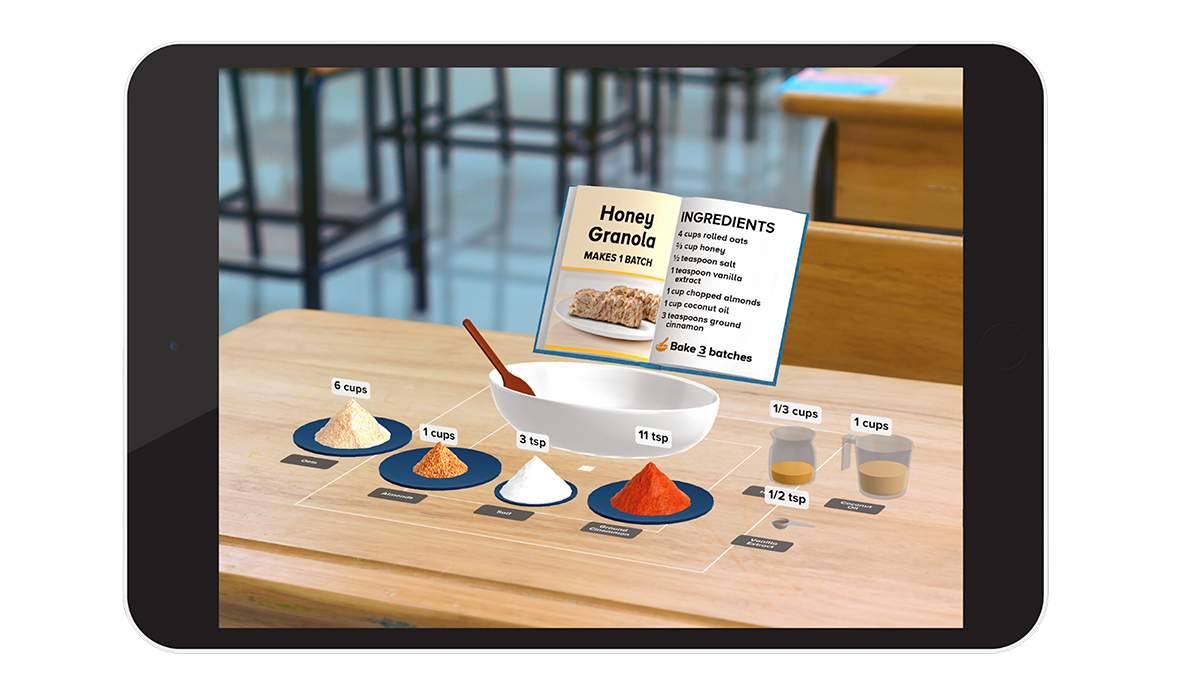
Like “See this in your room”, what if an augmented reality app presented the student with a virtual kitchen counter on their desk, stocked with ingredients for trail mix? The student must mix the correct proportions of raw nuts, raw seeds, and dried fruit, adjusting quantities as they go. Bonus: No mess and no actual cooking. It only requires a smartphone, tablet, or laptop.
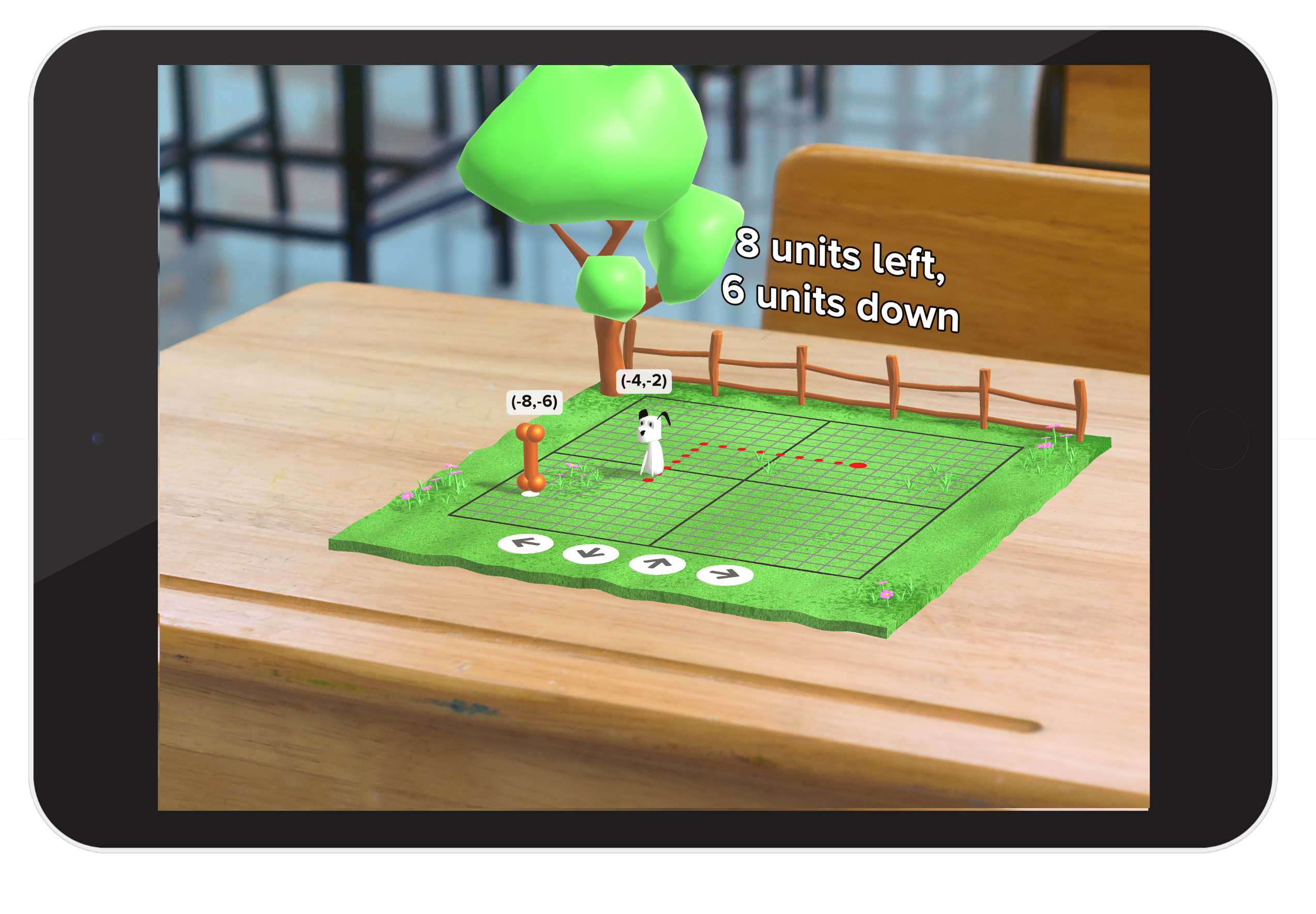
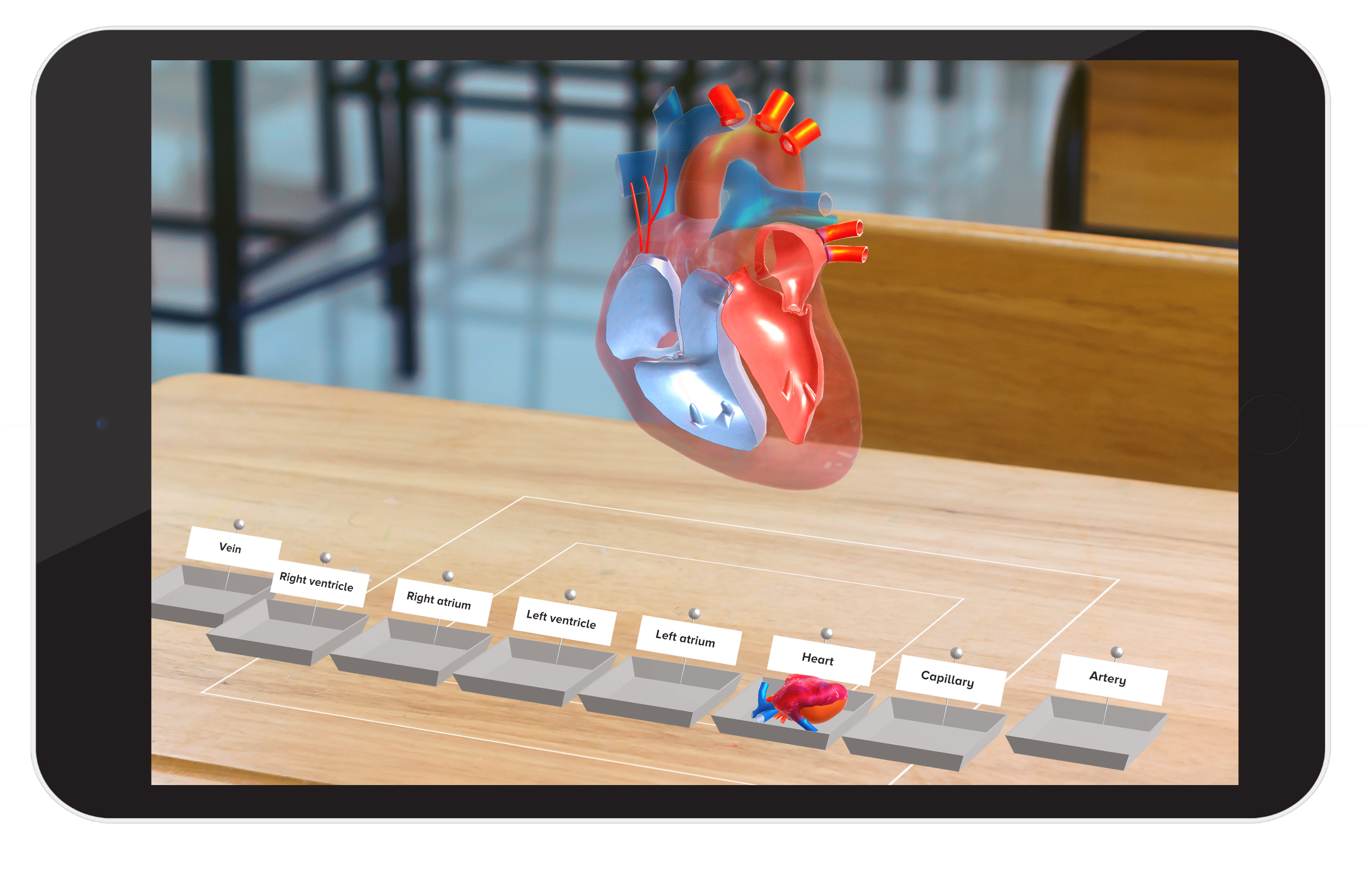
This fun, real-world approach helps students learn challenging concepts through play and interaction. It’s one of many activities in McGraw Hill AR, a free app from McGraw Hill, a leading global education company.
Sean Ryan
President, McGraw Hill School
“Immersive technology has the potential to make previously out-of-reach knowledge accessible for any learner,” said Sean Ryan, president of McGraw Hill’s School Group. “McGraw Hill AR will be a game-changer for teachers, particularly in math and science, where the detailed, interactive learning experiences will spark students’ curiosity and drive them to dive into the ‘how’ and ‘why’ of complex, abstract concepts.”
Coordinate PlaneIndustrial RevolutionCirculatory System
Reaching students across subjects, languages, and platforms
Yes, the app is really free. McGraw Hill builds the app in partnership with Verizon Innovative Learning. This educational initiative seeks to help bridge the digital divide with a goal of providing digital skills training to 10 million students by 2030.
To help reach those students, the app has a growing library across math, science, and social studies, with plans to add English Language Arts in 2025. It’s available in the App Store and Google Play Store. For students learning on Chromebooks or laptops, there are 3D web-based versions at mharonline.com. All activities are available in Spanish. For educators and homeschoolers, content is standards-aligned with accompanying lesson plans and worksheets at verizon.com/learning.
By combining play with practical learning, McGraw Hill AR offers a new way to connect, engage, and learn.
When I became president of the University of La Verne in 2011, I often shared the story of why I was drawn to this role—and why it resonated so deeply with my family’s values. My husband and I were committed to raising our daughters in a community that embraced inclusivity, service, and the transformative power of education. These were not just abstract ideals; they were principles we wanted to live by and instill in our children. And sharing this connection wasn’t just about explaining my leadership—it was about building trust and fostering relationships across campus.
Today, as higher education leaders face unprecedented scrutiny—from political attacks on academic freedom and diversity efforts to growing public skepticism about the value of a college degree—this kind of authenticity and connection is more critical than ever. Our institutions are being challenged to prove their relevance and align their missions with the needs of diverse and sometimes skeptical communities. In this climate, personal storytelling offers a powerful way to build bridges, humanize our roles, and reaffirm the values that define higher education. In navigating the complexities of our current environment, storytelling is not just a leadership tool—it’s a leadership imperative.
Why personal storytelling matters
Building authentic relationships: Personal stories bridge the gap between leaders and campus communities. Sharing your experiences, challenges, and successes makes your role more relatable and human. When leaders share stories authentically, we foster trust and encourage deeper connections with our students, faculty, alumni, donors, and other stakeholders. A compelling story has a way of bringing people together, sparking that feeling of connection through common experiences.
Inspiring action and change: Stories are powerful motivators. They show how education can transform lives, encouraging students to pursue their dreams, sparking innovation among faculty, and connecting with alumni and donors. At the University of La Verne’s annual Scholarship Gala, I used to share my mother’s story—how, as an immigrant, she stayed committed to education despite countless challenges. When she, her two older sisters, and their parents first immigrated to the United States from Czechoslovakia, they had to build a new life, learn a new language, and adapt to new customs. My grandfather would bring used tires to their home, where the family would cut them into small squares and sew them together to create doormats. He sold these mats door-to-door, and the money they earned not only supported their daily life but was also saved so that my mother could attend nursing school.
Each year following my story, students would respond with their own incredible stories of resilience. Those moments didn’t just inspire greater scholarship donations—they raised awareness about the challenges that so many students face, underscoring just how vital access to education really is.
Shaping institutional culture: Personal stories are a big part of what shapes a university’s identity, creating a sense of inclusion, resilience, and shared values. Early on in my time at the University of La Verne, a board member told me why the university—her alma mater—meant so much to her and why she chose to give back as a donor and leader. She often spoke about how she and her husband met while attending La Verne, and that they both loved the supportive and inclusive environment at the university. Then one of her children enrolled, and a particular professor took him under his wing and helped him with his academic career. She felt La Verne was always there when she and her family needed support.
Her story stuck with me, and I shared it often as an example of how personal connections can inspire others to support the university’s mission. By encouraging storytelling like this, we brought our community closer together and reinforced our shared purpose.
Engaging with diversity: Every story brings something unique to a campus community. When we make room for diverse voices, we naturally build stronger connections and a sense of belonging. Serving on the board of Antioch University, I’ve had the privilege of hearing a wide range of students and faculty share their experiences—some inspiring, some challenging, all meaningful. These moments are a great reminder of how much we gain when we listen to and learn from each other.
Strategies for Effective Storytelling
Connect stories to the institution’s mission: Personal stories are powerful, but they work best when they connect back to the institution’s goals. I once attended a university event where the president’s stories, while memorable, didn’t really support the message of the institution—they overshadowed it, leaving the audience entertained but not necessarily inspired about the university’s future. It’s a good reminder that storytelling should always reinforce the mission and build confidence in what lies ahead.
Balance sharing with relevance: Finding the right balance between personal and professional storytelling is key. Oversharing can make people uncomfortable or distract from your message. A story might be heartfelt, but if it’s too detailed, the audience might lose track of why it matters. The best approach is to share meaningful anecdotes that highlight your points while keeping your audience and the setting in mind.
Maintain honesty and humility: The best stories come from a place of honesty and humility—they build credibility and trust. Think about great leaders: the ones who acknowledge the contributions of others tend to connect more than those who focus on their own achievements. On the flip side, self-congratulatory stories can feel off-putting and even break trust with the audience. Keep it grounded, which always resonates better.
Avoid unethical exaggeration: Stretching the facts or making up stories can seriously damage trust. And people can usually tell when a story isn’t genuine, whether it’s because of over-the-top details or a lack of authenticity in the delivery. It’s important for leaders to stay honest, sharing meaningful details without straying from reality. In today’s world, where fact-checking is everywhere, even small inconsistencies can hurt your credibility—and by extension, the reputation of your institution. Keep it real, and your message will always carry more weight.
Repetition without redundancy: Repeating key messages can really help drive them home, but it’s all about balance. When you tell the same story to different audiences, it can show consistency and authenticity, which is great. But if you overdo it, people might start to tune out, feeling like they’ve heard it too many times. We all recycle our favorite speeches and stories when we speak often, and that’s fine as long as we’re mindful of keeping it fresh. A thoughtful approach to storytelling means your message stays powerful without losing its impact.
************
Personal storytelling is one of the most powerful tools leaders in higher education have at their disposal. When done right, it builds trust, inspires action, and strengthens the sense of community. Sharing authentic stories helps connect audiences to the mission and values of an institution, creating a shared sense of purpose and vision.
As higher education continues to navigate challenges like public skepticism and political scrutiny, storytelling offers a way to highlight the transformative power of education. It allows us to address concerns with honesty and integrity, while keeping the focus on the positive impact education has on individuals and society. Reaching beyond the academy, these stories help build connections with the wider community—and ideally, around the world—showing how education shapes lives and strengthens society.
dotEDU Global Voices
This December, ACE will feature a special podcast series, dotEDU Global Voices, which will spotlight personal stories from accomplished international women university presidents. These leaders share their unique challenges, insights, and strategies, offering authentic and inspiring perspectives on leadership.
The series builds on my book, Spotlighting Female Leadership: Strategies, Stories, Perspectives, which highlights the journeys of ten accomplished university presidents. To learn more, download the book here and tune into the podcast for further inspiration.