Tag: pre-K

  • Head Start, the federal child care program for low-income families, is turning 60 this year. Will it make it to 61?

    Head Start, the federal child care program for low-income families, is turning 60 this year. Will it make it to 61?

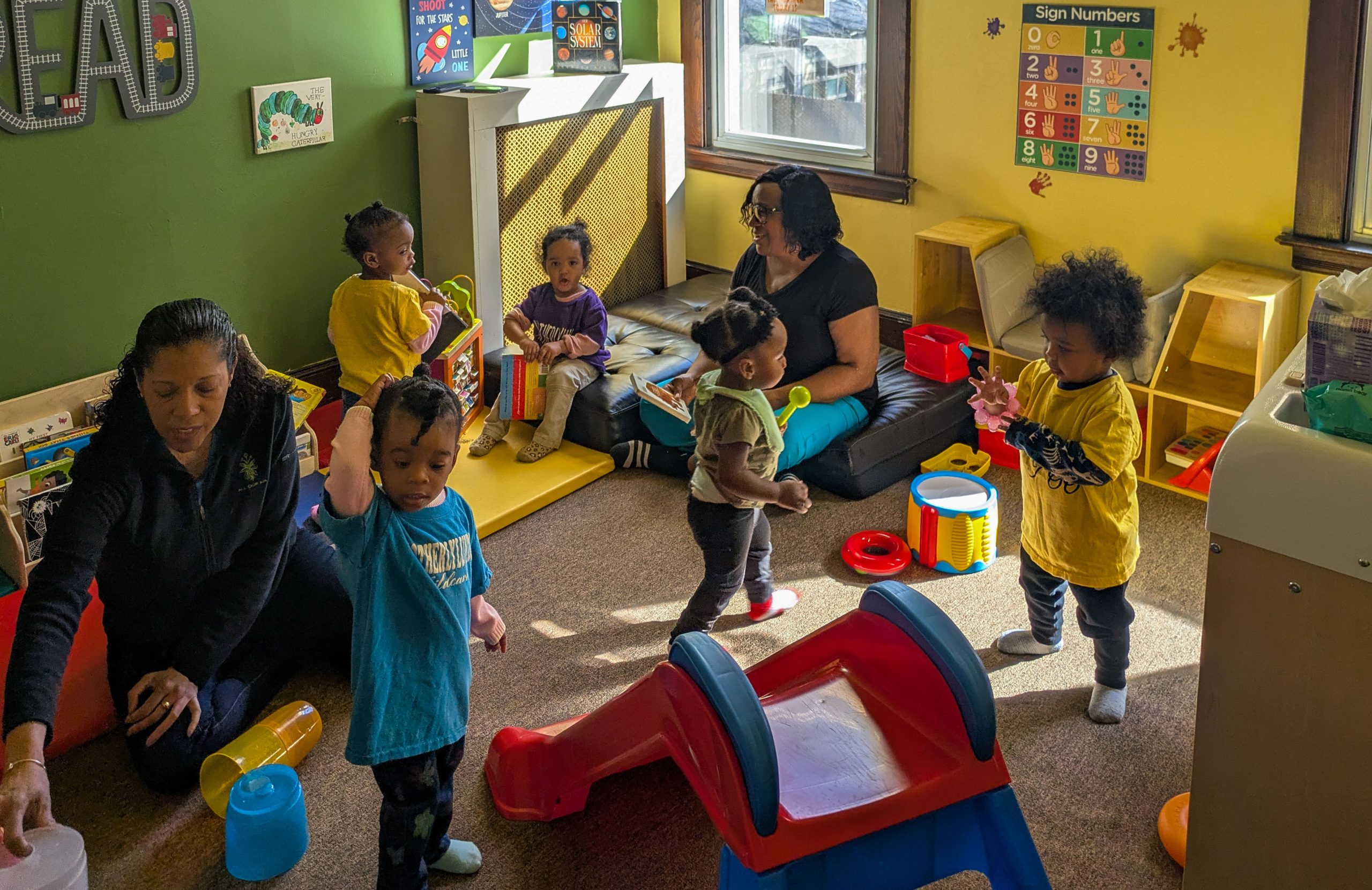
    NEW HAVEN, Conn. — Bright morning sun is streaming through her home’s windows as Sandra Dill reads a picture book about penguins to a room full of busy toddlers. While listening, the kids blow kisses, plop in a visitor’s lap, then get up to slide down a small slide.

    Dill has been running a family child care business from her home for 15 years, and every one of her 13 grandchildren has spent time here — currently it’s 20-month-old Nathaniel, who has a puff of curly hair and a gooey grin.

    “My older ones started to call it ‘grandma school,’” she said. Another one of her granddaughters, now a teenager, is returning this summer to help out.

    Four of Dill’s eight available slots are funded through Head Start. This is the federal-to-local program that funds child care and other support for the poorest families in America. (Regular Head Start serves children 3 to 5 years old; Early Head Start is for those under 3.) The program — which began right here in New Haven, Connecticut — is celebrating its 60th anniversary this year.

    It’s also never been so at risk: First a federal funding freeze hit providers, then a chunk of Head Start federal support staff were fired by the Department of Government Efficiency. On March 27, the Department of Health and Human Services announced it was cutting a further 10,000 jobs, and reorganizing the Administration for Children and Families, which administers Head Start. As of April 1, Head Start employees in five of the program’s 10 regions — Boston, New York, Chicago, San Francisco and Seattle — had reportedly been laid off, according to a LinkedIn post that day from Katie Hamm, a former official with the federal Administration for Children and Families. Hamm said there does not appear to be a transition plan laying out how Head Start programs in those regions will receive funding and support. Project 2025, the conservative policy handbook organized by the Heritage Foundation, which the Trump administration has been following closely, calls for eliminating Head Start altogether.

    “I think it’s terrible,” Dill said. “I just can’t imagine. It’s already not enough, and if this happens, it’s going to affect a lot of families that are already struggling.”

    Ed Zigler, the “father of Head Start,” was the son of immigrants from Poland. His father was a peddler and his mother plucked chickens to make a little money, according to Walter Gilliam, executive director of the University of Nebraska’s Buffett Early Childhood Institute, who counted Zigler as his closest mentor.

    When Zigler was a child, his family made its way to a settlement house in Kansas City, Missouri; these community-based charities offered a two-generation approach, caring for and educating children while also teaching English and job skills to parents and connecting families with medical care and housing help.

    “That made a huge impact on his and his family’s life,” Gilliam said.

    Related: Young children have unique needs and providing the right care can be a challenge. Our free early childhood education newsletter tracks the issues.

    As a young psychology professor at Yale, Zigler was hired as an advisor to President Lyndon Johnson to help design family programs for the federal War on Poverty. In creating Head Start, he turned to the same two-generation model he grew up with.

    To date, Head Start has served nearly 40 million children. In fiscal year 2023, the Head Start program was funded to serve 778,420 children. The program has always been underfunded: In 2020 Head Start served barely 1 in 10 eligible infants and toddlers and only half of eligible preschoolers. It’s limited to families making under the federal poverty level, which is just $31,200 for a family of four.

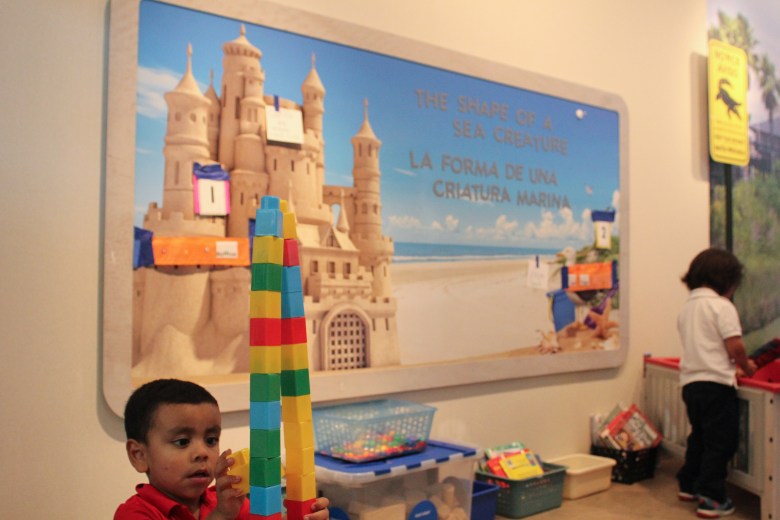
    The sand table at Dill’s child care is an opportunity to explore shapes, colors and textures. Credit: Anya Kamenetz for The Hechinger Report

    Still, for many of the families who do manage to make it through the doors, the program is life-changing.

    “Head Start is in every community in America,” said Cara Sklar, director of early & elementary education policy at the D.C.-based think tank New America. “It’s the original two-generation program, with wraparound support for kids. It’s really held up as a model of quality in early learning.”

    The “wraparound support” for Dill’s Early Head Start families is funded by the United Way of Greater New Haven, and comes via a network for family child care educators called All Our Kin. The network helps mothers enroll in community college and apply for housing subsidies. Dill has had mothers who lived in their cars and one who was living with her mother “six to a room,” she said. She also does regular home visits with families to talk about children’s development and support parents in goals like potty training.

    Thanks to Early Head Start, a nurse, a mental health consultant and a nutritionist all help Dill keep the kids healthy and safe. And the program also provides extra funds she can use to get back up and running if, for example, the furnace needs fixing.

    But Head Start is now facing funding challenges that go far beyond a broken furnace. “The past month has been harrowing for child care providers,” said Carolina Reyes, director of Arco Iris Bilingual Children’s Center, a preschool in Laurel, Maryland, that is a Head Start partner, and also a member of the nationwide advocacy group MomsRising. 

    The first blow to Head Start in this administration was President Donald Trump’s January 27 executive order calling for a federal funding freeze. Since Head Start is a direct federal-to-local grant program, even temporary interruptions in funding can cause programs to close their doors.

    “ Programs like mine operate on razor-thin margins,” said Reyes. “I don’t have any reserves to pull from if funding is delayed or slashed.”

    Related: Is Head Start a failure?

    While funding for most programs has resumed, Joel Ryan, the executive director of the Washington State Association of Head Start, said in a recent press conference that as late as the week of Feb. 17, one in four of his programs still had trouble accessing the Head Start payment website. 

    That same week of the 17th, almost 70 Head Start staffers were pink-slipped in the federal government’s sweep of “probationary” employees — about one-fifth of the program’s workforce. One laid-off employee, who didn’t want to give his name because he is still fighting his dismissal and fears reprisal, said he spent five years as a contractor before switching to full time this past summer, which accounted for his probationary status. He wore many hats at Head Start, doing data analytics, working with grant recipients and serving as a liaison for state partners.

    “They say we’re bloated; we could have used two more full-time people,” he said.

    The cuts, he feared, will lead to further delays in programs getting the payments they rely on, not to mention the oversight that keeps kids safe.

    “I come from the private sector. I will find another job,” he said. “The issue isn’t us, it’s the children and the families. We’ve got all these people in poverty who are getting screwed over by what’s happening.” 

    A third blow came on February 25, when the House passed a budget resolution calling for $880 billion in cuts to discretionary spending programs over the next decade, with Medicaid the prime target, along with the federal Supplemental Nutrition Assistance Program. Head Start families overwhelmingly rely on these safety net programs. The White House’s gutting of the Department of Education also threatens many services for preschoolers, especially those in special education. (This process, which maps out the next fiscal year, is separate from the recent vote to fund the government until Sept. 30.)

    “This is going from the precipice of disaster to decimating the system,” Sklar said. “All the parts that help families, from Head Start to child care to food to health care, are all being destabilized at once.”

    Gilliam said that threats to eliminate Head Start are nothing new. After designing the program during the Johnson administration, Zigler was appointed to run it under the presidency of Richard Nixon. “Some folks told him that his job was to destroy, essentially, the program that he had created,” Gilliam said.

    Related: In 2024, Head Start programs are still funded by a formula set in the 1970s

    Head Start advocates said the program has been able to fight off political challenges in the past because it is widely distributed geographically and has bipartisan support.

    “I agree that Project 2025 is a real threat to Head Start, as well as to other programs that we all care about,” said Ryan, with the Washington State Head Start association.

    “But I will say this: We have great research. We have great data. We have a great track record. We have a lot of bipartisan support in Congress. And we have parent power.”

    By coincidence, the week the House passed its budget resolution, a group of 150 Head Start parents were on Capitol Hill lobbying as part of a group called Start Early, and they met with many Republican senators.

    Tommy Sheridan, the deputy director of the National Head Start Association, struck an almost defiantly optimistic tone after the visit to lawmakers: “We still believe and have seen indicators that this administration is supportive of Head Start. And Congress as well.”

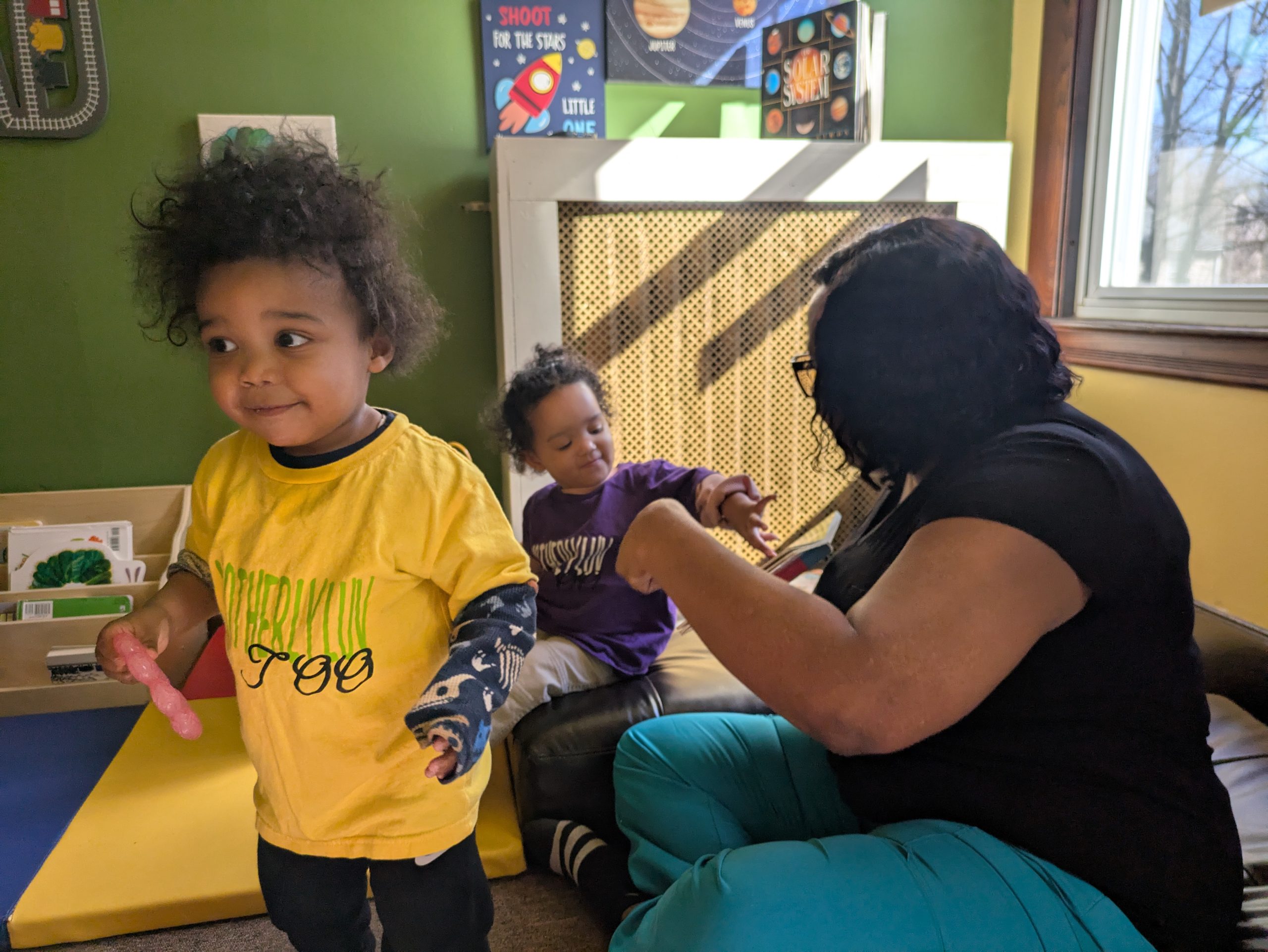
    NaMaree Cunningham and her twin sister turned two on the day of our visit. Credit: Anya Kamenetz for The Hechinger Report

    Another potential bright spot is the growth of child care support and funding on the state level. Elizabeth Groginsky is New Mexico’s first cabinet secretary for the state’s new Early Childhood Education & Care Department, and she said the pandemic woke a lot of people up to the importance of early care and education.

    “People began to understand the impact that child care has on children’s development, families’ ability to work, the overall economy,” Groginsky said.

    Since 2020, New Mexico has gone through a major expansion in home visits, child care and preschool. Vermont has made similar moves, and New York and Connecticut are heading in that direction as well. Even the deep-red state of Kentucky has expanded access.

    What all of these state-level programs have in common is that they are much more widely available to middle-class families, rather than tightly targeted to families in poverty, as Head Start still is. Historically, with programs like Medicare and Social Security, universal access has meant durable support.

    Now those states are contemplating stepping in further if the federal government drops the ball.

    “Because the state has made such an impressive commitment to child care, we’re potentially in a better spot than others,” said Janet McLaughlin, deputy commissioner for Vermont’s Department of Children and Families. And Groginsky, in New Mexico, said firmly, “The governor and the legislature — I don’t think we’ll let New Mexicans go without. They’ll find a way.”

    Support for this reporting was provided by the Better Life Lab at New America.

    Contact editor Christina Samuels at 212-678-3635 or [email protected].

    This story about Head Start was produced by The Hechinger Report, a nonprofit, independent news organization focused on inequality and innovation in education. Sign up for the Hechinger newsletter.


    The Hechinger Report provides in-depth, fact-based, unbiased reporting on education that is free to all readers. But that doesn’t mean it’s free to produce. Our work keeps educators and the public informed about pressing issues at schools and on campuses throughout the country. We tell the whole story, even when the details are inconvenient. Help us keep doing that.

    Join us today.

    Source link

  • Using school land to fight climate change

    Using school land to fight climate change

    HOUSTON — When Jefferson Early Learning Center first opened on the corner of a busy intersection in the city’s west side in 2022, school officials started receiving calls from irritated residents.

    It wasn’t the increase in traffic or the noise from loud preschoolers that was the source of the callers’ ire.

    It was the wild, unkempt landscaping.

    Residents wanted to know, “‘Why aren’t you cutting the lawn?’ ‘Why aren’t you keeping the grounds?’” recalled Hilda Rodriguez, the assistant superintendent of support services for the Alief Independent School District, home to Jefferson and nearly 50 other schools west of Houston.

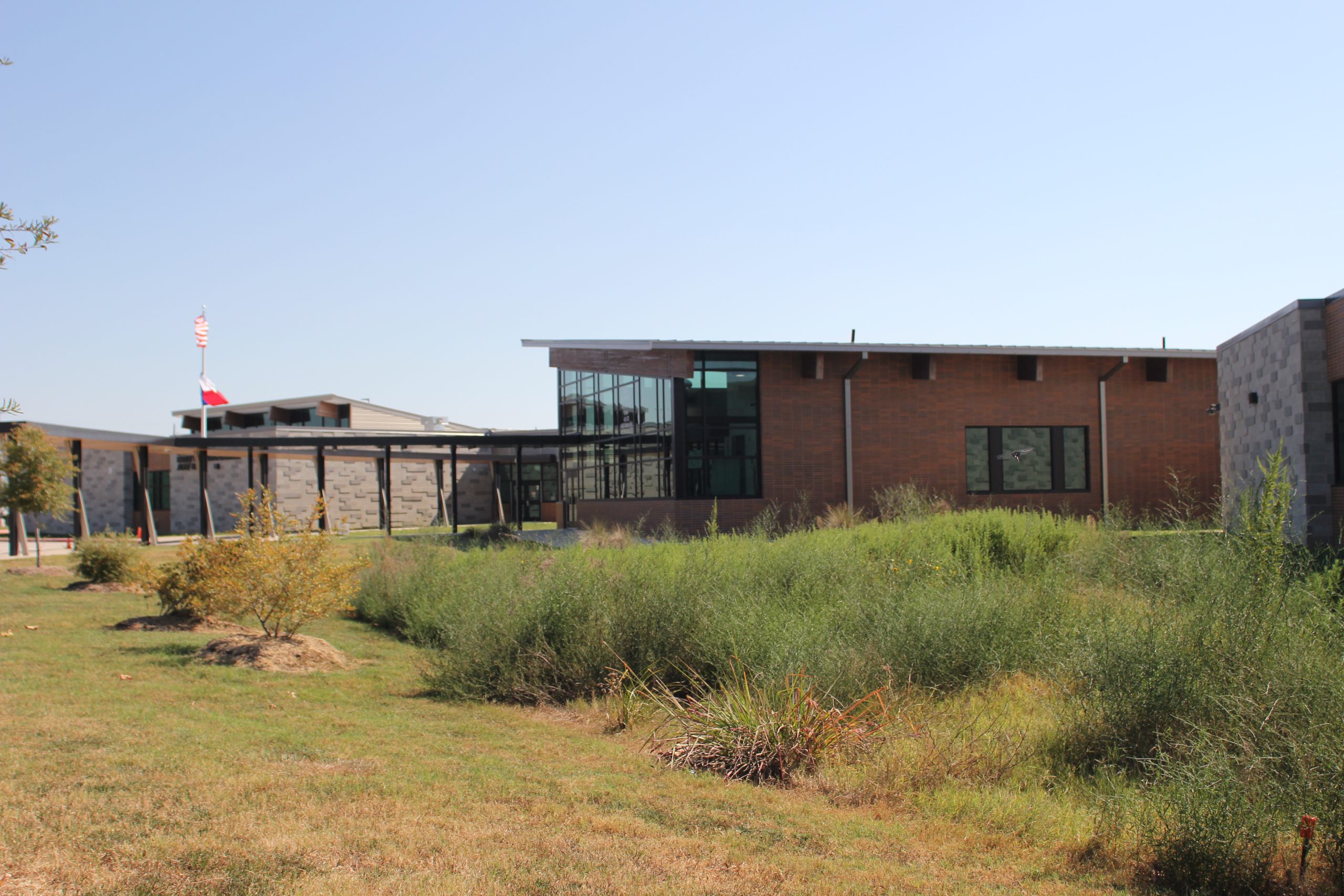
    Although Jefferson’s neighbors didn’t know it, the tall grass surrounding the early learning center was part of a larger strategy to mitigate climate-related issues in a county where a major flood occurs nearly every two years and the number of days at or above 95 degrees has increased significantly over the past 25 years.

    In addition to choosing durable, impact-resistant materials to help the school building withstand natural disasters, Jefferson’s designers focused on the surrounding land. They chose to restore much of the ground’s nearly 20 acres to native prairie lands and wetlands, creating a habitat for more than 200 plant and animal species.

    A sign at the front of Jefferson Early Learning Center teaches children about the surrounding land, which was designed to withstand floods and heat. Credit: Jackie Mader/The Hechinger Report

    That sort of habitat is especially beneficial in an area vulnerable to climate change events such as the torrential rains that regularly hit the city, said Melissa Turnbaugh, senior principal at PBK Architects, which designed Jefferson. “By putting in native prairies and grasses, we can now actually absorb three to four times as much water as if we had manicured grass,” she said.

    Experts who study early learning and climate science say there is growing demand for solutions like these to address challenges related to climate change, such as floods, fires and hotter temperatures. Angie Garling, a senior vice president at the Low Income Investment Fund, which runs initiatives to help build and improve early learning facilities, said that when her organization solicited applications from child care programs needing facilities improvements, the vast majority had to do with climate.

    “They were asking for things like HVAC systems, misting systems, air filtration systems, shade structures, turf … because they couldn’t maintain their lawn anymore because the cost of water was too high,” said Garling. Due to the extreme level of climate-related need, LIIF recently partnered with other organizations to launch a program to help fund renovations for child care providers in Harris County, where Houston is located.

    Alief officials have already noticed benefits from the unconventional use of the school land. During the school year, students can walk on trails that weave through the prairie, learning about insects, plants and flowers. The native plants can withstand Houston’s infamous summers, when the average temperature sits above 90 degrees. That saves work, time and money for Alief’s maintenance team, which rarely needs to mow or water the land at Jefferson.

    Over the next few years, Turnbaugh, the architect, hopes the presence of the prairies and grassland — rather than concrete or other surfaces that are known to reflect heat — will pay long-term dividends in “an overall heat-challenged area.”

    “I think we’re going to see that we’re actually cooling the neighborhood,” she said. “I think there’s not only good carbon capture, but we’re actually being good neighbors.”

    Over time, Jefferson’s neighbors have seemed to realize that, said Alief’s Rodriguez. The calls, for the most part, have stopped. “Once they understood, it became very clear to them that this was purposeful.”

    Contact staff writer Jackie Mader at (212) 678-3562 or [email protected].

    This story about climate change solutions was produced by The Hechinger Report, a nonprofit, independent news organization focused on inequality and innovation in education. Sign up for the Hechinger newsletter.
    The Hechinger Report provides in-depth, fact-based, unbiased reporting on education that is free to all readers. But that doesn’t mean it’s free to produce. Our work keeps educators and the public informed about pressing issues at schools and on campuses throughout the country. We tell the whole story, even when the details are inconvenient. Help us keep doing that.

    Join us today.

    Source link

  • Districts are spending big on tailor-made early learning centers for 4-year-olds

    Districts are spending big on tailor-made early learning centers for 4-year-olds

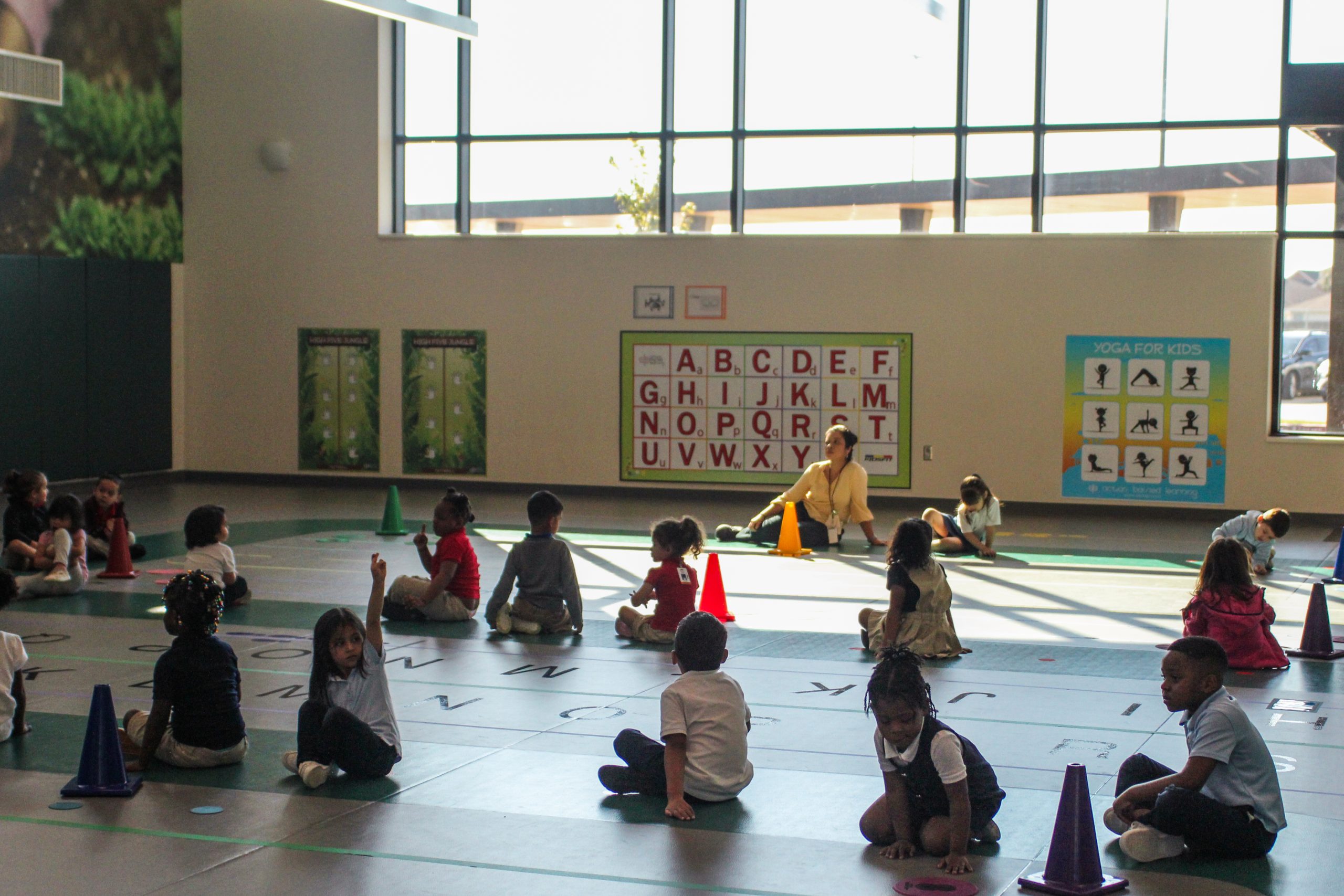
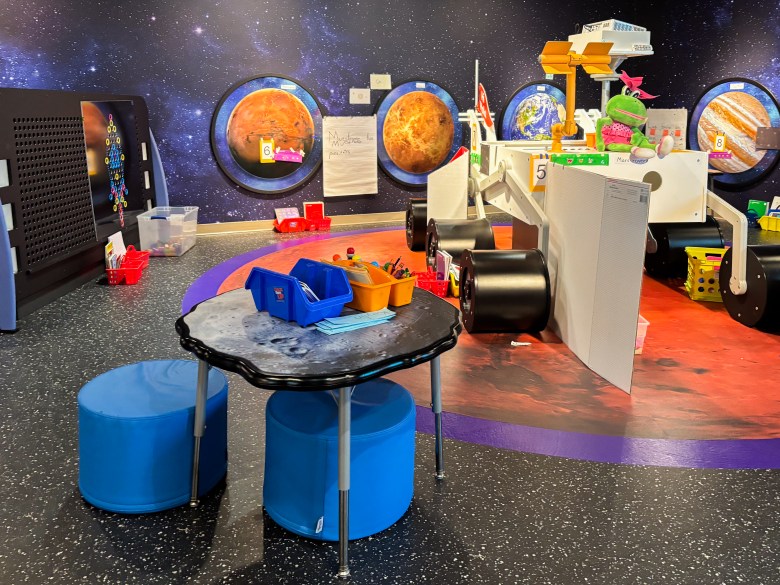
    HOUSTON — Jefferson Early Learning Center bears little resemblance to elementary schools many adults recall attending in their earliest years. The classrooms have child-sized boats and construction vehicles children can play on, and ceilings painted to resemble outer space. There are no desks — all space is devoted to learning through play. Windows are low to the ground so children can easily look outside. The gym floor is made of “pre-K friendly” layered vinyl, rather than hardwood, to cushion inevitable trips and falls. Hallways are lined with a corrugated plastic for wiggly fingers to touch as children transition to other locations.

    Children love coming to the building, said teacher Cathy Delamore. “They feel like they own it.”

    Alief Independent School District, which serves about 40,000 children in west Houston, is one of a growing number of districts across the country to pump money into creating a building that is tailor-made for pre-kindergarteners. Its new facility cost about $21 million and enrolls nearly 400 4- and 5-year-olds. By making the investment, school leaders are trying to avoid some of the pitfalls of placing young children in buildings designed for older students, including lost learning time when tiny feet have to meander down long hallways to bathrooms and cafeterias. Research suggests that when designed well, buildings can contribute to better outcomes for children. Creators of the Reggio Emilia approach to early learning, an educational philosophy that emphasizes child-led learning, even refer to the environment as the “third teacher” in a classroom.

    Over the past few years, educators have grown aware of the benefits of a personalized pre-K environment, said Melissa Turnbaugh, a senior principal at the architecture firm PBK, which has designed more than 240 elementary schools nationwide, including Jefferson and several others in Texas. “There’s an openness and willingness to rethink these sites,” Turnbaugh said.

    Related: Young children have unique needs and providing the right care can be a challenge. Our free early childhood education newsletter tracks the issues.

    Similar pre-K renovations and investments have been made in both high- and low-income Texas districts, including the nearby Houston Independent School District, Willis Independent School District north of Houston, the Mansfield Independent School District south of Fort Worth, the Harlingen Consolidated Independent School District in the Rio Grande Valley and Leander Independent School District, just northwest of Austin.

    Nationally, districts of all sizes have embraced the trend over the past few years, including the Troy School District in Michigan and New York City Public Schools. In some cases, building a specialized facility helps a district with limited resources get “the biggest bang for their buck,” while meeting enrollment needs, said Turnbaugh. Some states and cities are also dedicating money to the efforts, including Illinois, Detroit and San Mateo, California.

    That embrace is in part because of a growing recognition nationwide of the importance of play for young children, as well as reports that play time has been increasingly squeezed out of the early grades. States are also seeing record high enrollment in state-funded preschool programs. During the 2022-23 school year, investment in state-funded preschool reached an all-time high. Spending on the programs increased in 29 states, buoyed in part by Covid relief funds. Between 2022 and 2023, for example, Texas saw more than 21,000 additional 3- and 4-year-olds enroll. The state also slightly increased pre-K funding and, beginning in 2019, started requiring districts to offer full-day pre-K programs. The full-day programs have been rolling out in districts since 2020.

    Scores of districts are “adding this new grade of 4-year-olds,” said Shelly Masur, vice president of advisory and state policy for the Low Income Investment Fund, which runs an initiative focused on creating and improving high-quality facilities for early learning programs. “They have to figure out where those kids are going to go.”

    A facility built for their needs, like Jefferson, is exactly where young children should go, some experts say. The children seem to agree.

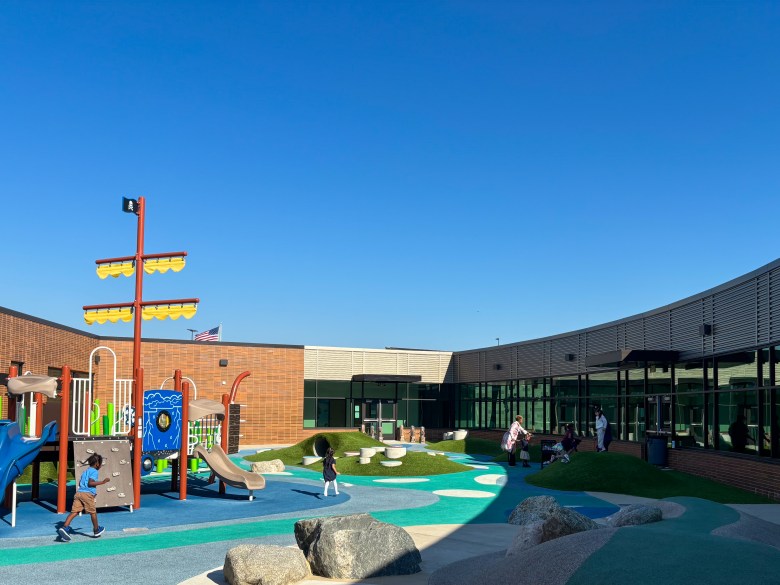
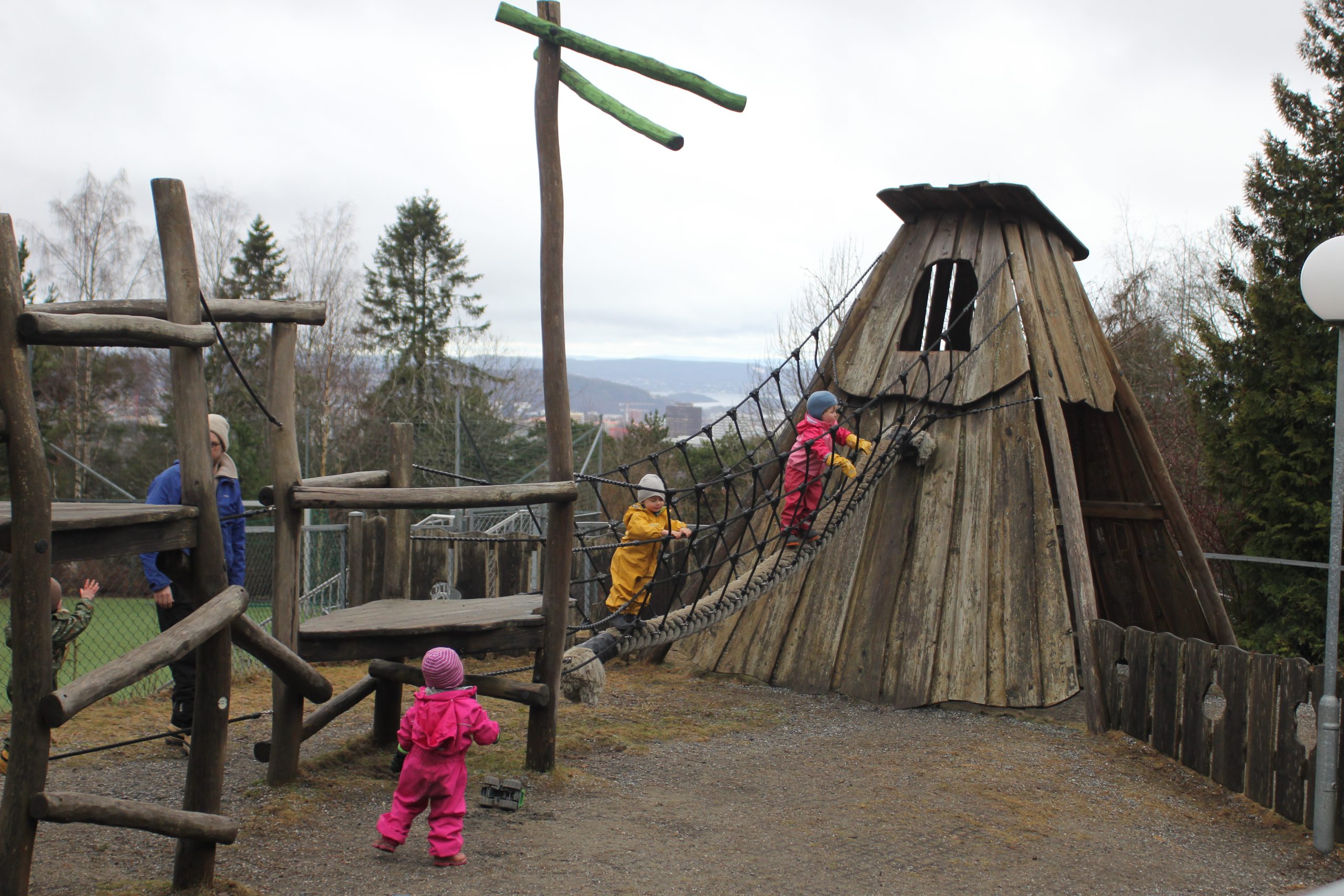
    On a sunny fall morning, joyful screams could be heard as children chased each other up and down gentle hills on a large playground with natural-looking features meant to replicate the highlands and lowlands of Texas. Pre-K students in elementary schools don’t always have age-appropriate playgrounds, and structures are often designed for children who are older. But Jefferson has multiple large playgrounds and play courtyards, all designed for pre kindergarteners, featuring natural structures and textures, like logs and grass.

    A playground at Jefferson Early Learning Center.  Credit: Jackie Mader/ The Hechinger Report

    In Alief, where more than 83 percent of children qualify as economically disadvantaged, more than 20 percentage points higher than the state average, residents voted in 2015 to approve a property tax increase to help pay for full-day pre-K programs in the district. After touring the Mansfield Independent School District’s early learning facility, Alief’s district leaders decided they wanted to invest in an early learning building with immersive, themed classrooms, instead of simply adding on or repurposing classrooms in elementary schools around the district. Jefferson opened in 2022 as one of two new early learning facilities in the district. About 6 miles away, the second, Maria Del Carmen Martinez Early Learning Center, which has a similar design, serves around 400 students.

    A growing body of research shows that not all pre-K classrooms, or the facilities they’re housed in, are appropriate for young kids. Early learning settings in particular should have a warm, homelike environment with ample natural light, research shows. There should be spacious classrooms that allow children to move their bodies and play in a variety of spaces around the room. Facilities should have playgrounds that are appropriate for the littlest learners, and provide ample opportunities to experience and explore nature.

    Related: How play is making a comeback in kindergarten

    There are also practical details to keep in mind for preschoolers, like having bathrooms adjacent to classrooms, child-sized furniture, tiny toilets, and sinks low to the ground so children can practice routines like hand washing independently. “When we make things more accessible to them, they start to learn the independence that we need them to develop over time,” said Masur. This type of setting isn’t always present in elementary schools, which are built to accommodate a much wider age range of children and are typically designed for instruction rather than play.

    Facilities can have a surprisingly large impact on the experiences of teachers and young children. A study of a preschool program in West Hartford, Connecticut, for example, found the amount of children’s time spent interacting with an adult caregiver increased from 3 percent to 22 percent after the program moved from a crowded basement room to a larger classroom with bathrooms, sinks, storage space and phones inside the classroom. Although all other factors remained the same, the teachers reported their students had fewer tantrums, something they attributed to having a larger, brighter and more organized space.

    A facility can even affect how satisfied early educators are with their jobs. Delamore, the Jefferson teacher, who has worked in the district for 18 years, said the bright, spacious rooms and hallways help keep her from feeling “confined” during the day. While aimed at 4-year-olds, the building’s “calming atmosphere” helps her enjoy being at work, she said.

    A student builds with blocks in a classroom at Jefferson Early Learning Center. The facility was built with 4- and 5-year-olds in mind and unlike elementary schools, revolves mostly around play.

    Certain aspects make more sense for children at this age, she added, like the spiral shape of the building, which makes it easier to keep students together as they transition. Students eat family-style meals around circular tables, creating a sense of community, Delamore said, a contrast to the long, rectangular tables often seen in elementary school cafeterias.

    Buildings that are not designed to meet childrens’ needs, or that are cramped and outdated, can impede development and learning, experts say.

    One of the most recent examples of this comes from a 2016 study of Tennessee’s public preschool classrooms, which are mostly housed in existing elementary schools. That study, conducted by researchers at Vanderbilt University, found 25 percent of each school day was lost transitioning children to another activity, including walking to bathrooms and lining up to go to lunch.

    Related: The complex world of pre-K play

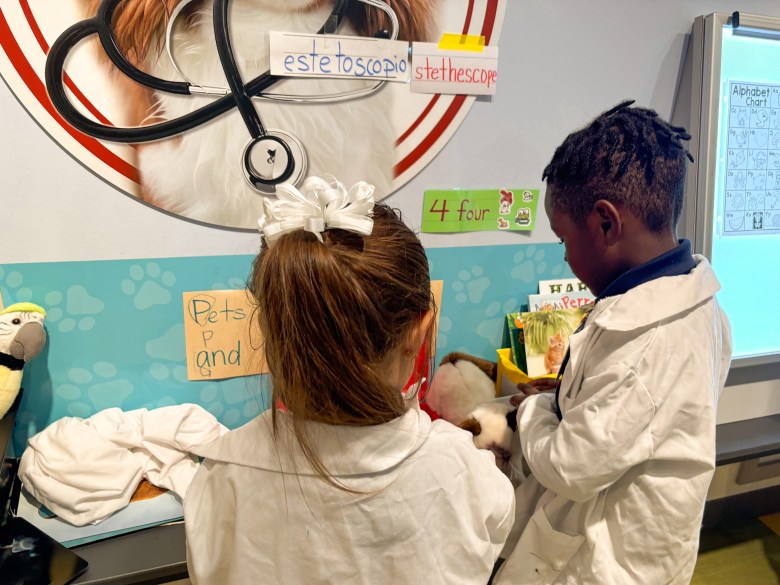
    When designing Jefferson, Turnbaugh and her team tried to “think of the campus through the eyes of a 4-year-old.” Delamore, at Jefferson, said the intricately-designed classrooms motivate students to go deeper in their play. On a recent morning in the “veterinary” classroom, a dozen 4- and 5-year-olds busied themselves around the room, immersed in play or small group work with a teacher. Children drew pictures of animals, read books and played animal-themed card games beneath large, colorful pictures of dogs and cats painted on the walls.

    On one side of the room, 4-year-old Jaycyon had donned a white lab coat and was inspecting a fluffy gray and white toy cat lying on the counter in front of him. The cat was hurt, Jaycyon announced, likely from a sharp corner of the cage he was kept in.

    “I have to give him a shot,” he said bravely. Jaycyon dipped a clear, plastic syringe into an orange medication bottle and confidently injected invisible medication into the cat.

    At the end of three weeks, Jaycyon and his classmates will transition to a new classroom, such as “Tinker Town,” where they will learn about construction, or “Space City,” an homage to the nearby NASA space center.

    On a daily basis, students have access to one of several outdoor spaces called a “back porch,” where families can also come and eat lunch together. These spaces also act as surrogate back yards for students, many of whom don’t have yards at home or access to parks. Students also have access to a sensory room with toys and soft mats, where they can take a break when they are overstimulated and practice skills to calm down. 

    Jefferson sits on nearly 20 acres of land, accessible via trails for students to explore with their teachers. (Alief returned the surrounding land back to its natural prairie state to help with climate-change related flooding.)

    The educators at Alief say the district’s investment in a facility that encourages play-based learning has paid off. “What I see as a major difference is the children’s self-regulation, but also their confidence,” said the school’s principal, Kim Hammer, now in her 16th year leading an early childhood center. “A traditional pre-K setting is more teacher led and teacher directed,” she said. “Here it’s more teacher facilitated, so you see more of the children taking more initiative,” she added. “Children have autonomy, and children have much more choice.”

    Two students play in a veterinary-themed classroom at Jefferson Early Learning Center. Each classroom is designed with a specific theme to encourage deeper play. Credit: Jackie Mader/ The Hechinger Report

    There is evidence that the new facility may be helping children progress. During the 2023-24 school year, 49 percent of students came in meeting vocabulary benchmarks. By the end of the year, 73 percent were at that level, Hammer said, a higher rate than previous years when the district’s pre-K programs were in traditional elementary schools. School officials say the themed classrooms help enhance children’s language skills, as children learn the vocabulary specific to that room. Attendance rates are high and holding steady, something that is uncommon in pre-K.

    Despite the success and benefits of programs like Jefferson’s, educators agree there are challenges. A pre-K only facility adds an extra transition for students who, in traditional programs, might otherwise attend pre-K at their home elementary school.

    Without more funding, revamped pre-K facilities are unlikely to spread fast. Many districts lack the money, partly because state and federal funding for pre-K is often less than for other grades. In Texas, for example, although the state now requires districts to offer full day pre-K, it only provides funding for half a day of pre-K. Alief has to cover the rest from local funds.

    Although sustaining the building will be financially challenging in the long run, educators are determined to find a way to make it work for the benefit of the kids.

    Back at the veterinary center on that fall morning, Jaycyon finally had a breakthrough. He had discovered something alarming about his patient, or “kitty,” as he had been named by the pre-kindergarteners, that would direct his next veterinary tactics.

    “He burned himself in the kitchen!” he exclaimed.

    How?

    Jaycyon answered somberly: “He was cooking eggs.”

    Contact staff writer Jackie Mader at (212) 678-3562 or [email protected].

    This story about early learning centers was produced by The Hechinger Report, a nonprofit, independent news organization focused on inequality and innovation in education, with support from the Spencer Fellowship at Columbia Journalism School. Sign up for the Early Childhood newsletter.

    The Hechinger Report provides in-depth, fact-based, unbiased reporting on education that is free to all readers. But that doesn’t mean it’s free to produce. Our work keeps educators and the public informed about pressing issues at schools and on campuses throughout the country. We tell the whole story, even when the details are inconvenient. Help us keep doing that.

    Join us today.

    Source link

  • 3 global early ed trends to watch this year

    3 global early ed trends to watch this year

    LONDON — Participants at one of the world’s largest early childhood conferences late last year were eager to learn from each other, and notably collegial — until one of the final sessions of the event.

    During a presentation about artificial intelligence in early childhood, a presenter suggested using an AI program to create artwork based on child prompts. Audience members were horrified. “Have you looked at what impact this might have on their imaginations?” one asked.

    The role of artificial intelligence and technology in the early years was a popular topic at the conference, which featured more than 500 educators and experts from 43 countries. As I met with global educators and researchers over the course of several days, a few key themes emerged as ones to keep an eye on in the early childhood space this year:

    1. Technology and AI in early childhood

    In addition to the controversy over student artwork, presenters highlighted a host of ways they are using artificial intelligence already in early childhood classrooms, in far less controversial ways. These include writing culturally relevant lesson plans, automating report cards and helping translate communication with parents. AI was mostly presented as a way to relieve teachers of more rote tasks. 

    Apart from the brief flare-up, experts were careful to keep conversations focused on AI as this “smart assistant,” acknowledging that it can’t stand in for a strong, interactive teacher in the early years.

    Presenters also highlighted stark differences between how preschool classrooms in different countries are using technology and the cultural gaps in attitudes about technology post-pandemic. Two researchers from University College London East, for instance, described how children in South Korean preschools regularly use nearly a dozen forms of technology, including smart televisions, robots, coding programs, virtual reality technology and tablets. Preschoolers in England, on the other hand, only have access to smart whiteboards at school for the most part, with British early educators reporting more wariness around technology in early ed classrooms.  

    2. Involving the rights of children — and more play — in early childhood systems

    In Ireland, a new approach to early childhood is all about letting kids be kids. The country’s new early childhood guidelines were inspired by the United Nations Convention on the Rights of the Child and emphasize building loving, trusting relationships between children and caregivers. Several other countries, including Japan, Moldova, South Korea and Tanzania are also prioritizing the rights of young children, mainly by trying to bring more play into early childhood classrooms and systems.

    3. Countries building out early childhood systems and investing more

    Although global investment in early childhood is not at the levels experts would hope for, many are heartened by a few government-led efforts to inject more funding and strengthen standards. In 2018, for example, Saudi Arabia published a new curriculum for its early childhood programs, written in partnership with America’s National Association for the Education of Young Children (NAEYC). The curriculum is part of a larger movement to expand early childhood offerings in the country, including building hundreds of new public early learning programs by 2030 and creating more teacher training programs.

    Meanwhile, in Ireland, leaders designated more than 546 million euros in new government funding for early childhood between 2022 and 2024. And in Austria, the government recently committed to provide more than 4.5 billion euros by 2030 to help parents pay for child care.

    More on early childhood worldwide

    In 2023, I traveled to Canada to see what America can learn from our northern neighbor’s rollout of a new national child care system.

    This story by Rachel Cohen for Vox looks at the pros and cons of Germany’s universal child care system and the societal conditions that support that system.

    Research quick take

    • During the 2021-22 school year, 370 preschool students were expelled and nearly 2,700 preschool students received one or more out-of-school suspensions, according to new data from the Department of Education. Black children, and especially Black boys, were disproportionately suspended and expelled. Black boys account for 9 percent of preschool enrollment but represented 30 percent of the suspensions.
    • A growing number of states are combining early learning programs, like home visiting and child care initiatives, under one agency or department in an attempt to streamline processes and more effectively administer early learning programs, according to a recent report by the Center for American Progress. The report found that consolidating programs into a single agency has helped states move faster when applying for funding, and with sending money out to parents and programs.

    More early childhood news

    In New York, advocates are calling for universal child care for 2-year-olds, reports Chalkbeat.

    Iowa Gov. Kim Reynolds proposed codifying a program that provides free child care to the state’s child care workforce. She also wants to create a fund to raise child care wages through donations from businesses and community members, according to The Gazette.

    New Jersey Gov. Phil Murphy has proposed requiring school districts to offer free pre-K to all 3- and 4-year-olds in the state, according to NorthJersey.com. 

    Hawaii is eyeing charter schools as a way to help expand the state’s free preschool program, reports Honolulu Civil Beat.

    This story about preschool trends was produced by The Hechinger Report, a nonprofit, independent news organization focused on inequality and innovation in education. Sign up for the Hechinger newsletter.
    The Hechinger Report provides in-depth, fact-based, unbiased reporting on education that is free to all readers. But that doesn’t mean it’s free to produce. Our work keeps educators and the public informed about pressing issues at schools and on campuses throughout the country. We tell the whole story, even when the details are inconvenient. Help us keep doing that.

    Join us today.

    Source link