Tag: Preferences

  • Student Preferences in On-Campus Housing

    Student Preferences in On-Campus Housing

    YinYang/iStock/Getty Images Plus

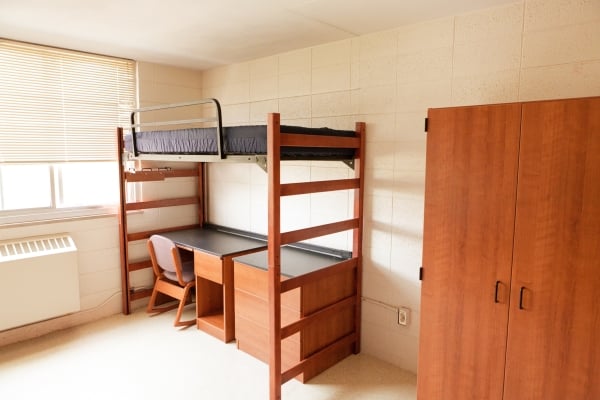
    What do students look for in on-campus housing? According to university staff, students are most satisfied with their space when it’s well furnished and clean.

    A new report from StarRez, a student housing management platform, identified room conditions and a sense of community as top priorities for on-campus housing residents. The survey also found that a majority of institutions see social events and mental health support as key to the student experience in residence halls.

    In addition, the research reveals that today’s students prefer privacy in their living space but are still interested in creating connections and engaging with peers who share their residence hall. They are also open to opportunities to build living-learning communities.

    Methodology

    StarRez’s survey was fielded between Feb. 10 and April 14, 2025. It yielded 459 responses from 418 institutions across the globe, including 360 institutions based in the Americas.

    Setting the stage: An estimated 16 percent of all undergraduates live on campus, including 30 percent of those who attend four-year, public institutions and 43 percent of students at independent colleges, according to an analysis from the American Association of Community Colleges.

    Previous research shows that students who live in residential housing on campus are more likely than their peers who live off campus to persist and complete a degree. This trend may be due in part to the proximity to peer support, academic resources and security in basic needs that living on campus affords.

    In recent years, many colleges have seen a housing crunch impact their students, resulting in less-than-ideal accommodations and residence halls exceeding capacity. StarRez’s survey found that 64 percent of responding institutions had 90 percent or higher occupancy rates; 15 percent had occupancy rates of 99 percent or higher. Yet nearly 57 percent of students do not have access to on-campus housing, according to respondent data.

    But StarRez’s report points to a post-pandemic spike in students interested in living on campus—a trend that has leveled out this year—meaning the exceptionally high demand for on-campus housing may decline.

    Affordability also remains a growing concern in the campus housing market. Student housing prices are rising faster than those of single-family housing, growing 8.8 percent in 2023 compared to multifamily rentals, which rose 4.5 percent in cost over the same period.

    Survey says: When students say they’re satisfied with their housing, approximately one-third are referring to the room conditions and furnishings, their sense of community, or the residence hall’s amenities, according to institutional respondents.

    On the flip side, cost, facility issues and dissatisfaction with food or meal plans were the most commonly reported criticisms of on-campus living. Inside Higher Ed’s Student Voice survey from 2023 found that 48 percent of students believe their dining hall options need improvement and 37 percent said dining facilities need improvement.

    Across room types, apartment-style housing is the most requested option by students (34 percent), followed by suite-style housing (27 percent) and traditional dorms (21 percent), according to StarRez’s survey. The report also found that a greater share of students want their own space; at a majority of institutions (51 percent), students rank single rooms as their top choice on the housing application.

    Not every housing placement turns out to be successful. A majority of colleges said more than 10 percent of their residents requested a room change during the year, with 8 percent saying between 25 and 50 percent of residents asked for a new room.

    Among events offered to residents, 90 percent said social events are the most popular and widely attended, followed by recreational activities (56 percent) and wellness programs (39 percent).

    When asked which health and well-being activities students most often requested of their housing facility, nearly 60 percent of respondents said mental health support programs, and over half (56 percent) wanted social events and community-building activities. Less popular responses included counseling and peer support networks (46 percent), healthy dining options (38 percent), and financial and academic support services (36 percent).

    Living-learning communities continue to grow in popularity, with four out of five colleges offering this type of student housing. Academic-focused communities (23 percent) and honors programs (17 percent) were the most popular LLCs, while career (5 percent) and leadership-focused (6 percent) groups were the least popular.

    National data shows students with disabilities are enrolling in higher education at higher rates, and StarRez’s report points to an increase in emotional support animals making their way to campus as well. One-third of institutions said between 3 and 10 percent of residents have emotional support animals, with 3 percent of respondents saying more than 10 percent of students have them.

    Fewer institutions reported offering gender-inclusive housing in 2025 (69 percent) than in 2024 (73 percent), and there was little difference in the number who said they were considering implementing gender-inclusive housing space.

    Growth in international student enrollment is also pushing an increase in housing demand from international students, with 34 percent of respondents indicating a slight increase and 6 percent reporting a significant increase. A majority of respondents house fewer than 10 percent of their international students on campus. The report data does not reflect recent federal actions this spring that may impede international student enrollment in the fall.

    So what? Based on the report’s findings, authors recommend housing providers consider:

    • Students’ desire for privacy, mental health and belonging, which are core to their experiences on campus.
    • More students want apartment-style and single-room housing options, creating opportunities for institutions to adapt spaces to match this need.
    • Living and learning communities can provide high-impact experiences for residents, leading to greater satisfaction and retention.

    How does your institution promote belonging and well-being in the residence halls? Tell us more.

    Source link

  • Graduate Student Preferences Webinar | Collegis Education

    Graduate Student Preferences Webinar | Collegis Education

    Your graduate programs should be thriving, but if you’re relying on outdated outreach tactics, you’re leaving enrollments on the table. Today’s grad students expect more personalization, relevance, and connection. And if you’re not aligning with their needs, another institution will. The only way to meet them where they are is by asking the right questions and getting real answers. That’s exactly what Collegis Education and UPCEA did, and now we’re pulling back the curtain to share what we found.

    Unlock Graduate Enrollment Growt
    Proven Strategies for Engaging Graduate Students
    Date
    : April 8, 2025
    Time: 2:00 pm (Eastern) / 1:00 pm (Central)

    Join Tracy Chapman, Chief Academic Officer at Collegis Education, and Bruce Etter, Senior Director of Research & Consulting at UPCEA, for their upcoming webinar “Unlock Graduate Enrollment Growth: Proven Strategies for Engaging Graduate Students.” In this session, they’ll reveal some surprising discoveries about graduate enrollment and the factors that drive impact and growth.

    Walk away with a clear understanding of:

    • graduate student needs and expectations,
    • why grad students disengage during their enrollment journey,
    • what information grad students are willing to give you and when, and
    • how to best communicate and reach graduate students actively evaluating programs. 

    Who should attend:

    • Presidents
    • Provosts
    • Enrollment leaders 
    • Marketing leaders

    At the end, we’ll leave room for questions and conversion, and all attendees will receive a copy of the entire research report. See you on April 8! 

    Source link

  • Report on Grad Student Preferences

    Report on Grad Student Preferences

    According To the New UPCEA and Collegis Report, 71% of Prospective Graduate Students Prefer Fully Online Programs

    Findings highlight the need for strategic outreach to address master’s degree enrollment challenges in a competitive market

    [Washington and Illinois] – December 16, 2024 – A new report released today by UPCEA, the online and professional education association, and Collegis Education, a higher education solutions tech-enabler, highlights the growing interest in online master’s degree programs that provide flexibility, transparency and streamlined communication in graduate programs. Based on a survey of over 1,000 prospective graduate students, Building a Better Pipeline: Enrollment Funnel Needs and Perspectives from Potential Post-Baccalaureate Students reveals key insights for higher education institutions aiming to improve graduate recruitment strategies.

    “We are entering a period where every enrollment matters. Enrollment growth for graduate programs has been stagnant for the past 15 years, despite the number of baccalaureate degree holders growing. Future success requires colleges and universities to better align offerings with student preferences and communicating on their terms,” said Jim Fong, Chief Research Officer at UPCEA. “Listening to prospective students’ interests and addressing their needs provides a stronger roadmap for institutions to succeed in what will be a hyper-competitive landscape.”

    Key findings from the report include:

    • Delivery Preferences: Fully online programs are the most preferred format, with 71% of respondents showing strong interest, followed by hybrid formats (53%).
    • Program Priorities: A specific program of study is the top consideration (54%), followed by institutional reputation (28%) and delivery method (18%).
    • Communication Preferences: Email remains the preferred contact method for 47% of respondents during the inquiry process, with most willing to share basic details such as their name and email address.
    • Engagement Challenges: Sixty-two percent of respondents said difficulty finding basic program information on an institution’s website would cause them to disengage. At the same time, financial concerns dominated the latter stages of the application process.

    The report highlights a growing demand for master’s degree programs, which 65% of respondents identified as their top interest. It also points to an urgent need for institutions to address gaps in their outreach strategies to meet these demands effectively.

    “As higher education faces tightening budgets, strategic investments in program delivery and candidate outreach have never been more important. These findings emphasize the need for a fully transparent graduate search experience – from program research to application – to engage and inform students so they can see the value and affordability from the start,” said Tracy Chapman, Chief Academic Officer of Collegis Education. ”Institutions that leverage data, technology, and talent can strengthen relationships with prospective students to build communication and trust.”

    With graduate enrollment projected to grow by just 1.4% over the next five years, institutions must innovate to stay competitive. The report provides data-driven insights to help universities design more effective outreach and recruitment strategies, particularly in light of the 32% increase in master’s program offerings since 2017, which has led to a 15% decrease in average program size.

    Actionable Insights for Institutions

    With graduate enrollment projected to grow by just 1.4% over the next five years, institutions must innovate to stay competitive.The survey revealed that requiring too much personal information in online request-for-information (RFI) forms often leads to student disengagement. Institutions should streamline these forms and prioritize providing clear, accessible program details—such as tuition, course requirements, and job outcomes—on their websites. UPCEA’s analyses show that many institutions lack this essential information, which can deter potential applicants early in the inquiry process.

    In light of the 32% increase in master’s program offerings since 2017, which has led to a 15% decrease in average program size, this report provides vital data-driven insights to help universities design more effective outreach and recruitment strategies.

    Methodology

    Conducted in August, the survey was completed by 1,005 qualified participants. Qualified respondents were between the ages of 18 and 64, held at least a bachelor’s degree, were not currently enrolled in a post-baccalaureate program, and were at least somewhat interested in pursuing further education. Nearly a quarter (24 percent) of respondents were 55 to 64 years old, 18 percent were aged 46 to 54, and 14 percent were 23 to 26 years old, showing deep interest in fully online graduate programs regardless of age.

    For more information on the survey findings, download the report at https://collegiseducation.com/insights/student-experience/research-report-graduate-student-perspectives/

    # # #

    About UPCEA:

    UPCEA is the online and professional education association. Our members continuously reinvent higher education, positively impacting millions of lives. We proudly lead and support them through cutting-edge research, professional development, networking and mentorship, conferences and seminars, and stakeholder advocacy. Our collaborative, entrepreneurial community brings together decision-makers and influencers in education, industry, research, and policy interested in improving educational access and outcomes. Learn more at upcea.edu.

    About Collegis Education:

    As a mission-oriented, tech-enabled services provider, Collegis Education partners with higher education institutions to help align operations to drive transformative impact across the entire student lifecycle. With over 25 years as an industry pioneer, Collegis has proven how to leverage data, technology, and talent to optimize institutions’ business processes that enhance the student experience. With the strategic expertise that rivals the leading consultancies, a full suite of proven service lines, including marketing, enrollment, retention, IT, and its world-class Connected Core® data platform, Collegis helps its partners enable impact and drive revenue, growth, and innovation. Learn more at CollegisEducation.com.

    Media Contacts:

    UPCEA
    Molly Nelson
    VP of Communications
    [email protected]

    Collegis Education
    Alyssa Miller
    [email protected]
    973-615-1292

    Source link