
Tag: Prepares

  • National Institute on Transfer Prepares to Close

    National Institute on Transfer Prepares to Close

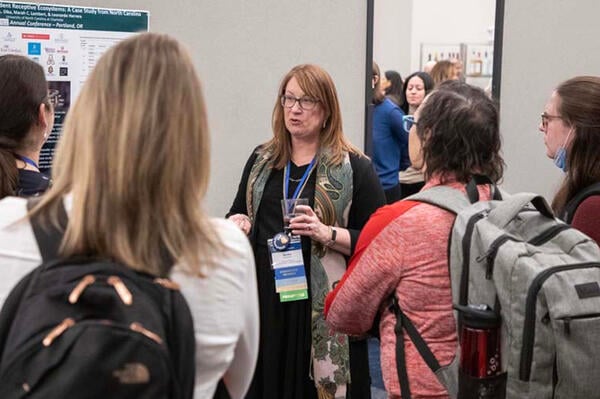
    For over two decades, the National Institute for the Study of Transfer Students has bridged two worlds—the researchers who study transfer students and the campus staff who work with them. Located at the University of North Georgia, NISTS has gathered these groups for annual conferences, disseminated resources and research, and doled out awards for groundbreaking work.

    Now, university leaders say they can no longer afford to fund NISTS. At the end of October, NISTS, at least in its current form, will shutter.

    The institute “has made a lasting impact in improving transfer policy and practice nationwide,” and “its research has informed how colleges and universities support transfer student success,” university officials said in a statement.

    But “unfortunately, due to ongoing budget constraints and a realignment of institutional priorities, the university is no longer able to financially support the Institute,” the statement read. “We are proud of the Institute’s legacy and the many partnerships it has built, and we remain committed to serving transfer students through our academic programs and student success initiatives.”

    Janet Marling, NISTS’s executive director, said that over the past year, institute staff tried but ultimately couldn’t find a new permanent home for their work—at least for now. She hopes that other organizations will carry on parts of the institute’s work, including its conferences and programs, and house its research and resources so transfer professionals can continue to benefit from them.

    “We have heard, time and time again, there just isn’t anyone else providing the resources, the community, the networking, the translation of research to practice in the transfer sphere in the way that NISTS is doing it,” Marling said.

    ‘A Terrible Loss’

    NISTS prides itself on taking a unique approach, connecting staff who span the transfer student experience—from admissions professionals to advisers to faculty members—in an effort to holistically improve transfer student success. Transfer practitioners and researchers worry NISTS’s closure will have ripple effects across the field.

    Alexandra Logue, professor emerita at the CUNY Graduate Center, said the transfer process inherently involves multiple institutions working together, including, in some cases, across state lines; about a quarter of transfer students choose to go to a four-year college or university in another state.

    Logue appreciated that NISTS conferences offered a rare “chance for people from all the different states in the country to come together” to coordinate and swap best practices. Such programs also allowed transfer researchers like her to share their findings with staff working directly with transfer students on campuses.

    “The research that we do is pointless if it isn’t put into practice,” Logue said.

    While other organizations are doing powerful work to improve transfer student outcomes, NISTS played a major role in bringing new visibility to transfer students’ needs by making them a singular focus, said Stephen Handel, a NISTS advisory board member.

    The institute “added a legitimacy to a constituency of students that often got forgotten,” Handel said. “NISTS was completely focused on that constituency alone, and that’s what made it unique.”

    Eileen Strempel, also on the advisory board, said she got involved with NISTS when she served as an administrator at Syracuse University and sought to create a strategic plan to improve transfer outcomes—an area she hadn’t done much work in before.

    “I felt like, oh, wow, there’s a brain trust already for me, the neophyte, the learner who doesn’t know very much about transfer at all,” she said. She called the closure “a terrible loss.”

    She said NISTS leaders often asked conference participants how many of them had never attended a convention focused on transfer students before; Each year, most hands went up.

    “To me, what that moment always crystallized was the important role that NISTS had” in helping practitioners figure out “how they could learn from other colleagues, that they didn’t need to recreate the wheel,” Strempel said.

    Those lessons have had downstream effects on students.

    Each practitioner came out better equipped “to help hundreds, if not thousands of students,” Strempel said.

    Marling said one of the most exciting parts of the work was seeing its impact on students across the country. For example, she watched graduates of NISTS’s post-master’s certificate program in transfer leadership and practice go on to make meaningful changes on their campuses, such as establishing new transfer partnerships with other institutions or revamping training for advisers to improve transfer students’ experiences.

    She said she feels “profoundly sad” about NISTS shuttering at University of North Georgia, but she also believes NISTS will live on in some form because of the “tremendous outpouring of support and concern” that followed the announcement of its closure.

    “I’m very hopeful that the spirit of NISTS will continue,” whether that’s as an institute elsewhere or “within the many, many transfer champions that are working in higher education across the country. I’m really excited to see how individuals and institutions take what they’ve learned from NISTS and continue to grow their focus on transfer students and continue to provide equitable opportunities for these students.”

    Source link

  • Education Dept. Prepares for “Big, Beautiful Bill” Changes

    Education Dept. Prepares for “Big, Beautiful Bill” Changes

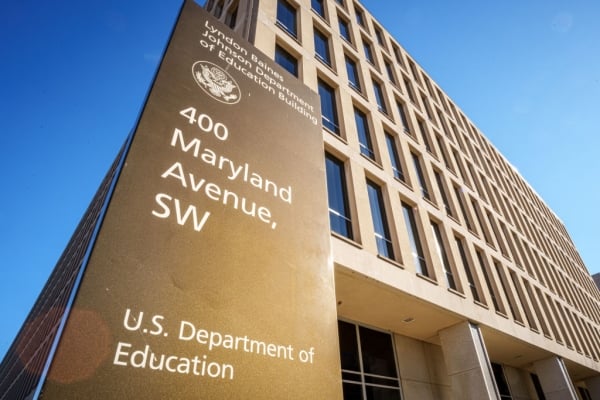
    The Education Department is moving quickly to carry out the higher ed changes in the recently passed One Big Beautiful Bill Act.

    The agency announced Thursday that it will convene two advisory committees to weigh in on changes to the rules and regulations for the federal student loan program, institutional and programmatic accountability, and the Pell Grant program. Officials wrote in the announcement that this round of rule-making was necessary to implement the changes in the One Big Beautiful Bill as well as “other administration priorities.”

    Many of the higher ed provisions in the legislation take effect July 1, 2026, and several experts have raised concerns about whether that’s enough time for the department to put in place the necessary regulations and guidance. Among other changes, the law ends the Graduate PLUS loan program, caps loans for graduate and professional students, and expands the Pell Grant to workforce training programs that run between eight and 15 weeks.

    To revise the regulations, the department is following its lengthy and complicated process known as negotiated rule making, which involves bringing together stakeholders to review proposed changes and then listening to public comment on the plan.

    One group, which the department is calling the Reimagining and Improving Student Education (RISE) Committee, will focus on the student loan regulations, including creating new repayment plans and giving colleges the ability to limit how much students can borrow. The RISE Committee will meet twice in September and November for week-long sessions to negotiate policy revisions. If the committee doesn’t reach a consensus, the department is free to move forward with its own proposal, which would still be subject to public comment.

    The other policy changes in the law will fall to the other panel, known as the Accountability in Higher Education and Access through Demand-driven Workforce Pell (AHEAD) Committee. That includes implementing the new earnings test, which requires programs to prove their graduates earn more than an adult with a high school diploma or risk losing their access to student loans, as well as revising the eligibility criteria for Pell grants to exclude students who get a full ride. The AHEAD committee will meet in December and January for week-long sessions.

    Both committees will include student borrowers, legal assistance organizations and representatives from various types of institutions, among other stakeholder groups. None specifically include the financial aid administrations who will play a key role in rolling out these changes on college campuses.

    To kick off the rule-making process, the department will hold a virtual public hearing from 9 a.m. to 4 p.m. Aug. 7. More information is available on the department’s website.

    Source link

  • How an Indiana Teacher Prepares Students for College Success – The 74

    How an Indiana Teacher Prepares Students for College Success – The 74


    Get stories like this delivered straight to your inbox. Sign up for The 74 Newsletter

    As new graduation requirements go into effect in Indiana, more students will likely take college and career courses to prepare for life after high school. But making sure students can access these classes — and succeed in them — takes some patience and creativity.

    When Sheridan High School teacher Jill Cali noticed her students struggling with the longer deadlines and open-ended questions typical of college assignments, she began to teach them how to break tasks into more manageable steps. Soon, her students were reaping the benefits.

    Other roadblocks to students’ success in college courses, especially in rural communities like Sheridan, a town of 3,000 people in northwest Hamilton County, include accessing these credits and paying for them.

    Cali said being part of the Rural Early College Network, sponsored by the Center of Excellence in Leadership of Learning at the University of Indianapolis, allows her students to earn college credits for free. The network also serves as a source of support, allowing her to exchange ideas with teachers at other schools.

    “The struggles that students typically have in early college courses are some of the same things that prevent many students from being confident that they will find success in college,” Cali told Chalkbeat. “When students believe they don’t have the ability to be successful in completing college-level work, their first instinct is to shy away from it.”

    Read on to learn more about how Cali approaches her early college classes.

    This interview has been lightly edited for length.

    How and when did you decide to become a teacher?

    I decided to become a teacher during my sophomore year of college when I realized that I was not meant to be an accountant! I had always loved working with kids and had a natural talent in Spanish, so becoming a [Spanish] teacher seemed like a good fit. The longer I teach, the more sure I am that this was the right path for me. I was made to be a teacher.

    What was the process like to become a dual-credit instructor?

    Our superintendent suggested I pursue a Master of Science in Curriculum and Instruction so I would be able to teach the dual-credit Education Professions courses. During our conversation, he convinced me that the degree program would be flexible enough to work with my busy single parenting and teaching schedule and that I would see the return on my investment very quickly. He was right.

    The following week, at the age of 42, I enrolled in a program to complete my master’s degree online, working at my own pace. I finished in six months, after working tirelessly to make sure that I only had to pay for one term.

    In order to be approved as a dual-credit instructor, I had to coordinate with my high school’s higher education partner, Ivy Tech Community College. This involved submitting my [college and grad school] transcripts, along with a proposed syllabus for each of the courses I planned to teach. The process was honestly pretty quick and painless.

    What’s your favorite lesson to teach and why?

    In my Principles of Teaching class, the introduction to teaching course, I teach about differentiation and making accommodations for students with special needs. My very favorite lesson to teach is the one in which I give students various tasks, but each has a different limitation. Their reactions, creative thinking, and “aha moments” are the reason it is my favorite lesson. During that lesson, my students realize that some of the most basic tasks can be entirely impossible with just one small limitation. Their internalization of how frustrating learning can be for some of our students really helps us to move forward with the unit of study in a productive manner.

    Tell us about your own experience with school and how it affects your work today.

    Throughout my childhood and into adulthood, I was a student who strived for excellence in every subject. Realizing that I finally understood a concept I had been trying to grasp or persevering through a tough problem to find an answer always gave me immense satisfaction. I loved the “light bulb moments” as a student, but I enjoy them even more now that I am the teacher. A natural lifelong learner myself, it has always been my goal to inspire my students to be inquisitive and curious investigators of anything that interests them.

    How is your early college classroom different from a standard high school classroom?

    At a glance, my classroom looks a bit more like a college classroom than many high school classrooms. I was fortunate enough to be able to use grant money to furnish the room with flexible seating options. What you can’t see is that my early college students work with elementary students, getting experience in the field. The flexible seating allows them to move seamlessly between working independently and cooperating and creating with their peers.

    How do you help students adjust to those expectations?

    Students in early college learn that when something feels overwhelming or difficult, they have the tools to tackle it on their own. This doesn’t mean that they can’t ask for help or guidance. It means that before asking for help, students should make sure they have exhausted all options for figuring it out on their own.

    I send a letter to each student and one home to their caregivers prior to the start of school in the fall, explaining what dual-credit means and what the expectations will look like in my early college class. This ensures that there is no confusion about what will be expected of early college students and also opens the lines of communication with students and families.

    Having taught these courses for a few years, I’ve found that students struggle with a course that has larger assignments and more time between deadlines. The first thing I do to support them in addressing this is to show them how they can break larger assignments and projects into smaller tasks on their own. Many students are used to having teachers do this for them. I show them how they can establish their own, smaller deadlines based on what they know about their personal schedule, how fast they tend to work, and the support they think they might need.

    Students also find it challenging to write nearly everything for their dual-credit courses using a formal tone with proper grammar and spelling. In addition, students tend to have trouble answering multi-part questions … particularly when they are higher-level thinking questions. I spend a full class period — more, if needed — showing them and having them practice how to appropriately respond to the types of writing prompts and questions they will typically see in their early college courses.

    Another area where students tend to struggle is with attendance and deadlines. During the COVID-19 pandemic, many schools insisted that students be shown grace in both of those areas. Unfortunately, this instilled in them the idea that as long as they completed all graded assignments, it didn’t matter whether they participated in class or how late assignments were submitted. Though their learning is always my primary focus, much of what my students learn builds on itself. In addition, much of the learning takes place through class discussions.

    What are some barriers your students face to postsecondary opportunities, and how does the Rural Early College Network help you help them overcome those?

    The greatest barrier to postsecondary opportunities for students in my school is the financial barrier. The dual-credit courses we offer are all free to our students, so when they successfully complete those courses, the number of semesters that will be required for them to complete their degree can be reduced. This translates to money saved for the student and makes their postsecondary options more affordable and attainable.

    Rural Early College Network schools meet throughout the school year to share ideas and support each other in building programs that provide our students with the tools they need to be successful in our classrooms, in college, and beyond.

    What’s the best advice you’ve ever received, and how have you put it into practice?

    The best advice I have ever received with regard to teaching is, “Student behavior and choices are almost never personal attacks against the teacher.” It was the great reminder that my teenage students’ brains are not fully developed. When they make poor choices or when they act out, it nearly never has anything to do with how they feel about me or anything even relating to me. Letting that go and remembering to see their behaviors as something completely separate from me has really made it much easier to create consequences when appropriate, support my students when needed, and establish a welcoming environment in which every student starts fresh every day.

    This story was originally published by Chalkbeat. Chalkbeat is a nonprofit news site covering educational change in public schools. Sign up for their newsletters at ckbe.at/newsletters.


    Get stories like these delivered straight to your inbox. Sign up for The 74 Newsletter

    Source link