Tag: President

  • President Issues Proclamation Restricting Entry of Foreign Nationals From 19 Countries – CUPA-HR

    President Issues Proclamation Restricting Entry of Foreign Nationals From 19 Countries – CUPA-HR

    by CUPA-HR | June 5, 2025

    On June 4, 2025, President Trump issued a presidential proclamation titled “Restricting the Entry of Foreign Nationals to Protect the United States from Foreign Terrorists and Other National Security and Public Safety Threats.” The proclamation, citing national security concerns, suspends or limits entry into the United States for certain foreign nationals from 19 countries identified as having inadequate screening and information-sharing practices. The restrictions take effect on Monday, June 9, 2025.

    This proclamation implements directives from Executive Order 14161, issued on January 20, 2025, which stated that it is U.S. policy to deny entry to foreign nationals who may pose national security or public safety threats. That order required federal agencies to review global vetting practices and recommend countries for entry restrictions based on insufficient identity management or cooperation.

    Following that review, the secretary of state, in consultation with the attorney general, secretary of homeland security and director of national intelligence, recommended entry restrictions on foreign nationals from 19 countries.

    Countries Affected

    The proclamation imposes:

    • Full entry suspensions (both immigrant and nonimmigrant visas) for nationals of: Afghanistan, Burma, Chad, Republic of the Congo, Equatorial Guinea, Eritrea, Haiti, Iran, Libya, Somalia, Sudan and Yemen.
    • Partial entry suspensions (specific visa types, including B-1/B-2 and F/M/J visas) for nationals of: Burundi, Cuba, Laos, Sierra Leone, Togo, Turkmenistan and Venezuela.

    The administration cites overstay rates, lack of cooperation in accepting removable nationals, and terrorist activity or governance instability as justification.

    Exemptions and Waivers

    The proclamation includes a number of exemptions, including lawful permanent residents of the United States; dual nationals traveling on a passport from a non-restricted country; holders of certain visa categories such as diplomatic, NATO, and adoption-related visas; immediate family-based immigrant visa applicants with verified relationships; and Special Immigrant Visa recipients, including Afghan and U.S. government employees. Also exempt are individuals traveling to participate in major international sporting events — such as the World Cup or Olympics — including athletes, coaches, support staff and immediate relatives, subject to determination by the secretary of state.

    In addition, case-by-case waivers may be granted if the secretary of state or attorney general determines that the individual’s travel would serve a critical U.S. national interest, including participation in legal proceedings or for humanitarian reasons.

    This action reflects a return to policies implemented during President Trump’s first term. In 2017, the administration issued an executive order restricting entry from several predominantly Muslim countries. The order was revised multiple times following legal challenges and was ultimately upheld by the U.S. Supreme Court in Trump v. Hawaii (2018). The Biden administration reversed the policy on its first day in office in 2021.

    The partial suspensions affect several nonimmigrant visa categories common in higher education, including F (students), M (vocational students), and J (exchange visitors) from the listed countries. CUPA-HR will continue to monitor developments related to this proclamation and its potential implications.


    Source link

  • UWF Taps Florida GOP Official as Interim President

    UWF Taps Florida GOP Official as Interim President

    Another former Florida lawmaker is stepping into a presidency after the University of West Florida Board of Trustees voted to hire Manny Diaz Jr. in an interim capacity Tuesday.

    Diaz, who is currently Florida’s education commissioner, served in Florida’s Senate from 2019 to 2022. The former GOP lawmaker is a close ally of the state’s Republican governor, Ron DeSantis. 

    The UWF board approved the hire despite the objections of two trustees who raised concerns about transparency and argued that the process of selecting an interim was rushed. UWF’s current president, Martha Saunders, announced her resignation earlier this month after a board member took issue with social media posts from the university dating back several years. Zach Smith, who works for the Heritage Foundation, said he was troubled by actions that included encouraging students to read a book about antiracism and promoting a drag event in 2019.

    Both board members and the public questioned Diaz’s qualifications at the meeting.

    Trustee Alonzie Scott noted that it was unusual to select an interim without considering internal options and questioned how Diaz was elevated as a sudden candidate without a prior board discussion. He also pressed board chair Rebecca Matthews on whom she spoke with before advancing Diaz as the pick, though she did not offer specifics on those conversations.

    “I don’t feel as if I have to run through that list with you today,” Matthews told Scott when he asked whom she had discussed the appointment with before adding it to the board agenda.

    Scott also questioned whether the board had violated state sunshine laws.

    “I can’t prove that any of us have violated the sunshine guidelines, but I can tell you everything that I read about all the different Florida news outlets, it appears that those decisions were made before this board even had a chance to even discuss. And to me, ma’am, that is a travesty in terms of how we operate,” Scott said, adding the process was “a disservice to the community.”

    Matthews defended the hire, noting Diaz’s past work in K-12 education and the State Legislature.

    Diaz will formally assume the interim presidency July 14. Despite tapping Diaz as interim, the board will begin a search for its next president, though some trustees argued that naming Diaz instead of an internal candidate to lead UWF would likely suppress the number of applicants.

    Of five presidents hired at Florida’s public universities this year (including interim roles), Diaz is one of four who are either former lawmakers or directly connected to the governor’s office. Santa Ono, who was hired as president of the University of Florida on the same day UWF tapped Diaz, is the outlier.

    Source link

  • Philander Smith University Names Dr. Maurice Gipson as 15th President

    Philander Smith University Names Dr. Maurice Gipson as 15th President

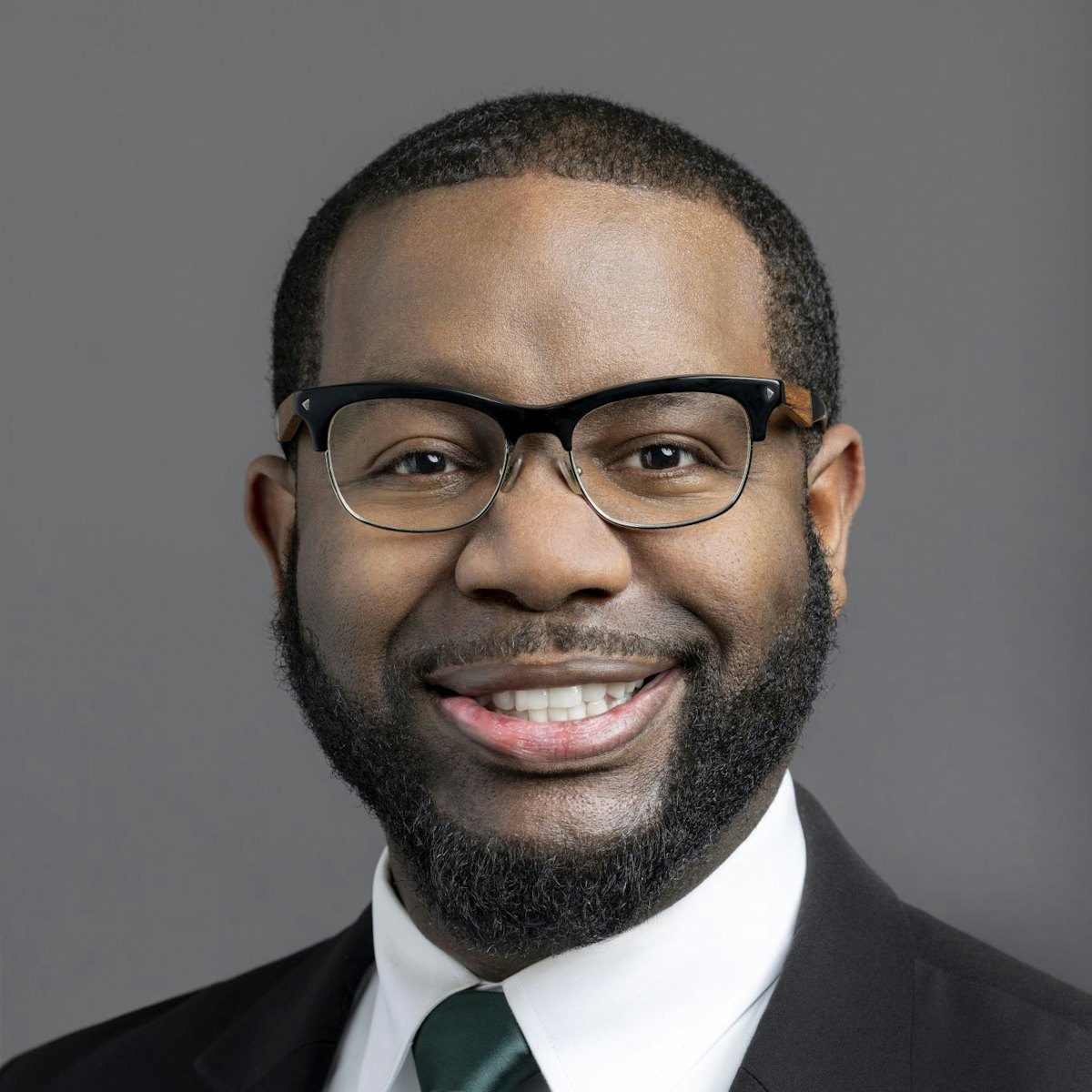
    Dr. Maurice GipsonPhilander Smith University’s Board of Trustees has appointed Dr. Maurice D. Gipson as the institution’s 15th president and chief executive officer, the university announced Thursday.

    Gipson has served as interim president since August 2024.

    “We are incredibly proud to name Dr. Maurice Gipson as our 15th President and Chief Executive Officer,” said Board Chair Dr. Tionna Jenkins, a 2001 alumna. “He brings not only the experience and strategic insight needed for this moment, but also a heartfelt understanding of what makes Philander Smith University so special.”

    Gipson most recently served as Vice Chancellor for Inclusion, Diversity, and Equity at the University of Missouri’s flagship campus. In that position, he oversaw more than 120 staff members and managed a multi-million-dollar budget for the 30,000-student institution.

    His career in higher education administration spans more than a decade, with previous leadership positions at Arkansas State University, the University of Texas at Austin, Wiley University, and Huston-Tillotson University. Gipson also previously served a four-year term on Philander Smith’s Board of Trustees, where he chaired the Governance Committee and served as vice chairman.

    A scholar specializing in African American history, Black nationalism, and the Black freedom struggle, Gipson is currently writing a book about the Black Freedom Struggle in Arkansas. He holds a Ph.D. in history from the University of Mississippi, a Juris Doctor from Southern University Law Center, a master’s degree in history from Missouri State University, and graduated from Louisiana State University. He is also a licensed attorney.

    “I am deeply honored to lead this historic institution at such a critical time,” Gipson said. “Philander Smith University has long been a place where transformation takes root—for students, for families, and for communities.”

    Source link

  • Pasco-Hernando Taps DeSantis Ally as Interim President

    Pasco-Hernando Taps DeSantis Ally as Interim President

    Weeks after Pasco-Hernando State College president Jesse Pisors resigned abruptly, the board named Florida Department of Juvenile Justice secretary Eric Hall interim president Tuesday.

    Republican governor Ron DeSantis appointed Hall to the department in late 2021. Prior to that role, Hall served as senior chancellor of the Florida Department of Education from early 2019 to late 2021. Before that appointment, his educational experience was largely in the K-12 space.

    Hall was a finalist in the 2023 PHSC presidential search that ended with Pisors in the top job. 

    Pisors resigned after less than 18 months as president. His departure followed the release of a critical report by Florida’s version of the Department of Government Efficiency, which indicated the college was among the worst in the state in terms of student growth and retention. Board members alleged that they had not been made aware of those numbers, despite requests.

    However, The Tampa Bay Times reported that there has been skepticism around the validity of the report, which some critics argued was a flawed analysis of PHSC’s student outcomes.

    The newspaper also noted that DeSantis appointed Hall to a government efficiency task force in late 2023, an effort that was ultimately a forebear of the state’s DOGE apparatus.

    Hall is one of multiple DeSantis allies hired to lead a public institution in Florida this year. Others include Marva Johnson, a lobbyist, hired to lead Florida A&M University last week, and former Florida lieutenant governor Jeanette Nuñez at Florida International University, as well as former state lawmaker Adam Hasner at Florida Atlantic University, both of whom were hired in February. (Nuñez was hired as an interim but has since been named sole finalist for the job.)

    Prior political hires include Ben Sasse, a former Republican U.S. senator from Nebraska, who briefly led the University of Florida before stepping down amid a spending scandal, and former state lawmaker Richard Corcoran at New College of Florida. Another former GOP lawmaker, Ray Rodrigues, was hired as chancellor of the State University System of Florida in 2022.

    Source link

  • Florida A&M Hires DeSantis Ally as President

    Florida A&M Hires DeSantis Ally as President

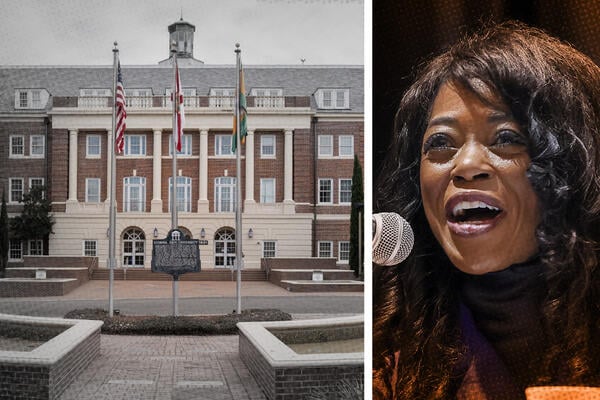
    Photo illustration by Justin Morrison/Inside Higher Ed | Jemal Countess/Getty Images for NOBCO | JHVEPhoto/iStock/Getty Images

    Following a contentious selection process, Florida A&M University hired a new president with no experience working in higher education but long-standing ties to Republican governor Ron DeSantis.

    Marva Johnson, a lobbyist for Charter Communications, faced sharp opposition from students and alumni, who dubbed her “MAGA Marva.” But despite questions about her lack of experience, Florida A&M’s board voted 8 to 4 in a Friday meeting to make her the next president.

    Johnson was also criticized by community members and board chair Kristin Harper for her salary demands, which included base pay of $750,000 plus performance bonuses. (Two other candidates requested compensation in the $500,000 range, while one other was negotiable.)

    Harper was one of the four trustees who voted against hiring Johnson.

    “In an age of merit-based hiring decisions, how can one justify settling for a candidate who does not meet all of the position criteria? Or turning a blind eye to exceptionally qualified candidates?” Harper asked.

    She added that FAMU community members “have been very clear” with their feedback.

    But other trustees emphasized Johnson’s experience in the political world. Jamal Brown, the Faculty Senate president, who sits on the board, argued that FAMU needed a president who has “access and political connections” to ensure the university’s financial success. In voting for Johnson, he argued that “this moment calls for someone who understands the systems that fund and govern us, because right now our survival depends on how we navigate those systems.”

    While Johnson has never worked in higher education in any capacity, she spent eight years on the Florida State Board of Education, including time as chair. During the hiring process, critics highlighted her lack of experience, as did some trustees who voted against her.

    Johnson beat out Donald Palm, executive vice president and chief operating officer of Florida A&M, who received four votes. Other candidates included Rondall Allen, provost and vice president for academic affairs at the University of Maryland Eastern Shore, and Gerald Hector, senior vice president for administration and finance at the University of Central Florida.

    Palm, the internal candidate, was overwhelmingly endorsed by FAMU’s alumni association.

    At a tense meet-and-greet with Johnson on Wednesday, the candidate assured the university community she was “not a Trojan horse” and promised she “would fight and win for FAMU.”

    However, critics have argued she failed to articulate a clear vision for the university.

    Additional drama accompanied the hire when the board cut Harper out of contract negotiations. While board chairs have traditionally negotiated the contract with incoming presidents at Florida A&M, trustees voted to delegate that responsibility to another member at Friday’s meeting.

    “I take personal offense at what is happening,” Harper said during that discussion.

    Another controversy arose earlier in the search amid speculation that Johnson was added to a list of three finalists at the last minute. Last month trustee Ernie Ellison called to restart the search, arguing, “There are too many clouds hanging over this process.” He stepped down earlier this month and was quickly replaced by a new DeSantis appointee, who then voted to hire Johnson.

    Johnson steps into the FAMU job, which is currently held by an interim, after Larry Robinson, who led the university from 2017 to 2024, resigned amid controversy over a fraudulent gift.

    Last spring Florida A&M announced at commencement that the university had received a $237 million donation from Greg Gerami, a relatively unknown businessman with no connection to the institution. Florida A&M appeared to ignore warning signs that Gerami had also pledged $95 million to Coastal Carolina University in 2020, despite having no ties to CCU other than previously dating an employee. Gerami walked that donation back due to what he viewed as disrespect by officials at Coastal Carolina. Gerami’s FAMU donation was later invalidated.

    Despite the opposition to her candidacy, Johnson fits the profile favored in recent years by the governing boards at Florida’s public institutions, which have emphasized nontraditional applicants. Johnson is one of multiple presidential hires with ties to DeSantis or the GOP since 2022, when the State Legislature passed a bill allowing universities to shield applicant identities until the end of the hiring process, breaking with a long-standing tradition of making those names public. State lawmakers recently proposed injecting more transparency into searches, but that effort failed.

    Other political hires include Ben Sasse, a former Republican U.S. senator from Nebraska, who had a short-lived presidency at the University of Florida; former Florida lieutenant governor Jeanette Nuñez at Florida International University; and former state lawmakers Adam Hasner at Florida Atlantic University and Richard Corcoran at New College of Florida, among several others. Former GOP lawmaker Ray Rodrigues was also hired to lead the State University System of Florida in 2022.

    The University of Florida is currently in the process of replacing Sasse with an interim appointed to the job after his abrupt departure. Sole finalist Santa Ono, a traditional academic who left the University of Michigan to take the Florida job, marks a reversal of course compared to recent hires. However, Ono’s candidacy has sparked criticism from some conservative power players.

    Source link

  • Ryan Lufkin, Vice President of Global Academic Strategy, Brings the Skinny

    Ryan Lufkin, Vice President of Global Academic Strategy, Brings the Skinny

    When the developers of Canvas, the world’s leading web-based learning management system (LMS) software, invite you to a party—July 22-24 this year in Spokane, WA—you might consider the offer. Expected to draw 3,000 attendees across various roles from individual educators to IT leadership, the event promises product reveals, professional development, and collaborative opportunities like Hack Night, designed to help educators and administrators demonstrate tangible value when they return to their institutions. I was able to grab Ryan Lufkin, Vice President of Global Academic Strategy at Instructure, for some pre-show scuttle butt. Have a listen and scroll down for some highlights:

    ➜InstructureCon 2025 is evolving its AI strategy beyond basic features to an “agentic approach,” leveraging partnerships with Anthropic, Microsoft, and Google to create integrated AI experiences across campus environments. Says Ryan: “That’s because our open architecture is the most well-positioned learning platform in the world to really pull in, not just those AI-powered features that we’ve developed, but we also leverage those from our partners.”

    ➜Instructure is responding to educational institutions’ budget constraints by focusing on helping customers maximize their technology investments through better data usage, adoption metrics, and optimization strategies. Says Ryan: “We really want educators and administrators to walk away with just a toolkit of how to use these products better, how to use them more deeply and tangibly show that value because we know the budgets are tight.”

    A few session highlights:  

    Transforming Student Success with Mastery Connect: A Proven Approach to Data-Driven Instruction in Richland One School District

    Get ready to discover how Richland One (R1) School District in South Carolina has been transforming student success with Mastery Connect since 2015! This digital assessment platform has empowered R1 teachers to seamlessly administer standards-based formative and summative assessments, dive into score reports, and collaborate with colleagues. MC has unlocked deeper insights into student mastery, giving teachers and teams the tools they need to drive data-driven instruction. Join us for an exciting session where R1 will share its curriculum map structure and district approach to formative assessments. Discover how to save time on data collection and analysis—whether you’re a teacher or an admin. Learn how newer features like Quick Reassess and Assessment Compare can help you work smarter, not harder! You’ll also explore how to harness real-time data to fuel impactful discussions in your Professional Learning Communities (PLCs), driving focused, results-oriented collaboration.

    Cracking the Code: Turning Data into Action with Mastery Connect

    Drowning in data but struggling to make it meaningful? Join us on a journey to transform numbers into actionable insights using Mastery Connect! In this session, we’ll share how we built educator buy-in, shifted mindsets, and empowered teachers to use data in meaningful ways. Discover practical strategies for making data analysis approachable, actionable, and impactful—without overwhelming teachers. We’ll explore real-world examples, time-saving tips, and effective ways to connect assessment data to instructional decisions. Whether you’re just getting started or looking to refine your approach, this session will equip you with insights and strategies to turn data into a catalyst for student success.

    Beyond the Classroom: Maximizing Canvas for Non-Academic Programs in Resource-Limited Environments.

    As institutions face financial and regulatory challenges, maximizing existing technology investments is essential. While Canvas is primarily used for academic courses, its capabilities extend beyond the classroom. This session explores how a small liberal arts institution has successfully repurposed Canvas for faculty onboarding, professional development, syllabus archiving, student organizations, and institutional assessment—all without additional costs. A key focus will be the development of a syllabus submission portal designed to streamline syllabus collection, ensure compliance with learning outcomes, and create a structured faculty repository. Attendees will gain practical insights into overcoming adoption challenges, achieving measurable ROI, and applying these strategies to institutions of varying sizes.

    Kevin Hogan
    Latest posts by Kevin Hogan (see all)

    Source link

  • Pasco-Hernando President Resigns Amid State DOGE Scrutiny

    Pasco-Hernando President Resigns Amid State DOGE Scrutiny

    Pasco-Hernando State College president Jesse Pisors has resigned after less than 18 months on the job, amid scrutiny from Florida’s version of the Department of Government Efficiency, The Tampa Bay Times reported.

    Pisors stepped down Thursday, the day before a special meeting called by board chair Marilyn Pearson-Adams to discuss concerns about student growth and retention, according to meeting documents. In a letter to other trustees, which included analysis from Florida’s DOGE on student growth and retention, Pearson-Adams noted the college was among the worst on those metrics.

    Specifically, she noted PHSC was second-to-last in retention numbers, which she called “alarming.” She added that trustees “had not been made aware of these numbers” despite “our continued requests over the past 12 months regarding this type of information and data.”

    The agenda shows only one action item for Friday’s special meeting of the Pasco-Hernando Board of Trustees: “Determination of Sustainability of College’s Future.” 

    Florida is one of several states that has sought to implement cost-cutting measures modeled on DOGE, the federal initiative led by billionaire bureaucrat Elon Musk to reduce government waste through layoffs and the elimination of various programs—an effort that has run into multiple legal challenges. DOGE-driven cuts have also fallen far short of their intended vision, with Musk often exaggerating savings for taxpayers in his work for the Trump administration. 

    Florida’s DOGE has also sought records of all faculty research at public institutions published in the last six years, leading to concerns about how the effort may be weaponized against faculty.

    Source link

  • University of Michigan President Dr. Santa Ono to Exit After Brief Tenure

    University of Michigan President Dr. Santa Ono to Exit After Brief Tenure

    Dr. Santa J. OnoUniversity of Michigan President Dr. Santa J. Ono has announced his departure after a remarkably brief three-year tenure, accepting the sole finalist position for the presidency at the University of Florida.

    In a statement released Sunday, Ono confirmed he plans to transition to his new role this summer, pending approval from Florida’s Board of Governors.

    “This decision was not made lightly, given the deep bond Wendy and I have formed with this extraordinary community,” Ono said in his announcement to the Michigan community.

    Ono’s short-lived presidency began in October 2022 when he was appointed to replace Dr. Mark Schlissel, who was terminated after an investigation revealed an inappropriate relationship with a subordinate. The leadership transition occurred during a turbulent period for the university, which was simultaneously managing litigation related to the Dr. Robert Anderson sexual abuse scandal and implementing reforms to its sexual misconduct policies.

    Before joining Michigan, Ono served as president at the University of British Columbia and the University of Cincinnati, establishing himself as an experienced higher education administrator before taking the helm at Michigan. In 2015, Diverse profiled Ono.

    His brief tenure at Michigan saw several notable developments, including the unveiling of Campus Plan 2050, a comprehensive blueprint for the Ann Arbor campus’s future development; progress on the University of Michigan Center for Innovation in Detroit; and the expansion of the Go Blue Guarantee, which now offers free tuition to families earning $125,000 or less.

    However, Ono’s administration has faced significant criticism for reducing investments in Diversity, Equity and Inclusion initiatives, including the controversial closure of the Office of DEI. Pro-Palestinian student activists have also criticized the administration’s handling of campus protests, claiming the university has restricted free expression and employed excessive measures to limit demonstrations.

    In his farewell message, Ono highlighted the establishment of the Institute for Civil Discourse as one of his accomplishments, describing it as an initiative aimed at strengthening “debate and dialogue across diverse ideologies and political perspectives.”

    “These accomplishments are a testament to the collaborative spirit, creativity, and dedication of our entire university community,” Ono said. “They reflect a deep commitment to ensuring that Michigan’s best days are still ahead.”

    The University of Michigan Board of Regents has not yet announced plans for identifying Ono’s successor or appointing an interim president.

    The University of Florida cited Ono’s “proven record of academic excellence, innovation and collaborative leadership at world-class institutions” in their announcement. If approved, Ono will replace former UF President Dr. Ben Sasse, who stepped down in July 2024.

    Source link

  • No president gets to decide who deserves a lawyer

    No president gets to decide who deserves a lawyer

    “The first thing we do, let’s chill all the lawyers.” 

    The original line from Shakespeare’s “Henry VI, Part 2” is often wheeled out to take a swipe at the legal profession. But in the play, it’s uttered by a violent rebel intent on dismantling civil society. Supreme Court Justice John Paul Stevens interpreted it as a warning: “Shakespeare insightfully realized that disposing of lawyers is a step in the direction of a totalitarian form of government.”

    Lawyers make easy targets. But freedom and protection of individual rights depend on their efforts to uphold the rule of law, check government overreach, and defend the unpopular. If you’re being prosecuted, suing the government for violating your rights, or challenging an unconstitutional law, you need a lawyer. And you shouldn’t have to worry about whether intimidation from the federal government will prevent you from getting one. 

    That’s why President Trump’s ongoing retaliation against law firms for representing clients or causes he opposes should concern all Americans, regardless of their political beliefs. It not only violates the First Amendment but also undermines access to vigorous legal representation, especially for anyone up against those in power.

    This moment is bigger than one firm or one case. It’s about preserving the integrity of our legal system and the fundamental principles it upholds.


    What did these firms do to draw the president’s ire? Here’s a sample from his executive orders targeting them:

    • Perkins Coie represented “failed Presidential candidate Hillary Clinton,” hired a company that produced “false” opposition research on Trump’s campaign, and “worked with activist donors” to challenge voter ID laws in court.
    • A Paul, Weiss partner brought a lawsuit against protesters at the Capitol on January 6.
    • Jenner & Block conducted pro bono work challenging Trump’s executive orders restricting immigration and withholding federal funding for medical institutions that perform gender transition procedures for minors.
    • WilmerHale pursued pro bono litigation related to immigration, voting, and race-based college admissions policies. 

    The executive orders Trump issued in response to these actions are transparent about his intention to crack down on the firms as a result of their First Amendment-protected activities. 

    The orders slap the firms with a range of sanctions — revoking security clearances, canceling government contracts, and denying access to federal buildings and employees when such access would, among other things, “be inconsistent with the interests of the United States” (whatever that means). 

    For firms representing clients who advocate before, contract with, or are in disputes with the federal government, these sanctions are a gut punch, cutting off access and/or critical information they need to effectively do their jobs.

    Not only that, the orders direct federal agencies to require federal contractors to disclose any business they have with the blacklisted firms, pressuring anyone who has (or might in the future have) business with the government to dissociate from those firms. 

    You don’t need to feel sympathy for large law firms — or support the clients or causes they represent — to see the danger in a president abusing his authority to bend the legal system to his will. Trump isn’t just punishing these firms — he’s chilling legitimate advocacy and eroding the core principle that everyone has a right to legal representation. That’s bad news for the rule of law and protection of individual rights.

    Lawyers are not their clients, and they don’t have to adopt their clients’ views to zealously advocate for them. But Trump’s reprisals are making lawyers think twice about representing anyone who challenges him or the policies he supports.

    It’s also far from clear this crackdown will stop with big firms. Could small and/or public interest firms be next?

    Some may note the administration has also accused the targeted firms of violating employment discrimination laws. But there are established legal processes for fairly and transparently investigating and adjudicating those allegations. The president doesn’t get to decide by fiat that a company or person broke the law and impose whatever penalties he wants. That’s a flagrant violation of due process. And the administration’s concerns about civil rights violations don’t erase its primary stated reason for punishing the firms — their advocacy and potential viewpoints.

    FIRE and coalition partners file brief rebuking the U.S. government for attempting to deport Mahmoud Khalil for his protected speech

    Press Release

    Khalil’s arrest is an affront to the First Amendment and the cherished American principle that the government may not punish people based on their opinions.


    Read More

    Even if you share the president’s dim view of Big Law, consider that his actions set a dangerous precedent that will outlast his administration. A future president might not share Trump’s view of what constitutes “destructive causes” or what activities “limit constitutional freedoms, degrade the quality of American elections, or undermine bedrock American principles.” In the future, perhaps lawyers who represented Republican politicians, challenged mail-in voting procedures, or defended abortion restrictions will face retribution instead.

    Trump’s plan to cow firms into submission is paying off — in part. Multiple firms have made deals with the administration to avoid sanctions. Paul, Weiss was the first to cave, making commitments that included $40 million in pro bono legal services for causes the president supports. Other firms are preemptively falling in line. Skadden and Willkie Farr each pledged $100 million for the same.

    Two days ago, Milbank followed suit. In response, Trump posted on Truth Social, “The President continues to build an unrivaled network of Lawyers, who will put a stop to Partisan Lawfare in America, and restore Liberty and Justice FOR ALL.” He’s not just trying to stop firms from doing work he doesn’t like — he’s pressuring them to do work that advances his political agenda.

    Fortunately, not every firm is willing to be shaken down. Perkins Coie, Jenner & Block, and WilmerHale are challenging Trump’s unconstitutional executive orders in court, and have all secured temporary restraining orders blocking enforcement of the executive orders. 

    Yesterday, FIRE joined a broad coalition led by the ACLU to file an amicus curiae — “friend of the court” — brief supporting Perkins Coie’s lawsuit. 

    Our brief explains that the First Amendment prohibits the government from retaliating against lawyers for the clients they represent or the arguments they make. What’s more, the administration’s actions strike directly at the independence of the legal profession and threaten to unravel America’s deeply rooted commitment to individual rights. 

    As we said in our brief, “If allowed to stand, these pressure tactics will have broad and lasting impacts on Americans’ ability to retain legal counsel in important matters, to arrange their business and personal affairs as they like, and to speak their minds.” 

    Today, the chorus grew louder as more than 500 law firms signed onto a separate amicus brief in support of Perkins Coie’s legal battle. That type of collective defense of America’s core values is exactly what’s needed.

    This moment is bigger than one firm or one case. It’s about preserving the integrity of our legal system and the fundamental principles it upholds.

    Source link