Tag: presidential

  • At Nassau CC, Rejected Presidential Pick Prompts Lawsuit Threat

    At Nassau CC, Rejected Presidential Pick Prompts Lawsuit Threat

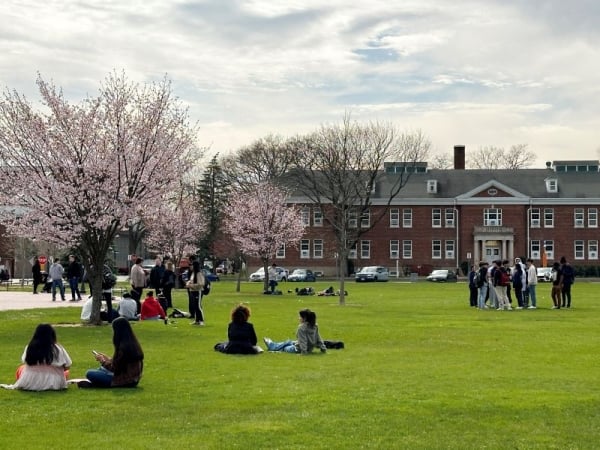
    Trustees at Nassau Community College are poised to file a lawsuit after the State University of New York’s Board of Trustees denied their presidential pick.

    At a special meeting on Sunday, the Nassau Community College Board of Trustees unanimously voted to allow the board chair to file a lawsuit challenging the SUNY board’s decision, with one board member absent, Newsday reported. Earlier this month, SUNY trustees voted unanimously, with three members absent, to reject Maria Conzatti, who has run the college as interim or acting president for almost four years. A SUNY official told Newsday it was the first time the system’s board disapproved a presidential nominee.

    The resolution voted on asked that Conzatti’s appointment by Nassau Community College’s board be “disapproved” with no further explanation.

    “SUNY is committed to excellent leadership for all of our campuses and the success of our students, and we will vigorously defend ourselves against any frivolous lawsuit,” a spokesperson for the system said in a statement to Inside Higher Ed.

    The college’s Student Government Association also passed a measure on Monday expressing “gratitude and appreciation” for Conzatti while also acknowledging the SUNY board vote and encouraging the college to “conduct an equitable, transparent and expeditious search for a new permanent president.”

    The conflict comes amid broader tensions between the college’s faculty union and the administration over the consolidation of academic departments and a union contract that expired in August, among other issues. The union sued the college last year arguing the elimination of 15 department chairs violated state regulations, but a judge dismissed the case. The union has since appealed.

    Nassau has also reported less-than-optimal student outcomes in recent years. It has the lowest two-year graduation rate and second lowest three-year graduation rate among community colleges in the SUNY system, 9.4 percent and 23.6 percent respectively.

    Source link

  • Spanberger urges UVA to pause presidential search until she takes office

    Spanberger urges UVA to pause presidential search until she takes office

    This audio is auto-generated. Please let us know if you have feedback.

    Dive Brief:

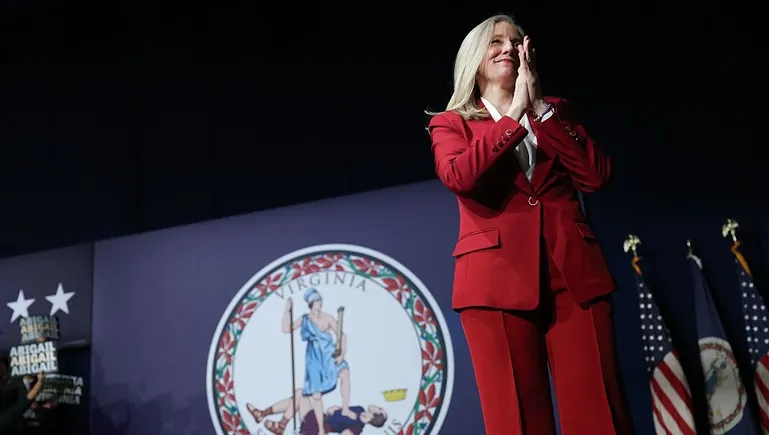
    • Virginia Gov.-elect Abigail Spanberger is calling on the University of Virginia’s governing board to hold off on naming a new president or selecting finalists for the role until she takes office in January.
    • Over the past six months, UVA’s Board of Visitors has “severely undermined the public’s and the University community’s confidence” in its ability to act transparently and in the best interests of the state flagship, Spanberger said in a Wednesday letter to board leaders.
    • Spanberger, a Democrat and an alumna of UVA, said five appointees to the board “failed to achieve confirmation” by the Virginia Assembly as law requires. That raises concerns about the legitimacy of any decisions made by the current board, as it isn’t “fully constituted,” she argued.

    Dive Insight:

    UVA’s governing board has been in a state of flux since June. Outgoing Gov. Glenn Youngkin, a Republican, is in the midst of a fight with Virginia’s Democrat-controlled Senate committee over his selections for several public college boards, including UVA.

    The committee rejected eight of Youngkin’s appointments in June, but the governor instructed them to begin serving anyway. In July, a judge ruled that those eight board appointees for UVA, George Mason University and Virginia Military Institute could not serve on those boards. An appeal from outgoing Virginia Attorney General Jason Miyares is before the Virginia Supreme Court.

    Democratic lawmakers similarly rejected another round of Youngkin appointees in August, bringing the total number of board seats under contention at Virginia public colleges to nearly two dozen.

    At UVA, five appointees are in legal limbo. 

    Because of this, “the Board is not fully constituted and its composition is now in violation of statutory requirements in crucial respects, further calling into question the legitimacy of the Board and its actions,” Spanberger said in her letter.

    UVA’s board currently has 12 voting members, well above the five it requires for a quorum. The university did not immediately respond to questions Thursday. 

    The governor-elect advised the board to pause its presidential search until it is “at full complement and in statutory compliance, adding that would entail her appointing new members and the General Assembly approving them.  

    In turn, Spanberger pledged to make her appointments to the UVA board “quickly upon my swearing in.”

    UVA formed a special committee in July to select a new president following the abrupt departure of its former leader, Jim Ryan, less than a month earlier. 

    Ryan, who originally planned to leave the role at the end of the 2025-26 academic year, stepped down early amid reports of a pressure campaign orchestrated against him by the U.S. Department of Justice. The DOJ had been probing UVA’s diversity, equity and inclusion efforts, which expanded following the deadly 2017 Unite the Right rally on the university’s campus and Ryan’s inauguration as president a year later.

    In his resignation announcement, Ryan said he wouldn’t challenge the Trump administration out of concern that attempting to keep his job would cost UVA research funding and student aid, as well as put international students at risk.

    UVA said in November that in-person interviews for Ryan’s replacement would take place late this month.

    Spanberger in her letter Wednesday criticized Ryan’s ouster as “a result of federal overreach” and noted that it went unchallenged by UVA’s board members.

    That lack of response, she argued, among other actions taken by the board over the last six months, has resulted in a “loss of confidence” in the governing body. She cited no confidence votes from both the UVA faculty senate and the university student council in July and August, respectively.

    In October, UVA struck a deal with the DOJ to formally close the agency’s investigations over its DEI work by 2028. In return, the university agreed to several changes, including adopting the DOJ’s contentious anti-DEI guidance and making quarterly compliance reports.

    Because the deal doesn’t include a financial penalty, it did not require a formal vote from the board, the university said in an FAQ.

    Leaders of Virginia’s Democratic-controlled Senate have called for a legal audit of the agreement, questioned its constitutionality and labeled it “a fundamental breach of the governance relationship” between the university and the state.

    Last month, the Trump administration also offered the research university a separate deal — preferential access to federal research funding in exchange for enacting several wide-ranging and unprecedented conditions. UVA ultimately declined the compact, as did six other colleges to which the administration initially offered it.

    Source link

  • Trump Reportedly Eyes FAU for Presidential Library

    Trump Reportedly Eyes FAU for Presidential Library

    Could Florida Atlantic University become the home of Donald Trump’s presidential library?

    The public university is under consideration and is willing to hand over free land to entice Trump to establish his presidential library there, The Wall Street Journal reported last week. Located in Boca Raton, FAU is about a half hour drive from Trump’s private golf club Mar-a-Lago.

    Land owned by Miami Dade College has also been considered, according to The Miami Herald.

    The Wall Street Journal noted that proximity is part of the appeal of choosing FAU. Additionally, the university is reportedly willing to offer a 100-year land lease at no cost, though the deal isn’t done yet.

    FAU is currently led by Adam Hasner, a former Republican state lawmaker.

    Trump is known for spending significant time at Mar-a-Lago, which seems to have convinced local legislators that the Sunshine State is the likely destination for his presidential library. Earlier this year Florida lawmakers passed a bill that limits local control over the planning and construction of presidential libraries, deferring such powers to the state. The bill’s sponsor, a Republican state senator, argued that Florida should “roll out the welcome mat” for Trump’s library and offer “maximum flexibility.”

    Source link

  • Presidential Proclamation Suspends Entry of Foreign Nationals Seeking to Enroll at Harvard – CUPA-HR

    Presidential Proclamation Suspends Entry of Foreign Nationals Seeking to Enroll at Harvard – CUPA-HR

    by CUPA-HR | June 5, 2025

    On June 4, 2025, President Trump issued a presidential proclamation suspending the entry of foreign nationals who seek to enter the United States to begin a course of study, conduct research or participate in an exchange visitor program at Harvard University. The proclamation invokes sections 212(f) and 215(a) of the Immigration and Nationality Act and is set to expire six months from the date of issuance unless extended.

    This action follows the Department of Homeland Security’s May 22, 2025, announcement terminating Harvard’s Student and Exchange Visitor Program (SEVP) certification. That earlier DHS action is currently under a temporary restraining order issued by the U.S. District Court for the District of Massachusetts.

    Key Provisions

    • The proclamation suspends and limits entry for foreign nationals who seek to enter the United States on F, M or J visas in order to begin study or participate in a program at Harvard University.
    • The suspension applies only to new entrants seeking to begin a course of study or program at Harvard on or after the date of the proclamation.
    • The suspension does not apply to foreign nationals enrolled at other institutions, nor does it apply automatically to current Harvard students already in the United States.
    • The secretary of state may consider whether current Harvard students in F, M or J status should have their visas revoked under the Immigration and Nationality Act §221(i).
    • Exceptions may be granted if the secretary of state or secretary of homeland security determines that a particular individual’s entry would be in the national interest.
    • A review is required within 90 days to assess whether the suspension should be extended or modified.

    The proclamation also directs federal agencies to consider additional operational steps, including potential limitations on Harvard’s continued participation in SEVP and the Student and Exchange Visitor Program (SEVIS). It references recordkeeping and reporting obligations under existing regulations and states that these obligations are necessary to support national security and immigration enforcement.

    CUPA-HR will monitor for additional updates on this and related developments.


    Source link

  • Three States Weigh Changes to Presidential Search Processes

    Three States Weigh Changes to Presidential Search Processes

    Three states are considering changes to how public universities hire presidents via legislation to provide more, and in the case of Utah, less transparency in executive searches.

    Florida, Utah and Washington are all weighing changes, driven by state legislators in response to recent presidential searches. In the case of Florida, the move comes after the state, known for broad open records laws, revised presidential search processes in recent years in ways that narrowed transparency, which was followed by an influx of hires connected to conservative politics.

    Evergreen State legislators have proposed the changes following closed-door presidential searches at both the University of Washington and Washington State University, which they argue lacked adequate transparency because finalists were not named during the process. (However, they’ve backed off an initial bill to require universities to name finalists.)

    In Utah, lawmakers have crafted legislation to limit information on presidential searches. Current state law requires public universities to release the name of three to five finalists for presidential positions, but that could change with only a single finalist unveiled at the end of the search.

    The legislative proposals reflect a broader debate over how much transparency should be built into presidential searches and the politics of hiring processes.

    Florida’s Proposed Reversal

    The Florida Legislature passed a bill in 2022 that allowed institutions to keep the identity of applicants secret until a university identified three finalists. The change marked an about-face from prior practices, in which lists of applicants were released as part of presidential searches.

    Although the law passed in 2022 charged universities with naming three finalists, in practice it has often meant that institutions only release the name of one applicant at the end of the process. And since the passage of that legislation, Florida has tapped numerous Republican lawmakers to lead public universities, including former Nebraska U.S. senator Ben Sasse at the University of Florida, who stepped down after less than 18 months amid questions about his spending.

    Since Sasse’s exit, critics have alleged UF’s board missed or ignored multiple red flags.

    Governing boards have hired numerous other Republican former lawmakers to lead institutions since 2022. Recent hires include Adam Hasner at Florida Atlantic University, Jeanette Nuñez at Florida International University (who stepped down as lieutenant governor to take the job), Richard Corcoran at New College of Florida, Fred Hawkins at South Florida State College, Mel Ponder at Northwest Florida State College and Torey Alston at Broward College.

    In a statement on why she filed the bill to open search processes, Florida representative Michelle Salzman, a Republican, wrote that the legislation would ensure “our higher education institutions are governed in a transparent and ethical manner, with the best interests of our students and taxpayers as the guiding principle.”

    To Judith Wilde, a research professor at George Mason University who studies presidential searches and contracts, the bill seems like backlash to Republican governor Ron DeSantis, who many critics allege has used a heavy hand in installing GOP officials as college presidents.

    “They are definitely moving away from the more secretive and controlled processes that they’ve been under for the last few years. I’d say that is because so many people now are tired and upset with DeSantis putting in place his personal choices and how badly that has worked out,” Wilde said.

    Last year, the Florida Board of Governors also gave itself more authority over presidential searches, adopting a policy that requires its chair to approve a list of finalists before candidates are submitted to individual governing boards. That would go away under proposed legislation.

    The Florida Board of Governors did not respond to an inquiry about its position on the bill.

    Washington Backtracks

    Washington lawmakers initially proposed changes to how presidential searches are conducted with a bill that would require public universities to name “up to four priority candidates” for the job. But lawmakers backed off that idea, submitting a substitute bill that would expand voting rights for students and faculty on presidential searches, but not require finalists to be named.

    University of Washington officials had expressed concern about the initial proposed legislation, arguing that UW could lose highly qualified candidates if they can’t keep names confidential.

    “It’s important to understand that sitting presidents or chancellors participate in these processes at considerable professional risk. There may be reputational damage up to termination, even if their candidacy is unsuccessful, should their present employers learn that they are pursuing other employment,” Blaine Tamaki, chair of UW’s Board of Regents, wrote in a statement.

    A UW spokesperson also pointed to fallout in 2020 in the University of Alaska system when then-president Jim Johnsen stepped down after he emerged as the sole finalist to lead the University of Wisconsin system. Johnsen withdrew from the Wisconsin search after criticism that the process lacked transparency. He then resigned from the Alaska presidency mere weeks later.

    (Johnsen’s tenure at Alaska was heavily scrutinized while he was there, however, and many students and faculty members expressed relief that he planned to leave for another job, which Wilde suggested was more of a factor in his abrupt exit than his candidacy for the Wisconsin position.)

    Washington State University had also expressed concerns about the initial bill.

    “Specifically, we were apprehensive about losing strong candidates who would be unwilling to make their names public before a selection was announced,” a Washington State spokesperson wrote to Inside Higher Ed by email. “There is a very real concern for some candidates that they would lose their effectiveness at their home institutions if it became public that they were exploring employment opportunities elsewhere. This is particularly true for sitting presidents.”

    Washington State has expressed support for the new bill.

    Opacity in Utah?

    State Senator Chris Wilson, the Utah Republican who sponsored the bill to overhaul presidential searches, has argued the law needs to be changed so public universities don’t lose quality candidates who are unwilling to go through a process that exposes their identity.

    The Utah legislation seems at least partly inspired by Elizabeth Cantwell exiting the presidency at Utah State University last month to take the top job at Washington State.

    Wilson has pointed to Cantwell departing for Washington State as an example of why the bill is needed. Last month, in a House Education Committee meeting, Wilson stressed the need for confidentiality in searches and argued, “There’s no way the president of Utah State University would have applied for the presidency of Washington State if it wasn’t a private process.”

    Utah commissioner of higher education Geoff Landward has cast doubt on the notion that public universities in the state have lost applicants due to current processes.

    “I can confidently say that we have not had a single search wherein we were talking to very high-quality candidates who essentially said that they would be interested and willing to apply, were it not for the fact that the final three candidates would have to be public because that would put their current employment in peril unnecessarily,” Landward told lawmakers in February.

    But, he added, “This is a question of who did we not get to consider?”

    Wilde is skeptical of Utah’s proposal. She points to an example at Montana State University in 2019 when President Waded Cruzado informed the board that she was being recruited for another job. In response, the board gave Cruzado a $150,000 pay raise to entice her to stay—and it worked.

    “Just because they’re in the job market doesn’t necessarily mean that they want to leave the university,” Wilde said. “And if they’re doing a good job, make the effort to keep them.”

    Source link

  • Educational Attainment and the Presidential Elections

    Educational Attainment and the Presidential Elections

    I’ve been fascinated for a while by the connection between political leanings and education: The correlation is so strong that I once suggested that perhaps Republicans were so anti-education because, in general, places with a higher percentage of bachelor’s degree recipients were more likely to vote for Democrats.

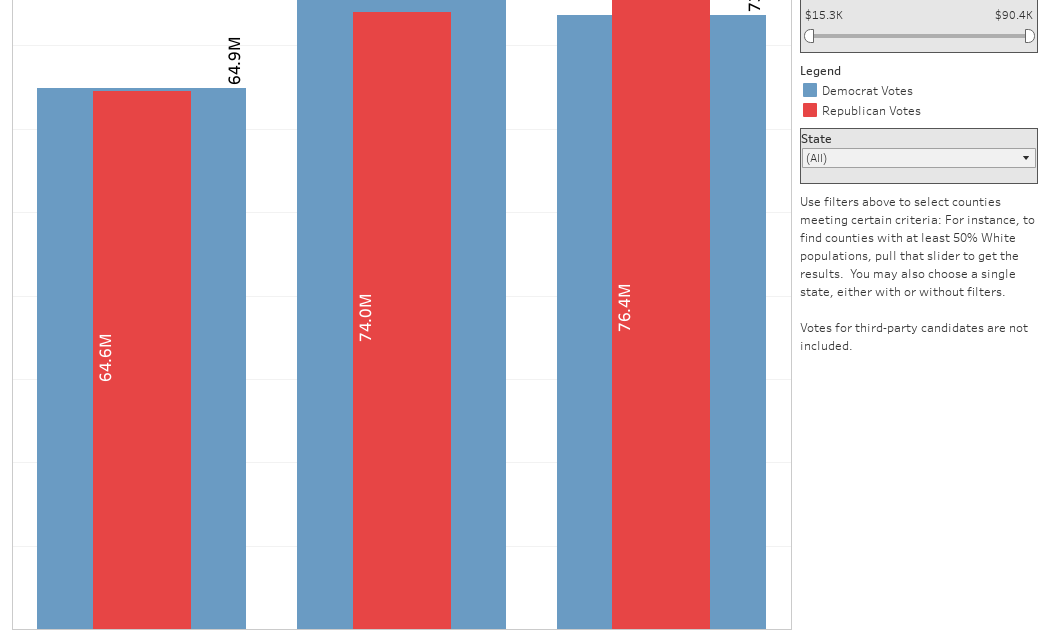
    The 2024 presidential election puzzled a lot of us in higher education, and perhaps these charts will show you why: We work and probably hang around mostly people with college degrees (or higher).  Our perception is limited.

    With the 2024 election data just out, I thought I’d take a look at the last three elections and see if the pattern I noticed in 2016 and 2020 held.  Spoiler: It did, mostly.

    Before you dive into this, a couple of tips: Alaska’s data is always reported in a funky way, so just ignore it here.  It’s a small state (in population, that is) and it’s very red.  It doesn’t change the overall trends even if I could figure out how to connect the data to maps.  Hawaii’s data is fine, but I don’t put it on the map because it takes a lot of work to get it to fit so that you can read the other states.  It’s a blue state, but also small.  So they balance out.

    Some definitions: Bachelor’s degree attainment is the percentage of people in the county who have a Bachelor’s Degree or higher using 2020 data.  If a county has 100,000 people and 27,500 have a BA, that’s an attainment rate of 27.5.  Nationally, the rate is about 38%.  
    Median income is the Census Bureau statistic showing median earnings in the past twelve months for people who have earnings. 

    The statistic “Percent Democrat” is the percentage of voters who voted for Democrats, among those who voted Democrat or Republican.  In other words, it excludes third-party voters.  The Democrats and Republicans are the only parties with a candidate on every state’s ballot, so it’s the only fair comparison, I think. If you want to count people who throw away their vote, be my guest.

    Simpson’s Diversity Index is a way to talk about diversity that’s a little different than you might think. It is not the percentage of people of color.  Simpson’s Diversity essentially calculates the probability of selecting at random two different categories from a population.  So, if 95% percent of a county is White, it’s not very diverse.  Same as one that’s 80% Black or African-American, or 65% Hispanic.  Higher numbers on Simpson’s means more diversity of the group.  A group with one Hispanic person, one White person, one Black person, and one Asian person would be perfectly diverse, as you’d always pick two people from different groups in a random sample.

    Final tips: It’s important to interact here by using the sliders and/or filters, and/or highlighters.  You can’t break anything; you can always reset the view using the little arrow at lower right. 

    There are seven views here, accessible via the tabs across the top.  

    National View shows all the data from all the counties rolled up to a year.  You can see Democrat and Republican votes on the bars.  Use the sliders to only include counties with certain levels of income, diversity or educational attainment, nationally or in a single state.  You’ll probably quickly see the great American divide.

    Ed Attainment Splits is the same data, but divided.  Each group of bars shows increasing attainment, from left to right.  So at the far left is the aggregation of all counties with lower attainment, and as you move to the right within a year, you see higher levels of bachelor’s degree attainment. The three tallest blue bars tell the story of 2024 in a way no political scientist can.

    The next three views show scatter plots, with Percent Voting Democrat on the y-axis (vertical).  The three different views just swap out three different values: Bachelor’s degree attainment, Median Income, and Simpson’s Diversity.  These three things largely covary, so the similar patterns should not surprise.  The bubbles are sized by the number of voters, and you can hover over any bubble for details.  Use the Highlight Tool at top to focus only on Blue, Purple, or Red counties.

    The cleverly named view titled “Map” shows every county colored by its political lean.  You can choose a year at top left, and only show certain counties using the various filters at top. Again, you can’t break anything by interacting, and a reset is a click away.

    And finally, because there is one in every group who points to the preponderance of red on the map and thinks it’s meaningful, the final view shows Land Doesn’t Vote. Los Angeles County (in yellow) has more people by itself than all the blue states plus Hawaii combined. And it has more people than all the orange states combined, too.  

    I hope you find this as interesting as I did.  

    Source link

  • Abrupt presidential exits at Oklahoma State, CSU Pueblo

    Abrupt presidential exits at Oklahoma State, CSU Pueblo

    Two presidents resigned abruptly with few details in recent days: Kayse Shrum stepped down at Oklahoma State University, and Armando Valdez resigned the presidency of Colorado State University, Pueblo.

    For Shrum, the move comes less than four years into her job and with no public explanation.

    Local news outlet NonDoc reported that her resignation—which blindsided many at the university—coincides with an opaque review of improper transfers of “legislatively appropriated funds.” NonDoc also noted recent tensions over the contract of football coach Mike Gundy, who signed a restructured deal that gave him an extension but also a $1 million–a–year pay cut. 

    One anonymous source told the news outlet that the situation escalated quickly as Shrum “went from being on solid footing last Thursday to essentially not being president on Monday night.”

    Though the resignation was official Monday, the Board of Regents did not announce the move until Wednesday.

    Valdez resigned as president of CSU Pueblo one day shy of hitting a year on the job. The move follows an independent investigation that found he had violated university policy, according to a Colorado State University System news release. System officials did not indicate what policy Valdez allegedly violated, noting in the news release that Valdez disagreed with the findings but recognized he had lost “the confidence of the Board of Governors and CSU System leadership. As a result, to allow the university to move forward, he resigned his role.”

    System officials told The Pueblo Chieftain that his resignation and the alleged policy violation were a personnel matter and therefore “not something the CSU system will be commenting on.”

    Source link