
Tag: Pressure

  • Princeton Grants Suspended as Federal Pressure on Universities Grows

    Princeton Grants Suspended as Federal Pressure on Universities Grows

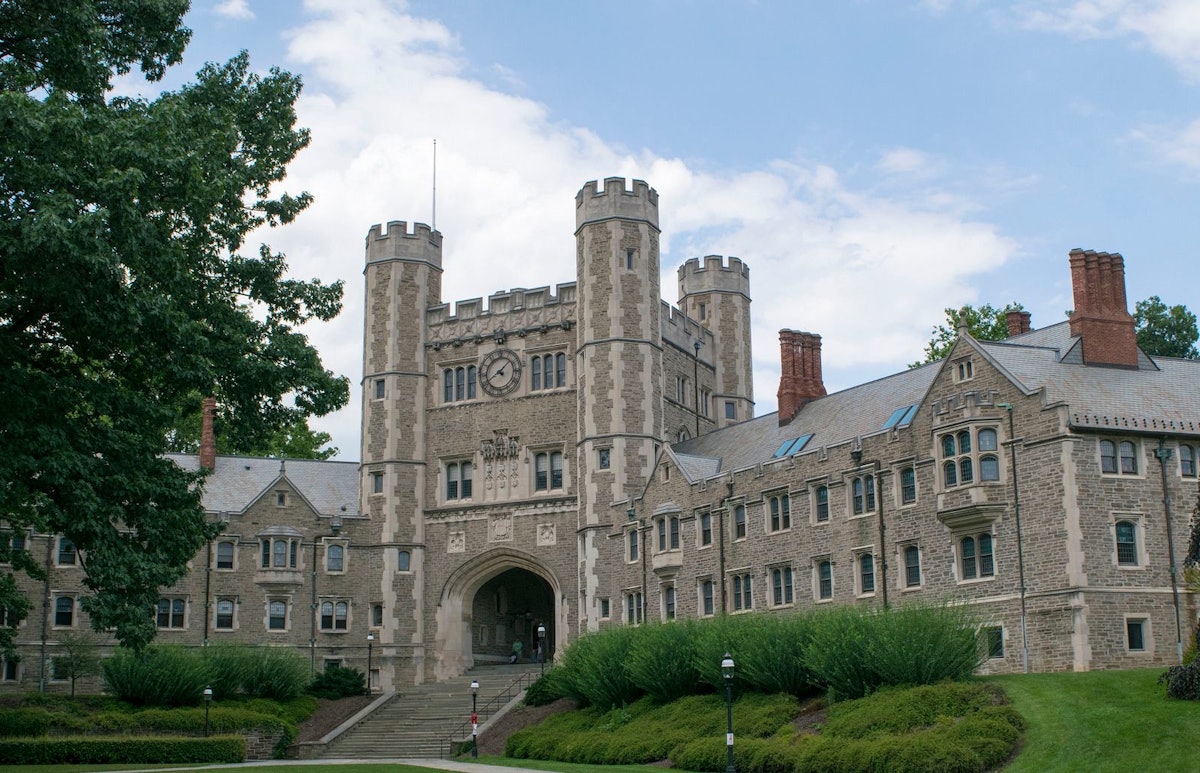
    Princeton University
    In a concerning development for research institutions nationwide, Princeton University has become the most recent Ivy League school to have federal funding suspended amid what many academic leaders are describing as an unprecedented federal pressure campaign targeting elite universities.

    Princeton President Dr. Christopher Eisgruber announced earlier this week that “several dozen” federal research grants from agencies including the Department of Energy, NASA, and the Department of Defense have been halted. While the administration’s complete rationale remains unclear, the university is among dozens facing federal investigations into campus antisemitism following pro-Palestinian demonstrations last year.

    “We are committed to fighting antisemitism and all forms of discrimination, and we will cooperate with the government in combating antisemitism,” Eisgruber wrote in a campus-wide message. “Princeton will also vigorously defend academic freedom and the due process rights of this University.”

    The Department of Energy confirmed it had paused Princeton’s funding pending a Department of Education investigation into alleged antisemitic harassment on campus.

    This action follows similar funding suspensions at other prominent institutions:

    • Columbia University lost $400 million in federal grants and agreed to several government demands, including revising student discipline policies and reviewing its Middle East studies department
    • The University of Pennsylvania faced approximately $175 million in suspended funding related to a transgender athlete who previously competed for the school
    • Harvard University is under review for nearly $9 billion in federal grants and contracts amid an antisemitism investigation

    The funding suspensions create significant challenges for research universities, which depend heavily on federal grants. Princeton’s president had previously criticized the Columbia funding cuts as “a radical threat to scholarly excellence and to America’s leadership in research” in a March essay published in The Atlantic.

    Princeton was among 60 universities that received warning letters from the Education Department in March regarding accusations of antisemitism. The department indicated schools could face enforcement actions if they failed to address anti-Jewish bias on campus. Six of the eight Ivy League institutions were included in these warnings.

    The Education Department’s investigation at Princeton began in April 2024 under the previous administration, responding to a complaint that cited pro-Palestinian protests allegedly including antisemitic chants. Similar complaints have been filed against dozens of other institutions.

    The current administration has promised more aggressive measures against campus antisemitism, opening new investigations and taking action against foreign students connected to pro-Palestinian demonstrations. University officials face the challenge of balancing compliance with federal demands while preserving academic freedom and campus autonomy.

    These developments follow congressional hearings on campus antisemitism that contributed to the resignations of presidents at Harvard, Penn, and Columbia. Most recently, Columbia’s interim president Dr. Katrina Armstrong resigned after the university agreed to the government’s demands.

    The situation raises critical questions about federal oversight of higher education, the boundaries of campus free speech, and the future of institutional autonomy at American universities.

    Source link

  • Columbia University’s Interim President Resigns Amid Trump Administration’s Pressure Over Campus Activism

    Columbia University’s Interim President Resigns Amid Trump Administration’s Pressure Over Campus Activism

    Columbia University’s interim president, Dr. Katrina A. Armstrong, resigned on Friday, just days after the university made significant concessions to the Trump administration in exchange for the restoration of $400 million in federal research funding. Armstrong’s resignation follows a tumultuous period for the institution, already reeling from the departure of her predecessor, Minouche Shafik, in August 2024.

    Armstrong, who had stepped into the role of interim president during a time of political and social unrest, faced mounting pressure over the university’s handling of pro-Palestinian student activism, which sparked national controversy and calls for accountability from political leaders, including former President Donald Trump and his administration. Armstrong’s resignation marks the latest chapter in a series of leadership shifts at Columbia as it navigates the increasingly polarized political environment surrounding campus protests.


    Effective immediately, Claire Shipman, co-chair of Columbia’s Board of Trustees, has been appointed acting president. David J. Greenwald, chair of the Board of Trustees, praised Armstrong for her dedication to the university, acknowledging her hard work during a time of “great uncertainty.” Greenwald’s statement highlighted Armstrong’s contributions to the university, saying, “Katrina has always given her heart and soul to Columbia. We appreciate her service and look forward to her continued contributions to the University.” Armstrong, who will return to lead the Irving Medical Center, had taken on the interim presidency in a period marked by increasing tensions on campus over political activism and its fallout.

    Political Pressure and Concessions to the Trump Administration

    The resignation comes amid significant political pressure, as the Trump administration imposed a set of demands on Columbia in exchange for the release of crucial federal funding. Earlier this month, the administration presented the university with nine conditions to restore the $400 million in research grants that had been frozen over accusations of antisemitism linked to campus protests.

    In an effort to regain the funding, Columbia conceded to these demands, which included a ban on students wearing masks to conceal their identities during protests, except for religious or health reasons. Additionally, Columbia agreed to hire 36 new campus security officers with the authority to arrest students involved in protests. The university also committed to increasing institutional oversight by appointing a new senior vice provost to monitor the university’s Department of Middle East, South Asian, and African Studies.

    Perhaps most notably, Columbia pledged to adopt a stance of “greater institutional neutrality,” a policy that the university said would be implemented after working with a faculty committee. The decision was seen as an attempt to quell political tensions while navigating the contentious issues surrounding student activism.

    A Leadership Crisis at Columbia University

    Armstrong’s resignation follows the departure of Minouche Shafik, who faced widespread criticism for her handling of campus protests against the war in Gaza. Under Shafik’s leadership, Columbia became a focal point of national debates about free speech, activism, and the role of universities in responding to global conflicts. Shafik ultimately resigned after facing intense scrutiny for her handling of the protests and the occupation of an academic building by students, an incident that ended with NYPD officers forcibly removing the students.

    In Armstrong’s case, her tenure was similarly marred by controversies surrounding the university’s response to the growing political activism on campus. The university’s handling of pro-Palestinian protests, particularly those related to the ongoing Israel-Palestine conflict, led to calls for stronger action from political figures, especially within the Republican Party. Armstrong’s decision to oversee negotiations with the Trump administration over the university’s federal funding placed her at the center of a storm of political and social unrest, further intensifying the pressure on her leadership.

    Columbia’s Future Amidst Political Turmoil

    The resignation of Armstrong is a significant moment for Columbia, as the institution grapples with the broader implications of political activism within academia and the increasing role of government in shaping university policies. As the university enters another phase of leadership instability, the question remains: how will the next president balance the competing demands of activism, free speech, and political pressures from outside forces?

    Columbia’s decision to adopt a policy of institutional neutrality and increase security measures reflects the complex and polarized environment that universities are navigating in today’s political climate. The growing influence of political figures like Trump and the scrutiny placed on universities over their responses to student protests signal a new era for higher education, one where the lines between campus activism and political power are increasingly blurred.

    As the search for a permanent president continues, Columbia University will need to chart a course that both addresses the concerns of its diverse student body and faculty while navigating the external pressures that have shaped the university’s recent trajectory. The role of universities in fostering open dialogue, supporting activism, and protecting the rights of students will likely continue to be a central issue in higher education for years to come.

    Conclusion

    The resignation of Katrina Armstrong adds to a growing list of university presidents who have faced intense political pressure and scrutiny over campus activism, particularly surrounding Middle Eastern and global conflicts. Columbia’s next steps will be crucial not only for the future of the institution but also as a bellwether for how universities across the country navigate the increasingly complex landscape of political activism, academic freedom, and government intervention. The institution’s response to these challenges will undoubtedly have long-term implications for the role of higher education in a polarized society.

    Source link