Tag: priorities

  • SHEEO Releases Annual State Priorities Survey

    SHEEO Releases Annual State Priorities Survey

    Affordability has always been a buzzword for lawmakers on Capitol Hill, but polling shows that it’s becoming increasingly popular among state higher education agencies as well.

    According to the latest annual State Priorities survey from the State Higher Education Executive Officers, college affordability jumped from the sixth-most-important policy issue among higher ed executives in 2025 to the second most this year.

    SHEEO researchers emphasized that affordability has “consistently [been] among the top priorities” for the roughly 45 state executives surveyed each year; the average score from respondents this year only increased 0.1 points on a 1-to-5 scale. Nonetheless, they agreed that the increase represents a significant and timely change—one that was likely influenced by the political climate in Washington.

    “Affordability is the key overarching issue for policymakers heading into the 2026 midterm election, and state higher education leaders are certainly not immune from pressure to lower costs,” said Tom Harnisch, SHEEO’s vice president for government relations. “So there’s going to be, I foresee, continued legislative efforts to hold the line on tuition, make increased investments in financial aid and address other areas that are related to college costs.”

    The increased focus on affordability has also been reflected in state legislation; 33 states indicated that they had instituted a tuition freeze and/or limit in at least one public higher education sector in the past five years. Another 20 have considered legislation to create or expand statewide promise programs, which provide free or significantly reduced college tuition for eligible students.

    But state systems still have work to do to address public concerns. Roughly 60 percent of all adults say cost is the biggest barrier preventing students from enrolling in or completing a postsecondary degree, according to a report from the left-leaning think tank New America.

    Other key policy issues include economic and workforce development (which held its place at No. 1), higher education’s value proposition (No. 3), and college completion/student success (No. 5), the SHEEO survey shows. A topic that had not previously been included in SHEEO surveys also gained prominence this year: state impacts from federal policy changes, which placed sixth on the list of 25 issues.

    Collectively, Harnisch said, this year’s results, and the relatively consistent results of recent years, reflect a slow but steady transition concerning who is responsible for bearing the cost of college.

    “It just shows the overarching cost shift from states to students, and associated with that cost shift is the need for students to get a job, to help pay for their education and associated student debt,” he explained. “These are all downstream effects of that.”

    SHEEO researchers also noted that while state budgets for higher ed range widely, funding has declined over all since the COVID-19 pandemic and its “record state budget surpluses.” The major funding cuts to Medicaid and the Supplemental Nutrition Assistance Program through the One Big Beautiful Bill Act will likely only make higher education budgets tighter, they added.

    “Many states with biannual budgets set them in 2025, so they will not be in budget sessions again until 2027. But those states that do have budgets in 2026 are more likely to face changes, and higher education is often most vulnerable to those changes,” Harnisch said. “So as more states have budget shortfalls, revenue growth is softening and there’s increased competition for limited state funding, states are going to be increasingly challenged on the affordability front.”

    Still, despite looming budget cuts, “unstable federal funding streams and intensifying state and federal political pressures,” SHEEO says there are reasons for optimism.

    Concerns about completion of the Free Application for Federal Student Aid dropped nine spots to the 18th-most-important issue for higher leaders this year. And despite the looming predictions of a major demographic cliff, which is slated to take effect in 2026, enrollment declines dropped from the seventh-most-important issue in 2025 to 16th most important this year.

    If anything, SHEEO hopes that enrollment will continue to climb as students pursuing eligible short-term education and training programs gain access to Pell Grants for the first time starting on July 1, under a new program called Workforce Pell.

    “[The year] 2026 holds a lot of unknowns as we look to see what state legislators will prioritize and how changes at the federal level will impact states,” Harnisch said in a news release about the report. But as “economic and workforce development continues to be top of mind, and with the implementation of Workforce Pell rolling out later this year, we’re optimistic that states will continue to make advances in addressing workforce needs.”

    Source link

  • MSI funding, institutional priorities, and the coming test of “social mobility” (Glen McGhee)

    MSI funding, institutional priorities, and the coming test of “social mobility” (Glen McGhee)

    A recent opinion from the Department of Justice’s Office of Legal Counsel declares that federal Minority-Serving Institution (MSI) programs are unlawful because they allocate funding based on the racial composition of enrolled students. The ruling immediately throws hundreds of campuses—and the students they serve—into uncertainty. But beyond the legal debate lies a more revealing institutional reckoning: if MSI grants disappear, will colleges actually fund these programs themselves?

    The short answer, based on decades of evidence, is no.

    For years, colleges and universities have framed MSI grants as proof of their commitment to access, equity, and social mobility. Yet those commitments have always been conditional. They have depended on external federal subsidies rather than first-principles institutional priorities. Now that the funding stream is threatened, the gap between rhetoric and reality is about to widen dramatically.

    The scale of what is being cut is not trivial. Discretionary MSI programs—serving Hispanic-Serving Institutions (HSIs), Asian American and Native American Pacific Islander–Serving Institutions (AANAPISIs), Predominantly Black Institutions (PBIs), and others—have collectively provided hundreds of millions of dollars annually for tutoring, advising, counseling, faculty development, and basic academic infrastructure. These grants have often been the difference between persistence and attrition for low-income students, many of whom are first-generation and Pell-eligible.

    Yet MSI funding has also sustained something else: a sprawling administrative apparatus dedicated to grant writing, compliance, reporting, assessment, and “outcomes tracking.” Entire offices exist to chase, manage, and justify these funds. This is the professional-managerial class infrastructure that has come to dominate higher education—highly credentialed, compliance-oriented, and deeply invested in external funding streams.

    Follow the money, and a pattern becomes clear. When federal or state funding declines, colleges do not trim administrative overhead. They cut instruction. They cut tutoring. They cut advising. They cut student-facing programs that lack powerful internal constituencies. Administrative spending, by contrast, is remarkably durable. It rarely shrinks, even in moments of fiscal crisis.

    We have seen this movie before. When state appropriations fell over the past decade, public universities raised tuition and reduced instructional spending rather than dismantling administrative layers. When DEI offices were banned or defunded in several states, institutions eliminated student services and laid off staff, then quietly absorbed the savings into general operations. There was no surge in faculty hiring, no reinvestment in instruction, no serious attempt to replace lost support with institutional dollars.

    MSI grants will follow the same path. Colleges may offer short-term “bridge funding” to manage optics and morale, but that support will be temporary and partial. The language administrators use—“assessing impacts,” “exploring alternatives,” “seeking private donors”—is a familiar signal that programs are being triaged, not saved.

    Could institutions afford to self-fund these programs if they truly wanted to? In most cases, no—or at least not without making choices they refuse to make. Endowments are largely restricted and already used to paper over structural deficits. Tuition increases are politically and economically constrained at campuses serving low-income students. Federal aid flows through institutions but cannot be repurposed for operations. There is no hidden pool of fungible money waiting to be redirected.

    What would replacing MSI funding actually require? Cutting administrative spending. Reducing executive compensation. Scaling back amenities and non-instructional growth. Reprioritizing instruction and academic support over branding and “customer experience.” These are choices institutions have consistently shown they will not make.

    This is why the rhetoric of social mobility rings hollow. Colleges celebrate access and equity when the costs are externalized—when federal grants pay for the work and compliance offices manage the paperwork. But when that funding disappears, so does the institutional courage to sustain the mission.

    The contrast with historically Black colleges and tribal colleges is instructive. Their core federal funding survives precisely because it is tied to historical mission rather than contemporary enrollment metrics, and because these institutions have long-standing political champions. That distinction exposes the truth: what is preserved is not equity, but power.

    The coming months will bring program closures, staff layoffs, and diminished support for the students MSI grants were designed to serve. What we will not see, despite solemn statements and carefully worded emails, is a widespread commitment by colleges to fund these programs themselves.

    The test is simple and unforgiving. If social mobility were truly a foundational principle of higher education, institutions would treat MSI programs as essential—not optional, not grant-contingent, not expendable. They would pay for them out of their own budgets.

    They won’t.

    And in that refusal, the performance ends. The mission statements remain, but the money moves elsewhere.

    Sources

    Inside Higher Ed, “DOJ Report Declares Minority-Serving Institution Programs Unlawful,” December 22, 2025.

    U.S. Department of Justice, Office of Legal Counsel, Opinion on Minority-Serving Institution Grant Programs, 2025.

    U.S. Department of Education, Title III and Title V Program Data, Fiscal Years 2020–2025.

    Government Accountability Office, Higher Education: Trends in Administrative and Instructional Spending, various reports.

    Delta Cost Project / American Institutes for Research, Trends in College Spending, 2003–2021.

    State Higher Education Executive Officers Association (SHEEO), State Higher Education Finance Reports, 2010–2024.

    University of California Office of the President, California State Auditor Reports on Administrative Spending and Reserves.

    Texas Higher Education Coordinating Board; Florida Board of Governors; UNC System Office, public records and budget documents on DEI office eliminations, 2024–2025.

    Bloomberg News and Associated Press reporting on DEI bans and campus program closures, 2024–2025.

    National Center for Education Statistics (NCES), IPEDS Finance and Enrollment Data.

    American Council on Education, Endowment Spending and Restrictions in Higher Education.

    IRS Form 990 filings and audited financial statements of selected public and private universities.

    Columbia University public statements on federal research funding disruptions, 2025.

    University of Hawaiʻi system communications on federal grant losses and bridge funding, 2025.

    Congressional Budget Justifications, U.S. Department of Education, FY2025–FY2026.

    Ehrenreich, Barbara and John, The Professional-Managerial Class, and subsequent scholarship on administrative growth in higher education.

    Student Borrower Protection Center, Student Debt and Institutional Finance, 2024–2025.

    Source link

  • As Justice Department priorities shift, concerns about protection of students’ civil rights escalate

    As Justice Department priorities shift, concerns about protection of students’ civil rights escalate

    by Sarah Butrymowicz, The Hechinger Report
    December 14, 2025

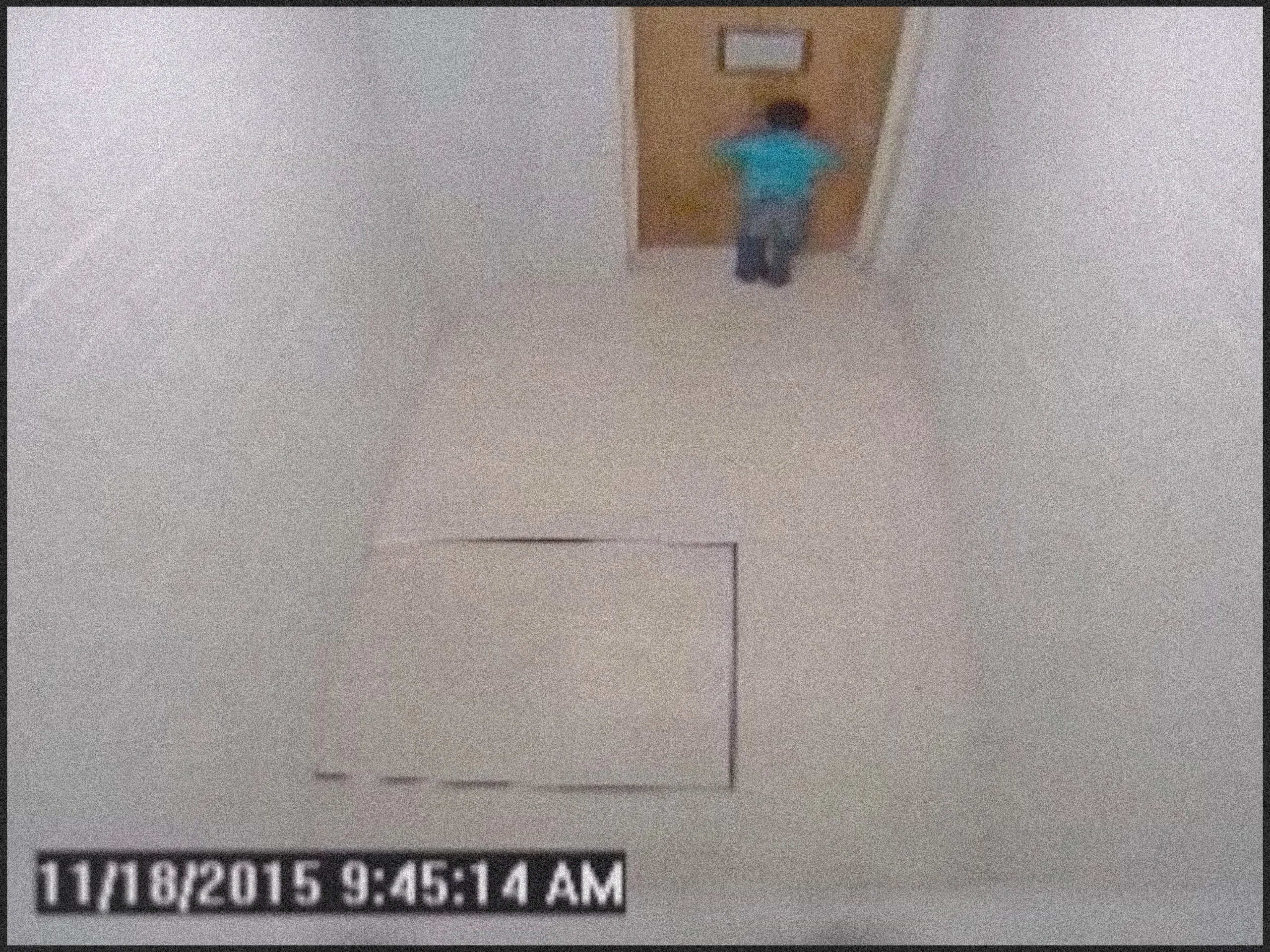
    The 10-year-old was dragged down a school hallway by two school staffers. A camera captured him being forced into a small, empty room with a single paper-covered window. 

    The staffers shut the door in his face. Alone, the boy curled into a ball on the floor. When school employees returned more than 10 minutes later, blood from his face smeared the floor.

    Maryland state lawmakers were shown this video in 2017 by Leslie Seid Margolis, a lawyer with the advocacy group Disability Rights Maryland. She’d spent 15 years advocating for a ban on the practice known as seclusion, in which children, typically those with disabilities, are involuntarily isolated and confined, often after emotional outbursts. 

    Even after seeing the video, no legislators were willing to go as far as a ban. Nor were they when Margolis tried again a few years later.

    In 2021, however, the federal Justice Department concluded an investigation into a Maryland school district and found more than 7,000 cases of unnecessary restraint and seclusion in a two-and-a-half-year period. 

    Four months later, Maryland lawmakers passed a bill prohibiting seclusion in the state’s public schools, with nearly unanimous support.

    “I can’t really overstate the impact that Justice can have,” said Margolis. “They have this authority that is really helpful to those of us who are on the ground doing this work.”

    Related: Become a lifelong learner. Subscribe to our free weekly newsletter featuring the most important stories in education. 

    Within the Justice Department’s Civil Rights Division is a small office devoted to educational issues, including seclusion, as well as desegregation and racial harassment. The division intentionally chooses cases with potential for high impact and actively monitors places it has investigated to ensure they’re following through with changes. When the Educational Opportunities Section acts, educators and policymakers take notice.

    Now, however, the Trump administration is wielding the power of the Justice Department in new and, some say, extreme ways. Hundreds of career staffers, including most of those who worked on education cases, have resigned. The Department of Education’s Office for Civil Rights also has been decimated, largely through layoffs. The two offices traditionally have worked closely together to enforce civil rights protections for students. The result is a potentially lasting shift in how the nation’s top law enforcement agency handles issues that affect public school students, including millions who have disabilities. 

    “There are those who would say that this is an aberration, and that when it’s over, things will go back to the way they were,” said Frederick Lawrence, a lecturer at Georgetown Law and former assistant U.S. attorney under President Ronald Reagan. “My experience is that the river only flows in one direction, and things never go back to the way they were.”

    Related: Tracking Trump: His actions to dismantle the Education Department, and more

    The Justice Department’s lawyers historically have worked on a few dozen education cases at once, concentrating on combating sexual harassment, racial discrimination against Black and Latino students, restraint and seclusion, and failure to provide adequate services to English learners. 

    In the last 11 months, however, the agency has sued over and opened investigations into concerns about antisemitism, transgender policies and bias against white people at schools. It sued at least six states for offering discounted tuition to undocumented immigrants and pressured the president of the University of Virginia to resign as part of an investigation into the school’s diversity, equity and inclusion policies. And it joined other federal departments to form a special Title IX investigations team to protect students from what the administration called the “pernicious effects of gender ideology in school programs and activities.”  

    As the Educational Opportunity Section’s mission shifted, it shrunk in size. In January, before President Donald Trump took office, about 40 lawyers tackled education issues. In the spring, the U.S. Senate confirmed Harmeet Dhillon as leader of the Civil Rights Division. Dhillon founded the conservative Center for American Liberty, which describes itself as “defending civil liberties of Americans left behind by civil rights legacy organizations.”

    After her confirmation, staff who werent political appointees began resigning en masse, concerned Dhillon would promote only the administration’s agenda. 

    By June, no more than five of the 40 lawyers were left, according to former employees. Some new staff have been hired or reassigned to the section, but the head count remains well below usual. It’s far from enough to sustain the typical workload, said Shaheena Simons, who was chief of the Educational Opportunities Section until she resigned in April. “There’s just no way the division can function with that level of staffing. It’s just impossible,” said Simons, who took over the section in 2016. “The investigations aren’t going to happen. Remedies aren’t going to be sought.” 

    Department officials responded to a list of questions from The Hechinger Report about changes to their handling of student civil rights protection with “no comment.” 

    The Department of Justice, including its educational work, has always been somewhat subject to White House interests, said Neal McCluskey, director of the libertarian Cato Institute’s Center for Educational Freedom. During President Joe Biden’s term, for example, the agency pursued allegations of discrimination against transgender students, reflecting administration priorities. 

    McCluskey added, though, that the Trump administration is more aggressive in how it is pursuing its goals and is bypassing typical protocols, noting that in many cases “it’s like they’ve already decided the outcome.”  

    Related: Which schools and colleges are being investigated by the Trump administration?

    An investigation into allegations of antisemitism at the University of California, Los Angeles, for instance, took just 81 days before the department concluded the school had violated federal law. DOJ investigations typically have taken years, not months, to complete. 

    Lawrence, who also serves as president of the Phi Beta Kappa honor society, said he could not speak to specific investigations, but the UCLA timeline “does suggest a rather accelerated process.”

    A federal judge recently ruled that the administration could not use the findings from its UCLA investigation as a reason to fine the university $1.2 billion, which if paid would have unlocked frozen federal research funding. She wrote that the administration was using a playbook “of initiating civil rights investigations of preeminent universities to justify cutting off federal funding.” 

    As new investigations are opened, older ones remain unresolved, including one of practices in Colorado’s Douglas County Public Schools.

    In 2022, Disability Law Colorado submitted a complaint to the Justice Department about the district’s use of seclusion, as well as restraint, where school employees physically restrict a student’s movement.

    The following year, three other families sued the school system, alleging racial discrimination against their children. The students were repeatedly called monkeys and the N-word, threatened with lynchings and “made by teachers to argue the benefits of Jim Crow laws,” according to the complaint.

    Related: Red school boards in a blue state asked Trump for help — and got it

    The Department of Justice decided to investigate both issues. Four staffers were assigned to the restraint and seclusion investigation, said Emily Harvey, co-legal director at Disability Law Colorado.  

    As part of the inquiry, Justice officials visited the district twice. The second time was during the final week of Biden’s presidency. 

    After that visit, Douglas County didn’t hear anything about the investigation from the Trump administration until a mid-May email. “Good morning,” it read. “We are having some staffing changes.”

    The email, which The Hechinger Report obtained through a public records request, said that going forward, the district could contact two staffers on the restraint and seclusion case. The racial harassment case would be reduced to only one employee until another Justice staffer returned from leave in the fall. 

    One Douglas County parent, who asked her name be withheld because she is afraid of retaliation from the district, said that although she knew the investigation could take a couple of years, the longer it goes without a resolution, the more children could be harmed. 

    “The justice system is just moving so incredibly slow,” she said. 

    The parent said she knows of dozens of families who have dealt with restraint and seclusion issues in the district. Her own son, she said, was secluded in kindergarten. “He was scared of the person who put him in there. He kept saying, ‘I can’t go back,’” she said. “I never envisioned, until my son was secluded, a world where the school would not care about my child.” 

    When Harvey, of Disability Law Colorado, first contacted the Department of Justice, she hoped for statewide reform. She wanted to see a ban on seclusion, like Margolis had helped secure in Maryland, and for the state to commit to more accurate tracking of use of restraints. The way Colorado law is written, restraints must be recorded only if they last more than a minute. Douglas County, the second largest in the state with 62,000 students, reported 582 restraints to the Colorado Department of Education in the 2023-24 school year. The number of shorter-term restraints, however, is unknown. 

    “We believe this is an arbitrary distinction,” Harvey said. “My hope was that the Department of Justice would potentially weigh in on that as a violation” of the Americans with Disabilities Act.

    Related: How Trump 2.0 upended education research and statistics in one year

    Douglas County school administrators said in a statement to The Hechinger Report that their “focus is on taking care of each and every one of our students” and that they take all concerns seriously. 

    They have worked with the federal government to set up school visits and interviews during their visits, according to emails from January. 

    Subsequent emails between district and federal officials describe a phone call over the summer and requests for additional documents. Another DOJ employee was included in the messages.

    There are signs that the Justice Department is not abandoning restraint and seclusion work, said Guy Stephens, founder of the national advocacy group Alliance Against Seclusion and Restraint. A webpage about previous cases that was removed after Trump took office has been restored, and in July, the DOJ announced a settlement with a Michigan district over these issues.

    Yet Stephens has concerns. “There are still people very, very dedicated to this work and the mission of this work, but it’s very hard to work in a system that is shifting and reprioritizing,” he said.

    Former DOJ employees worry that it might not only be future investigations that are markedly different. The department has historically monitored places where it has reached agreements that demand corrective action, rewriting them if districts or colleges fail to live up to their promises. It also provides support to achieve the new goals. Now, provisions written into past resolutions might be at odds with Trump administration actions, and oversight of some settlements is ending early.

    Take, for instance, a DOJ investigation into Vermont’s Elmore-Morristown Unified Union School District over allegations of race-based harassment against Black students. Investigators found that the district didn’t have a way to handle harassment or discrimination not targeted at a specific person, according to David Bickford, the school board chairman. 

    As part of a settlement agreement signed two weeks before Trump was inaugurated, the district agreed to provide staff training on implicit bias. A Trump executive order, however, calls for eliminating federal funding for anyone that discusses such a concept in schools. 

    Bickford said that the district has complied with everything the settlement called for, including professional development. 

    The investigation itself, he said, was extremely thorough, and required handing over nearly a thousand pages of documentation. Since then, the district has sent regular reports to the department but has not received any lengthy response or input, Bickford said. He also noted there had been staffing changes in who the district reports to. 

    Related: Federal policies risk worsening an already dire rural teacher shortage

    Justice officials decided to end supervision of a 2023 settlement early following a racial harassment investigation in another Vermont district, Twin Valley. The original plan was to monitor the district for three years. In October 2024, investigators visited the district to check in. In a letter two months later, officials noted that while Twin Valley had made significant progress, they still had several areas of concern, including how the district investigated complaints, as well as “persistent biased language and behavior on the basis of multiple protected classifications; a pervasive culture of sexism; and lack of consistent and effective adult response to biased language and behavior.” 

    Even so, the department was pleased overall with its visit, said Bill Bazyk, superintendent of Windham Southwest Supervisory Union, which includes Twin Valley. “But things certainly sped up after the election,” said Bazyk, who started his job after the case had been settled.

    Throughout the spring, Bayzk and his staff checked in with the department, and in May the district was told oversight of the settlement would end a year early, as Twin Valley had fully complied with the terms. 

    “We were doing all the right things,” Bayzk said, noting that the district’s work on diversity and equity is ongoing. “We took the settlement very seriously.”

    The investigation began in 2021 after the American Civil Liberties Union of Vermont filed a complaint. Legal Director Lia Ernst said it is possible that Twin Valley resolved those lingering problems between December and May, stressing that it’s impossible to know from the outside. But still, she said, there is a larger pattern of ambivalence to the Justice Department’s approach to civil rights complaints.  

    “It is disappointing to see that one ending early,” she said. “It is my hope that it is ending early because Twin Valley has made so much progress, but it is my fear that it is ending early because DOJ just doesn’t care.” 

    Contact investigations editor Sarah Butrymowicz at [email protected] or on Signal: @sbutry.04.

    This story about the Justice Department was produced by The Hechinger Report, a nonprofit, independent news organization focused on inequality and innovation in education. Sign up for the Hechinger newsletter.

    This <a target=”_blank” href=”https://hechingerreport.org/under-trump-protecting-students-civil-rights-looks-very-different/”>article</a> first appeared on <a target=”_blank” href=”https://hechingerreport.org”>The Hechinger Report</a> and is republished here under a <a target=”_blank” href=”https://creativecommons.org/licenses/by-nc-nd/4.0/”>Creative Commons Attribution-NonCommercial-NoDerivatives 4.0 International License</a>.<img src=”https://i0.wp.com/hechingerreport.org/wp-content/uploads/2018/06/cropped-favicon.jpg?fit=150%2C150&amp;ssl=1″ style=”width:1em;height:1em;margin-left:10px;”>

    <img id=”republication-tracker-tool-source” src=”https://hechingerreport.org/?republication-pixel=true&post=113866&amp;ga4=G-03KPHXDF3H” style=”width:1px;height:1px;”><script> PARSELY = { autotrack: false, onload: function() { PARSELY.beacon.trackPageView({ url: “https://hechingerreport.org/under-trump-protecting-students-civil-rights-looks-very-different/”, urlref: window.location.href }); } } </script> <script id=”parsely-cfg” src=”//cdn.parsely.com/keys/hechingerreport.org/p.js”></script>


    Source link

  • Adult Student Priorities Survey: Understanding Your Adult Learners 

    Adult Student Priorities Survey: Understanding Your Adult Learners 

    The Adult Student Priorities Survey (ASPS) is the instrument in the family of Satisfaction-Priorities Surveys that best captures the experiences of graduate level students and adult learners in undergraduate programs at four-year institutions. The Adult Student Priorities Survey provides the student perspectives for non-traditional populations along with external national benchmarks to inform decision-making for nearly 100 institutions across the country.

    Why the Adult Student Priorities Survey matters

    As a comprehensive survey instrument, the Adult Student Priorities Survey assesses student satisfaction within the context of the level of importance that students place on a variety of experiences, both inside and outside of the classroom. The combination of satisfaction and importance scores provides the identification of institutional strengths (areas of high importance and high satisfaction) and institutional challenges (areas of high importance and low satisfaction). Strengths can be celebrated, and challenges can be addressed by campus leadership to build on the good where possible and to re-enforce other areas where needed.

    With the survey implementation, all currently enrolled students (based on who the institution wants to include) can provide feedback on their experiences with instruction, advising, registration, recruitment/financial aid, support services and how they feel as a student at the institution. The results deliver external benchmarks with other institutions serving adult learners, including data that is specific to graduate programs, and the ability to monitor internal benchmarks when the survey is administered over multiple years. (The national student satisfaction results are published annually). The delivered results also provide the option to analyze subset data for all standard and customizable demographic indicators to understand where targeted initiatives may be required to best serve student populations.

    Connecting ASPS data to student success and retention

    Like the Student Satisfaction Inventory and the Priorities Survey for Online Learners (the other survey instruments in the Satisfaction-Priorities family), the data gathered by the Adult Student Priorities Survey can support multiple initiatives on campus including to inform student success efforts, to provide the student voice for strategic planning, to document priorities for accreditation purposes and to highlight positive messaging for recruitment activities. Student satisfaction has been positively linked with higher individual student retention and higher institutional graduation rates, getting right to the heart of higher education student success.

    Learn more about best practices for administering the online Adult Student Priorities Survey at your institution, which can be done any time during the academic year on the institutions’ timeline.

    Ask for a complimentary consultation with our student success experts

    What is your best approach to increasing student retention and completion? Our experts can help you identify roadblocks to student persistence and maximize student progression. Reach out to set up a time to talk.

    Request now

    Source link

  • Education Department issues AI priorities. But what if the agency closes?

    Education Department issues AI priorities. But what if the agency closes?

    This audio is auto-generated. Please let us know if you have feedback.

    Dive Brief:

    • The U.S. Department of Education sent a “Dear Colleague” letter on Tuesday to district and state leaders encouraging and guiding them on how to integrate artificial intelligence in schools through existing federal grants. 
    • The letter signed by U.S. Education Secretary Linda McMahon said that grantees may use federal funds to use AI to enhance high-quality curriculum tools, high-impact tutoring, and college and career pathway advising.
    • The department briefly also outlined its principles for responsible AI use in schools. Those principles affirmed that AI K-12 initiatives should be educator-led, ethical, accessible for those with disabilities, transparent in the way new tools are rolled out, and in compliance with federal data privacy laws.

    Dive Insight:

    The department’s new AI guidance comes at a time when the future of federal oversight of ed tech and K-12 cybersecurity policies remains unclear, given that the Trump administration shuttered the Education Department’s Office of Educational Technology in March and has continued to move toward its plan to dismantle the agency.

    On Monday, the Education Department also published a proposed rule in the Federal Register regarding its priorities for using discretionary grant programs to support AI use in schools. The public comment period on the regulatory proposal is open until Aug. 20. 

    Under the proposal, those seeking federal grant funding for AI projects in schools would need to include a focus on at least one of the following goals:

    • Embed AI literacy skills into classroom lessons to ultimately improve students’ educational outcomes.
    • Provide educators with professional development in foundational skills for computer science and AI with instruction on how to responsibly use new technologies.
    • Partner with states or school districts to offer high school students dual enrollment credentialing opportunities for postsecondary or industry-recognized credentials in AI. 
    • Support and develop evidence for appropriate ways to integrate AI into education.
    • Use AI to support services for students with disabilities.
    • Tap into AI to improve teacher training and evaluation
    • Use AI tools to reduce time-intensive administrative tasks

    Meanwhile, over 400 school district leaders sent a letter to Congress last week asking for lawmakers to restore federal leadership for K-12 cybersecurity and ed tech.

    The letter, led by the Consortium for School Networking, pointed to funding cuts at the Cybersecurity and Infrastructure Security Agency that led to the discontinuation of K-12 cybersecurity programs offered through the Multi-State Information Sharing and Analysis Center. The move, they wrote, consequently took away “critical threat intelligence, incident response, and coordination services that many school systems depend on to protect against ransomware and other attacks.”

    OET’s closure also left a major hole in guidance for states and districts on key issues such as responsible AI use, digital design, digital access and cybersecurity strategy, the letter said. The district leaders also called for Congress to reinstate staffing for the office. 

    CoSN CEO Keith Krueger said district technology leaders are increasingly worried that AI will be used for cyberattacks against schools. He added that the demand for more K-12 resources to protect schools from cybersecurity threats is “incredible.”

    For instance, the Federal Communications Commission in November 2024 received $3.7 billion in requests for federal funds to help protect district networks. The applications were for a $200 million FCC cybersecurity pilot program.

    But the bottom line, Krueger said, is that if the Trump administration fulfills its promise to close the Education Department, “who exactly is going to help school districts with cybersecurity, for instance, or AI?”

    Source link

  • Republican Voters Value Higher Education. Here Are Their Priorities.

    Republican Voters Value Higher Education. Here Are Their Priorities.

    Title: What do Republican Voters Want on Higher Education?

    Author: Ben Cecil

    Source: Third Way

    During the budgetary process that recently concluded, Congress considered substantial funding cuts to numerous areas, including higher education. Republican voters, however, may not view heavy cuts to higher education favorably. A recent survey of 500 Republican voters nationwide conducted by Third Way and the Republican polling firm GS Strategy Group found that Republicans value and support higher education, are in favor of less invasive reforms, and largely support policies directed at college affordability and accountability.

    The survey responses make clear that Republican voters haven’t abandoned the concept of higher education, with over 60 percent of respondents reporting that a four-year degree is valuable in today’s economy. Beyond traditional four-year programs, Republican voters demonstrated substantial support for trade schools and community colleges, with favorability for the institutions at 91 and 87 percent, respectively. While Republican perspectives regarding the value of education remain positive, nearly 90 percent of voters polled said that more accountability is required for higher education.

    Republican voters also rated many current higher education policies very favorably. Eighty-one percent of respondents said they support Pell Grants, while 79 percent supported Public Service Loan Forgiveness and income-driven repayment for student loans. The support for these programs aligns with one of respondents’ primary policy concerns; just under half of Republican voters said that affordability is the most significant problem that needs to be addressed within higher education.

    To address college affordability concerns, Republicans aren’t in favor of relying on private industry; of the 12 policy reforms Third Way tested, privatization of student loan programs was ranked number 11, with just over half of respondents viewing it as a viable option. With affordability as a chief concern, Republican voters recognize and support the role the federal government plays in offering financial support for students.

    The perspectives of Republican voters on higher education demonstrate clear policy aims and a hesitation to substantially change funding structures and government involvement. When asked if they prefer sweeping cuts to graduate lending or more accountability from institutions to improve their return on investment, only 20 percent of voters chose funding cuts. The message is clear: Republicans support increases to institutional accountability and college affordability but aren’t looking for broad cuts to higher education.

    For further information, click here to read the full article from the Third Way.


    If you have any questions or comments about this blog post, please contact us.

    Source link

  • OCR halts investigations, switches focus to Trump priorities

    OCR halts investigations, switches focus to Trump priorities

    The U.S. Department of Education’s Office for Civil Rights has paused the majority of its investigations, according to a new report from ProPublica, and shifted focus to new cases related to gender-neutral bathrooms, trans women athletes and alleged antisemitism and discrimination against white students.

    Those cases, in contrast with most historically taken on by OCR, were not launched in response to student complaints, but rather as a result of direct orders from President Donald Trump’s administration. OCR employees told ProPublica that they have been instructed to cancel meetings related to cases opened prior to Trump taking office and to avoid communicating with students, families and institutions involved in those cases.

    One OCR employee who spoke to ProPublica under the condition of anonymity said many of the cases they have been asked to stop investigating are urgent.

    “Many of these students are in crisis,” the employee said. “They are counting on some kind of intervention to get that student back in school and graduate or get accommodations.”

    About 12,000 complaints were under investigation at the end of former president Joe Biden’s term, including 6,000 related to discrimination against students with disabilities, 3,200 related to racial discrimination and 1,000 related to sexual assault or harassment, ProPublica’s analysis of OCR data found.

    Source link

  • The Danger of Homogenisation: Why specialist HEIs are crucial to the success of UK Higher Education and the Government’s priorities

    The Danger of Homogenisation: Why specialist HEIs are crucial to the success of UK Higher Education and the Government’s priorities

    Today on the HEPI website, Annamaria Carusi challenges the common assumption that translational research is only relevant to STEM fields, making the case for a broader, more integrated approach that fully values the contributions of the arts and humanities. If we want to maximize the real-world impact of research, she argues, it is time to rethink outdated silos and recognize the creative industries as essential players in innovation and economic growth. You can read that piece here.

    Below, as the government considers higher education reform, Dr Brooke Storer-Church and Dr Kate Wicklow make the case for specialist higher education institutions and warn against the dangers of homogenisation.

    GuildHE represents the most diverse range of Higher Education Institutions (HEIs) that are crucial to the prosperity of the sector, the economy, and our global reputation. We therefore argue that in an increasingly complex world, the role of specialist higher education institutions has never been more vital. These institutions, with their deep-rooted expertise and tailored approach, offer a unique and invaluable contribution to the landscape of higher education by providing diverse approaches and pathways to a wide range of students. 

    Diversity is a necessary ingredient for a successful and sustainable higher education sector, and this is becoming clearer from an analysis of the United States landscape, along with Australia and other large higher education systems.  Expert commentators grappling with some of the current challenges for American universities and colleges offer a hypothesis, positing that losing the diversity of mission and distinctiveness, objectives and audiences has been key to its diminishing public support. This homogenisation includes institutional, mission, operational, and aspirational similarities, which see every institution strive to ‘be all things to all people’ and thereby offer ‘the same thing for only some of the people.’ 

    In November, the Secretary of State wrote to the higher education sector outlining five areas for reform. GuildHE has scrutinised these areas and suggested to the Department for Education (DfE) ways to use the strengths of our sector to meet these challenges. However, some of the debate surrounding reform includes calls for consolidation and institutional mergers to offer the best ‘efficiencies’ in the sector. 

    While GuildHE members drive innovation, enrich communities and ensure access to high-quality education, their impact is often overlooked because they are not traditional, large-scale, multi-faculty universities. Funding and regulatory systems and government policies often fail to recognise institutions that do not fit this conventional university image. We, therefore, argue consolidation in the sector puts institutional diversity and student choice at risk, jeopardises our world-leading status, and undermines the Government’s missions of supporting local communities, equality of opportunity and our national economy.

    Overall, we want to see Government reform which champions our diversity, avoids policies that undermine the unique contributions of our diverse institutions, and actively invests to protect them.

    A focus on depth and industrial relevance

    Unlike their more generalist counterparts, specialist HEIs prioritise depth over breadth. They delve into specific disciplines, professions or industries, providing students with a more comprehensive and nuanced understanding of their chosen field.  This focused approach fosters a level of knowledge and skills that is often unmatched elsewhere and is increasingly in demand to tackle 21st-century challenges.

    Whilst GuildHE is known for representing specialist creative arts institutions, which together train about 40% of all creative HE students in England, we represent a wider range of specialists, including healthcare specialists like Health Sciences University, specialists in the built environment like University College of Estate Management (which is also a specialist in online delivery) and all the land-based specialist universities in the sector. The agri-food sector employs almost 4 million people and is larger than the automotive and aerospace sectors combined. Technological innovations and sustainability and productivity improvements are driven by our specialist land-based institutions, which work closely with industrial partners. This specialist expertise is transforming the future of food production, bringing together disciplines such as robotics and artificial intelligence and contributing to the broader push towards net-zero food and farming. Several agriculture-focused higher education providers have their own farms and industrial research centres for testing and development.

    Nationally, our institutions work with the Department for Environment, Food & Rural Affairs, right across government and with industry sector bodies; for example, Harper Adams University has advised the government on matters related to food security.  Their impact is also international, as agri-food HEIs work with the Department for International Trade to boost the profile of UK agricultural innovation overseas and educational and research and development programmes are forged with international partners from the US and China to Kenya, Australia and the Netherlands.

    A culture of innovation

    As natural innovators, many specialist institutions know their regions well and will be a critical part of generating economic growth there. They are locally significant as employers and community anchors and active partners in Local Enterprise Partnerships and other local bodies, such as Chambers of Commerce. Below is just a small sample of the innovations delivered by our specialist institutions.

    Norwich University of the Arts collaborated with regional businesses to innovate film technology that mid-size regional film production companies use. The project created new jobs in Norfolk, boosted film production for regional, small-scale productions and start-ups, and the insights gained from the project were incorporated into the university curriculum. By equipping students with cutting-edge knowledge and skills, NUA is empowering them to contribute to the region’s growing knowledge-based economy by equipping them with cutting-edge knowledge and skills.

    Dyson Institute for Engineering and Technology is training the future workforce of engineers with a particular focus on pioneering new technologies that make intrinsically relevant real-world impacts. Innovation areas include delivering safe, cleaner, energy-efficient batteries, prototyping products in aerodynamics, mechatronics and microbiology and robotics for clinical imaging, navigation technology and machine learning.

    Hartpury University is a leading institution for agriculture, agri-tech, animal and veterinary sciences. Its Agri-Tech Centre is a state-of-the-art complex, connecting research, knowledge, data, and people in a real-world and applied setting. Through the Centre, it provides industry-led services for the advancement of agricultural technologies and delivers proven solutions and services to farms and suppliers across the UK. This hub offers a path for innovative agri-tech businesses to trial new products and services to modernise and sustain British farming.

    A sense of community

    One of the defining characteristics of specialist HEIs is their strong sense of community.  Students, staff and alumni often share a common passion for their field, creating a supportive and inspiring environment.  This sense of community fosters a deep sense of belonging and can lead to lifelong friendships and professional networks.

    Arts University Plymouth’s Young Arts programme was established in 1988.  It features the university’s renowned Saturday Arts Clubs and for over 30 years, has worked to bridge the gap in arts provision for young people created by increasingly limited access to creative activity in schools.  Young Arts uses art as a catalyst for learning, shaping the artists, makers and creative thinkers of the future, supporting learning and social development, often working with specific widening participation groups.

    Starting in September 2025, Harper Adams University (HAU) will open a suite of undergraduate courses at The Quad, Telford; its first additional site in 124 years and a new base from which the university can extend its collaboration with and connection to its local community.  In The Quad, HAU is co-located with Telford College, Invest Telford, and the local MP to broaden access for local learners to future-focused courses like data science, robotics mechatronics and automation, and digital business. HAU is also providing short courses and upskilling for local businesses to support local growth.

    Our asks of government

    As we argue extensively in our submission to DfE, specialist HEIs offer a diverse range of programmes and courses that meet the needs of a wide range of students and community partners and meet each of the five areas of higher education reform.  They are, therefore, the essential threads in the fabric of our diverse, rich and successful higher education landscape; threads that have been regrettably lost in other systems around the world. Their focus on depth, industry partnerships, innovation and community makes them uniquely positioned to prepare students for success in a rapidly changing world. As we look to the future, it is clear that specialist HEIs must continue to play a vital role in shaping the next generation of leaders and innovators.

    Observations about the increasing homogeneity of higher education have been available publicly for at least 2 decades, with some suggesting that a combination of government policies, regulation and academic communities are all playing their part. Regardless of the reasons behind it, there is widespread agreement that such homogeneity restricts access for students with different educational backgrounds or achievements. 

    Global trend analysis has shown that government policies, regulation and academic communities have all contributed to the homogeneity of higher education in other countries. This reduces social mobility by reducing modes of entry and delivery. It also weakens applied research and innovation and the pipeline of experts into the labour market, as it loses its ability to create the growing variety of specialisations needed for economic and social development. 

    At a time when we, as a sector, are grappling with the twin pressures of making our contributions to wider society clearer and delivering the promise with fewer resources, we must all protect the very diversity within it that ensures we can rise to the 21st-century challenges on our doorstep and retain a world-leading and (possibly) increasingly unique higher education sector.

    We have published a summary of our submission to DfE with our various policy asks to protect the diversity of our system here.

    Source link