
Tag: Processing

  • AFT Pushes Back on Slow Loan Repayment Processing

    AFT Pushes Back on Slow Loan Repayment Processing

    Chip Somodevilla/Getty Images

    The Department of Education has accumulated a backlog of more than 800,000 applications for income-driven loan repayments (IDR) as of Dec. 15, according to the most recent status report in a lawsuit filed by the American Federation of Teachers (AFT).

    The union originally sued the department in March for pausing all applications to IDR plans, loan consolidation and the Public Service Loan Forgiveness program, but the case was quickly settled as the department reopened the application portal and committed to providing regular status updates.

    For five months, the status reports carried on and the case remained quiet. But then, in September, AFT filed an amended class action complaint and motion for preliminary injunction, arguing that just because the portal is open doesn’t mean it is working properly. Tens of thousands of applications were going untouched, violating the rights of the borrowers who submitted them.

    In October, the department again reached a settlement with the plaintiffs, committing to process applications, and the motion was stayed. But now, with the latest status report released, AFT argues that the department isn’t holding up its end of the deal.

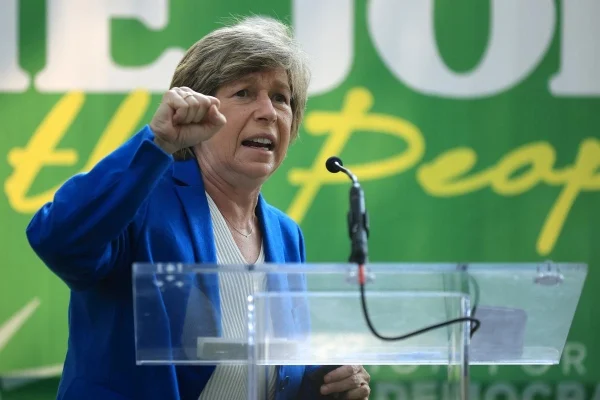
    “The problem is they don’t appear to have kept their word,” Randi Weingarten said in a news release Wednesday. “The borrower backlog remains eye-popping, and Education Secretary Linda McMahon clearly has no idea how to manage this process.”

    In addition to the backlog of pending loan repayment applications, the report shows that only 170 borrowers at the end of their IDR plan and 280 borrowers who have completed their PSLF payments have received their rightful loan forgiveness.

    Weingarten suggested that in addition to loan forgiveness being low on the Trump administration’s list of political priorities, much of the backlog is due to major staffing cuts.

    “Perhaps [Secretary McMahon] shouldn’t have sold the Department of Education off for parts,” the union president said. “President Donald Trump and Vice President JD Vance may believe affordability is a hoax, but hundreds of thousands of Americans just trying to get ahead are bleeding—and the administration’s lack of action is rubbing salt into the wound.”

    So, until the department “follows the law and processes every single outstanding application,” she added, AFT will not stop fighting its case.

    Source link

  • New three-tier visa processing practice starts – Campus Review

    New three-tier visa processing practice starts – Campus Review

    The federal government will reward universities that enrol international students in line with allocated numbers under a new visa processing practice to begin in November.

    Please login below to view content or subscribe now.

    Membership Login

    Source link

  • Visa Processing Delays Could Cost U.S. Universities $7 Billion and 60,000 Jobs This Fall

    Visa Processing Delays Could Cost U.S. Universities $7 Billion and 60,000 Jobs This Fall

    Recent disruptions to student visa processing could trigger a 30-40% decline in new international student enrollment this fall, potentially costing the U.S. economy $7 billion and more than 60,000 jobs, according to a new analysis by NAFSA: Association of International Educators and JB International.

    The preliminary projections, based on SEVIS and State Department data, paint a stark picture for higher education institutions that have come to rely heavily on international students for both revenue and academic diversity. The analysis predicts an overall 15% drop in international enrollment for the 2025-26 academic year, which would reverse years of steady growth in this critical sector.

    “This analysis, the first to calculate the potential economic impact of fewer international students on cities and towns across the country, should serve as a clarion call to the State Department that it must act,” said Dr. Fanta Aw, executive director and CEO of NAFSA. “The immediate economic losses projected here are just the tip of the iceberg.”

    The projected decline stems from a confluence of policy changes and administrative challenges that have created significant barriers for prospective international students:

    Visa Interview Suspension: Between May 27 and June 18, 2025, student visa interviews were paused during the peak issuance season—precisely when students needed to secure visas for fall enrollment. When interviews resumed on June 18, consulates received a directive to implement new social media vetting protocols within five days, but with minimal guidance.

    Appointment Bottlenecks: Reports indicate limited or no visa appointment availability in key countries including India, China, Nigeria, and Japan. India and China alone represent the top two sources of international students to the United States, while Nigeria ranks seventh and Japan 13th among sending countries.

    Declining Visa Issuance: F-1 student visa issuance dropped 12% from January to April 2025 and plummeted 22% in May 2025 compared to the same period in 2024. While June 2025 data has not been published, the analysis suggests a possible 80-90% decrease based on the identified disruptions.

    Travel Restrictions: A June 4, 2025 executive order imposed restrictions on nationals from 19 countries, with reports suggesting another 36 countries could be added. These restrictions alone threaten $3 billion in annual economic contributions and more than 25,000 American jobs.

    The economic implications extend far beyond university campuses. International students contributed $46.1 billion to the U.S. economy in 2024-25 and supported nearly 400,000 jobs across various sectors including housing, dining, retail, and transportation.

    The projected 15% enrollment decline would reduce international student economic contributions to $39.2 billion in 2025-26, down from an expected $46.1 billion. This represents not just a loss to individual institutions, but to entire communities that have built economic ecosystems around international education.

    “Without significant recovery in visa issuance in July and August, up to 150,000 fewer students may arrive this fall,” the report warns, highlighting the narrow window remaining for policy corrections.

    Beyond immediate economic impacts, education leaders worry about long-term consequences for American higher education’s global competitiveness. International students contribute to research innovation, provide diverse perspectives in classrooms, and often remain in the United States after graduation, filling critical roles in STEM fields and other high-demand sectors.

    The timing is particularly concerning given increased competition from other English-speaking countries like Canada, Australia, and the United Kingdom, which have positioned themselves as more welcoming alternatives for international students.

    To mitigate what NAFSA calls a “devastating outcome,” the organization is urging Congress to direct the State Department to take two immediate actions:

    1. Provide expedited visa appointments and processing for all F-1 and M-1 students and J-1 exchange visitor visa applicants
    2. Exempt F and M students as well as J exchange visitors from current travel restrictions affecting nationals from 19 countries, while maintaining required background checks and vetting

    The report argues that these policy changes could help institutions avoid the projected enrollment cliff and preserve the economic benefits that international students bring to American communities.

    For institutions planning fall enrollment, the report suggests the need for contingency planning and advocacy efforts to address visa processing challenges. With the traditional summer months representing the final opportunity for students to secure visas for fall enrollment, time is running short for policy interventions.


    Source link