Tag: Prof

  • Actually, It’s a Good Time to Be an English Prof (opinion)

    Actually, It’s a Good Time to Be an English Prof (opinion)

    It may sound perverse to say so. Our profession is under attack, our students are reading less, jobs are scarce and the humanities are first on the chopping block. But precisely because the outlook is dire, this is also a moment of clarity and possibility. The campaign against higher education, the AI gold rush and the dismantling of our public schools have made the stakes of humanistic teaching unmistakable. For those of us with the privilege of relative job security, there has never been a more urgent—or more opportune—time to do what we were trained to do.

    I am an English professor, so let me first address my own. Colleagues, this is the moment to make the affirmative case for our existence. This is our chance to demonstrate the worth of person-to-person pedagogy; to speak the language of knowledge formation and the pursuit of truth; to reinvigorate the canon while developing new methods for the study of ethnic, postcolonial, feminist, queer and minority literatures and cultural texts; to stand for the value of human intelligence. Now is when we seize the mantle and opportunity of “English” as a both a privileged signifier and a sign of humility as we fight alongside our colleagues in the non-Western languages and literatures who are even more endangered than we are— and for our students, without whom we have no future.

    I’m not being Pollyannaish. Between Trump 1 and Trump 2 sit the tumultuous COVID years, which means U.S. universities have been reeling, under direct attacks and pressures, for a decade. I started my first job in 2016, so that is the entirety of the time that I have worked as an academic. I spent six years in public universities in purple-red states, where austerity was the name of the game—and then I moved to Texas.

    There have been years of insults and incursions into the profession. We have been scapegoated as an out-of-touch elite and called enemies of the state. And no, we haven’t always responded well. In the face of austerity, we let our colleagues be sacrificed. Despite the bad-faith weaponization of “CRT,” “DEI” and “identity politics,” we disavowed identity. Against our better judgment, we assimilated wave after wave of new educational technologies, from MOOCs to course management platforms to Zoom.

    Now, we face a new onslaught: the supposedly unstoppable and inevitable rise of generative AI—a deliberately misleading misnomer for the climate-destroying linguistic probability machines that can automate and simulate numerous high-level tasks, but stop short of demonstrating human levels of intelligence, consciousness and imagination. “The ultimate unaccountability machine,” as Audrey Watters puts it.

    From Substack to The New York Times to new collaborative projects Against AI, humanities professors are sounding the alarm. At the start of this semester, philosopher Kate Manne reflected that her “job just got an awful lot harder.”

    Actually, I think our jobs just got a whole lot easier, because our purpose is sharper than ever. Where others see AI as the end of our profession, I see a clarifying opportunity to recommit to who we are. No LLM can reproduce the deep reading, careful dialogue and shared meaning-making of the humanities classroom. We college professors stand alongside primary and secondary school teachers who have already faced decades of deprofessionalization, deskilling and disrespect.

    There is a war on public education in this country. Statehouses in places like Texas are rapidly dismantling the infrastructure and independence of public institutions at all levels, from disbanding faculty senates to handing over curriculum development to technologists who have no understanding of the dialogical, improvisatory nature of teaching. These are folks who gleefully predict that robots with the capacity to press “play” on AI-generated slide decks can replace human teachers with years of experience. We need them out of our schools at every level.

    Counter to what university administrators and mainstream pundits seem to believe, students are not clamoring to use AI tools. Tech companies are aggressively pushing them. All over the country, school districts and universities are partnering with companies like Microsoft and OpenAI for fear of being left behind. My own institution has partnered with Google. Earlier this semester, “Google product experts” came to campus to instruct our students on how to “supercharge [their] creativity” and “boost [their] productivity” using Gemini and NotebookLM tools. Faculty have been invited to join AI-focused learning communities and enroll in trainings and workshops (or even a whole online class) on integrating AI tools into our teaching; funds have been allotted for new grant programs in AI exploration and course development.

    I didn’t spend seven years earning a doctorate to learn how to teach from Google product experts. And my students didn’t come to university to learn how to learn from Google product experts, either. Those folks have their work, motivations and areas of expertise. We have ours, and it is past time to defend them. We are keepers of canon and critique, of traditions and interventions, of discipline-specific discourses and a robust legacy of public engagement. The whole point of education is to hand over what we know to the next generation, not to chase fads alongside the students we are meant to equip with enduring skills. It is our job to strengthen minds, to resist what Rebecca Solnit calls the “technological invasion of consciousness, community, and culture.”

    Many of us have been trying to do this for some time, but it’s hard to swim against the tides. In 2024, I finally banned all electronics from my English literature classes. I realized that sensitivity to accessibility need not prevent us from exercising simple common sense. We know that students learn more and better when they take notes by hand, annotate texts and read in hard copy. Because my students do not have access to free printing, and because a university librarian told me that “we only go from print to digital, not the other way around,” I printed copies of every reading for every student. With the words on paper before them, they retained more, they made eye contact, they took marginal notes, they really responded to each other’s interpretations of the texts.

    That’s the easy part. As we college professors plan our return to blue books, in-class midterms and oral exams, the challenge is how to intervene before our students come to class. If AI is antithetical to the project of higher education, it’s even more insidious and damaging in the elementary, middle and high schools.

    My children attend Texas public schools in the particularly embattled Houston Independent School District, so I have seen firsthand the app-ification of education. Log in to the middle school student platform—which some “innovator” had the audacity to name “Clever”—and you’ll get a page with more than three dozen apps. Not just the usual suspects like Khan Academy and Epic, but also ABC-CLIO, Accelerate Learning, Active Classroom, Amplify, Britannica, BrainPOP, Canva, Carnegie Learning, CK-12 Foundation, Digital Theatre Plus, Discover Magazine, Edgenuity, Edmentum, eSebco, everfi, Gale Databases, Gizmos, IPC, i-Ready, iScience, IXL, JASON Learning, Language! Live, Learning Ally Audiobook, MackinVIA, McGraw Hill, myPLTW, Newsela, Raise, Read to Achieve, Savvas EasyBridge, STEMscopes, Summit K12, TeachingBooks, Vocabulary.com, World Book Online, Zearn …

    As both a professor and a parent, I have decided to intervene directly. Last year, I started leading a reading group for my 12-year-old daughter and a group of her classmates. They call it a book club. Really, it’s a seminar. Once a month, they convene around our dining table for 90 minutes, paperbacks in hand, to engage in close reading and analysis. They do all the stuff we English professors want our college students to do: They examine specific passages, which illuminate broader themes; they draw connections to other books we’ve read; they ask questions about the historical context; they make motivated references to current social, cultural and political issues; they plumb the space between their individual readings and the author’s intentions.

    No phones, no computers, no apps. We have books (and snacks). And conversation. After each meeting, my daughter and I debrief. About four months in, she said, “You know, a lot of the previous meetings I felt like we were each just giving our own takes. But this time, I feel like we arrived at a new understanding of the book by talking about it together.” The club members had challenged and pushed each other’s interpretations, and together exposed facets of the text they wouldn’t have seen alone.

    The literature classroom is a space of collaborative meaning-making—one of the last remaining potentially tech-free spaces out there. A precious space, that we need to renew and defend, not give up to the anti-intellectual mob and not transform at the behest of tech oligarchs. We have an opportunity here to stand up for who we are, for the mission of humanistic education, in affirmative, unapologetic terms—while finding ways to build new alliances and enact solidarity beyond the walls of our college classrooms.

    This moment is clarifying, motivating, energizing. It’s time to remember what we already know.

    Source link

  • ICE Detains Ferris State Prof., DHS Calls Him “Sex Offender”

    ICE Detains Ferris State Prof., DHS Calls Him “Sex Offender”

    Lawrey/iStock/Getty Images Plus

    Immigration and Customs Enforcement has detained a Ferris State University professor, according to a Department of Homeland Security news release that calls him “a criminal illegal alien sex offender from Sri Lanka.”

    ICE arrested Sumith Gunasekera in Detroit on Nov. 12, DHS announced in its Nov. 25 release. That’s the date Ferris State “became aware of accusations regarding” Gunasekera, university spokesperson David Murray said in an emailed statement. Murray didn’t answer further questions from Inside Higher Ed Monday, including whether the university performed a background check on Gunasekera before hiring him.

    “He has been placed on administrative leave while the university gathers more information,” Murray wrote. “This is a personnel issue and it would be inappropriate for the university to further discuss the matter.”

    The university’s website lists Gunasekera as director of its Data Analytics Consulting and Research Center. A Sumi Gunasekera is also listed as an assistant professor of marketing.

    As of last week’s news release, DHS said Gunasekera “remains in ICE custody pending further immigration proceedings.” DHS spokespeople didn’t respond to Inside Higher Ed’s questions Monday about whether he’s still being held and where.

    The DHS release says that, in 1998, “a criminal court in Brampton, Ontario convicted Gunasekera for utter threat to cause death or bodily harm and sexual interference and sentenced him to 1 month of incarceration and 1 year of probation.” Anita Sharma, group leader at the Ontario Court of Justice in Brampton, told Inside Higher Ed the case has been archived, so she couldn’t provide further details Monday.

    DHS’s release says “the convictions in Canada” rendered Gunasekera “ineligible for legal status in the United States.” Tricia McLaughlin, a DHS spokesperson, said in the release that “it’s sickening that a sex offender was working as a professor on an American college campus and was given access to vulnerable students to potentially victimize them. Thanks to the brave ICE law enforcement officers, this sicko is behind bars and no longer able to prey on Americans.”

    Inside Higher Ed was unable to reach Gunasekera for comment.

    Source link

  • Court Order Reinstates S.D. Prof Fired for Kirk Comments

    Court Order Reinstates S.D. Prof Fired for Kirk Comments

    Photo illustration by Inside Higher Ed | LeoPatrizi/E+/Getty Images

    A South Dakota district court judge ordered the University of South Dakota on Wednesday to reinstate Michael Hook, a tenured professor of art who was put on leave with an “intent to terminate” after he posted comments on his personal Facebook page about Charlie Kirk. 

    “The court concludes that Hook spoke as a citizen and his speech was on a matter of public concern,” district court judge Karen Schreier wrote. “Defendants note that Hook’s Facebook page identified himself as a professor at the University of South Dakota … but this alone does not show that a post made on his personal Facebook account is speech that arises from Hook’s duties as a professor.”

    Hook is one of dozens of faculty and staff members who have been punished for their comments about Kirk’s death. He was put on leave two days after posting, “Okay. I don’t give a flying fuck about this Kirk person,” on his Facebook page on Sept. 10, the day Kirk was shot and killed in Utah.

    “Apparently he was a hate spreading Nazi. I wasn’t paying close enough attention to the idiotic right fringe to even know who he was,” Hook continued. “I’m sorry for his family that he was a hate spreading Nazi and got killed. I’m sure they deserved better. Maybe good people could now enter their lives. But geez, where was all this concern when the politicians in Minnesota were shot? And the school shootings? And Capitol Police? I have no thoughts or prayers for this hate spreading Nazi. A shrug, maybe.”

    Hook later deleted the post and posted an apology. 

    Hook was informed in a letter from Bruce Kelley, dean of the University of South Dakota College of Fine Arts, that in posting the comment on Facebook he’d violated two university policies. The first dealt with “neglect of duty, misconduct, incompetence and abuse of power,” and the second detailed that when employees speak publicly “they should remember that the public may judge their profession and their institution by their utterances. Hence, they should at all times be accurate, show respect for the opinions of others and make every effort to indicate when they are not speaking for the institution.” 

    As part of the temporary restraining order, Schreier ordered that the university may not proceed with a disciplinary meeting between Hook and university officials scheduled for Sept. 29. The temporary restraining order will remain in effect until a preliminary injunction hearing on Oct. 8.

    Source link

  • Texas State Prof Sues, Claiming Free Speech, Contract Violations

    Texas State Prof Sues, Claiming Free Speech, Contract Violations

    Mikala Compton/Austin American-Statesman/Getty Images

    A tenured Texas State University professor who was terminated earlier this month after allegedly inciting violence during a speech has sued the university, CBS Austin reported. In the lawsuit filed in district court, Thomas Alter, the former associate professor of history, claims that university leadership violated his free speech and due process rights and breached his employment contract. 

    At a Sept. 7 conference organized by Socialist Horizon, Alter said in part that “without organization, how can anyone expect to overthrow the most bloodthirsty, profit-driven mad organization in the history of the world—that of the U.S. government.” His speech was recorded and circulated by a right-wing YouTuber who had infiltrated the event. Alter was terminated three days later.

    In a statement announcing his termination, Texas State president Kelly Damphousse said Alter’s “actions are incompatible with their responsibilities as a faculty member at Texas State University.” Alter told CBS Austin that he did not associate himself with Texas State during the conference. 

    “The reasons Provost Aswrath provided for Dr. Alter’s termination are false and give every appearance of politically-motivated discrimination,” the lawsuit states. “In truth, Dr. Alter was terminated because he espoused views that are politically unpopular in today’s politically-charged climate, in violation of his First Amendment right to free speech.”

    Alter told CBS Austin that his dismissal “turned my world upside down and my family’s world upside down.”

    “Anyone should be able to express their views no matter how unpopular they are without facing the repercussions that many people are seeing,” he added. (Alter had earned tenure just 10 days before he was removed, The Chronicle of Higher Education reported.)

    Texas State did not respond to Inside Higher Ed’s request for comment, but a spokesperson told CBS Austin the university declined to comment on pending litigation.

    Source link

  • Ky. Prof. Calling for War Against Israel Pulled From Teaching

    Ky. Prof. Calling for War Against Israel Pulled From Teaching

    Since Oct. 7, 2023, scholars and members of the broader public have debated whether Israel’s war against Hamas in Gaza actually constitutes a genocide of Palestinians. Fights have erupted over scholarly association resolutions, course descriptions and assignments calling it such.

    Ramsi Woodcock, a University of Kentucky law professor, says it’s a genocide. On his website, antizionist.net, he says that the ongoing genocide—combined with his expectation that Israel would violate any future ceasefire and continue killing—creates a “moral duty” for the world’s nations.

    That duty, he writes in the “Petition for Military Action Against Israel,” is to wage war on Israel until it “has submitted permanently and unconditionally to the government of Palestine everywhere from the Jordan River to the Mediterranean Sea.” He asks fellow law scholars to sign the petition, adding that Israel is a colony and war is needed to decolonize.

    This month—just after Woodcock says he was promoted to full professor—the university removed him from teaching. In a July 18 message to campus that doesn’t specifically name Woodcock, UK president Eli Capilouto wrote that legal counsel was investigating whether an employee’s “conduct may violate federal and state guidance as well as university policies.”

    “We have been made aware of allegations of disturbing conduct, including an online petition calling for the destruction of a people based on national origin,” Capilouto wrote. Woodcock told Inside Higher Ed that characterization of his petition is “obviously defamatory, creates a hostile environment for me and makes me potentially physically unsafe.” He said he’s considering suing Capilouto and the university for defamation.

    Capilouto further wrote that the petition, which the unnamed university employee seemed to be “broadly” circulating online, “can be interpreted as antisemitic in accordance with state and federal guidance.” Woodcock responded that “what Palestinians resist, and what those who advocate for them resist, is colonization, apartheid and a currently unfolding genocide—they are not opposed to any particular religion or any particular people.”

    But Shlomo Litvin, chairman of the Kentucky Jewish Council and rabbi for the Chabad at UK Jewish Student Center, told Inside Higher Ed that “calling for the establishment of a state that is free of Jews in a land that currently has seven million Jews is calling for the death of seven million Jews,” including “families and relatives of [Woodcock’s] students.”

    “What he’s calling for is a second Holocaust,” Litvin said, adding that “this idea that there is a possibility of the Jews coming to some imaginary country and being safe there is a fantasy that not even he believes.”

    Woodcock countered, “Rabbi Litvin is trying to distract us from an actual second Holocaust that Israel is committing right now in Gaza and which only immediate military intervention will stop.”

    Woodcock has become another example of pro-Palestine faculty across the country being investigated for their writing or speech about the conflict while they aren’t teaching. During the Biden era, investigations at other universities led to discipline and terminations. The current Trump administration has stripped universities of federal funding and punished them in other ways for allegedly failing to address campus antisemitism. And Woodcock’s case continues the debate about when denunciations of Israel or Zionism are or aren’t antisemitic.

    But why UK began investigating Woodcock now remains unclear.

    ‘Not Academic Discourse’

    In a July 18 email obtained by Inside Higher Ed, UK’s general counsel, William E. Thro, wrote to Woodcock that “recently, the university became aware of your writings on certain websites, your conduct at academic conferences, and your postings on American Association of Law Schools [sic] list serves [sic], and other actions.”

    “These activities may create a hostile environment for Jewish members of the university community or otherwise constitute harassment as defined by the Supreme Court,” Thro wrote. “The university has concerns that your actions may violate Title VI of the Civil Rights Act of 1964, the equivalent state laws, and various university policies.”

    Title VI prohibits discrimination based on shared ancestry, including antisemitism.

    But the letter didn’t provide further details, such as what conference conduct or writings the university was concerned about, or how university officials became aware of this expression. A UK spokesperson said, “At this time, we are not going to comment beyond [Capilouto’s] statement, as there is an active investigation.”

    Woodcock said he made a statement about “Israel’s genocide of Palestinians” at a conference over a year ago. He later shared a link to his antizionist.net site on Association of American Law Schools online discussion forums, triggering “really lively debate about whether Israel has a right to exist.”

    “Nobody wants to talk about that question, and as soon as you bring it up, you see how hungry people are to debate it,” Woodcock said.

    He says he created the antizionist.net website late last year but didn’t share it broadly until the start of this month. It’s a site for what he dubs the Antizionist legal studies movement.

    “Israel is committing genocide against Palestinians in Gaza,” Woodcock wrote on the site in December. “No genocide in the 20th century ended without armed intervention. For more than a year now, the international community has been in denial about the implication of these two facts.”

    He listed various failed international efforts to stop the genocide, ending with “Even the most outspoken international lawyers dare not speak the name of the only thing that history suggests might actually stop Israel. That is, of course, war—by the international community against Israel.”

    Woodcock says he wants Israel defeated and replaced with a Palestinian state, and he doesn’t insist the vast majority of Jews be automatically allowed to remain. He says Palestinians should get to decide. His definition of “antizionist legal scholars” includes that they oppose “any right of self-determination for Jewish people as such in Palestine.” He does say that “the tiny minority of Jewish people whose ancestors lived in Palestine immediately prior to the arrival of the first Zionist colonizers in Palestine in 1882 … share in the right of Palestinians to self determination.”

    “Palestinian people alone should decide how Palestine should be governed after independence, including the legal status of the colonizer population,” he says.

    The Kentucky Jewish Council and State Sen. Lindsey Tichenor, a co-chair of the state General Assembly’s Kentucky-Israel Caucus, praised the decision to remove Woodcock from the classroom. In a statement, Tichenor wrote that the “reports coming out of our taxpayer-funded flagship university are incredibly disturbing. A law professor calling for the destruction of Israel and against the right for the Jewish people to have self-determination is not a policy disagreement, but a call to violence.”

    “That is not academic discourse. It’s antisemitism and racism and abuse of his power, plain and simple,” Tichenor wrote. She thanked Capilouto “for his strong and unequivocal condemnation of this hateful message” and for reinforcing “the importance of moral clarity and swift institutional accountability.”

    But Capilouto’s message also hinted at the academic freedom concerns at play. He wrote that the situation “compels us to address questions other campuses are grappling with as well—chiefly, where and when does conduct and the freedom to express views in a community compromise the safety and well-being of people in that community?”

    In a statement to Inside Higher Ed, Connor Murnane, the Foundation for Individual Rights and Expression’s campus advocacy chief of staff, said, “FIRE is actively investigating this case, and we’re concerned that Professor Woodcock may have been punished for protected activities.”

    Jennifer Cramer, president of UK’s American Association of University Professors chapter, said that “assuming he did not pose a threat in any meaningful way to our campus, I think that the treatment of this case seems outside of the bounds of the norm.” She said that “whether we agree with what he says or not shouldn’t matter, because that’s the point of academic freedom.”

    Woodcock hasn’t stopped calling for war on Israel, posting on X, “Zionists are frustrated that their intimidation campaign hasn’t shut me up.”

    Source link

  • AAUP Report Backs Tenured Pro-Palestine Prof. Who Was Fired

    AAUP Report Backs Tenured Pro-Palestine Prof. Who Was Fired

    A new American Association of University Professors investigative report concludes that Muhlenberg College violated the academic freedom of a tenured associate professor who said the institution fired her for pro-Palestinian speech.

    Maura Finkelstein’s situation made headlines last year as the first instance that major academic freedom advocacy groups had heard about of a tenured faculty member being fired for pro-Palestine or pro-Israel statements. Complaints against Finkelstein also became the subject of a U.S. Education Department Office for Civil Rights investigation.

    Finkelstein previously said she was fighting her May 2024 termination and was continuing to be paid during the appeals. But a college spokesperson told Inside Higher Ed this week that Finkelstein has now “resigned from the college to pursue other scholarship opportunities.” Finkelstein didn’t respond to Inside Higher Ed’s requests for comment.

    Finkelstein, who is Jewish, had said a panel of faculty and staff recommended axing her over her Instagram repost that told readers not to “normalize Zionists taking up space” and called Zionists “genocide-loving fascists” who shouldn’t be welcome “in your spaces.”

    Members of the college’s Faculty Personnel and Policies Committee later unanimously concluded that Finkelstein shouldn’t be fired, according to the AAUP report released Tuesday. The report is from a Committee of Inquiry composed of three faculty from other higher education institutions, and it’s been approved by the AAUP’s Committee A on Academic Freedom and Tenure.

    The report concludes, among other things, that “by initially dismissing Professor Finkelstein from the faculty solely because of one anti-Zionist repost on Instagram and without demonstrating—in fact, without ever seeking to demonstrate” that she was professionally unfit, “the Muhlenberg administration violated Professor Finkelstein’s academic freedom of extramural speech.” The report says the firing has “severely impaired the climate for academic freedom” at the college.

    A college spokesperson said the institution “has not been afforded the opportunity to review the amended report,” but pointed to the administration’s response to an earlier AAUP draft. That response, included in the final AAUP report, says Finkelstein “was afforded a fair and equitable process” and that “the cumulative effect of Professor Finkelstein’s conduct and post that called for the shaming of Zionists and to ‘not welcome them into your spaces,’ violated College policy.”

    Source link

  • Prof. says he was fired for email calling U.S. racist, fascist

    Prof. says he was fired for email calling U.S. racist, fascist

    After Donald Trump was elected president in 2016, some faculty canceled classes to allow themselves and students time to process a result that shocked the media and academe.

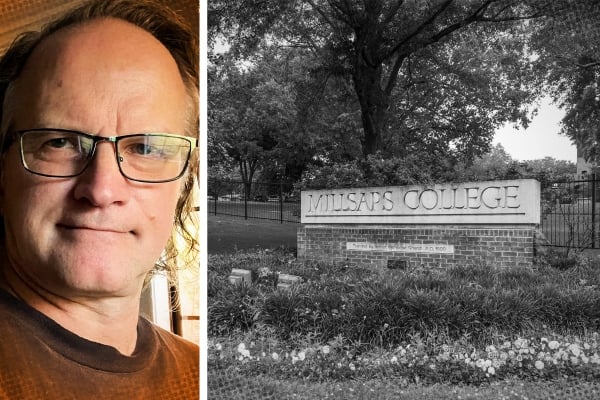
    Campus responses to Trump’s re-election in November seemed more muted. But at Millsaps College, a private Mississippi institution of roughly 600 students, James Bowley said he canceled his Abortion and Religions class meeting the day after the election.

    Bowley, a tenured religious studies professor, told Inside Higher Ed the class had only three students, and he knew they were upset about Trump’s re-election. He said he sent them an email with the subject line “no class today” and one line of text: “need time to mourn and process this racist fascist country.”

    For what he wrote in that email, Bowley said, the college swiftly barred him from campus and, on Tuesday, fired him—ending his more than 22 years of employment. He’s now fighting to get his job back and said he remains on the payroll while he appeals to the institution’s Board of Trustees.

    “This seems to me like the very definition of censorship, and of course it will make every single faculty member fearful of the administration, fearful of sharing their own opinions,” Bowley said. “There are hundreds of historians who would say that the election was a victory for fascism and racism,” he added.

    The college didn’t provide interviews Thursday and didn’t answer written questions. The situation appears to be another example of faculty members being punished for commenting on current events—but this time involving communication to a small group of students, according to Bowley. The Foundation for Individual Rights and Expression, a free speech and academic freedom advocacy group, is pushing for Bowley’s reinstatement.

    “This is absolutely absurd,” said Haley Gluhanich, a senior program officer in FIRE’s campus rights department. She said that when Bowley was initially suspended, “he was charged with an offense that does not exist in any of the handbooks, so they completely just made up a violation of policy.”

    The Email Gets Out

    Bowley said one of the students who received the email shared it on Instagram, approvingly, but another student whom he doesn’t know reported it to administrators. Bowley said he got a call from interim provost Stephanie Rolph on Nov. 7, the day after he sent the email, saying he was being placed on leave for it and banned from campus.

    “I was shocked, I was dumbfounded, I just could not believe it,” Bowley said.

    A copy of a letter from Rolph to Bowley, obtained by Inside Higher Ed, says this leave was “pending a review of the use of your Millsaps email account to share personal opinions with your students.” In the letter, Rolph told Bowley his email account access was cut off and further told him not to “engage with students.”

    The suspension dragged on, Bowley said, and three weeks in he filed a grievance against Rolph—which led to a hearing. Then, on Dec. 27, a grievance panel composed of three faculty members ruled that Bowley should be reinstated, according to a copy of the ruling that FIRE provided.

    “We recognize that Dr. Bowley has, on multiple occasions, shown poor judgment in his use of campus email,” the committee wrote. But during the hearing, Rolph couldn’t “identify a specific policy that Dr. Bowley violated,” they said. “No policy prohibiting the use of campus email to share personal opinions with students exists in either the Faculty Handbook or the Staff Handbook.”

    The panel further recommended that “Rolph issue a formal apology to Dr. Bowley” and that Bowley “be compensated for the loss of income resulting from his removal from the winter study abroad course he had been scheduled to teach.” Bowley told Inside Higher Ed that was a course in Mexico for which he would’ve been paid more than $6,000 and would have had his travel expenses covered. 

    The panel also concluded that Bowley wasn’t “afforded due process.” It said Rolph had argued that the both the staff handbook and the faculty handbook applied to faculty. It also mentioned unresolved tension between the interim provost’s confidentiality claims and Bowley’s right to the hearing, saying the “interim provost can refuse to answer substantive questions pertaining to the grievance.” (Michael Pickard, chair of the grievance panel and vice president of the college’s Faculty Council, said he couldn’t comment Thursday. Rolph didn’t respond to requests for comment.)

    Millsaps president Frank Neville rejected the grievance panel’s report and then fired Bowley on Tuesday, according to Bowley.

    Bowley and FIRE said there was an extra twist at the end: FIRE wrote on its website that Bowley was told in a meeting Tuesday that he was also fired for “not clarifying that his views were not that of the college’s. To be clear: The college fired Bowley for an offense … of which he wasn’t accused.”

    “The FIRE article is riddled with inaccuracies,” wrote college spokesperson Joey Lee in an email to Inside Higher Ed. He did not specify what those inaccuracies were.

    “Because Millsaps does not disclose information about individual employment matters for privacy and confidentiality reasons, the article is based on incomplete information,” he wrote.

    ‘A Bit Reckless’

    Was Bowley fired for more than the email? The college won’t specify, and Bowley didn’t provide a copy of his termination letter.

    David Wood, the Faculty Council president, told Inside Higher Ed he doesn’t exactly know why Bowley was fired, but he doesn’t think he should have been. Wood said he’s disappointed in the college administration and “the extreme nature of the punishment.” But he also said he’s disappointed in Bowley.

    “This is partly on him as well,” Wood said.

    Wood doesn’t believe academic freedom is under threat at Millsaps and thinks “everything was done legally and by our own rules at the college,” he said.

    (After this article was initially published Friday, Wood added in an email that he believes the “initial suspension was unfair and unsubstantiated” and that Rolph “exercised very poor judgment in banning James without a hearing.” Wood wrote that he believes “the review continued and shifted because” Rolph “realized she was wrong and had to go fishing for other reasons to fire James. The rest of her investigation I believe was done according to the rules of the Faculty Handbook.”)

    Asked whether college leaders were upset with Bowley for previous alleged transgressions, Wood said, “There’s a history there, I’ll just put it that way.”

    “James has been a bit reckless in the past, but I do not believe that being terminated was the appropriate punishment,” Wood said. “James likes to push the envelope, let me just put it that way … he’s not going to steer away from controversial issues.”

    Bowley, for his part, said that Rolph had verbally reprimanded him before for sharing with students and employees—through email—a brochure for a prayer vigil for Palestinians killed in Gaza that used the term “genocide.”

    But Bowley said the postelection email was the primary reason for his firing. Regarding any other accusations, he said, “The administration spent two months trying to find other things, and they allege that there were problems in my other class.”

    One accusation leveled at him was “lack of awareness of the status of assignments and grades for a course,” he said. But he wasn’t allowed to appear before a committee to answer such charges, he said, or access his emails and other documents to defend himself.

    He also said he’s protested the death penalty and celebrated the legalization of gay marriage and has ended up on the news for such demonstrations.

    “The idea of me pushing the envelope is me being an activist,” Bowley said. “I am an activist and people know that.”

    Source link