Tag: Professional Development

  • Measuring What Matters: A Faculty Development System That Improves Teaching Quality – Faculty Focus

    Measuring What Matters: A Faculty Development System That Improves Teaching Quality – Faculty Focus

    Source link

  • Measuring What Matters: A Faculty Development System That Improves Teaching Quality – Faculty Focus

    Measuring What Matters: A Faculty Development System That Improves Teaching Quality – Faculty Focus

    Source link

  • Making PD meaningful in today’s classrooms

    Making PD meaningful in today’s classrooms

    Key points:

    As a classroom teacher and district leader with over 26 years of experience, I’ve attended countless professional development (PD) sessions. Some were transformative, others forgettable. But one thing has remained constant: the need for PD that inspires, equips, and connects educators. Research shows that effective PD focuses on instructional practice and connects to both classroom materials and real- world contexts.

    I began my teaching career in 1999 through an alternative certification program, eager to learn and grow. That enthusiasm hasn’t waned–I still consider myself a lifelong learner. But over time, I realized that not all PD is created equal. Too often, sessions felt like a checkbox exercise, with educators asking, “Why do I have to be here?” instead of “How can I grow from this?”

    Here are some of my favorite PD resources and experiences:

    edWeb

    edWeb is free to join, and once you’re in, you can dive into as many sessions as you want. The service offers a live calendar of events or on-demand webinars covering a range of topics. Plus, the webinars come with CE certificates, which are approved for teacher re-licensure in states like New York, Massachusetts, Texas, Pennsylvania, Arkansas, Utah, and Nevada.

    You can go deeper into the state-specific options with an interactive map. I also love the community aspect of the platform, as you can connect with peers and learn from experts on so many topics for all preK-12 educators.

    Career Connect
    This summer, I attended the Discovery Education Summer of Learning Series at the BMW facility in Spartanburg, South Carolina, for a day-long professional learning event focused on workforce readiness and preparing students for evolving career landscapes. It was an energizing day being surrounded by passionate educators. One standout resource we dove into more deeply is Career Connect by Discovery Education. Career Connect is within Discovery Education Experience and is available to all educators in South Carolina by the Department of Education.

    This is quickly becoming a priority tool in our district. With early access in the spring, we’ve integrated it across grade levels–from elementary STEM classrooms to our Career Center. The platform offers students live interactions with professionals in various fields, making career exploration both engaging and real. I witnessed this firsthand during a virtual visit with an engineer from Charlotte, N.C., whose insights captivated our students and sparked meaningful conversations about future possibilities.

    Professional Development Hub
    The ASCD + ISTE professional learning hub offers sessions on innovative approaches and tools to design and implement standards-aligned curriculum. Each session is led by educators, authors, researchers, and practitioners who are experts in professional learning. Schools and districts receive a needs assessment, so you know the learning is tailored to what educators really need and want.

    Tips for Meaningful PD
    With over 26 years of experience as a classroom teacher and district leader, I have participated in my fair share of professional learning opportunities. I like to joke that my career began in the late 1900s, but professional development sessions from those first few years of teaching now do feel like they were from a century ago compared to the possibilities presented to teachers and leaders today.

    Over these decades I’ve seen a lot of good, and bad, sessions. Here are my top tips to make PD actually engaging:

    • Choose PD that aligns with your goals. Seek out sessions that connect directly to your teaching practice or leadership role.
    • Engage with a community. Learning alongside passionate educators makes a huge difference. The Summer of Learning event reminded me how energizing it is to be surrounded by people who lift you up.
    • Explore tech tools that extend learning. Platforms like Career Connect and others aren’t just add-ons–they’re gateways to deeper engagement and real-world relevance.

    Professional development should be a “want to,” not a “have to.” To get there, though, the PD needs to be thoughtfully designed and purpose-driven. These resources above reignited my passion for learning and reminded me of the power of connection–between educators, students, and the world beyond the classroom.

    Latest posts by eSchool Media Contributors (see all)

    Source link

  • Catapult Learning is Awarded Tutoring Program Design Badge from Stanford University’s National Student Support Accelerator

    Catapult Learning is Awarded Tutoring Program Design Badge from Stanford University’s National Student Support Accelerator

    Organization recognized for excellence in high-impact tutoring design and student achievement gains

    PHILADELPHIA, Aug. 25, 2025 – Catapult Learning, a division of FullBloom that provides academic intervention programs for students and professional development solutions for teachers in K-12 schools, today announced it earned the Tutoring Program Design Badge from the National Student Support Accelerator (NSSA) at Stanford University. The designation, valid for three years, recognizes tutoring providers that demonstrate high-quality, research-aligned program design.

    The recognition comes at a time when the need for high-impact tutoring (HIT) has never been greater. As schools nationwide work to close learning gaps that widened during the COVID-19 pandemic and accelerate recovery, Catapult Learning stands out for its nearly 50-year legacy of delivering effective academic support to students who need it most.

    “Catapult Learning is honored to receive this prestigious national recognition from the NSSA at Stanford University,” said Rob Klapper, president at Catapult Learning. “We are excited to be recognized for our high-impact tutoring program design and will continue to uphold the highest standards of excellence as we support learners across the country.” 

    Each year, Catapult Learning’s programs support more than 150,000+ students with nearly four million in-person tutoring sessions, in partnership with 2,100 schools and districts nationwide. Its tutors, many of whom hold four-year degrees, are highly trained professionals who are supported with ongoing coaching and professional development.

    Recent data from Catapult Learning’s HIT programs show strong academic gains across both math and reading subject areas:

    • 8 out of every 10 math students increased their pre/post score
    • 9 out of every 10 reading students increased their pre/post score

    These results come from programs that have also earned a Tier 2 evidence designation under the Every Student Succeeds Act, affirming their alignment with rigorous research standards. 

    The Badge was awarded following a rigorous, evidence-based review conducted by an independent panel of education experts. The NSSA evaluated multiple components of Catapult Learning’s program – including instructional design, tutor training and support, and the use of data to inform instruction – against its Tutoring Quality Standards.

    “This designation underscores the strength and intentionality behind our high-impact tutoring model,” said Devon Wible, vice president of teaching and learning at Catapult Learning. “This achievement reflects our deep commitment to providing high-quality, research-based tutoring that drives meaningful outcomes for learners.”

    Tutoring is available in person, virtually, or in hybrid formats, and can be scheduled before, during, or after school, including weekends. Sessions are held a minimum of three times per week, with flexible options tailored to the needs of each school or district. Catapult Learning provides all necessary materials for both students and tutors.

    To learn more about Catapult Learning’s high-impact tutoring offerings, visit: https://catapultlearning.com/high-impact-tutoring/.

    About Catapult Learning

    Catapult Learning, a division of FullBloom, provides academic intervention programs for students and professional development solutions for teachers in K-12 schools, executed by a team of experienced coaches. Our professional development services strengthen the capacity of teachers and leaders to raise and sustain student achievement. Our academic intervention programs support struggling learners with instruction tailored to the unique needs of each student. Across the country, Catapult Learning partners with 500+ school districts to produce positive outcomes that promote academic and professional growth. Catapult Learning is accredited by Cognia and has earned its 2022 System of Distinction honor.  

    Latest posts by eSchool News Contributor (see all)

    Source link

  • Why student engagement starts with teacher clarity

    Why student engagement starts with teacher clarity

    Key points:

    In Alpine School District, we serve a wide range of students, from Title I to highly affluent communities. While our population has traditionally been predominantly white and middle income, that’s changing. In response to this growing diversity and shifting needs, one of my missions as professional learning and curriculum director for secondary schools has been to provide needs-based professional learning, just in time for educators, and to give them a real voice in what that looks and feels like.

    I lead a team of full-time educator equivalents across every discipline: math, science, social studies, ELA, the arts, health, and PE. Together, we guide professional learning and instructional support. Over the past several years, we’ve had to take a hard look at how we teach, how we engage students, and how we prepare educators for long-term success.

    Where we started: Tier 1 challenges and high turnover

    When I first became curriculum director, I noticed in our data that our schools were not making much progress, and in some cases had stagnated in growth scores. We were leaning heavily on Tier 2 interventions, which told us that we needed to shore up our Tier 1 instruction.

    At the same time, we were hiring between 400 and 500 teachers each year. We’re located near several universities, so we see a continuous flow of new educators come and go. They get married, they relocate, or a spouse gets into medical school, which translates to a constant onboarding cycle for our district. To meet these challenges, we needed professional learning that was sound, sustainable, and meaningful, especially early in a teacher’s career, so they could lay a strong foundation for everything that would come after.

    Teacher clarity and engagement by design

    Several years ago, we joined the Utah State Cohort, doing a deep dive into the Teacher Clarity Playbook. That experience was a real turning point. We were the only team there from a district office, and we took a train-the-trainer approach, investing in our strongest educators so they could return and lead professional learning in their content areas. Since then, we’ve used Engagement by Design as the framework behind much of our PD, our classroom walkthroughs, and our peer observations. It helped us think differently: How do we support teachers in crafting learning intentions and success criteria that are actually meaningful? How do we align resources to support that clarity? We’ve embedded that mindset into everything.

    Coming out of the pandemic, Alpine, like many districts around the country, saw decreased student engagement. To focus deeply on that challenge, we launched the Student Engagement Academy, or SEA. I co-designed the Academy alongside two of our content specialists, Anna Davis and Korryn Coates. They’re both part-time teacher leaders at the district office and part-time visual arts teachers in schools, so they live in both worlds. That was important because we believe professional learning should always be contextualized. We don’t want teachers burning extra bandwidth trying to translate strategies across subject areas.

    SEA is a yearlong, job-embedded learning experience. Teachers participate in PLCs, conduct peer observations, and complete a personalized learning project that showcases their growth. Our PLC+ coaches work directly with our lead coach, Melissa Gibbons, to gather and analyze data that shapes each new round of learning. We also included classroom observations, not for evaluation, but to help teachers see each other’s practice in action. Before observations, Anna and Korryn meet with teachers in small groups to talk through what to look for. Afterward, they debrief with the teachers: What did we see? What evidence did we see of student engagement? What did we learn? What are we still wondering? As we answer these questions about teaching, we’re also asking students about their experience of learning.

    Learning from student surveys

    Hearing from our students has been one of the most powerful parts of this journey. With the support of our Director of Student and Educator Well-eing, we created a student survey. We asked a random group of students questions such as:

    • What are you learning?
    • How are you learning it?
    • How do you know how you’re doing?
    • Why does it matter?

    The responses were eye-opening. Many students didn’t know why they were learning something. That told us our teachers weren’t being as clear or as intentional as they thought they were. One specific question we asked was based on the fact that attendance in world language classes stayed high during the pandemic, while it dropped in other subjects. We asked students why. The answer? Relationships, expectations, and clarity. They said their world language teachers were clear, and they knew what was expected of them. That led other disciplines to reflect and recalibrate.

    Today, teachers across subjects like ELA, math, and social studies have participated in a SEA cohort or aligned learning. We’re seeing them plan more intentionally, better target skills, and align instruction with assessment in thoughtful ways. They’re starting to see how mirroring instruction with how learning is measured can shift outcomes. It’s been truly exciting to witness that change. Engaging students through improved teacher clarity, positive classroom relationships (with each other, the teacher, and the content), and providing the students with appropriate levels of rigor has been a game changer.

    Building teacher leadership teams

    Next year, we’re focusing on developing teacher leadership skills, knowledge, and dispositions across the full geographic area of our district. We’re building professional capacity through leadership teams using the PLC+ model, with an emphasis on facilitation skills, research-based practice, and advocacy for strong instruction in every discipline.

    If you’re a district leader looking to boost student engagement through professional development, my advice is simple: You can’t do it alone. You need a team that shares your values and your commitment to the work. You also have to be guided by research–there’s too much at stake to invest in strategies that don’t hold water. Finally, this is a marathon, not a sprint. Aim for small, incremental changes. There’s no silver bullet, but if you stay the course, you’ll see real transformation.

    Latest posts by eSchool Media Contributors (see all)

    Source link

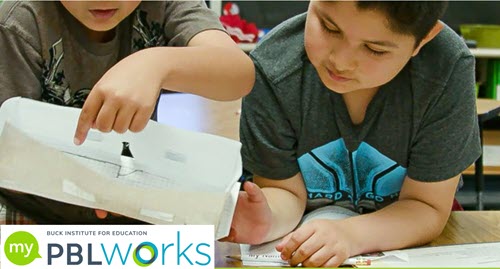
  • PBLWorks Announces its 2025 Award Winners

    PBLWorks Announces its 2025 Award Winners

    Novato, CA – The Buck Institute for Education (dba PBLWorks), a national provider of professional development and curriculum for high-quality Project Based Learning (PBL), has announced the recipients of its 2025 PBL Champions and John Larmer “JL” Lifelong Learning Awards.

    The recipients were honored during the organization’s 2025 PBL World conference in Napa Valley, California.

    The 2025 PBL Champions

    The PBL Champions program recognizes an individual, a school, and a school district that have demonstrated a commitment to PBL; have done quality, lasting work; and have shown evidence of impact on students. The 2025 recipients are:

    • District PBL Champion: Lynn Public Schools in Lynn, Massachusetts

    This 16,000-student district is transforming teaching and learning through its implementation of PBL. In a little over a year, the team at Lynn established high-functioning district and school leadership teams and trained a cadre of educators who have designed more than 70 projects for students. The district has implemented PBL at all seven of its secondary schools with a goal of having all students participate in two or more high-quality PBL experiences per year by the end of the 2029-30 school year.

    • School PBL Champion: University Prep Academy (UPA) High School in Detroit, Michigan

    University Prep Schools (UPrep) stands among Detroit’s earliest and longest-running charter school networks. Known for its unwavering commitment to student success, UPrep (UPA) has proudly upheld its signature “90/90 promise”—ensuring that at least 90% of students graduate from high school and 90% of those graduates go on to enroll in college. UPA teachers and leaders have leveraged PBL as a way that empowers students to be a part of the future of their city – from working on keeping their unhoused population warm in the winter through a physics project on heat transfer, to urban gardens that allowed students to provide farm-to-table food to local food pantries and shelters. PBL has opened their eyes to the challenges students face, encouraged them to see and explore those challenges through the lens of solutionists, and has brought UPA closer to the community it serves.

    • Individual PBL Champion: Kim Mishkin, Head of School at the Hudson Lab School (HLS) in Hastings, New York

    Kim Mishkin has been instrumental in embedding Project Based Learning as the foundation of the school’s curriculum. As both an educator and school leader, she has built structures, cultivated partnerships, and championed interdisciplinary, real-world learning experiences that empower students and educators alike. Through her leadership, HLS has become a model for how schools can integrate PBL at every level, ensuring that learning is not just about content, it is about empowering students to be problem-solvers, leaders, and changemakers.

    The John Larmer “JL” Lifelong Learning Award

    The John Larmer “JL” Lifelong Learning Award, named after PBLWorks’ Senior Fellow John “JL” Larmer, recognizes educators who are impacting and expanding the work of Project Based Learning. A significant advocate and thought leader in the field, JL has dedicated decades to advancing high-quality PBL and is the author of several foundational books that have shaped how educators design and facilitate high-quality PBL. This award celebrates those who carry forward that legacy with passion, purpose, and an unwavering commitment to deeper learning. The 2025 recipients are:

    • Rue Graham, Project Based Learning lead advisor and coach at the Pagosa Peak Open School, Archuleta County School District in Pagosa Springs, Colorado
    • Stephanie Tuttle, fourth grade teacher at Fairfield Elementary School, Rockbridge County Public Schools in Rockbridge, Virginia

    “Project Based Learning is an incredibly powerful way to engage students and ignite their passion for learning – and it all starts with having administrators and teachers who are committed to its success,” said PBLWorks CEO Bob Lenz. “Our awards programs recognize the incredible passion and hard work demonstrated by schools, districts, and individuals in implementing PBL. Congratulations to our 2025 award recipients!”

    About PBLWorks

    The Buck Institute for Education/ PBLWorks believes that all students, especially Black and Brown students, should have access to high-quality Project Based Learning to deepen their learning and achieve success in college, career, and life. Its focus is on building the capacity of teachers to design and facilitate high-quality Project Based Learning, and on supporting school and system leaders in creating the conditions for these teachers to succeed with all students.

    eSchool News Staff
    Latest posts by eSchool News Staff (see all)

    Source link

  • Doing right by the teachers who do right by the world

    Doing right by the teachers who do right by the world

    Key points:

    • Ethical PD is a call to action for all involved in teacher professional development
    • Key questions that unleash powerful PLCs
    • GenAI and cultural competency: New priorities in teacher preparation
    • For more news on teacher PD, visit eSN’s Educational Leadership hub

    Teachers are superheroes. Every day, they rise to the challenge, pouring their hearts into shaping the future. They stay late to grade papers, show up early to tutor struggling students, and spend their weekends planning lessons that inspire young minds. They do this because they believe in their mission–a mission to change lives, ignite passions, and build a better world.

    More News from eSchool News

    We are again in uncertain times. We again find ourselves dealing with sudden changes and uncertainty. We seem to be in a state of constant change and ambiguity.

    In today’s evolving educational landscape, effective student assessment goes beyond multiple-choice tests and letter grades. According to a recent study, over 60 percent of educators believe traditional assessments fail to fully measure student understanding.

    Holden, my 21-month-old, has fallen in love.  His early morning snack and “couch time” includes a dose of “Tiger!”  This is toddler for, “Mom, turn on Daniel Tiger’s Neighborhood.”

    The COVID-19 pandemic left an indelible mark on K-12 education, placing immense pressure on teachers as they adapted, literally overnight, to new methods of instruction.

    Spring brings not only showers and flowers, but it also brings the opportunity to interview for new education positions. Preparing for an interview involves several key steps that can significantly impact the outcome.

    STEM careers are on the rise. According to the U.S. Bureau of Labor Statistics, employment in STEM occupations is expected to grow by 10.4 percent from 2023 to 2033, compared to just 3.6 percent for non-STEM occupations.

    The U.S. Department of Education is giving state education agencies 10 days to certify that their schools do not engage in any practices that the administration believes illegally promote diversity, equity, and inclusion.

    COVID had already killed thousands of people in other countries and was spreading in the United States when a top federal health official said schools should prepare to offer “internet-based teleschooling” in case they had to close for a period of time.

    More than half of educators (62 percent) are already making use of AI at school, with more than one-quarter using it daily for work purposes, according to a Twinkl survey of more than 3,500 U.S. teachers.

    Many math tasks involve reading, writing, speaking, and listening. These language demands can be particularly challenging for students whose primary language is not English.

    Want to share a great resource? Let us know at [email protected].

    Source link

  • Beyond Evaluation: Using Peer Observation to Strengthen Teaching Practices – Faculty Focus

    Beyond Evaluation: Using Peer Observation to Strengthen Teaching Practices – Faculty Focus

    Source link

  • Beyond Evaluation: Using Peer Observation to Strengthen Teaching Practices – Faculty Focus

    Beyond Evaluation: Using Peer Observation to Strengthen Teaching Practices – Faculty Focus

    Source link

  • AI Support for Teachers

    AI Support for Teachers

    Collaborative Classroom, a leading nonprofit publisher of K–12 instructional materials, announces the publication of SIPPS, a systematic decoding program. Now in a new fifth edition, this research-based program accelerates mastery of vital foundational reading skills for both new and striving readers.

    Twenty-Five Years of Transforming Literacy Outcomes

    “As educators, we know the ability to read proficiently is one of the strongest predictors of academic and life success,” said Kelly Stuart, President and CEO of Collaborative Classroom. “Third-party studies have proven the power of SIPPS. This program has a 25-year track record of transforming literacy outcomes for students of all ages, whether they are kindergarteners learning to read or high schoolers struggling with persistent gaps in their foundational skills.

    “By accelerating students’ mastery of foundational skills and empowering teachers with the tools and learning to deliver effective, evidence-aligned instruction, SIPPS makes a lasting impact.”

    What Makes SIPPS Effective?

    Aligned with the science of reading, SIPPS provides explicit, systematic instruction in phonological awareness, spelling-sound correspondences, and high-frequency words. 

    Through differentiated small-group instruction tailored to students’ specific needs, SIPPS ensures every student receives the necessary targeted support—making the most of every instructional minute—to achieve grade-level reading success.

    SIPPS is uniquely effective because it accelerates foundational skills through its mastery-based and small-group targeted instructional design,” said Linda Diamond, author of the Teaching Reading Sourcebook. “Grounded in the research on explicit instruction, SIPPS provides ample practice, active engagement, and frequent response opportunities, all validated as essential for initial learning and retention of learning.”

    Personalized, AI-Powered Teacher Support

    Educators using SIPPS Fifth Edition have access to a brand-new feature: immediate, personalized responses to their implementation questions with CC AI Assistant, a generative AI-powered chatbot.

    Exclusively trained on Collaborative Classroom’s intellectual content and proprietary program data, CC AI Assistant provides accurate, reliable information for educators.

    Other Key Features of SIPPS, Fifth Edition

    • Tailored Placement and Progress Assessments: A quick, 3–8 minute placement assessment ensures each student starts exactly at their point of instructional need. Ongoing assessments help monitor progress, adjust pacing, and support grouping decisions.
    • Differentiated Small-Group Instruction: SIPPS maximizes instructional time by focusing on small groups of students with similar needs, ensuring targeted, effective teaching.
    • Supportive of Multilingual Learners: Best practices in multilingual learner (ML) instruction and English language development strategies are integrated into the design of SIPPS.
    • Engaging and Effective for Older Readers: SIPPS Plus and SIPPS Challenge Level are specifically designed for students in grades 4–12, offering age-appropriate texts and instruction to close lingering foundational skill gaps.
    • Multimodal Supports: Integrated visual, auditory, and kinesthetic-tactile strategies help all learners, including multilingual students.
    • Flexible, Adaptable, and Easy to Teach: Highly supportive for teachers, tutors, and other adults working in classrooms and expanded learning settings, SIPPS is easy to implement well. A wraparound system of professional learning support ensures success for every implementer.

    Accelerating Reading Success for Students of All Ages

    In small-group settings, students actively engage in routines that reinforce phonics and decoding strategies, practice with aligned texts, and receive immediate feedback—all of which contribute to measurable gains.

    “With SIPPS, students get the tools needed to read, write, and understand text that’s tailored to their specific abilities,” said Desiree Torres, ENL teacher and 6th Grade Team Lead at Dr. Richard Izquierdo Health and Science Charter School in New York. “The boost to their self-esteem when we conference about their exam results is priceless. Each and every student improves with the SIPPS program.” 

    Kevin Hogan
    Latest posts by Kevin Hogan (see all)

    Source link