Collaborative Classroom, a leading nonprofit publisher of K–12 instructional materials, announces the publication of SIPPS, a systematic decoding program. Now in a new fifth edition, this research-based program accelerates mastery of vital foundational reading skills for both new and striving readers.
Twenty-Five Years of Transforming Literacy Outcomes
“As educators, we know the ability to read proficiently is one of the strongest predictors of academic and life success,” said Kelly Stuart, President and CEO of Collaborative Classroom. “Third-party studies have proven the power of SIPPS. This program has a 25-year track record of transforming literacy outcomes for students of all ages, whether they are kindergarteners learning to read or high schoolers struggling with persistent gaps in their foundational skills.
“By accelerating students’ mastery of foundational skills and empowering teachers with the tools and learning to deliver effective, evidence-aligned instruction, SIPPS makes a lasting impact.”
What Makes SIPPS Effective?
Aligned with the science of reading, SIPPS provides explicit, systematic instruction in phonological awareness, spelling-sound correspondences, and high-frequency words.
Through differentiated small-group instruction tailored to students’ specific needs, SIPPS ensures every student receives the necessary targeted support—making the most of every instructional minute—to achieve grade-level reading success.
“SIPPS is uniquely effective because it accelerates foundational skills through its mastery-based and small-group targeted instructional design,” said Linda Diamond, author of the Teaching Reading Sourcebook. “Grounded in the research on explicit instruction, SIPPS provides ample practice, active engagement, and frequent response opportunities, all validated as essential for initial learning and retention of learning.”
Personalized, AI-Powered Teacher Support
Educators using SIPPS Fifth Edition have access to a brand-new feature: immediate, personalized responses to their implementation questions with CC AI Assistant, a generative AI-powered chatbot.
Exclusively trained on Collaborative Classroom’s intellectual content and proprietary program data, CC AI Assistant provides accurate, reliable information for educators.
Other Key Features of SIPPS, Fifth Edition
- Tailored Placement and Progress Assessments: A quick, 3–8 minute placement assessment ensures each student starts exactly at their point of instructional need. Ongoing assessments help monitor progress, adjust pacing, and support grouping decisions.
- Differentiated Small-Group Instruction: SIPPS maximizes instructional time by focusing on small groups of students with similar needs, ensuring targeted, effective teaching.
- Supportive of Multilingual Learners: Best practices in multilingual learner (ML) instruction and English language development strategies are integrated into the design of SIPPS.
- Engaging and Effective for Older Readers: SIPPS Plus and SIPPS Challenge Level are specifically designed for students in grades 4–12, offering age-appropriate texts and instruction to close lingering foundational skill gaps.
- Multimodal Supports: Integrated visual, auditory, and kinesthetic-tactile strategies help all learners, including multilingual students.
- Flexible, Adaptable, and Easy to Teach: Highly supportive for teachers, tutors, and other adults working in classrooms and expanded learning settings, SIPPS is easy to implement well. A wraparound system of professional learning support ensures success for every implementer.
Accelerating Reading Success for Students of All Ages
In small-group settings, students actively engage in routines that reinforce phonics and decoding strategies, practice with aligned texts, and receive immediate feedback—all of which contribute to measurable gains.
“With SIPPS, students get the tools needed to read, write, and understand text that’s tailored to their specific abilities,” said Desiree Torres, ENL teacher and 6th Grade Team Lead at Dr. Richard Izquierdo Health and Science Charter School in New York. “The boost to their self-esteem when we conference about their exam results is priceless. Each and every student improves with the SIPPS program.”

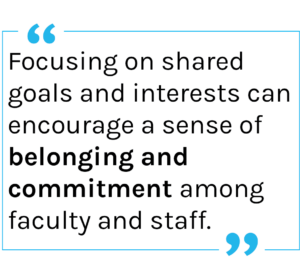 Therefore, focusing on shared goals and interests can encourage a sense of belonging and commitment among faculty and staff, which is essential for