Tag: Professor

  • Ohio Northern sues professor for having the audacity to defend his rights in court

    Ohio Northern sues professor for having the audacity to defend his rights in court

    Following Professor Scott Gerber’s vocal opposition to his school’s diversity, equity, and inclusion policies, Ohio Northern University ordered campus police to yank him out of class and march him to the dean, who demanded Gerber’s immediate resignation. A judge decried the school’s apparent “callous disregard for due process,” but because Gerber had the courage to fight back in court, ONU took things even further — filing a federal lawsuit to shut him up.

    But Gerber is not having it. A longtime critic of ONU’s initiatives around DEI, Gerber’s objections made him a target of administrators, who launched an investigation into him in January 2023. From then until his sudden termination, ONU outright refused to disclose the specific accusations against him. When the school finally told Gerber he lacked “collegiality,” FIRE explained to ONU that this charge looked a lot like retaliation for his views on DEI, which would be a stark violation of the university’s commitment to academic freedom. We called on ONU in March, and again in May, to provide Gerber with the specifics of its collegiality concerns, to no avail. 

    Out of work and still wondering what he did wrong, Gerber took ONU to court. His complaint centered on the university’s failure to provide him with the specific grounds for dismissal. This fundamental principle of due process protects the right of the accused to defend themselves. After all, if you don’t know what you’re accused of doing, it’s impossible to prove your innocence. Universities provide due process to ensure accurate disciplinary determinations, especially when a tenured professor’s livelihood hangs in the balance. That’s why an Ohio state court allowed Gerber’s breach of contract claim to proceed, criticizing ONU’s “troubling . . . lack of any detailed determination” of how its allegations “affected his fitness as a faculty member.” 

    That case is now headed to trial. 

    Professor suspended for reasons unknown — even to him 

    News

    Why did Ohio Northern University suspend professor Scott Gerber? We have no idea, and neither does he.


    Read More

    But for defending his rights in state court, ONU sued Gerber in federal court on Jan. 20, claiming Gerber’s “perverted” lawsuit is apparently an “attempt to accomplish . . . personal vendettas” and “unleashing political retribution” against ONU — notwithstanding the state court holding Gerber’s claims warranted proceeding to a jury. ONU’s suit claims Gerber’s “true goal is to manufacture outrage, to influence political retribution, and to extract vengeance against” ONU. According to the lawsuit, Gerber’s attempt to hold the university to its own policies is an unlawful “abuse of process.” 

    Disturbingly, the crux of ONU’s complaint rests on Gerber’s protected speech. The university faults Gerber for expressing accurate information about his ordeal in the Wall Street Journal and through a press release published by his attorneys at America First Legal, maligned by ONU as a “manufactured narrative” designed to “manufacture outrage.” Yet Gerber and America First Legal cite the university’s own words and policies to make his case, which a state court has allowed to proceed by rejecting ONU’s efforts to dismiss his claims.

    The irony of ONU refusing to provide Gerber with the bare minimum of process before summarily terminating him, then launching a whole federal lawsuit instead to get him to stop fighting, is palpable.

    ONU’s suit is a classic example of abusing the legal system to silence your critics. Such a strategic lawsuit against public participation, or SLAPP, is a tactic that seeks solely to impose punishing litigation costs on their targets. The lawsuit is the punishment. Gerber must now bear the burden of defending this meritless suit while he prepares for trial in state court.

    Why ‘SLAPP’ lawsuits chill free speech and threaten the First Amendment

    Issue Pages

    You can’t use the legal system to punish people for speech you don’t like.


    Read More

    On a larger note, if nonprofits like FIRE cannot convey truthful information about the cases we litigate without incurring a separate lawsuit, that will imperil a wide array of civil rights advocacy. Defending against an onerous SLAPP puts further strain on the already limited resources dedicated to protecting civil liberties.

    Terminated professors must turn to courts to vindicate their rights as the option of last resort, and the First Amendment protects their right to do so. When universities seek in turn to use courts to bully professors into submission, judges must firmly reject these thinly veiled attempts to achieve censorship by lawsuit. 

    We’ll keep our readers updated. 


    FIRE defends the rights of students and faculty members — no matter their views — at public and private universities and colleges in the United States. If you are a student or a faculty member facing investigation or punishment for your speech, submit your case to FIRE today. If you’re a faculty member at a public college or university, call the Faculty Legal Defense Fund 24-hour hotline at 254-500-FLDF (3533). If you’re a college journalist facing censorship or a media law question, call the Student Press Freedom Initiative 24-hour hotline at 717-734-SPFI (7734).

    Source link

  • WEEKEND READING: Change is our ally by Professor Sir Chris Husbands

    WEEKEND READING: Change is our ally by Professor Sir Chris Husbands

    This blog has been kindly written for HEPI by Professor Sir Chris Husbands, who was Vice-Chancellor of Sheffield Hallam University between 2016 and 2023, and is now a Director of  Higher Futures, working with university leaders to lead sustainable solutions to institutional challenges.

    The scale of the funding challenge in higher education is widely known, though almost every week brings news of fresh challenges and responses. Real term funding for undergraduate teaching in 2025 is close to 1997 levels – levels which led the Blair government to introduce £1,000 top-up fees. Some commentators have argued that the scale of the challenge now is as great as the 1981 cuts in government funding for universities, which reduced spending on universities by 15%, and saw Salford University lose 44% of its income.

    As contemporary funding challenges have intensified, growth options have become more difficult:

    • international student numbers have either stalled or declined;
    • undergraduate growth, although evident, has not tracked demographic trends;
    • the Office for Students has identified persistent optimism bias in the sector’s funding projections; and
    • competitive pressures are multiplying.

    In many countries, flexible for-profit providers are growing fast, especially in professional and post-graduate education. Many of these are backed by funds with deep investment pockets; some UK for-profit providers are growing very quickly and the expansion of private provision in Germany, France and Canada has been remarkable. In summary, the funding challenge is not only real but increasingly profound.

    Institutional responses to these challenges have been extensive. Almost all universities are now undertaking significant change programmes. There have been major strides in revising operating models, especially for professional and support services, and the impact has been significant. On the other hand, although portfolio reviews are widespread, there have been fewer developments in reshaping business models for teaching and research, though some do exist. Core delivery arrangements largely remain based on a two-semester or three-term model. Staff-student ratios which, as the King’s College Vice-Chancellor Shitij Kapur has repeatedly emphasised are low by international standards, have not been significantly shifted. Undergraduate study remains relatively inflexible. Module sharing and simplified credit transfer arrangements remain small scale. Estate use has not been significantly intensified. All this suggests that individual institutions are finding it difficult to look at the challenge strategically with an eye to the longer term shape, size, structure and nature of the university. There is a lot happening in individual change plans, but probably not enough. Without a secure and sustainable core academic model, institutions will be forced into repeated restructurings, which will not be comfortable for them or for the sector more generally.  

    This is the background to the important Jisc-KPMG report Collaboration for a sustainable future, which was the subject of a this week’s HEPI / Jisc webinar. For all the evidence of individual institutional change, the report argues that a collaborative approach is needed to secure sustainability and reshape the sector. Institutions need to find ways to work together, in back-office functions, in professional services and perhaps in academic delivery. The report acknowledges that there are technical difficulties to overcome, including the requirement to pay VAT on shared services and the need to navigate competition law, though these need to be genuinely tested in practice, but it also argues that the deeper barriers to effective collaboration are cultural. 

    The ingrained habit of individual autonomy, even and perhaps especially in non-competitive services (as Nick Hillman reinforced, no one chooses their undergraduate degree based on the university’s finance system) is a major barrier to significant change.  Moreover, the report acknowledges that collaboration and shared service arrangements are unlikely to deliver cost savings in the short-term – and just now a good deal of thinking in the sector seems to be shaped by Keynes’ dictum that ‘in the long-run we are all dead’. Institutions are caught between the economic realities of the funding challenge and the cultural challenges of collaboration.

    In Four Futures, my HEPI paper published in June last year, I argued that the financial and funding circumstances which produced the sector we have no longer exist. Government is unwilling or unable to pay for the sector most university leaders would like. I argued that there were some policy choices for higher education, and that the sector will almost certainly be different in the future. There are public policy questions here, but there are also questions and challenges for institutions. That means strategic choices for leaders, with universities being much clearer about the things they can do well, and do well sustainably, and building different relationships with other institutions. Leadership matters. As the Jisc / KPMG report observes:

    Given the current trajectory, there is a window of opportunity for institutions to act now and help drive this forward before they are compelled into action by necessity.

    Competition over the past decade has undoubtedly delivered benefits, and we should not understate those, especially in estate investment, student experience, teaching quality and research performance. But competition has also delivered homogeneity, duplication and overlap, and that needs to change.   And for that, as the Jisc / KPMG report identifies, the leadership culture needs to change. Hyper-competitiveness has driven institutionally focused leadership behaviours and associated performance indicators, targets and rewards. But there have been different leadership assumptions in higher education in the past, and other sectors have grappled with the challenge of changing leadership culture. The most successful school improvement initiative of the past generation was London Challenge, in which the performance of schools across the capital was significantly raised. One of the most important shifts was a cultural one, persuading headteachers to think not about ‘my school’ but about ‘[all] our children’: success across the system was a leadership challenge for all.

    The Jisc / KPMG Report is strong on the potential for collaboration to shape the future of the system, though it also makes painful reading on the challenges which have bedevilled this in the past. In the current context, government is unlikely to provide additional funding. The private sector could no doubt provide standardised sector-wide services, but the risks of a single supplier for key services are enormous. If government is not the solution, if the private sector is not the solution, if the status quo is not sustainable, the answer must be imaginative and engaged leadership which is not simply about ‘my institution’ but also about ‘our future’.

    This week’s HEPI / Jisc webinar on ‘Competition or collaboration? Opportunities for the future of the higher education sector’ can be watched back here.


    Source link

  • Judge reinstates professor LSU suspended after Trump remarks

    Judge reinstates professor LSU suspended after Trump remarks

    A judge has ordered Louisiana State University to return to the classroom a tenured law professor who says the institution suspended him from teaching after he made comments about Donald Trump and Louisiana governor Jeff Landry in a lecture.

    Donald R. Johnson, a state district court judge, signed a one-page order Thursday putting Ken Levy back in the classroom. The return might be short-lived; Johnson set a hearing for Feb. 10, during or after which he could decide that Levy should again be barred from teaching. The Louisiana Illuminator reported the ruling earlier.

    On Jan. 14, Levy was explaining his course rules to students—including a ban on recording the class. A recording was made nevertheless.

    Levy referenced Landry’s public calls in November for LSU to punish Nicholas Bryner, one of Levy’s fellow law professors, for Bryner’s alleged in-class comments about students who support Trump. Levy said he himself “would love to become a national celebrity [student laughter drowns out a moment of the recording] based on what I said in this class, like, ‘Fuck the governor!’”

    Levy also referenced Trump. “You probably heard I’m a big lefty, I’m a big Democrat, I was devastated by— I couldn’t believe that fucker won, and those of you who like him, I don’t give a shit, you’re already getting ready to say in your evaluations, ‘I don’t need his political commentary,’” Levy said. “No, you need my political commentary, you above all others.”

    Levy’s attorney, Jill Craft, said the university suspended Levy from teaching pending an investigation, though it hasn’t specified which comments allegedly generated student complaints.

    “When people try and censor academic freedom and free speech because they may not like the opinion or the thought, then we no longer have those freedoms,” Craft said.

    LSU spokespeople didn’t return requests for comment Thursday.

    Source link

  • HEDx Podcast: Professor Genevieve Bell on AI – Episode 151

    HEDx Podcast: Professor Genevieve Bell on AI – Episode 151

    Professor Genevieve Bell is vice-chancellor and president of the Australian National University.

    In this episode, she reflects on her journey as a scientist, engineer and humanist in the United States and Australia. The professor shares lessons learned in Silicon Valley and leading Australia’s national university.

    Professor Bell also identifies short term challenges and the long term trajectory of higher education, specifically in relation to technology and AI.

    Do you have an idea for a story?
    Email [email protected]

    Source link

  • Law professor challenges university after campus ‘shooting’ hypothetical changed in lesson plan

    Law professor challenges university after campus ‘shooting’ hypothetical changed in lesson plan

    Those concerned that law schools are shying away from teaching some areas of law to avoid controversy just got more reasons to worry, this time courtesy of the University of Hawai’i at Manoa and its absurd treatment of law professor Kenneth Lawson.

    Lawson, an accomplished faculty member at UH, used a simple hypothetical to teach the idea of “transferred intent,” a legal concept invoked when a defendant intends to harm one person, but ends up harming a second person instead. As is common in law school, Lawson offered a hypothetical to convey this idea: Imagine if a dean at his institution tried to shoot another dean, missed, and hit Lawson instead.

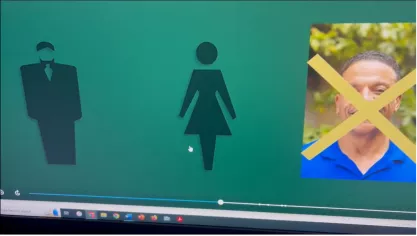
    Here’s a screenshot from part of his lesson:

    Those who have been to law school will understand that using campus figures to illustrate hypotheticals is not at all unusual, and is intended to add a bit of levity and grounding to what can be pretty esoteric topics.

    But when an anonymous student filed a complaint, calling the hypothetical “extremely disturbing” and citing the context of some shootings near the university’s campus, administrators summoned Lawson to a meeting near the end of last semester. Though they acknowledged he had not violated any university policy, they nevertheless mandated that he remove the thought experiment from a posted video of the class — or they would change it for him

    The ability of administrators to forcibly alter course materials is positively ripe for abuse.

    Lawson hadn’t thought twice about including the example, and had been using the example for years, not simply because it wasn’t unusual but because the protections of academic freedom give faculty wide latitude in determining how to approach controversial or potentially difficult material. When Lawson refused to alter the video of his presentation, given that he had not violated any policy, and using the hypothetical was well within his academic freedom rights, administrators just went on the school’s online curriculum system, where faculty submit presentations, to make the changes themselves.

    Remember: these changes were being made because, supposedly, some found a hypothetical of campus figures being shot to be disturbing. So this is what the administration came up with.

    Slide with an image of law professor Ken Lawson alongside generic man/woman icons

    You will note that there is still a campus figure on that slide, and it’s the person who was (hypothetically) shot: Professor Lawson. Only the deans have been removed. It seems that at UH, some hypothetical victims are more equal than others.

    There’s no denying that this is silly, and many will be tempted to chalk it up as just more campus craziness. But there’s a disturbing wrinkle here, which is that the ability of administrators to forcibly alter course materials is positively ripe for abuse. The university’s administrators have granted themselves unilateral authority to interfere with faculty teaching decisions, despite the fact that UH is a public institution bound by the First Amendment, which views academic freedom, which protects that right, as a “special concern.” If administrators can “memory hole” bits and pieces of curricula they don’t like, even when it violates no rule, where does it stop?

    UH still has an opportunity to do the right thing. It’s easy, too — all it has to do is step back and let faculty teach, and save the video editing for film class.

    FIRE wrote the university on Dec. 13, urging it to reverse course and restore Lawson’s original hypothetical. The university responded in early January, declining to substantively engage with our concerns or detail specific issues with our argument. Lawson, and all UH students, deserve better. As our second letter states: 

    FIRE’s concerns are only amplified by the fact that this alleged capitulation to sensitivity is occurring in a law school. To receive a proper education in the law, students will inevitably encounter difficult topics like sexual assault, homicide, physical assault, domestic violence, and may be faced in school and in their careers with descriptions of personal injuries far more graphic than those in Lawson’s hypothetical. Where do UH administrators draw the line regarding their interference in faculty instruction if they feel free to operate under a nebulous standard of protecting students from “disturbing and harmful” material? 

    Lawson has submitted a grievance about the situation, so UH still has an opportunity to do the right thing. It’s easy, too — all it has to do is step back and let faculty teach, and save the video editing for film class.

    Source link

  • No speech for you: College fires professor for calling America ‘racist fascist country’ in email to students

    No speech for you: College fires professor for calling America ‘racist fascist country’ in email to students

    When tenured Millsaps College professor James Bowley sent an email sharing his opinion on the outcome of the 2024 presidential election, he didn’t anticipate it would result in his termination. But in a perfect storm of overreach and red tape, that’s exactly what happened. 

    On Nov. 6, 2024 — the day after the election — Bowley emailed the students in his “Abortion and Religions” class, canceling that day’s session to “mourn and process this racist fascist country.” With only three students in the class, Bowley got to know them quite well, including their political feelings, and knew canceling class would be best for those students. As Bowley told FIRE, “I just want to be caring and kind to my students, whom I knew would be troubled by the election.” Bowley wasn’t just trying to get out of work; he did not cancel the much larger first-year writing class session he taught that same day because he had no reason to know how those students felt about the election. 

    Two days later, Millsaps Provost Stephanie Rolph informed Bowley that he had been placed on temporary administrative leave pending review, for the bizarre offense of using his “Millsaps email account to share personal opinions with [his] students.” 

    That’s right: Millsaps didn’t take issue with Bowley canceling class (likely because they’d have to punish lots of people; professors cancel class for all sorts of reasons). The only cited reason was the use of his email to share personal opinions with students, which unsurprisingly is not an actual policy violation. That’s right: The college simply fabricated a policy violation so it could punish a professor for his speech. Frank Neville, president of the private college, has ignored hundreds of calls to reinstate Bowley, who was unable to do his job for over three months until yesterday, when he was eventually fired.

    Welcome to Millsaps, a labyrinth of academic bureaucracy where personal opinions may not be shared.

    Millsaps College president Frank Neville denied a committee recommendation and doubled down on Bowley’s leave being both justified and necessary, without explanation. (Barbara Gauntt / Clarion Ledger / USA TODAY NETWORK)

    Professor punished without due process

    Everything about Bowley’s treatment goes directly against Millsaps’ own fundamental principles of “freedom of speech and expression.” While Millsaps is a private institution not bound by the First Amendment, its commitment to free speech leads any reasonable student or faculty member to believe they are being promised expressive rights that align with the First Amendment. 

    Courts have recognized protection for a great deal of faculty speech on matters of public concern (say, a presidential election) because higher education depends on the wide exposure to robust exchanges of thoughts and ideas. But Millsaps’ actions here signal that it doesn’t take its own principles seriously and is making up its own standards for free speech and expression. That’s not okay with us — and it’s unfair to the students and faculty of Millsaps.

    Not only did FIRE request that Millsaps drop the investigation and reinstate Bowley, but so did more than 100 students, reportedly, (pretty impressive for a college of only about 600) and over 500 alumni. And when Bowley contested the provost’s decision to place him on leave, a grievance committee made up of faculty members determined that Millsaps couldn’t identify a single policy that Bowley had violated. The committee recommended that Bowley be reinstated immediately.

    FIRE remains by Bowley’s side, fighting for his return to teaching — and his right to share his opinions with students.

    The grievance committee, like FIRE, also found that Bowley was not afforded proper due process. Bowley was placed on leave before receiving a hearing and final determination. By doing so, the provost created an intermediary step in the process of dismissing a professor that exists nowhere in the handbooks — all without Bowley having any prior violations or disciplinary actions taken against him.

    But Neville seemed unfazed by the calls from the Millsaps community and unconvinced by the facts presented to him. On Jan. 10, Neville denied the grievance committee’s recommendation and doubled down on Bowley’s leave being both justified and necessary, without explanation.

    Calls to reinstate Bowley continued, this time reaching tens of thousands of people. But that still wasn’t enough. On Jan. 14, Bowley was told in a meeting that he was fired for not exercising restraint and not clarifying that his views were not that of the college’s. To be clear: The college fired Bowley for an offense – not clarifying that his views were not that of the college’s – of which he wasn’t accused. It’s no surprise that Bowley could not extricate himself from what Millsaps made into an impossible situation. 

    Ferris State cannot punish professor for comedic — and now viral — video jokingly referring to students as ‘cocksuckers’ and ‘vectors of disease’

    News

    It’s a joke, people. But violating faculty rights is not.


    Read More

    Even if the college had originally charged Bowley with not clarifying that his views were not that of the college’s, his email to his class still wouldn’t qualify. Whatever interest Millsaps may have in preventing faculty from purporting to speak on its behalf does not justify automatic punishment for simply not asserting that one isn’t speaking for the college. In fact, the Supreme Court has held that a teacher could not be punished for a letter to the editor he wrote in which he identified himself as a teacher at a certain school. Just because Bowley is identified as working at Millsaps (via his faculty email), doesn’t mean his speech is transformed into speech on behalf of the college. 

    Millsaps cannot overcome this principle just because it wants faculty to indicate whether views expressed “are individual or those of the institution.” Nothing in Bowley’s email can reasonably be interpreted as speaking on behalf of Millsaps, as it is commonly understood that when using their college email, faculty members are speaking for themselves rather than conveying that they speak for their employer. And here, Bowley was very clearly sharing an opinion – a criticism of an election outcome – that any reasonable person would understand as being his own opinion. 

    Bowley told FIRE yesterday: “I love Millsaps College and even more I love my students, but censorship by an administration by definition means that it is not education anymore; it is not a legitimate college.”

    FIRE remains by Bowley’s side, fighting for his return to teaching — and his right to share his opinions with students.

    Source link

  • Pro-Palestine Columbia professor departs after investigation

    Pro-Palestine Columbia professor departs after investigation

    A longtime tenured Columbia University law professor who faced public criticism from Columbia’s president and congressional Republicans will no longer teach at the institution, after more than 25 years as a faculty member there.

    Katherine Franke said Friday in a letter that she’s effectively been terminated, following a university investigation into a media interview she gave in which she criticized students who formerly served in the Israel Defense Forces for allegedly harming other students at Columbia. The investigation found that her media comments, and her alleged retaliation against a complainant in subsequent comments, had violated Columbia’s Division of Equal Opportunity and Affirmative Action Policies and Procedures. 

    She’s among multiple U.S. faculty members who’ve been investigated or punished in connection to speech that can broadly be considered pro-Palestinian.

    In a statement, Franke said she reached an agreement with Columbia “that relieves me of my obligations to teach or participate in faculty governance after serving on the Columbia law faculty for 25 years.” She added, “While the university may call this change in my status ‘retirement,’ it should be more accurately understood as a termination dressed up in more palatable terms.”

    She did not share a copy of the departure agreement, nor did the university. Columbia didn’t directly respond to her characterization of her departure.

    In a broadcast last January on Democracy Now!, a left-leaning radio and television newscast, Franke talked about an incident on campus in which pro-Palestinian protesters said they had been sprayed with a harmful chemical. Students were hospitalized, and protest organizers accused other students who had served in the Israeli military. The university said in August that the substance sprayed was “a non-toxic, legal, novelty item.”

    Franke told the host that Columbia has a program that connects it with “older students from other countries, including Israel. And it’s something that many of us were concerned about, because so many of those Israeli students, who then come to the Columbia campus, are coming right out of their military service. And they’ve been known to harass Palestinian and other students on our campus. And it’s something the university has not taken seriously in the past.”

    Most Jewish citizens of Israel must serve in the military for at least 32 months for men and 24 for women.

    “We know who they were,” Franke said on the program of the alleged attackers at Columbia. (Franke wrote in her statement Friday that, “I have long had a concern that the transition from the mindset required of a soldier to that of a student could be a difficult one for some people, and that the university needed to do more to protect the safety of all members of our community.”)

    Franke’s Democracy Now! comments became the subject of a university investigation as well as a broader congressional hearing related to campus antisemitism. Representative Elise Stefanik, a New York Republican, asked then–Columbia president Minouche Shafik what disciplinary action had been taken against Franke. She characterized Franke as saying, “Israeli students who have served in the IDF [Israel Defense Forces] are dangerous and shouldn’t be on campus.”

    Shafik didn’t answer Stefanik straightforwardly, but replied, “I agree with you that those comments are completely unacceptable and discriminatory.” Later during the televised hearing, Shafik confirmed that Franke was under investigation.

    That investigation found that in addition to the interview comments, Franke violated campus policy by retaliating against the complainants.

    A November 2024 Columbia EOAA Investigation Determination letter to one of the complainants, which was provided to Inside Higher Ed, says, “You also alleged retaliation on three separate occasions during the course of this investigation when complainant: (i) provided your name to a reporter who publicized your identity as an individual who initiated the complaint; (ii) reposted a tweet referring to you as a ‘genocide advocate’ and ‘McCarthyite bigot’; and (iii) posted a link to a document on social media indicating that you had made additional complaints against respondent.” (Franke had named the complainants—two of her faculty colleagues—to Inside Higher Ed for a July story.)

    The letter says the university concluded that the interview and the first two retaliation allegations violated the policy.

    In her statement Friday, Franke said she did appeal. But “upon reflection, it became clear to me that Columbia had become such a hostile environment that I could no longer serve as an active member of the faculty.”

    Over the last year, people have posed as students to secretly videotape her, and clips have ended up on “right-wing social media sites,” she said. Students have enrolled in her classes to provoke discussions they can record and complain about, she said, adding that law school colleagues have also secretly taped her and yelled “at me in front of students that I am a Hamas supporter.”

    “After President Shafik defamed me in Congress, I received several death threats at my home,” Franke said. “I regularly receive emails that express the hope that I am raped, murdered and otherwise assaulted on account of my support of Palestinian rights.”

    Columbia Law dean Daniel Abebe told colleagues Thursday that Franke “is accelerating her planned retirement and now will retire from Columbia on Friday.” Abebe praised her work.

    But Franke contests the word “retirement.” In an email to Inside Higher Ed on Friday, Franke explained that she signed an agreement with Columbia a year ago “to retire in a few years—phased in.” But she said the university “reneged on” providing routine retirement benefits, such as recommending her for emeritus status with the university’s Board of Trustees, providing her an office for five years and still allowing her to teach some classes.

    “Columbia University’s leadership has demonstrated a willingness to collaborate with the very enemies of our academic mission,” Franke wrote in her statement. “In a time when assaults on higher education are the most acute since the McCarthyite assaults of the 1950s, the university’s leadership and trustees have abandoned any duty to protect the university’s most precious resources: its faculty, students and academic mission.”

    The university didn’t provide an interview Friday. In an emailed statement, a Columbia spokesperson wrote, “Columbia is committed to being a community that is welcoming to all and our policies prohibit discrimination and harassment.”

    “As made public by parties in this matter, a complaint was filed alleging discriminatory harassment in violation of our policies,” the statement continued. “An investigation was conducted, and a finding was issued. As we have consistently stated, the university is committed to addressing all forms of discrimination consistent with our policies.”

    Source link

  • Univ. of Arizona Global Campus faculty respond to professor

    Univ. of Arizona Global Campus faculty respond to professor

    In a recent article, “Dear Prospective UAGC Students: Stay Away,” a professor from the University of Arizona discourages students from attending the University of Arizona Global Campus (UAGC). Unfortunately, this article was based on the author’s perspective rather than on facts and thus lacked the academic rigor of factual data from credible sources. This opinion piece was a collection of baseless assumptions, completely overlooking the true mission of UAGC, its faculty, and the diverse students we proudly serve. Frankly, the article has no merit.

    There is power in knowledge and truth. As such, the article could have accurately depicted the realities of UAGC instead of relying on inaccurate critiques about educational quality, enrollment numbers, adjunct faculty, and alleged student dissatisfaction. To set the record straight, UAGC is committed to providing online higher education for non-traditional students, including working adults, military personnel, parents, and underserved communities. Our students juggle countless responsibilities, and UAGC offers the flexibility and support they need. UAGC is vital in making higher education accessible to those who need it most, breaking barriers that traditional institutions often ignore.

    Furthermore, UAGC is unwavering in its commitment to supporting students, staff, and faculty, ensuring consistent educational quality and professional growth. As we continue to evolve, we focus on transparent evolution and collaboration, learning from past oversights to create an environment where our students can improve employment opportunities. Our pursuit of high-quality education is not a destination but an ongoing journey to which UAGC is deeply committed. Like any reputable university, we conduct regular course and program reviews, embrace continuous improvement, and acknowledge areas for development as a perpetual process. This commitment to educational quality is a cornerstone of our institution, ensuring our students receive the best education possible and can be confident in our dedication to their success. 

    The UAGC faculty, the backbone of our institution, is growing increasingly weary of misleading and disparaging remarks against the university and the faculty. It is time to move forward constructively and collegially. In the name of higher education, we implore you to stop defaming our university, staff, faculty, and students. To that end, we welcome meeting and educating any skeptical faculty or staff on our university’s mission and approach to serving non-traditional adult learners. Above all, we’re eager to clear any misconceptions by providing accurate data, helping to ensure that your words align more closely with the truth moving forward.

    As we look to the future (Dr. Cabrera), the late President Franklin D. Roosevelt, who signed the unprecedented G.I. Bill into legislation, stated, “A smooth sea never made a skilled sailor” (Roosevelt, n.d.).”


    Yvonne M Lozano, Ph.D. UAGC Faculty Council Co-Chair
    Teresa Handy, Ph.D. UAGC Faculty Council Representative
    Deanna Lauer, UAGC Associate Faculty Council Representative
    Carl Marquez, UAGC Faculty Council Representative
    Cara Metz, Ph.D. UAGC Faculty Council Co-Chair
    Darla Branda, Ph.D. UAGC Program Chair

    Source link

  • Professor Farid Alatas on ‘The captive mind and anti-colonial thought’

    Professor Farid Alatas on ‘The captive mind and anti-colonial thought’

    by Ibrar Bhatt

    On Monday 2 December 2024, during the online segment of the 2024 SRHE annual conference, Professor Farid Alatas delivered a thought-provoking keynote address in which he emphasised an urgent need for the decolonisation of knowledge within higher education. His lecture was titled ‘The captive mind and anti-colonial thought’ and drew from the themes of his numerous works including Sociological Theory Beyond the Canon (Alatas, 2017).

    Alatas called for a broader, more inclusive framework for teaching sociological theory and the importance of doing so for contemporary higher education. For Alatas, this framework should move beyond a Eurocentric and androcentric focus of traditional curricula, and integrate framings and concepts from non-Western thinkers (including women) to establish a genuinely international perspective.

    In particular, he discussed his detailed engagement with the neglected social theories of Ibn Khaldun, his efforts to develop a ‘neo-Khaldunian theory of sociology’. He also highlighted another exemplar of non-Western thought, the Filipino theorist José Rizal (see Alatas, 2009, 2017). Alatas discussed how such modes sort of non-Western social theory should be incorporated into social science textbooks and teaching curricula.

    Professor Alatas further argued that continuing to rely on theories and concepts from a limited group of countries—primarily Western European and North American—imposes intellectual constraints that are both limiting and potentially harmful for higher education. Using historical examples, such as the divergent interpretations of the Crusades (viewed as religious wars from a European perspective but as colonial invasions from a Middle Eastern perspective), he illustrated how perspectives confined to the European experience often fail to account for the nuanced framing of such events in other regions. Such epistemic blind spots stress the need for higher education to embrace diverse ways of knowing that have long existed across global traditions.

    Beyond critiquing Eurocentrism, Professor Alatas acknowledged the systemic challenges within institutions in the Global South, which also inhibit knowledge production. He urged for inward critical reflection within these contexts, addressing issues like resource constraints, institutional biases, racism, ethnocentrism, and the undervaluing of indigenous epistemologies through the internalisation of a ‘captive mindset’. Only by addressing these intertwined challenges, he concluded, can universities foster a more equitable and inclusive intellectual environment, and one that is more practically relevant and applicable to higher education in former colonised settings.

    This keynote was a call to action for educators, researchers, and institutions to rethink and restructure the ways in which sociological and other academic canons are constructed and taught. But first, there is an important reflection that must be undertaken, and an acknowledgement, grounded in epistemic humility, that there is more to social theory than Eurocentrism.

    There was not enough time to deeply engage with some of the concepts in his keynote; therefore, I hope to invite Professor Farid Alatas for an in-person conversation on these topics during his visit to the UK in 2025. Please look out for this event advertisement.

    The recording of this keynote address is now available from https://youtu.be/4Cf6C9wP6Ac?list=PLZN6b5AbqH3BnyGcdvF5wLCmbQn37cFgr

    Ibrar Bhatt is Senior Lecturer at the School of Social Sciences, Education & Social Work at Queen’s University Belfast (Northern Ireland). His research interests encompass applied linguistics, higher education, and digital humanities. He is also an Executive Editor for the journal ‘Teaching in Higher Education: Critical Perspective’s, and on the Editorial Board for the journal ‘Postdigital Science & Education’.

    His recent books include ‘Critical Perspectives on Teaching in the Multilingual University’ (Routledge), ‘A Semiotics of Muslimness in China’ (with Cambridge University Press), and he is currently writing his next book ‘Heritage Literacy in the Lives of Chinese Muslim’, which will be published next year with Bloomsbury.

    He was a member of the Governing Council of the Society for Research into Higher Education between 2018-2024, convened its Digital University Network between 2015-2022, and is currently the founding convener of the Society’s Multilingual University Network.

    References

    Alatas SF (2009) ‘Religion and reform: Two exemplars for autonomous sociology in the non-Western context’ In: Sujata P (ed) The International Handbook of Diverse Sociological Traditions London: Sage pp 29–39

    Alatas SF (2017) ‘Jose Rizal (1861–1896)’ in Alatas SF and Sinha V (eds) Sociological Theory Beyond the Canon London: Palgrave Macmillan pp 143–170

    Author: SRHE News Blog

    An international learned society, concerned with supporting research and researchers into Higher Education

    Source link