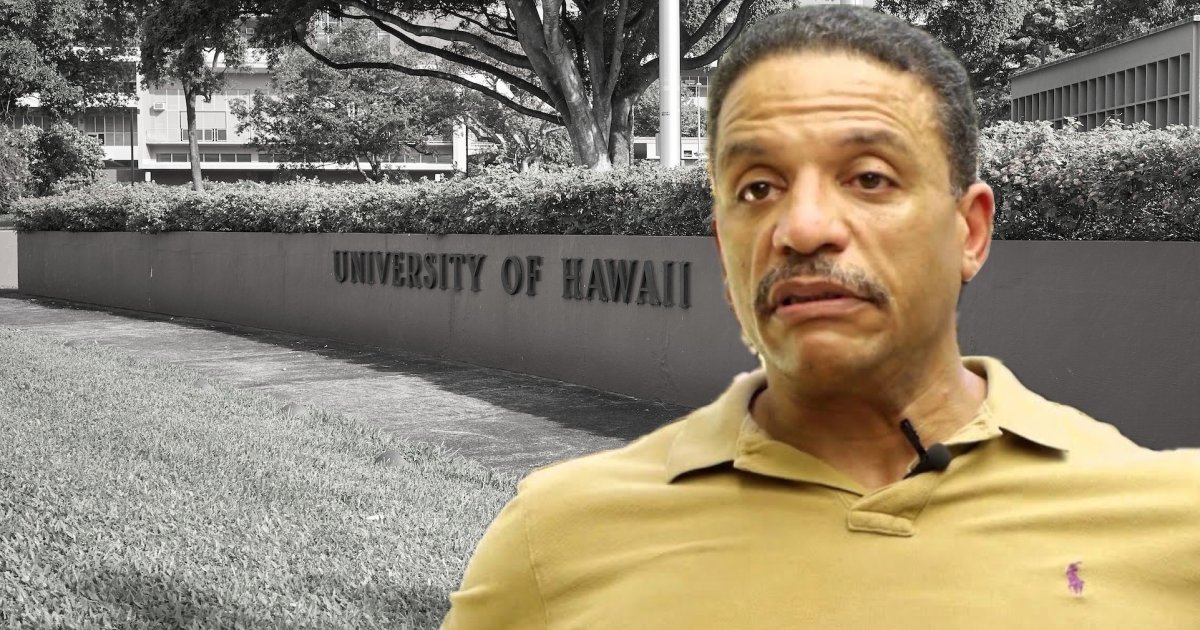
Those concerned that law schools are shying away from teaching some areas of law to avoid controversy just got more reasons to worry, this time courtesy of the University of Hawai’i at Manoa and its absurd treatment of law professor Kenneth Lawson.
Lawson, an accomplished faculty member at UH, used a simple hypothetical to teach the idea of “transferred intent,” a legal concept invoked when a defendant intends to harm one person, but ends up harming a second person instead. As is common in law school, Lawson offered a hypothetical to convey this idea: Imagine if a dean at his institution tried to shoot another dean, missed, and hit Lawson instead.
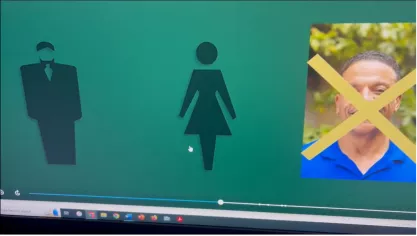
Here’s a screenshot from part of his lesson:
Those who have been to law school will understand that using campus figures to illustrate hypotheticals is not at all unusual, and is intended to add a bit of levity and grounding to what can be pretty esoteric topics.
But when an anonymous student filed a complaint, calling the hypothetical “extremely disturbing” and citing the context of some shootings near the university’s campus, administrators summoned Lawson to a meeting near the end of last semester. Though they acknowledged he had not violated any university policy, they nevertheless mandated that he remove the thought experiment from a posted video of the class — or they would change it for him.
The ability of administrators to forcibly alter course materials is positively ripe for abuse.
Lawson hadn’t thought twice about including the example, and had been using the example for years, not simply because it wasn’t unusual but because the protections of academic freedom give faculty wide latitude in determining how to approach controversial or potentially difficult material. When Lawson refused to alter the video of his presentation, given that he had not violated any policy, and using the hypothetical was well within his academic freedom rights, administrators just went on the school’s online curriculum system, where faculty submit presentations, to make the changes themselves.
Remember: these changes were being made because, supposedly, some found a hypothetical of campus figures being shot to be disturbing. So this is what the administration came up with.
You will note that there is still a campus figure on that slide, and it’s the person who was (hypothetically) shot: Professor Lawson. Only the deans have been removed. It seems that at UH, some hypothetical victims are more equal than others.
There’s no denying that this is silly, and many will be tempted to chalk it up as just more campus craziness. But there’s a disturbing wrinkle here, which is that the ability of administrators to forcibly alter course materials is positively ripe for abuse. The university’s administrators have granted themselves unilateral authority to interfere with faculty teaching decisions, despite the fact that UH is a public institution bound by the First Amendment, which views academic freedom, which protects that right, as a “special concern.” If administrators can “memory hole” bits and pieces of curricula they don’t like, even when it violates no rule, where does it stop?
UH still has an opportunity to do the right thing. It’s easy, too — all it has to do is step back and let faculty teach, and save the video editing for film class.
FIRE wrote the university on Dec. 13, urging it to reverse course and restore Lawson’s original hypothetical. The university responded in early January, declining to substantively engage with our concerns or detail specific issues with our argument. Lawson, and all UH students, deserve better. As our second letter states:
FIRE’s concerns are only amplified by the fact that this alleged capitulation to sensitivity is occurring in a law school. To receive a proper education in the law, students will inevitably encounter difficult topics like sexual assault, homicide, physical assault, domestic violence, and may be faced in school and in their careers with descriptions of personal injuries far more graphic than those in Lawson’s hypothetical. Where do UH administrators draw the line regarding their interference in faculty instruction if they feel free to operate under a nebulous standard of protecting students from “disturbing and harmful” material?
Lawson has submitted a grievance about the situation, so UH still has an opportunity to do the right thing. It’s easy, too — all it has to do is step back and let faculty teach, and save the video editing for film class.
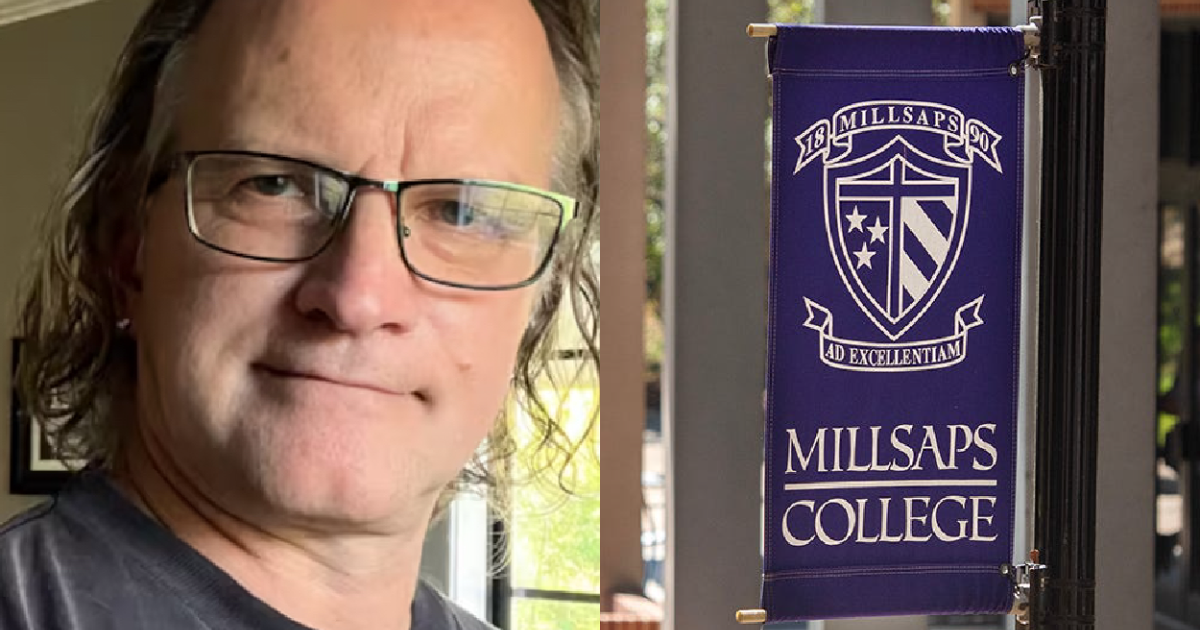
When tenured Millsaps College professor James Bowley sent an email sharing his opinion on the outcome of the 2024 presidential election, he didn’t anticipate it would result in his termination. But in a perfect storm of overreach and red tape, that’s exactly what happened.
On Nov. 6, 2024 — the day after the election — Bowley emailed the students in his “Abortion and Religions” class, canceling that day’s session to “mourn and process this racist fascist country.” With only three students in the class, Bowley got to know them quite well, including their political feelings, and knew canceling class would be best for those students. As Bowley told FIRE, “I just want to be caring and kind to my students, whom I knew would be troubled by the election.” Bowley wasn’t just trying to get out of work; he did not cancel the much larger first-year writing class session he taught that same day because he had no reason to know how those students felt about the election.
Two days later, Millsaps Provost Stephanie Rolph informed Bowley that he had been placed on temporary administrative leave pending review, for the bizarre offense of using his “Millsaps email account to share personal opinions with [his] students.”
That’s right: Millsaps didn’t take issue with Bowley canceling class (likely because they’d have to punish lots of people; professors cancel class for all sorts of reasons). The only cited reason was the use of his email to share personal opinions with students, which unsurprisingly is not an actual policy violation. That’s right: The college simply fabricated a policy violation so it could punish a professor for his speech. Frank Neville, president of the private college, has ignored hundreds of calls to reinstate Bowley, who was unable to do his job for over three months until yesterday, when he was eventually fired.
Welcome to Millsaps, a labyrinth of academic bureaucracy where personal opinions may not be shared.
Millsaps College president Frank Neville denied a committee recommendation and doubled down on Bowley’s leave being both justified and necessary, without explanation. (Barbara Gauntt / Clarion Ledger / USA TODAY NETWORK)
Professor punished without due process
Everything about Bowley’s treatment goes directly against Millsaps’ own fundamental principles of “freedom of speech and expression.” While Millsaps is a private institution not bound by the First Amendment, its commitment to free speech leads any reasonable student or faculty member to believe they are being promised expressive rights that align with the First Amendment.
Courts have recognized protection for a great deal of faculty speech on matters of public concern (say, apresidentialelection) because higher education depends on the wide exposure to robust exchanges of thoughts and ideas. But Millsaps’ actions here signal that it doesn’t take its own principles seriously and is making up its own standards for free speech and expression. That’s not okay with us — and it’s unfair to the students and faculty of Millsaps.
Not only did FIRE request that Millsaps drop the investigation and reinstate Bowley, but so did more than 100 students, reportedly, (pretty impressive for a college of only about 600) and over 500 alumni. And when Bowley contested the provost’s decision to place him on leave, a grievance committee made up of faculty members determined that Millsaps couldn’t identify a single policy that Bowley had violated. The committee recommended that Bowley be reinstated immediately.
FIRE remains by Bowley’s side, fighting for his return to teaching — and his right to share his opinions with students.
The grievance committee, like FIRE, also found that Bowley was not afforded proper dueprocess. Bowley was placed on leave before receiving a hearing and final determination. By doing so, the provost created an intermediary step in the process of dismissing a professor that exists nowhere in the handbooks — all without Bowley having any prior violations or disciplinary actions taken against him.
But Neville seemed unfazed by the calls from the Millsaps community and unconvinced by the facts presented to him. On Jan. 10, Neville denied the grievance committee’s recommendation and doubled down on Bowley’s leave being both justified and necessary, without explanation.
Calls to reinstate Bowley continued, this time reaching tens of thousands of people. But that still wasn’t enough. On Jan. 14, Bowley was told in a meeting that he was fired for not exercising restraint and not clarifying that his views were not that of the college’s. To be clear: The college fired Bowley for an offense – not clarifying that his views were not that of the college’s – of which he wasn’t accused. It’s no surprise that Bowley could not extricate himself from what Millsaps made into an impossible situation.
Ferris State cannot punish professor for comedic — and now viral — video jokingly referring to students as ‘cocksuckers’ and ‘vectors of disease’
News
It’s a joke, people. But violating faculty rights is not.
Even if the college had originally charged Bowley with not clarifying that his views were not that of the college’s, his email to his class still wouldn’t qualify. Whatever interest Millsaps may have in preventing faculty from purporting to speak on its behalf does not justify automatic punishment for simply not asserting that one isn’t speaking for the college. In fact, the Supreme Court has held that a teacher could not be punished for a letter to the editor he wrote in which he identified himself as a teacher at a certain school. Just because Bowley is identified as working at Millsaps (via his faculty email), doesn’t mean his speech is transformed into speech on behalf of the college.
Millsaps cannot overcome this principle just because it wants faculty to indicate whether views expressed “are individual or those of the institution.” Nothing in Bowley’s email can reasonably be interpreted as speaking on behalf of Millsaps, as it is commonly understood that when using their college email, faculty members are speaking for themselves rather than conveying that they speak for their employer. And here, Bowley was very clearly sharing an opinion – a criticism of an election outcome – that any reasonable person would understand as being his own opinion.
Bowley told FIRE yesterday: “I love Millsaps College and even more I love my students, but censorship by an administration by definition means that it is not education anymore; it is not a legitimate college.”
FIRE remains by Bowley’s side, fighting for his return to teaching — and his right to share his opinions with students.
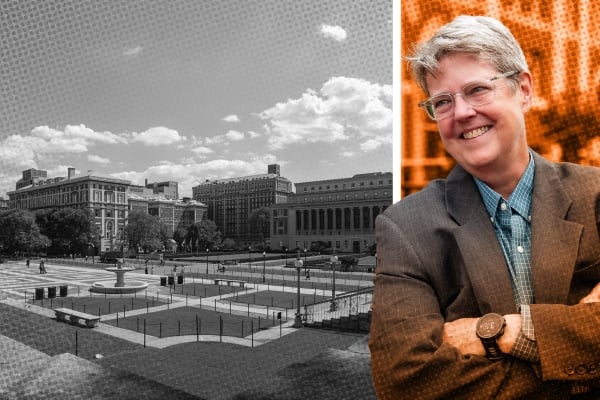
A longtime tenured Columbia University law professor who faced public criticism from Columbia’s president and congressional Republicans will no longer teach at the institution, after more than 25 years as a faculty member there.
Katherine Franke said Friday in a letter that she’s effectively been terminated, following a university investigation into a media interview she gave in which she criticized students who formerly served in the Israel Defense Forces for allegedly harming other students at Columbia. The investigation found that her media comments, and her alleged retaliation against a complainant in subsequent comments, had violated Columbia’s Division of Equal Opportunity and Affirmative Action Policies and Procedures.
She’s among multiple U.S. faculty members who’ve been investigated or punished in connection to speech that can broadly be considered pro-Palestinian.
In a statement, Franke said she reached an agreement with Columbia “that relieves me of my obligations to teach or participate in faculty governance after serving on the Columbia law faculty for 25 years.” She added, “While the university may call this change in my status ‘retirement,’ it should be more accurately understood as a termination dressed up in more palatable terms.”
She did not share a copy of the departure agreement, nor did the university. Columbia didn’t directly respond to her characterization of her departure.
In a broadcast last January on Democracy Now!, a left-leaning radio and television newscast, Franke talked about an incident on campus in which pro-Palestinian protesters said they had been sprayed with a harmful chemical. Students were hospitalized, and protest organizers accused other students who had served in the Israeli military. The university said in August that the substance sprayed was “a non-toxic, legal, novelty item.”
Franke told the host that Columbia has a program that connects it with “older students from other countries, including Israel. And it’s something that many of us were concerned about, because so many of those Israeli students, who then come to the Columbia campus, are coming right out of their military service. And they’ve been known to harass Palestinian and other students on our campus. And it’s something the university has not taken seriously in the past.”
Most Jewish citizens of Israel must serve in the military for at least 32 months for men and 24 for women.
“We know who they were,” Franke said on the program of the alleged attackers at Columbia. (Franke wrote in her statement Friday that,“I have long had a concern that the transition from the mindset required of a soldier to that of a student could be a difficult one for some people, and that the university needed to do more to protect the safety of all members of our community.”)
Franke’s Democracy Now! comments became the subject of a university investigation as well as a broader congressional hearing related to campus antisemitism. Representative Elise Stefanik, a New York Republican, asked then–Columbia president Minouche Shafik what disciplinary action had been taken against Franke. She characterized Franke as saying, “Israeli students who have served in the IDF [Israel Defense Forces] are dangerous and shouldn’t be on campus.”
Shafik didn’t answer Stefanik straightforwardly, but replied, “I agree with you that those comments are completely unacceptable and discriminatory.” Later during the televised hearing, Shafik confirmed that Franke was under investigation.
That investigation found that in addition to the interview comments, Franke violated campus policy by retaliating against the complainants.
A November 2024 Columbia EOAA Investigation Determination letter to one of the complainants, which was provided to Inside Higher Ed, says, “You also alleged retaliation on three separate occasions during the course of this investigation when complainant: (i) provided your name to a reporter who publicized your identity as an individual who initiated the complaint; (ii) reposted a tweet referring to you as a ‘genocide advocate’ and ‘McCarthyite bigot’; and (iii) posted a link to a document on social media indicating that you had made additional complaints against respondent.” (Franke had named the complainants—two of her faculty colleagues—to Inside Higher Ed for a July story.)
The letter says the university concluded that the interview and the first two retaliation allegations violated the policy.
In her statement Friday, Franke said she did appeal. But “upon reflection, it became clear to me that Columbia had become such a hostile environment that I could no longer serve as an active member of the faculty.”
Over the last year, people have posed as students to secretly videotape her, and clips have ended up on “right-wing social media sites,” she said. Students have enrolled in her classes to provoke discussions they can record and complain about, she said, adding that law school colleagues have also secretly taped her and yelled “at me in front of students that I am a Hamas supporter.”
“After President Shafik defamed me in Congress, I received several death threats at my home,” Franke said. “I regularly receive emails that express the hope that I am raped, murdered and otherwise assaulted on account of my support of Palestinian rights.”
Columbia Law dean Daniel Abebe told colleagues Thursday that Franke “is accelerating her planned retirement and now will retire from Columbia on Friday.” Abebe praised her work.
But Franke contests the word “retirement.” In an email to Inside Higher Ed onFriday, Franke explained that she signed an agreement with Columbia a year ago “to retire in a few years—phased in.” But she said the university “reneged on” providing routine retirement benefits, such as recommending her for emeritus status with the university’s Board of Trustees, providing her an office for five years and still allowing her to teach some classes.
“Columbia University’s leadership has demonstrated a willingness to collaborate with the very enemies of our academic mission,” Franke wrote in her statement. “In a time when assaults on higher education are the most acute since the McCarthyite assaults of the 1950s, the university’s leadership and trustees have abandoned any duty to protect the university’s most precious resources: its faculty, students and academic mission.”
The university didn’t provide an interview Friday. In an emailed statement, a Columbia spokesperson wrote, “Columbia is committed to being a community that is welcoming to all and our policies prohibit discrimination and harassment.”
“As made public by parties in this matter, a complaint was filed alleging discriminatory harassment in violation of our policies,” the statement continued. “An investigation was conducted, and a finding was issued. As we have consistently stated, the university is committed to addressing all forms of discrimination consistent with our policies.”
In a recent article, “Dear Prospective UAGC Students: Stay Away,” a professor from the University of Arizona discourages students from attending the University of Arizona Global Campus (UAGC). Unfortunately, this article was based on the author’s perspective rather than on facts and thus lacked the academic rigor of factual data from credible sources. This opinion piece was a collection of baseless assumptions, completely overlooking the true mission of UAGC, its faculty, and the diverse students we proudly serve. Frankly, the article has no merit.
There is power in knowledge and truth. As such, the article could have accurately depicted the realities of UAGC instead of relying on inaccurate critiques about educational quality, enrollment numbers, adjunct faculty, and alleged student dissatisfaction. To set the record straight, UAGC is committed to providing online higher education for non-traditional students, including working adults, military personnel, parents, and underserved communities. Our students juggle countless responsibilities, and UAGC offers the flexibility and support they need. UAGC is vital in making higher education accessible to those who need it most, breaking barriers that traditional institutions often ignore.
Furthermore, UAGC is unwavering in its commitment to supporting students, staff, and faculty, ensuring consistent educational quality and professional growth. As we continue to evolve, we focus on transparent evolution and collaboration, learning from past oversights to create an environment where our students can improve employment opportunities. Our pursuit of high-quality education is not a destination but an ongoing journey to which UAGC is deeply committed. Like any reputable university, we conduct regular course and program reviews, embrace continuous improvement, and acknowledge areas for development as a perpetual process. This commitment to educational quality is a cornerstone of our institution, ensuring our students receive the best education possible and can be confident in our dedication to their success.
The UAGC faculty, the backbone of our institution, is growing increasingly weary of misleading and disparaging remarks against the university and the faculty. It is time to move forward constructively and collegially. In the name of higher education, we implore you to stop defaming our university, staff, faculty, and students. To that end, we welcome meeting and educating any skeptical faculty or staff on our university’s mission and approach to serving non-traditional adult learners. Above all, we’re eager to clear any misconceptions by providing accurate data, helping to ensure that your words align more closely with the truth moving forward.
As we look to the future (Dr. Cabrera), the late President Franklin D. Roosevelt, who signed the unprecedented G.I. Bill into legislation, stated, “A smooth sea never made a skilled sailor” (Roosevelt, n.d.).”
Yvonne M Lozano, Ph.D. UAGC Faculty Council Co-Chair Teresa Handy, Ph.D. UAGC Faculty Council Representative Deanna Lauer, UAGC Associate Faculty Council Representative Carl Marquez, UAGC Faculty Council Representative Cara Metz, Ph.D. UAGC Faculty Council Co-Chair Darla Branda, Ph.D. UAGC Program Chair
On Monday 2 December 2024, during the online segment of the 2024 SRHE annual conference, Professor Farid Alatas delivered a thought-provoking keynote address in which he emphasised an urgent need for the decolonisation of knowledge within higher education. His lecture was titled ‘The captive mind and anti-colonial thought’ and drew from the themes of his numerous works including Sociological Theory Beyond the Canon (Alatas, 2017).
Alatas called for a broader, more inclusive framework for teaching sociological theory and the importance of doing so for contemporary higher education. For Alatas, this framework should move beyond a Eurocentric and androcentric focus of traditional curricula, and integrate framings and concepts from non-Western thinkers (including women) to establish a genuinely international perspective.
In particular, he discussed his detailed engagement with the neglected social theories of Ibn Khaldun, his efforts to develop a ‘neo-Khaldunian theory of sociology’. He also highlighted another exemplar of non-Western thought, the Filipino theorist José Rizal (see Alatas, 2009, 2017). Alatas discussed how such modes sort of non-Western social theory should be incorporated into social science textbooks and teaching curricula.
Professor Alatas further argued that continuing to rely on theories and concepts from a limited group of countries—primarily Western European and North American—imposes intellectual constraints that are both limiting and potentially harmful for higher education. Using historical examples, such as the divergent interpretations of the Crusades (viewed as religious wars from a European perspective but as colonial invasions from a Middle Eastern perspective), he illustrated how perspectives confined to the European experience often fail to account for the nuanced framing of such events in other regions. Such epistemic blind spots stress the need for higher education to embrace diverse ways of knowing that have long existed across global traditions.
Beyond critiquing Eurocentrism, Professor Alatas acknowledged the systemic challenges within institutions in the Global South, which also inhibit knowledge production. He urged for inward critical reflection within these contexts, addressing issues like resource constraints, institutional biases, racism, ethnocentrism, and the undervaluing of indigenous epistemologies through the internalisation of a ‘captive mindset’. Only by addressing these intertwined challenges, he concluded, can universities foster a more equitable and inclusive intellectual environment, and one that is more practically relevant and applicable to higher education in former colonised settings.
This keynote was a call to action for educators, researchers, and institutions to rethink and restructure the ways in which sociological and other academic canons are constructed and taught. But first, there is an important reflection that must be undertaken, and an acknowledgement, grounded in epistemic humility, that there is more to social theory than Eurocentrism.
There was not enough time to deeply engage with some of the concepts in his keynote; therefore, I hope to invite Professor Farid Alatas for an in-person conversation on these topics during his visit to the UK in 2025. Please look out for this event advertisement.
Ibrar Bhatt is Senior Lecturer at the School of Social Sciences, Education & Social Work at Queen’s University Belfast (Northern Ireland). His research interests encompass applied linguistics, higher education, and digital humanities. He is also an Executive Editor for the journal ‘Teaching in Higher Education: Critical Perspective’s, and on the Editorial Board for the journal ‘Postdigital Science & Education’.
His recent books include ‘Critical Perspectives on Teaching in the Multilingual University’ (Routledge), ‘A Semiotics of Muslimness in China’ (with Cambridge University Press), and he is currently writing his next book ‘Heritage Literacy in the Lives of Chinese Muslim’, which will be published next year with Bloomsbury.
He was a member of the Governing Council of the Society for Research into Higher Education between 2018-2024, convened its Digital University Network between 2015-2022, and is currently the founding convener of the Society’s Multilingual University Network.
References
Alatas SF (2009) ‘Religion and reform: Two exemplars for autonomous sociology in the non-Western context’ In: Sujata P (ed) The International Handbook of Diverse Sociological Traditions London: Sage pp 29–39
Alatas SF (2017) ‘Jose Rizal (1861–1896)’ in Alatas SF and Sinha V (eds) Sociological Theory Beyond the Canon London: Palgrave Macmillan pp 143–170
As we prepare for an upcoming year, I have to stop and think about the future of higher education. The pandemic changed our students, faculty, staff, and our campus as a whole. The Education Advisory Board (EAB) provides colleges and universities across the country with resources and ideas to help the students of the future.
I confess, I have been a complete fan of EAB and their resources for the past ten years. Their resources are at the forefront of higher education innovation.
🏛 – Dining Halls and Food Spaces
🏛 – Modern Student Housing
🏛 – Hybrid and Flexible Office Spaces
🏛 – Tech-Enabled Classrooms
🏛 – Libraries and Learning Commons
🏛 – Interdisciplinary Research Facilities
Higher education institutions should also focus on the faculty and staff as well. When I ask most of my peers if they are comfortable with the numerous changes happening across their institution, most of them are uncomfortable. We need to prepare our teams for the future of higher education.
Here’s the Millennial Professor’s Call the Action Statements for the Higher Education Industry
🌎 – Higher Education Conferences and Summits Need to Provide Trainings Focused on Artificial Intelligence (AI) for Their Attendees
🌎 – Higher Education Institutions Need to Include Faculty and Staff as Part of Their Planning Process (an Important Part)
🌎 – Higher Education Institutions Provide Wellness and Holistic Support for Faculty and Staff Who are Having Problems With Change (You Need Us and We Need Help)
🌎 – Higher Education Institutions Need to Be Comfortable with Uncommon Spaces (Flexible Office Spaces)
🌎 – Faculty Need to Embrace Collaboration Opportunities with Faculty at Their Institutions and Other Institutions
Here are some additional articles about the future of higher education:
Higher education will continue to transition in an effort to meet the needs of our current and incoming students.
For our particular university, we are striving to modify all of these items simultaneously. It is a challenge, but the changes are well worth the journey.
Here’s the challenge for this post: “In your opinion, which one of the items on the list is MOST important for your institution?”
A few weeks ago, I had the pleasure of presenting for an Undergraduate Research Group at my university. When they initially asked me about presenting about visual presentations, I had to think back to the numerous presentations that I have been fortunate to facilitate all over America.
Then, I thought about the items that I wish I would have had on site when I saw the place where I needed to place my poster. So, I decided to make a “Poster Presentation Survival Kit”. This kit contains: masking tape, t-pins, white out, sharpie markers, and cuticle clippers (to serve as scissors for your poster (just in case)).
The presentation was well received and they asked for a copy. I was very impressed with this group and their questions focused on research and the presentation process. We also had a great conversation about presenting information that has not yet been published.
Here’s the presentation:
Here are some additional resources. Thanks UNC, UC Davis, and Bucknell!
Enjoy! Please let me know if you have any questions.
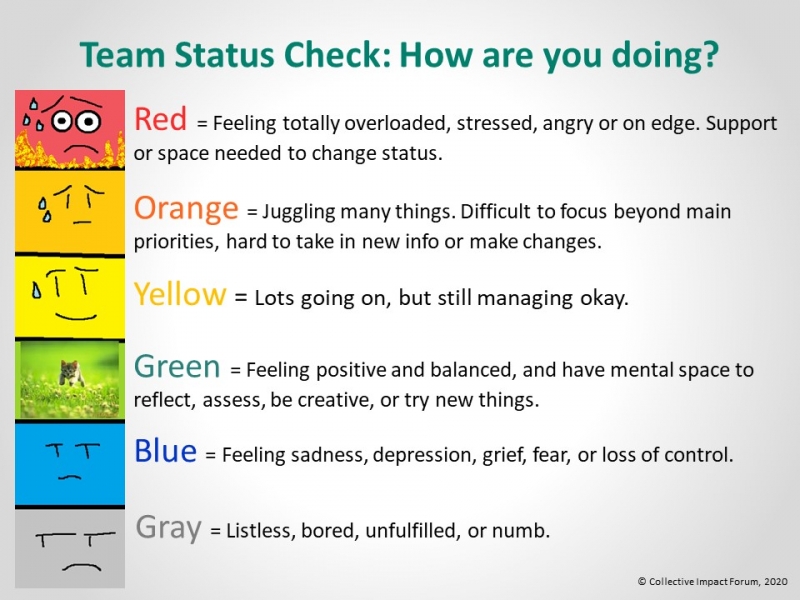
Throughout the past few years we have definitely been part of a Zoom and Microsoft Team centric world. As we meet with teams and individuals, we have to account for the life that is happening on the other side of the screen. Through Zoom we have a unique opportunity to gain a glimpse into another person’s life to which we would normally not have access.
This means that we have a moral and ethnical responsibility as peers and as leaders to genuinely care about the people to which we are communicate with on Zoom. Here’s a great resource from the Collective Impact Forum (http://www.collectiveimpactforum.org).
The Team Color Check-In Tool is a communication tool to help people in virtual and face-to-face conversations have a check-in. The colors range from:
Red
Orange
Yellow
Green
Blue
Gray
If you are wondering how to apply this for your teams or classrooms, I would definitely recommend the following:
#1 – Utilize it when you meet with individuals one-on-one (BEFORE) the meeting.
#2 – Utilize it in Zoom via an anonymous poll to gauge how their audience is feeling BEFORE the meeting and providing resources at the end of the meeting (or in a follow-up email).
#3 – Send the check-in tool to your team/organization at the beginning of the week and provide workshops and support throughout the week for the team.
Respond Below – How would you use the resource? Do you think teams would benefit from this resource? How would you modify it?
Thanks for reading!
Sincerely, Dr. Jennifer T. Edwards Professor of Communication
Executive Director of the Texas Social Media Research Institute & Rural Communication Institute
Chinasa Elue, PhD is an Associate Professor at Kennesaw State University where her focus is Educational Leadership and Higher Education. She is also an entrepreneur. Her company, True Titans Consulting is helping leaders and organizations with grief and trauma.
How do you express grief, express loss, online? In this interview, Chinasa gets personal about the loss of her mother. Dr. Elue knows that we’ve been experiencing collective grief.
Welcome to the featured interview series on The Social Academic blog. You can read, watch, or listen to the interviews shared here.
Jennifer: Hi everyone. My name is Jennifer van Alstyne. Welcome to the new season of The Social Academic. I’m here with Dr. Chinasa Elue, an associate professor of educational leadership and higher education at Kennesaw State University.
Chinasa, I’m so happy to talk with you today. Would you please introduce yourself? Let everyone know a little bit about you.
Chinasa: Absolutely. And so thank you so much for having me here today, Jennifer, I’m excited to be here and chat with you as well.
My name is Chinasa Elue. As you mentioned, I’m a professor at Kennesaw State University, but I’m also an entrepreneur. I run my own coaching and consulting business where I am supporting organizational leaders lead with more trauma informed practices in the workplace.
A lot of this work stems from our research around grief, leadership and trauma informed practices in organizational settings. I’m excited to be doing this work. It’s truly an honor to be able to leave such important work in this context that we’ve been navigating these past couple of years. Thank you.
Jennifer: Yeah, thank you for introducing that and letting people know about your business. And I think that’s so important. One of the reasons that I want to highlight professors like yourself on the show is to show that people are doing more than just their faculty work. People are helping the world in different ways.
Journey into the professoriate
Having an online presence is something that becomes a part of that system for helping people. That’s one of the things that I wanted to talk with you about today.
Now, since most of the people who are listening to this are professors themselves, can you tell me a little bit more about your higher ed life?
Chinasa: Absolutely. So in terms of my journey into the professoriate is really interesting because in a lot of ways, when I was finishing my graduate program, I thought I was going to go into higher education administration. I thought I was going to work as the Dean of Students or something of that nature.
But as you know, along the way, I had some really amazing mentors who really encouraged me to pursue a faculty life. They talked about the importance of impact in the field more systemic ways. I applied to many jobs and I was able to land my first gig right out of graduate school teaching.
I think being a professor…It’s a journey in and of itself, right?
There are a lot of ins and outs of this thing that I’ve learned over time. I’m getting ready to enter into my 8th year of teaching. I can’t even believe I’m saying that, but yeah, 8 years of teaching as a professor.
It’s been an interesting journey. That’s the best way I can put it, because there are a lot of reasons why I’ve chosen to navigate my career in the ways that I have. Especially with my experiences and academe in general as a woman of color.
That shaped and informed why I chose to not only be a professor, but also be an entrepreneur because I recognize the importance of having more systemic impact outside of my 9-to-5 job.
I think it’s important to think about to what extent can you really enact change or have a more positive force in that context. I realized that for me, it needed to step outside of the ivory tower and look different in a lot of ways.
Finding your voice on social media
Jennifer: It sounds like you realize that you could help more, that you have that ability and that you knew that you needed to do something. Like you needed to give more of yourself into a different area.
That’s something that an online presence is so helpful for, because we can’t always communicate with everyone all the time. Right? There’s not people around like introducing themselves, “Hi, let me learn more about you.” But there are online. There are people who are looking for help in different areas.
There are also professors who are looking to connect with other professors, you know, working in higher education. And I think that that online presence can be really beneficial in that, in that kind of system of communication.
So what does your online presence look like? What are some of the things that you do to have an online presence?
Chinasa: You know, it’s so interesting when we talk about online presence as a professor, right? In a lot of ways, I see a lot of faculty on Twitter. I think that’s the place of choice in a lot of ways where we’re able to share ideas more broadly.
But I also know at the same time, one of my own pieces with building my online presence is also honing in on my voice and how I wanted to communicate information and in what ways I wanted to share that. And also letting my personality shine. Right?
I think in a lot of ways, it’s very easy to be kind of cut and dry. Being very professional, which I am, but I’m also in a lot of ways, I bring in a lot of humor.
And so what I like to do online, I don’t mind sharing. If it’s Twitter is more professional or whatnot, sharing
Research updates
Recent awards
Accolades
Conversations that are going on locally and in the world at large
But Instagram is kind of where I have a little bit more fun. I share a little bit more personally in that space.
I also have my own YouTube channel where I’ve done videos and those kinds of have a humorous bent to them as well. Humorous but also informative at the same time. I’ve done a lot of work around career coaching and supporting professionals in various spaces professionally. I wanted to bring some humor into a space of times that can be very dry.
And oftentimes where we also have a lot of traumatic experiences in our respective industries that we may not talk about, but I want it to highlight it and make it a little bit more light and palatable so that we can have more systemic conversations.
My preference just looks different depending on the platform, to be honest.
Jennifer: I really like that. I think that it makes a lot of sense to have different audiences, but also different types of content that you share on each platform. And it really is based on your goals.
Free online presence workshop
Get started for in this virtual choose your own adventure workshop for professors, researchers, and graduate students.
It sounds like you have fun on Instagram. You share those kinds of motivational and short videos on YouTube. That can really help people connect with you. And then the more professional side is on Twitter. Is that right?
Chinasa: Yes. Correct.
How much do you share about yourself online?
Jennifer: Well, I think that it’s really important for people to recognize what they’re interested in in terms of
where they want to share
what they want to share
how much they want to share
So that’s my next question. How much do you share online about yourself?
Chinasa: I think I share what I feel comfortable sharing. Right? I don’t use online as my journal entry point.
Jennifer: Yeah.
Chinasa: I don’t come in there to narrate my initial reactions to anything.
I talk about this often when I’m talking to friends or colleagues that whenever there’s a hot button topic, where there is a decision or a case or an event that’s happened…
A lot of times, people will flock online to share their initial reactions or emotions.
Jennifer: They love to do that. It’s like a gut reaction to go and talk about your feelings about something. For sure.
Chinasa: Yeah! But I realized that that in a lot of ways it doesn’t serve me well, personally. That I need time to be in community with people that I talked to more systemically and consistently to really process the events.
Because a lot of times it’s something that’s near and dear to your heart, right? These are some really hot topics that are going to impact me, my children, my family for generations to come.
I realized in a lot of ways, I don’t want to just contribute a hot bite and not then take action.
My reaction is just to not necessarily go online, but to pick up a phone and get in touch with someone where I can process more systemically. And then, make a post that I think could contribute in a more meaningful way.
It just serves me better. And I think in a lot of ways, I don’t want people to come to me and try and take a sound bite without knowing the true impact that this is going to have long-term. So I process, and then I share within reason in terms of what I feel comfortable sharing.
Sometimes I don’t [post]. Sometimes I write a blog. Sometimes it drives me to do research, or to do an article, or something else. Right? But I am more intentional about not emoting outwardly first, but being more reflective in nature.
Jennifer: Oooh, I really like what you said about how that time to reflect and to actually talk with people who you’re close with about the experiences and the things that are happening. It really allows you to focus your energy in your reaction to that. Either, either it goes into social media, but it has all these other options too, which a lot of people don’t consider when they have a gut reaction to something that they’ve experienced.
I like that, you know, that could be channeled into research or into a blog post, like into these different forms of reaction. So I really like that. Thank you for sharing that.
Chinasa: Absolutely.
We are walking through collective trauma
Jennifer: Now, one of the things that you talked about is that you share things that you feel comfortable with online.
And I know that grief is something that we’ve all been dealing with collectively recently, but you yourself have lost your mother. That’s something that you’ve been able to talk about online and even connect with people about. Can you tell me a little bit about that?
Chinasa: You know, I never thought that I would be doing research on grief. That wasn’t my initial mo (modus operandi) when I came into the professoriate at all. I was initially studying issues of access and equity to higher ed.
I lost my mom in may of 2019. And when I lost her, that was the first time I’ve lost someone so close in proximity to me. The loss in and of itself was so debilitating in ways I can’t even describe to be honest.
So when I think about being in that space a year before we knew a pandemic was looming ahead. Right? Losing my mom, and having young children at the same time and figuring out how to navigate being a faculty member and being all the other things that I do on a daily basis…It was a really trying time to be frank.
Coming into the pandemic it was almost like I had an awakening of sorts. Right? We started to see loss on a massive scale in the midst of our racial reckoning in this country that’s still ongoing [United States], the social political climate that has continued to traverse even until now.
I recognized that what we’re walking through at the time was collective trauma and collective grief.
I felt a prompting to begin to ask some deeper questions. As a higher ed researcher, I wanted to know how are institutional leaders responding to loss right now? Because I know how debilitating the was for me before a pandemic, before all of the other factors were there, to navigate that.
But let’s say you lost someone due to COVID. Right? And maybe, perhaps you’re a person of color or any other dimension of your identity that’s been impacted by any number of it. You name the headline, it’s present today. Okay?
Based on where you’re socialized in this world and in this country specifically, it really impacts how you’re able to show up every day.
People are quick to move back to a normal or ‘a new normal,’ which is what we keep hearing now that the pandemic is over, which I beg to differ, honestly, but we’re here.
In a lot of ways, if you lost someone during these past 2.5 to 3 years, and then have to face any number of events…The ways in which you’ve had to navigate and cope have had to vary based on who you are in this country.
How are organizational leaders responding to grief?
Chinasa: I wanted to know how leaders, especially as a higher ed scholar, how are leaders responding?
How are you providing space to
with your faculty, staff and students who have experienced traumatic loss? Who are showing up on your campus and they’re not the same person they were before the pandemic, right?
These are not the same people that are returning back to us. And so when I think about grief now in this context, I think we’ve been in prolonged grief. There’s been just so much that has gone on, and it’s been such a trying season to be in right now where we are trying to figure out how to pick up our feet and move forward. But at the same time, we keep getting knocked down every step that we take. Right?
And so in this context, it’s more so okay, how do we continue to create spaces that allow us the opportunities to process the ongoing traumatic onslaught of grief that we’re seeing unfold day in and day out. There is no reprieve right now.
The conversations have to look different.
The events that we’re hosting the organizations that we’re building have to look different because we have to be more intentional about how we are creating spaces for people to show up in their true authenticity, but still be able to thrive.
And to not care about the bottom line, but to honestly care about the individual 1st –before you care about the deadline, the project, the goal at hand. But to know that these are real people that need a real leader to recognize them for the totality of their humanity. They want you to see them.
I think one big piece about The Great Resignation that we’re noticing right now is that people are leaving because they want more, they desire more. They realize that they’re worthy of more.
If leaders wake up to the fact that your employees, your colleagues don’t want to be seen as a bottom line item, they want to be seen as a human being who has been experiencing trauma and loss. Then you have to respond differently. Because if you don’t, this is going to be an ongoing situation that we see for many years to come.
Jennifer: Hm. That was a lot. What it sounds like is that your own grief helped prompt this research that is hopefully going to make this bigger impact on universities around the world and on organizations too. I mean, trauma is something that every company and every organization is dealing with because people are collectively grieving. You’re right.
Talking about the loss of her mom on social media
Jennifer: Now what does that look like with social media for you? Like, you’ve been able to talk about some of your grief on social media. And I’m curious how that’s been. What have people’s reactions been? Have you been able to make connections based on that shared grief?
Chinasa: Absolutely. I think social media, you know, it’s the catch 22 with it, right? It’s a great connector in a lot of ways. You’re able to build a community and networks in that vein. It could be a big detractor at the same time with differing opinions. And then the armchair bullies that show up every now and then, right?
Jennifer: Oh, yeah.
Chinasa: Yeah. For me, personally, I’ve been able to talk about grief in a very authentic and raw way.
I don’t shy away from it because grief is, in my opinion, the final act of love. We’ve loved people deeply. And so we’re going to grieve them deeply. And grieving looks different for any person. For me, I’ve chosen to be more public and sharing my emotions and how I’ve been processing things.
don’t run to Instagram or Twitter as my journal to share. But I share things that I’ve processed through
Events
Milestones
Holidays (i.e. Mother’s Day)
Cooking my mom’s favorite recipe
I’m just remembering those times. I have no issue sharing a picture of her because she’s so near and dear to me, I think about her every day. I think in a lot of ways, I also use social media as a way to memorialize her. To let people know that she was here because it’s very easy to want to power ahead, but that person still lives in a very present part in my heart. My mom does for me, right?
And I think for those who are experiencing loss and being able to share my experiences online and saying that it’s okay. That it is three years later and I’m still grieving. Right? That there’s no timeframe here that you have to give yourself the grace and the space you’d need to
Process
Emote
Take your time
Slow down as needed
And I think it’s a space to gain encouragement when you’re walking through something similar and to connect with others who are on the same path.
Because I’ve been able to make those connections with others who have lost parents, who’ve lost, loved ones who understand and who send me messages, or we connect offline and are able to talk more systemically.
I think that’s a big piece there with leveraging social media when you have different events happen. You can use your online presence to have more personal conversations that are meaningful to you. And also, still have impact by providing encouragement and space to have dialogue that may not exist outside of those online virtual walls. And so I appreciate that about social media for that, for sure.
Jennifer: Chinasa I really appreciate that. And for anyone who’s listening, who is experiencing grief right now, but maybe you’re not so sure how much you want to post about it online, or if you want to reach out to people that way. Remember that you can also use direct messages and actually have those kinds of private conversations about this through social media as well.
So there are many options for talking about grief, but it sounds like Chinasa has gotten a pretty positive response from being able to open up about her mom and the grief that she’s felt online.
Chinasa: Absolutely. And I think in a lot of ways, people are like, well, nobody wants to hear about this anymore. She’s been gone for some while. Right? Like we sometimes get in our own heads and feel like we need to emote or share for other people.
But I put that to the shelf. I think you have to just come out. A big piece of me sharing is also me being honest and authentic. I don’t show up every day just smiling, like the world is glorious and good.
Like it is, right? Some days.
But there are days where I’m really in the pits with grief. And I might feel that to share so that people understand that this is a process. You don’t have to beat yourself up if you don’t feel like you are where you thought you would be a year from now, two years from now.
I think in a lot of ways, it’s great to serve as a possibility model for others who are probably in the beginning stages or midway through who are wondering, will it get better again? Or what does this look like?
You know, we all grieve differently. Right? All I can do is model my process.
I may share more than another person, but I think in a lot of ways that sharing does open up the doors for more prolonged conversations that I think honestly needs to happen more, especially when we think about people die every day. Every day.
And if we can’t talk about death, which is a natural part of life, then when will the conversation ever happen? If we can’t talk about it at work, we can’t talk about it at home, or with our friends or loved ones. Like we have to talk about it because we will all unfortunately experience this.
I think the online community provides a great outlet to have a space to do it.
Jennifer: I’ve lost both my parents. I think the grief has been a long journey. My mom died about 20 years ago and my dad 15 years ago. And I’m still processing it.
Chinasa: Yes.
Jennifer: It doesn’t go away. It doesn’t stop. And being able to talk about it has been something that has been so healing for me.
I think the only reason I haven’t done it online is because so many of the people who knew them have also passed. They were quite a bit older when they adopted me.
And so I think that kind of like public remembrance, that public memorial that you say is part of some of the posts that you do, it’s just so beautiful. I love that. I’ve seen that before, but I don’t think I’ve ever heard anyone talk about what that feels like for them. And what posting about, you know, your mom’s cookies makes it feel like when you post. And so I really liked that. Thank you.
Chinasa helps people who are experiencing grief
Jennifer: Now, tell me a little bit more about your business because your business is now helping some people who are experiencing trauma. Both individuals and organizations, is that right?
Chinasa: Yes. I’m so excited about the work that I’m doing right now with organizations. I’ve had the opportunity to be able to talk more in detail with leaders who are looking for ways to perhaps set the stage for these conversations that I’m talking about right now.
I think if I were to say the most rewarding part of being an entrepreneur in this space, academic entrepreneur of this kind, I think in a lot of ways is being able to leverage your research to do the work. But then also to realize that there are more practical ways to implement it across different organizations and systems. The entrepreneurial route has been very affirming in a lot of ways and very encouraging to me to be able to step out and do this more systemically.
I offer talks to different organizations based on what their needs are, how they want to engage in the conversation.
I’m open and transparent. I bring the research with me. I’m sharing with them real time data because I think at times people need to know. They need to know the statistics. They need to know the experiences of others.
And then they also need to provide the space for those within their organizations to now begin to talk about, well, how do we perhaps cultivate something like this for ourselves? I appreciate that space to be able to do this work in this context.
In the same vein, I also offer grief coaching and grief circles. [Laughs]. I’m laughing because I never thought I would offer that. I never thought that I would be in the space or the head space to do it.
But it was so ironic. At the height of the pandemic, a good friend of mine asked me to start leading grief circles for her organization.
I hesitated at first because you know, in a lot of ways, as an academic, you feel like you need to have all the certifications and credentials under your belt.
In order to step out and do it, but I’ll be frank and say, I started to do it and engage in the work and it has been some of the most eyeopening and rewarding components of what I’ve been able to do since.
To be frank, it’s an absolute honor to be able to support people in this capacity. It’s a tough space to be in. It is a hard place to, you know, step outside of oneself and make yourself available to support others in their journey. But at the same time, it has been absolutely rewarding to see people find what they need in that space at the same time.
I don’t come to it as the guru or the person that’s bringing everything. I come to it as a supportive guide to help people, as they’re thinking through and navigating their own loss. And to think about perhaps how they may begin to forge a path way forward.
A lot of times we just feel stuck. We feel stuck. We don’t think we are going to ever be able to pick up our feet and move one in front of the other.
But when you’re in spaces, when you choose to not isolate, and you get into community with people, I think that is where we’re able to begin to make some semblance of meaning from the gravity of it all.
It’s a lot, but we have to find ways to just think about how may I perhaps begin to move forward. Not necessarily leaving the person in the past by carrying them with you in your heart. And doing things that are intentionally honoring them in yourself along the way.
Jennifer: Oh, that’s beautiful.
I’m so glad that we talked about this because so many people are grieving right now and holding it in. And just trying to stay strong for themselves, for their families to keep moving forward.
And sometimes you just can’t. Sometimes moving forward is just not something you can do on your own. And it’s not something that your family can help you do. Sometimes they don’t have that capacity. Sometimes you don’t have that capacity. But there is help out there. There are ways that you can move forward by working with other people by finding that community. And maybe by hiring Dr. Chinasa Elue as your trauma coach.
I know that I would need something like that. Now that I know that it exists, I wish I had that when I was younger. And I think other people will be glad to have heard you talk about it as well.
Chinasa: Thank you.
Be yourself online
Jennifer: Well, this has been a wonderful conversation. Is there anything else you’d like to add about online presence, about your work, before we wrap up?
Chinasa: I would just say for those who are kind of on the edge of finding their voice online or putting themselves out there. I would just say it’s trial and error. Right? Don’t make it such a high stakes thing.
In a lot of ways, it does take time to find your voice. You’re going to mess up. You might say things…We always worried about getting canceled and the whole nine.
We have to think about perhaps how we might engage in conversations. Like I mentioned beforehand, when there’s a hot button issue that is on the docket for the day. Pick any day, there’s always something new, right? Thinking about our online behaviors is key before we begin to engage in those conversations.
What might we say that contributes in a meaningful way? I don’t like to fan the flame perhaps, but I do like to contribute in ways that provide solutions in a more sustainable way towards action. I think thinking about how you want to engage is key.
And then we think about who you are as a person. We’re not static people, right? There’s depth and range to who we are individually. Let your personality shine forth. That’s the secret sauce. Be yourself.
I think I’ve gotten really comfortable in my skin. I share what I share because it’s who I am, right? And it may not be everybody’s jam, but for me, my jam is just fine. And that’s just the way I choose to present myself.
So if someone is thinking about perhaps ways to express themselves online. I would just say lean into you. Do you. Okay? They can’t go wrong.
Jennifer: Oh, I love that.
Chinasa: Yeah, you can’t go wrong.
Jennifer: Just be you.
Well thank you so much! Be sure to share this interview with your friends.
Dr. Chinasa Elue is a professor, speaker, coach, and the CEO and Founder of True Titans Consulting Group. She is an expert on grief leadership in higher education and trauma-informed practices in organizational settings. She supports leaders in moving forward to make impactful change in the midst of uncertainty with empathy and care. She provides strategic coaching and consulting that opens the doors to transformation through policy and practice. She hosts Grieving in Color, a podcast that explores the various ways we navigate our experiences with grief and loss and a place where we find the courage to intentionally heal in our daily lives.
Dr. Elue is an Associate Professor of Educational Leadership and Higher Education at Kennesaw State University. She leads the Research Lab for the Study of Emotional Intelligence, Leadership Effectiveness, and Well-Being of Educational Leaders.
Connect with Chinasa on social media @DrChinasaElue.
I love gardening. Whether my gardening takes place in a container, in an urban area, or in a rural area, I am all about it! This year, my daughter decided that she wanted to become a mini-gardener as well.
As a result, we are growing…tomatoes, peppers, eggplant, watermelon, and lettuce. I teach her to watch the prices as they continue to increase. My daughter and I talk about innovative ways to counteract the increasing prices. Our strategy is gardening!
I am part of a wealth of gardening groups. My favorites are “Black Girls Garden” and Black girl container gardening groups on Facebook. These groups give me inspiration and ideas to garden for my family and for the community. One thing that I like the most is the emphasis on sharing seeds and supporting one another. I also work with our community garden group as well.
This summer, I have been very fortunate to learn even more gardening skills from the local Agrilife Extension agent in Panola County, Clarissa Moon. She is an excellent teacher and she provides so much educational outreach for the community.
Another resource that I absolutely love is the USDA, which has great resources for gardening as well. I subscribe to their blog, “Farmers.gov Blog” and it has some incredible tips for gardening. It also features several other sections on their website that feature articles. These categories are:
Of course, my favorite is Farm Life! I love the “Friday’s on the Farm” series.
Check them out! What is your favorite part?
Thanks for visiting! Sincerely, Dr. Jennifer T. Edwards Professor of Communication
Executive Director of the Texas Social Media Research Institute & Rural Communication Institute