Organization recognized for excellence in high-impact tutoring design and student achievement gains
PHILADELPHIA, Aug. 25, 2025 –Catapult Learning, a division of FullBloom that provides academic intervention programs for students and professional development solutions for teachers in K-12 schools, today announced it earned the Tutoring Program Design Badge from the National Student Support Accelerator (NSSA) at Stanford University. The designation, valid for three years, recognizes tutoring providers that demonstrate high-quality, research-aligned program design.
The recognition comes at a time when the need for high-impact tutoring (HIT) has never been greater. As schools nationwide work to close learning gaps that widened during the COVID-19 pandemic and accelerate recovery, Catapult Learning stands out for its nearly 50-year legacy of delivering effective academic support to students who need it most.
“Catapult Learning is honored to receive this prestigious national recognition from the NSSA at Stanford University,” said Rob Klapper, president at Catapult Learning. “We are excited to be recognized for our high-impact tutoring program design and will continue to uphold the highest standards of excellence as we support learners across the country.”
Each year, Catapult Learning’s programs support more than 150,000+ students with nearly four million in-person tutoring sessions, in partnership with 2,100 schools and districts nationwide. Its tutors, many of whom hold four-year degrees, are highly trained professionals who are supported with ongoing coaching and professional development.
Recent data from Catapult Learning’s HIT programs show strong academic gains across both math and reading subject areas:
8 out of every 10 math students increased their pre/post score
9 out of every 10 reading students increased their pre/post score
These results come from programs that have also earned a Tier 2 evidence designation under the Every Student Succeeds Act, affirming their alignment with rigorous research standards.
The Badge was awarded following a rigorous, evidence-based review conducted by an independent panel of education experts. The NSSA evaluated multiple components of Catapult Learning’s program – including instructional design, tutor training and support, and the use of data to inform instruction – against its Tutoring Quality Standards.
“This designation underscores the strength and intentionality behind our high-impact tutoring model,” said Devon Wible, vice president of teaching and learning at Catapult Learning. “This achievement reflects our deep commitment to providing high-quality, research-based tutoring that drives meaningful outcomes for learners.”
Tutoring is available in person, virtually, or in hybrid formats, and can be scheduled before, during, or after school, including weekends. Sessions are held a minimum of three times per week, with flexible options tailored to the needs of each school or district. Catapult Learning provides all necessary materials for both students and tutors.
Catapult Learning, a division of FullBloom, provides academic intervention programs for students and professional development solutions for teachers in K-12 schools, executed by a team of experienced coaches. Our professional development services strengthen the capacity of teachers and leaders to raise and sustain student achievement. Our academic intervention programs support struggling learners with instruction tailored to the unique needs of each student. Across the country, Catapult Learning partners with 500+ school districts to produce positive outcomes that promote academic and professional growth. Catapult Learning is accredited by Cognia and has earned its 2022 System of Distinction honor.
Continuing-education programs are one way for colleges and universities to provide targeted offerings and credentialing opportunities for alumni, adults in the region lacking postsecondary education and the local workforce. They also provide flexible support offerings, recognizing the competing identities and responsibilities adult learners hold.
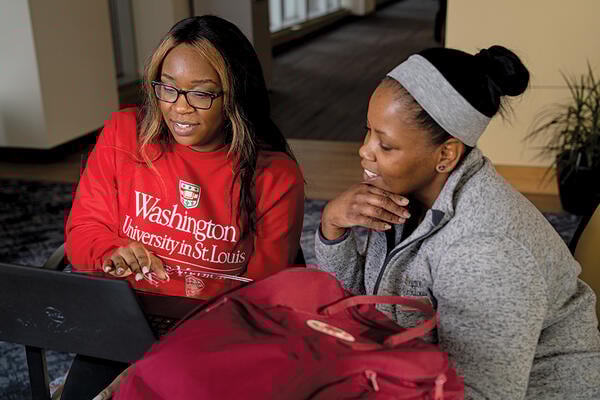
The School of Continuing and Professional Studies at Washington University in St. Louis houses certificate programs, undergraduate and graduate degrees, prison education initiatives, and lifelong learning courses for adults in retirement.
In the most recent episode of Voices of Student Success, host Ashley Mowreader speaks with Sean Armstrong, dean of the School of Continuing and Professional Studies, to talk about the program’s goals and ways the school uplifts adult learners of all types.
An edited version of the podcast appears below.
Q: Most people know WashU; it’s a pretty well-known institution in the U.S. But what is CAPS and what is the mission, and [who are] some of the students that you’re serving?
Sean Armstrong, dean of the school of continuing and professional education at Washington University in St. Louis
Washington University in St. Louis
A: Let me start with definitions. First, Washington University in St. Louis, we’ll call WashU. Continuing and Professional Studies, we’ll call CAPS. Nontraditional or adult learners, we call modern learners here—those for whom school is not their only priority. And then noncredit, we call professional credit because we don’t like “nons.” I think calling anything a “non” is just a negative, and it seems to say it doesn’t matter. So those are the terms that we use.
The program itself is an opportunity for modern learners to access Washington University in a way that they may not have been able to before. This university started out close to 100 years ago, and it was kind of a niche type of school, accessible to certain individuals but not broadly accessible. So our goal is to make this school broadly accessible. Many of our programs are based on regional workforce needs and, of course, [are for] those who find themselves in the category of some college, no degree, and they would like to return and complete their degree.
Q: Can you talk a little bit more about the students who enroll? When it comes to demographics or general trends that you see among the people who enroll in CAPS, what are those?
A: Over 80 percent of our students are employed full-time; I think over 50 percent have multiple jobs. Over 90 percent have families, whether that means they have children or they’re caring for an adult, a parent or older age demographic. I would say 80 percent of our students fall in the 25 to 49 age range. We do have some that are younger, and of course, we have some that are older, but [most] fall squarely in that range. Many of them are looking to find a way back because they want to advance or shift gears and enter another career. The bedrocks [of industry] here in St. Louis are health care, emerging technologies like data, and leadership and management.
Q: I like the focus that you placed on career. One, these students are already working—they know what it’s like to be in the workforce and be employed—compared to maybe some of our traditional undergraduate students. But two, they have a very clear career goal, and they’re looking to do something different with their lives.
I wonder if you can talk about that paradigm where it’s not that they need a job, it’s that they want a different job, or that they’re looking to do something maybe tangential or in a higher-paid role.
A: I think being aspirational doesn’t stop when you’re 22 years old. That’s why we have lifelong learning, and our role is to meet people where they are and to create pathways that lead them to their goals.
We call ourselves partners in student success. We don’t see ourselves as necessarily the educator or the school; we want to be a partner. We want to talk about what your goals are, what your motivations are, and then try to use the resources within the university and within the community to build that pathway to where you want to go.
Q: I just want to say it’s been great listening to the word choice that you all are using, like a “partner,” a “modern learner” and not using “noncredit.” Is that an institutional initiative or is that something you’re passionate about, the idea of using asset-based language?
A: I am super passionate about it. I think the institution has adopted it as well. I can’t say what the language was before I arrived, but I’ve been using a lot of it here.
A lot of it has been to change the perception of the students who enroll within CAPS and the perception of the individuals in our community who are coming to us. I don’t want anybody to be viewed in a negative light, one, and I don’t think there needs to be a comparison between learners, right? They’re all learners, they all have aspirations and we’re all here to support them. I think of all of this as “We are all in this.”
Q: Let’s talk about some of the programs. What’s the most popular degree offering that you all have, or nondegree offering?
A: The bachelor of science in integrated studies is a degree program that has many different areas of study and certificate options. That is a popular program because this is really dedicated as a some college, no degree type of program. We accept up to 85 transfer credit hours in this program, which is super generous. It’s not something I want to change, and hope I don’t have to, for various reasons, but it allows us to really be open to students.
WashU is a writing school. It is a school that wants you to be able to communicate clearly, either through writing or speaking. And so our writing and communication courses, there is an assessment that we do to see where individuals are, and then to help them build the skill to be able to be successful in our courses. So that’s a really popular one.
Our certificates, you know, I try to put my finger on which ones [are popular], because I think our certificate enrollments have doubled in the last year, and we’re trying to understand why.
Our certificates serve two purposes. One, they’re skill-based, so they’re an opportunity for someone to learn a skill within a year and then have that credential and move on. But they’re also stackable to a bachelor’s degree, so if somebody has some college, no degree, or maybe they have an A.A. [associate of arts] degree, they want to earn their certificate because they’re not feeling too confident about entering into a bachelor’s degree program, this is a really good way for them to be able to do that. We’ll begin to uncover this year as to why that’s so popular, but it’s been going gangbusters.
And then I have to tell you about our “heart” programs. We market them as our community programs, but they’re programs that are central to our heart. They’re our prison education program, our English language program, our master of arts in teaching and learning, and our OSHA Lifelong Learning Institute program.
The four of those are really community-based. Prison education, we offer face-to-face degree programs in two prisons in Missouri and re-entry support for individuals who are returning home. In our English language program, we offer opportunities for individuals who are international students to communicate clearly, present clearly. But we also had an opportunity to turn that program towards the community, for individuals who lack the English skills to be a good fit for a job—you have to communicate clearly on any job. So we had individuals who were here that had medical degrees and wanted to work in the medical field, and so we’re helping them to be able to bridge that gap.
I mentioned our master of arts in teaching and learning; teaching is just necessary. So we’re trying to do all that we can to be helpful, especially here in the St. Louis region. And then our OSHA Lifelong Learning Program offers opportunities for individuals who are over 50 to continue learning for the rest of their lives.
Q: That’s awesome. I have a personal passion for lifelong learner classes because they’re so niche and there are so many different ways to engage the community there.
You talked a little about the community engagement piece of CAPS, but I wonder if we can dig into that a bit more. You know, WashU has historically been very selective in who it admits and how it relates to the St. Louis community as a whole. How does this further that town-and-gown relationship and encourage St. Louisans to see themselves as part of WashU?
A: Our focus is on the region and on individuals who really don’t have the option of being a residential student. They have to be either part-time, some of them are three-quarter time, but they cannot live on campus. That’s not an option, because they just have other things going on. And so that’s our niche. That’s kind of the gap that we’ve been able to fill.
I am happy to say that WashU has been very supportive, very enthusiastic about that population of students. Again, we don’t compare. I think the WashU residential students are probably some of the brightest students I’ve met in my career, probably top 1 or 2 percent from around the world. And I’m not trying to say our students are not, but you know that they’re not 18, either.
They’re 30 years old with two children and other obligations. Household operations is a real thing, trying to figure out what needs to get paid and what doesn’t. That’s not to say our residential students don’t have those types of concerns, but for our [CAPS] students, it is something that can sometimes challenge how they appear in our setting.
Q: There was a study by Trellis Strategies that found a majority of community college students or those enrolled part-time were more likely to consider themselves workers who are students and not necessarily students who are workers. It sounds like that’s the population you’re talking about, where their education is important to them, but there are other things that are ranking towards the top first.
You serve a variety of adults in a variety of different contexts. What is that like for you, as the dean of a school like this, to wear all these hats and engage with all these different types of programs and support mechanisms to encourage student success?
A: I’ve always liked the full-spectrum model of adult education. We’ve seen bits and pieces—the community college, of course, has a piece. Typically, school districts will have a piece, universities will have a piece. I’ve always liked, “OK, there’s really no job too small if there’s a need in the region. So let’s attack all of it.”
I think that vision starts with me, and of course, I’m kind of the mad scientist sometimes, but the support and the passion for the individuals that I work with are really what makes this happen. It’s interesting because we were talking the other day in a leadership team meeting, and I said, “I think one of the questions I am going to ask in interviews from now on is, ‘How does it make you feel to help somebody? Does it make you feel good, or is it just you’ve checked the box?’” And I think, for the most part, in our organization, it makes people feel good to do this type of work.
Q: Absolutely. What are some of the challenges in the work that you do?
A: Time is our biggest challenge. There are things that people needed yesterday, and we’re just unable to create a program as quickly as the need arises or has arisen. There are people who are finding out about us and wish they had known about us a year ago, and so we’re behind the gun on that. But really, it’s time for us. I think we are ready to do, as I think my daughter would say, we’re ready to do the most in any given circumstance.
Q: One initiative that we didn’t talk too much about that I want to highlight is Extend(Ed) and this idea of equipping professionals to advance in their career. Can you talk a little bit about that initiative and how it works?
A: Sure. Extend(Ed) is the professional credits—the noncredit space is what it’s typically called, but we call it professional credits. I call it creative solutions for workforce needs. It’s a model that I see us offering 100-plus short-term courses or programs in within the next, I’d say, 18 months.
We’re looking at synchronous opportunities, asynchronous opportunities, and they’ll be online mostly. I think there’ll be some that’ll be based on an employer’s needs. We’re working with a few employers on creating programs that they asked for. And they’ll be co-created, which is key, because I never want somebody to leave and say, “We didn’t really get what we wanted.” It was like, “Oh, we discussed this.”
So we’ll be on-site delivering that particular program. Extend(Ed) allows us to be really creative and really responsive to the needs of industry or even community organizations. And they’re affordable. We’re trying to make them as affordable as possible.
Q: Who are the faculty in this work?
A: They’re subject-matter experts, so they are working in the field. They’re doing the work on a day-to-day basis, so they’re able to link what students are learning in the text with real life and what they’re doing at work, and I think our students really appreciate that.
We’ve had students who have enrolled with us, who were our residential students, who also appreciate the perspective of the faculty that teach for us, and also the students and their real-world experiences also. It creates a different dimension of diversity, I think, within the classroom, and maybe an elevated level of conversation when you’re talking about, “I do this on a daily basis.”
One question I like to ask students—our students in particular—is “Is there anything that you learned in the classroom last week that you were able to apply recently?” And they all say yes, and they’ll say, “this thing,” so it’s pretty cool.
Q: What’s next for CAPS? What are some of your goals for this upcoming academic year?
A: I mentioned one with Extend(Ed). I think we want to deepen partnerships. Partnerships are central to what I do. It’s in my background; a really deep knowledge of how to create partnerships has been what my career has been all about for the past 25 years, and so I want to continue to do that in St. Louis. And then we always strive to improve student success and student service. So that’s another area that we’d like to ensure that we keep top of mind.
Q: Are your student support services similar to those for residential students or how do they look different?
A: It’s slightly different. Our model is based on the coaching model, and so there is more of the directive “Here are the courses that you will need to take in order to graduate.” But where the traditional student affairs or student support for a residential student would be based on a living and learning community, ours is more based on the how-to.
Our students are more confronted with, “I don’t know if this is the right time to go back, but I need to.” And then there might be some impostor syndrome also. So we’re focused on how to be successful—What was your motivation for doing all of this?—and then reminding students of that motivation as we guide them along that path.
Q: I wonder if you have any advice or insight for others who work in this space, either in higher education broadly or in continuing education spaces, encouragement on how to do this work well or a lesson you’ve learned doing this work.
A: One lesson that I’ve learned is to talk to all of your surrounding organizations to understand what their role is in the space. When we talk about some college, no degree [students], the first thing I say is “There’s no competition among us, because that population is so large that if we ran at double our capacity, we wouldn’t be able to meet the need.” So it might be better for us to look at what we all are doing. If we want to establish swim lanes, we can. If there are ways that we can collaborate, we should. And that would be the one advice that I’d give people who are, depending on the population, some college, no degree is definitely one of those, but really to partner with one another, collaborate on student success.
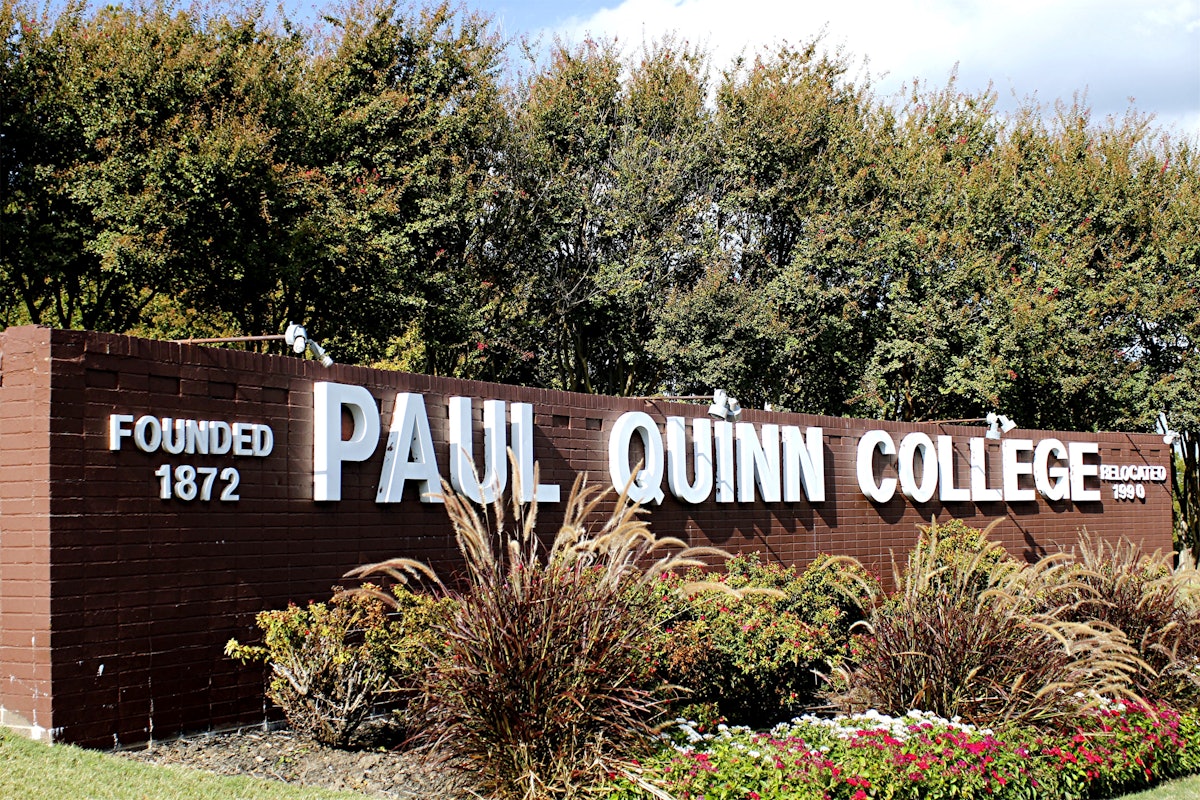
Cynt Marshall The Dallas Mavericks and Paul Quinn College have announced a partnership that establishes the nation’s first NBA team-sponsored sports management major at a historically Black college or university. The innovative “Mavs Sports Management Major” officially launched Friday with an opening convocation featuring former Mavericks CEO Cynt Marshall as the keynote speaker.
The program, formally titled “Leadership, Innovation, Sports Management, Technology, Entrepreneurship, and Networking” (LISTEN), represents a significant investment in diversifying the sports industry pipeline while addressing educational equity in higher education.
Paul Quinn College, Dallas’s only HBCU, will integrate the new major into its existing curriculum structure, with students receiving comprehensive support that includes Target-sponsored care packages containing dorm essentials and other student necessities.
The program distinguishes itself through extensive real-world application opportunities. Students will engage with Mavericks executives through weekly guest lectures and participate in hands-on projects addressing actual business challenges facing the organization. The curriculum includes case study analysis, creative brief development, and student-led presentations proposing solutions to current Mavericks business scenarios.
Beyond classroom learning, the partnership includes campus engagement initiatives with sponsored events throughout the academic year, entrepreneurship support through integration into the Mavs Business Assist program, and a planned residence hall renovation featuring custom Mavericks-designed murals.
The collaboration aligns with the Mavericks’ “Take ACTION!” initiative, which specifically targets racial inequities and promotes sustainable change in North Texas. Sports management and administration have long struggled with representation issues, particularly in executive and leadership positions.
According to industry data, while Black athletes comprise significant portions of professional sports rosters, representation drops dramatically in front office and management roles. This program aims to address that pipeline gap by providing structured pathways from education to industry entry.
Mentorship is a learning-centered, leadership-driven experience that nurtures the next generation of researchers and clinicians in academia (Rabeeah et al 2022). Faculty mentors in allied health science programs play a crucial role in shaping their mentees’ professional growth and long-term career fulfillment. Mentor-mentee relationships may be faculty and student, or seasoned faculty and junior faculty.
When reflecting on your prior experiences as a mentor or a mentee, ask yourself these questions:
1. Was it a positive experience?
2. Did you experience disparities based on your gender or race as a mentor or mentee?
3. Did you feel you had adequate training to be a mentor, or did your mentor demonstrate they had the skills to support you as a mentee? and
4. How were the mentors and mentees matched?
Many more questions need to be asked to ensure the mentor-mentee relationship and interactions are sufficient for exponential career growth. However, cultivating a positive experience for the mentee, ensuring there are no barriers (i.e., gender or race) for a unique experience, mentor training, and appropriate pairing of mentors and mentees are overarching considerations supported by evidence. (Rabeeah Z, 2022, Stenfors-Hayes T 2011, Mascarenhas F 2019, Bartle et al. 2020, Hill et al 2022, Frei et al 2010)
Problem
Concurrently, established formal mentorship programs are lacking in allied health science education programs for both students and junior faculty. Having formal mentorship programs for faculty to obtain training for mentorship roles and guidelines to support both junior faculty and students is essential for foundational success in academia. (Reibel & Arnett 2025, Mascarenhas F 2019) As a result of the lack of faculty mentors, students may not be getting exposure to avenues beyond clinical practice. This has been identified in dental hygiene education. (Reibel & Arnett 2025) It is suspected that allied health science programs, in general, have similar barriers to developing, implementing, and evaluating research mentorship programs. The goal of this article is to provide a blueprint for allied health programs to establish a framework for initiating a formal mentorship program.
Solution
To develop and implement a formal mentoring program, you need institutional ‘buy-in,’ strategic planning, faculty and students for piloting the program, an assessment metric(s), and a review of the outcomes process to make recommendations to modify the mentorship program. All these aspects depend on institutional support. The first step would be to identify the need for a mentorship program supported by evidence. The next step would be to align a mentorship program with the institution’s strategic plan.
Strategic Planning
Strategic planning is essential for building coalitions among deans, department chairs, program directors, and mentors. It is the deliberate process of setting goals, identifying resources, and establishing priorities. Beginning with a vision and mission statement may serve as the foundation to set goals to execute and then position a mentor program to identify resources, priorities and specific groups or individuals in a coalition of champions.
To build a diverse wide network of champions to support a variety of perspectives, it is important to identify individuals and groups who can contribute a range of resources, are versatile, and have the ability to pivot when changes need to occur. However, it is equally important that the determined coalition of champions are in alignment with the vision and the mission of the mentorship program. A mentorship program coalition of champions may support inclusive and sustainable programing and increase the reach of available resources. Further a mentorship coalition is especially relevant to match appropriate mentors and mentees and provide a unique mentor experience for the mentee for lifelong learning and professional development.
The next aspect of strategic planning is the development and implementation of a pilot program. A mentorship pilot program is needed on a small scale to determine feasibility. Mentorship pilot programs are required to collect outcomes to evaluate for expansion and improvements. Additionally, if funding is required to sustain or build the mentorship program for expansion, these primary outcomes are needed to secure internal or external grant funding.
Allied health science programs may find available resources for a mentorship program through their human resource department, professional organizations, or government agencies. One example of a successful student research mentorship program was published in the Journal of Dental Hygiene in 2025. (Reibel & Arnett 2025) This student research mentorship program partnered with the Writing Enrichment Curriculum to develop assignments and rubrics to improve student writing. (Reibel & Arnett 2025) This student research mentorship program not only implemented standardized assignments and grading rubrics across the curriculum but also resulted in eight student-led peer-reviewed publications between the years 2019-2023. (Reibel & Arnett 2025) Although the strategic plan and resources provided in this publication are specific to an allied oral health science program, (Reibel & Arnett 2025) the information is transferable to any allied health science program for students and can be modified for a faculty mentorship focus.
Conclusion
This blueprint is applicable to formal mentorship for faculty and students. The main framework is transferable and can be modified to match your institution’s strategic plan and goals. It is important to be aware of key components to ensure a humanistic mentor and mentee experience is cultivated. Strategic planning is necessary for developing, implementing, and evaluating a mentorship program. A coalition of champions who share the values of the vision and mission of a formal mentorship program contributes to the overall mentorship program and evaluation of metrics for future modifications and longevity.
Michelle Arnett currently serves as a Tenured Associate Professor in the Department of Primary Dental Care, Division of Dental Hygiene (DH) at the University of Minnesota (UMN) School of Dentistry (SOD). Arnett has 10 years of experience in academics and research at the University of Michigan SOD and the UMN SOD, in addition to 21 years of clinical practice experience. Her areas of research focus are motivational interviewing and periodontology. Arnett has published over 50 peer-review articles and two textbook chapters. Of those 50, 29 are specific her research niche in motivational interviewing and periodontology. The remaining 21 peer-reviewed publications focus on her teaching, student mentee research projects, and faculty and students’ wellness. Arnett has given over 60 presentations; 20 were invited national and international events. In 2023, Arnett received the American Dental Education Association (ADEA) President Centennial Awards for Oral Health Education. This was a one-time award at ADEA’s centennial celebration for an allied dental faculty who has made and continues to make a significant and positive impact on oral health education. Arnett has taught Communications, Periodontology, Leadership, and the Dental Hygiene Care Process: Clinical Application III and IV in the UMN undergraduate DH program and Instructional Strategies, Thesis I and II, and Capstone I-IV in the UMN graduate DH program. Her professional memberships include Sigma Phi Alpha-Nu Chapter, American Dental Hygienists’ Association (ADHA), and the ADEA.
References
Bartle, Emma K., Brandon J. Crivello, Jeri L. Bullock, and Ezinne I. Ogbureke. “Mentorship availability and needs for junior faculty members at the United States and Australian dental schools.” European Journal of Dental Education 24, no. 4 (2020): 790-798.
Frei, Esther, Martina Stamm, and Barbara Buddeberg-Fischer. “Mentoring programs for medical students-a review of the PubMed literature 2000-2008.” BMC medical education 10 (2010): 1-14.
Hill, Sarah EM, Wendy L. Ward, A. Seay, and J. Buzenski. “The nature and evolution of the mentoring relationship in academic health centers.” Journal of clinical psychology in medical settings 29, no. 3
Mascarenhas, Faye, Janice Townsend, Paul Caballero, Qingzhao Yu, and Paul L. Fidel Jr. “Student and faculty perspectives of a faculty‐student mentoring programme in a dental school.” European Journal of Dental Education 23, no. 2 (2019): 184-189.
Rabeeah, Zainulabdeen, Jocelid G. Carreno, Janet S. Kinney, and Marita R. Inglehart. “Career motivation and satisfaction of dental hygiene students in associate versus bachelor degree programs: A national survey.” Journal of Dental Education 86, no. 6 (2022): 649-660.
Reibel, Y.G., Jiang, Z., Arnett, M.C. “Mentor Like Minnesota: Outcomes of an undergraduate research mentorship program.” Journal of Dental Hygiene (Online) 99, no. 2 (2025): 48-54.
Stenfors‐Hayes, T., L. E. Lindgren, and S. Tranaeus. “Perspectives on being a mentor for undergraduate dental students.” European Journal of Dental Education 15, no. 3 (2011): 153-158.
Mentorship is a learning-centered, leadership-driven experience that nurtures the next generation of researchers and clinicians in academia (Rabeeah et al 2022). Faculty mentors in allied health science programs play a crucial role in shaping their mentees’ professional growth and long-term career fulfillment. Mentor-mentee relationships may be faculty and student, or seasoned faculty and junior faculty.
When reflecting on your prior experiences as a mentor or a mentee, ask yourself these questions:
1. Was it a positive experience?
2. Did you experience disparities based on your gender or race as a mentor or mentee?
3. Did you feel you had adequate training to be a mentor, or did your mentor demonstrate they had the skills to support you as a mentee? and
4. How were the mentors and mentees matched?
Many more questions need to be asked to ensure the mentor-mentee relationship and interactions are sufficient for exponential career growth. However, cultivating a positive experience for the mentee, ensuring there are no barriers (i.e., gender or race) for a unique experience, mentor training, and appropriate pairing of mentors and mentees are overarching considerations supported by evidence. (Rabeeah Z, 2022, Stenfors-Hayes T 2011, Mascarenhas F 2019, Bartle et al. 2020, Hill et al 2022, Frei et al 2010)
Problem
Concurrently, established formal mentorship programs are lacking in allied health science education programs for both students and junior faculty. Having formal mentorship programs for faculty to obtain training for mentorship roles and guidelines to support both junior faculty and students is essential for foundational success in academia. (Reibel & Arnett 2025, Mascarenhas F 2019) As a result of the lack of faculty mentors, students may not be getting exposure to avenues beyond clinical practice. This has been identified in dental hygiene education. (Reibel & Arnett 2025) It is suspected that allied health science programs, in general, have similar barriers to developing, implementing, and evaluating research mentorship programs. The goal of this article is to provide a blueprint for allied health programs to establish a framework for initiating a formal mentorship program.
Solution
To develop and implement a formal mentoring program, you need institutional ‘buy-in,’ strategic planning, faculty and students for piloting the program, an assessment metric(s), and a review of the outcomes process to make recommendations to modify the mentorship program. All these aspects depend on institutional support. The first step would be to identify the need for a mentorship program supported by evidence. The next step would be to align a mentorship program with the institution’s strategic plan.
Strategic Planning
Strategic planning is essential for building coalitions among deans, department chairs, program directors, and mentors. It is the deliberate process of setting goals, identifying resources, and establishing priorities. Beginning with a vision and mission statement may serve as the foundation to set goals to execute and then position a mentor program to identify resources, priorities and specific groups or individuals in a coalition of champions.
To build a diverse wide network of champions to support a variety of perspectives, it is important to identify individuals and groups who can contribute a range of resources, are versatile, and have the ability to pivot when changes need to occur. However, it is equally important that the determined coalition of champions are in alignment with the vision and the mission of the mentorship program. A mentorship program coalition of champions may support inclusive and sustainable programing and increase the reach of available resources. Further a mentorship coalition is especially relevant to match appropriate mentors and mentees and provide a unique mentor experience for the mentee for lifelong learning and professional development.
The next aspect of strategic planning is the development and implementation of a pilot program. A mentorship pilot program is needed on a small scale to determine feasibility. Mentorship pilot programs are required to collect outcomes to evaluate for expansion and improvements. Additionally, if funding is required to sustain or build the mentorship program for expansion, these primary outcomes are needed to secure internal or external grant funding.
Allied health science programs may find available resources for a mentorship program through their human resource department, professional organizations, or government agencies. One example of a successful student research mentorship program was published in the Journal of Dental Hygiene in 2025. (Reibel & Arnett 2025) This student research mentorship program partnered with the Writing Enrichment Curriculum to develop assignments and rubrics to improve student writing. (Reibel & Arnett 2025) This student research mentorship program not only implemented standardized assignments and grading rubrics across the curriculum but also resulted in eight student-led peer-reviewed publications between the years 2019-2023. (Reibel & Arnett 2025) Although the strategic plan and resources provided in this publication are specific to an allied oral health science program, (Reibel & Arnett 2025) the information is transferable to any allied health science program for students and can be modified for a faculty mentorship focus.
Conclusion
This blueprint is applicable to formal mentorship for faculty and students. The main framework is transferable and can be modified to match your institution’s strategic plan and goals. It is important to be aware of key components to ensure a humanistic mentor and mentee experience is cultivated. Strategic planning is necessary for developing, implementing, and evaluating a mentorship program. A coalition of champions who share the values of the vision and mission of a formal mentorship program contributes to the overall mentorship program and evaluation of metrics for future modifications and longevity.
Michelle Arnett currently serves as a Tenured Associate Professor in the Department of Primary Dental Care, Division of Dental Hygiene (DH) at the University of Minnesota (UMN) School of Dentistry (SOD). Arnett has 10 years of experience in academics and research at the University of Michigan SOD and the UMN SOD, in addition to 21 years of clinical practice experience. Her areas of research focus are motivational interviewing and periodontology. Arnett has published over 50 peer-review articles and two textbook chapters. Of those 50, 29 are specific her research niche in motivational interviewing and periodontology. The remaining 21 peer-reviewed publications focus on her teaching, student mentee research projects, and faculty and students’ wellness. Arnett has given over 60 presentations; 20 were invited national and international events. In 2023, Arnett received the American Dental Education Association (ADEA) President Centennial Awards for Oral Health Education. This was a one-time award at ADEA’s centennial celebration for an allied dental faculty who has made and continues to make a significant and positive impact on oral health education. Arnett has taught Communications, Periodontology, Leadership, and the Dental Hygiene Care Process: Clinical Application III and IV in the UMN undergraduate DH program and Instructional Strategies, Thesis I and II, and Capstone I-IV in the UMN graduate DH program. Her professional memberships include Sigma Phi Alpha-Nu Chapter, American Dental Hygienists’ Association (ADHA), and the ADEA.
References
Bartle, Emma K., Brandon J. Crivello, Jeri L. Bullock, and Ezinne I. Ogbureke. “Mentorship availability and needs for junior faculty members at the United States and Australian dental schools.” European Journal of Dental Education 24, no. 4 (2020): 790-798.
Frei, Esther, Martina Stamm, and Barbara Buddeberg-Fischer. “Mentoring programs for medical students-a review of the PubMed literature 2000-2008.” BMC medical education 10 (2010): 1-14.
Hill, Sarah EM, Wendy L. Ward, A. Seay, and J. Buzenski. “The nature and evolution of the mentoring relationship in academic health centers.” Journal of clinical psychology in medical settings 29, no. 3
Mascarenhas, Faye, Janice Townsend, Paul Caballero, Qingzhao Yu, and Paul L. Fidel Jr. “Student and faculty perspectives of a faculty‐student mentoring programme in a dental school.” European Journal of Dental Education 23, no. 2 (2019): 184-189.
Rabeeah, Zainulabdeen, Jocelid G. Carreno, Janet S. Kinney, and Marita R. Inglehart. “Career motivation and satisfaction of dental hygiene students in associate versus bachelor degree programs: A national survey.” Journal of Dental Education 86, no. 6 (2022): 649-660.
Reibel, Y.G., Jiang, Z., Arnett, M.C. “Mentor Like Minnesota: Outcomes of an undergraduate research mentorship program.” Journal of Dental Hygiene (Online) 99, no. 2 (2025): 48-54.
Stenfors‐Hayes, T., L. E. Lindgren, and S. Tranaeus. “Perspectives on being a mentor for undergraduate dental students.” European Journal of Dental Education 15, no. 3 (2011): 153-158.
North Carolina is taking bold steps to democratize college access with the expansion of its NC College Connect program, which will offer direct admission to more than 62,000 public high school seniors this fall. The initiative represents a significant shift toward equity-focused admissions practices that prioritize accessibility over traditional application barriers.
The program targets students who complete their junior year with a weighted GPA of 2.8 or higher. By eliminating the often overwhelming application process, NC College Connect removes financial and procedural obstacles that disproportionately affect first-generation college students and those from underrepresented communities.
“NC College Connect represents a fundamental shift in how we approach college admissions in North Carolina,” said Peter Hans, President of the University of North Carolina System. The initiative reflects growing national recognition that traditional admissions processes can perpetuate educational inequities.
Maurice “Mo” Green, State Superintendent of Public Instruction, praised the collaborative nature of the effort.
“When our entire education community works together like this, students win. NC College Connect removes barriers and creates clear pathways to college for thousands of our students,” he said.
The program’s inclusive design addresses systemic challenges that have historically limited college access for students from diverse backgrounds. By providing direct admission letters and eliminating complex application requirements, the initiative particularly benefits students who might otherwise be deterred by navigating multiple institutional processes.
Participating institutions span the full spectrum of North Carolina’s higher education landscape, including UNC System universities, independent colleges and universities, and community colleges. This comprehensive approach ensures students have pathways to various types of post-secondary education that align with their academic goals and financial circumstances.
Dr. Jeff Cox, President of the North Carolina Community College System, highlighted the program’s potential to transform access to affordable education.
“By removing barriers and simplifying the process, we’re helping more students access the life-changing opportunities our community colleges provide—close to home and at a price they can afford,” he said.
Community colleges have long served as crucial entry points for students from diverse socioeconomic backgrounds, offering both career preparation and transfer pathways to four-year institutions. The inclusion of community colleges in NC College Connect recognizes their vital role in democratizing higher education access.
The program’s commitment to equity extends beyond admissions to address affordability concerns through targeted financial aid initiatives. The Next NC Scholarship and NC Need-Based Scholarship specifically support students from households earning $80,000 or less, covering tuition and fees at participating institutions.
Additionally, students attending Elizabeth City State University, Fayetteville State University, University of North Carolina at Pembroke, and Western Carolina University benefit from the NC Promise plan’s $500 per semester tuition rate. These historically Black institutions and regional universities serve particularly diverse student populations, making the affordable tuition structure especially impactful for underrepresented students.
Hope Williams, President of North Carolina Independent Colleges and Universities, noted the unique value proposition of smaller institutions: the personalized attention and specialized programs that can be particularly beneficial for students who might struggle in larger university environments.
The program builds on a successful pilot year that served more than 70,000 students, demonstrating the demand for streamlined college access. The expansion indicates that initial outcomes validated the approach’s effectiveness in connecting students with higher education opportunities.
Students can verify their eligibility through the NCCollegeConnect.com portal or by consulting with high school counselors, ensuring multiple touchpoints for information and support. Eligible seniors will receive official admission letters this fall for the 2026-27 academic year, providing ample time for planning and preparation.
NC College Connect positions North Carolina as a leader in reimagining college admissions to prioritize access and equity. As higher education institutions nationwide grapple with declining enrollment and questions about traditional admissions practices, North Carolina’s comprehensive approach offers a replicable model for other states.
The initiative’s success will likely be measured not just in enrollment numbers, but in its ability to diversify the state’s college-going population and create pathways for students who might otherwise forego higher education. By removing procedural barriers and addressing financial constraints, NC College Connect represents a holistic approach to educational equity that extends well beyond the admissions office.
After decades of trying, conservatives this year succeeded in creating the first national school voucher program.
The Republican megabill that President Donald Trump signed into law in July will establish new tax credit scholarships for families to use at private schools, including religious ones — a long-held goal of school privatization advocates who argue parents should get taxpayer support if they want to opt out of their neighborhood school.
Under the “big, beautiful bill,” donors can receive dollar-for-dollar tax credits of up to $1,700 for contributions to scholarship-granting nonprofits. Those groups then distribute the money to families seeking help paying for private school, tutoring and other educational expenses.
The program, while significant, is less expansive than in earlier drafts of the legislation. Previous versions gave donors larger tax credits — a match up to $5,000 or 10 percent of their income, whichever is greater — and mandated that all states participate rather than allowing them to opt in.
Here are 10 things to know about the program. If you have other questions or there’s more you’d like to know, write to us: [email protected].
When does it start?
Jan. 1, 2027. Families have until then to research where they might want to spend a scholarship — and if the school in mind even plans to accept one. Taxpayers who want to contribute to support the scholarships can do so beginning in late 2026.
How will the scholarships work?
The law opens the door to churches, universities, education nonprofits, rotary clubs and potentially even public schools (more on that below) to accept and distribute donations for the program. These “scholarship-granting organizations,” or SGOs, can keep up to 10 percent of the donations for administrative costs.
In some states with existing scholarship programs, families apply with a third-party contractor that works with eligible schools and selects students for awards. Other states allow religious groups and other nonprofits to create and manage their own scholarship funds. The federal bill gives states wide flexibility to make those sorts of decisions about how the program is administered, experts say.
Who’s eligible for the scholarships?
To qualify, students need to check these boxes: They must be eligible to attend a public school, their state must opt in to the program, and their families must earn no more than three times the area median income — a threshold that would include households with incomes nearing $500,000 in some parts of the United States.
Students who already attend private school qualify, since they are eligible for public school, even if they don’t attend one. The scholarships also may cover home-schoolers. (Keep reading for more on that.)
How much money will families receive?
While the bill set a $1,700 cap on how much individual donors can contribute through their taxes, it’s unclear whether it limits how much an individual student could collect in scholarships.
In theory, a student could apply for several scholarships. An SGO might also offer a scholarship that reimburses a family for all costs associated with attending their preferred school. In states that already offer similar school choice programs, a student might be able to collect scholarships from both the new program and the existing state program. Still, the average cost of private school tuition is roughly $13,000, so even students who combine several scholarships may not receive enough to cover the full cost of attending.
The Treasury Department is expected to issue regulations on the program, and we may not know these kinds of details until it does.
Quite a lot. The legislation suggests that families could use the money not only to help pay for private school tuition, but also for room and board, services for students with disabilities, transportation, tutoring, and school supplies like books, computers and uniforms.
The rules may depend on the individual state and its definition of an “eligible school.” In some states, home schooling might qualify students for the scholarships, but in other states it might not, said Robert Enlow, president of EdChoice, a pro-school choice group.
It’s also possible that public schools could charge scholarship students — as some do with home-schoolers — for services like tutoring, special education or advanced courses.
So students can use the money at public schools? How would that work?
Yes, potentially. In some states, schools already charge activity or participation fees for non-enrolled students who want to join clubs and sports. Marguerite Roza, director of the Edunomics Lab at Georgetown University, said some states may write their own rules that allow schools to extend the menu of services they could charge for.
Meanwhile, most school districts — roughly 4 in 5 — already partner with foundations that raise money to help students with transportation, school supplies and basic needs. Both Enlow and Roza said they expected nonprofits and districts to partner on finding ways to tap the federal scholarship dollars as well.
“Imagine you could have a public school foundation going out and helping with transportation and books and computers and tutors and all sorts of stuff, right?” Enlow said. “The potential is huge.”
Will all private schools accept the scholarships?
No, private schools are not required to accept the scholarships, and many states that offer school choice don’t require private schools to participate. Private schools generally can accept or reject a student for any reason, whether they have a scholarship or not.
In Arizona, for example, the tax credit program provided scholarships to students at 348 schools last year. More than 400 private schools operated in the state as of 2022.
Roughly 21 states — including Arizona, Georgia and Montana — offer their own tax credit scholarships, according to the group EdChoice, so it’s expected they would opt into the federal program. Conservative lawmakers in North Carolina already introduced a bill to allow families there to take part in the federal scholarships.
If public schools can benefit too, even Democratic governors may consider joining the program, said Roza.
“Ultimately if the state can open this to summer camp and tutoring, obviously there would be a lot of pressure to unlock so much money with this,” she said.
How much will the scholarships cost the government?
It depends on how many taxpayers claim the credit.
While an earlier version of the bill would have capped the tax credits at $10 billion a year, the final legislation contains no such limit — so the exact amount in lost revenue won’t be known until much later. That said, an analysis by the nonpartisan Joint Committee on Taxation found that the legislation would cost the Treasury up to $4 billion per year.
Others think the cost will be higher. The Institute on Taxation and Economic Policy, a left-leaning research group, placed its projection closer to $51 billion, while Roza estimated the cost at $28 billion per year. Still, she hesitated to count that as a direct loss to K-12 funding. “It’s new money in the sense that it doesn’t go into or out of the federal pie,” Roza said.
What’s been the reaction to the plan?
Critics, including teachers unions and many education experts, have been quick to raise alarms about the voucher program, arguing that it’s a handout for wealthy families and will harm public schools by reducing funding for them.
“It’s the centerpiece of the Great American Heist — a privatization scheme wrapped in tax policy,” Denise Forte, president of the left-leaning nonprofit EdTrust, said at a hearing before the Senate Democratic Caucus in July.
Advocates for the separation of church and state worry about the program channeling money from government coffers to religious schools, while disability advocates note that private schools are not required to serve students with disabilities.
Some supporters of school vouchers, meanwhile, wish the legislation had gone further.
“This is a very positive program for taxpayers in America. You can help families get better education and claim a tax credit for it,” said EdChoice’s Enlow. “It’s going to benefit middle- and low-income families.” But he added, “It’s not as generous as we would like, which is universal.”
Others are focused now on encouraging states to participate in the program. “The fight doesn’t end with the passing of the bill,” said Sydney Altfield, national director of Teach Coalition, which advocates for Jewish schools to get access to government funding. “States must opt into the program.”
Contact staff writer Neal Morton at 212-678-8247, on Signal at nealmorton.99, or via email at [email protected].
The Hechinger Report provides in-depth, fact-based, unbiased reporting on education that is free to all readers. But that doesn’t mean it’s free to produce. Our work keeps educators and the public informed about pressing issues at schools and on campuses throughout the country. We tell the whole story, even when the details are inconvenient. Help us keep doing that.
College leaders are breathing a tentative sigh of relief after the Trump administration promised Friday to release roughly $5 billion in withheld education funding, slated for a range of K–12 programs but also $716 million for adult education programs. Not included in Friday’s announcement, however, was $52 million allocated for migrant higher education programs.
On June 30, the Department of Education paused nearly $7 billion in education funding expected on July 1, as part of a review by the Office of Management and Budget. Over the weeks of uncertainty that followed, community college leaders feared that, without the funds, they’d need to strip back adult education programming, like GED programs, and lay off personnel. Lawmakers on both sides of the aisle called for the funds’ release. A group of 10 Republican senators demanded an end to the freeze in a July 16 letter to OMB. Democratic governors from 18 states also wrote to Education Secretary Linda McMahon with the same plea.
Rachel Gasseling, adult education director at Western Nebraska Community College, said that she was heartbroken when the Education Department paused the adult education funds. Her program serves the rural Nebraska panhandle and had a record 27 graduates this past academic year, an almost 69 percent increase over the year before. Adult ed programs served more than 9,300 students statewide last year, she said.
“By all measures, we were going above and beyond to help our communities and help people build better lives,” Gasseling wrote to Inside Higher Ed. “Every day we waited to know whether we had to start looking for a new job or hold out one more day in hopes we can keep doing what we love.”
Now she knows her work can continue. Her college was able to float the program until the funds returned. But for some programs across the country, the damage is already done, she said. They closed or reduced staff or services when the funds didn’t come through.
“A great deal of people have been affected by this decision, and I hope that programs are able to rebuild or stay afloat for the sake of neighbors and communities,” she said.
David Baime, senior vice president for government relations at the American Association of Community Colleges, said nationwide, state and campus leaders are “extremely relieved” by the news of the restored adult education funds. Now community college leaders hope these programs receive continued support in the 2026 fiscal year appropriations process.
“The loss of these funds would have been devastating to hundreds of community colleges, and some programs were already scaled back given the hiatus in support,” he wrote in an email to Inside Higher Ed. “Community colleges are deeply thankful that key legislators stood up for this essential function.”
Heather Morgan, executive director of the Kansas Association of Community Colleges, said she’s glad to see the funds released but remains wary about the future of adult education programs under the Trump administration. Trump proposed axing these programs in his budget proposal for fiscal year 2026.
“While this funding helps the programs continue, we will continue to watch the upcoming appropriations process as adult basic education is one of the areas proposed in the president’s budget for elimination,” Morgan wrote to Inside Higher Ed. “The uncertainty of funding makes keeping positions filled difficult as we work to serve adult learners.” The budget proposal would also eliminate funding for migrant education.
The Education Department and the Office of Management and Budget did not respond to requests for comment.
Migrant Programs In Flux
Funds for other postsecondary programs still hang in the balance. Even as the Education Department released funding to states for migrant education at the K–12 level, money for two postsecondary migrant programs remains frozen: the High School Equivalency Program, a program that supports migrant farmworkers and their families in earning their GEDs, and the College Assistance for Migrants Program, which helps recruit and support those students through their first year of college.
Greg Contreras, the director of the National HEP/CAMP Association, told Inside Higher Ed that the release of funds for the K–12 Migrant Education Program was “definitely encouraging.” But he said he has still received no word on if and when the review of HEP and CAMP may come to an end.
Without the money to support HEP and CAMP, colleges and universities have been forced to shutter their programs and lay off employees who work with migrant students.
“As each week rolls by, more programs are starting to drop off,” Contreras said. He received a layoff notice for his own position leading the CAMP initiative at Portland Community College in Oregon; originally, he was told his last day would be in August, but he is working with administrators to see if he might be able to stay through the start of PCC’s fall semester in September.
Along with funding resources for migrant students, money for CAMP also goes toward scholarships and stipends. Michael Heim, the director of HEP and CAMP at Washington State University, said that his program’s incoming students are grappling with whether they will be able to enroll if the money doesn’t come through. Potentially losing out on scholarships they were promised will be a major factor in their decision-making, he said. But they’re also concerned about their academic success without access to the specialized resources CAMP typically offers, such as tutoring and mentorship.
“The question they ask themselves is, ‘How do I find community, how do I know people will be in my corner to support me?’” he said. “I think it speaks to a mentality within our students, over all, that they know they want to go to college, but they want to be successful, because the values their families are instilling them are: They know education is important, and they don’t want to miss this opportunity to make their parents proud, make their siblings proud.”
The National HEP/CAMP Association and its members aren’t backing down yet. The board recently traveled to Washington, D.C., where Contreras said they met with over 30 congressional staff members who they hope will pass along their messages about the importance and effectiveness of the programs.
Even HEP and CAMP staff who have lost their jobs are staying involved in the effort to get their funding restored, he said, contacting their own congresspeople to ask them to push for the funds to be released.
Imagine that you lead a team whose job is to generate qualified applicants for your institution’s online degree programs. Challenges abound. Post-pandemic, the supply of new online degree programs has grown faster than student demand. Inflation and job insecurity have stressed and immobilized the potential online master’s applicant population of working adults. Prospective applicants have low-cost master’s and alternative online credential options. The job of online program recruitment has never been more challenging.
Being the wayward academic you are, you believe that the answer to any question and the solution to any problem can be found in a book. You need the right book for you and your team to read and discuss, out of which a strategy will emerge to engage and inspire online program applicants. What book do you choose? (Any nominations?).
I recommend Chris Hayes’s The Sirens’ Call: How Attention Became the World’s Most Endangered Resource.
As a fan of lateral thinking, the working hypothesis that I’ve been testing over my career is that the best way to understand how to make a positive impact from within colleges and universities on our institutions is to read books that have nothing to do with colleges and universities. (Of course, I also read college- and university-focused books, which is a both/and sort of hypothesis). The effort required to apply books not about universities to universities often yields productive ideas that can be used for non-incremental organizational and institutional change efforts. Of course, it is possible to go horribly wrong with this approach, as with almost every attempted application of Christensen’s The Innovator’s Dilemma to university innovation efforts, but that is another story.
I’m recommending The Sirens’ Call, which has nothing to do with higher education or online program marketing, because this book is about attention. The reality that we live in an attention economy will come as no surprise to anyone even remotely involved in the business of persuasion. What is excellent about Hayes’s book is how he expertly unpacks how we arrived at this place of universal distraction, the impact that divided and fragmented attention has on individuals and society, and how we might extricate ourselves from this (largely self-imposed) mess.
For teams looking to find ways to move prospective students through the admissions funnel (as we say in the biz), The Sirens’ Call provides an attention-centric framework to which to structure our campaigns. As Hayes writes about his world as a cable TV news host, his competition for viewers’ attention is not only the competing news programs but every video, article, post and scrolling feed available on the screen in the smartphone slot machine that never leaves our hands.
Suppose the battle to generate prospective student interest in online programs is part of a larger war for attention. In that case, there are some steps that university marketing teams can take. First, it is essential to understand that deciding to apply to an online program—and even learning about which programs to potentially apply—is part of a much broader set of choices. Working adults thinking about upgrading their credentials and skills are thinking first about their careers. Their focus is not on universities, degrees or programs but on career progression. Getting and keeping the attention of these working adults may be easier if universities focus first on providing practical and actionable information and resources that directly address the career-related challenges and aspirations of workers.
How many online degree program university websites also contain articles, videos and data related to the careers that the master’s program is designed to prepare graduates to enter? We collect much of that data, including employment trends and projections, in the market research that underpins the decisions about which online programs to roll out. But how often do we make all that data available to prospective applicants?
As Hayes describes in The Sirens’ Call, a divided attention landscape changes the metabolism in which we all engage with information. Today, we might take weeks or months to finish a book, as we read in small chunks whenever we can find the time. Movies that once were watched in a single sitting in a theater (or on a Netflix DVD) are now viewed over days or weeks in small chunks across multiple screens.
We must keep the new pace of abundance-driven information consumption and absorption in mind as we communicate our online programs. Today’s full-time working adults thinking about applying to an online master’s degree (the population we are all competing to gain attention from) will likely research schools and programs over many months. They will secretly shop these programs first, not wanting to commit their attention to filling out expression of interest (EOI) online forms embedded on our sites, as they are not ready to receive the outbound admissions counseling calls, emails, and texts they know will be coming.
Understanding that the drawn-out decision-making process of potential online program applicants has everything to do with attention might change how we practice the art of digital marketing. A long game requires providing value at each step of the discovery, research, action and decision process. Anything that feels transactional will be a turn-off when everyone feels so much pressure to transact. Prospective students will not be persuaded to become applicants unless they believe that the online program on offer was designed to meet their needs. This new understanding may require rethinking how much information about our online programs we share pre-EOI, as working adults become ever-more reluctant to give those forms their scarce attention.
How are you thinking about online program marketing in the context of our attention economy?
Minnesota lawmakers managed last month not only to close a $239 million deficit in the state’s largest financial aid grant program, but also to increase its funding by $44.5 million over the next two years. But they did so by changing the funding formula, meaning some students may still find themselves with less aid for college, The Minnesota Star Tribune reported Tuesday.
The Minnesota State Grant program helps middle- and low-income students enrolled at in-state technical schools, colleges or universities pay for educational expenses, such as housing and tuition. While not every student’s financial aid award will decrease this year, many are still waiting to find out how the changes to the formula will change their award.
The amount each student receives is tied to their family size and income, and during the 2025–26 academic year grant values are expected to range from $100 to $17,717. Last year, average grants awards were cut by anywhere from $175 to $730 to offset the program’s then-$40 million deficit.
According to The Star Tribune, changes to the formula include:
Students can receive the grant for four years of full-time attendance, down from the previous six-year cap.
Students who are dependents are responsible for paying an increased total cost of college.
There is an earlier application deadline.
Students will receive less money for living and miscellaneous expenses, such as room, board and transportation.
There is a reduced maximum amount awarded for tuition and fees to match the University of Minnesota’s Twin Cities’s rates, plus a 2 percent reduction for each of the next two years, regardless of how much tuition increases there. If a student attends a school that costs less, they are awarded the average cost of tuition and fees at that institution.
Republican state senator Zach Duckworth said some of the changes are temporary. “I don’t think anybody was entirely happy with the end results, but the fact that we were able to increase some funding [to the State Grant overall] for students and families was a good thing,” he told The Star Tribune.
The changes come as Congress is also weighing President Donald Trump’s proposal to cut TRIO, federal work-study and other federal programs that support college students.