This audio is auto-generated. Please let us know if you have feedback.
Dive Brief:
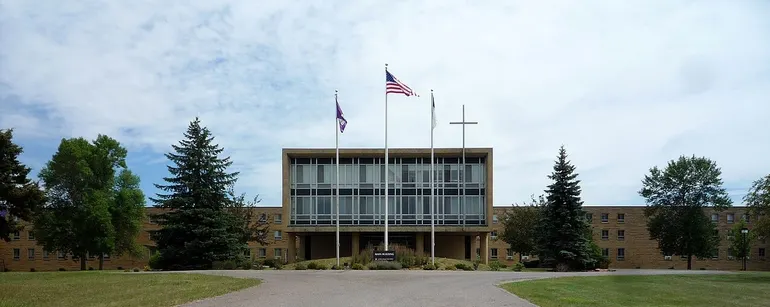
A federal judgeon Friday struck down a Minnesota lawprohibiting colleges that require high school students to sign statements of faith from participating in a state dual enrollment program.
The University of Northwesternand Crown College,two conservativeChristian institutions in Minnesota, sued the state in 2023 over the law which rendered them ineligible to participate in the Postsecondary Enrollment Options program. Both colleges require on-campus students to sign religious conduct agreements.
Siding with the colleges, U.S. District Judge Nancy Brasel ruled that Minnesota’s law infringed on their constitutional rightsby making them choose between participating in the PSEO program and practicing their religion.
Dive Insight:
Since 1985, Minnesota’s PSEO programhas allowed local high school students to earn college credit for nonsectarian coursework at participating colleges. The program is free for eligible students and reimburses collegeswith fixed paymentsper credit hour.
But a 2023 law, passed by the state’sDemocrat-controlled Legislature,prohibited colleges from participating in the program if they require faith statements or make admission decisions based on “race, creed, ethnicity, disability, gender, or sexual orientation or religious beliefs or affiliations.”
The University of Northwestern requires students and employees to sign a pledge to abstain from “same sex romantic intimacy.” And Crown’s student conduct policy does not allowinvolvement or promotion of “any sexual behavior outside the marriage of one man and one woman.”
Both institutions, joined by three parents of high school students,sued the state the same day Democratic Gov. Tim Walz signed the legislation into law.
The Minnesota Department of Education filed counterclaims, arguing that Crown and the University of Northwestern’s admissions policies for the PSEO program are unconstitutional.
Early on in the case, Brasel blocked the state from enforcing the new law, allowing the colleges to continue enrolling PSEO students and earning state funds from the program while the case proceeded. Between the 2017-18 and 2022-23 academic year, the University of Northwestern received over $33.2 million from the program, and Crown received roughly $5.8 million.
In her Friday ruling, Brasel sided with the colleges.
“If the Schools’ eligibility to participate in PSEO is conditioned on not using faith statements as an admissions requirement, their free exercise in maintaining a campus community of like‐minded believers is burdened,” said Brasel, a Trump appointee. Families also lose their right to free exercise of religion if they can’t use the public benefit at “a school of their choice of like‐minded believers,” she said.
The judge further wrote that if the state elects to fund private education, officials cannot disqualify private schools solely because they’re religious.
Brasel also dismissed the state’s counterclaims Friday.
The Minnesota Department of Education did not immediately respond to a request for comment Monday.
The leaders of Crown and the University of Northwestern — Andrew Denton and Corbin Hoornbeek, respectively — celebrated the verdict Saturday.
“This legislation has given us yet another opportunity to affirm our mission; we remain committed to equipping our students to grow intellectually and spiritually to serve effectively in their professions and give God-honoring leadership in the home, church, community, and world,” Hoornbeek said in a statement.
The same day, Denton thanked the legislators who originally opposed the ban and said Crown was grateful for the law’s reversal.
“The court made clear that Minnesota cannot single out high school students who want to attend a faith-centered institution,” he said.
From the start, Na’Siah Martin and H’Sanii Blankenship’s July trip to Washington, D.C., was destined to be a riveting stop on the teenagers’ passage to adulthood. There were the scheduled meetings with lawmakers, the monuments, the reflecting pool near where Martin Luther King Jr. broadcast his dream for racial equality 62 summers ago.
For years, the pair have been involved in the Boys and Girls Clubs of the Austin Area, the revered summer and after-school program that was now making it possible for the two blossoming leaders to meet with Texans in Congress and present their game plan for tackling mental health challenges among student-athletes, a struggle both were deeply familiar with.
But two weeks before their arrival on Capitol Hill, President Donald Trump’s administration threw one of many curveballs lobbed during the first months of his second term. The U.S. Department of Education notified state education officials on the last day of June that it would pause the disbursement of nearly $7 billion in funds for teacher development, support for students learning English, and before- and after-school programs predominantly serving low-income families, pending a review of how schools had put the money to use. That notice went out a day before states expected to begin receiving the money.
For Texas, it meant a potential loss of nearly $670 million. For Martin and Blankenship, it potentially meant losing the Boys and Girls Club, a space that has aided their growth as both leaders and individuals. Martin, 18, graduated from Navarro Early College High School in June and has participated in the club since elementary school. Blankenship, a 17-year-old incoming senior at the same school, has participated in the club for about as long as Martin.
The focus of their trip immediately broadened: They now wanted to convince federal lawmakers that cutting the funds would harm Texas kids.
“These programs aren’t just for fun,” Blankenship said. “They actually give us resources, help us grow into adults instead of just coming here and just goofing around and stuff like that. These programs, they help us cope with things we need to cope with.”
The education funding freeze was typical of the Trump administration. In recent months, it has also cut billions of dollars in food assistance and health care for families in poverty; frozenbillions in grants and contracts financially supporting universities; canceled billions for foreign aid and public broadcasting stations; laid off thousands of employees working in critical federal agencies; and sought to overhaul the U.S. immigration landscape through actions like attempting to end birthright citizenship.
Those cuts and changes have often been sweeping and abrupt, disrupting federally funded services and programs serving large swaths of people of color, people with disabilities, low-income families, LGBTQ+ Americans and immigrants. And they have come at the same time the administration has moved to lower taxes for some of America’s wealthiest households.
“We can’t look at just the cuts to education in isolation,” said Weadé James, senior director of K-12 education policy at the Center for American Progress. “I think what we’re witnessing is really the undoing of a lot of progress, and also actions that are really going to keep a lot of families trapped in cyclical and generational poverty.”
Boys and Girls Club director Jacob Hernandez watches club members play spades at Navarro Early College High School. Credit: Montinique Monroe for The Texas Tribune
Ongoing changes to the country’s educational landscape are only one part of Trump’s larger goals to eliminate what the second-term president has deemed “wasteful” spending and crack down on anything he views as diversity, equity and inclusion initiatives. A large piece of his efforts involve closing the Department of Education and sending “education back to the states,” though most decisions about education and public school funding already happen at the state and local levels.
“Teachers will be unshackled from burdensome regulations and paperwork, empowering them to get back to teaching basic subjects. Taxpayers will no longer be burdened with tens of billions of dollars of waste on progressive social experiments and obsolete programs,” Trump Secretary of Education Linda McMahon said in a statement earlier this year. “K-12 and college students will be relieved of the drudgery caused by administrative burdens—and positioned to achieve success in a future career they love.”
The disarray has resulted in profound consequences for Texas, one of the largest and most diverse states in the nation, home to more than 9,000 school campuses and 5.5 million students — the majority of whom live in low-income households and come from Hispanic and Black families. Public schools serve as a safety net for many of them. They are one of the few places where some children have consistent access to meals, where working-class parents know their kids will be taken care of.
The prospect of federal cuts to school programs triggered a wave of concern across the state. For 44-year-old Clarissa Mendez, it jeopardized the after-school program her two daughters attend while she works as a nurse in Laredo.
“I’m on shaky grounds right now because I don’t know what I’m going to do,” Mendez said last month. “I understand there has to be cuts. I understand the government needs to find out how to save money. But why does it have to affect us and our kids?”
For Gay Hibbitts, a 57-year-old trying to become a certified teacher in rural Throckmorton, the worries began months earlier.
Earlier this year, the federal government cut roughly $400 million from a program that helps teaching candidates like her pay for their education as they gain hands-on classroom experience. That left participating rural districts with one of two options: cover the costs at a time when schools are financially struggling to make ends meet, or get rid of their preparation programs during a teacher shortage.
In both scenarios, Hibbitts said, children would pay the price.
“They’re the main ones that are going to suffer,” she said.
For as long as Martin and Blankenship can remember, they have each helped raise their younger siblings, a responsibility that has been rewarding but stressful. On the one hand, Martin said, her siblings look up to her, and her academic success has motivated them to do well in school. On the other hand, Blankenship said, taking on adult responsibilities at an early age meant missing out on the type of exhilarating childhood experiences many kids desire.
Since joining the Boys and Girls Club, the program has provided them the space to be kids.
They receive tutoring and time to finish homework. They go to live sporting events, watch movies and listen to music — SZA some days, Lauryn Hill on others. They play sports, cards and board games. They can earn scholarships. They find mentorship.
“We’re the future adults, so I feel like if you help us now with programs like this, that make us happy, that give us stress relief, that let us be kids, because we can’t be kids at home, I feel like that’ll equate to happier adults,” Martin said.
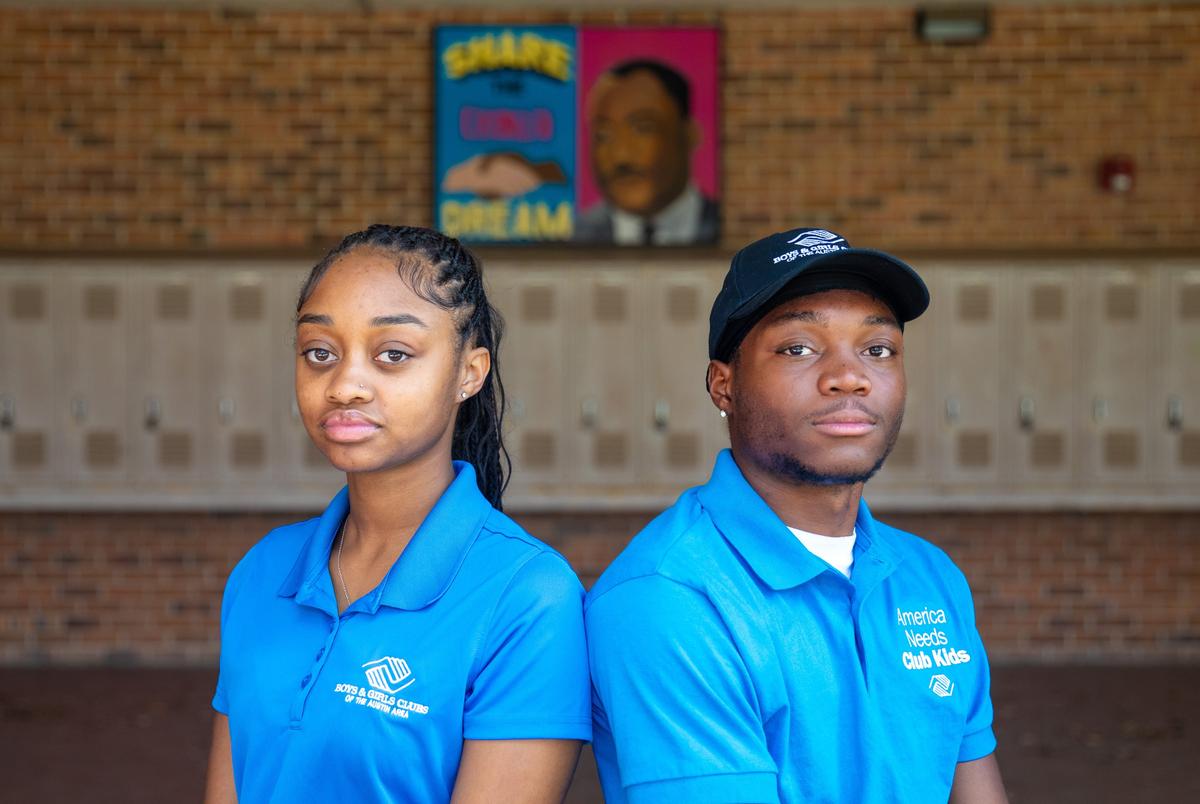
Na’Siah Martin, left, and H’Sanii Blankenship traveled to Washington, D.C., in July and had a chance to discuss with lawmakers the Trump administration’s pause on roughly $7 billion in federal funding, which threatened to shutter the Boys and Girls Club. Credit: Montinique Monroe for The Texas Tribune
Neither Martin nor Blankenship enjoys public speaking. Martin actually fears it. But with the Austin Boys and Girls Club’s future in jeopardy, they decided to lean into the discomfort and use the face time with lawmakers and their staffers to make a case for the after-school program.
The pair and several other clubmates sat down with the staff of Texas Republican Sens. John Cornyn and Ted Cruz. They also met with Rep. Greg Casar, an Austin Democrat. The kids wore blue polo shirts with the words “America Needs Club Kids” etched in white. Martin, rocking a black one-button blazer, led the way.
“I gotta let these people know,” she thought.
Erica Peña is responsible for taking care of about 400 kids as she coordinates Hebbronville Elementary’s summer and after-school programs. Working with an assistant and about 25 paid volunteers, the 37-year-old often stays after hours — sometimes as late as 7 p.m. — depending on when parents can leave work to get there.
Peña breaks the after-school schedule into blocks. The first hour is for tutorials and worksheets, the later hours are usually for more fun activities like arts and crafts, kickball and cooking.
But shortly after the federal education funds were paused, the district notified Peña that it could no longer afford to keep her or the program.
“I cried, to be honest,” Peña said. “I was very upset, because I love my job, I love my students, and a lot of it is about them.”
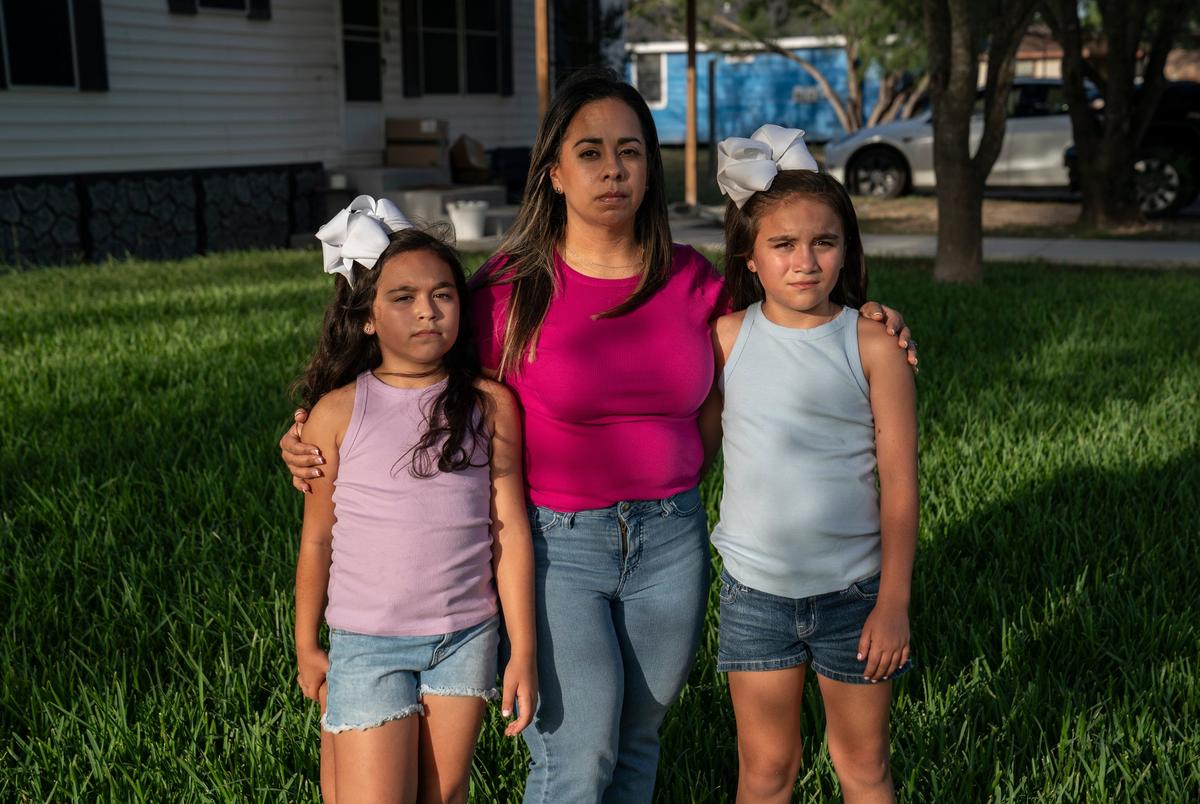
Clarissa Mendez and her daughters Catiana Ester Mendez, left, and Catalaya Avaneh Mendez pose for a photo at their home in Hebbronville on July 30, 2025. Credit: Gabriel V. Cárdenas for The Texas Tribune
Hebbronville, in far South Texas, is home to about 4,300 mostly Hispanic Texans, one-third of whom live below the poverty line. The town has no H-E-B or Walmart. The local health clinic is often busy. The town has a few day care centers, but they can get pricey.
For the average Texas family, child care is financially out of reach. The median annual cost sits at $10,706 a year — or $892 each month. That’s more than one-fourth of the average cost for in-state tuition at a four-year public college, according to the Economic Policy Institute. Access to no-cost options, like the Hebbronville after-school program, has positive effects on student attendance, behavior and learning, multiplestudies have found over the years. Such programs also keep families from having to choose between leaving their children unattended or taking time off work to stay home.
“That has a direct impact on future economic prospects for that entire family,” said Jenna Courtney, CEO of the Texas Partnership for Out of School Time, a youth advocacy organization.
Mendez, the 44-year-old Hebbronville mother with two daughters, commutes about an hour to and from Laredo every weekday to make it to her job as a nurse. She goes in at 9 a.m. and gets out at 5 p.m. Her husband operates heavy equipment and has an unpredictable work schedule.
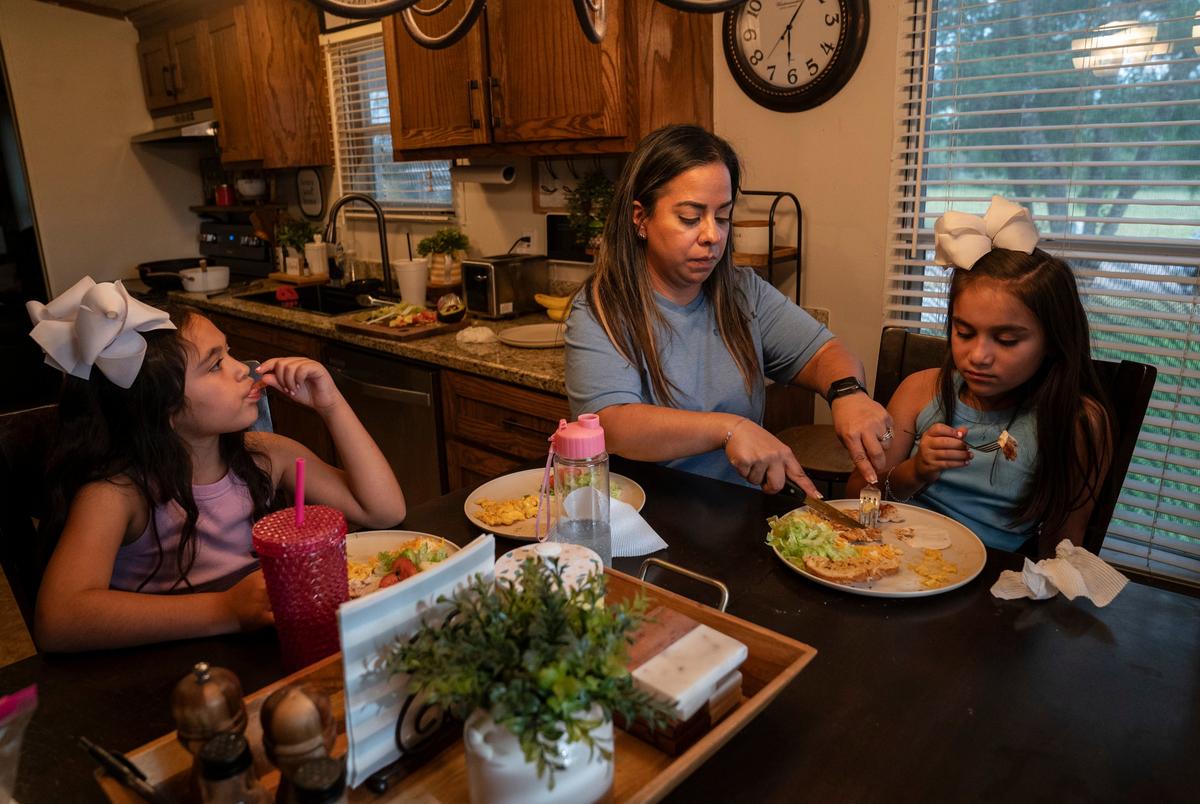
After picking up her daughters, Mendez cooks for them and spends some time with them before she starts working from home for an additional three to four hours. The after-school program Mendez’s daughters attend allows her to save some money on daycare costs. Credit: Gabriel V. Cárdenas for The Texas Tribune
The after-school program “gives me enough time to get to town to pick them up,” she said. But with the district planning to shutter operations, Mendez needed to find care providers who could look after her children until 6-6:30 p.m., when she gets home. She pays about $1,000 a month for that service during the summer when the school program is out of session. It would likely cost her another $800 per month during the academic year.
“That’s a big chunk of our money,” Mendez said.
Without the program, she would need to find a second job.
“We’ll do what we gotta do,” she added. “But I don’t understand.”
Catalaya Avaneh Mendez plays with her sister Catiana Ester Mendez as their mother watches them at her home. The Trump administration recently froze funding that benefits after-school programs, placing financial stress on parents such as the Mendez. They would have to find and pay for daycare for their children if those programs ended. Credit: Gabriel V. Cárdenas for The Texas Tribune
Hibbitts, the 57-year-old from Throckmorton, recently joined a federally funded program that would allow her to support students in her rural hometown between Abilene and Wichita Falls. It places aspiring full-time teachers in classrooms under the supervision of more seasoned teachers and provides financial assistance for their education and living expenses.
In exchange, the district gets to retain educators familiar with the community and eager to teach.
Based on her own experience as a Throckmorton student in the 1970s, Hibbitts knows the monumental role teachers can play in a child’s life.
“They were almost like your second mother,” she said.
Texas has the largest rural population of any state in the country. Of its roughly 5.5 million students, 13% attend class on a rural campus. Those schools often have to educate their students with less: Less access to the internet and technology, less staffing, and less money to pay and retain teachers.
Educator Gay Hibbitts, left, speaks with her mentor, Amy Dick, a secondary social studies teacher, inside a classroom at Throckmorton Collegiate ISD on July 29, 2025. Hibbitts was part of a federally funded educator preparation program serving about 30 participants across 11 rural Texas districts. Credit: Desiree Rios for The Texas Tribune
Texas lawmakers have acknowledged that rural teachers often do not make as much as their urban and suburban counterparts, and that many have left the profession because of a lack of support. Public schools over time have also grown more reliant on hiring unlicensed educators, a trend playing out more profoundly in the rural parts of Texas.
In response, state officials recently passed laws aimed at raising teacher pay, particularly in rural schools, and enhancing teacher preparation programs.
During her first year in the Throckmorton program, Hibbitts learned how to incorporate state learning standards into lesson plans. She learned how to keep students engaged. She helped a child who struggled academically and acted out at the beginning of the school year become a “model student” who thrived in reading by the year’s end.
Then, one Sunday afternoon in April, her superintendent called her.
The Trump administration had abruptly cut the federal dollars that helped schools fund educator preparation initiatives like the one she was participating in. It would affect about 30 people across 11 rural districts in Texas.
Hibbitts was one of them.
Hibbitts participates in a safety training at Throckmorton Collegiate ISD. The funding for Hibbitts’ educator preparation program, which covered her two years of college and training costs, was cut on April 25 under the Trump administration, leaving her uncertain about her future. Credit: Desiree Rios for The Texas Tribune
In Hebbronville, Mendez and Peña each had to confront their own harsh realities. Mendez would have to search for child care in a community with few affordable options. Peña, the after-school program coordinator, would have to find a new job.
In Austin, Martin and Blankenship had trouble picturing life without the Boys and Girls Club.
Club leaders began preparing a memo to notify parents about the funding uncertainty and what it could mean for their kids. Nothing had come of the Republican, Democratic and legal efforts seeking the release of the frozen funds. The Texas kids who spoke with congressional lawmakers and staff at the U.S. Capitol hadn’t heard anything either. When the administration would make a decision about the funds was anyone’s guess.
When Blankenship got the news, he sprinted out of his room in excitement and told his mom. The moment was just as surreal for Martin.
“Knowing that it could have been me, my story, or any other club kids’ story,” Martin said, “it made me happy. But it was like, ‘Dang. I was a part — we were a part of that.’”
Peña, the Hebbronville Elementary program coordinator, was relieved. The mood in her group chat with people from the district’s after-school programs was “pretty ecstatic.” They all cried. Getting the funds meant they no longer had to look for new jobs, and parents like Mendez wouldn’t have to go searching for a place to take care of their kids after school.
Hibbitts is pursuing a bachelor’s degree in general studies with an emphasis in education and a minor in psychology at West Texas A&M. Credit: Desiree Rios for The Texas Tribune
Hibbitts, meanwhile, wasn’t immediately able to bask in the good news, as it did not restore the federal funds for her district’s teacher preparation program. But in early August, her supervisor notified her that the program was officially back up and running for the 2025-26 school year. The news cleared the way for the 57-year-old to graduate at the end of the year and to start teaching full time by the next.
“This has been life changing for somebody of my age, to be able to step up and to step into the world of education,” Hibbitts said. “I’m finishing my dream. And as my kids like to say, ‘Mom, you’re going to be 58 years old walking the stage.’”
Still, she recognizes that so much uncertainty around federal funding means there is no guarantee others will get the same chance.
Uncertainty is what Peña also keeps coming back to.
“It just gets me upset with the administration, because, why? What was the purpose of the freeze? Why did you do that? You’re hurting people, not just adults, but children,” Peña said. “It’s like in a divorce, you don’t want to put the children in the middle. If something were to happen between parents, you never put children in the middle. And by doing that, you put children in the middle.”
This article originally appeared in The Texas Tribune, a member-supported, nonpartisan newsroom informing and engaging Texans on state politics and policy. Learn more at texastribune.org.
More UChicago programs are pausing new Ph.D. admissions for the 2026-27 academic year.
Jacek Boczarski/Anadolu/Getty Images
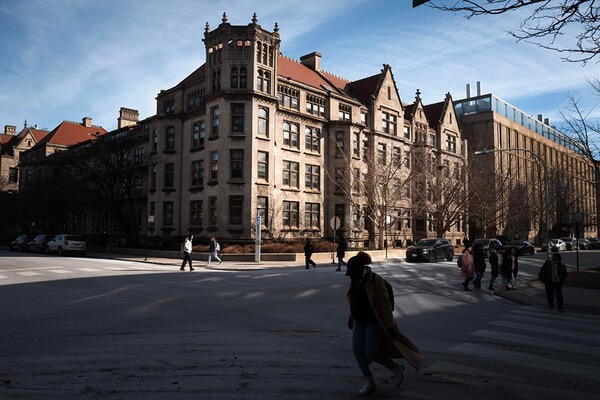
The University of Chicago’s Arts and Humanities Division is now pausing new Ph.D. student admissions for the 2026–27 academic year across all departments except philosophy and one program within the music department. The move expands on last week’s announcement from the dean that about half of all departments would pause admissions, while the rest would reduce the number of admissions.
The departments that won’t be accepting Ph.D. students now include art history, cinema and media studies, classics, comparative literature, East Asian languages and civilizations, English language and literature, Germanic studies, linguistics, Middle Eastern studies, Romance languages and literatures, Slavic languages and literatures, and South Asian languages and civilizations, plus the music department’s ethnomusicology and history and theory of music programs.
The Social Sciences Division has also announced it will not admit Ph.D. students into four programs in 2026-27: anthropology, political economy, social thought, and conceptual and historical studies of science. The UChicago Crown Family School of Social Work, Policy and Practice had earlierannounced it was pausing Ph.D. admissions and the Harris School of Public Policy said it was pausing admissions for the Harris Ph.D. (in public policy studies), the political economy Ph.D. and the master of arts in public policy with certificate in research methods.
The announcements reflect how the deeply indebted university is responding to budget issues. But UChicago is just one of multiple highly selective universities—including Boston University and the University of Pennsylvania—that have announced over the past year that they were freezing or scaling back Ph.D. admissions and programs amid financial pressures and other factors.
UChicago had formed committees of faculty and staff to plan over the summer for changes within the Arts and Humanities Division. But on Aug. 12, division dean Deborah Nelson announced the initial pause, stressing that “this decision is not the recommendation of any committee.”
Then on Wednesday, Nelson wrote a new email, obtained by Inside Higher Ed, announcing a revised plan “based on the strong recommendation of the PhD committee and department chairs.”
“After the announcement last week, I met with all department chairs and consulted with the faculty-led committee on PhD programs,” Nelson wrote. “Nearly all faculty leadership agreed that instead of admitting students to only a select number of departments, they preferred a broader pause for the division so we can spend time this coming year to collectively assess and better navigate the challenges we face.”
A department chair who asked not to be named confirmed to Inside Higher Ed that chairs met with the dean last Friday to discussthe pause, and most department chairs agreed it should be appliedthroughout the division to allow for more collaborative work during the academic year on the future of Ph.D. education at UChicago.
Nelson also wrote in her Wednesday email that she “heard from many faculty that the initial decision caught them off guard. The timing of my initial announcement about PhD cohorts was partly driven by deadlines to submit information to software platforms that would have made semi-public our decisions to open or close applications to programs. And I wanted to make sure our community knew about these decisions first.”
In an email, a university spokesperson simply said, “As Dean Nelson noted in her email, the decision to revise the plan for PhD admissions in the Arts & Humanities Division for academic year 2026-27 was based on the strong recommendation of the PhD committee and department chairs. Crown, Harris and SSD have also made announcements regarding pauses in PhD admissions for the 2026-2027 academic year.”
Clifford Ando, the Robert O. Anderson Distinguished Service Professor of Classics, History and the College, told Inside Higher Ed Thursday that “we easily have the resources to support the humanities without inflicting cuts disproportionate to the humanities’ role in creating the financial crisis.”
“We are in the unique position of being a well-resourced university that has been so reckless with our resources that we now have to make decisions as if we were a poor one,” Ando said.
The University of Chicago’s Arts and Humanities Division is reducing how many new Ph.D. students it admits for the 2026–27 academic year across about half of its departments and completely halting Ph.D. admissions elsewhere. Multiple language programs are among those affected.
In a Tuesday email that Inside Higher Ed obtained, Arts and Humanities dean Deborah Nelson told faculty, staff and Ph.D. students, “We will accept a smaller overall Ph.D. cohort across seven departments: Art History, Cinema and Media Studies, East Asian Languages and Civilizations, English Language and Literature, Linguistics, Music (composition), and Philosophy.” The university didn’t tell Inside Higher Ed how many fewer Ph.D. students would be accepted across those departments.
“Other departments will pause admissions,” Nelson wrote.
Andrew Ollett, an associate professor of South Asian languages and civilizations, said that means no new Ph.D. students for these departments: classics, comparative literature, Germanic studies, Middle Eastern studies, Romance languages and literatures, Slavic languages and literatures, and South Asian languages and civilizations, plus the ethnomusicology and history and theory of music programs in the music department.
While the university didn’t provide an interview or respond to multiple written questions, a spokesperson did point out that the UChicago Crown Family School of Social Work, Policy and Practice is also pausing Ph.D. admissions, while the Harris School of Public Policy is pausing admissions for the Harris Ph.D., the political economy Ph.D. and the master of arts in public policy with certificate in research methods.
“A small number of PhD and master’s programs at the University of Chicago will pause admissions for the 2026–2027 academic year while divisions and schools undertake comprehensive reviews of the programs’ missions and structures,” UChicago said in a statement. It said the aim is “ensuring the highest-quality training for the next generation of scholars” and the pauses “will not affect currently enrolled students.”
UChicago, which faces debt issues, has become yet another example of well-known universities freezing or scaling back Ph.D. admissions and programs amid financial pressures and other factors. In November, before Trump retook the presidency, Boston University said it was pausing accepting new Ph.D. students in a dozen humanities and social sciences programs, including philosophy, English and history. In February, the Universities of Pennsylvania and Pittsburgh announced pauses, following other institutions.
But UChicago’s reductions for language programs also reflect a broader trend of universities scaling back foreign language education offerings. In 2023, West Virginia University became infamous in academe for its leaders’ decision to eliminate all foreign language degrees.
“It’s sad and pathetic,” Ollett said of the pause at UChicago, “because it represents the domination of one set of values, which is money, over the values that we say that we are pursuing in our lives as faculty members, as educators and as researchers.”
He argued that the university can’t say it’s committed to the humanities as a field for producing knowledge while turning away from Ph.D. programs.
Nelson’s email said, “This one-time decision applies only to the 2026–2027 academic year.” But Clifford Ando, the Robert O. Anderson Distinguished Service Professor of Classics, History and the College, questioned whether this is just a pause.
“I see no reason to think that we would resume doctoral education if we are simultaneously dismantling the curricula that sustain undergraduate training in these fields,” Ando wrote in an email sent to a classical studies Listserv. “Why would one have a doctoral program in a discipline that undergraduates can’t even study?”
Ollett also said this comes as Nelson has pushed to consolidate smaller departments. He said a big question for the coming academic year was “Do we do Ph.D. admissions if we’re not sure that our department is going to exist?”
Not Rule by Committee
Ando provided Inside Higher Ed the “charge” UChicago gave to the Arts and Humanities Languages Working Group on June 17.
“UChicago is known as a global leader in the instruction of ancient and modern languages,” the charge begins. “Language instruction and expertise is not simply a valuable object in its own right; it is an important foundation for the larger UChicago College education, for graduate education, and for the research and scholarship of our faculty.”
But it then says, “language instruction at this extraordinary scope is also expensive.” It listed several questions for the committee to explore, including:
“Should there be a universal or suggested minimum number of students?
“Do we need to teach every class every year?
“Are there languages we no longer need to teach?
“Are there opportunities for partnerships with peer institutions (with similar standards and schedules) to share language instruction?
“How can we use technology more effectively to support and enhance language instruction?”
Ollett said, “We teach more than 50 languages in the division, which seems to be too much because the committee was asked to find ways of getting that number down.”
Tyler Williams, another associate professor in the South Asian languages and civilizations department and a member of the committee, said the committee members “unanimously declined to endorse any of the suggestions about cutting languages or outsourcing language teaching.” He said Nelson “did not wait for the committee to submit its report,” nor did she “consult with that committee before she made this decision.”
Ando also provided the charge for a separate Ph.D. Working Group, which outlined a number of “existential challenges” for Ph.D. programs. Those include significantly reduced demand for entry-level faculty, increasing costs for the university and long times to degree, which can deter students.
Additionally, the document notes that the programs are facing “heightened public skepticism about the value of what is taught in Arts & Humanities PhD programs, and how it is taught. Yet Ph.D. programs remain a critical part of the research university model, necessary to teaching, research, scholarship, and creativity.”
Among other questions, that committee was asked to explore whether there should be a minimum size for Ph.D. cohorts in order to offer a program.
Williams said that this committee indicated it wasn’t going to endorse an admissions pause, but said it should be divisionwide if it occurred.
Nelson’s email announcing the changes stressed that “this decision is not the recommendation of any committee.”
Williams said the Ph.D. admissions cuts are part of “a crisis manufactured by the university administration itself.” Ollett said he worries for the future of their field.
“We are quite unique in that there’s not a lot of South Asia area studies departments in the United States, and especially ones that train the next generation of scholars,” he said. He said he’s “already turned away prospective Ph.D. students because of this, and that’s just going to keep happening.”
He said he worries that “if we’re not doing it, no one will do it, and the field will wither and die.”
Stakeholders warn that the funding cuts will probably result in furloughs, redundancies or – in the worst cases – organisations being forced to close.
The move comes after months of policy turmoil in the US, as the Trump administration wages war on international education.
Experts question the legality of the move as a campaign is launched to save State Department international exchange programs.
State Department regional bureaus were informed of the cuts on August 13, via internal communications stating that government officials would work with them to “pull down” the affected programs “with the least possible disruption”.
The directive explained that the programs “were lower funding priorities in the current fiscal environment, so they are being removed from FY25 Funding”, according to communications from the Bureau of Educational and Cultural Affair (ECA).
“It’s an existential crisis for these programs and possibly for ECA,” said Mark Overmann, executive director of the Alliance for International Exchange – whose members make up 13 of the impacted programs, facing cuts of $85m.
According to Overmann, the 22 programs were all due to be renewed and were expecting to receive FY25 funds before September. Now, they will no longer be allowed to go through their awards process or renewal, and thus will be terminated.
“These organisations will now suddenly lose funding they’ve long anticipated and been promised, and this will likely result in furloughs, layoffs, and even organisational closures,” warned Overmann.
“Cancelling $100 million in programs which impact 10,000 students is devastating on many levels,” Bill Gertz, chairman of American Institute for Foreign Study (AIFS) told The PIE News.
“It means students’ plans and dreams are impacted… it means layoffs and financial disruption at the many fine cultural exchange organisations,” added Gertz, who sponsors the YES Abroad program which has been cancelled.
“These folks have worked tirelessly to make the world a better place,” he said.
Typically, the State Department’s funding process would be in full swing in the spring and summer, though this year has been plagued by delays and uncertainty for program organisers and students alike.
Following the lifting of the State Department’s funding freeze this March, stakeholders have been concerned about the lack of movement on the ECA’s FY25 funding process, which has caused delays in the opening of applications and interfered with students’ plans.
According to a former staff member of the Republican Senate Foreign Relations Committee: “The variety of programs impacted are too broad to point to a single issue or justification – everything from community colleges to disability and education exchanges.”
They warned that the cuts would isolate the US in the long term, raising particular concerns about the discontinuation of the Kennedy-Lugar Youth Exchange and Study (YES) Program.
This initiative “was created after 9/11 specifically to bring young people from predominantly Muslim countries to the US to build long-standing relationships with communities and individuals who might not otherwise every get to see our nation in anything other than filtered news and anti-US social media,” they explained.
The value of study abroad for US soft power and public diplomacy was echoed by Gertz, who said the cuts came “at a time in our history when cultural understanding is needed the most”.
If OMB is allowed to cut these Congressionally appropriated FY25 awards, it will give them license to do it again and again, opening the door to effectively eliminate international exchange programs
Mark Overmann, Alliance for International Exchange
Beyond the programs, their participants, alumni and staff, the move raises alarm bells about the White House’s ability to cut congressionally appropriated grants.
Historically, Congress has approved ECA awards, but this year the Office of Management and Budget (OMB) inserted itself “irregularly” into the process to stop congressionally approved funds from being spent, said stakeholders.
According to Overmann, the move could be illegal, with Gertz also stating it was unconstitutional for OMB to override Congress in such a way.
“OMB found a way to use a small, previously arcane piece of administration process to stop ECA program awards from moving forward,” Overmann explained, leading to the defunding and termination of 22 cultural exchange programs.
“If OMB is allowed to cut these Congressionally appropriated FY25 awards, it will give them license to do it again and again, opening the door to effectively eliminate international exchange programs,” Overmann warned.
The cancellations have shocked the US study abroad community, which recently received a vote of confidence in Congress, which drastically reduced the planned cuts for study abroad in the FY2026 budget.
“We believe we have the support of the majority of Americans who have supported our efforts for decades,” said Gertz. ” We are actively engaged with Congress on the future of ECA programs.
Sector leaders have already kicked into action, warning that the elimination of funding would “greatly damage 75+ years of exchange activity and the legacy of Senator Fulbright. It would destroy many of our programs and much of our work,” said Overmann.
The Alliance today launched a campaign to save State Department international exchange programs, urging stakeholders to write to members of Congress.
The State Department has not issued a formal announcement or replied to The PIE’s requests for comment.
It appears that the following programs are impacted, though the list may not be exhaustive:
Community College Administrator Program (CCAP)
Community College Initiative Program (CCI)
Community Engagement Exchange (CEE, Leahy Initiative on Civil Society)
Council of American Overseas Research Centers
English Access Scholarship Program
English Language Fellow Program
Global Undergraduate Exchange Program
IDEAS Program
International Center for Middle Eastern-Western Dialogue (Hollings Center)
Kennedy-Lugar Youth Exchange and Study (YES) and YES Abroad Program
Leaders Lead On-Demand
Mandela Washington Fellowship for Young African Leaders
Mike Mansfield Fellowship Program
National Clearinghouse for Disability and Exchange (NCDE)
Professional Fellows Program
Survey of International Educational Exchange Activity (IEEA) in the United States
TechWomen
The J. Christopher Stevens Virtual Exchange Initiative
U.S. Congress-Korea National Assembly Exchange Program
U.S.-South Pacific Scholarship Program (USSP)
Young Southeast Asian Leaders Initiative (YSEALI) Academic Fellowship
Young Southeast Asian Leaders Initiative (YSEALI) Professional Fellowship Program (PFP)
As a first-year student at Emory University, Leia Marshall walked into the Pathways Center to receive advice on her career goals.
She was a neuroscience and behavioral biology major who thought she might go to medical school. But after meeting with a peer mentor, Marshall realized she was more interested in optometry. “I didn’t really know a lot about the prehealth track. I didn’t really know if I wanted to do medicine at all,” she said. “Getting to speak to a peer mentor really affected the way that I saw my trajectory through my time at Emory and onwards.”
Emory opened the Pathways Center in August 2022, uniting five different student-facing offices: career services, prehealth advising, undergraduate research, national scholarships and fellowships, and experiential learning, said Branden Grimmett, associate dean of the center.
“It brings together what were existing functions but are now streamlined to make it easier for students to access,” Grimmett said.
The pre–health science peer mentor program engages hundreds of students each year through office hours, advising appointments, club events and other engagements, helping undergraduates navigate their time at Emory and beyond in health science programs.
The background: Prehealth advising has been a fixture at Emory for 20 years, led by a team of staff advisers and 30 peer mentors. The office helps students know the options available to them within health professions and that they’re meeting degree requirements to enter these programs. A majority of Emory’s prehealth majors are considering medicine, but others hope to study veterinary medicine, dentistry or optometry, like Marshall.
How it works: The pre–health science mentors are paid student employees, earning approximately $15 an hour. The ideal applicant is a rising junior or senior who has a passion for helping others, Grimmett said.
Mentors also serve on one of four subcommittees—connect, prepare, explore and apply—representing different phases of the graduate school process.
Mentors are recruited for the role in the spring and complete a written application as well as an interview process. Once hired, students participate in a daylong training alongside other student employees in the Pathways Center. Mentors also receive touch-up training in monthly team meetings with their supervisors, Grimmett said.
Peer mentors host office hours in the Pathways Center and advertise their services through digital marketing, including a dedicated Instagram account and weekly newsletter.
Peer-to-peer engagement: Marshall became a peer mentor her junior year and is giving the same advice and support to her classmates that she received. In a typical day, she said she’ll host office hours, meeting with dozens of students and offering insight, resources and advice.
“Sometimes students are coming in looking for general advice on their schedule for the year or what classes to take,” she said. “A lot of the time, we have students come in and ask about how to get involved with research or find clinical opportunities in Atlanta or on campus, so it really ranges and varies.”
Sometimes Marshall’s job is just to be there for the student and listen to their concerns.
“Once I met with a student who came in and she was really nervous about this feeling that she wasn’t doing enough,” Marshall said. “There’s this kind of impostor phenomenon that you’re not involved in enough extracurriculars, you’re not doing enough to set you up for success.”
Marshall is able to relate to these students and help them reflect on their experiences.
“That’s been one of my favorite parts of being a peer mentor: getting to help students recognize their strengths and guide them through things that I’ve been through myself,” she said.
In addition to assisting their classmates, peer mentors walk away with résumé experience and better career discernment, Grimmett said. “Often our students learn a lot about their own path as they’re in dialogue with other students. It’s a full circle for many of our peer mentors.”
“It’s funny to think about the fact that our role is to help others, but it really helps all of us as peer mentors as well,” Marshall said. “We learn to connect with a variety of students, and I think it’s been really valuable for me to connect with the advisers myself and get to know them better.”
If your student success program has a unique feature or twist, we’d like to know about it. Click here to submit.
This article has been updated to correct the spelling of Branden Grimmett’s name.
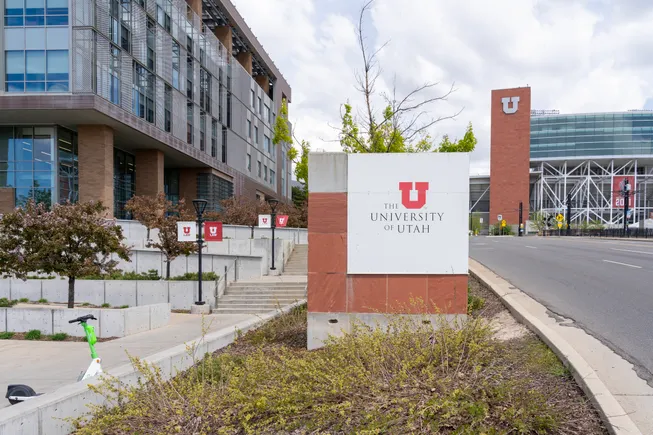
The University of Utah’s trustee board approved plans Tuesday to discontinue 81 courses and degree programs in response to a new state law ordering public colleges to cut funding for certain academic offerings and administrative functions and invest in high-demand fields.
The programs up for elimination range from a bachelor’s in chemistry teaching to a Ph.D. in theater. Most of them are graduate programs, and about one-quarter are in the university’s humanities college. The programs can be discontinued once the Utah System of Higher Education and state lawmakers sign off on the plan, according to a Tuesday announcement from the university.
Each of the programs graduated at most one student over the past eight years, Richard Preiss, president of the university’s Academic Senate, said in a July 22 letter to the board.Students in affected programs will either be given pathways to complete their studies or referred to “academically appropriate alternatives,” the university said.
Dive Insight:
Earlier this year, Utah lawmakers cut 10% from the instruction budgets for each of the state’s eight public colleges, The Salt Lake Tribune reported. The cuts amounted to $60.5 million, with University of Utah facing the largest budget reduction of $19.6 million.
To reclaim the funding, the legislation orders colleges to craft three-year plans for cutting certain academic programs and administrative expenses and redirecting the money to high-demand programs.
In guidance released earlier this year, the Utah System of Higher Education said the funds could be reinvested in programs that meet the state’s workforce needs, lead to high-wage careers, teach students “durable skills” such as critical thinking and problem-solving, or focus on services to increase student retention.
The law came on the heels of a 2024 legislative audit that said the state’s public universities were losing students to “private non-traditional” colleges, such as Western Governors University, a large online institution. The audit also found that university leaders largely weren’t able to calculate program-level data about costs, enrollment and completion rates.
“Because institutions currently lack metrics required to calculate program-level efficiencies — including returns on investment — presidents are unable to fully understand the degree to which programs maximize their use of student and taxpayer resources,” the audit stated.
The University of Utah submitted a draft of its three-year plan to the state’s higher education board in May.
Under the plan, the university said it would cut $7.5 million from its fiscal 2026 budget— including reductions in academic support services and administrative costs — and reallocate that money to instruction aligned with the state’s workforce needs.
The university said it plans to devote more money to instruction in engineering, artificial intelligence, nursing, biotechnology and behavioral health, as well as to provide more support for general education about civic engagement.
Utah lawmakers aren’t the only ones ordering public colleges to shed certain programs. Six of Indiana’s public institutions are moving to either cut or consolidate over 400 programs to comply with a new state law aiming to end academic offerings that award low numbers of degrees.
The impacted programs account for 19% of all degree offerings at Indiana’s public colleges.
This audio is auto-generated. Please let us know if you have feedback.
The Trump administration will release the remaining fiscal year 2025 K-12 grant funds that it had frozen — nearly $5 billion — to states and districts, the Office of Management and Budget confirmed Friday.
The funding for student academic supports, English learners, immigrant students and teacher training was supposed to be available July 1, but was not released pending a “programmatic review” by OMB, the White House’s budget arm.
That review was to ensure the grants align with Trump administration policies and priorities, OMB told K-12 Dive earlier this month. The office had said initial findings showed “many of these grant programs have been grossly misused to subsidize a radical leftwing agenda.”
On Friday, a senior administration official told K-12 Dive in an email, “Guardrails are in place to ensure these funds will not be used in violation of Executive Orders or administration policy.”
Earlier this week, OMB began releasing $1.3 billion it had withheld for after-school and summer programming under the 21st Century Community Learning Centers grant, according to the Afterschool Alliance.
The remaining funds to be released are:
$2.2 billion for Title II-A for professional development.
$1.4 billion for Title IV-A for student support and academic enrichment.
$890 million for Title III-A for English-learner services.
$375 million for Title I-C for migrant education.
Education officials, Republican and Democratic lawmakers, education organizations, parents and nonprofits had all urged OMB to release the funds that were approved by Congress in an appropriations bill that President Donald Trump signed in March. They said the weekslong delay in accessing the money was already causing “budgetary chaos” for schools, which began cancelling contracts, laying off staff and eliminating programs when the funds didn’t arrive as scheduled.
A survey by AASA, the School Superintendents Association, found that nearly 30% of districts said they needed access to the withheld funds by Aug. 1 to avoid cutting programs and services for students. By Aug. 15, survey respondents said they would have to notify parents and educators about the loss of programs and services. The survey was conducted earlier this month and drew responses from 628 superintendents in 43 states.
On Friday, David Schuler, AASA’s executive director, said in a statement that he was pleased the “critical” funds would now be available to schools.
Sen Patty Murray, D-Wash., vice chair of the Senate Appropriations Committee, said in a statement Friday, “There is no good reason for the chaos and stress this president has inflicted on students, teachers, and parents across America for the last month, and it shouldn’t take widespread blowback for this administration to do its job and simply get the funding out the door that Congress has delivered to help students.”
Randi Weingarten, president of the American Federation of Teachers, addressed the news during a keynote speech Friday at the Together Educating America’s Children conference in Washington, D.C., according to a press release.
“Today, they backed down: our lobbying, our lawsuits, and our advocacy for why these funds matter to kids, it worked.” Weingarten said.
Becky Pringle, president of the National Education Association, said in a Friday statement, “These reckless funding delays have undermined planning, staffing, and support services at a time when schools should be focused on preparing students for success.”
Twenty states and the District of Columbia sued the Trump administration Monday afternoon, challenging the administration’s decision earlier this month to restrict publicly funded programs — including those related to education — based on immigration status.
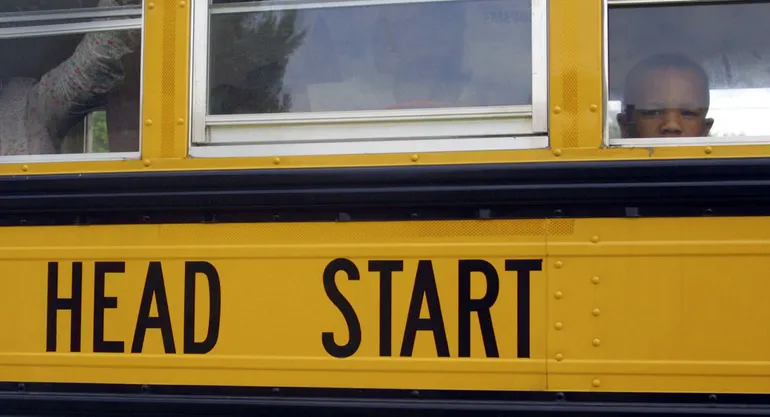
The lawsuit, led by New York, argues that the restrictions to previously inclusive programs like Head Start will hurt low-income families and lead to the “collapse of some of the nation’s most vital public programs.”
Seeking to block the changes in the short and long term, the states allege the U.S. Department of Education and three other federal agencies did not follow the required rulemaking process in issuing new immigration verification requirements.
Dive Insight:
In July 10 announcements, the Education Department said it will require immigration status verification for adult education services like dual enrollment and career training programs, while the U.S. Department of Health and Human Services mandated such verification for participation in Head Start programs.
HHS said at the time that Head Start would be “reserved for American citizens from now on.″ An HHS spokesperson clarified to K-12 Dive on July 10 that children of green card holders will remain eligible for the program and said Head Start agencies will determine eligibility based on the immigration status of the child. Head Start has heretofore been open to any child eligible based on their age or their family’s low-income status, regardless of immigration status.
However, the lawsuit filed Monday alleges that the policy changes will impact not only undocumented immigrants, but also people holding legal status, such as temporary workers, exchange visitors and those with student visas. The suit was filed in federal district court in the U.S. District Court for the District of Rhode Island.
The state attorneys general filing the lawsuit also warned that even U.S. citizens and lawful residents could be denied services, since many low-income individuals lack government-issued identification.
“For decades, states like New York have built health, education, and family support systems that serve anyone in need,” said New York Attorney General Letitia James in a press statement on Monday. “Now, the federal government is pulling that foundation out from under us overnight, jeopardizing cancer screenings, early childhood education, primary care, and so much more.”
James and the coalition filing the lawsuit said the policies are already “causing significant disruption” as state programs are expected to comply immediately without the infrastructure they say is necessary to do so.
“Some longstanding providers, including those serving children, pregnant patients, refugees, and other vulnerable populations, will not be able to comply under any timeline and are already facing the risk of closure,” James’ statement said.
These changes have alarmed civil rights advocates — who say the changes will harm the very low-income children Head Start is intended to serve. The National Head Start Association, which represents Head Start workers, meanwhile, has said the Head Start Act has never required them to check the citizenship or immigration status of children prior to their enrollment in the 60 years of the program’s existence.
Upon release of the policy change on July 10, the American Civil Liberties Union immediately threatened to expand an existing lawsuit over the Trump administration’s actions vis-a-vis Head Start to include “this new attack on Head Start.” In April, the ACLU filed a lawsuit challenging the administration’s moves to gut Head Start by shuttering half of the regional Office of Head Start offices and laying off much of the federal offices’ staff.
Plaintiffs in that lawsuit, filed in U.S. District Court in Washington state, include parent groups and the Head Start associations of Washington, Illinois, Pennsylvania and Wisconsin.
“Implementation of this directive will create fear and confusion for immigrant families about enrolling their children in Head Start regardless of what their legal status may be. This will harm children and destabilize Head Start programs,” said Lori Rifkin, litigation director at the Impact Fund, in a statement on July 10. The Impact Fund, a public interest law group, is representing plaintiffs in the Head Start lawsuit alongside ACLU.
“If the administration moves forward with publication of this notice, we will take legal action,” RIfkin said at the time.
The Department of Education has not specified an implementation date for the new restrictions, but has said it “generally” wouldn’t be enforcing them before Aug. 9. HHS said its changes were effective immediately in its July 10 announcement.
This audio is auto-generated. Please let us know if you have feedback.
Dive Brief:
Management of key federal workforce development programs will begin shifting from the U.S. Department of Education to the U.S. Department of Labor under an interagency agreement signed in May, according to a joint announcement by the agencies Tuesday.
Adult education and family literacy programs under Title II of the Workforce Innovation and Opportunity Act and career and technical education programs under the Carl D. Perkins Career and Technical Education Act will be managed by the Labor Department alongside Education Department staff, according to the agencies.
Tuesday’s announcement comes just one day after the U.S. Supreme Court stayed an injunction in McMahon v. New York, granting the Education Department the ability to move forward with a sweeping reduction in force. That decision meant the workforce development interagency agreement with the Labor Department could go forward.
Dive Insight:
Under the May 21 interagency agreement behind the workforce development partnership, the Labor Department will take on daily administration of the programs. The Education Department will continue statutory responsibilities, policy authority and program oversight.
While the interagency agreement was stalled in court, leading organizations for CTE directors and professionals raised concerns over the contract. Advance CTE and the Association for Career and Technical Education predicted “far-reaching negative impacts on CTE programs and learners across the country” in a June 11 joint statement, adding that the agreement “directly circumvents existing statutory requirements” under the Perkins Act.
These programs, the organizations said, “are not merely job training programs; these programs are comprehensive educational and career preparation programs that prepare secondary and postsecondary learners for lifelong success by connecting academic and technical learning with the real world skills that learners need to thrive.”
The agreement, however, is in line with President Donald Trump’s April executive order, “Preparing Americans for High-Paying Skilled Trade Jobs of the Future. That order called, in part, for the secretaries of labor, commerce and education to find opportunities to integrate systems and realign resources to address critical workforce needs and in-demand skills in emerging industries, identify ineffective federal workforce development and education programs, and streamline information collection.
“The current structure with various federal agencies each managing pieces of the federal workforce portfolio is inefficient and duplicative. Support from the Department of Labor in administering the Department of Education’s workforce programs is a commonsense step in streamlining these programs to better serve students, families, and educators,” said U.S. Education Secretary Linda McMahon in a Tuesday statement.