Tag: Programs

  • A lot of hope was pinned on after-school programs — now some are shutting their doors

    A lot of hope was pinned on after-school programs — now some are shutting their doors

    CLEVELAND — In a public school cafeteria here, 6- and 7-year olds were taking turns sketching their ideas for a building made of toothpicks and gummy bears. Their task: to design a structure strong enough to support a single subject notebook.

    It was a challenge meant to test their abilities to plan ahead, work as a team and overcome setbacks. But first, they had to resist the urge to eat the building materials.

    Zayden Barnes, a first grader at Clara E. Westropp School of the Arts, picked up a blue gummy bear and sniffed it. “That smells good,” he said, licking his lips.

    Mia Navarro, another first grader, held a green gummy bear to her nose and inhaled deeply. “I can’t stop smelling them!” she exclaimed. “I just want to eat it, but I can’t!”

    The lesson in engineering and self-control was part of an after-school program run by the nonprofit Horizon Education Centers. It’s one of a dwindling number of after-school options in a city with one of the highest child poverty rates of any large urban area in the country.

    Last year, Horizon and other nonprofit after-school providers reached more than 7,000 students in Cleveland public schools, buoyed by $17 million in pandemic recovery aid. But when the money ran out at the end of that school year, nonprofits here had to drop sites, shed staff and shrink enrollment. Horizon, which was in five public schools last year, is now in just one.

    Similar setbacks can be seen across the country, as after-school programs struggle to replace billions in federal relief money. While a few states are helping to fill the gap, Ohio isn’t among them. And many providers fear more cuts are coming, as the Trump administration continues its campaign to slash government spending and end “equity-related” grants and contracts.

    The after-school sector plays a critical role in the nation’s economy, providing close to 8 million students, or nearly 14 percent of all school-aged children, with a safe place to go while their parents work. It offers homework help, enriching activities, healthy snacks and physical exercise — often for a fee, but sometimes for free.

    Related: A lot goes on in classrooms from kindergarten to high school. Keep up with our free weekly newsletter on K-12 education.

    Done well, after-school programs can strengthen students’ social and emotional skills, increase their engagement with and attendance in school, and reduce their risk of substance abuse or criminal activity. In some cases, they can help improve grades and test scores, too.

    Yet the sector, which has existed for more than 100 years, has long been hobbled by inadequate funding, staffing shortages and uneven quality. There are long waitlists for many programs, and low-income families often struggle to find affordable options.

    In a recent survey by the nonprofit Afterschool Alliance, more than 80 percent of program leaders said they were concerned about their program’s future, and more than 40 percent said they worried they’d have to close permanently.

    “The state of afterschool in America feels very grim,” said Alison Black, executive director of the Cleveland affiliate of America Scores, a nonprofit that teaches soccer and poetry to students in 13 cities across North America.

    Students build a gummy bear structure in an after-school program run by Horizon Education Centers, in Cleveland. Credit: Grace McConnell for The Hechinger Report

    After-school programs emerged in the second half of the 19th century, in philanthropic settlement houses that provided English courses and health care to the children of immigrants, according to a Rand Corporation report. They multiplied after Congress passed child labor laws in the 1930s, and again during World War II, when women entered the workforce in large numbers.

    In those early days, the programs functioned mostly as child care, offering a solution to the problem of the “latchkey kid.” But they began to take on a broader role in the 1960s, when the programs started to be seen as a way to both reduce youth crime and provide kids with positive role models, according to Rand.

    In the 1980s and 1990s, policymakers and funders began demanding that after-school programs play a part in closing the academic gaps between wealthier and poorer kids. High-poverty schools began setting aside some of their Title I funds to provide after-school programs.

    But it wasn’t until 1998 that the federal government offered targeted support to after-school programs, in the form of competitive grants awarded by the states through the newly created 21st Century Community Learning Centers Program. The first year, Congress appropriated $40 million for the program; by 2002, that number had swelled to $1 billion.

    Today, the after-school sector is made up of a mix of programs providing academic support, enrichment (sports, theater and the like) or some combination. Their goals and funding streams vary, from public dollars to philanthropic and corporate gifts. Many survive by stitching together multiple sources of funding.

    The 21st Century program remains the only dedicated federal funding stream for after-school and summer learning, providing $1.3 billion in support to 10,000 centers serving close to a fifth of students in 2023.

    Related: One of the poorest cities in America was succeeding in an education turnaround. Is that now in peril?

    After-school programs are popular among parents, and demand for slots far exceeds the supply. For every child in an after-school program, there are three more who would participate if an affordable, accessible option was available to their families, according to surveys by the Afterschool Alliance.

    Gina Warner, CEO of the National Afterschool Association, says afterschool is a space where kids can try new things and take risks they wouldn’t take at school, where the stakes are higher. “Afterschool is still a place where kids can fail” without consequence, she said.

    The programs also connect students with positive adult role models who aren’t their teachers or caregivers, said Jodi Grant, executive director of the Afterschool Alliance. “Our biggest strength, when it gets down to it, is relationships,” Grant said.

    But sustaining those connections can be difficult in a sector with low pay and limited opportunities for advancement. Turnover rates are high, and when staff don’t stick around, “You’re missing one of the best benefits of afterschool,” said Warner.
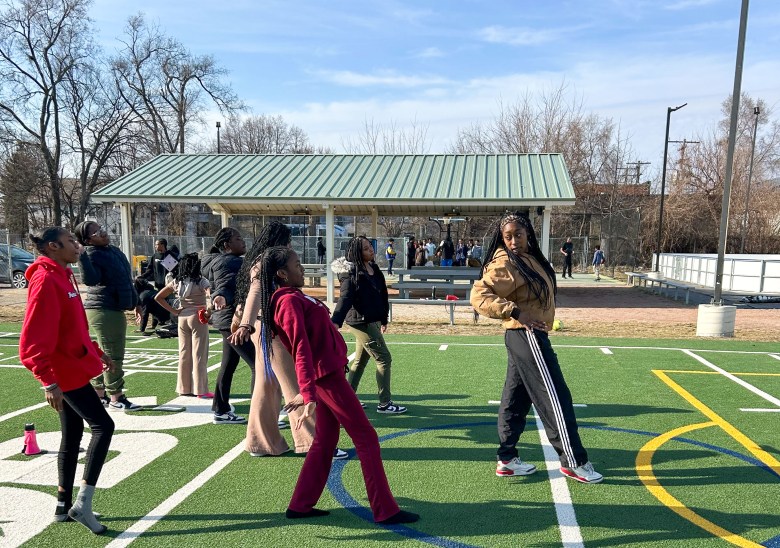
    Students practice a dance routine at the Downtown Boxing Gym, in Detroit. Credit: Kelly Field for The Hechinger Report

    For a sector accustomed to scraping by, the American Rescue Plan Act of 2021 was like a winning lottery ticket.

    Over three years, after-school programs received roughly $10 billion in ARPA aid — money they used to add staff, improve pay and benefits and expand enrollment, according to the Afterschool Alliance. It estimates that programs were able to serve 5 million more kids as a result.

    But the money has mostly been spent, and late last month, Education Secretary Linda McMahon told districts that their time to use any remaining funds was over. In Cleveland, which spent almost $28 million on out-of-school time programs between fiscal 2022 and 2024, Horizon and other nonprofits formed a coalition to try to convince the district to continue at least a portion of the aid. They held rallies, secured media coverage and brought parents to testify before the school board. But the district wouldn’t budge, said David Smith, Horizon’s executive director.

    “There’s no opportunity to go back to the scale we were at during the pandemic, and we still have the same problems,” said Smith. “Kids are getting in trouble after school, and they still need the extra academic help.”

    The Cleveland Metropolitan School District made significant gains under its last CEO, Eric Gordon, whose Cleveland Plan was credited with improved student outcomes, including a 25 percentage point increase in the high school graduation rate. But the pandemic erased some of those gains and Cleveland, like many districts, is still recovering.

    Related: $1.5 billion in recovery funds goes to afterschool

    The district’s new CEO, Warren Morgan, has defended his decision not to fund the nonprofit providers, noting that the district offers after-school sports and an arts program. But those extracurriculars vary by day and by school, and after-school advocates say many schools have been left without the consistent, comprehensive care working parents depend on. 

    “Our city is focused on workforce development without thinking about who cutting this care hurts,” said Black, of America Scores Cleveland.

    Without continued support from the district, Black’s organization has had to dip into its rainy-day fund and drop fall soccer for middle schoolers. Serving elementary students feels more essential, she explained, since younger kids can’t stay home alone.

    Other nonprofits have been harder hit. The Greater Cleveland Neighborhood Centers Association, or NCA, has closed half of its locations in the district, leaving programs in seven schools. The Boys and Girls Clubs of Northeast Ohio, which lost $3 million in pandemic relief dollars and other federal support this academic year, has shuttered 17 sites.

    Dorothy Moulthrop, chief executive officer of Open Doors Academy, another nonprofit, thinks the losses might have been less severe if the after-school coalition had been able to show strong results for the federal money. Though individual programs handed over reams of data to the district, Moulthrop wasn’t able to get its leaders to share the data in a form that would allow providers to study their collective impact.

    “We needed to be able to demonstrate our return on investment and we were not able to,” she said.
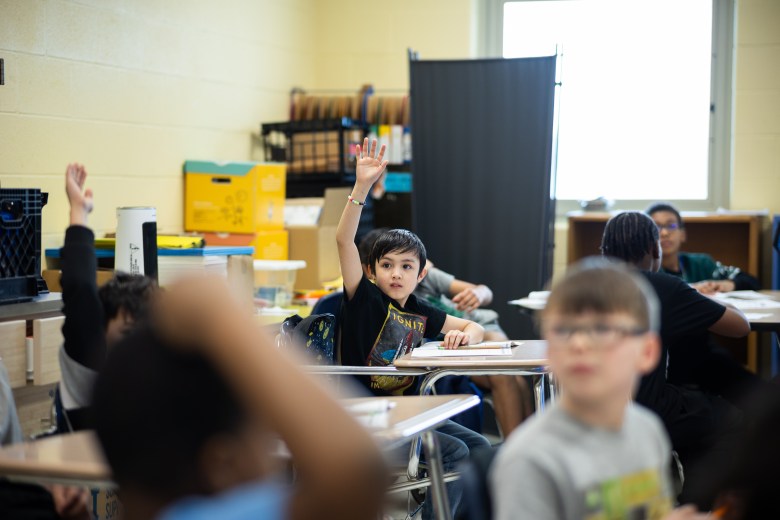
    Students in a poetry class run by America Scores Cleveland. Credit: Grace McConnell for The Hechinger Report

    Questions about whether after-school programs are a good investment of public dollars have dogged the sector since the early 2000s, when Mathematica Policy Research began publishing the results of an evaluation that found the 21st Century program had little impact on student outcomes.

    The study, which is often cited by politicians seeking to gut after-school spending, was controversial at the time, and remains so. Defenders of afterschool argue the evaluation was methodologically flawed and point to other research that found that students who regularly attended high-quality programs saw significant gains. But one of the study’s two authors, Susanne James-Burdumy, said in an interview that it was the most rigorous of its time.

    In the 20 years since the Mathematica reports were published, hundreds of dissertations and program evaluations have added to the evidence base for both sides of the debate. But large-scale, rigorous evaluations of after-school programs remain rare, and their findings are mixed, James-Burdumy and other researchers say.

    Though some analyses have found after-school programs can boost reading and math achievement, promote positive social behaviors and reduce negative ones, other studies have shown little growth in those and other areas.

    Some of that inconsistency likely stems from differences in the quality of programs, researchers and advocates say. When funding is tight, after-school programs tend to focus their dollars on services, rather than professional development or program evaluation.

    “Quality often feels like an extra,” said Jessie Kerr-Vanderslice, a consultant at the American Institutes for Research who focuses on out-of-school time programs.

    Related: Tracking Trump: His actions to abolish the Education Department, and more

    Advocates also note a misalignment between program goals and outcome measures: While after-school programs often prioritize relationships and social and emotional skill-building, their funders frequently focus on academic gains.

    One variable that seems to matter in student outcomes is attendance: Studies have found that students who attend regularly reap greater benefits than those who show up sporadically.

    Yet more than half of students who participated in programs paid for with 21st Century grants in 2022-23 attended for less than 90 hours, a program evaluation shows. That works out to just 30 days for a three-hour program.

    At Clara E. Westropp Elementary in Cleveland, where Horizon Education Centers has been able to continue its after-school program with a 21st Century grant, 73 students are enrolled, but average daily attendance is less than half that.

    Students descend the stairs during an after-school program run by America Scores Cleveland. Credit: Grace McConnell for The Hechinger Report

    On the other side of Lake Erie, at Detroit’s Downtown Boxing Gym, students are required to attend at least three days a week. To keep them coming, the program offers a huge range of activities, from cooking to coding (but ironically, not boxing).

    Inside the large building that houses the program, there’s a lab with a flight simulator and 3D printer, and a music studio paid for and built by one of Eminem’s former producers.

    Outside, on a turf field where the program plans to build an addition that will enable it to double enrollment, a group of middle school majorettes was preparing for an upcoming dance performance.

    Debra Beal, who became the caregiver to her niece’s two young sons when she was in her 50s, says the program saved her life — and theirs. It kept the boys, now 19 and 20, off the streets while she worked, provided them with exercise and tutoring, and even served them dinner. The staff became like family, supporting her when she struggled as a parent and offering to pay for counseling when one son lost his father and uncle from fentanyl overdoses on the same day.

    “What they’re doing is life-changing,” said Beal, whose long denim coat had the word “Blessed” written in sequins on the back.

    Financially, the Downtown Boxing Gym is on surer footing than its counterparts in Cleveland. The Michigan Legislature has provided $50 million in funding for after-school programs in each of the last two years, and the program recently received $3 million in funds from the state.

    Related: ‘The kids everyone forgot’: Push to reengage young people not in school, college or the workforce falters

    That doesn’t mean the program isn’t being pinched by the Trump administration’s cost-cutting campaign and purge of diversity, equity and inclusion programs, said Jessica Hauser, its executive director. Corporations the program was counting on for seven-figure gifts for the addition and program expansion are reconsidering their pledges, and a promised federal earmark now seems unlikely.

    Hauser is also worried about potential cuts to federal child nutrition programs and student aid, which the program depends on for meals and college student tutors.

    Back in Cleveland, the coalition Smith formed to fight for after-school funding has expanded to include the city, the county and a local foundation, which hired a consultant to come up with the cost to deliver quality after-school programming. To longtime advocates like Smith and Allison Wallace, executive director of the NCA, it feels like the sector is having to prove itself, yet again.

    “They’re revisiting conversations we had 15 years ago, around best practices and identifying quality,” Wallace said. “We keep going over the same things, and we’re not getting any traction.”

    Things could get even tougher in the next couple years, as the district shifts the costs of providing security and custodial services for after-school programs onto the nonprofit providers. Wallace estimates that the change will cost providers tens of thousands per site.

    And future federal funding is far from guaranteed. Though the 21st Century program enjoys bipartisan support in Congress, Trump sought to eliminate it in every budget proposal he issued in his first term and is expected to do so again.

    For now, though, after-school programs are still providing kids in Cleveland with caring staff, a safe place to spend the hours after school, and engaging activities like gummy bear construction.

    Related: After-school programs have either been abandoned or overworked

    The teams had 10 minutes to build structures that could support a notebook. When the timer went off, the structure built by Zayden and Mia’s group resembled a two-story house with a caved-in roof. Zayden wasn’t feeling optimistic.

    “I think it’s going to fall,” he said.

    “Think positive,” said Kathy Thome, a program administrator who is helping the group.

    Ian Welch, the program’s site coordinator for Clara E. Westropp, picked up a notebook and approached the table. He reminded the teams that failure is part of the scientific method. If their structures collapse, they can try again, he said.

    “It’s going to squish down,” Mia predicted.

    She was right. But the flattened structure still held the notebook aloft. The kids jumped up and down, and Zayden did a little boogie.

    “We’re so happy — we did it!” he said.

    Welch rewarded their effort with some fresh gummy bears, and the kids, proud and hopped up on sugar, waited for their parents to pick them up.

    Contact editor Caroline Preston at 212-870-8965, on Signal at CarolineP.83 or via email at [email protected]

    This story was produced with support from the Education Writers Association Reporting Fellowship program.

    This story about afterschool was produced by The Hechinger Report, a nonprofit, independent news organization focused on inequality and innovation in education. Sign up for the Hechinger newsletter.


    The Hechinger Report provides in-depth, fact-based, unbiased reporting on education that is free to all readers. But that doesn’t mean it’s free to produce. Our work keeps educators and the public informed about pressing issues at schools and on campuses throughout the country. We tell the whole story, even when the details are inconvenient. Help us keep doing that.

    Join us today.

    Source link

  • Programs like tutoring in jeopardy after Linda McMahon terminates COVID aid spending extensions

    Programs like tutoring in jeopardy after Linda McMahon terminates COVID aid spending extensions

    This story was originally published by Chalkbeat. Sign up for their newsletters at ckbe.at/newsletters.

    HVAC projects to improve indoor air quality. Tutoring programs for struggling students. Tuition support for young people who want to become teachers in their home communities.

    More News from eSchool News

    Almost 3 in 5 K-12 educators (55 percent) have positive perceptions about GenAI, despite concerns and perceived risks in its adoption, according to updated data from Cengage Group’s “AI in Education” research series.

    Our school has built up its course offerings without having to add headcount. Along the way, we’ve also gained a reputation for having a wide selection of general and advanced courses for our growing student body.

    When it comes to visual creativity, AI tools let students design posters, presentations, and digital artwork effortlessly. Students can turn their ideas into professional-quality visuals, sparking creativity and innovation.

    Ensuring that girls feel supported and empowered in STEM from an early age can lead to more balanced workplaces, economic growth, and groundbreaking discoveries.

    In my work with middle school students, I’ve seen how critical that period of development is to students’ future success. One area of focus in a middle schooler’s development is vocabulary acquisition.

    For students, the mid-year stretch is a chance to assess their learning, refine their decision-making skills, and build momentum for the opportunities ahead.

    Middle school marks the transition from late childhood to early adolescence. Developmental psychologist Erik Erikson describes the transition as a shift from the Industry vs. Inferiority stage into the Identity vs. Role Confusion stage.

    Art has a unique power in the ESL classroom–a magic that bridges cultures, ignites imagination, and breathes life into language. For English Language Learners (ELLs), it’s more than an expressive outlet.

    In the year 2025, no one should have to be convinced that protecting data privacy matters. For education institutions, it’s really that simple of a priority–and that complicated.

    Teachers are superheroes. Every day, they rise to the challenge, pouring their hearts into shaping the future. They stay late to grade papers and show up early to tutor struggling students.

    Want to share a great resource? Let us know at [email protected].

    Source link

  • Some DEI Programs Are Vulnerable, Not Illegal (opinion)

    Some DEI Programs Are Vulnerable, Not Illegal (opinion)

    The Trump administration’s directives on diversity, equity and inclusion have wreaked havoc across the higher education landscape. Confusion persists about whether all DEI activities are forbidden or just ones that are officially illegal. To top it off, there’s much bewilderment about what exactly constitutes an “illegal DEI” activity.

    The ambiguity is a feature, not a bug. When people are confused about what’s legal or not, they’ll overcorrect out of fear. As a result, we see colleges and universities scrubbing DEI websites and cutting diversity-related programming. The outcome? A hasty, often over-the-top retreat from efforts that serve students and faculty alike.

    Critically, some of the programs deemed illegal by the Trump administration have not been ruled unlawful in the courts, such as scholarships and prizes that consider race or ethnicity in the selection process. The more accurate term to describe them is “vulnerable” rather than “illegal.” In Students for Fair Admissions v. Harvard, the Supreme Court specifically struck down a form of race-conscious admissions. While a court technically could apply SFFA in the future to render consideration of race in scholarships and recruitment efforts illegal, that day has yet to come, despite the current administration’s faulty interpretation of the ruling.

    Even Ed Blum, who organized the SFFA lawsuits, acknowledges this distinction, as reported in Inside Higher Ed: “Blum doesn’t actually believe the [SFFA] decision itself extends to those programs [e.g., race-conscious scholarships, internships or pre-college programs]. He does think they’re illegal—there just hasn’t been a successful case challenging them yet.”

    “I haven’t really made myself clear on this, which is my fault,” Blum told Inside Higher Ed in February, “but the SFFA opinion didn’t change the law for those policies.”

    So what does that mean for colleges and universities? The fuzziness over the legality of traditional race-conscious scholarships and recruitment programs will remain until the question is decided by the courts. While the majority ruling in SFFA led some to assume that all race-conscious programs will be deemed unconstitutional, the outcome is unknown. Courts could view the stakes or dynamics of nonadmissions programs (e.g., scholarships, outreach) as differing enough from the hypercompetitive context of selective college admissions to allow continued consideration of race. Institutions and organizations could also argue that race-conscious programs are needed to address specific, documented historic discrimination. This argument is different from defending race-conscious initiatives due to broad societal discrimination, as noted by the nonpartisan Congressional Research Service.

    Likely, many institutions and organizations will move away from using race/ethnicity in the selection process for scholarships and other nonadmissions programs, out of fear of litigation and threats of federal funding being withdrawn. However, they may retool selection processes to consider factors related to their missions and goals, such as prioritizing those who show a commitment to supporting historically underserved populations. Further, if the ruling in SFFA is going to be used to attack nonadmissions programs, we can’t forget that it also affirms the right of programs to consider individuals’ experiences related to race. As Chief Justice John Roberts wrote, “Nothing in this opinion should be construed as prohibiting universities from considering an applicant’s discussion of how race affected his or her life, be it through discrimination, inspiration, or otherwise.”

    The Ph.D. Project, the focus of Title VI investigations by the Department of Education, is an example of a program that was, in prior iterations, vulnerable but not necessarily illegal. The department announced last month that it had launched investigations of 45 universities over their partnerships with the Ph.D. Project, alleging that the nonprofit, which offers mentorship, networking and support for prospective Ph.D. candidates in business, “limits eligibility based on the race of participants.”

    The Ph.D. Project has already said that it changed its eligibility criteria earlier this year to be open to anyone who “is interested in helping to expand and broaden the pool of [business] talent”—so what will become of the investigations? Quite possibly, the Education Department will accuse institutions of breaking the law for partnering with an outreach program that in prior iterations considered race in its selection process—which is how the department likes to interpret SFFA, but that is still unsettled legal territory. Courts likely won’t hear a case on the Ph.D. Project because the program has already changed its selection criteria, so we still won’t know whether it’s legal or not to consider race in outreach programs. Until that question goes to court, we’ll probably have institutional decision-making driven more by the chilling effects of the Title VI investigations as opposed to actual law.

    While programs that consider race in selection criteria are vulnerable, there are plenty of diversity-related programs and initiatives that are not, or should not be as long as they are open to all students. Programs like speaker series, workshops, lunch and learns, training programs, cultural events, resource websites, racial/ethnic or culturally focused student organizations, administrative infrastructure, and task forces related to advancing a more supportive and inclusive environment—all of these can continue to play a critical part in advancing an institution’s mission and goals.

    In spite of this, the Trump administration recently proclaimed that DEI programs fuel “division and hatred” and ordered Harvard to “shutter such programs.” However, in previous communications, even the Trump administration has recognized that common DEI initiatives “do not inherently violate federal civil rights laws,” as noted by a group of leading law faculty. The directive to Harvard is serious overreach on multiple levels. We can only hope that Harvard will not capitulate to the administration’s demands and will defend its rights as an institution.

    Over all, institutions must resist panic-driven overcorrections. When vulnerable programs are threatened, institutions with the resources to do so should defend them in court. In other circumstances, retooling programs, rather than eliminating them, may be necessary. Institutions should not abandon diversity, equity and inclusion efforts out of fear; instead, they should seek to support diversity both lawfully and well.

    The Trump administration’s strategy is clear: sow doubt and encourage institutions to retreat. Instead of gutting diversity-related efforts wholesale, institutions need to take a more thoughtful approach. Our students depend on it, and so does the future of education.

    Julie J. Park is a professor of education at the University of Maryland, College Park, and served as a consulting expert on the side of Harvard College in SFFA v. Harvard. She is the author of the upcoming book Race, Class, and Affirmative Action: A New Era in College Admissions, as well as two other books on race-conscious admissions.

    Source link

  • Education Department plans to propose regulatory changes to student aid programs

    Education Department plans to propose regulatory changes to student aid programs

    This audio is auto-generated. Please let us know if you have feedback.

    The U.S. Department of Education plans to propose changes to student aid regulations, including those governing the Public Service Loan Forgiveness Program and two income-driven repayment plans, it announced Thursday. 

    Under a process called negotiated rulemaking, the Education Department intends to bring together representatives from different factions of the higher education sector to hash out the details of new regulations

    If the representatives reach consensus on new policies, the negotiated rulemaking process requires the Education Department to adopt their regulatory language in its proposal, except in limited circumstances. If negotiators don’t reach agreement, however, the agency is free to write its own rules. 

    Before that process begins, the Education Department said it will seek public feedback on “deregulatory ideas” for Title IV student aid programs. 

    This process will focus on how the Department can rightsize Title IV regulations that have driven up the cost of college and hindered innovation,” Acting Under Secretary James Bergeron said in a statement. “Not only will this rulemaking serve as an opportunity to identify and cut unnecessary red tape, but it will allow key stakeholders to offer suggestions to streamline and improve federal student aid programs.”

    Part of the negotiated rulemaking process will focus on the Public Service Loan Forgiveness program. PSLF, enacted in 2007 by President George W. Bush, forgives the student loan balances of borrowers who make 10 years of payments and hold public service jobs, such as working for the government or a nonprofit. 

    The program has come under fire from President Donald Trump, who signed an executive order last month aiming to limit who is eligible. 

    The order alleges that the PSLF program has “misdirected tax dollars into activist organizations” and tells U.S. Education Secretary Linda McMahon to propose program revisions barring borrowers from receiving forgiveness if they work for organizations that “have a substantial illegal purpose.” 

    The directive also accused the program of providing premature debt relief to borrowers. The Biden administration temporarily relaxed PSLF rules to make it easier for borrowers to receive debt relief through the program, which had extremely high denial rates due to confusing eligibility requirements and chronic loan servicer issues

    Some groups have pushed back on the executive order, arguing that it’s an attempt to revoke student loan forgiveness eligibility for borrowers working for nonprofits with missions that the Trump administration doesn’t support. 

    In a statement, Mike Pierce, executive director of Student Borrower Protection Center, called the order “blatantly illegal and an all-out weaponization of debt intended to silence speech that does not align with President Trump’s MAGA agenda.” 

    The Education Department is also planning to review regulations for two income-driven repayment plans: Pay as You Earn and Income-Contingent Repayment. 

    The agency restored the ability for borrowers to enroll in these programs late last month after previously taking down the online application forms. The freeze on the programs came in response to an appeals court ruling blocking a Biden-era income-driven repayment plan — Saving on a Valuable Education. 

    The suspension of the plans drew a legal challenge from the American Federation of Teachers. The Education Department restored access to them less than a day after the union petitioned a judge for emergency intervention, according to a news release. 

    Plans for negotiated rulemaking come amid the Trump administration’s move to dismantle the Education Department and move its responsibilities to other agencies.

    For example, Trump said he plans to move the department’s student loan portfolio to the newly-downsized Small Business Administration. Both conservatives and liberals have expressed concern that the SBA won’t have the staff or expertise to perform the job. 

    Fully eliminating the Education Department would require congressional approval.

    Source link

  • In Bid to Close Education Department, President Trump Looks to Rehouse Student Loans, Special Education Programs – The 74

    In Bid to Close Education Department, President Trump Looks to Rehouse Student Loans, Special Education Programs – The 74

    President Donald Trump said Friday that the U.S. Small Business Administration would handle the student loan portfolio for the slated-for-elimination Education Department, and that the Department of Health and Human Services would handle special education services and nutrition programs.

    The announcement — which raises myriad questions over the logistics to carry out these transfers of authority — came a day after Trump signed a sweeping executive order that directs Education Secretary Linda McMahon to “take all necessary steps to facilitate the closure” of the department to the extent she is permitted to by law.

    “I do want to say that I’ve decided that the SBA, the Small Business Administration, headed by Kelly Loeffler — terrific person — will handle all of the student loan portfolio,” Trump said Friday morning.

    The White House did not provide advance notice of the announcement, which Trump made at the opening of an Oval Office appearance with Defense Secretary Pete Hegseth.

    The Education Department manages student loans for millions of Americans, with a portfolio of more than $1.6 trillion, according to the White House.

    In his executive order, Trump said the federal student aid program is “roughly the size of one of the Nation’s largest banks, Wells Fargo,” adding that “although Wells Fargo has more than 200,000 employees, the Department of Education has fewer than 1,500 in its Office of Federal Student Aid.”

    ‘Everything else’ to HHS

    Meanwhile, Trump also said that the Department of Health and Human Services “will be handling special needs and all of the nutrition programs and everything else.”

    It is unclear what nutrition programs Trump was referencing, as the U.S. Department of Agriculture manages school meal and other major nutrition programs.

    One of the Education Department’s core functions includes supporting students with special needs. The department is also tasked with carrying out the federal guarantee of a free public education for children with disabilities Congress approved in the Individuals with Disabilities Education Act, or IDEA.

    Trump added that the transfers will “work out very well.”

    “Those two elements will be taken out of the Department of Education,” he said Friday. “And then all we have to do is get the students to get guidance from the people that love them and cherish them, including their parents, by the way, who will be totally involved in their education, along with the boards and the governors and the states.”

    Trump’s Thursday order also directs McMahon to “return authority over education to the States and local communities while ensuring the effective and uninterrupted delivery of services, programs, and benefits on which Americans rely.”

    SBA, HHS heads welcome extra programs

    Asked for clarification on the announcement, a White House spokesperson on Friday referred States Newsroom to comments from White House press secretary Karoline Leavitt and heads of the Small Business Administration and Health and Human Services Department.

    Leavitt noted the move was consistent with Trump’s promise to return education policy decisions to states.

    “President Trump is doing everything within his executive authority to dismantle the Department of Education and return education back to the states while safeguarding critical functions for students and families such as student loans, special needs programs, and nutrition programs,” Leavitt said. “The President has always said Congress has a role to play in this effort, and we expect them to help the President deliver.”

    Loeffler and HHS Secretary Robert F. Kennedy Jr. said their agencies were prepared to take on the Education Department programs.

    “As the government’s largest guarantor of business loans, the SBA stands ready to deploy its resources and expertise on behalf of America’s taxpayers and students,” Loeffler said.

    Kennedy, on the social media platform X, said his department was “fully prepared to take on the responsibility of supporting individuals with special needs and overseeing nutrition programs that were run by @usedgov.”

    The Education Department directed States Newsroom to McMahon’s remarks on Fox News on Friday, where she said the department was discussing with other federal agencies where its programs may end up, noting she had a “good conversation” with Loeffler and that the two are “going to work on the strategic plan together.” 

    Maine Morning Star is part of States Newsroom, a nonprofit news network supported by grants and a coalition of donors as a 501c(3) public charity. Maine Morning Star maintains editorial independence. Contact Editor Lauren McCauley for questions: [email protected].


    Get stories like these delivered straight to your inbox. Sign up for The 74 Newsletter

    Source link

  • St. Norbert College to cut over 2 dozen faculty positions and 20 programs

    St. Norbert College to cut over 2 dozen faculty positions and 20 programs

    This audio is auto-generated. Please let us know if you have feedback.

    Dive Brief:

    • St. Norbert College’s trustee board recently approved discontinuing 20 academic programs, according to a message last week from college President Laurie Joyner.
    • Additionally, the Wisconsin college expects to terminate 21 faculty positions by May. It will eliminate another six faculty positions in 2026. 
    • The cuts come as the private Catholic institution looks to shed $7 million in costs to balance its budget for fiscal 2026. These decisions, though difficult, set us on a path to emerge stronger from this transitional period,” Joyner said Thursday.

    Dive Insight:

    Not long after Joyner joined St. Norbert in July 2023having previously led St. Xavier University in Chicago she found “a significant miscalculation” in the upcoming budget for the fiscal 2024 year, according to the college. 

    After two consecutive years of running deficits, the 2024 budget’s gap was even larger than expected. The college subsequently moved to cut $12 million from the budget — including through multiple rounds of layoffs. But it still faces a $7 million deficit in fiscal 2026 and anticipated further gaps in the years ahead.

    The deficits follow shrinking enrollments and rising costs. In 2022, according to the college, it had the highest faculty numbers in a decade but hundreds fewer students. Headcount during those 10 years fell by 405 students, with 1,882 students attending in fall 2022, per federal data.

    The shrinking student body is a major source of financial strain on St. Norbert. The college received 50% of its core revenue from tuition and fees in the 2023 fiscal year, according to latest federal data. 

    Between fiscal 2021 and 2024, revenue from tuition and fees fell 13.1% to $35.8 million at St. Norbert, according to its financial statements.

    The college says it is restructuring from “a position of relative strength as it adjusts its staffing to mirror its student population,” and the cuts are “creating an even stronger foundation as we prepare to weather the headwinds facing higher education.”

    The slate of programs approved for discontinuation include both majors and minors running the gamut from studio art and theology to physics and applied mathematics. Students enrolled in majors and minors set for discontinuation will be able to complete them, Joyner said. And some coursework in discontinued programs will continue to be taught. 

    St. Norbert joins a growing field of colleges paring back their programs and employee ranks in the face of demographic declines and cost inflation. That includes several of St. Norbert’s Catholic peers, including Saint Louis University, University of Dayton and University of St. Thomas.

    Source link

  • A Pa. community college campus closes in-person programs

    A Pa. community college campus closes in-person programs

    Butler County Community College is discontinuing credit-bearing, in-person programs at its LindePointe campus in response to enrollment troubles and the looming demographic cliff in Pennsylvania. The programs are scheduled to continue through the spring semester and shut down in August.

    Enrollment at the LindePointe campus has fallen sharply, from 300 students in fall 2014 to 45 in fall 2024, with a particularly steep drop during the pandemic, according to a news release from the college Tuesday.

    “Our numbers simply have not rebounded to a sustainable level,” Joshua Novak, vice president for student affairs and enrollment management, said in the release.

    College leaders estimate ending in-person programs will save approximately $450,000 annually.

    Students in Mercer County, where the LindePointe campus is located, will still be able to take online classes and participate in dual-enrollment and workforce training programs, including training in emergency medical and fire services at a local fire department. The college has promised to create degree-completion plans for each student, which may include online courses or classes taught at its five other locations. All the other campuses continue to offer in-person courses for credit. It’s unclear what will happen to LindePointe faculty and staff, though the college plans to “explore opportunities” for them, including potential reassignments, according to the release.

    The move comes after the college previously considered but didn’t ultimately move forward with plans to teach its LindePointe courses and programs at Pennsylvania State University at Shenango as part of a potential partnership between the two institutions.

    “While we looked at potential partnerships and alternative models, we could not identify a solution that was feasible long term,” Megan Coval, the college’s interim president, said in the release.

    Source link

  • Education Department Publishes Guidance Letter Deeming Race-Conscious Programs, Activities and Practices Illegal

    Education Department Publishes Guidance Letter Deeming Race-Conscious Programs, Activities and Practices Illegal

    by CUPA-HR | February 18, 2025

    On February 14, the Department of Education’s Office for Civil Rights (OCR) published a “Dear Colleague” letter “to clarify and reaffirm the nondiscrimination obligations of schools … that receive federal financial assistance” from the department. The letter specifically states that “Federal law … prohibits covered entities from using race in decisions pertaining to admissions, hiring, promotion, compensation, financial aid, scholarships, prizes, administrative support, discipline, housing, graduation ceremonies, and all other aspects of student, academic, and campus life” (emphasis added).

    The department warns that “institutions that fail to comply with federal civil rights law may, consistent with applicable law, face potential loss of federal funding,” and cites the government’s authority to do so under “Title VI of the Civil Rights Act of 1964, the Equal Protection Clause of the U.S. Constitution, and other relevant authorities.”

    The letter reiterates institutions’ existing legal requirements under federal antidiscrimination laws and is intended to provide clarity to institutions of their nondiscrimination obligations. However, in addition to pointing to existing federal antidiscrimination laws, OCR expands upon the Supreme Court’s decision in Students for Fair Admissions v. Harvard (SFFA) — which banned the use of race-conscious admissions practices at institutions of higher education — to apply more broadly to programs and practices at institutions. Specifically, OCR states that the court’s decision and applicable federal law prohibits covered entities “from using race in decisions pertaining to admissions, hiring, promotion, compensation, financial aid, scholarships, prizes, administrative support, discipline, housing, graduation ceremonies, and all other aspects of student, academic, and campus life.”

    OCR provides a few examples of practices that would be illegal under federal antidiscrimination law. One example, which was prohibited in the text of the SFFA decision, is using “students’ personal essays, writing samples, participation in extracurriculars, or other cues” as a means to determine a student’s race to grant preferences to that individual. Additionally, the letter states that using proxies like the one just described is illegal on the systematic level, stating that it is unlawful for institutions to eliminate standardized testing to “achieve a desired racial balance or to increase racial diversity.” In both examples, OCR appears focused on the motive for the action rather than the action itself. Thus, an institution can choose to use or not use standardized tests or focus on certain criteria in applications as long it is not doing so for an impermissible reason.

    The letter also says that other programs violate antidiscrimination laws in less direct ways. Specifically, the letter states that “DEI programs … frequently preference certain racial groups and teach students that certain racial groups bear unique moral burdens that others do not” and that “such programs stigmatize students who belong to particular racial groups based on crude racial stereotypes.” They assert that these programs ultimately deny students the ability to fully participate in “the life of a school.”

    The letter states that the Department of Education will begin to assess institutional compliance with antidiscrimination law and regulations no later than 14 days after of the date of publication of the letter. In the letter, OCR advises schools to:

    • Ensure that their policies and actions comply with existing civil rights law.
    • Cease all efforts to circumvent prohibitions on the use of race by relying on proxies or other indirect means to accomplish such ends.
    • Cease all reliance on third-party contractors, clearinghouses, or aggregators that are being used by institutions in an effort to circumvent prohibited uses of race.

    Possible Implications for Higher Education HR Professionals

    As noted above, the letter specifies using race in hiring, promotion and compensation decisions is prohibited under federal law, though the Department of Education does not provide examples of hiring and compensation practices that could be violations of such laws. While the primary federal laws prohibiting discrimination in employment are Title VII of the Civil Rights Act of 1964 and similar equal employment opportunity laws enforced by the Equal Employment Opportunity Commission (EEOC), Title VI can apply to employment decisions. It is unclear how the department intends to enforce this letter with respect to hiring, promotion and compensation practices and whether the Department of Labor or the EEOC will provide further guidance. CUPA-HR intends to seek clarification from the Education Department and the other agencies.

    CUPA-HR is assessing the impact that this enforcement letter will have on institutions and will keep members apprised of further developments related to the Trump administration’s DEI orders.


    Source link

  • A West Virginia HBCU reviews programs after anti-DEI order

    A West Virginia HBCU reviews programs after anti-DEI order

    West Virginia State University has been tasked with reviewing its programs and practices after the state’s governor issued an executive order against diversity, equity and inclusion. While other public institutions in the state have to do the same, West Virginia State University is in a somewhat unique position: It’s a public, historically Black institution with a predominantly white student body. The university serves all, but diversity and inclusion are part of its founding mission.

    Higher ed experts say that while few public HBCUs are openly discussing the issue, West Virginia State isn’t the only such institution that’s undergoing this kind of review process as DEI bans proliferate. Some argue that subjecting HBCUs to these reviews is counterintuitive in light of their historic mission, raising questions about how such institutions will fare in the current state and federal policy landscape.

    West Virginia State launched its review after Governor Patrick Morrisey last month banned state institutions from using “state funds, property, or resources” to “grant or support DEI staff positions, procedures or programs.” He also prohibited mandating DEI statements or any training or programming that “promotes or encourages the granting of preferences based on one person’s particular race, color, sex, ethnicity, or national origin.” The Foundation for Individual Rights and Expression, an advocacy organization for free speech rights, castigated the executive order as overly broad and warned it could limit what’s taught in West Virginia classrooms.

    The executive order also required “all cabinet secretaries and department heads under the authority of the Governor” to complete a report within 30 days, identifying any positions, procedures or programs based in “theories of DEI.”

    In response, West Virginia State University, along with other public universities in the state, submitted a letter outlining diversity-related positions, programs and activities, said Ericke Cage, the university’s president.

    “If there are concerns raised by the governor’s office … then we need to work to negotiate possible resolutions,” Cage said, though he expects it won’t come to that.

    In the letter, the university’s general counsel, Alice R. Faucett, argued that a comprehensive review found no evidence the university engages in or supports “preferential treatment” based on DEI principles.

    At the same time, the response readily acknowledged the university’s history and mission as an HBCU.

    “All procedural practices and programs at WVSU are designed to foster an inclusive and equitable environment,” Faucett wrote. They also “promote fairness and equal access while ensuring no group receives preferential treatment. The University remains dedicated to serving all members of the community, particularly those who have been historically marginalized, as part of its longstanding mission.”

    The letter highlighted some practices and policies that reflect the university’s “commitment to diversity, inclusion and compliance with state directives.” They included annual Title IX trainings, services for sexual assault survivors, campus presentations on human rights law and email messages recognizing Black History Month, Martin Luther King Jr. Day, Women’s History Month and other observances.

    Faucett’s response also noted that the university receives some federal grants and privately funded scholarships with “DEI components,” without offering further detail.

    Felecia Commodore, an associate professor of higher education at the University of Illinois at Urbana-Champaign, said other public universities have taken a similar approach to DEI bans, arguing to state lawmakers that “there’s nothing to reorganize, because we’re not doing what you’re saying.”

    ‘Baked Into Who We Are’

    Though such DEI reviews might seem fraught for an HBCU, Cage believes the university is likely to come out unscathed—and it may even fare better under the governor’s scrutiny than its non-HBCU counterparts. He noted that West Virginia State doesn’t have a DEI office or specific DEI personnel, a detail also highlighted in the university’s response document.

    “When it comes to diversity and inclusiveness, that’s really baked into who we are as an institution as part of our DNA,” Cage said. “At our very core, we are all about being a highly inclusive institution where any student, regardless of their background, can come and get a good-quality education.”

    He also emphasized that WVSU’s student population is majority white. University data from fall 2024 shows white students made up about 72 percent of the roughly 3,200 enrollees, while Black students composed about 10 percent, making it hard to argue the HBCU favors one racial group over another. Nationwide, non-Black students made up 24 percent of enrollment at HBCUs in 2020, compared to 15 percent in 1976, a trend that’s sparked discussion within some of these institutions about how to preserve HBCUs’ legacy while attracting and serving an increasingly broad range of students.

    Commodore pointed out that, in fact, “HBCUs were some of the only institutions that never had race-based admissions.” HBCUs were founded after the abolition of slavery to educate Black Americans at a time when such students weren’t welcome at other higher education institutions.

    For a while, non-Black students “chose not to go to them, but [HBCUs] have been inclusive since their inception,” she said. “If the aim of these reviews of DEI is to ensure that institutions are not discriminating because of race or gender or sex, to ensure that people are not being prioritized or excluded … actually, HBCUs were the model for that.”

    Given that history, Cage theorized HBCUs may not be heavily affected by DEI bans for the same reasons he’s hopeful for his own institution: Diversity and inclusion are intrinsic to how these institutions operate, not housed in a particular office or center. At the same time, they serve all students. Non-HBCUs, on the other hand, have made changes over the years, building up supports and services for students of color, which are now at risk.

    For “predominantly white institutions [that] have not traditionally or historically had that focus on inclusivity, I think it will be a challenge,” Cage said. “It is important for institutions to be welcoming, to provide support systems for diverse students,” and DEI programs were intended to make sure students from underrepresented backgrounds “felt that they were part of the university community.”

    Some non-HBCUs in the state are scrambling to make changes to comply with the executive order. The state flagship, West Virginia University, just a few hours away from WVSU, reported in late January that it would shut down its Division of Diversity, Equity and Inclusion in response to the executive order, a move the governor celebrated as a “win.”

    “This is just the beginning of our effort to root out DEI,” Morrisey said in a video announcement about the division’s demise. “That’s going to happen more and more in the weeks and months ahead.”

    Concerns Remain

    Shaun Harper, University Professor and Provost Professor of Education, Business and Public Policy at the University of Southern California and an opinion contributor to Inside Higher Ed, said it’s become “incredibly pervasive” for public HBCUs to have to conduct reviews of their DEI work as state-level DEI bans spread—even if many HBCU leaders aren’t discussing the issue publicly.

    And such reviews are extra burdensome for HBCUs, he argued.

    “If a predominantly white institution gets that same request, it’s likely a lot easier for them to list their culture centers, their Office of Multicultural Affairs, perhaps the office of the chief diversity officer,” said Harper, who also serves as USC’s Clifford and Betty Allen Chair in Urban Leadership. For HBCUs, it’s “impossible, in fact, to catalog everything that would otherwise qualify in any other context as DEI” because most have majority-Black student populations and gear their programming and services toward their student bodies.

    “It’s really onerous for presidents and their cabinet members and others on their campuses to even attempt to complete this exercise,” Harper added. “It requires enormous sums of their time.”

    Harper doesn’t believe state lawmakers are gunning for HBCUs with anti-DEI bans; it’s more likely they thought very little about how hard it would be for them to list their diversity efforts, he said. Nonetheless, the bans make some public HBCU leaders fear for their state funding if they don’t comply, or if their DEI reviews fail to appease state lawmakers when many don’t have funding to spare.

    Paulette Granberry Russell, president of the National Association of Diversity Officers in Higher Education, said part of the challenge with many DEI bans is their “vagueness” and the “chaos” that can create for higher ed institutions.

    The wording of some laws and executive orders calls into question, what can an HBCU do “to acknowledge, teach, celebrate, promote, its roots?” she said. “Is celebrating a national holiday”—like Martin Luther King Jr. Day—“is that acceptable?”

    Cage said he hasn’t ruled out that some of WVSU’s programs could be at risk—including federal grants with DEI components or privately funded scholarships for students from certain racial backgrounds or geographic areas—as a result either of the governor’s executive order or President Donald Trump’s efforts to root out federal funding for DEI.

    “If those privately funded scholarships are put in jeopardy, or if federal grants are eliminated, there will be a direct impact on our ability to support our students or to advance research and innovation on our campus,” he said. “Our students come to us with a thirst for knowledge, but they also come to us with not a lot of financial resources. I can’t tell you where we would come up with the resources to fill that gap.”

    While the university is reviewing its academic programs as well, Cage said any changes to curricula or academic programming would fly in the face of the university’s accreditation standards, which require a commitment to academic freedom.

    “When it comes to academic freedom and integrity, those are things that we really need to hold the line on,” he said.

    Source link

  • Department of Education Orders End to Race-Based Programs Amid Fierce Pushback

    Department of Education Orders End to Race-Based Programs Amid Fierce Pushback

    The U.S. Department of Education has issued a sweeping directive ordering educational institutions to eliminate race-based considerations from admissions, hiring, and other programs, sparking immediate opposition from civil rights organizations, educational leaders, and advocacy groups.

    In a Dear Colleague Letter to schools receiving federal funding, the Department mandated the cessation of race preferences in areas ranging from admissions and hiring to scholarships and disciplinary actions. Schools that fail to comply within 14 days risk losing federal funding.

    “With this guidance, the Trump Administration is directing schools to end the use of racial preferences and race stereotypes in their programs and activities,” said Acting Assistant Secretary for Civil Rights Craig Trainor, characterizing the move as “a victory for justice, civil rights laws, and the Constitution.”

    The directive, which builds on last year’s Supreme Court decision in Students for Fair Admissions v. Harvard, extends far beyond college admissions to encompass elementary, middle, and high schools. It also targets diversity, equity, and inclusion (DEI) programs, which the Department claims have contributed to “widespread censorship” and a “repressive viewpoint monoculture” on campuses.

    The Department’s action specifically prohibits race-based considerations in admissions processes, hiring and promotion decisions, compensation, scholarship and prize distributions, and disciplinary actions. Schools must now evaluate students “according to merit, accomplishment, and character,” according to the directive.

    The sweeping nature of the order has raised serious concerns among education experts about its implementation timeline and scope. The 14-day compliance window, in particular, has drawn criticism from school administrators who argue that revamping entire systems of administration, hiring, and student life programs requires more time and careful consideration.

    Critics of the directive argue that it represents an overreach of the Department’s authority and misinterprets the Supreme Court’s Harvard decision. While the Court ruled against race-conscious admissions programs at Harvard and the University of North Carolina, many legal experts contend that the ruling’s scope was more limited than the Department’s interpretation suggests.

    The Department’s letter also takes aim at what it describes as a “DEI regime” in educational institutions, claiming these programs have fostered censorship through various mechanisms, including “deplatforming speakers who articulate a competing view” and using “bias response teams” to investigate those who object to a school’s racial ideology.

    Educational institutions now face the complex task of reviewing and potentially overhauling numerous programs and policies to ensure compliance with the new directive. This includes examining everything from recruitment strategies and scholarship criteria to student organization funding and faculty hiring practices.

    The Department has established a complaint system through its Office of Civil Rights for individuals who believe an institution has violated these new guidelines. However, education advocates warn that the rapid implementation timeline could lead to hasty decisions that might inadvertently harm educational equity and access.

    As schools scramble to interpret and implement these changes, the directive’s long-term impact on educational equity and institutional diversity remains uncertain. The Department’s enforcement approach and how it will evaluate compliance are yet to be fully detailed, leaving many institutions in a challenging position as they attempt to navigate these new requirements while maintaining their educational missions and values.

    Source link