Federal policy challenges and a dwindling population of traditional-age students will make for a difficult year ahead for higher education, Moody’s Ratings predicted in a report issued last week.
The credit ratings agency predicted that revenue growth will trail behind previous years while expense growth will put a squeeze on operating margins, though strong investment returns should help buoy institutions’ financial position. Moody’s noted that federal policy challenges are also expected to “cause operational and governance stress” as the Trump administration continues to cut federal research funding and seeks to limit the number of international students attending U.S. colleges.
In March, just a few months after President Trump took office, the agency downgraded its outlook for the sector from stable to negative.
The report noted that the fall 2026 enrollment outlook is uncertain and that “fierce competition for students will increase as the market for students begins to shrink” due to the demographic cliff.
Overall revenue growth is projected to be 3.5 percent, down slightly from 3.8 percent in 2025. But anticipated growth will vary by institution type. Large, comprehensive, private universities are expected to see 4 percent revenue growth while their public peers will see 3.4 percent. Mid-sized private universities are expected to see the lowest revenue growth in the sector, at 2.3 percent.
Moody’s offered a bleak outlook for federal research funding.
“Federal funding for research grants and contracts will be stagnant, as a long period of continuous growth in federal research and development funding has leveled off and universities grapple with potential caps to indirect costs and ongoing grant cancellations,” Moody’s officials wrote. “While deep cuts to research are unlikely, we forecast modest declines in fiscals 2026 and 2027 to overall funding. These reductions will be concentrated in funding from the National Institutes of Health (NIH).”
Despite some concerns and a slowdown in the spring, spending from NIH and the National Science Foundation for fiscal year 2025 matched the previous year, Sciencereported last week, though both agencies awarded fewer new grants.
Other policy risks highlighted in the report include caps on graduate student loans; enforcement actions related to diversity, equity, and inclusion initiatives; the expansion of the endowment tax (which will only affect a limited number of wealthy institutions); regulatory changes to accreditation; and the elimination of TRIO and Hispanic Serving Institution grants.
The report also noted potential unknowns ahead, citing the Trump administration’s proposed Compact for Academic Excellence in Higher Education. While the proposal, which would provide preferential treatment for universities that adopt certain policy changes, has been rejected by most of the institutions it was offered to, the report noted that a revised proposal may come in 2026 following sector feedback.
Policy concerns highlighted in the report were not limited to the federal level.
“At the state level, some state legislatures are increasingly tying appropriations to specific policy and workforce development goals that can limit financial flexibility,” the report read. “State governments also maintain generally strong influence over public university governance through control of board membership. While state oversight is generally supportive of good governance and accountability, it can introduce political risk.”
Moody’s also pointed to various “idiosyncratic risks” ahead.
Those include potential cybersecurity breaches, severe weather, geopolitical unrest, legal issues, and growing costs for universities with Division I athletic programs, which the agency projected will spend more on sports facilities, compensation for players and buyouts for fired coaches.
This audio is auto-generated. Please let us know if you have feedback.
Dive Brief:
New York is contributing $49 million in capital grants to 35 of the state’s private nonprofit colleges to help fund upgrades to facilities, build new labs and research spaces, and invest in new technology and equipment.
The state’s Higher Education Capital Matching Grant Program — led by a three-person board composed of political appointees — last week awarded grants ranging from tens of thousands of dollars to $5 million, New York Gov. Kathy Hochul announced on Friday.
Under the 20-year-old program, eligible colleges must invest $3 of their own money for every $1 of public funds. The next round of applications for projects is set to open in mid-December.
Dive Insight:
Since 2005, HECap has directed $369.8 million in state funding toward over 300 projects at private nonprofit colleges in New York, the governor’s office said.
The program makes the state a financial partner for private colleges, many of which were established well before the 1948 creation of the State University of New York system.
After a more than yearlong application process, the state’s HECap Board approved the latest round of projects at an Oct. 20 meeting. Colleges can use the funds to design, acquire, build, rebuild, renovate or equip buildings. Selected projects are meant to support a college’s academic offerings or student life, as well as to drive economic development in the state.
“These projects stand for our ongoing commitment to keeping New York at the forefront of education and economic opportunity,” Hochul said in a Friday statement.
The current round of combined public and institutional funds represents a $195 million capital investment in independent higher education facilities, according to Hochul’s office.
$1.8 million to Albert Einstein College of Medicine for renovations to a commons area and recreation center.
$5 million to Clarkson University for the first phase of renovations to an engineering and science complex.
$69,800 to Maria College to purchase and install technological equipment.
$1.8 million to Cornell University to build a large classroom space in a library.
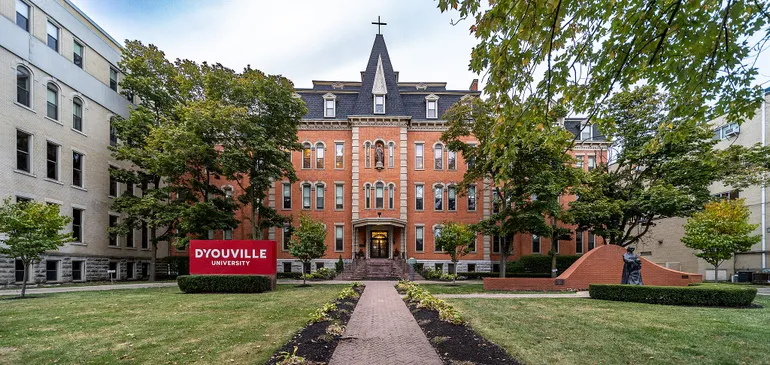
$5 million to D’Youville University for renovations to a facility supporting its osteopathic medicine college.
$5 million to Hobart and William Smith Colleges for construction of a new science building and renovation of three adjacent facilities.
$1.8 million to the Rochester Institute of Technology to upgrade its electrical infrastructure.
$1.6 million to Sarah Lawrence College to create an experiential learning center.
New York’s continued public financing of capital projects comes while colleges across the country wrestle with sizable backlogs of deferred maintenance and facilities needs, many left over from the pandemic era as institutions put off those investments.
Last year, analysts with Moody’s Investor Service estimated a “hidden liability” of deferred maintenance needs at colleges potentially amounting to nearly $1 trillion — and just among the roughly 500 institutions Moody’s rated at the time.
Rising costs, high interest rates and financial pressures can make those needs all the more difficult to meet.
“Few have the necessary resources and credit strength to sustain the higher amounts needed to tackle the full extent of their infrastructure needs,” Moody’s analysts said in their report. Colleges that can’t afford upgrades face recruitment risks in enrollment and staff talent as buildings continue to deteriorate.
The backlog of projects is so large that capital spending increases on existing facilities have served only to slow the growth of unmet need, according to a report earlier this year from the building intelligence firm Gordian.
Some professors resist using teamwork in their classes because they mistakenly believe that team projects are too difficult to grade. One issue is that, as educators, we often only evaluate the team presentation, project or paper with a grade based on how well the team has met our learning objectives.
However, a single project evaluation at the end allows some members to potentially free ride on harder-working teammates, or enables one aggressive or dominating member to take over the entire project to ensure the team gets an A. If we simply grade team projects at the end, it is too late for our student teams to adapt or adjust and learn how to be better at working in teams, a key skill that employers look for in our graduates.
The key to effectively grading teamwork is to set up the grading process systematically at the start of the project. In this article, we offer four ways that you can grade team projects effectively to meet your learning objectives and help students become better team members.
Share your grading rubric at the start of the assignment. Students need to know at the outset of the team project how they will be graded. Many good students tell us they hate team projects because they know they will have to deal with “social loafers” who rely on one or two others to do the work. However, by sharing a rubric that highlights the expectations for each team member and how you will be combining individual and team grading, you can help students make more intentional decisions regarding how they distribute the assignment’s requirements. We not only distribute the rubric at the start of the project, but we post it on our course management system and frequently review it with the class so our expectations are clear.
Include peer evaluation as a part of the evaluation process. Students are sometimes asked to rate their fellow team members, but they are seldom taught how to do it well. As a result, they tend to only give positive feedback to avoid conflict or hurting another student’s feelings. Teaching peer feedback takes only a little class time, as few as 15 minutes. It starts with clarifying your expectations about how you will use peer feedback. You can use or create a form that allows students to provide quantitative and qualitative feedback, and then you should use this same form multiple times during the project. The first time you collect peer feedback should be a low-stakes or practice situation early during the project so that students have a psychologically safe opportunity to learn how to use it. Your students should begin with self-evaluation and then evaluate their peers. Next, you need to summarize the peer feedback and give results to individual students so they know how they are doing. Finally, have groups reflect on how well the group is doing without naming or shaming others. There are times when students will have to give feedback to a person who is free riding or loafing. When they do, make sure they know to first ask that person for permission before they give feedback, then praise in public, and finally provide any negative feedback in private. Finally, we have a YouTube video that instructors can show during class to help students learn about how to give and receive feedback.
Incorporate ongoing feedback from the instructor. We know of faculty who give out a team assignment and never mention it again until the week before the project is due. This is setting up the student teams for failure. Faculty need to check in frequently with their teams to be sure they are making progress on their work and any questions or concerns are answered. Taking just five minutes at the end of class for teams to meet can pay great dividends in a better project product. This instructor feedback can include a way to hold individual team members accountable for the work they are doing. For example, we have set up a separate Google folder for each team with instructor access. Each team member needed to post their contributions to the team project weekly. In this way, we could keep an eye on any social loafers, and provide feedback to those who were working independently instead of with the team. Instructors can also schedule a brief time to sit in on team meetings so that they get a more comprehensive update about the project and who is working toward each of the outcomes.
Carefully consider the weight you give to each phase of the project. It is essential to incorporate peer assessments and the instructor evaluation about how well the project met the learning objectives into any final grade; both are important. However, the weight of these different evaluations tells students the importance of each. More weight on the individual peer assessments stresses the individual work, while more weight on the instructor grade of the project shows the team efforts are more important. At a minimum, use the 80/20 rule: At least 20 percent of the student’s grade should be based on each. Also, be sure to check the peer evaluations to verify that they result from real behaviors rather than personal biases. We accomplish this by looking for consistency across the times of evaluation, across team members and between peer and self-evaluations. In most cases, we find that the evaluations show consistency in all three areas (though self-evaluations are often inflated). In the rare cases when they don’t align, we always refer to supporting documentation, such as agendas, meeting minutes and information that resulted from our ongoing check-ins to help make sense of the reasons underlying any inconsistencies.
Grading a team project may seem like a daunting challenge, but grading is by no means a reason to avoid giving students the experience of working with a team. By following these four principles for evaluating teamwork, instructors can account for the team’s achievement of the learning objectives as well as provide students with valuable teamwork experiences that they can take to future classes, internships, co-ops and employment.
Lauren Vicker is a communications professor emeritus, and Tim Franz is a professor of psychology, both at St. John Fisher University. They are the authors of Making Team Projects Work: A College Instructor’s Guide to Successful Student Groupwork (Taylor & Francis, 2024).
Regression Analysis is a analysis process where the relationship between one dependent variable is evaluated with one or more independent variables. Regression Analysis are mainly used for prediction and forecasting. To define as an example, a doctor can quantify how much each factor will contribute to the overall risk of patients.
Regression Analysis is a analysis process where the relationship between one dependent variable is evaluated with one or more independent variables.
Types of Regression Analysis
Simple Linear Regression: Used for evaluating the relationship of one dependent variable with one independent variable.
Formula: Y=a+bX+
Where:
Y=Dependent Variable (Outcome)
X=Independent variable (Predictor)
a= Intercept (Value of Y when X=0)
b=Slope (how much Y changes for a one unit increase in X)
= Error Term.
Multiple Linear Regression: It is used for evaluating two or more independent variable to predict a dependent variable.
Formula:Y=a+b_1 X_1+b_2 X_2+⋯+b_n X_n+ϵ
Performing Regression Analysis in SPSS
In SPSS performing regression analysis is extremely easy as it used a menu driven interface which allows user to perform the analysis in a few clicks. Once the dataset is imported in the system the user has to select the dependent and independent variables. The software will immediately calculate regression coefficient, R-squared values and the model fit statistics.
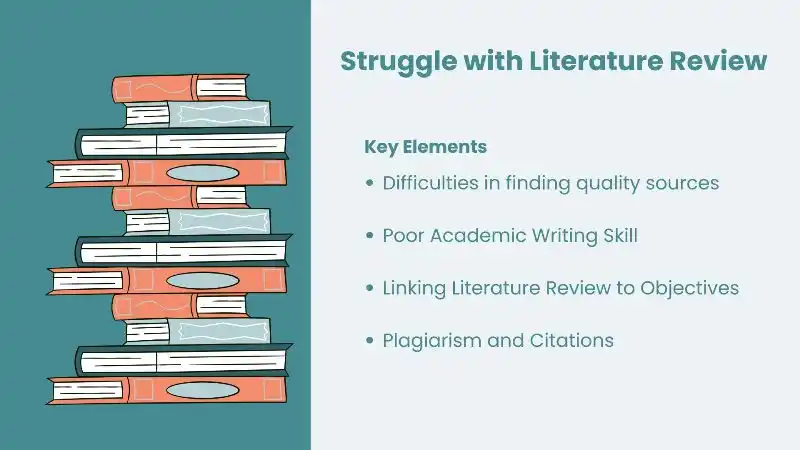
Understanding the Topic: Even before starting to write a student should be having a full clarity about the research title, the objective of the study and the research problems.
Searching for Relevant Literature: Students should search the academic libraries like Google Scholars, Research Gate, JSTOR or Scopus.
Evaluating Sources: Once relevant sources are collected students should analyze, evaluate the objective, findings and limitation of those studies.
Grouping of Literature: Collected literature should be grouped as per the subheading of the required studies.
Write Critically: Literature review should be written critically and analytically relevant to the study .
Identify the Research Gap: Students should analyze and find the research gap and specify where his study will add value to those gaps.
Cite & Reference: Students should use formats like APA (7th edition) or Havard Referencing style while using in text citing.
At first, the question seemed simple: “Why do we go to school?”
I had asked it many times before, in many different districts. I’m a planner and designer specializing in K-12 school projects, and as part of a community-driven design process, we invite students to dream with us and help shape the spaces where they’ll learn, grow, and make sense of the world.
In February of 2023, I was leading a visioning workshop with a group of middle schoolers in Southern California. Their energy was vibrant, their curiosity sharp. We began with a simple activity: Students answered a series of prompts, each one building on the last.
“We go to school because …”
“We need to learn because …”
“We want to be successful because …”
As the conversation deepened, so did their responses. One student wrote, “We want to get further in life.” Another added, “We need to help our families.” And then came the line that stopped me in my tracks: “We go to school because we want future generations to look up to us.”
I’ve worked with a lot of middle schoolers. They’re funny, unfiltered, and often far more insightful than adults give them credit for. But this answer felt different. It wasn’t about homework, or college, or even a dream job. It was about legacy. At that moment, I realized I wasn’t just asking kids to talk about school. I was asking them to articulate their hopes for the world and their role in shaping it.
As a designer, I came prepared to talk about flexible furniture, natural light, and outdoor learning spaces. The students approached the conversation through the lens of purpose, identity, and intergenerational impact. They reminded me that school isn’t just a place to pass through — it’s a place to imagine who you might become and how you might leave the world better than you found it.
I’ve now led dozens of school visioning sessions, no two being alike. In most cases, adults are the ones at the table: district leaders, architects, engineers, and community members. Their perspectives are important, of course. But when we exclude students from shaping the environments they spend most days in, we send an implicit message that this place is not really theirs to shape.
However, when we do invite them in, the difference is immediate. Students are not only willing participants, they’re often the most honest and imaginative contributors in the room. They see past the buzzwords like 21st-century learning, flexible furniture, student-centered design, and collaborative zones, and talk about what actually matters: where they feel safe, where they feel seen, where they can be themselves.
During that workshop when the student spoke about legacy, other young participants asked for more flexible learning spaces, places to move around and collaborate, better food, outdoor classrooms, and quiet areas for mental health breaks. One asked for sign language classes to better communicate with her hard-of-hearing best friend. Another asked for furniture that can move from inside to outside. These aren’t requests that tend to show up on state-issued planning checklists, which are more likely to focus on square footage, capacity, and code compliance, but they reflect an extraordinary level of thought about access, well-being, and inclusion.
The lesson: When we take students seriously, we get more than better design. We get better schools.
There’s a popular saying in architecture: Form follows function. But in school design, I’d argue that form should follow voice. If we want to build learning environments that support joy, connection, and growth, we need to start by asking students what those things look and feel like to them — and then believe them.
Listening isn’t a checkbox. It’s a practice. And it has to start early, not once construction drawings are finalized, but when goals and priorities are still being devised. That’s when student input can shift the direction of a plan, not just decorate it.
It’s also not just about asking the right questions, but being open to answers we didn’t expect. When a student says, “Why do the adults always get the rooms with windows?” — as one did in another workshop I led — that’s not a complaint. That’s a lesson in power dynamics, spatial equity, and the unspoken messages our buildings send.
Since that day, about a year and a half ago, when I heard, “We want future generations to look up to us,” I’ve carried that line with me into every planning session. It’s a reminder that students aren’t just users of school space. They’re stewards of something bigger than themselves.
So if you’re a school leader, a planner, a teacher, or a policymaker, invite students in early. Make space for their voices, not just as a formality but as a source of wisdom. Ask questions that go beyond what color the walls should be. And don’t be surprised when the answers you get are deeper than you imagined. Be willing to let their vision shift yours.
Because when we design with students, not just for them, we create schools that don’t just house learning. We create schools that help define what learning is for. And if we do it right, maybe one day, future generations will look up to today’s students not just because of what they learned, but because of the spaces they helped shape.
Chalkbeat is a nonprofit news site covering educational change in public schools.
For more news on district and school management, visit eSN’s Educational Leadership hub.
Enrico Giori, Chalkbeat
Enrico Giori is a California-based planner and designer at Architecture for Education, or A4E, specializing in K-12 educational facilities. He focuses on agency-driven school design that promotes equitable and future-thinking learning environments.
Latest posts by eSchool Media Contributors (see all)
Machine learning is the new trend which is transforming how the business world makes decisions. For MBA students, who are integrating the machine learning projects with source code into final year project work would be adding a real value and to differentiate their profile in placements or higher studies.
Why MBA Students Should Explore Machine Learning Projects?
Unlike computer science students, MBA students mainly focus on solving business problems. Still, machine learning opens doors to:
Working on machine learning projects for final year, MBA students would be bridging their gap between management and technology.
Where to Find Machine Learning Projects with Source Code?
1. Machine Learning Projects Kaggle
Kaggle offers real-world datasets and pre-built models. For MBA projects, students can explore:
Sales forecasting
Retail Customer churn
Social media analysis and Brand sentiment.
2. Machine Learning Projects GitHub
GitHub repositories contain ready-to-use machine learning projects with source code. Mba Final year students can download them, customize datasets, and align them with their final year project theme.
Best Machine Learning Project Ideas for MBA Final Year
Marketing Analytics
Customer segmentation using K-Means on Fitness Centre
Customer Churn on local restaurant
Sentiment analysis of customer churn prediction in Banks
Finance Analytics
Comparative study of Loan approval prediction using machine learning Methods.
Machine learning prediction on Stock price trend forecasting.
HR & Operations
Comparative study of employee attrition prediction of an organization
Utilization of Machine learning in Demand and inventory forecasting.
Get more machine leaning titles in this link.Click here
How MBA Students Can Use These Projects
Students should choose the relevant topics (Marketing, Finance, HR, or operations).
They have to Download machine learning projects with source code from Kaggle or GitHub.
Modifying the datasetsas per the project context.
Should be focussing on business insights and not just algorithms.
Check out this video for more indepth knowledge on Machine Learning
Conclusion
For MBA students, machine learning projects with source code are not about becoming data scientists—it’s about using data intelligently to make right business decisions.
By leveraging Kaggle and GitHub, students can transform their final year project into a powerful showcase of management plus analytics skills.
The main intent of the blog is to help students understand how to find the right mentor who can guide mba students to provide hands-on experience with ml code base.
This content will help gain more knowledge for capstone projects,thesis work or mba project by applying customer analytics, finance strategy to complement theoretical business knowledge in machine learning and build portfolio for job interviews or internships.
Tanish Doshi was in high school when he pushed the Tucson Unified School District to take on an ambitious plan to reduce its climate footprint. In Oct. 2024, the availability of federal tax credits encouraged the district to adopt the $900 million plan, which involves goals of achieving net-zero emissions and zero waste by 2040, along with adding a climate curriculum to schools.
Now, access to those funds is disappearing, leaving Tucson and other school systems across the country scrambling to find ways to cover the costs of clean energy projects.
The Arizona school district, which did not want to impose an economic burden on its low-income population by increasing bonds or taxes, had expected to rely in part on federal dollars provided by the Biden-era Inflation Reduction Act, Doshi said.
But under HR1, or the “one big, beautiful bill,” passed on July 4, Tucson schools will not be able to receive all of the expected federal funding in time for their upcoming clean energy projects. The law discontinues many clean energy tax credits, including those used by schools for solar power and electric vehicles, created under the IRA. When schools and other tax-exempt organizations receive these credits, they come in the form of a direct cash reimbursement.
At the same time, Tucson and thousands of districts across the country that were planning to develop solar and wind power projects are now forced to decide between accelerating them to try to meet HR1’s fast-approaching “commence construction” deadline of June 2026, finding other sources of funding or hitting pause on their plans. Tina Cook, energy project manager for Tucson schools, said the district might have to scale back some of its projects unless it could find local sources of funding.
“Phasing out the tax credits for wind and solar energy is going to make a huge, huge difference,” said Doshi, 18, now a first-year college student. “It ends a lot of investments in poor and minority communities. You really get rid of any notion of environmental justice that the IRA had advanced.”
Emma Weber leads a chant at a Colorado state capitol rally in support of “The Green New Deal for Colorado Schools.” Credit: Courtesy of Emma Weber
The tax credits in the IRA, the largest legislative investment in climate projects in U.S. history, had marked a major opportunity for schools and colleges to reduce their impact on the environment. Educational institutions are significant contributors to climate change: K-12 school infrastructure, for example, releases at least 41 million metric tons of emissions per year, according to a paper from the Annenberg Institute at Brown University. The K-12 school system’s buses — some 480,000 — and meals also produce significant emissions and waste. Clean energy projects supported by the IRA were helping schools not only to limit their climate toll but also to save money on energy costs over the long term and improve student health, advocates said.
As a result, many students, consultants and sustainability leaders said, they have no plans to abandon clean energy projects. They said they want to keep working to cut emissions, even though that may be more difficult now.
Related: Become a lifelong learner. Subscribe to our free weekly newsletter featuring the most important stories in education.
Sara Ross, cofounder of UndauntedK12, which helps school districts green their operations, divided HR1’s fallout on schools into three categories: the good, the bad and the ugly.
On the bright side, she said, schools can still get up to 50 percent off for installing ground source heat pumps — those credits will continue — to more efficiently heat and cool schools. The network of pipes in a ground source pump cycles heat from the shallow earth into buildings.
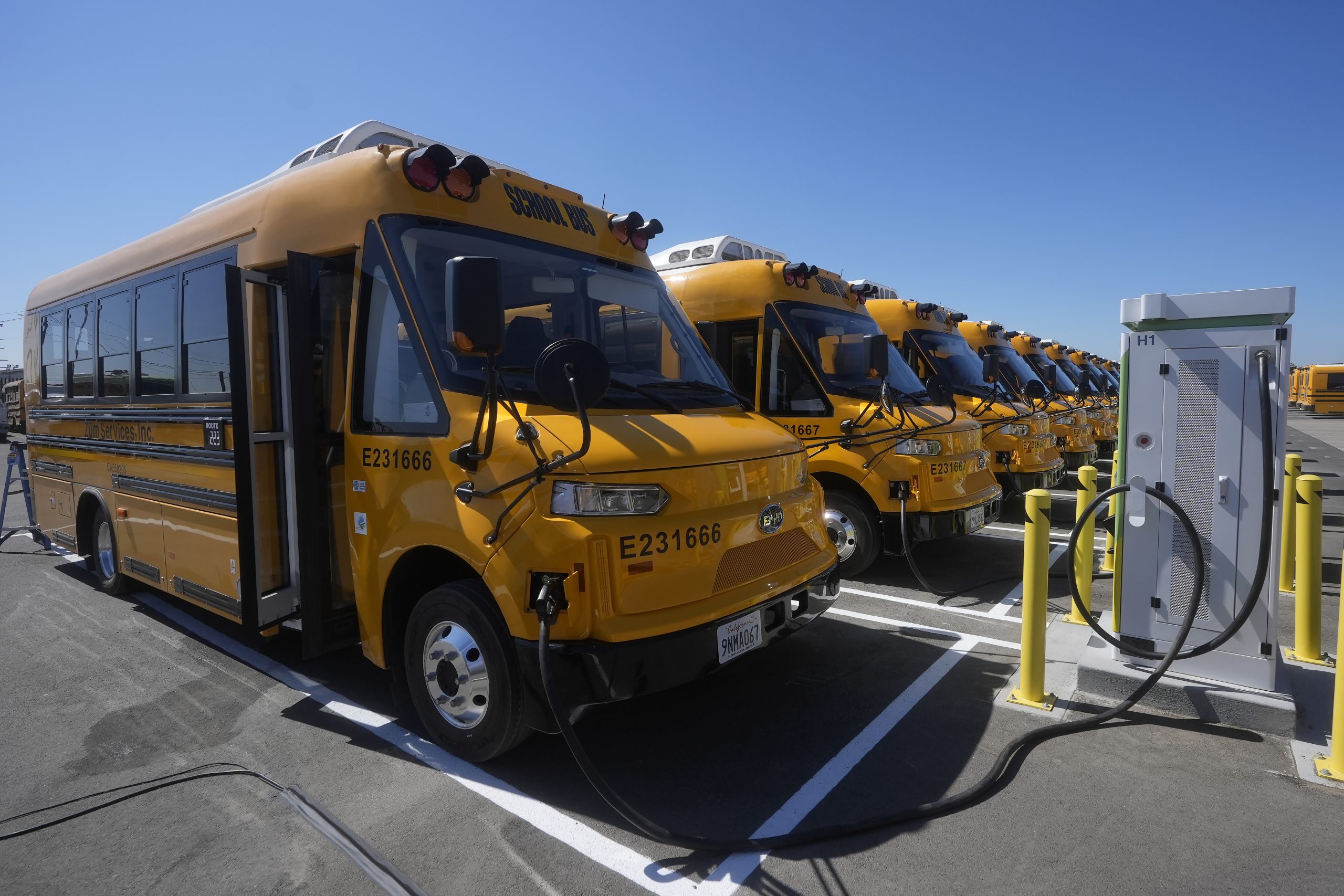
In the “bad” category, any electric vehicle acquired after Sept. 30 of this year will not be eligible for tax credits — drastically accelerating the IRA’s phase-out timeline by seven years. That applies to electric school buses as well as other district-owned vehicles. Electric vehicle charging stations must be installed by June 30, 2026 at an eligible location to claim a tax credit.*
The expiration of the federal tax credits could cost a district up to $40,000 more per vehicle, estimated Sue Gander, director of the Electric School Bus Initiative run by the nonprofit World Resources Institute.
Solar projects will see the most “ugly” effects of HR1, Ross said.
Los Angeles Unified School District is planning to build 21 solar projects on roofs, carports and other structures, plus 13 electric vehicle charging sites, as part of an effort to reduce energy costs and achieve 100 percent renewable energy by 2040. The district anticipated receiving around $25 million in federal tax credits to help pay for the $90 million contract, said Christos Chrysiliou, chief eco-sustainability officer for the district. With the tight deadlines imposed by HR1, the district can no longer count on receiving that money.
“It’s disappointing,” Chrysiliou said. “It’s nice to be able to have that funding in place to meet the goals and objectives that we have.”
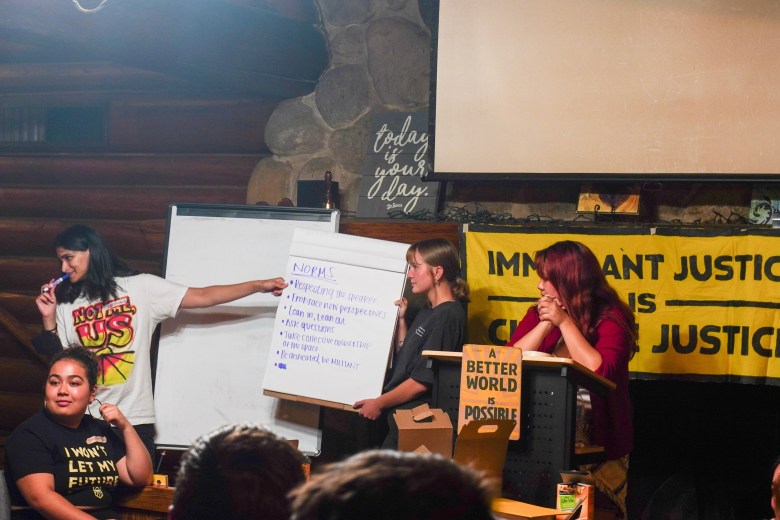
Emma Weber, at left, trains student leaders at Sunrise Movement’s “summer intensive” in Illinois this year. Credit: Courtesy of Emma Weber
LAUSD is looking at a small portion of a $9 billion bond measure passed last year, as well as utility rebates, third-party financing and grants from the California Energy Commission, to help make up for some of the gaps in funding.
Many California State University campuses are in a similar position as they work to install solar to meet the system’s goal of carbon neutrality by 2045, said Lindsey Rowell, CSU’s chief energy, sustainability and transportation officer.
Tariffs on solar panel materials from overseas and the early sunsetting of tax credits mean that “the cost of these projects are becoming prohibitive for campuses,” Rowell said.
Sweeps of undocumented immigrants in California may also lead to labor shortages that could slow the pace of construction, Rowell added. “Limiting the labor force in any way is only going to result in an increased cost, so those changes are frightening as well,” she said.
New Treasury Department guidance, issued Aug. 15, made it much harder for projects to meet the threshold needed to qualify for the tax credits. Renewable energy projects previously qualified for credits once a developer spent 5 percent of a project’s cost. But the guidelines have been tightened — now, larger projects must pass a “physical work test,” meaning “significant physical labor has begun on a site,” before they can qualify for credits. With the construction commencement deadline looming next June, these will likely leave many projects ineligible for credits.
“The rules are new, complex [and] not widely understood,” Ross said. “We’re really concerned about schools’ ability to continue to do solar projects and be able to effectively navigate these new rules.”
Schools without “fancy legal teams” may struggle to understand how the new tax credit changes in HR1 will affect their finances and future projects, she added.
Some universities were just starting to understand how the IRA tax credits could help them fund projects. Lily Strehlow, campus sustainability coordinator at the University of Wisconsin, Eau-Claire, said the planning cycle for clean energy projects at the school can take ten years. The university is in the process of adding solar to the roof of a large science building, and depending on the date of completion, the project “might or might not” qualify for the credits, she said.
“At this point, everybody’s holding their breath,” said Rick Brown, founder of California-based TerraVerde Energy, a clean energy consultant to schools and agencies.
Brown said that none of his company’s projects are in a position where they’re not going to get done, but the company may end up seeing fewer new projects due to a higher cost of equipment.
Tim Carter, president of Second Nature, which supports climate work in education, added that colleges and universities are in a broader period of uncertainty, due to larger attacks from the Trump administration, and are not likely to make additional investments at this time: “We’re definitely in a wait and see.”
For youth activists, the fallout from HR1 is “disheartening,” Doshi said.
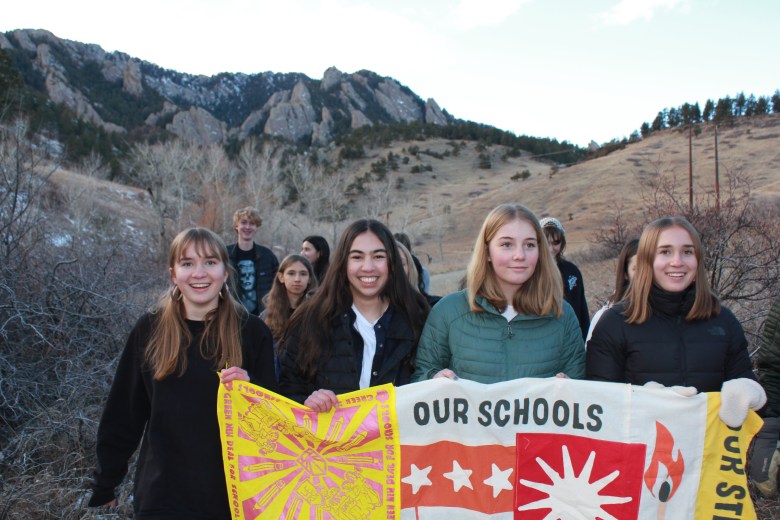
Emma and Molly Weber, climate activists since eighth grade, said they are frustrated. The Colorado-based twins, who will start college this fall, helped secure the first “Green New Deal for Schools” resolution in the nation in the Boulder Valley School District. Its goals include working toward a goal of Zero Net Energy by 2050, making school buildings greener, creating pathways to green jobs and expanding climate change education.
Emma, far left, and Molly Weber, far right, work with climate leaders from the Boulder Valley School District’s Sunrise Movement to prepare for Colorado’s legislative session. Credit: Courtesy of Emma Weber
“It feels very demoralizing to see something you’ve been working so hard at get slashed back, especially since I’ve spoken to so many students from all over the country about these clean energy tax credits, being like, ‘These are the things that are available to you, and this is how you can help convince your school board to work on this,’” Emma Weber said.
The Webers started thinking about other creative ways to pay for the clean energy transition and have settled on advocating for state-level legislation in the form of a climate superfund, where major polluters in a community would be responsible for contributing dollars to sustainability initiatives.
Consultants and sustainability coordinators said that they don’t see the demand for renewable energy going away. “Solar is the cheapest form of energy. It makes sense to put it on every rooftop that we can. And that’s true with or without tax credits,” Strehlow said.
*Correction: This version of the story includes updated information on the timeline for the expiration of tax credits for electric vehicle charging stations.
Contact editor Caroline Preston at 212-870-8965, via Signal at CarolineP.83 or on email at [email protected].
The Hechinger Report provides in-depth, fact-based, unbiased reporting on education that is free to all readers. But that doesn’t mean it’s free to produce. Our work keeps educators and the public informed about pressing issues at schools and on campuses throughout the country. We tell the whole story, even when the details are inconvenient. Help us keep doing that.
Arizona State University ranks fourth among four-year colleges and universities in terms of total international students enrolled.
yongyuan/iStock/Getty Images Plus
Arizona State University typically welcomes over 17,900 international students to its four campuses each year, but this fall, due to a variety of complications, the university expects only 14,600 international students will attend this fall—an 18 percent drop.
If the projection holds, international students will account for 7.5 percent of ASU’s 194,000 students this fall, according to an Aug. 11 news release. In comparison, during the 2023–24 academic year, ASU hosted 18,400 international students, with a total enrollment of 183,000, or more than 10 percent.
The change is in part due a drop in master’s applications from international students, but primarily driven by challenges to visa appointments, according to a university spokesperson.
ASU’s president, Michael Crow, told Bloombergthat as of early August, 1,000 of the university’s incoming international students (a third of the new cohort of 3,313 students) were still waiting on their visas. The university is providing several pathways for students unable to make it to campus, including online programs, study abroad, starting later in the semester or enrolling in a partner institution overseas, the spokesperson said.
“We anticipate that our enrollment of international students will continue to grow throughout the year,” said Matt López, deputy vice president of academic enterprise enrollment, said in the university news release. “When students have their visa in hand, we will welcome them with open arms and the classes they need to continue their degree without delay.”
ASU has the largest share of international students in Arizona, providing $545.1 million in revenue to the state and supporting 5,279 jobs, according to data from NAFSA, the association of international educators.
ASU also ranks fourth among four-year colleges and universities in terms of total international students enrolled, according to 2023–24 OpenDoors data, behind New York University, Northeastern University and Columbia University.
Earlier this year the University of North Carolina at Chapel Hill Board of Trustees approved the design of a $228 million research facility that would expand UNC’s work on virology, vaccine development and other areas. But now that project is suddenly on hold.
UNC Chapel Hill is one of several major research universities pausing construction plans due to financial uncertainty provoked by the Trump administration’s efforts to cap federal research funding reimbursement rates.
In recent months multiple federal agencies have announced plans to cap research reimbursement rates at 15 percent. (While such rates typically hover just under 30 percent, some institutions have negotiated reimbursement rates upward of 50 percent.) Though court challenges have halted the rate cuts for now, the uncertainty has prompted some institutions to pause certain construction projects—particularly research labs and related facilities.
Institutions pausing or slowing plans to build new projects include some of the nation’s wealthiest private universities: Yale, Johns Hopkins and Washington U in St. Louis, which posted endowments of $41.4 billion, $13 billion and $11.9 billion, respectively, in the last fiscal year, according to a recent study of endowments. (UNC Chapel Hill is among the nation’s wealthiest public institutions, with a $5.7 billion endowment.)
In some cases, construction on other facilities, like a new residence hall at UNC Chapel Hill, is moving forward while projects such as research labs have been halted.
“We’re riding out a bad period,” Alexandra Daum, Yale’s associate vice president for New Haven affairs and university properties, said at a local Chamber of Commerce event earlier this month.
One of those projects is the planned conversion of a street into a pedestrian and cyclist-only plaza, which officials decided in February to delay, Daum told The New Haven Independent, another local news outlet. Yale has not identified the other nine projects it plans to put off.
Daum pointed to uncertainty about federal funding as the reason for the pause.
“Like many, Yale is tracking federal funding closely and anticipating there will be impact to projects in the planning pipeline,” Daum wrote in an email to Inside Higher Ed. “We don’t know how much of an impact federal decisions will have on these projects, so we are being prudent.”
Construction on projects already underway will reportedly continue.
Johns Hopkins University announced a similar decision in early June. Administrators wrote in a message to campus that the university has experienced “a steady stream of research grant terminations, suspensions, and delays” that created uncertainty, particularly when coupled with the proposals for lower research reimbursement rates. The rate caps could deal the university a loss of more than $300 million a year in federal research funding, officials wrote.
JHU is taking a number of measures to handle budget concerns, including a staff hiring freeze, as well as pulling back on planned construction projects.
“Prudence dictates cutting back our ambitions in the near term, and we have decided to reduce our capital construction and renovation plans by approximately 10-20%,” officials wrote. “Final decisions on these reductions will be made over the summer in consultation with the divisions, with an emphasis on continuing mission-critical projects, essential deferred maintenance, and projects that are already far along in the permitting, demolition, and construction process.”
JHU did not identify what specific projects might be pushed back.
Washington University halted construction of a new arts and sciences building in April; work was expected to begin earlier this year, according to a news release from last fall.
WashU officials also cited federal funding concerns.
“We regret that it’s necessary to take these actions, but in our current climate, it is simply not prudent to continue with these projects as scheduled,” Chancellor Andrew D. Martin said in a news release. “We are always careful stewards of the university’s resources, but at this time, given the uncertainty around federal research funding and other potential government actions, we have to take a careful look at every aspect of our operations. We hope that once we have a clearer sense of the financial picture, we may be able to revisit some of these investments.”
“Due to ongoing uncertainty surrounding federal research funding, the University has paused plans for the Translational Research Building. We are currently evaluating our research infrastructure, including our research facilities, and will continue to monitor funding trends. Scenario planning is underway to help us remain prepared for future opportunities,” a UNC Chapel Hill spokesperson told Inside Higher Ed in an emailed statement.
In neighboring Virginia, Republican governor Glenn Youngkin rejected $600 million in funding requests for 10 planned renovation and expansion projects at public universities last month, The Virginia Mercury reported. In a letter to state legislators, Youngkin cited economic uncertainty.
“I am optimistic about Virginia’s longer-term prospects for Fiscal Year 2027 and Fiscal Year 2028, and beyond, but there are some short-term risks as President Trump resets both fiscal spending in Washington and trade policies that require us to be prudent and not spend all of the projected surplus before we bank it,” Youngkin wrote to state lawmakers in May.
Some of those planned projects were research-oriented, though many were not.
The Outlook
While a few universities have publicly walked back big projects, that doesn’t appear to be happening en masse, experts say. Planned construction is still happening at many colleges.
“Projects, generally, are moving ahead. There are some larger projects that have been paused. The ones that have been stopped tend to be research-focused projects,” said Chris Purdy, director of higher education at SmithGroup, a design and planning firm that works in the sector.
Other buildings, particularly those that are student-focused or in high-growth areas such as health sciences and STEM, are also moving ahead, he noted. Purdy pointed out that research labs and related facilities are often highly specialized and therefore the most expensive to build.
“They’re primed to be under the most scrutiny just because they’re very expensive buildings,” Purdy said.
He noted that SmithGroup continues to see requests for proposals for campus construction and is optimistic that colleges won’t back off of planned projects throughout the rest of the year. But looking ahead to next summer, or fiscal year 2027, Purdy is less sure about where things will stand, noting the looming economic uncertainty for many institutions.
“At that point they’re going to have a different outlook on funding for capital projects,” Purdy said.