Tag: protection

  • Student protection is needed in all higher-level learning

    Student protection is needed in all higher-level learning

    With the government’s white paper having a clear policy ambition and focus on higher technical (level 4 and 5) courses, and a pledge to simplify the regulatory framework for higher-level study, gaps in regulatory oversight are still exposing an increasing number of students to risk.

    The Office of the Independent Adjudicator has today published public interest case summaries, where we have named the two providers concerned, in order to highlight the impact of differing regulatory systems leaving gaps for individual students.

    The recent closure of Applied Business Academy (ABA), as detailed in my previous Wonkhe article, shows an ongoing vulnerability where students cannot seek an independent review of their awarding organisation’s actions. This is the case if they are studying for HE qualifications awarded by an Ofqual-regulated awarding organisations as these, unlike universities, are not required to be OIA members.

    While Ofqual regulates the quality and standards of qualifications, it does not oversee student protection, welfare or institutional accountability in the same way the OfS does for registered providers, even where the provider is only validating courses.

    In our experience this regulatory fragmentation leaves students vulnerable. All HE students should be afforded the same protection and recourse as well as the ability to complain about both their delivery and awarding organisation whoever their awarding body is.

    Highlighting the consequences

    In the case of ABA, when the Department for Education instructed the Student Loans Company to suspend tuition fee payments to ABA there were over 2,000 students enrolled on the Diploma in Education and Training (DET) awarded by City and Guilds or the Organisation for Tourism and Hospitality Management.  ABA also ran courses through partnerships with two universities which were not subject to any regulatory concern.

    Since ABA was registered with the OfS, all eligible students could access public student loan funding including those on the DET course. However, when ABA collapsed their route for complaint and level of redress and support was unclear and very different. The DET students lacked the institutional safety net of an OfS-regulated validator. Despite receiving positive feedback and assurance from ABA during their studies, students were told at the time of the closure that there was insufficient evidence to meet qualification requirements, leaving them with no qualification and a debt they would have to repay.

    By contrast, those on courses validated by or franchised from the University of Buckingham or Leeds Trinity University were offered a range of protections and mitigations including, various supported transfer options to localised provision with matched timetabling, transferring to the universities or identified alternative providers. They also benefitted from reimbursements for travel costs to alternative premises or were provided with free transport. Students could also access a record of achievement to support other transfer or exit, webinars and dedicated phone lines with individualised welfare support and guidance sessions. The OIA, to date, has received no complaints from students on these courses.

    Equal funding, unequal accountability?

    We have also today published a case summary about Brit College which was OfS-registered and only ran courses which were awarded by Ofqual-regulated awarding organisations, prior to its existing higher education courses being de-designated.

    Although it has not closed, it has stated on its website that where the OIA has awarded compensation or refunds, “Brit College is currently unable to meet these awards due to financial constraints” and has yet to pay our recommended compensation to any impacted student.

    The students we have received complaints from had completed all the work that had been set, and they had not been given any indication by the college during their studies that the work was not sufficient or was not at the required standard. Nine months after completing the course the college told students that they would need to undertake substantial further work. As Brit College remains open but has refused to pay compensation, it has been formally found in non-compliance with our recommendations.

    In both cases, since the awarding organisations are not within OIA membership we are unable to review any complaints from students about their acts and/or omissions in the time prior to de-designation, as we would if their courses were awarded by universities.

    When the system fails

    The fall out is not just administrative; it is deeply personal. Students are often shocked and distressed to be denied compensation, especially when we have found in their favour. They often feel confused about the lack of protection available to them and, having chosen to study at an OfS-registered provider, feel they have been misled.

    This is compounded when they hear about students at the same provider studying for different qualifications where expectations of the validators are student focused. The qualifications studied via Ofqual-regulated awarding organisations are often gateways to teaching or a technical profession. When a provider fails and there is no one to turn to, they not only lose their tuition fees and time spent studying, but also their career trajectory, and often they cannot afford to take out further loans to start again.

    In the words of one student impacted:

    I completed the DET course as required, maintaining 100% attendance, submitting all coursework and observations on time, and consistently communicating with ABA. In addition to the course fees, I spent money on travel to attend the course, further increasing the financial burden. Despite fulfilling all my responsibilities, I’ve been left without a qualification and have been unable to get a resolution for nearly two years…

    What makes this even more distressing is that I have already started repaying the loan to Student Finance from my personal income – for a course that did not result in a qualification. This feels incredibly unfair and adds to the emotional and financial pressure I am under. I am paying for something I did not receive through no fault of my own.

    Fixing the fault lines

    This is not an isolated incident – it’s a symptom of a sector under strain. With the government’s targets directly referring to higher technical qualifications, backed by the development of the Lifelong Learning Entitlement to give “equal access to student finance for higher level study,” it should now take action to ensure equal access to student protection.

    Without this, students on higher technical and other level 4/5 courses will continue to have less access to individual remedies and redress than their counterparts studying for an award from a university.

    We note that back in 2020 the DfE expected “all awarding bodies and providers which own an approved Higher Technical Qualification to join the [OIA] scheme” – yet five years on this expectation remains unmet. We have since worked with Ofqual who have confirmed that awarding organisations being in membership of the OIA Scheme is compatible with Ofqual regulation (this was also a recommendation in our recent joint report with SUMS on managing the impact of higher education provider closure).

    Without OIA membership, students unable to complain to the OIA about their awarding organisations will not have access to independent remedies and redress, unlike those studying for university-awarded qualifications.

    Most importantly, in our experience, this is not made clear to, or understood by, students when they embark on their higher education journey.

    We reiterate that this is a student protection gap that urgently needs resolving for students who deserve that same protection. All students – regardless of their awarding organisation – should have access to the same safeguards and redress. That means all awarding organisations in receipt of public money joining the OIA scheme and making student protection, and the obligation to put things right for students, a non-negotiable part of higher education policy.

    Source link

  • Partnership? Students in Scotland need protection

    Partnership? Students in Scotland need protection

    It’s easy to trace differences in culture back much further – arguably right back to Bologna in 1088, and the Rectors of the Ancients in the 15th Century.

    But at the very least since 2003, students’ unions in England have looked North of the border jealously at a country so committed to student partnership that it created a statutory agency to drive it.

    Partnership at all levels thrives when there’s will, time, and frankly, money. It’s tougher to reflect the principles of students having power when times are tight – when the excel sheets no longer add up, when restructures have to be planned, and when cuts have to be crafted to the facilities and services that students have been inputting on for years.

    Beyond the potentially apocryphal stories of truly student-led institutions in ancient times, students in any system are bound to be treated as, and regard themselves as, at best junior partners – with, both at individual and collective levels, a significant power asymmetry.

    In such scenarios, when leaders spend their days choosing between any number of awful options, it’s often going to be the least institutionally risky path that’s taken. And the danger is that students – who previously might have relied on partnership to secure their interests – now really need protection instead.

    I spend quite a bit of time here lamenting the implementation of protection measures for students in England. But in conversations with students and their leaders in Scotland, I’m now finding myself repeatedly reflecting on the fact that at least, in England, there are some.

    3 months to open your email

    Take complaints. The Office of the Independent Adjudicator (OIA) doesn’t always generate the answer that student complainants would like – it often feels too distant, and at least temporally, hard to access.

    It also has a tendency to seek resolution when it’s sometimes justice that should prevail – and increasingly feels like providers are paying students off (often with NDAs for non-harassment complaints) before they get there.

    But in Scotland, students have to use the Scottish Public Services Ombudsman (SPSO). As I type, “due to an increase in the volume of cases” it is currently receiving, there is a delay of 12 weeks in allocating complaints to a reviewer.

    Some comfort that will be to the international PGT who has cause to complain in month 10 of their studies, only to have to encounter a complaint, an appeal, and then a further 12 weeks just to get the SPSO to open their letter. UKVI will have ensured they’re long gone.

    It’s clear that few get as far as the SPSO. When it investigates a complaint, it usually reports its findings and conclusions in what it calls a decision letter – and these findings are published as decision reports. Since May 2021, just ten have been published.

    Either students in Scotland have much less to complain about than their counterparts in England and Wales, or universities in Scotland are much better at resolving complaints, or this is a system that obviously isn’t working.

    Never OK

    Then there’s harassment and sexual misconduct. Just under a year ago Universities Scotland’s update on anti-harassment work suggested a system of protection that’s patchy at best.

    37 per cent of institutions weren’t working with survivors to inform their approach, 21 per cent didn’t have policies allowing for preventative suspension where necessary, and only 71 per cent of institutions had “updated their policies” following guidance from UUK on staff-student relationships – which could still mean all 19 universities are permitting staff to pursue students.

    Universities Scotland acknowledges that most identify funding as a barrier, but England’s regulator makes clear that providers “must” deploy necessary resources, with higher-risk institutions expected to invest more. If you can’t fund student safety properly, perhaps you shouldn’t be operating is the message in England.

    And there’s no sign that Scotland will be taking part in the prevalence research that’s been piloted in England.

    Cabinet Secretary Jenny Gilruth’s praise for Scotland’s “partnership approach” suggested either complacency or a failure to grasp that Scotland is sliding toward being significantly less robust than England in protecting students. When partnership fails to deliver safety, protection becomes essential – and on harassment, it feels like Scotland is failing to provide either adequately.

    Best practice should not be voluntary

    Or take mental health. While Wales has responded to parliamentary concerns about consistency by accepting recommendations for a “common framework for mental health support” backed by registration and funding conditions, Scotland continues to rely on voluntary approaches that deliver patchy outcomes.

    The Welsh government’s response to its Children, Young People and Education Committee shows what serious commitment looks like. New MEDR registration conditions will require clear expectations for student wellbeing, supported by data collection requirements, evaluation frameworks, and crucially, funding considerations built into budget allocations.

    There’s partnership rhetoric – but it’s partnership backed by regulatory teeth. Wales has grasped what Scotland appears to miss – that “best practice should not be voluntary” when student lives are at stake, as one bereaved parent told Westminster’s Petitions Committee.

    The Welsh approach is set to recognise that students need “parity of approach” and “consistency between departments, institutions, and academic teams” – something that purely voluntary frameworks cannot deliver.

    Scotland’s reliance on institutional goodwill for mental health provision increasingly looks naive. Maintaining flexibility for institutions to design services suited to their contexts, is one thing – but Wales will ensure baseline standards that students can depend on regardless of which university they attend.

    The contrast is stark – Wales will treat student mental health as a regulatory priority requiring systematic oversight, while Scotland appears content to hope that partnership alone in a context of dwindling funding will somehow deliver consistency. When partnership fails to protect the most vulnerable students, Wales will have built backup systems – Scotland has built excuses about funding pressures that Welsh universities face too.

    Promises promises

    Then there’s consumer protection – or, as I like to rebrand it, delivering on the promises made to students. It’s easy to assume that students in Scotland aren’t covered – but plenty do pay fees, and those that don’t are supposed to be protected too.

    But over two and a half years since the Competition and Markets Authority revised its guidance to universities on compliance, there seems to be a nationwide problem. Of the 16 universities I’ve looked at in Scotland, 15 still include contractual terms limiting liability in the event of a strike involving their own staff – something CMA has advised is unlawful, and which OfS is effectively enforcing in cases like Newcastle.

    In a year when strikes are more likely, why should students in Scotland not be afforded the same rights to the education they’ve signed up for than their English counterparts?

    The CMA also bans clauses that limit compensation for breach of contract to the total paid in fees – something that would be very attractive in Scotland for obvious reasons. Yet 14 of the country’s universities continue to publish contractual terms that apparently allow them to with impunity. Several have highly problematic clauses on in-contract fee increases too.

    And CMA’s guidance on “variation clauses” – that should not result in too wide an ability to vary the course or services that were offered when students signed up – looks like it’s been flouted too.

    I’m no lawyer, but most universities in Scotland seem to be affording themselves the right to pretty much change anything and everything – and when finances are as tight as they are, that means students and their complaints about cuts can be bottom of the risk register, if they feature at all.

    You’re the voice

    Or take student voice itself. The mandatory Learner Engagement Code required by the Tertiary Education and Research (Wales) Act 2022 could be transformative – moving from “should” to “must” with genuine comply-or-explain mechanisms, protected status for student representatives, and mandatory training on rights and responsibilities for all students. Or it could emerge as something weak and vague, disappointing everyone who fought to get student engagement into primary legislation.

    But at least there is one. At minimum, Wales recognises that student partnership requires legal backing, not just goodwill that evaporates when finances get tight. Scotland’s partnership model, for all its historical reputation, increasingly looks like an expensive way of avoiding the hard work of building systems that actually protect students when partnership fails.

    However flawed, students in England now have new rights over freedom of speech – including a right to not be stopped from speaking on the basis of “reputational impact” on the provider. Several Scottish universities seem to have extraordinarily wide exemptions for “disrepute” and “reputation” that are almost certainly in breach of the Human Rights Act.

    You could even, at a stretch, look at cuts and closures. For all the poor implementation and enforcement of a system designed to protect students when their campus, course, university or pathway is closed in England, at least the principle is in place. Student Protection Plans are required in Scotland by SAAS for private providers – but not of universities. Why?

    We voted against Brexit

    I could go on. Scotland regularly positions itself as more European than England, particularly in higher education where the “partnership approach” is often presented as evidence of continental-style governance. Scottish politicians invoke European models when defending their policies, suggesting Scotland’s collaborative approach mirrors sophisticated systems across the continent.

    Yet European student rights frameworks put Scotland to shame. In Serbia, students have the legal right to nutrition, rest and cultural activities. In Sweden, students enjoy the same workplace protections as employees under the Work Environment Act. In Lithuania, there’s a minimum amount of campus space allocated per student by law, and student representatives hold veto power over university senate decisions – if they use it, a special committee reviews the issue and a two-thirds majority is required to override.

    In Latvia, students’ unions receive at least 0.05% of the annual university budget by law, with legal rights to request information from any department on matters affecting students. In Poland, students have guaranteed rights to study programmes where at least 30 per cent of credits are elective, and universities must consult student governments when appointing managers with student affairs responsibilities. Student protests and strikes are specifically protected, with mediation rights.

    In the Netherlands, universities must inform the national confidential inspector whenever staff may have engaged in harassment involving students – and any staff hearing about allegations must report them to management. Spain mandates every university has an independent ombudsperson with statutory reporting duties. In Croatia, universities are legally obliged to provide students’ unions workspace, co-finance their activities, and offer administrative support. And Austrian students make up significant proportions of curriculum committees by statute, ensuring programmes remain flexible and career-relevant.

    Can I get the Bill

    It’s not as if there isn’t a legal vehicle that could improve things. The Tertiary Education and Training (Funding and Governance) (Scotland) Bill is weaving its way through the Scottish Parliament as we speak – but it couldn’t be weaker in protections for students if it tried.

    • Section 8 allows the new Council, when conducting efficiency studies, to consider “the extent to which the needs and interests of students are being met” and then issue recommendations to universities and colleges. But recommendations are not binding.
    • Section 11 amends the 2005 Act to require the Council, in exercising its functions, to “have regard to the desirability of protecting and promoting the interests of current and prospective learners.” Again, this is a duty on the Council, not directly on universities, and is about regard rather than enforceable standards.
    • Section 18 allows Scottish Ministers to designate private providers so that their students can access public student support. That’s a consumer-style protection, but it’s about access to funding rather than quality or rights.
    • Section 19–20 updates the rules around how student support is administered and delegated — but again, that’s more about machinery than protections.

    There’s no new regulatory framework for how universities behave towards students (on contracts, teaching quality, complaints handling, etc.). There are no rights conferred directly on students — no duty of fair treatment, no consumer protection-style obligations, no statutory complaints rights.

    Universities themselves are not made subject to enforceable duties in the Bill, beyond existing general oversight via the Funding Council. And while the Council can give guidance (section 10) and issue recommendations (section 8), institutions are only required to “have regard” rather than comply.

    Cakeism in Scotland

    Models of student partnership have served Scotland well over the decades – and should continue to. After all, learning outcomes take two to tango – and that’s true from the classroom right up the boardroom.

    But right now here in 2025, partnership often feels like a luxury for when rivers of money start flowing back in – and even the most well meaning and moral SMT or Court has a duty to protect the institution before it protects its students.

    Ultimately, partnership and protection should not feel like mutual exclusives, or something a country should choose. It’s perfectly possible, and in the current funding climate, deeply desirable, for students to have both.

    Scottish ministers – through a new section of the Funding and Governance Bill – should legislate to make it so.

    Source link

  • Interest charges will restart for borrowers in SAVE forbearance (Student Borrower Protection Center)

    Interest charges will restart for borrowers in SAVE forbearance (Student Borrower Protection Center)

    Dahn,

    The Biden Administration’s Saving on a Valuable Education (SAVE) repayment plan promised to lower monthly student loan payments for millions of Americans. But legal attacks by the same conservative state attorneys general who exploited the courts to block President Biden’s original student debt relief plan resulted in a court injunction that has blocked borrowers from enrolling. Thus, borrowers have been trapped in a year-long, interest-free forbearance while their unprocessed Income-Driven Repayment (IDR) applications wait in limbo.

    But now, Trump and Education Secretary McMahon are saddling these borrowers with interest. Last week, the U.S. Department of Education (ED) announced that it will begin restarting student loan interest charges on August 1, 2025, for the nearly 8 MILLION borrowers stuck in this forbearance.

    McMahon voluntarily chose to do this—there was no state or federal court order forcing her hand. Read our Executive Director Mike Pierce’s statement on this below:

    Source link

  • Student protection through market exit is not a compliance exercise

    Student protection through market exit is not a compliance exercise

    As financial and regulatory pressures on higher education intensify, the once-hypothetical risk of a large-scale provider exiting the market is becoming increasingly likely.

    For government, regulators, providers, and students alike, the implications are far-reaching – and the sector needs to be better prepared.

    The risk is growing

    Following our previous reflections on this issue we received many messages of interest and support for doing some further work in this area. We also felt there was an opportunity to bring together the experiences of colleagues we have worked with on closures and mergers, and to capture the perspectives of receiving providers and learn from their experiences.

    SUMS Consulting reached out to us, offering to support a new project on a pro bono basis. Their expertise in supporting student services and change management, combined with the OIA’s experience of student complaints during provider exits, created a unique opportunity to look at the problem from both a practical and student-centred perspective. We also asked the Committee of University Chairs (CUC) to join the project’s steering group, ensuring governance perspectives were built into the work from the outset.

    The risks we highlighted last year have only intensified for students. At the OIA we have seen further complaints from students at smaller providers which have closed in recent months. In these scenarios we see staff working quickly to try to support students at both closing and receiving providers, but there is little legal scaffolding to protect students caught in these situations often leaving them with limited redress.

    Lessons from experience

    Whilst we recognise that there has been significant positive engagement, discussion and reports in this space, the SUMS and OIA report – Putting Students First – Managing the impact of higher education provider closure – focuses on mitigating the impact on students and specifically learning from the closures and cases the OIA has been involved in. If we don’t take these examples seriously, we risk missing a crucial opportunity to improve outcomes for students.

    Over the course of the project, there has been increasing discussion about these policy issues and a ‘playbook’ for market exit is frequently suggested. Whilst neither the SUMS nor the OIA has the expertise or role to produce something quite this detailed and comprehensive, SUMS have gathered insights from university leaders, students’ unions, experts, and those who have dealt directly with closures.

    Part one of our report provides the context for the study and collates findings on lessons and effective practice for the sector derived from all the research and information gathering for this study. SUMS also provide some conclusions on the gaps identified by the research and make a series of recommendations for Government, regulators and sector bodies and providers to consider to better support providers navigate exit and help mitigate the impact of future closures on students.

    Part two is a separately appended framework (in MS Excel format), which is a summary of the key lessons learnt from the study. The framework is not intended as a comprehensive guide for good institutional governance or achieving financial sustainability. Rather it is intended to provide a checklist of key actions that might be taken by providers to mitigate the risk of exit and, if exit is unavoidable, to help prepare for a managed exit.

    Several consistent themes emerged across our discussions – notably the practical disconnects between the current legal, regulatory, financial, and student protection processes. What’s clear is the value of early engagement – acting early and being transparent can reduce the impact on students – but we recognise this is difficult when reputational and commercial pressures are in play. Also it is apparent that receiving providers and students’ unions often play a vital role but aren’t always given the resources or support they need.

    We found that student protection is too often treated as a compliance task. If the sector is to avoid repeating past mistakes, this mindset must change.

    Moving the conversation forward

    This report is not the final word. We see it as a starting point — a resource that will grow over time, as more providers engage with it and share their own experiences. We hope that going forward the framework will continue to evolve – helping shape a more student-centred response. We also hope it will support other initiatives in this space, such as the forthcoming updates to the CUC Governance Code.

    Above all, we want to encourage providers, governors, and policymakers to engage in open and honest conversations about the risk of market exit — before it becomes an emergency. Used early, the framework can help institutions strengthen their preparedness, build resilience, and ultimately safeguard the student experience.

    What happens next?

    We encourage providers and others to review the framework and checklist with leadership and governance teams, integrate its guidance into risk and student protection planning, share feedback to help develop the next iteration of the work.

    We hope that this work will help enable honest and open conversations about exit, both within and between providers. We all need to understand that student protection isn’t just a compliance issue – it has a very direct impact on the experiences of students in the system, and we must all be ready.

    Ultimately, we need a more collaborative whole sector approach – because when a large-scale provider exits the market suddenly, the impact isn’t isolated – it becomes a sector-wide challenge. Ensuring students are protected must be a shared sector priority.

    Source link

  • Still Turning Borrowers into Political Pawns (Student Borrower Protection Center)

    Still Turning Borrowers into Political Pawns (Student Borrower Protection Center)

    Day 2 of the U.S. Department of Education (ED)’s Neg Reg aimed at weaponizing Public Service Loan Forgiveness (PSLF) was… just as damning as Day 1. Here’s the recap:

    Session Summary:

    The session got SPICY right off the bat. ED began the day by presenting their newly revised language. Here are some key moments:

    • Abby Shafroth, legal aid negotiator, stated CLEARLY for the record that this Neg Reg is not about protecting PSLF; it’s about the Department of Education (ED) using it as a tool to coerce nonprofits and universities to further the Trump Administration’s own goals. The government’s response was not convincing. Watch her remarks here.
    • Betsy Mayotte, the negotiator representing consumers, brought more fire: “When reading the statute of PSLF, I don’t see where the Education Secretary has the authority to remove employer eligibility definition from a 501(c)(3) or government organization…but my understanding of the regulations and executive order is that they cannot be contrary to the statute. There are no ifs, ands, or buts under government or 501(c)(3).” Watch the exchange here.
    • In a heated discussion on ED’s proposal to exclude public service workers who provide gender-affirming care to transgender minors, Abby further flagged that no one in the room had any medical expertise, so no one had qualifications to weigh in on medical definitions like “chemical and surgical castration.”
    • The non-federal negotiators held a caucus to talk about large employers that fall under a single federal Employer Identification Number. They are CONCERNED that the extreme breadth of this rule could potentially cut out thousands of workers only because a subset of people work on issues disfavored by this Administration—all without any right to appeal. Negotiators plan to submit language that would allow employers to appeal a decision to revoke PSLF eligibility by ED.
    • Borrowers and other experts and advocates came in HOT with public comment today—calling out ED for using this rulemaking to unlawfully engage in viewpoint discrimination and leave borrowers drowning in debt, unable to keep food on their tables, or provide for their families.

    Missing From the Table:

    Today, our legal director, Winston Berkman-Breen, who was excluded from the committee (but still gave powerful public comment yesterday!) has some thoughts on what was missing from the conversation:

    For two days now, negotiators have raised legitimate questions and important concerns about the Secretary of Education’s authority to disqualify certain government and 501(c)(3) employers from PSLF. And for two days now, ED’s neg reg staff—inlcuding the moderator!—have engaged in bad faith negotiations.

    Jacob, ED’s attorney, asserted that the Secretary has broad authority in its administration of the PSLF program—true, but only to an extent. The Secretary cannot narrow the program beyond the basic requirements set by Congress. When pushed for specific authority, Tamy—the federal negotiator—simply declined.

    It doesn’t stop there—ED representatives sidestepped, dismissed, or outright ignored negotiators’ questions and concerns. That’s because this isn’t a negotiation—it’s an exercise in gaslighting. ED is proposing action that exceeds the Secretary’s statutory authority and likely violates the U.S. Constitution—all the while telling negotiators to fall in line.

    The kicker? By pushing this proposal, ED itself is engaged in an activity with “substantial illegal purpose.” Let that sink in.

    Public Comment Mic  Drops:

    And Satra D. Taylor, a student loan borrower, Black woman, and SBPC fellow, who was also not selected by ED to negotiate, shared more thoughts during public comment:

    “I am disheartened and frustrated by what I have witnessed over the last few days… It has become clear that this Administration is intent on… making college once again exclusive to white, male, and wealthy individuals. These political attacks, disguised as rulemaking, are inequitable and target communities from historically marginalized backgrounds. The PSLF program has provided a vital incentive for Americans interested in serving our country and local communities, regardless of their political affiliation. The Department’s efforts to engage in rulemaking and to change PSLF eligibility are directly related to the goal of Trump’s Executive Order and exceed the Administration’s authority…”

    Source link

  • TOMORROW 7 PM ET—join our emergency organizing call! (Brandon Herrera, Student Borrower Protection Center)

    TOMORROW 7 PM ET—join our emergency organizing call! (Brandon Herrera, Student Borrower Protection Center)

    This bill threatens to gut $350 BILLION in critical education programs to deliver $4.5 TRILLION in tax cuts to billionaires. House Republicans’ plan to slash the Pell Grant and other financial aid programs and eliminate basic protections for students—this will only make college more expensive and force millions of working families with student debt further into the red.

    So far, we have nearly 1,000 (!) RSVPs from all over the country planning to take part in this call. We will hear from policymakers, movement leaders, and affected students and borrowers on how this bill will harm our communities and how you can get more involved to protect students and working families—NOT billionaires.

    You won’t want to miss this—make sure to RSVP below and clear your calendar for TOMORROW at 7PM ET.

    Source link

  • Having trouble keeping up with the chaos of the student loan system? (Student Borrower Protection Center)

    Having trouble keeping up with the chaos of the student loan system? (Student Borrower Protection Center)

    Are you having trouble keeping up with the chaos of the student loan system? Don’t worry; we got you. There’s a lot going on right now and we’re here to break it all down. Here are some of the most pressing things that happened this week.

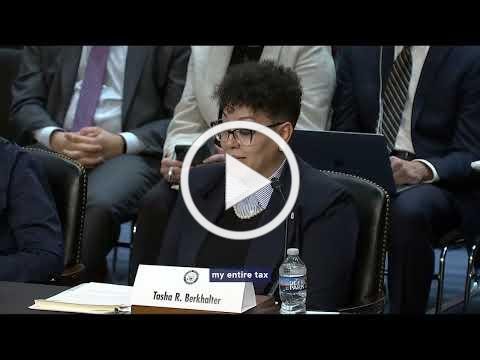
    On Tuesday, Senator Patty Murray (D-WA), the Ranking Member of the U.S. Senate Appropriations Committee and senior member of the Senate Health, Education, Labor and Pensions (HELP) Committee chaired an education forum to spotlight the Trump Administration’s radical effort to dismantle the U.S. Department of Education (ED). Tasha Berkhalter, a U.S. Army veteran and student loan borrower who had her debt discharged by the Biden Administration after being defrauded by a predatory for-profit college, gave powerful testimony at the hearing.

    Source link

  • AFT sues Dept. of Education for denying borrowers’ rights (Student Borrower Protection Center)

    AFT sues Dept. of Education for denying borrowers’ rights (Student Borrower Protection Center)

    Yesterday, President Trump signed an executive order ordering the shutdown of the U.S. Department of Education (ED). The order claims to ensure the “uninterrupted delivery of services, programs, and benefits on which Americans rely,” yet Trump and Secretary Linda McMahon have gutted the arms of ED that make those functions possible. Read our statement on yesterday’s executive order here. Last week, Trump announced a 50 percent reduction in the workforce at the Department. Now he plans to move student loans to the Small Business Administration?!?!

    The Trump Administration is intentionally breaking the student loan system and attacking borrowers and working families with student debt. But we’ve been fighting back.

    On Tuesday night, the 1.8 million-member AFT sued ED for denying borrowers’ access to affordable loan payments and blocking progress towards Public Service Loan Forgiveness (PSLF)—in violation of federal law.

    Three weeks ago, federal education officials eliminated access to Income-Driven Repayment (IDR) plans by removing the application from ED’s website and secretly ordering student loan servicers to halt processing all applications. These IDR plans provide millions of borrowers the right to tie their monthly payment to their income and family size, giving them the option to make loan payments they can afford.

    IDR plans are also the only way for public service workers to benefit from PSLF—a critical lifeline for teachers, nurses, first responders, and millions of other public service workers across the country.

    SBPC Executive Director Mike Pierce’s statement:

    Source link

  • States are stepping up to protect and deliver for borrowers. (Student Borrower Protection Center)

    States are stepping up to protect and deliver for borrowers. (Student Borrower Protection Center)

    Attacks at the federal level on working families make state and local work like this all the more necessary. States can and must step up to create more protections for borrowers!

    Keep calm and TAKE ACTION, 

    Amy Czulada

    Outreach & Advocacy Manager

    Student Borrower Protection Center

    Source link

  • Podcast: Protection, visas, commuter students

    Podcast: Protection, visas, commuter students


    By submitting you agree to our terms and conditions

    Source link