Tag: protests

  • UC Berkeley TPUSA Event Protests Spark Arrests, DOJ Probe

    UC Berkeley TPUSA Event Protests Spark Arrests, DOJ Probe

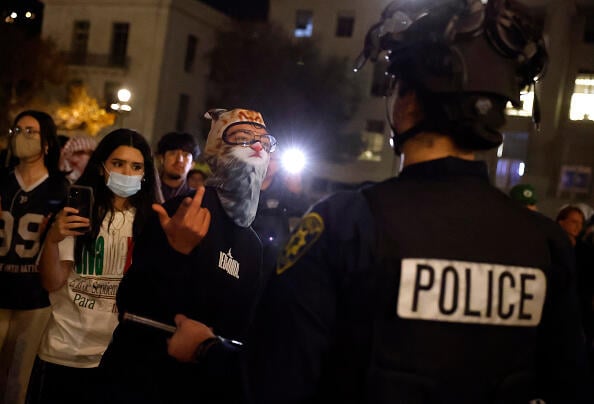
    Justin Sullivan/Getty Images

    Protests of a Turning Point USA event at the University of California, Berkeley, campus Monday sparked arrests and investigation announcements from top U.S. Department of Justice officials, who alleged “Antifa” involvement. The DOJ was already investigating the UC system over various allegations, and the Trump administration has demanded UCLA pay $1.2 billion and make other concessions.

    “Antifa is an existential threat to our nation,” Attorney General Pam Bondi posted on X Tuesday. “The violent riots at UC Berkeley last night are under full investigation by the FBI-led Joint Terrorism Task Force.”

    Harmeet K. Dhillon, the assistant attorney general supervising the DOJ’s Civil Rights Division, also said her division will investigate. “I see several issues of serious concern regarding campus and local security and Antifa’s ability to operate with impunity in CA,” she wrote on X.

    Dan Mogulof, a UC Berkeley spokesperson, told Inside Higher Ed Wednesday that there was only one reported incident of violence: A person with a ticket to the event was hit in the head by a glass bottle or jar thrown from a crowd of protesters. The victim was transported to Highland Hospital by ambulance but was “upright and conscious,” Mogulof said, adding that police are reviewing videos to see who might have thrown the object.

    In an incident that Mogulof said people mistakenly believed was connected to the protest, the City of Berkeley Police Department said its officers were monitoring the protest when they saw a fight between two men. Police determined one of them had stolen a chain from the other and the other was attempting to reclaim it, and the man who allegedly stole the chain was arrested on suspicion of robbery and battery resulting in injury.

    Mogulof also said campus police arrested two people for allegedly failing to comply with directions and, the night before the protest, arrested four students for alleged felony vandalism for trying to hang something on the historic Sather Gate. At the protest itself, Mogulof said, there were people who “self-identified as Antifa,” but he didn’t know whether they were part of an organized group.

    In a statement, the university said, “There is no place at UC Berkeley for attempts to use violence or intimidation to prevent lawful expression or chill free speech. The University is conducting a full investigation and intends to fully cooperate with and assist any federal investigations.”

    Source link

  • ‘Blatantly unconstitutional’: Student groups sue over Texas law limiting campus protests

    ‘Blatantly unconstitutional’: Student groups sue over Texas law limiting campus protests

    This audio is auto-generated. Please let us know if you have feedback.

    Dive Brief: 

    • The Foundation for Individual Rights and Expression sued the University of Texas System on Wednesday on behalf of students over a new state law that directs public colleges to prohibit expressive activities on campus from 10 p.m. to 8 a.m.
    • The lawsuit also takes aim at the statute’s provisions that prohibit inviting speakers to campus, using devices to amplify speech, or playing drums or other percussive instruments during the last two weeks of any term. 
    • FIRE called the provisions “blatantly unconstitutional,” arguing they violate First Amendment and due process rights on public colleges. The group is urging the judge overseeing the case to declare the prohibitions unconstitutional and to permanently block the UT System from enforcing them.  

    Dive Insight: 

    Texas state Sen. Brandon Creighton — who authored the bill and has been named the sole finalist for chancellor of the Texas Tech University Systemhas framed the legislation as a response to pro-Palestinian demonstrations campuses both within Texas and across the nation last year. 

    “While the world watched Columbia, Harvard and other campuses across the country taken hostage by pro-terrorist mobs last year, Texas stood firm. UT allowed protest, not anarchy,” Creighton told Austin American-Statesman earlier this year after lawmakers passed his bill. 

    Police arrested dozens of demonstrators at the University of Texas at Austin in April last year after they erected a protest encampment. They likewise quickly dismantled a protest encampment at the University of Houston the following month. 

    In the new lawsuit, several student groups — including the independent student newspaper at the University of Texas at Dallas, an interdenominational student ministry, and libertarian organization Young Americans for Liberty — say the legislation blocks a broad array of protected speech. 

    That’s because the legislation defines expressive activities as “any speech or expressive conduct protected by the First Amendment to the United States Constitution.” 

    “Early morning prayer meetings on campus, for example, are now prohibited by law,” the lawsuit says. “Students best beware of donning a political t-shirt during the wrong hours. And they must think twice before inviting a pre-graduation speaker, holding a campus open-mic night to unwind before finals, or even discussing the wrong topic — or discussing almost anything — in their dorms after dark.” 

    Other activities covered by the 10-hour daily block on expressive activities include screening a film at midnight, “wearing a Halloween costume after 10 p.m.,” photographing the sunrise, setting up an information booth early on the morning of election day to boost voter awareness, or even saying, ‘Good morning,’ the lawsuit says.

    The Retrograde, a student-run newspaper at UT-Dallas, voiced concerns that the ban covers their reporting and publishing deep into the night. Working in those hours is necessary for the students to fulfill their journalist mission, according to the lawsuit. 

    Similarly, the student ministry group, the Fellowship of Christian University Students’ chapter on UT-Dallas, often meet to discuss issues of faith — even after their official events conclude at 10 p.m. 

    “The First Amendment doesn’t set when the sun goes down,” FIRE senior supervising attorney JT Morris said in a statement Wednesday. “University students have expressive freedom whether it’s midnight or midday, and Texas can’t just legislate those constitutional protections out of existence.”

    Along with the UT System’s board members and chancellor, the lawsuit also names the heads of UT-Austin and UT-Dallas as defendants. 

    The UT System said via email Thursday that it has not reviewed the lawsuit and declined to comment further. UT-Austin and UT-Dallas did not immediately respond to a request for comment. 

    The 10-hour daily block on expressive activities exempts commercial speech. According to the lawsuit, that means students would be banned from protesting world hunger at 7 a.m. but they would not be prevented from hosting a bake sale at that time. 

    That type of content-based restriction makes the law unconstitutional, the lawsuit argues. 

    The lawsuit also argues against the prohibitions on certain types of expressive activities — including inviting speakers or playing percussive instruments — during the last two weeks of any term. Those bans are overly broad, the lawsuit alleges.

    UT-Austin, for instance, has seven academic terms, meaning bans on those expressive activities would cover 98 days of the year. At UT-Dallas, these bans would be in place for over 90 days, according to the lawsuit.

    Source link

  • 700 US Marines in California ordered to assist in Los Angeles during protests (ABC News)

    700 US Marines in California ordered to assist in Los Angeles during protests (ABC News)


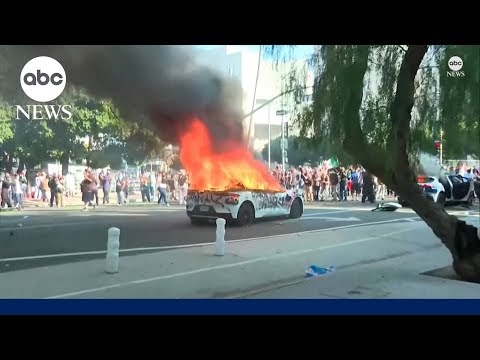
    Seven-hundred Marines in California have been ordered to assist in Los Angeles and they’re expected to arrive over the next 24 hours, a U.S. official confirmed. The Marines are from the 2nd Battalion, 7th Marines at Twentynine Palms, California, whom U.S. Northern Command had said Sunday were on a “prepared to deploy status” if the Defense Department needed them.

    Source link

  • Trump deploys National Guard amid Los Angeles immigration protests (CNN)

    Trump deploys National Guard amid Los Angeles immigration protests (CNN)

    In a stunning escalation that has drawn comparisons to authoritarian crackdowns, former President Donald Trump has ordered 2,000 California National Guard troops into Los Angeles to quell protests sparked by ICE raids across the region. Despite opposition from California Governor Gavin Newsom and local officials, Trump bypassed state authority by invoking federal powers under Title 10 of the U.S. Code—stopping short of the more drastic Insurrection Act but still raising serious constitutional questions.

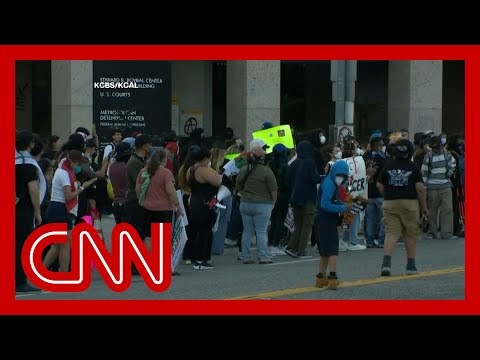
    The protests began after ICE agents detained dozens of individuals in workplace raids across South L.A. County. The response from the public was immediate and fierce, with large demonstrations erupting near ICE facilities and federal buildings. As tensions grew, federal officers deployed tear gas and non-lethal weapons against demonstrators, while arrests mounted and reports of detainee mistreatment surfaced.

    What makes this moment particularly alarming is the way Trump has redefined protest as “rebellion,” authorizing military support for federal law enforcement without a state request. Defense Secretary Pete Hegseth has even threatened to deploy active-duty Marines from Camp Pendleton—a move unseen since the 1992 Rodney King unrest. Legal experts and civil rights advocates have sounded the alarm, calling the federal takeover of California’s National Guard unprecedented and chilling.

    The implications for higher education, especially for undocumented and mixed-status students, are profound. Campuses in Southern California are already on edge, with many students fearing ICE presence and military escalation. Faculty and staff in sanctuary campuses and immigrant advocacy networks warn that the militarization of civil immigration enforcement could further chill free speech, academic freedom, and student organizing.

    Law professors like Erwin Chemerinsky have warned that Trump’s actions bypass both precedent and constitutional norms: “It is using the military domestically to stop dissent.” Georgetown’s Steve Vladeck noted that the National Guard’s role may technically be limited to support functions, but the symbolism and real-world consequences of armed troops on city streets are undeniable.

    Trump’s invocation of rebellion in response to protest mirrors earlier moments of U.S. history where power was used to silence dissent. But this time, it is playing out amid a polarized political landscape, weakened democratic institutions, and a rising authoritarian movement—with the academy, once again, caught in the crossfire.

    As protests continue, California’s colleges and universities—long sites of political activism—face renewed pressure. The presence of federal troops, surveillance, and threats of repression may signal a dangerous new phase in the government’s approach to dissent. What was once unthinkable is becoming reality: a nation where protesting immigration raids can be construed as rebellion, and soldiers patrol streets not in a time of war, but in a time of political theater.

    Source link

  • USyd bans ‘lecture-bashing’ in wake of Israel-Gaza protests – Campus Review

    USyd bans ‘lecture-bashing’ in wake of Israel-Gaza protests – Campus Review

    University of Sydney (USyd) vice-chancellor Mark Scott on Monday wrote to students and staff to inform them that students will not be allowed to make non-course related announcements at the beginning of class.

    Please login below to view content or subscribe now.

    Membership Login

    Source link

  • Former Harvard President Looks Back on Decades of Protests

    Former Harvard President Looks Back on Decades of Protests

    In 1967, in the midst of the Vietnam War, Harvard University English professor Neil Rudenstine intervened in a protest on campus, where a recruiter from Dow Chemical Company, which made napalm, had been surrounded by students upset about U.S. attacks on Vietnamese civilians. He helped defuse the tension by negotiating with students to release the recruiter.

    That foray into conflict resolution prompted an unexpected shift from a budding literary career to academic administration. Rudenstine would then go on to serve as dean of students at Princeton University and in other roles before making his way back to Harvard as president, a job he held from 1991 to 2001.

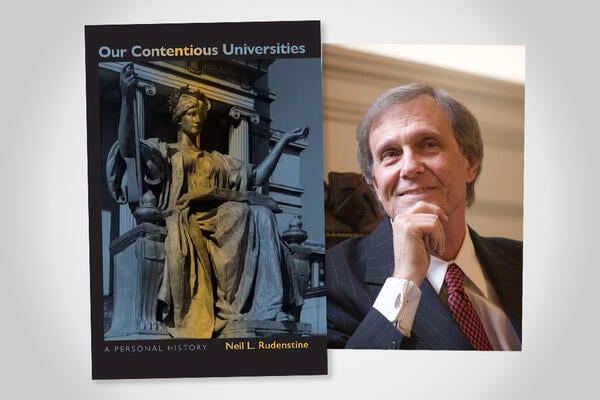
    Now 90, Rudenstine released a book last month titled Our Contentious Universities: A Personal History (The American Philosophical Society Press) that is partly a memoir and partly an exploration of campus protests movements across multiple decades and causes.

    Rudenstine discussed the book with Inside Higher Ed, sharing his personal experiences of protests in years past and his thoughts on the latest wave of pro-Palestinian demonstrations.

    Excerpts of the conversation have been edited for length and clarity.

    Q: What motivated you to write this book?

    A: From my point of view, increasing student protests starting in the ’90s seemed to be different from those of the ’60s, and more complicated to deal with. So I began to try to find out what the differences were and what the results might be of the new movement, so to speak. That got me immersed to look again at the 1960s, and after that, events began to take over.

    Q: What differences do you see in protests of the past versus today?

    A: In the ’60s, student protests were quite violent at times, but they were all mainly concerned with the Vietnam War. Of course, there were other things, like student protests over apartheid in South Africa [in the 1980s]. But the main issue in the 1960s was the war, and students were essentially united in their feelings against the war. There was virtually no sense of students in any way protesting against one another, or student groups disagreeing with other student groups. It was a united feeling.

    It was also a feeling that if the war were to come to an end, the protests would probably also come to an end. In the ’90s and afterward, students were far more diverse. There were more Black students, Jewish students, Asian American students, first-generation students and so on. These groups did not necessarily agree with one another in terms of what was important to protest against, and they sometimes protested against one another. So the situation was very different; there was no single overriding issue like the war.

    Q: Tell me about your own protest experiences, starting when you were a professor at Harvard in 1967 and helped bring an end to a protest organized by Students for a Democratic Society.

    A: I was, at the time, an assistant professor of English literature, and totally absorbed by that job at Harvard. One day I was walking across campus outside of Harvard Yard, and I heard shouting and cheering going on around [Mallinckrodt Laboratory], which was a chemistry building. It turned out that Students for a Democratic Society had organized a protest that imprisoned a recruiter for the Dow Chemical Company who wanted to interview students for jobs. And since Dow was making some products [such as napalm] that were used in the war, the SDS students decided to imprison this recruiter.

    Purely by chance, I stopped by, and I thought it was not proper of the university to imprison a recruiter who’d come to interview students and told the students that by using their megaphone. After several hours of discussion and debate, the students released the recruiter and gave up the protest. I was somehow identified as the person who had helped to bring this about, and that led to me being asked to be dean of students at Princeton University to help with their protest movements. A very considerable accident got in the way of my literary career and deflected me from literature to student protests in a way that I had never imagined. It was purely the result of chance and serendipity.

    Q: Near the end of your career, students staged a sit-in to demand a living wage at Harvard. How were you able to wind that protest down without police intervention?

    A: That was a very complicated situation. Students sat in my office building, Massachusetts Hall, because they wanted to change the way in which many people at the university were reimbursed for their services. The living wage protest was not very rational. If they had wanted a minimum wage change, we might have been able to discuss it, but the method they chose was not rational, and they sat in the building for more than two weeks. So we had a very complicated and delicate situation.

    I decided at the beginning that whatever we would do, we would not call the police, because calling the police in earlier days at Columbia, Harvard, Kent State and other places had led to terrible situations of riots and police beating students. So the question was, how can we not call the police but also bring the situation to a conclusion? It took many, many days of discussion and waiting in order to try to find this conclusion.

    What happened was that the next president [Larry Summers] said, “Why don’t you put together a committee to look into the issue, and that will give the students a way out, and it’ll give you a way out? It’s not likely that this committee will embrace the solution that the students have chosen at all, but it’ll bring an end to the protests.” And that’s what happened. We appointed a committee, the students were able to claim the victory and walk out of the building, and we were able go back into our offices and basically say that we were happy nobody had been hurt, and that we would trust the new committee to make very good recommendations about what should be done in the future.

    Q: You wrote that you were “taken aback” by how quickly presidents brought in police to break up protest encampments last spring. What other tactics do you believe they should have considered first?

    A: Obviously, every situation is different, so there’s no one general thing you can do. But there is a way which you can call for the judiciary to step in. If students are identified as being in the protest, if the [judiciary] tells them to evacuate whatever building they happen to be occupying or whatever they’re doing wrong, they can be held in contempt of court if they don’t obey those admonitions. That’s a very good substitute for bringing in the police; if you’re held in contempt of court, it’s a very serious crime, and very few students want to do that, so they tend to leave right away. We had tried that at Princeton, and that seemed to be a good substitute for actually calling the police, which led, of course, to terrible things at Columbia and elsewhere, when the police tended to just brutalize the students when they were called in.

    Another alternative, of course, is to wait out the students in the hope that sooner or later, their academic needs will force them to go back out and get to their studies. That was a tactic we also used at Princeton.

    Q: What do you think about the institutional neutrality movement?

    A: I’m a little bit skeptical about the conception and certainly the term of neutrality. I understand why people would embrace the idea at the University of Chicago, for example, and other places. I think that’s a very interesting point of view, and I think at times it’s definitely the thing to do. You don’t want to go around commenting all the time on what has happened internationally or nationally. At the same time, it’s a very difficult row to hoe, because there simply are some events that require, if not an actual stance by the university, certainly some kind of an analysis with a possible outcome. I do think that there are times when it’s important for a leader to speak out, and it has to be done very thoughtfully, and one has to choose those moments carefully.

    Q: Any advice for today’s college presidents on how to handle campus protests?

    A: That’s a tough one. I think what they’re doing is about as good as can be done, and that’s clarifying what is legitimate as a protest or what is not legitimate and being willing to discipline students if they really cross the line of what’s permissible in an obstructive way that harms other people’s capacity to do their jobs. I hope the universities are open to discussing in a more collaborative way things that need to be ironed out, other than simply responding with police force. The more they can discuss and analyze and find ways to reason with the students and even some faculty … the more they are able to possibly defuse protest or the threat of protest.

    Source link

  • Body cams, staff to carry ID, change of culture: TEQSA draft rules for protests, student complaints

    Body cams, staff to carry ID, change of culture: TEQSA draft rules for protests, student complaints

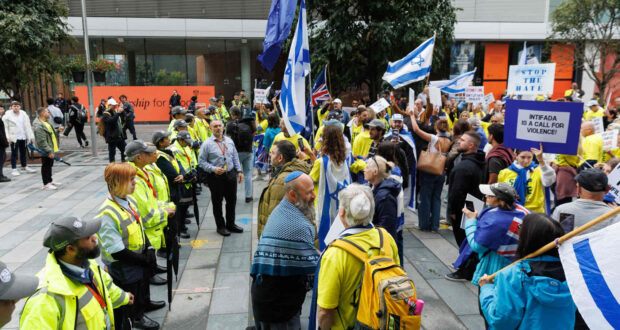
    Security stand in front of a pro-Israel protest at the University of Sydney on May 3, 2024. Picture: David Swift

    Universities will be expected to publish de-identified complaints data publicly, make student complaints processes clearer, and analyse the data twice a year if the university regulator’s interim guidelines for student complaints mechanisms are adopted.

    Please login below to view content or subscribe now.

    Membership Login

    Source link

  • Four universities being investigated over protests: Governance inquiry

    Four universities being investigated over protests: Governance inquiry

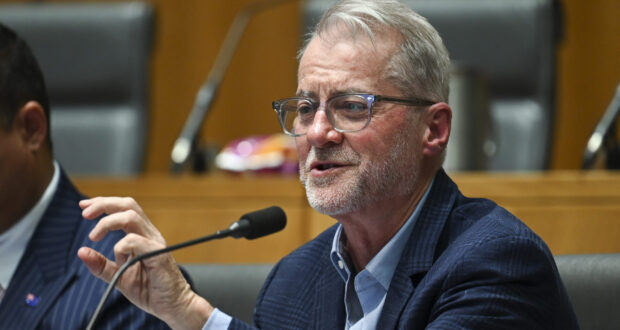
    Committee chair and Labor Senator Tony Sheldon called for the inquiry in January. Picture: Martin Ollman

    The Tertiary Education Quality and Standards Authority (TEQSA) revealed four universities are being investigated for their handling of protests and encampments at the first Quality of governance public hearing.

    Please login below to view content or subscribe now.

    Membership Login

    Source link

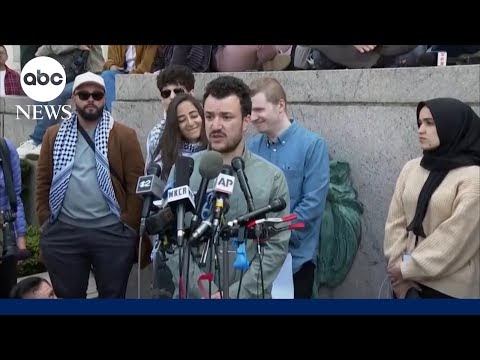
  • Lawyer for Columbia University student detained by ICE for pro-Palestine protests speaks out (ABC News)

    Lawyer for Columbia University student detained by ICE for pro-Palestine protests speaks out (ABC News)

    ABC News’ Linsey Davis speaks with Baher Azmy, the lawyer for Columbia University student Mahmoud Khalil, who was arrested by Immigration and Customs Enforcement (ICE) despite having a green card. Khalil is currently detained in a Department of Homeland Security (DHS) facility in Jena, Louisiana.  A judge has temporarily blocked Khalil’s deportation. President Trump says that this action is just the beginning of such actions by the government.  

    A petition to release Mahmoud Khalil from DHS detention is here

    Source link

  • Campus encampments and protests are a sign of failed university governance: A Canadian perspective

    Campus encampments and protests are a sign of failed university governance: A Canadian perspective

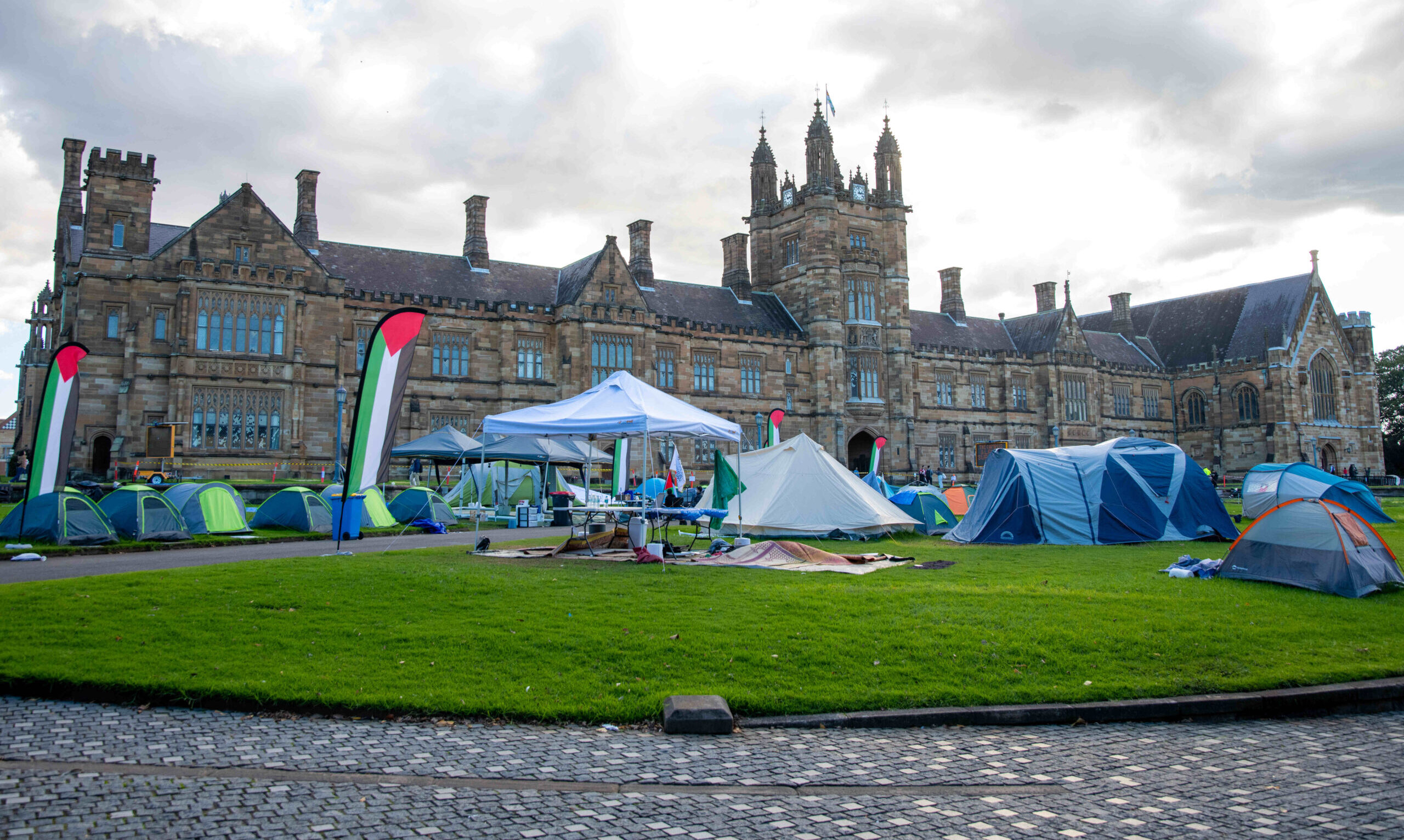
    An Australian National University pro-Palestine encampment in May last year. Picture: Martin Ollman

    Last year, there were multiple protest encampments and other actions by groups of students on Canadian university campuses regarding the Israeli-Palestinian conflict.

    Please login below to view content or subscribe now.

    Membership Login

    Source link